Copyright and Quilting · villa rosa designs

Common Questions Quilters Ask About Copyright

Happy Thursday to you!

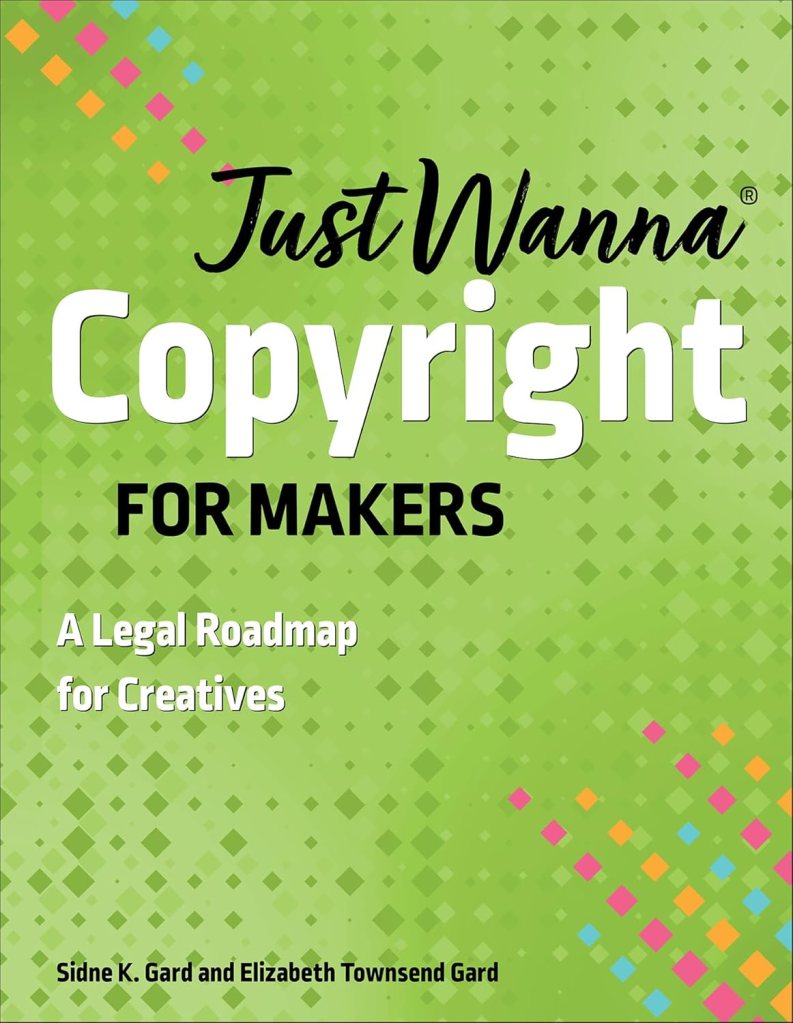
Last week I talked about copyright for quilters and showed a new book about copyright law for people who create, Just Wanna Copyright for Makers, by Sidne K. Gard and Elizabeth Townsend Gard. I am still reading and processing all the information in the book – and believe me there is plenty – I even have a few sticky notes marking sections that I will probably go back to over and over. I am learning a lot and I totally recommend this book for anyone who makes anything, whether it’s professional or just for fun.

If you missed last week’s post, you can find it HERE.

There is certainly a lot of information to wrap one’s head around in the book. I’m normally a very fast reader, but I am finding that I absolutely must slow down so I can understand what I am reading. There is just so much in this book – it’s kind of mind-boggling! One thing I’m really getting, though, is that copyright law is very confusing and there aren’t always hard and fast answers to questions or scenarios.

Cover of the book 'Just Wanna Copyright for Makers' featuring a bright green background with a geometric design, and the title prominently displayed in bold white and black text.

Before we go any further today, I do want to remind you that I am not a copyright professional or a lawyer. If you do have questions about copyright and what you can and cannot do, please consult with a professional.

Did you know there are 6 different ways one can legally use a copyright protected item (quilt pattern, quilt book, image of a quilt, or quilt design to name a few.)?

  1. It’s your own work
  2. You ask and get permission
  3. First Sale doctrine
  4. Classroom use
  5. Library use
  6. Fair use

These things are pretty self-explanatory except perhaps First Sale doctrine, which I will talk about shortly. I’m not going to explain the other 5 here, but you can explore them in detail in Just Wanna Copyright for Makers.

As there are legal ways to use copyrighted items, there are also illegal ways, which is called Copyright Infringement. The most common types of infringement are:

  1. Copying someone else’s work exactly
  2. Making something so similar that the copyright protected design (or photo, or whatever) is recognizable

It’s important to understand what is okay and what isn’t when it comes to creating and using copyright protected material. Sadly, there isn’t always a perfect answer to our questions, though.

Let’s take a look at 3 common questions quilters and other crafters ask.

If I change 3 things or 10% or… of someone else’s copyrighted pattern or book, am I creating a new design?

The answer to this question is no……and maybe.

Simply changing a few things (like the colors or the number of blocks) in someone else’s work does not create a new design you can take credit for.

Yet, if you use a copyright protected image or painting or what-have-you as the basis of an entirely new creation, then the answer is maybe. If this is your interest, you might want to consult a lawyer for more information.

I bought the pattern (or book, etc.), so I can do whatever I want with it, right?

Again, the answer is kind of. Sigh……

According to Just Wanna Copyright for Makers book, First Sale doctrine gives the purchaser the legal right to “make it, write on it, lend it to a friend, donate the pattern after you use it, and even throw it away.”

Does the “make it” in the First Sale doctrine give the purchaser the right to sell items made from the pattern, then? Or not? It isn’t clear and I’m so confused………

It is important to note that First Sale does not apply to digital items. Legally, you can’t share a PDF of a pattern (or book) with anyone else – they must purchase their own digital copy.

Can I use someone else’s pattern to make quilts (or other handmade items) to sell?

This a complicated matter with no clear cut answer. Let’s explore it a bit, though. 

When you buy a copyright protected book or pattern, you are granted First Right doctrine (unless it is in a digital format and then First Sale doctrine does not apply); however, it is not completely clear whether you can make and sell quilts from the pattern or book you purchased. It seems to be a grey area and goodness knows, every designer and maker has their own opinion about this subject.

Some folks believe that when you buy a copyright protected pattern, the copyright holder grants you permission to do whatever you want. This is not exactly true – please check out the First Sale info above or read more about First Sale in Just Wanna Copyright for Makers. Copyright protects certain rights for the copyright holder and those rights do not transfer to the purchaser of a pattern or book unless the copyright holder specifically transfers rights.

Others think that it’s just a pattern and patterns are not copyright protected. This is not exactly true, either. Clothing and sewing patterns may not be copyrightable because they are considered utilitarian objects, but a quilt isn’t necessarily a basic utilitarian object, it has an artistic design and it might very well be considered more a piece of art than a utilitarian object. Huh…more grey area.

Consider this – most designers do make a physical quilt before they write and offer a pattern for sale. Is the quilt itself or at least the design of the quilt protected by copyright? If it demonstrates enough creativity and originally, then yes, the physical quilt and/or design just might be copyrightable. If the quilt/design itself is copyright protected and the creator writes a pattern explaining how to make that quilt, then what? The pattern itself may be copyrightable, too. Is it then copyright infringement if one uses someone else’s copyright protected pattern of a copyright protected quilt design to make and sell items from?

Just remember that basic things such as shapes, techniques, and math are not actually copyrightable on their own. What is copyrightable is the combination of elements along with the creativity involved.

Another interesting scenario – what if a designer only makes a drawing or a digital rendering of the quilt they are writing a pattern for? The drawing or image itself might be copyrightable. Then what if the designer writes a pattern for someone else to create a physical version of their quilt drawing/image?

Additionally, are all photos, images, and diagrams copyright protected as individual things or only as part of the pattern or book?

About as clear as mud, isn’t it?

Can a designer or author come after you? You bet they can if you have infringed on their copyright protected material. Will they? Maybe, maybe not.

As copyright law is not always completely straightforward and clear cut, you should also consider the ethics of making items to sell from someone else’s pattern or book. No, there really isn’t a quilt police force out there watching you. Instead, it helps to ask yourself questions such as: How would you feel if you were the designer and someone used your pattern to make and sell items for a profit? Would you be okay if someone made a quilt from your pattern and donated it to a charity to be sold to benefit said charity? Would you be cutting into the income a designer or author can make from their own work? Would you be competing with the designer in the same markets?

For example, if I am the designer of a copyright protected pattern and I choose to sell my pattern on Etsy, is it okay for someone else to sell my pattern (legally obtained, of course) on Etsy too? Or maybe I make and sell derivatives of the quilt design in my copyright protected pattern (which I also sell on Etsy). Would it be okay for someone else to sell their versions of my quilt created from my quilt pattern (which they purchased) on Etsy, too? Hmmm……..

Definitely so much to consider when you want to make and sell items from some else’s copyright protected pattern or book. And so confusing because there aren’t always clear concise answers. If this really is what you want to do, you may need to contact a lawyer for more specific information.

Here is my best answer to the question ” Can I use someone else’s pattern to make quilts (or other handmade items) to sell?”

1. The very first thing you should look at on any pattern is the copyright.

If there isn’t copyright information, assume that it is still protected, although there are several different factors that go into how long copyright lasts. If the pattern or book is really really old, it might be in the public domain. To confirm this, you would have to do some research.

If there is a copyright notice, check the date. If the date is super old, the pattern or book might be in the public domain. Again, you would have to do some research.

Look at the copyright holder. This would be important if you need to contact them to ask for permission.

Is there a copyright statement such as “All rights reserved” or “For personal use only” or something else more specific? Use this as a guideline for using the pattern or book. If you are not sure or it doesn’t have a statement, you should contact the copyright holder or consult a lawyer for help.

2. If you are not the copyright holder, ask permission

An author or designer might just be so thrilled that you took the time to ask (because many do not), they might just grant you permission.

Be aware you might get different answers from different designers/authors/copyright holders because everyone has their own take on copyright, which is probably influenced by their own experiences.  And that’s okay because there just isn’t one simple answer. 

If one designer says “sure, make as many as you want and sell them as long as you include the name of the pattern and my name as the designer on your quilt label and in any tags, labels, descriptions, listings, etc.”, that’s great. But don’t assume that all designers will grant you the same courtesy.  Of course, a different designer could say “no, you cannot make items from my pattern to sell and make a profit.”  Another designer might tell you: “You can make no more than 5 to sell and after that you must purchase a license.”

Ask for permission every time.

Please don’t get upset with a designer if they do tell you no. Please don’t badmouth them online. They might have a very good reason (or more than one) for saying no. Respect their decision as the copyright holder and find a different pattern by a different designer that will work for you.

To protect yourself, get permission in writing.

3. If you want to sell items made from someone else’s pattern or book, then find a pattern or book that does give you permission. Some designers and authors grant you permission to make and sell items made from their patterns (or books) in their copyright statement or you might have to contact a copyright holder directly to ask permission.

Author Virginia Lindsay created 2 such books – Sewing to Sell and More Sewing to Sell. In Virginia’s books, she shows you how to start a craft business and she gives you permission to use the patterns in her books to make and sell items: “The designs in this book may be used to make items for personal use or for sale without limitations.”

Cover of the book 'Sewing to Sell' by Virginia Lindsay, featuring colorful fabric bags and a crafting workspace.
Cover of the book 'More Sewing to Sell' by Virginia Lindsay, featuring a photography setup with a camera on a tripod, sewing projects, and workspace elements.

I bet there are other designers and authors out there who allow you to make and sell items from their patterns and books – you just have to do your homework to find them.

Make sure you understand and follow what the designer/author/copyright holder grants you. Maybe you are permitted to make up to 5 items to sell from a pattern. If that’s what the designer says, respect them and only make 5. If you want to make more than 5, ask permission and be aware that you might need to purchase a license.

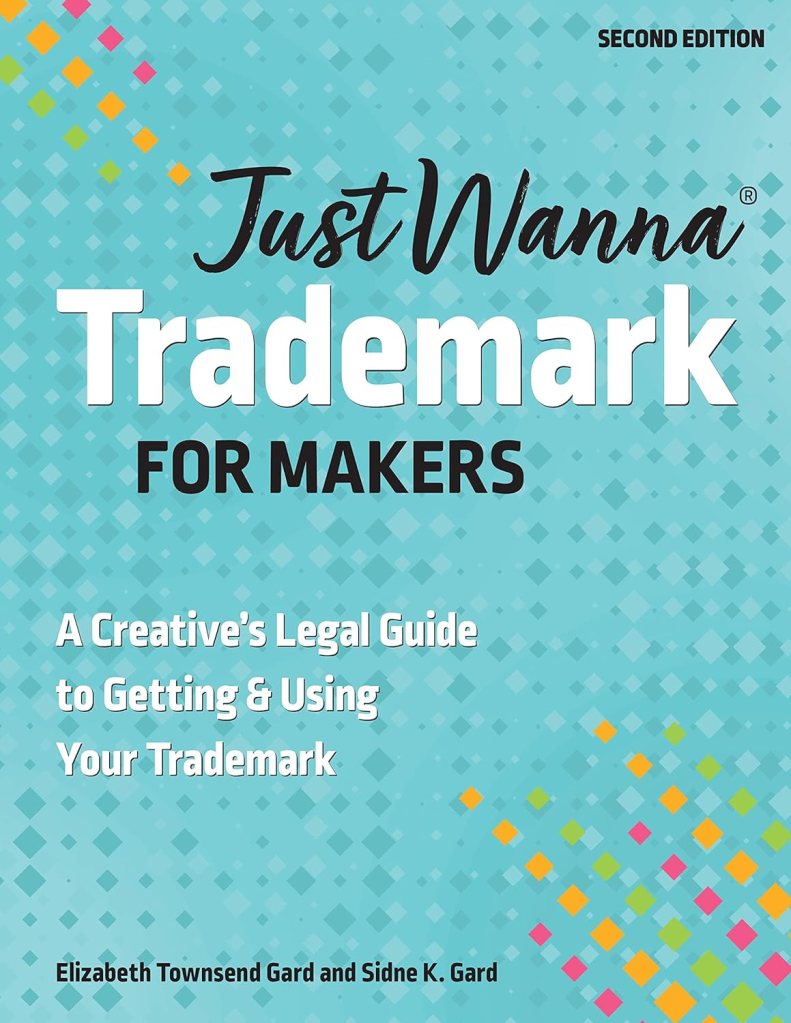
4.  Ultimately, the best way to protect yourself if you want to make quilts and sell them is to use quilt blocks and patterns in the public domain.  Basic shapes like squares and triangles are in the public domain.  Classic patterns like Log Cabin, LeMoyne Star, Nine Patch, Sunbonnet Sue and probably thousands of others are all in the public domain.  You could even explore books about quilting in the public domain. Go ahead and mix and match the blocks, use a straight set or a diagonal set, change the size, use whatever fabrics you want. If it’s in the public domain, you can use it pretty much however you want, short of calling yourself the author. The only caveat here would be items with trademarks have different rules (you can check out the book Just Wanna Trademark for Makers: A Creative’s Legal Guide to Getting & Using Your Trademark for more information).

If you create your own quilt designs to make and sell, they might just be copyrightable. And who knows? You might decide to write your own copyright protected patterns or books down the road. Good for you.

By no means am I an expert, but I hope this blog post gave you some more things to think about when it comes to copyright and quilting, even if there aren’t always perfect answers for our questions. Remember, you can always consult a lawyer to help you understand.

Thanks for taking the time to read this post the whole way through. I look forward to your comments and discussions in the comments.

For more information:

www.copyright.gov

Copyright and the Quilter (featuring Elizabeth Townsend Gard)

How Copyright Affects the Quilter

Quilting and Copyright Rules

Copyright for Quilters — A Commonsense Approach

Royalty Free vs. Public Domain Quilt Patterns

Quilting & Knitting and Copyright Law

Copyrights and Quilting

Help with Design Rights

That’s it for me. Until next week –

Always,

Tricia @VRD

Copyright and Quilting

At Last! A Book About Copyright for Quilters and Other Creative Folks

Happy Thursday to you!

I’m SEW excited to share with you a very important book I discovered recently. It’s called Copyright for Makers: A Legal Roadmap for Creatives by Sidne K. Gard and Elizabeth Townsend Gard. The book was released in 2024 and is published by C&T Publishing.

How did I not know about this book before???

Cover of the book 'Just Wanna Copyright for Makers: A Legal Roadmap for Creatives' by Sidne K. Gard and Elizabeth Townsend Gard, featuring a green background with colorful geometric shapes and bold title text.

You can find the print book HERE or the digital book HERE

I really feel like I dropped the ball by not knowing about this very important book. If you’ve been following the blog for a while, then you probably know I have a serious interest in copyright for quilters and how it impacts how we create, what we create, how we choose to share (or not share), as well as how we can protect our work.

If you’ve missed my posts about copyright, you can find them below:

The Copyright Question for Quilters

NEW April 2023 Villa Rosa Designs Rose Card Quilt Patterns and Revisiting the Copyright Question for Quilters

My Recent Copyright Issue and NEW Villa Rosa Quilts Rose Card Patterns for May

Most of what I’ve learned up until now has been from reading articles/researching online as well as talking to other professional quilters and crafters. A friend and mentor, Cheryl Weiderspahn, who owned her own clothing pattern company and even published a few books – Low Sew Boutique and Around Randolph Township and Guys Mills (Images of America) wrote a very straightforward and down-to-earth explanation of copyright for quilters and sewists some years ago. You can find Cheryl’s copyright statement in my post, The Copyright Question for Quilters. Cheryl’s article was the first and best document about copyright I’ve ever read, so you might want to check it out.

Over the past year, I’ve had some copyright issues on Facebook and Pinterest. For some reason, there are people out there who think it’s perfectly okay to post the instructions of a copyrighted pattern online and share it for free with all their friends and friends of their friends and so on. This is definitely NOT okay. Rather, this is an example of copyright infringement. I reported the infringements (yes, plural) to Facebook and Pinterest. The forms take forever to fill out. I cannot understand why it is so easy for someone to post or pin copyright infringement content yet when you are reporting the violation of your copyrighted intellectual property, you have to go through a lot of hoops just for them to believe that you own the copyright. There has got to be an easier way.

Another issue I’ve had recently is on Etsy, where I have found a few folks making quilts using my patterns (called derivatives) and selling them for profit. This is also an infringement of copyright. Including the name of the pattern used and/or the designer of the pattern as part of an Etsy item listing does NOT make it okay to sell a derivative of someone else’s work. I have contacted the guilty parties directly as well as reporting it to Etsy. We’ll see what happens….

Ignorance is not bliss – ignorance of copyright law does not protect someone from being held responsible for their copyright infringement.

ARGH! As much as I love designing new quilt patterns, sometimes I question whether it’s really worth it when people think nothing of trying (and often succeeding) to rip someone off.

So, what can a quilter do?

  1. Read the book Just Wanna Copyright for Makers.
  2. Spread the word to everyone you know that there’s finally a book explaining copyright for quilters and other creatives written in a way normal people can understand.
  3. If you see copyright infringement, don’t just ignore it – report it. Report it to Facebook or Etsy or whatever. If you don’t know how to report it to a website or business, then contact the copyright owner and inform them so they can report it.
  4. Know your rights!

If we keep reporting copyright infringement and sharing knowledge with our family, friends, quilt guild members, online community, etc. – it is my hope that someday everyone will respect the intellectual property of others.

I’ve just started reading Just Wanna Copyright for Makers. It is divided into 4 main sections – Creating, Borrowing, Protecting, and Enforcing so it’s easy to skip around and read the parts that pertain to you, although I do recommend reading the entire book.

As far as I can tell, the authors have covered all the important stuff from your first idea on paper to what can be copyrighted to protecting your intellectual property. Even if you’re not designing patterns or creating works of art in some kind of media, I still think this is a must-have for anyone who creates.

Just Wanna Copyright for Makers was written by a mother-daughter duo who really know their stuff. One is a law professor and the other is an artist/crafter/writer. I think this is the perfect combination to create an easy-to-understand book about copyright and how it impacts the lives and the work of quilters and other makers. This is not a dry read – far from it – the authors impart humor into their snappy writing style. That being said, please understand that copyright law itself is full or twists, turns, and grey areas.

The authors conducted a lot of research before writing their book, including something like 400 interviews with creative people. They posted these research discussions as podcasts for several years before their book came out. I am looking forward to catching up with their podcast. You can check out the Just Wanna Quilt website HERE.

Happily, The Gards have another super useful book for creatives called Just Wanna Trademark for Makers: A Creative’s Legal Guide to Getting & Using Your Trademark, which was actually their first book in the Just Wanna series. I wonder what they’ll write next?

Cover of the book 'Just Wanna Trademark for Makers', featuring a teal background with colorful geometric shapes and white text.

You can find the print book HERE or the digital book HERE.

Well, that’s about it for me today. SHHH! I really want to get back to my reading.

Until next Thursday —

Always,

Tricia @VRD

Copyright and Quilting · Rose Cards · villa rosa designs

My Recent Copyright Issue and NEW Villa Rosa Quilts Rose Card Patterns for May

Happy Thursday to you!

What a gorgeous day here in NW PA! I woke up to bright sunshine and happy bird song. I love mornings like this! We’ve had a couple wonderful summery days and it makes me so glad that I have a nontraditional career where I can get outside anytime I want to drink in the lovely weather. Lucky me….

We have so much to do today, we’d better get started.

Hip! Hip! Hooray! I just shipped the last bunch of prizes yesterday — all 41 of ’em! I know those of you who won prizes and haven’t received them yet are probably getting a little anxious by now and today I’m happy to say the last of the Blog Hop prizes will be arriving shortly.

If you won a prize during the Blog Hop and do not receive it within the next couple weeks, please email me at tricia@villarosadesigns.com so I can look into it.

Again, thanks for your patience. I hope all of you winners enjoy your prizes!

Let’s keep moving!

Congratulations to Barbara in MA! She is our giveaway winner.

Thanks everyone for telling me about your favorite color combinations. Like you, I have lots of different combinations and it’s hard to pick just one. Wink, wink……..

If you didn’t get your own copy of Plan Design Quilt yet, you can find it HERE.

I love being a quilt designer and author, but sometimes things happen that make me so so frustrated. Recently, I had a copyright issue and I’d like to tell you about it.

I’ve talked about copyright and quilters a couple times before and you can find links to those posts here:

NEW April 2023 Villa Rosa Designs Rose Card Quilt Patterns and Revisiting the Copyright Question for Quilters

The Copyright Question for Quilters

I also want to remind you that I am not an expert in the field of US Copyright Law. What I’ve learned, I’ve learned by reading, researching, talking to others, and experiencing issues first hand. If you need expert advice or information about US Copyright Law, please seek the help of a Copyright lawyer.

Recently, a quilter familiar with our VRD Rose Card patterns emailed us with a screenshot showing the back of one of my Rose Card patterns — the instructions — posted on Facebook. The kicker was that the poster actually covered up the copyright information at the bottom of pattern, which indicated the person posting my pattern knew exactly what they were doing. Please don’t assume they just didn’t know that it was wrong or what they were doing was violating US copyright Laws — if they covered up the copyright info, then this was done completely intentionally.

I tried to check it out on FB, using the info on the screenshot to guide me, but I found out that the group was private. Now what? I ended up having to join the group so that I could address this copyright infringement. While waiting for my membership in the group to be active, I was able to look up the person who posted my copyrighted pattern instructions and I wrote a very firm message to them. I also found out that person was — of all people — an administrator of the Group!

When I was finally accepted into the group later the same day, I then posted a super firm comment showing the front of my pattern and telling all 3000+ members that I owned the copyright and I did not give permission to share my pattern instructions and that by doing so AND covering up the copyright information intentionally was a violation of US Copyright Law.

I also found out how to make an intellectual property complaint to Facebook, which I promptly did.

You can find Facebook’s Intellectual Property article which also includes a link to the form for reporting Intellectual Property abuse HERE.

Finally, the original post was taken down in the Group before Facebook even had the chance to do it (which told me that at least one of the administrators of the group knew it was wrong and deleted it before the group could get in trouble from Facebook). But it wasn’t deleted before over 3000 people had the opportunity to save/print/copy/repost my pattern. THEN I got grief from another one of the administrators who not only deleted my public posts in the group about copyright law and my rights as the copyright owner, but also told me that I should contact the guilty administrator and not post to the entire group. Seriously??? Not one person accepted responsibility for this nor did anyone even offer an apology! I am still seething about this experience.

You might wonder why this upsets me so much. Let me explain.

Sure, maybe that person originally purchased my VRD pattern for $2 before posting it on Facebook, but that did not give them the right (legally or morally) to share it with over 3000 people for free. They did not ask my permission to post my copyrighted pattern instructions — I would NEVER have given my permission to post it on Facebook anyway.

Copyright laws are there to protect intellectual property for many good reasons, including a copyright owner’s ability to earn income on their own intellectual property.

I design quilt patterns as part of my livelihood. By posting the instructions of my pattern for free on the FB Group, that person so kindly helped me (and VRD) to lose potential income — possibly more than $6000 in pattern sales, if each of the 3000+ group members had purchased their own pattern at $2 per pattern.

This all makes me second guess my desire to design and publish new quilt patterns. If designers stopped creating new quilt patterns, new quilt books, and new quilt magazine patterns featuring new techniques, new fabric collections, new tools, and new ideas then the quilt world would suffer greatly. Eventually the sale of fabric, notions, tools, rulers, etc. would suffer, which would then hurt fabric companies, publishers, advertisers, quilt shops and other quilt-related businesses. People could lose their jobs and companies and businesses could eventually go out of business. Do you see the domino effect here? Ultimately, it would hurt you, the quilter, who just wants to make beautiful quilts.

Copyright law protects ALL of us.

I appreciate you taking the time to hear my latest copyright story. And now I’ll jump off my soapbox.

Time to check out the NEW May patterns!

Yep, it’s the Thursday after the first Friday in May, which means — NEW PATTERNS!

There are 7 — count ’em — 7 NEW patterns this month — the set of 5 that you know and love along with a table runner and a snack mat. Definitely something for everyone in this month’s patterns.

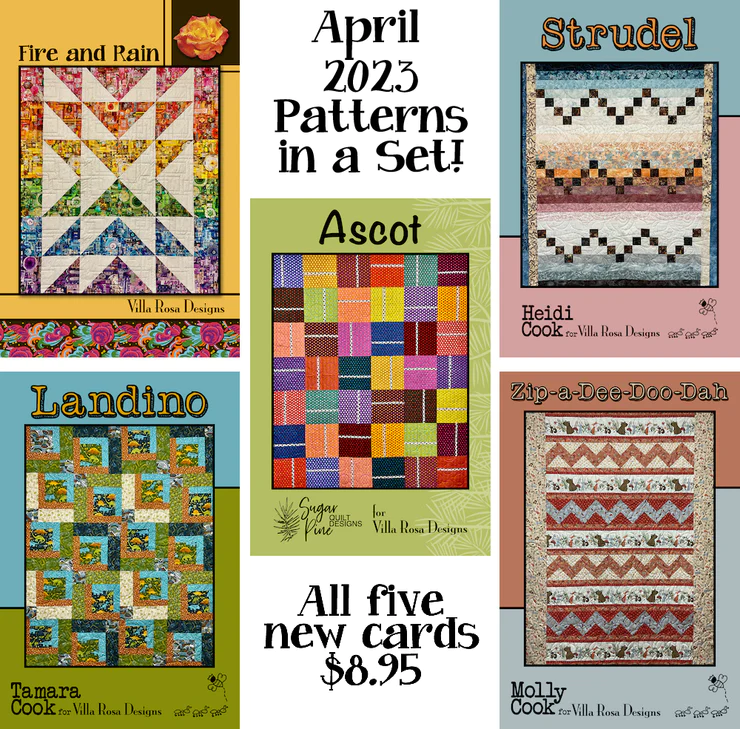
YAY! Aren’t they Fab??? You can get the set of 5 physical patterns for the special price of $8.95 HERE

I’m sorry, but we don’t offer the set as a digital pattern collection. However, the good news is that each pattern is individually available as a digital format. You can find the patterns by name on our website, villarosadesigns.com.

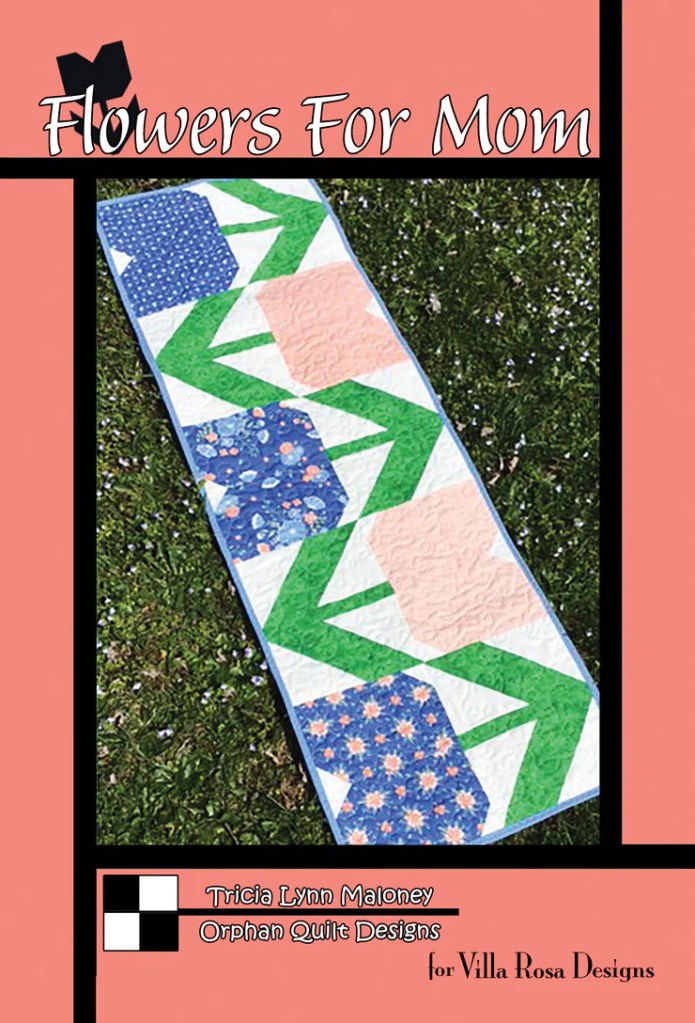
Here’s a pretty flower runner, perfect to whip up for Mother’s Day or just for spring — I can see you already picking out your favorite colors and fabrics for this one. You can find the runner physical pattern HERE or the digital pattern HERE.

And here’s a very spring-y fun Snack Mat pattern. Don’t you just love pinwheels??? They are so fun and happy! You can find Pinwheelies the physical pattern HERE or the digital pattern HERE.

So, which one are YOU going to make first???

Well, I’m off to take my sweet and crazy little Shih Tzu, Bailly, out for a walk to enjoy this gorgeous day. Ta Ta!

Here’s my 1 1/2 year old cutie, Bailly, who needs a haircut and a shave right now….LOL! Don’t you love her happy grin???

Until next week —

Always,

Tricia @VRD

Copyright and Quilting · Rose Cards · villa rosa designs

NEW April 2023 Villa Rosa Designs Rose Card Quilt Patterns and Revisiting the Copyright Question for Quilters

Hello Quilty Friends!

Happy Thursday to you!

It’s a fine spring day here in Pennsylvania! Clear blue skies and temperatures in the 70s. Things are greening up and blooming. But Mother Nature isn’t done with her shock treatment yet as next week will be back in the 30s and 40s again. Go figure! Ho hum…..this is spring in northwestern PA.

Last week I started a new mini series on Quilt Block Basics — did you miss my post about Half Square Triangles? If so, you can check it out HERE.

I will be getting back to the Quilt Block Basics mini series next week, but this Thursday is the Thursday following the first Friday of the month, so I am excited to debut our brand new April 2023 VRD Rose Card patterns! Yay! Definitely one of my favorite posts every month!

Feast your eyes on these wonderful new patterns:

Get all 5 new patterns for $8.95 HERE!

And here is my new table runner pattern, After the Rain — who doesn’t LOVE a rainbow quilt?? Or a Log Cabin variation??

Get the After the Rain pattern HERE.

I know I’ve said this more than once (probably more like a million times) but there isn’t another pattern company out there who produces as many new patterns every year as Villa Rosa Designs. We put out at least 5 new patterns a month — add to that our usual 1 (and sometimes 2) new table runner pattern(s) each month and that figures out to be an average of 72 new quilt patterns a year! Mind-boggling, isn’t it???

We have the most awesome quilt designers here at VRD (not that I’m biased or anything) and together we make the impossible possible.

Revisiting Copyright for Quilters

Recently a reader asked some thought-provoking questions on the blog and I wanted to share her questions with you. Thanks, Mindy, for giving me permission to share your comments.

Mindy wrote the following after reading my post about The Copyright Question for Quilters (go HERE to read the Copyright post):

Can I ask one thing that comes up often with this discussion? How do you feel about second-hand selling of your patterns or having the pattern donated to a guild or other “library” type situation? I sat in on a lecture years ago at Quilt Market by two copyright lawyers and it was my understanding that this was illegal, but I have recently heard some pattern designers don’t mind and would rather the pattern be used than thrown away. What are your thoughts if you don’t mind me asking?

SIGH……. If only understanding copyright law and practicing it were straightforward and simple. But to understand copyright law, you basically need a copyright lawyer to explain things in a way you can understand. That being said, copyright law is even confusing for the professionals as they often don’t agree with each other. So if lawyers can’t agree on what copyright law is and how it applies, then how are we — the quilters and the designers — supposed to understand it?

And you need to understand copyright so that you can practice it. Such a conundrum.

What do I think?

Please note these are my personal opinions as a quilter and designer.

Guild Lending Libraries

I have belonged to quilt guilds for a long time and yes, one of my guilds did have a library of quilt books (not patterns) that guild members could check out and borrow. I don’t remember when exactly, but the guild library was dissolved years ago and the books were donated to a used book sale at a local library. I think it ended up being dissolved because the collection took up a lot of space in our storage locker and it wasn’t being used by the guild members. Part of the problem, I suspect, was that the lending library wasn’t updated and weeded out regularly in order to keep the collection current and relevant to the interests of the guild members.

I think libraries — any kind of libraries — are wonderful amazing incredible things!

Let’s consider public, school, and university libraries — they purchase one or more copies of a book or magazine and not even allow — but encourage — people to borrow these materials free with their library card. Is this an infringement of copyright law? I don’t think so — most authors, myself included, want to see their books in libraries.

How is a quilt guild lending library any different? Really? Of course, I am talking books here, not patterns, but what is a quilt book but a collection of quilt patterns? In my opinion, as long as the book or pattern was purchased legally at some point, it is a good thing to pass it along to someone else. (This does not mean making a photocopy of a book or pattern and giving to your best friend, but passing along the original book or pattern.) I am always pleased to see books find their way to someone who will love them.

Additionally, most folks are conscious about recycling and trash disposal — isn’t it better to pass along a book or pattern to another who will find enjoyment or enlightenment from the book/pattern instead of adding more trash to landfills? To me, there’s nothing more devastating than someone throwing away a perfectly good book.

Secondhand Selling

The selling of secondhand goods is HUGE all over the world. Secondhand sellers have existed far longer than copyright laws have. The secondhand selling of goods is a big part of any economy, so I am not sure how that corresponds to copyright when you’re talking about books and patterns.

If selling secondhand books, patterns, and other types of publications was an infringement of copyright law, then how can sellers resell goods on eBay, Amazon, Etsy, and the like? What about at the Goodwills and Salvation Army stores? What about the used book sales at your local library? Or garage sales, yard sales, flea markets, antique shops, and others? Why aren’t we all thrown in jail or fined for buying or selling secondhand goods?

Where would we be as a world without the secondhand sales industry? Wouldn’t this increase our already out of control issues with garbage and landfills? Wouldn’t it put A LOT of people out of work?

For me, personally, I am all for supporting the secondhand sales industry for many reasons —

  1. It reduces waste
  2. It helps people to afford goods that they need
  3. It can help someone else in some way (whether it’s the actual information in a book/pattern or that the sale of the item supports a charity)
  4. Secondhand sales (and the searching of desirous items) can be a lot of fun
  5. It employs people, and can provide/supplement income
  6. An “old” item to you might be a “new” item to someone else
  7. It is a form of recycling

This topic makes me think about the old saying “Use it up, wear it out, make it do, or do without” and the more modern version — “Reuse. Reduce. Recycle.”

What are your thoughts on guild libraries and secondhand selling of quilt books and patterns?

Thank you again, Mindy, for bringing up these topics. I am curious to see what others’ thoughts are. Any copyright professionals out there who can weigh in on this discussion?

Until next Thursday —

Sew. Laugh. Recycle. Repeat.

Always,

Tricia @VRD

Copyright and Quilting

The Copyright Question for Quilters

Hello Quilty Friends!

Happy Thursday to you!

I hope you don’t mind but I’m going to interrupt my VRD Panel series to address a situation that popped up last night at my monthly guild meeting. Next week, we’ll jump back into Panels.

I am apologizing right up front — this is a text-heavy post. Sorry….

Do you belong to a quilt guild?

Last night at my November guild meeting, after much planning, work, and anticipation, we drew the winner for our annual raffle quilt. The money raised by the raffle is partly donated to the church where we meet and used for guild programs and projects throughout the year. After the winner was drawn, we had a discussion about next year’s raffle quilt project. The 2022 raffle quilt organizer explained what she had done and suggested a time frame for next year’s project. Others added their thoughts to the discussion, too. When the discussion turned to ideas about selecting a pattern for next year’s raffle quilt, I naturally raised my hand and said that when we selected a pattern, we needed to check out the copyright information.

Suddenly I felt like the ugly stepsister or an alien from outer space! My comment was met with a lot of confusion and perhaps even some chagrin. Only a few people nodded in support. I was floored. Copyright is such a hot topic in quilting and has been for years that even popular quilt magazines address copyright and quilting from time to time.

I explained that we should contact the designer of the selected pattern to seek permission to use their pattern to make our raffle quilt. Of course, most designers would probably have zero issues with such a request and would gladly provide their permission. Maybe they’d request a photo of the completed raffle quilt, but most designers would just be pleased that we took the time to ask.

As a quilt designer, I would be. If I was asked.

One of the members indicated the magazine in front of her and suggested using a “free” pattern in a magazine. I said that patterns in magazines aren’t really free because someone paid for that magazine. And magazines are protected by copyright laws, too.

I stewed about the discussion all last night after the meeting — even hashing it over with my pals on the way home. When I got home, I talked about it with my family, too.

The subject of copyright and quilting was really weighing on my mind so I decided it was important enough to bring up here on the Villa Rosa blog.

Background Image by rawpixel.com on Freepik

What exactly is copyright?

The Copyright Office of the United States on their website, www.copyright.gov, has a section with frequently asked questions, and defines copyright as follows:

Copyright is a form of protection grounded in the U.S. Constitution and granted by law for original works of authorship fixed in a tangible medium of expression. Copyright covers both published and unpublished works.

So, what exactly is the copyright question?

Actually, it’s a lot more than a single question, it’s a heap of different questions, a lot of conflicting information, and a ton of confusion. But before I get into the topic more deeply, I’d like to tell you about a few of the situations I have personally encountered over the years with copyright issues.

1. One time I was teaching a machine quilting class at one of my local quilt shops. I had designed an original yet simple table runner for the class and provided written instructions to those who registered and paid for the class. As the class was for machine quilting, the students were to make the table runner prior to class so we could work on machine quilting the runner during the class. While I was teaching, a couple of ladies who I knew from the quilt guild I belonged to at the time (not the one I belong to currently) came into the classroom. One of the women commented on my class sample, which was hung on the wall in the classroom area along with a poster with my class information and dates. I thanked her and said if she was interested, she could sign up for the class and would receive the instructions for my table runner. She literally scoffed at me and said she could just take a photo of it and go home and make it herself. I was shocked — so incredibly shocked I couldn’t even say anything. What do you think — is this okay?

2. Last year I found a table runner from one of my Villa Rosa Designs Rose Card patterns for sale on Etsy. The maker/seller took the time to list the name of my pattern and my name as the designer. I have to assume she purchased the table runner pattern at some point, but is it okay for her to make money using my pattern?

3. Recently, I read a comment from someone who said they couldn’t find our VRD Rose Cards in their local area and they don’t want to purchase them online so they made their own version of VRD quilts by copying the quilts in pictures on the Internet. Is this okay?

Every time a copyright issue pops up, I think of my friend and mentor, Cheryl Weiderspahn. Cheryl is the one who started me on the road as a quilting professional by introducing me to her book editor many many years ago. Without Cheryl’s help and patience, I would never have gotten where I am today.

Thank you, Cheryl.

Before she retired, Cheryl owned a pattern company and on her website, she had an article about copyright. With her permission, I am sharing her article in its entirety. Over the years, I’ve read lots of articles, talked to many other professionals, and gathered information, but Cheryl’s article is the one I always come back to when I have copyright questions because it always makes the most sense to me.

So, here is Cheryl’s article:

If you didn’t write it or create it, you do not own the right to copy it or distribute it!” – Susan Levin

Our schoolteachers warned us all about plagiarism. We were refused when we took a professional studio photo to Staples to make color copies. We all know we shouldn’t buy a movie video and make copies for our friends. We all have heard about the piracy controversy over illegal music downloads from the Internet. Yet quilters and sewers are incurable sharers and we think nothing of laying a magazine or pattern in the copy machine and distributing copies to all our buddies. It all seems innocent enough at first.

Copyrights protect “Visual Art” such as drawings, sketches, paintings, blueprints, maps, labels, photos, charts, stationery, music, movies, architecture, sculpture, cartoons, patterns, how-to instructions, books, fabrics, quilt designs and other two- and three-dimensional works. (Patents only apply to inventions.)

Copyright Law was established in 1710 to protect the creator’s “intellectual property” and has been updated many times to reflect current society and technology. Since a law change in 1978, any “Visual Art” is protected under Copyright Law automatically upon it taking on a tangible form. In other words, a thought, concept, idea or intention is not copyright protected. But the minute it takes on a physical and visible form (a created design or writing that others can see, and therefore copy) the work is protected under copyright law, even if no fees are paid and no papers are ever filed with the Copyright Office. The symbol “©” followed by the year and the artist’s name is not required, but constitutes a “Public Notification” warning and simply expresses the artist’s intent to claim her “rights to copy.” So, if in doubt, anything in tangible form (if you can hold it and read it) is protected. Ask permission!

This copyright grants the creator five inherent rights: the right to reproduce or copy their work; the right to distribute their work; the right to publicly display their work; the right to perform their work; and the right to create derivative works of the original work.

How long does a copyright last? In 1998, Congress fine-tuned the law to allow works to be copyrighted for the life of the creator plus 70 years. This means that 70 years after the creator dies, the copyright expires if no family heir files for an extension to renew it. After that it is in “Public Domain,” allowing anyone to use the work. So the fact that a magazine, book or pattern is out of print, or the author is dead, does not mean you can copy it.

But many Public Domain works are available for legal copy. Also, there are copyright-free sources such as some of the EQ5 [Electric Quilt] designs. I got over 20,000 results when I did a Goggle search for the topic “public domain quilt patterns!” Take the time to look and ask for necessary permission and grant credit where due.

Let’s dispel a few myths. First of all, forget any nonsense you ever heard about “If I change it 10%” (or 20% or 30%, the myth varies) or “If I change three things” then it is my own design. That is a myth. What will a judge look at? If the work is in any way recognizable as the work of another artist, and you use it without permission, you have created a derivative work of art, which is an infringement on the original artist’s work and a violation of Copyright Laws.

Another myth is that if you don’t sell the work, or if you create it for charity, you aren’t infringing on the artist’s copyright because you aren’t making any money. That is a myth. The law is not based on how much money YOU make, but on how much money the artist might lose had she been able to charge you for your use from licensing, royalties and other fees. An artist denied this income has no money to invest in future designs for you. Artists are in the business of selling their designs. If they don’t sell very many, they can’t keep designing new ones, and the entire creative community suffers in the process.

A quilter called me one day to ask if she could make one of my vests to donate it to a charity auction to benefit Breast Cancer Research. Of course I thanked her for calling and granted permission. It was my choice to enable her to raise money for a worthy cause. Any artist with a heart would grant permission. She was not claiming it as her own design and I did provide her with a sew-in label stating “Created with a Homestead Specialties Pattern” and a catalog flyer to include with the vest. Can she also make one of them for her niece for a Christmas gift? Of course, I see that as being for her own personal use. Would I have grated permission if she had asked to make four vests from my pattern and sell them for profit at her local gift shop? No way! Would I ever find out that she sold four vests at her local gift shop? Would the Copyright Cops arrest her and haul her off to jail? Probably not, but she still broke the law and ripped me off. If I were she, I would not want that guilt hanging over my head.

In a shop class situation, that is why each student is required to purchase the pattern/book being taught. Otherwise, the artist is being denied her income from the sale of her pattern/book. Does paying for that class entitle the student to make and sell those items? No, not without the designer’s expressed permission.

This is also why shop owners must buy the patterns from the designer herself (or one of her distributors, like Checker Distributors), rather than laying the pattern on a Xerox machine or scanning it and making copies for sale. This is clearly denying the artist of her deserved income and the shop owner’s professionalism and integrity is in question to all who see this activity. Legal action could easily follow, especially since the shop owner is bold enough to expose the counterfeit patterns to the public eye.

If you copy a quilt or garment, even making changes, and enter it in a national competition as your own design, you are not only guilty of infringing on the rights of the original artist, you could be forced to forfeit all prizes, as well as any commission work that came as a result of that show. By all means, you should give credit to the original artist and say so when filling out the entry forms!

When I do retail shows with my original garment designs all over the country, I do not allow photography (which amounts to “copying”) in my booth unless the person taking the photo has already bought the pattern. Many people take photos with the intent of making their own garment from the photo rather than buying the pattern, and this denies me my earned income. This photography policy is printed in the show program and most show attendees have the courtesy to ask my permission to take photos.

Have artists actually stood up and won? You bet! For example, Connie Spurlock, owner and designer of Sew Wonderful Dreams Patterns told me how she was looking at patterns at her local fabric chain store one day and was shocked to see that a “major pattern company” had a pattern very similar to one of hers. She opened it up and saw that it was her design; even the instructions had been copied word for word! It was just a crafty little doll pattern, but they settled out of court for a tidy sum of money! True stories abound where the artist prevails over copyright infringement.

If in doubt, ask permission and give credit where credit is due.

For more information:

U.S. Copyright Office: 202-707-3000 Copyright Information Office: 202-479-0700 To request a publication: 202-707-9100 http://www.copyright.gov/

Permission is granted by the author to reproduce this article in its entirety.

— Cheryl Weiderspahn

Let’s use Cheryl’s article to think about my three scenarios above.

1. Was it okay for that guild “friend” to take a photo of my class project table runner and go home and make it?

2. What about the person making and selling my VRD table runner pattern on Etsy?

3. Is it okay to copy a quilt you see as a pattern available for purchase online?

What do you think?

Most likely there are as many people out there who will agree with Cheryl’s article as there are folks who won’t. Copyright law is so confusing! One’s understanding and thoughts of copyright depend on lots of different factors such as who one talks to, what articles or websites they have read, if they have consulted a lawyer who can interpret and understand copyright law (of course, even lawyers and scholars are going to disagree and interpret things differently from each other), whether one is a designer or someone who uses other people’s patterns and many other factors.

Why does copyright have to be so dang confusing?

Hmmmm. Maybe there isn’t really a single answer or a single way to interpret copyright law at all??? That’s an interesting question, isn’t it? But I don’t have the answer — I am a designer, not a lawyer.

It’s funny but while I was writing this post and looking up information, I kept thinking about the Golden Rule. Remember that one from your childhood?

Do unto others as you would have done to you.

I just looked it up on the Internet because I wanted to get the wording right and to see if I could find out the attribution of the quote I grew up hearing at home and at school.

According to the Encyclopedia Britannica, the Golden Rule is from the Gospel of Matthew (7:12), but the similar concepts of fairness are found in the writings of Confucius, Seneca, and others.

According to Wikipedia, “The Golden Rule is the principle of treating others as one wants to be treated. Various expressions of this rule can be found in the tenets of most religions and creeds through the ages.[1]

Wow! And I thought it was only something my parents told me when I wasn’t getting along with my older sister or what my teachers said when my BFF and I were fighting on the playground.

So, let’s consider my three scenarios again using the Golden Rule.

1. Is it okay for a guild “friend” to take a photo of a class project table runner and go home and make it? Would that guild “friend” want someone to do that to her?

2. Would you want someone to buy your quilt pattern and make table runners from your pattern and sell them for profit on Etsy, even if they mention the name of the pattern and the designer in their description?

3. Would you want someone to see your original quilt online and instead of buying your pattern, just make a quilt copy from the photo?

What are your thoughts?

So, getting back to my quilt guild and the selection of the pattern for next year’s raffle quilt — using the Golden Rule, would whoever decides which pattern to use for next year want some other quilt guild to use their original quilt pattern for a raffle quilt without asking? Wouldn’t it be nice to be asked? Isn’t that just common courtesy?

As a designer, I would gladly give permission for a quilt guild to make one of my Villa Rosa Designs Rose Card quilt patterns for their yearly raffle quilt once they purchase the pattern. As a designer, I just want to be asked and acknowledged for my work.

Here are more resources about copyright and quilting in no particular order. They may have differing opinions from Cheryl’s article and even from each other, but isn’t it good to read a lot of different opinions and interpretations to figure out what you really think?

Copyright.gov — Copyright Law of the United States

IP Bytes by Loyola University of Chicago Law: Quilting and Copyright Part 1

IP Bytes by Loyola University of Chicago Law: Quilting and Copyright Part 2

National Quilter’s Circle: Quilting and Copyright Rules

Lori Kennedy Quilts: Copyright for Quilters — A Commonsense Approach

Sewing is Cool: Royalty Free vs. Public Domain Quilt Patterns

The Quilting Room with Mel: Copyright and Quilting

Tabber’s Temptation: Quilting & Knitting and Copyright Law

Kathleen Bissett: How Copyright Affects the Quilter

Studio Art Quilt Associates: Copyrights and Quilting

Quilting Daily Podcast: Copyright and the Quilter

I hope you take a little time to explore these these articles and posts — there are a lot more out there, too.

I am not trying to influence people one way or the other, I am trying to promote copyright awareness because awareness brings knowledge and knowledge brings understanding. Even to the confusing world of copyright law.

Thank you for taking the time to read this post.

Until next Thursday —

Sew. Laugh. Repeat.

Always,

Tricia @VRD