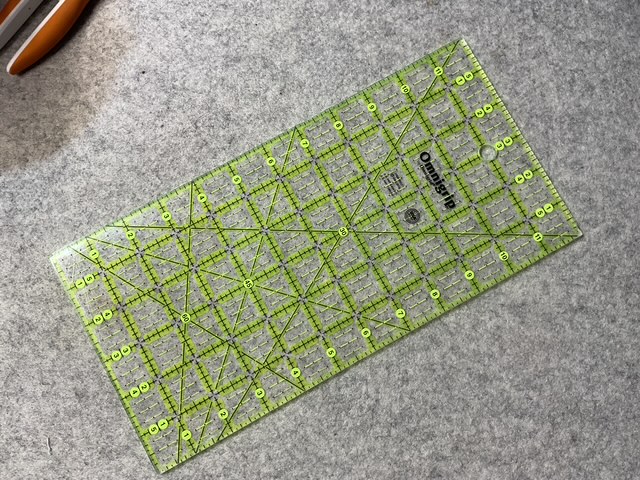
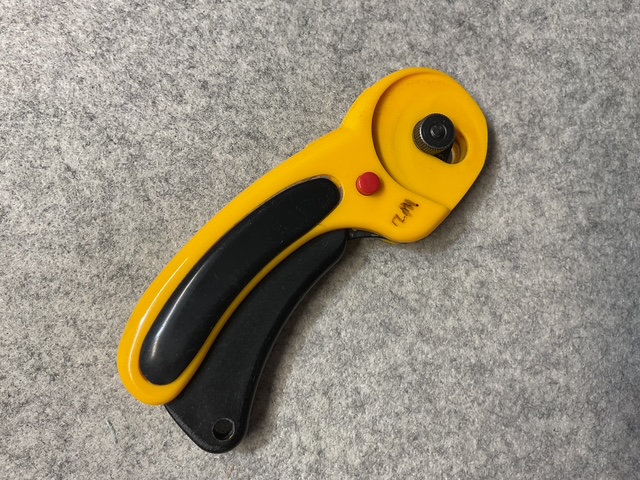
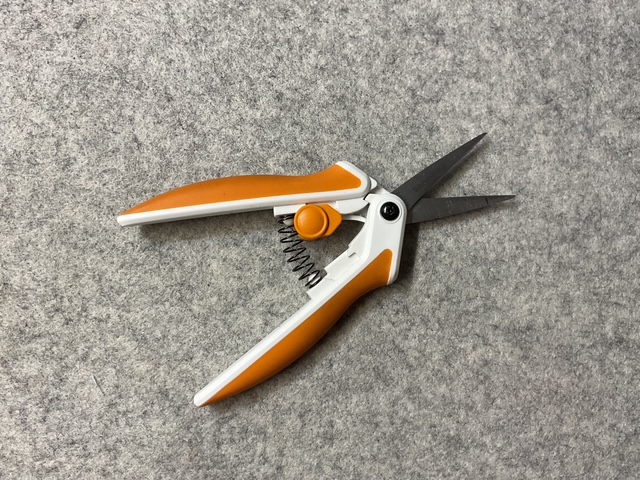
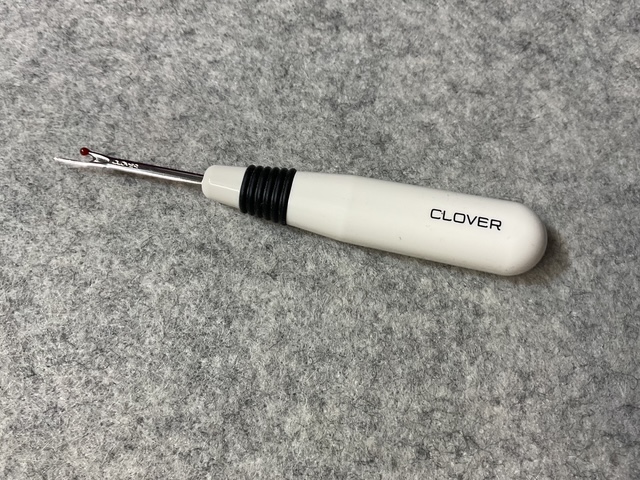
I hope Santa came and filled your stockings with loads of quilty goodies last night. And no lumps of coal.
I thought I’d keep things simple today as I’m sure you don’t have time for a lengthy blog post today of all days.
So, please enjoy!
A Quilters’ Song for Christmas
Feel free to sing along with me (sung to the 12 Days of Christmas)…..
PSST…. I wrote the lyrics myself (and had SEW MUCH fun doing that), so if you share, please include Tricia @ Villa Rosa Designs 2025 as the composer. Thanks.
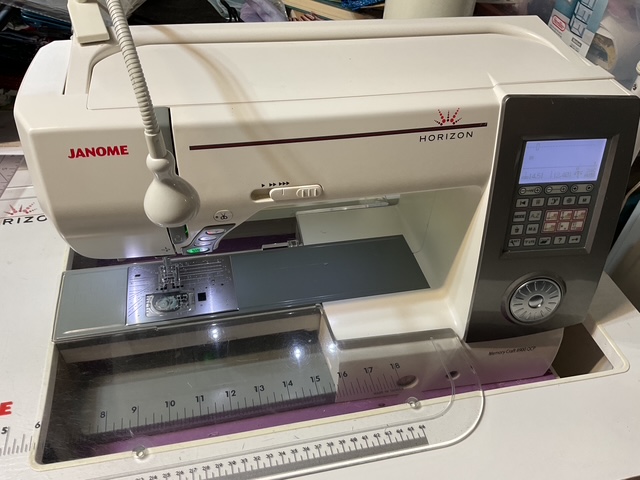
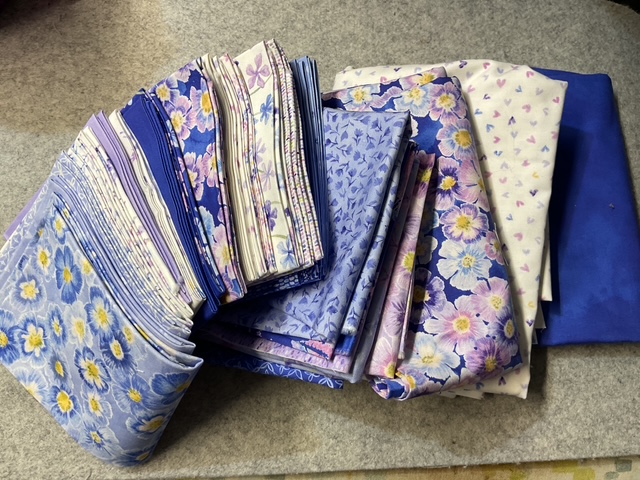
On the first day of Christmas, Santa gave to me – a brand new sewing machine!
Image generated by WordPress AI
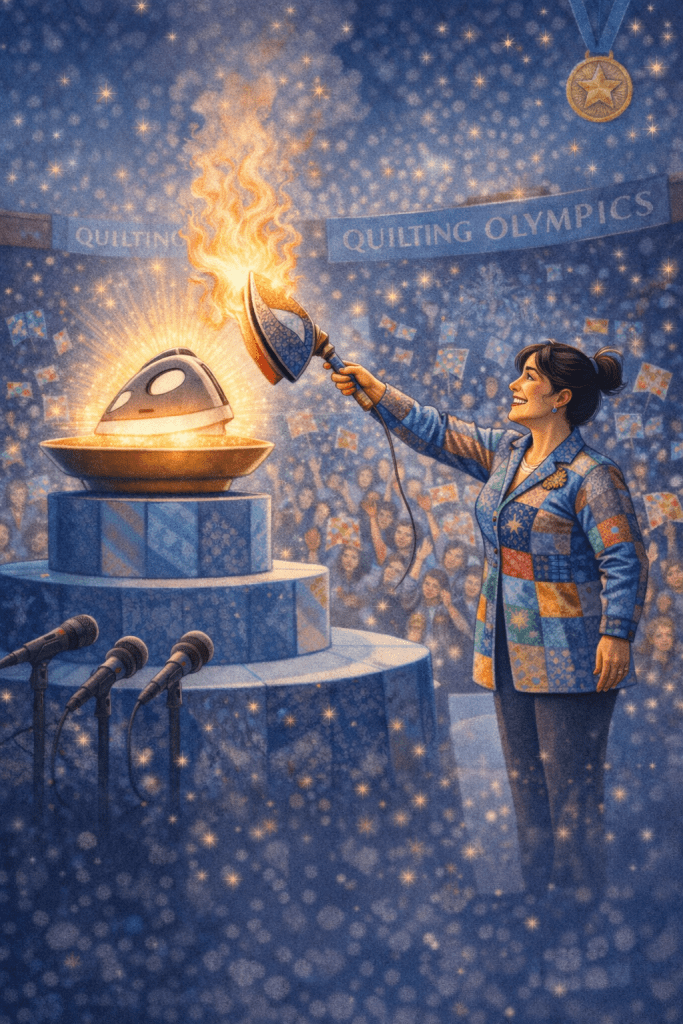
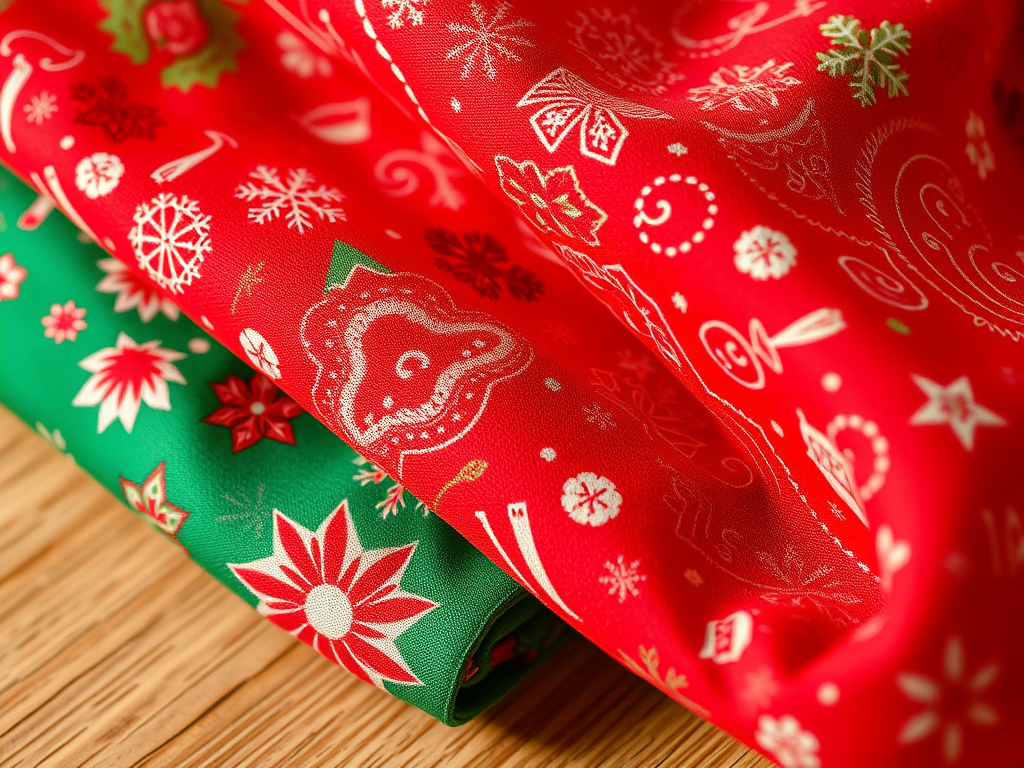
On the second day of Christmas, Santa gave to me – 2 yards of fabric and a brand new sewing machine.
Image generated by WordPress AI
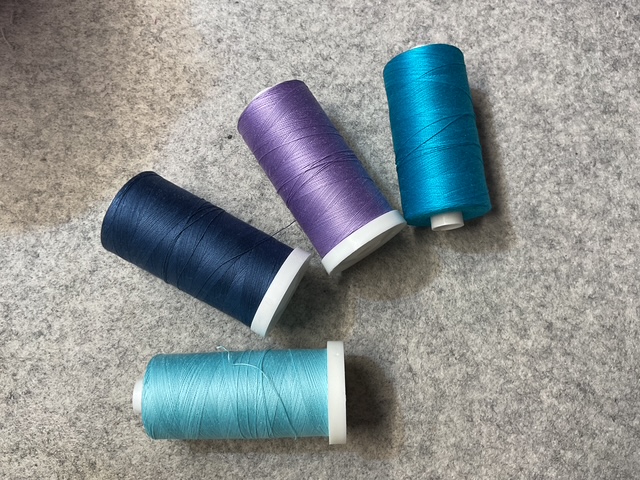
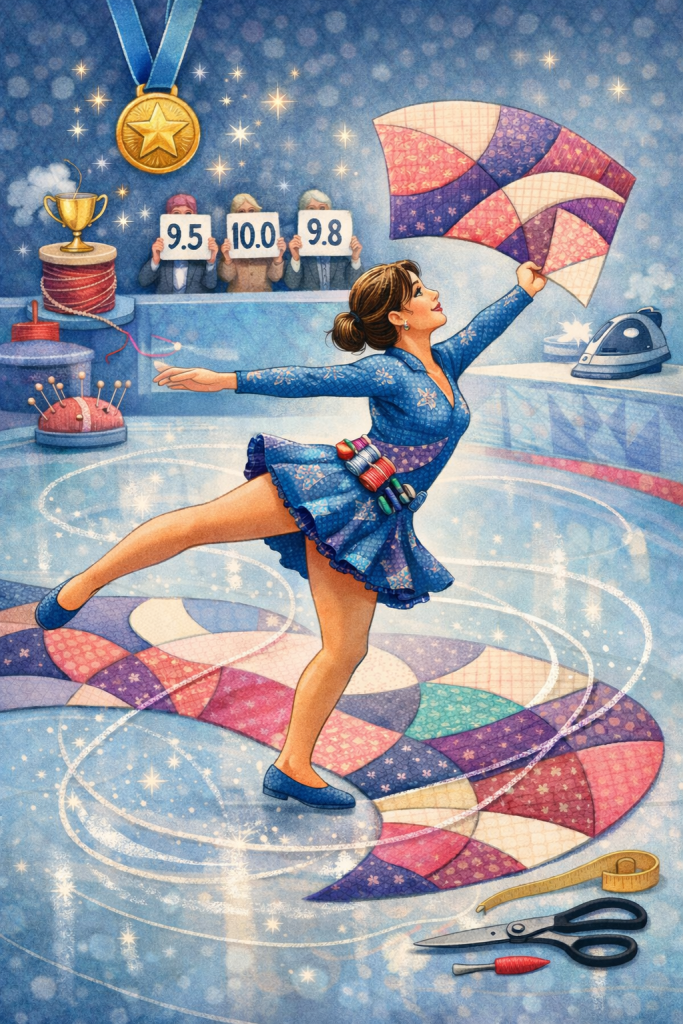
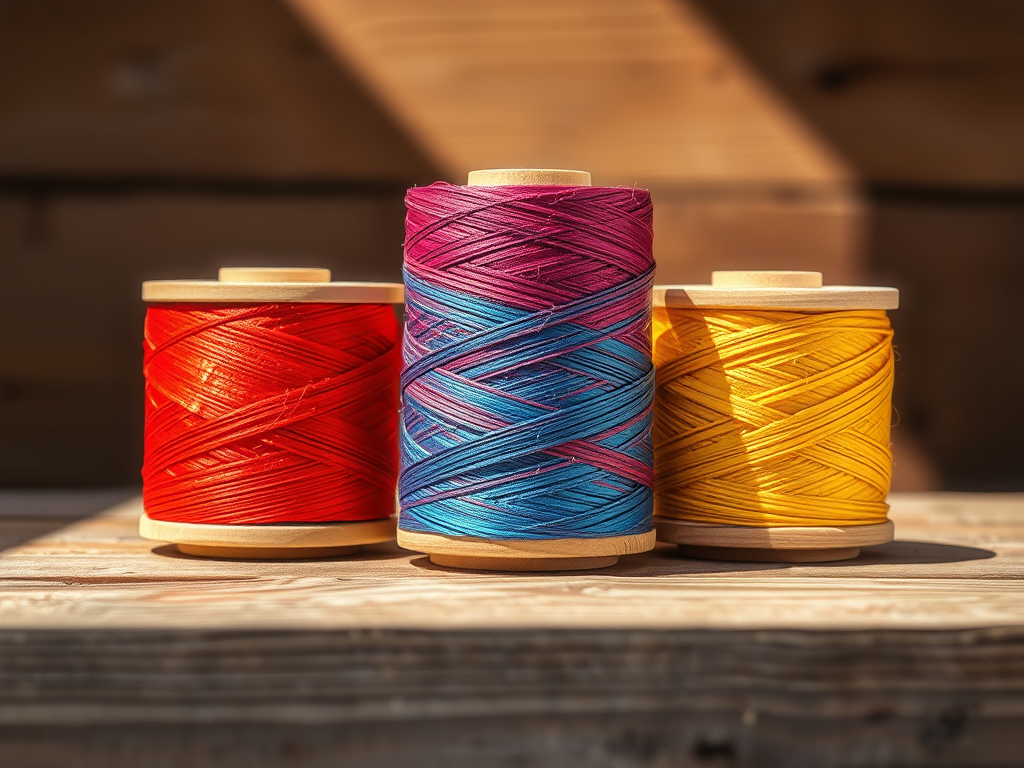
On the third day of Christmas, Santa gave to me – 3 thread spools, 2 yards of fabric, and a brand new sewing machine.
Image generated by WordPress AI
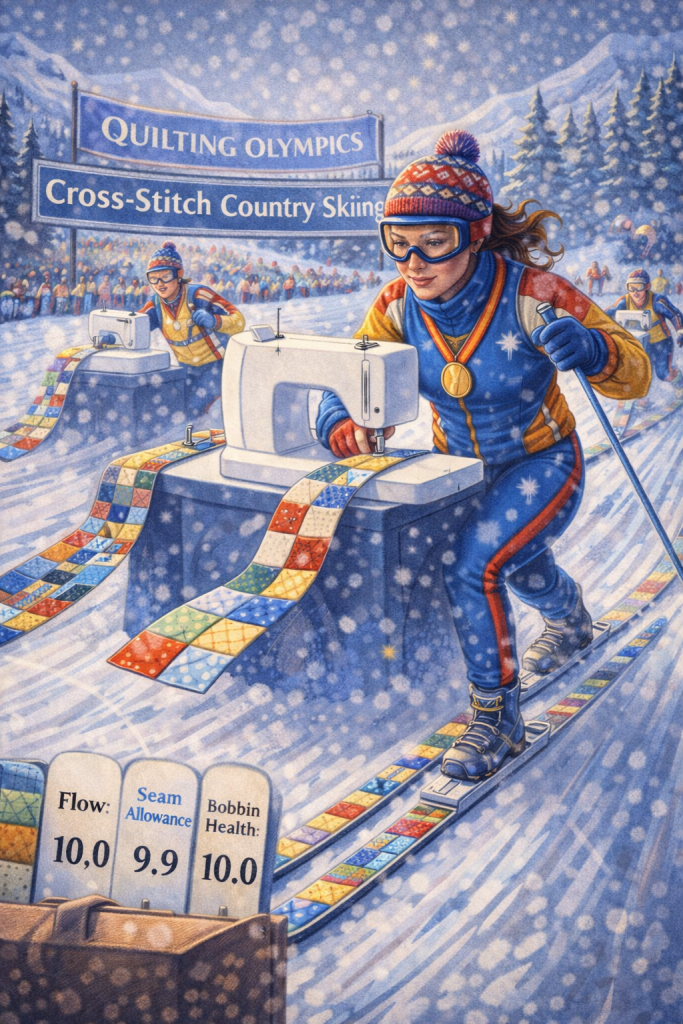
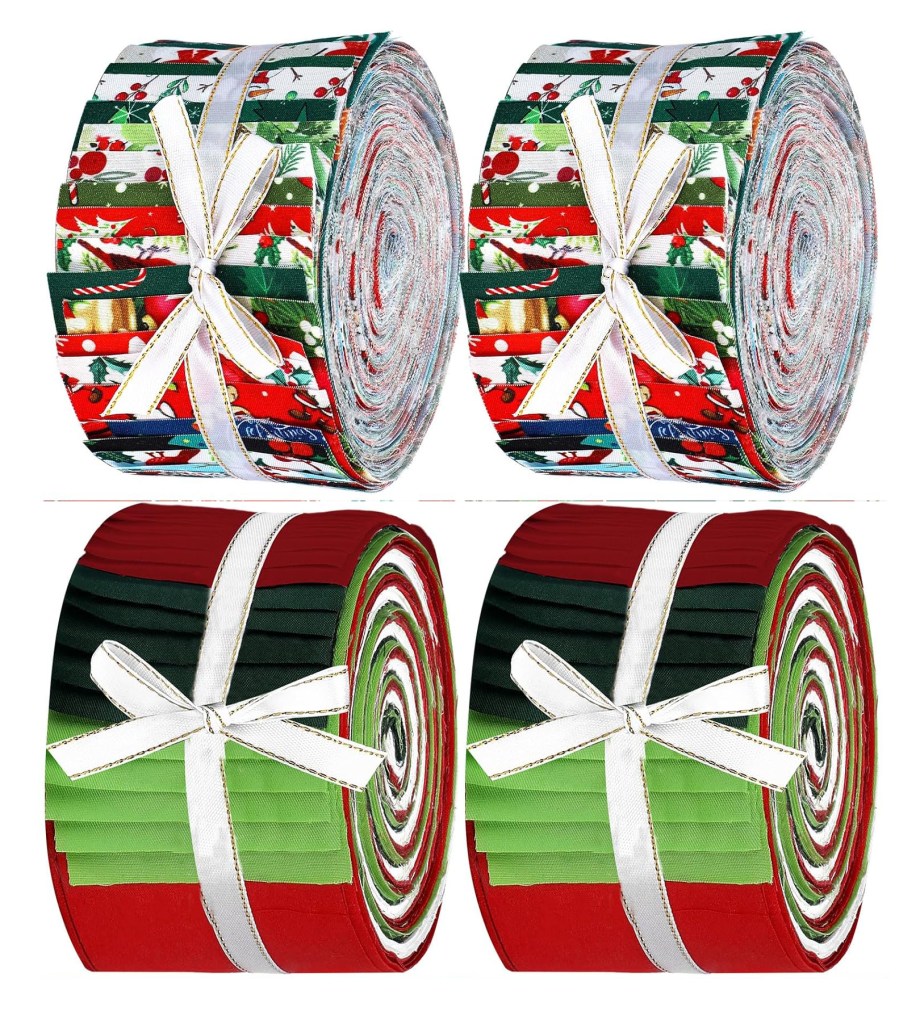
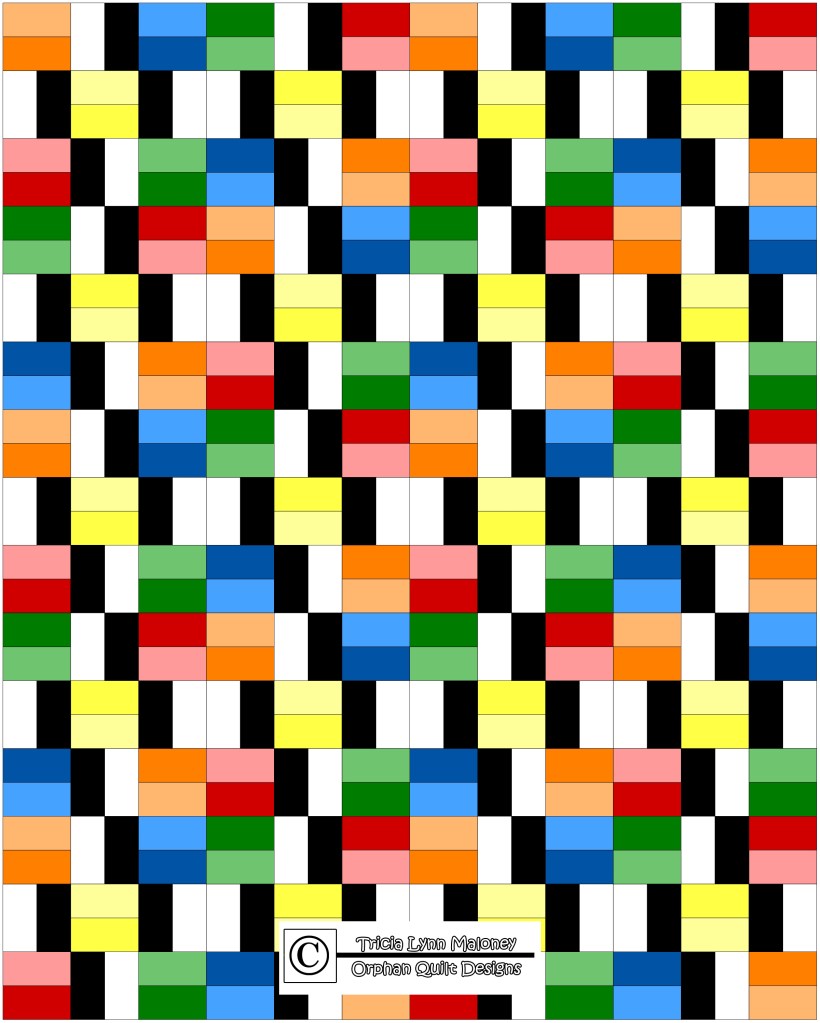
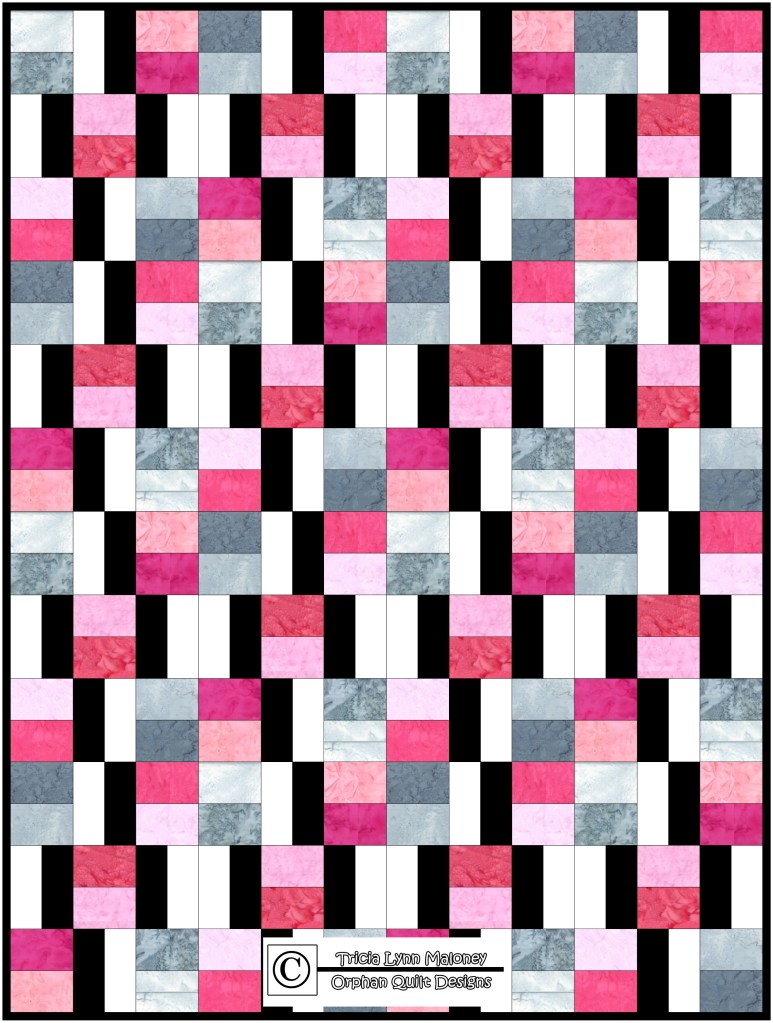
On the 4th day of Christmas, Santa gave to me – 4 Jelly Rolls, 3 thread spools, 2 yards of fabric, and a brand new sewing machine.
Images from Amazon
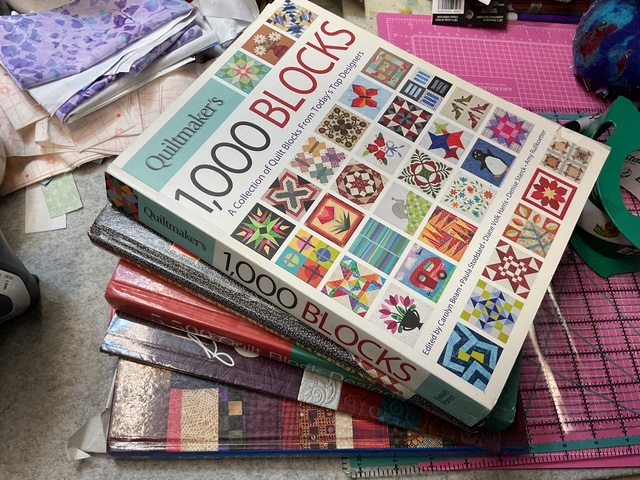
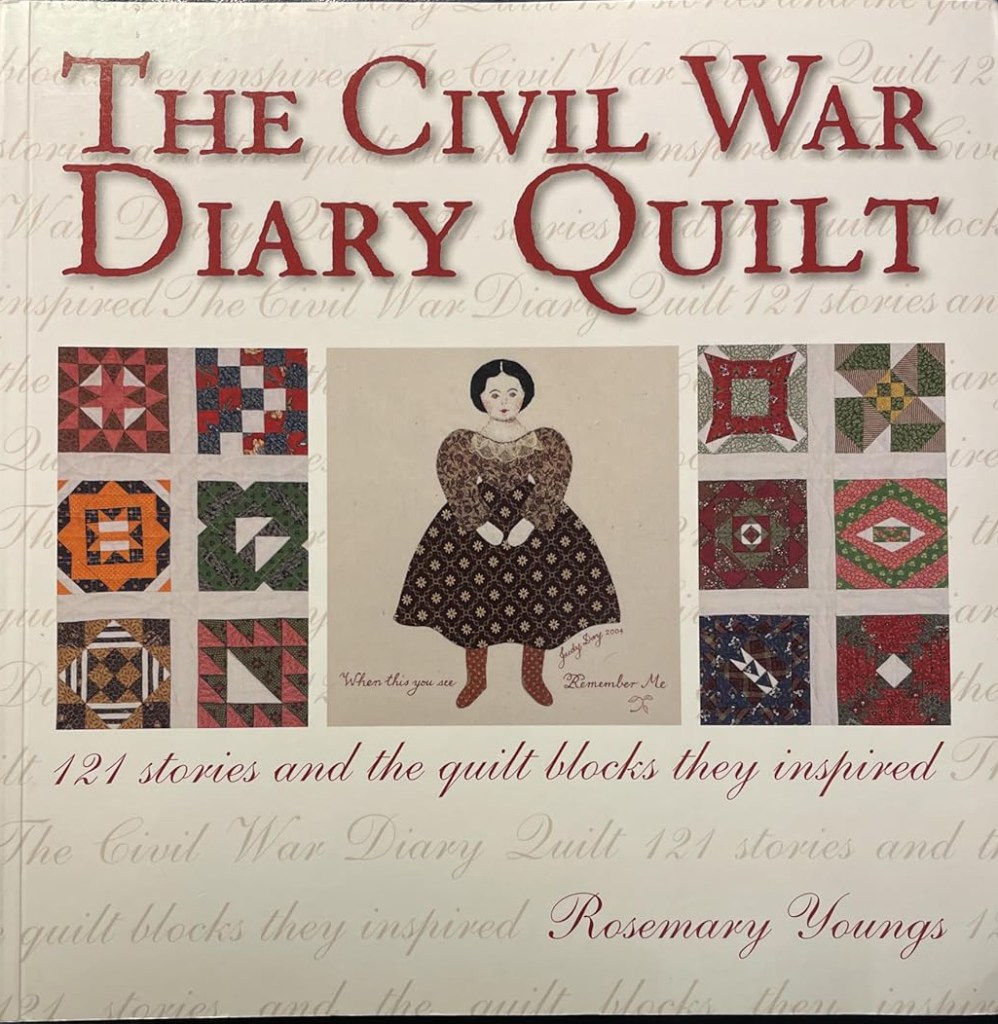
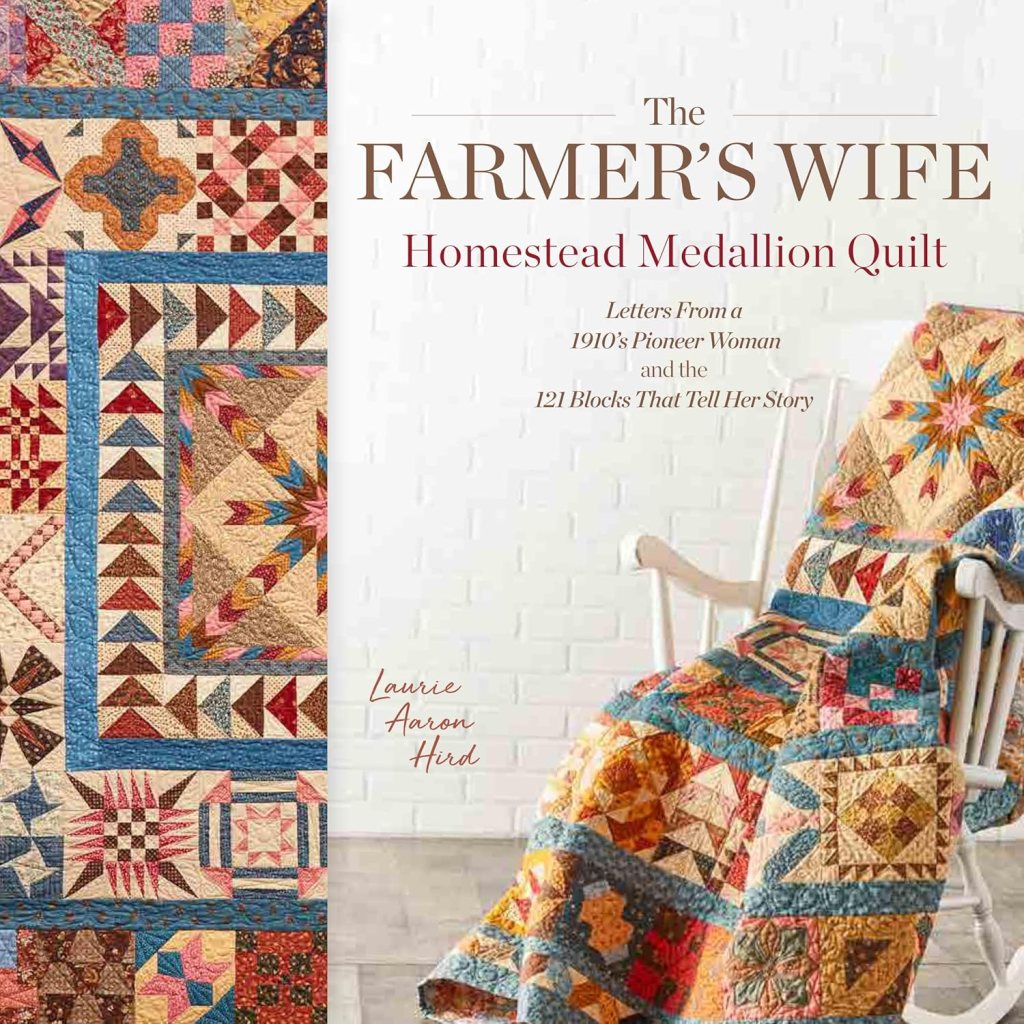
On the 5th day of Christmas, Santa gave to me – 5 new quilt books, 4 Jelly Rolls, 3 thread spools, 2 yards of fabric, and a brand new sewing machine.
Image from moi
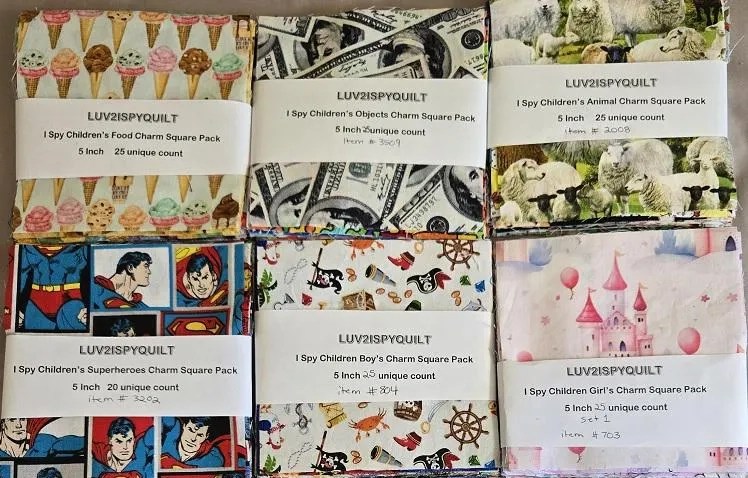
On the 6th day of Christmas, Santa gave to me – 6 diff’rent Charm packs, 5 new quilt books, 4 Jelly Rolls, 3 thread spools, 2 yards of fabric, and a brand new sewing machine.
Image from Etsy
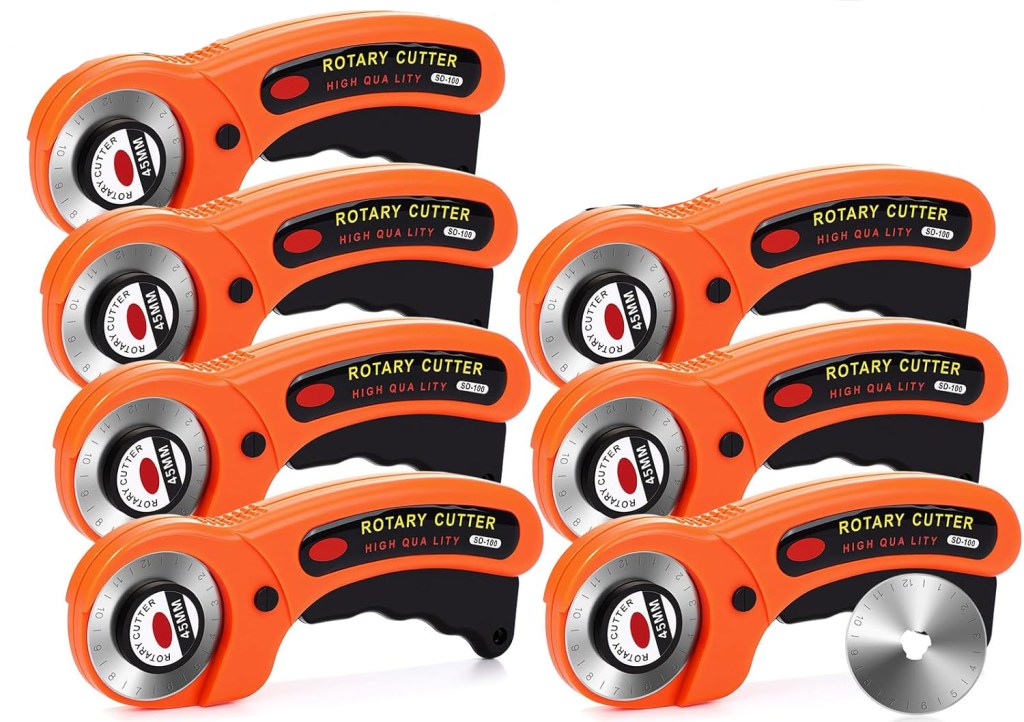
On the 7th day of Christmas, Santa gave to me – 7 rotary cutters, 6 diff’rent Charm Packs, 5 new quilt books, 4 Jelly Rolls, 3 thread spools, 2 yards of fabric, and a brand new sewing machine.
Image from Amazon
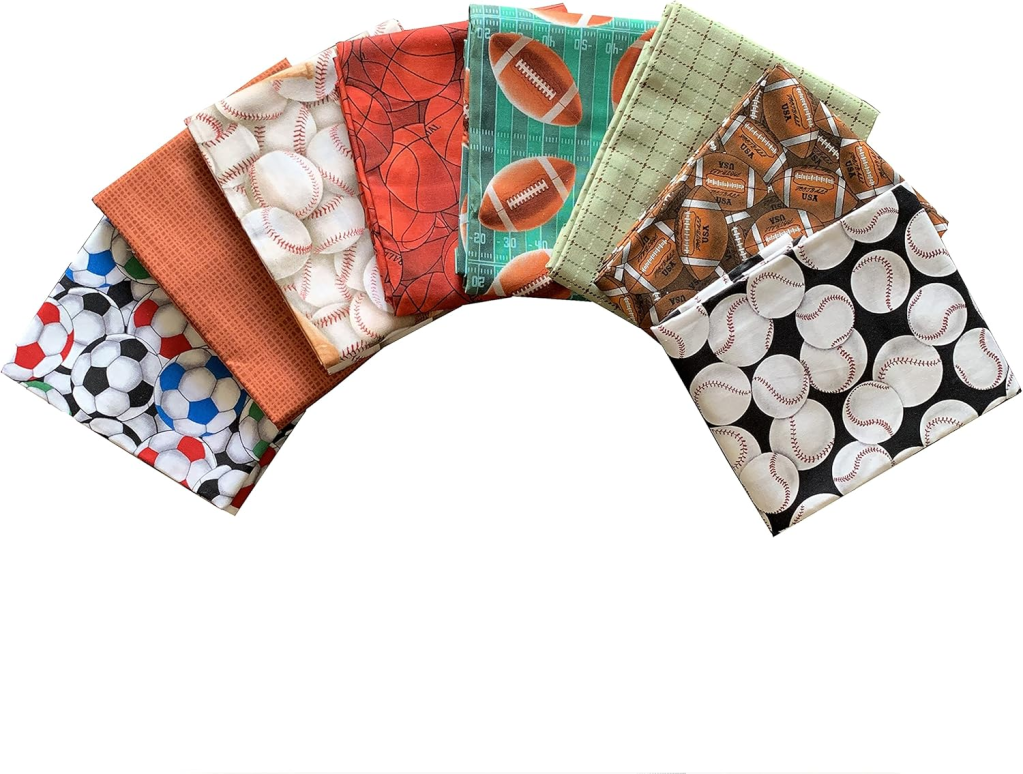
On the 8th day of Christmas, Santa gave to me – 8 fa-at quarters, 7 rotary cutters, 6 diff’rent Charm packs, 5 new quilt books, 4 Jelly Rolls, 3 thread spools, 2 yards of fabric, and a brand new sewing machine.
Image from Amazon
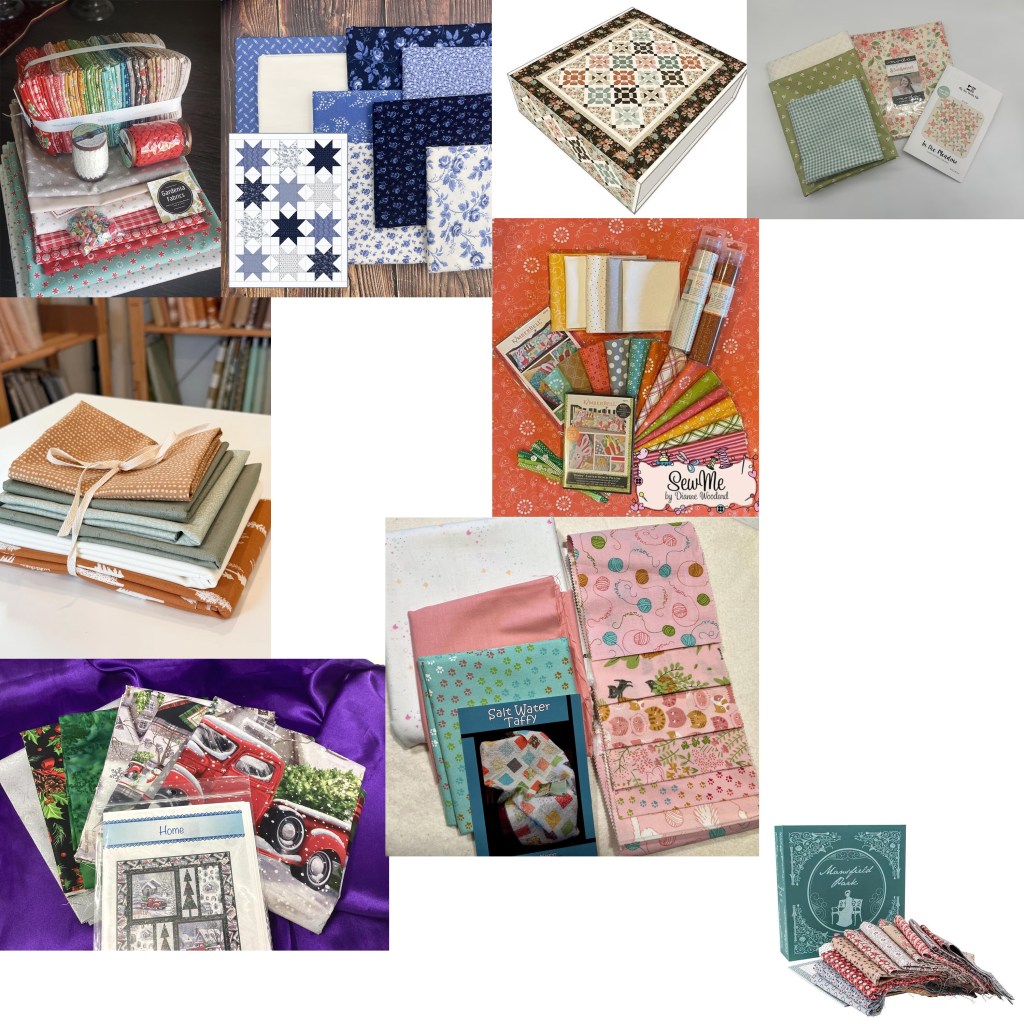
On the 9th day of Christmas, Santa gave to me – 9 king size quilt kits, 8 fa-at quarters, 7 rotary cutters, 6 diff’rent Charm packs, 5 new quilt books, 4 Jelly Rolls, 3 thread spools, 2 yards of fabrics, and a brand new sewing machine.
Images from Etsy
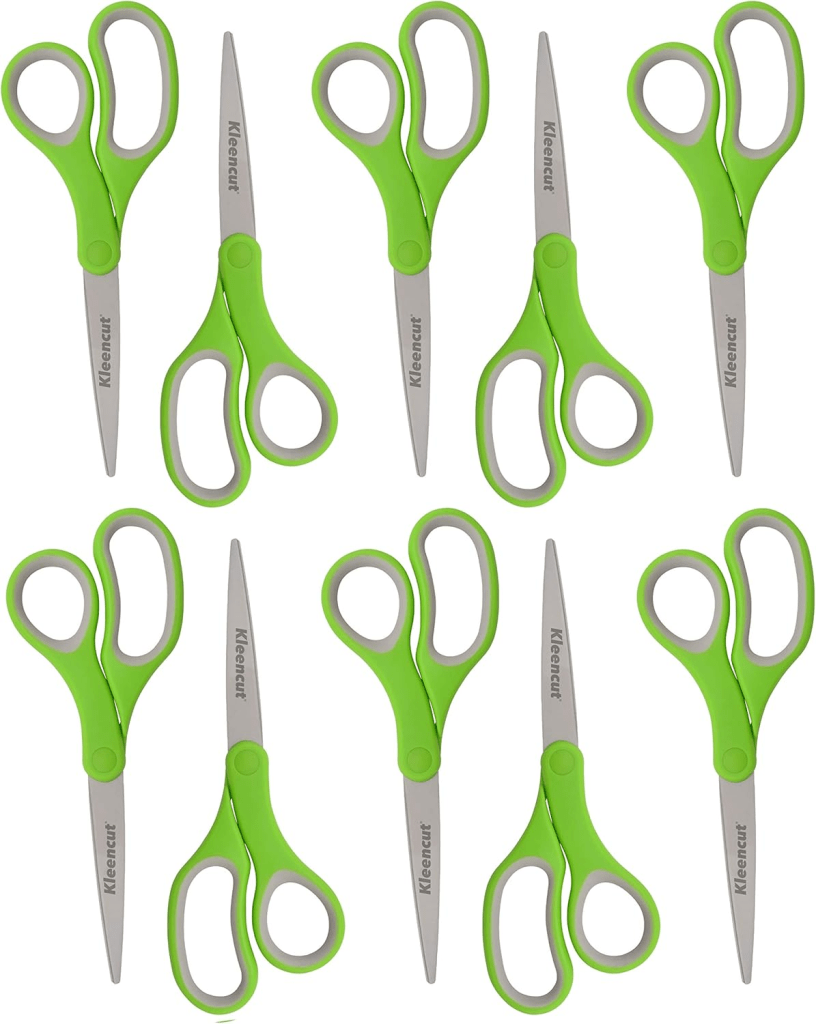
On the 10th day of Christmas, Santa gave to me – 10 pairs of scissors, 9 king size quilt kits, 8 fa-at quarters, 7 rotary cutters, 6 diff’rent Charm packs, 5 more quilt books, 4 Jelly Rolls, 3 thread spools, 2 yards of fabrics, and a brand new sewing machine.
Image from Amazon
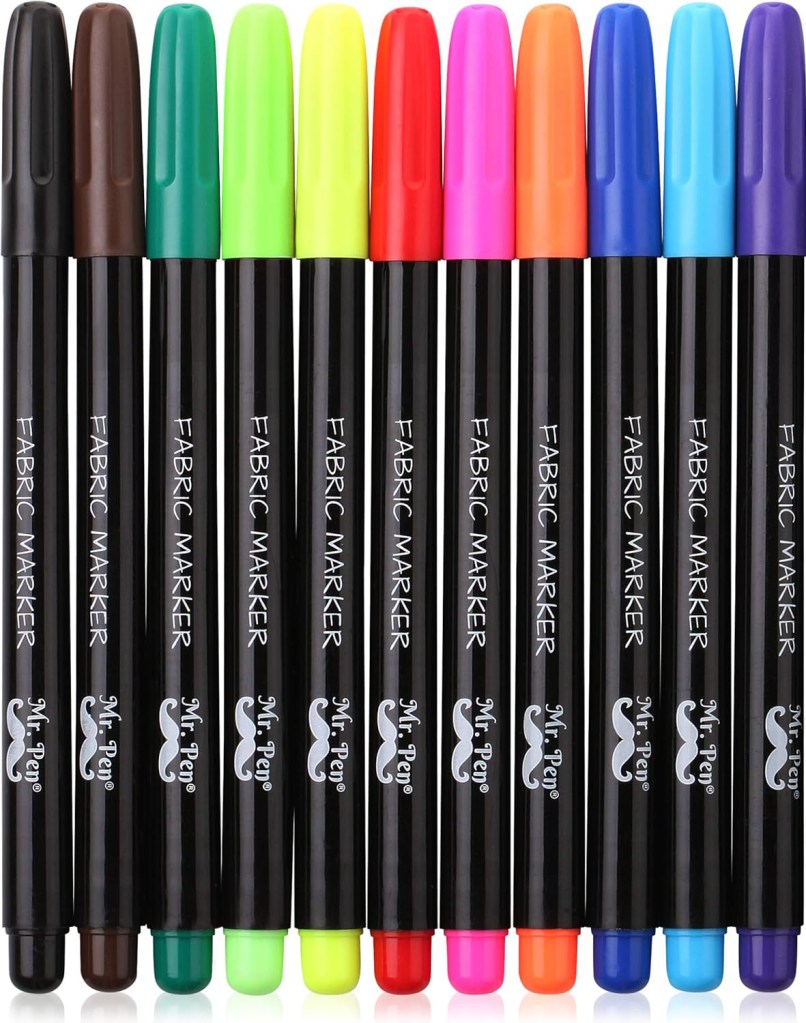
On the 11th day of Christmas, Santa gave to me – 11 fabric markers, 10 pairs of scissors, 9 king size quilt kits, 8 fa-at quarters, 7 rotary cutters, 6 diff’rent Charm packs, 5 more quilt books, 4 Jelly Rolls, 3 thread spools, 2 yards of fabric, and a brand new sewing machine.
Image from Amazon
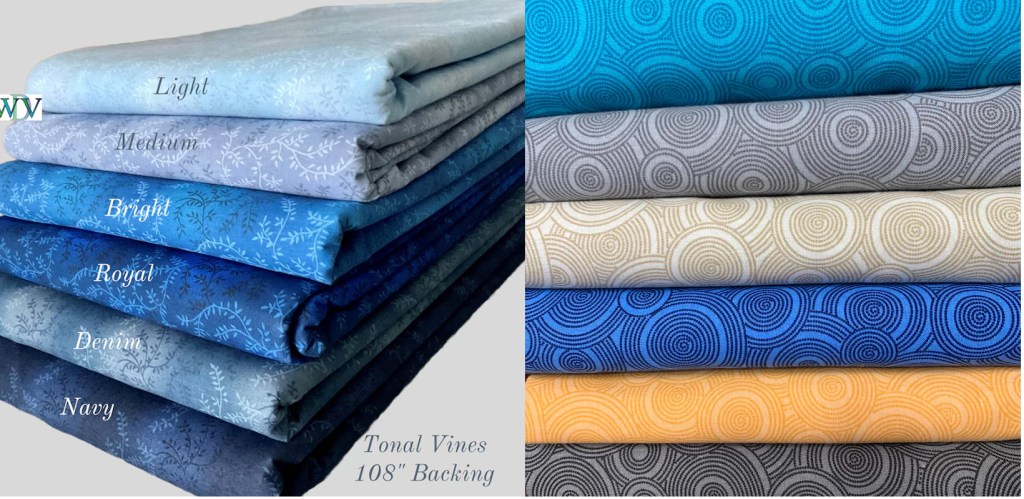
On the 12th day of Christmas, Santa gave to me – 12 yards of backing, 11 fabric markers, 10 pairs of scissors, 9 king size quilt kits, 8 fa-at quarters, 7 rotary cutters, 6 diff’rent Charm packs, 5 more quilt books, 4 Jelly Rolls, 3 thread spools, 2 yards of fabric, and a brand new sewing machine!
Images from Etsy
Have a wonderful Happy Jolly Safe MERRY CHRISTMAS!
What’s shakin’? Me, just sitting here thinking about which quilt block we’re going to feature today to wrap up our Design a Quilt series. I’m kind of bummed that today’s the final post in this series, but it is true that all good things must come to an end. That makes sense, because, if they didn’t then we would never have the opportunity to find new good things.
I’ve also been thinking about how you, dear readers, can utilize what we’ve covered in this series. The biggest thing that occurs to me, of course, is designing your own quilts using common quilt blocks. Common quilt block designs (like Nine Patch, Irish Chain, Four Patch, Sawtooth Star, etc., etc.) would most likely be considered in the public domain.
Want to find public domain quilt block designs? Just Google it! Pretty much all quilt block designs (and everything else in print) from publications before 1923 are considered public domain. Another idea is to look up quilt block history to see if the blocks were used before 1923. You can also invest in a quilt block reference or 2.
For those of you who may not have heard of Barbara Brackman – she is probably the most well-known quilt historian in the USA, if not the world. Her book is meticulously researched and includes a reference section with original publications for the blocks in the book. Believe me, you will never run out of inspiration – there are over 4000 blocks in the book!
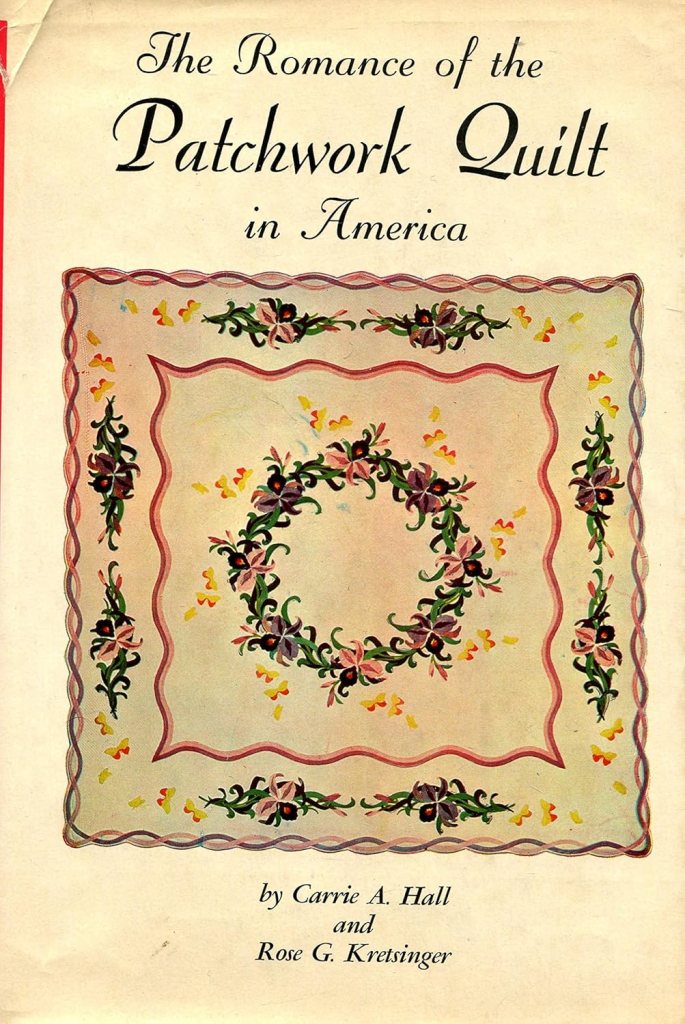
Another oldie but goodie block reference is The Romance of the Patchwork Quilt in America by Carrie A. Hall and Rose G. Kretsinger. This book was published in 1935 and is actually in the public domain itself. It includes A LOT of old pieced and appliqued quilt blocks and quilts along with historical notes. You might be able to find a used copy as its out of print, or I’ve included a link to an e-book version above.
What does all this mean, really?
If you want to sell quilts, the best way to do that is to design your own instead of using someone’s copyright-protected pattern, which, as we’ve previously explored, has the potential to cause you legal issues down the road.
Want to be a quilt designer?
Create/sell your own patterns?
Design quilts for quilt magazines?
Write a quilt book?
Easy peasy, use public domain/common quilt blocks to create your own designs. Then your designs would be copyright protected, too.
Huh. Kind of mind-blowing, isn’t it? That doing something so simple – and FUN! – can become your own copyright-protected work.
Just something for you to think about….
Let’s move on to today’s block: Drunkard’s Path.
Let’s Design a Quilt: The Drunkard’s Path Block
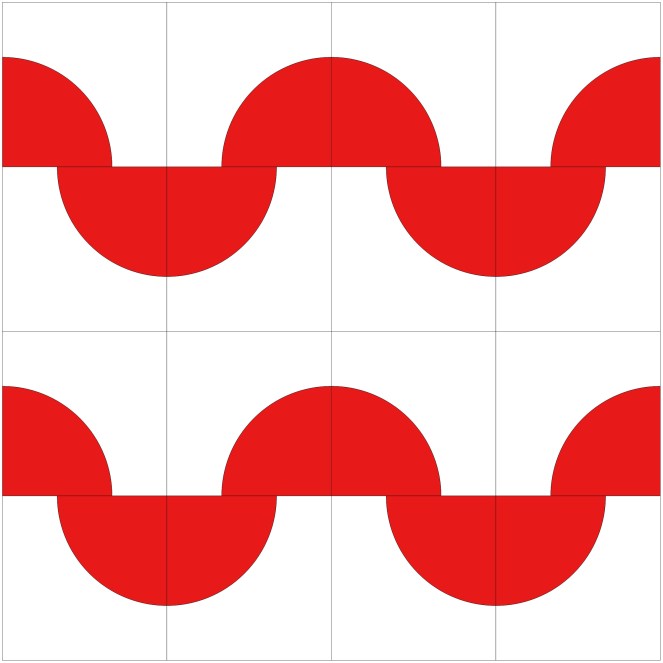
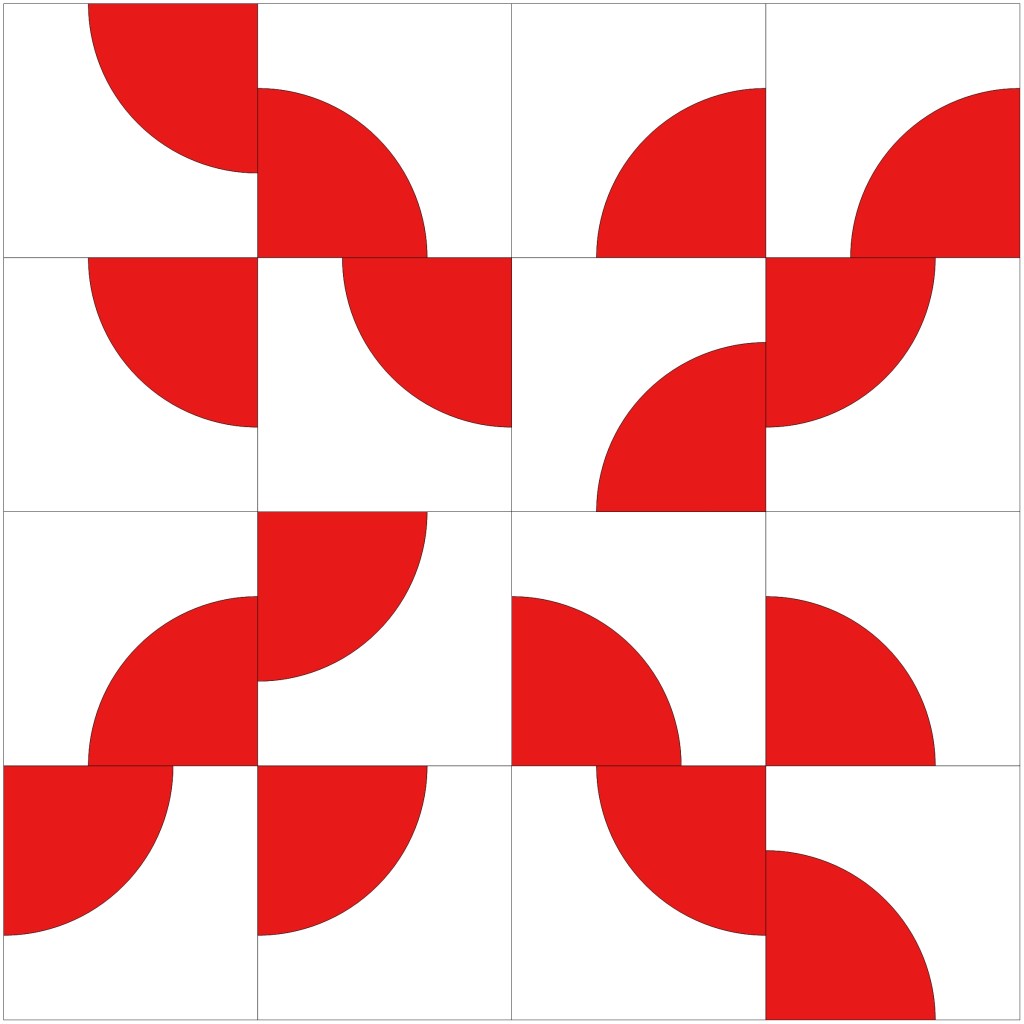
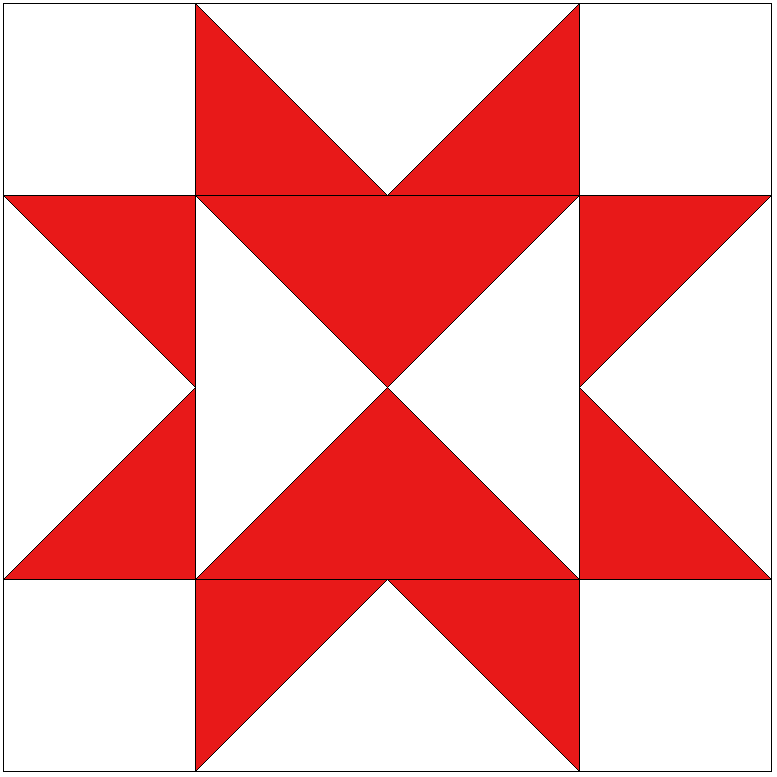
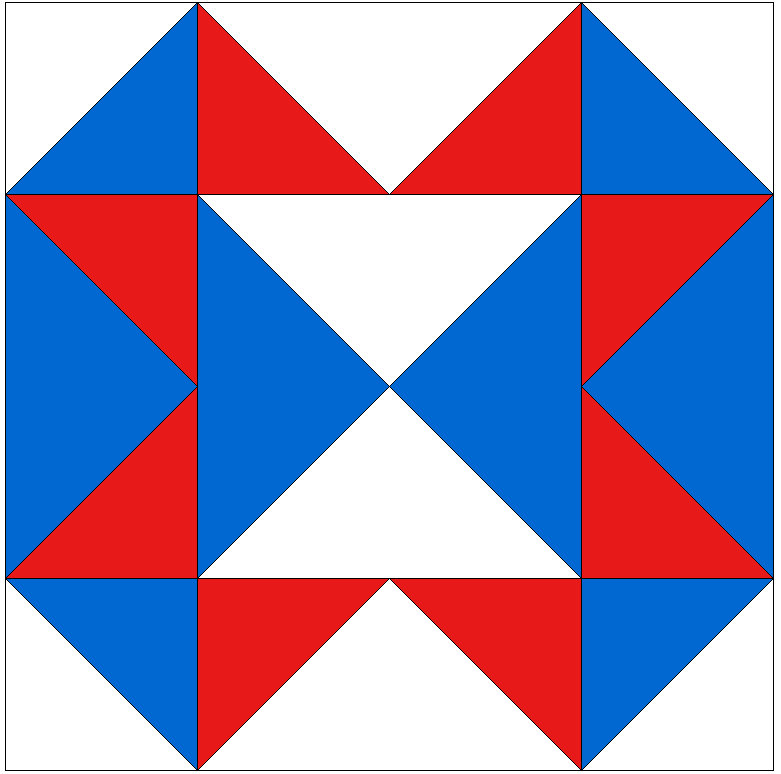
Here is a basic Drunkard’s Path block unit.
The Drunkard’s Path block has a very interesting and rich history with roots in ancient Egypt. The block was popular with the Underground Railroad and the Women’s Temperance movement in the US. For a more and detailed history, please check out this article on the AccuQuilt blog: A History of the Drunkard’s Path Quilt Patterns.
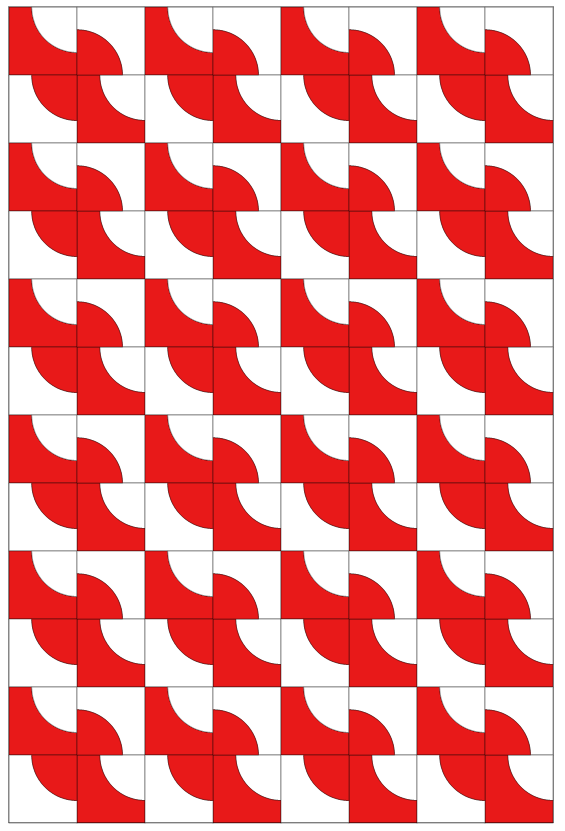
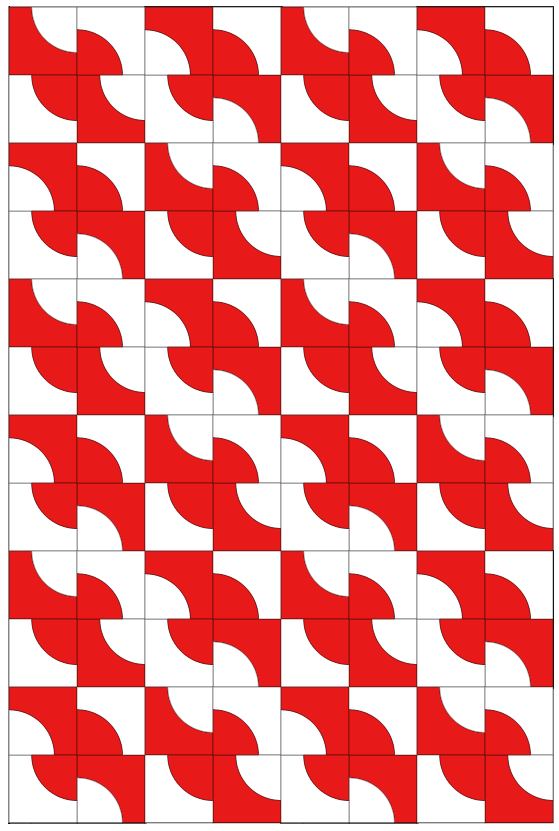
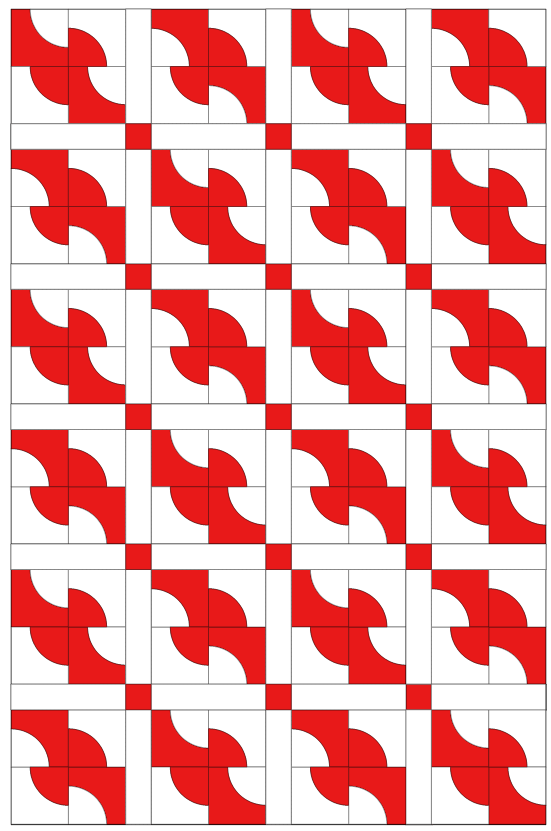
Today, we are going to explore some of the interesting ways you can arrange this humble block unit, add sashing or not, and using color to tweak the design.
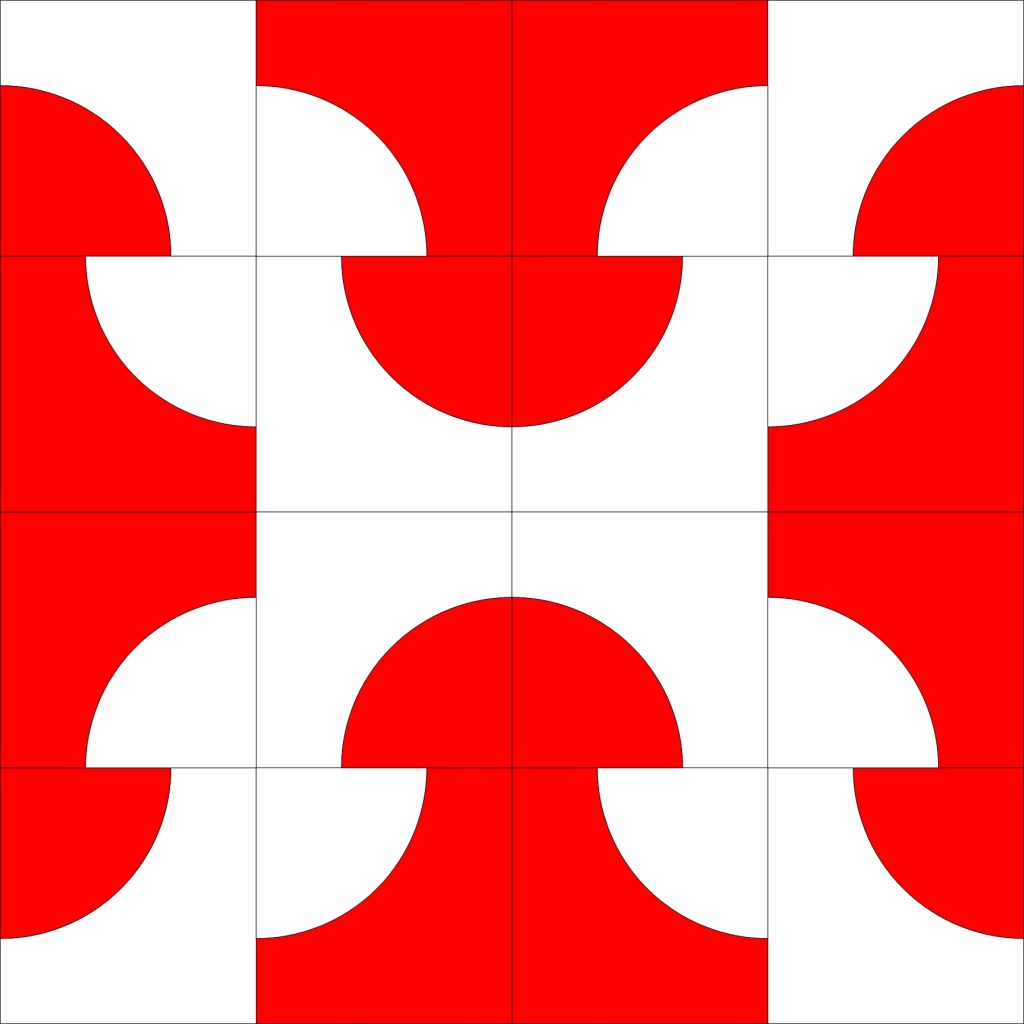
Before we can design a Drunkard’s Path quilt, we need to explore some of the many many different Drunkard’s Path variations. Believe me, these ideas are just the tip of the iceberg.
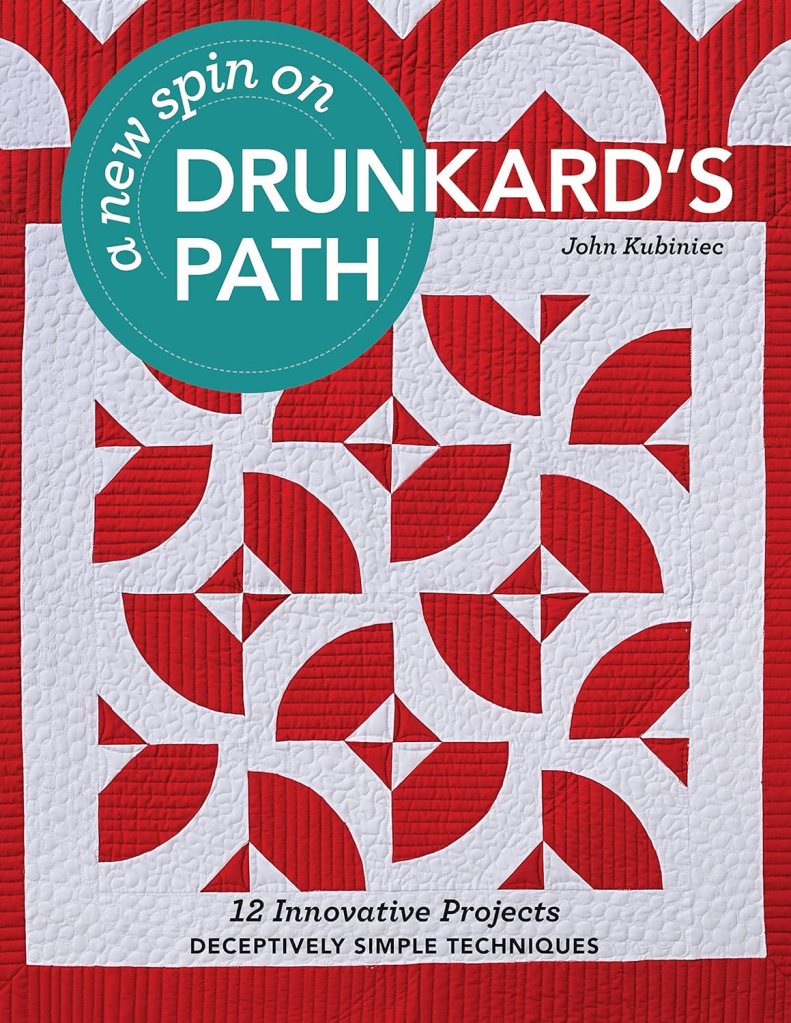
Here are a few books to explore more Drunkard’s Path designs.
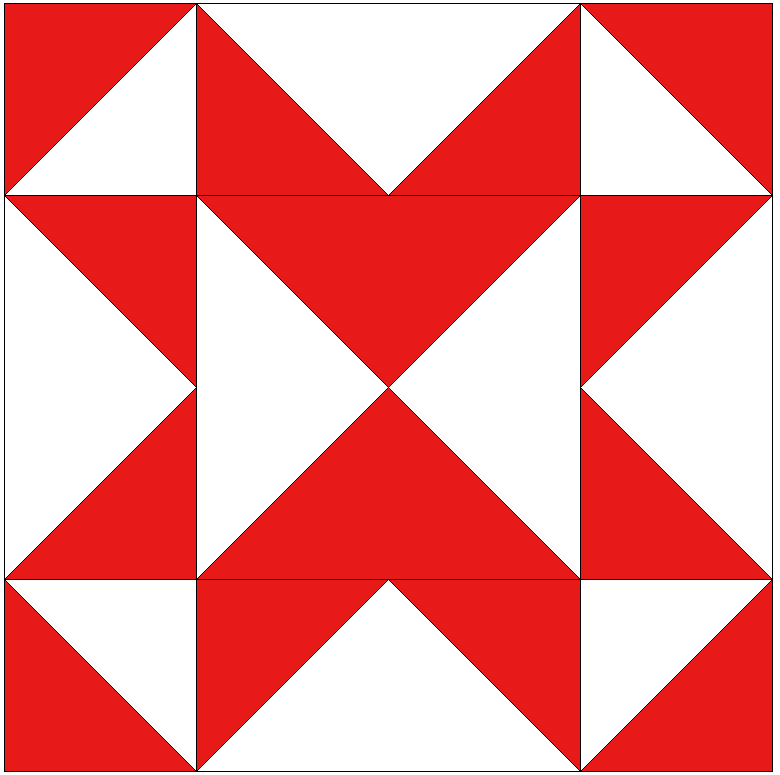
Here are different ways to arrange the units in a 2 x 2 layout. Which one is your favorite?
Okay, let’s try a 3 x 3 grid.
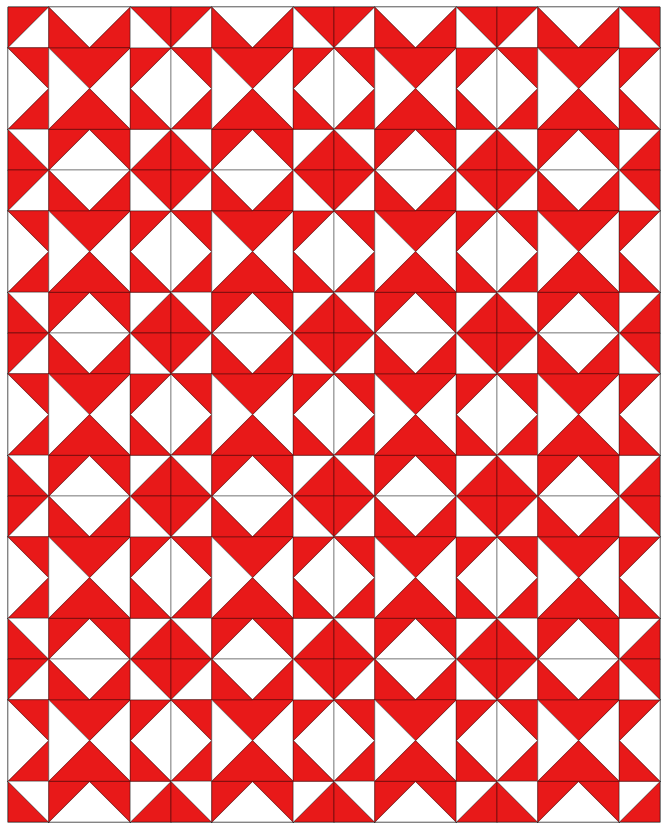
Now let’s see what a 4 x 4 grid looks like.
So I think you get the idea about the endless possibilities of the Drunkard’s Path block unit. Why don’t you try a 5 x 5 grid or a 6 by 6 grid to see what you can create?
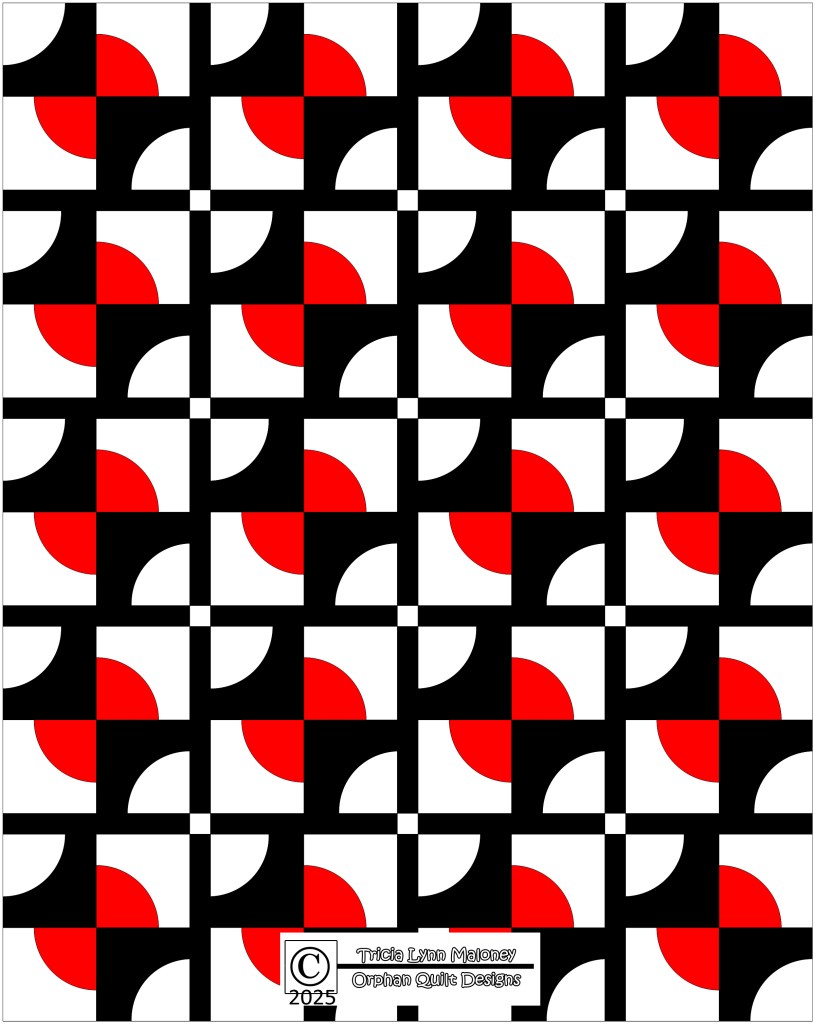
Now let’s play with the color arrangement by swapping reds and whites in order to create new and different designs from the ones above.
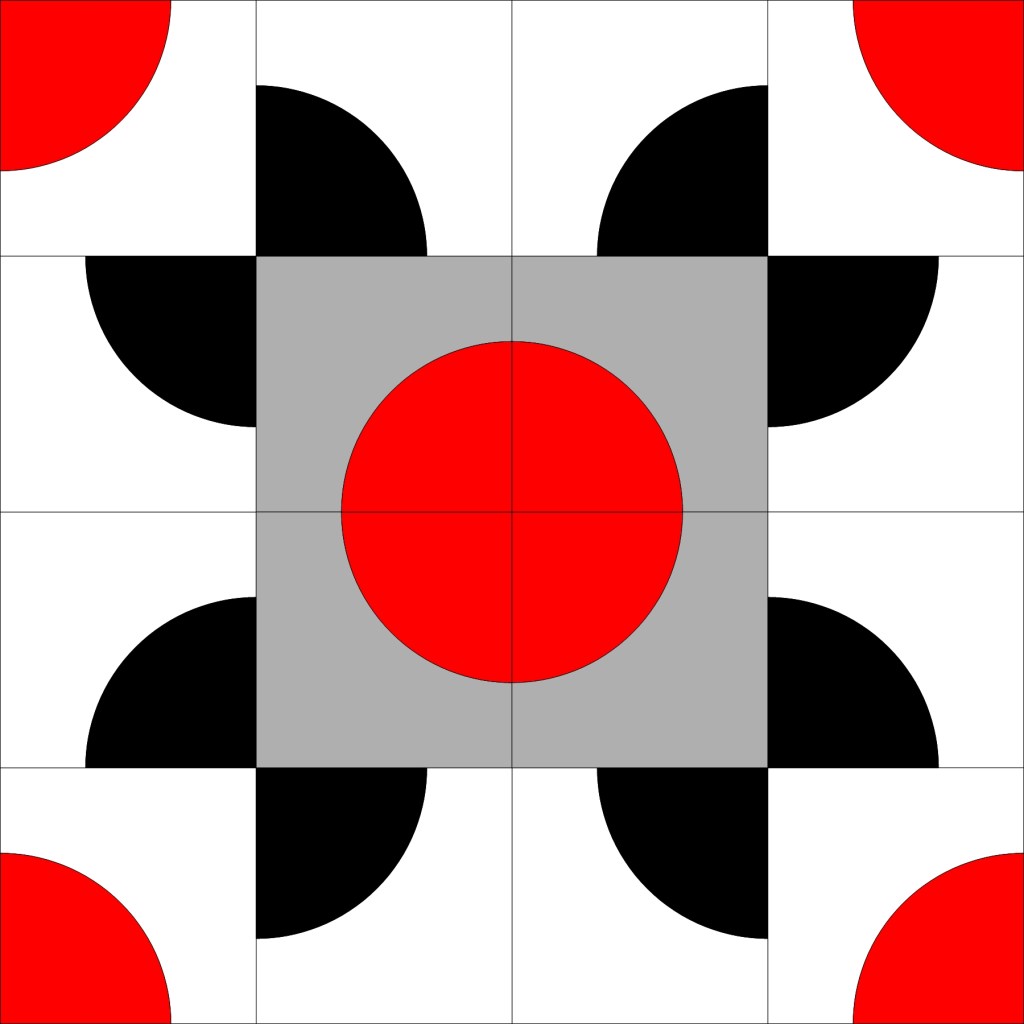
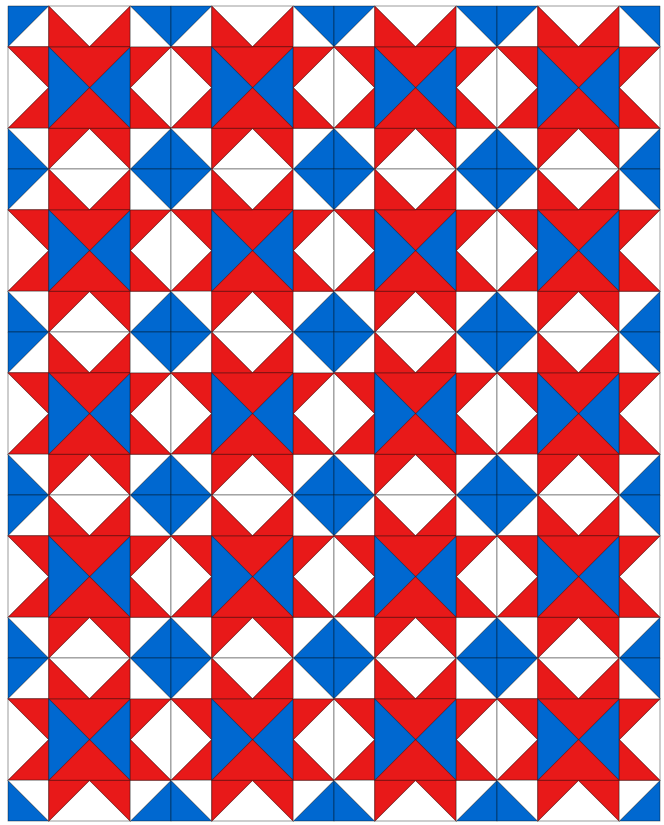
Let’s add more colors to our blocks, shall we? That way we can get even more interesting variations. You can see how adding more color can change a block design or even add a secondary design. Never underestimate the power of adding more color.
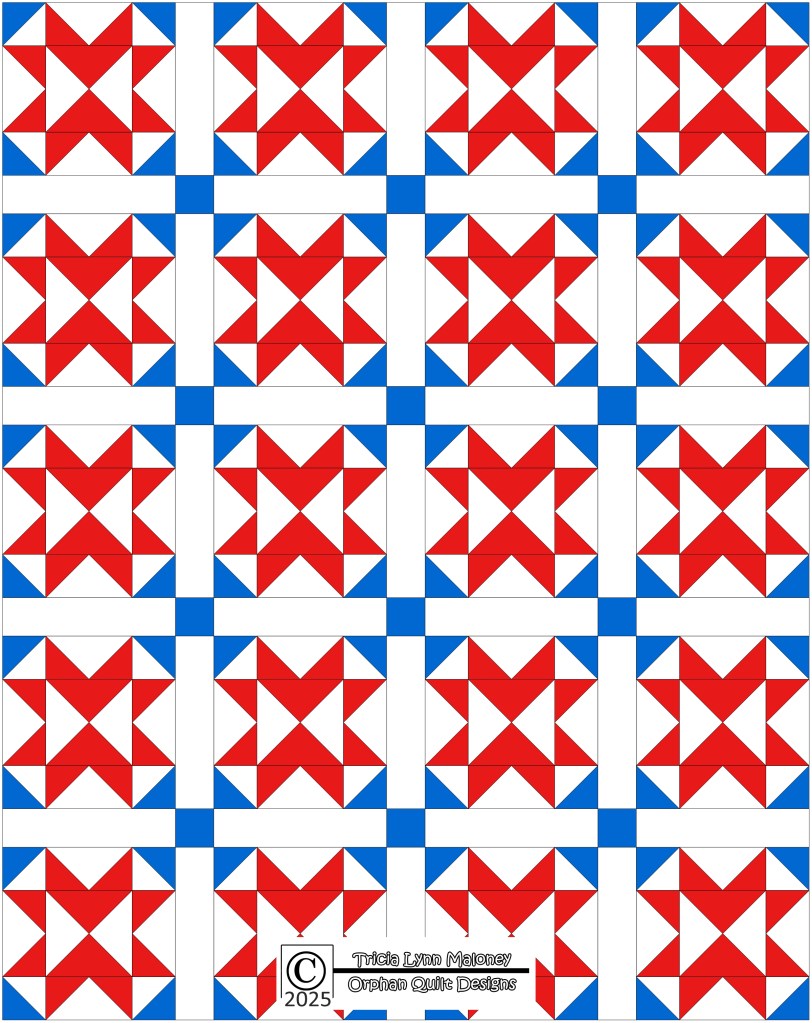
Okay, now it’s time to create quilt designs using some of the variations above! Let’s start with this bird variation.
I like this bird quilt arrangement very much, but I don’t love how all the birds are facing the same way.
Let’s turn the birds in different directions. Hmmm. I only see a small difference here. Let’s keep going.
Better with sashing and sashing squares, but I’m still not too excited by it.
Okay, let’s remove the sashing and turn the birds some more to see what happens. AHA! Yes, this is more like it.
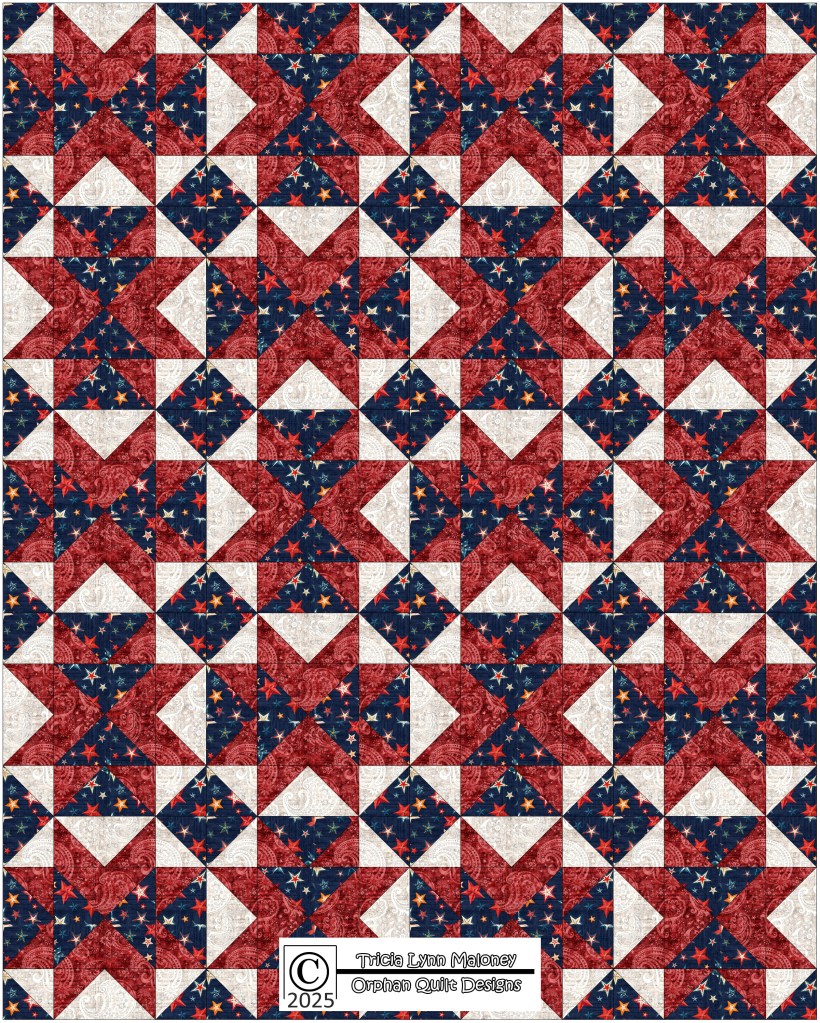
I think we can call this a finished design. Let’s add some fabric. It would definitely make a bold 2 color quilt as long as you have strong contrast between the colors like the red and white example above. But let’s add more than 2 colors.
Yup, this one rocks. I’m using fabrics from QT’s American Spirit collection. I took a chance and flip flopped the fabrics in the centers and it really sets this design off.
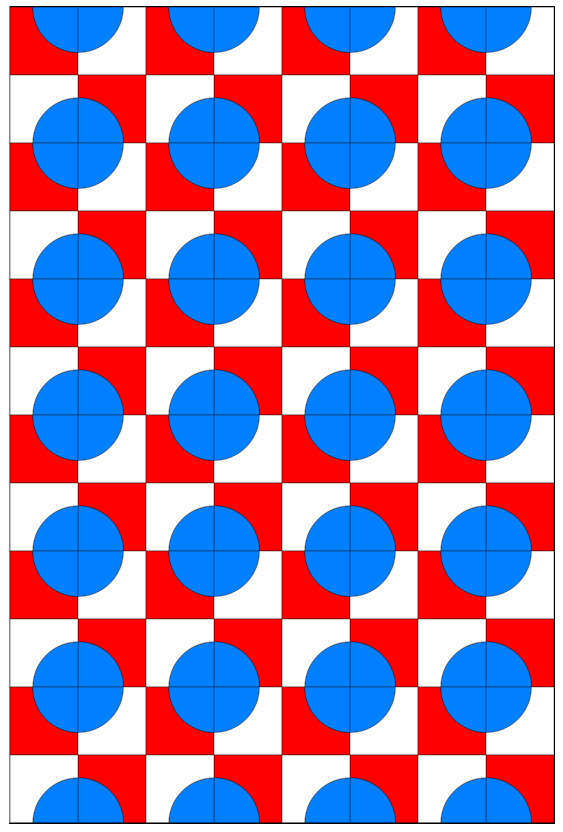
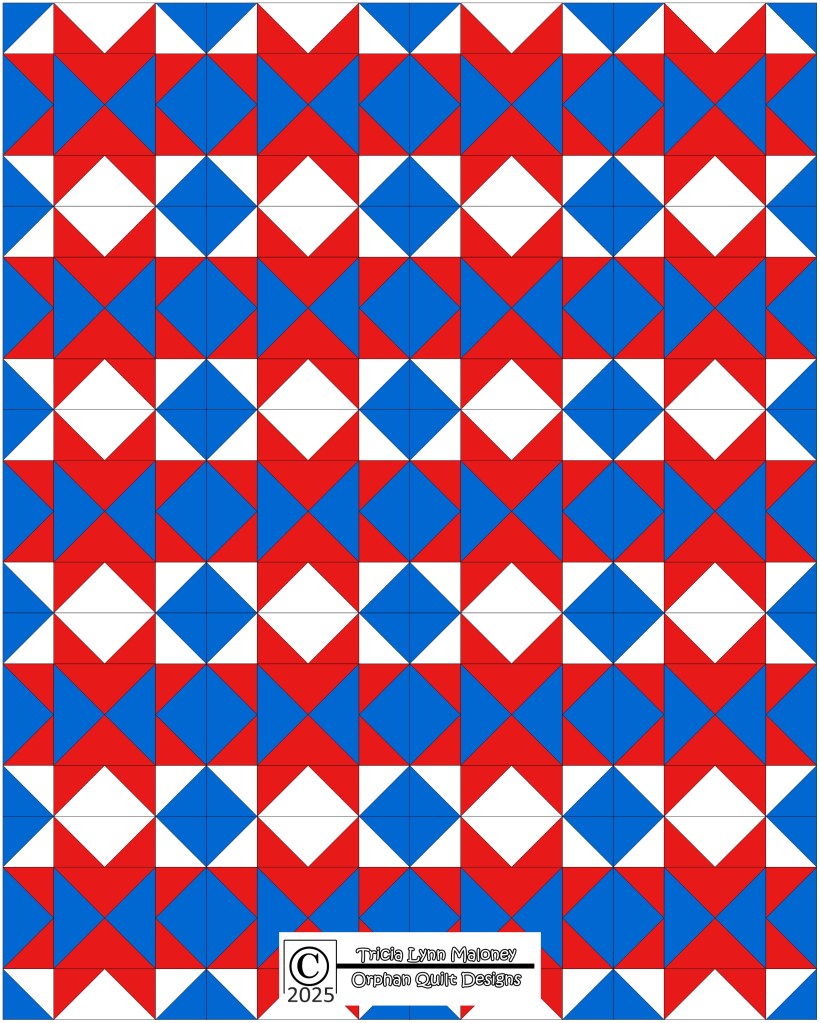
Now let’s try a different Drunkard’s Path block variation from above.
I like this interesting block arrangement, especially with the checkerboard behind the blue circles. Very 3-D. But I bet we can tweak it to change it from an okay quilt to a WOW quilt.
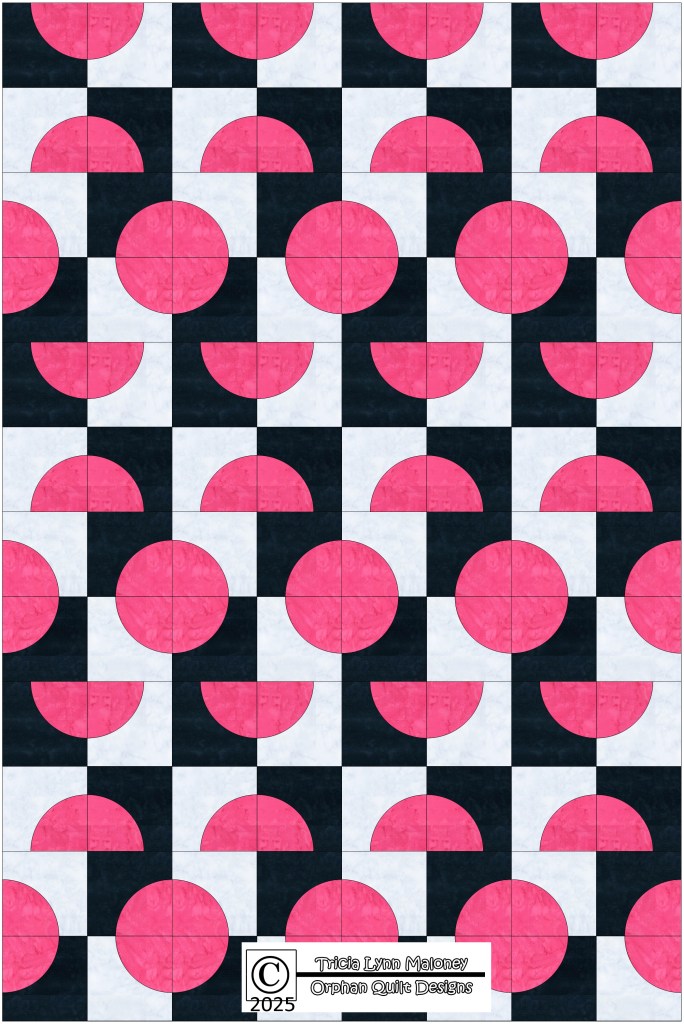
Just a quick turn of some blocks and we get this design with lots of movement. Kind of fun, huh?
Let’s add some fabric to this one. Can’t wait to see it! Here’s a selection of yummy Hoffman batiks. This super mod design has a lot going for it!
Let’s play with another block.
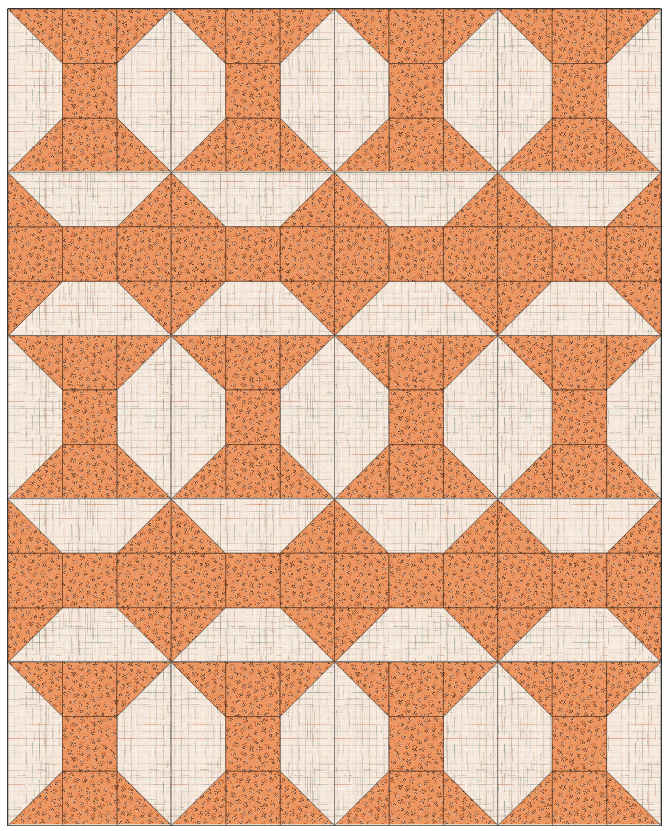
All right, let’s see what this block looks like in a quilt. Gosh, I’m really liking this one. It reminds of a tile floor. But I think we can tweak it a bit to make it outstanding.
YES! This is the finished design. Adding sashing and sashing squares was just the tweak I needed, which added a wonderful secondary design.
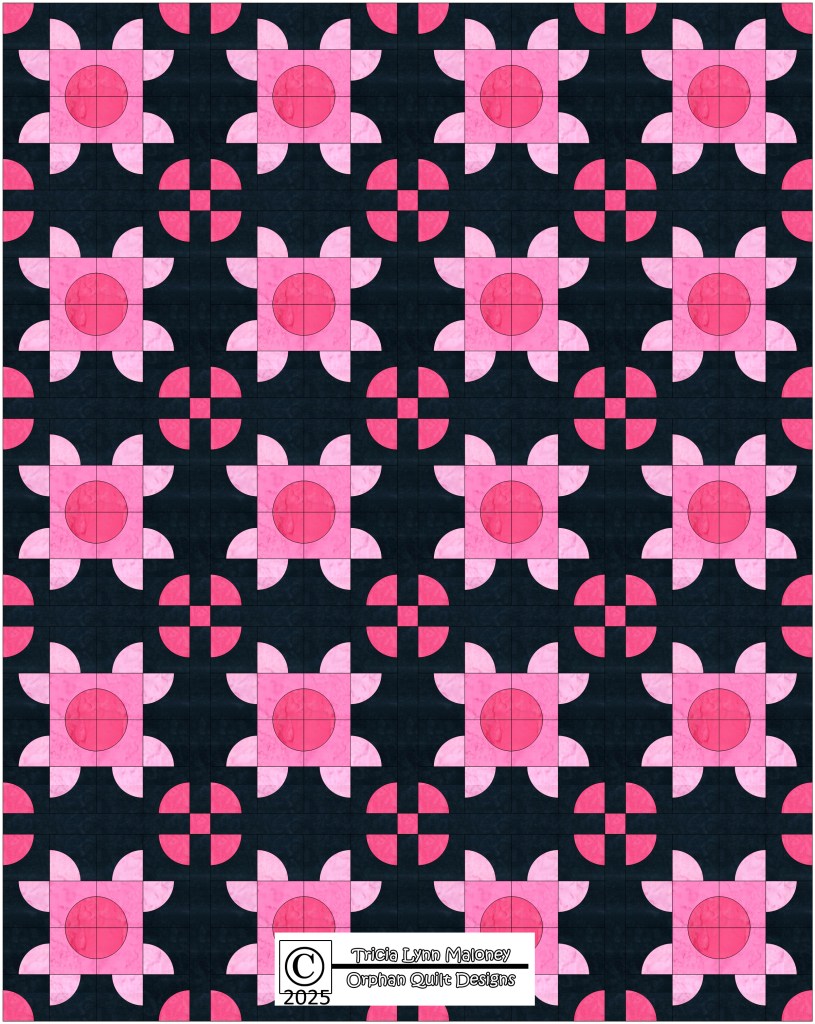
Yippee! Time to add fabric! I think this design is spectacular!
Let’s do one more!
Let’s see how this variation plays in a quilt. I really like this design – it makes me think of Halloween bats flying in front of a full moon. But I think we can tweak it a bit more.
Let’s try sashing again. Sometimes this is the way to go and sometimes it isn’t. This one improves with sashing, definitely! I love the diagonal movement the design has now. What do you think?
Only thing left to do is to add FABRIC! I’m using assorted Hoffman batiks again and I played up the Halloween moon idea by making the background grey like twilight. Totally loving this!
Sadly, that wraps up our 5 part Let’s Design a Quilt series. I have had SEW much fun with this series. I hope you did too. I can envision adding more to this series down the road. Maybe I will focus on on-point quilt designs….
If you missed any posts in the series, you can find them all right here:
I know I say it every month, but our VRD designers are totally outstanding! Every month, they exceed the previous month’s designs. Let’s take a look at each pattern this month.
Grated by Heidi
Grated uses a stack of fat sixths (which are between a fat eighth and a fat quarter, measuring 12″ x 21″) or 10″ squares. This is a big quilt measuring 65″ x 75.” There are still kits available, which feature Klimt fabrics like the pattern cover. You can get your Grated kit, which includes the pattern, HERE.
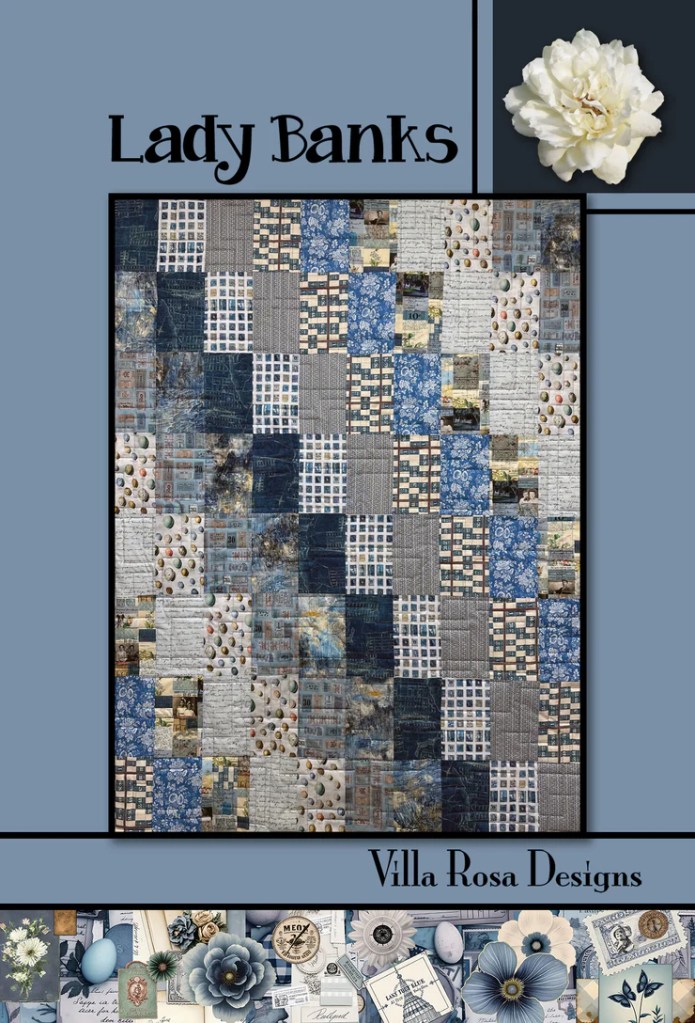
Lady Banks by VRD (Pat)
If you are following along with the Tim Holtz Palette collections then Lady Banks is for you. It features the blue palette and finishes at 45″ x 60″. You can find the kit (including the pattern) HERE.
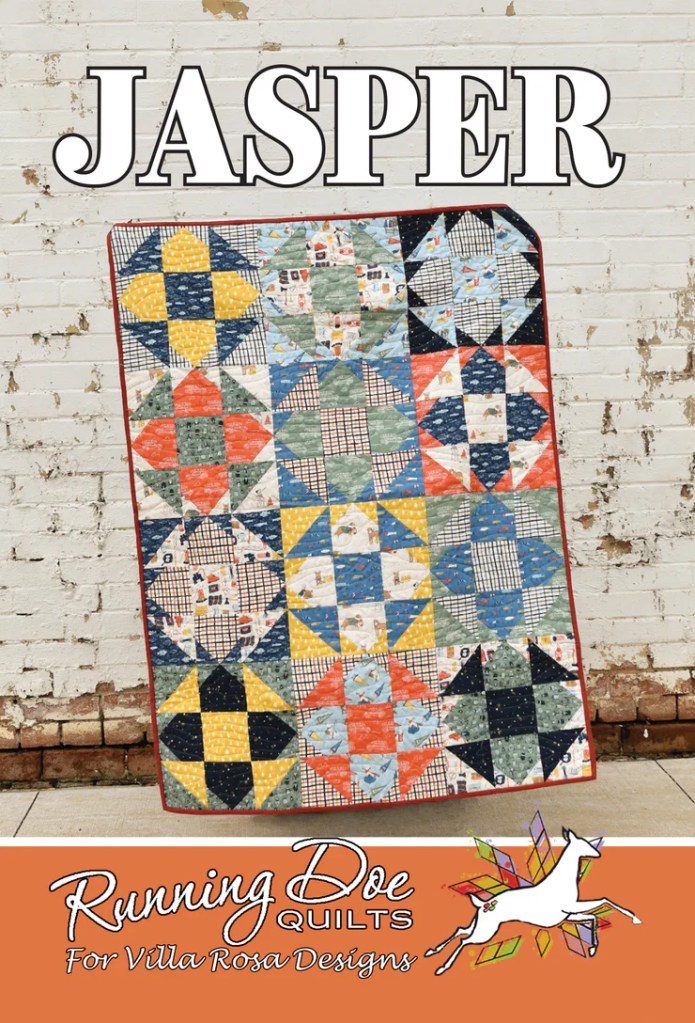
Catherine is back with 2 new mod patterns this month! Jasper is FQ friendly and finishes at 36×48, which makes a nice baby quilt or lap quilt. You can find the kit HERE featuring the Camp Canine collection at Running Doe Quilts.
Jolene is Catherine’s second quilt this month. It uses FQs and finishes at a generous 63″ x 84″. You can find the kit HERE at VRD featuring the Thirty-One collection or HERE at Running Doe Quilts featuring the Camp Canine collection.
Snap Shot by Molly
Snap Shot is another one of Molly’s creative panel quilts. It is FQ friendly and finishes at a nice 45″ x 54″, which could be a wall quilt or a throw. Sorry, but VRD is out of Snap Shot kits already.
Apologies, but there is no table runner this month. Stay tuned for next month’s runner!
SEW, which NEW pattern are you going to make first?????
Now let’s turn our thoughts to our ongoing Quilt Design series.
Let’s Design a Quilt: The Farmer’s Daughter Block
Here is the traditional Farmer’s Daughter block. According to Barbara Brackman, this block was first published in Clara Stone’s 1906 booklet, Practical Needlework: Quilt Patterns, which was part of a needlework booklet series by C. W. Calkins & Co. in Boston. Of course, like most quilt patterns, it was probably being made long before it was published. One of our readers suggested this block last week and I just couldn’t resist it. Thank you, dear reader! I hope I do the block justice for you!
Yikes! See how the four corners of the block feature set-in seams? Well, the first change to this block we are going to make is to change the four corners to be much friendlier by using Half Square Triangles (HSTs) instead of set-in pieces. Ahhhh! That’s more like it!
Now we’re ready to play — er, design! Let’s put Farmer’s Daughter blocks in a quilt. Huh! When you set the blocks side to side, you lose the block and a whole new design emerges. Pretty cool!
Now let’s add some sashing to see what that looks like. Neat-o! Sashing shows off the block. I just love the secondary design where the block corners (with the green squares) meet the sashing squares. Both designs have a lot of movement already and I haven’t done anything except the HSTs.
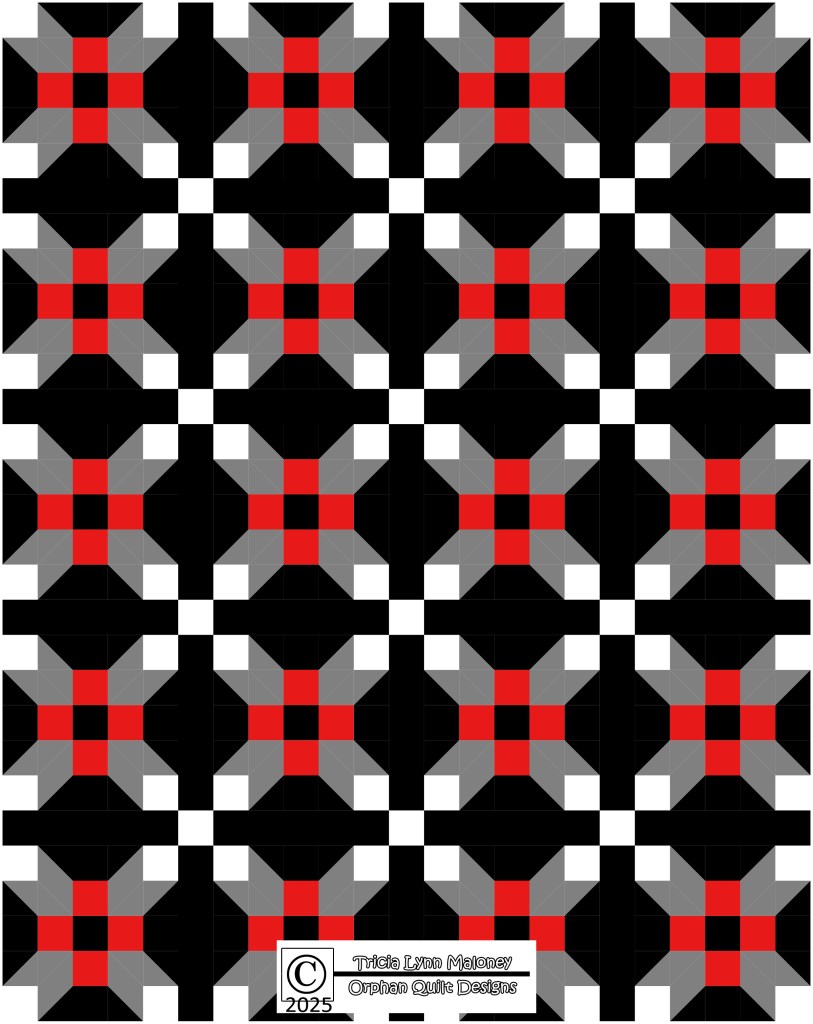
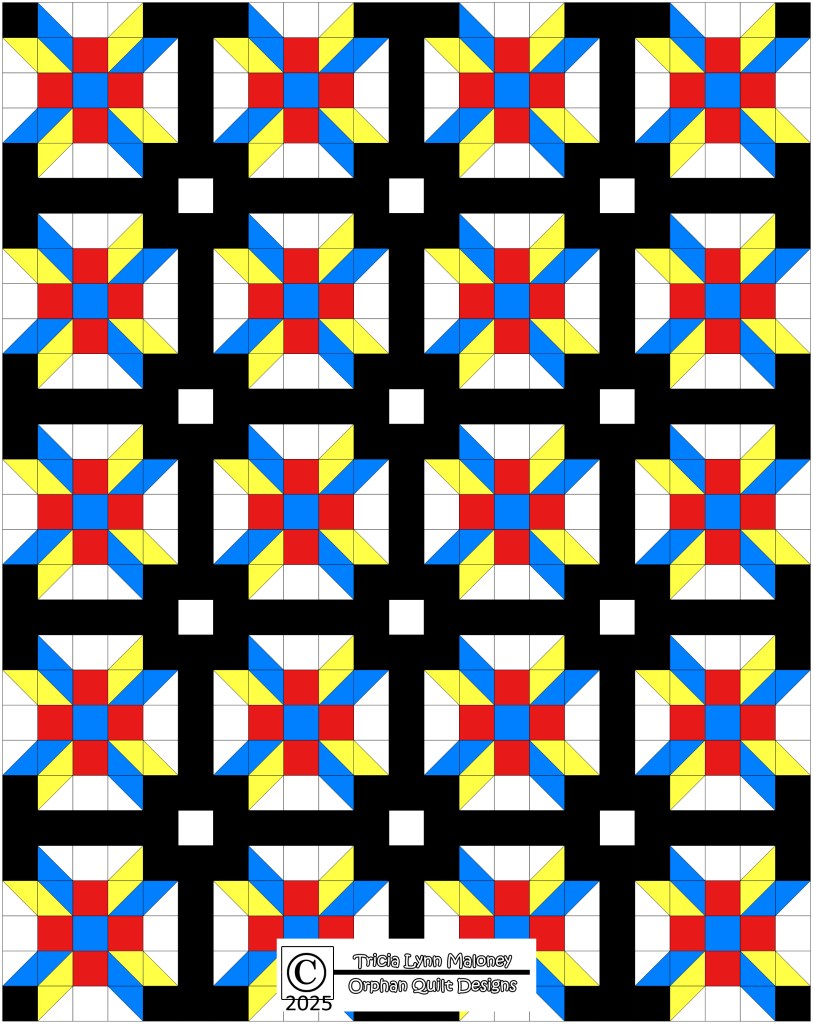
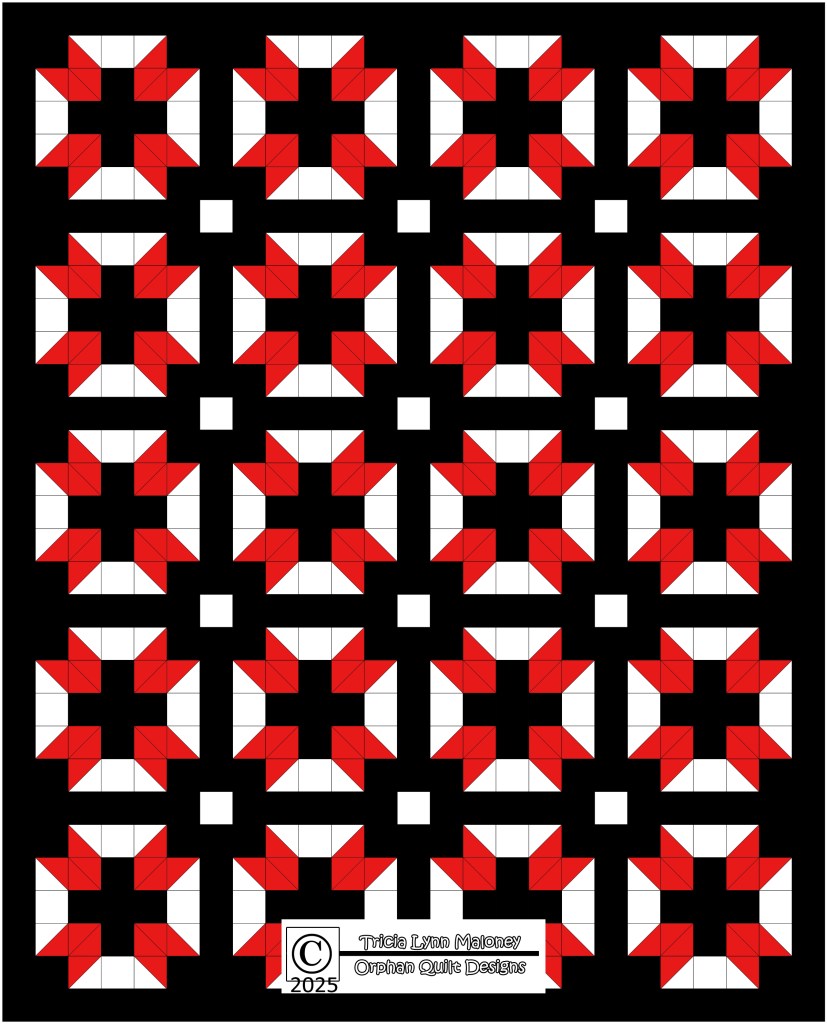
Wowzer! Look what happens when I change the colors to black, grey, white, and red. I’d call this a finished design right now, wouldn’t you???? It almost has a 3D effect. Cool beans!
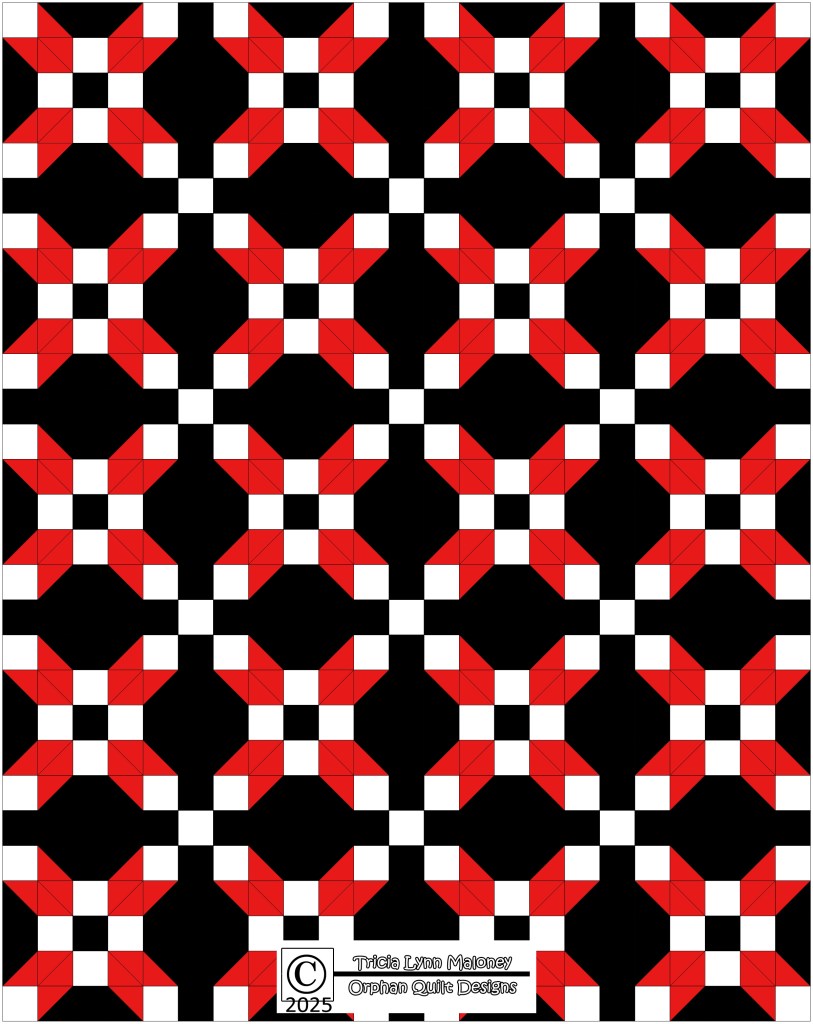
Here’s the same design, but I changed the red to white. Holy cow, Batman! It’s really eye-catching and the black negative space is just itching for some really cool machine quilting.
Here’s the same design again, but I changed the grey to red. Oh my! It just about leaps off the screen. Just by playing around with the colors.
This is only ONE of sew many reasons why I love my Electric Quilt 8 software. I can tweak some tiny little thing and if I don’t like it, I can go back or keep tweaking. If you haven’t ever tried EQ8, you really should. It is a total game changer for quilters everywhere!
But wait! We’re not done yet. Let’s go back to the block and split the corner sections into 2 colors, instead of just 1 color. I also changed the center square to blue, which gives it an interesting pinwheel design in the center.
Let’s see what it looks like in a quilt. Hmmm. Not very interesting. At least not yet.
Let’s add some sashing. I’m gong to introduce black for the sashing squares. Better, but no way near finished. Let’s keep going.
Let’s flip the black and white for the sashing and sashing squares. WHOAH! I am loving this sashing idea – it is incredibly graphic! But now we need to tweak the blocks some more.
Before we work on the blocks some more, it needs a border to frame it. It just looked a bit unfinished without it, don’t you think?
That’s it! Okay, on to the blocks. Let’s swap the blue and yellow in the 4 corners back to 1 color, red. And change the blue center to white so it repeats the white sashing square. I love how graphic it is. Your thoughts?
One more tweak. Let’s change the center square in the blocks to black. Yup! That’s it! Love the plus sign in the center of the blocks! This design has a clean modern look yet it feels traditional, too. It is totally the best of both worlds.
All right! Let’s add some fabric. Again, I’m using batiks from Hoffman’s 1895 Watercolors collection. I did make one more tweak by changing the sashing squares to match the plus signs. Don’t you just love it in pinks? The black has a slight bluish tinge for added interest. Again, it has a bit of a 3D effect. Done and done!
Do you remember where we started? A Classic Farmer’s Daughter block.
How far we came just by changing the colors, playing with the fabric placement, and adding sashing/border.
How are you going to explore these ideas with your quilts???
Well, that’s it for me for our 4th week in our Let’s Design a Quilt Series. If you missed any posts, you can catch up here:
The forecast for today is sum-sum-summertime with a strong chance of quilting! SEW much to do today, so let’s get started.
Before we jump into this week’s Quilt Design adventure, though, I want to share a fun SNEAK PEEK with you from our friends over at QT Fabrics. You might recall that VRD has been working closely with QT to pair their new fabric collections with our patterns. Here is our latest collaboration:
These upcoming fabric collections are being shown to quilt shops right now and will ship in late 2025/early 2026. If you see something you like — ask for the collection (and VRD patterns, of course) at you local quilt shop.
Churn Dash Challenge Winner
As part of my Quilt Design series last week, I offered up a challenge to you – see what you could do with the Churn Dash block.
First, I want to thank those of you who shared your ideas, creations, blocks, and quilts.
And the winner is………………………..
Lisa from KY
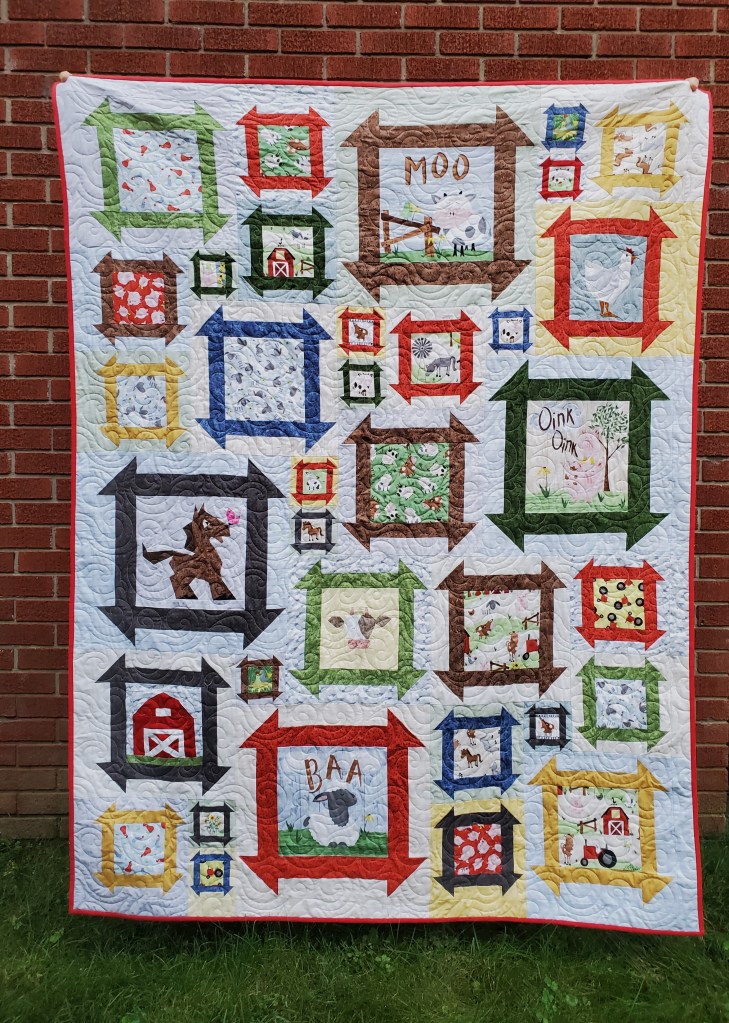
Lisa won with her charming Churn Dash quilt, below, featuring multiple sizes of her Churn Dash blocks with the added fun of novelty farm panels and prints inside each block. Way to go, Lisa!
Log Cabin Inspiration
Folks were really inspired by last week’s Courthouse Steps block quilt design party and suggested we stay in the Log Cabin zone. Thank you for those suggestions, but I want to keep addressing different kinds of blocks to maximize your inspiration when it comes to designing quilts. There are entire books written about Log Cabin blocks and quilts and a few blog posts just can’t do the topic justice, I am afraid.
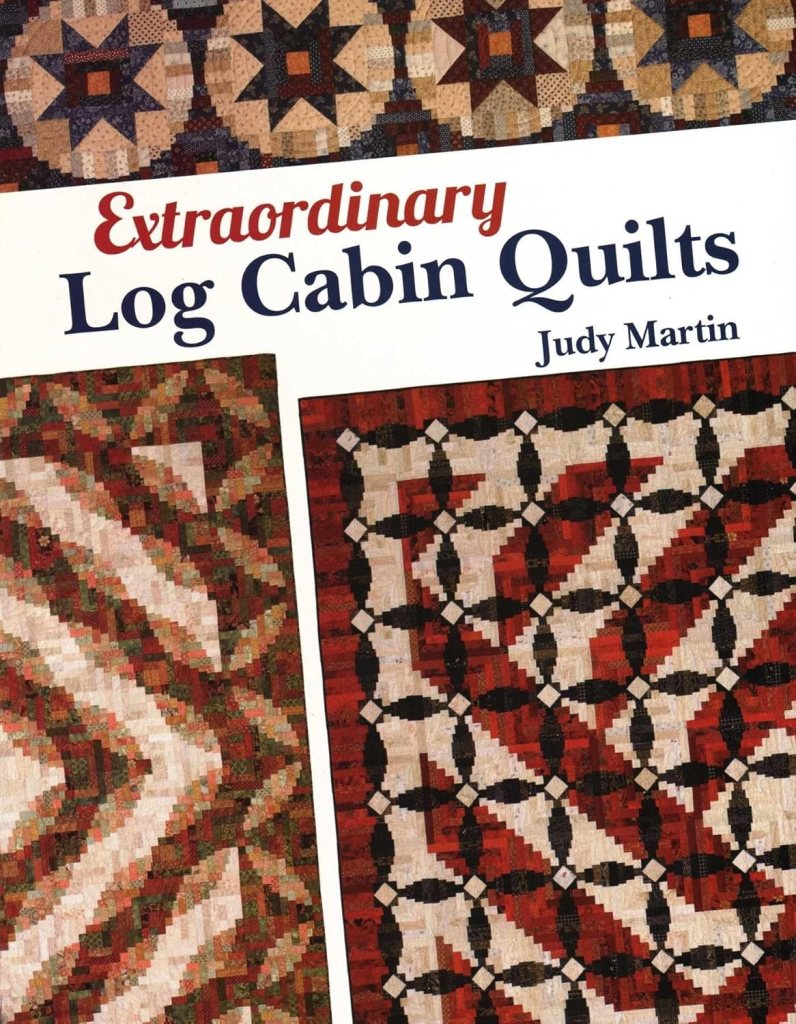
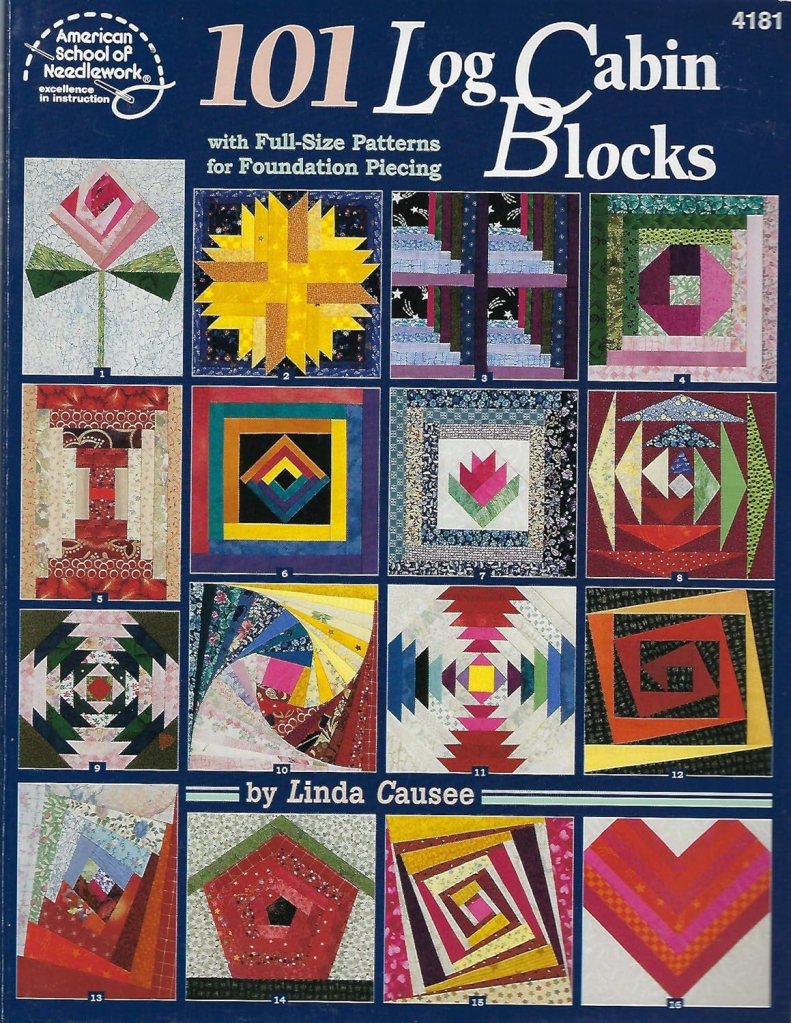
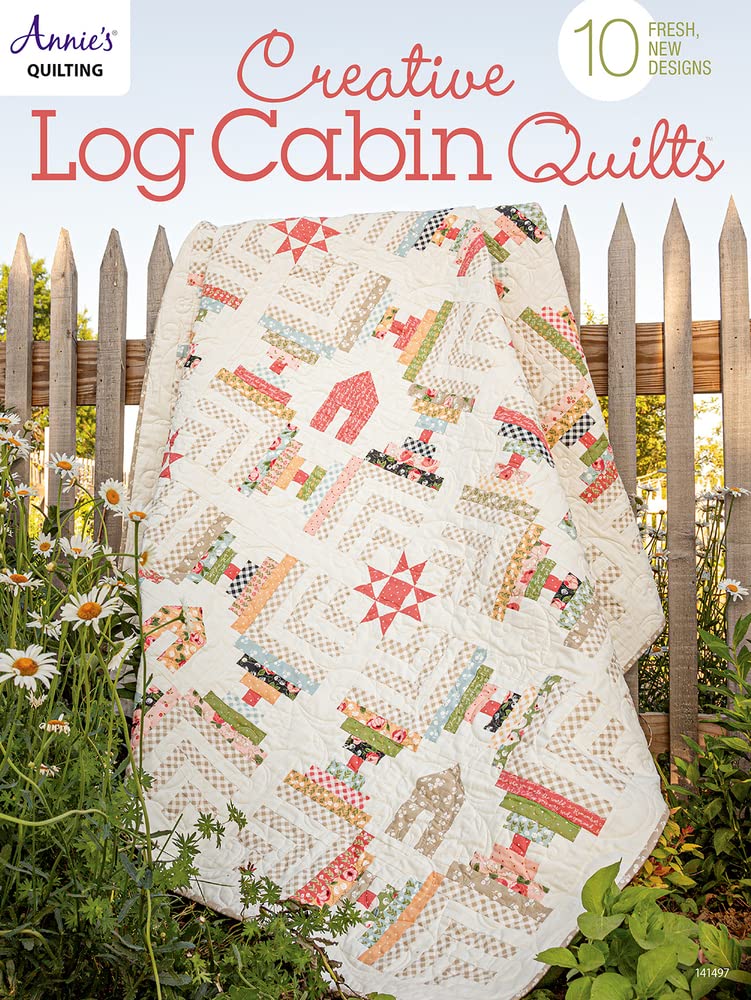
In lieu of more Log Cabin blocks, here is a short list of Log Cabin books for you to explore. I tried to choose a variety to show you here on the blog, but believe me – there are tons more out there just waiting to inspire your next Log Cabin quilt.
After enjoying your Log Cabin comments and quilt photos, it occurred to me that I have not done a Star block yet……..so today’s the day!
The Sawtooth Star Block
I chose an oldie, but a goodie for today – the Sawtooth Star.
Sawtooth Star is known by many names and has a lot of different variations. Apparently, it first appeared in print in the 1880’s or 1890’s in popular publications such as Farm and Fireside Magazine as well as in the Ladies Art Company catalog in 1895. The Sawtooth Star block was block # 5. Like most quilt blocks, however; Sawtooth Star blocks were probably being made long before they ever appeared in print.
Here is our classic 2 color Sawtooth Star block.
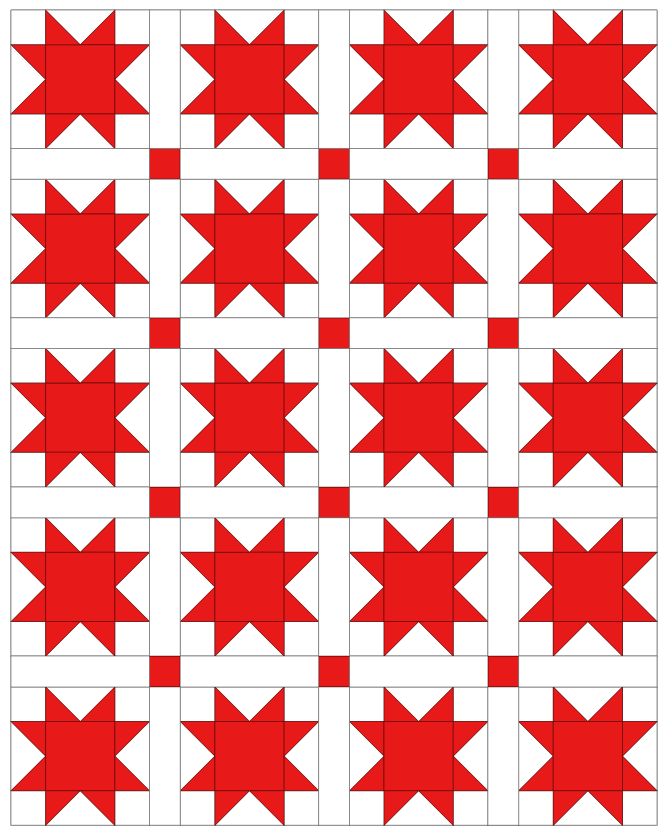
So, let’s make a quilt. Here are 20 blocks set side by side. This makes a lovely classic 2 color quilt, but of course we’re not going to stop there.
Here it is with sashing in between the blocks. Again, super classic. I do like how the sashing gives the stars room to breathe, plus this layout would be a lot easier due to not having to match up all those points. Win, win….
Let’s go back to our block and tweak it a little bit, shall we? Let’s change the solid center block into an Hourglass.
Here are the blocks set side to side. I find it interesting that I’m not seeing the stars so much now, but rather, all the triangles seem to jump out at me now. And I see “V” shapes, too. Huh.
Let’s tweak the block again by adding Half Square Triangles (HSTs) in the 4 corners.
Okay, now let’s set the blocks side by side in a quilt. Wow! There is so much more movement – almost to the point of being distracting. Really cool, though.
Let’s add a 3rd color to the blocks now.
Here is the same layout as above, but with the added 3rd color. It looks totally different and not as dizzying.
What if we add sashing again? Cool – we now have a Shoofly block where the sashing square meets the blue HSTs – this adds a lot of interest to the design. Liking this, but not quite there yet. Let’s keep tweaking.
I think the blocks look a bit heavy, so I’m going to lighten them up a bit by changing the inner blue triangles back to white. Yep, liking this one more.
It’s a bit too vertical for me, though, so let me make one more tweak by alternating the direction of the blocks. Yes, I think that does it. This one’s a wrap!
But wait – I’m not done yet. I’m having way too much fun to stop now. Let’s go back to our block and tweak it a bit more by adding blue triangles on the sides only.
Here’s our updated block set side to side in a quilt. You totally lose the star block, don’t you? I like the horizontal repetition of the triangles, too.
Let’s add fabric! Here it is using the QT fabrics from American Tapestry again. Love it, yet……
One more tweak……let’s rotate every other block. Yup, that’s the one. Finished. Great movement – I can’t even see the stars now, can you?
Do you remember where we started? A classic 2 color Sawtooth Star.
YAY! This has been another fun quilt design adventure! Sew glad you came along.
If you’ve missed any posts in our Quilt Design Series so far, you can catch up below:
Are you ready to play with another quilt block? Yippee! Me too. This really is SEW much fun for me to do and I think it’s also helping me to think more “outside the box.” I’ve definitely noticed more designs popping into my head lately. 🙂
If you’ve missed our Quilt Design Series so far, you can catch up:
I was a little disappointed that no one was brave enough to suggest a quilt block in the comments on last week’s blog post. Please consider letting me know what your favorite block is or another block suggestion to design with as I’m planning to do this mini series on designing for a few more weeks. Do you really want me to have all the fun of picking out all the blocks?
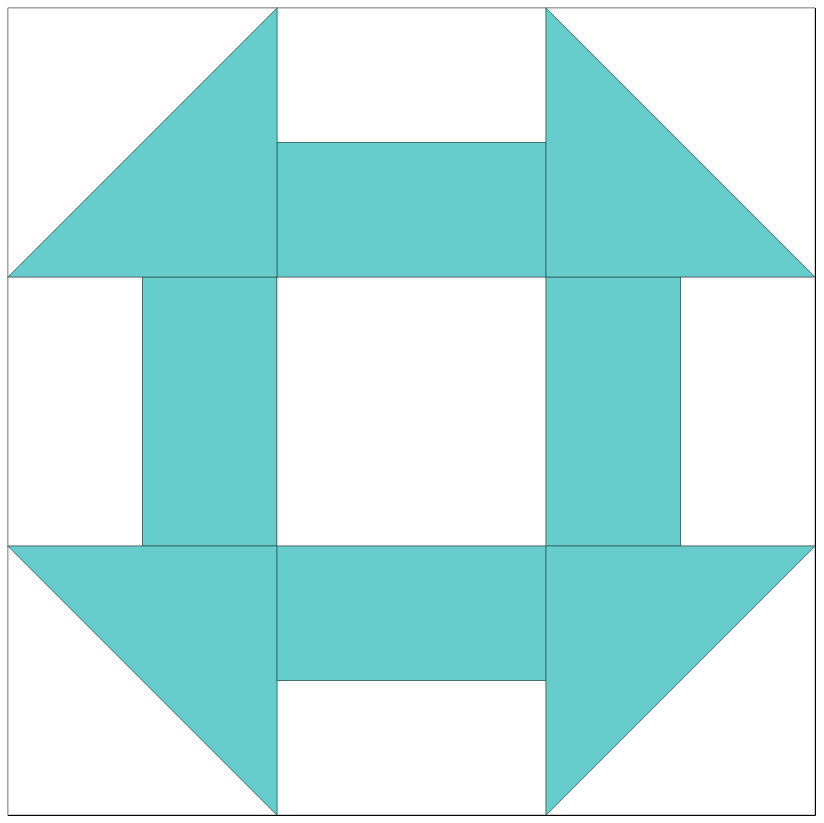
So I asked my quilty pal, Mary Lee (Hey Mary Lee!) for a block suggestion. She thought for a few seconds and then suggested either Churn Dash or Courthouse Steps. I thought both were good options. Churn Dash (image 1, below) is another Nine Patch variation while Courthouse Steps (image 2, below) is a variation of a traditional Log Cabin block. Because we’ve already done 2 Nine Patch blocks, I zoomed in on her Courthouse Steps suggestion and immediately began to wonder what we could do with it.
Image 1 – Churn Dash block, also known as Hole in the Barn Door and Monkey Wrench
Image 2 – Courthouse Steps block
Homework!
Since I’m going to focus on the Courthouse Steps block today, I’m assigning all of you readers “homework” — see what you can do with the Churn Dash block (image 1, above).
You can share your “homework” on our Facebook Page, in the comments (although I’m not sure if you can upload images), or you can email them to me at tricia@villarosadesigns.com.
I’d love to share your ideas on next week’s blog or upcoming posts if we have a big response. I hope you will take a little time and play – er, I mean design a quilt – along with me. Hand drawn, EQ, or Adobe images are great, please use a .jpg or .pdf format atat no more than 300 dpi.
Who knows????? There might even be a prize or 2…. US and International friends can play along, so go get started – right after you finish reading this post, that is.
The Courthouse Steps Block
Let’s learn a bit about the Courthouse Steps block. As I mentioned earlier, it’s a variation of a Log Cabin block. According to Barbara Brackman in the Encyclopedia of Pieced Quilt Patterns, it was originally called White House Steps and appeared in print circa 1890 in the first Ladies’ Art Company catalog, which included 272 patterns. White House Steps was block #221. Of course, that doesn’t mean the block just suddenly appeared in the 1890’s. rather, that was the first known version in print. Quilters may have been making the block much sooner than the 1890’s.
White House Steps block
Courthouse Steps block
The Courthouse Steps block we are familiar with today uses color a bit differently than the White House Steps version, above. Interestingly enough, “Courthouse Steps” isn’t even mentioned in Barbara Brackman’s book. I wonder if it’s a regional term used for the block? Does anyone know this block by another name? Just curious. I did find the block in Electric Quilt 8 software (which is based on Barbara Brackman’s book), but it is considered a foundation pieced block and does not include any historical information.
Doing a quick Internet search, I discovered a post on Suzy Quilts about Courthouse Steps blocks with a touch of history and wonderful examples of Gee’s Bend quilts. Check it out HERE.
Alright! Ready to get designing???
The Courthouse Steps Block
So, here’s our block again. Take a good look at it – what do you see? A central square with rectangles radiating from the center square both horizontally and vertically. That’s it! Simple, but very effective, very geometric, and very graphic.
Courthouse Steps block
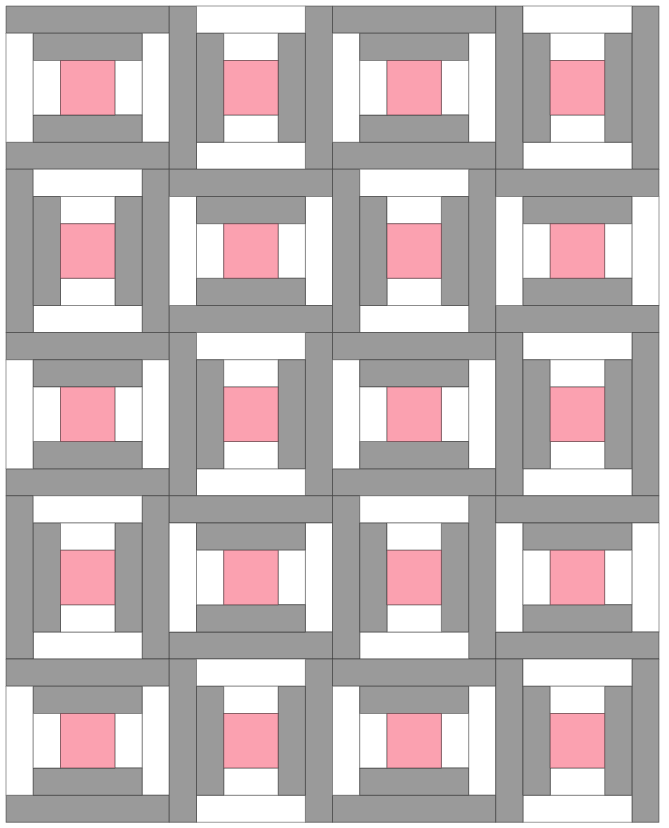
Let’s put the blocks side by side with all of the blocks going the same direction. Okay, this is fun. And it would make an awesome scrappy quilt, wouldn’t it?
Let’s turn the blocks sideways and see if we get something different. Pretty much the same thing, just different direction.
Let’s alternate every other block next. Huh. Better. Definitely more movement in this one, wouldn’t you agree? I almost detect a bit of a curvy look happening, which is interesting with a square block.
Now I think I’d like to see what happens when I group the blocks in 4’s. That’s interesting.
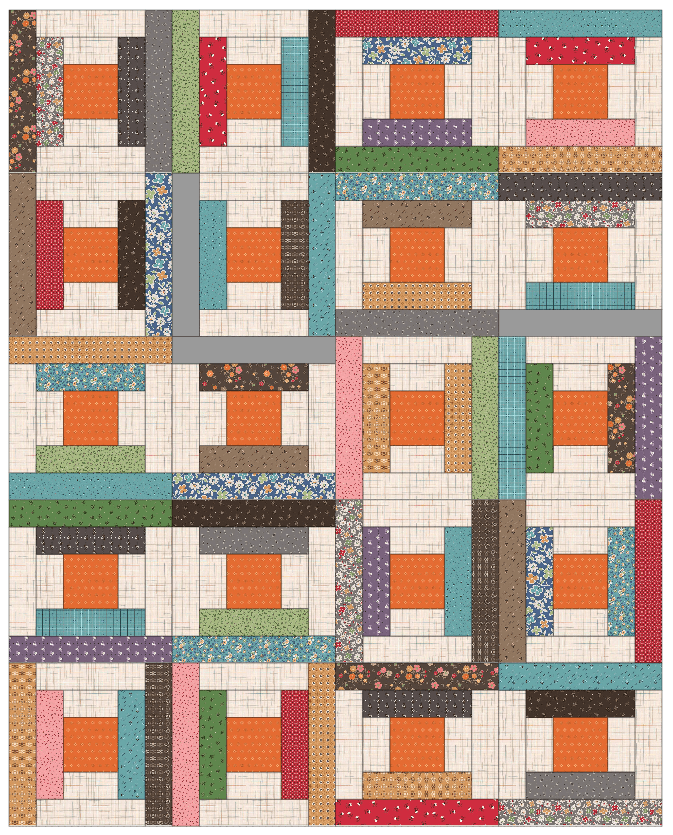
Let’s add fabric to see what happens, shall we? I’m using Lori Holt’s warm and homey Riley Blake collection, Autumn. I can almost smell the apple pie…..
I want to tweak the blocks one more time. In this example, I turned alternating rows which then gave me an interesting boxed effect in rows 2 and 4.
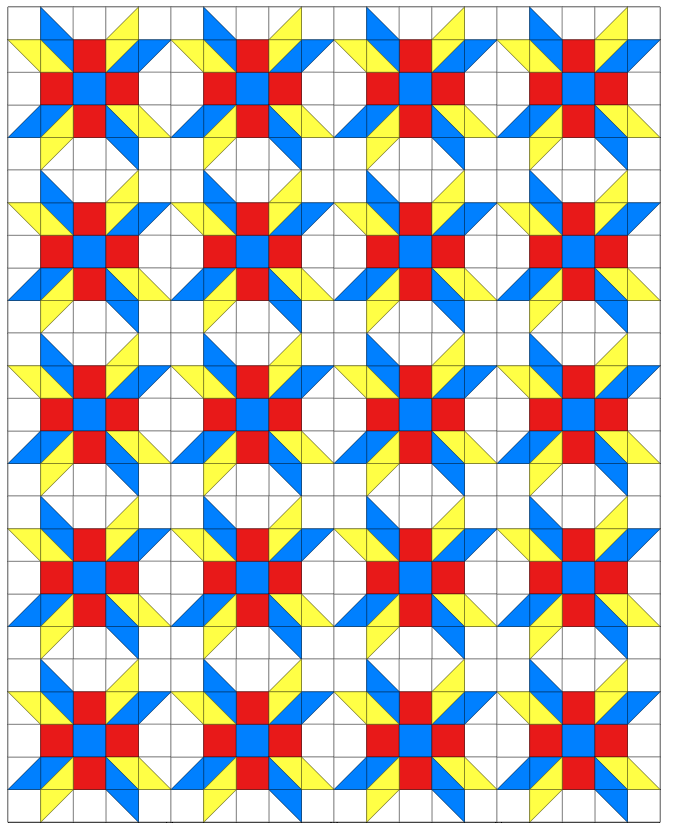
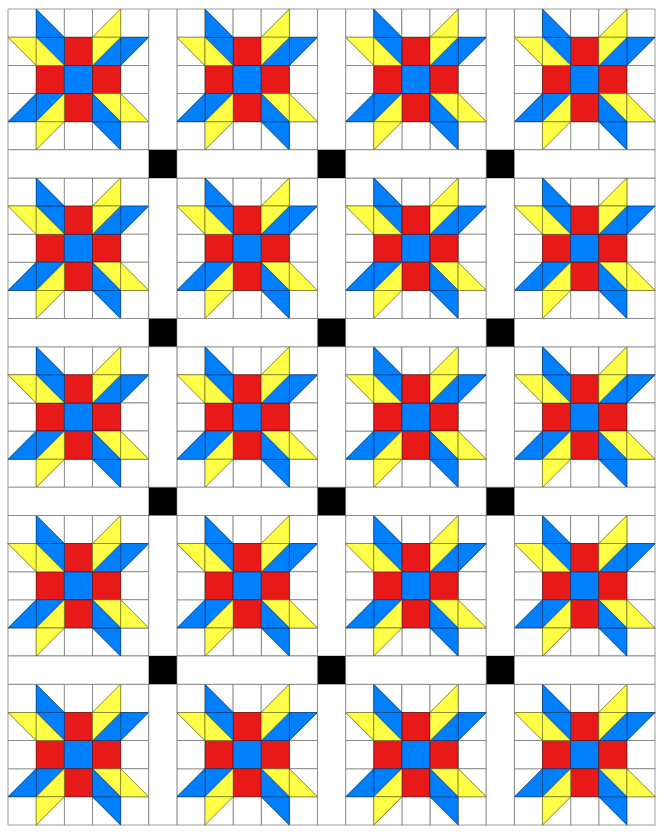
Whoah! Stop the bus! Here was the basic idea behind my VRD Rose Card pattern, Boxed In (hence the name), although it’s not totally the same. I wasn’t even thinking about any of our VRD patterns when playing with Courthouse Steps, but – there it is. LOL!
Get your digital pattern HERE or your print pattern HERE
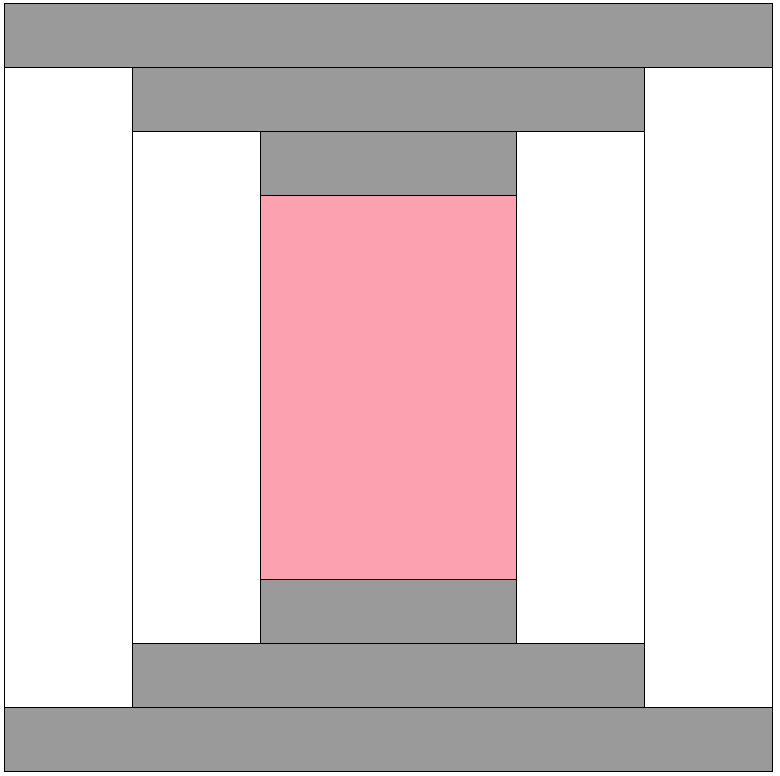
Okay, let’s go back to our Courthouse Steps block and tweak it a little bit by changing the width of some of the rectangles. I left the side rectangles the same, but I made the top and bottom rectangles narrower.
Let’s use the first setting from above to see how the blocks plays in a design. I really think this looks pretty cool and it reminds me of paper lanterns.
Let’s tweak the color a little bit. Again, I’m using a couple prints from Lori Holt’s Autumn collection. WOW! What a mod yet classic 2 color quilt! Love it!
Cool! Check out this block arrangement! It’s the same layout as our previous 2nd design, above.
Hmmm. I just don’t feel that’s it totally complete yet, so let’s add another fabric to see what happens. In this example, I’m using some lovely Hoffman 1895 Watercolors batiks. Love it!
Just….one….more….tweak. As you can see, designing a quilt can get kind of addicting. Yup. But, I think you’ll agree with me that this is the final design. I changed the block directions a bit, changed the black centers to grey, changed the black background to a light grey and added more fabrics from Hoffman.
I think it’s perfect now.
There’s not much else I can say………except I’m very satisfied with this final design. Seriously. Sometimes it takes just one more try to get where you want to. And I’m not just talking about quilt design, you know.
What would you do to tweak the Courthouse Steps block to create your own design?
Don’t forget to do your homework for next Thursday! I’ll see what I can find in the prize department while you play with the Churn Dash quilt block to see what you can come up with.
What a fun blog post last week! It was great to share a little bit about my quilt design process with you. It was such fun, we’re doing it again this week, but with a different quilt block.
Before even starting this post, though, I must admit I cheated a bit and began playing with this week’s quilt block. Let me tell you – it never fails to amaze me how a simple block can create such amazing designs.
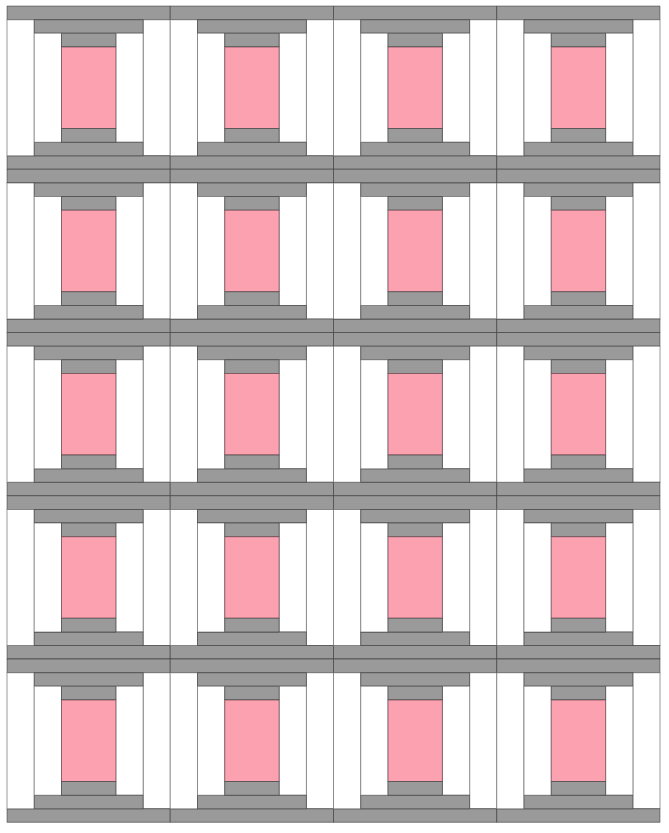
According to Barbara Brackman’s Encyclopedia of Pieced Quilt Patterns, this specific Spool block appeared in the book, Polly Prindle’s Book of American Patchwork Quilts by Alice Gammell in 1973. Of course, it wasn’t really a new block in 1973, but this simplified Nine Patch version appeared in Polly Prindle’s. Previous versions included set-in seams as well as 4 small Spools in a single quilt block. Today, though, we’re going to start with Polly Prindle’s version.
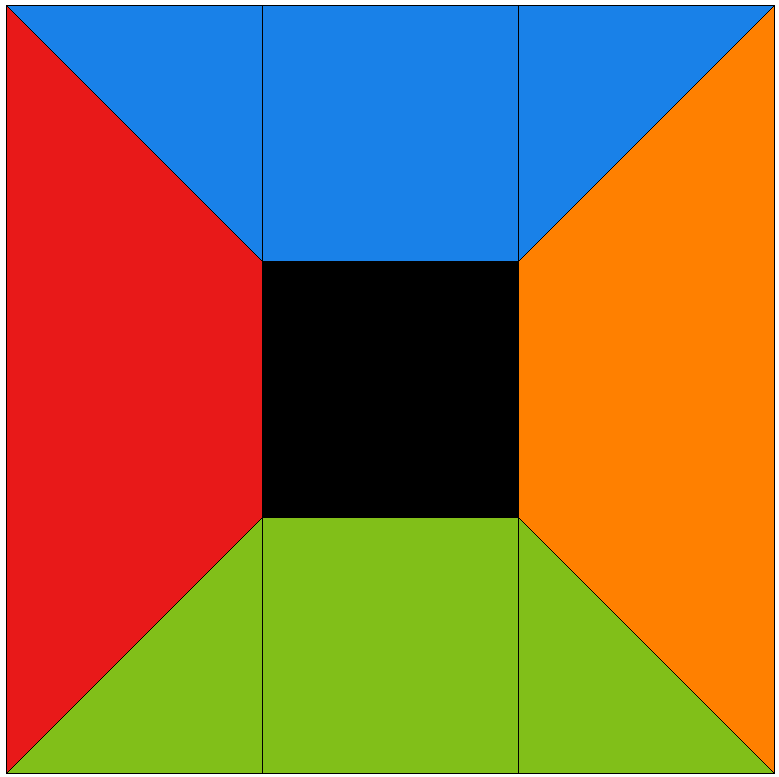
As you can see, our Spool Block is a Nine Patch block with a 3×3 layout. Of course, we’ve added some Half Square Triangles (HSTs) to create the Spool shape.
Time to Play!
The first thing we’re going to do is to simply our Spool block by using flippy corners instead of HSTs for the top and bottom of the spool. This tweak would actually save time when piecing the blocks for a quilt without changing the overall design. And we all know that saving time is golden in the quiltmaking process. The tweak also cleans up the look of the block by removing some of the seams.
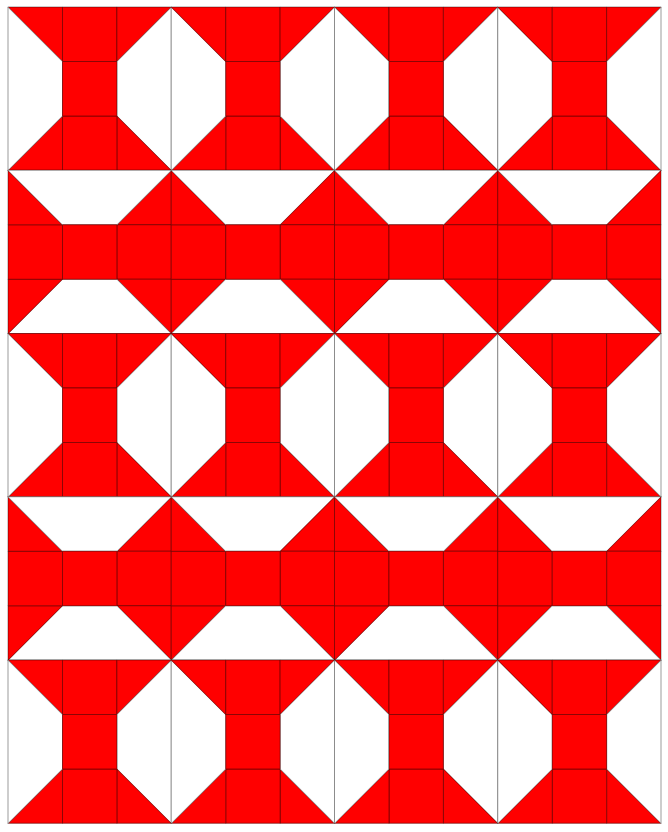
Let’s see what a quilt looks like using just this block, shall we? This design shows the blocks all pointing in the same direction. Hmmm. I like it, but I think we’re just getting started with the Spool block today.
Let’s try alternating the block directions. Better, but not there yet.
Next up – let’s alternate block direction by row. Better and better! I really like the play between the different block directions. Reminds me a little bit of the vertical and horizontal strips I added to last week’s classic Nine Patch block.
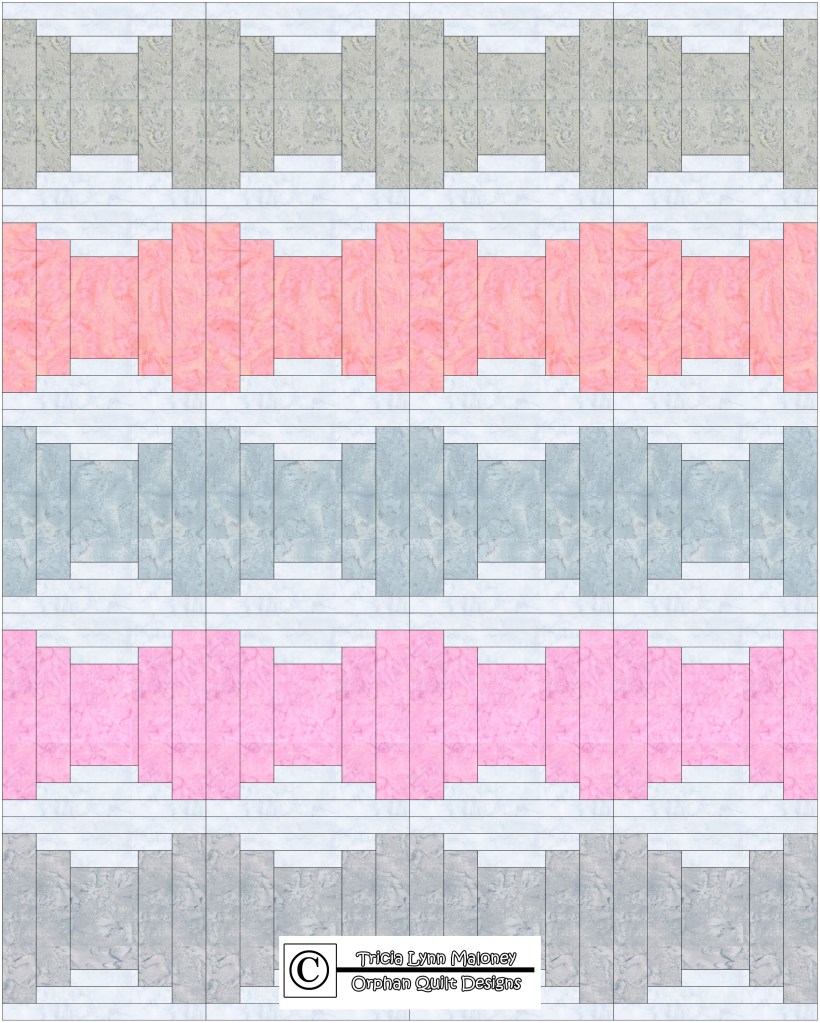
Let’s add some fabrics to this one. I’m using a few prints from Moda’s Acorn Hollow collection. This layout definitely has some potential. I’m not usually a big fan of 2 fabric quilts, but I am liking the crispness of the design with only the 2 fabrics.
Okay, let’s go back to our Spool block again. Instead of it being a 2 color block, let’s make it a 4 color block with a black center.
Huh. Intriguing. Let’s see how it looks in a quilt. This is the same layout as our first red/white layout above. What a difference color can make!
Now let’s alternate the block directions. This is the second red/white layout above.
I like it, but with so many colors, you kind of lose the interesting design. Let’s back off on colors a little bit by adding more neutrals. Not loving it, but I do like the diagonal thing happening.
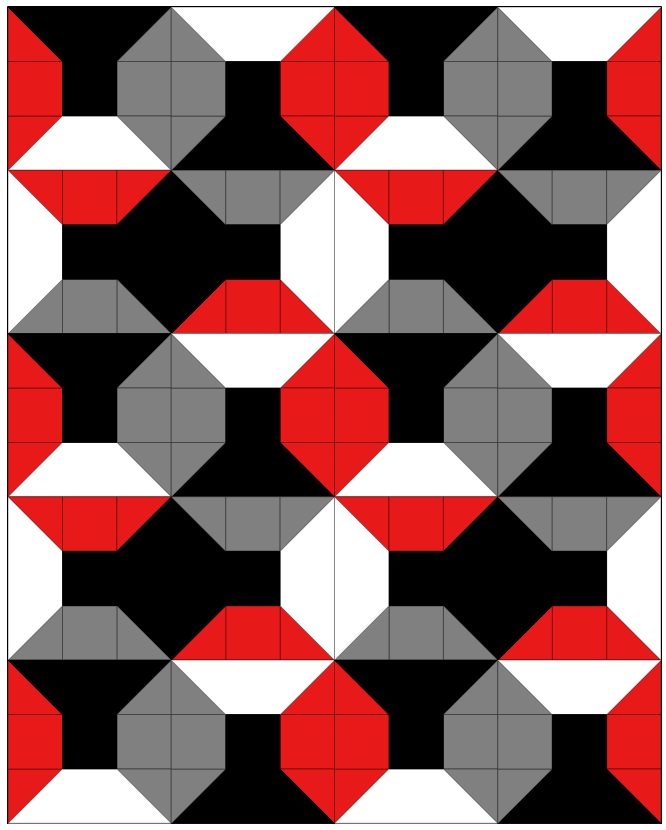
Not quite what I was expecting. Let’s tweak the colors some more. I’m going to use red, black, white, and grey which is one of my favorite colorways when I’m trying to perfect a design. I like working with these colors because of the strong contrast. I also changed the center square to black, so I get an interesting black shape in the blocks now – kind of looks like a megaphone to me.
Let’s rearrange the blocks to see what happens. This is interesting. It has a lot of movement.
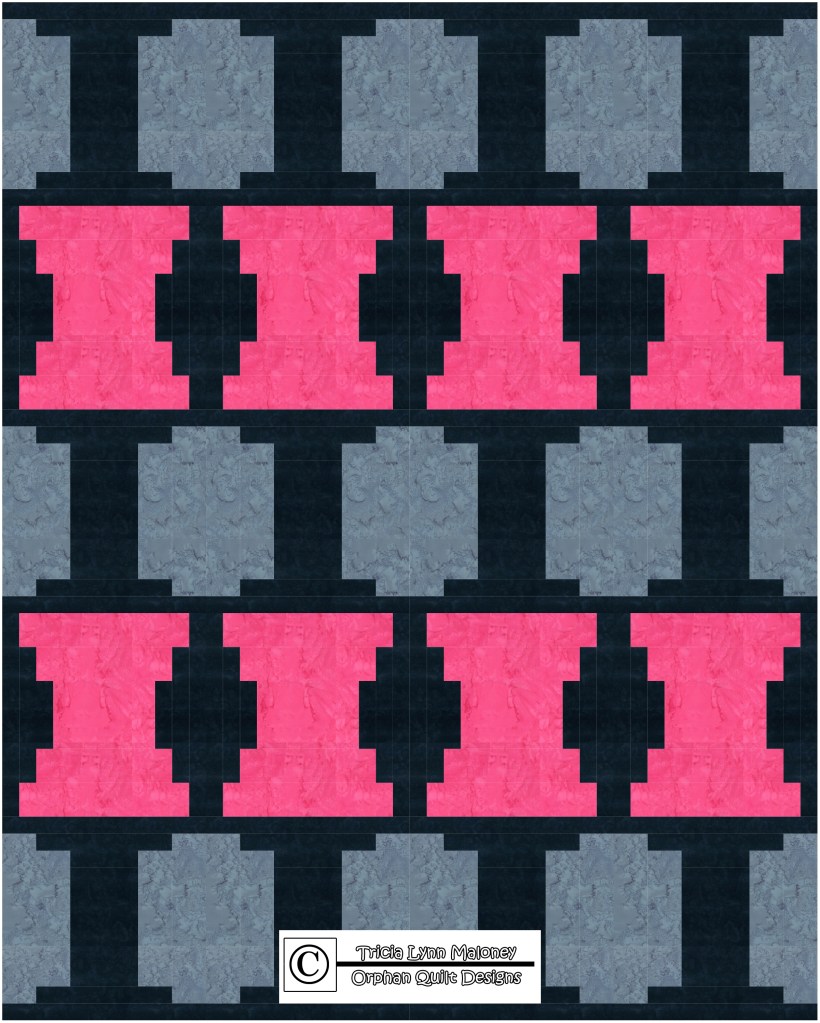
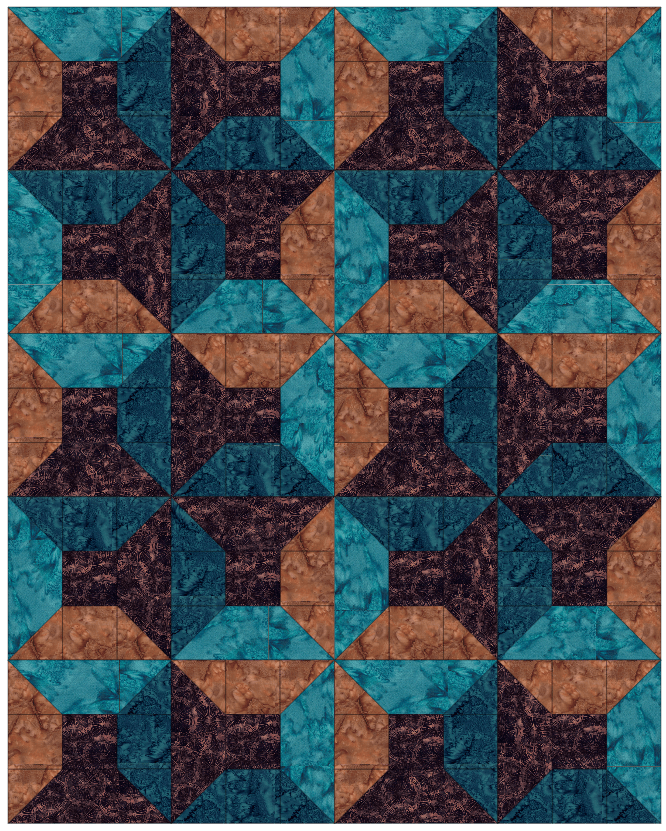
Let’s add some fabric now to see what it looks like. Here it is in 4 Hoffman batiks. I like it – it has a woven effect which keeps my eye moving over the design.
Let’s play with the block arrangement a little bit more. I think there’s another better option still out there. We just have to play a bit until we get there. Almost there.
I think it needs just one more thing tweaked. I’m going to reintroduce the 5th fabric in the block for the center squares. Yup! Got it. This is the one! A beautiful finished design! LOVE the 3-D effect. Lots of movement. Tons of interesting things going on.
Do you remember where we started? A simple Spool block.
An here’s where we ended. Still a simple Spool block, but so much more!
Isn’t quilt design a fascinating journey? For me, it’s a lot of “what if?” questions. Also, I’m not afraid to make something really ugly – I can always delete it, right? And sometimes “something ugly” just needs another tweak or 2 to become something amazing.
I hope you give designing a try. I think you’ll be surprised at how fun it it. Whether you use graph paper and a pencil or Electric Quilt 8 software, I think you can come up with something that’s truly your own, something you love.
Stay tuned next week for another fun quilt design adventure! Any suggestions on a simple quilt block you’re just dying to see turned into an interesting quilt design? Leave a comment and tell me!
Hope you are enjoying these lazy, hazy, crazy days of summertime. Me, still making my summer to-do list. Ha Ha!
We’re just going to jump right in today because I’ve got some fun stuff for you. Yippee!
First up – NEW July patterns.
NEW July VRD Rose Card Quilt Patterns
I just love the first Thursday after the first Friday of every month because it means NEW VRD patterns.
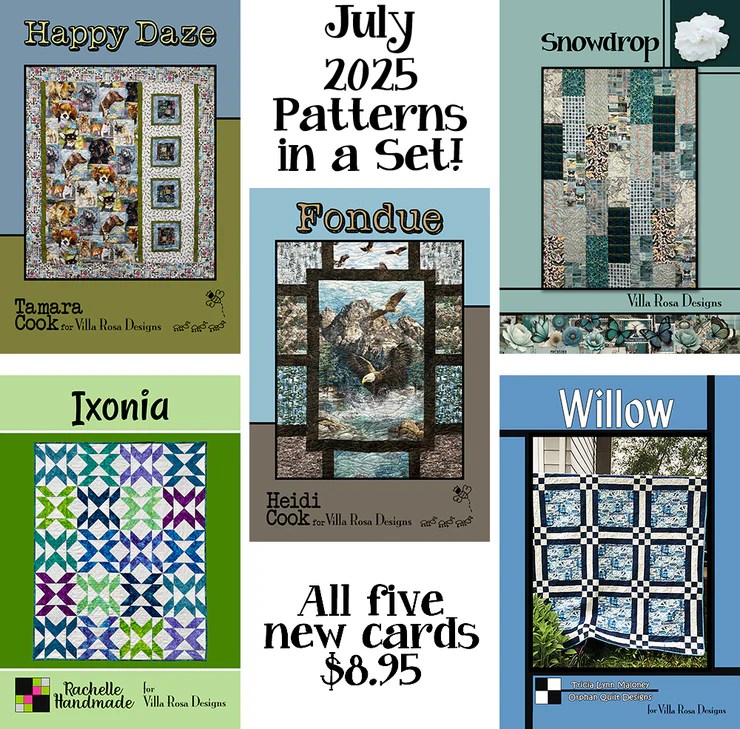
Here’s the set of 5 patterns. As always, our talented VRD designers do not disappoint! You can get the print set of 5 HERE (they are also available individually as print patterns too) or you can get the digital patterns individually below:
Happy Daze features a panel (or substitute a novelty print if you wish) in a fun modern setting. Quilt kits are still available HERE, but get yours ASAP because they’re going fast.
Fondue is also a panel quilt with a very interesting and unique setting. We still have a few quilts kits left, so get ’em HERE while they last.
Snowdrop uses your favorite collection of fat quarters. This is Pat’s latest pattern in her Tim Holtz Palette patterns. You can get the kit HERE.
Ixonia is Rachelle’s latest mod quilt. It also uses fat quarters.
Willow is a super versatile pattern – use a single fabric for the centers, panel squares, or even quilt blocks! We kitted it up with the Playgrounds collection (see below), get your kit HERE.
Willow kit in Moda’s Playgrounds collection
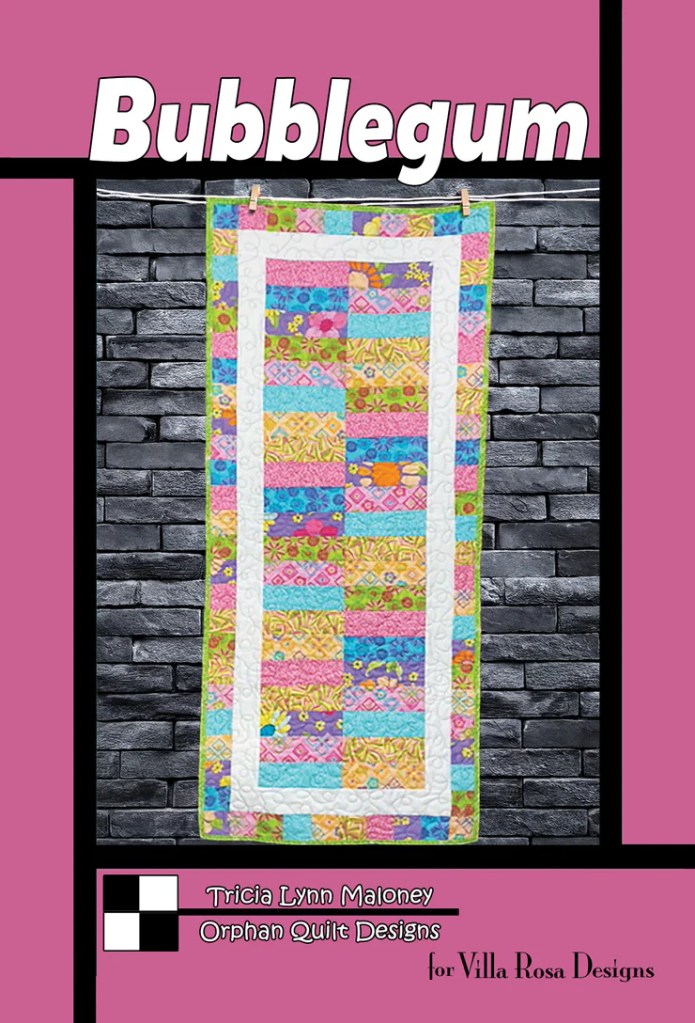
And here’s this month’s table runner, Bubblegum. It uses a collection of fat sixths, but works equally well with leftover Jelly Roll strips or your stash.
Get your digital pattern HERE or your print pattern HERE.
I know it’s summer and most of us don’t quilt as much, but I think these new patterns will inspire you. Besides, VRD patterns go together like greased lightening. Make one in a weekend or even a day.
Why not get your quilty friends together for a summer sew day? You could each have a quilt top done at the end of the day and enjoy some overdue friend time, too.
Next up – let’s play with the Nine Patch block and design a quilt together.
Let’s Design a Quilt Together: Nine Patch Blocks
Nine Patch blocks were on my mind the other day. Why? Because I was thinking about antique quilts and Nine Patch blocks are one of the oldest quilt block patterns as well as one of the most humble. Have you ever gone to see an antique quilt display or perused a book about antique quilts? If you have, I bet you’ve seen A LOT of Nine Patch quilts.
I started wondering what kind of interesting designs I could create from the historic humble Nine Patch. Then it hit me – this would be a really fun blog post idea. So here we are.
If you’re interested in designing your own quilts, there are several ways to do so.
1. Graph Paper
Graph paper, a pencil, and a calculator are often a designer’s first tools for creating one of a kind quilt designs. I started out with this, but quickly found I didn’t have the patience for figuring everything out all the time. I still draw lots of doodles with blocks or setting ideas, but these aren’t my primary design tools anymore.
And guess what?!? Even graph paper for quilting has evolved over time! There are many different options available these days for quilters such as quilter’s graph paper books. Some even include stencils and other goodies to help you in your design process, like C&T’s QuiltGenius Design Tool kit.
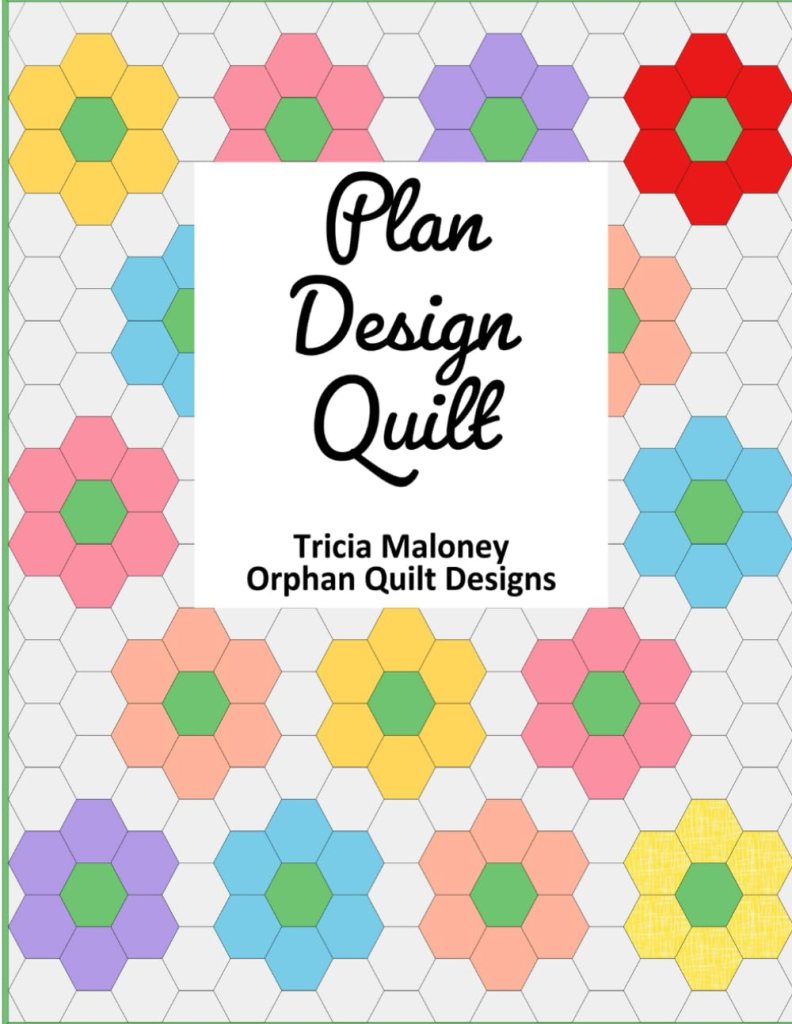
A design workbook with prompts and space to draw is a step up from plain old graph paper. Last year I actually created such a workbook because I got tired of losing all my little scraps of paper when I came up with a new idea. Now I can keep all of my ideas in one place.
Electric Quilt 8 software by the Electric Quilt Company is a fantastic design program! I couldn’t do what I do without it. Seriously. One of the great things about this program is all the support out there so you can learn how to use it. The EQ website offers tutorials, classes, and even fun design challenges. There are books galore available to teach you all the ins and outs of the program. And EQ is always coming up with new add-ons to enhance your design capabilities.
So now we’ve talked about the 3 top ways to design quilts, let’s play with Nine Patches using EQ8, of course!
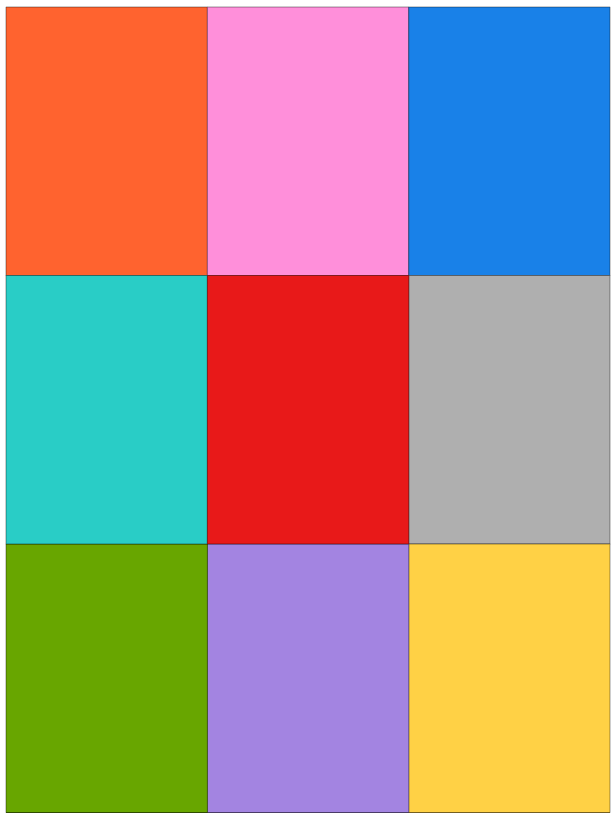
Here is our humble Nine Patch block. It uses 9 squares all the same size in a 3 square across by 3 square down layout. Easy peasy.
This block is a Nine Patch, too. Nobody ever said you had to use only 2 fabrics for a Nine Patch block. The 3 across by 3 down is what makes it a Nine Patch. And my personal philosophy is the more fabric, the better!
Time to play — er, design. To me designing is playing with blocks, colors, fabrics, shapes. I ask myself a lot of “What if?” questions as I go along.
What happens if we make our Nine Patch block rectangular instead of square?
It’s still a Nine Patch, only it’s elongated. Let’s see what this block looks like in a quilt.
Hmmm. It doesn’t really do anything for me, but it would make a nice simple scrap quilt, wouldn’t it? Let’s add some sashing.
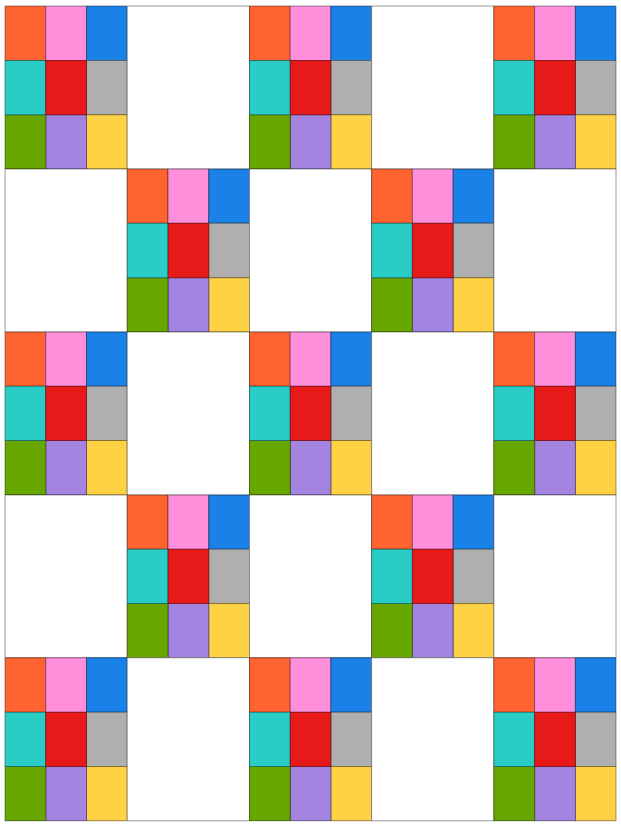
Okay, I’m liking this one better. Now I can see the individual blocks. But it’s still basically a decent scrap quilt. Let’s try taking away the sashing and adding plain alternate blocks instead.
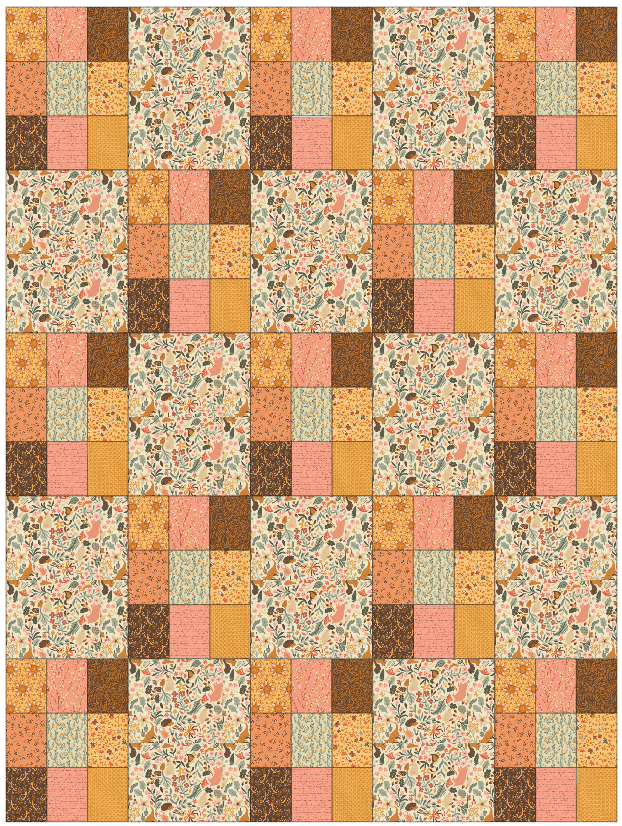
This one’s okay, too, but it just doesn’t quite do it for me, either. I could use a cool novelty for the alternate blocks and use coordinating fabrics in the Nine Patch blocks. Let’s try that.
Here is our design using Moda’s collection Acorn Hollow. I like it, but something is still missing. What do you think we need?
Let’s go back to our elongated Nine Patch block and try splitting some of the rectangles into 2 pieces so we can add more fabric.
Okay, that’s interesting, but now I think I want to split the other 4 patches horizontally to add movement.
Yay! Now we’re getting somewhere. I like the look of our Elongated Rainbow Nine Patch block. Like I said, designing is all about playing and exploring. Ask those “What If?” questions and you’ll be surprised where they will take you in your designing.
Let’s try our block in a quilt setting now.
Now that is starting to look like something. I really love the diagonal thing going on with the black rectangles. Hmmm. Let’s keep going. It still needs tweaking.
With a little flip flopping and switcheroo, I discovered this layout. I am loving the elongated Four Patches in black and white that showed up when alternating blocks were turned upside down. What are your thoughts on this design?
Let’s try it in real fabric this time.
LOVE LOVE LOVE it! I am using a selection of Hoffman’s 1895 Watercolors batiks in pink and grey with solid black and white here. I added the solid black binding to frame everything nicely as well as accent the black in the blocks. Now it’s a finished design. And it started with a humble little Nine Patch block.
Well, that’s it for me today. I hope you enjoyed coming along on a quilt design adventure with me. After showing you how much fun I have designing a quilt, I thought maybe this would make a fun new series for the summer. What do you think? Would you like to see more of this in maybe a 4 or 5 part series using different quilt blocks as the inspiration? Any suggestions on blocks you’d like to see (think simple and pieced, though)?
See you next week, right here at Villa Rose Quilts.
In a few days, it will be officially summer! This got me thinking about a music lyric: “Summertime and the living is easy” and I decided to find out a little bit about it. So here I go down the rabbit hole for a few minutes. LOL! I discovered the lyric is from the song Summertime from the opera Porgy and Bess by Gershwin which debuted in 1935. It was originally sung by Abbie Mitchel.
I can hear the song in my head, but I’m not sure who sang the version I am most familiar with because apparently, tons of artists have sung it over the years. Yikes! Here is a wonderful version by Ella Fitzgerald and Louis Armstrong. Enjoy!
Here’s to a little “Summertime and the living is easy” for all of us.
I was planning to do a fun summer tutorial for this week, but I have been using my sewing time to work on new July VRD patterns for you instead.
Let’s talk about Block of the Month (BOM) projects, instead.
Have you ever participated in a BOM? Have you finished them? The reason I ask is that over the years, I’ve not only participated, but I’ve organized BOMs and I must admit I haven’t finished all of them.
Each month, Lauren selects a block from each book. One block is easy and the second block is more advanced. We have the option to make one block each month or both of them.
My favorite part of the BOM is that at our meeting, when Lauren presents the 2 new block each month, someone reads the letter that accompanies each block aloud to the group. As a former children’s librarian, I really LOVE that concept – story time for adults! YAY! Last month, I was the guest reader, which was so lovely as I hadn’t read aloud for a long time. Sure, we all know kiddos enjoy being read too, but so do adults. Maybe you’ll incorporate this idea into one your guild programs.
Each month we bring our completed blocks to the guild meeting and put them up on the wall so everyone can see each other’s blocks. I am always very excited to see everyone’s blocks side by side. It’s really interesting to see how people interpret a block pattern in their own unique way using their own fabrics.
So I thought we’d do the same thing on the blog today. It can be quite inspiring as well as a learning experience to see different people’s versions of the same pattern. I’m going to share with you my blocks, Robin’s blocks, and Mary Lee’s blocks. BIG shout out to Robin and Mary Lee, my quilty pals, who were okay with sharing their blocks with you.
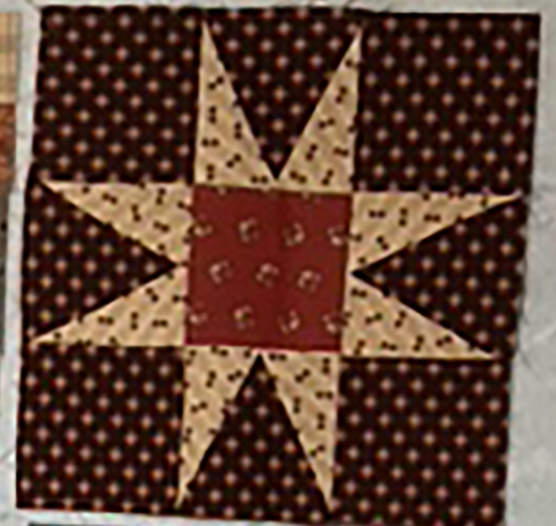
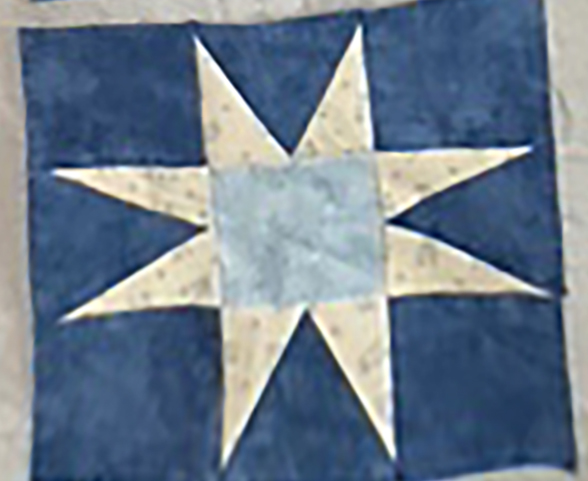
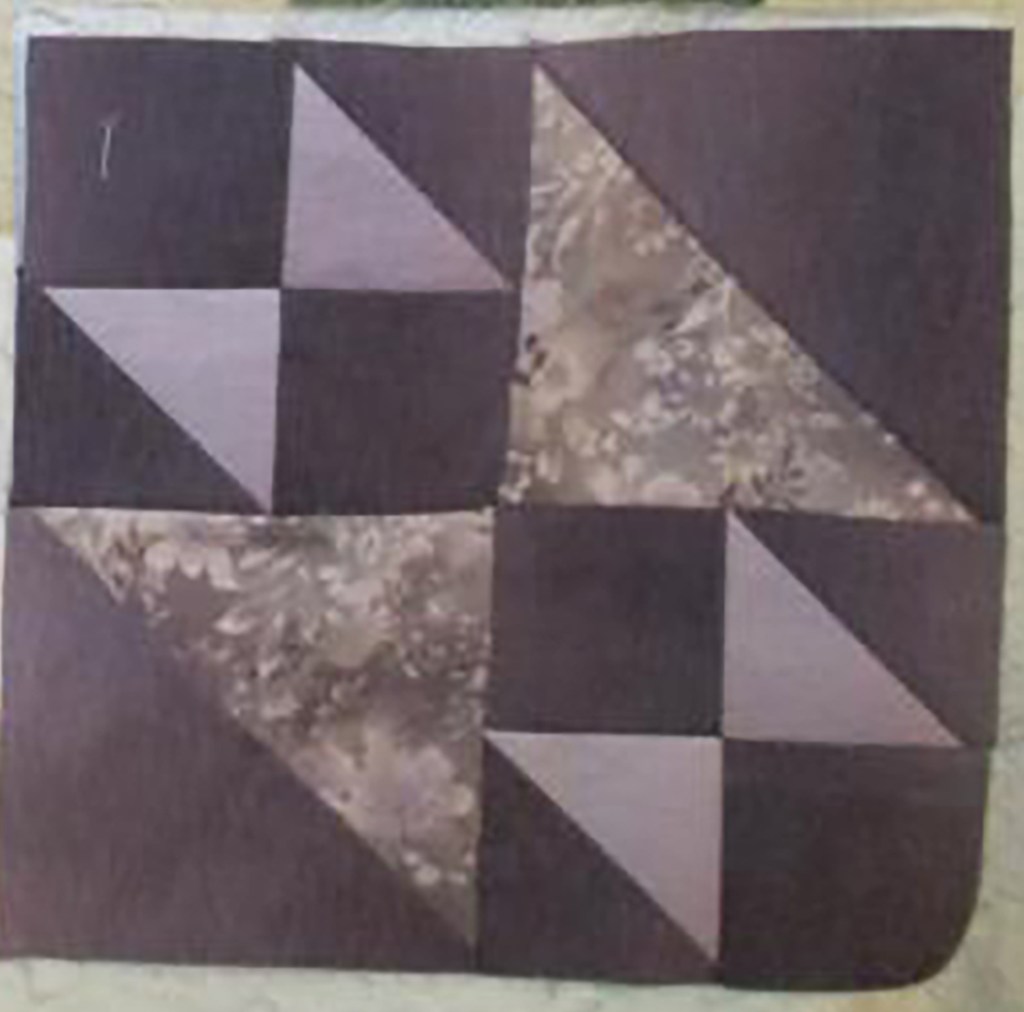
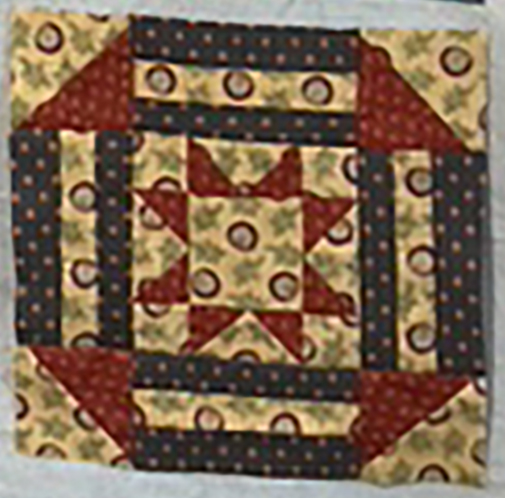
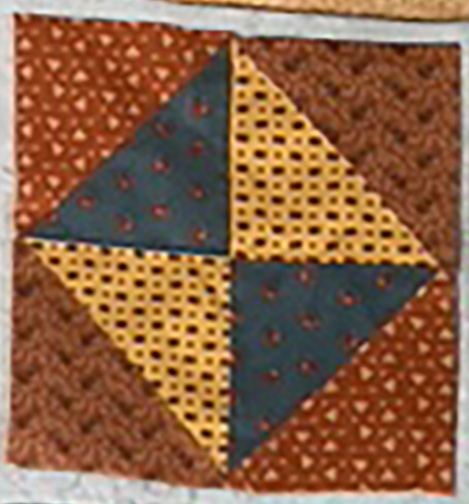
Block 1: Simple Blessings from The Civil War Diary Quilt (Easy)
Block 2: Sun Rays Quilt from The Farmer’s Wife Homestead Medallion(Advanced)
Block 3: Bitter Enemy from The Civil War Diary Quilt (Easy)
Block 4: Star in the Window from The Farmer’s Wife Homestead Medallion (Advanced)
Block 5: Yankee Papers from The Civil War Diary Quilt (Easy)
Block 6: Church from The Farmer’s Wife Homestead Medallion (Advanced)
Unfortunately as of posting, Mary Lee hadn’t made her 7 and 8 blocks yet.
And here’s where things start to get interesting – look what happens with Robin’s and my blocks. Up until now, we were all following the block instructions, but things change with block 7. Robin continues to create her blocks following the instructions, but I begin adapting the blocks so that they blend better with my other blocks.
Block 7: Puss in the Corner from The Farmer’s Wife Homestead Medallion (Easy)
Block 8: Southern Flags and Patriotism from The Civil War Diary Quilt (Advanced)
Let’s take a look at each person’s group of blocks so far. Now you’ll be able to not only see the color scheme, but also the theme.
Mary Lee is using her stash of Daiwabo fabrics for her blocks to create a classy understated elegance. (Daiwabo fabrics are Japanese taupes.) Although each block has its own group of fabrics, the fabrics are repeated in more than one block for a lovely cohesion.
Robin is using a great collection of Civil War fat quarters for her blocks to create a traditional 19th century look. I just love how she uses the lighter busy prints as backgrounds, don’t you?
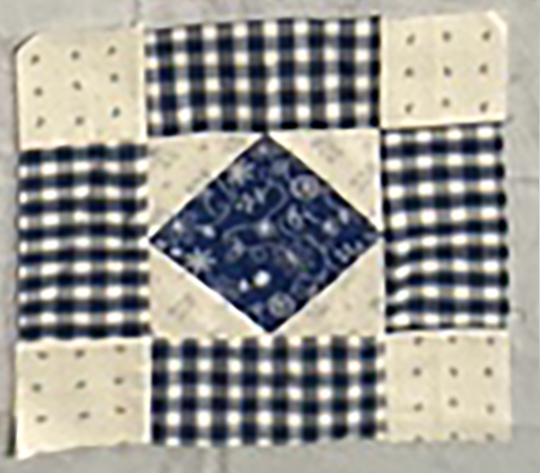
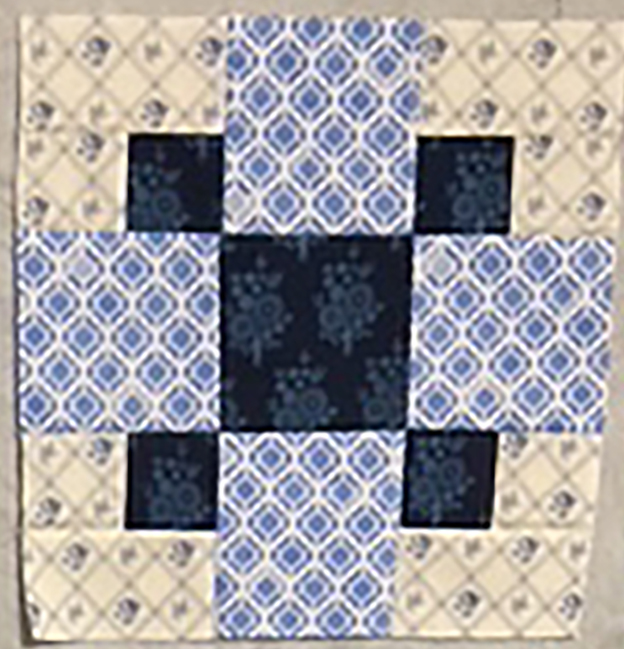
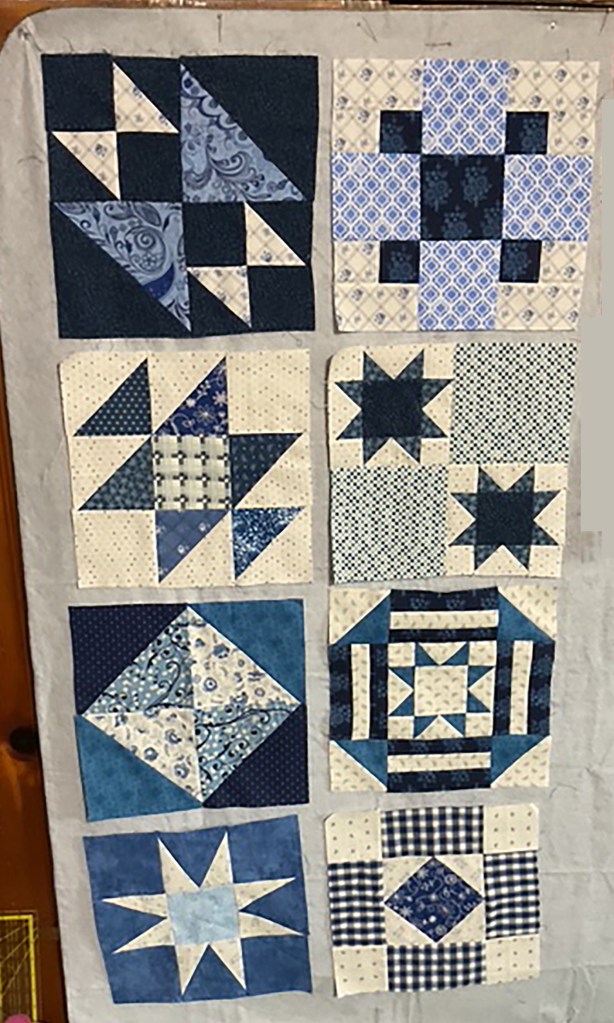
Me, I’m using a big bag of blue and cream scraps with some additional fat quarters to add variety for my blocks. It definitely has a Modern Farmhouse feel going on, I think.
We have 2 more months of blocks in order to complete the set of 12 BOM blocks for the guild. Then it will be time to figure out how we want to lay them out and complete them because how we finish the blocks is completely up to each of us. I have a pretty good idea right now as to what I want to do, but that could change based on the upcoming blocks. I think completed quilt tops using our BOM blocks will be a post coming down the road so you can see how our projects turned out.
Before I dive right into HSTs, I want to show off my completed Helix quilt top. Yes, I finished it! I really like the finished top, although I wish my points had turned out better. What do you think?
I didn’t have enough background left to add side strips, but that was okay, it will be fine as long as I’m careful when I sew the binding on because I don’t want to cut off the triangle points.
Quilt Block Basics
Lately I’ve been feeling very creative — maybe the change in the weather? I’ve been churning out new quilt designs on my EQ8 (Electric Quilt) software and I will never have enough time to make them all, I’m afraid. While I was working on all these new designs, I started thinking about the smaller units that make up quilt blocks and I thought — AHA!!! That’s a great topic for the blog!
So, welcome to a new VRQ mini-series, all about the smaller units that make up our favorite quilt blocks.
The first unit I want to talk about is the Half Square Triangle.
Half Square Triangles (HSTs)
Half Square Triangles or HSTs are one of the most common building blocks for a pieced quilt block. Sometimes you see HSTs called Triangle Squares or Half Square Triangle squares or blocks. I like to keep things simple when I write instructions and I consistently use Half Square Triangles or HSTs.
You can find HSTs in simple blocks such as:
Friendship Star (Left) Pinwheel (Center) Shoofly (Right)
Or in more complex blocks like:
Bear’s Paw (Left) Mosaic #10 (Center) Old Maid’s Puzzle (Right)
One of my most favorite things is playing around with the parts of my blocks to create new block designs when I’m designing. I like to change colors, switch lights and darks, and change the orientation of the units within a block in order to create something new and different. EQ8 makes this sew easy to do.
To show you what I mean, let’s play with the Mosaic # 17 block, which is all HSTs and gives us lots of room to play!
Let’s change the orientation of the HSTs:
Now let’s add another color in the mix:
Let’s try change the orientation, too:
Okay, okay, I’d better stop here or I’m going to lose my writing focus and create another stack of quilt designs I will never have time to make! LOL!
I think you can see how much fun it is to play with HSTs. Imagine what happens when you add other building block units with the HSTs………but that is a post for another day.
Half Square Triangle Assembly
There are many different ways to make HSTs — just check on YouTube, Pinterest, or your favorite quilting magazine.
I am going to show you my favorite method here — this is the method I use in my quilt instructions.
Layer 2 squares together, right sides together (RST).
Draw a diagonal line from 1 corner to the opposite corner.
Sew 1/4″ away from both sides of the drawn line.
Cut the HSTs apart on the drawn line. Open to make 2 HSTs.
I bet you noticed I didn’t use any dimensions for my fabric squares. That was intentional. As I’ve said many times, quilting is all about math (check out my ode to quilting and math HERE).
HSTs are no different! You can use this construction method to make any size HST. You just have to know a teeny tiny magical math secret!
To figure out how big to cut your squares, you need to add 7/8″ to your finished dimensions! Really, that’s all you need to remember. You don’t need to refer to a cutting chart, you just need to remember 7/8″. (Please note that 7/8″ may not work for all HST methods.)
Here are some examples:
I want my HST’s to finish at 3″, so I need to cut my squares 3 7/8″.
5″ finished? Cut 5 7/8″ squares.
12″ finished HSTs……….cut 12 7/8″ squares.
Easy peasy!YAY MATH!Thank you, Mrs. Hank (my high school math teacher)!
HST VRD Rose Card Patterns
We have a wonderful collection of HST pattern sin our VRD catalog. It’s a L O N G list, so hang in there until the end of the post.
After our 8 week Basic Quilting Skills for Beginners series, I find I’m ready for something new. How about you???
I thought it would be fun to talk about quilt panels and what quilts you can make with them. I must admit that I have a big stash of quilt panels. I know that admitting you have an addiction is the first step to recovery, right?
SHHHHH! My super secret stash of panels!
I’ve collected panels for a long time, but I rarely seem to use them or make anything out of them. Sure, I’ve slapped borders around some of them and whipped up a quick baby quilt or simple wall hanging, but does that really count? When I taught free motion quilting classes in the past, I even used a panel as a project so students would actually be quilting a “real” quilt, but not something they’d worked on for hours and hours.
If the quilt police showed up at my front door and asked me about my fabric stash and all my panels, I would say: Who me?? I have no idea where these panels and all this fabric came from. I think fabric is like rabbits and multiplies when you’re not looking. That makes sense, doesn’t it? But would it work?
Well, I’m hear to tell you that Villa Rosa Designs has a lot of GREAT patterns specifically for quilt panels — for vertically printed panels, horizontal panels, and even panels with printed “quilt squares.” Yay! Villa Rosa to your rescue — and mine, too!
Let’s take a look at some of the panel quilt Rose Card patterns. You can find ALL of these patterns on the website, www.villarosadesigns.com
Vertical panels seem to be the most common type of quilt panel and we have quite a few Rose Card patterns to choose from.
One of my absolute favorite Rose card patterns for vertical panels is Hillside Charm! I know I’ve mentioned this one before, but it is an awesome pattern and I have to show it off again! You’ll probably read about it later in the future too. Sorry, not sorry.
Isn’t this just the coolest pattern? Aren’t you already mentally going through your panel stash to see what you can use for Hillside Charm? I know I am….
Another one of my favorites is Daring Spirit — the perfect quilt for a Quilt of Valor as long as you add a narrow border around it to meet the minimum width requirement for a Quilt of Valor. You can check out my Daring Spirit tutorial HERE and my Quilts of Valor presentation post HERE.
Take a look at these terrific Rose Card patterns for vertical panels. Grab ’em while they’re hot!
Did you know Villa Rosa has Rose Card patterns for horizontal panels, too? This is awesome because patterns for horizontal printed panels can be hard to find!
October Sky is one of our most popular patterns. I bet you can see why! The really cool thing is that the top and bottom star sections are made with half square triangles, which go together like a snap when you take a little extra care to place your colors correctly.
Shh! Don’t tell anyone and when you make your October Sky quilt, everyone will be in awe at seeing your amazing quilting skills. I can’t wait to make one of these for myself.
Here are some more Rose Card patterns for horizontal panels. Nice!
We even have Rose Card patterns for quilt panels with printed blocks or squares!
Hypnotized is one of our new Rose Cards this year. I just love the look of this quilt — it looks difficult to make, but I know it won’t be because it’s a Rose Card pattern.
I’m all set to make Hypnotized. The only problem is that by the time I get to my project, it will be too late for Halloween this year so I guess I’ll have to say it’s early for next year.
Here’s my fabric for the Hypnotized Rose Card pattern — don’t you love it??? Instead of panel squares, though, I’m going to cut the squares from the gnome print and I’m going to use the stripe for my border. You’ll have to stay tuned for this quilt coming soon, or at least some time before Halloween 2023. LOL!
Yay! More Rose Card patterns for panels with printed squares/blocks. Of course, you can always substitute squares of any novelty fabric you love in these patterns, which makes them very versatile.
BUT WAIT THERE’S MORE!
I think you know me by now (and how much I like saying that phrase), so of course there’s more.
You know those really big panels that measure roughly 36″ x 42″? Well, we even have a couple patterns for these big panels, too.
And if you know anything about Villa Rosa Designs, you can bet we’ll be adding new patterns for panels in the future. In fact, I have a few ideas of my own.
That’s it for today. I’m off to play with my panels.