What a fun blog post last week! It was great to share a little bit about my quilt design process with you. It was such fun, we’re doing it again this week, but with a different quilt block.
Before even starting this post, though, I must admit I cheated a bit and began playing with this week’s quilt block. Let me tell you – it never fails to amaze me how a simple block can create such amazing designs.
According to Barbara Brackman’s Encyclopedia of Pieced Quilt Patterns, this specific Spool block appeared in the book, Polly Prindle’s Book of American Patchwork Quilts by Alice Gammell in 1973. Of course, it wasn’t really a new block in 1973, but this simplified Nine Patch version appeared in Polly Prindle’s. Previous versions included set-in seams as well as 4 small Spools in a single quilt block. Today, though, we’re going to start with Polly Prindle’s version.
As you can see, our Spool Block is a Nine Patch block with a 3×3 layout. Of course, we’ve added some Half Square Triangles (HSTs) to create the Spool shape.
Time to Play!
The first thing we’re going to do is to simply our Spool block by using flippy corners instead of HSTs for the top and bottom of the spool. This tweak would actually save time when piecing the blocks for a quilt without changing the overall design. And we all know that saving time is golden in the quiltmaking process. The tweak also cleans up the look of the block by removing some of the seams.
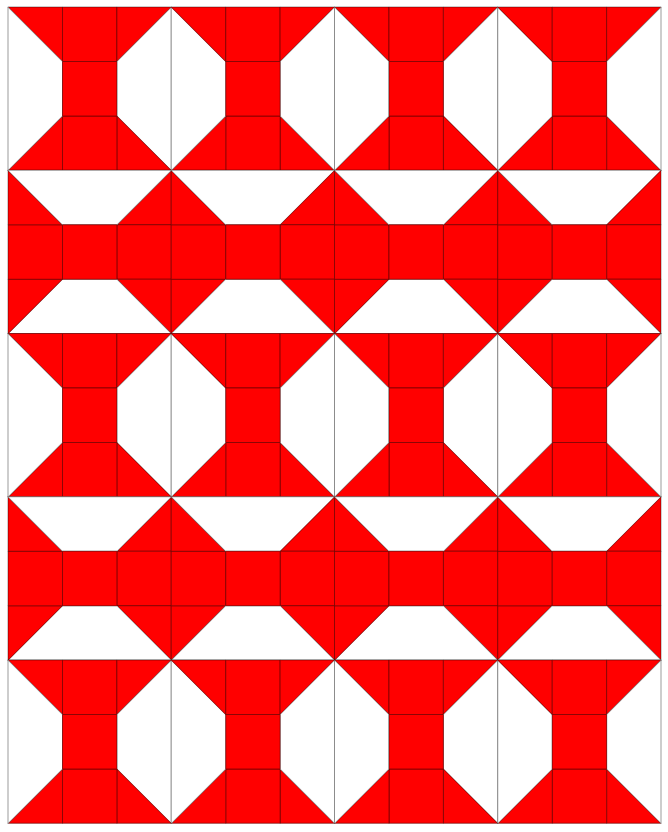
Let’s see what a quilt looks like using just this block, shall we? This design shows the blocks all pointing in the same direction. Hmmm. I like it, but I think we’re just getting started with the Spool block today.
Let’s try alternating the block directions. Better, but not there yet.
Next up – let’s alternate block direction by row. Better and better! I really like the play between the different block directions. Reminds me a little bit of the vertical and horizontal strips I added to last week’s classic Nine Patch block.
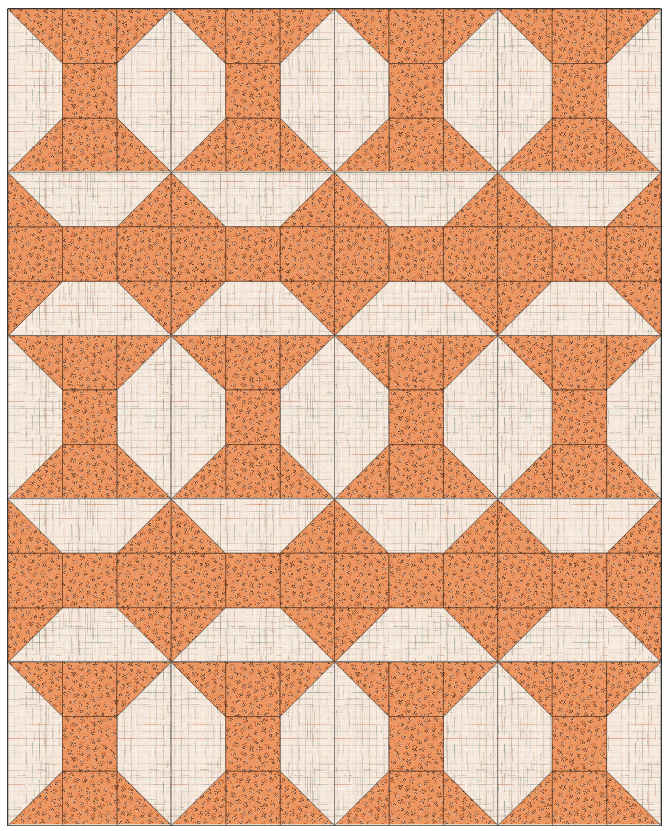
Let’s add some fabrics to this one. I’m using a few prints from Moda’s Acorn Hollow collection. This layout definitely has some potential. I’m not usually a big fan of 2 fabric quilts, but I am liking the crispness of the design with only the 2 fabrics.
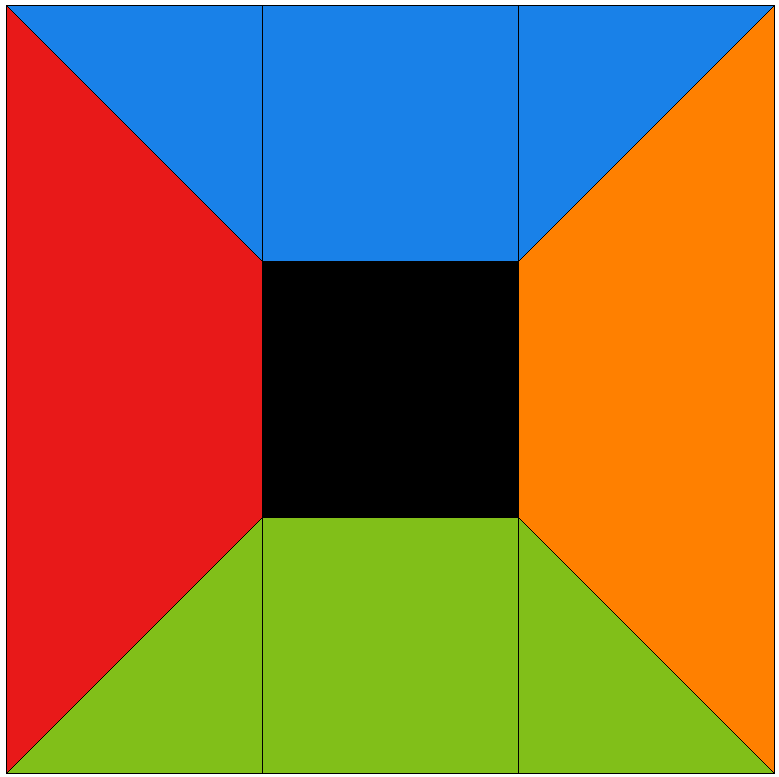
Okay, let’s go back to our Spool block again. Instead of it being a 2 color block, let’s make it a 4 color block with a black center.
Huh. Intriguing. Let’s see how it looks in a quilt. This is the same layout as our first red/white layout above. What a difference color can make!
Now let’s alternate the block directions. This is the second red/white layout above.
I like it, but with so many colors, you kind of lose the interesting design. Let’s back off on colors a little bit by adding more neutrals. Not loving it, but I do like the diagonal thing happening.
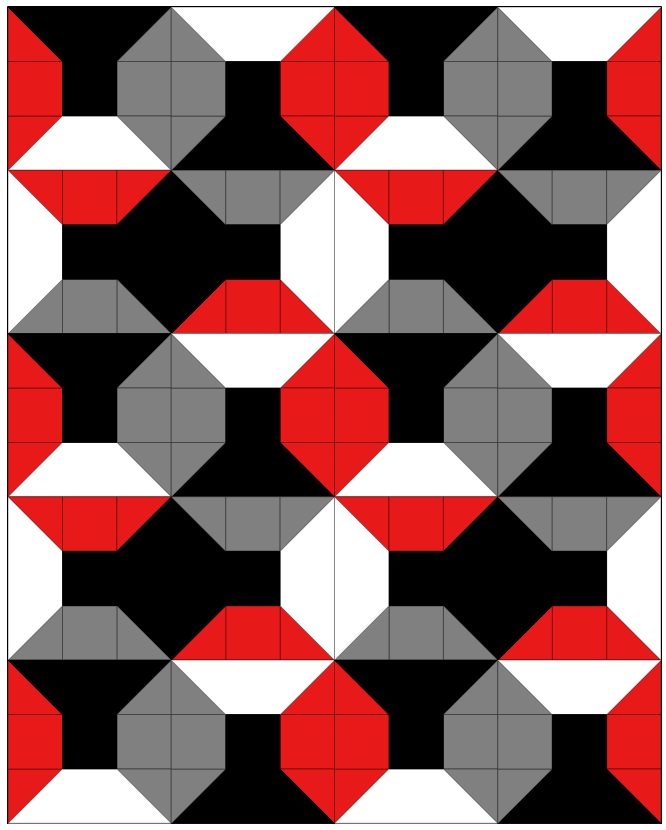
Not quite what I was expecting. Let’s tweak the colors some more. I’m going to use red, black, white, and grey which is one of my favorite colorways when I’m trying to perfect a design. I like working with these colors because of the strong contrast. I also changed the center square to black, so I get an interesting black shape in the blocks now – kind of looks like a megaphone to me.
Let’s rearrange the blocks to see what happens. This is interesting. It has a lot of movement.
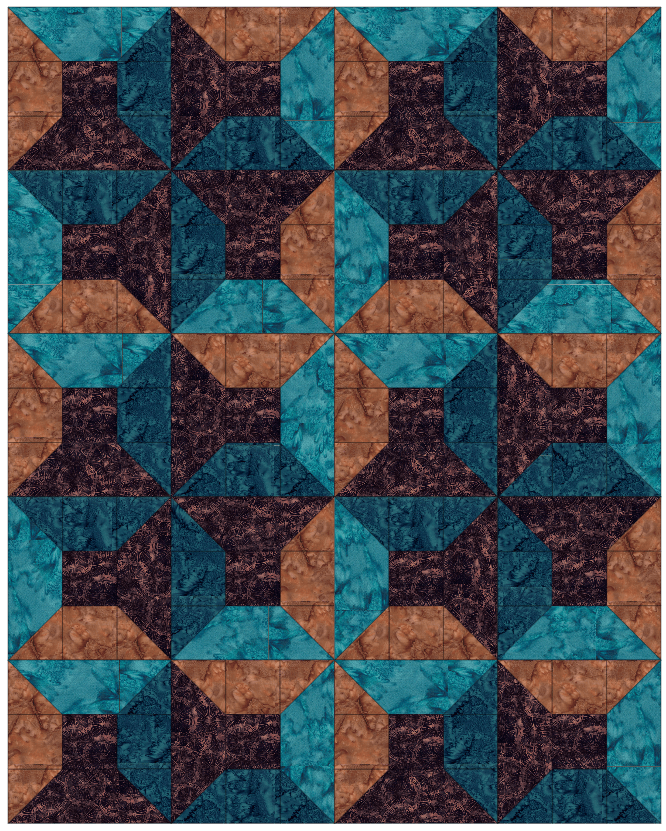
Let’s add some fabric now to see what it looks like. Here it is in 4 Hoffman batiks. I like it – it has a woven effect which keeps my eye moving over the design.
Let’s play with the block arrangement a little bit more. I think there’s another better option still out there. We just have to play a bit until we get there. Almost there.
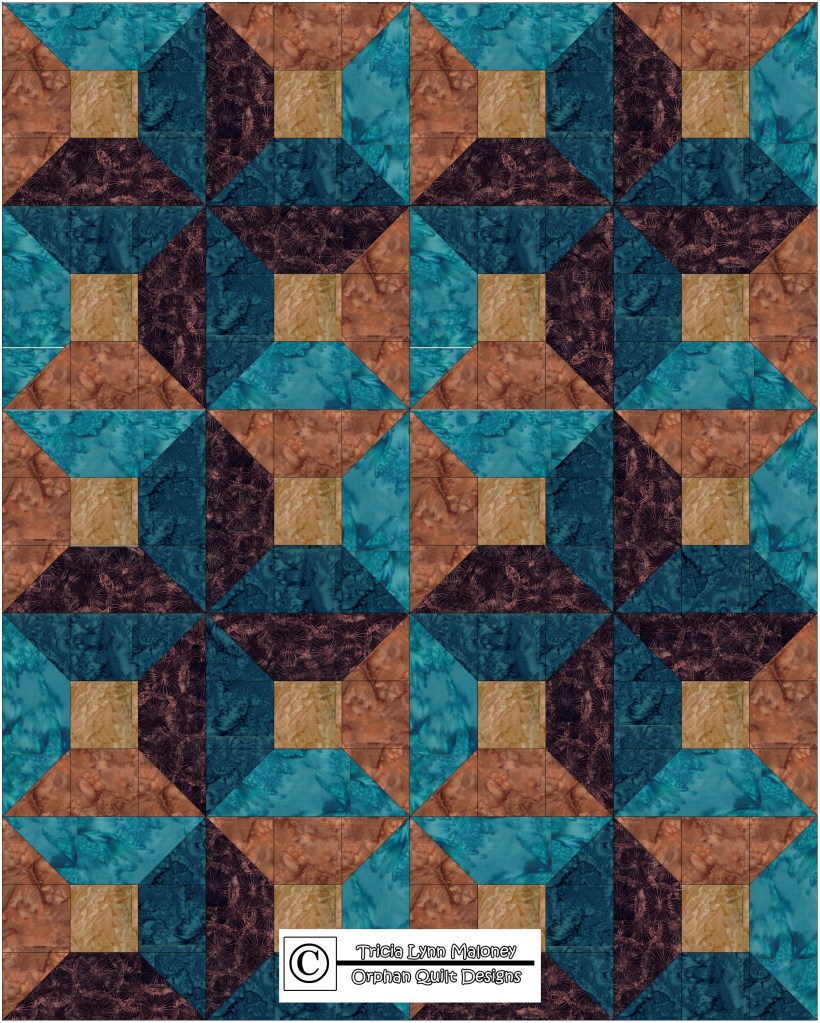
I think it needs just one more thing tweaked. I’m going to reintroduce the 5th fabric in the block for the center squares. Yup! Got it. This is the one! A beautiful finished design! LOVE the 3-D effect. Lots of movement. Tons of interesting things going on.
Do you remember where we started? A simple Spool block.
An here’s where we ended. Still a simple Spool block, but so much more!
Isn’t quilt design a fascinating journey? For me, it’s a lot of “what if?” questions. Also, I’m not afraid to make something really ugly – I can always delete it, right? And sometimes “something ugly” just needs another tweak or 2 to become something amazing.
I hope you give designing a try. I think you’ll be surprised at how fun it it. Whether you use graph paper and a pencil or Electric Quilt 8 software, I think you can come up with something that’s truly your own, something you love.
Stay tuned next week for another fun quilt design adventure! Any suggestions on a simple quilt block you’re just dying to see turned into an interesting quilt design? Leave a comment and tell me!
WHEW! If you’re like me, you are having a heatwave right now. 90’s every day. It even hit 100 on the thermometer on Monday! YIKES! I’m sooooo not ready for these temps. It’s like we went straight from 50’s to 90’s in a couple weeks.
90’s are definitely not normal for this time of year here in northwestern Pennsylvania. AND we have high humidity to go with the heat which makes me want to just melt into a puddle on the ground every time I have to step outside. I literally had to scramble on Sunday to get the window AC units in, but we’re all good now. I just don’t want to go outside anymore.
I’m melting into a puddle………!!!!
Luckily my dungeon studio is still cool enough (sadly, it is not air conditioned) to work in comfortably. I have several fans on to keep the air moving, but when the heat finally infiltrates my space, it’ll get quite uncomfortable. That usually isn’t until August and September, though, but we’ll see what summer brings this year. Northwestern Pennsylvania is an interesting place to live – record amounts of snow and cold in the winter, a wet and cold spring, then – POOF! – record high temps in June. Only the strong survive……..
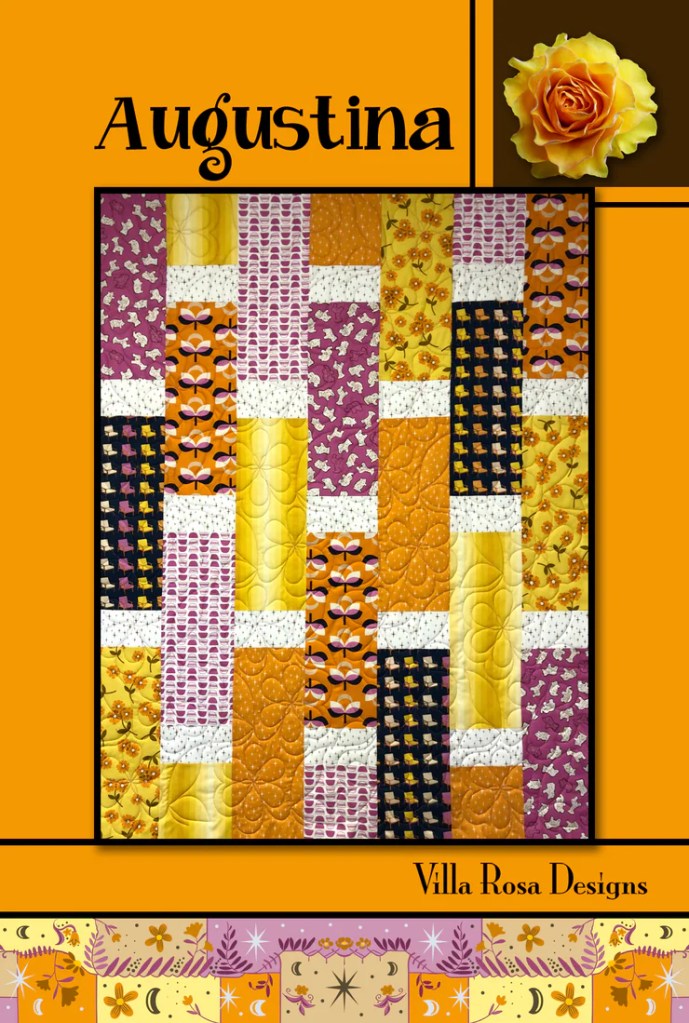
I finally got a little quality time with my sewing machine this week so I decided to put together a new tutorial for you. Augustina is a such great project for summer!
Of course Augustina is fast and fun – it’s a VRD pattern, but it’s also not so big that you feel like you’re wrestling an alligator while your body is dripping with sweat. I promise you, this quilt really is quick – I made the top in a couple hours and that included both cutting and photographing my step-outs for the tutorial. It’s a very satisfying afternoon project.
VRD Augustina Quilt Tutorial
Augustina is a great sized quilt for a small throw or a juvenile quilt. And this is a pattern you are going to turn to over and over again for a beautiful quilt with little effort, yet it looks like a million bucks (sorry, it’s late and I couldn’t think of another phrase to use). So don’t forget to get your own Augustina pattern if you don’t have it yet.
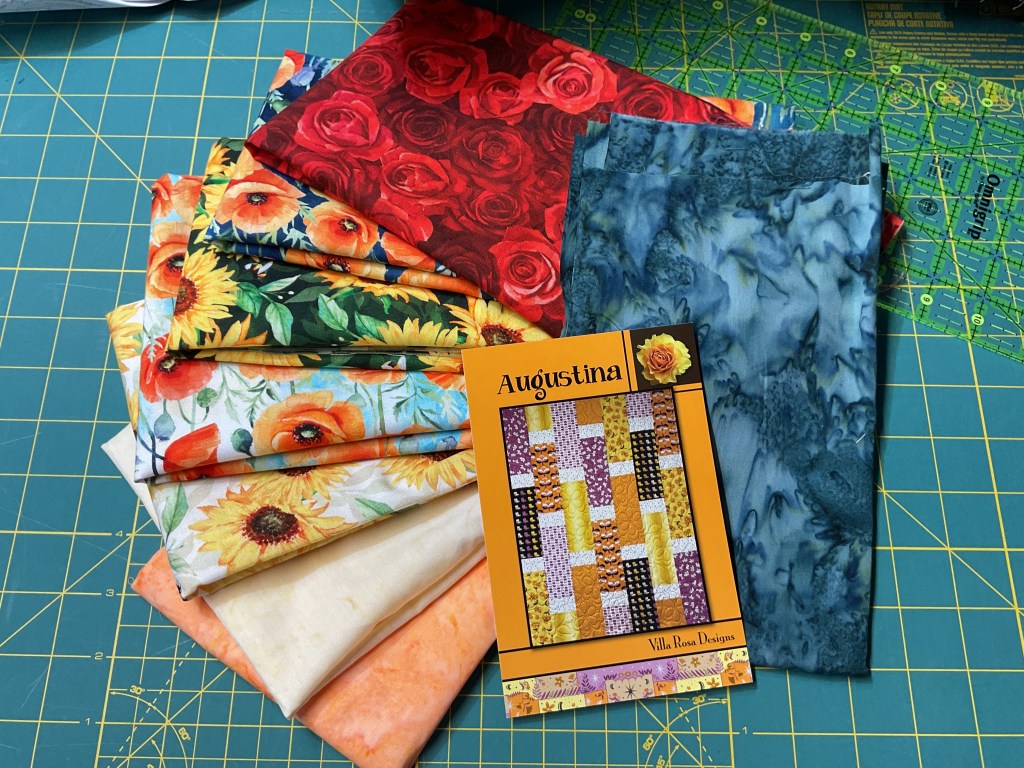
The first thing we need to do, of course, is round up our fabrics. Augustina is a fat quarter project, so you can march right over to your stash and find some coordinating fat quarters or you can use this project as an excuse to visit your local quilt shop to buy new fabric. Yeah, I know, we quilters really don’t need an excuse, but it is handy to have one anyway, isn’t it?
For this tutorial, I am using Flower Shoppe fabrics from our quilty friends over at Hoffman Fabrics. The flower fabrics are all amazing Hoffman digital prints – have you seen these in person yet? The colors are so bright and clear – I feel like I could pick these flowers right off the fabric. We’ve paired a few Hoffman batiks to balance out the gorgeous flower prints.
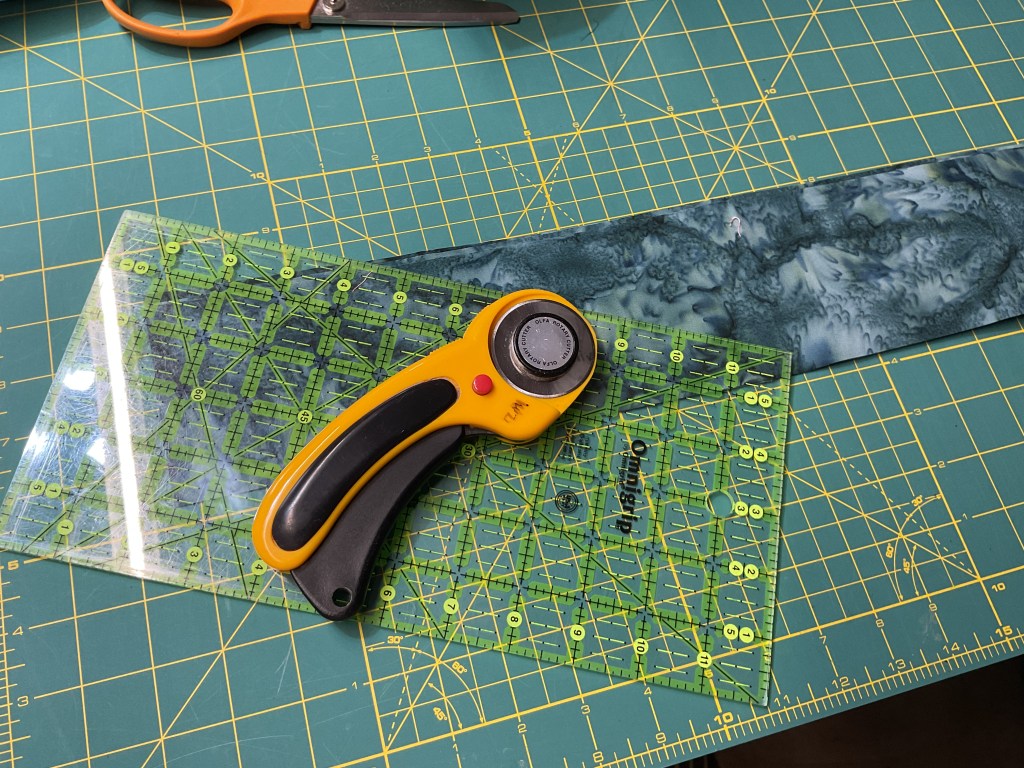
Please remember when using digital prints, that they do not react exactly the same as regular quilting cottons. Always start with a new needle in your machine so you are not pulling threads when sewing as well as a new rotary cutting blade so you are cutting cleanly through the fabric instead of sawing at it, which can damage the fibers.
Next up…..cutting.
SHHHHH! The secret of this quilt is that the pieces are big. Big pieces mean you don’t have to spend loads of time cutting little squares, rectangles, or triangles. Big pieces are a huge time saver! Big pieces also mean you can use bigger prints (when you use big prints in small pieces, the design gets all chopped up and you tend to lose what you loved about the print to begin with). Yay! Let’s GO BIG!
In the photos, below, we’re cutting our accent fabric into strips and then into rectangles.
Below, we’re cutting our FQs into strips and then into 2 different sized rectangles.
VIOLA! Cutting done. Easy peasy. Here’s all the pieces we need to make Augustina.
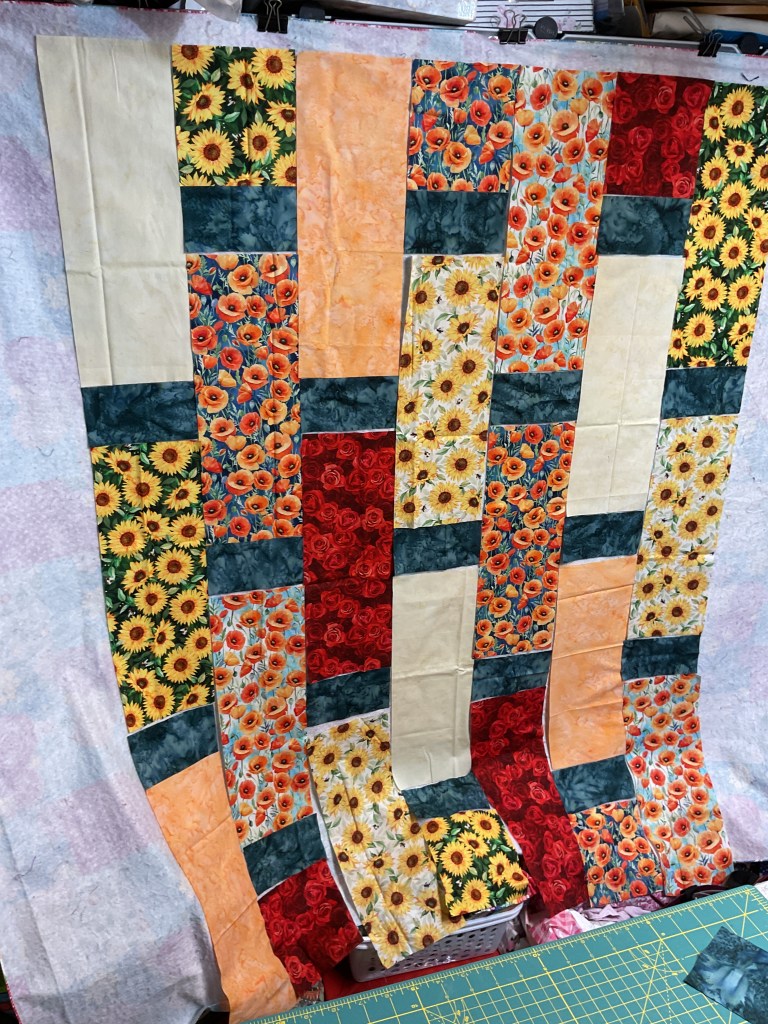
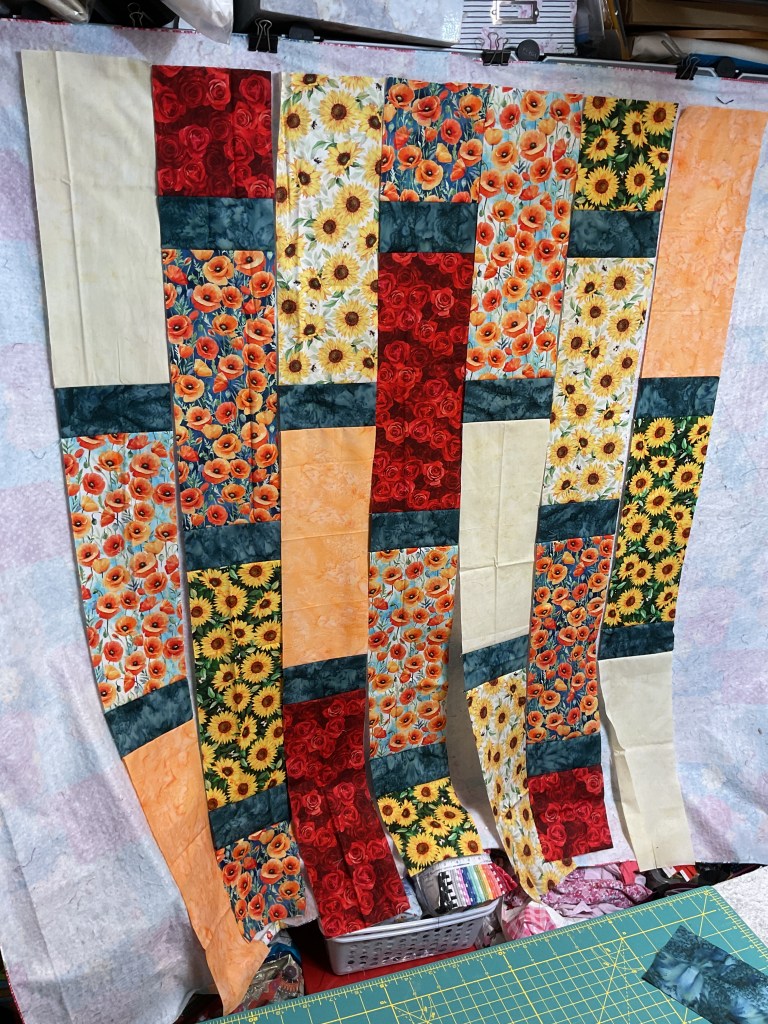
Before we can sew Augustina together, we have to lay out our fabrics. I’m going to put them up on my handy dandy flannel board which consists of a flannel-backed table cloth clamped to the tops of my fabric storage unit doors. As I’ve mentioned before, this idea came from my pal, Mary Lee. Kudos to you, Mary Lee! It’s a great option if you don’t have a spare wall to put up a more permanent quilt wall solution. I can simply take it down when I need access to my yardage stash. I’ve actually had this tablecloth for years now, so it’s even an economical option.
Hmmm……I think I need to move some fabrics around.
After several switcharoos, I think I’m happy with the layout now.
Let’s sew!
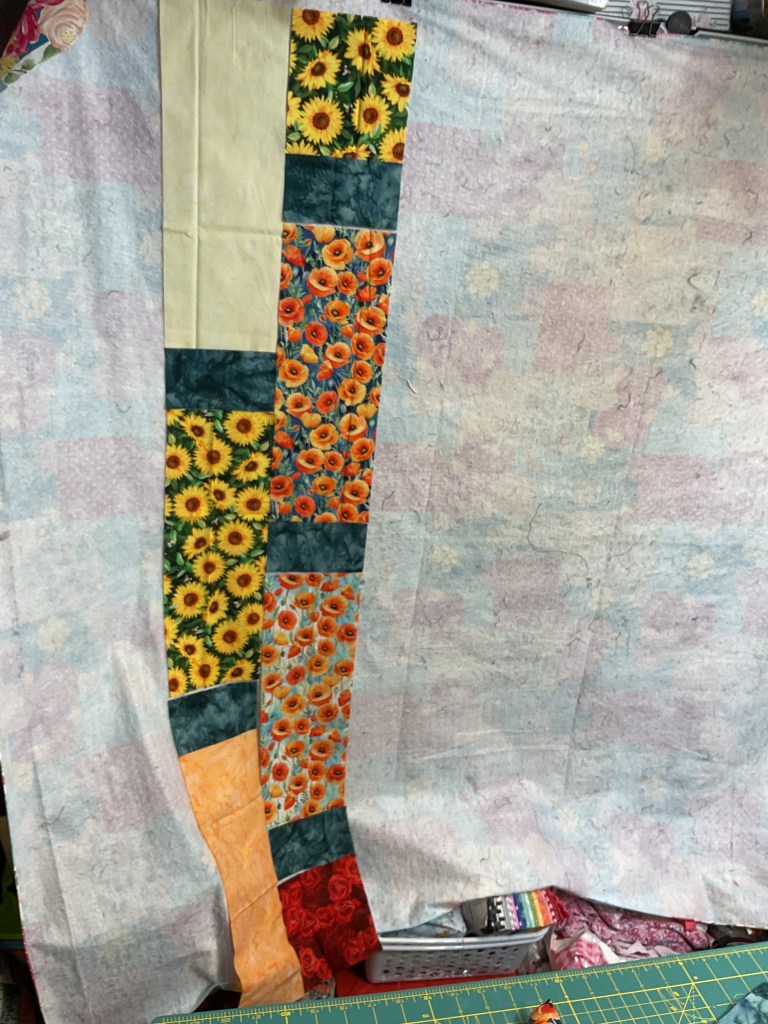
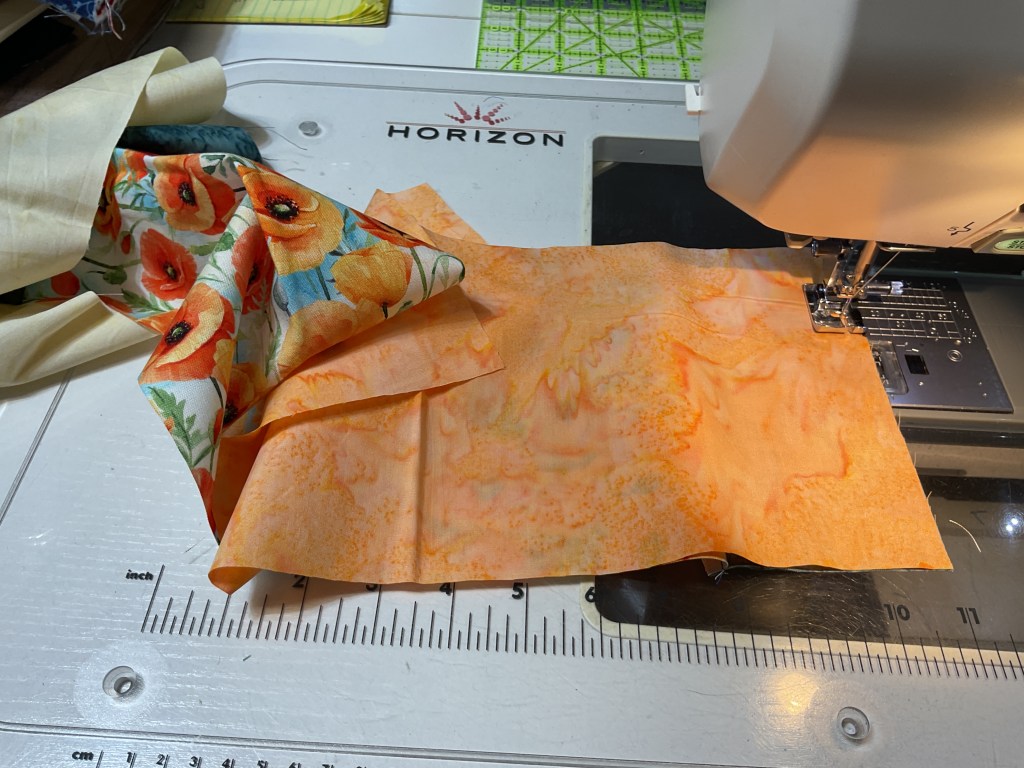
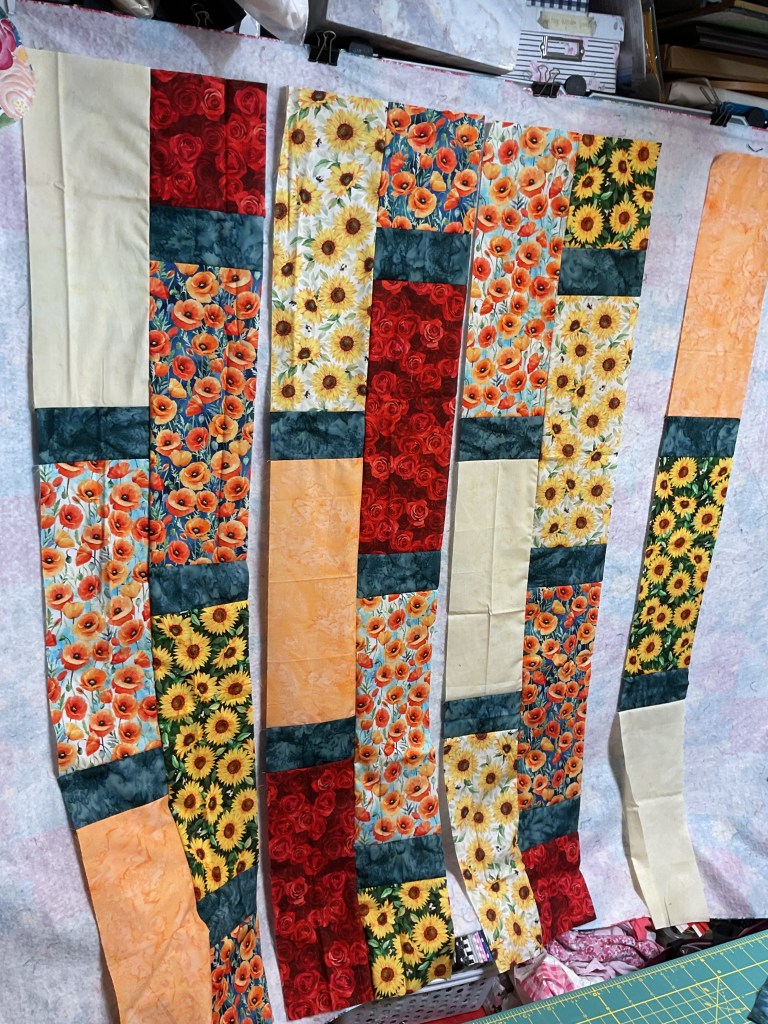
This quilt is sewn together in vertical rows. I took my time, only taking one vertical row off of my board at a time. I worked from the top down to sew the pieces together. It doesn’t matter whether you sew your strips top down or bottom up, just be consistent with all of your rows or else you might get your fabrics out of kilter.
Okay, all the fabrics are now sewn into vertical rows.
Now I’m going to sew the vertical rows together into pairs. As this quilt has an odd number of rows, the last row will have to hang out all by itself for a while.
Next, I’m going to sew the first 2 pairs together into a foursome. Then I’ll sew the third pair and the last row together into a trio.
One last seam to sew the 2 sections together and the Augustina top will be finished. Fast as can be! There isn’t a lot of matching seams, but you do want to make sure your accent pieces are relatively even-looking across the quilt.
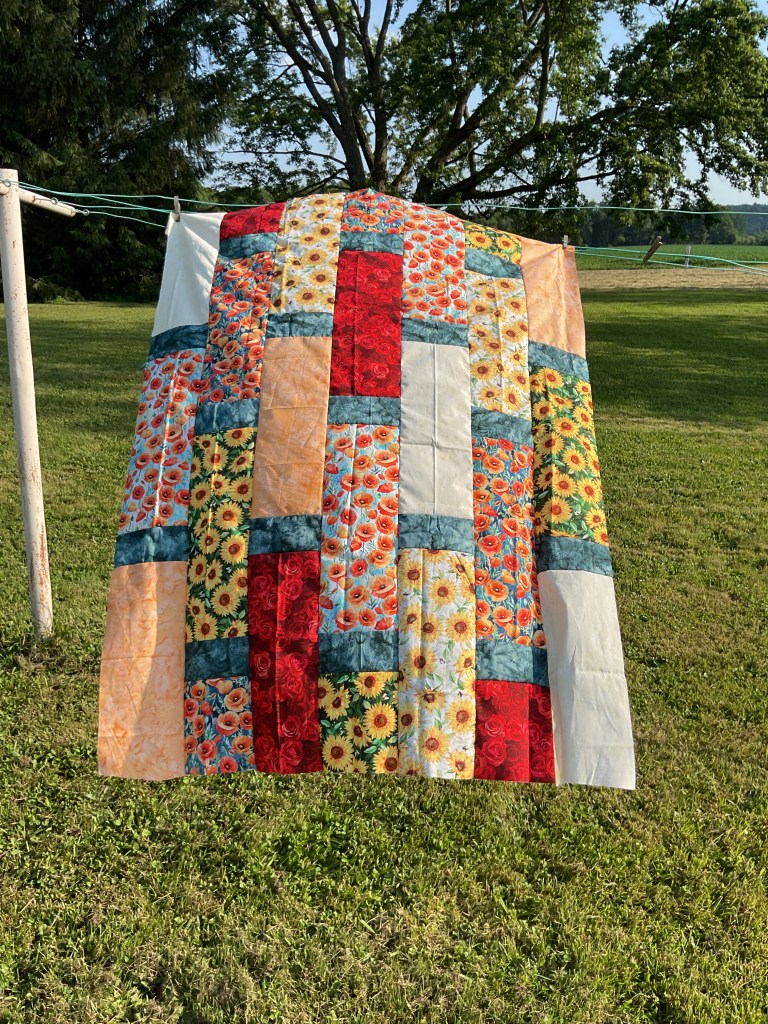
And here it is! Our completed Augustina quilt top.
Although it was hot, I decided to take Augustina outside for a glamour photo. Sigh…….it was a little breezy out and I couldn’t get a photo with it hanging nicely for you. Bummer. But I do love how it looks surrounded by all the green – the flowers look like they are about to burst right off the quilt! That’s digital fabric for you – the number of colors that can be printed on fabric is phenomenal and creates stunning designs.
And that’s it! Finito! Next I need to layer, quilt, and bind it…….someday, anyway.
If you’re looking for another great summer quilt pattern, check out the Jubilee tutorial from a few weeks ago. It’s also a super go-to project.
That’s it for me today, gotta go have me some summer……..in the air conditioning. LOL!
I trust you’re all having fun with your Free Motion Quilting (FMQ) practice. We’re going to take a quick break from our Beginner FMQ series this week because I have NEW March patterns to share as well as a fun table runner tutorial just in time for St. Patrick’s Day. We’re all Irish on St. Patrick’s Day, right?
NEW March VRD Rose Card Quilt Patterns
Here are the new patterns for March – be prepared to be inspired….
Molly created a brand new St. Patrick’s Day throw-sized quilt called Clover Patch. I just love that she added a single Four Leaf clover to her quilt – can you find it in the Clover Patch?
Molly also created a second pattern this month called Jackknife. This clever block uses long quarters instead of fat quarters. We still have a few kits left, too, if you’re interested.
Get your Jackknife kit in Art Glass AbstrArt HERE.
Heidi wows with her new 24″ panel quilt pattern, Jerky. If you don’t already know, Heidi always gives her patterns a foodie name because she loves to cook.
Rachelle created a new modern pattern called Kenosha. I love the secondary design that happens in this striking quilt pattern.
Pat, our Rose Queen, has another fun and fast throw sized pattern for you called Zamora. If you didn’t know, Pat always names her quilts after a rose. Yep, Zamora is the name of a rose. Zamora only uses three main fabrics plus a binding fabric. Sew easy piezy. We still have a few Zamora kits left, too.
We also have a new table runner pattern this month called Erin.
Get your digital Erin pattern HERE or your print Erin pattern HERE.
I’ve always wanted to make a green and white Double Irish chain for St. Patrick’s Day. I can now check that off my bucket list. The Double Irish chain looks complicated, but I promise you, it really isn’t when you break it down. Give it a try.
I guess I should have done a tutorial for today with Erin, but I’d already gotten Lucky stepped out and photographed before I even designed Erin. I’m sure I’ll do a tutorial for Erin sometime in the future – you’ll just have to stay tuned.
That being said, let’s move right along to our Lucky tutorial.
VRD Lucky Quilt Runner Tutorial
The first thing we’re going to do is gather up our fabrics.
I’m using a beautiful Hoffman batik collection called Forest Floor. Don’t you just love the greens? With a pop of orange? Love Love Love it!
The first photo shows the background and the greens for the blocks. The second photo shows the border and binding.
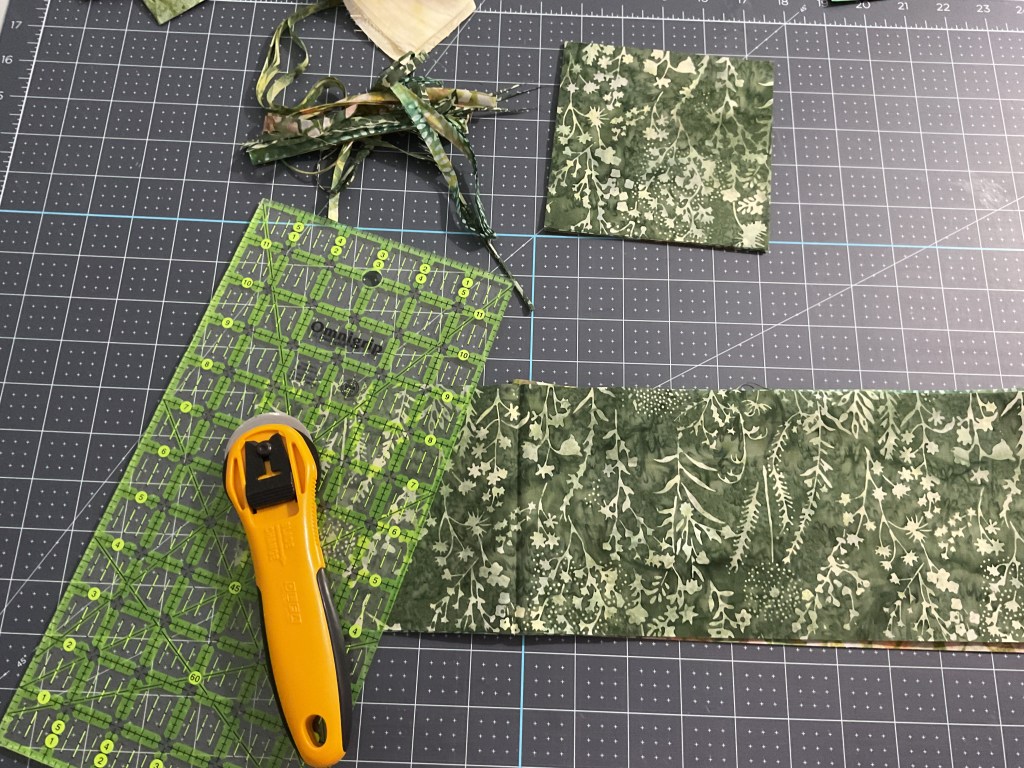
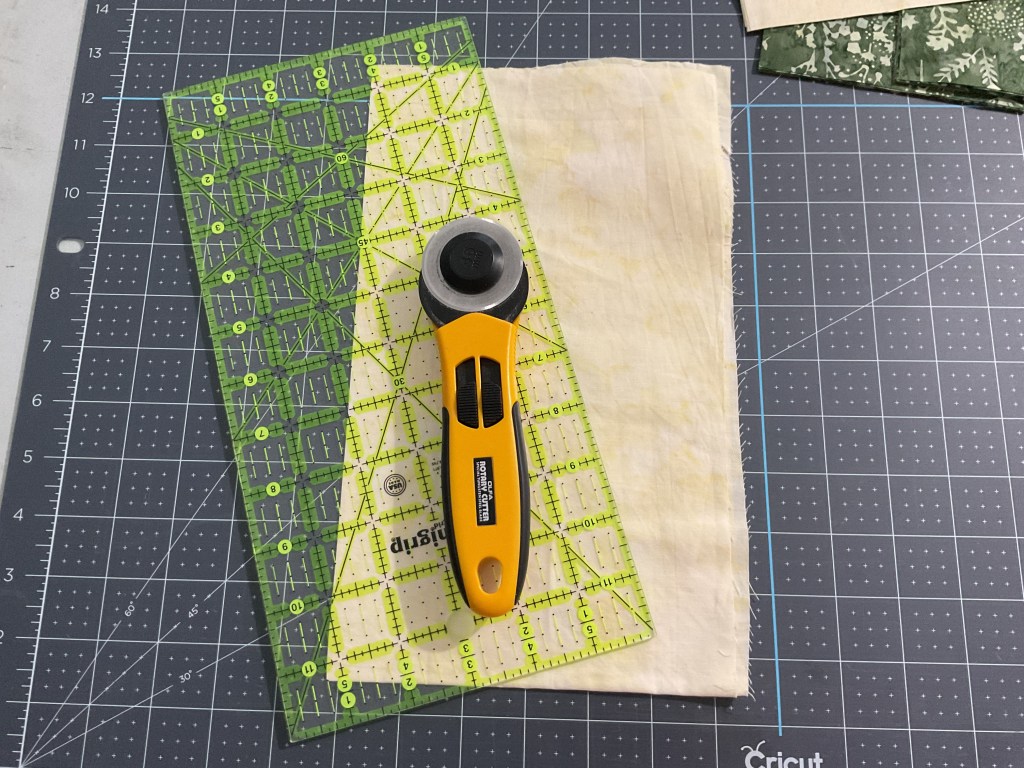
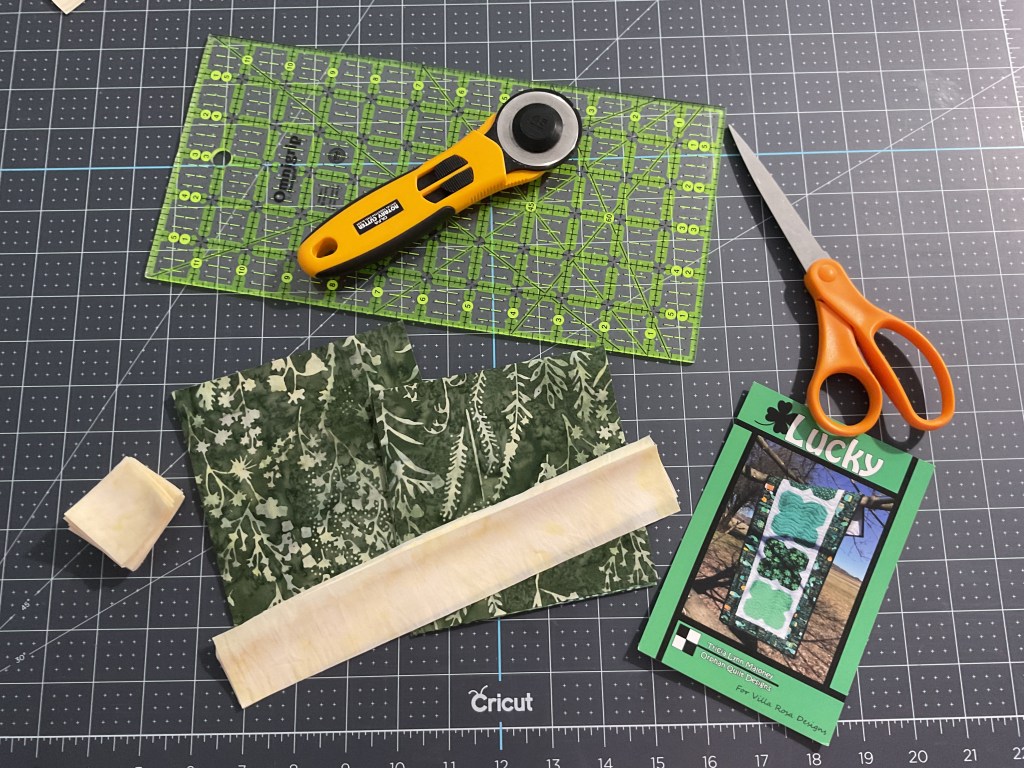
Grab your rotary cutter, board, and ruler and let’s start cutting out our pieces!
Now that our pieces are all cut out, let’s start sewing!
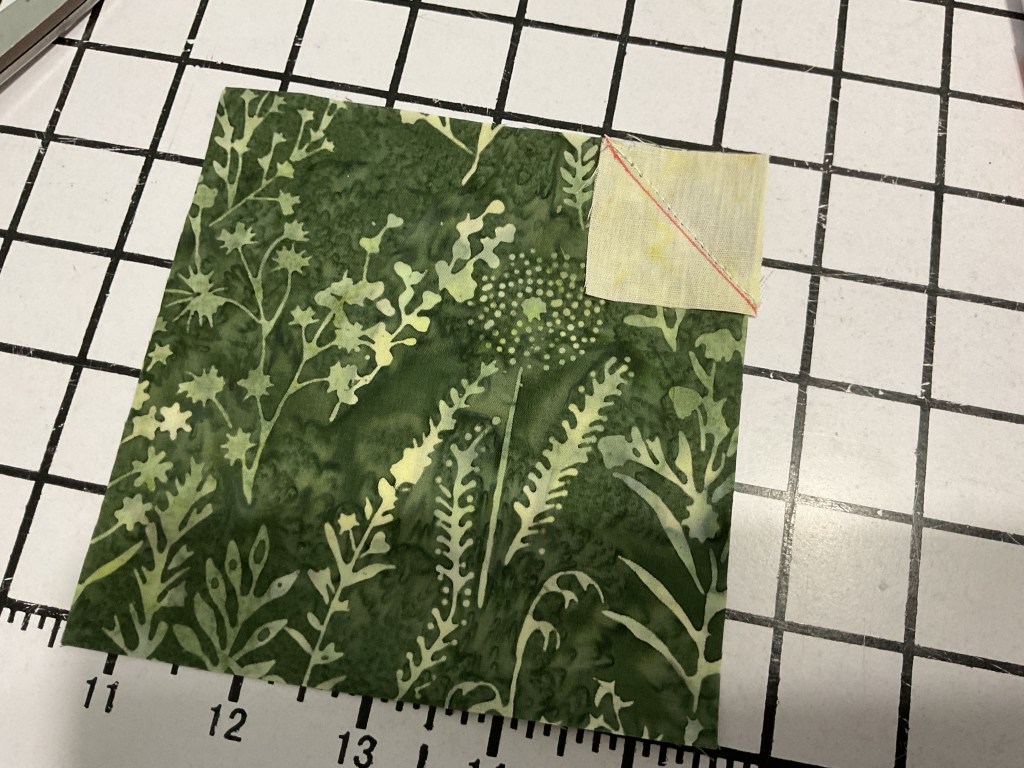
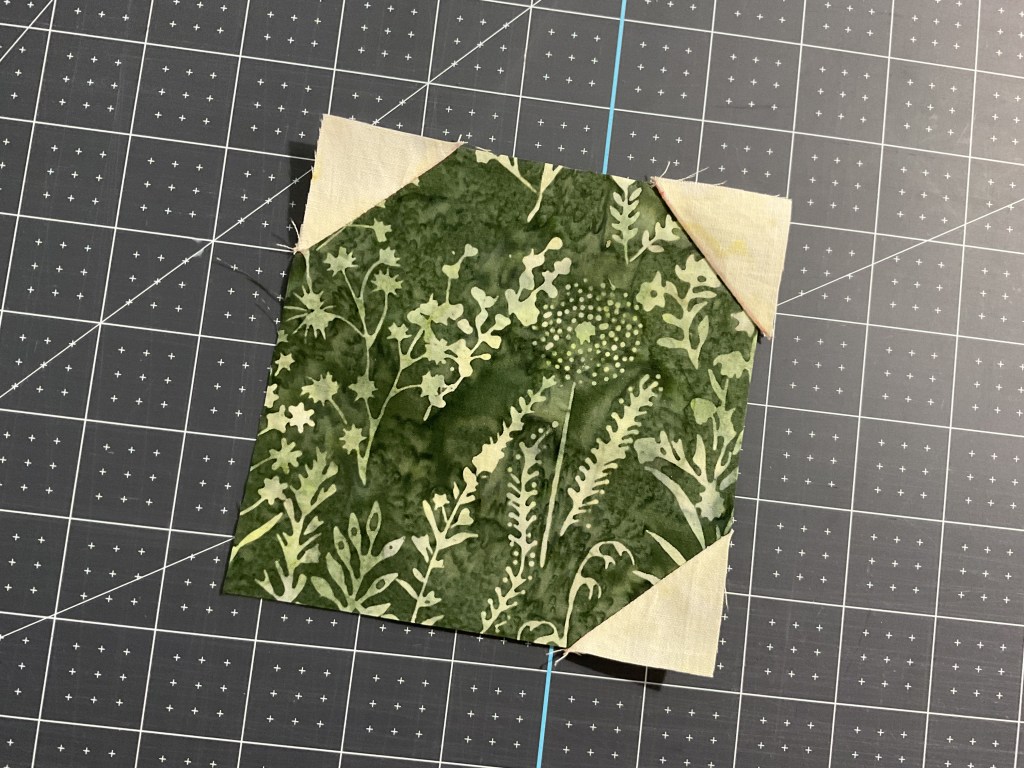
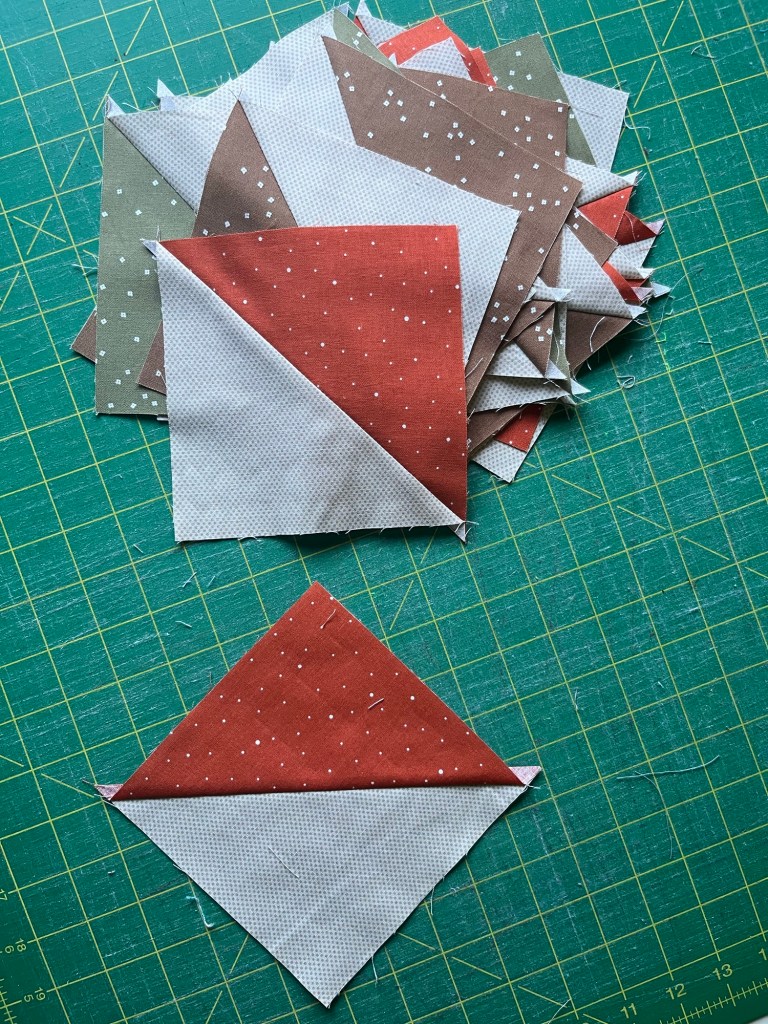
Layer a background square right sides together on the corner of a Clover square and draw a diagonal line from corner to corner. I love my Frixion Fineliner pens and my 1×6 little ruler for making my flippy corners and HSTs right at my sewing machine. What are your favorite tools for making yours?
Next we’re going to sew on the drawn line.
Let’s cut 1/4″ away from our drawn line. Did you knou can use these little cut off triangles for a scrappy little project? I’ve been saving mine for a long time, and have even started sewing them into HSTs, but I haven’t started making anything with them yet.
TIP: You might notice in the photo below that my seam is slightly to the right of the drawn line. This is actually on purpose because it gives a bit more room for the seam and my flippy corners are more precise. I learned this little trick from my quilty pal, Mary Lee. THANK YOU, Mary Lee!
Don’t forget to press that flippy corner open.
We’re not done yet! Go ahead and make flippy corners on 2 more corners of the Clover square.
Okay, now we’re talking! Let’s repeat these 3 flippy corners for the rest of the Clover squares while we’re at it.
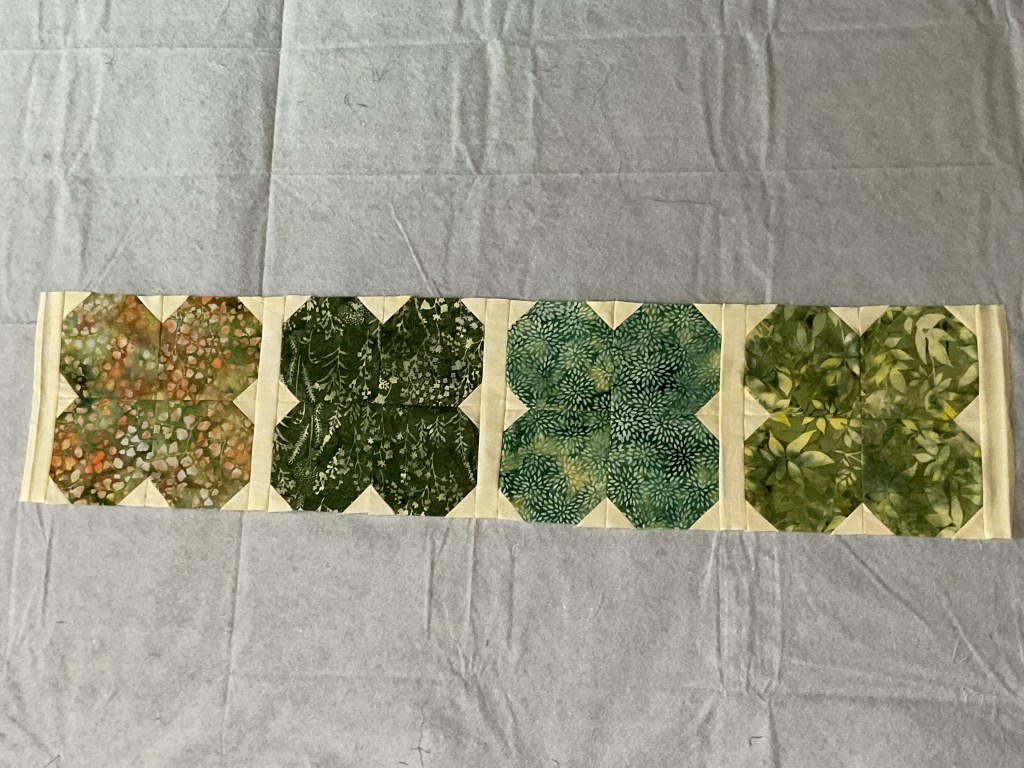
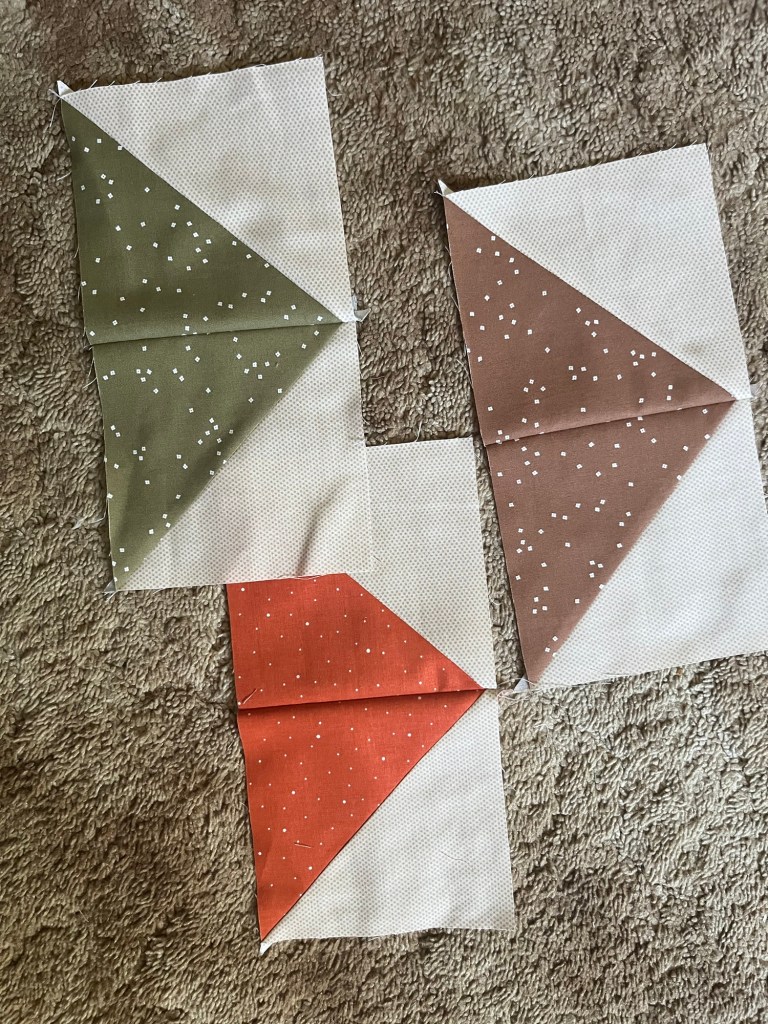
Finally it’s time to make a Clover block. Yeah! Sew 4 matching Clover squares together with the 4th unpieced corners towards the center so they all meet for the middle of the Clover block. Such a pretty block!
Repeat to make a total of 4 Clover blocks. Don’t you just love that pop of orange???
The next thing we need to do is sew the 4 Clover blocks together with background strips in between the blocks and at each end.
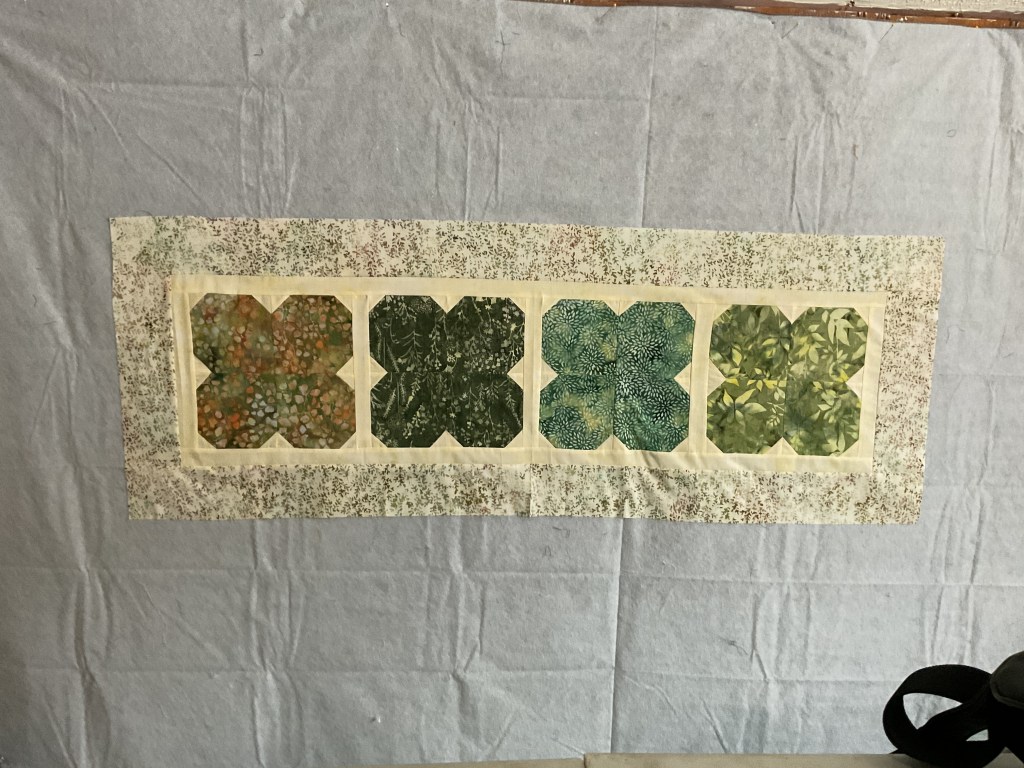
Then we’re going to add top and bottom background borders. Lookin’ good!
Now it’s time to add the side outer borders and then the top and bottom outer borders. And DONE!
Yay! All that is left to do is layer it with batting and backing, quilt it, bind it, and label it.
I hope you enjoyed the Lucky runner tutorial and are super inspired by the new March patterns. Next week we are going to wrap up our Beginner Free Motion Quilting (FMQ) series by addressing borders.
I am thrilled to tell you that we’ve had a little bit warmer temperatures for a couple days in row here in NW PA. I’m talking above 32 degrees! Actually it’s been in the 40’s, which feels so balmy compared to last week’s temperatures in the single digits and teens. Whew! But I don’t think winter is over yet for us, though, as the beginning of March is looking cold again. Spring can’t get here soon enough!
PSST! While we’re waiting for Spring to arrive, it is a great time to work on our Free Motion Quilting (FMQ) skills, don’t you think? So far we’ve talked about tools, equipment, and resources; doodling, making loops, and using cursive writing as a quilting design.
This week for Lesson 5, we are venturing beyond the Loopy design.
If you missed any of the earlier lessons, you can find them below:
You might be wondering what exactly I mean by “going beyond loops”. Talk a deep breath — there is no need to panic. I promise we are not jumping right into Feathers. Relax, Feathers are ahead of you sometime in the future, but today is not the day. Instead, we are going to add some fun elements to our quilting to change up our basic Loopy FMQ design.
#1Snowflakes with Loops
This design is absolutely one of my favorites, hands down! It is quite flexible and looks great on a lot of different quilts. Depending on the theme of the quilt, it can look like a snowflake, a star, fireworks, a starburst, or even a cool funky flower. Wow! That’s a lot of options for a single element, isn’t it?
Here is an example of the Snowflake and Loop design on a Christmas/winter place mat I created years and years ago for a magazine pattern.
Please notethis place mat design was featured in Quilter’s World magazine some years ago and is a copyrighted design.
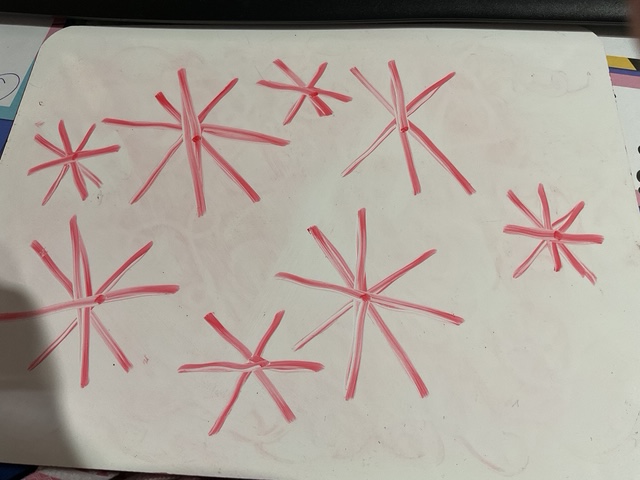
Grab your dry erase markers and let’s practice drawing Snowflakes or whatever you would like to call them on our white boards. You can decide how many spokes/rays you want your Snowflakes to have. You can even vary the number in your design to add more interest.
Next let’s add Loops to the Snowflakes and practice drawing our new Loopy variation design. Ready, set, go!Do you see how I surrounded each of the Snowflakes with my Loops? I like to use the Snowflakes as an accent, not the primary design. The primary design, of course, is the Loops. Additionally, I like to give my Loops lots of space to breathe.
Go ahead and practice drawing this design a couple times. Experiment with the Snowflakes (do you want 6 or 8 or more spokes/rays?).
Next, we’re going to FMQ this design on a practice square on our sewing machines. Are you ready? Take a deep breath and just do it.
To get you started, here’s a little video I made for you, showing how I create my Snowflake and Loop variation.
Here is a little example of quilting the Snowflake and Loop design.
Now it’s your turn to practice this design. Enjoy playing with it! Just imagine all the different kinds of quilts you can use it on!
#2Kindergarten Star with Loops
Do you remember when you first learned how to make a five-pointed star? Probably around kindergarten, I should think. Can you remember how to make it now?
Here’s a little tutorial to jog your memory. Keep in mind that I am left-handed so you might draw your star differently than I do. Remember, you do you.
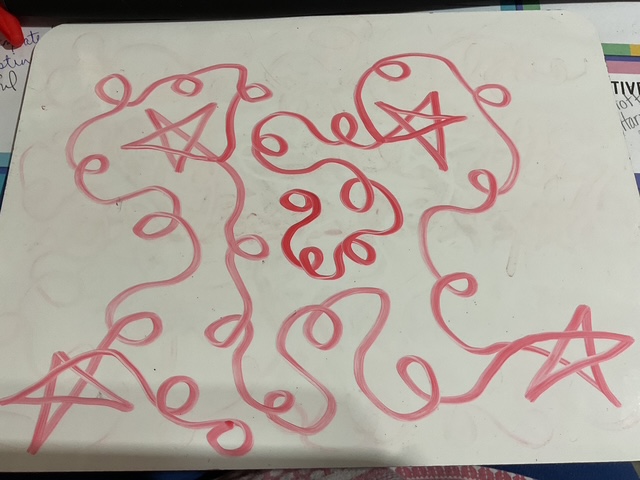
Kindergarten stars aren’t too much different from the Snowflake element above. And once you get comfortable making a five point star again (believe me, it will take some practice for some of you to remaster this shape), the design will flow more easily. Go ahead and draw some Five Pointed Stars on your white board. Make as many as you can fit onto the board. Make them all different sizes, too.
Now let’s practice drawing Kindergarten Stars combined with our FMQ Loop design. Feel free to do this several times until it feels more natural to you.
I bet by now (that is if you’ve been practicing) you are probably finding alternating the direction of the loops to be easier than when you first started several weeks ago. Go you!
Keep practicing on your white board until you can draw the five point stars without thinking about each line. Then I want you to practice making those stars upside down and sideways or else your design will come out very linear with stars lined up going the same direction.
This design looks amazing on patriotic quilts and on children’s quilts, too. What other kinds of quilts would look great with Kindergarten Stars and Loops?
Next up, we’re going to try quilting this design with our machines. Before we do, though, here’s a quick little video showing how I FMQ Kindergarten Stars and Loops.
Let’s make five point Kindergarten Stars!
Okay, now it’s your time to practice quilting Kindergarten Stars paired with Loops! This is fun, isn’t it?
#3Hearts and Loops
Hearts will be our last design for today. So, how are you at making hearts? I have discovered that I can rarely make both sides of a heart exactly the same, so in my quilting (drawing and cutting, too), I intentionally make the sides of my hearts different. It lends a quirky funky look to my Hearts and Loops design, and that works just fine for me. LOL!
I have found that there are 2 basic ways to quilt hearts. Maybe you’ll come up with a different one and if you do, I hope you with share.
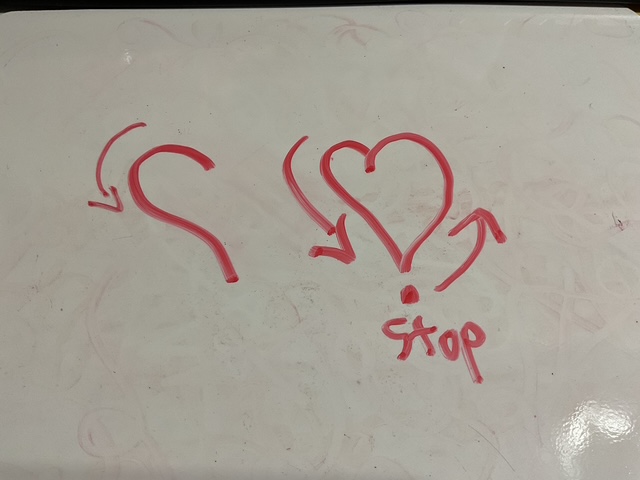
Anyway, the first way starts at the top center point and curves down and stops briefly at the bottom point before swooping back up and around to the center point once again. Remember, I’m a lefty so I usually move counterclockwise. Do what is comfortable for you.
The second way is one continuous line which might make it easier for you to FMQ hearts. It starts at the bottom point then curves up and around to the center point where you pause briefly before doing the second top bump and then swooping back down to the bottom point. This heart reminds me more of a heart shaped balloon – you’ll see this more when I quilt it.
So go ahead and practice your stars on your white board. Which style do you like better?
Now that I’ve mentioned both styles, I’m going to show and use the second style Heart design. I find that it can flow better with the loops than the first Heart style.
Now it’s your turn to practice drawing the Heart and Loop design on your white board. Repeat as many times as you want, experimenting with your Hearts.
Notice how I crossed the bottoms of the hearts in the design.
Let’s head back to our sewing machines and try FMQ Hearts and Loops. Here’s a quick video of how I do FMQ my Hearts and Loops.
Check out this cute little Hearts and Loops design!
Well, that’s it for me today. I hope you keep practicing your Loops and adding these fun elements to change up your designs. Next week I’ll have a few more Loop design variations to share with you. So stay tuned!
I hope you are ready for another Free Motion Quilting (FMQ) lesson! But before we do that, I want to take a moment and congratulate Janie in Texas, who is our 1000th email subscriber! WAHOO!!!!!! Thank you, Janie, for supporting the VRD Blog!
I trust you are all practicing your FMQ loops from last week’s leeson. Remember, don’t spend too much time doodling on your white boards before you actually start trying those loops out on your sewing machine.
If you missed our previous FMQ lessons, you can find them below:
I want to take a couple minutes to talk about useful beginning projects as you are developing your FMQ skills.
Projects to Build Your FMQ Skills On
Please don’t tackle a king sized Double Wedding Ring quilt top made by your granny in the Depression as your first FMQ project. I can almost guarantee that you will end up tearing everything out. First you must crawl before you can run!
Maybe you have a whole stack of meticulously pieced antique or vintage quilt tops just waiting to be lovingly completed and that’s your motivation for learning to FMQ. Goodness knows, there are probably as many reasons to learn as there are quilting patterns! But please slow down a little bit.
Do you remember when you learned to tie your shoes? It took a lot of practice before you successfully tied those shoestrings. Same goes with riding a bike. What about driving a car? Or doing pretty much anything you want to master – it all takes work and practice.
FMQ is like that, too. It takes practice to get to the level of mastery you want to achieve. Remember that Rome wasn’t built in a day and most likely you will not be a master free machine quilter in a few practice sessions. It’s going to take some time to get where you want to be. But I promise you, if you put in the work you will get better every time you practice. And the more you practice, the more quickly you’ll be wow-ing your family and friends with your FMQ skills.
Okay, I’m jumping down off my soapbox now.
So you’ve been making up some practice squares and practicing those loops since Lesson 3 last week and you feel pretty good about alternating your loops to the left and to the right. Maybe those loops still look kind of like wiggly carrots sometimes, but you’re itching to quilt something for real.
I suggest starting with smaller projects that are not dear to your heart — potholders, baby bibs, snack mats, place mats, table runners, anything small so you won’t feel like you’re wrestling an alligator while you’re trying to FMQ. I bet you have some orphan quilt blocks lurking in your stash somewhere – make them into potholders or whatever. Then layer those practice quilt pieces with batting and backing (yes, I even give you permission to use up all your ugly fabrics as quilt backing). Now quilt them with loops! Loop to the left, loop to the right. Lots and lots of loops. Consider these practice quilt pieces as practice square variations. Hate how it turned out? Then recycle it into dust cloths. Guilt free. The important thing here is you are building up your FMQ skills by sewing over seams and through different fabrics. Just keep going and growing!
When I taught free motion classes for beginners, I asked the students to layer a printed panel with batting and backing as homework before class (along with their practice squares) and bring it with them. Panels are such a great beginner free motion quilting project because you haven’t put a lot of yourself into it with all the cutting, piecing, and/or applique that usually goes into a quilt.
If you love how your panel project turns out, that’s great! Put it on your wall and show it off or gift it to someone special and tell them you quilted it yourself. Enjoy that lovely feeling of pride in your work!
If you don’t love it, that’s okay, too, because panels are a nice size to make into lovely pet quilts for your own pets or your furry grandbaby. Or donate them to your local shelter or rescue. Either way, they will be used and loved. Of course, if any of your beginning projects end up a total mess, I give you permission to recycle them into cleaning rags.
Here’s great panel with borders already printed on it – just layer it and start quilting. You can find this panel by P&B Textiles HERE. Looking for more great panels? We’ve got ’em at the VRD quilt shop.
Let’s keep moving and dive into today’s lesson – we are going to practice our cursive writing as free motion quilting! Yup, let’s write our way to a finished quilt.
Writing as Free Motion Quilting
Most likely you know how to write in cursive but if you do not or haven’t done so for a long time, never fear – there are great resources and tutorials on the Internet and how-to books out there, too.
If you are like me, your handwriting is a combination of printed and cursive letters. And that is just fine. I am not going to wrap your knuckles with my wooden ruler, I promise. Your cursive writing doesn’t have to be perfect 4th grade handwriting, the letters just have to connect together. You do you.
Let’s use our whiteboards to write the lowercase cursive alphabet, connecting the letters in one long string. The reason I said the lowercase letters is because they naturally flow into the next letter, while not all capital letters will do that. We’re not looking for perfection here, so stop thinking and just do it. I found if I did it quickly without too much thought, I actually wrote better.
Go ahead and practice this a few times, you might be a little rusty and writing the letters on your board will bring back some of your muscle memory.
I hope you have a little room on your most recent practice squares – or you can put together another one like I did – because I want you to try to free motion quilt the alphabet. Seriously. This is great practice to develop a smoother flow to your quilting. So go ahead and quilt the alphabet a couple times.
That was kind of fun, wasn’t it?
Next up is writing your name in cursive on your whiteboards. Depending on the first letter of your name, you might be able to use a capital letter. Mostly, I just use all lowercase letters to keep things simple and so I don’t forget whether I’m using capital letters or not.
Since I’ve been doing this for a while, I’ve already figured out how to dot my i’s and cross my t. Cute, huh? Just my way to incorporate those zany loops into my quilted writing.
Go ahead and practice writing your name. You might have to do this a couple of times until you get the look you want. You can even try different ways to dot any i’s or cross any t’s. Or maybe a capital letter works for your first letter. Just have fun with it.
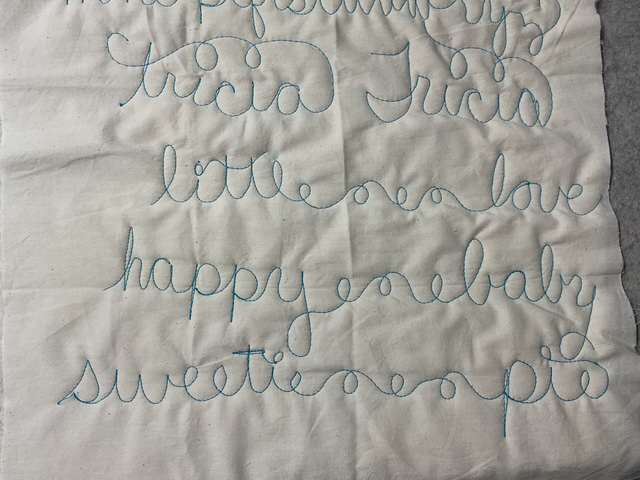
And now it’s time to quilt your name on your practice squares. Feel free to do this as many times as you want to in order to get the look that makes you happy. I used both a lowercase and a capital T below in my examples and I definitely prefer the all lowercase letters. I think it looks more whimsical with my loopy dotted i’s and my curvy swoosh crossed t. Which one do you like better?
Isn’t this fun? I think it’s pretty cool that my quilted signature looks a lot like my written one. Does your quilted signature look like your written signature, too?
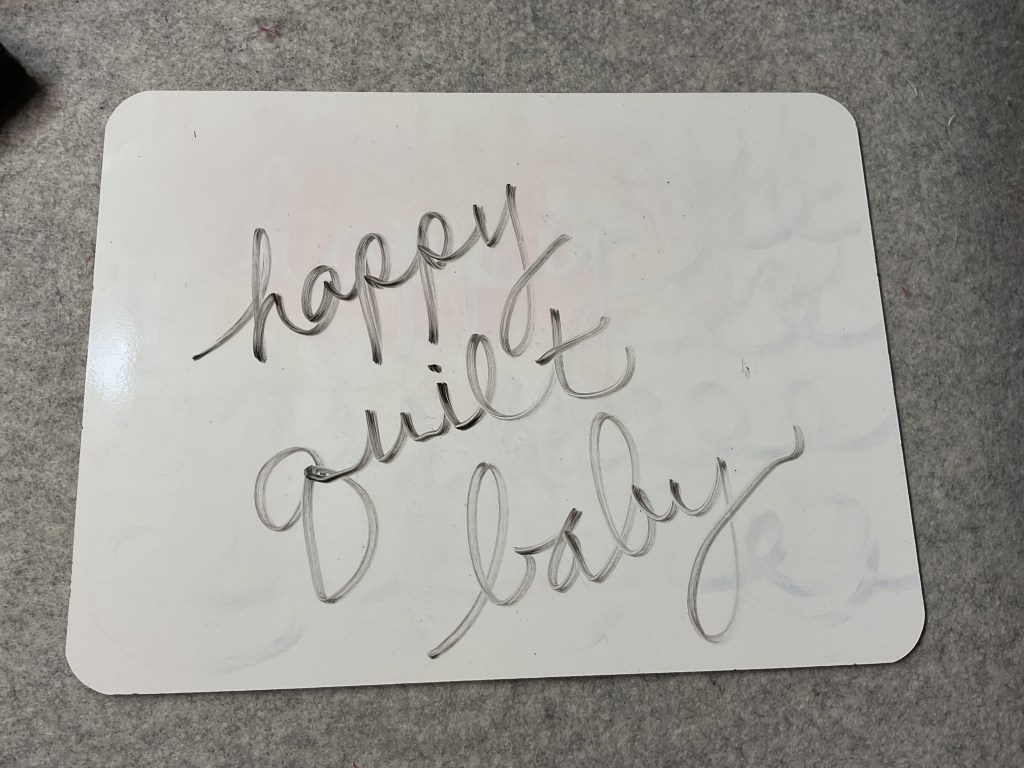
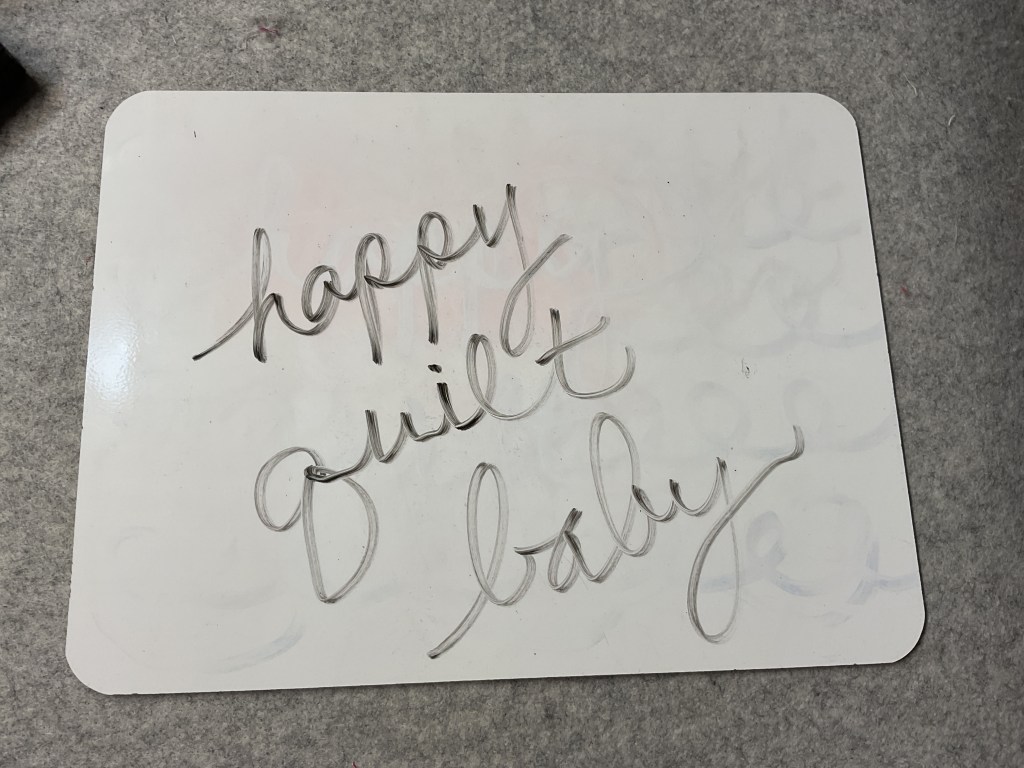
Now let’s try writing other words on our whiteboards. One time I had the brilliant idea to quilt the word “baby” in rows across a baby quilt I was making for my coworker. I loved how it looked after I quilted it, but quilting one word over and over became quite tedious and I was so glad when I finished it. Afterwards, I wished I had included other baby words like bottle, bib, crib, bear, love, etc. That would have made my quilted written design that much more interesting. Oh well. Live and learn.
Let’s write! Just make sure all the letter are connected. Go ahead and experiment with dotted and crossed letters.
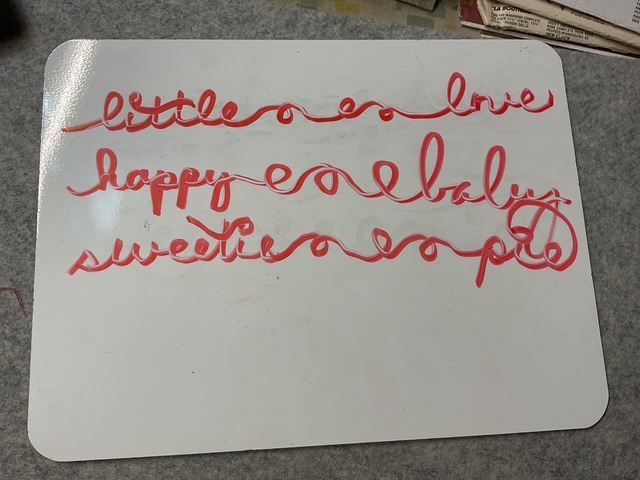
Now let’s connect words together into continuous lines. When I do this, I like to make a consistent number of alternating loops between the words to separate them and I leave lots of room between words to give them space to breathe, which makes the words a little easier to read.
Sorry, I couldn’t find a dry erase marker that wrote very well, but my quilting will look better.
Now let’s practice quilting the words together. Don’t forget to put loops between the words so you can read the words after you quilt them. You may have to be creative with any dots and crosses.
Now it’s your turn to use your cursive writing as a quilting design. Keep practicing. Don’t be afraid to try your FMQ on some actual projects, too — a panel or place mats or orphan quilt blocks turned into potholders. Go ahead – you know you want to! Keep practicing your alternating loop design, too.
Stay tuned next week for Lesson 5: Going Beyond Loops. See you then!
Take care and stay warm. It was -3 this morning here in northwest Pennsylvania. BRRRR!
I hope all of you are weathering the winter so far. Here in NW Pennsylvania, Mother Nature is laughing at us this year and is giving us a good old-fashioned Pennsylvania winter with lots of ice and snow. We haven’t had this much snow or cold temperatures for something like 5 years. I guess Mother Nature wanted to remind us what Pennsylvania winters are really like. Sigh…..It’s been a long long winter and I am so looking forward to spring.
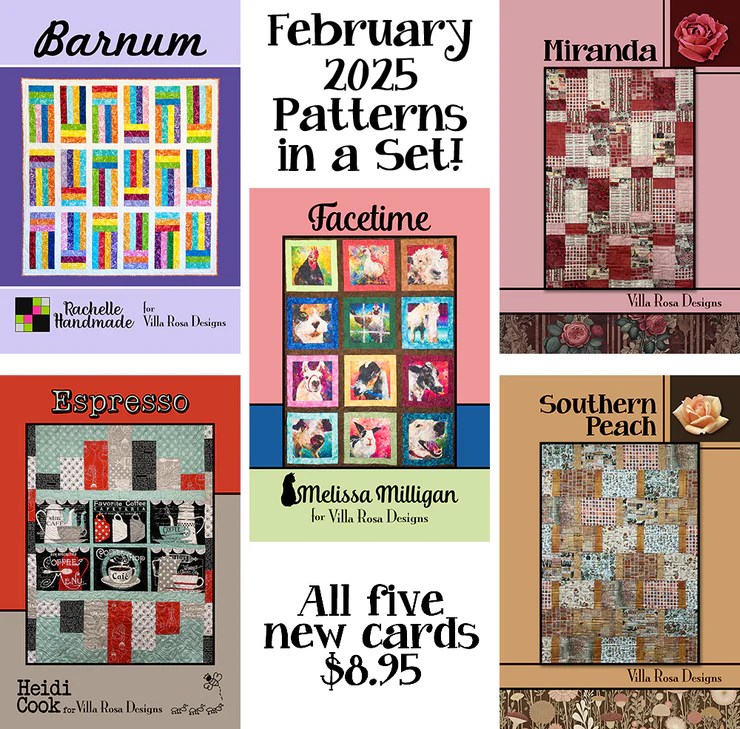
We have a lot to cover today, including NEW patterns and we’re going to continue with our Beginners Free Motion Quilting Series. Thank you for your patience while we celebrated Pat’s new fabric collection, Bedazzled!, here on the blog for the last couple weeks with 2 new quilt tutorials.
If you missed the tutorials, you can find them here:
What a great group of quilts, right? Barnum is Jelly Roll friendly. Miranda and Southern Peach are fat quarter friendly. Espresso features a horizontal panel, which is super because it’s hard to find horizontal panel quilt patterns. Facetime uses panel squares or a focal fabric.
We’ve got kits, too! (PSST! A new quilt project is a great way to beat the winter blues.)
Here’s February’s new table runner pattern, Love Books. I have to admit I’ve been doing a lot of reading lately, so why not a table runner to reflect my bookish nerdiness?
Do you have an embroidery sewing machine? Why not embroider the titles of your favorite books or the books you read in 2025 on the runner? You can make this runner as long as you’d like to, just add more fabric.
Get the digital pattern HERE or the print pattern HERE
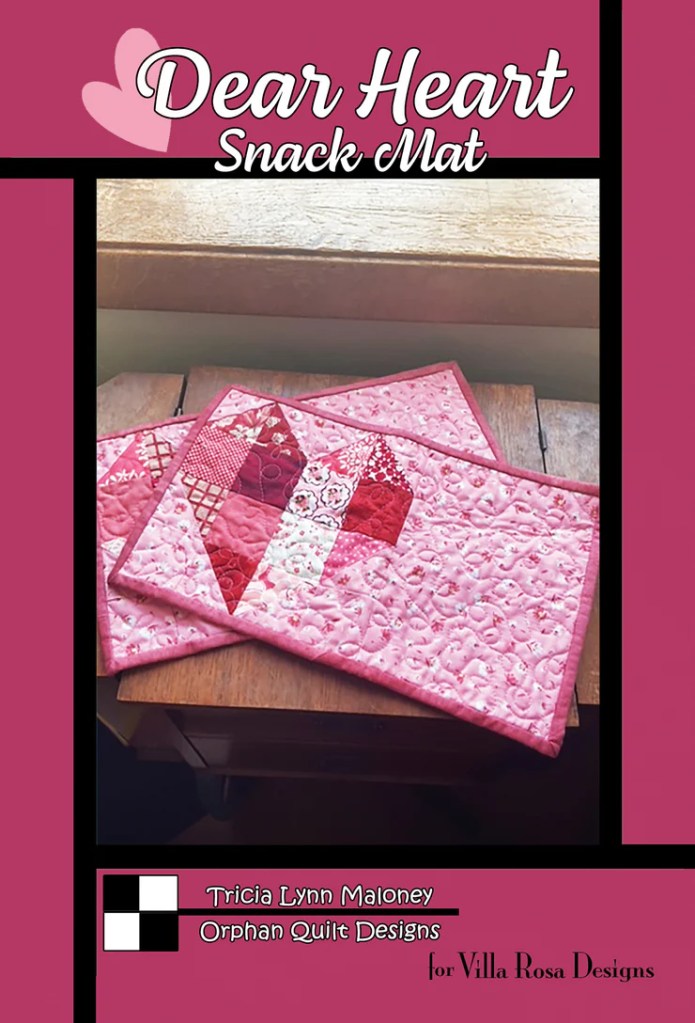
And here is our very last snack mat, Dear Heart. This makes me a bit sad because it’s been really fun creating a new snack mat for each month for an entire year, but at the same time, I’m excited about a couple new ideas, so stay tuned.
Get the digital pattern HERE or the print pattern HERE
So there you have it — fast and fun new patterns for everyone.
Now let’s get back to our Beginner FMQ series.
Beginner FMQ Series Lesson 3: Practice, Practice, Practice!
Today’s the day! We are finally going to do some actual free motion quilting. Yippee!
First, I’d like to suggest you do a little doodling to warm up before sitting down at your machine. Let’s practice some loops on our white boards. I wouldn’t doodle more than 10-15 minutes, though, this is just a warm up.
Next up, we’re going to put together a practice square.
I usually choose a light tonal or solid colored fat quarter and something from my ugly pile for the back fat quarter. And my usual 80/20 batting.
Next we’re going to go ahead and layer the 2 fat quarters with a piece of batting just like you would layer an actual quilt for machine quilting.
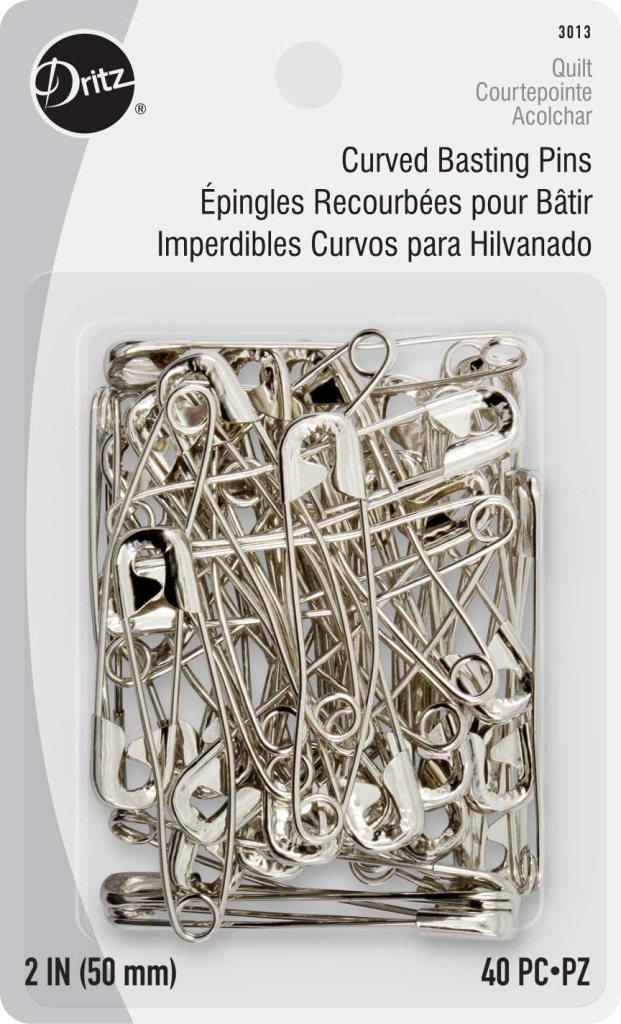
I’m a pinner, so I use curved safety pins, but you use whatever works best for you (pinning, spray basting, etc.). I like to use the size 2 (1.5″) or size 3 (2″) curved safety pins.
Go ahead and get your practice square ready, I’ll wait right here for you.
Did you know that cotton fabric will stick to cotton batting if you press it with your iron? Sometimes, I just press everything really good and I skip the pins.
Okay, now let’s practice!
Here are some important points to remember from the video:
Don’t forget to put your presser foot down before you start quilting
Pull the bottom thread up to the top before securing your stitching by stitching in place a couple of times
Start in the middle of your quilt
Use your hands as a frame around the needle — keep your fingers away from the needle, please
Unless you are planning to pop a not into the batting to secure the stitching, cut the threads tails off so after you’ve secured them so they don’t get all tied up in your stitching
Size your loops/quilting to your project
Alternate your loops to the left and to the right
Curve into and out of your loops for a more organic flow
Don’t crowd your loops, give them room to breathe
Quilt to an edge and then move around the quilt like you would a clock face
Move at a comfortable pace, you are not racing the needle
Aim for consistent regular stitches, not perfection
Go for beauty, not perfection!
Stop with your needle down in the quilt, then reposition your hands
Remove the pins as you go, don’t sew over them
OOPS! I forgot to mention that for your practice squares, make sure to use a contrasting thread so you can see your quilting.
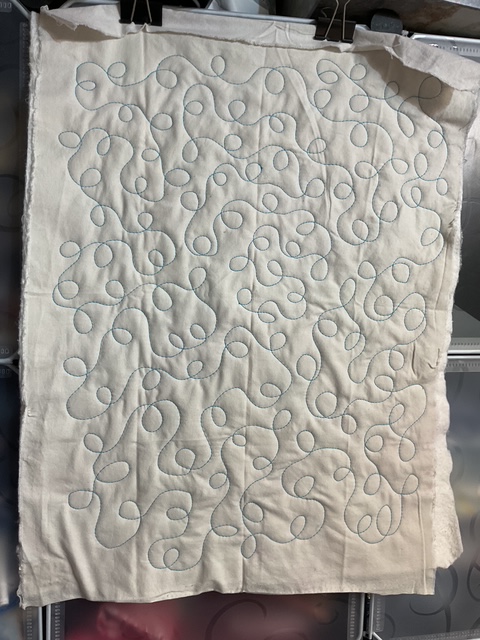
Here is the front and the back of my practice sample:
I’m quite pleased with how it turned out. I wish the thread hadn’t broken, but looking at it in the photo, you really don’t see it. See how the printed fabric on the back (my “ugly”) distracts your eye from the stitching. So, one of my best tips is to use a busy fabric on the back of your quilt to help distract the eye from your quilting, especially if you are still learning.
Do you have any questions right now about FMQ? If so, please post them in the comments section so I can respond.
Your mission, should you accept it, is to make more practice squares and practice. Practice, practice, practice makes better, not perfect. So get to it!
I’m excited to continue on our Beginner Free Motion Quilting adventure! Put your seat belt on and get ready to ride!
I hope you had a chance to read last week’s post, which was a lot of information about things to know before you start. You can find Lesson 1 HERE.
Please note that I’m adding the FMQ series to the right side of the screen under the Blog Topic section so that it’s easy to find each lesson as they get posted.
Lesson 2 – Let’s Doodle!
All right! In Lesson 2, we’re going to DOODLE! Yep, that’s right! DOODLE!
Whenever I taught a Beginner FMQ class, I started out with doodling on a dry erase board. I actually bought a class set of boards which came with felt erasers and even markers, which was super for a class with 4-12 students.
Any kind of dry erase board works – you don’t have to buy a special classroom set (unless you plan to teach FMQ – LOL!). You can even find dry erase boards and dry erase markers at your local Dollar Tree store. So if you don’t already have one, they are easy to find and relatively inexpensive to purchase.
Just make sure you are using real dry erase markers (not sharpies!) on your board or else you won’t be able to erase it and use it over and over.
You might wonder why I’m starting off with doodling and not just jumping right into FMQ on the sewing machine.
Doodling gives you the opportunity to develop eye hand coordination and to build muscle memory. Believe it or not, but doodling really does help when you are starting out with FMQ. If you’ve practiced the movements on your board, they will come easier and more quickly when you are working with your sewing machine.
Besides, doodling is fun and relaxing. You can do it while watching TV, during the commercials, listening to your favorite audiobook, or even while waiting at the doctor’s office! AND you have the ability to erase your doodling whenever you want to. Yay!
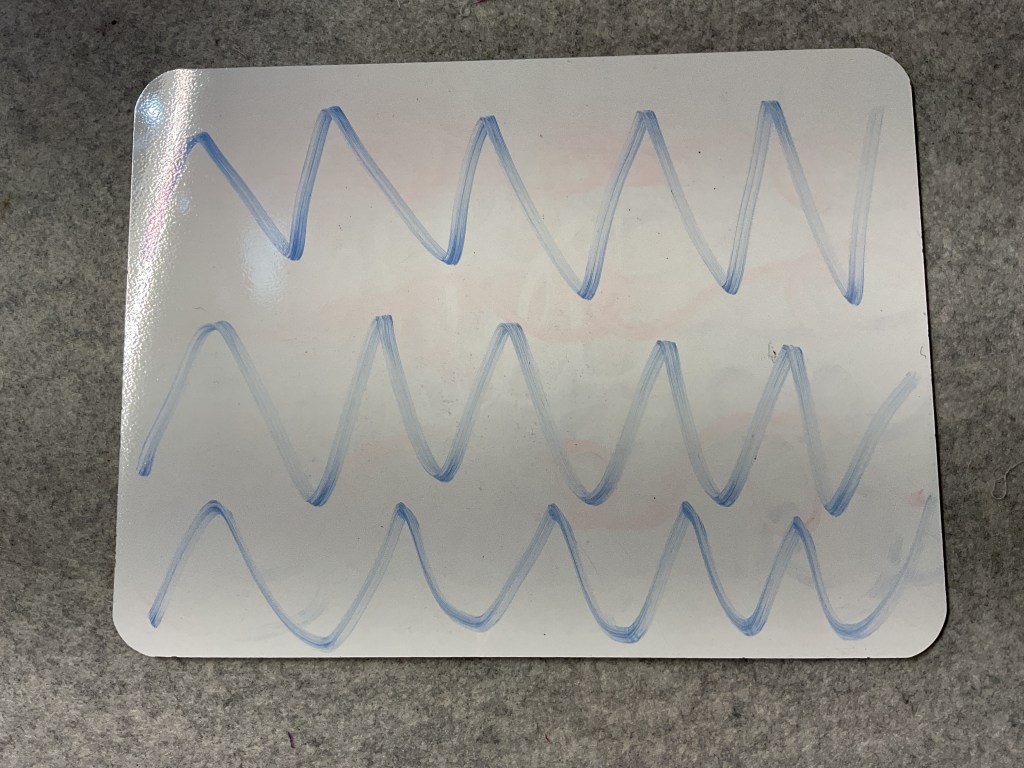
Zigzags
Let’s start out with some fun zigzags. Zigzags will help us to feel comfortable moving across the board and going up and down at the same time. Like hills and valleys. V’s and W’s. Give it a try. Make sure to connect each shape/letter with the next one.
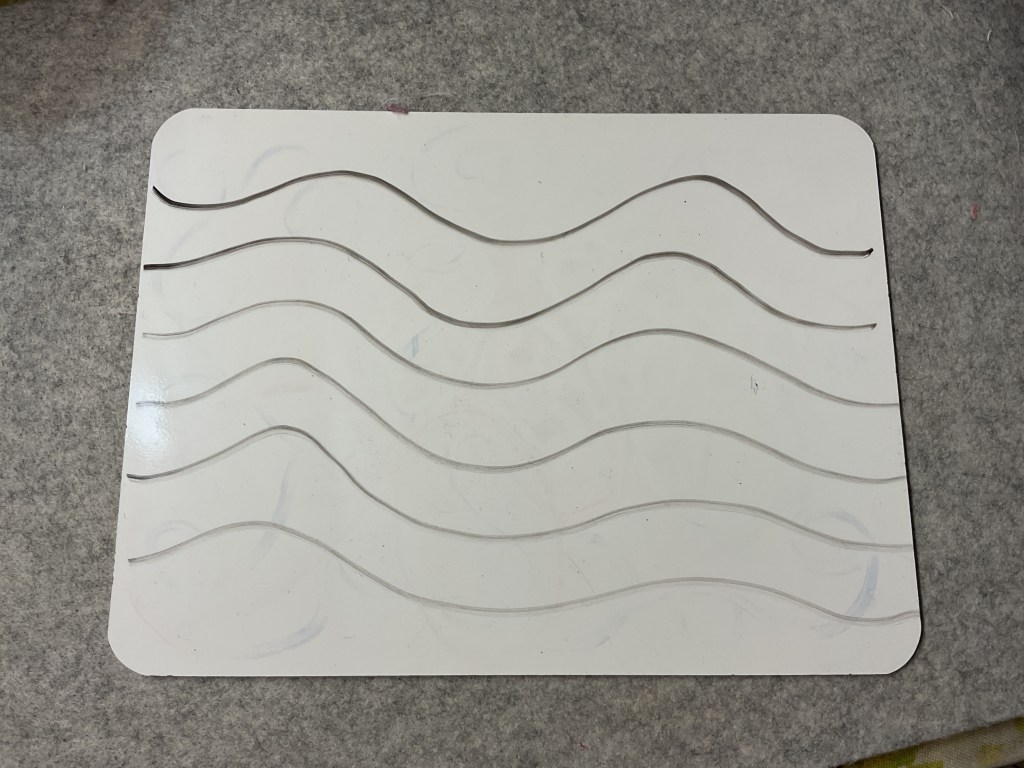
Curves and Waves
Let’s practice some gentle curves and waves on our boards just to get a feeling for the smooth movement. Don’t overthink this, just relax and glide across the board. If desired, you can even practice these motions in the air with your hands and arms. I’ve always been a big proponent of “air writing.”
ABC’s
Now let’s try some cursive writing! Believe it or not, but lowercase cursive letters are great practice for FMQ! Seriously! Make sure you are connecting the letters together. I find that the faster I write the alphabet in cursive, the better it looks. Don’t think about the shape of each letter – you already know it – just write it.
Go ahead and write your name in all lowercase cursive letters. You know you want to! Try some other words, too. Just remember to connect the letters together. Feel free to have some fun like I did with my name when I dotted my i’s and crossed my t.
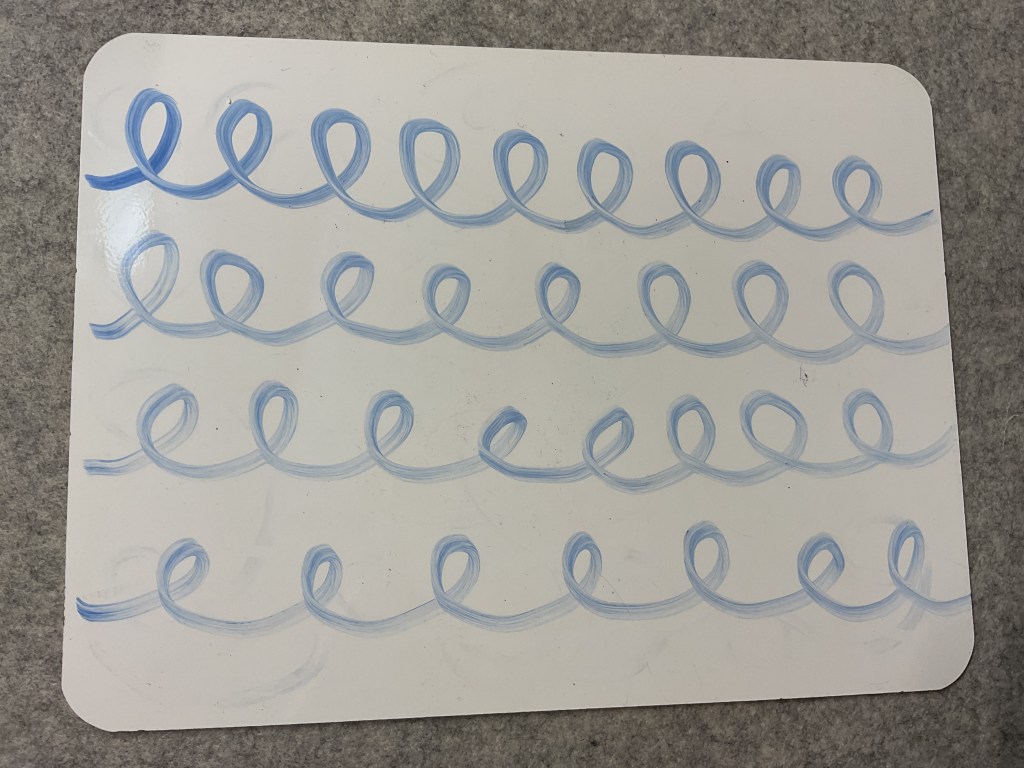
Okay, now we’re going to focus on the cursive lowercase “E” (e) and the lowercase “L” (l). Just keep connecting them together.
After you are comfortable making e’s and l’s, I want you to try alternating the loops. This may be challenging for some of you, but keep doodling until you feel more comfortable with this. Doodle, doodle, doodle.
We definitely want to alternate the loops, or else we’ll get something like this. Yikes! The idea is to move across the board and fill in the white space, not to make clouds and weird flowers.
Once you’ve got alternating the loops reasonably down, we’re ready to add more movement to this design. This time we’re going to move our loops up, down, and across the board while alternating the loops (yep, all at the same time!) so we can fill up the white space.
Try not to overthink things here. Don’t stress yourself out if things aren’t perfect – we’re not going for perfection here. I find the faster I go, the better it looks. Remember, you can keep erasing it and trying again.
Loops!
Wohoo! Pat yourself on the back! You are making loops!
Loops are one of my favorite and best go-to designs. AND it’s the design I start out with when I teach FMQ! Go you!
I’ve found Loops to be more beginner friendly for most people. Being able to cross over your lines gives you a little more feeling of control. I have found, though, that perhaps 1 in 10 quilters have a hard time mastering loops – mainly the alternating of them – so those folks I encourage to move on to stippling/meandering.
Have you ever taken a beginner FMQ class where the teacher starts you out with stippling/meandering? I bet there are a lot of you who felt really frustrated because you couldn’t master the design and may have even quit trying to master FMQ after that class.
Well, I’m here to tell you that –
YES, YOU CAN MASTER FMQ!
So “let’s start at the very beginning, a very good place to start” (kudos if you can name the movie, the song, and the actress for this quote).
And the very beginning is making loops!
I hope you’ll spend a little time doodling this week because next week for Lesson 3, we are going to start working with our machines and our Loopy design. I’d love to see your doodles in the comments or on our VRD Facebook page.
I’ve been itching to do a new series on the blog and decided that I really wanted to do one about Free Motion Quilting, or FMQ for short. I taught beginner FMQ at my local quilt shops for many years, but it’s been awhile since I’ve taught a class that I also thought it would be fun to revisit my FMQ techniques and share them with you.
This series will be aimed at beginning Free Motion Quilters, but more experienced quilters are of course welcome. LOL! I thought I’d start off with an intro post about getting ready to quilt.
Is there anything specific you would like me to address in this Beginner FMQ series? I’ll try to include it.
Let’s get started!
What the Heck is Free Motion Quilting (FMQ)?
Before we can go much further, I’d like to take a minute and talk about what FMQ really is.
A lot of quilters I know use a walking foot and quilt straight lines on their quilts with their feed dogs up. This is great and gets the job done, but this in NOT FMQ.
Ruler work is starting to take hold in my area now, but this isn’t exactly FMQ either, but it has many similarities.
Free Motion Quilting is exactly as the name implies — it is free motion quilting. This means that you, the quilter, are moving the quilt sandwich. Yes, you can FMQ on a long arm quilting machine, but for this series I am going to work from the domestic machine perspective as that is how I roll.
The feed dogs are down (or covered) when you are Free Motion Quilting and you, the quilter, are making things move which then creates whatever design you are quilting. The machine’s job is simply to provide the juice so the needle will go up and down.
Don’t believe me? Watch this quick video:
The needle goes up and down really fast. And that’s it!
If you still don’t believe me, try it yourself. Disengage your feed dogs, attach a FM foot (darning foot) and push your foot pedal to the metal. No hands!
See??? All the needle does is go up and down really fast until you make a thread knot on the back and your thread eventually breaks. That’s it.
YOU are what creates the actual quilting design in FMQ. YOU are in control.
One more thing about true FMQ — we don’t really mark our quilts or try to quilt on a drawn line. True Free Motion Quilting is free.
When I was a beginning quilter, I tried hand-quilting and my stitches were terribly huge. So then I tried machine quilting in the ditch and couldn’t quilt a straight line to save my life. Then I finally discovered FMQ and found out I wasn’t a complete dunce and I really could machine quilt. Yay me!
The Fear of Free Motion Quilting
As a FMQ instructor for many years, I heard a lot of different ideas about FMQ from my students. One of the most repeated statements was a fear of how fast FMQ looks.
Please don’t be afraid of speed in FMQ. YOU are the one moving the quilt around on your domestic sewing machine. The machine itself just powers the needle to go up and down. If you’ve forgotten, watch the video, above, again to remind you.
The machine is not moving anything — YOU are moving the quilt sandwich so the speed at which you move the quilt is entirely up to you. The needle’s job is just to go up and down. What you do and what the needle does are 2 different things. You need to focus on moving the quilt sandwich at a comfortable speed for you, not trying to go as fast as the needle is going up and down. You will need to find the perfect balance for YOU.
Take a deep breath and repeat after me — “My job is to move the quilt. The needle’s job is to go up and down.” Repeat as many times as you need to in order to internalize and believe this statement.
Another fear I have frequently heard was that quilters were afraid of the needle itself. Just like when we are sewing a seam, we have to keep in mind where our fingers are in relation to the needle. So it is with FMQ. Keep your hands away from the needle by repositioning frequently. We’ll talk about this more later in the series.
No fear, okay? With a little practice, FMQ is a lot of fun and it’s very satisfying to machine quilt your own projects.
The Tools of FMQ
Like anything else, yep, there are tools that can make FMQ easier and more comfortable. Of course, the tools I am going to talk about below are the ones I personally use, and may not be what works for everyone. So please use what tools work best for you. If you’re not sure what works for you yet, try out some different ones to see what you like. If you were a student in my class, I would have all of the thing below so that you could try them out. I’ve even had students use my own sewing machine in class.
Sewing Machine
This is an absolute must for FMQ! LOL!
You don’t need a fancy shmancy machine, though, to successfully FMQ your quilts. What you do need is a reliable sewing machine on which you can drop your feed dogs. Dropping (or disengaging) the feed dogs is a lot better than simply covering the feed dogs. The cover can create a bump on your machine bed which may have a negative affect on your FMQ.
A heavier machine is a better choice than a lightweight one because the lighter the machine, the more it will bounce while you FMQ.
Just a heads up — my quilty pal, Mary Lee, found out the hard way that older Pfaff machines DO NOT like to do FMQ. It just about ruined her machine. She ended up buying a Janome.
Janomes are great machines for FMQ. I can say that personally because I’ve had 2 different Janomes. My current one is a Horizon MC8900 QCP. I’m not sure if they even make this model anymore, though, as it’s some years old now. What makes my big machine awesome at FMQ is that it has a large throat at 11″. I know that some domestic machines are being made today with even larger throats. Wowza!
If you are considering a new machine, head to your local machine retailer (which is also one of my local quilt shops for me). Talk to the people, tell them what you need and might want to do in the future with your machine. Make sure you test lots of different machines. Take your time selecting you new best quilting friend. I’ve bought machines online and I’ve bought machines at my local quilt shop. The best part of buying at your local shop is the customer service. You don’t get that online.
Get the biggest throat on your new machine you can afford. Make sure the feed dogs drop. Does it come with all the quilting feet or do you have to buy them separately? Remember, take your time and get the best machine that does what you want it to do at a price you can afford. You can always upgrade sometime down the road if your needs change.
Needles
I found out a long time ago that quilting needles worked better than universal needles for, well, quilting. There is pretty much a needle for any type of sewing you want to do — embroidery, jeans, etc. So why shouldn’t we be using quilting needles for quilting?
Here are the needles I’ve used and been happy with:
Klasse and Schmetz needles are very good and easy to find at your local shop or online. But these days, I primarily use Janome Purple Tip needles for piecing and quilting on my Janome machine. My machine likes these needles best and as I like to keep my sewing machine happy, I use Purple Tip needles.
You might want to check with your sewing machine manufactureror your local retailer to find out what needles they recommend for free motion quilting on your particular sewing machine.
Sewing Machine Foot
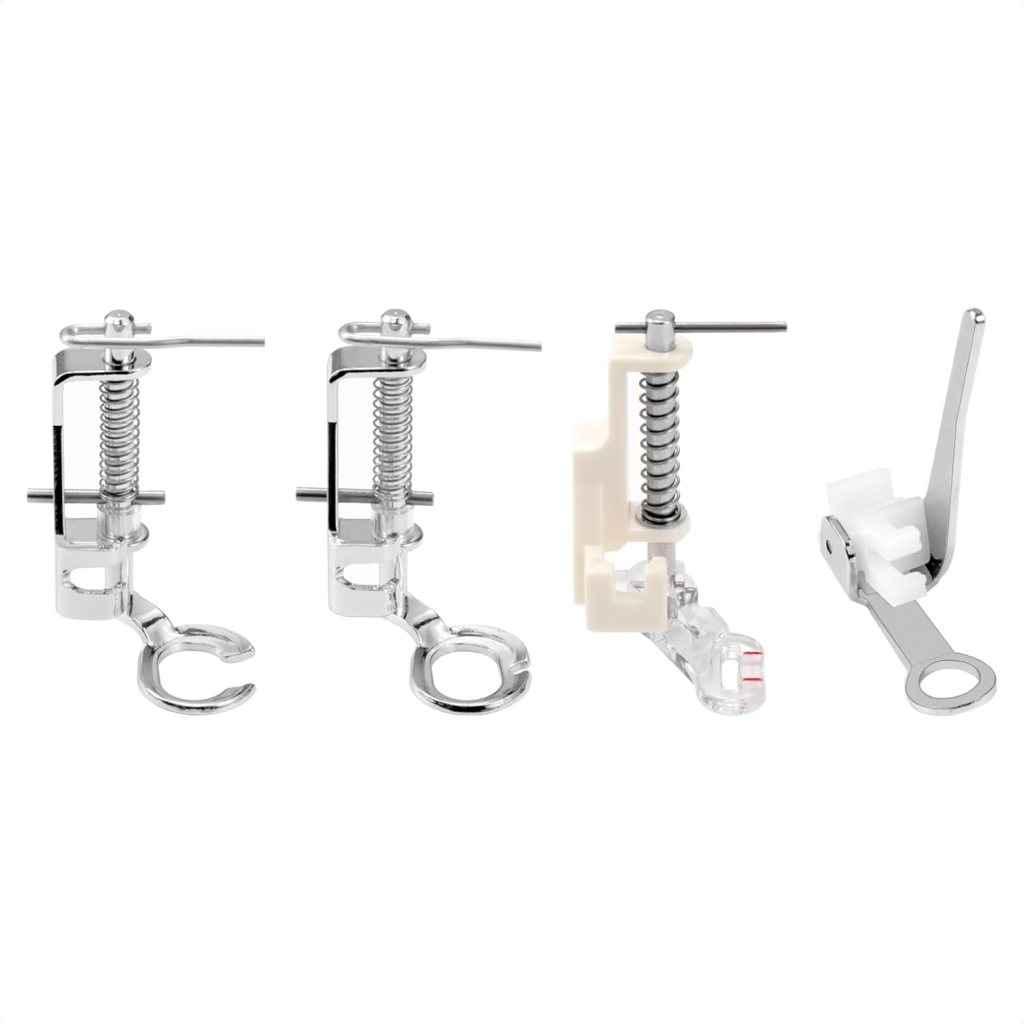
In order to do FMQ, you will need a darning foot, which is also called a FMQ foot or a hopping foot.
Please make sure to check your sewing machine manual to find out what type of shank your machine has. These days most are low shank, but there are also high shank and slant shank.
If you are fortunate, your sewing machine might have come with a set of quilter’s feet which usually includes a 1/4″ foot for piecing, a walking foot for straight line quilting, and a darning foot for FMQ. If your machine didn’t come with a darning foot, you will need to purchase one. Please make sure to check your sewing machine manual to find out what type of shank your machine has. These days most are low shank, but there are also high shank and slant shank machines. A good place to start is your machine retailer who will hopefully have the foot you need to fit your sewing machine. If you cannot find one that matches your machine, there are different generic feet available out there.
Here are some darning foot examples.
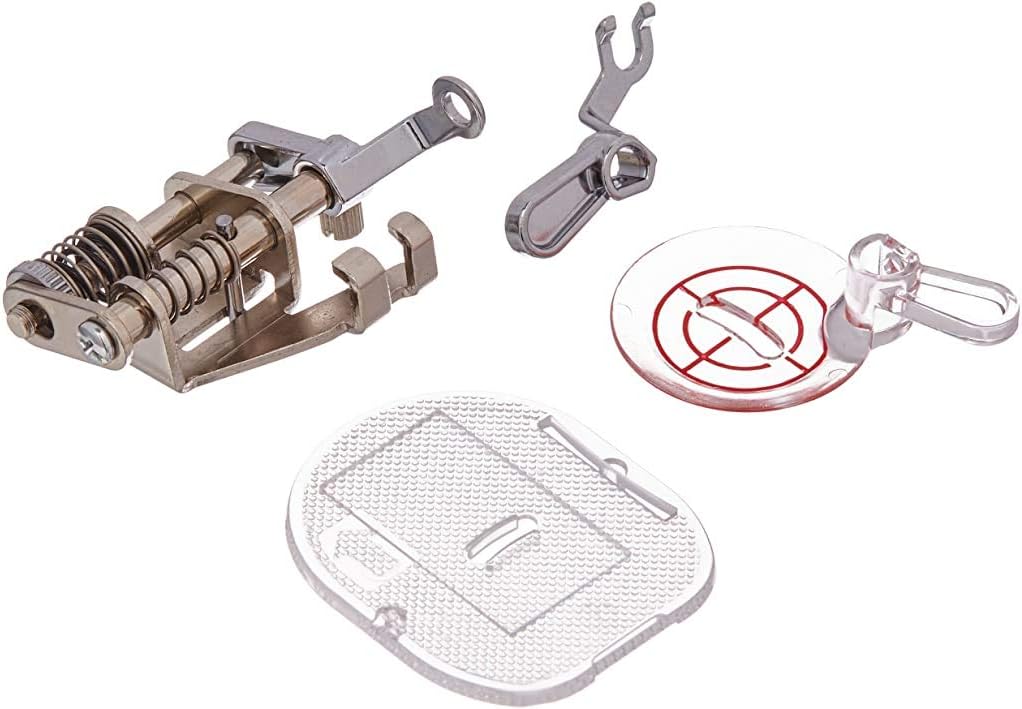
When it comes to the darning foot I use on my machine, I have a convertible foot that came with my machine, but can be bought separately.
You might wonder why I like this FMQ foot system the best. First, it work great with my machine. Second, I prefer an open toe for my FMQ foot and this set has one. And third, it doesn;t hop up and down — it’s stationary, so FMQ is smoother, which improves my quilting.
Extension Table
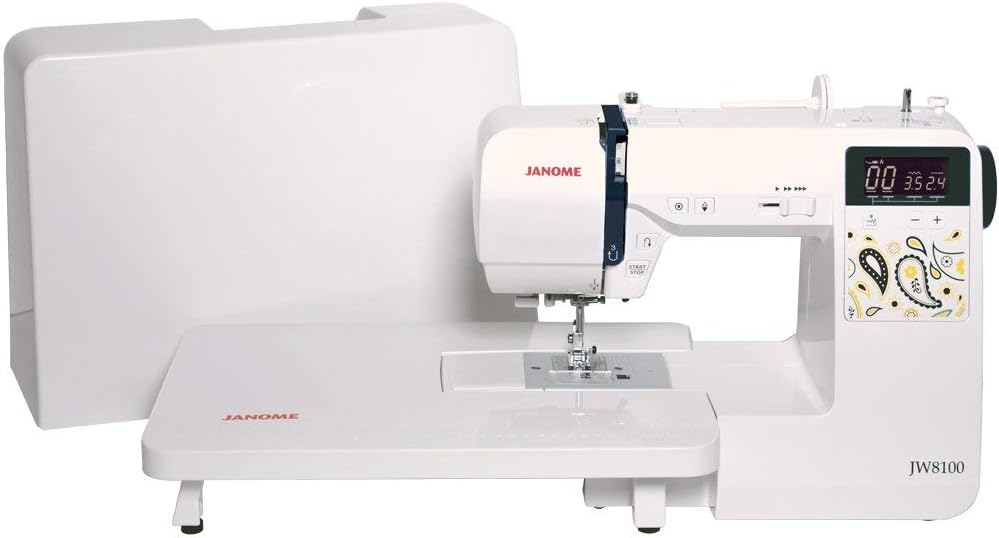
Does your sewing machine have an extension table? My Janome does as do my 2 smaller Brother machines. An extension table is a great thing when you are doing FMQ because it gives your hands somewhere to rest while you work. Most sewing machine beds are pretty small which doesn’t give you much room to work. An extension table is like a super secret FMQ weapon!
If you are lucky, your sewing machine came with an extension table built exclusively for your machine model. If you don’t have one, check with your local machine retailer to see if there is one that fits your machine. Of course, there are generic extension tables too, but I personally feel that they don’t fit your machine as well as one specifically built for that model.
An example of a sewing machine with an extension table.
Gloves
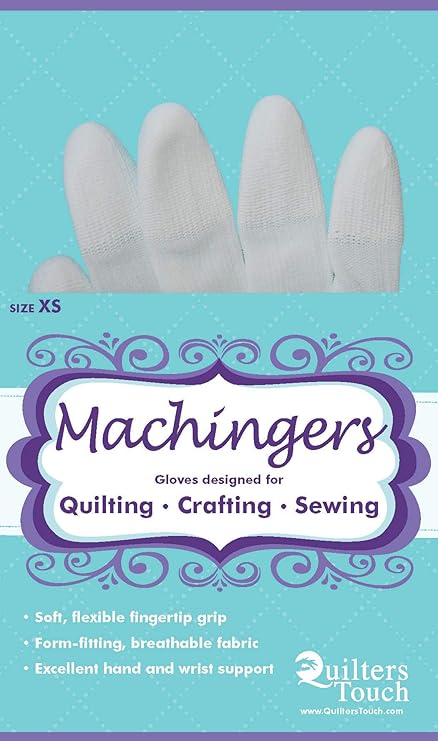
When I first began FMQ, I didn’t even know there were gloves out there for FMQ. I saw my first pair of gloves in a lovely urban quilt shop called Quiltology in Chicago (the shop is now closed and morphed into a personal design studio) when I was at a teaching conference years and years ago (I slipped away for a few hours one afternoon and took a cab to the shop). The first pair of gloves I ever used were called Machingers.
Wow! What a difference in my FMQ when I started using gloves. I had much better control over the quilt sandwich and I had better gripping power. The only problem I experienced with Machingers was that the elastic wrists stretched out after a while and the gloves were kind of loose.
Eventually I stumbled onto Grabaroos. They fit more snugly than the Machingers and were nice and cool, even when I was FMQ in the middle of a hot summer day in my un-air conditioned studio, but the fingers were a bit too long for me. But they worked great and I kept improving my machine quilting. Alas, the wrist elastic also stretched out and I went through several pairs a year.
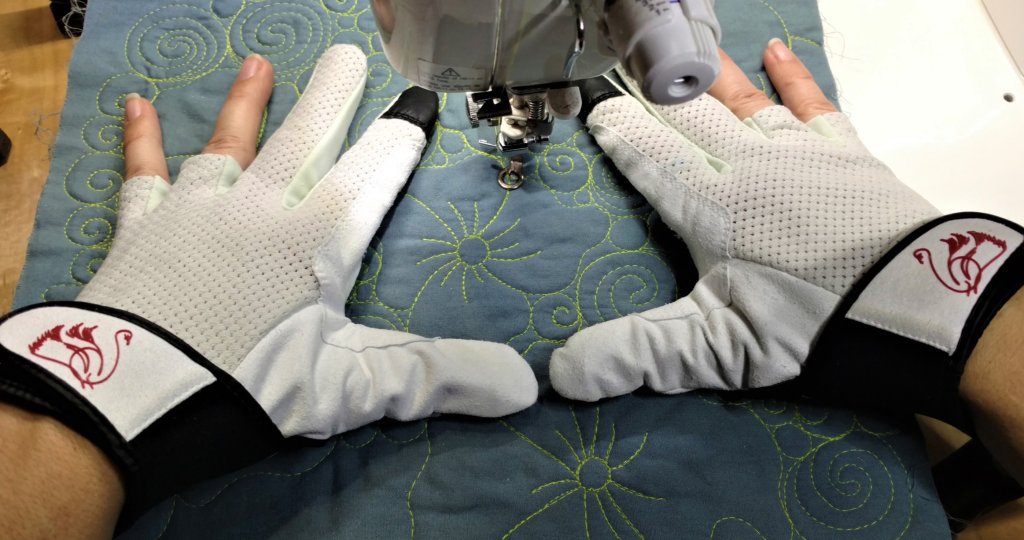
Then some years ago, I went to a Quilt Market Schoolhouse lecture and found the perfect machine quilting gloves for me! Swan Amity gloves. Yep, I’ve talked about these gloves before. I love that they are leather and they have an adjustable wrist strap so they fit perfectly every time. And they last a long time! My first pair lasted for years and I’d still be using them right now except I bought another pair a a couple years ago.
Do you have to have gloves for FMQ? No, not really. BUT, like a sewing machine extension table, quilting gloves are a secret weapon in your FMQ arsenal.
Supreme Slider
As I’ve become a more experienced free motion quilter, I rarely use my Supreme Slider anymore. But it is a good tool to have around so that when your quilt sandwich just won’t slide nicely on your sewing machine bed, you can take a quick break and slap on your Supreme Slider. Voila! Your quilt sandwich now slides around for lovely consistent smooth stitching.
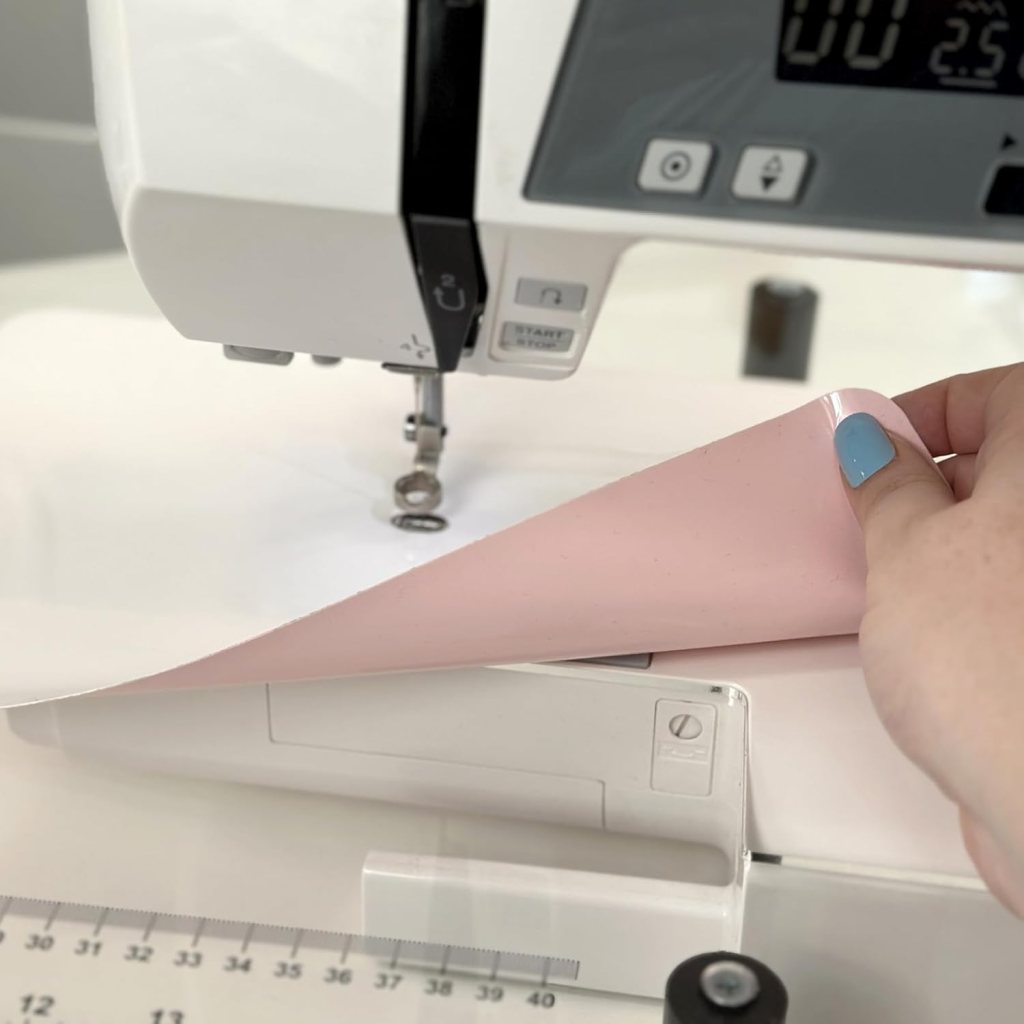
A Supreme Slider is a super slippery Teflon sheet that sticks to your sewing machine bed. It has a tacky back that is reusable — you just need to dampen it and pat it dry so it sticks again.
Just a note — do make sure your Supreme Slider is tacky and sticks to your machine bed. If it isn’t sticking, you will sew the thing to the back of your quilt. Been there, done that. Learn from my mistake.
A Supreme Slider is a very thin slippery sheet that sticks to your sewing machine bed.
A Supreme Slider really does improve your FMQ by reducing friction between your quilt sandwich and the sewing machine bed.
Sewer’s Aid
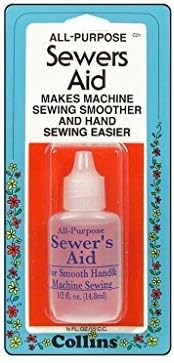
I’m sure I’ve talked about Sewer’s Aid before. It is another one of those FMQ tools that are great to have around when you need them, although you might not use it very often. There are times that I get so frustrated with my FMQ — those days when no matter what I do, my thread keeps breaking. UGH! So, what do I do??? I drop beads of Sewer’s Aid all over my spool of thread, re-thread my machine, take the bobbin out and put it back in, and then I get back to the business of FMQ.
I call this stuff liquid magic!
Sewer’s Aid is a polymer liquid you drop onto your spool of thread which then helps your thread to pass smoothly through the machine without breaking. Yup, it reduces friction for the thread just like the Supreme Slider does for your quilt sandwich.
Do you have to have all of these things to get started with Free Motion Quilting? Of course not, but I am a proponent for using tools to make sure I achieve the positive results I want. The tools, above, help you to be more successful with FMQ. Of course, there are lots of other FMQ tools out there. What are your favorites?
Thread
Have you looked at thread lately? There is so much to choose from these days. When I first started FMQ, “machine quilting” were bad words in the quilt community so we free motion quilters used invisible thread because it supposedly looked more like hand quilting (naw, it didn’t look anything like hand quilting). Eventually, FMQ became its own art form with its own super stars. Now your choices of thread are literally mind-boggling.
I guess you could call me old school because I prefer 100% long staple cotton thread for piecing and FMQ. Over the years, I’ve tried other types of threads, but I always come back to my cotton thread. I like how it quilts, how it looks, and my machines have always liked cotton thread the best.
So, what kind of thread should you use? These days, pretty much anything goes. My suggestion is to try out different types of threads and see what you — and your machine — like the best.
I do caution you, however, about using old spools of thread. Thread can weaken over time, so as economical and green as it sounds to use old spools of thread, I recommend that you steer clear of them. You don’t want you quilt to fall apart someday down the road.
Books, Websites, and More
As a former teacher and librarian, of course I have a list of helpful books for FMQ. Tehehe….
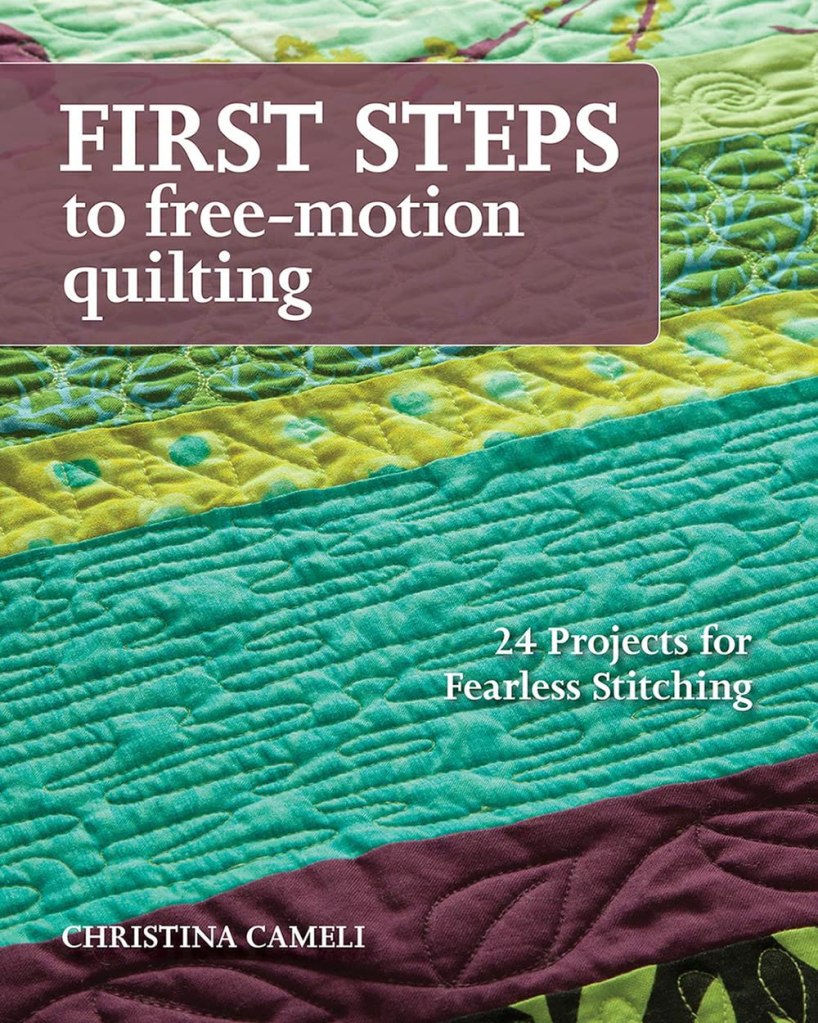
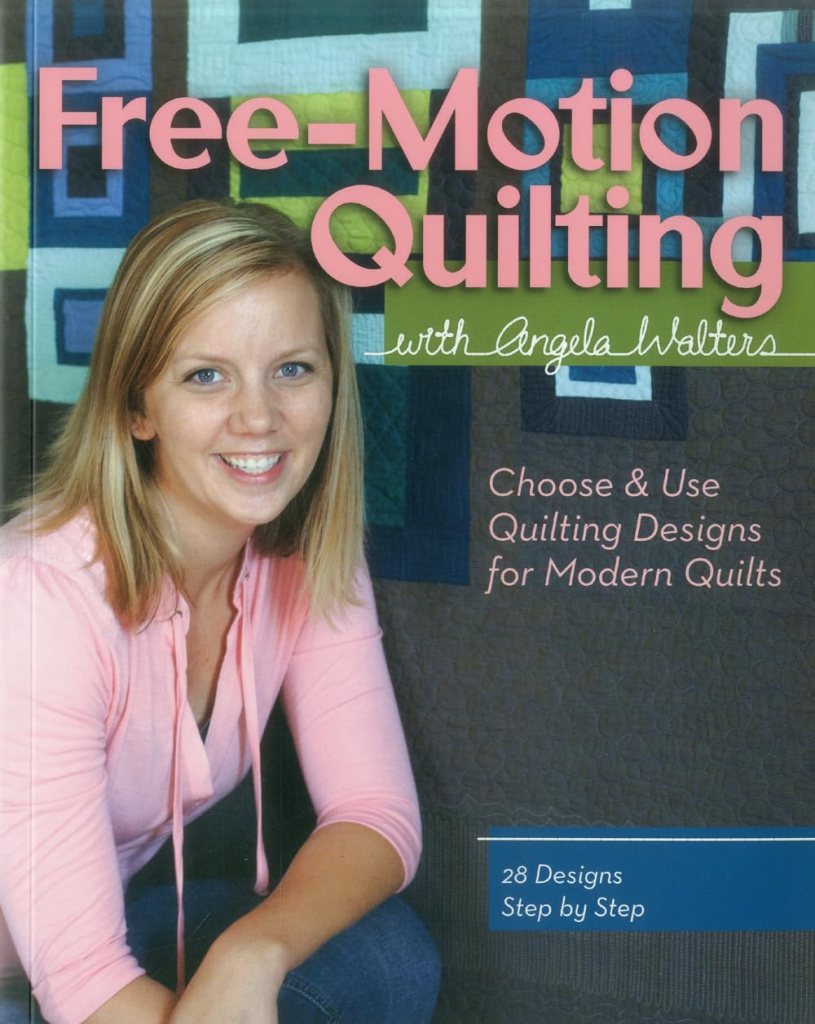
How Do I Quilt It? Christa also has quite a few books out there on machine quilting.
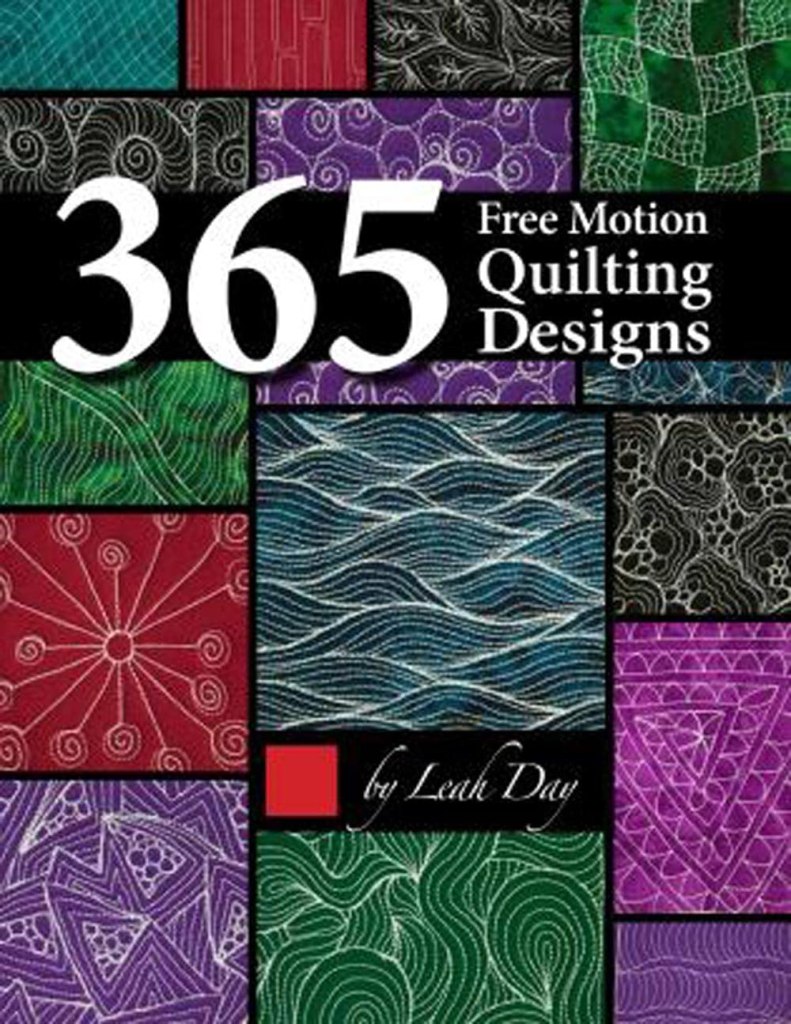
Leah Day was probably the first Free Motion Quilter I ever actually saw in action on the Internet.
365 Free Motion Quilting Designs This book is out of print now so if you see it, snap it up. Years ago Leah Day challenged herself to do a new FMQ design every day for a year. On her website she has 100 of the designs as free tutorials.
These days, you can find tons of beginner FMQ videos, blogs, and how-tos online. Just make sure they are giving you quality information. There are many different sewing and crafting academies online, too, where you can take video classes. You might want to check them out.
Well, I think that’s enough introductory information today. Join me next week for more FMQ!
It’s been a long time since I jumped on here for a tutorial, but I finally got this one put together just for you!
I was looking at some panels in the shop recently (to see my tour of the VRD shop, go HERE) to sew up into a quilt. I was SEW inspired by the National Parks panels and I LOVE that there are a couple of different choices. Have you seen these yet???
UtahCalifornia
You can find the Utah panel HERE and the California panel HERE.
We also have some awesome Rose Card patterns to showcase these great panels!
Both are fun and amazing patterns — of course, I might be a little biased, since one is my sister’s pattern and the other one is mine. LOL! 😁
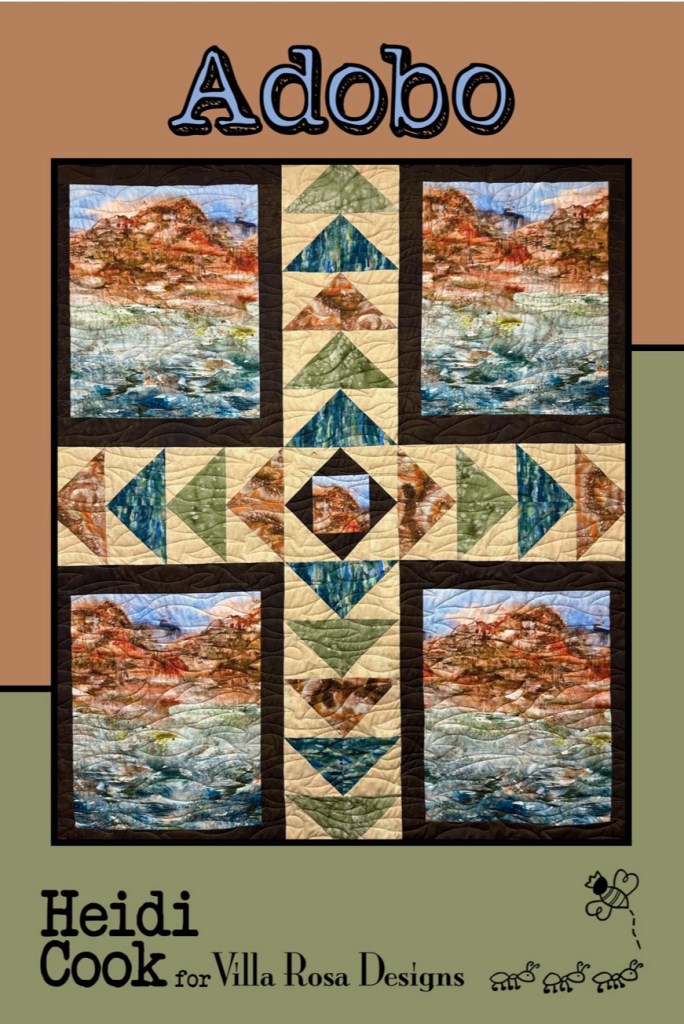
If you don’t already have these great patterns in your stash, you can find digital Picture Perfect HERE, digital Adobo HERE, print Picture Perfect HERE, and print Adobo HERE.
For today’s tutorial, though, I’m going to do Heidi’s pattern Adobo because I really want to use the Riley Blake Utah panel.
VRD Adobo Quilt Pattern Tutorial
GUESS WHAT????
You can sew along with me! We made up kits for today’s tutorial. Go grab your Utah Adobo kit HERE and we can sew together! How cool is that?
Your Adobo kit will include all the fabric for the top and binding as well as the pattern.
I wanted to make this Adobo quilt in all Riley Blake Designs (RBD) so I found some RBD fabrics that pulled out the colors from the panel — Poparazzi sand for the background, Poparazzi brown for the sashing, with Dapple orange, Blossom brown, and Blossom green for the Flying Geese.
Let’s get started!
Cut the squares from the background and the coordinates. Pair up each coordinate square to a background square.
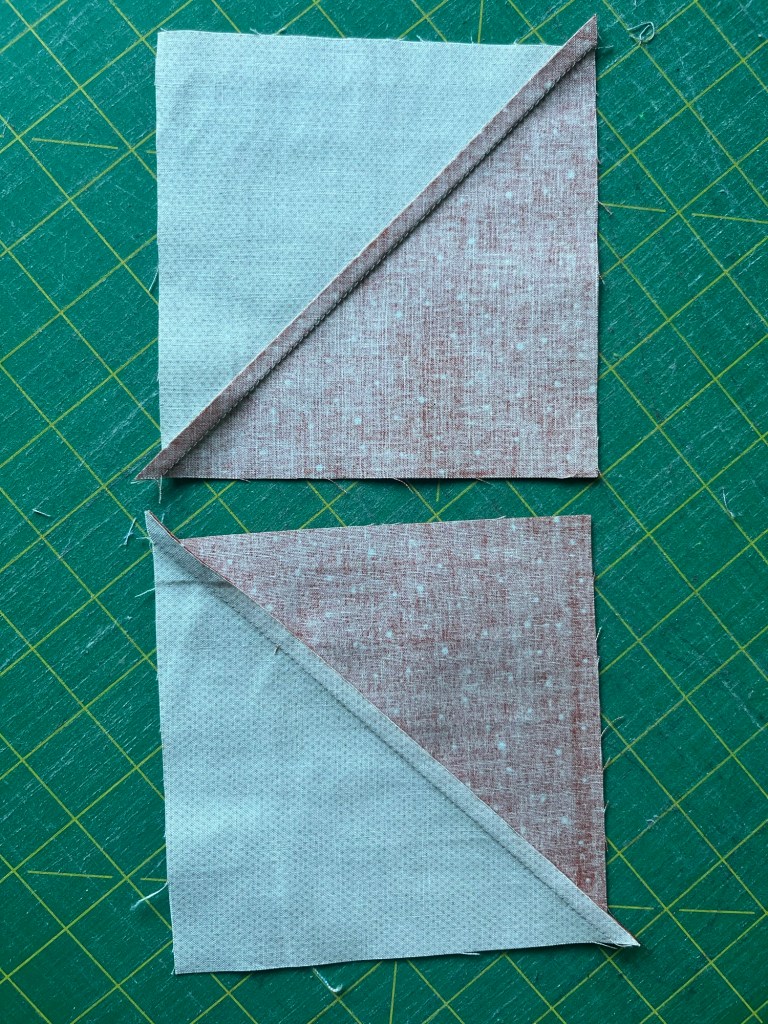
Make Half Square Triangles (HSTs) by drawing a diagonal line then sewing 1/4” on either side. Cut apart and press open. Don’t forgot to square up your HSTs if needed.
Tip from Heidi (who’s keeping an eye on me as I work on this tutorial) – Press half the seams of each color HST to the background and the other half to the color.
Now sew 2 matching HSTs together to make a Flying Geese Block A. If you pressed half of the HSTs to the colored fabric and the other half to the background, use one of each to make a Flying Geese Block A. Like magic, the seams will lock together! Great tip, Heidi!
Next we need to create a Flying Geese block for the sashing center. We’re going to use a slightly different technique for this one.
Layer a background square right sides together (RST) on the side of a rectangle sashing fabric. Draw a diagonal line from the bottom outside corner to the opposite top corner. Sew on the drawn line and cut 1/4″ away from the line. Repeat for the other side. Make 4 Flying Geese units.
Next sew background squares to the ends of 2 Flying Geese units.
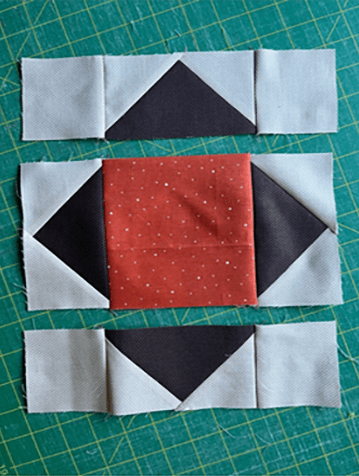
Sew the 2 Flying Geese units to the sides of an orange square. Then sew the Flying Geese units with the background squares on the ends to the top and bottom. Make 1 Block B.
Molly’s Tip – If using your main print for the center square, cut it from the yardage after you cut your main print/panel C pieces.
Instead of using a main print, though, I’m using the Utah panels so we just need to cut them apart (make sure they are the right measurements – trim if needed).
If using a main fabric, cut the C pieces to the size listed on the pattern.
Next, cut the sashing and add them to sides first, then to the top and bottom. Make 4.
Lay out the main print/panel C pieces and the Flying Geese Block A’s so the Geese are flying away from the center. Sew together (please note that I added an extra background strip to the top and bottom of my quilt. Feel free to do the same, but you will need a little bit more background fabric).
Layer your quilt. Quilt it as desired. Bind it. And don’t forget your label!
TA DA! That’s it! Done! Eazy piezy!
I’m going to add one more little detail to my quilt — I’m going to embroider UTAH in the center square!
Here are some other fun Adobo quilts VRD has as kits. You can find them HERE.
Kitty The CatCall of the Wild
Thanks for stopping by and sewing with me!
Now let’s check out the new January VRD Rose Card patterns!
NEW January VRD Rose Card Patterns
I’m excited that I get to show the new patterns off today! Tricia usually does it, but today it’s my turn. Yay!
Here are the 5 main patterns.
Look! There are 2 panel quilt patterns this month – one using a 24″ panel and the other one uses a 36″ panel. Cool!
This set of patterns gives you a nice variety to add to your VRD Rose Card collection. You can get all 5 print patterns HERE (if you want digital patterns, you can order each pattern individually).
But wait — there’s more (Sorry, been wanting to say that)!
Tricia has a new table runner for you called Snowfall.
You can get the print Snowfall HERE or the digital Snowfall HERE.
And here’s our 11th Snack Mat, Woolly Mitten (just in case you’re keeping track, this is the next to the last one).
You can get the print Woolly Mitten Snack Mat HERE or the digital Woolly Mitten Snack Mat HERE.
We still have some kits available for this month’s patterns (if you know me, I’m all about kits). Get yours now before they’re gone cause they’re going fast.
Farm Fresh (with the Out of Farm’s Way collection)
I love September and the approaching autumn season! It’s such a refreshing time of year. This summer was certainly one of the hottest on record here in northwestern PA. Wow! Then it was Labor Day and suddenly the weather turned very fall-like.
It reminded me of when I was a kid going back to school the first week of September, wearing my crisp new school clothes — sweaters, jeans, long sleeve tops, new school shoes, not like the shorts and tees of today.
Speaking of inspiration, today is the Thursday after the first Friday of the month and you know what that means — NEW PATTERNS. YAY!
Aren’t they fun??? Our designers never disappoint, do they? There’s definitely something for everyone here with a new panel pattern (Good for Gold), several fat quarter patterns (Roam, Stuffing, Pavers [can also use 10″ squares]), and a 2 1/2″ strip pattern (Ric Rac Roll). We’ve got traditional and modern. Sizes range from smaller throws to a large twin-sized bed quilt (Ric Rac Roll).
But wait! There’s more!
Check out this month’s table runner and snack mat.
By now you’ve most likely noticed how much I love to create seasonal patterns. You see, I have this goal to someday have my seasonal decorating organized into storage crates — one for each season/holiday. Then I can just grab the right crate for the season/holiday and add my decorative touches like quilted pillow covers, table runners, wall quilts, throws, etc. How close am I to achieving this goal? Not even close (eye roll here). But it’s important to have goals, isn’t it?
Speaking of Snack Mats, have you picked up on my evil nefarious plan yet??? Yep, my plan is to create a different Snack Mat for each month of the year. So far I’ve created 7 Snack Mat patterns, so that means I’ve got 5 more to go in order to have a full year of Snack Mats. And, yes, I’ll be adding these to my seasonal/holiday crates as well.
All of the Snack Mats finish at a generous 8″ x 14″, which makes the perfect landing spot for your mug of coffee/tea/cocoa and a little something yummy on the side. And at 8″ x 14″, they do double duty as a small place mat. When I worked at my local small town public library for 11 years, I ate lunch (or dinner) at my desk most of the time. It would have been super fun to pull out a new seasonal mini place mat (Snack Mat) for my desk every month to make my meal at work a little more special, even if it was leftovers from the day before. Snack Mats also make great gifts for yourself or for someone else. You can find all of the Snack Mats to date right HERE.
Now that you are super hyped about our NEW September patterns, grab ’em all and get started with your new makes because September is a great month to get back to quilting.
A Spot of Decluttering
As I mentioned earlier, I am feeling so much more inspired as autumn is only about 10 days away. Ever since I bought my new-to-me sewing table back in July, I haven’t been able to get back into the cleaning and organizing groove. Of course, the need to declutter and clean wasn’t just because of my new table, it’s been an ongoing project. In fact, I started 2024 off by having a goal to get my spaces cleaned and organized. Truthfully, I haven’t made much progress.
Over the weekend I was lamenting to my pal, Mary Lee (Hey Mary Lee!), that my spaces are such a disaster and that I really want to dive back into getting my space shipshape. In truth, I basically feel paralyzed because there’s so much that needs done, there’s only one me, and I feel so completely overwhelmed. I just don’t know where to begin.
Mary Lee, in all her wisdom (she is a retired children’s librarian, after all, so I suspect she knows everything!) shared some great ideas, so I thought I’d share them with you.
Think Small
Utilize small pockets of time to do smaller tasks. You will be amazed at how much you will get done by focusing on the small things.
Break Big Jobs into Small Bites
Instead of cleaning the whole bookcase, clean one shelf off at a time until you complete the entire big task. Instead of tackling an entire room, start with one corner. So, basically, stop looking at the whole overwhelming paralyzing picture and focus on smaller manageable pieces.
Institute a Job Jar
This goes right along with the previous suggestions of breaking things into smaller chunks except this time, you write the smaller chunks onto slips of paper and put them in a jar. For example, write “clean off one book shelf” on a slip of paper, fold it in half and pop it into the jar. Add other smaller chunks, too, like “clean the cobwebs from the corners of a room”, “Empty and clean out one drawer”, “pull 5 things out of the closet you don’t wear anymore,” or whatever works for you.
Mary Lee explained that you pull a slip of paper out of the jar and then you do that specific task – “clean off one book shelf,” for example. Once you complete that specific task, you can put the slip back in the jar (if there is more of the same specific task to do), toss the paper slip if it’s complete, or repeat the task if you’re still into it.
The key is, though, that you do not choose another slip of paper (or take on another project), until you have completed the task on the slip of paper you pulled out. You can repeat that task as many times as you want/need or put the slip of paper back into the jar and pull out another one. If you keep taking small bites of those big overwhelming projects, eventually you’ll get that big project done.
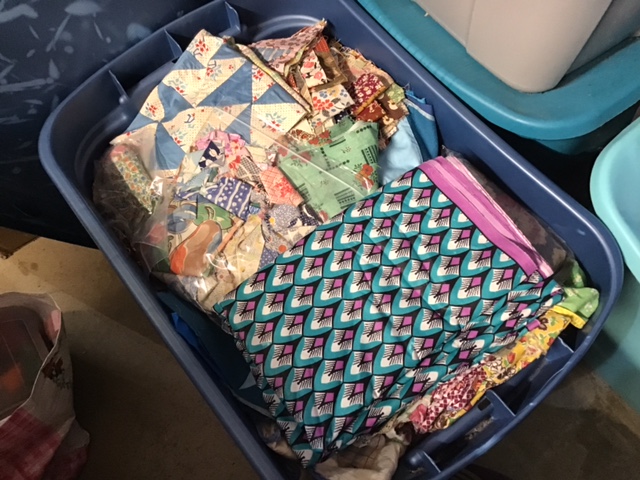
Mary Lee’s ideas really resonated with me so on Sunday night, I decided to tackle a corner of my studio. I started with a pile of fabric on top of an open plastic crate. The fabrics were from several recent projects, so I organized and rehomed them elsewhere. When I finally reached the crate itself, I was happy to see it was half-filled with vintage fabric, blocks, and a quilt in the bottom (these were some of my more recent vintage textile finds and I guess I forgot about them as the crate got buried). I found the matching lid to the crate, tucked more vintage blocks and fabrics inside (I spied these over on top of my cutting table) and closed it up.
Here’s a peak inside my crate of vintage blocks and fabrics.
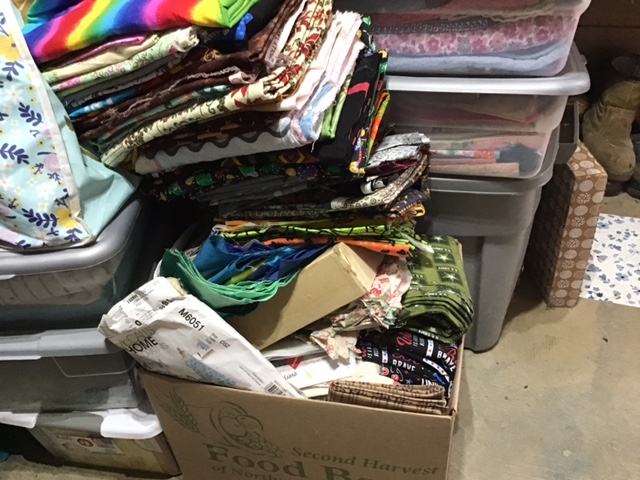
Then I moved onto a pile of fabric and totes sitting on top of a cardboard box next to the vintage goody crate. I organized the fabrics and cleaned out the totes, throwing away a bunch of old papers and handouts from quilt classes I taught years ago. Fabrics were then organized into appropriate places, including a box for gifting and another I’ll call my bye bye box.
But I didn’t stop there. Once the pile was gone, I finally had access to a drawer unit I haven’t seen for a while. The top drawer had Halloween and fall fabrics, some old quilt kits from 2008 as well as miscellaneous fabrics. I happily surprised myself by emptying about half of the drawer. Some of the fabrics went into my fabric cubes (organized by color) while the rest went into my bye bye box (or should I say on top of my bye bye box as it’s overfull now).
My 2 drawers after my purge.My bye bye box!
These are my fabric storage cubes. I have 50 cubes in 2 units which cover the entire back wall of my studio. I am aiming to do the same thing with the opposite wall, but right now that wall is used as a pantry, so I’ve got work ahead of myself to tackle that project, too. Hello Job Jar!!!
I still wasn’t quite done yet, so I tackled the bottom drawer, too. That bottom drawer stopped me in my tracks. It was pretty smelly and such from being closed up with no air circulation behind the cardboard box with the totes and fabric on top. Methinks everything in this drawer needs a good washing.
All in all, not too shabby for a couple hours work.
On Monday, I washed and dried all the fabrics from the bottom drawer and spent the evening untangling the big mess from the dryer — talk about strings! After everything was folded, I sorted these fabrics too, some went into my panels cube while others went into color cubes. I found some fun stuff in that bottom drawer — 4 fabrics from a Cranston Elvis Blue Hawaii collection from way back when. Cool! A military panel I designed as a freelance designer for a fabric company a long time ago. There was Christmas fabric, too. What I didn’t love went into my bye bye box (or actually on top of it).
I haven’t gotten back to my corner clean up since Monday, but I plan to start getting my tasks written onto slips of paper and put into my very own Job Jar so I can start tackling the big jobs bit by bit.
I’m thinking about making myself a Reward Jar, too. I’d better not include any trips to the quilt shop to add more fabric, though. LOL! Maybe my Reward Jar will just have chocolate……
Well, that’s it for me this week. Wish me luck as I tackle my clutter one bite at a time.























































 Villa Rosa Quilts