decluttering · villa rosa designs

5 Decluttering Techniques For Your Quilting Studio / Sewing Room and Your Home

Happy Thursday to you!

I wasn’t planning to write another blog post about decluttering, but right now it’s a topic that is very much on my mind so I thought I’d delve a little deeper into it by exploring some of the more popular techniques. I’m sure there are lots more, but for today, we’re limiting ourselves to 5 of ’em.

Image by moi

To be honest, I didn’t get back to decluttering my studio this week, but I did clean off 3 bookshelves in my bedroom, condensing them down to 2 shelves after I removed books I wasn’t interested in reading anymore or found duplicates. Yay! Empty space! Not really, though, as I rehomed part of my Sasha doll collection on that empty shelf. Sigh…………

I was also inspired to clean off and organize the family movie collection in the living room. Again, I weeded out the duplicates and the movies we just aren’t into anymore. I was surprised that when I was done, I had weeded out 2 bags of movies! Rockin’ Awesome!

Guess what? I felt a real sense of accomplishment by doing those 2 little tasks. Now I just have to get back to decluttering my quilt studio, don’t I?

Speaking of decluttering, I hope you had a chance to read last week’s post. If you missed it, you can find it HERE.

Blog reader, Sherri, made this comment about last week’s blog post:

I have been working on a declutter challenge but missed several days of the 30 day challenge and was feeling a little bummed. Read your idea of a “job jar” and just turned the five minute items into some of the jobs. Added fun ones like make two blocks from a current quilt project and go outside for ten minutes. Mostly chores but it will be fun to pull and not know if it is a chore or a reward when I pull that piece of paper. Thank you for this lovely idea!!!!

Big shout out to Sherri for her SUPER idea to combine the Rewards Jar with the Job Jar in the same jar — LOVE IT! Sherri’s comment reminded me that there are so so many different approaches to decluttering. So this week, I thought we’d take a look at some of them together. Thanks for the inspiration, Sherri!

Sherri mentioned this one in her comment, so I thought it only fitting we take a look at it first. Perhaps the most popular decluttering method right now is The 30 Day Decluttering Challenge. But what exactly is it? Honestly, I’m a little confused about what it is because I’ve seen a couple different versions. Is it one or the other? Or both?

A 30 Day Purge

Each day of this 30 Day Challenge, you remove that number of items from your space. So on day 1, you remove 1 thing. On day 2, you take out 2 things. And so on until day 30 when you remove 30 items. If I did the math correctly, that’s like decluttering 465 items in one month. Wowzer! That would really make a dent in one’s decluttering project, wouldn’t it? This was the first version that I saw on Facebook and I was very intriqued by the concept, but I bet it’s a real challenge to gather up 30 items on day 30!

Here is more information and tips about this technique:

Modern Minimalism

Homes and Gardens

    Minimalist Home

    A Bite a Day

    Another version is that on each day of the 30 Day Challenge, you focus on a small task in a different part of your home (or studio). For example, on day 1, you clean out your coats. Then on day 2, you clean off the bathroom counter. On day 3, a different small task in a new area. The idea with this one is that you work on one specific task for a short amount of time every day of the challenge. 10 minutes? 20 minutes? I’ve seen several different time suggestions, but I also know you can of course tailor this to yourself (I promise, there really aren’t any decluttering police,,,,,,,,,).

    Hey! I think I started this challenge without even knowing it by tackling my bookshelves and the movies shelves! Wohoo! I am such a forward thinker, am I not???? Seriously, though, this idea is very similar to the Job Jar of last week’s post, but instead of writing tasks on a slip of paper and pulling one out, you are simply tackling one small task everyday.

    Here’s a few resources for this variation:

    Clutterbug (see below for a few books by Cas)

    bemorewithless

    Life SImplified

    I hope all of the resources above will help you understand the nuances of The 30 Day Challenge(s) and maybe they will help you to jumpstart your own decluttering adventure.

    By now most of you have at least heard of Marie Kondo and her “spark joy” method of decluttering, which is often called the KonMari Method. This popular decluttering technique focuses on keeping only items that “spark joy” and letting go of everything else. So, how exactly do you do the Kondo method?

    First things first, you will tackle your clutter by category instead of room-by-room. Start with clothes, move on to books, then papers, miscellaneous items (also known as komono), and finally sentimental items. This order will help you build decision-making skills along the way.

    When sorting through each category, hold each item in your hands and ask yourself if it sparks joy. If it doesn’t give you the warm fuzzies, thank it for its service and let it go. Once you’ve decided what stays and what goes, it’s time to organize what’s left.

    Marie Kondo wrote a best selling book that will guide you through the entire process.
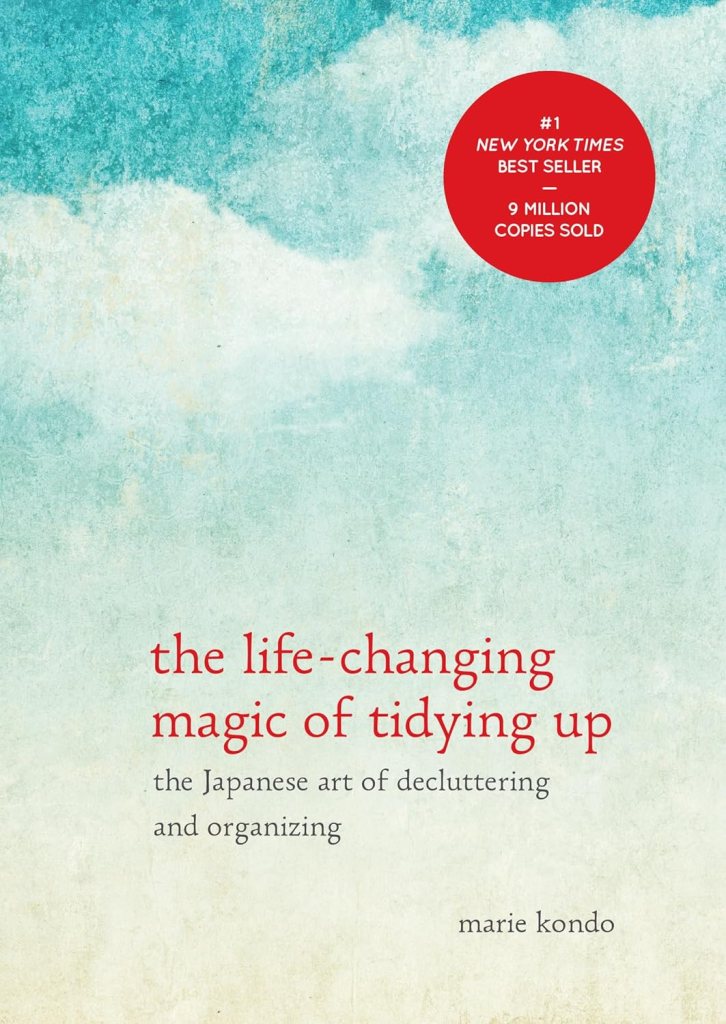
    Get it HERE

    The 12-12-12 Challenge is a simple yet effective way to declutter your home and maybe have some fun while doing it. The idea is to find 12 items to throw away, 12 items to donate, and 12 items to return to their proper places. It’s amazing how quickly you can make a difference in your space with just this small effort!

    It’s a flexible way to go about organizing and decluttering your spaces because once you complete the 12-12-12 cycle, then you simply repeat it until you achieve the level of organization you are looking for and you can take as little or as much time as you need. It’s also a feel-good win-win experience as you are donating items you no longer need or want to local charities in order to help others in your community.

    Here are some great resources to help you:

    E-ZCleanUp

    LIFEHACKER

    If you’re feeling overwhelmed by clutter and don’t know where to start, the 20/20/20 decluttering challenge might just be your new best friend. So, how does it work? It’s super simple and totally doable for anyone.

    Here’s the deal: You spend 20 minutes decluttering, pick 20 items to either throw away or donate, and do this for 20 days straight. That’s it! The idea is to break down the daunting task of decluttering into bite-sized chunks that are easy to manage.

    The beauty of this challenge is its flexibility. You can choose any part of your home each day—whether it’s your closet, kitchen drawers, or even your scary junk drawer. By dedicating just a small amount of time every day, you’ll start seeing big results without feeling like you are taking on an impossible mission.

    A few resources to get you started:

    The Minimalists

    Minimalist Home

    The 10-10-100 Rule might just be the one you’ve been looking for if you are a procrastinator or don’t know where to start.

    Like the other rules and challenges we’ve discussed, this one is also pretty simple — you focus on one specific spot in a larger space, like a particularly messy corner. The idea is that you declutter in 10 minute intervals to find 10 things to remove from the space (trash, donation items, items to sell, or even just items that need put back where they go). This is a very flexible technique because you don’t have to do 100 items all in one day – you can spread it out as long as you keep working towards that 100 item goal. Of course, your 10 minutes could be longer or shorter, say 20-10-100 or 5-10-50. The real purpose is that you get up, lose your paralysis, and get decluttering.

    Of course, I’ve got a few more resources for you:

    Bobby Berk

    Livingetc

    I hope learning a little bit more about these 5 decluttering techniques will give you inspiration to work through your own clutter if you struggle with too much stuff like I do. Of course, there is nothing that says you can’t combine and/or modify any of these techniques to better suit you and your individual needs.

    Please remember that one technique, rule, or challenge will NOT fit absolutely everyone. You may need to try several different ones before you discover the one(s) that work for you. It’s not failing if a techniques doesn’t work for you, so try again. Instead of failure, look at it as trying to find the right fit for decluttering and keeping your spaces organized. It’s a truth universally acknowledged that having a clutter-free organized space is much healthier and happier than living with the unnecessary extra stress and anxiety of a perpetual mess.

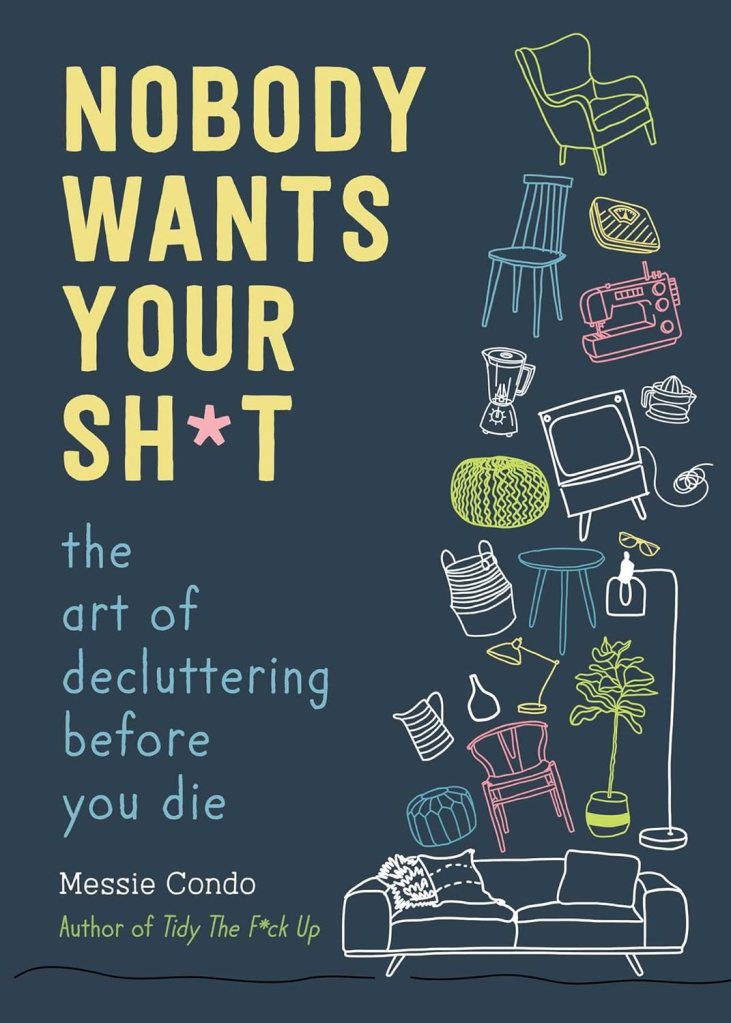
    Since I’m such a book geek, I’m going to add a short list of great books to help you on your decluttering adventure! I chose these books because of their popularity and, of course, several of them are currently waiting for me to read them, too.
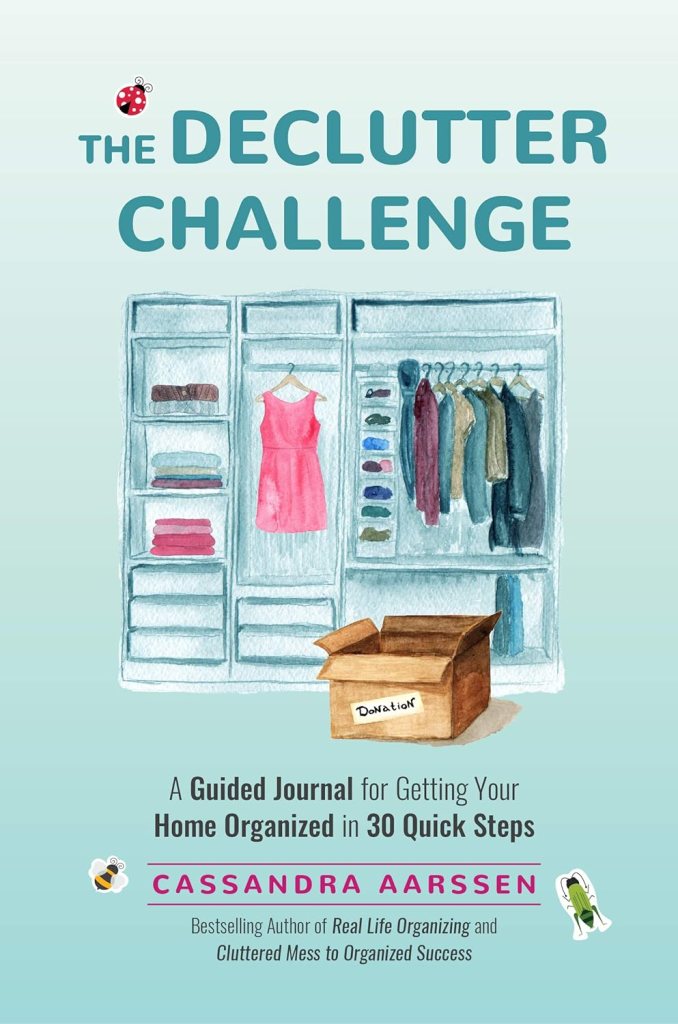
    Get it HERE

    Get it HERE
    Get it HERE

    Version 1.0.0

    Get it HERE

    Get it HERE

    Well, that’s it for me. I feel the need to get back to decluttering and organize something! LOL!

    Take care until next time —

    Always,

    Tricia @VRD

    Rose Cards · Tips and Tricks · villa rosa designs

    NEW September Villa Rosa Designs Rose Card Quilt Patterns and a Spot of Decluttering in My Studio

    Happy Thursday to you!

    I love September and the approaching autumn season! It’s such a refreshing time of year. This summer was certainly one of the hottest on record here in northwestern PA. Wow! Then it was Labor Day and suddenly the weather turned very fall-like.

    It reminded me of when I was a kid going back to school the first week of September, wearing my crisp new school clothes — sweaters, jeans, long sleeve tops, new school shoes, not like the shorts and tees of today.

    Speaking of inspiration, today is the Thursday after the first Friday of the month and you know what that means — NEW PATTERNS. YAY!

    Drum roll please………

    And here they are!

    Get the print collection HERE

    (Sorry, the collection isn’t offered as a digital set, but the patterns are available as digital downloads individually, below)

    Good as Gold

    Pavers

    Ric Rac Roll

    Roam

    Stuffing

    Aren’t they fun??? Our designers never disappoint, do they? There’s definitely something for everyone here with a new panel pattern (Good for Gold), several fat quarter patterns (Roam, Stuffing, Pavers [can also use 10″ squares]), and a 2 1/2″ strip pattern (Ric Rac Roll). We’ve got traditional and modern. Sizes range from smaller throws to a large twin-sized bed quilt (Ric Rac Roll).

    But wait! There’s more!

    Check out this month’s table runner and snack mat.

    Get the print pattern HERE

    Get the digital pattern HERE

    Get the print pattern HERE

    Get the digital pattern HERE

    By now you’ve most likely noticed how much I love to create seasonal patterns. You see, I have this goal to someday have my seasonal decorating organized into storage crates — one for each season/holiday. Then I can just grab the right crate for the season/holiday and add my decorative touches like quilted pillow covers, table runners, wall quilts, throws, etc. How close am I to achieving this goal? Not even close (eye roll here). But it’s important to have goals, isn’t it?

    Speaking of Snack Mats, have you picked up on my evil nefarious plan yet??? Yep, my plan is to create a different Snack Mat for each month of the year. So far I’ve created 7 Snack Mat patterns, so that means I’ve got 5 more to go in order to have a full year of Snack Mats. And, yes, I’ll be adding these to my seasonal/holiday crates as well.

    All of the Snack Mats finish at a generous 8″ x 14″, which makes the perfect landing spot for your mug of coffee/tea/cocoa and a little something yummy on the side. And at 8″ x 14″, they do double duty as a small place mat. When I worked at my local small town public library for 11 years, I ate lunch (or dinner) at my desk most of the time. It would have been super fun to pull out a new seasonal mini place mat (Snack Mat) for my desk every month to make my meal at work a little more special, even if it was leftovers from the day before. Snack Mats also make great gifts for yourself or for someone else. You can find all of the Snack Mats to date right HERE.

    Now that you are super hyped about our NEW September patterns, grab ’em all and get started with your new makes because September is a great month to get back to quilting.

    As I mentioned earlier, I am feeling so much more inspired as autumn is only about 10 days away. Ever since I bought my new-to-me sewing table back in July, I haven’t been able to get back into the cleaning and organizing groove. Of course, the need to declutter and clean wasn’t just because of my new table, it’s been an ongoing project. In fact, I started 2024 off by having a goal to get my spaces cleaned and organized. Truthfully, I haven’t made much progress.

    Over the weekend I was lamenting to my pal, Mary Lee (Hey Mary Lee!), that my spaces are such a disaster and that I really want to dive back into getting my space shipshape. In truth, I basically feel paralyzed because there’s so much that needs done, there’s only one me, and I feel so completely overwhelmed. I just don’t know where to begin.

    Mary Lee, in all her wisdom (she is a retired children’s librarian, after all, so I suspect she knows everything!) shared some great ideas, so I thought I’d share them with you.

    Think Small

    Utilize small pockets of time to do smaller tasks. You will be amazed at how much you will get done by focusing on the small things.

    Break Big Jobs into Small Bites

    Instead of cleaning the whole bookcase, clean one shelf off at a time until you complete the entire big task. Instead of tackling an entire room, start with one corner. So, basically, stop looking at the whole overwhelming paralyzing picture and focus on smaller manageable pieces.

    Institute a Job Jar

    This goes right along with the previous suggestions of breaking things into smaller chunks except this time, you write the smaller chunks onto slips of paper and put them in a jar. For example, write “clean off one book shelf” on a slip of paper, fold it in half and pop it into the jar. Add other smaller chunks, too, like “clean the cobwebs from the corners of a room”, “Empty and clean out one drawer”, “pull 5 things out of the closet you don’t wear anymore,” or whatever works for you.

    Mary Lee explained that you pull a slip of paper out of the jar and then you do that specific task – “clean off one book shelf,” for example. Once you complete that specific task, you can put the slip back in the jar (if there is more of the same specific task to do), toss the paper slip if it’s complete, or repeat the task if you’re still into it.

    The key is, though, that you do not choose another slip of paper (or take on another project), until you have completed the task on the slip of paper you pulled out. You can repeat that task as many times as you want/need or put the slip of paper back into the jar and pull out another one. If you keep taking small bites of those big overwhelming projects, eventually you’ll get that big project done.

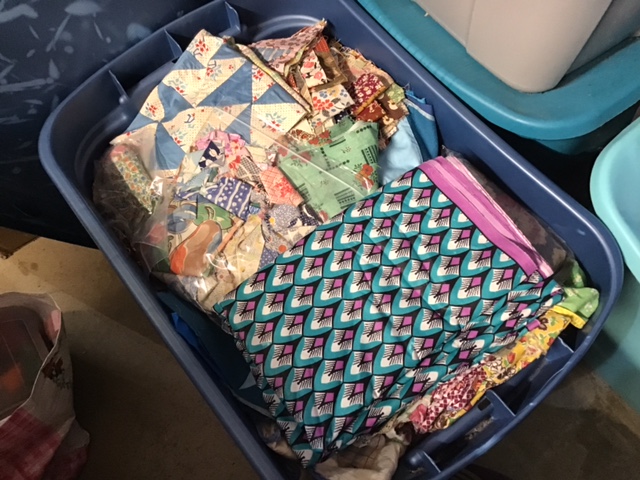
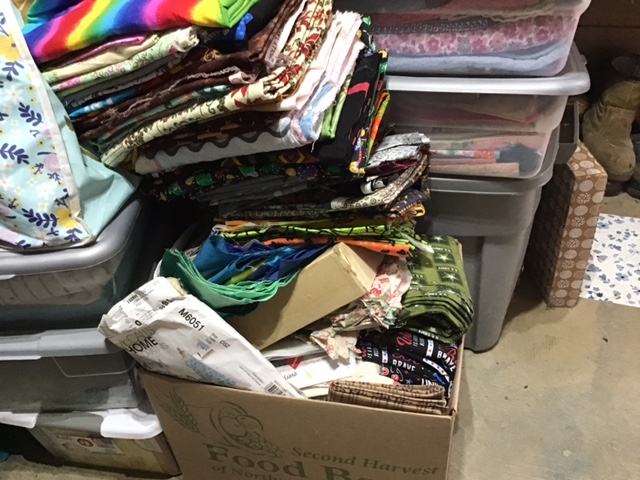
    Mary Lee’s ideas really resonated with me so on Sunday night, I decided to tackle a corner of my studio. I started with a pile of fabric on top of an open plastic crate. The fabrics were from several recent projects, so I organized and rehomed them elsewhere. When I finally reached the crate itself, I was happy to see it was half-filled with vintage fabric, blocks, and a quilt in the bottom (these were some of my more recent vintage textile finds and I guess I forgot about them as the crate got buried). I found the matching lid to the crate, tucked more vintage blocks and fabrics inside (I spied these over on top of my cutting table) and closed it up.

    Here’s a peak inside my crate of vintage blocks and fabrics.

    Then I moved onto a pile of fabric and totes sitting on top of a cardboard box next to the vintage goody crate. I organized the fabrics and cleaned out the totes, throwing away a bunch of old papers and handouts from quilt classes I taught years ago. Fabrics were then organized into appropriate places, including a box for gifting and another I’ll call my bye bye box.

    But I didn’t stop there. Once the pile was gone, I finally had access to a drawer unit I haven’t seen for a while. The top drawer had Halloween and fall fabrics, some old quilt kits from 2008 as well as miscellaneous fabrics. I happily surprised myself by emptying about half of the drawer. Some of the fabrics went into my fabric cubes (organized by color) while the rest went into my bye bye box (or should I say on top of my bye bye box as it’s overfull now).

    These are my fabric storage cubes. I have 50 cubes in 2 units which cover the entire back wall of my studio. I am aiming to do the same thing with the opposite wall, but right now that wall is used as a pantry, so I’ve got work ahead of myself to tackle that project, too. Hello Job Jar!!!

    I still wasn’t quite done yet, so I tackled the bottom drawer, too. That bottom drawer stopped me in my tracks. It was pretty smelly and such from being closed up with no air circulation behind the cardboard box with the totes and fabric on top. Methinks everything in this drawer needs a good washing.

    All in all, not too shabby for a couple hours work.

    On Monday, I washed and dried all the fabrics from the bottom drawer and spent the evening untangling the big mess from the dryer — talk about strings! After everything was folded, I sorted these fabrics too, some went into my panels cube while others went into color cubes. I found some fun stuff in that bottom drawer — 4 fabrics from a Cranston Elvis Blue Hawaii collection from way back when. Cool! A military panel I designed as a freelance designer for a fabric company a long time ago. There was Christmas fabric, too. What I didn’t love went into my bye bye box (or actually on top of it).

    I haven’t gotten back to my corner clean up since Monday, but I plan to start getting my tasks written onto slips of paper and put into my very own Job Jar so I can start tackling the big jobs bit by bit.

    I’m thinking about making myself a Reward Jar, too. I’d better not include any trips to the quilt shop to add more fabric, though. LOL! Maybe my Reward Jar will just have chocolate……

    Well, that’s it for me this week. Wish me luck as I tackle my clutter one bite at a time.

    Until next week –-

    Always,

    Tricia @VRD

    Quilting Partners · Rose Cards · Tips and Tricks · Tutorials · villa rosa designs

    VRD Corners Quilt Tutorial

    Happy Thursday to you!

    I hope you are all staying warm and cozy, holed up in your sewing room making beautiful quilts! I am happy to say that I’ve been able to get some quilting in since the beginning of the year and thought I’d share a fun tutorial for a terrific small quilt, perfect as a baby quilt.

    But before I get started with the actual tutorial, let me share a little bit about one of my favorite things about my job in the quilt industry. I actually wear many hats (don’t we all?) and one of the coolest ones is making sample quilts for fabric companies. Recently I whipped up this adorable Corners quilt featuring the Love and Learning collection by Hoffman. It’s a really sweet collection featuring a charming alphabet panel in your choice of light or dark background. I saw that darling collection and immediately thought it would look great in Molly Cook’s Corners Rose Card pattern.

    Here is what the quilt looked like as a digital image before I actually made it:

    Don’t you just love it? Yes, it has a little bit of pink in it, but don’t you think it would work for a boy or a girl? I do!

    Anyway, I made a sample of this quilt for Hoffman and as I made it, I photographed the steps so I could create a new tutorial for the blog just for you, our loyal readers.

    Do you have Molly’s Corners pattern yet? If not, you can get it as a physical pattern HERE or as a digital pattern HERE.

    Let’s get started on our first quilt tutorial for 2024! Yay!

    So the first thing you need to do is gather up your fabrics and your pattern. The first image shows the alphabet panel, the second image is the background and coordinates, and the last photo shows the binding, backing, and accent fabrics. Oh what fun!

    After you’ve got your supplies together, then it’s time to cut each alphabet letter out of the panel one at a time. I don’t know if you can see in the first photo above, but each letter includes an item that begins with the specific letter as well as the item’s name. 

    Time to cut! I used a square ruler the size of the square called for in the pattern (or at least I thought I was). That way all I had to do was center each design and cut around all four sides of the ruler. Unfortunately the letters in the last row of the panel were wider than the rest and I ended up having to cut some of the designs a bit, but made sure the letter was not cut off.

    OOPS! Then I realized my ruler wasn’t the right size. Luckily it was a bit bigger, so I could trim those squares down to the correct size.

    Whew! Done with trimming down 26 squares. That took me a little while. Make sure you cut your squares to the correct size the first time!

    Moving on……….

    Next it’s time cut a bunch of strips and sew them together before we cut the units for the half frames. Sewing long strips together is not one of my personal favorite things to do. What’s your least favorite part of quilting?

    Okay, the strips are sewn into pairs with a background strip sewn to a colored strip. Next let’s cut all of the units out of the strip sets. To create the corner unit for the block, you will have to sew a rectangle to the squares as in the second photo.

    All right, now the hard part — to achieve the same layout as Molly’s sample quilt on the front of the pattern (see above), we will be making 4 versions of the same block.

    For most of you, this won’t seem like a big deal, but there will be a few quilters who have trouble getting the right block orientation. Well, I am included in this group, definitely. Blame it on being a lefty for me. 

    I strongly urge you to use some kind of flannel board. Make one block at a time and place them in their proper order on your flannel board so you can more easily see the orientation of each block as you sew them together. 

    I did try sewing a group of blocks together using my usual speed sewing method, but that ended up being a disaster. I had to do a lot of ripping out and rearranging the pieces of my blocks. So, after that, I made one block at a time.

    Once I had all my blocks up on my flannel board and double checked their orientation, I started sewing the blocks into rows and then sewed the rows together into the quilt center. I was holding my breath the whole time………

    Once I knew I had conquered the center, it was time to add borders. I added the side borders first and then sewed the top and bottom borders on last.

    Woohoo! The top is done! Time to layer, machine quilt, do binding, and add a label. Oh! My last thing to do will be shipping the quilt to where it needs to go. It will come back eventually…………

    Have you made the Corners quilt before? Do you have any tips to share?

    Before I go, I wanted to give a little update on my decluttering project. I started with my cutting table first. Lately it’s been more of a storage surface than a cutting surface. 

    Holy moly! I found several groupings of fabrics paired with patterns as well as yardage and stacks of fat quarters. Some loose patterns, too. Ugh! Now I have to put the fabrics away and figure out where to house the projects. Decisions, decisions! This is why I avoid decluttering — I have way too much stuff and not enough space. 

    I need to start pulling stuff out I don’t love anymore and finding it all new homes. Time to start purging my stash or I will never ever find an organization system that works for me because you can only stack so many plastic crates. Well, I’m going to keep plugging away, so stop in next week to see what else I’ve accomplished.

    Always,

    Tricia @ VRD