Happy November to you! We are now in the thick of the holiday season – are you ready? How many of you are participating in the 6 Quilts in 6 Week Challenge and getting a few handmade gifts completed for holiday giving? I must admit – not me. I’m just trying to make a dent in my VRD UFO quilt stack. I’m just so thrilled that I’ve already completed 5 unfinished projects. Yay me! I just need to keep it going after our lovely Challenge ends next week.
And our lucky Week 4 winner is ………….
Susan T.
Now let’s check out my Week 5 finish!
6 Quilts in 6 Weeks – Week 5
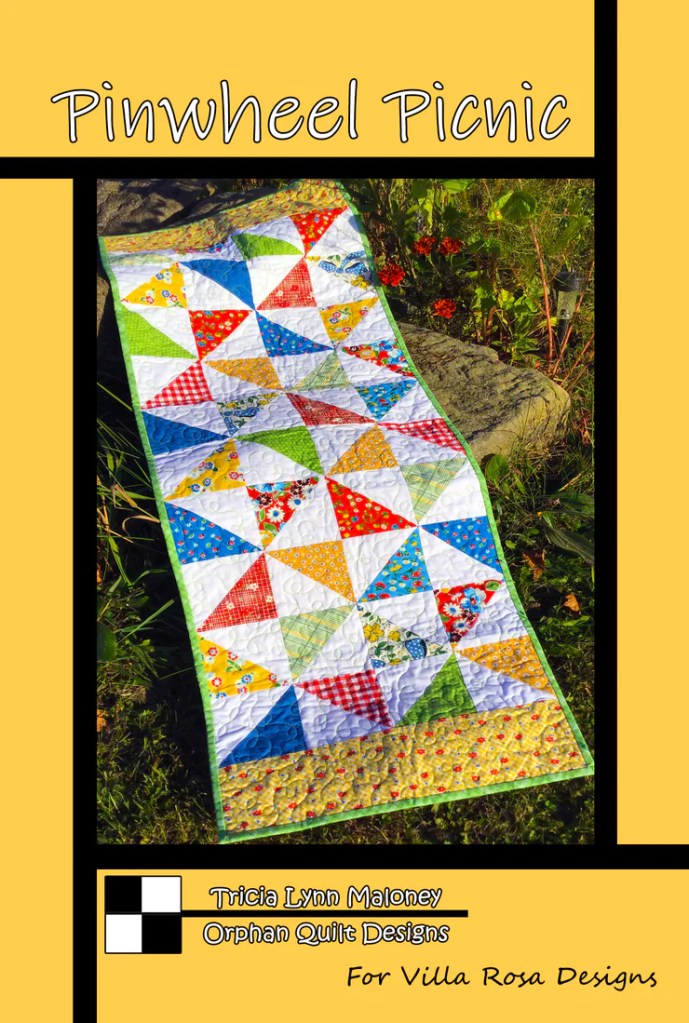
This past week has been a busy one, so for this week, I chose a table runner to complete. I had a fun summer version of Pinwheel Picnic ready and waiting. It was a sample I made for the VRD Table Runner a Month program my Friday Group (Hey Ladies!) did maybe 3 years ago.
Have you ever made Pinwheel Picnic? It’s a fun one that goes together quickly and finishes at 16″ x 48″. It uses 5″ squares, but you could also use your stash! And it’s easy to add extra blocks to make it longer if you wanted.
I used an older fun summery fabric collection with citrus fruit and flowers by designer Sandy Gervais.
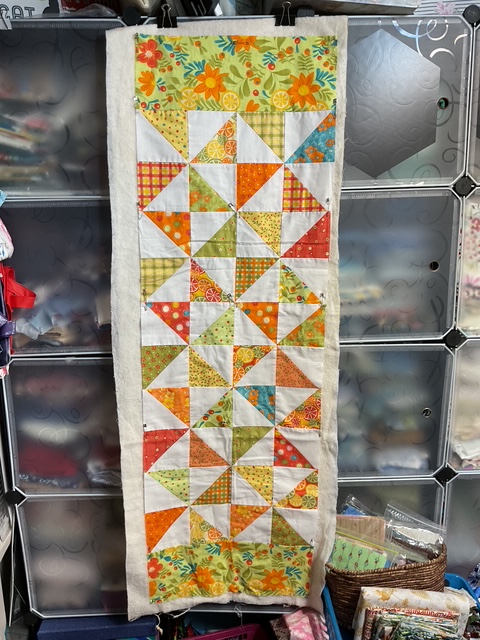
My Before Photo –
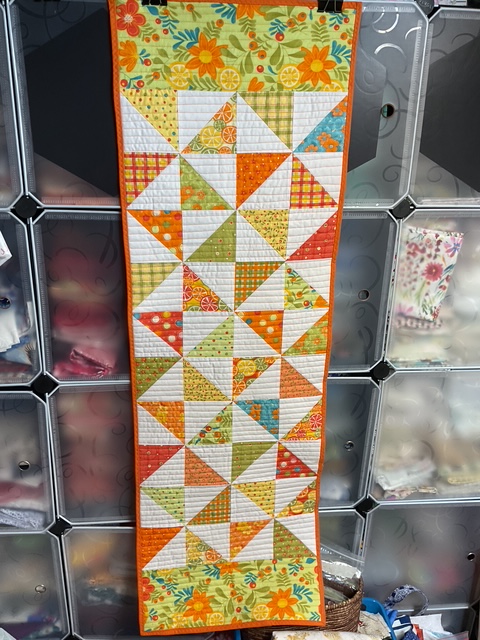
My After Photo –
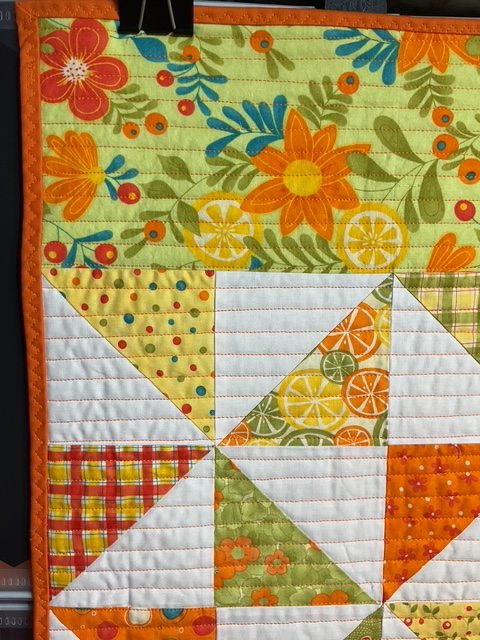
I chose to quilt my runner with straight lines in orange thread about 1/2 inch apart. By no means are my lines actually straight, but I think it turned out pretty well. It will look even better once it’s washed and puckered. I stitched the quilting lines with my walking foot. The I used a solid orange for the binding and machine stitched it on with a yellow floral print for the back from my stash.
Here’s a close up of my quilting.
It really feels good to have 5 projects completed.
I can’t wait to show you what I found yesterday!
My Vintage Fabric Find
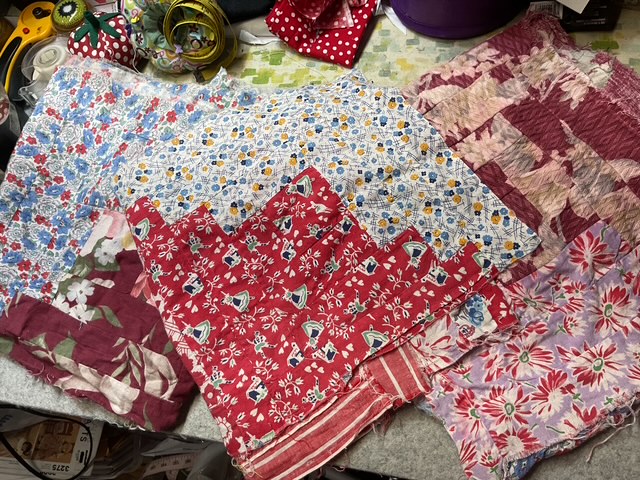
I connected to a quilter and antique quilt collector online who was relocating to Alabama. She had culled her antique textile collection before her move and I am the very lucky adopter of her leftovers. But these leftovers are fantastic! Let me show you what I got.
YIPPEE! When I emptied the plastic bags of goodies – they filled an entire laundry basket. Lynn told me she’d acquired her collection here and there, online and at antique shops, which is pretty much how my own textile museum – er, collection – has grown over the years. LOL!
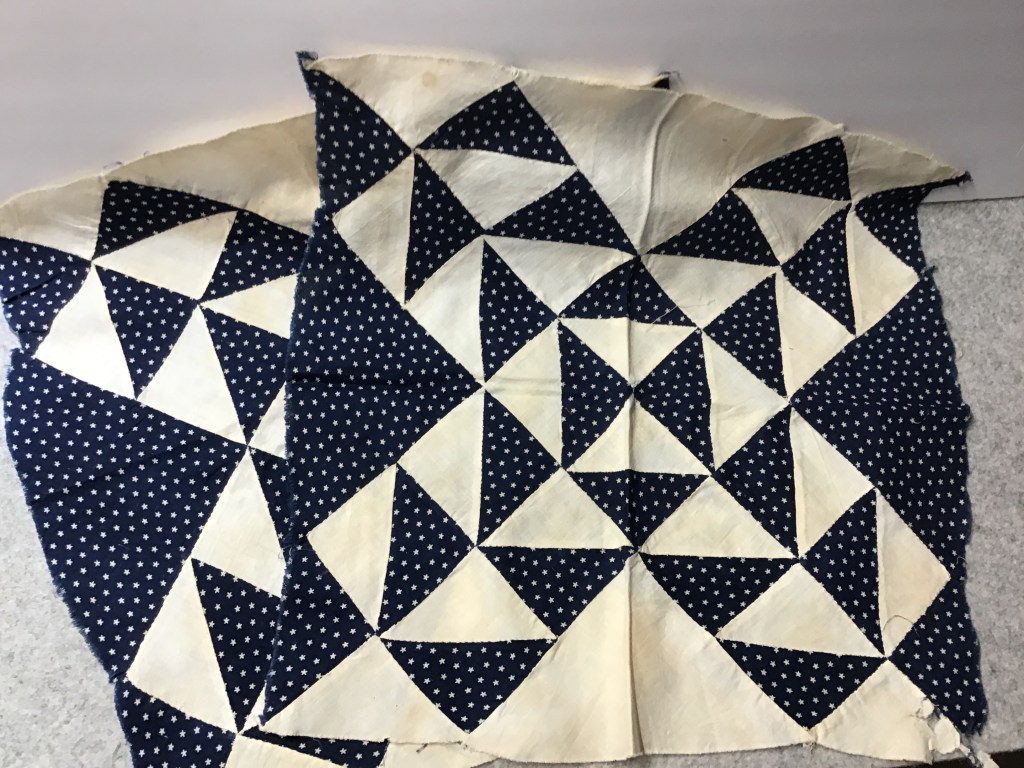
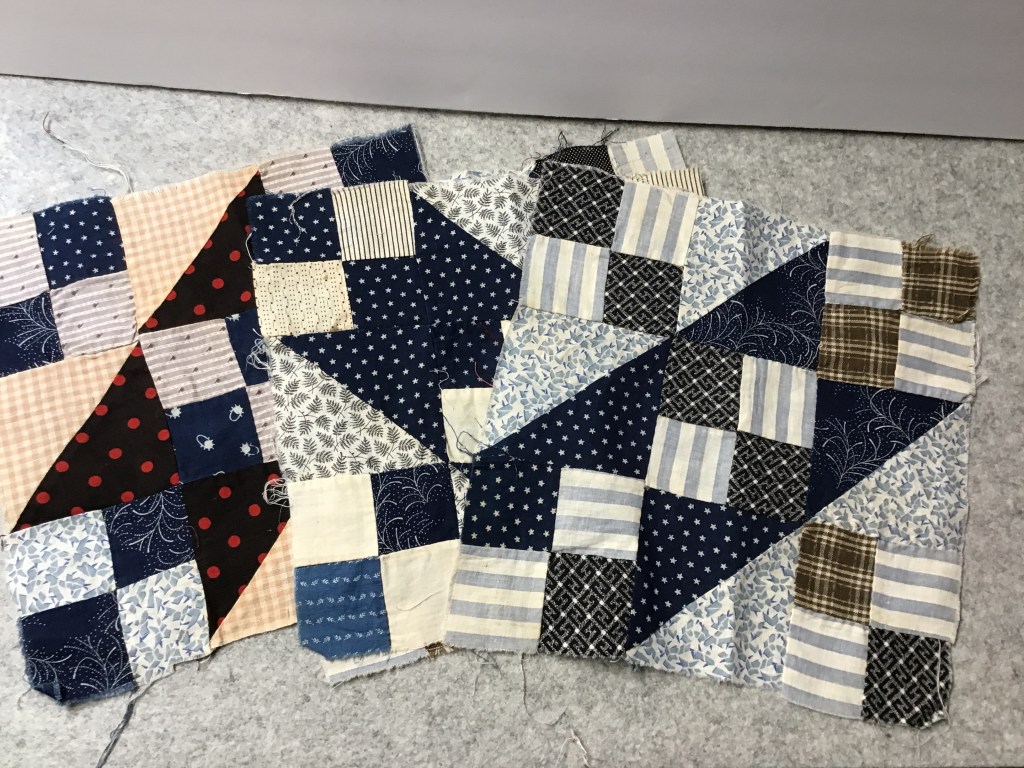
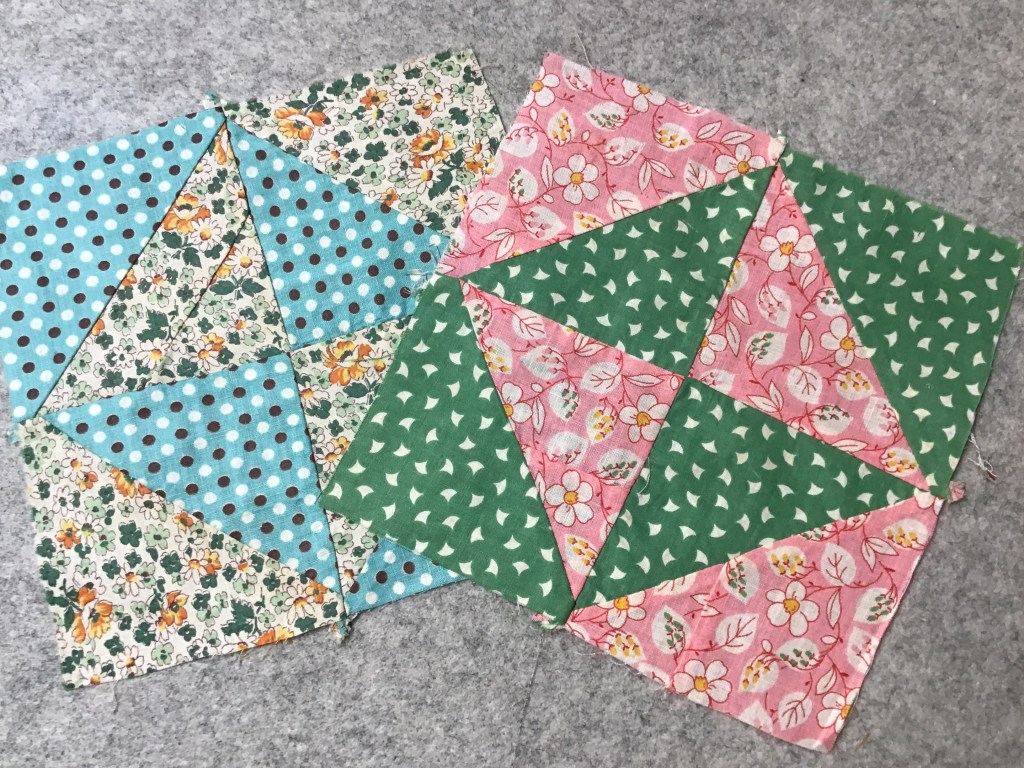
There were lots of great quilt blocks, both in sets or as orphan blocks.
Some of you may know that my quilting roots started in auctions, museums, and antique fabrics long before I’d ever made my first quilt block. Back in 2010, after acquiring a local woman’s scrap bag, quilt blocks, quilts, and tops which spanned more than 100 years, I wrote my first quilt book, Orphan Block Quilts. It’s now out of print, but you can still find it as print copies or as a download.
During the pandemic, I found another love in textile history – feed sacks! So I was thrilled to find lots of feed sack pieces amongst my new textile finds as well as 3 sewn strips of Log Cabin blocks with even more feed sacks! Lucky me! Oh my! What treasures I am finding in my new basket of scraps!
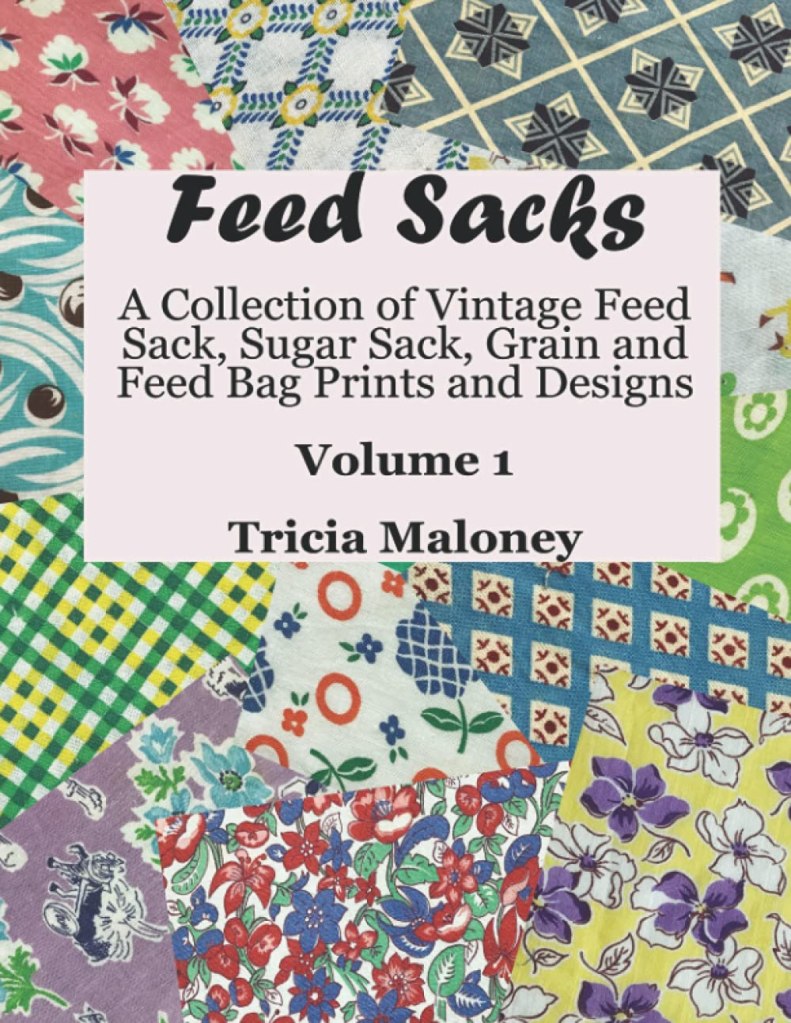
I really enjoy documenting all the different patterns and designs of the feed sacks I find. I even started putting my examples into books (big surprise, right?). My first volume is available and eventually the second volume will be, too, as soon as I finish it.
Who knows? Maybe this new textile stash will inspire a new VRD pattern down the road. We shall see….
Well, that’s it for me today. I need to figure out which project I’ll be completing for next week’s Week 6 (and the last week) of our 6 Quilts in 6 Weeks Challenge. And then, I’m going to play in my new textile collection.
One of my favorite things to do when I go anywhere is to be on the lookout for antique and vintage quilt blocks, fabrics, and other textile goodies. I haven’t talked much about my super secret life as a textile collector on the blog, so I thought today would be a great opportunity to share that side of me with you.
I started out as a collector and an appreciator of antique and vintage textiles long before I became a quilter, so those early roots in textiles are still with me and are actually pretty strong. Instead of a collector, though, maybe I should call myself a curator of my own textile museum. Yep, I really do have that many textiles in my possession. And I do really enjoy adding more to my antique and vintage stash whenever I can.
Sit back and enjoy my new playthings!
Hand-Crafted Santa
Here’s my adorable Santa made out of a couple circa 1870’s/1880’s quilt blocks. I don’t know if any of you have ever been to Una’s booth at Quilt Festival in Houston? She creates the most amazing Santas using antique quilts, tops, and blocks. This cutie is my second Santa. Last year, I brought home my first Santa, which was created from lovely indigo and white quilt blocks circa 1900/1910. I haven’t started my holiday decorating yet, though, so he isn’t out of storage yet. Now they will be good company for each other. And they are a fun addition to my textile collection, don’t you think?
Feed Sack Doll
Isn’t she a little darling??? She is from the 1930’s or 1940’s and was handmade by some sweet mama or grammy for a lucky child. The pink floral body is actually made out of a feed sack and the face/hair is hand-painted. I think she is in marvelous condition, considering she’s almost 100 years old now. I just love her chubby legs!
I found this little sweetie at Quilt Festival in my friend, Tenny’s booth, Tenny Roche’ Vintage. You can find Tenny on Facebook HERE or visit her Etsy shop HERE where you’ll find all sorts of intriguing vintage items.
I have a deep interest in feed sacks, having started seriously to collect them during the pandemic. I now have crates and crates of them — I just love these wonderful colorful patterns and colors! So what’s a girl to do with all those feed sacks?
Write a pattern showcasing them, maybe?
Yup, did that! I used lots of feed sack bits and pieces out of my vintage stash for the blocks in this runner. It was a really fun project! You can find the digital Nana’s Aprons HERE or the print Nana’s Aprons HERE.
WHat’s really exciting is that right now I’m getting ready to launch my second feed sack book, Volume 2, hopefully later this week. The first volume has over 1000 feed sack prints and designs while my new book will have another 1400+ prints and designs. Wow! And I’m just getting started on this very dear-to-my-heart project because I have lots more feed sacks to document.
Antique Quilt Blocks
At Quilt Market and Festival, one of the first things I like to do when I get the chance away from the VRD booth is to visit all of the antique quilt and textile vendors. They pretty much now all know me by name. LOL! I also scour flea markets, second hand shops, antique shops, etc. whenever I go anywhere in the hopes of finding more textile goodies. Here, I’ll show you what I found at Quilt Market and Festival as well as some from my Mom’s birthday trip to Ohio Amish country.
I’ve loved antique and vintage quilt blocks for a long time now — I started collecting them long before I ever actually knew how to quilt. I was totally hooked on learning to quilt once I saw how antique fabrics in garments made it into the quilts of the time. After that, I paired up my love of antique and vintage textiles with my love of quilting.
In fact, my very first quilt book was called Orphan Block Quilts, and I showed how I could feature both antique quilt blocks and modern quilt blocks in the same quilt design. If you’ve noticed my byline on my VRD patterns — Orphan Quilt Designs — my first book is what started the whole orphan quilt thing for me. That being said, I LOVE adding antique and vintage orphan blocks to my textile menagerie.
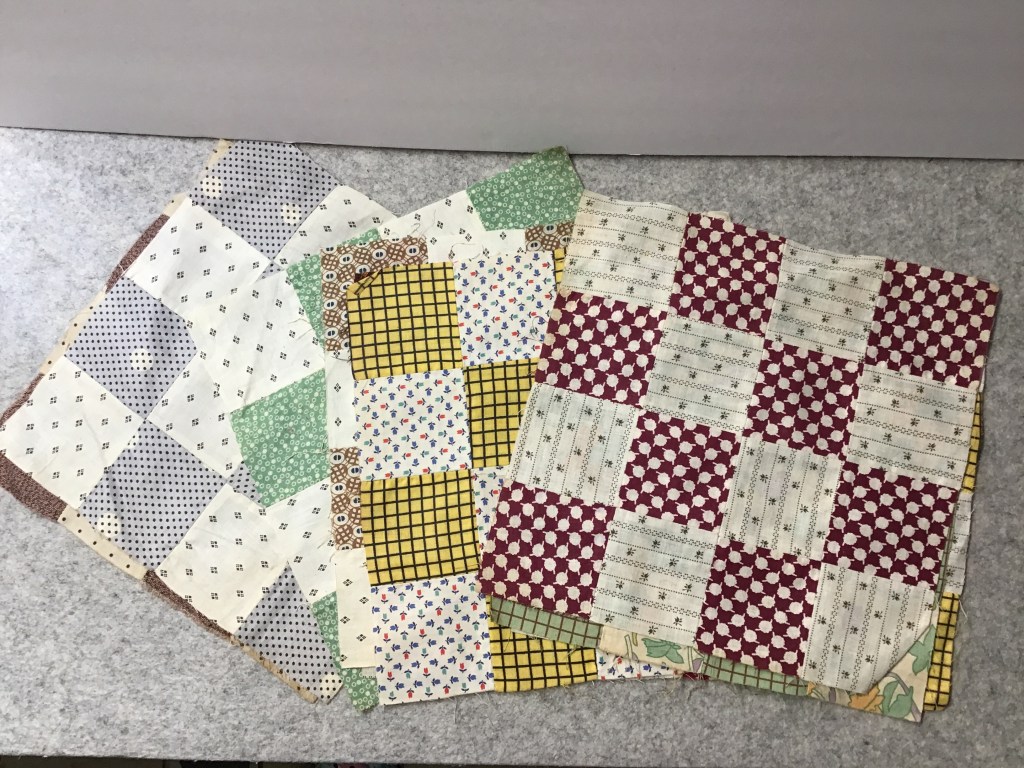
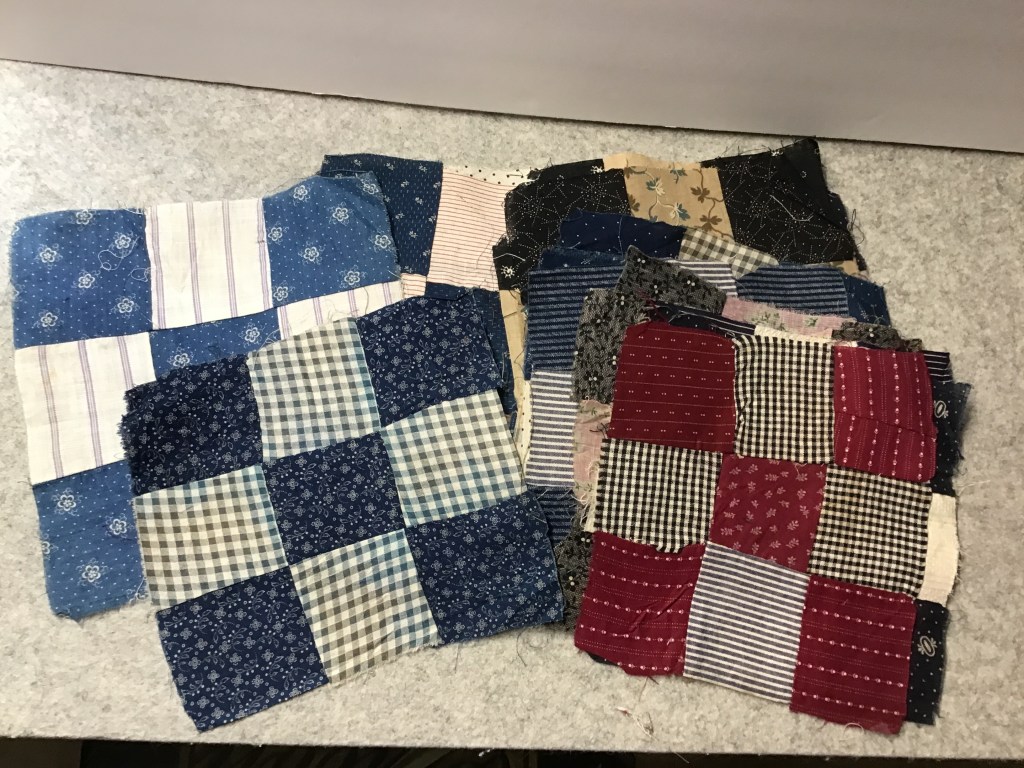
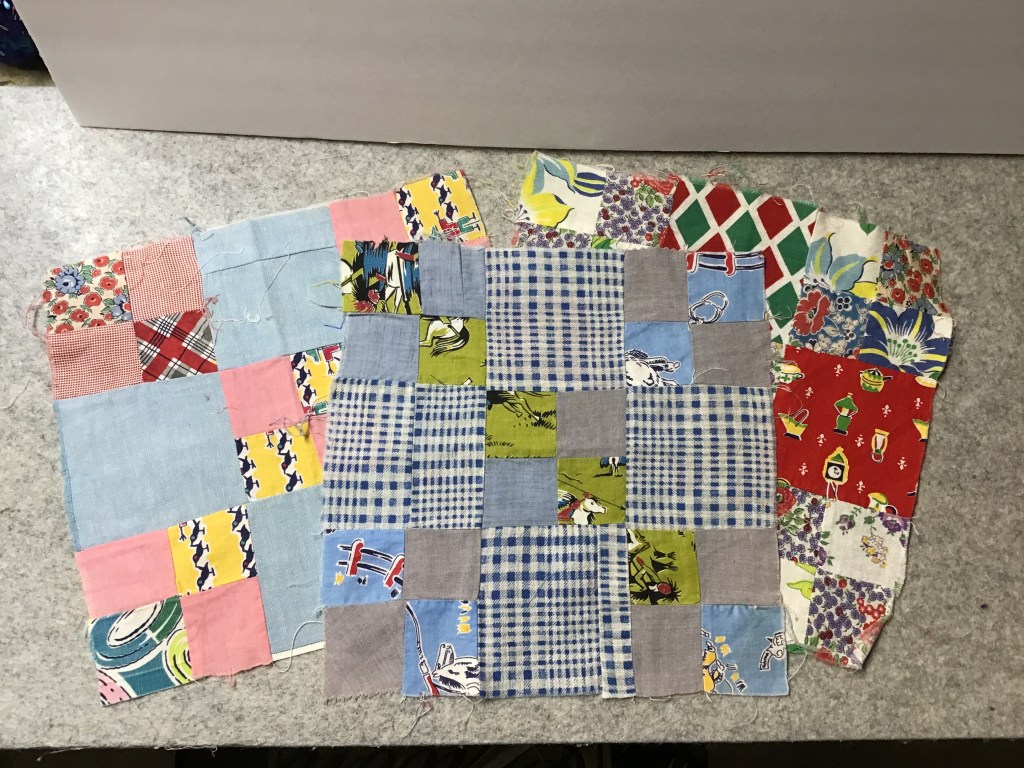
1920’s/1930’s Double Four Patch blocks1890’s-1910’s Nine Patches1930’s/1940’s Nine Patch blocks. The block in the center even has feed sack squares.
Humble quilt blocks like Nine Patches and Four Patches are some of my favorite blocks because they are often the first blocks a quiltmaker makes and boy, have I come across some delightful wonky blocks over the years that I suspect were early projects or rejects from quilters of the past. I love them all!
I wanted to show the Nine Patch block below all by itself because it has such wonderful fabrics in it. Can you guess how old it is (answer below the photo)?
I cannot pinpoint an exact date, but I would say second half of the 1800’s. The turkey red fabric really fascinates me — the colors are so bright. The center blue and brown stripe is also a very interesting fabric.
Indigo and white is probably the most classic color combination for quilts and I’m always on the lookout for them. I also really like indigo and double pink, so I am always happy to find those, too. Maybe someday I’ll put together a book filled with examples of antique and vintage indigo.
Scrappy quilt blocks are a lot of fun. Sometimes I shake my head at the fabric combinations quilters put together, but they also make me smile. Besides, the scrappier the blocks are, the more interesting they seem to be, particularly with their wonderful treasure troves of fabrics.
In opposition of the scrappy blocks above, below are some nice examples of organized blocks with thoughtful fabric choices.
Check out these cute Bow Tie blocks from 1890’s-1910’s. Red and black fabric combinations, like the block on the right, were very popular in the 1890’s and were sometimes called Garibaldi prints, which were named after Giuseppe Garibaldi, an important Italian leader who often wore a red shirt with a black kerchief, as did his men and followers.
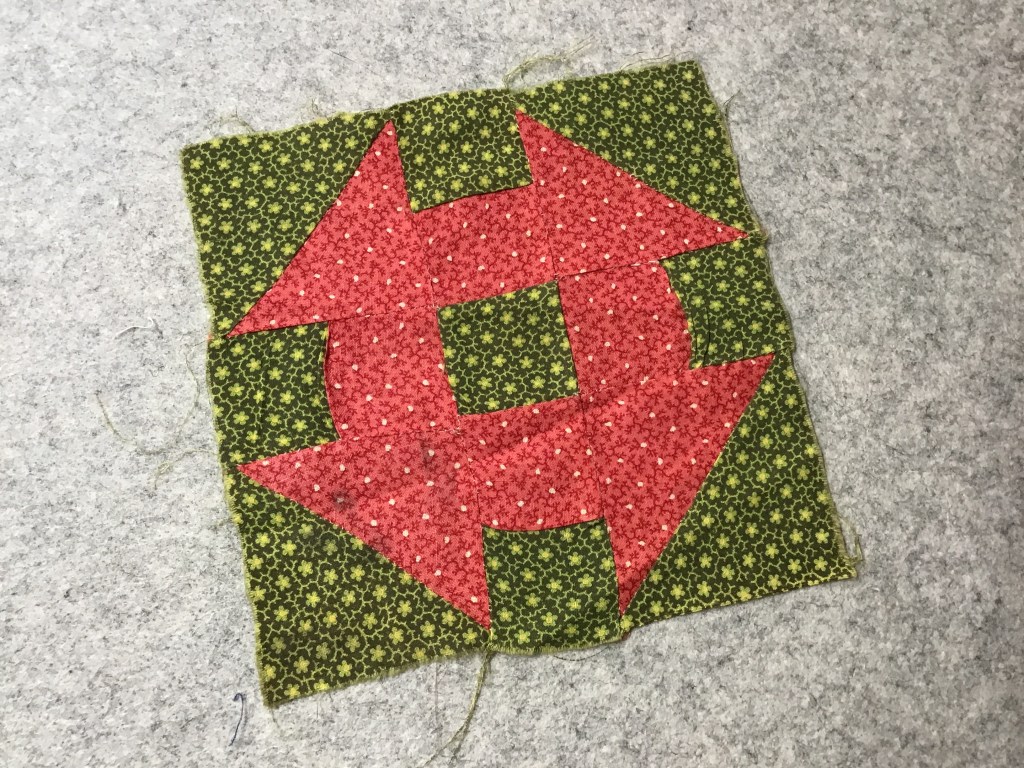
I found a couple of very antique blocks that were truly orphan blocks because they were the only ones of their kind that I found. I know you will agree that they are pretty special.
The first Leaf block could actually date from 1840-1870. WOW! Do you see the little dots on the red fabric? Whatever metallic mordant used to dye the fabric actually ate through the colored dots, so where you see dots, they are actually tiny holes. Isn’t it quite fascinating that this little block has so much to say?
The second Monkey Wrench block is a traditional poison green (called poison green because it was originally dyed with arsenic — just a little bit of quilt history trivia for you) and double pink combination which was popular in the 1870’s. You can’t tell by the photos, but these blocks are only around 6 or 7 inches.
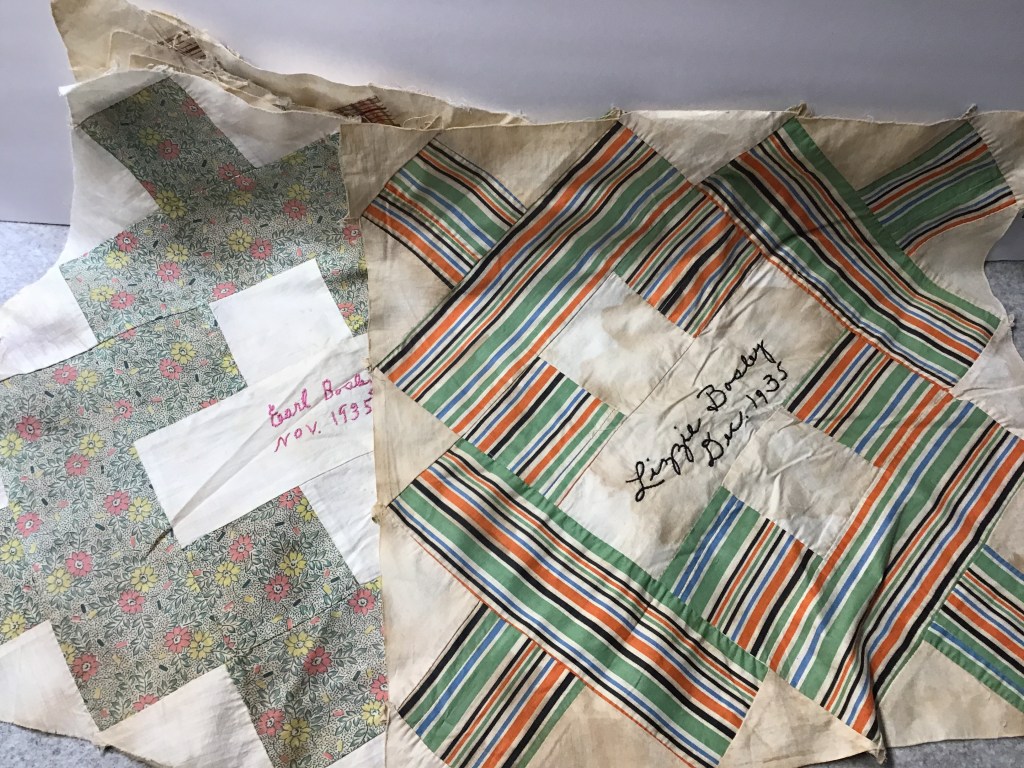
Another great find was a lovely set of signature blocks from 1935. Signature blocks have always been an interesting challenge to me because I like to actually research the names on the blocks.
I remember one time I had a stack of signature blocks and did the research only to find a living relative. The blocks were so much more meaningful to her than to me just as a collector and history buff, so I gave them to her. I imagine she probably finished then into a quilt to honor her mother, grandmother, mother in law, and other relatives and friends found amongst the embroidered names on blocks in the collection.
Another fun find was this great set of blocks from the 1940’s/1950’s, which I found at thePlaid Sheep Company shop in Berlin, Ohio. The fabrics are just so bright and colorful and busy, I can’t help but love them. And the blocks are really big, too, so I could actually turn the 18 blocks into a nice-sized quilt. Hmmm. Maybe.
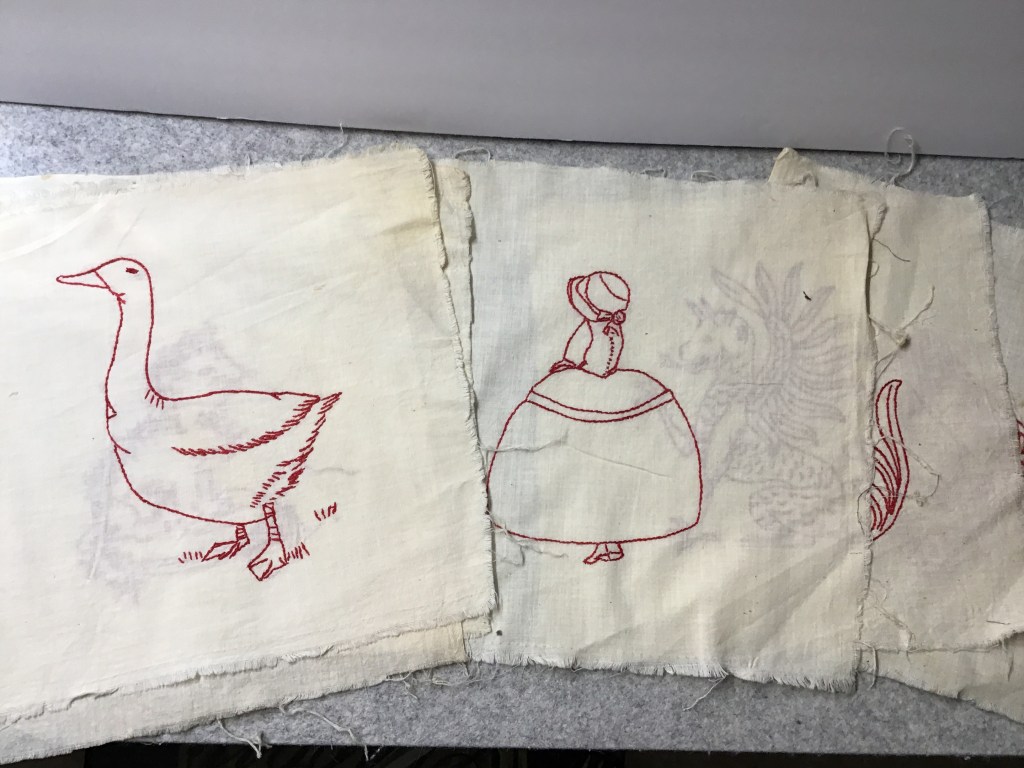
I even found some stray redwork blocks at Quilt Market.
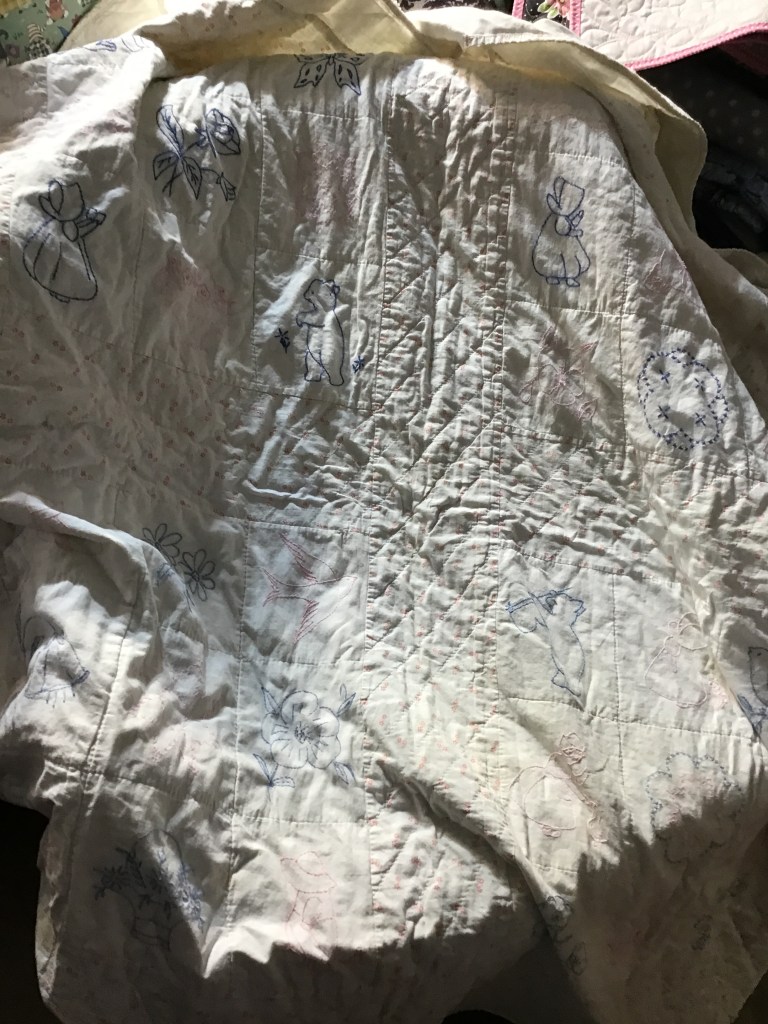
In Millersburg, Ohio on my Mom’s birthday trip, my sister found a a delightful children’s quilt with embroidered blocks in pink and blue. She messaged me a photo in case I was interested and the rest is history. Sun Bonnet Sue, Overall Sam, Cupie dolls, flowers, bears, dogs, and other motifs adorn this sweet quilt, below.
The last quilty treasure I have to share with you today is a tiny little doll quilt. I found this one in an antique mall in Berlin, Ohio. The maker dated the quilt on the back, but sadly there is no name, only an initial.
I hope you enjoyed taking a peek at some of my recent textile goodies.
That’s it for me! Take care and remember to label your quilts so someone someday can research you.
















 Villa Rosa Quilts