2025 Free Motion Quilting (FMQ) Series · Tips and Tricks · Tutorials · villa rosa designs

NEW February VRD Rose Card Quilt Patterns AND Beginner Free Motion Quilting (FMQ) Lesson 3: Practice, Practice Practice!

Happy Thursday to you!

I hope all of you are weathering the winter so far. Here in NW Pennsylvania, Mother Nature is laughing at us this year and is giving us a good old-fashioned Pennsylvania winter with lots of ice and snow. We haven’t had this much snow or cold temperatures for something like 5 years. I guess Mother Nature wanted to remind us what Pennsylvania winters are really like. Sigh…..It’s been a long long winter and I am so looking forward to spring.

We have a lot to cover today, including NEW patterns and we’re going to continue with our Beginners Free Motion Quilting Series. Thank you for your patience while we celebrated Pat’s new fabric collection, Bedazzled!, here on the blog for the last couple weeks with 2 new quilt tutorials.

If you missed the tutorials, you can find them here:

Baby Zip Tease

2M Junior

Let’s jump right in. Of course, I’ll be wearing my winter boots, coat, mittens, hat, and a scarf. LOL!

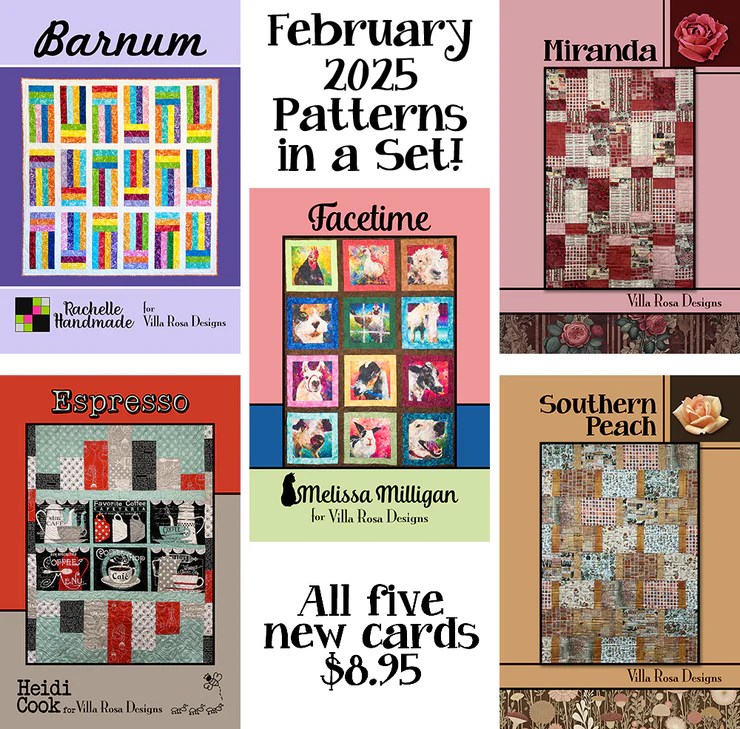
Get the 5 pattern print collection HERE

What a great group of quilts, right? Barnum is Jelly Roll friendly. Miranda and Southern Peach are fat quarter friendly. Espresso features a horizontal panel, which is super because it’s hard to find horizontal panel quilt patterns. Facetime uses panel squares or a focal fabric.

We’ve got kits, too! (PSST! A new quilt project is a great way to beat the winter blues.)

Espresso in Coffee Chalk (the fabrics in the pattern cover quilt)

Barnum in Dandi Duo

Facetime in Noble Menagerie (the fabrics in the pattern cover quilt)

Southern Peach in Tim Holtz Palette Orange (the fabrics in the pattern cover quilt)

Southern Peach in Sweater Weather

Miranda in Tim Holtz Palette Red (the fabrics in the pattern cover quilt)

Here’s February’s new table runner pattern, Love Books. I have to admit I’ve been doing a lot of reading lately, so why not a table runner to reflect my bookish nerdiness?

Do you have an embroidery sewing machine? Why not embroider the titles of your favorite books or the books you read in 2025 on the runner? You can make this runner as long as you’d like to, just add more fabric.

Get the digital pattern HERE or the print pattern HERE

And here is our very last snack mat, Dear Heart. This makes me a bit sad because it’s been really fun creating a new snack mat for each month for an entire year, but at the same time, I’m excited about a couple new ideas, so stay tuned.
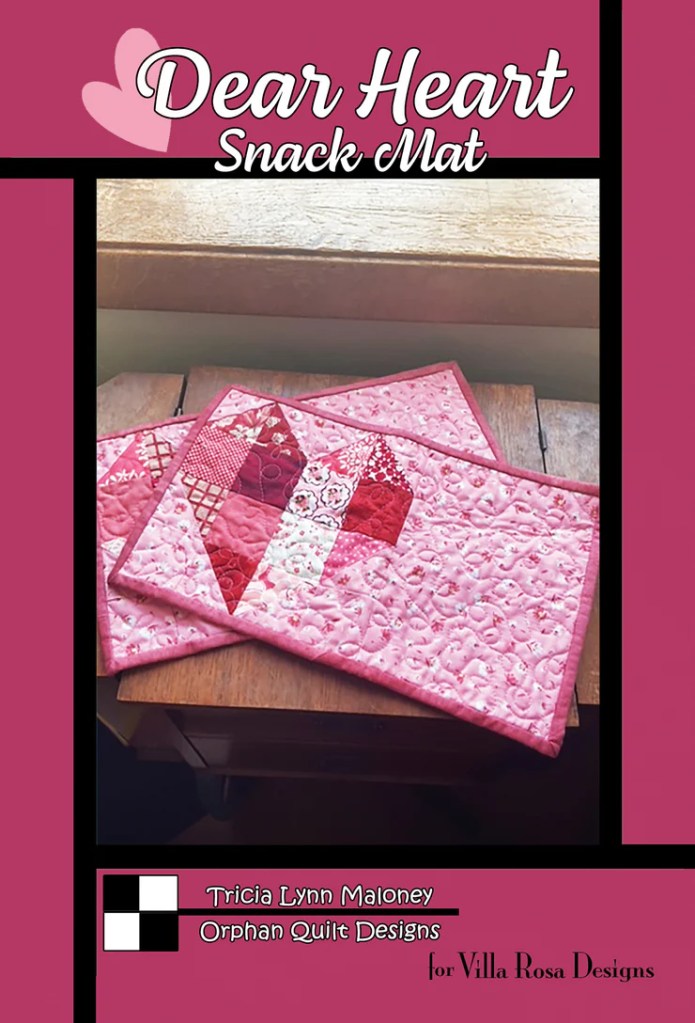
Get the digital pattern HERE or the print pattern HERE

So there you have it — fast and fun new patterns for everyone.

Now let’s get back to our Beginner FMQ series.

Today’s the day! We are finally going to do some actual free motion quilting. Yippee!

First, I’d like to suggest you do a little doodling to warm up before sitting down at your machine. Let’s practice some loops on our white boards. I wouldn’t doodle more than 10-15 minutes, though, this is just a warm up.

Next up, we’re going to put together a practice square.

I usually choose a light tonal or solid colored fat quarter and something from my ugly pile for the back fat quarter. And my usual 80/20 batting.

Next we’re going to go ahead and layer the 2 fat quarters with a piece of batting just like you would layer an actual quilt for machine quilting.

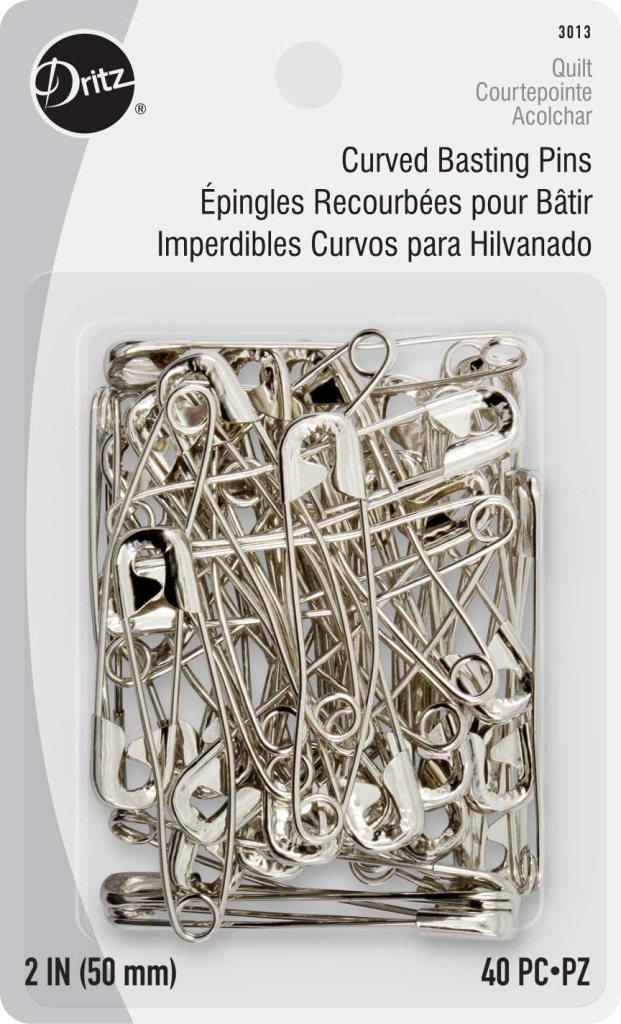
I’m a pinner, so I use curved safety pins, but you use whatever works best for you (pinning, spray basting, etc.). I like to use the size 2 (1.5″) or size 3 (2″) curved safety pins.
Go ahead and get your practice square ready, I’ll wait right here for you.

Did you know that cotton fabric will stick to cotton batting if you press it with your iron? Sometimes, I just press everything really good and I skip the pins.

Okay, now let’s practice!

Here are some important points to remember from the video:

  1. Don’t forget to put your presser foot down before you start quilting
  2. Pull the bottom thread up to the top before securing your stitching by stitching in place a couple of times
  3. Start in the middle of your quilt
  4. Use your hands as a frame around the needle — keep your fingers away from the needle, please
  5. Unless you are planning to pop a not into the batting to secure the stitching, cut the threads tails off so after you’ve secured them so they don’t get all tied up in your stitching
  6. Size your loops/quilting to your project
  7. Alternate your loops to the left and to the right
  8. Curve into and out of your loops for a more organic flow
  9. Don’t crowd your loops, give them room to breathe
  10. Quilt to an edge and then move around the quilt like you would a clock face
  11. Move at a comfortable pace, you are not racing the needle
  12. Aim for consistent regular stitches, not perfection
  13. Go for beauty, not perfection!
  14. Stop with your needle down in the quilt, then reposition your hands
  15. Remove the pins as you go, don’t sew over them

OOPS! I forgot to mention that for your practice squares, make sure to use a contrasting thread so you can see your quilting.

Here is the front and the back of my practice sample:
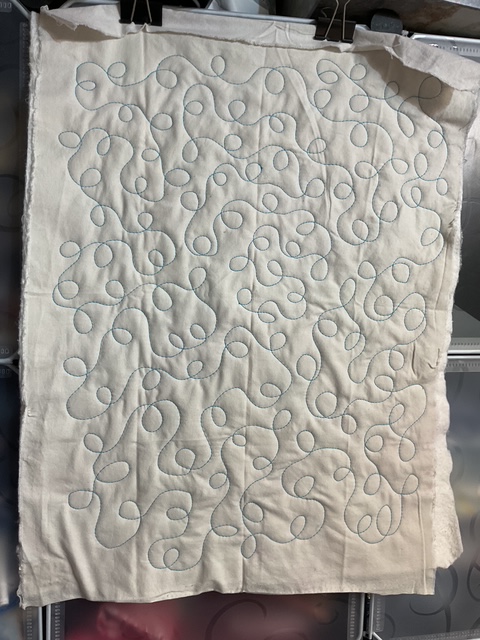
I’m quite pleased with how it turned out. I wish the thread hadn’t broken, but looking at it in the photo, you really don’t see it. See how the printed fabric on the back (my “ugly”) distracts your eye from the stitching. So, one of my best tips is to use a busy fabric on the back of your quilt to help distract the eye from your quilting, especially if you are still learning.

Do you have any questions right now about FMQ? If so, please post them in the comments section so I can respond.

Your mission, should you accept it, is to make more practice squares and practice. Practice, practice, practice makes better, not perfect. So get to it!

See you next week for our FMQ Lesson 4.

Take care and stay warm.

Always,

Tricia @ VRD

Quilt As Desired · Tips and Tricks · villa rosa designs

Tips for Free Motion Quilting (FMQ) on Fleece

Happy Thursday to you!

I’m sew excited you stopped by today! After doing those fall quilt tutorials a few weeks ago, I am trying to now get them all quilted before I dive into making more quilt tops (my projects seem to be multiplying daily). Do you quilt your own quilts or do you send them out to a long arm quilter? If you do your own quilting, do you hand or machine quilt?

I started machine quilting right after I learned to do patchwork almost 25 years ago. Of course, first I tried to “stitch in the ditch” but I found I couldn’t manage to actually stay in the ditch. Ho hum……

I did try a little hand quilting on my very first quilt, which I lovingly call “Big Ugly”, but my stitches were so big, I could’ve probably caught my toe in them. LOL!

Eventually I heard about a relatively newfangled thing called free motion quilting (FMQ). I was a new enough quilter that I wasn’t afraid to try it. Of course, back then free motion quilting was frowned upon and free motion quilters tried for a hand quilted look by using invisible monofilament thread to hide their machine stitching. The invisible thread back then was like thin fishing line — yuck! But I still slogged through — learning how to free motion quilt with a basic sewing machine on which I had to cover the feed dogs with tape or an index card because the feed dogs didn’t drop. And don’t forget that fishing line (today’s invisible thread is so so much better than back then)! Regardless of the challenges, I kept free motion quilting. And I was hooked!

After I had some quilts under my belt and I upgraded to a little better sewing machine where I could actually drop the feed dogs — it had a needle-down function too, I switched to using the same thread I pieced with — 100% cotton. I experimented with different threads and manufacturers for a while to see what I liked the best, or maybe more accurately what threads my sewing machine liked the best. Then I discovered King Tut variegated thread by Superior Threads. WOW! What fun it was quilting with variegated thread! I grabbed up every variegated thread spool I found, which was especially fun when I went on shop hops and quilting bus trips with my quilty pals.

The only real problem I found working with those yummy variegated threads was that sometimes I lost the thread on the quilt because the thread color matched the quilt exactly. Then it kind of looked like I skipped part of the quilting design. Oh well, nothing’s perfect.

This was when I moved back to working with solid 100% cotton threads. Now I have a small six drawer unit on wheels with all my spools of thread organized by color or type. And yes, the top drawer even has my collection of variegated threads. My drawer unit is the Helmer unit from Ikea.

Helmer image from Ikea

Today I have a fun little video for you with some great tips for free motion quilting a quilt top backed with fleece fabric (you know — the fleece you make tied blankies with or comfy pj pants out of?). I began free motion quilting on fleece long before even Minky was popular as a quilt backing. I guess I was ahead of my time a little bit. Of course, back then, folks kind of looked at me funny when I showed off my free motion quilted quilts backed with fleece. Boy, they didn’t know what they were missing!

There is nothing like curling up with a fleece-backed quilt. Be aware that I don’t put batting in my fleece-backed throw quilts. Nope, not at all. Skipping the batting makes my fleece-backed throw quilts very cozy and super floppy — which I love! Have you ever tried machine quilting with fleece on the back of your quilt?

A friend of mine, Cheryl, who is a free motion long arm quilter, took my quilting on fleece idea even further — she layers 2 pieces of fleece and free motion quilts them together to make a one of a kind textured throw blanket. Maybe you’ll try this too.

Now — on with the show!

Oops! I see in the video that I actually did cross over some lines. Mea culpa! Luckily, I didn’t get any mischief happening on the back of my quilt. I should haven stuck with my first choice of orange thread instead of the medium chestnut brown, which blended in too much on the quilt top. LOL!

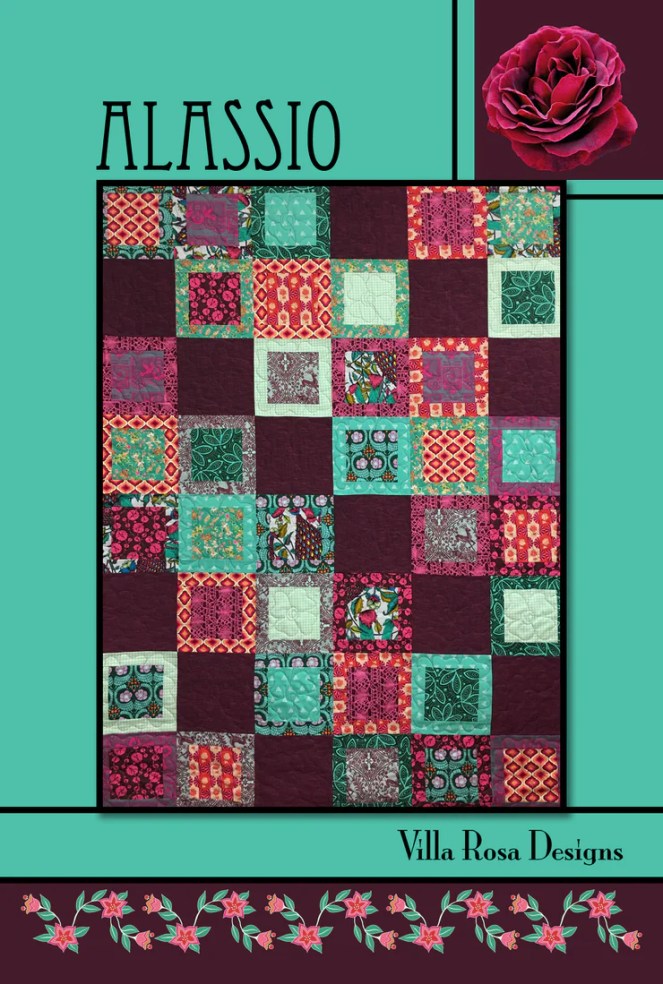
Go HERE for the Alassio tutorial. Or HERE to purchase the Alassio pattern.

Go HERE to read our VRQ post, Quilt as Desired, which is all about machine quilting and is part of our Basic Skills for Quilters Series on the blog.

I hope you enjoyed this little video. Now that I know how to create one and upload it, you might just find more little videos here. You’ll have to stay tuned to find out.

Until next Thursday —

Always,

Tricia @VRD

Basic Quilting Skills Series · Quilt As Desired · Tips and Tricks · Tutorials

Basic Quilting Skills for Beginners: Quilt as Desired

Hello Quilty Friends!

Happy Thursday to you!

Leaf Background Image by rawpixel.com on Freepik

Here’s hoping we all have a productive autumn season — especially with our quilting.

I don’t know if you’re like me or not, but I tend to quilt less in the summer months. First, of course, it’s summer and I want to be busy doing other summer-y things and going places. Second, my Sewing Dungeon, er….Studio, is not air conditioned, so for a couple of months out of each year, it’s hard to sew with sweat dripping down into my eyes and onto my projects.

Yup, here’s my dungeon! LOL! Cue the creepy music, please!
Image by upklyak on Freepik

Needless to say, I look forward to the cooler fall months when I feel more productive in my studio and I get excited again about new projects.

What the Heck is “Quilt as Desired”???

If you’re new to quilting, you might have seen the phrase “quilt as desired” at the end of some of your quilt patterns. But what does it really mean? It’s a designer’s way to say quilt your quilt any way you want to.

On our Villa Rosa Designs Rose Cards, we take it a step further and say “Quilt and bind as desired.” Gee, that makes all the difference, doesn’t it? NOT!

If you’re a beginner, how are you supposed to know what to quilt or how to quilt your quilt to finish it?

Never fear — I’m here to help!

The first thing you need to consider after you complete the quilt top is what kind of quilting are you going to do? Machine quilting? Hand quilting? Or even tying/tacking?

Next, are you planning to quilt it yourself? Or pay someone to quilt it for you? Depending on your answer here, you may need to prepare your quilt differently. You can see last week’s post “Basic Quilting Skills for Beginners: Batting, Backing, and Preparing a Quilt for Quilting” to help you with your preparation.

Okay, let’s say you want to machine quilt your quilt yourself (sorry, I’m not into hand quilting, so you’re stuck with machine quilting). Here’s a little video I put together a while back about some basic free motion quilting skills and information.

Wiggly lines are just one way you can quilt your project. Here are some of my other free motion quilting favorites.

Straight Lines

If you haven’t tried quilting simple straight lines on a project, it’s way past time you did! To get your lines relatively straight, you will probably want to use a walking foot or an even-feed foot on your sewing machine. A walking foot or even-feed foot moves the top and bottom layers under the needle at the same time so your sewing lines are less likely to pucker and you won’t get those annoying tucks on the back of your quilt.

Here’s a great example of what straight lines can do for your quilt — this is only the backside and it’s unwashed! Cool, huh? Straight lines add a lot of texture. And if you look closely, you’ll see that my lines aren’t really all that straight, but by repeating the lines over and over about the same distance apart, it looks pretty awesome. Now imagine what this table runner will look like after I wash it and it crinkles up beautifully! You’ve just got to try straight lines!

Straight lines look great quilted on anything modern as well as children’s quilts. But I wouldn’t recommend straight lines on your Civil War reproduction quilt. LOL!

Loopy Loops

Loops are probably my all-time go-to design. I usually use this design edge to edge but sometimes I will use loops in the quilt center with something different in the borders. It depends on my mood, how much time I have, and what the quilt needs to be completed. (Yes, quilts talk to me — I am a quilt whisperer…)

As a free motion quilting teacher for a lot of years, I have discovered that loopy loops are more beginner-friendly than stippling/meandering. You have permission to cross over your lines in loopy loops, whereas in stippling/meandering you do not cross lines at all. Loopy loops are less stressful and I find them lots of fun to do.

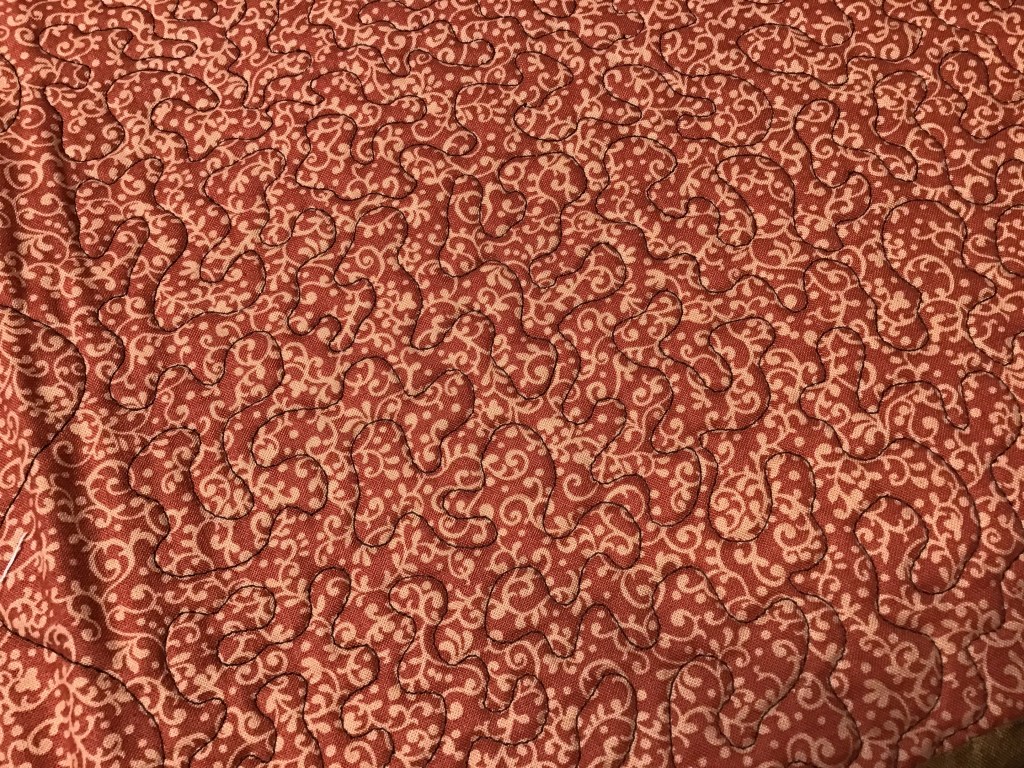
Below, here’s an example of loopy loops. Neat, huh? See how all the loops are not the same shape or size? That’s what makes this design look easy-breezy. You can also use loopy loops as a jumping off point for A LOT of other variations.

I tend to quilt my loops big and open, which of course uses less thread and takes less time than quilting itty bitty loops. My rule of thumb is to quilt my lines of quilting no closer than a finger’s width. Of course, if I’m quilting a doll quilt, I’m going to quilt this design smaller and closer together than if I am quilting a throw quilt. Adapt the size and density of your quilting to the project you are quilting.

Loopy loops look pretty great on almost any project! Maybe not your Civil War repro quilt, though. (Maybe you should try hand-quilting for that one, just sayin’.)

Stippling/Meandering

All beginner quilters want to learn how to stipple/meander. I have found over the years that a lot of intro to free motion quilting classes start with stippling/meandering. This is not really a true beginner design, in my humble opinion. I think it is better suited for a more advanced machine quilter. Why? Because you cannot cross over your lines and that is hard to do (or not do) while you are trying to get all the other 101 free motion skills and information all at the same time — beginning free motion can be a bit overwhelming, and that’s without having to worry about not crossing over your stitching lines! Ugh!

Sadly, intro free motion classes keep trying. And mostly failing. Then beginners get frustrated and upset when they can’t quickly pick up stippling/meandering in a couple hour class. Then many of them just quit. I’m sorry to tell you, but stippling/meandering takes most people a lot of practice to master. So I recommend that beginner free motion quilters start with straight lines, wiggly lines, and loopy loops before even attempting stippling/meandering. Most of us have to crawl before we walk….

By the way, in case you wondered, stippling and meandering are pretty much interchangeable terms at this point, although once upon a time they were slightly different. I am using both at the same time so as not to cause any confusion for anyone. 🙂

To me, stippling/meandering is a lot like loopy loops except you are not crossing over any lines. That difference can be very daunting to a beginner, however. If the idea of not crossing lines terrifies you, then please do try straight lines, wiggly lines, and loopy loops before moving on to stippling/meandering. I still try to use my rule of thumb of leaving at least a finger’s width between my lines of stitching.

Here’s an example of stippling/meandering. I apologize that it might be hard to see my brown thread on the swirly-printed pink backing fabric on this place mat. Aha! Here’s another one of my tips: Use a busy fabric on the back of your quilt because it helps to hide your quilting stitches — this is particularly helpful when you are a beginner. It will help you to feel more confident about your developing quilting skills!

Probably the most important thing to remember about machine quilting is RELAX and HAVE FUN! Because quilting shouldn’t be like a job or chore, it should be relaxing and fun or else why would we be doing it???

You can check out some of my other favorite quilting tips HERE.

Next week we are going to tackle Binding, so stay tuned!

Until next Thursday —

Sew. Laugh. Repeat.

Always,

Tricia @VRD

Quilt As Desired · Rose Cards · Tips and Tricks · Tutorials · villa rosa designs

NEW June VRD Rose Card Patterns and A Free Motion Quilting Demo

Hello Quilty Friends!

Welcome to another Thursday — the first Thursday in June. Summertime, right? The kids are out of school or will be soon. Life will get crazy. Fun. And more crazy.

Are you kidding? I thought it was still March.

At least, it should still be March, don’t you think?

Que sera, sera.

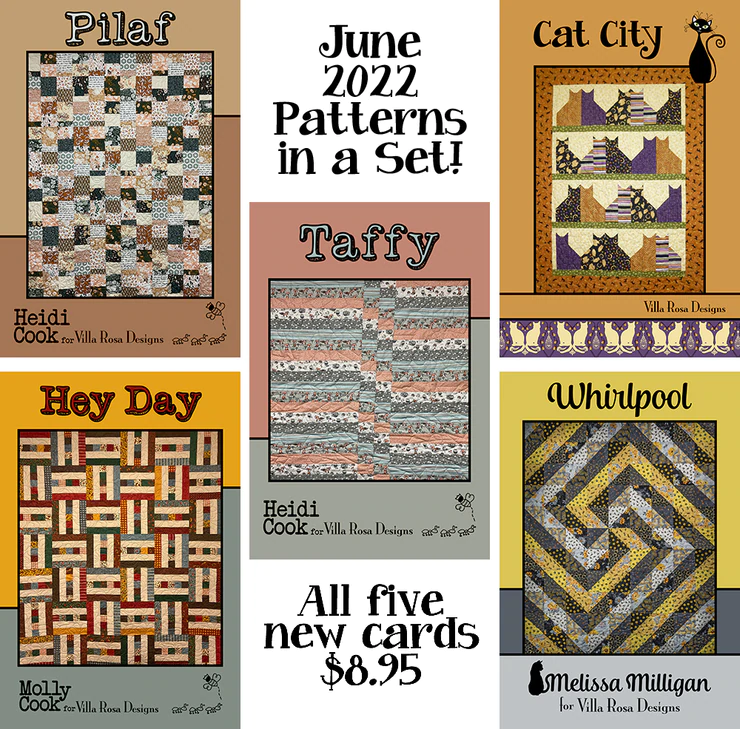
OH! Did you see the new Rose Cards for June yet???? As always, our VRD designers didn’t let you down.

You can order all 5 cards HERE.

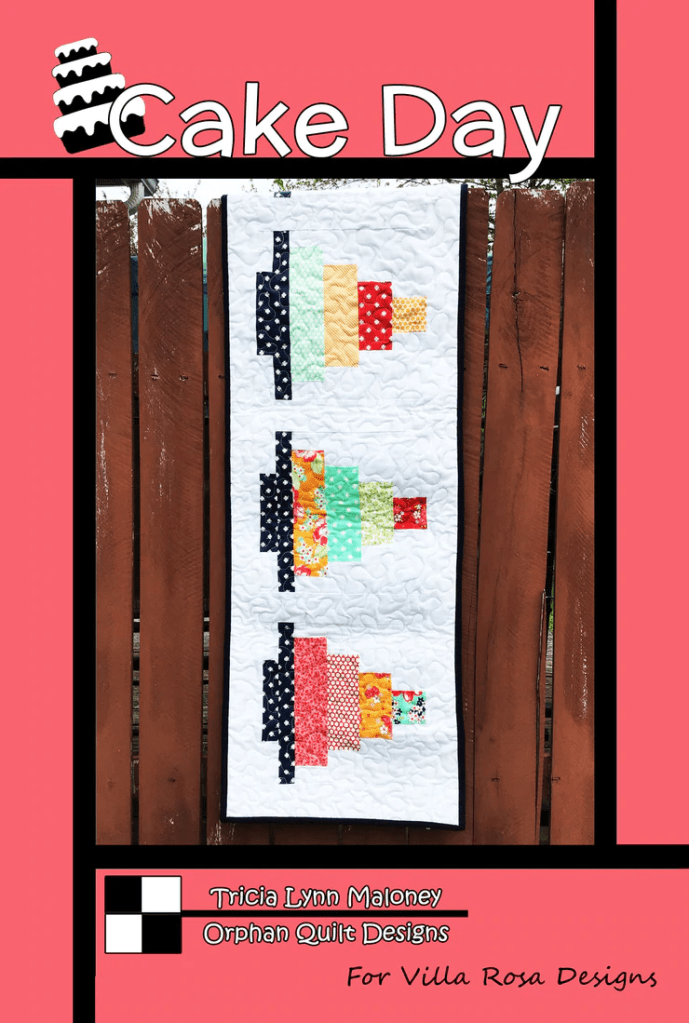
And here is June’s NEW Table Runner, Cake Day. Cute, huh?

You can purchase the Cake Day pattern HERE.

Did you know you can actually join the Rose Card Pattern Club and get the new monthly Rose Cards delivered right to your mailbox every month without you having to do a thing????

If you live out of the USA, you can sign up for the digital Rose Cards, which will be delivered to your inbox without you having to do a single thing.

There are even several different Pattern Club options to consider. Cool, huh?

You can sign up for the Pattern Clubs HERE .

Another really AWESOME thing about Villa Rosa is that we create a lot of kits using our Rose Card patterns. You can find kits for this month’s new patterns AND you can find kits for lots of other favorites, too. You can visit the website HERE to see what our selection of kits are. Please remember that we add new kits all the time, with all kinds of different fabric, so make sure you stop in often to see what’s new.

A Little Bit of Free Motion Quilting and a Video Demo

How many of you are a little bit afraid of free motion quilting on your own domestic sewing machine?

Be honest!

Okay, that’s better, I see a lot of hands raised and heads nodding out there.

Well, I’m here to tell you that you don’t have to be afraid anymore. I’ve been teaching free motion quilting (FMQ) for more than 10 years and I haven’t lost anyone yet!

Here’s my TOP 12 TIPS for FMQ:

1. Find a teacher at your local quilt shop to show you how and to guide you so you feel safe. Don’t try to teach yourself by using YouTube videos.

2. Start out small — the smaller the project the better for beginners. Potholders, table runners, place mats, wall quilts, or other small projects.

3. Start with a beginner-friendly design like wavy lines or loops. Meandering and stippling are NOT beginner-friendly.

4. Try to relax. The more tense you are, the worse your quilting will be.

5. Play music while you quilt, something with a beat. A beat will help you find your rhythm for FMQ on your own machine.

6. Keep practicing, every day if you can, even if it’s only for 10 minutes. The more you practice, the more comfortable you will feel, and the better your quilting will get.

7. Practice machine quilting with a friend. You can encourage each other and laugh together.

8. Try machine quilting gloves. There are a lot of different types of gloves out there, so you might have to try different kinds to find the ones that work for you. Machine quilting gloves will help you get a good grip on the fabric so you can move the quilt more easily when you are quilting.

9. Doodle. Doodle a lot. Practice drawing the designs before you quilt them — this builds some muscle memory between your hands and you brain.

10. Practice…….practice……..practice…….

11. Practice……practice…..practice……. (I can’t stress this one enough)

12. HAVE FUN!

Here’s a little video I put together demonstrating how to free motion quilt wiggly lines on last week’s Ying Yang Cats. Enjoy!

I hope this video inspires you to try free motion quilting some wiggly lines on your own little project.

Until next Thursday —

Sew. Laugh. Repeat.

Always,

Tricia @VRD