2025 Let's Design a Quit Together Series · Quilt Play · Quilting Partners · Tips and Tricks

Let’s Design a Quilt: The Drunkard’s Path Block

Happy Thursday to you!

What’s shakin’? Me, just sitting here thinking about which quilt block we’re going to feature today to wrap up our Design a Quilt series. I’m kind of bummed that today’s the final post in this series, but it is true that all good things must come to an end. That makes sense, because, if they didn’t then we would never have the opportunity to find new good things.

I’ve also been thinking about how you, dear readers, can utilize what we’ve covered in this series. The biggest thing that occurs to me, of course, is designing your own quilts using common quilt blocks. Common quilt block designs (like Nine Patch, Irish Chain, Four Patch, Sawtooth Star, etc., etc.) would most likely be considered in the public domain.

Want to find public domain quilt block designs? Just Google it! Pretty much all quilt block designs (and everything else in print) from publications before 1923 are considered public domain. Another idea is to look up quilt block history to see if the blocks were used before 1923. You can also invest in a quilt block reference or 2.

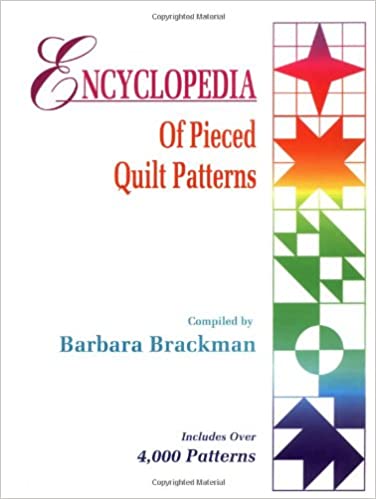
My favorite reference is Barbara Brackman’s Encyclopedia of Pieced Quilt Patterns.

Cover of the book 'Encyclopedia of Pieced Quilt Patterns' compiled by Barbara Brackman, featuring various quilt block designs.

For those of you who may not have heard of Barbara Brackman – she is probably the most well-known quilt historian in the USA, if not the world. Her book is meticulously researched and includes a reference section with original publications for the blocks in the book. Believe me, you will never run out of inspiration – there are over 4000 blocks in the book!

Another oldie but goodie block reference is The Romance of the Patchwork Quilt in America by Carrie A. Hall and Rose G. Kretsinger. This book was published in 1935 and is actually in the public domain itself. It includes A LOT of old pieced and appliqued quilt blocks and quilts along with historical notes. You might be able to find a used copy as its out of print, or I’ve included a link to an e-book version above.
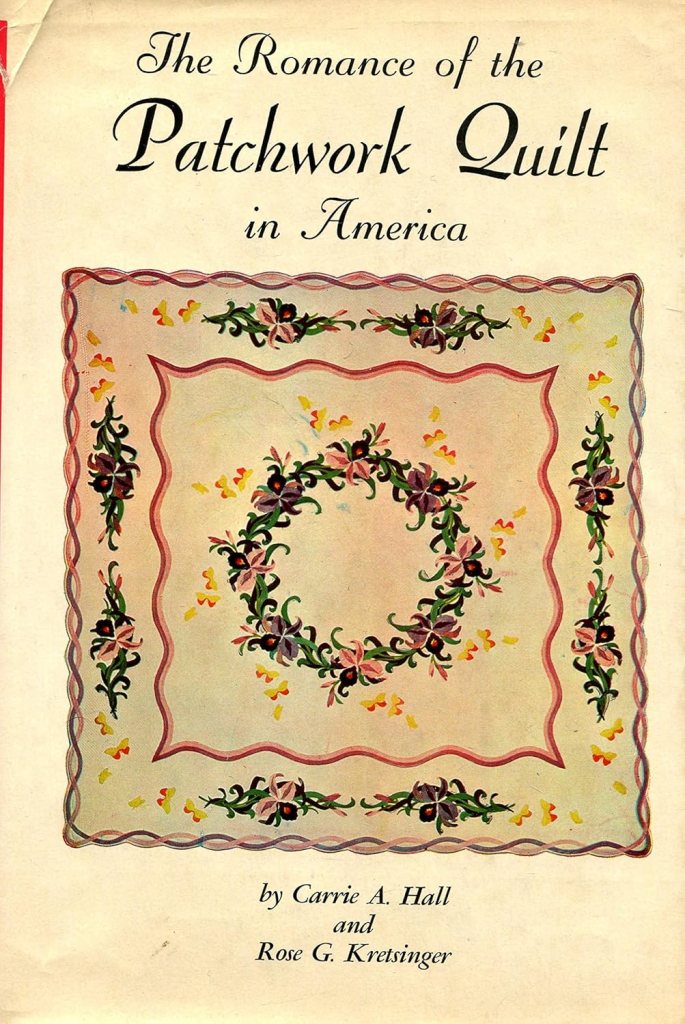
Cover of 'The Romance of the Patchwork Quilt in America' featuring floral designs and decorative borders.

What does all this mean, really?

If you want to sell quilts, the best way to do that is to design your own instead of using someone’s copyright-protected pattern, which, as we’ve previously explored, has the potential to cause you legal issues down the road.

Want to be a quilt designer?

Create/sell your own patterns?

Design quilts for quilt magazines?

Write a quilt book?

Easy peasy, use public domain/common quilt blocks to create your own designs. Then your designs would be copyright protected, too.

Huh. Kind of mind-blowing, isn’t it? That doing something so simple – and FUN! – can become your own copyright-protected work.

Just something for you to think about….

Let’s move on to today’s block: Drunkard’s Path.

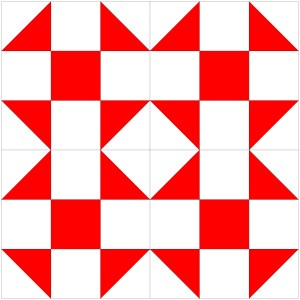
Here is a basic Drunkard’s Path block unit.

A basic Drunkard's Path quilt block unit featuring a red semicircle on a white background.

The Drunkard’s Path block has a very interesting and rich history with roots in ancient Egypt. The block was popular with the Underground Railroad and the Women’s Temperance movement in the US. For a more and detailed history, please check out this article on the AccuQuilt blog: A History of the Drunkard’s Path Quilt Patterns.

Today, we are going to explore some of the interesting ways you can arrange this humble block unit, add sashing or not, and using color to tweak the design.

Before we can design a Drunkard’s Path quilt, we need to explore some of the many many different Drunkard’s Path variations. Believe me, these ideas are just the tip of the iceberg.

Here are a few books to explore more Drunkard’s Path designs.

Cover of the book '65 Drunkard's Path Quilt Designs' by Pepper Cory, featuring multiple quilt designs in various colors and patterns.
Get the book HERE
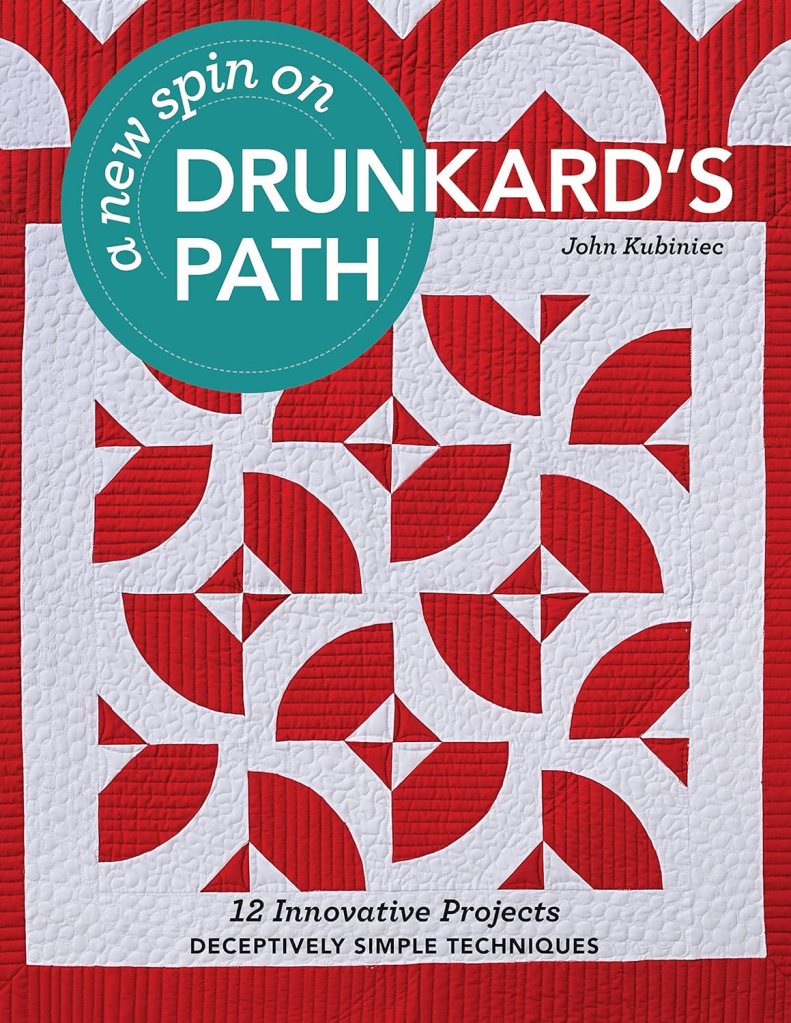
Book cover of 'A New Spin on Drunkard's Path' by John Kubiniec, featuring a quilt design in red and white with a pattern of curved shapes and geometric accents.

Get the book HERE

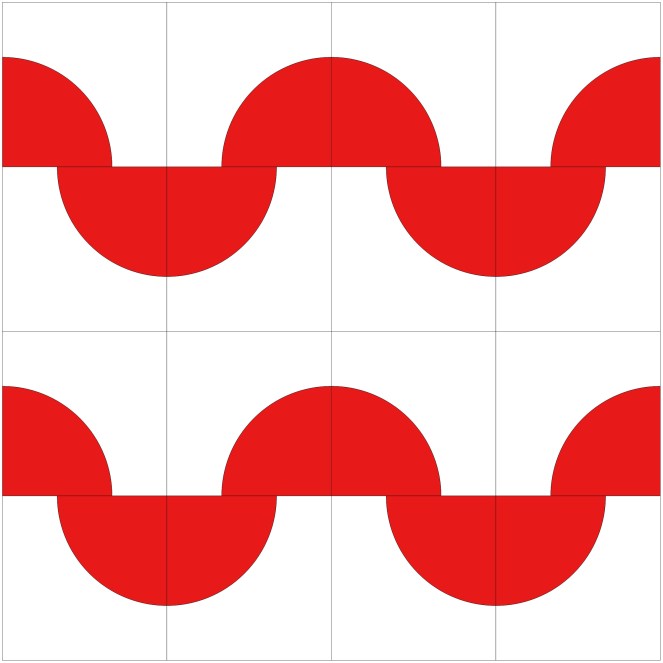
Here are different ways to arrange the units in a 2 x 2 layout. Which one is your favorite?

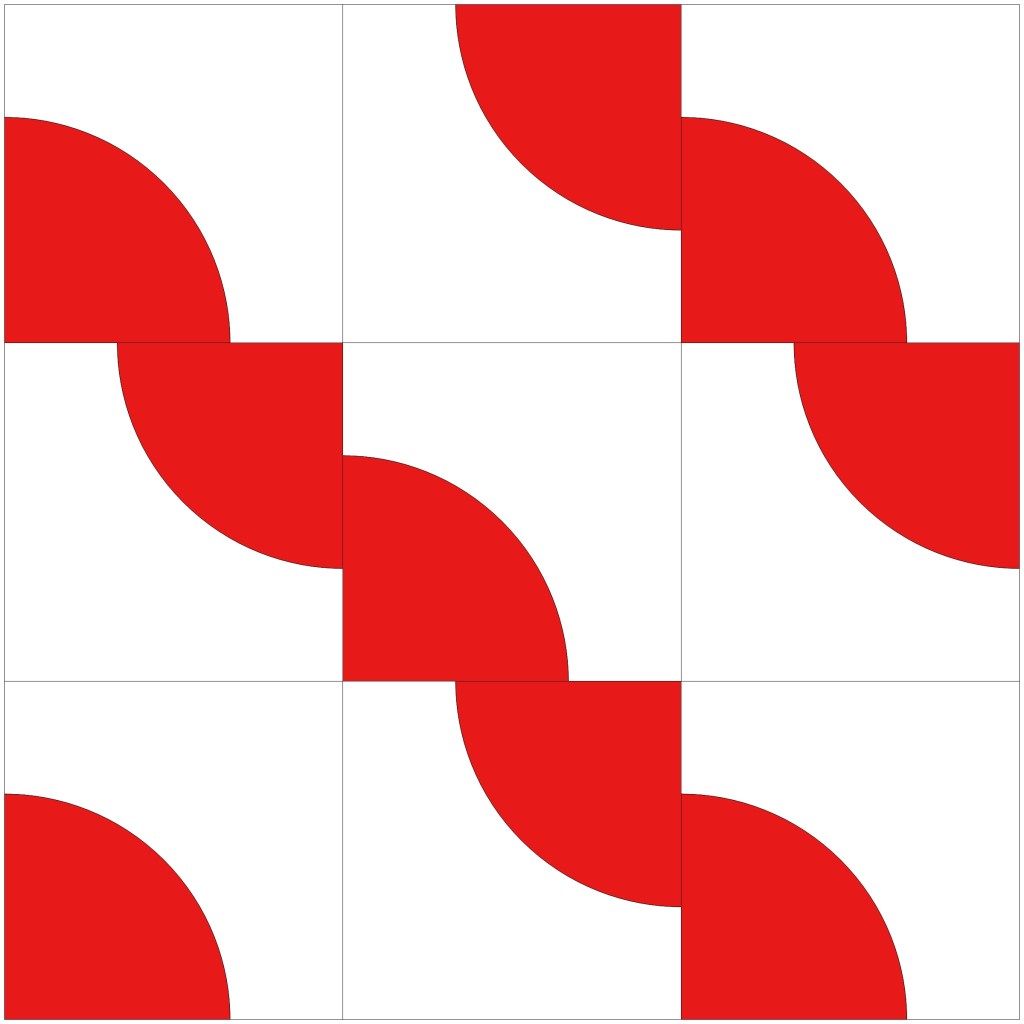
Okay, let’s try a 3 x 3 grid.

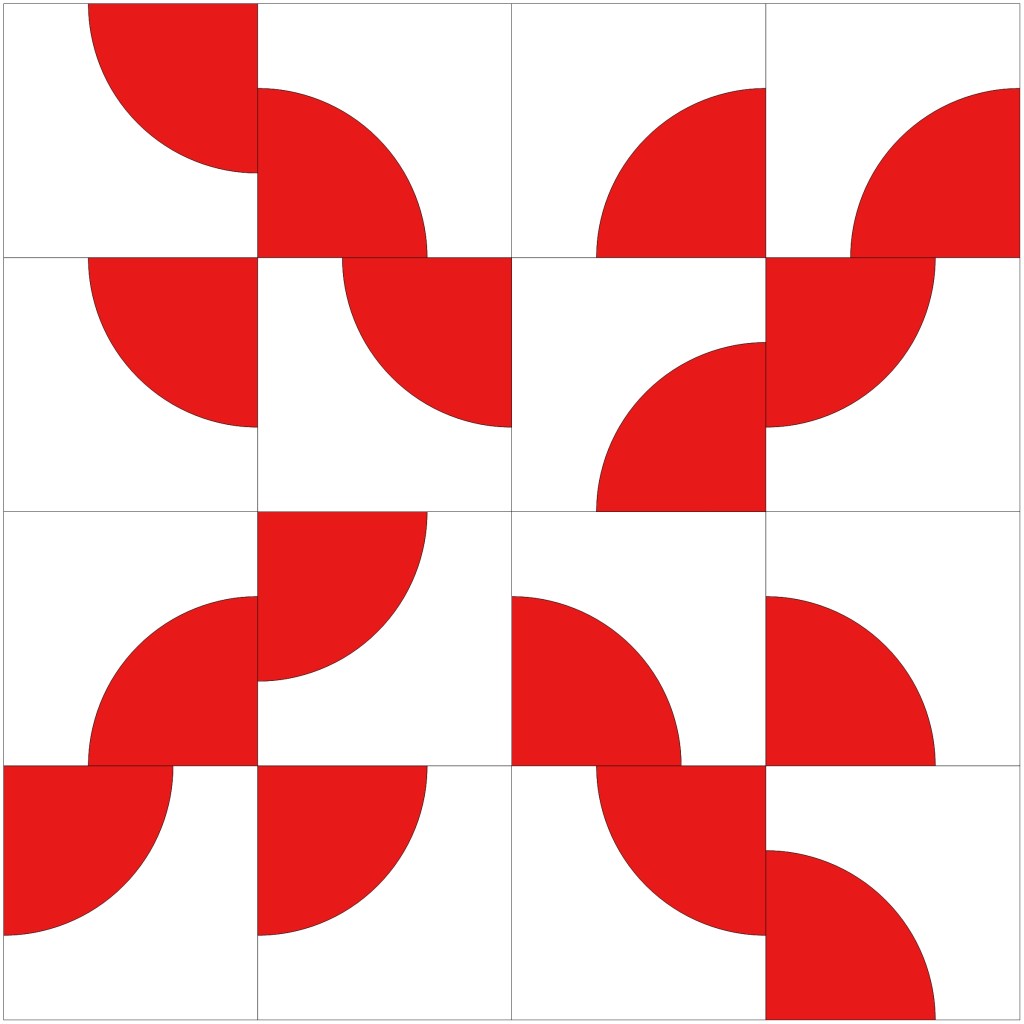
Now let’s see what a 4 x 4 grid looks like.

So I think you get the idea about the endless possibilities of the Drunkard’s Path block unit. Why don’t you try a 5 x 5 grid or a 6 by 6 grid to see what you can create?

Now let’s play with the color arrangement by swapping reds and whites in order to create new and different designs from the ones above.
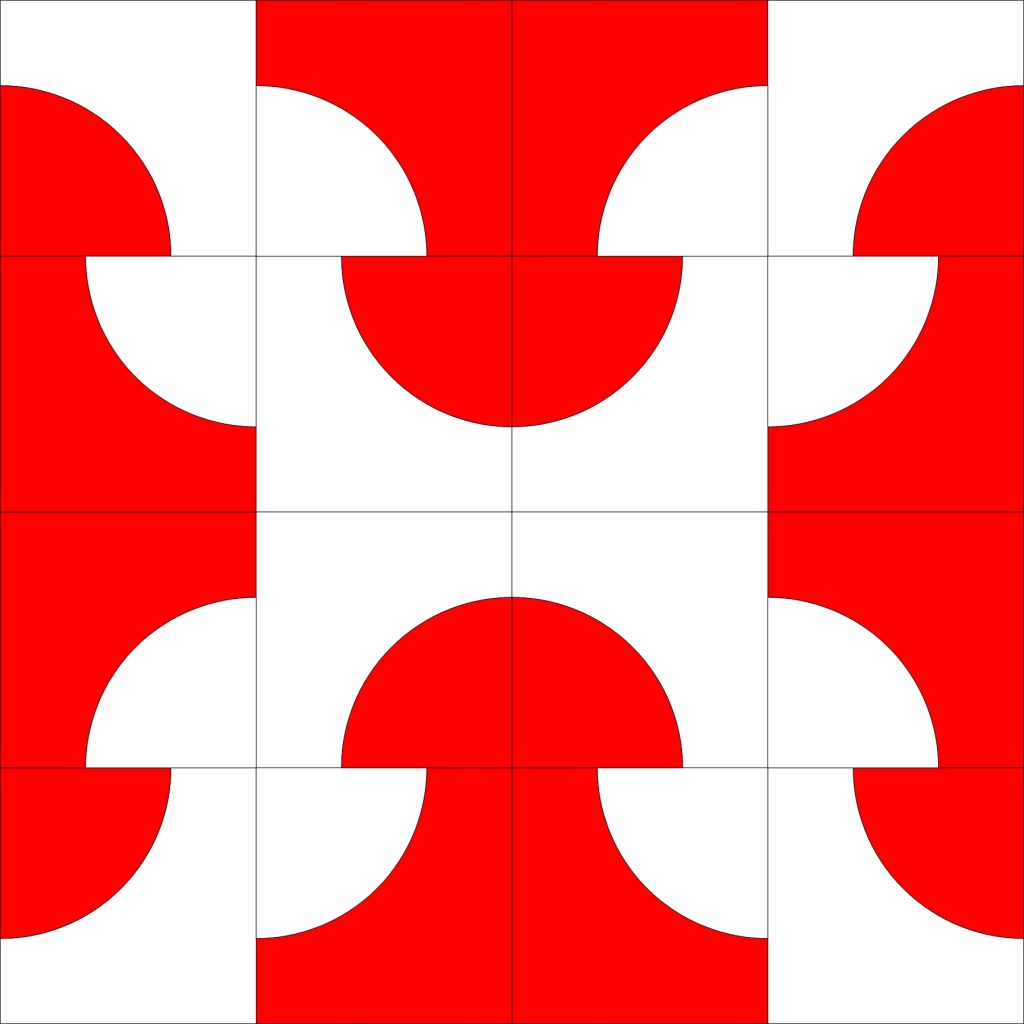
Let’s add more colors to our blocks, shall we? That way we can get even more interesting variations. You can see how adding more color can change a block design or even add a secondary design. Never underestimate the power of adding more color.
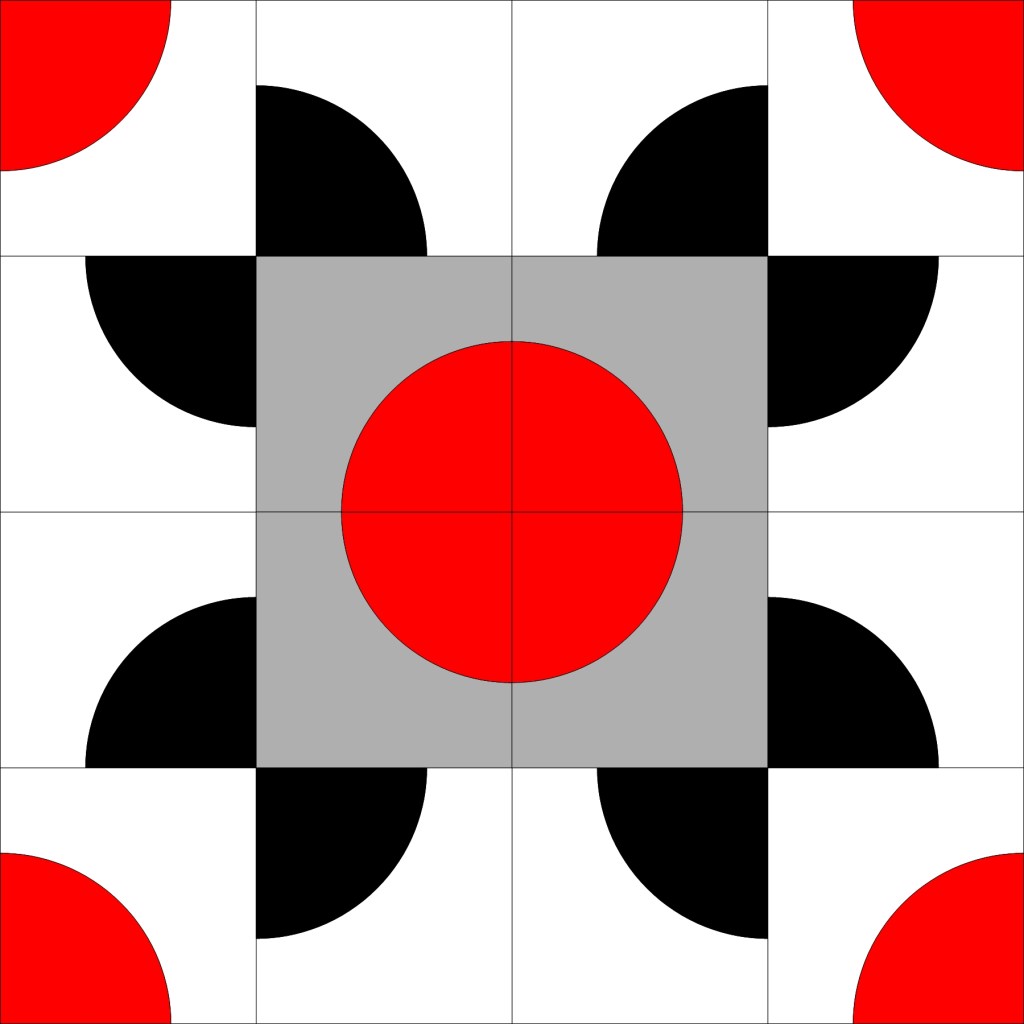
Okay, now it’s time to create quilt designs using some of the variations above! Let’s start with this bird variation.

A quilt block design featuring a Drunkard's Path pattern with red and white curved sections arranged in a 2x2 layout.

I like this bird quilt arrangement very much, but I don’t love how all the birds are facing the same way.
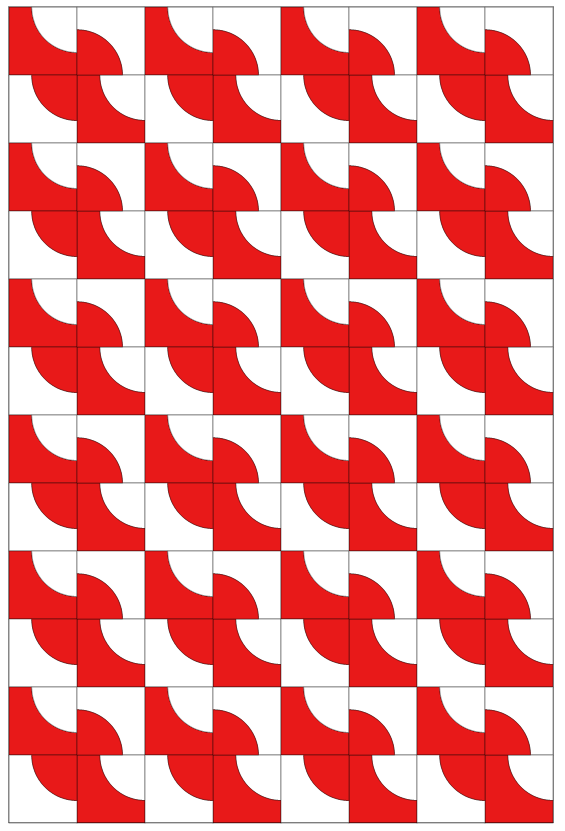
A quilt design featuring a repeating Drunkard's Path block pattern, alternating between red and white colors.

Let’s turn the birds in different directions. Hmmm. I only see a small difference here. Let’s keep going.
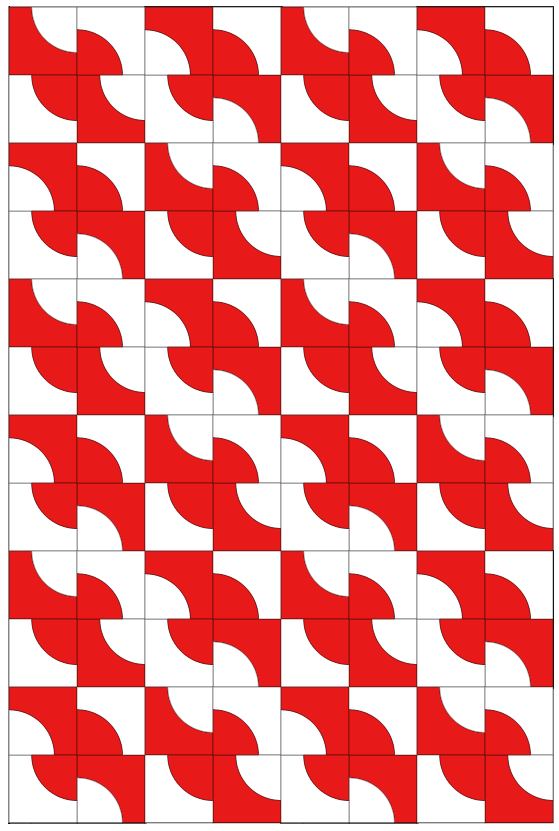
A digital quilt design featuring the Drunkard's Path block in a repeating pattern of red and white colors.

Better with sashing and sashing squares, but I’m still not too excited by it.
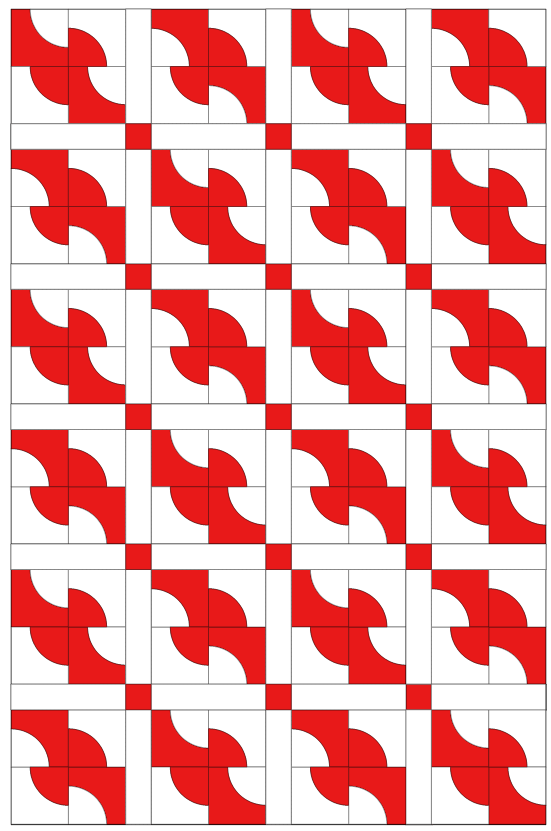
A quilt design featuring a repeated Drunkard's Path block pattern in red and white colors arranged in a grid layout.

Okay, let’s remove the sashing and turn the birds some more to see what happens. AHA! Yes, this is more like it.

A quilt design featuring a Drunkard's Path block arrangement with alternating red and white shapes, creating a dynamic pattern.

I think we can call this a finished design. Let’s add some fabric. It would definitely make a bold 2 color quilt as long as you have strong contrast between the colors like the red and white example above. But let’s add more than 2 colors.

Yup, this one rocks. I’m using fabrics from QT’s American Spirit collection. I took a chance and flip flopped the fabrics in the centers and it really sets this design off.

A quilt design featuring the Drunkard's Path block, arranged in a repeating pattern with red, blue, and cream fabrics, creating a visually appealing layout.

Now let’s try a different Drunkard’s Path block variation from above.

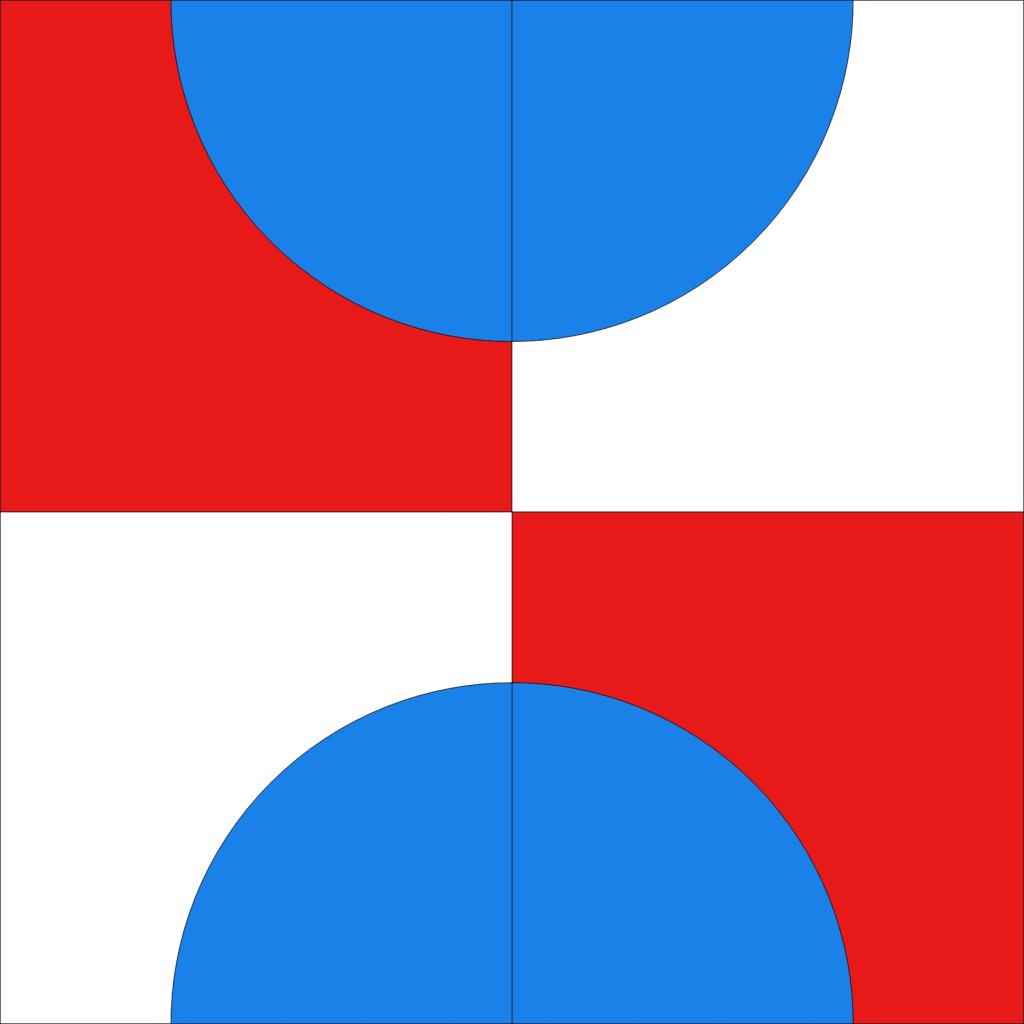
A quilt block design featuring a circular blue shape in the top left and bottom right sections, against a backdrop of alternating red and white squares.

I like this interesting block arrangement, especially with the checkerboard behind the blue circles. Very 3-D. But I bet we can tweak it to change it from an okay quilt to a WOW quilt.
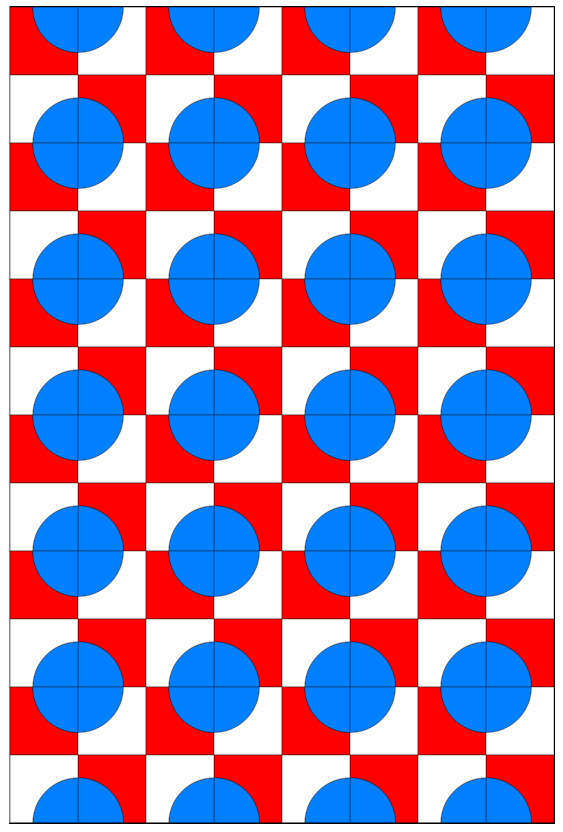
A quilt design featuring a checkered pattern with red and white squares and blue circles in the center.

Just a quick turn of some blocks and we get this design with lots of movement. Kind of fun, huh?

A quilt design featuring a repeating pattern of red, white, and blue blocks with circular shapes in blue and white against a red background.

Let’s add some fabric to this one. Can’t wait to see it! Here’s a selection of yummy Hoffman batiks. This super mod design has a lot going for it!
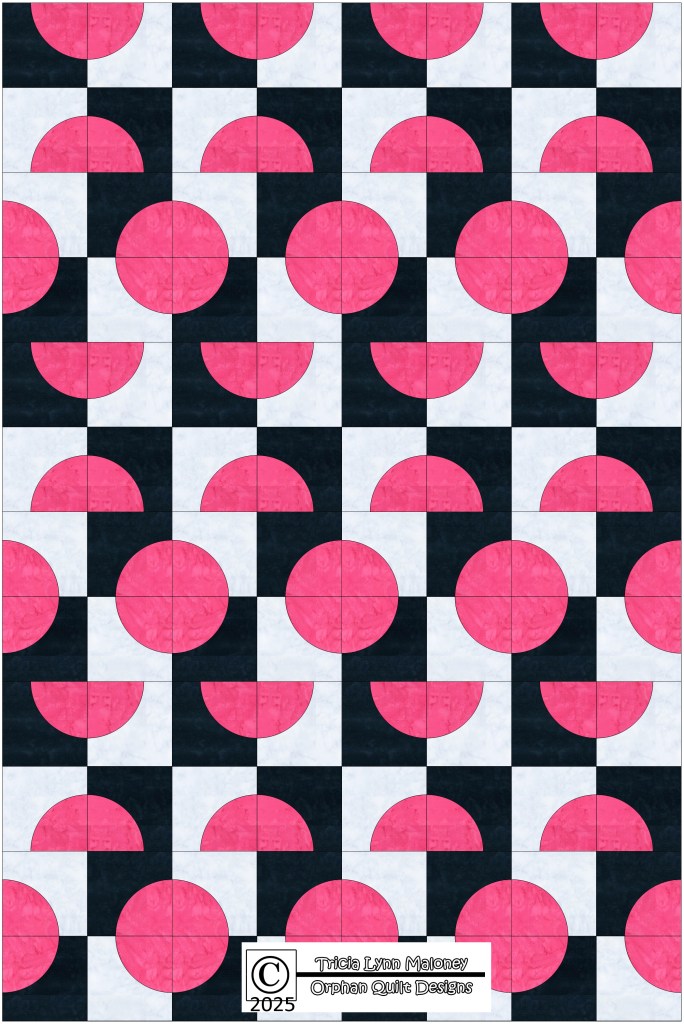
A quilt design featuring a repeating pattern of pink circles on a black and white grid background, with a copyright notice for Tricia Lynn Maloney, Orphan Quilt Designs.

Let’s play with another block.

A quilt block design featuring a central gray square surrounded by red circles and black curved shapes on a white background.

All right, let’s see what this block looks like in a quilt. Gosh, I’m really liking this one. It reminds of a tile floor. But I think we can tweak it a bit to make it outstanding.

A colorful quilt pattern featuring alternating blocks with red circles and black shapes on a white background, arranged in a grid format.

YES! This is the finished design. Adding sashing and sashing squares was just the tweak I needed, which added a wonderful secondary design.

A colorful quilt design featuring a repeated Drunkard's Path block layout with black, red, gray, and white colors.

Yippee! Time to add fabric! I think this design is spectacular!
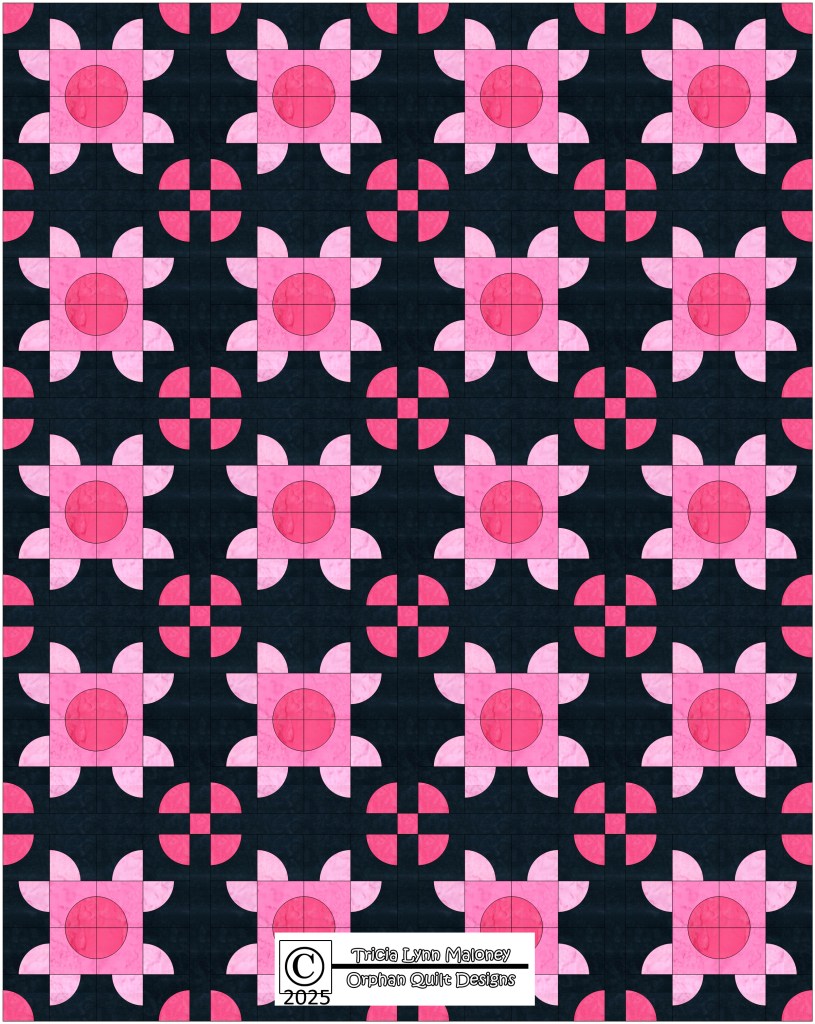
A quilt design featuring pink floral blocks and circular motifs on a dark background.

Let’s do one more!

A graphic illustration of a Drunkard's Path quilt block design featuring a red circle, black and white geometric shapes.

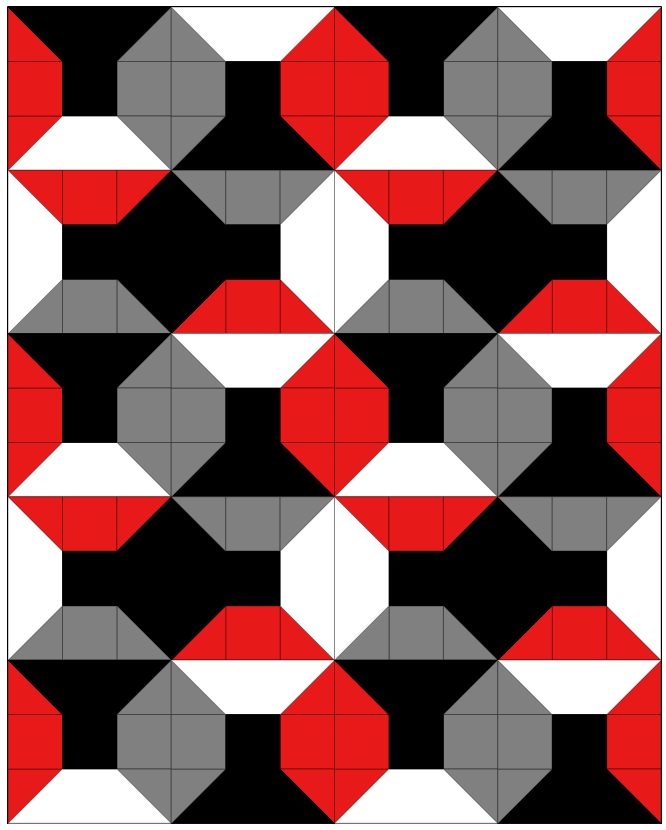
Let’s see how this variation plays in a quilt. I really like this design – it makes me think of Halloween bats flying in front of a full moon. But I think we can tweak it a bit more.

A quilt design featuring a repeating pattern of the Drunkard's Path block, showcasing red, black, white, and gray colors arranged in a grid layout.

Let’s try sashing again. Sometimes this is the way to go and sometimes it isn’t. This one improves with sashing, definitely! I love the diagonal movement the design has now. What do you think?
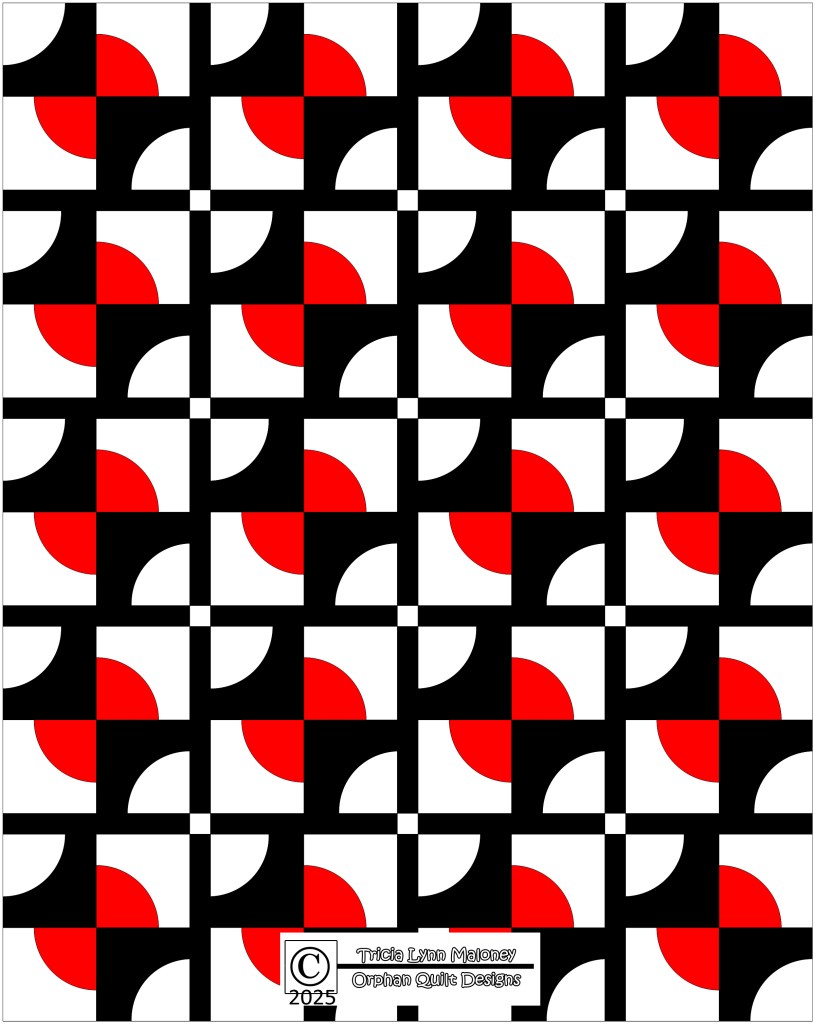
A geometric quilt design featuring alternating black, white, and red blocks with curved patterns, arranged in a checkerboard layout.

Only thing left to do is to add FABRIC! I’m using assorted Hoffman batiks again and I played up the Halloween moon idea by making the background grey like twilight. Totally loving this!

A quilt design featuring a repeating pattern of Drunkard's Path blocks in gray and dark blue with orange accents, arranged in a grid layout.

Sadly, that wraps up our 5 part Let’s Design a Quilt series. I have had SEW much fun with this series. I hope you did too. I can envision adding more to this series down the road. Maybe I will focus on on-point quilt designs….

If you missed any posts in the series, you can find them all right here:

Playing with Nine Patch Blocks

Playing with the Spool Block

Playing with the Courthouse Steps Block

Playing with the Sawtooth Star Block

Playing with the Farmer’s Daughter Block

See you next week – time for some new VRD tutorials to jumpstart your Autumn quilting when the kiddos go back to school.

Until then –

Always,

Tricia @ VRD
2025 Let's Design a Quit Together Series · Quilt Play · Tips and Tricks · villa rosa designs

Let’s Design a Quilt: Playing with the Spool Block

Happy Thursday to you!

What a fun blog post last week! It was great to share a little bit about my quilt design process with you. It was such fun, we’re doing it again this week, but with a different quilt block.

Before even starting this post, though, I must admit I cheated a bit and began playing with this week’s quilt block. Let me tell you – it never fails to amaze me how a simple block can create such amazing designs.

Here’s last week’s post if you missed it:

Playing with Nine Patch Blocks

Are you ready? Let’s design a quilt together!

According to Barbara Brackman’s Encyclopedia of Pieced Quilt Patterns, this specific Spool block appeared in the book, Polly Prindle’s Book of American Patchwork Quilts by Alice Gammell in 1973. Of course, it wasn’t really a new block in 1973, but this simplified Nine Patch version appeared in Polly Prindle’s. Previous versions included set-in seams as well as 4 small Spools in a single quilt block. Today, though, we’re going to start with Polly Prindle’s version.

A quilt block design featuring a 3x3 layout with red and cream colors, showcasing a Spool block pattern with alternating triangles and squares.

As you can see, our Spool Block is a Nine Patch block with a 3×3 layout. Of course, we’ve added some Half Square Triangles (HSTs) to create the Spool shape.

The first thing we’re going to do is to simply our Spool block by using flippy corners instead of HSTs for the top and bottom of the spool. This tweak would actually save time when piecing the blocks for a quilt without changing the overall design. And we all know that saving time is golden in the quiltmaking process. The tweak also cleans up the look of the block by removing some of the seams.

A diagram of a Spool quilt block featuring a 3x3 layout with red and white fabric sections.

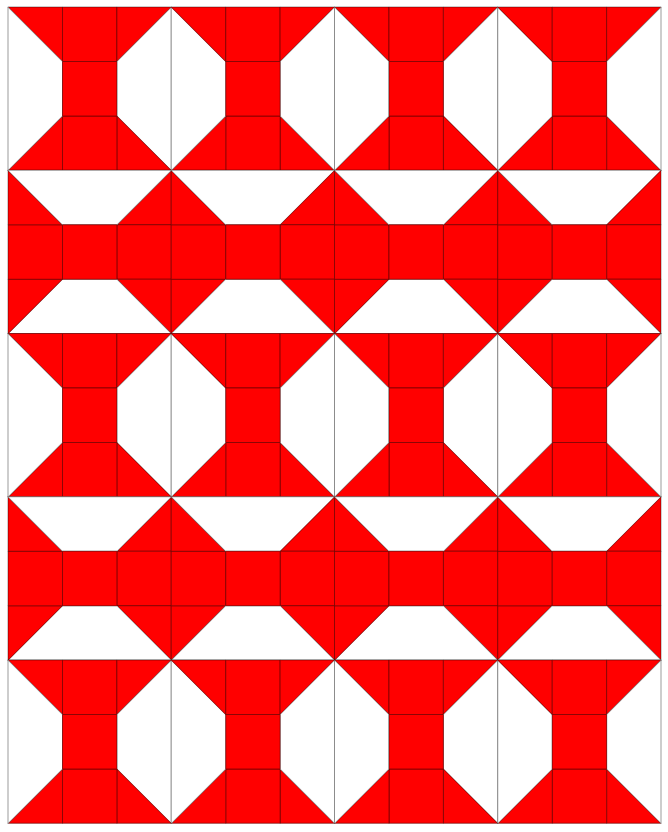
Let’s see what a quilt looks like using just this block, shall we? This design shows the blocks all pointing in the same direction. Hmmm. I like it, but I think we’re just getting started with the Spool block today.

A quilt design featuring a repeating pattern of red and white spool shapes arranged in a grid layout.

Let’s try alternating the block directions. Better, but not there yet.

Patchwork design featuring a grid of red and white spool quilt blocks arranged in a 3x3 layout.

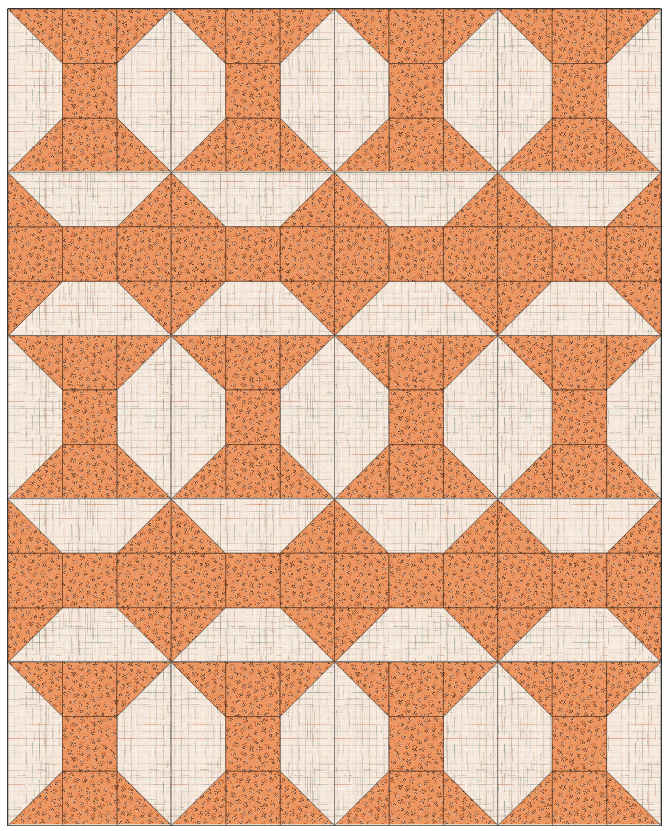
Next up – let’s alternate block direction by row. Better and better! I really like the play between the different block directions. Reminds me a little bit of the vertical and horizontal strips I added to last week’s classic Nine Patch block.

Quilt design featuring a repetitive pattern of spool blocks in red and white.

Let’s add some fabrics to this one. I’m using a few prints from Moda’s Acorn Hollow collection. This layout definitely has some potential. I’m not usually a big fan of 2 fabric quilts, but I am liking the crispness of the design with only the 2 fabrics.

A quilt layout featuring a Spool block design in a 3x3 arrangement with orange and white color scheme.

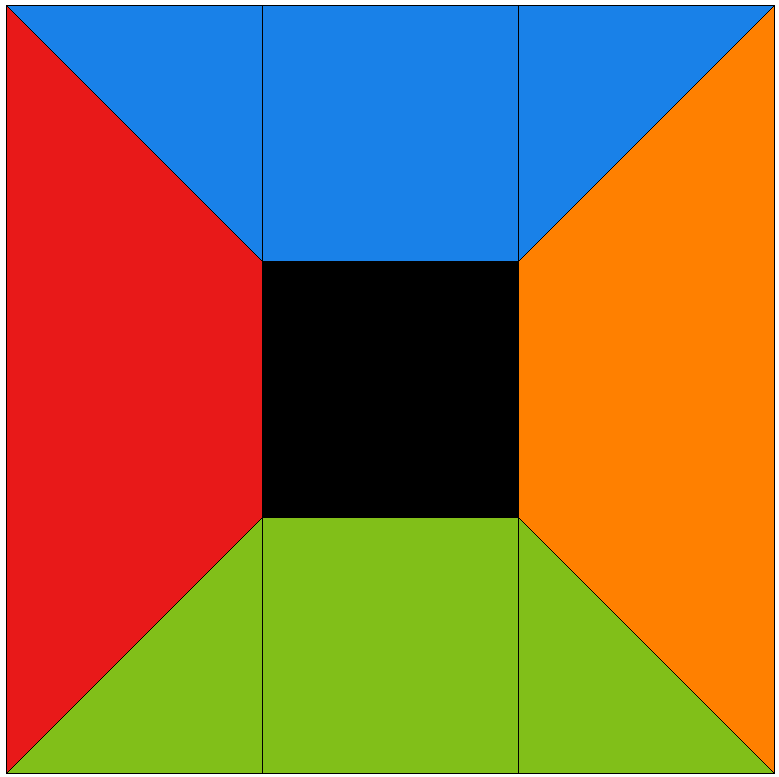
Okay, let’s go back to our Spool block again. Instead of it being a 2 color block, let’s make it a 4 color block with a black center.

Colorful spool block design featuring a central black square surrounded by sections in red, orange, blue, and green.

Huh. Intriguing. Let’s see how it looks in a quilt. This is the same layout as our first red/white layout above. What a difference color can make!

Now let’s alternate the block directions. This is the second red/white layout above.

Colorful quilt design featuring a repeated Spool block pattern, arranged in a grid format with red, orange, green, blue, and black elements.

I like it, but with so many colors, you kind of lose the interesting design. Let’s back off on colors a little bit by adding more neutrals. Not loving it, but I do like the diagonal thing happening.

Colorful quilt design featuring a repeating block pattern with red, blue, black, white, and yellow sections arranged in a grid layout.

Not quite what I was expecting. Let’s tweak the colors some more. I’m going to use red, black, white, and grey which is one of my favorite colorways when I’m trying to perfect a design. I like working with these colors because of the strong contrast. I also changed the center square to black, so I get an interesting black shape in the blocks now – kind of looks like a megaphone to me.

A quilt design featuring a pattern of interlocking Spool blocks arranged in a 4x4 grid, showcasing vibrant colors of red, black, white, and grey.

Let’s rearrange the blocks to see what happens. This is interesting. It has a lot of movement.

Colorful quilt design featuring a repeating pattern of red, black, gray, and white shapes arranged in a geometric layout.

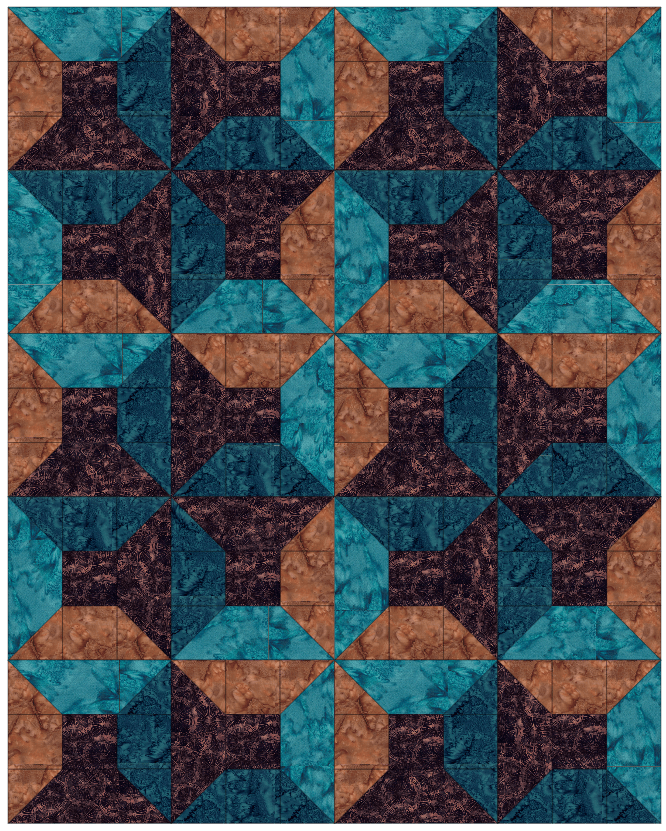
Let’s add some fabric now to see what it looks like. Here it is in 4 Hoffman batiks. I like it – it has a woven effect which keeps my eye moving over the design.

A quilt design featuring a Spool block layout, showcasing a combination of dark brown, teal, and light brown fabrics arranged in a repeating pattern.

Let’s play with the block arrangement a little bit more. I think there’s another better option still out there. We just have to play a bit until we get there. Almost there.

A quilt design showcasing multiple Spool blocks arranged in a 4x4 grid, featuring a combination of brown, teal, and dark purple fabrics.

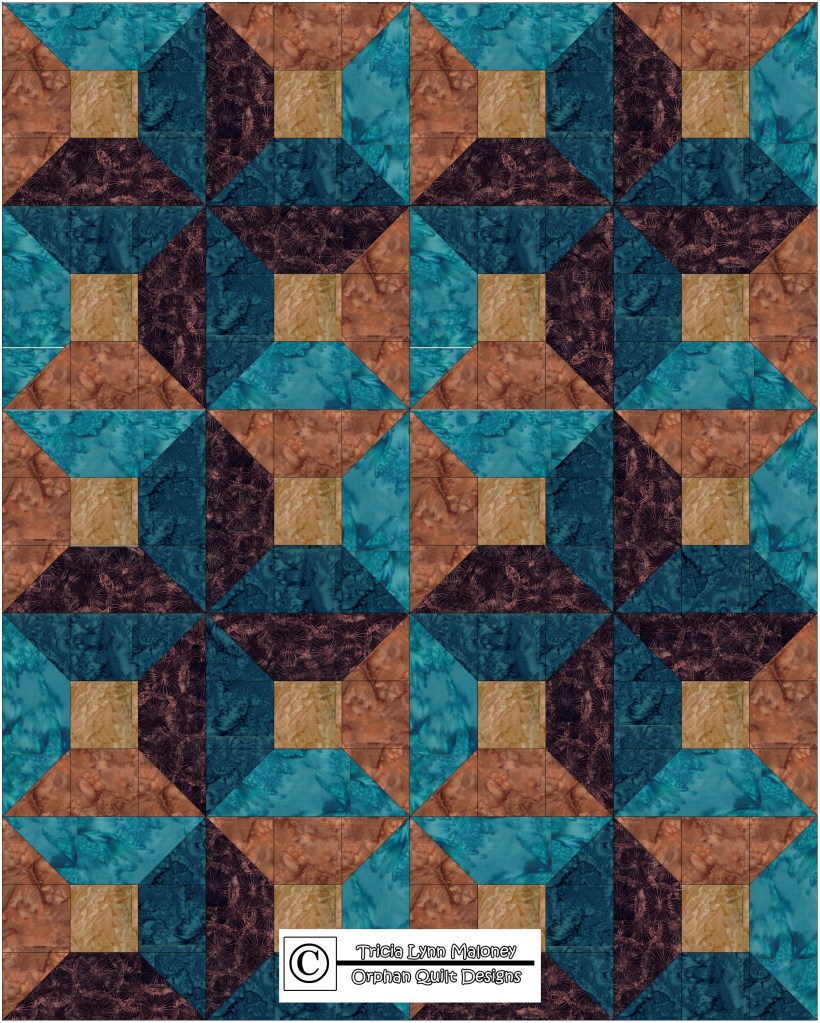
I think it needs just one more thing tweaked. I’m going to reintroduce the 5th fabric in the block for the center squares. Yup! Got it. This is the one! A beautiful finished design! LOVE the 3-D effect. Lots of movement. Tons of interesting things going on.

Quilt design featuring a repeating Spool block layout in shades of teal, brown, and black, displaying a 3x3 pattern with various fabrics.

Do you remember where we started? A simple Spool block.

Quilt design featuring alternating red and white diamond shapes arranged in a grid pattern.

An here’s where we ended. Still a simple Spool block, but so much more!

A vibrant quilt design featuring a Spool block layout, with a mix of teal, brown, and dark purple fabrics arranged in a grid pattern.

Isn’t quilt design a fascinating journey? For me, it’s a lot of “what if?” questions. Also, I’m not afraid to make something really ugly – I can always delete it, right? And sometimes “something ugly” just needs another tweak or 2 to become something amazing.

I hope you give designing a try. I think you’ll be surprised at how fun it it. Whether you use graph paper and a pencil or Electric Quilt 8 software, I think you can come up with something that’s truly your own, something you love.

Stay tuned next week for another fun quilt design adventure! Any suggestions on a simple quilt block you’re just dying to see turned into an interesting quilt design? Leave a comment and tell me!

Until next week –

Always,

Tricia @ VRD
Quilting Partners · Tips and Tricks · Tutorials · villa rosa designs

Let’s Design a Quilt Together — A Peek into My Quilt Design Process

Hello Quilty Friends!

It’s Thursday again! Here’s hoping your week has been going well. Mine has been good and fast — just the way I love my quilt projects to be! LOL!

A lot of people ask about my design process so I thought I’d tell you a little bit about my process. Keep in mind that all designers have their own way of doing things and this post is only about my process.

Sometimes it’s like I eat, sleep, and breathe quilts and quilting! Not only do I read/flip through quilt books and magazines, I also look online for new trends. I talk to my quilt friends about what they are doing. I teach a quilt class once a month. I design patterns, write instructions, make quilts, take photos of quilts. I look at and get inspired by fabric. I jot down ideas and even do rough sketches of quilt blocks (which I promptly lose most of the time). I have even been known to wake up in the middle of the night with a new idea for a quilt. Whew!

Inspiration comes in a lot of different forms for me. Sometimes I see a fabric or collection and an idea pops into my head. Sometimes I start with a favorite quilt block and a quilt develops out of that. I have quite a few quilt block references that I use for ideas. Here are a few books in my library:

The first 2 books are by Barbara Brackman. The one on the left is the first edition of the 2nd book and is out of print and can be hard to find. I have both of them and love them both. The newer edition has even more blocks in it than the first edition! Barbara Brackman is one of the most renowned quilt historians of our time! You can visit her blog, Material Culture, HERE.

I also have Barbara Brackman’s software program, Blockbase, which works with Electric Quilt. You can find Blockbase HERE.

The third book, 5500 Quilt Block Designs, is by well-known quilter and author Maggie Malone. I have only known about this book since 2021 when a friend of mine showed it to me and I was so impressed, I had to grab a copy for myself. This book is out of print so it can be harder to find as well.

I have talked about Electric Quilt software before in an earlier post, but I want to mention it again here because I really couldn’t design quilts without it! Some designers sit down with a ruler and graph paper to draft quilt patterns, but I am an Electric Quilt user because it makes designing quilts a lot easier for me. You can find Electric Quilt 8 (EQ8) software HERE.

If you are interested in designing your own quilts, I totally recommend EQ8 if you’re into computers. If you’re not into computers, graph paper and a ruler might be your new BFF.

Once I get an idea, it’s time to play — which usually means I head to my computer and EQ8. I play with blocks, try different color combinations, download different fabrics to try all before I actually make anything at all. Some designers start by making the project and then work backwards to create the pattern and instructions. I do my designing on my computer and then make the project once I know what I am going to do. At least this is what I do probably 99% of the time. That’s one of the fun things about being a designer — I can try different ways of doing things. They don’t always work out for me, but that’s okay, there’s always another way to try.

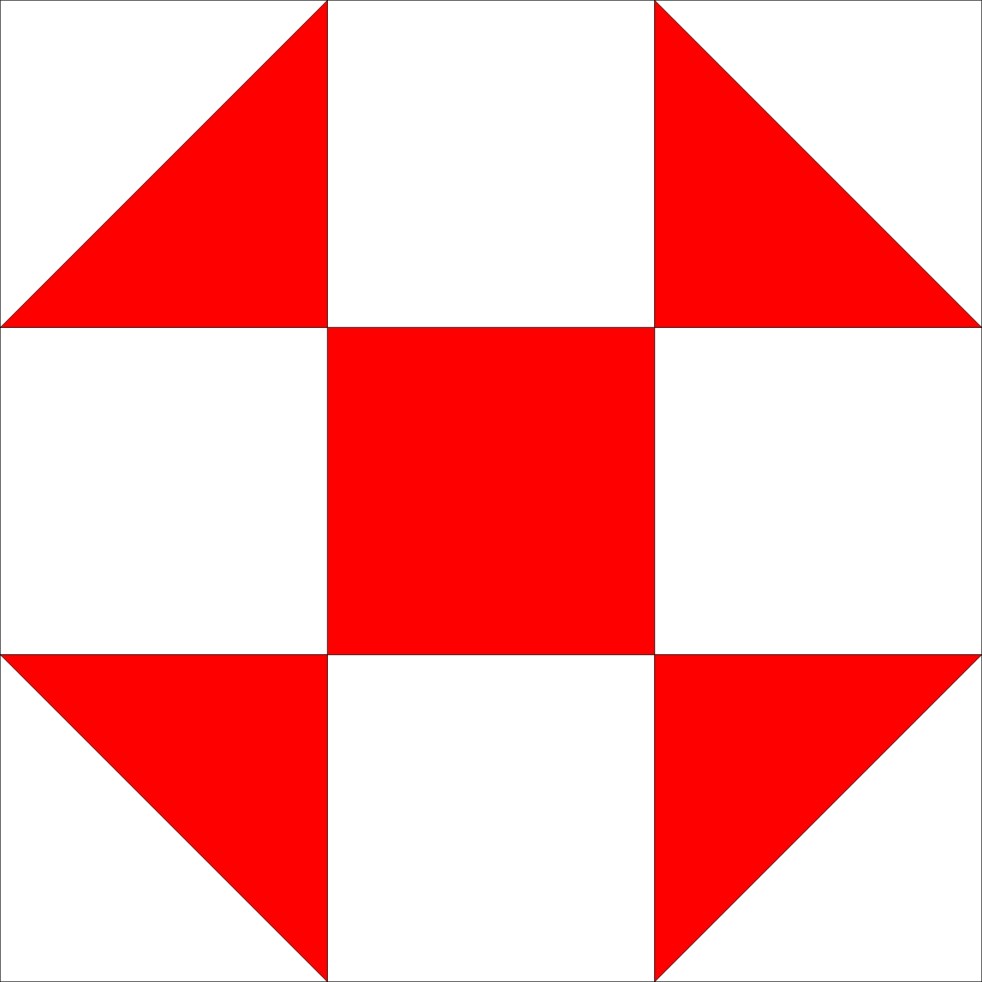
Let me show you an example of my design process. For this example, I’m gong to start with my favorite quilt block, the Shoo Fly block.

When I am starting with the quilt design before I select the actual fabrics, I usually design in red, black, white, and grey. I don’t know exactly why I do that, but I think it probably has to do with the high contrast so I get a good sense of the pattern before I add actual fabric.

So, let’s make a wall quilt using 4 Shoo Fly blocks. It will look something like this:

Hmmmmm. This doesn’t really excite me. How about you? Let’s tweak it a little bit and see what happens next. We’ll add a bit more color, too.

Okay, this is better, don’t you think? By adding a sashing between the blocks, I was able to put another Shoo Fly block in the center. I changed the colors of the larger blocks to black and grey with the smaller center Shoo Fly block in red. It definitely has a lot more interest, doesn’t it? But it’s not quite there. Let’s tweak it a little bit more, shall we?

Now we’re getting somewhere! I got rid of the grey and went with plain black. Then I added 2 narrow blocky borders so I could continue to build out with more Shoo Fly blocks. Now I think we need a border.

Yay! A finished quilt design. I added an outer plain black border and a red binding. Pretty zippy, isn’t it? Now we’re gong to add some real fabric to the design.

Here are 3 different versions of our Shoo Fly quilt using Hoffman’s Paisley in Love batik collection. Of the 3, I think the last one with the white background is my favorite. I like the contrast, but I think I need to do a little more tweaking with the design, so back to the drawing board (or EQ8).

What are your thoughts? How would you improve this design? Any ideas?

Well, I hope you enjoyed a peek into my design process. Who knows? You might see this design as a VRD Rose Card some day.

Until next Thursday —

Sew. Laugh. Repeat.

Always,

Tricia @VRD