2025 Let's Design a Quit Together Series · Just Quilty Stuff · Quilt Play · Tips and Tricks

Let’s Design a Quilt: Playing with the Courthouse Steps Block

Happy Thursday to you!

Are you ready to play with another quilt block? Yippee! Me too. This really is SEW much fun for me to do and I think it’s also helping me to think more “outside the box.” I’ve definitely noticed more designs popping into my head lately. 🙂

If you’ve missed our Quilt Design Series so far, you can catch up:

Playing with Nine Patch Blocks

Playing with the Spool Block

I was a little disappointed that no one was brave enough to suggest a quilt block in the comments on last week’s blog post. Please consider letting me know what your favorite block is or another block suggestion to design with as I’m planning to do this mini series on designing for a few more weeks. Do you really want me to have all the fun of picking out all the blocks?

So I asked my quilty pal, Mary Lee (Hey Mary Lee!) for a block suggestion. She thought for a few seconds and then suggested either Churn Dash or Courthouse Steps. I thought both were good options. Churn Dash (image 1, below) is another Nine Patch variation while Courthouse Steps (image 2, below) is a variation of a traditional Log Cabin block. Because we’ve already done 2 Nine Patch blocks, I zoomed in on her Courthouse Steps suggestion and immediately began to wonder what we could do with it.
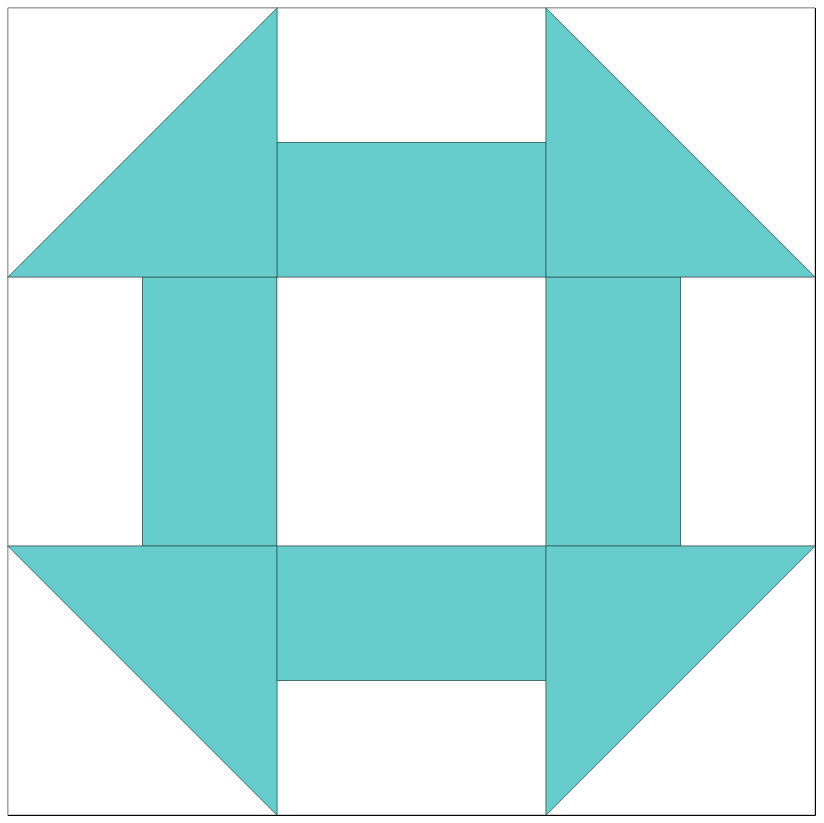
A digital illustration of a Courthouse Steps quilt block design featuring a central square surrounded by rectangles and triangles in a light teal color.
Image 1 – Churn Dash block, also known as Hole in the Barn Door and Monkey Wrench
A quilt block design featuring a central pink square with gray and white rectangles surrounding it, arranged to create a geometric pattern.
Image 2 – Courthouse Steps block

Since I’m going to focus on the Courthouse Steps block today, I’m assigning all of you readers “homework” — see what you can do with the Churn Dash block (image 1, above).

You can share your “homework” on our Facebook Page, in the comments (although I’m not sure if you can upload images), or you can email them to me at tricia@villarosadesigns.com.

I’d love to share your ideas on next week’s blog or upcoming posts if we have a big response. I hope you will take a little time and play – er, I mean design a quilt – along with me. Hand drawn, EQ, or Adobe images are great, please use a .jpg or .pdf format atat no more than 300 dpi.

Who knows????? There might even be a prize or 2…. US and International friends can play along, so go get started – right after you finish reading this post, that is.

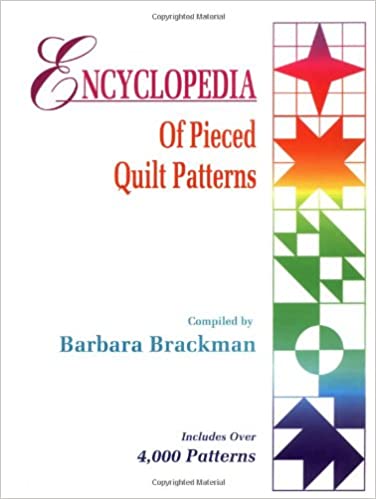
Let’s learn a bit about the Courthouse Steps block. As I mentioned earlier, it’s a variation of a Log Cabin block. According to Barbara Brackman in the Encyclopedia of Pieced Quilt Patterns, it was originally called White House Steps and appeared in print circa 1890 in the first Ladies’ Art Company catalog, which included 272 patterns. White House Steps was block #221. Of course, that doesn’t mean the block just suddenly appeared in the 1890’s. rather, that was the first known version in print. Quilters may have been making the block much sooner than the 1890’s.

A Courthouse Steps quilt block design featuring a central pink square surrounded by alternating gray rectangles.
White House Steps block
A graphic representation of the Courthouse Steps quilt block, featuring a central pink square surrounded by alternating gray and white rectangles.
Courthouse Steps block

The Courthouse Steps block we are familiar with today uses color a bit differently than the White House Steps version, above. Interestingly enough, “Courthouse Steps” isn’t even mentioned in Barbara Brackman’s book. I wonder if it’s a regional term used for the block? Does anyone know this block by another name? Just curious. I did find the block in Electric Quilt 8 software (which is based on Barbara Brackman’s book), but it is considered a foundation pieced block and does not include any historical information.

Doing a quick Internet search, I discovered a post on Suzy Quilts about Courthouse Steps blocks with a touch of history and wonderful examples of Gee’s Bend quilts. Check it out HERE.

Alright! Ready to get designing???

So, here’s our block again. Take a good look at it – what do you see? A central square with rectangles radiating from the center square both horizontally and vertically. That’s it! Simple, but very effective, very geometric, and very graphic.

Illustration of a Courthouse Steps quilt block design featuring a central pink square surrounded by gray and white rectangles.
Courthouse Steps block

Let’s put the blocks side by side with all of the blocks going the same direction. Okay, this is fun. And it would make an awesome scrappy quilt, wouldn’t it?

A digital mockup of a Courthouse Steps quilt block design featuring pink squares, grey and white rectangles arranged in a geometric pattern.

Let’s turn the blocks sideways and see if we get something different. Pretty much the same thing, just different direction.

Pattern design of the Courthouse Steps quilt block featuring alternating shades of gray, pink centers, and white accents in a geometric layout.

Let’s alternate every other block next. Huh. Better. Definitely more movement in this one, wouldn’t you agree? I almost detect a bit of a curvy look happening, which is interesting with a square block.
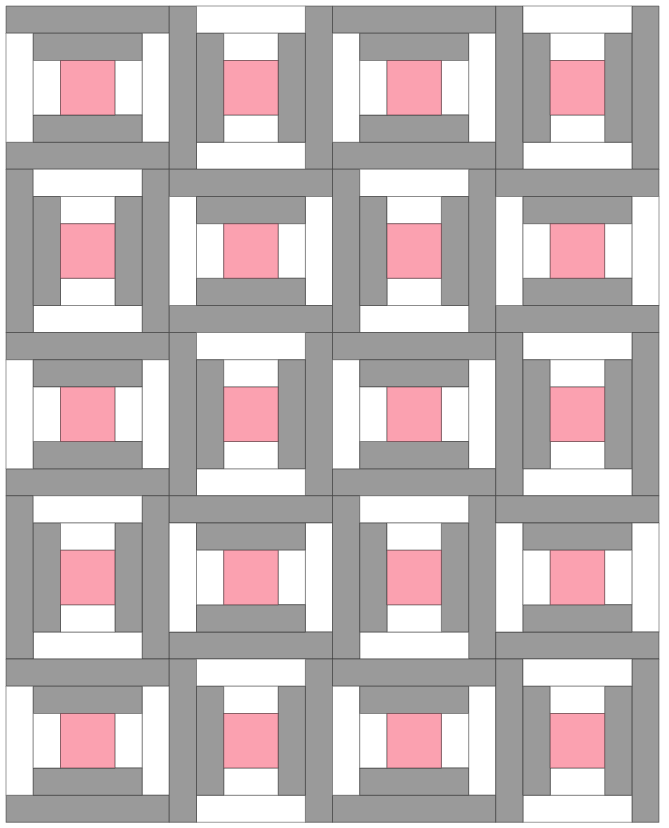
A quilt design featuring alternating Courthouse Steps blocks in shades of gray, pink, and white arranged in a grid pattern.

Now I think I’d like to see what happens when I group the blocks in 4’s. That’s interesting.

A digital quilt design featuring multiple Courthouse Steps blocks arranged in a grid pattern with a mix of gray, white, and pink colors.

Let’s add fabric to see what happens, shall we? I’m using Lori Holt’s warm and homey Riley Blake collection, Autumn. I can almost smell the apple pie…..
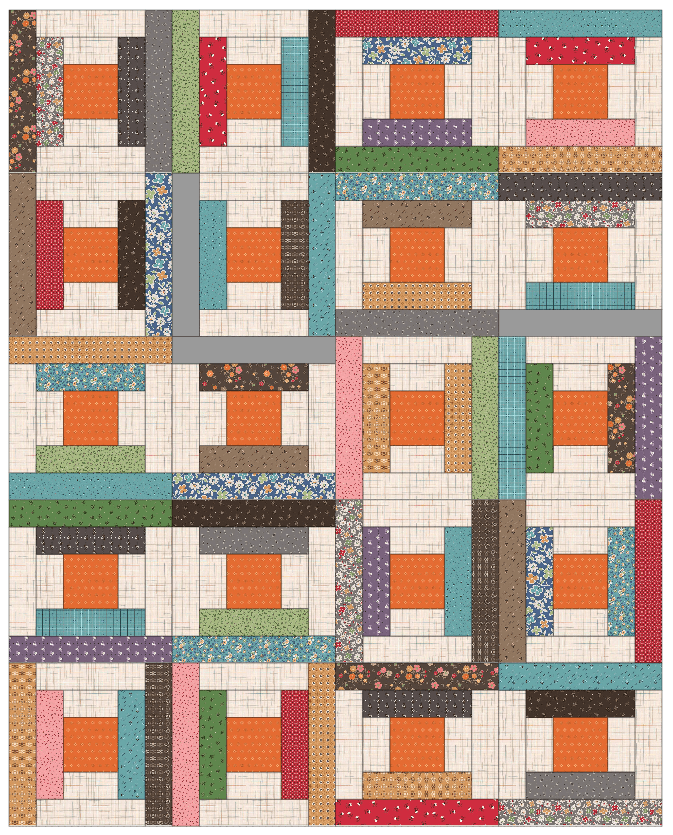
A patchwork quilt featuring a Courthouse Steps block design with a variety of colorful fabrics arranged in a grid layout.

I want to tweak the blocks one more time. In this example, I turned alternating rows which then gave me an interesting boxed effect in rows 2 and 4.

A colorful quilt design featuring the Courthouse Steps block, showcasing a mix of fabrics in varying patterns and colors arranged in a geometric layout.

Whoah! Stop the bus! Here was the basic idea behind my VRD Rose Card pattern, Boxed In (hence the name), although it’s not totally the same. I wasn’t even thinking about any of our VRD patterns when playing with Courthouse Steps, but – there it is. LOL!

A quilt design titled 'Boxed In' by Tricia Lynn Maloney, showcasing a colorful patchwork pattern with various fabrics arranged in geometric blocks on a table.

Get your digital pattern HERE or your print pattern HERE

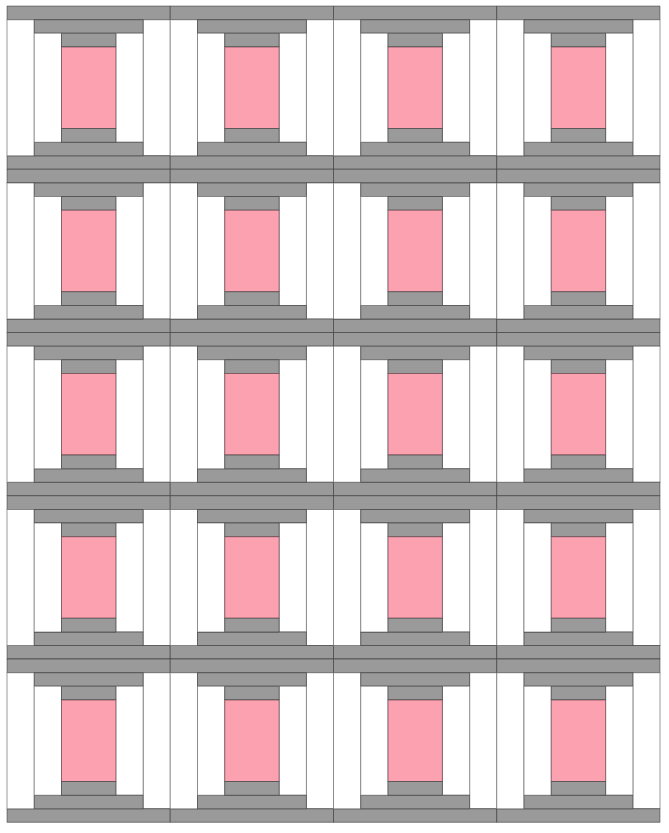
Okay, let’s go back to our Courthouse Steps block and tweak it a little bit by changing the width of some of the rectangles. I left the side rectangles the same, but I made the top and bottom rectangles narrower.
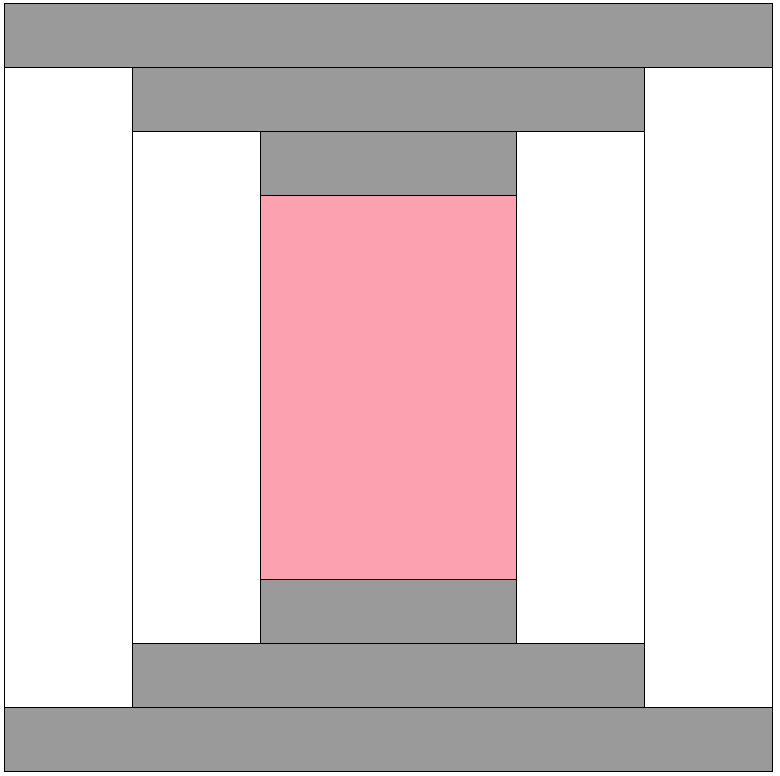
Diagram of the Courthouse Steps quilt block design featuring a central pink square surrounded by gray rectangles.

Let’s use the first setting from above to see how the blocks plays in a design. I really think this looks pretty cool and it reminds me of paper lanterns.
A digital representation of a Courthouse Steps quilt block design featuring a central pink square surrounded by white and gray rectangles, arranged in a grid layout.

Let’s tweak the color a little bit. Again, I’m using a couple prints from Lori Holt’s Autumn collection. WOW! What a mod yet classic 2 color quilt! Love it!

A digital quilt design featuring a Courthouse Steps block layout in brown and turquoise colors, arranged in a grid pattern, with a light grid background.

Cool! Check out this block arrangement! It’s the same layout as our previous 2nd design, above.

A quilt design featuring a Courthouse Steps block pattern in brown and light blue color scheme.

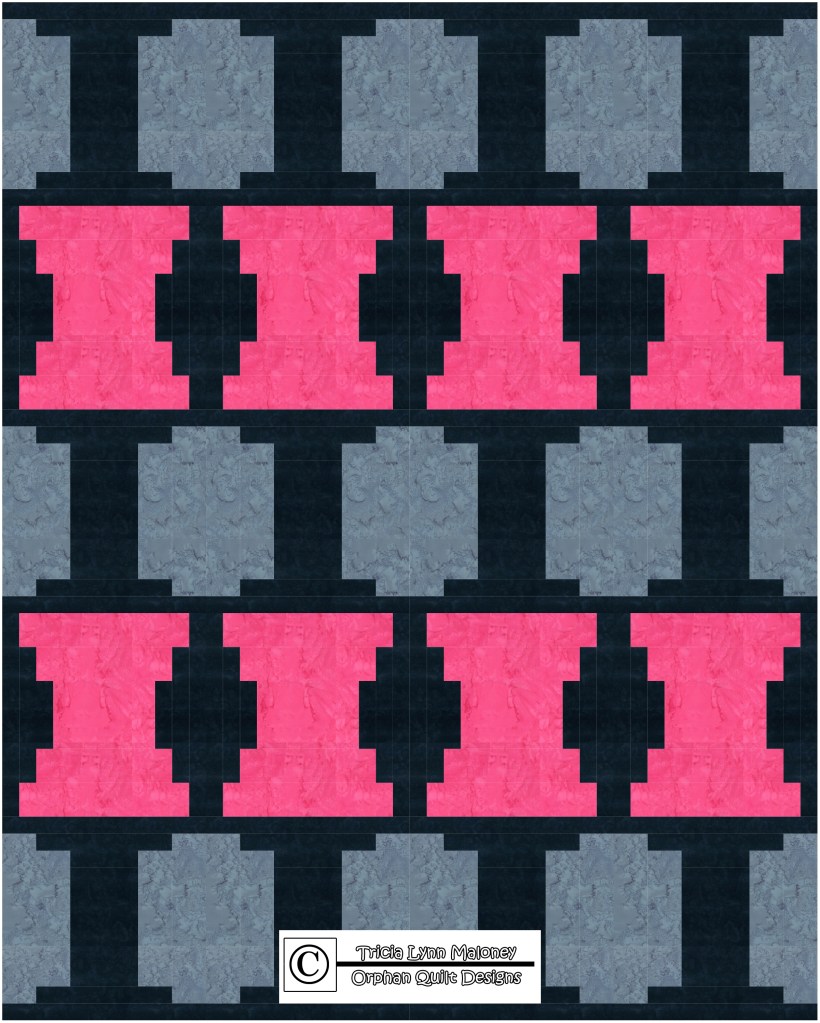
Hmmm. I just don’t feel that’s it totally complete yet, so let’s add another fabric to see what happens. In this example, I’m using some lovely Hoffman 1895 Watercolors batiks. Love it!
A quilt design featuring a central pink pattern framed by dark and light gray rectangles, creating a geometric composition.

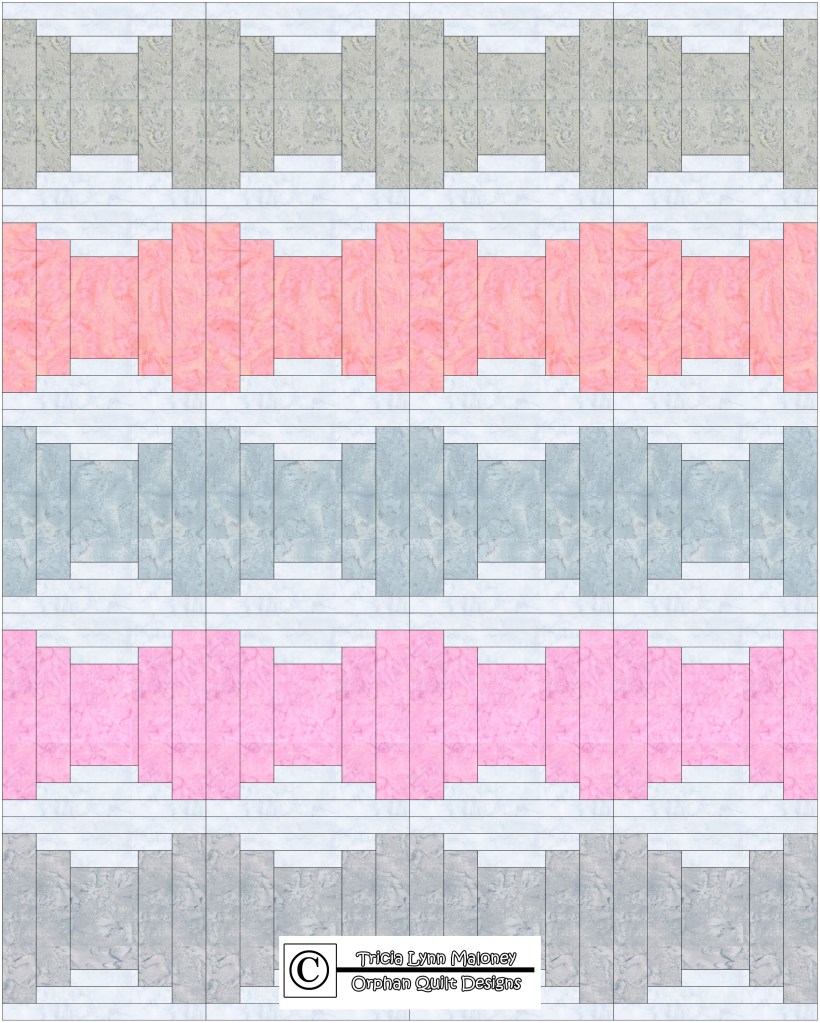
Just….one….more….tweak. As you can see, designing a quilt can get kind of addicting. Yup. But, I think you’ll agree with me that this is the final design. I changed the block directions a bit, changed the black centers to grey, changed the black background to a light grey and added more fabrics from Hoffman.

I think it’s perfect now.
A digital quilt design showcasing alternating blocks of the Courthouse Steps pattern in shades of pink and gray, framed by light blue fabric strips.

There’s not much else I can say………except I’m very satisfied with this final design. Seriously. Sometimes it takes just one more try to get where you want to. And I’m not just talking about quilt design, you know.

What would you do to tweak the Courthouse Steps block to create your own design?

Don’t forget to do your homework for next Thursday! I’ll see what I can find in the prize department while you play with the Churn Dash quilt block to see what you can come up with.

Ta! Ta!

Until next time –

Always,

Tricia @ VRD
2025 Let's Design a Quit Together Series · Quilt Play · Tips and Tricks · villa rosa designs

Let’s Design a Quilt: Playing with the Spool Block

Happy Thursday to you!

What a fun blog post last week! It was great to share a little bit about my quilt design process with you. It was such fun, we’re doing it again this week, but with a different quilt block.

Before even starting this post, though, I must admit I cheated a bit and began playing with this week’s quilt block. Let me tell you – it never fails to amaze me how a simple block can create such amazing designs.

Here’s last week’s post if you missed it:

Playing with Nine Patch Blocks

Are you ready? Let’s design a quilt together!

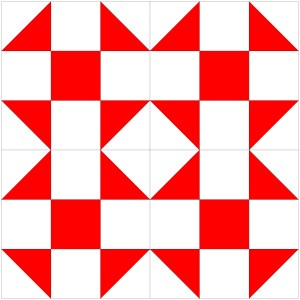
According to Barbara Brackman’s Encyclopedia of Pieced Quilt Patterns, this specific Spool block appeared in the book, Polly Prindle’s Book of American Patchwork Quilts by Alice Gammell in 1973. Of course, it wasn’t really a new block in 1973, but this simplified Nine Patch version appeared in Polly Prindle’s. Previous versions included set-in seams as well as 4 small Spools in a single quilt block. Today, though, we’re going to start with Polly Prindle’s version.

A quilt block design featuring a 3x3 layout with red and cream colors, showcasing a Spool block pattern with alternating triangles and squares.

As you can see, our Spool Block is a Nine Patch block with a 3×3 layout. Of course, we’ve added some Half Square Triangles (HSTs) to create the Spool shape.

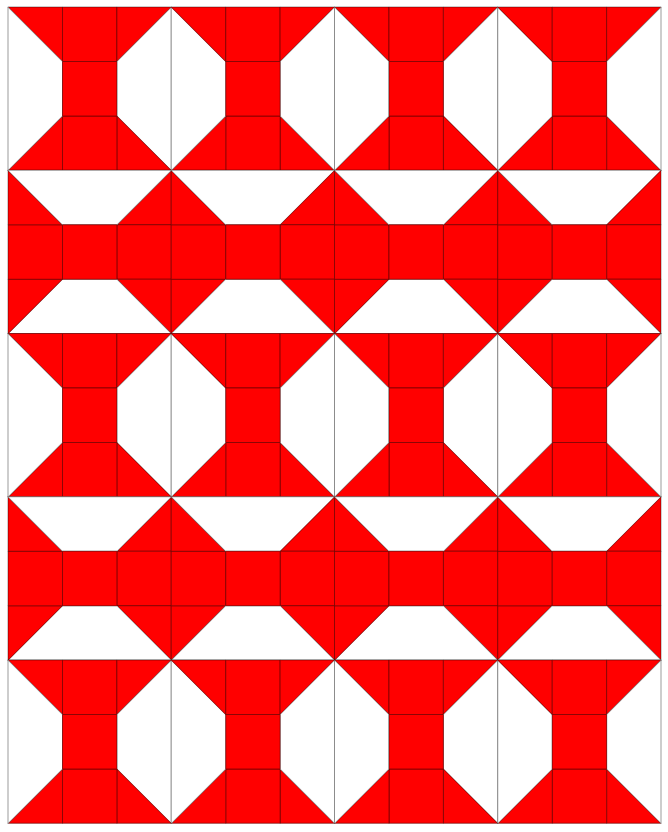
The first thing we’re going to do is to simply our Spool block by using flippy corners instead of HSTs for the top and bottom of the spool. This tweak would actually save time when piecing the blocks for a quilt without changing the overall design. And we all know that saving time is golden in the quiltmaking process. The tweak also cleans up the look of the block by removing some of the seams.

A diagram of a Spool quilt block featuring a 3x3 layout with red and white fabric sections.

Let’s see what a quilt looks like using just this block, shall we? This design shows the blocks all pointing in the same direction. Hmmm. I like it, but I think we’re just getting started with the Spool block today.

A quilt design featuring a repeating pattern of red and white spool shapes arranged in a grid layout.

Let’s try alternating the block directions. Better, but not there yet.

Patchwork design featuring a grid of red and white spool quilt blocks arranged in a 3x3 layout.

Next up – let’s alternate block direction by row. Better and better! I really like the play between the different block directions. Reminds me a little bit of the vertical and horizontal strips I added to last week’s classic Nine Patch block.

Quilt design featuring a repetitive pattern of spool blocks in red and white.

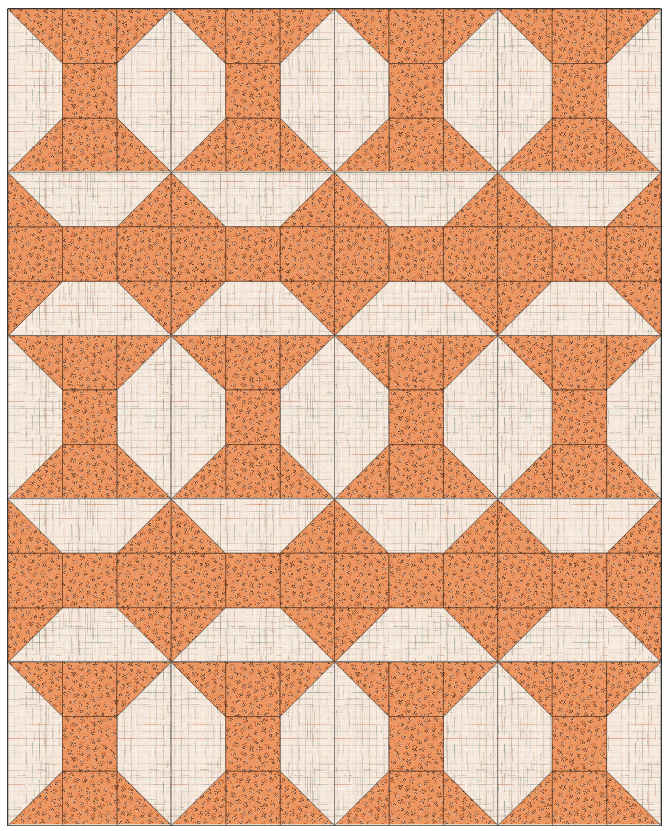
Let’s add some fabrics to this one. I’m using a few prints from Moda’s Acorn Hollow collection. This layout definitely has some potential. I’m not usually a big fan of 2 fabric quilts, but I am liking the crispness of the design with only the 2 fabrics.

A quilt layout featuring a Spool block design in a 3x3 arrangement with orange and white color scheme.

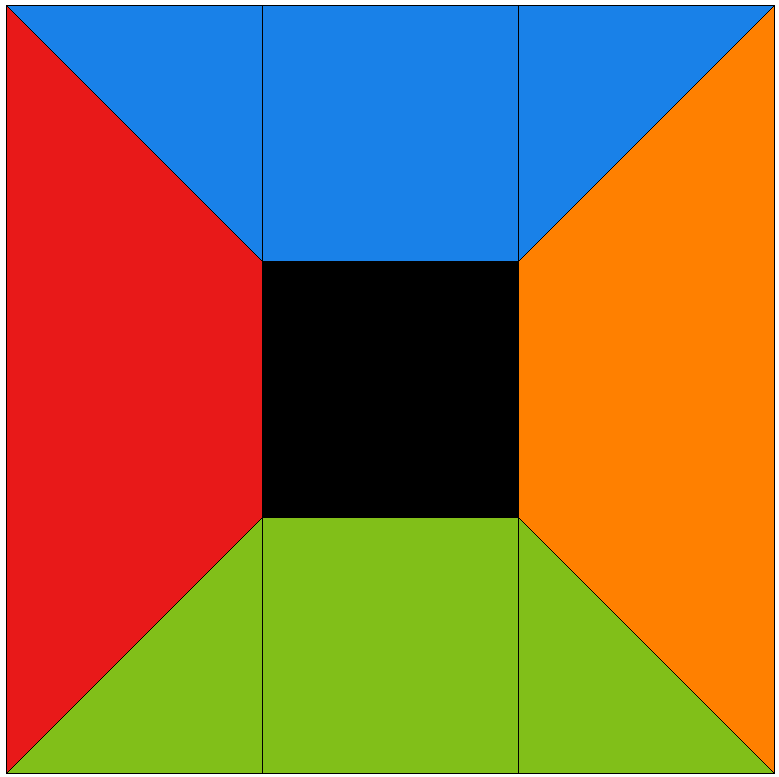
Okay, let’s go back to our Spool block again. Instead of it being a 2 color block, let’s make it a 4 color block with a black center.

Colorful spool block design featuring a central black square surrounded by sections in red, orange, blue, and green.

Huh. Intriguing. Let’s see how it looks in a quilt. This is the same layout as our first red/white layout above. What a difference color can make!

Now let’s alternate the block directions. This is the second red/white layout above.

Colorful quilt design featuring a repeated Spool block pattern, arranged in a grid format with red, orange, green, blue, and black elements.

I like it, but with so many colors, you kind of lose the interesting design. Let’s back off on colors a little bit by adding more neutrals. Not loving it, but I do like the diagonal thing happening.

Colorful quilt design featuring a repeating block pattern with red, blue, black, white, and yellow sections arranged in a grid layout.

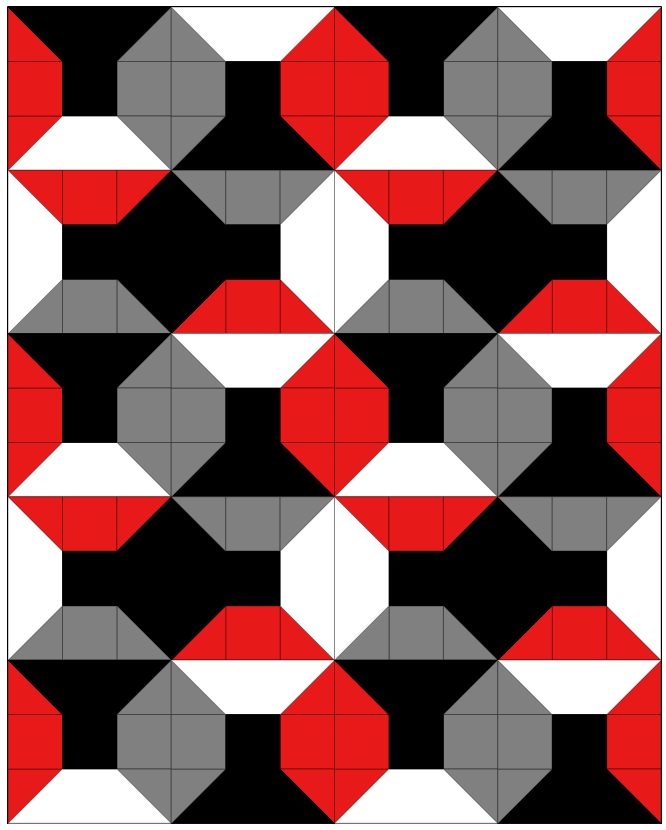
Not quite what I was expecting. Let’s tweak the colors some more. I’m going to use red, black, white, and grey which is one of my favorite colorways when I’m trying to perfect a design. I like working with these colors because of the strong contrast. I also changed the center square to black, so I get an interesting black shape in the blocks now – kind of looks like a megaphone to me.

A quilt design featuring a pattern of interlocking Spool blocks arranged in a 4x4 grid, showcasing vibrant colors of red, black, white, and grey.

Let’s rearrange the blocks to see what happens. This is interesting. It has a lot of movement.

Colorful quilt design featuring a repeating pattern of red, black, gray, and white shapes arranged in a geometric layout.

Let’s add some fabric now to see what it looks like. Here it is in 4 Hoffman batiks. I like it – it has a woven effect which keeps my eye moving over the design.

A quilt design featuring a Spool block layout, showcasing a combination of dark brown, teal, and light brown fabrics arranged in a repeating pattern.

Let’s play with the block arrangement a little bit more. I think there’s another better option still out there. We just have to play a bit until we get there. Almost there.

A quilt design showcasing multiple Spool blocks arranged in a 4x4 grid, featuring a combination of brown, teal, and dark purple fabrics.

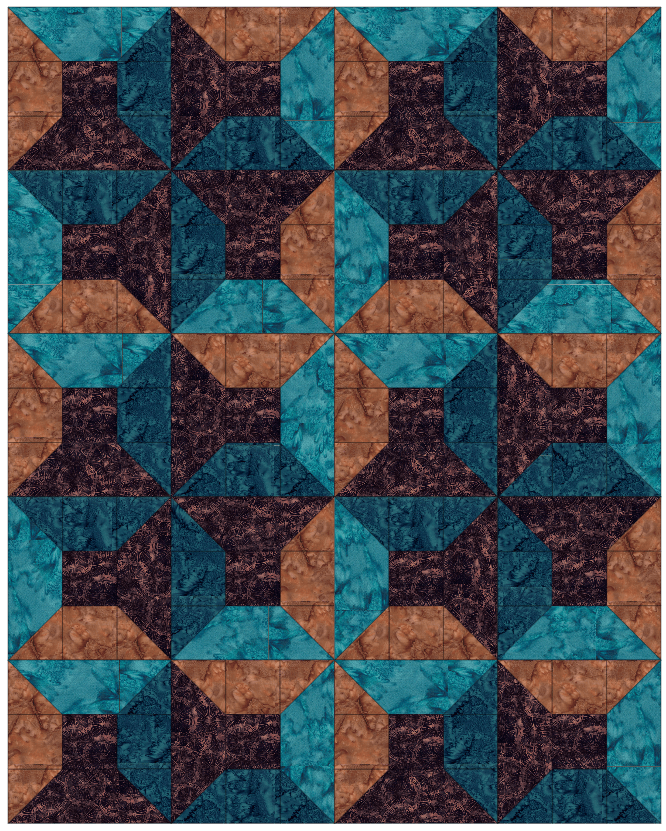
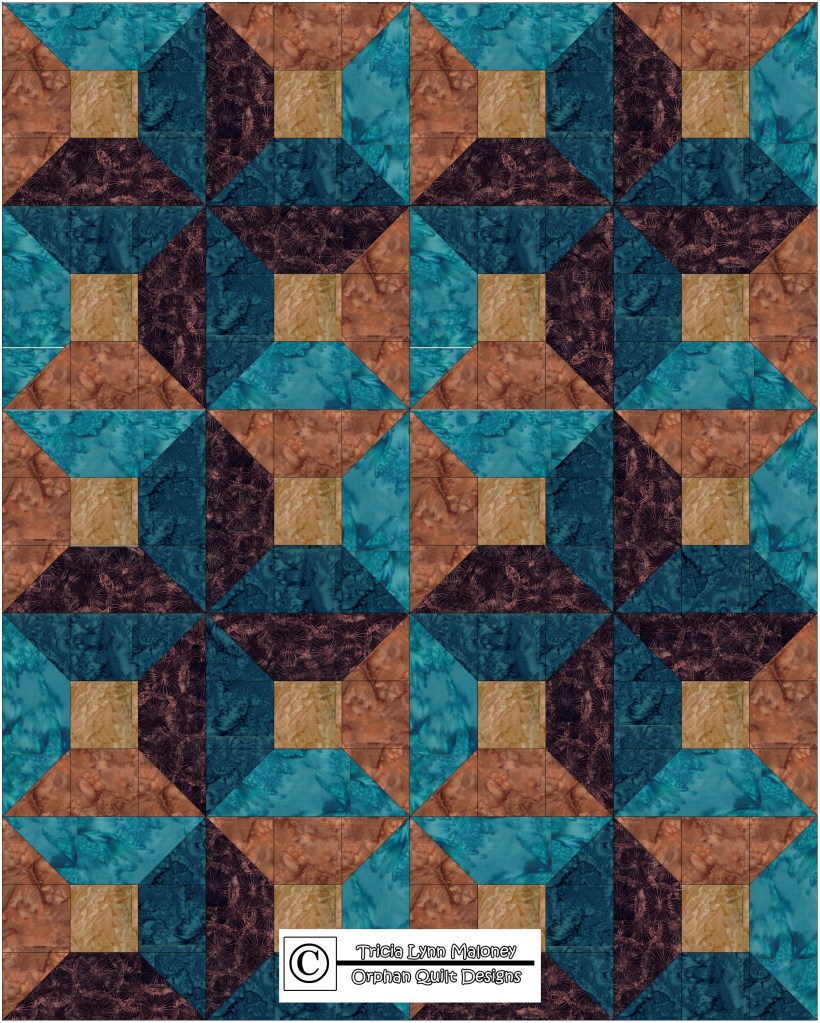
I think it needs just one more thing tweaked. I’m going to reintroduce the 5th fabric in the block for the center squares. Yup! Got it. This is the one! A beautiful finished design! LOVE the 3-D effect. Lots of movement. Tons of interesting things going on.

Quilt design featuring a repeating Spool block layout in shades of teal, brown, and black, displaying a 3x3 pattern with various fabrics.

Do you remember where we started? A simple Spool block.

Quilt design featuring alternating red and white diamond shapes arranged in a grid pattern.

An here’s where we ended. Still a simple Spool block, but so much more!

A vibrant quilt design featuring a Spool block layout, with a mix of teal, brown, and dark purple fabrics arranged in a grid pattern.

Isn’t quilt design a fascinating journey? For me, it’s a lot of “what if?” questions. Also, I’m not afraid to make something really ugly – I can always delete it, right? And sometimes “something ugly” just needs another tweak or 2 to become something amazing.

I hope you give designing a try. I think you’ll be surprised at how fun it it. Whether you use graph paper and a pencil or Electric Quilt 8 software, I think you can come up with something that’s truly your own, something you love.

Stay tuned next week for another fun quilt design adventure! Any suggestions on a simple quilt block you’re just dying to see turned into an interesting quilt design? Leave a comment and tell me!

Until next week –

Always,

Tricia @ VRD
Quilting Partners · Tips and Tricks · Tutorials · villa rosa designs

Let’s Design a Quilt Together — A Peek into My Quilt Design Process

Hello Quilty Friends!

It’s Thursday again! Here’s hoping your week has been going well. Mine has been good and fast — just the way I love my quilt projects to be! LOL!

A lot of people ask about my design process so I thought I’d tell you a little bit about my process. Keep in mind that all designers have their own way of doing things and this post is only about my process.

Sometimes it’s like I eat, sleep, and breathe quilts and quilting! Not only do I read/flip through quilt books and magazines, I also look online for new trends. I talk to my quilt friends about what they are doing. I teach a quilt class once a month. I design patterns, write instructions, make quilts, take photos of quilts. I look at and get inspired by fabric. I jot down ideas and even do rough sketches of quilt blocks (which I promptly lose most of the time). I have even been known to wake up in the middle of the night with a new idea for a quilt. Whew!

Inspiration comes in a lot of different forms for me. Sometimes I see a fabric or collection and an idea pops into my head. Sometimes I start with a favorite quilt block and a quilt develops out of that. I have quite a few quilt block references that I use for ideas. Here are a few books in my library:

The first 2 books are by Barbara Brackman. The one on the left is the first edition of the 2nd book and is out of print and can be hard to find. I have both of them and love them both. The newer edition has even more blocks in it than the first edition! Barbara Brackman is one of the most renowned quilt historians of our time! You can visit her blog, Material Culture, HERE.

I also have Barbara Brackman’s software program, Blockbase, which works with Electric Quilt. You can find Blockbase HERE.

The third book, 5500 Quilt Block Designs, is by well-known quilter and author Maggie Malone. I have only known about this book since 2021 when a friend of mine showed it to me and I was so impressed, I had to grab a copy for myself. This book is out of print so it can be harder to find as well.

I have talked about Electric Quilt software before in an earlier post, but I want to mention it again here because I really couldn’t design quilts without it! Some designers sit down with a ruler and graph paper to draft quilt patterns, but I am an Electric Quilt user because it makes designing quilts a lot easier for me. You can find Electric Quilt 8 (EQ8) software HERE.

If you are interested in designing your own quilts, I totally recommend EQ8 if you’re into computers. If you’re not into computers, graph paper and a ruler might be your new BFF.

Once I get an idea, it’s time to play — which usually means I head to my computer and EQ8. I play with blocks, try different color combinations, download different fabrics to try all before I actually make anything at all. Some designers start by making the project and then work backwards to create the pattern and instructions. I do my designing on my computer and then make the project once I know what I am going to do. At least this is what I do probably 99% of the time. That’s one of the fun things about being a designer — I can try different ways of doing things. They don’t always work out for me, but that’s okay, there’s always another way to try.

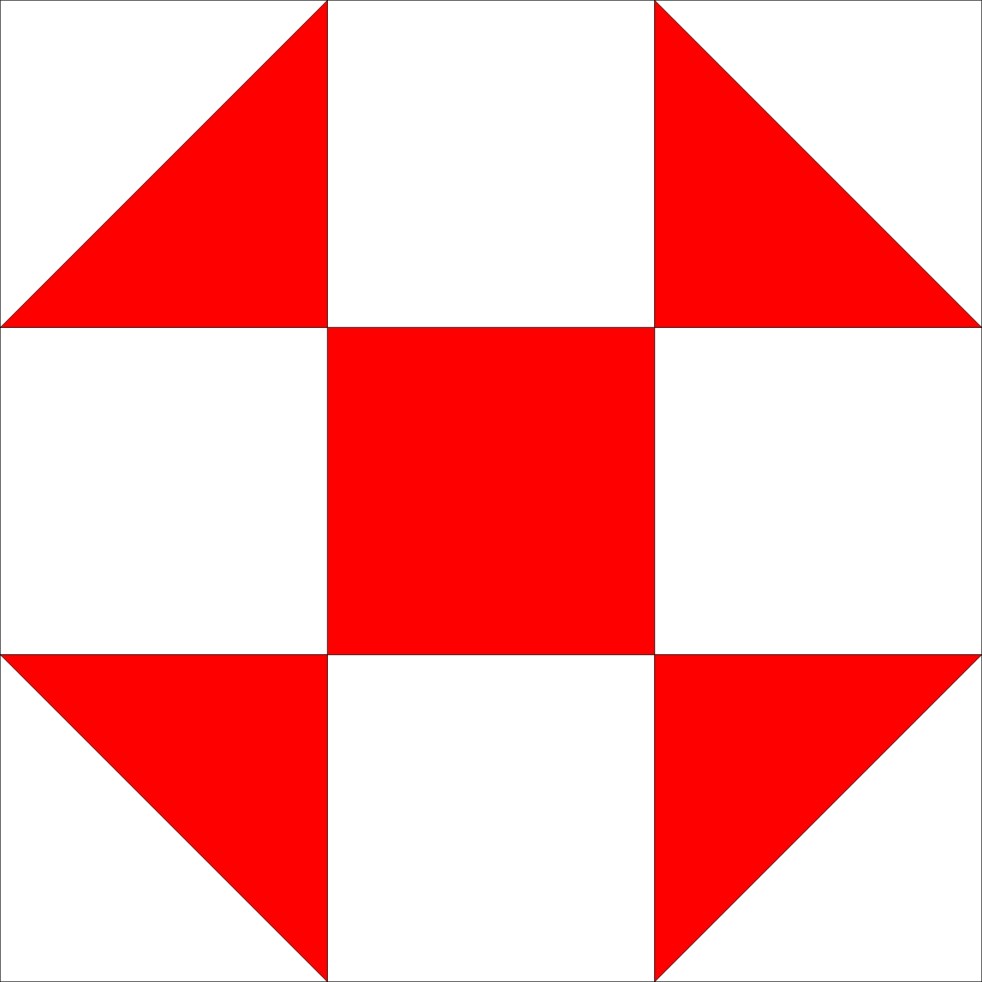
Let me show you an example of my design process. For this example, I’m gong to start with my favorite quilt block, the Shoo Fly block.

When I am starting with the quilt design before I select the actual fabrics, I usually design in red, black, white, and grey. I don’t know exactly why I do that, but I think it probably has to do with the high contrast so I get a good sense of the pattern before I add actual fabric.

So, let’s make a wall quilt using 4 Shoo Fly blocks. It will look something like this:

Hmmmmm. This doesn’t really excite me. How about you? Let’s tweak it a little bit and see what happens next. We’ll add a bit more color, too.

Okay, this is better, don’t you think? By adding a sashing between the blocks, I was able to put another Shoo Fly block in the center. I changed the colors of the larger blocks to black and grey with the smaller center Shoo Fly block in red. It definitely has a lot more interest, doesn’t it? But it’s not quite there. Let’s tweak it a little bit more, shall we?

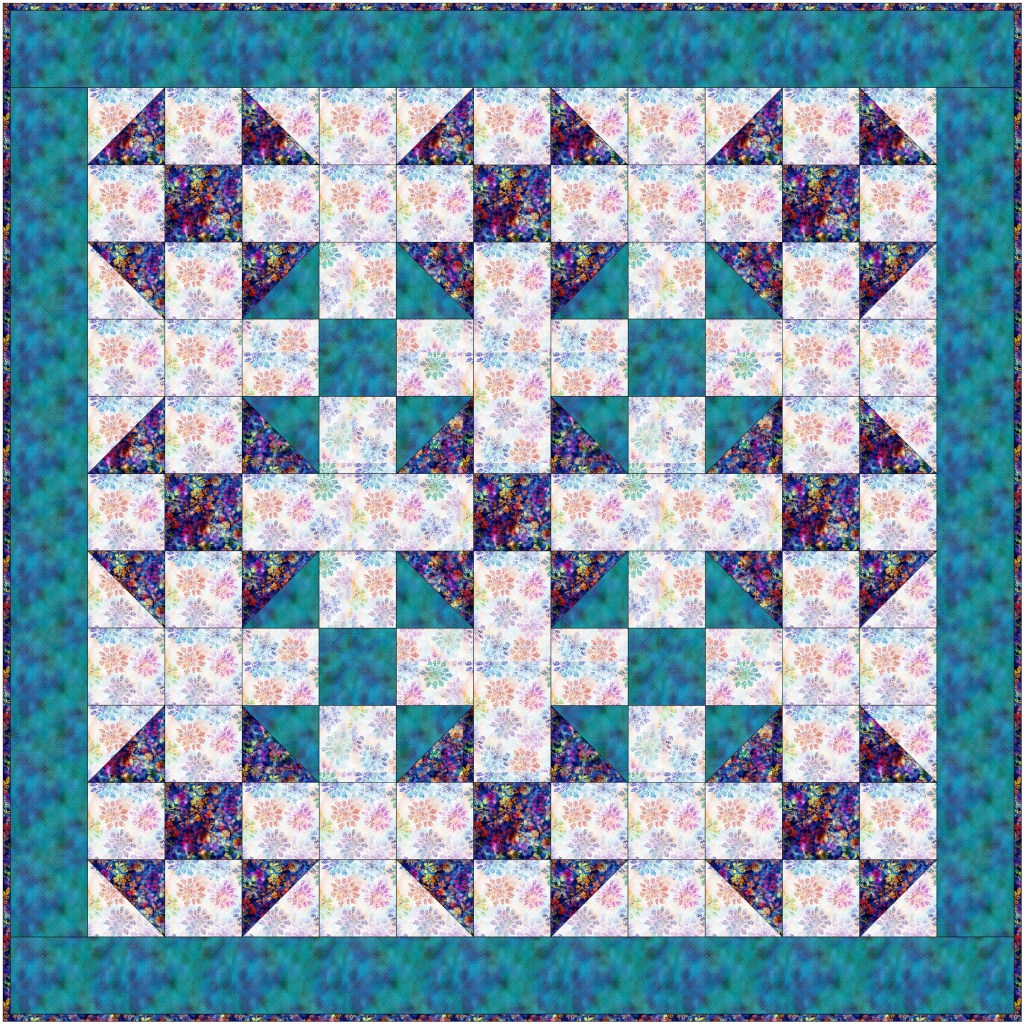
Now we’re getting somewhere! I got rid of the grey and went with plain black. Then I added 2 narrow blocky borders so I could continue to build out with more Shoo Fly blocks. Now I think we need a border.

Yay! A finished quilt design. I added an outer plain black border and a red binding. Pretty zippy, isn’t it? Now we’re gong to add some real fabric to the design.

Here are 3 different versions of our Shoo Fly quilt using Hoffman’s Paisley in Love batik collection. Of the 3, I think the last one with the white background is my favorite. I like the contrast, but I think I need to do a little more tweaking with the design, so back to the drawing board (or EQ8).

What are your thoughts? How would you improve this design? Any ideas?

Well, I hope you enjoyed a peek into my design process. Who knows? You might see this design as a VRD Rose Card some day.

Until next Thursday —

Sew. Laugh. Repeat.

Always,

Tricia @VRD