Quilting Partners · Rose Cards · Tips and Tricks · Tutorials · villa rosa designs

VRD Busy Bee Quilt Tutorial and Hoffman’s New Fall 2025 Project Catalog

Happy Thursday to you!

Yep, it really is Thursday today. Bet I surprised a lot of you on Monday with our special VRD Announcement about upcoming changes (good ones, I promise you!). If you missed Monday’s VRD announcement, you can find it HERE.

Before I dive into this week’s inspirational quilt tutorial, I wanted to take a minute and share Hoffman’s Fall 2025 Project Catalog with you. I’m sure you’ve noticed I use a lot of Hoffman collections for our blog tutorials by now. We work closely with our friends over at Hoffman to inspire you by pairing new Hoffman fabrics and our easy breezy VRD Rose Card patterns.

Please enjoy the catalog and don’t forget to visit your local quilt shops to request these new upcoming Hoffman fabric collections and, of course, Villa Rosa Designs Rose Card patterns.

Lots of wonderful inspiration in this catalog, isn’t there? Which one(s) did you fall in love with and are adding to your “gotta make” list???

Now let’s make a quilt!

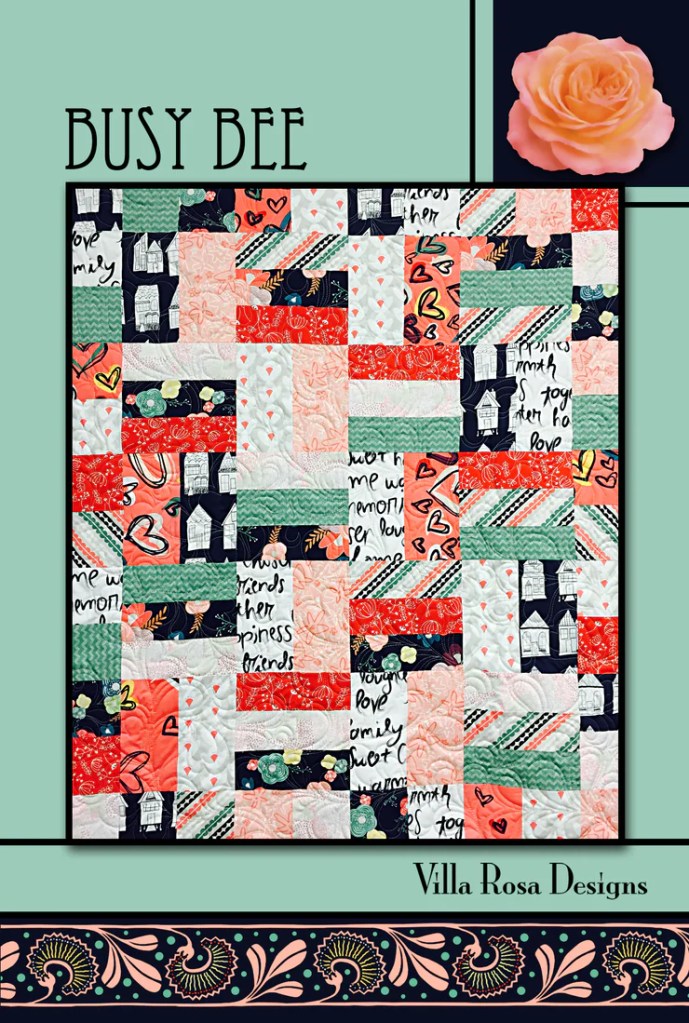
Are you ready for a super fun tutorial today? Busy Bee is an oldie, but a really great goodie! I know you’re gonna love it!

Colorful quilt design featuring various fabric patterns in shades of red, green, and navy, with a title 'BUSY BEE' and branding 'Villa Rosa Designs'.

Get your digital pattern HERE or your print pattern HERE

First things first, let me show you the fabric I’m using today for Busy Bee. You’ll notice right away that these fabrics don’t exactly have an autumn vibe going on, but I couldn’t resist these gorgeous fabrics when I was looking through my stack of quilt kits to choose my next victim….er, tutorial project. LOL!

Seriously, though, aren’t these fabrics divine??? This older Hoffman collection is called Blush Garden. It’s possible you still might find some bolts at your local quilt shop or at your favorite online shop, but somehow I doubt it as it’s just so yummy. Sorry……

Busy Bee is a fat quarter (FQ) pattern which means you only need FQs for the quilt top. No background, no borders. Busy Bee is stunningly simple and goes together like greased lightning!

A collection of colorful fabrics arranged on a sewing table, featuring various floral and abstract patterns, along with a pattern booklet titled 'Busy Bee.'
Psst! You might notice that my Busy Bee pattern looks different from the cover front above. Yep, my pattern is an older cover front. Sometimes we freshen up covers as fabric styles and trends change over the years.

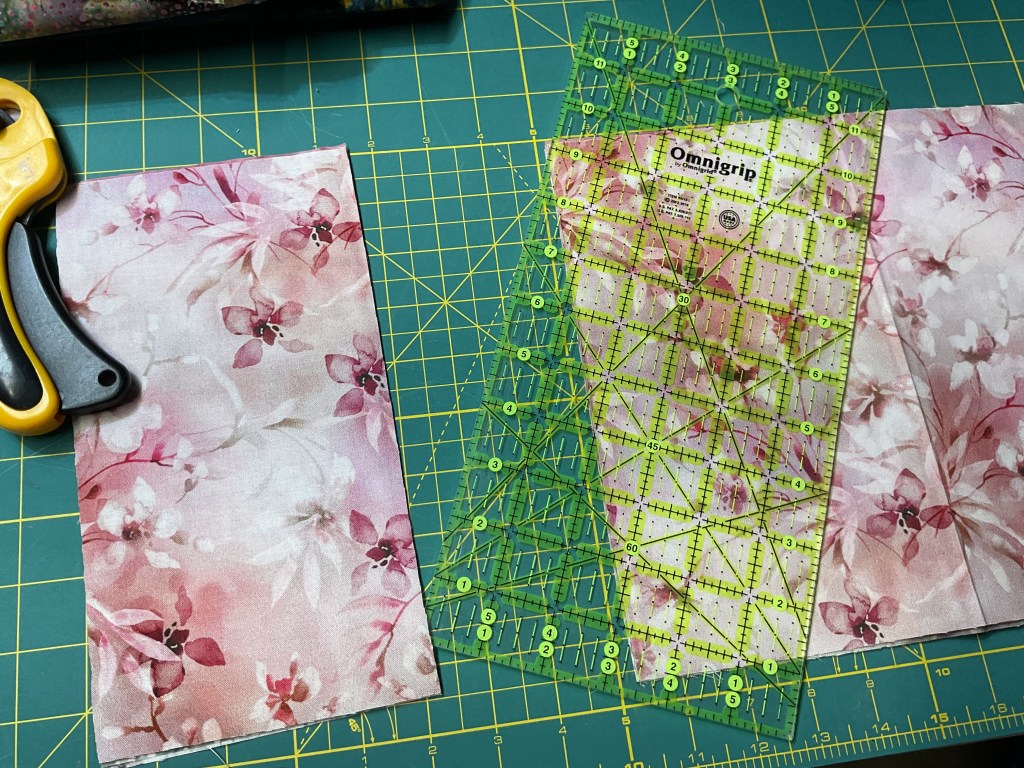
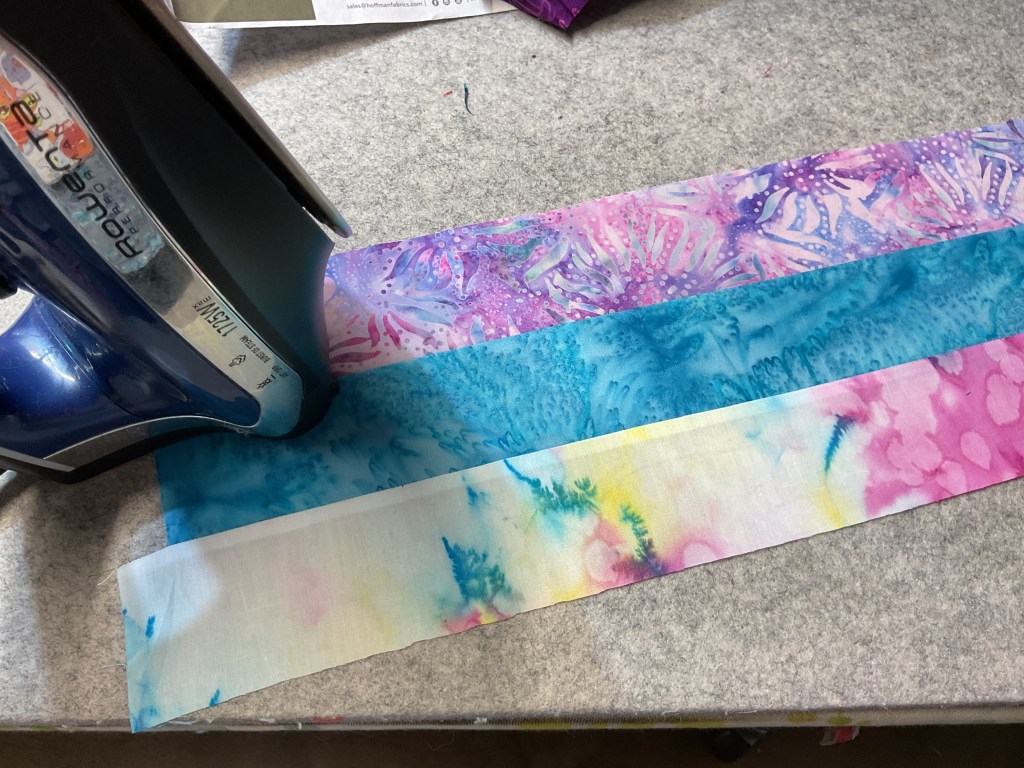
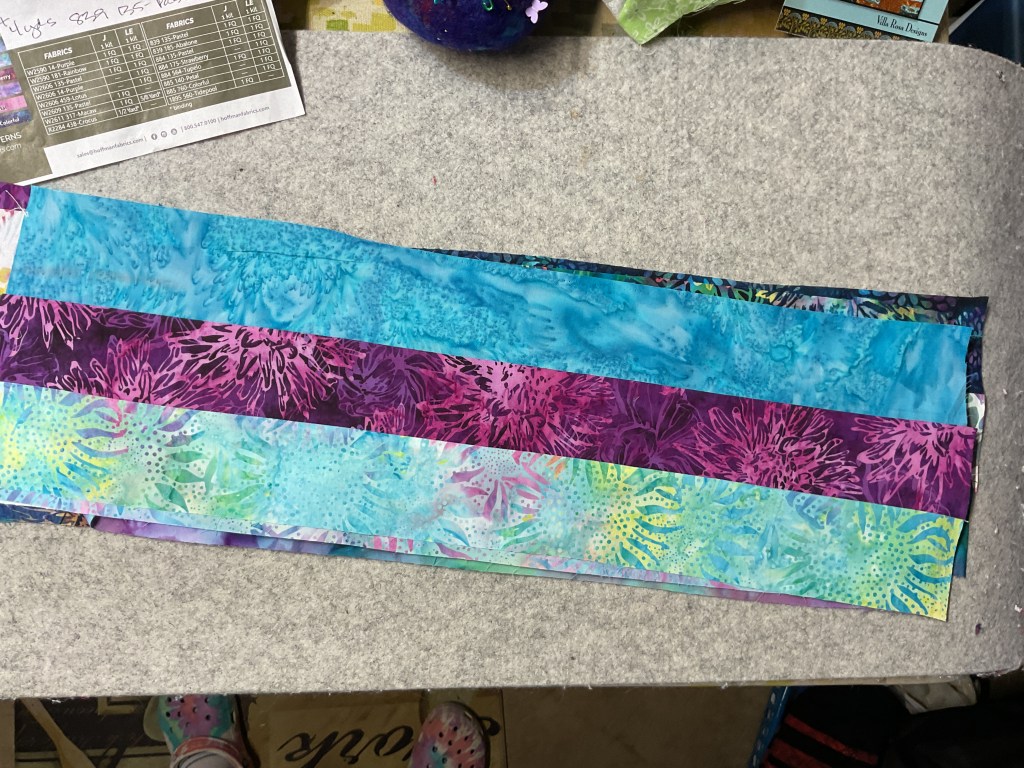
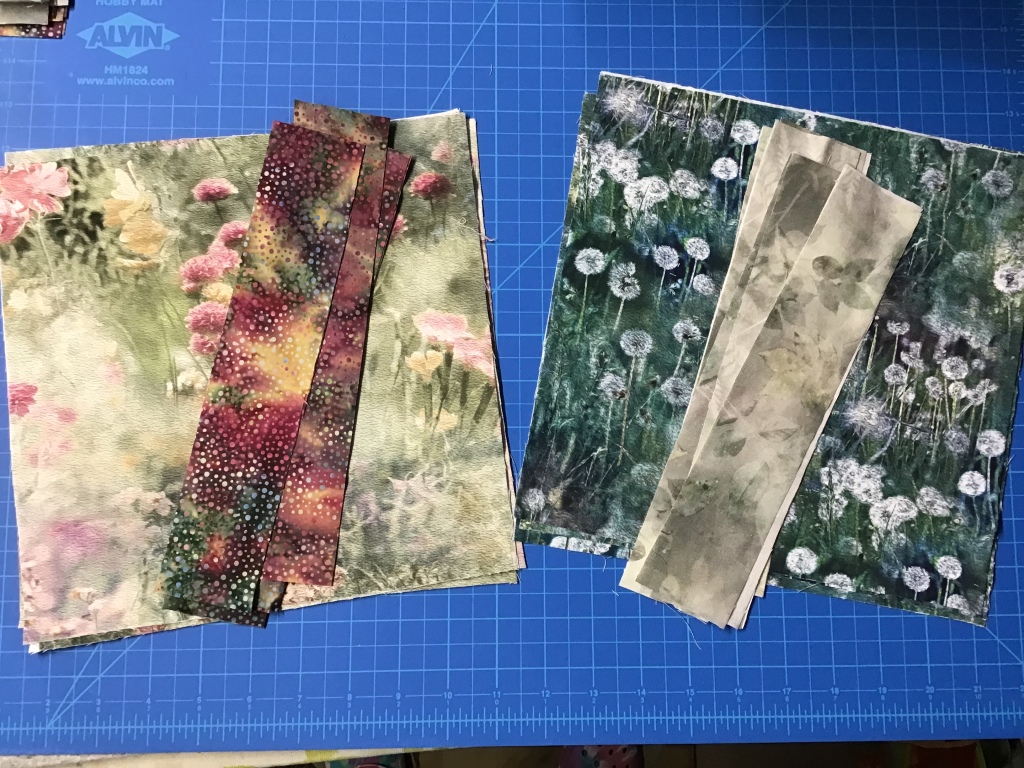
Before we can get to the sewing, we have to cut our fabrics. You need to divide your FQs into 2 equal stacks.

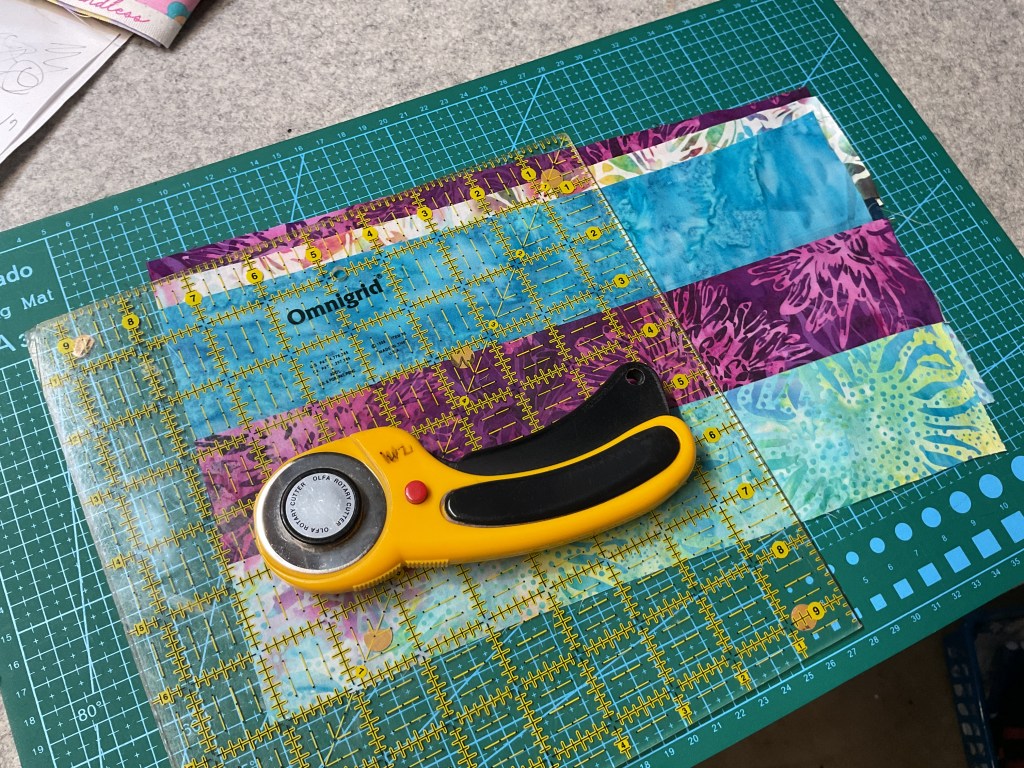
With the first stack, we’re going to cut our FQs into strips and then into fat rectangles and squares.

Moving on to the second FQ stack, we’re gong to cut skinny rectangles and squares.

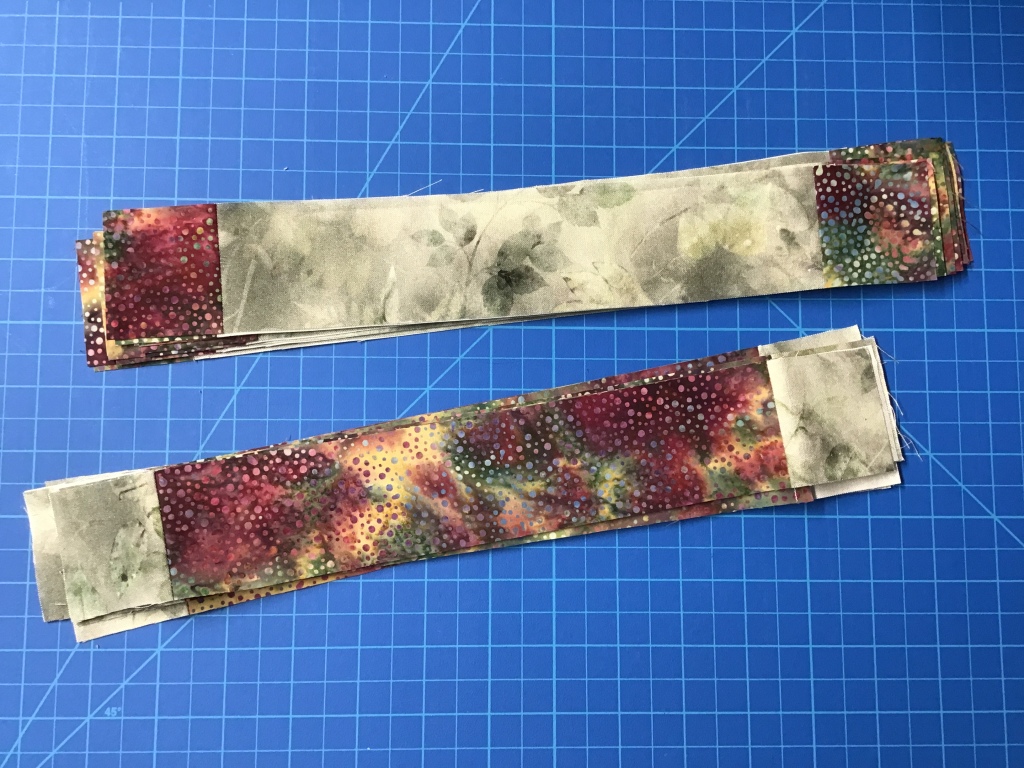
Here are all our pieces ready to sew. And that’s it for cutting for the whole quilt top. I just love patterns like this, don’t you?

A collection of quilting fabric pieces in shades of pink and floral patterns, accompanied by a Busy Bee quilt pattern booklet on a green cutting mat.

Time to sew!

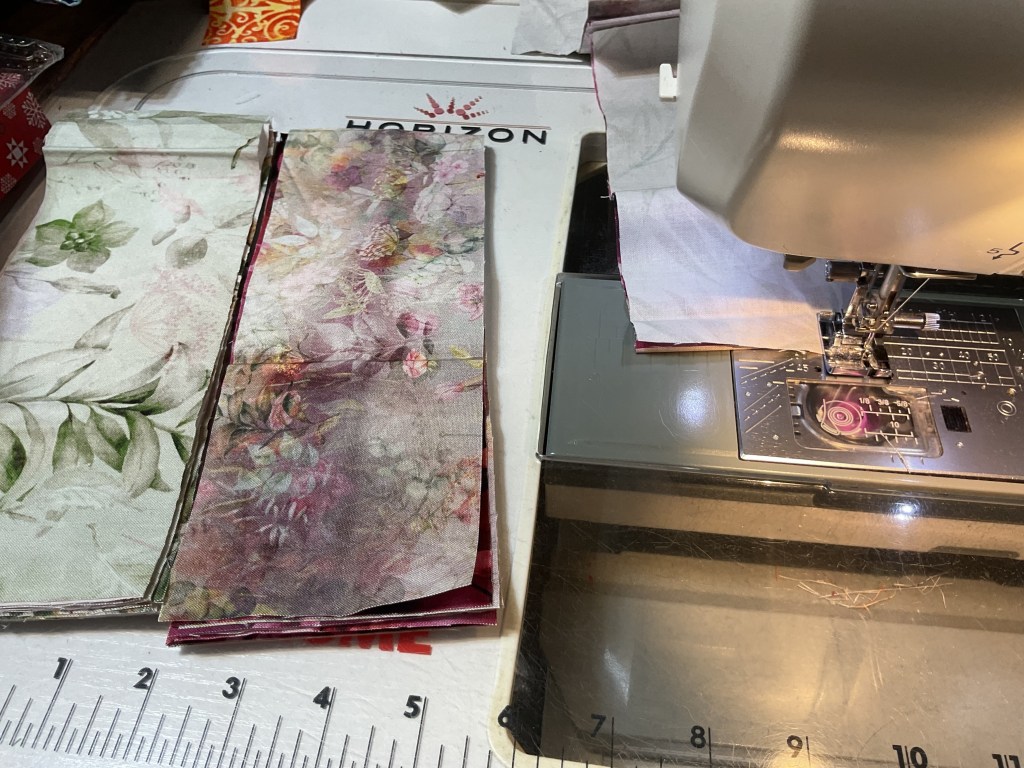
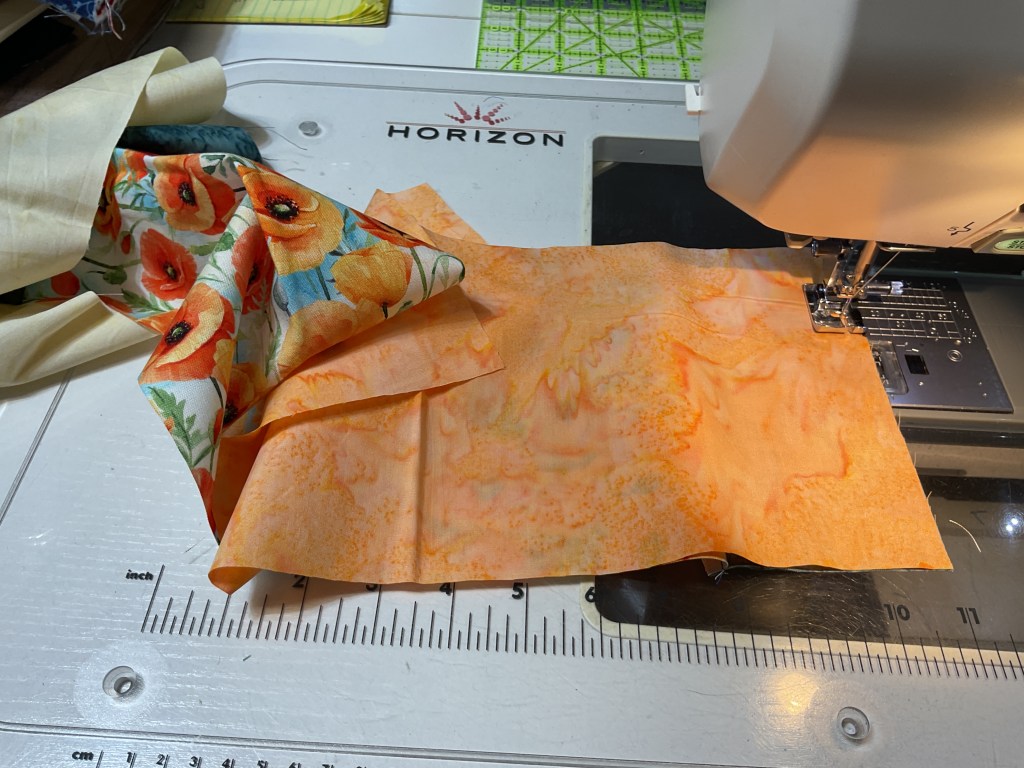
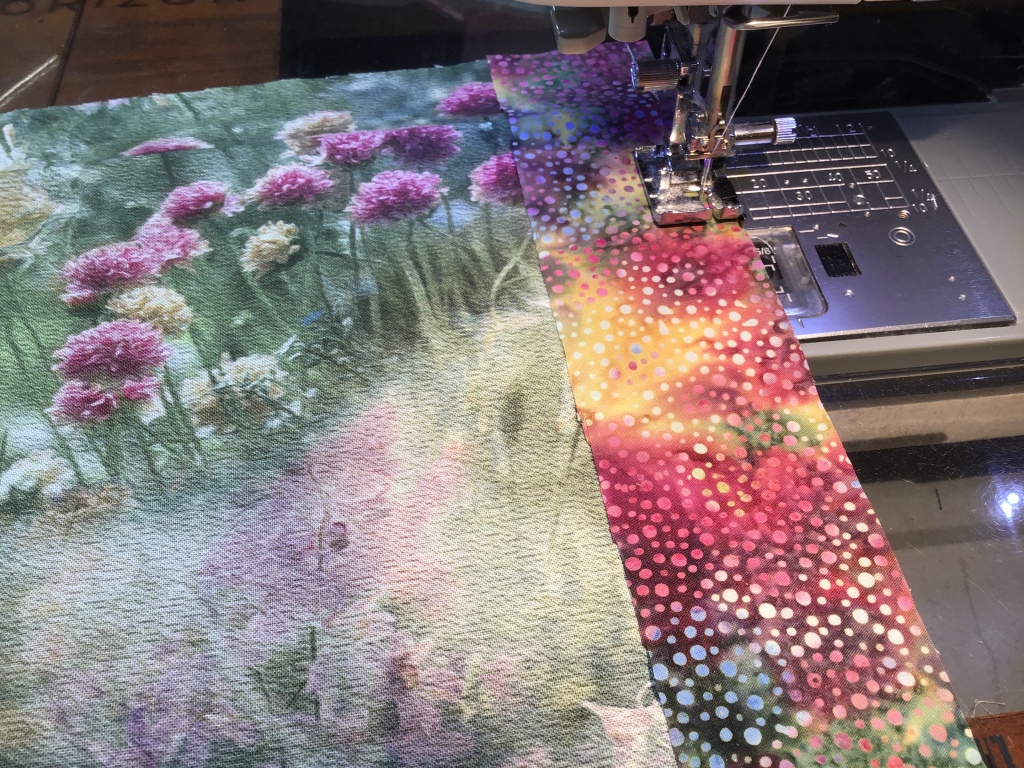
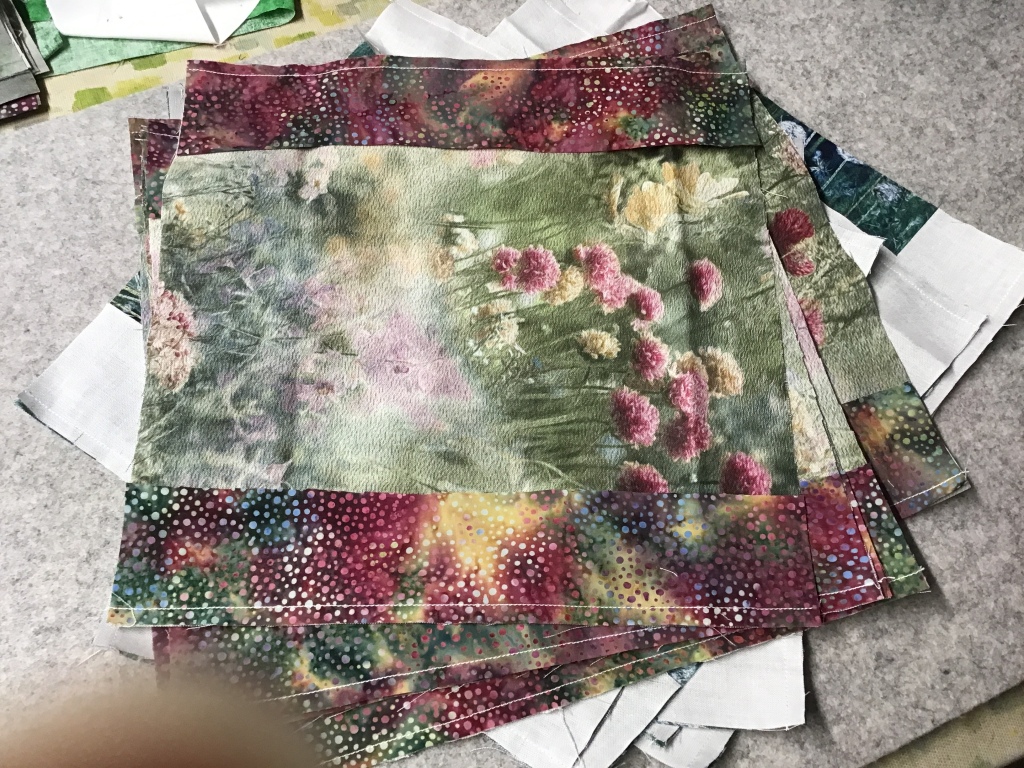
We’re going to sew 2 assorted fat rectangles together to make Block 1. I divided them equally into 2 piles and set them to the left of my machine so I could just grab the 2 top rectangles and feed them through the machine to chain piece them. If I didn’t like the combination or had 2 of the same on top, I just grabbed another one off one of the piles. Sew simple.

Do you chain piece your pieces together? Chain piecing is when you keep feeding/sewing pieces together through your sewing machine without cutting the thread in between the units. It saves both time and thread.

Now for Block 2 – we’re going to sew 3 assorted skinny rectangles together to make a Triple Rail Fence block. Again, I divided my strips equally into 3 piles and put them to the left of my machine. First I sewed 2 rectangles together from 2 of the 3 piles, leaving the last pile for last. Then I added a 3rd rectangle to all the pairs, making sure each Rail Fence block had 3 different fabrics.

Time to head over to the ironing board to press all of my blocks flat.

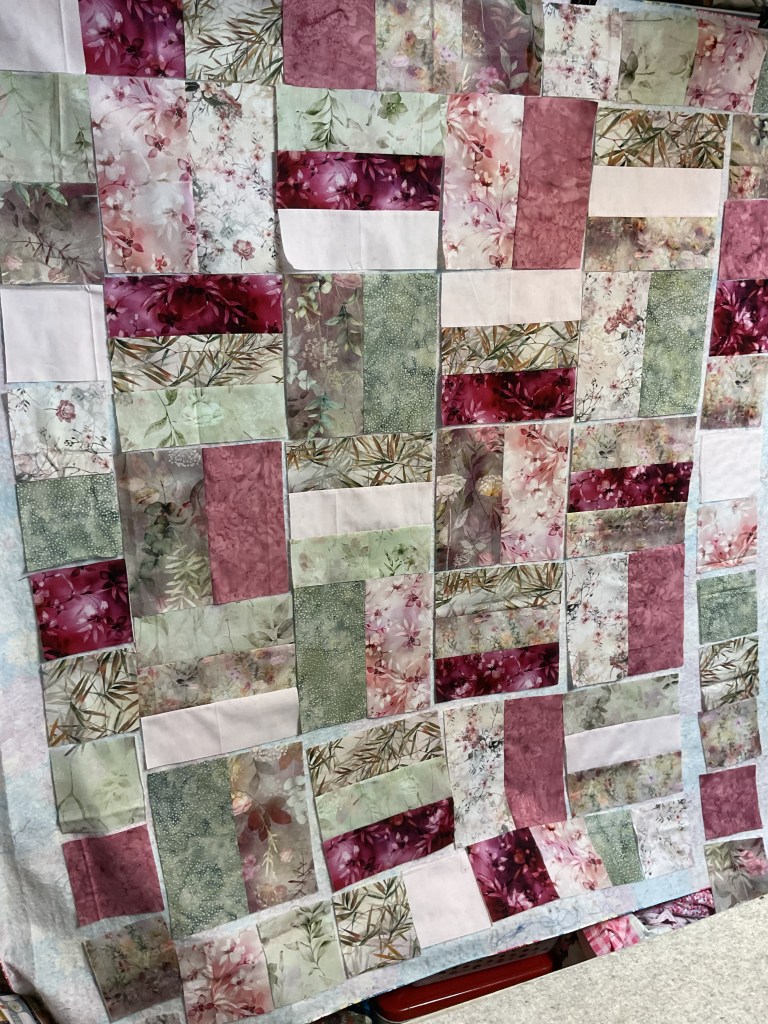
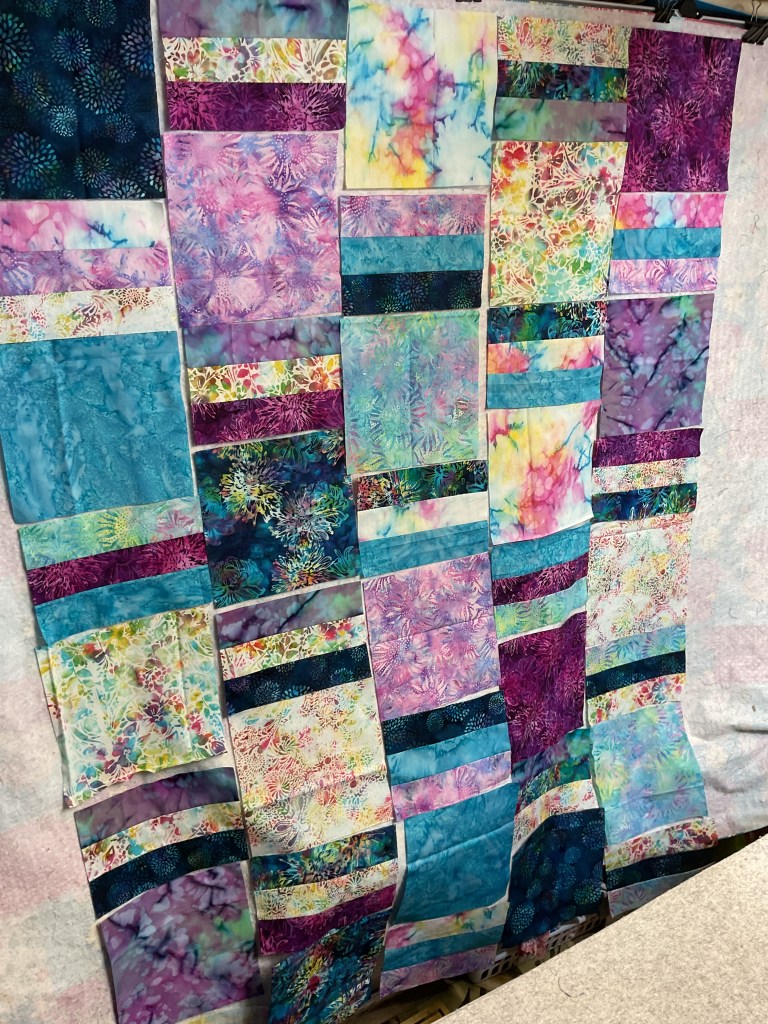
All righty, all the blocks are sewn and pressed, so now we’re going to put them up on the design wall so we can play switcheroo until we’re happy with the block arrangement.

The layout is an easy one for because we’re just going to alternate the blocks.

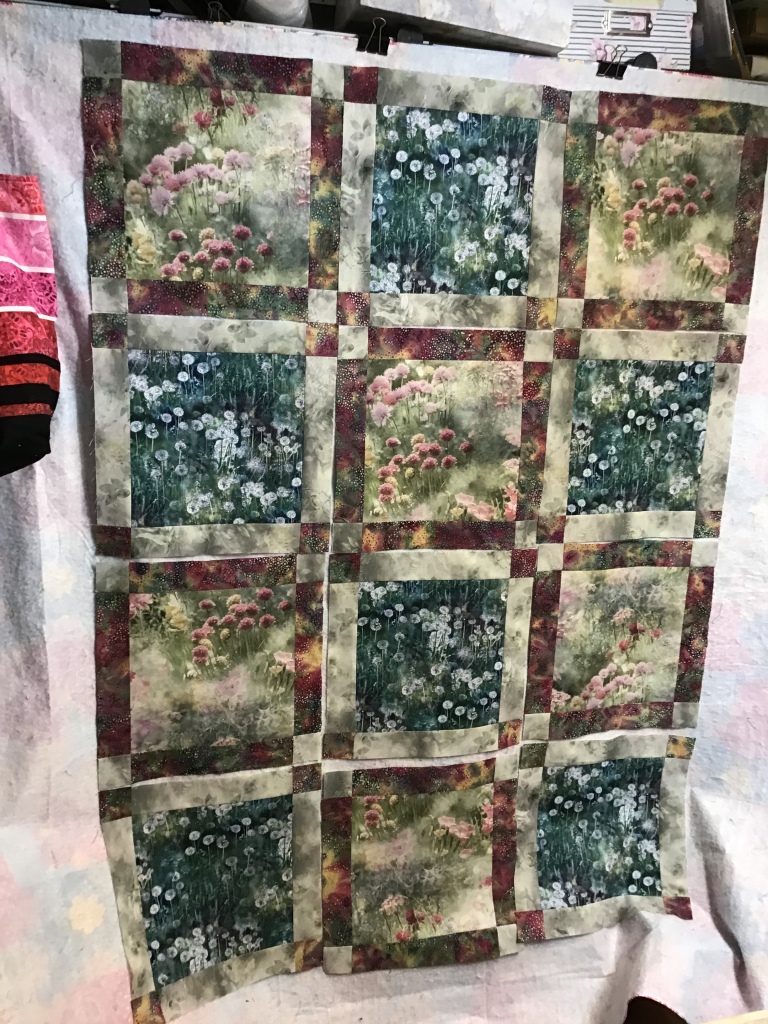
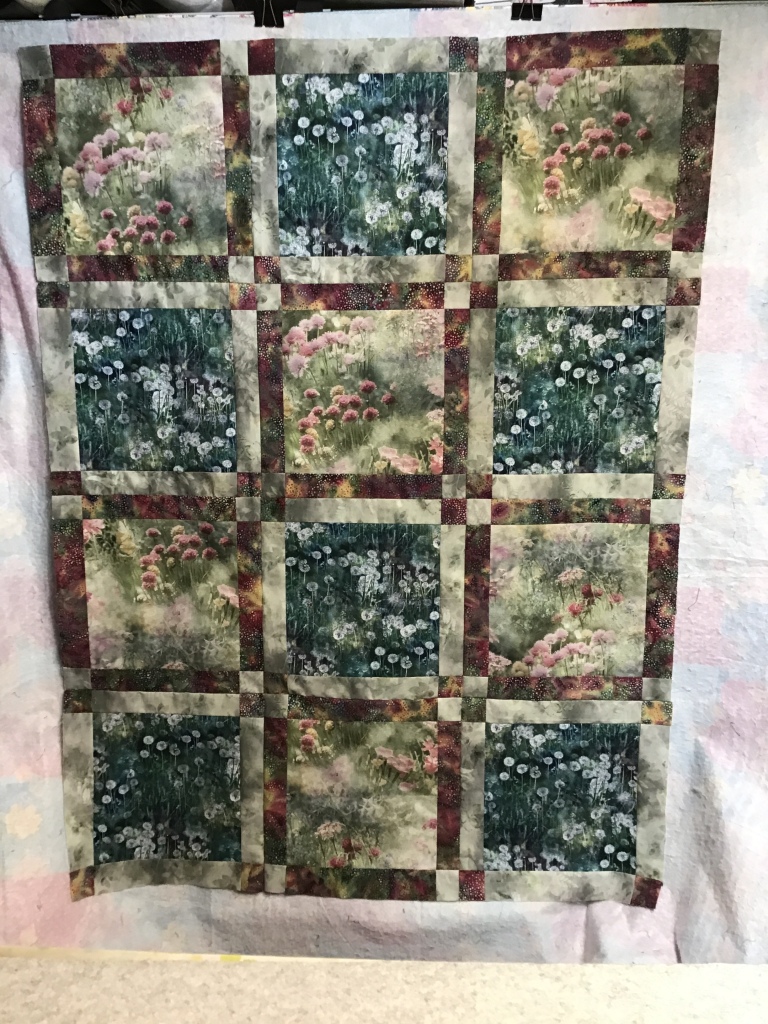
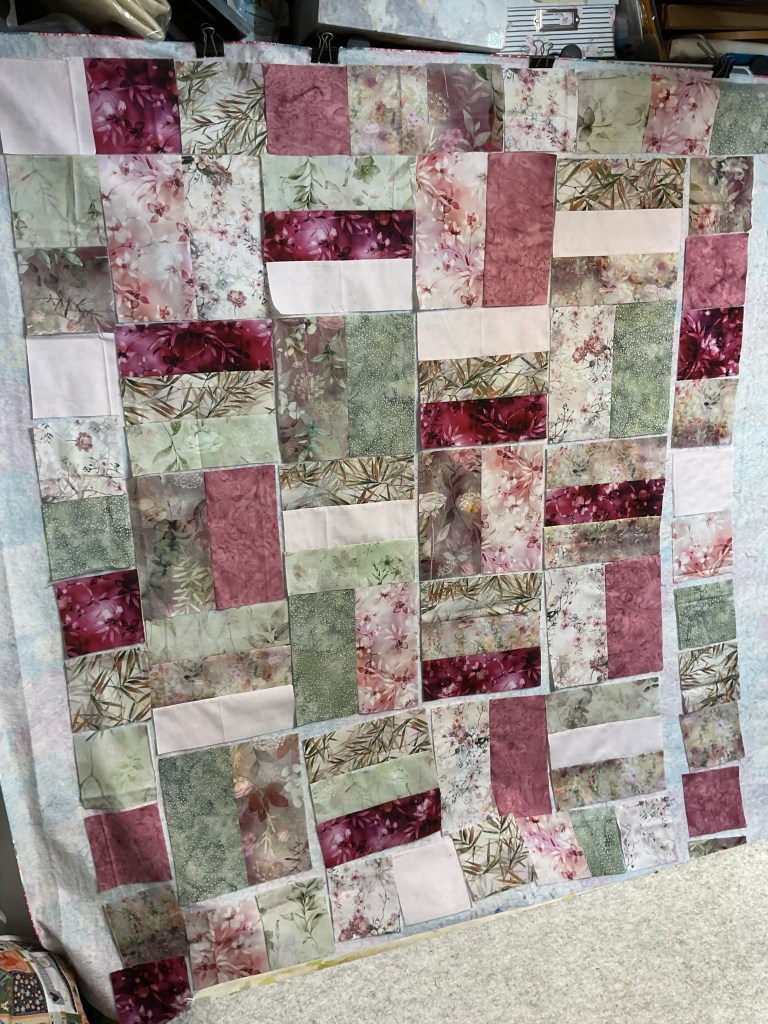
Take a look at some of my swaps. See how the dark reds are accumulating at the lower right corner of the photo at the left. In the middle photo, I swapped some blocks around and it’s starting to look a bit better, but we’re not quite there yet. And then the photo at the right looks the best of all. Often, arranging the blocks takes longer than sewing the whole top together, especially if you’re making a Villa Rosa pattern!

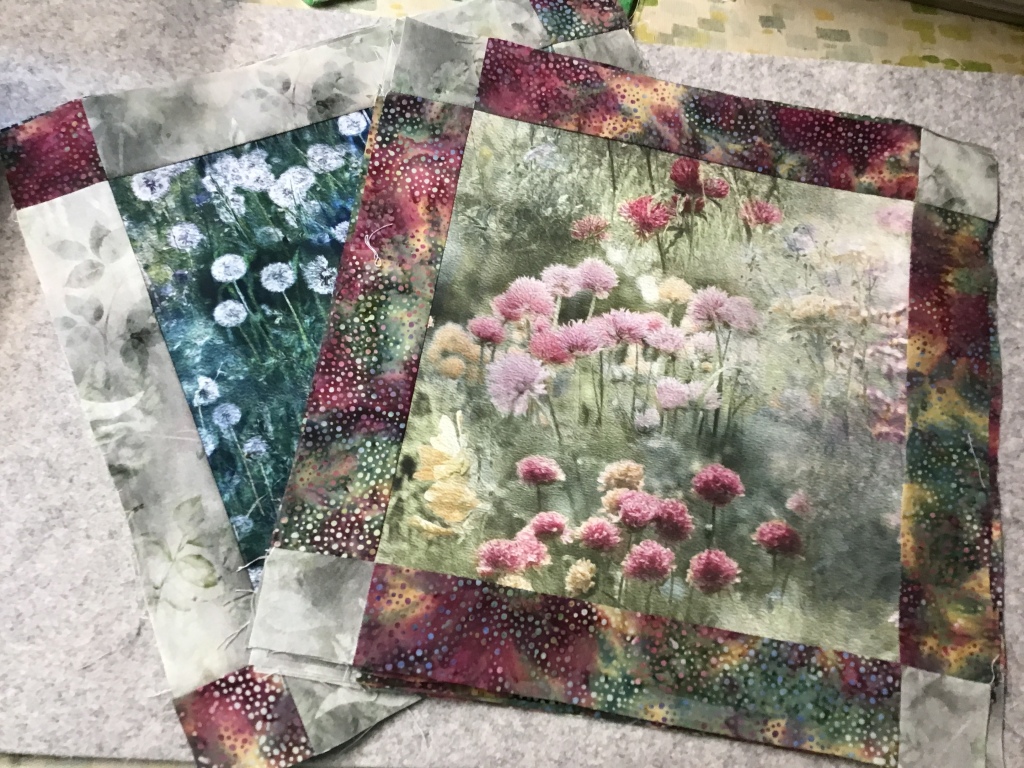
Now that I’m happy with how the blocks look, we’re going to add a border of squares all the way around the blocks. Huh! Bet you were wondering what we were going to do with all those squares (besides add them to our 5″ square stash).

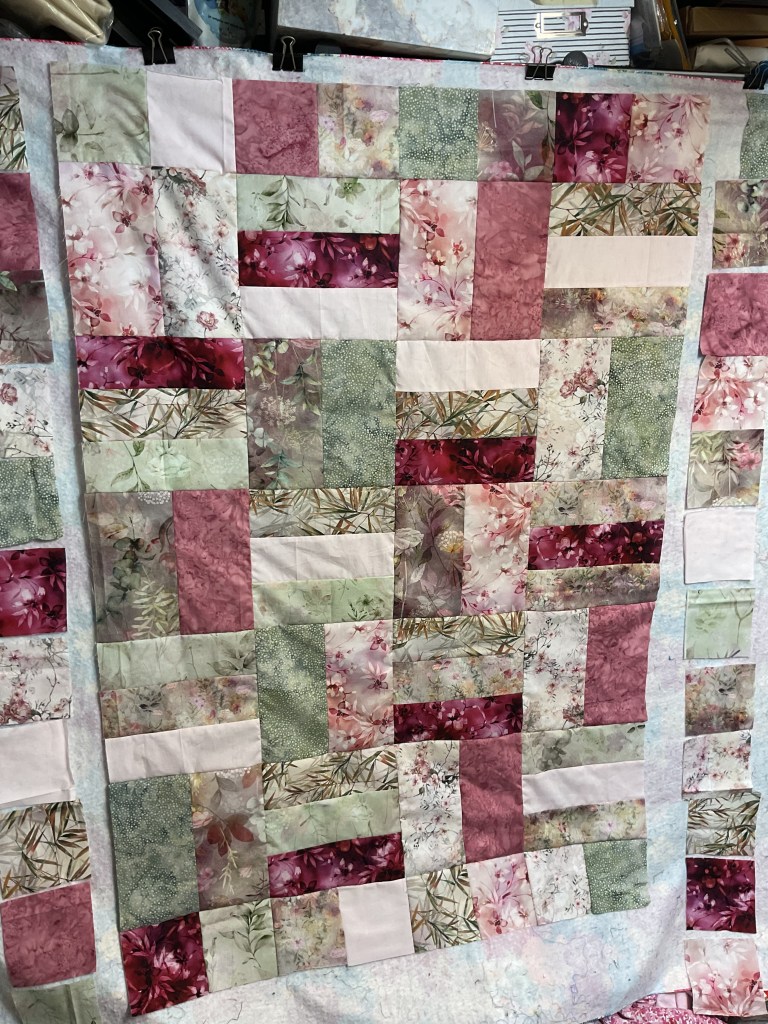
A colorful quilt top made of various fabric pieces in shades of pink, green, and white, arranged in a patchwork design.

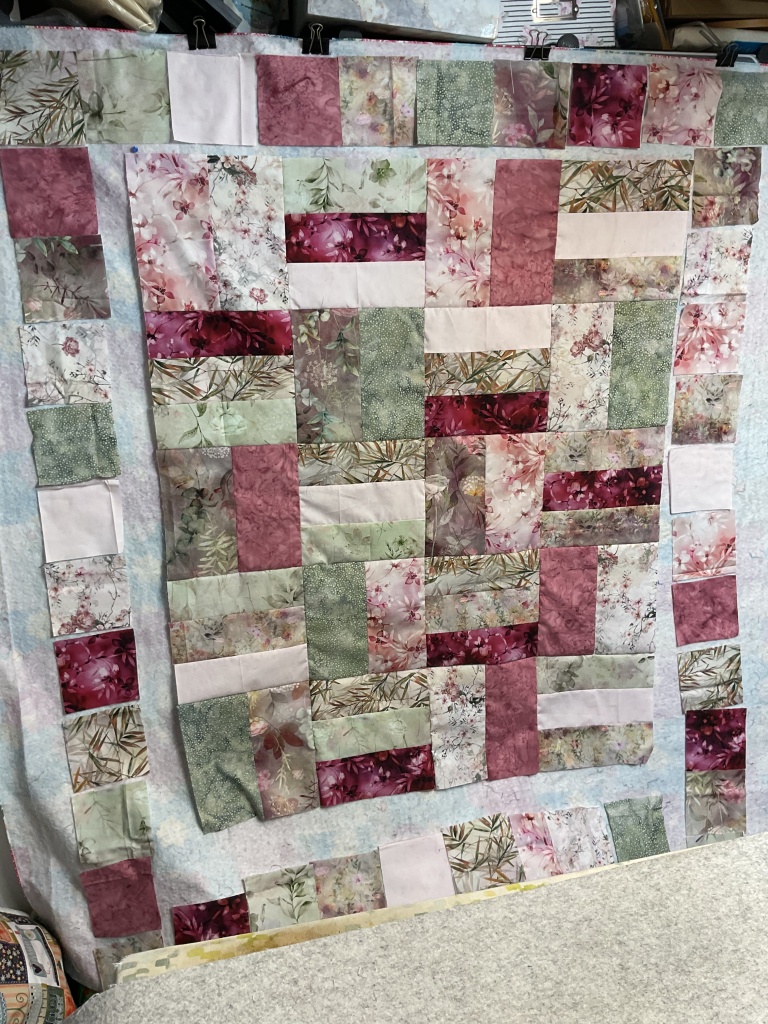
Guess what?!? Now it’s time to swap the squares around until the quilt looks just right (are you feeling a little bit like Goldilocks, ??? LOL!).

Take a look at some of my swap outs below. You might wonder why I went ahead and laid out my border of squares before I sewed the blocks together for the quilt center. I was afraid to sew the blocks together in case I would need to tweak them again once I laid out the border squares.

A quilt top layout featuring various floral and patterned fabric pieces in shades of green, pink, and mauve, arranged in a patchwork design.

Okay, I’m happy with the blocks and outer squares layout, so I’m going to sew my blocks into rows and then sew the rows together.

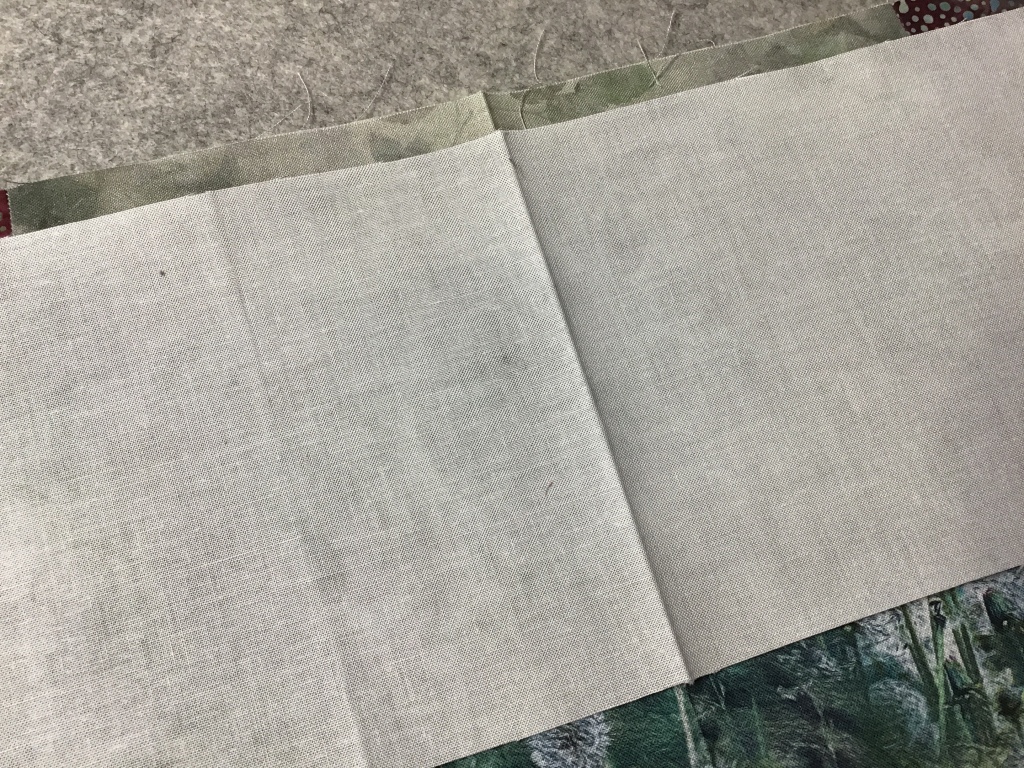
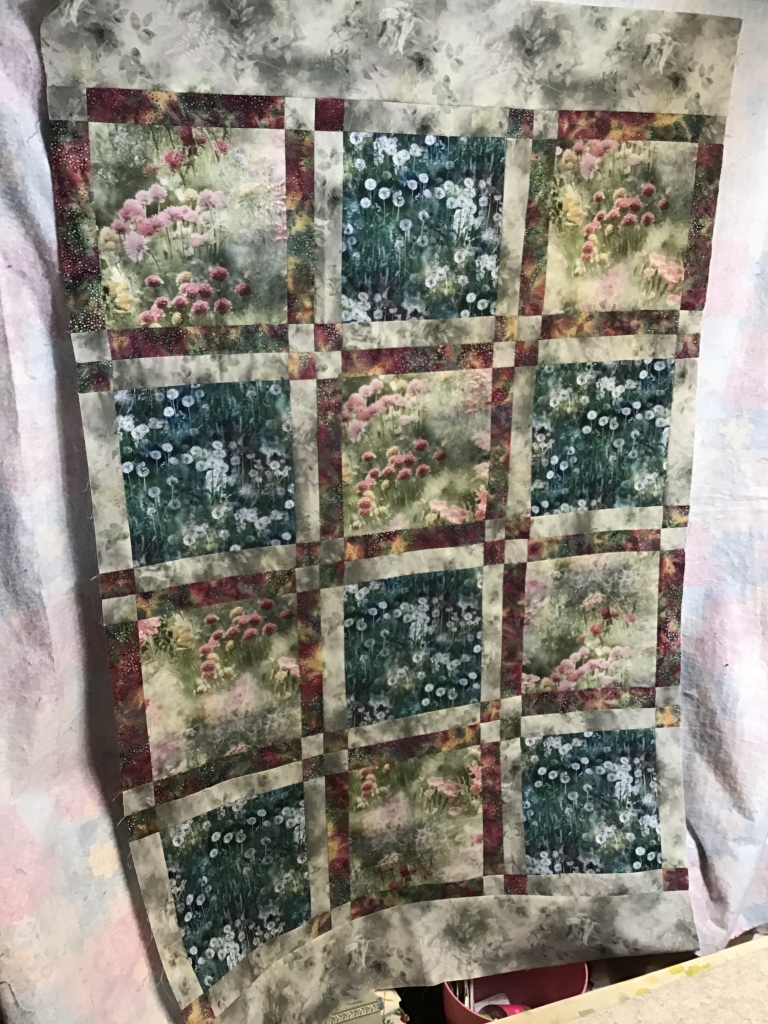
The center of the quilt is now sewn together. OH NO! Somehow I flipped a block at the bottom right corner of the quilt center! Sheesh! How’d I manage to do that?!?

A partially completed quilt top featuring a variety of floral and patterned fabrics in shades of pink, green, and white, arranged in a block design on a light background.

Oh well, don’t panic! We can fix this. We have 2 options – either leave it alone and continue or else take a break to rip out the corner of the quilt and sew the blocks back together. Can you guess which option I chose?

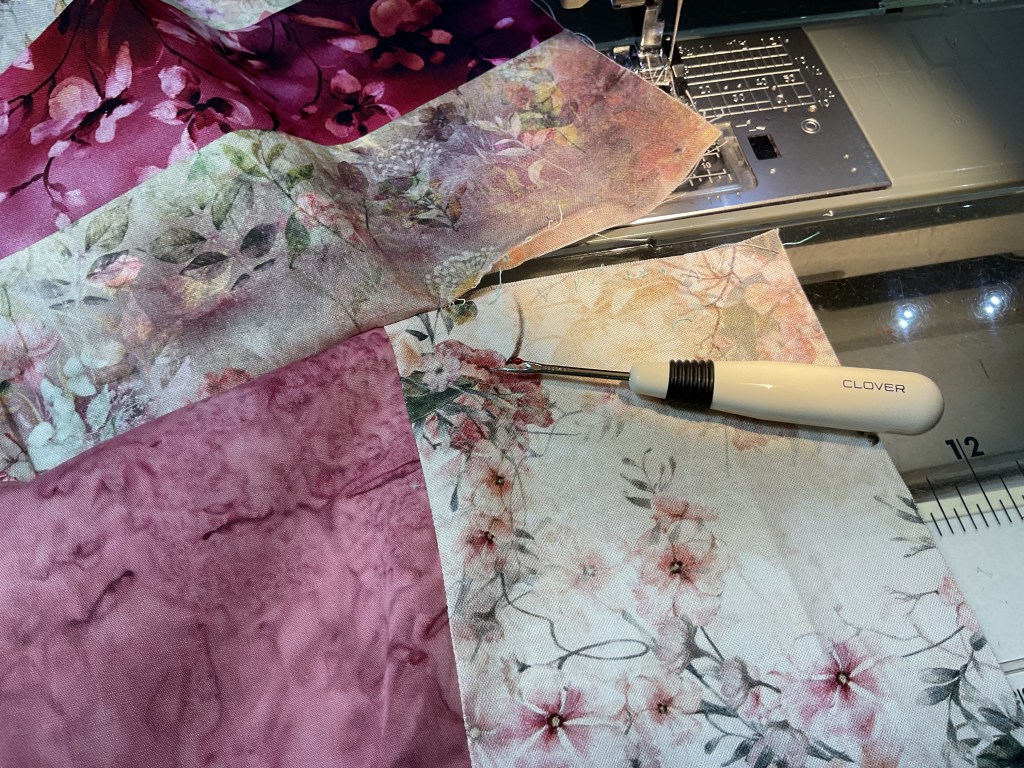
Yup, time to grab my pal (and my enemy – I guess that makes him my frenemy, doesn’t it?), Jack the seam ripper. Do you have a favorite seam ripper? Mine is by Clover. In my humble opinion, it’s simply the best seam ripper ever. Don’t have this one? You can find it HERE. Let me know what you think.

A Clover seam ripper, displayed in packaging, designed for easily cutting threads.

Anyway, time to rip!

Ugh! Look at all the threads bits! Ripping out stitches is definitely NOT my favorite thing to do, but it’s necessary sometimes. And besides, Jack really enjoys himself when we do.

Close-up of several fabric pieces in shades of pink, with threads visible on one piece.

Now I can resew the block into the quilt. This time, I’m making sure it’s turned the right way.

Okay, disaster averted, thank goodness. I’m still not a fan of the mauve rectangle touching the dark red one, but unless I want to do a ton more ripping and resewing, I’ve decided I can live with it. What do you think? Should I have ripped out the other block, too?

Quilt top featuring an assortment of floral and patterned fabrics in shades of pink, green, and cream, laid out in a patchwork design.

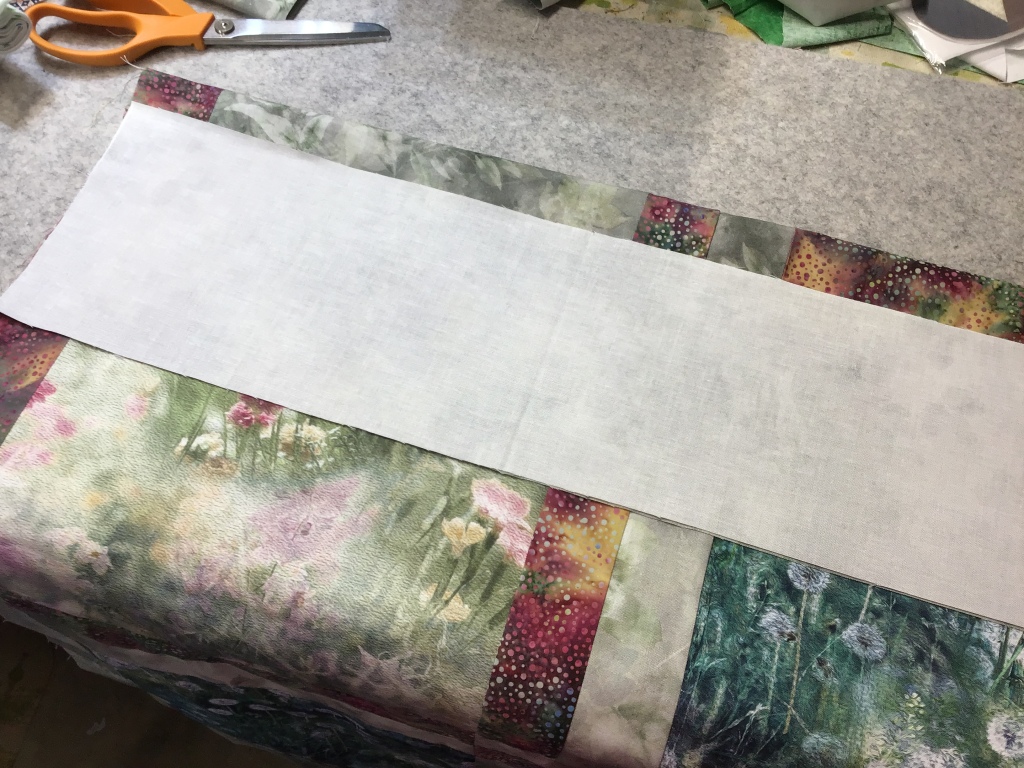
Moving on……..time to sew my squares into rows and then I’ll sew them to the quilt center. Fingers crossed I don’t get any of them mixed up. I’m going to sew the top and bottom squares together first and then I’ll sew them to the top and bottom of the quilt center.

Next I’m going to sew the side border squares together and then I’ll sew them to the sides of the quilt center.

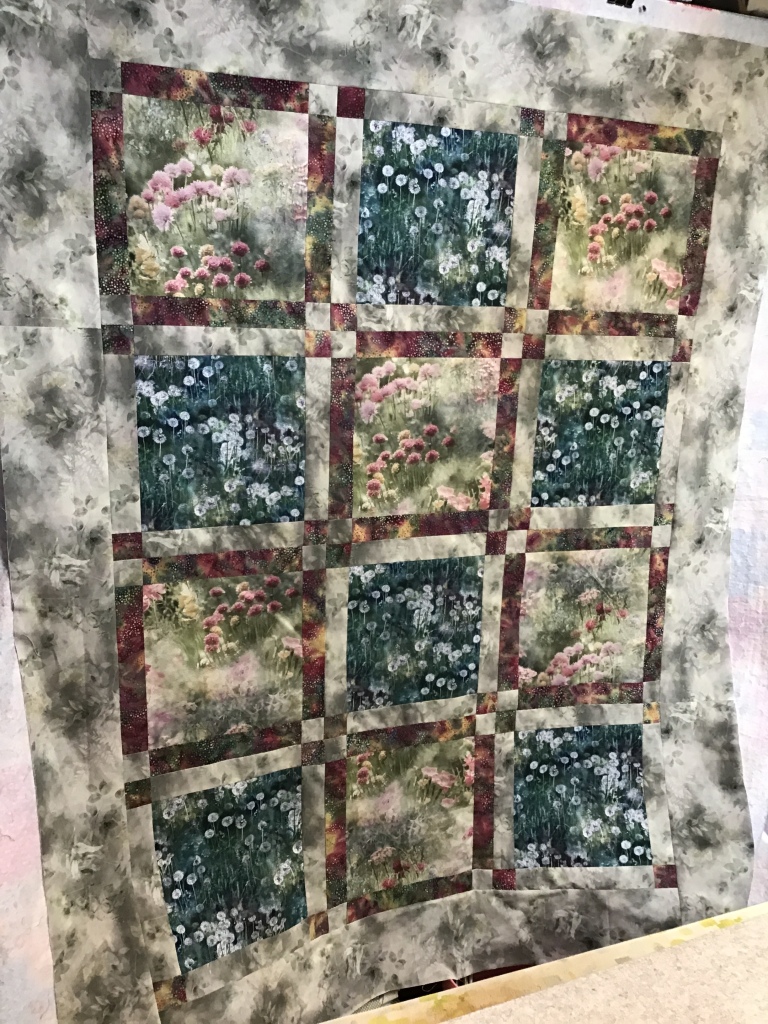
And here is the completed Busy Bee quilt top (or flimsy). Isn’t it really beautiful? LOVE LOVE LOVE these fabrics!

A completed quilt top featuring a patchwork design made of floral and textured fabric squares in shades of pink, green, and white, displayed against a light background.

Let’s take it outside in natural light to see the fabrics sparkle (instead of my dark sewing dungeon). Love it sew much! Can’t wait to finish this one.

A vibrant quilt displayed outdoors on a clothesline, featuring a patchwork design in shades of pink, green, and white.

Of course, after you get the flimsy finished, it’s time to layer it with batting and backing and quilt it. Then bind it and add a label. Hopefully soon.

Well, that’s it for me this week. Try to get a bit of sewing in this week.

See you next week!

Always,

Tricia @ VRD
Rose Cards · Tutorials · villa rosa designs

VRD Morning Tea Quilt Tutorial

Happy Thursday to you!

PSST!

Hey, it’s me, Molly!

Long time no see! I’m stealing the blog from Tricia this week – it’s been a while since I snuck in here and did a tutorial. Sorry it’s been so long, but things have been awfully busy at the VRD shop and I’ve been working hard to create new patterns for you, too.

I heard Tricia’s doing a bunch of tutorials to help everybody get back into quilting this fall, so I thought I’d add one to the mix – Morning Tea. Yup, another Tea quilt. LOL!

Anyway, let’s get back to today’s tutorial, Morning Tea.

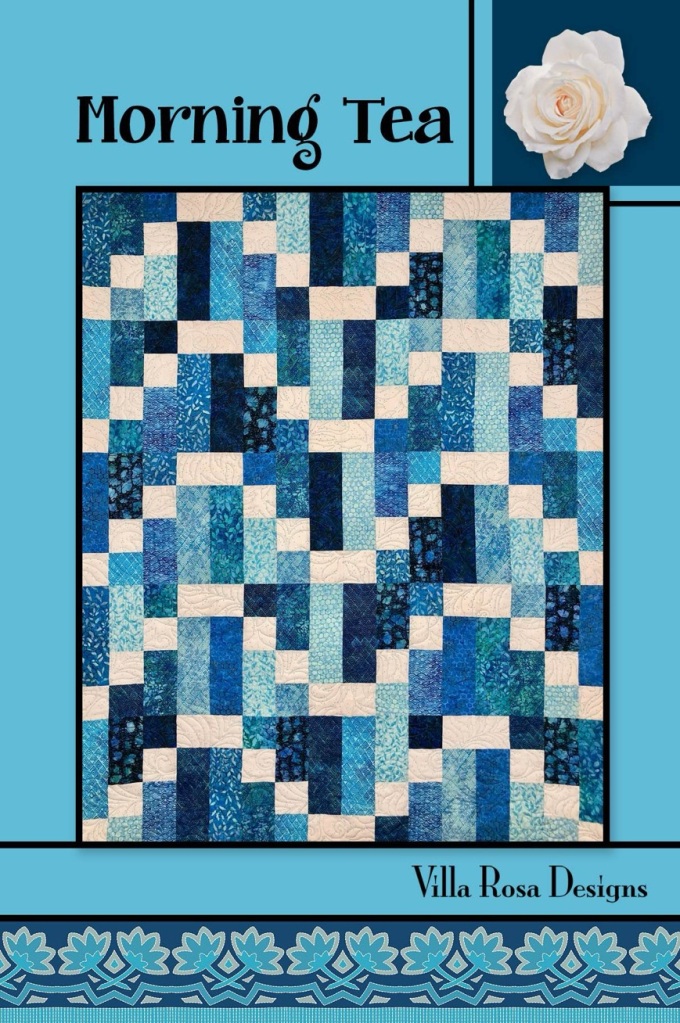
Here’s Morning Tea, designed by our very own VRD Rose Queen, Pat. It’s a fat quarter (18″ x 21″) friendly pattern plus you need to add a background fabric. And of course, it’s fast and fun!

A quilt design titled 'Morning Tea' featuring various shades of blue fabrics arranged in a patchwork pattern, with a light background and floral design at the top corner.

If you don’t have the pattern yet, you can get your print copy HERE or digital copy HERE

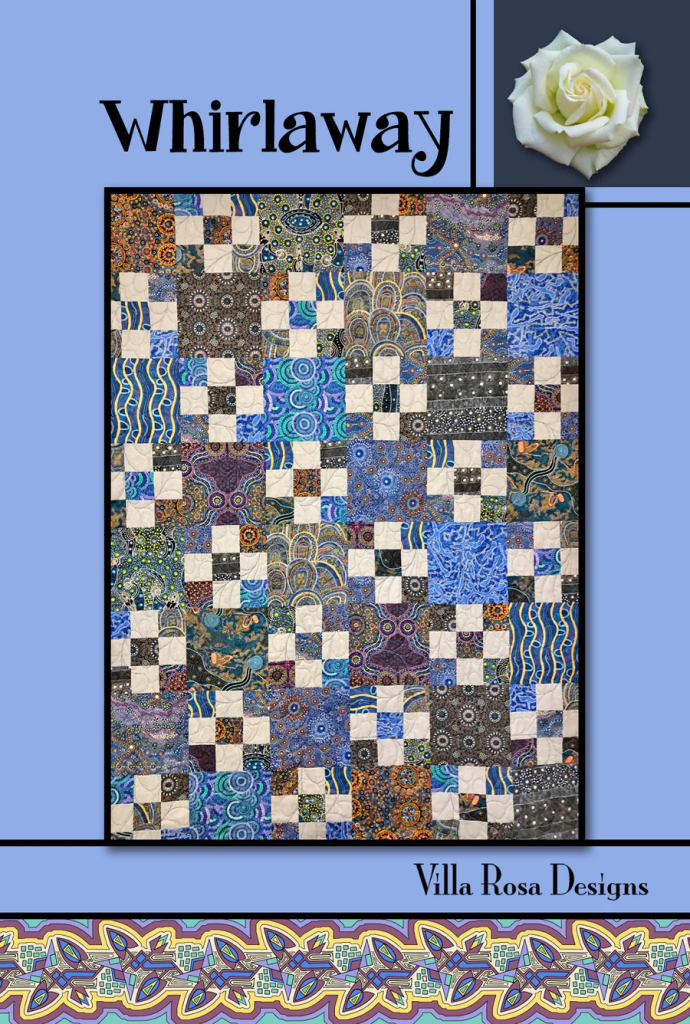
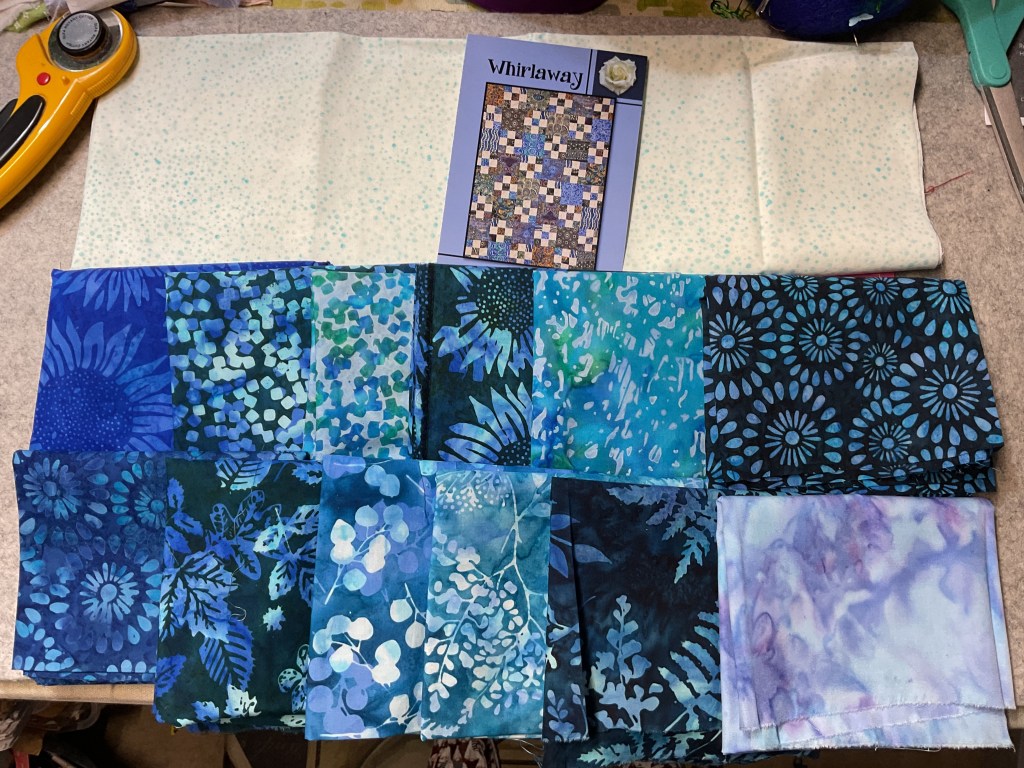
I wanted to play around with some of our Aboriginal fabrics in the VRD shop again and decided on this range of blues. Fun, huh? The squiggly light fabric towards the bottom of the photo is my background and the one in front if it is my binding.

A collection of Aboriginal fabrics in various colors and patterns, laid out on a green surface. The fabrics feature intricate designs, including circles and wavy lines, suitable for quilting projects.

Lucky you! We even have some kits left, and you can get yours HERE. Your kit comes with the fat quarters (FQs), background fabric, binding, and the pattern. I do have to say some of the fabrics have been discontinued but we did add some great replacements and they work perfectly too.

Let’s rock this quilt!

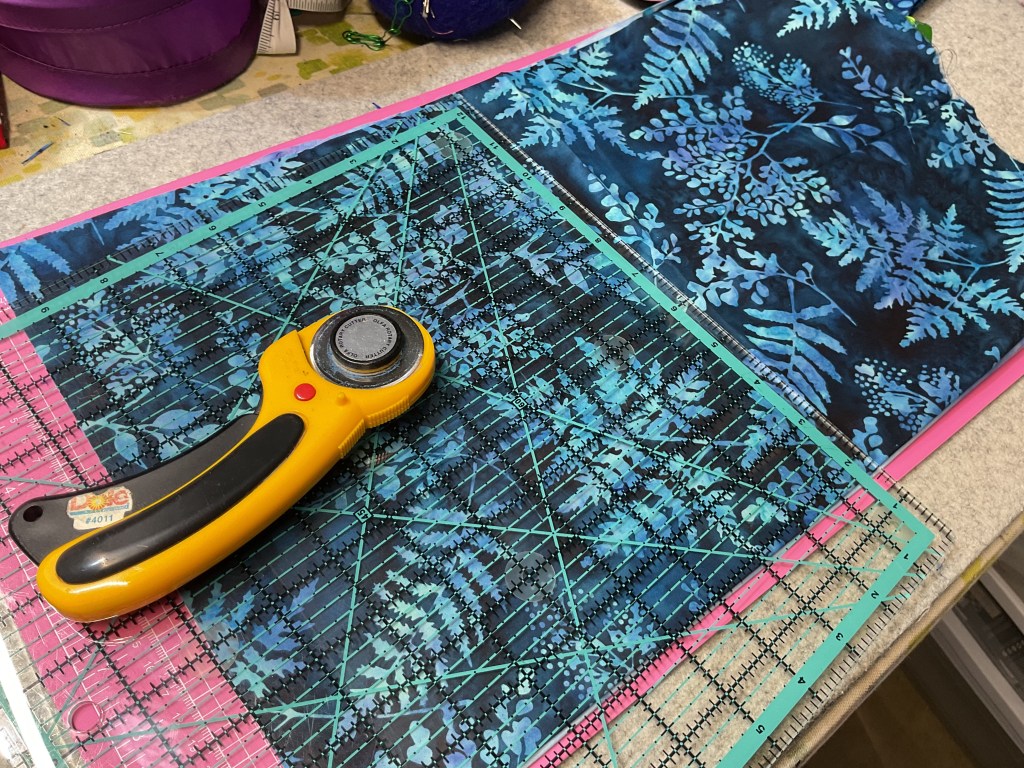
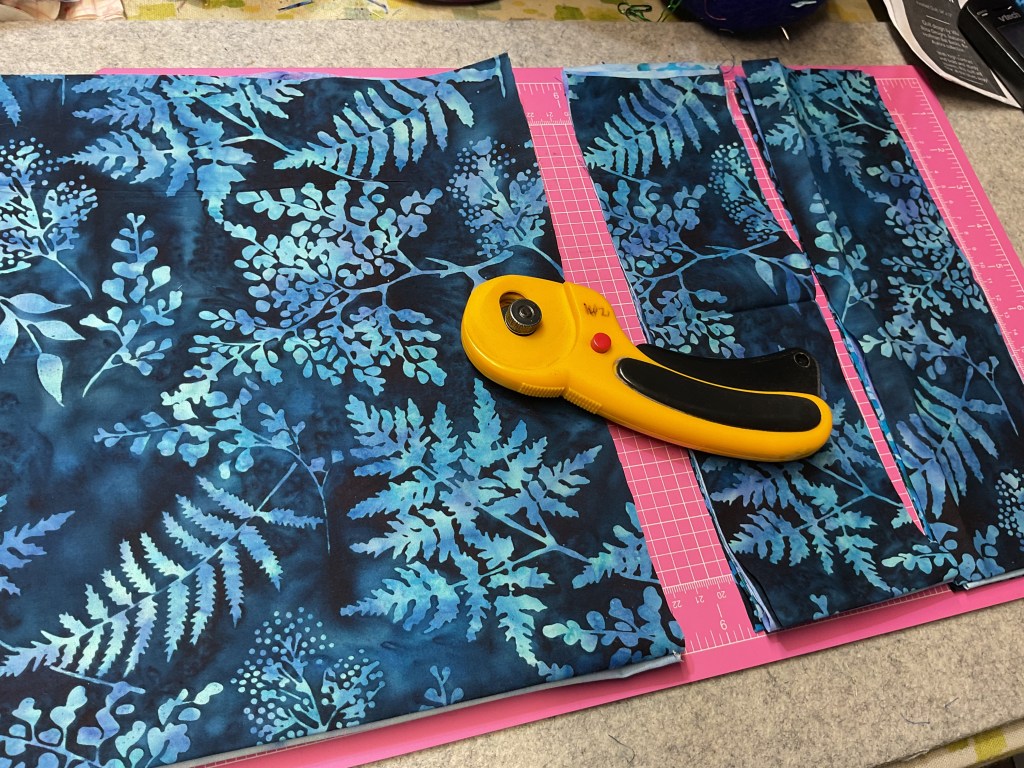
  1. First step is to divide your fat quarters into 2 piles. From the first group, we’re going to cut them into 2 different widths.
Two pieces of fabric with distinct Aboriginal designs, positioned on a green cutting mat with grid lines; one piece is wider and rectangular, and the other is a narrower strip.

2. From the remaining smaller group of FQs, you’ll cut the strips all the same width.

Two strips of fabric featuring a blue Aboriginal design, laid on a green cutting mat.

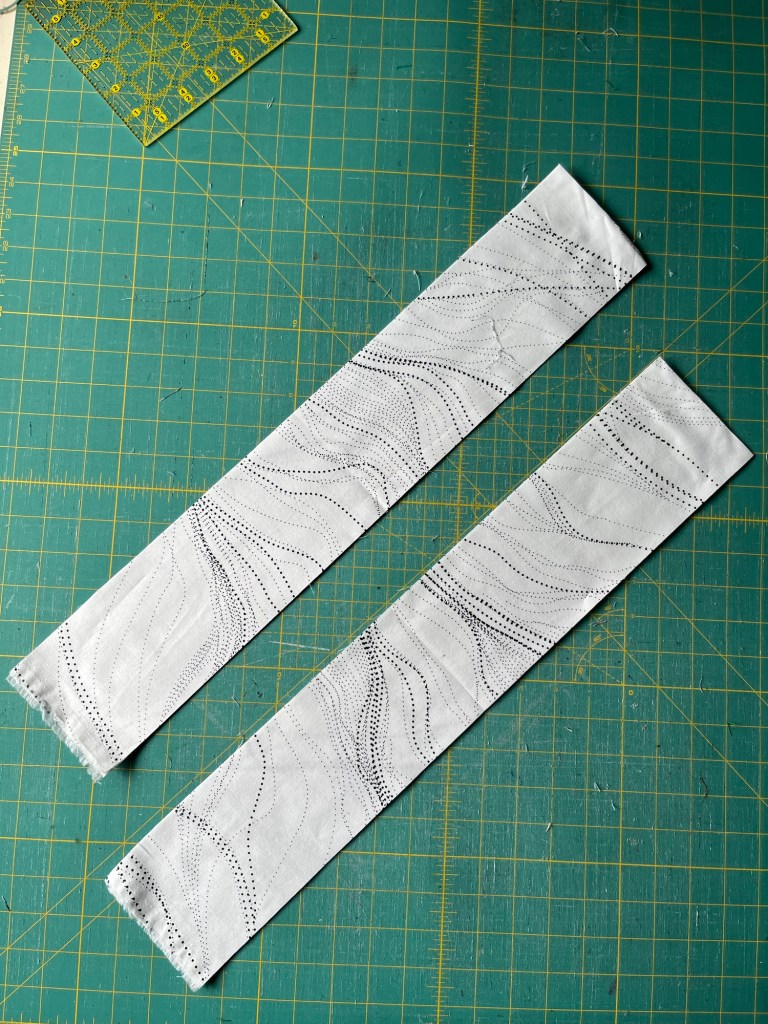
3. The background strips are all cut the same size by the width of the fabric, then we’re going to cut the long strips in half so our strips are the same length as our fat quarter strips. Genius!

Two strips of fabric with a squiggly pattern on a cutting mat, showcasing a quilting project.

4. Sew a background strip to each of the largest FQ strips. Next cut each of those strip sets into segments. I’m going to name these Unit A so we can keep everything straight as we go along.

5. Sew the remaining background strips between the small and the medium FQ strips. Subcut them into segments. These strip sets, I’m naming Unit B.

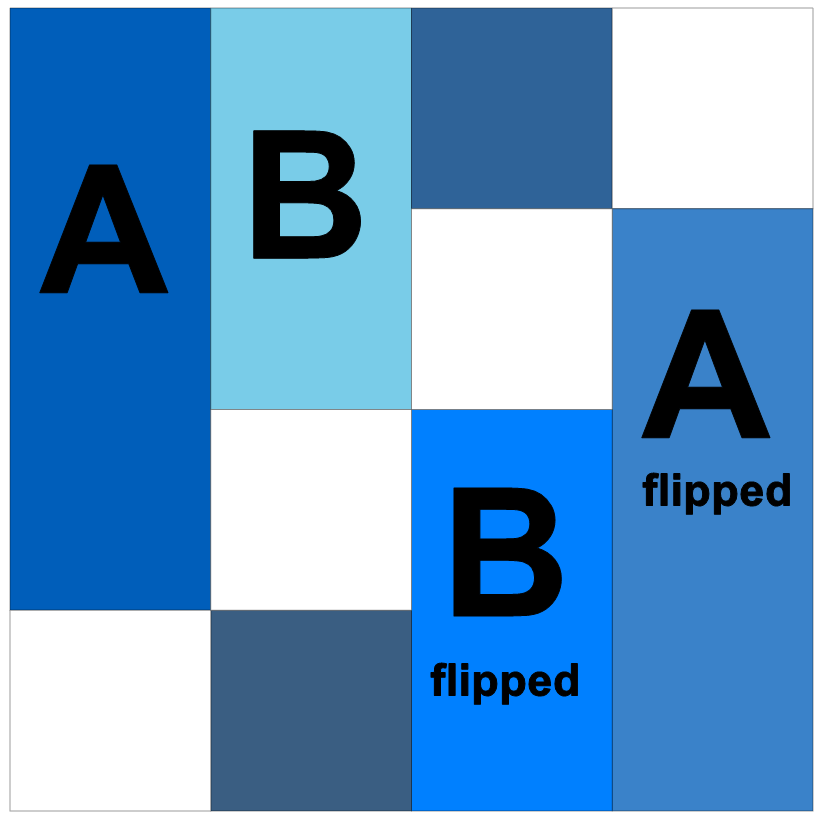
6. Are you following along? Because now we are going to sew our A and B units into blocks. Taking 2 of unit A and 2 of unit B, sew together with As on the outside and Bs in the middle. You’ll need to flip the last 2 units.

A quilt block layout featuring the letters A and B in various blue shades, with some blocks flipped.
Close-up view of a quilt featuring vibrant Aboriginal fabric patterns in shades of blue, black, and white, with intricate designs and stitching.

7. You will now make a reversed block with 2 more of each A & B units, turning the last 2 units as shown.

A visual representation of a quilt block layout, featuring blue and white squares, labeled with letters 'A' and 'B' indicating different fabric units.
Close-up of a quilt featuring a variety of blue Aboriginal fabric patterns arranged in a patchwork design.

8. You should now have the same number of each block. Time to play! You can lay your quilt out just like the pattern or you can play around with the layout and create some fun variations.

Here’s the original layout.

And here’s some cool variations to try out.

I bet you can even come up with your own block arrangement, so have fun!

9. When you’ve decided how you want to arrange your blocks, it’s time to sew the blocks into rows and then sew the rows together into the quilt top.

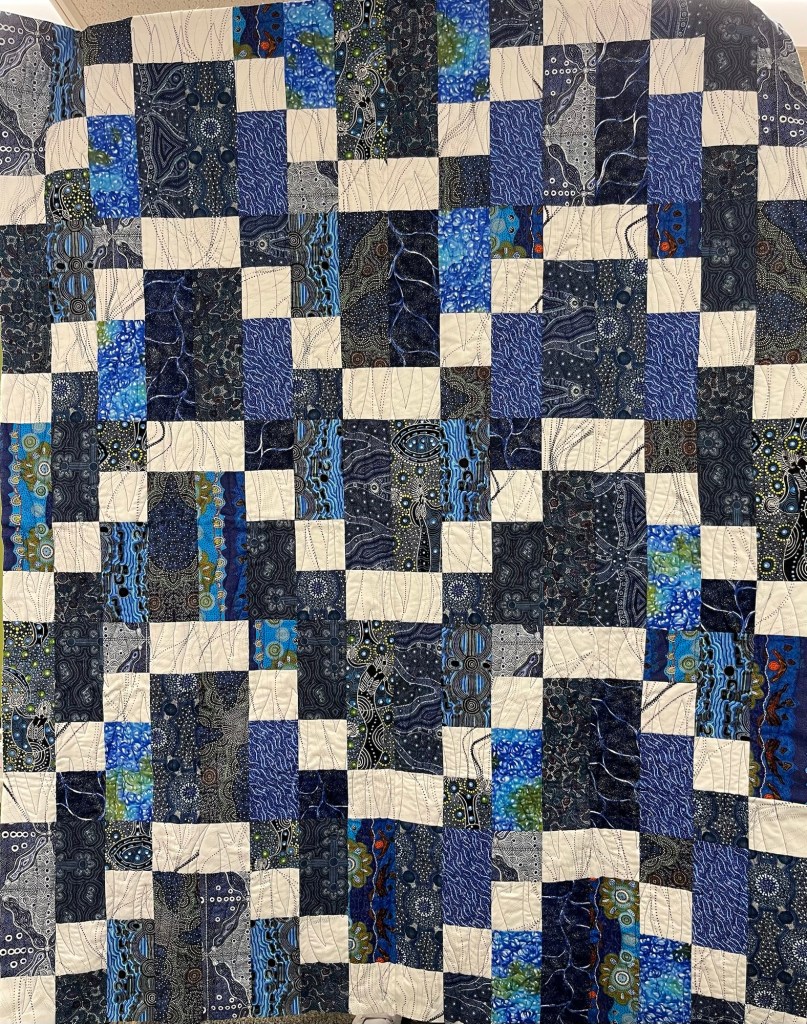
For my Morning Tea quilt, I’m going to stick with the original layout. Totally loving how it turned out!

A quilt featuring a patchwork design with various shades of blue, turquoise, and white, arranged in a square pattern.

10. Next up – layer, quilt, bind, and label your quilt.

Don’t forget to post your quilts on our VRD Facebook page or tag us on Instagram, #villarosadesigns. We love seeing your creations!

Thanks for stopping by and sewing with me!

Next week, Tricia will be back with another great tutorial for you.

That’s it for me.

Until next time —

Later,

Molly

Quilting Partners · Rose Cards · Tips and Tricks · Tutorials · villa rosa designs

VRD Tea With Mara Quilt Tutorial

Happy Thursday to you!

After our super fun Let’s Design a Quilt series (if you missed it, please check out the right side bar on the blog to find all of the links for the series) wrapped up last week, I promised a new group of tutorials to jump-start your autumn quilting.

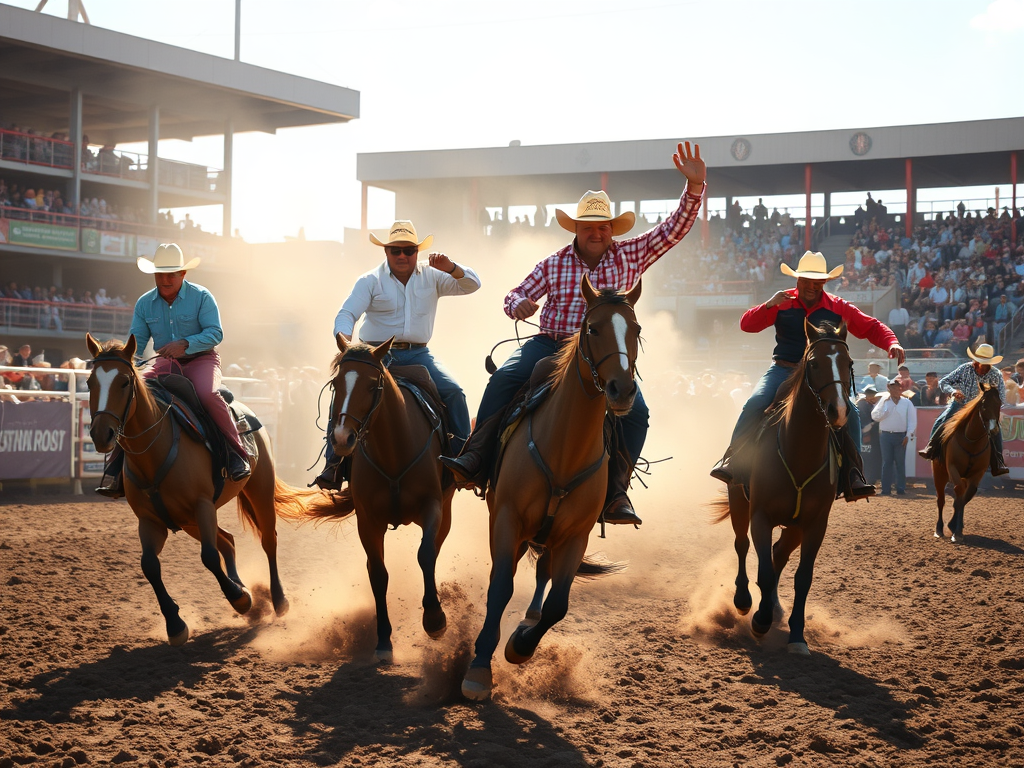
You know how this time of the year is filled with local fairs and such right before the kiddos go back to school? Well, this week we’re off to the rodeo! Yippee!

Four cowboys riding horses during a rodeo, raising their hands in excitement, with dust kicking up in the background and an audience visible in the stands.

Have you ever been to a rodeo? I have a vague memory of going when I was a kid. My Grandma (my Dad’s mom) was always crazy about horses and always had at least a couple on the farm (my Grandpa always had his cows). I spent a lot of time on the farm as a kid as my grandparents’ farm was just down the road from our house. I have lots of good memories on the farm from when I was a kid. Baby animals were probably my favorite. Of course, running through the fields at midnight in the summer chasing down stray cows or horses was always fun, too. Good times.

Let’s slap our cowgirl (or cowboy) hats on our heads, put on our boots, and get started!

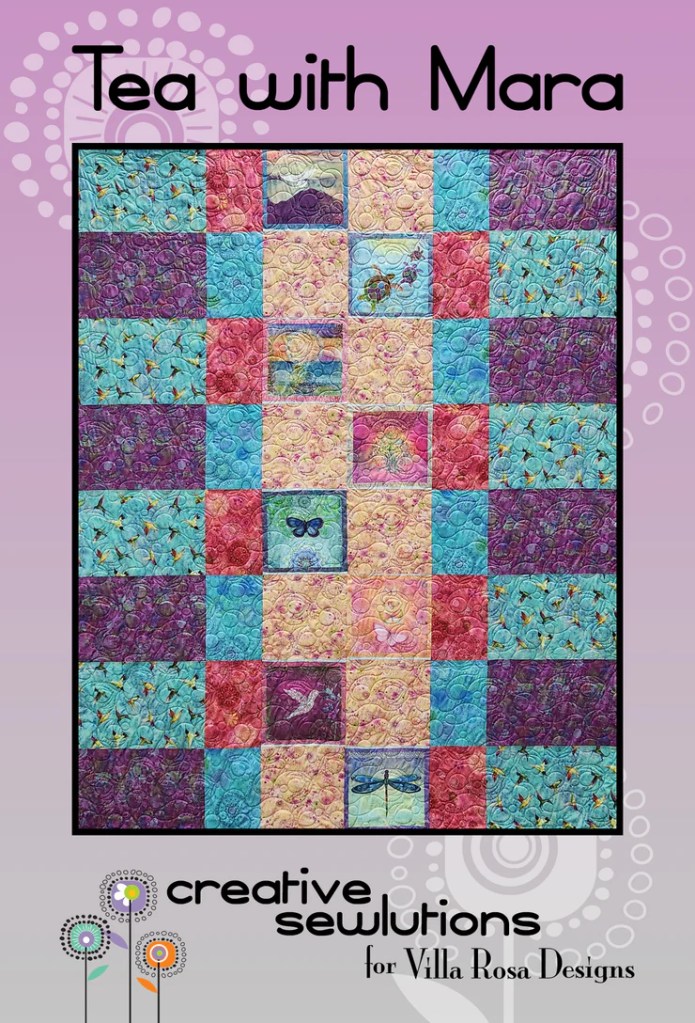
Tea With Mara is designed by Deanne of Creative Sewlutions, one of our talented VRD designers. This quilt finishes at a generous 58″ x 72″ and it can handle those large prints we are so loathe to chop up. Use printed panel squares……or not down the center. Sew many options……..sew little time!

A colorful quilt titled 'Tea with Mara' featuring a patchwork design with floral and butterfly patterns, highlighting various shades of pink, blue, and purple.

Get your digital pattern HERE or your print pattern HERE

PSST! Don’t forget, patterns always ship free, so grab a few more while you’re perusing the VRD patterns at the online shop.

For today’s tutorial, I’m using fabric from our friends over at Hoffman. It’s a digital-printed collection called Rodeo Dreams. When I saw this collection, I loved it! Maybe because it brought back fun memories from my childhood? So I’m letting you know right now that you’ll be seeing a couple more tutorials featuring Rodeo Dreams.

Just a quick word of caution when using digitally-printed fabrics – start with a brand new needle because if your needle is dull, you run the risk of damaging the fabric and we certainly don’t want to do that.

A selection of quilting fabrics, including blue and red bandana prints, a brown print, and a fabric featuring cowboys on horseback, alongside a digital pattern for the "Tea With Mara" quilt tutorial.

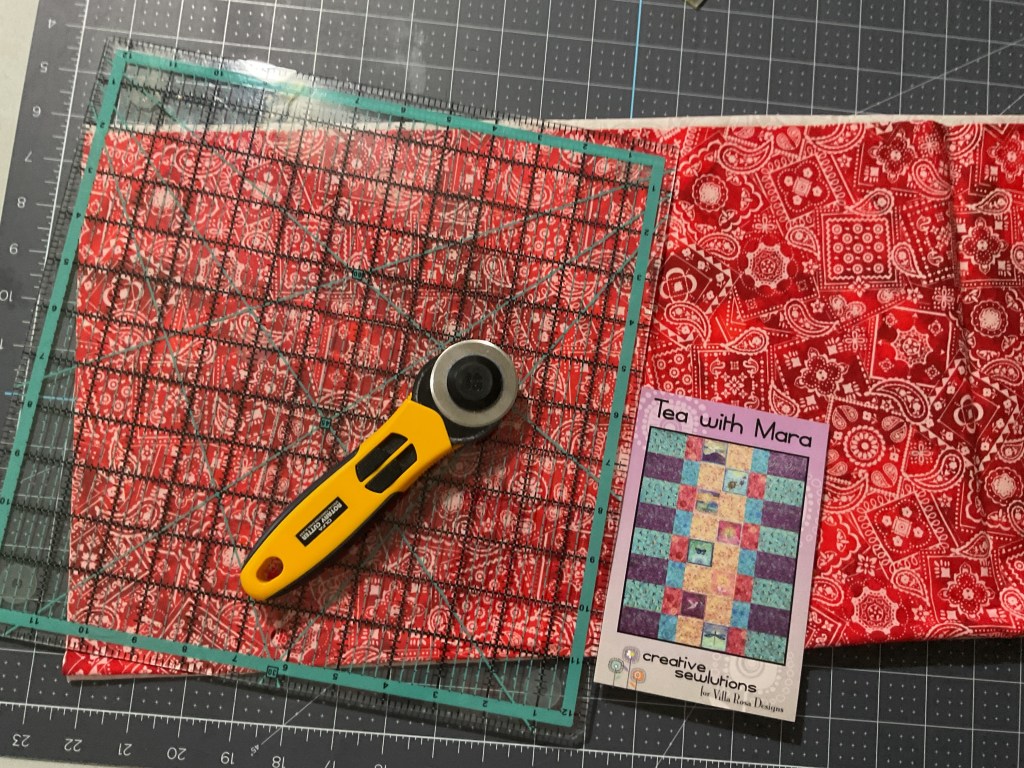
The first fabric I’m going to cut is the running yardage of the rodeo vignettes. I’m very glad I have a ruler the same size as the required block size in the pattern so I can fussy cut the squares easily and accurately.

A cutting mat featuring a quilting ruler over fabric with a rodeo scene, alongside a tutorial card for the 'Tea with Mara' quilt pattern.

Having the right sized ruler makes it a lot easier to fussy cut these vignettes than trying to cut strips and then cutting the strips into squares. This type of fabric makes strips and squares kind of tricky because the vignettes aren’t all the same size nor do they line up in a perfect grid.

Love quilting rulers! Boy, they do make quilting so much easier, faster, and more accurate.

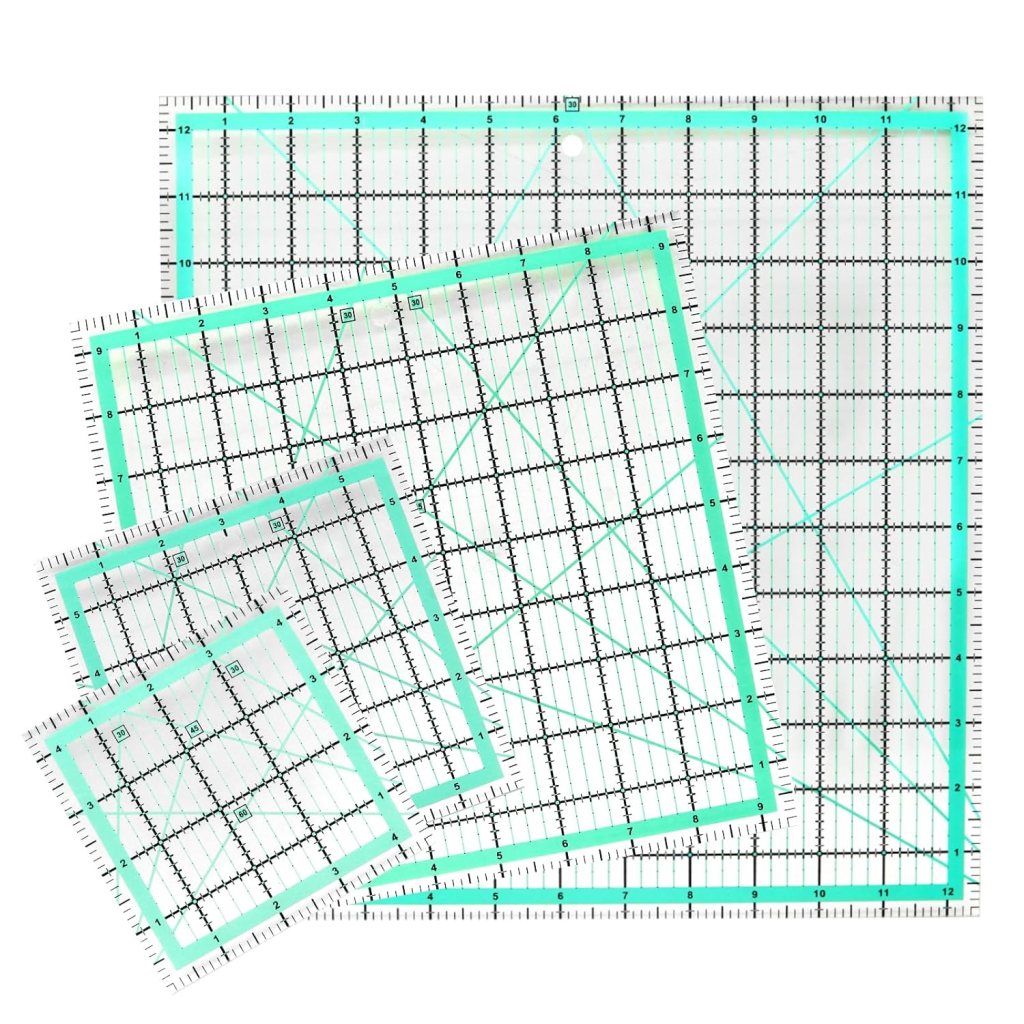
Mostly, I rely on my 6×24 and 6×12 rulers for cutting, but it’s always a great idea to have a collection of square rulers in the most common sizes, which are not only good for fussy cutting, but also for squaring up blocks.

A set of clear quilting rulers in various sizes, featuring measurement grids and markings, placed on a white background.
This basic ruler set includes rulers in common sizes

The only problem with fussy cutting is that your fabric will look like Swiss cheese when you get all done! LOL! Check mine out below. I can still fussy cut more pieces out of the fabric, but there is definitely more waste doing it this way than cutting strips into squares. Just something to think about if you’ve never fussy cut before.

A layout of quilting fabric featuring rodeo scenes, displayed on a flannel wall alongside various quilt blocks.

Now I’m finished making Swiss cheese, it’s time to cut the rest of my fabrics. Loving this red bandana print – it looks like the real thing (digitally printed, of course)!

A rotary cutter and quilting ruler positioned on a cutting mat, with a vibrant red bandana print fabric and a quilt pattern titled 'Tea with Mara' by Creative Sewlutions.

Here are all my fabrics cut and ready to sew.

A collection of quilting fabrics including a red bandana print, a blue bandana print, a brown fabric, and a fabric featuring a cowboy chasing a calf, with a quilt pattern titled 'Tea with Mara' visible.

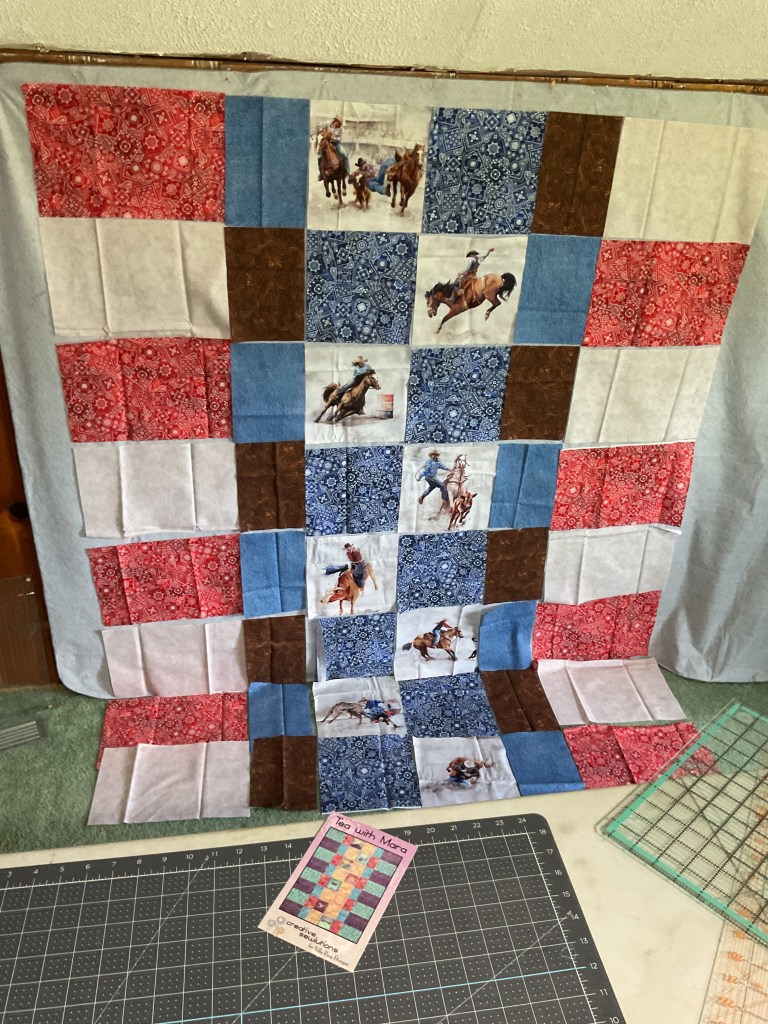
But before I start sewing, I’m going to lay out all of the pieces on my flannel wall. I want to make sure I like the placement of the rodeo vignettes before I commit to their positions permanently.

Quilt blocks arranged on a flannel wall, featuring red, blue, and brown fabrics with a rodeo theme and floral patterns.

I really like the nice big pieces in this quilt, even if I have to layer pieces on the floor because the quilt is going to be longer than my flannel wall. It’s going together surprisingly fast, though.

Of course, you don’t have to fussy cut your fabrics like I did – you could use any fabric you wanted for the center squares. Or you could even scrap this quilt up and use some of your stash. Such a versatile pattern – I could totally picture this quilt in a great collection of fall or harvest fabrics! Hmmmmmmmm….

You could even add a 6″ finished border, which would make the quilt a big 70″ x 84″!

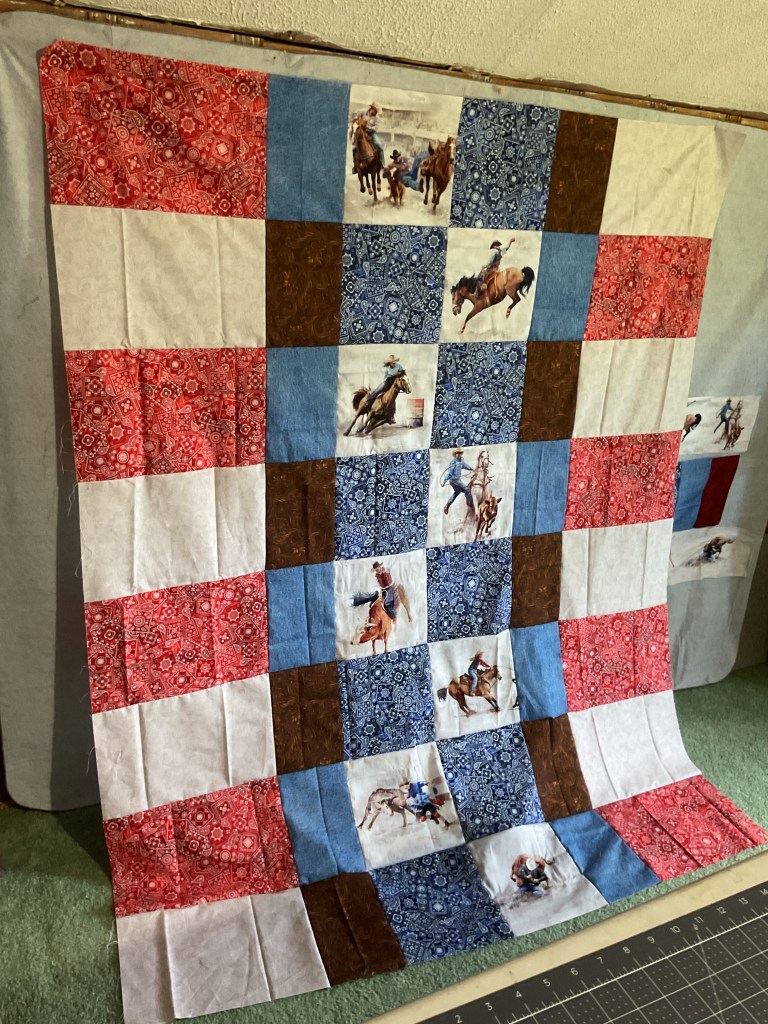
Now I’ve got all my pieces up on the flannel wall. I switched a couple of the rodeo vignettes around, but other than that, I think it’s ready to sew. I like how it looks.

A colorful quilt layout featuring horse and rodeo-themed fabric squares, with red, blue, white, and brown patterned blocks arranged in a grid pattern on a design wall. A cutting mat and quilting ruler are visible in the foreground, along with a pattern card labeled 'Tea With Mara.'

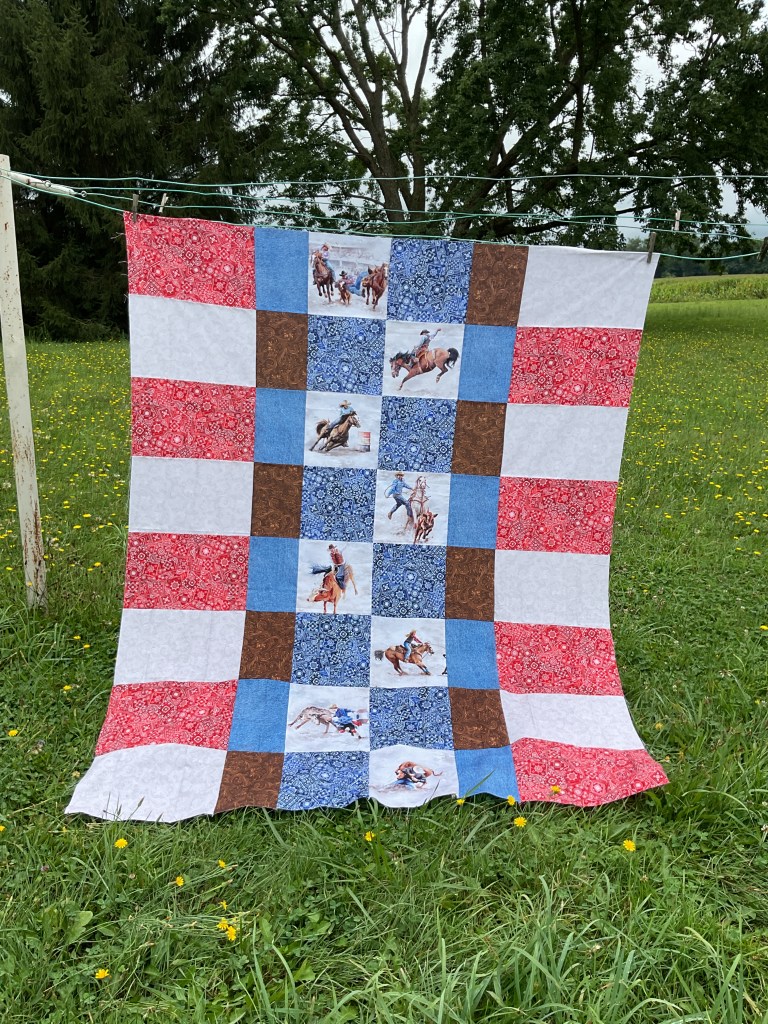
Yippee-ki-yi-yay! Let’s sew this little dogie together! I really like how the fabrics alternate in placement from side to side – it definitely helps to keep your eyes moving around the quilt. The red and blue bandana fabrics really make this quilt in addition to the rodeo vignette squares. LOVE IT!

A quilt with alternating squares of red, white, blue, and brown fabric, featuring images of rodeo scenes.

And here it is outside on the clothesline. All I need is a horse or 2 grazing in the backyard, right? I’ll be binding this quilt with the dark blue batik you see in the fabric and pattern photo way up at the beginning of this tutorial. I think it will frame the quilt nicely.

A colorful quilt with red, blue, brown, and white squares, featuring rodeo-themed prints, hanging on a clothesline in a grassy field.

Now to get this quilt top layered, quilted, bound, and labeled…….some day, anyway. Right now I’m going to add it to my teetering pile of flimsies and UFOs. I’m hoping to make a good-sized dent in that pile this fall and winter. It’s just been way too hot this summer to machine quilt and do binding.

Here’s to autumn with its warm days and cool nights. And the brilliant colors of the season…. I can’t wait!

See you next week for another great tutorial!

Until then –

Always,

Tricia @ VRD

Quilting Partners · Rose Cards · Tips and Tricks · Tutorials · villa rosa designs

VRD Augustina Quilt Tutorial – Perfect Summer Project

Happy Thursday to you!

WHEW! If you’re like me, you are having a heatwave right now. 90’s every day. It even hit 100 on the thermometer on Monday! YIKES! I’m sooooo not ready for these temps. It’s like we went straight from 50’s to 90’s in a couple weeks.

90’s are definitely not normal for this time of year here in northwestern Pennsylvania. AND we have high humidity to go with the heat which makes me want to just melt into a puddle on the ground every time I have to step outside. I literally had to scramble on Sunday to get the window AC units in, but we’re all good now. I just don’t want to go outside anymore.

A woman in a floral dress appears distressed while crawling on a sunlit street, with water droplets visually distorting around her, creating an impression of melting.
I’m melting into a puddle………!!!!

Luckily my dungeon studio is still cool enough (sadly, it is not air conditioned) to work in comfortably. I have several fans on to keep the air moving, but when the heat finally infiltrates my space, it’ll get quite uncomfortable. That usually isn’t until August and September, though, but we’ll see what summer brings this year. Northwestern Pennsylvania is an interesting place to live – record amounts of snow and cold in the winter, a wet and cold spring, then – POOF! – record high temps in June. Only the strong survive……..

I finally got a little quality time with my sewing machine this week so I decided to put together a new tutorial for you. Augustina is a such great project for summer!

Of course Augustina is fast and fun – it’s a VRD pattern, but it’s also not so big that you feel like you’re wrestling an alligator while your body is dripping with sweat. I promise you, this quilt really is quick – I made the top in a couple hours and that included both cutting and photographing my step-outs for the tutorial. It’s a very satisfying afternoon project.

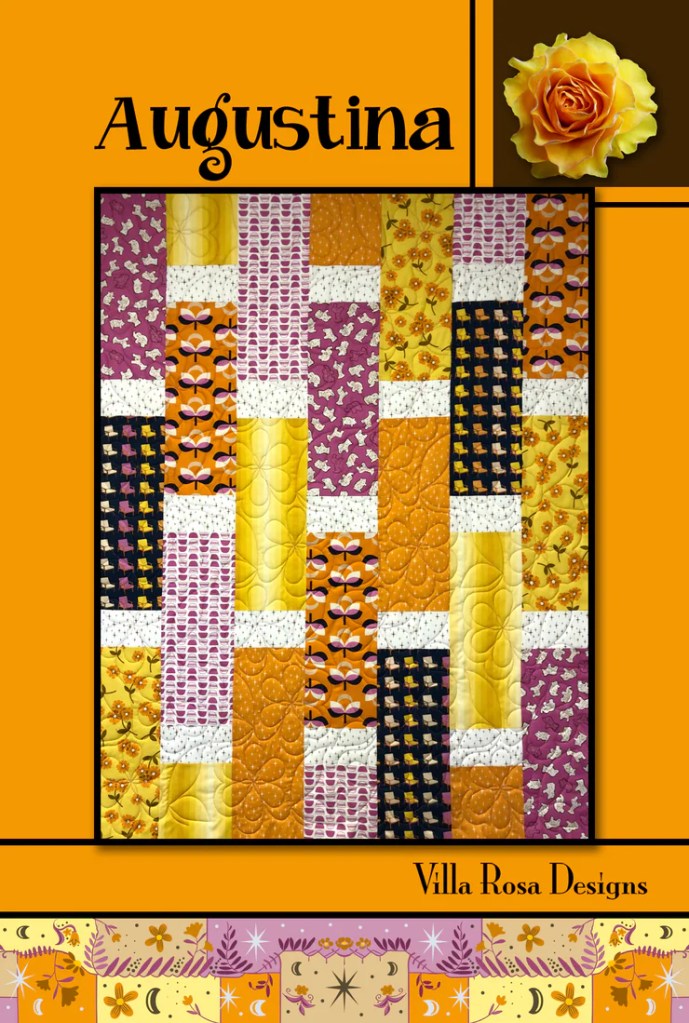
Augustina is a great sized quilt for a small throw or a juvenile quilt. And this is a pattern you are going to turn to over and over again for a beautiful quilt with little effort, yet it looks like a million bucks (sorry, it’s late and I couldn’t think of another phrase to use). So don’t forget to get your own Augustina pattern if you don’t have it yet.

A vibrant quilt pattern titled 'Augustina' featuring colorful fabric blocks in shades of purple, yellow, and orange, with floral and geometric designs. The quilt is displayed on a warm orange background, showcasing its cheerful and lively aesthetic.

Get your digital pattern HERE or your print pattern HERE

Let’s get started!

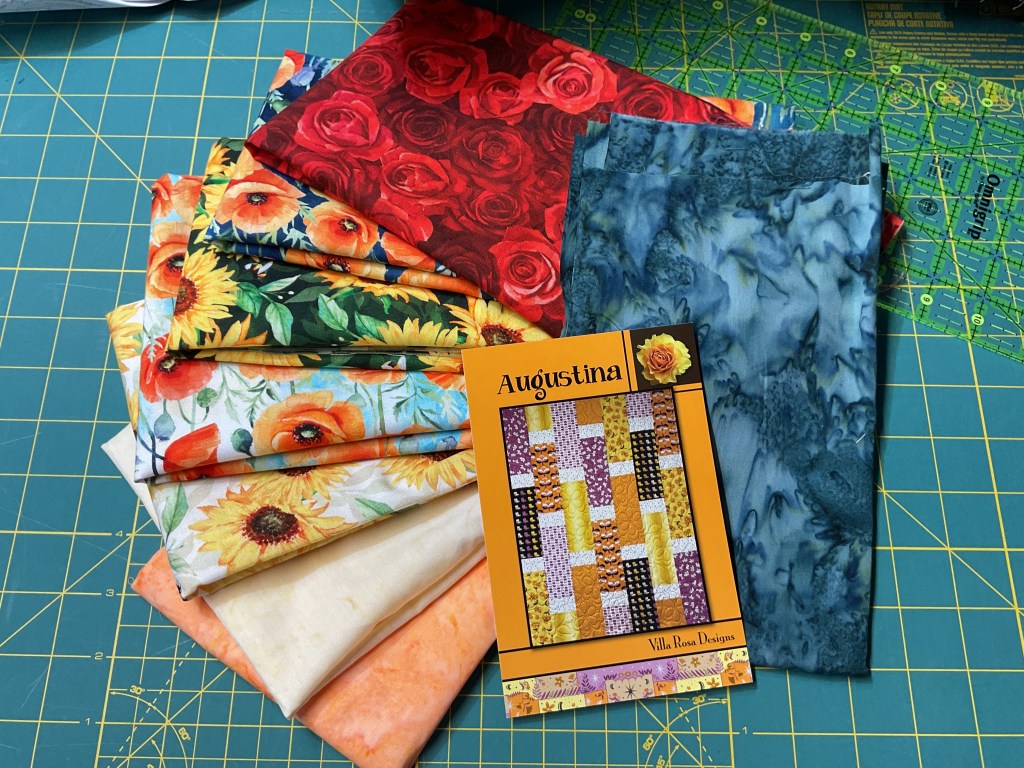
The first thing we need to do, of course, is round up our fabrics. Augustina is a fat quarter project, so you can march right over to your stash and find some coordinating fat quarters or you can use this project as an excuse to visit your local quilt shop to buy new fabric. Yeah, I know, we quilters really don’t need an excuse, but it is handy to have one anyway, isn’t it?

For this tutorial, I am using Flower Shoppe fabrics from our quilty friends over at Hoffman Fabrics. The flower fabrics are all amazing Hoffman digital prints – have you seen these in person yet? The colors are so bright and clear – I feel like I could pick these flowers right off the fabric. We’ve paired a few Hoffman batiks to balance out the gorgeous flower prints.

Please remember when using digital prints, that they do not react exactly the same as regular quilting cottons. Always start with a new needle in your machine so you are not pulling threads when sewing as well as a new rotary cutting blade so you are cutting cleanly through the fabric instead of sawing at it, which can damage the fibers.

A collection of fabric pieces featuring floral patterns, including sunflowers and roses, stacked with an Augustina quilt pattern booklet on a cutting mat.

Next up…..cutting.

SHHHHH! The secret of this quilt is that the pieces are big. Big pieces mean you don’t have to spend loads of time cutting little squares, rectangles, or triangles. Big pieces are a huge time saver! Big pieces also mean you can use bigger prints (when you use big prints in small pieces, the design gets all chopped up and you tend to lose what you loved about the print to begin with). Yay! Let’s GO BIG!

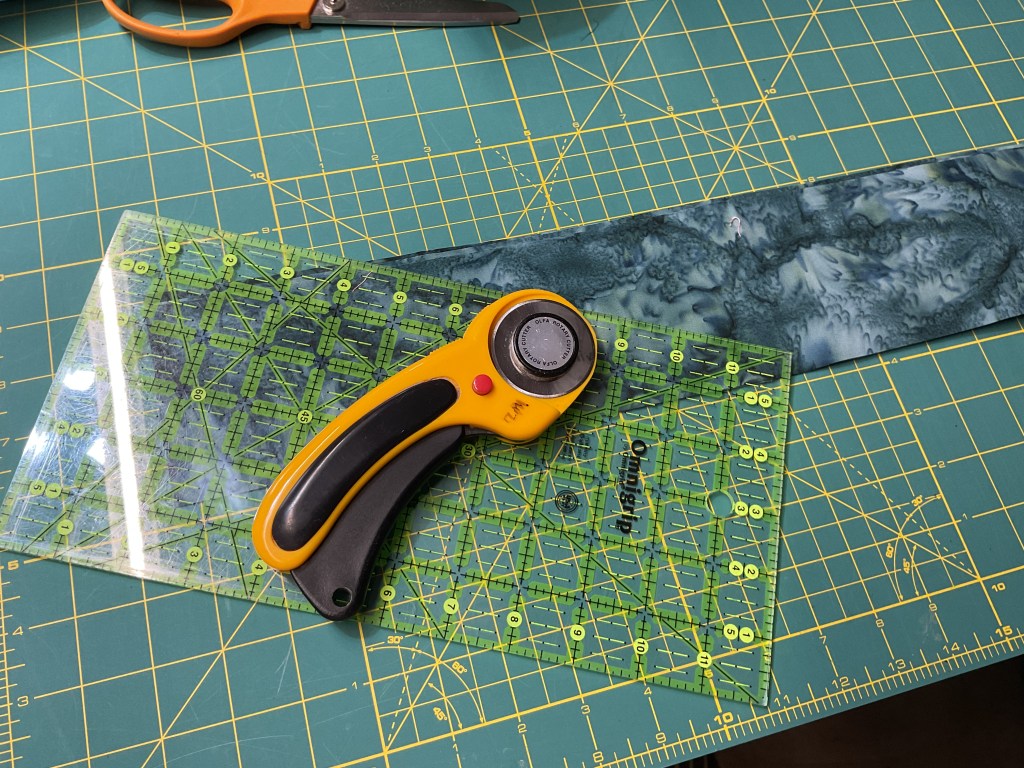
In the photos, below, we’re cutting our accent fabric into strips and then into rectangles.

Below, we’re cutting our FQs into strips and then into 2 different sized rectangles.

VIOLA! Cutting done. Easy peasy. Here’s all the pieces we need to make Augustina.

A selection of colorful quilting fabrics featuring vibrant floral patterns, including poppies and roses, arranged on a green cutting mat with a ruler and rotary cutter nearby.

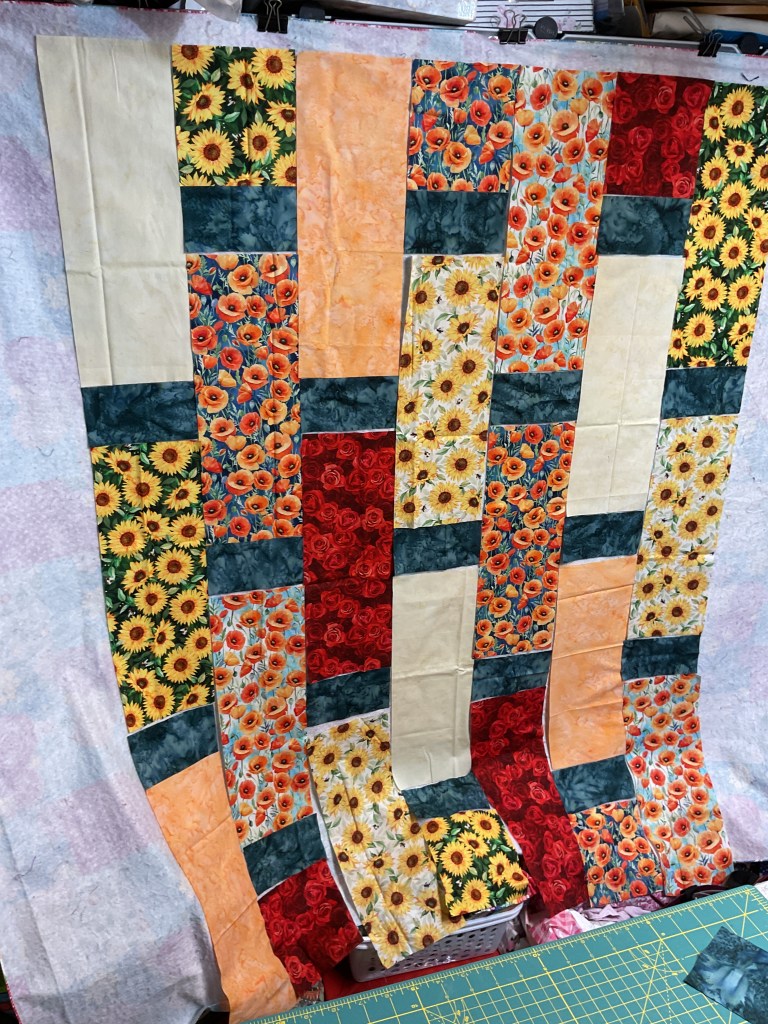
Before we can sew Augustina together, we have to lay out our fabrics. I’m going to put them up on my handy dandy flannel board which consists of a flannel-backed table cloth clamped to the tops of my fabric storage unit doors. As I’ve mentioned before, this idea came from my pal, Mary Lee. Kudos to you, Mary Lee! It’s a great option if you don’t have a spare wall to put up a more permanent quilt wall solution. I can simply take it down when I need access to my yardage stash. I’ve actually had this tablecloth for years now, so it’s even an economical option.

Hmmm……I think I need to move some fabrics around.

After several switcharoos, I think I’m happy with the layout now.

Let’s sew!

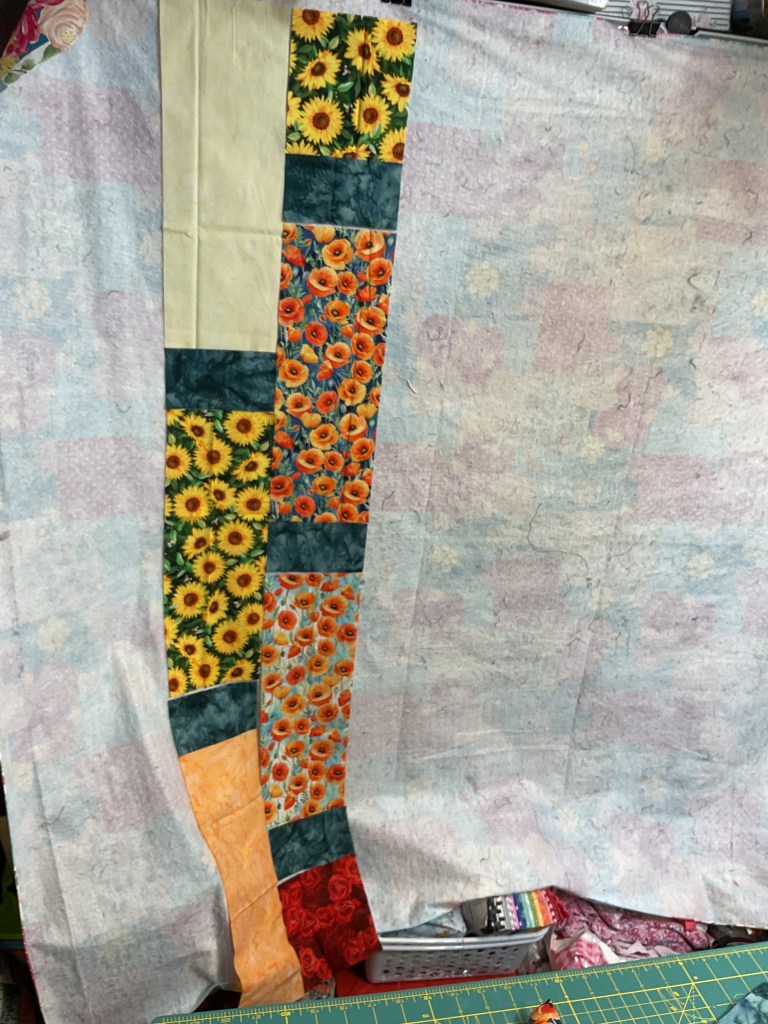
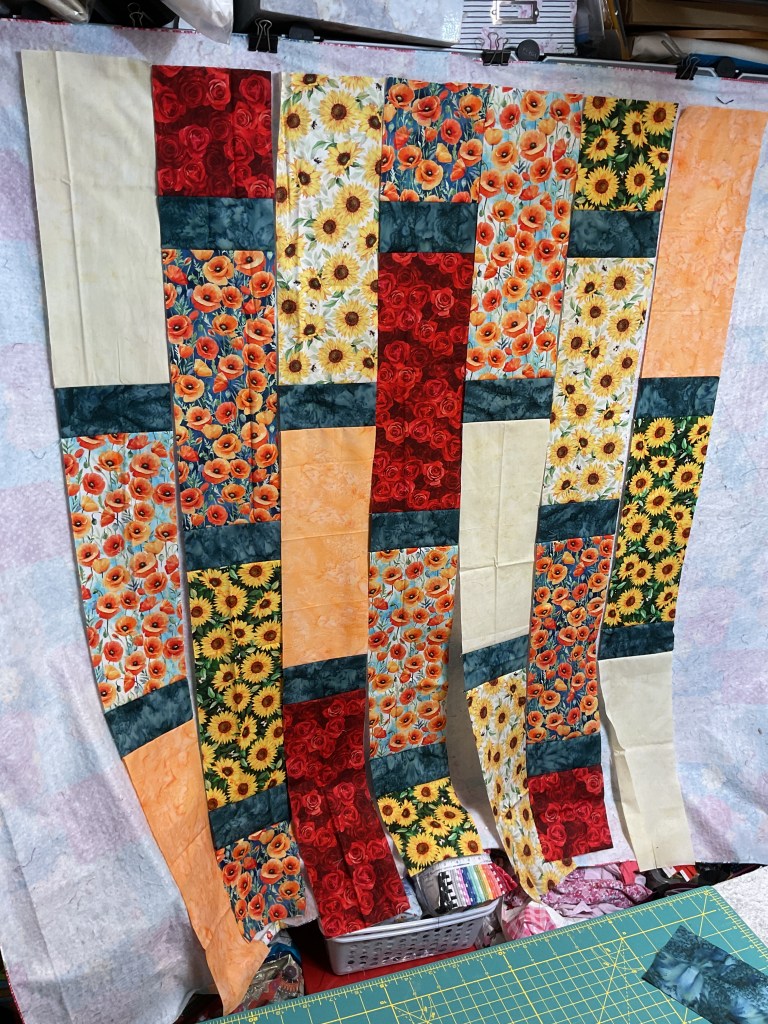
This quilt is sewn together in vertical rows. I took my time, only taking one vertical row off of my board at a time. I worked from the top down to sew the pieces together. It doesn’t matter whether you sew your strips top down or bottom up, just be consistent with all of your rows or else you might get your fabrics out of kilter.

Okay, all the fabrics are now sewn into vertical rows.

Vertical strips of colorful floral and solid fabrics are laid out for a quilt project, with a cutting mat visible below.

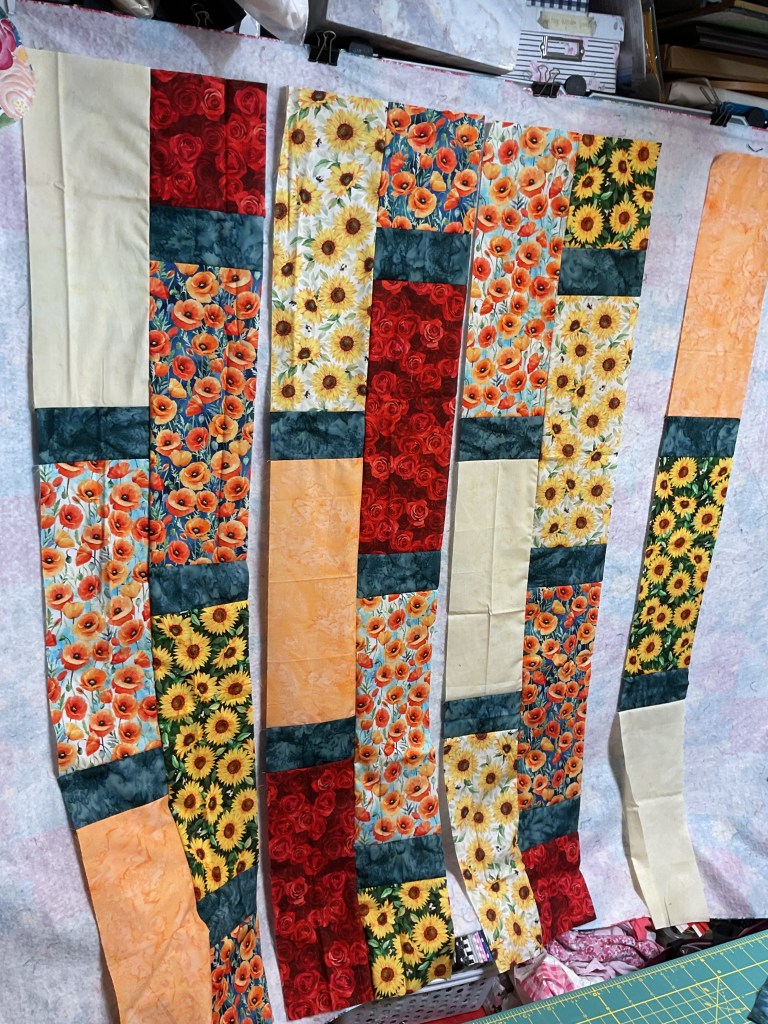
Now I’m going to sew the vertical rows together into pairs. As this quilt has an odd number of rows, the last row will have to hang out all by itself for a while.

Vertical strips of colorful floral fabrics arranged on a flannel board in preparation for quilting.

Next, I’m going to sew the first 2 pairs together into a foursome. Then I’ll sew the third pair and the last row together into a trio.

Two vertical quilt sections showcasing a colorful patchwork of floral and solid fabrics on a cutting mat.

One last seam to sew the 2 sections together and the Augustina top will be finished. Fast as can be! There isn’t a lot of matching seams, but you do want to make sure your accent pieces are relatively even-looking across the quilt.

And here it is! Our completed Augustina quilt top.

Colorful quilt top featuring floral and solid fabric blocks arranged in a vertical pattern.

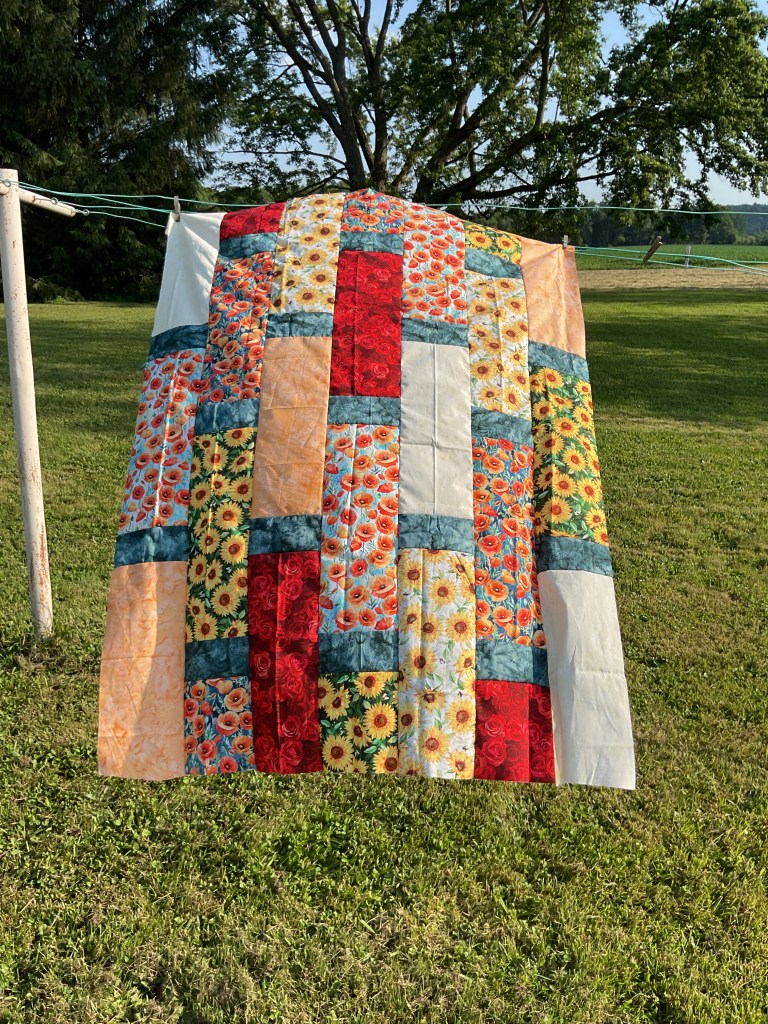
Although it was hot, I decided to take Augustina outside for a glamour photo. Sigh…….it was a little breezy out and I couldn’t get a photo with it hanging nicely for you. Bummer. But I do love how it looks surrounded by all the green – the flowers look like they are about to burst right off the quilt! That’s digital fabric for you – the number of colors that can be printed on fabric is phenomenal and creates stunning designs.

A colorful quilt featuring floral patterns and various fabrics, hanging on a clothesline outdoors with green grass and trees in the background.

And that’s it! Finito! Next I need to layer, quilt, and bind it…….someday, anyway.

If you’re looking for another great summer quilt pattern, check out the Jubilee tutorial from a few weeks ago. It’s also a super go-to project.

That’s it for me today, gotta go have me some summer……..in the air conditioning. LOL!

See you next week, same time same place —

Always,

Tricia @ VRD

Rose Cards · Tutorials · villa rosa designs

VRD Jubilee Quilt Tutorial

Happy Thursday to you!

Warm temps are here……..finally! Maybe a bit too much too fast, but I’ll take it! The sun is shining, the sky is blue, it’s actually warm in the upper 80s, but there’s a nice breeze to make the heat tolerable. Believe it or not, I’m sitting here in shorts and a t shirt as I write this blog post. Last week, I was wearing a fleece jacket and long pants. Oh, the difference a week can make. I hope you are having some nice weather wherever you are, too.

I thought we’d kick off the gorgeous weather here in my little corner of the world with a fun quilt tutorial.

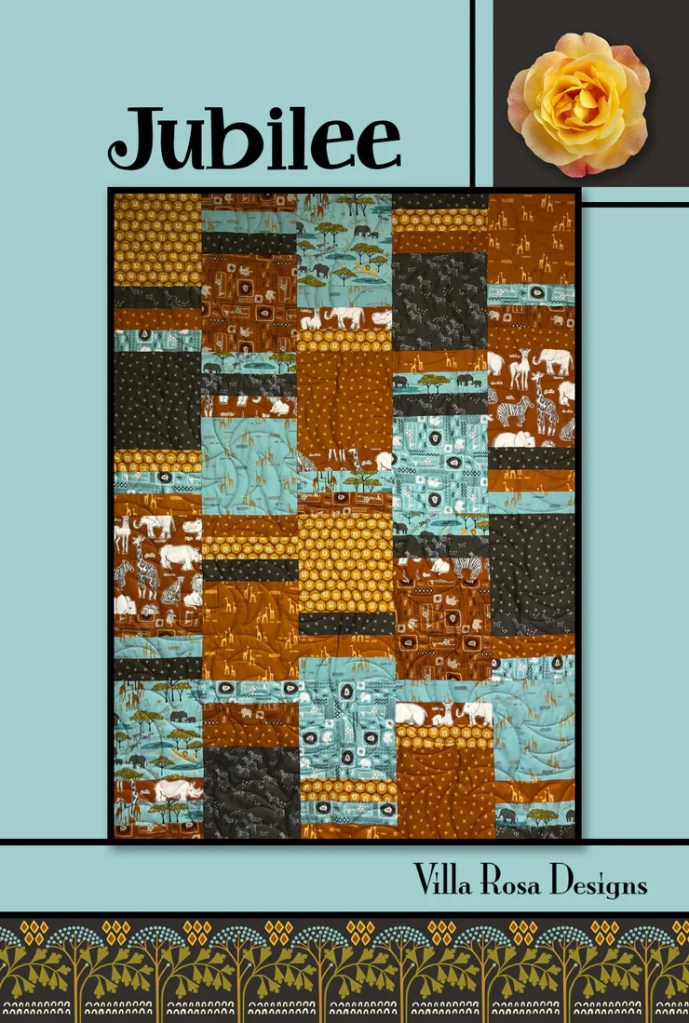
Let’s make Jubilee today. It’s a super fast and fun fat quarter quilt and it’s a great option when you need a quilt in a hurry. Looks great in just about any fabric. Perfect for summer quilting. Make it in the afternoon and still have time for dinner and s’mores around the campfire in the evening.

A vibrant quilt titled 'Jubilee' featuring an assortment of patterned batik fabrics in earthy tones of brown, turquoise, and black, designed by Villa Rosa Designs.

Get your digital Jubilee pattern HERE or your print Jubilee pattern HERE

The first thing we need is fabric! YAY FABRIC!

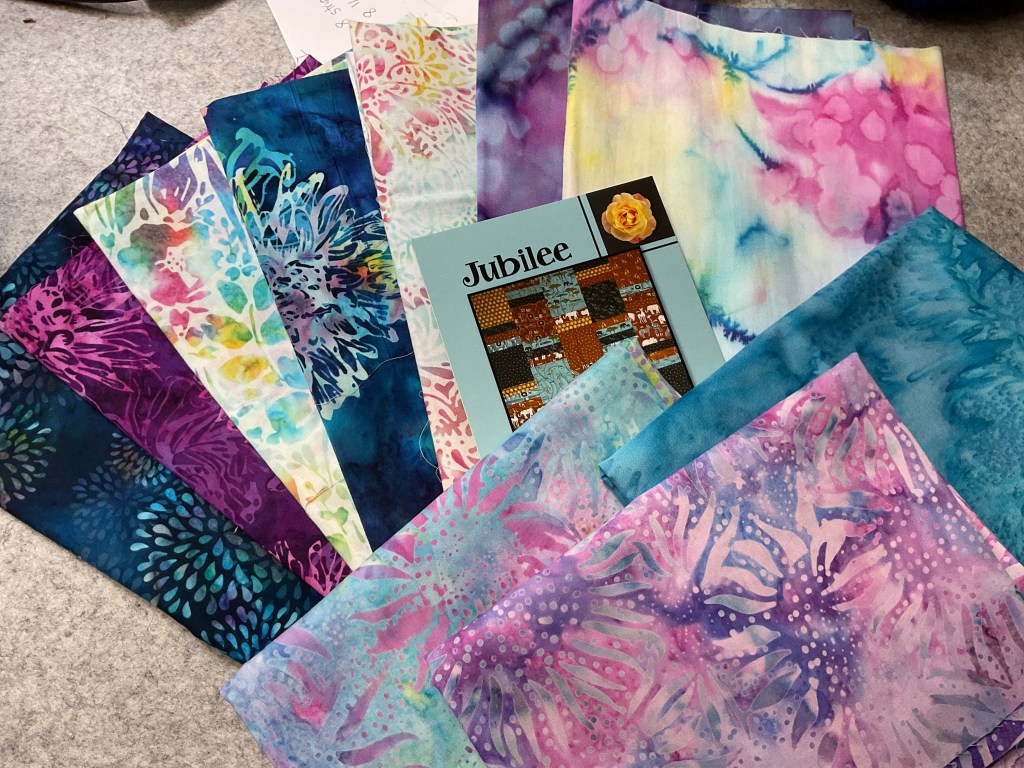
Today I’m using batiks from the Sweet Shoppe collection by our friends at Hoffman Fabrics. Aren’t these fabrics yummy? I can’t wait to see how the quilt turns out!

A collection of colorful batik fabrics arranged around a Jubilee quilt pattern, showcasing vibrant colors and intricate designs.

Of course, we need to do some cutting before we can sew. Let’s get to it.

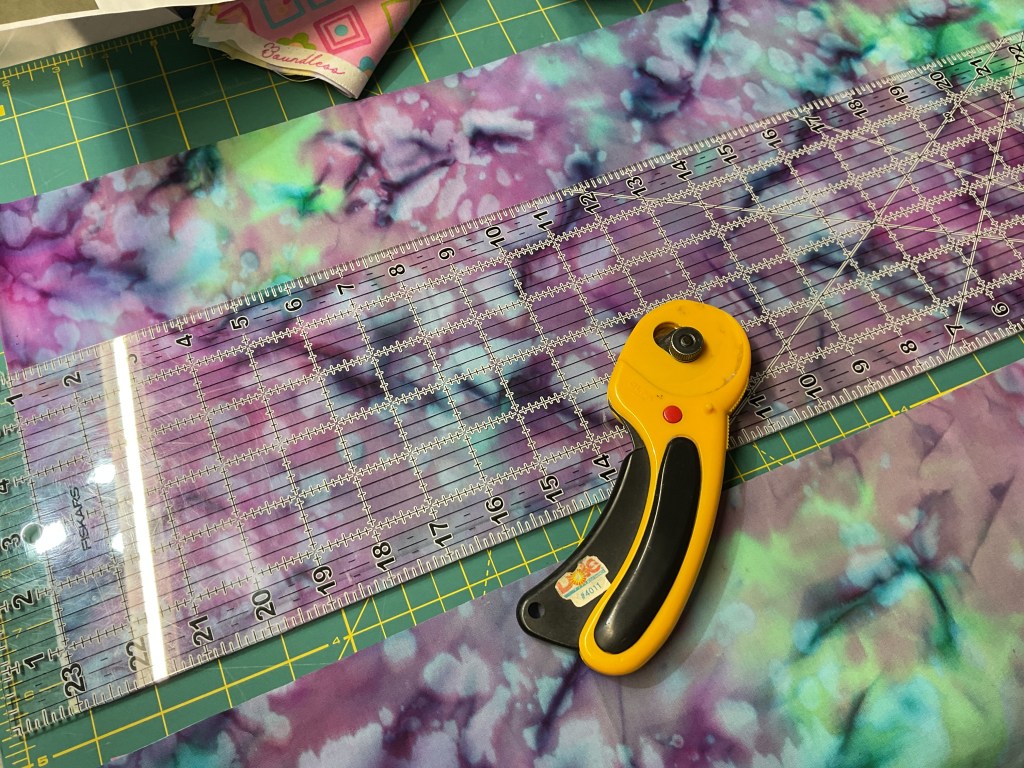
In the left photo, below, you can see how many layers I’m cutting at once. I find batiks to be great for layering for cutting as the fabric is finer. When I’m cutting thick or slippery fabrics, I only cut one layer at a time.

Let’s get the rest of the fabrics cut. For Jubilee, we only need 2 different shapes, which is one thing that makes this quilt go together so quickly. Wow! That was fast!

Time to start sewing the strips together so we can make strips sets and then we’ll cut the strip sets down into the block size we need.

I like to set all my strips to the left of my machine while I sew. Then I select strips randomly to sew together, making sure I don’t grab 2 of the same strip. We want these strip sets to be as scrappy as possible.

Once I’ve sewed 2 strips together for the required sets, I then go back and add the third strip to all of the sets. I find it more efficient to complete each step for all the pieces at once before moving onto the next step.

Sewing colorful fabric strips together at a sewing machine for a quilt project, with scissors nearby.

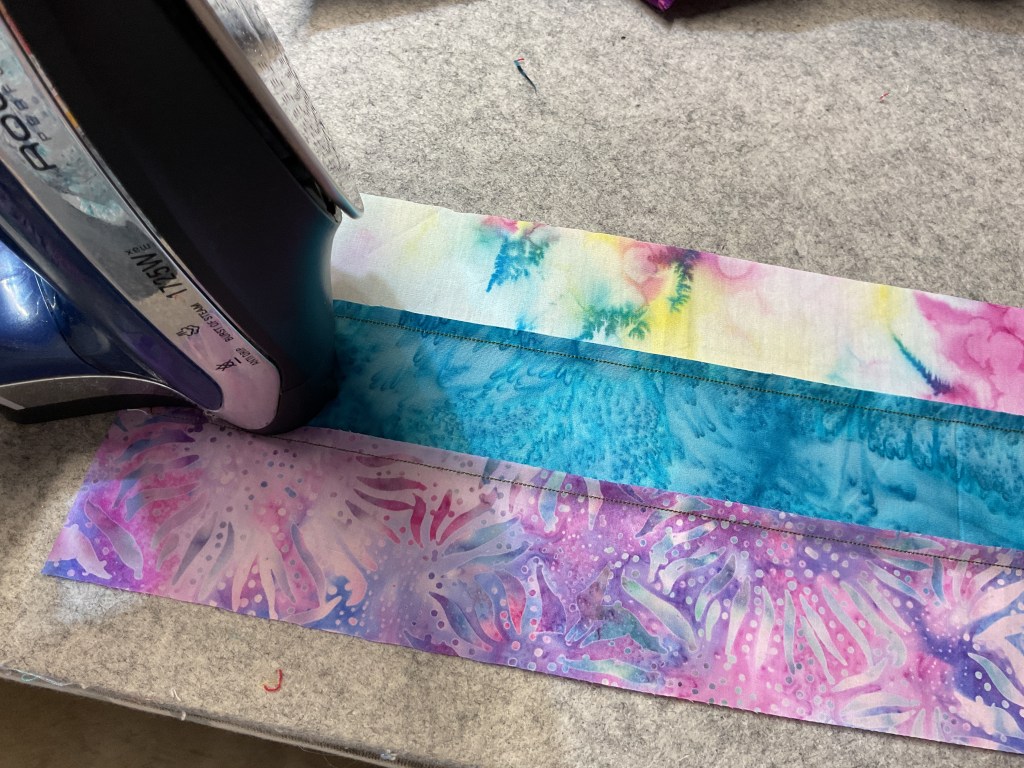
Once our strip sets are sewn together, it’s a good idea to press them before we begin cutting out the blocks.

Do you struggle with which way to press your seams on the back of your blocks? Me too. More often than not I end up flipping the seams in the other directions when I go to assemble blocks. Oy vey!

The good news with Jubilee is that it doesn’t matter which way you press your seams because the blocks do not line up and the seam do not cross – another reason why Jubilee is quick as a wink.

Next we need to cut our strippy blocks from our strip sets. I’m layering 3 strip sets on top of each other for cutting. To do this, I line then up on the left edge (or the right edge if you cut from that side), but I stagger them a bit top to bottom so the seams are not sitting right on top of each other because stacked seams make a big lump. It’s not a good idea to attempt to cut through lumpy seams or you might accidentally miscut something.

Awesome applesauce! All of the blocks are pressed, cut, and ready to go. Time to head to my flannel wall to lay them out.

A collection of colorful batik fabric pieces organized on a work surface, showcasing various floral and abstract patterns.

I’m going to put the blocks up, alternating the squares with the pieced blocks. I’m just going to slap the blocks up randomly and then I’ll shuffle them around to distribute both colors and fabrics until I find a layout that pleases me. When you are putting blocks together, what is your process?

Below are 3 photos showing shuffled blocks. Sometimes this step takes longer than actually making the whole quilt top (eye roll here).

Here is my final layout.

A colorful quilt layout featuring various batik fabrics arranged in a vibrant pattern, showcasing different shapes and sizes of fabric pieces on a design wall.

Because the blocks don’t line up horizontally, we’re going to sew the blocks into columns and then sew the columns together.

And done! Here is the finished quilt top. Isn’t it pretty? I love that the blocks are large so one can enjoy the beauty of the batik fabrics. It turns into a nice throw at 45″ x 60″, but it would be easy to make the quilt larger by adding a border or additional blocks.

A colorful quilt made with batik fabrics, hanging on a clothesline outdoors against a backdrop of green grass and trees.

Now I just have to layer, quilt, and bind it.

Looking for info on finishing your quilts? Check out these posts in our Basic Quilting Skills blog series:

Batting, Backing, and Preparing Your Quilt for Quilting

Quilt As Desired

Squaring Up Your Quilt

Binding 101

Label Your Quilt

Now I’m off to my sewing machine to work on more quilts. Hope you are too!

See you next week, same time same place —

Always,

Tricia @ VRD
Quilting Partners · Rose Cards · Tips and Tricks · Tutorials · villa rosa designs

NEW March VRD Rose Card Quilt Patterns and Lucky, a Quilt Tutorial for St. Patrick’s Day

Happy Thursday to you!

I trust you’re all having fun with your Free Motion Quilting (FMQ) practice. We’re going to take a quick break from our Beginner FMQ series this week because I have NEW March patterns to share as well as a fun table runner tutorial just in time for St. Patrick’s Day. We’re all Irish on St. Patrick’s Day, right?

Here are the new patterns for March – be prepared to be inspired….

Get the print set of all 5 patterns HERE.

The 5 main patterns are great, aren’t they?

Molly created a brand new St. Patrick’s Day throw-sized quilt called Clover Patch. I just love that she added a single Four Leaf clover to her quilt – can you find it in the Clover Patch?

Molly also created a second pattern this month called Jackknife. This clever block uses long quarters instead of fat quarters. We still have a few kits left, too, if you’re interested.

Get your Jackknife kit in Art Glass AbstrArt HERE.

Heidi wows with her new 24″ panel quilt pattern, Jerky. If you don’t already know, Heidi always gives her patterns a foodie name because she loves to cook.

Rachelle created a new modern pattern called Kenosha. I love the secondary design that happens in this striking quilt pattern.

Pat, our Rose Queen, has another fun and fast throw sized pattern for you called Zamora. If you didn’t know, Pat always names her quilts after a rose. Yep, Zamora is the name of a rose. Zamora only uses three main fabrics plus a binding fabric. Sew easy piezy. We still have a few Zamora kits left, too.

Get your Zamora in Indelible kit HERE.

We also have a new table runner pattern this month called Erin.

Get your digital Erin pattern HERE or your print Erin pattern HERE.

I’ve always wanted to make a green and white Double Irish chain for St. Patrick’s Day. I can now check that off my bucket list. The Double Irish chain looks complicated, but I promise you, it really isn’t when you break it down. Give it a try.

I guess I should have done a tutorial for today with Erin, but I’d already gotten Lucky stepped out and photographed before I even designed Erin. I’m sure I’ll do a tutorial for Erin sometime in the future – you’ll just have to stay tuned.

That being said, let’s move right along to our Lucky tutorial.

The first thing we’re going to do is gather up our fabrics.

I’m using a beautiful Hoffman batik collection called Forest Floor. Don’t you just love the greens? With a pop of orange? Love Love Love it!

The first photo shows the background and the greens for the blocks. The second photo shows the border and binding.

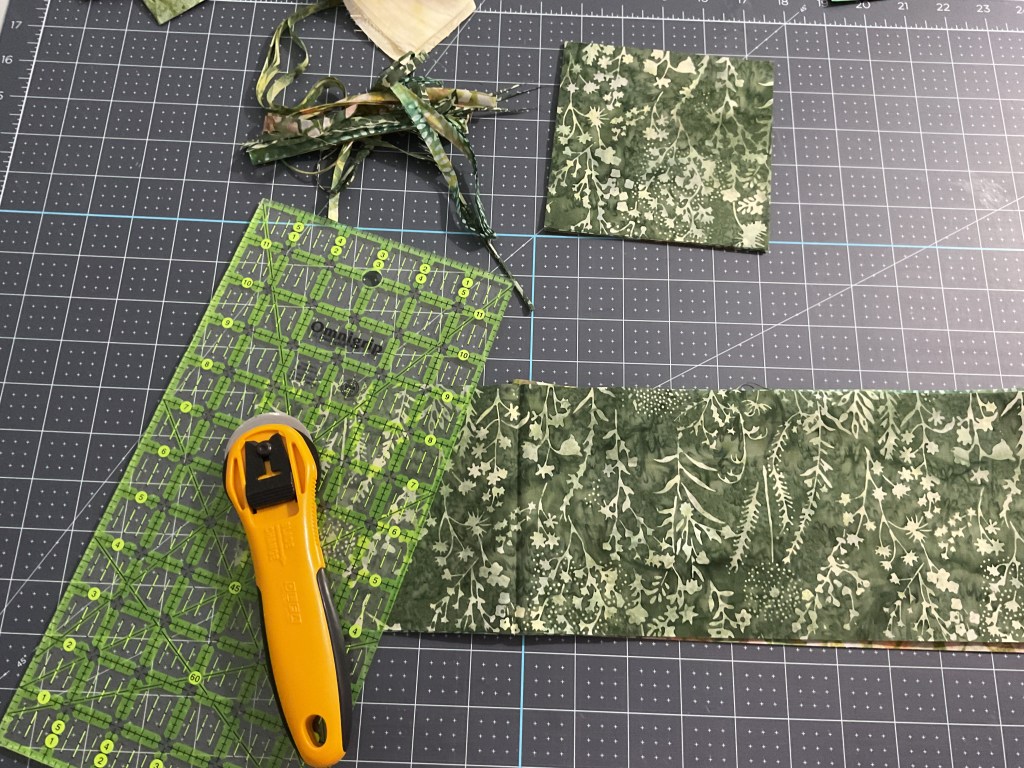
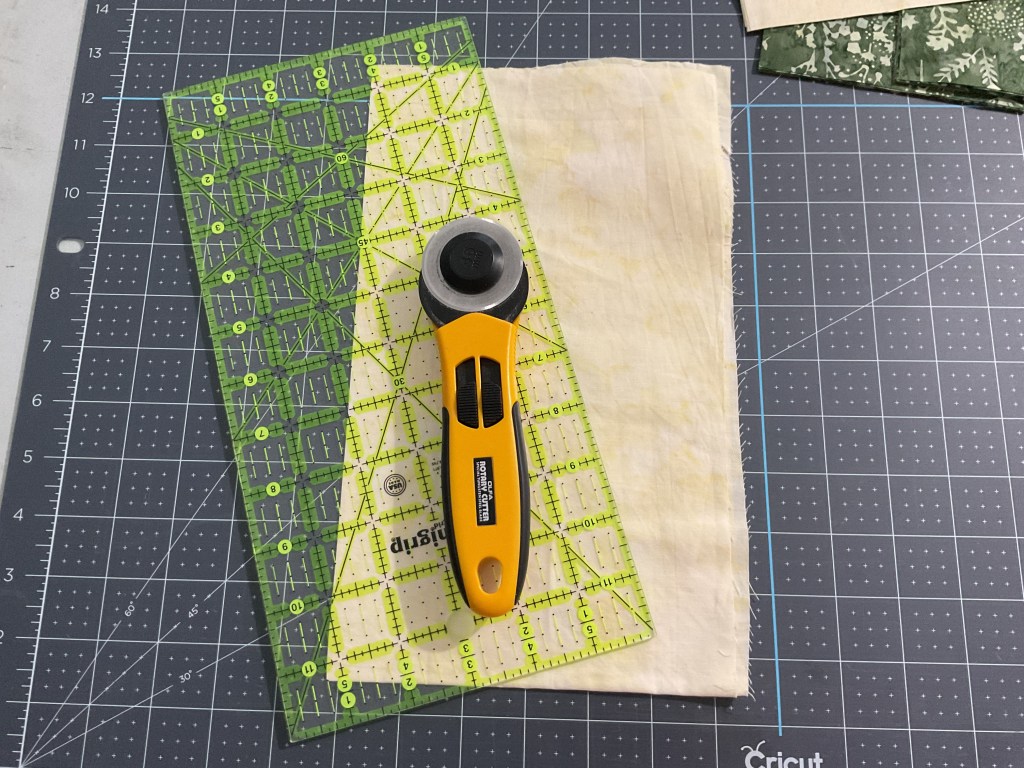
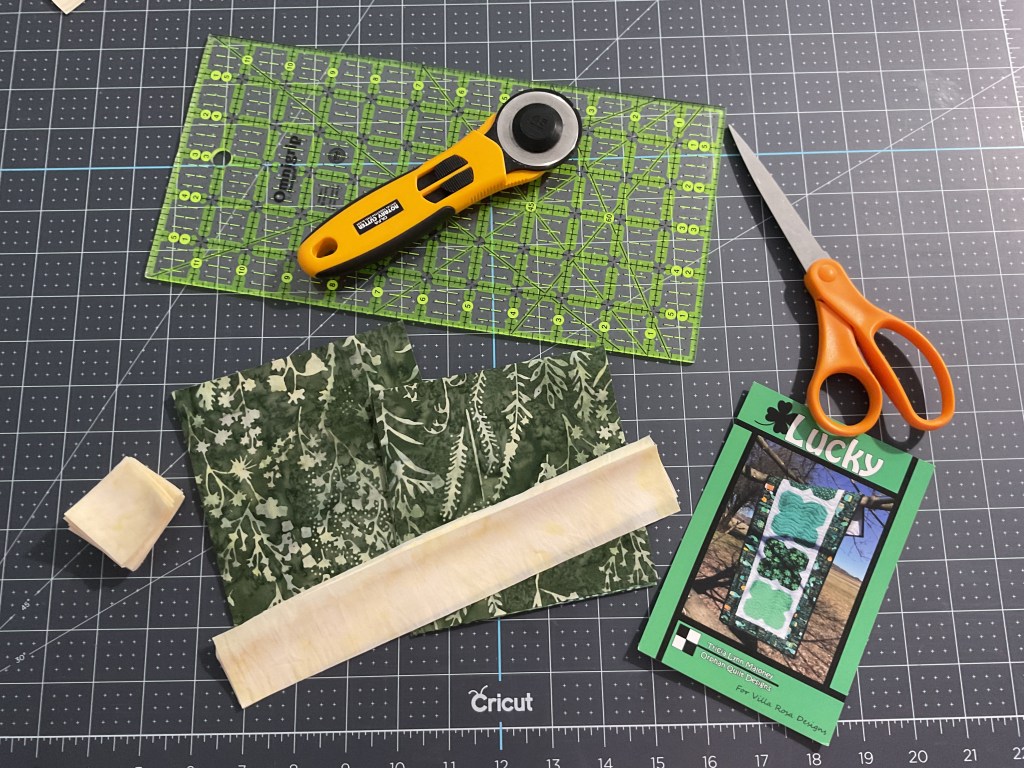
Grab your rotary cutter, board, and ruler and let’s start cutting out our pieces!

Now that our pieces are all cut out, let’s start sewing!

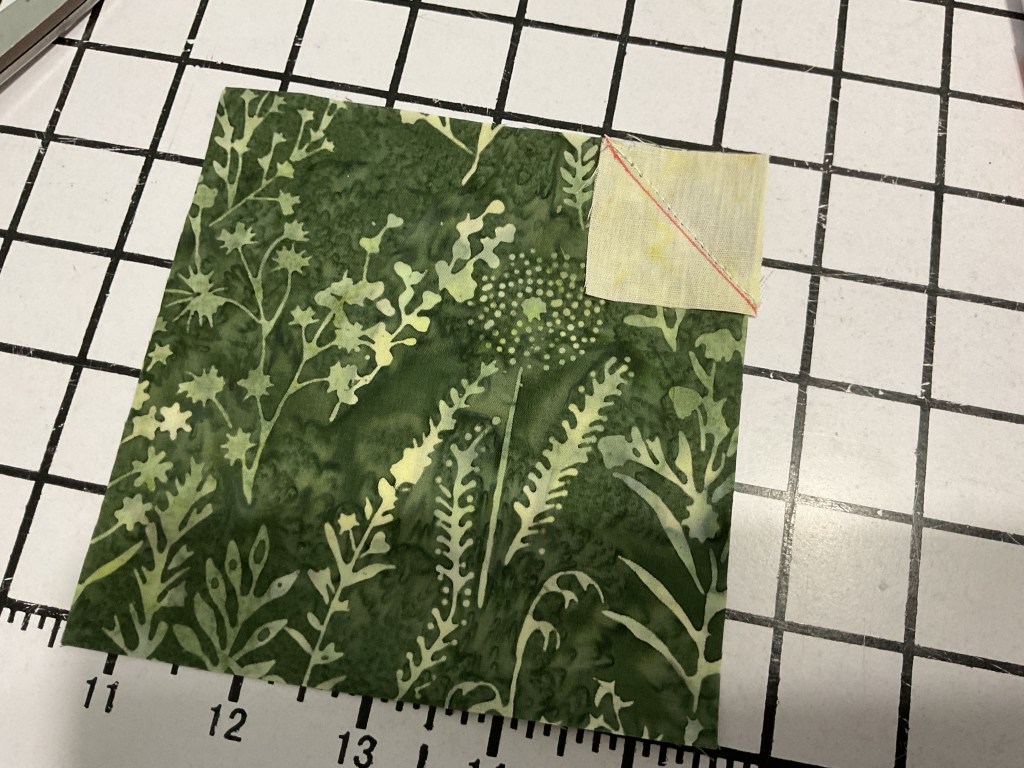
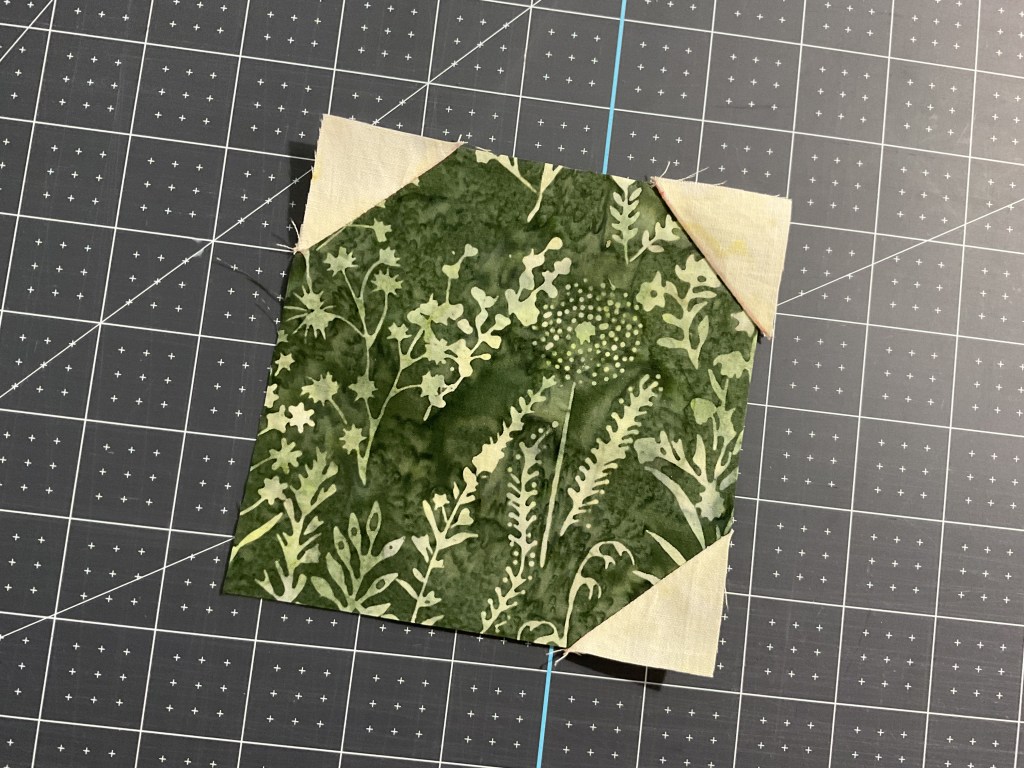
Layer a background square right sides together on the corner of a Clover square and draw a diagonal line from corner to corner. I love my Frixion Fineliner pens and my 1×6 little ruler for making my flippy corners and HSTs right at my sewing machine. What are your favorite tools for making yours?

Next we’re going to sew on the drawn line.

Let’s cut 1/4″ away from our drawn line. Did you knou can use these little cut off triangles for a scrappy little project? I’ve been saving mine for a long time, and have even started sewing them into HSTs, but I haven’t started making anything with them yet.

TIP: You might notice in the photo below that my seam is slightly to the right of the drawn line. This is actually on purpose because it gives a bit more room for the seam and my flippy corners are more precise. I learned this little trick from my quilty pal, Mary Lee. THANK YOU, Mary Lee!

Don’t forget to press that flippy corner open.

We’re not done yet! Go ahead and make flippy corners on 2 more corners of the Clover square.

Okay, now we’re talking! Let’s repeat these 3 flippy corners for the rest of the Clover squares while we’re at it.

Finally it’s time to make a Clover block. Yeah! Sew 4 matching Clover squares together with the 4th unpieced corners towards the center so they all meet for the middle of the Clover block. Such a pretty block!

Repeat to make a total of 4 Clover blocks. Don’t you just love that pop of orange???

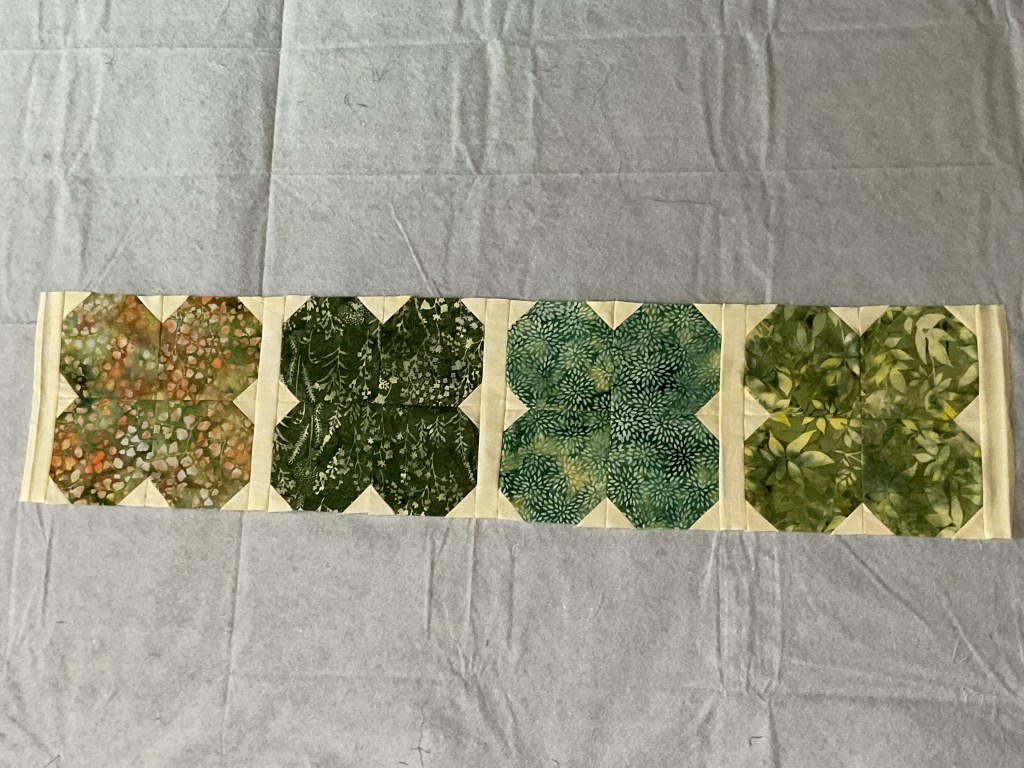
The next thing we need to do is sew the 4 Clover blocks together with background strips in between the blocks and at each end.

Then we’re going to add top and bottom background borders. Lookin’ good!

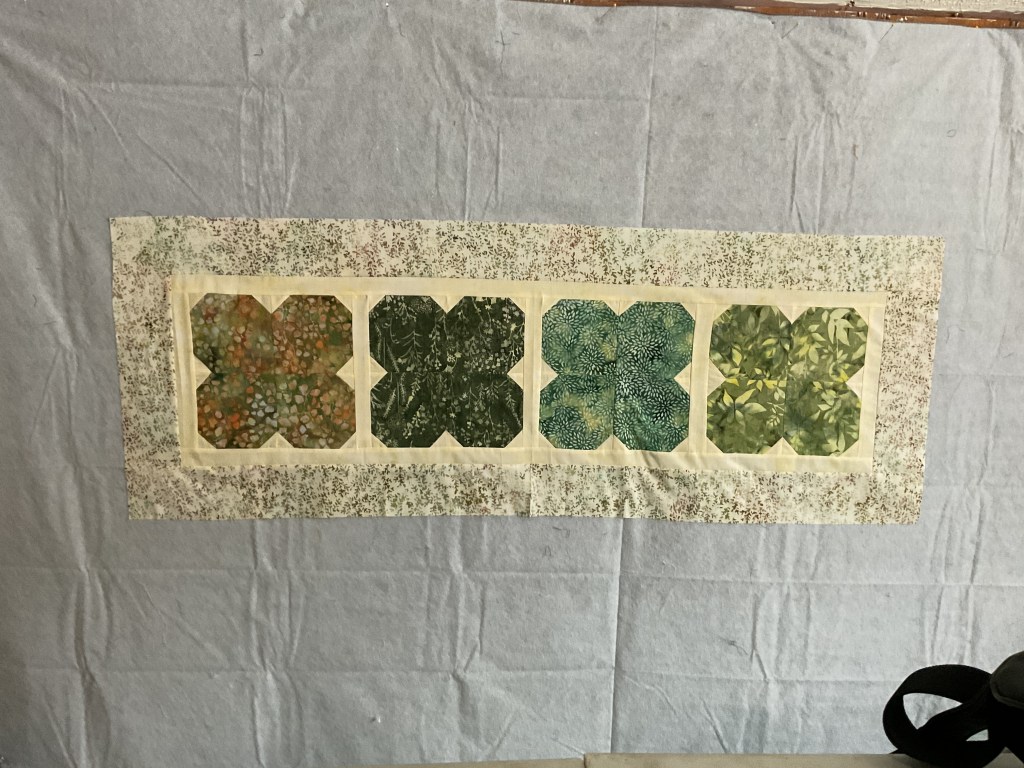
Now it’s time to add the side outer borders and then the top and bottom outer borders. And DONE!

Yay! All that is left to do is layer it with batting and backing, quilt it, bind it, and label it.

I hope you enjoyed the Lucky runner tutorial and are super inspired by the new March patterns. Next week we are going to wrap up our Beginner Free Motion Quilting (FMQ) series by addressing borders.

Until next week –

Always,

Tricia @ VRD

Rose Cards · Tutorials · villa rosa designs

NEW VRD October Rose Card Quilt Patterns and a VRD Pumpkin Hollow Tutorial

Happy Thursday to you!

Guess what day it is????? The Thursday after the first Friday of the month. And you all know by now what that means — NEW PATTERNS!

Yay! I really love seeing the new patterns every month, they just make me feel SEW inspired. Do you know what I mean? And without further ado, here they are!

You can get the set of 5 print patterns HERE.

(If you are interested in digital patterns, you will need to purchase each pattern separately)

These 5 great patterns are a must-have for your growing Rose Card pattern collection! They include a delightful star quilt (Amelia), 2 panel quilts (Morning Spring and Surf & Turf), and 2 fun modern designs (Changing Lanes and Landina. I know I say this all the time, but the creativity of our VRD designers always amazes me. You rock, designers!

But wait We can’t forget this month’s Table Runner and Snack Mat can we???

Get the print pattern HERE or the digital pattern HERE

I designed the Pumpkin Spice pattern to showcase all those fantastic autumn fabrics out there we never want to chop up into little pieces! And who doesn’t love pumpkins — Log Cabin pumpkins. What a fun twist, huh? Depending on the fabrics you choose for Pumpkin Spice, this runner can decorate your table for both October and November. Just sayin’…..

Get the print pattern HERE or the digital pattern HERE

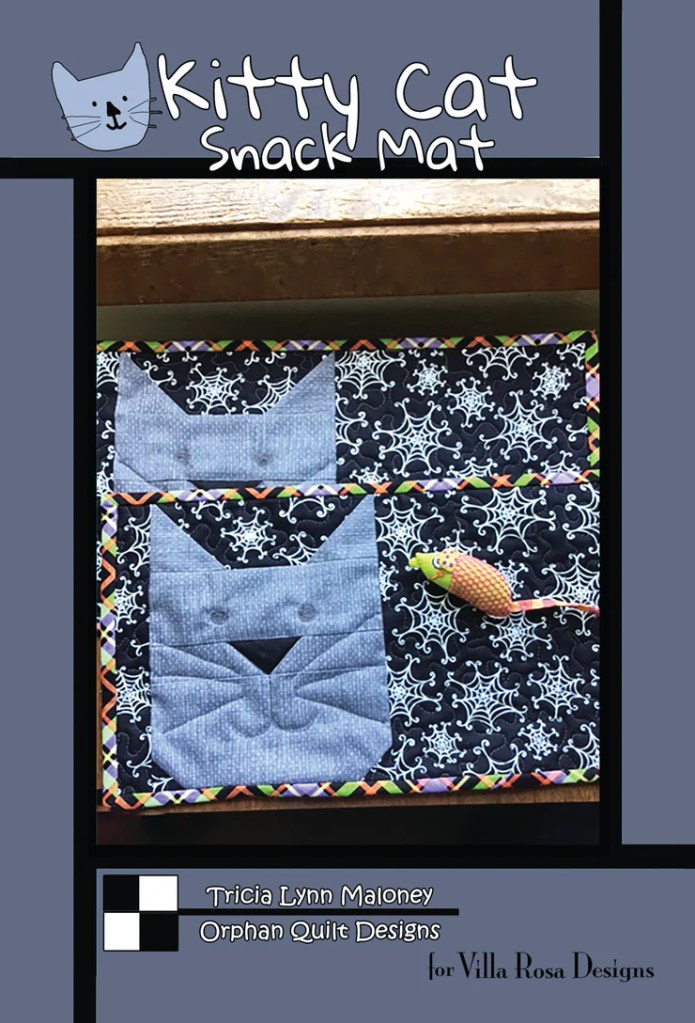
It just isn’t October with a cat or two, is it? My cats had to be grey because I actually have 2 grey cats. Pip is my senior citizen who is a 14 year old silver tabby with a very svelte figure. Griffin (or Griffy as I usually call him) is my 3 year grey tabby who is a real sweetie pie. My 2 year old shih tzu pup, Bailly, rounds out my little furry family.

Of course, you can make your kitties any colors you want — wouldn’t it be fun to make them look like your real cats, if you have any? I chose to use Halloween fabrics for the background and the binding, but you could make Christmas kitties or 4th of July kitties or any kind of kitties you desire.

Which pattern are you going to make first?

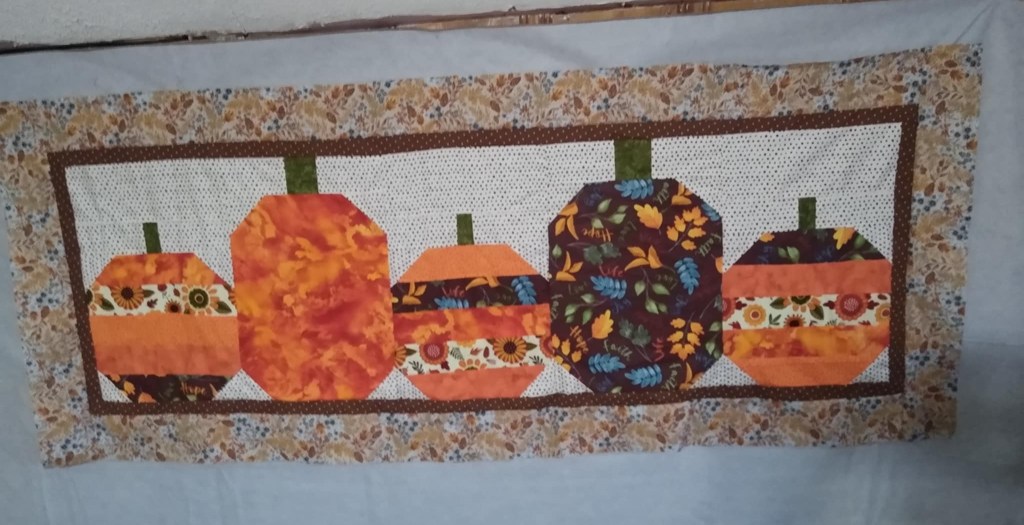
Speaking of fall sewing, I thought it would be fun to do a tutorial for my very first pumpkin runner pattern, Pumpkin Hollow. It’s been a popular pattern. Thank you! I’m thrilled you like it as much as I do. 🙂

I have really enjoyed seeing all the different Pumpkin Hollow runners folks have been posting on our VRD Facebook page. If you’re looking for inspiration for your Pumpkin Hollow runner, please stop by the Facebook page and I promise you’ll find awesome quilts there. And a lot of friendly helpful quilters.

One of my favorite Pumpkin Hollow runners so far had appliqued vines and leaves added to the pumpkin stems. What a lovely addition to my humble little pumpkin pattern. Just another reason I love our VRD Rose Card patterns — there are plenty of opportunities for you to add your own touches!

Get the print version HERE and the digital pattern HERE

Well, let’s get started on our tutorial!

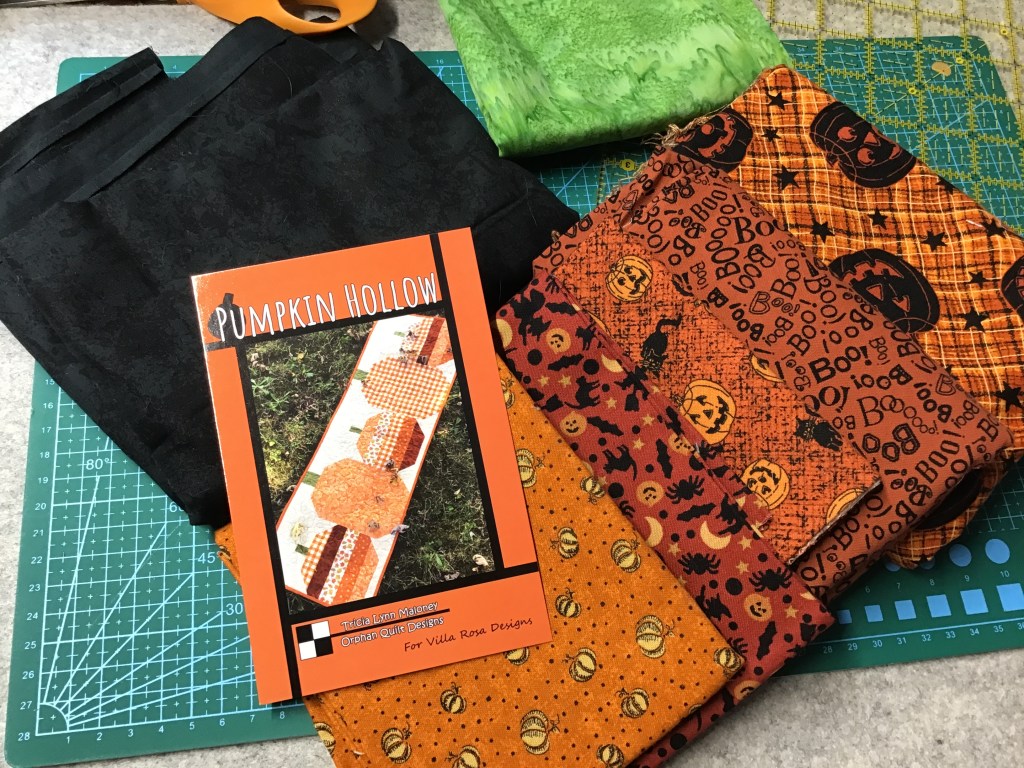
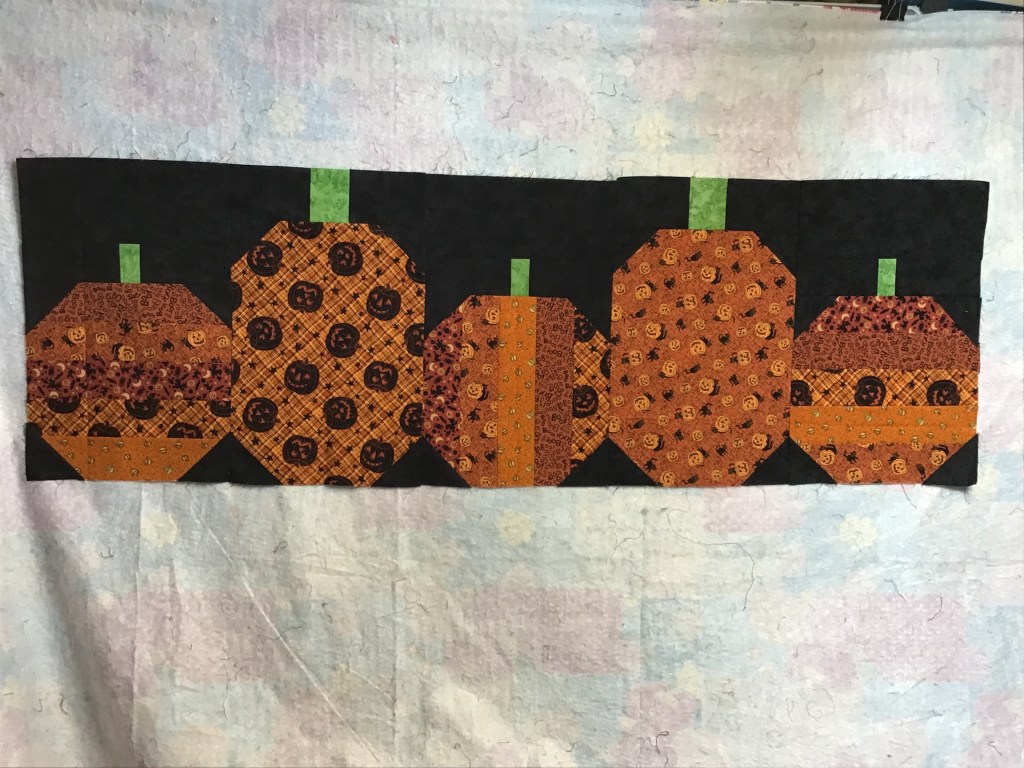
Of course, the first thing we need to do is gather up our fabrics. I pulled out some pumpkin and Halloween fabrics from my stash for today’s tutorial. I must admit that I’m embarrassed to even tell you how long these fabrics have been lurking quietly in my stash (I’m not actually sure, to be truthful), but now it’s finally their time to shine. I bet you don’t have any fabrics like that in your stash, do you? LOL!

I chose a mottled black background to compliment these burnt orange fabrics with black accents. I tried a couple different colors, but black looked the best, so black it is. And the green batik was just hanging out on my cutting table from another project, so that was an easy choice.

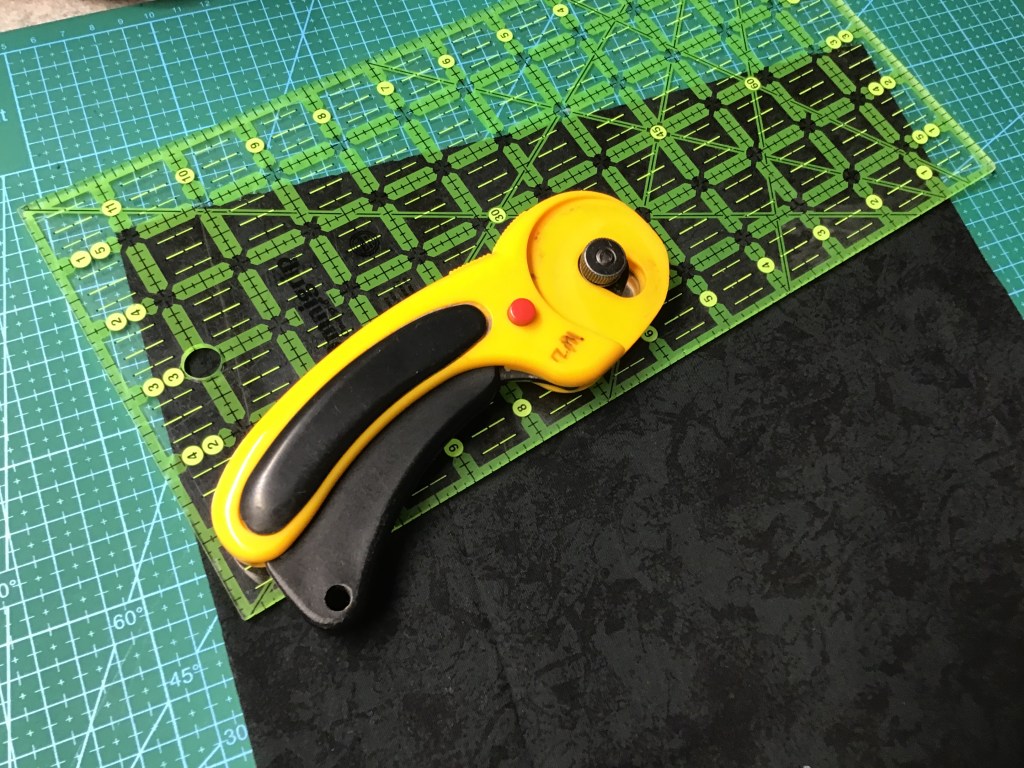
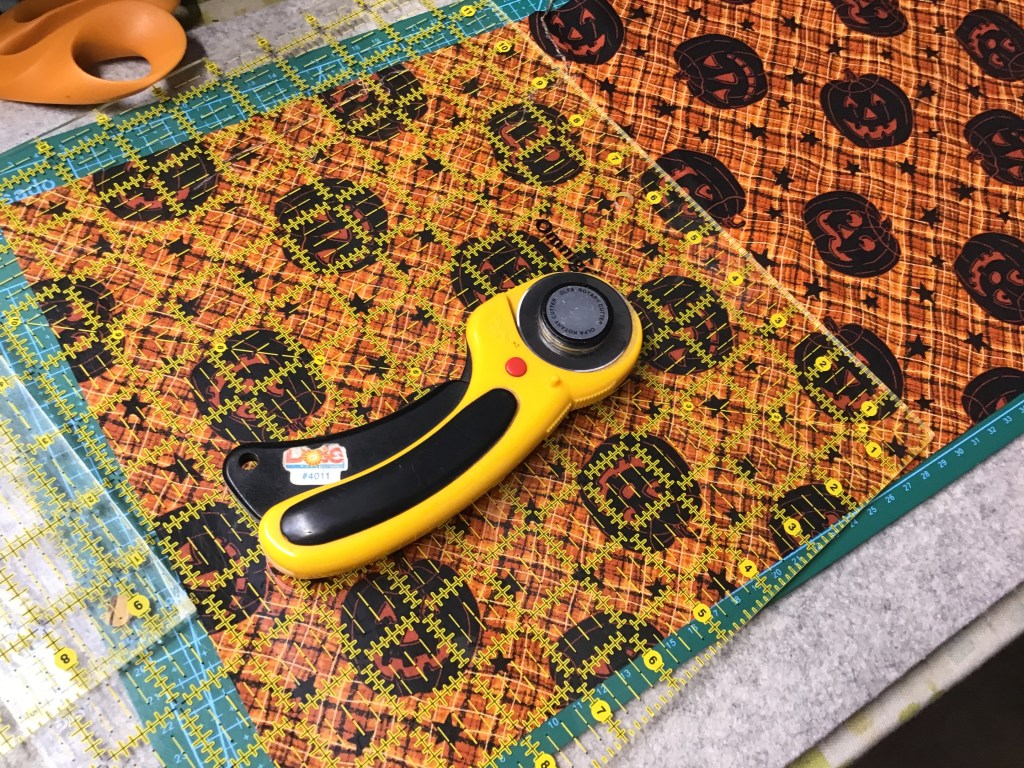
Lime to get started with the cutting.

Now that I’ve cut my fabrics, I’m getting kind of excited to see how this runner will look when it’s finished. It will definitely be different from my original version, which had a light background (the one on the front of the pattern, above).

Let’s sew 5 strips together to make 3 small pumpkins. You can sew the strips for all 3 pumpkins in the same order or mix them up. I like to mix things up (wink, wink).

Time to sew some “flippy corners”! Yes, I am using the scientific name for this technique. You may have even noticed that lately I’m using that scientific term on my new patterns.

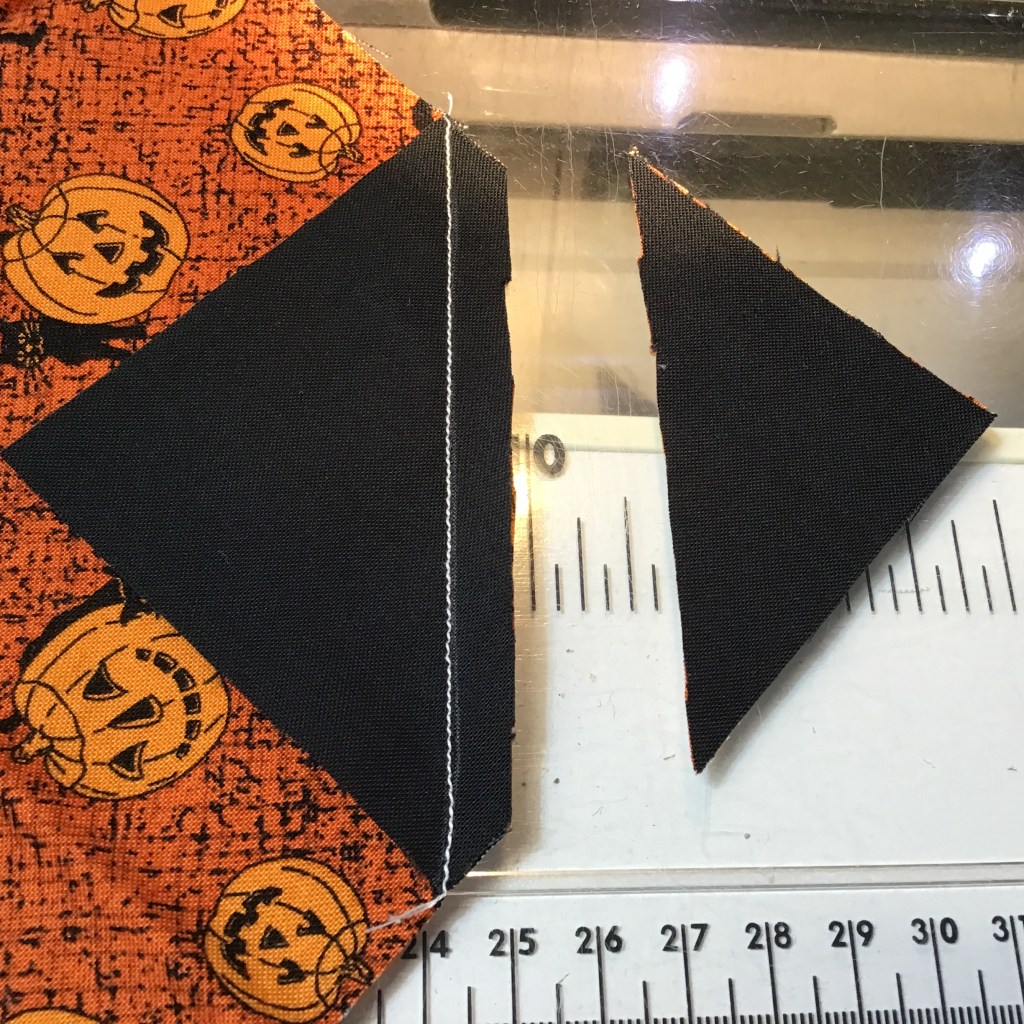
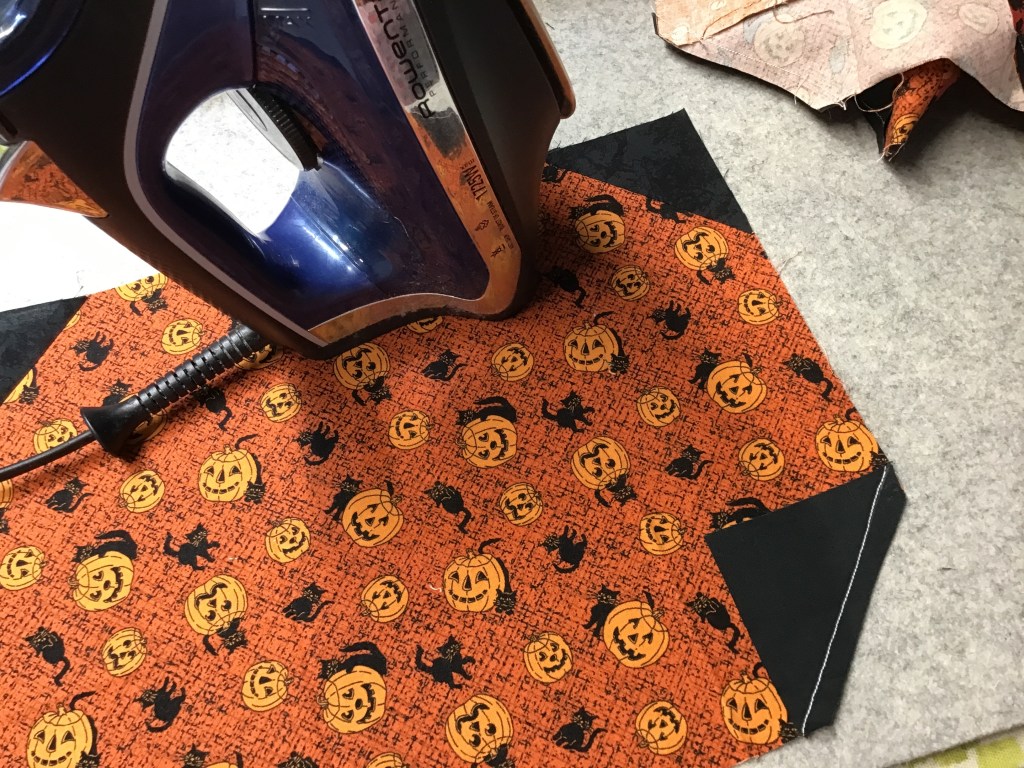
Layer a background square right sides together on the corner of a pumpkin. Draw a diagonal line. Sew on the line. Cut 1/4″ away from the line and press open. Now repeat this for all 5 pumpkins — the 3 strippy ones and the 2 tall single fabric ones.

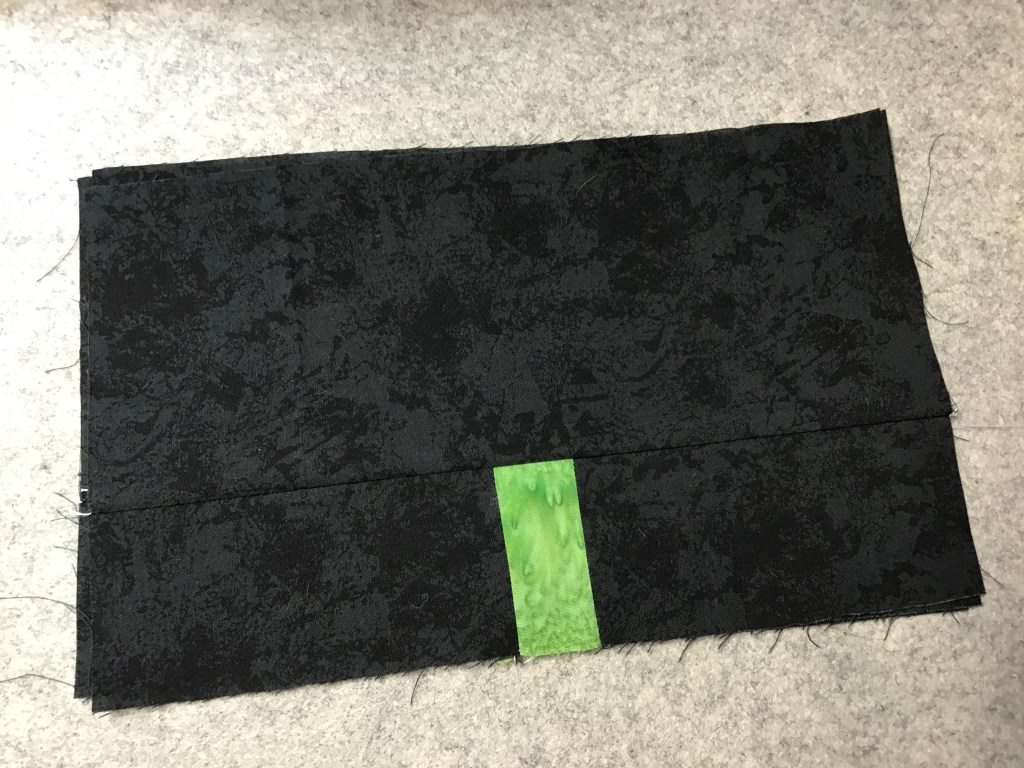
Next we are going to prepare our pumpkins stems. Sew a background strip to each side of the stems. Keep in mind that the smaller pumpkin has a smaller stem, so don’t get the background pieces confused between the 2 sizes of pumpkins.

Wow! This is coming together so quickly.

Now add the top background rectangle to the small pumpkin stems.

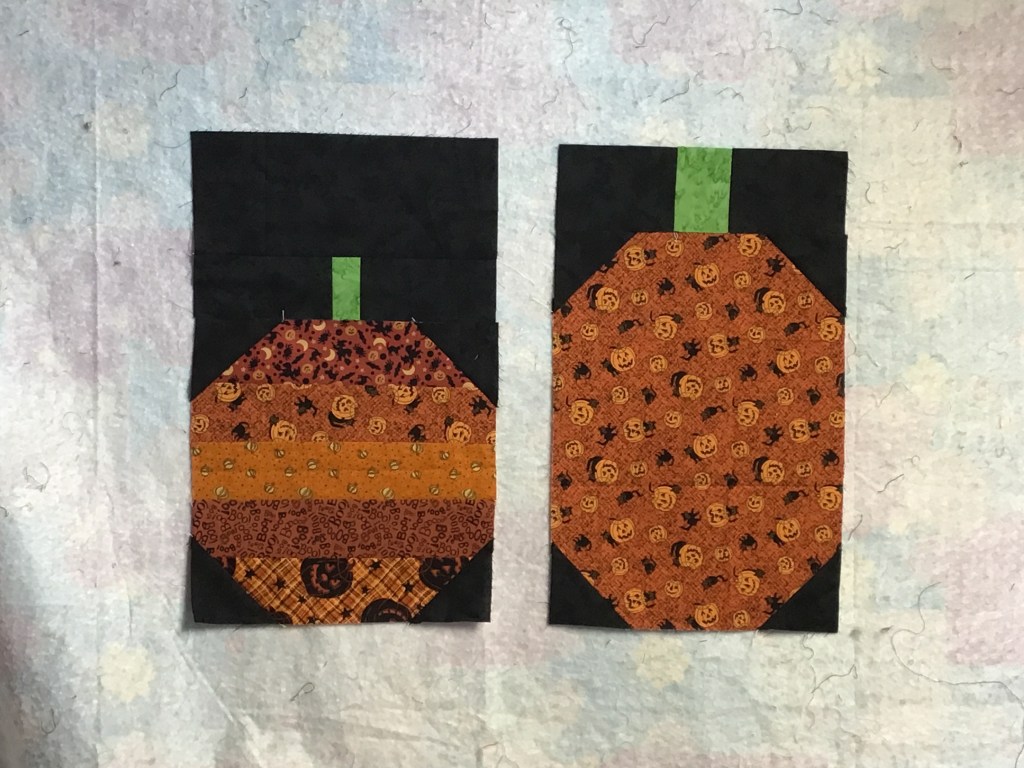
Let’s sew the stems to the tops of the pumpkins. Sheesh! We’re almost done. Wow! It really does go together super fast.

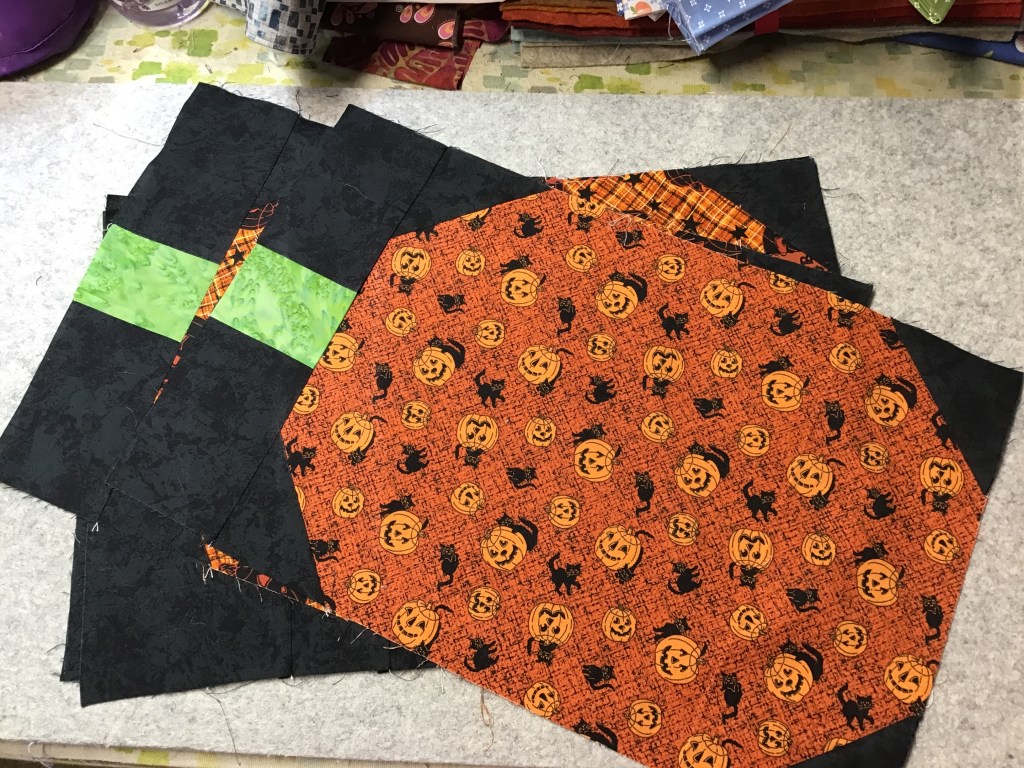
Okay, I’m going to put my pumpkins up on my design wall and arrange them. For fun, I decided to make the strips on the center little pumpkin go up and down instead of side to side.

I like how it looks. Isn’t it fun? I’m going to sew the blocks together.

Easy piezy! Done! Now all that is left to do is layer it with batting and backing, quilt it, bind it, and slap a label on it.

My pal, Robin (BIG Shoutout to Robin!), has already made 2 Pumpkin Hollow runners.

Don’t you just love her teal background in the first one? It’s an awesome unexpected pop of color paired with her mostly lighter florals and leaves.

In contrast, her second one is very warm and cozy with traditional browns and oranges. Love the little bit of blue! Robin even added a narrow inner border and a fall outer border to finish things off. Psst! Adding borders makes your quilt larger without having to make more blocks.

Great job! Thank you for sharing your runners with us! For more Pumpkin Hollow inspirations, please visit our VRD Facebook page.

Now you’ll have to excuse me. I’ve got to get back to my super secret projects for Quilt Market. Shhhhhh…….. Hang in there, you’ll see them very soon, I promise!

Take care and happy quilting!

Until next week –

Always,

Tricia @VRD

Quilting Partners · Rose Cards · Tutorials · villa rosa designs

VRD Duffy Quilt Tutorial

Happy Thursday to you!

Summer time. Summer time. Sum-sum-summertime.

Don’t you just love classic summertime songs, especially from the 1950’s and 60’s? I do! When I was a kid in the summertime, we camped every weekend and probably every Friday and Saturday night we were all hanging out around a campfire with our camping friends, sharing stories and roasting hot dogs, making s’mores and camper pies. We’d have the Saturday night oldies program (Cousin Brucie, I think?) blaring on the radio and we’d all be singing along.

Ahhhhh, those were the days……. Thinking back, my wonderful childhood memories growing up in the 1970’s and 1980’s, lead me to yet another classic song, Time in a Bottle.

Image created by moi in Photoshop

I am happy to share that my sewing machine is finally up and running again on my new-to-me Koala Quiltmate III sewing table. YAY! This table is such a better height for little short me (under 5′ 4″ on a tall day) and I feel more comfortable now with my chair lower along with more leg room under the table, too. My old cabinet was lovely but a bit too tall for me and there wasn’t much leg room so I always felt crowded.

Hooray! Let’s hear it for new-to-you sewing tables! OH! I also bought a new cover for my old sturdy sewing chair to freshen it up from its drab 1980’s dark green tweed. Now to finally get the arms taken off my chair which will make “bellying up” to my machine much easier.

Please excuse my mess in the photo, but I am still sorting out my sewing area. I’m getting there….slowly. The important thing is I CAN SEW AGAIN!

Now that I can sewing again, I’m thrilled to put together another Summer Tutorial for you! I chose Duffy for a several reasons —

  1. It’s super quick
  2. I had a new fabric collection from Studio E ready to go
  3. It’s July’s Top Along selection for Running Doe’s 2024 Top Along
  4. Who doesn’t love making Christmas Quilts in July?

Sew, let’s get started!

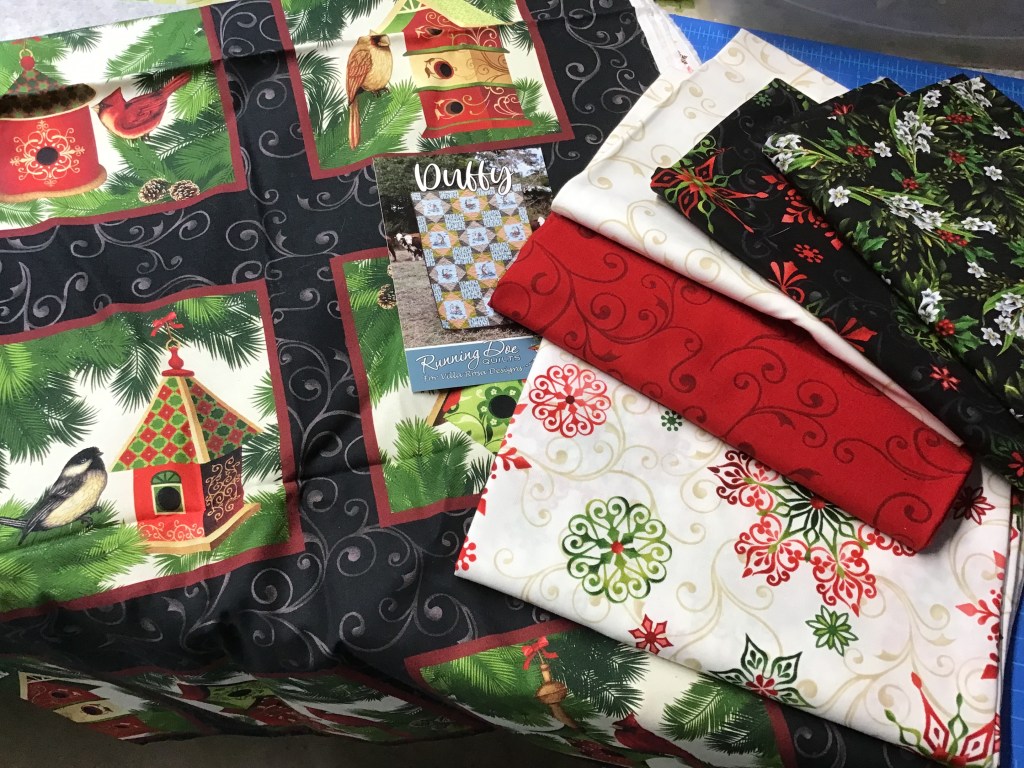
My fabric today is from one of our friends and quilting partners, Studio E — thank you! The collection is called ‘Tis the Season and it is shipping to quilt shops as I write this, so make sure to ask for it at your local quilt shop. Duffy is one of the featured patterns for Studio E’s ‘Tis the Season collection. Pretty cool, huh? VRD is popping up everywhere!

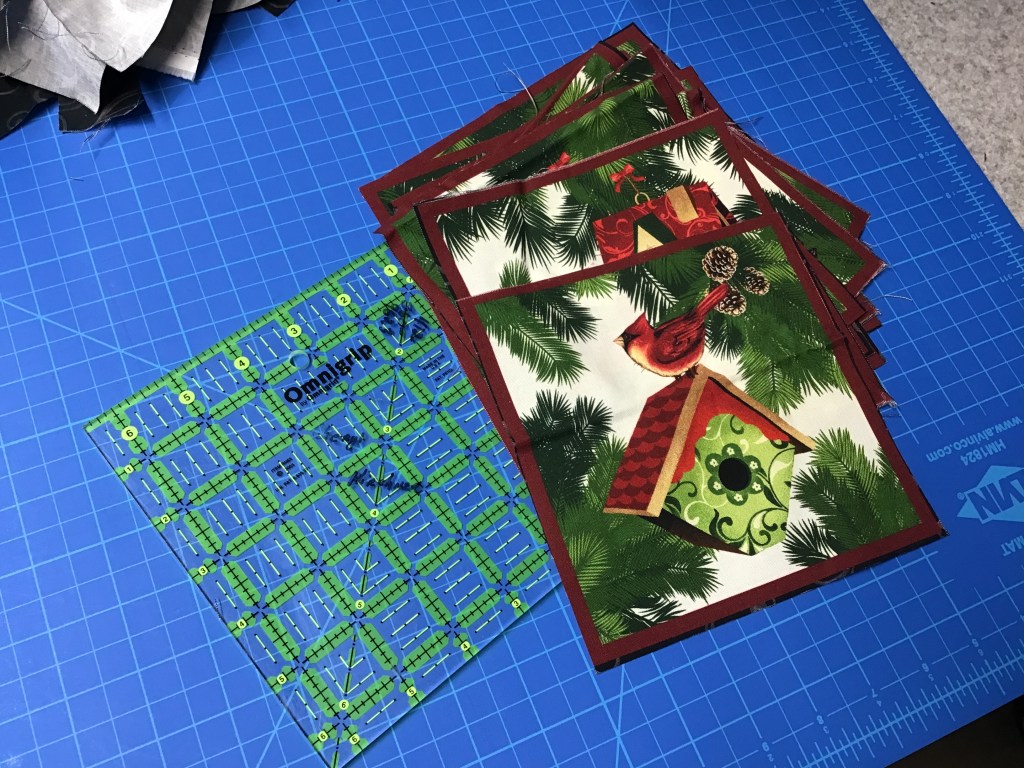
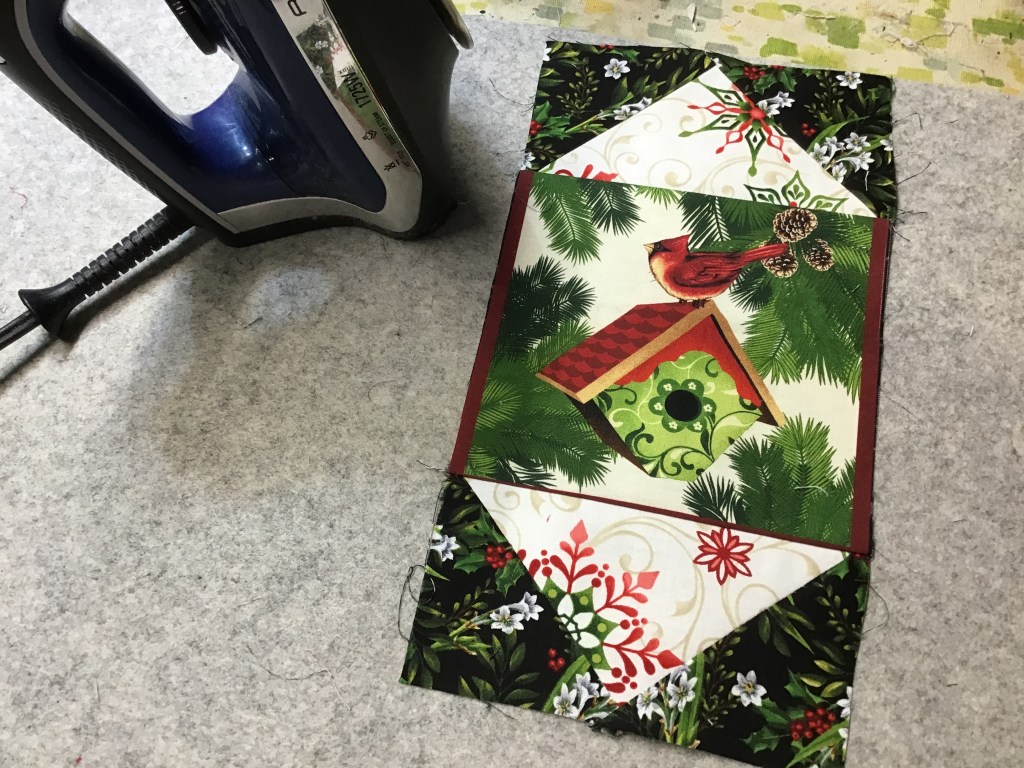
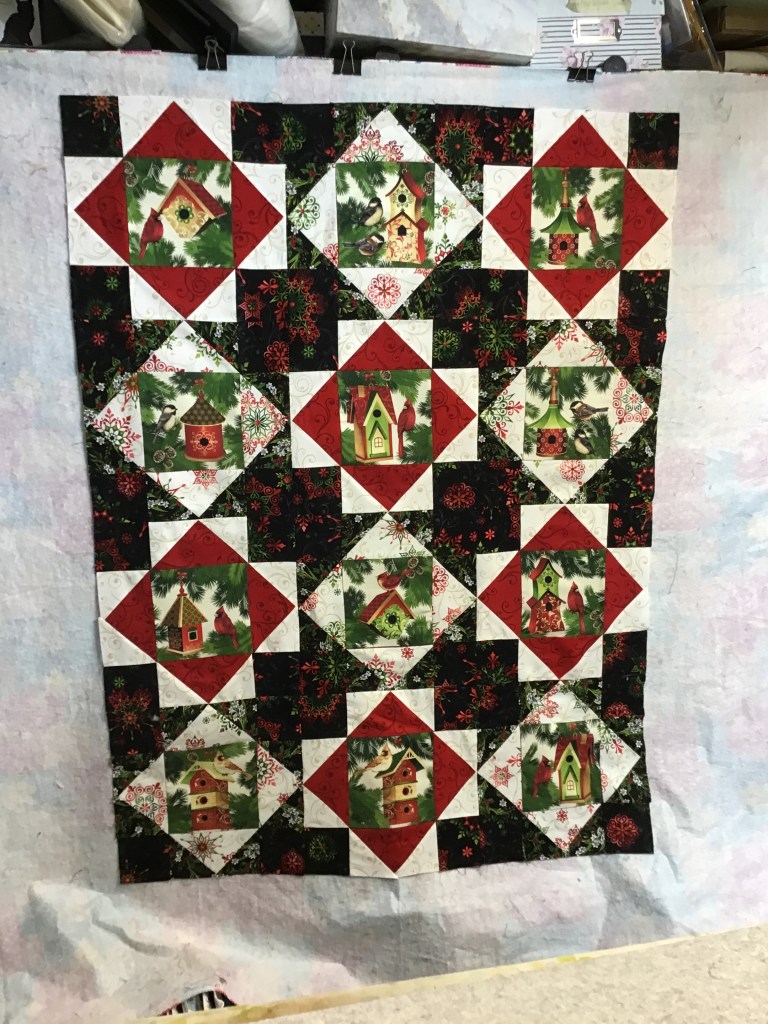
I’m using the gorgeous holiday birdhouse block fabric from the collection for my focal print in the blocks. Lucky me, the square are just the right size.

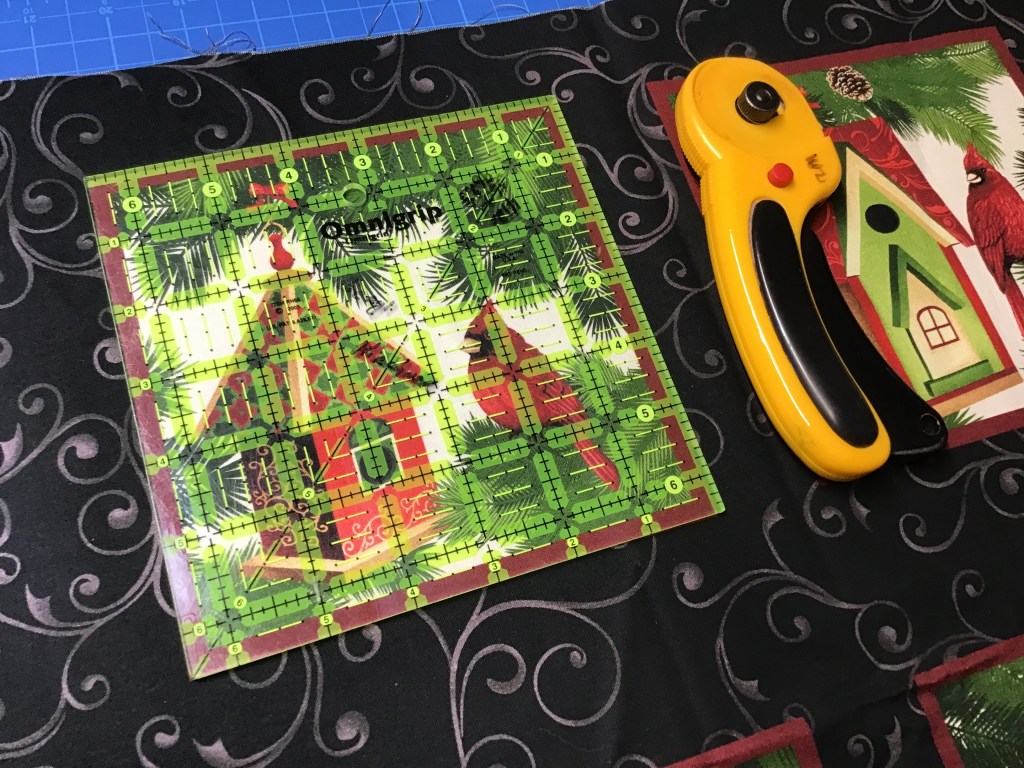
I don’t usually enjoy making swiss cheese out of my fabric (or, fussy cutting, if you prefer that term), but I didn’t mind with this project because I was cutting the printed blocks out, which really only left bits and pieces of the black swirl fabric between the blocks. I love that I even had a ruler to rotary cut the correct size square for the pattern.

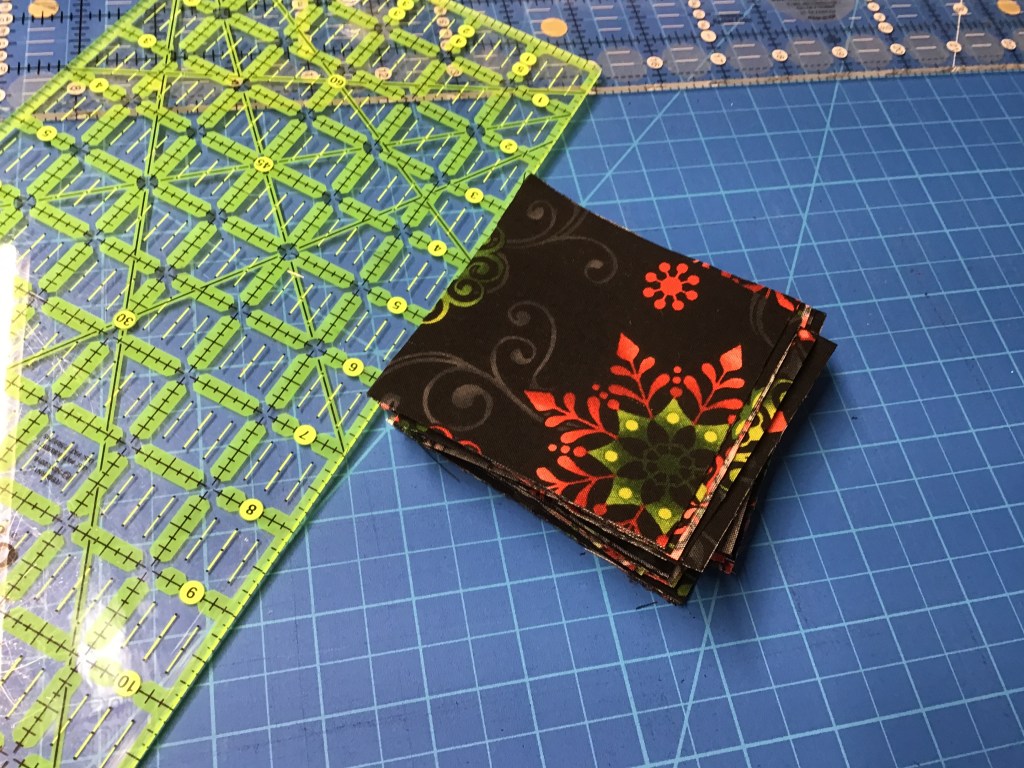
The squares are ready, so let’s cut the rest of the fabrics.

Now it’s time to get down to the business of putting this delightful quilt together!

Please note there are 2 blocks in this quilt — the block is the same, but the fabrics are different in each one. As you make your own quilt, please make sure to keep your fabrics organized.

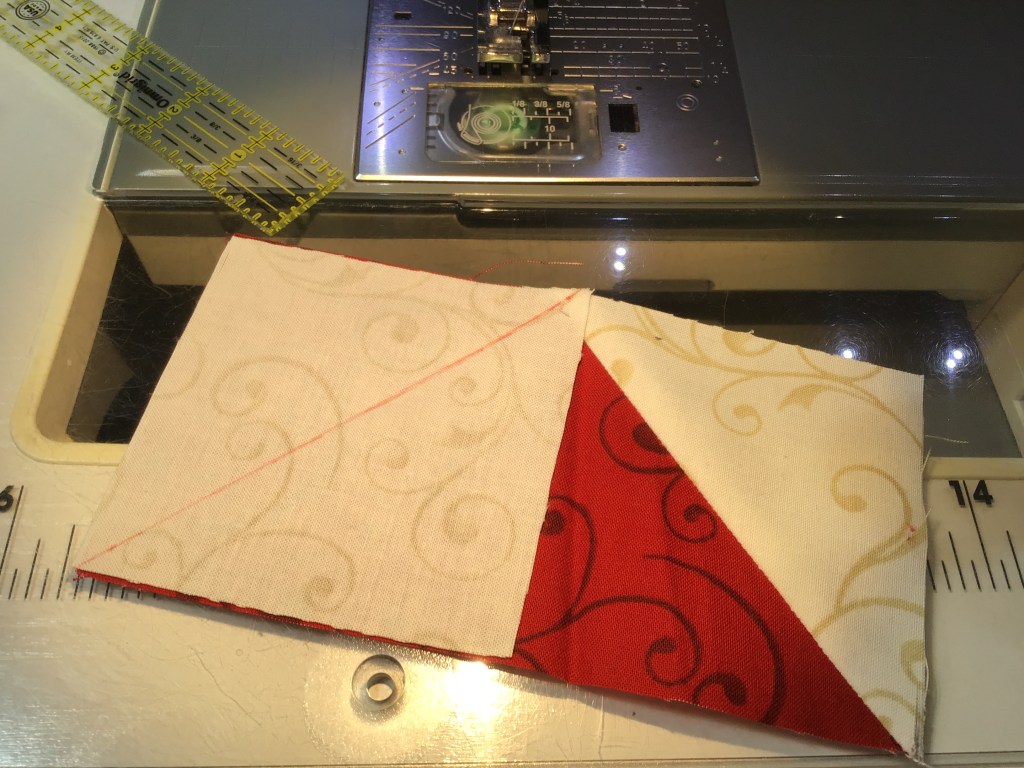
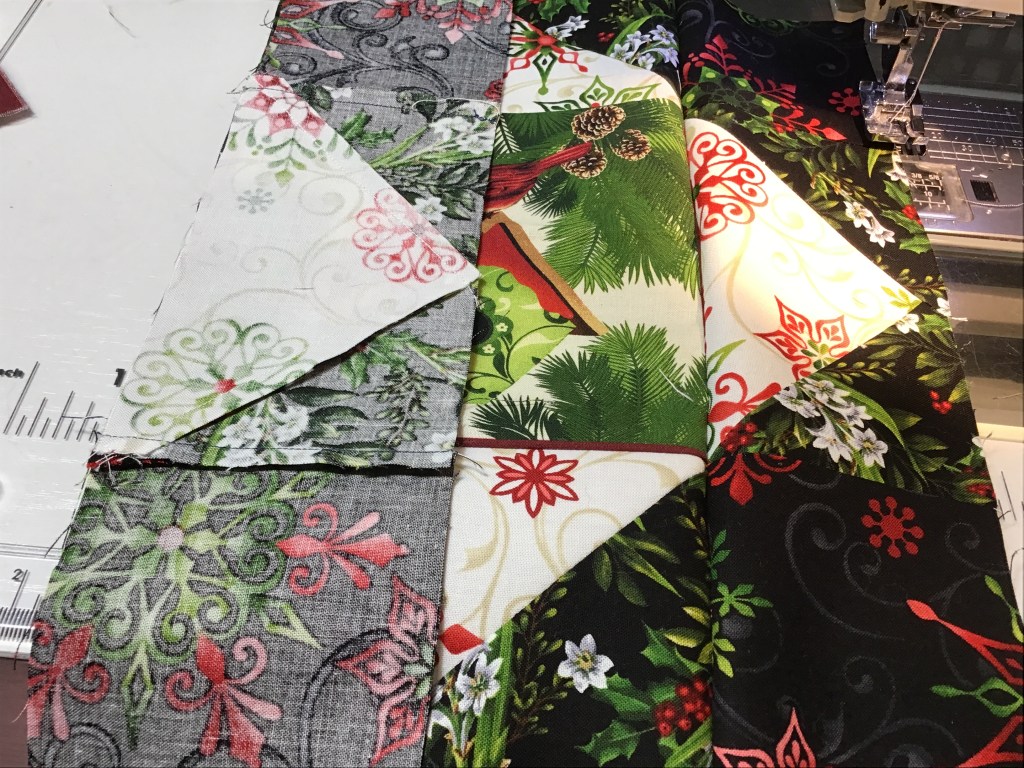
Let’s make our Flying Geese units for the first block. Layer a square RST on the right side of the Block 1 rectangle. Draw a line from the top left corner of the square to the opposite bottom corner and sew on the line. Cut 1/4″ away from the line. Feel free to save the cutaway triangles for another project (PSST! Sometime in the future I plan to create a pattern using all those cutoff triangles, so tuck them away until then). Open the unit and press towards the triangle.

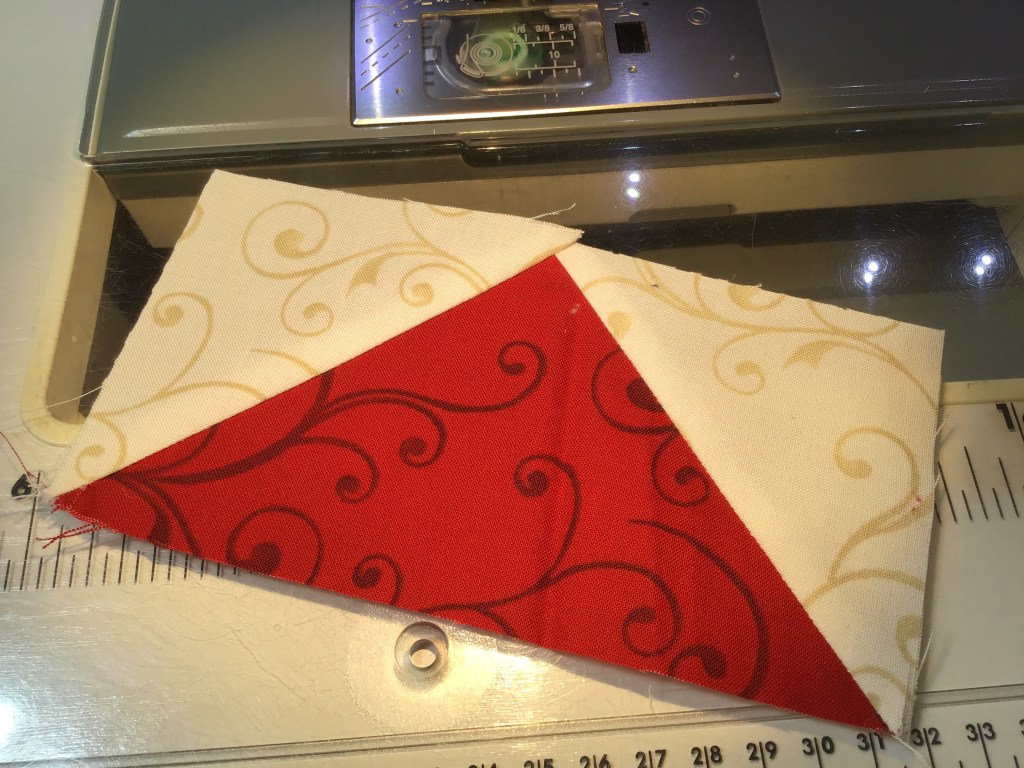
Okay, let’s make the left side of our Flying Goose unit. Place the square RST on the left side of the rectangle this time. Draw a line from the bottom left corner of the square to the top right corner and sew on the line. Trim 1/4″ away from the line and save your cutoff triangles if you wish. Press open.

Voila! One Flying Goose unit.

Did you know that the center large triangle is the goose while the smaller outside triangles are the wings???

Now we are going to repeat the steps above to make Flying Geese units for the second block.

Check! Flying Geese units for both blocks are done.

Moving on, we are going to start making our quilt blocks. I told you this quilt goes together quickly, didn’t I?

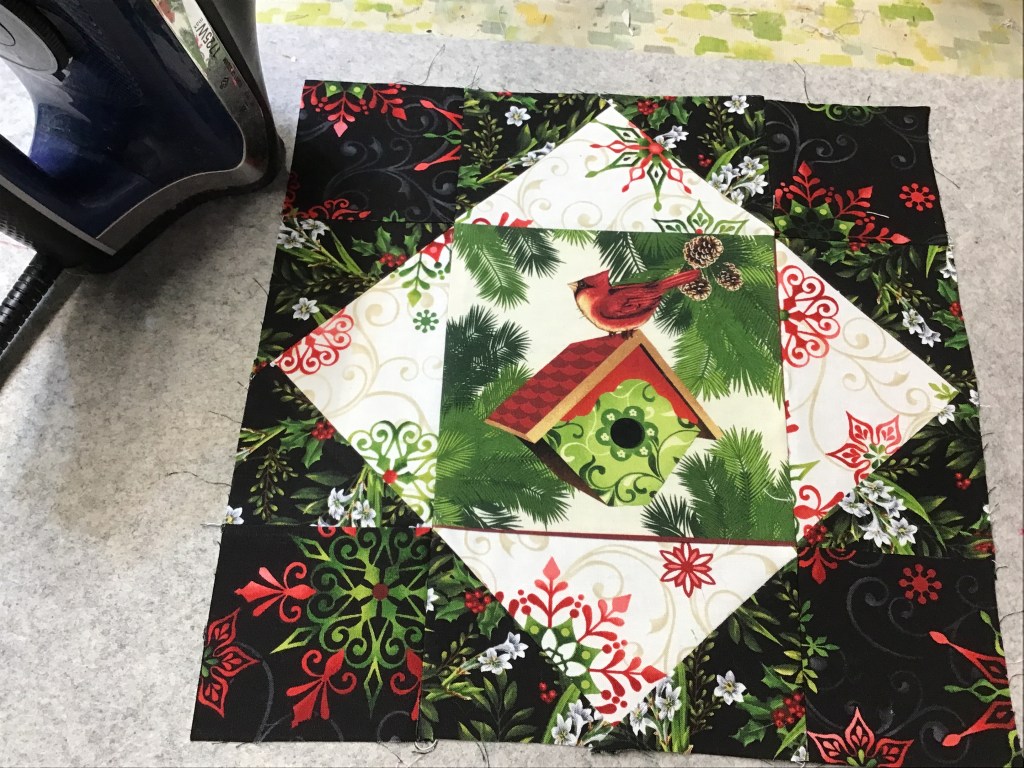
Sew Flying Geese units to the sides (or in my case in the photos, the top and bottom) of the focal print square. I pressed my seams towards the center square.

Next sew Block 1 (OOPS! or 2 in my case — don’t ask me why I did things backwards here….) squares to the ends of 2 Flying Geese units. Then sew to the top and bottom (or sides in my case) of the focal print square. I pressed my seams towards the center. Make 6 Block 1s.

Okay, now on to Block 2 (or 1 in my case). Repeat the steps we did for Block 1 (or 2 for me). For Block 2, I pressed my seams towards the Flying Geese units, hoping that by doing so will make my seams nestle nicely together when I sew the blocks together. Make 6 Block 2s.

Woohoo! Super fast. Told you!

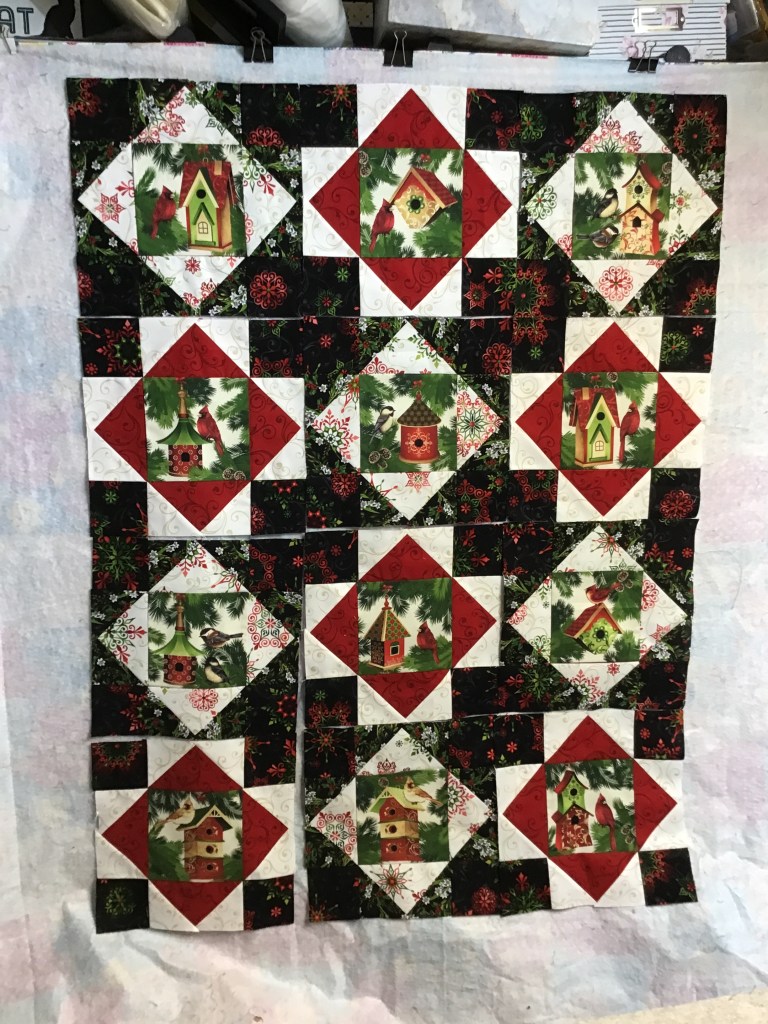
The blocks are done and let’s take a look at 2 variations of the quilt — all I did was change the placement of Block 1 and Block 2.

I bet there are lots of other variations, especially if you play around with your fabric placement.

These 2 are pretty much the same since it’s just switching the blocks, but which one do you like better? Which one do you think I chose?

If you guessed the second photo, you are right! Now it’s time to sew the blocks together.

I found that most of my seams did indeed nestle together. For the couple that were being stubborn, I forced them to behave.

It turned out really cute, don’t you think??? I really like the secondary designs that pop out. Because Duffy is baby quilt sized, I might just add an outer border to make it into a small throw-sized quilt because I just don’t have extra wall space for quilts.

Which brings me to some final thoughts for you about Duffy:

  1. Add a border (or 2) to make it bigger — I’m thinking maybe a 6″ finished border as I have another fabric from the collection that I didn’t use.
  2. Make more blocks to make the quilt bigger — just make sure you purchase enough fabric.
  3. You could use Duffy as a jumping off point and add a series of pieced or appliqued borders, using Duffy as the quilt center.
  4. You could add sashing between the blocks to give it an entirely different look and make it a bit bigger. When I add sashing to a quilt, I usually stick with cutting my strips 2 1/2″ wide.

Well, I hope you will have fun making your own Duffy quilt. I’d LOVE to see them so please share on our VRD Facebook Page.

Enjoy your summer! Do something fun with the ones you love. And don’t forget to squeeze in a little quilting.

See you next week, same time same place —

Always,

Tricia @ VRD

Tutorials · villa rosa designs

VRD Angel Face Quilt Tutorial

Happy Thursday to you!

It’s summer time and the living is easy! After last week’s unusual heatwave here in NW PA, this week has been delightfully pleasant! I’ve enjoyed some quality time on the back porch hanging out with my pup, Bailly, and watching our local eagles. Breakfast on the porch? Yup! Lunch on the porch? Double yup!

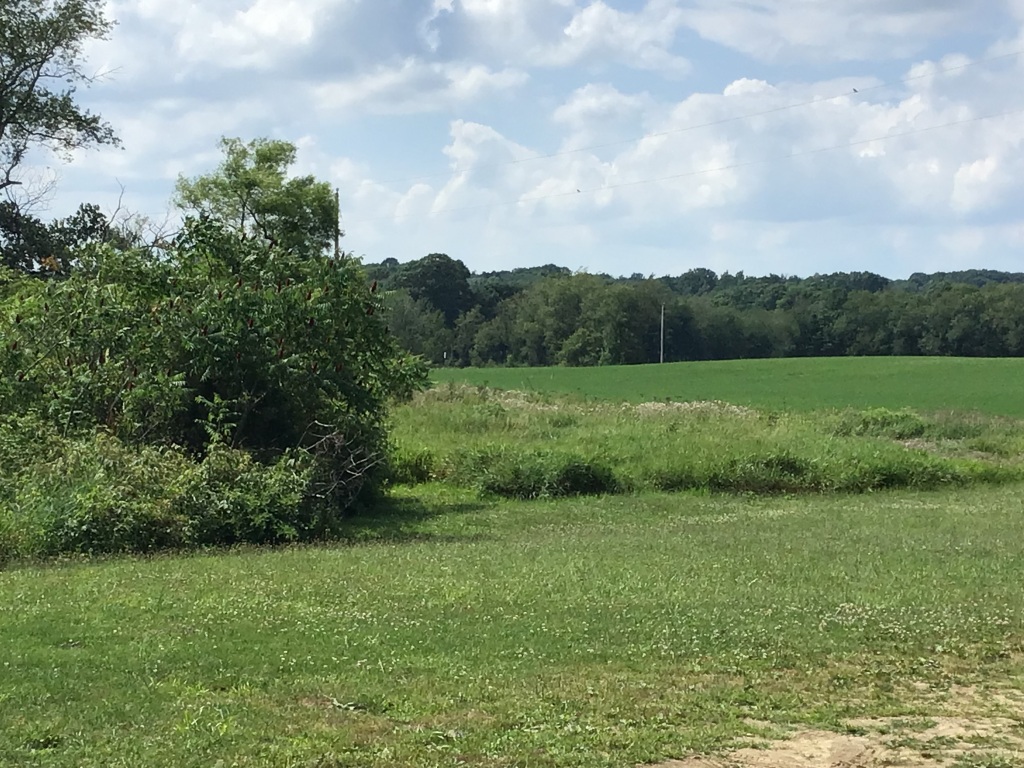
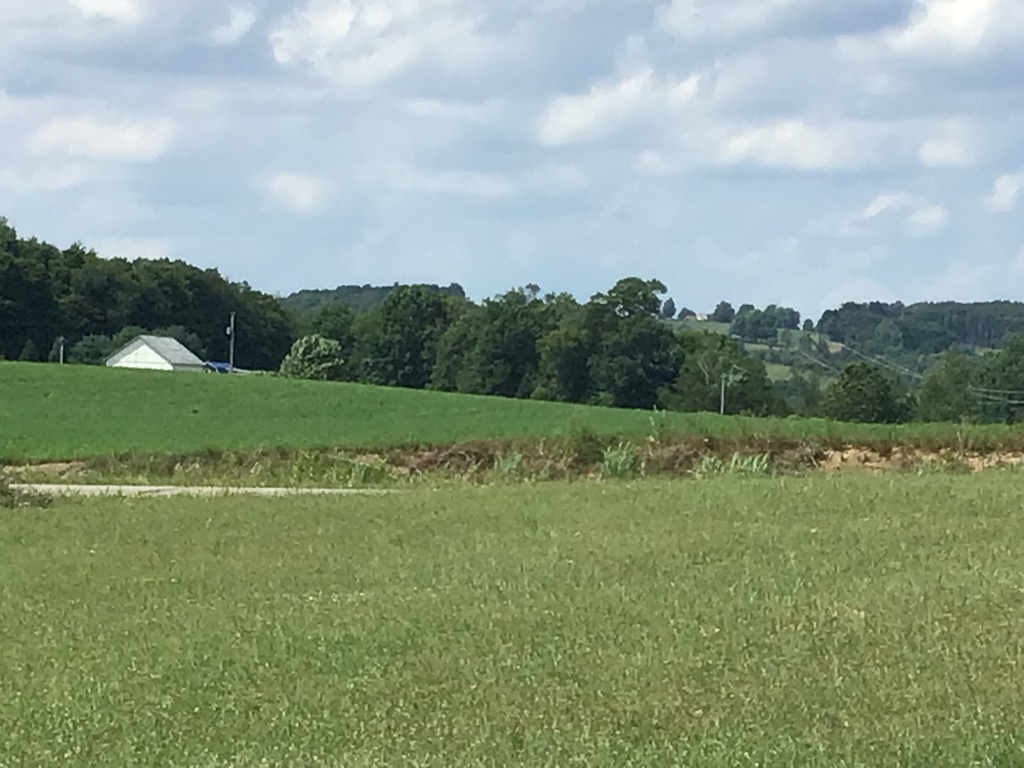
As I’ve shown in photos before, the little valley where I live, tucked into the foothills of the Allegheny Mountains, truly is a little slice of paradise.

I hope you are able to slow down your pace a smidge in order to enjoy nature, too.

I’ve also been getting in some much-needed sewing as well. WHEW! I am so relieved that crazy has settled down a little bit for me in recent weeks! You’ll see some of my industriousness when the new July Rose Card patterns are revealed!

In the meantime, let’s get going on this week’s summer tutorial — Angel Face.

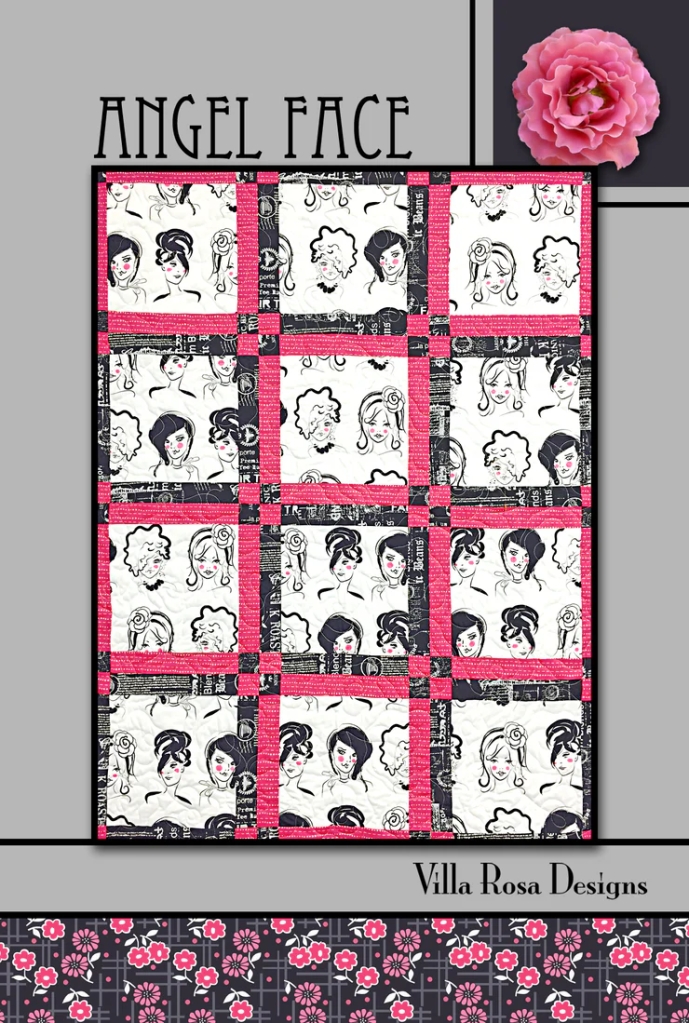
I’ve been a big fan of Villa Rosa Designs Rose Cards since my first Quilt Market in 2010 when I first met the amazing Pat Fryer, but Angel Face was one of the very first VRD patterns I’d seen in one of my local quilt shops way back when as they used it as the pattern for their beginner quilting series. Funny how little memory nuggets resurface, isn’t it???

You can find the Angel Face Print Pattern HERE or the Digital Pattern HERE.

Sew, let’s get this tutorial part started!!

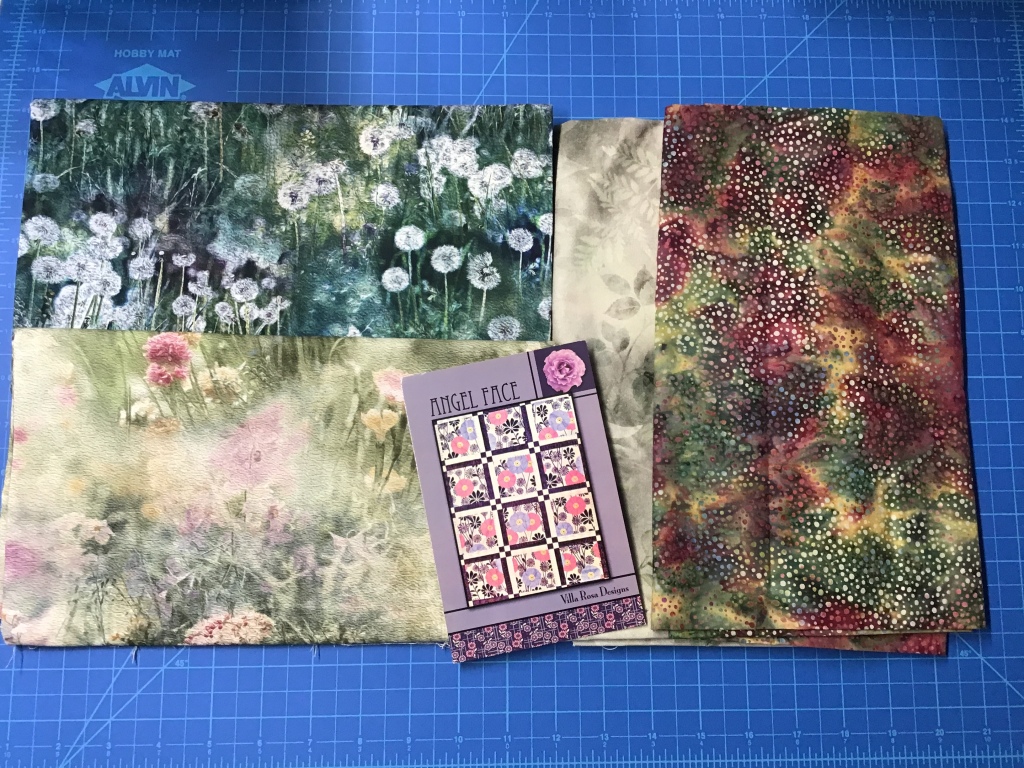
Today I’m using fabric from the Dandelion Wishes digital collection and an 885 Dot Batik companion from our quilting pal, Hoffman. Love, love, love these fabrics — the colors are so so soft and gentle. There are 2 colorways — green and pink — and I used a little of both for this fun beginner quilt project.

Heads up! I did make a slight change to the pattern instructions. The pattern calls for a single main print, but I went with and alternated the 2 prints you see on the left side of the photo because I just couldn’t decide between them. Big surprise, there, huh?

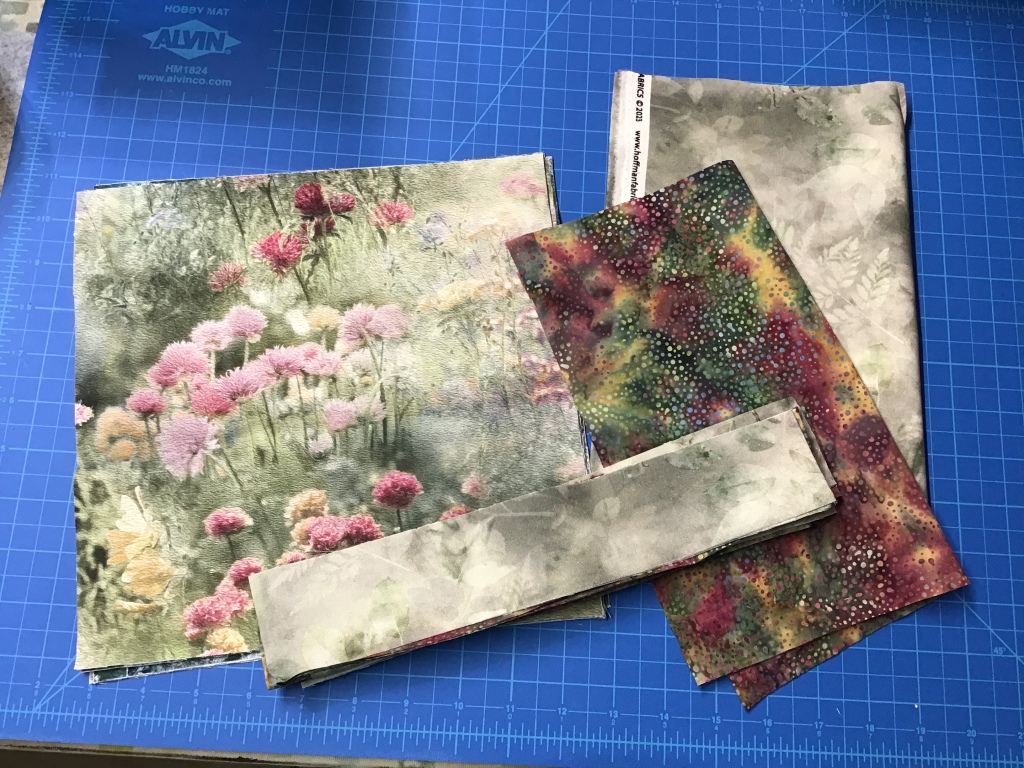
First up is cutting out all the pieces, which doesn’t take because we’re going to do some strip sets, so no little pieces. Easy Piezy!

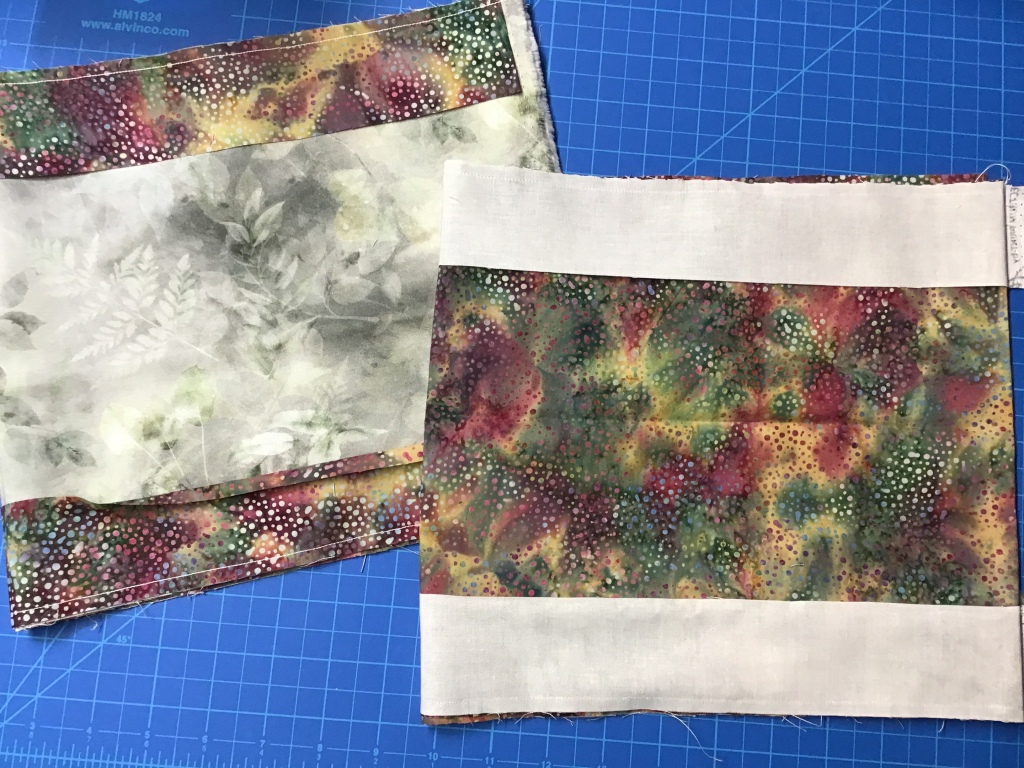
Let’s sew a couple strip sets together. Press the seams towards the narrow strips. Then we need to subcut our strip sets into units. Bet you can do this with both eyes closed, right?

Our next step is to sew the unpieced strips to opposite sides of our main print (or prints) squares.

Now that our strips are sewn to our squares, let’s give them a nice press. Press your seams towards the center square.

Remember those pieced units we cut from our strip sets? It’s time to sew them to the other 2 sides of the squares. There is a teeny bit of matching seams on the ends, but if you pressed the way I suggested above, the seams will nestle together nicely. Pin if you need to and just take your time.

Good to go! Time to give them a little press.

My next step because I used 2 different main prints is to slap my blocks up on my design wall so I can make sure to alternate the 2 blocks. I really like how it looks with 2 fabrics, don’t you? You could even use 12 different fabrics for the squares if you wanted to. Angel Face is a very versatile pattern.

Now let’s sew the blocks together into a quilt top. Remember, that there is some fidgety seam matching when you sew the blocks together, so pin if you need to and go slowly. I promise you, though, that Angel Face goes together super fast!

You can stop here and call your top finished. This size makes a wonderful baby quilt! Layer, quilt, lable, and bind.

OR, you can add a border to make Angel Face the perfect size for a throw quilt.

I’m going to add a border. In fact, I’m using the lighter of the 2 accent fabrics as my border. I think it will make the mottled purple accent strips really pop!

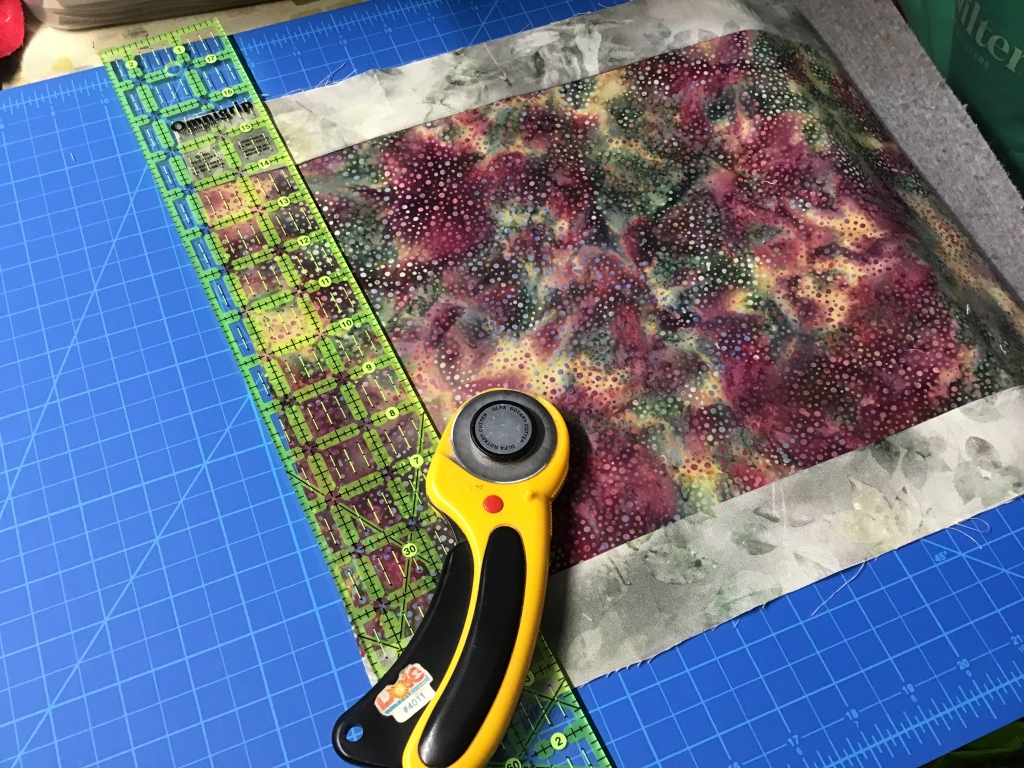
Go ahead and cut out your border strips for the quilt. I chose to add the top and bottom borders on first because the width of the quilt top is less than the width of my fabric, so I won’t have to piece the top and bottom borders.

To measure my top and bottom border strips for cutting, I found the center of my quilt vertically (up and down) and I line up the end of my 2 strips and then I match them up to the edge of the quilt. I pin everything together to keep the 2 borders and the quilt lined up. Then I smooth the strips across the width of the quilt center and cut them to match the width of the quilt top. No more measuring with a measuring tape or ruler for me when cutting border strips.

Then I find and make creases at the centers of the top and bottom borders and the centers of the top and bottom of the quilt. This little step makes it really easy to match up the centers to assist in keeping my borders nice and square instead of getting all crazy and wavy.

Match up the center creases and pin. Next match the ends of the border strips to the ends of the quilt. Pin.

Sew the borders to the top and bottom of the quilt.

For the side borders, you’ll need to piece the strips. Then measure and cut the side border strips. Crease the centers of the strips and the sides of the quilt. Match them up and pin. Match up the ends of the borders and quilt. Pin some more. Finally, sew the side borders to the quilt.

Isn’t it a really soft and pretty quilt???

Here’s a “beauty” shot on my back porch……….

I hope you enjoyed today’s tutorial. Angel Face is a wonderful project. Perfect for a beginner, yet fun and versatile for a more experienced quilter.

Don’t forget to stop and enjoy summer before it’s gone.

Until next week —

Always,

Tricia @ VRD
Quilting Partners · Rose Cards · Tips and Tricks · Tutorials · villa rosa designs

VRD Pacific Grove Quilt Tutorial and Getting Ready for Our Villa Rosa Blog Hop

Happy Thursday to you!

Mother Nature sure has been trying hard to confuse us up here in NW Pennsylvania! We’ve had temps in the 60’s! Can you believe it? I wouldn’t, except I’ve been reading the temp on the thermometer. Yesterday, I even had peepers (tree frogs) on my basement window in the rain. This is WAY too early for the little dears to be awake! I’m wondering what Mother Nature has in store for us in March and April. Who knows? Maybe we’ll have snow in June?!?

I’ve been on a quilting roll since my curated list of Spring VRD Rose Card patterns a couple weeks ago (you can find the post HERE if you missed it). So I wanted to do another tutorial this week. I reached into my magic project crate and pulled out Pacific Grove.

But first, let’s chat about the upcoming Blog Hop!

Well, it’s now officially 2 weeks until our VRD Fast & More Fun Blog Hop, which kicks off right here on March 14th. I hope you’re getting excited about it.

Prizes keep coming in — it’s like Christmas around here! Except it’s not for me at all, instead — it’s ALL FOR YOU.

So far we have 2 AWESOME Grand Prizes lined up. Nope, I’m not going to show them to you yet. You’ll have to wait until March 14th for our Blog Hop kickoff post. Everything will be explained at that time, I promise.

We now have 26 bloggers participating in the Hop. And who knows? Maybe more if anyone comes late to the party.

We’ve also got the most fantastic and generous Sponsors for the event — Hoffman, Moda, Jaftex, Timeless Treasures, Electric Quilt, Banyan Batiks, C&T Publishing, Hancock’s of Paducah, and Fox Chapel/Landauer.

So, are you excited yet???

Remember, the fun begins March 14th right here on the Villa Rosa blog. So make sure you stop by and hop along with us for the week.

Okay, now let’s get to the quilt tutorial!

I’ve been wanting a reason to make Pacific Grove for a while now. I’ve always thought the quilt on the cover of the pattern looked like a work of art. What do you think? Wouldn’t it look amazing framed and hung on a wall? On my wall???

Finally, today is the day to finally make my very own Pacific Grove work of art.

Get your own Pacific Grove physical pattern HERE or a digital pattern HERE.

I’m using some gorgeous fabrics from the Wildflowers Spectrum Digital Print collection by Hoffman. Did you know Hoffman did digital prints in addition to their amazing batiks?

Special thanks to Hoffman for providing the fabrics for this tutorial.

Before we get started, I do want to say that digital prints can be a little finicky so it’s important to start with a new sharp needle in your machine. If you use pins when you sew, make sure they’re sharp. Why? Because you don’t want to break any threads. Take a look at this photo. Do you see area inside the red circle? See the 2 broken threads? You don’t want this to happen to your quilt because it will probably be visible on the front, not just on the back. Lucky for me, this was in the seam allowance. Whew!

So, let’s get start by cutting the main print and the background fabric. I kind of don’t want to cut this lovely fabric up, but I know it will look fabulous in the Pacific Grove pattern.

Now that the pieces are cut and ready to sew, it’s time to assemble 2 side units. Easy piezy!

Next up is putting together the center of the quilt. I really like how this quilt is coming together into vertical rows. That makes it really simple to put together. And I’m not having to match up a bunch of seams. Yay!

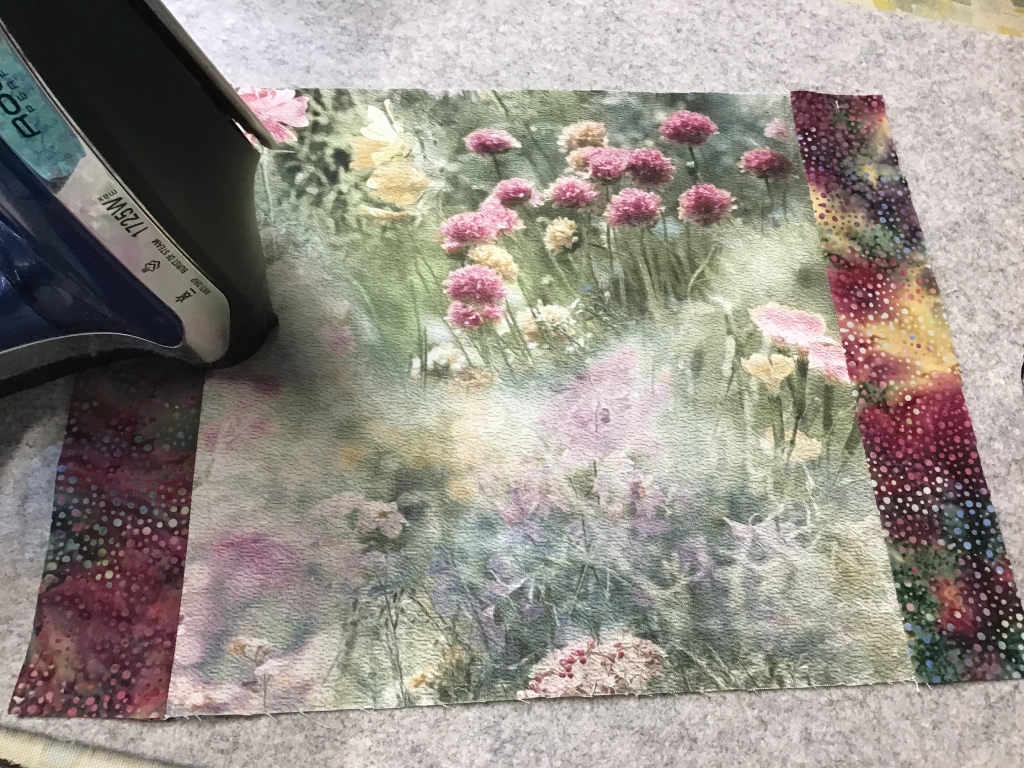
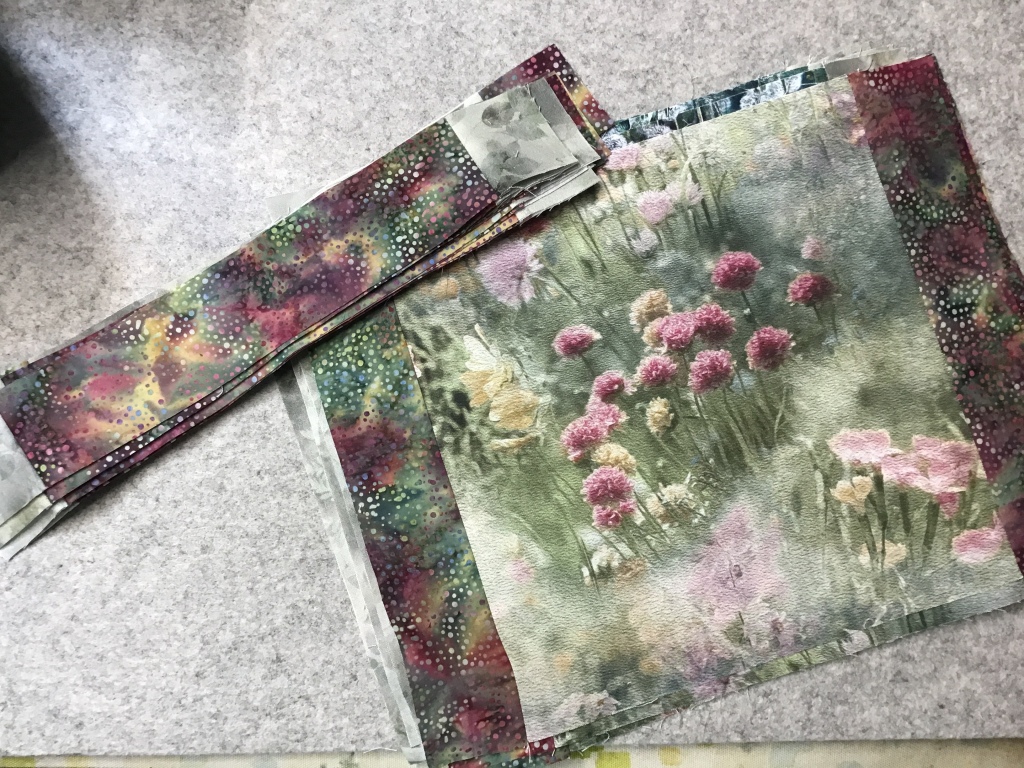
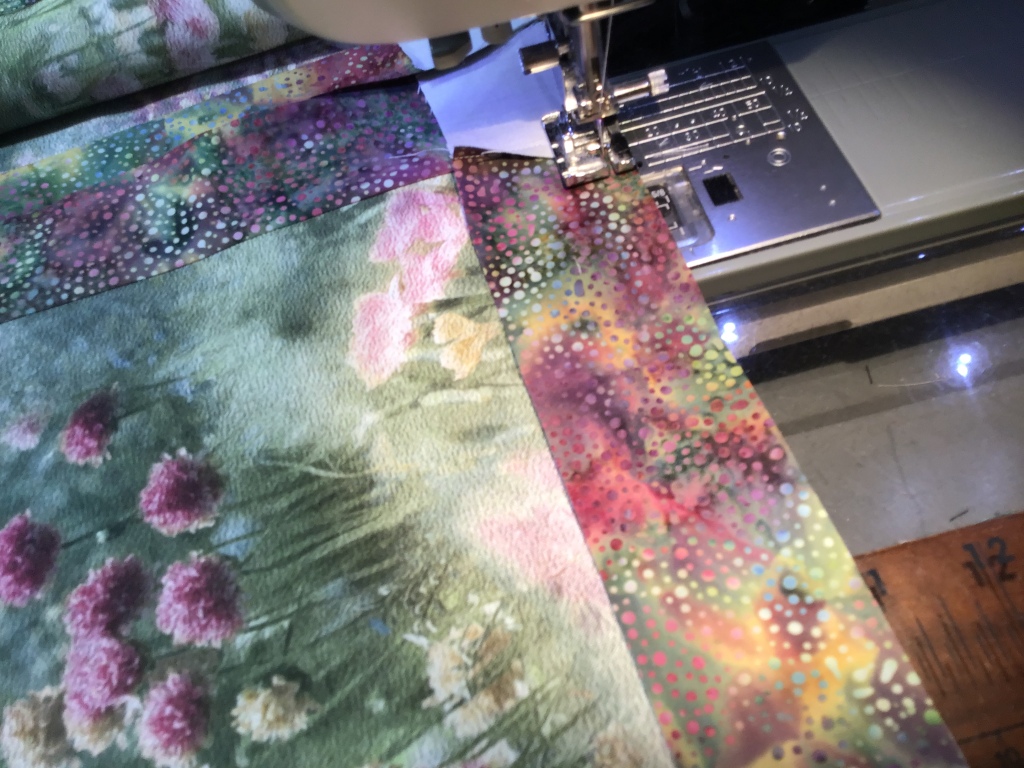
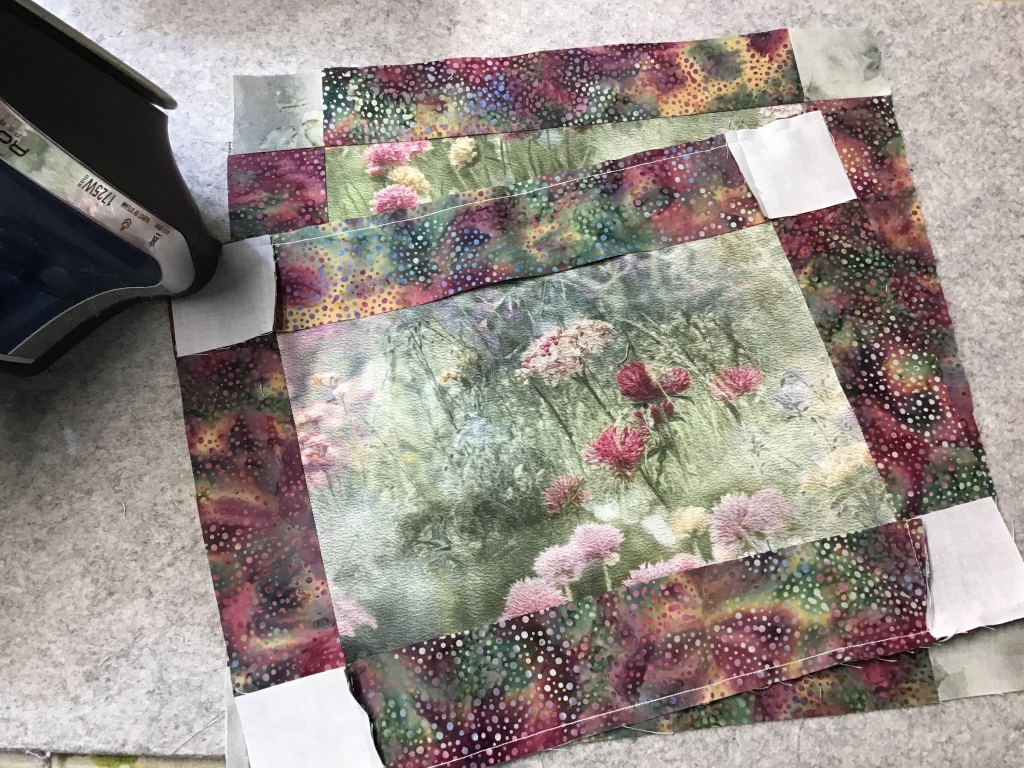
Now that the sides and the center are made, I’m going to work on the purple background strips. Here you can see in the first photo how I creased the center of the side strip and the center of the sashing strip. Then I matched those creased centers and put a pin right there. After I found the centers, I went to the outside edges and lined them up. You’ll see in the second photo that not only do I place a vertical pin, I also place an horizontal pin . That horizontal pin helps to keep my strips straight instead of bowing as I sew (I learned this little trick a long time ago from a quilter friend when I was a new quilter). After the center and the outsides are pinned, I always add a few more pins in between to keep everything from shifting when I sew.

Yay! Here you can see the design taking shape now that I’ve sewed the purple strips to the sides of the quilt center.

Next I’m gong to sew the side units to the center. Again, I will crease and match my centers. I think it’s looking really lovely with these digital prints.

Time to add purple background strips to the sides. It has a bit of an Art Deco feel to it, doesn’t it? Or maybe a stained glass window?

Time to sew background strips to the top and bottom of the quilt. Isn’t it looking amazing???

The borders are next up. What’s cool about this pattern is that you add the top and bottom borders on first before the side borders. When I did the purple strips, I added the sides first. But it does make sense to do it this way because it uses the fabric more efficiently — you don’t have to piece the top and bottom borders if you add them first. Ingenious!

Here is the finished quilt top. It looks like an Art Deco stained glass window garden to me!

With so much open space, I’m just itching to starting machine quilting it, but that will have to wait for a while, I’m afraid.

Last week I was debating whether to add a border or not to my Duet quilt top. Then I took a deep breath and just added that outer border. I chose a light batik because Duet felt a bit dark to me. The binding will frame it all nicely — it’s dark blue.

TWO WEEKS TO GO AND COUNTING DOWN……..until the Blog Hop. Get ready.
Take care and Happy Quilting.

Until next week —

Always,

Tricia @ VRD