Rose Cards · Tips and Tricks · Tutorials

NEW VRD Rose Card Patterns for September and VRD Cinnamon Stix Quilt Tutorial

Happy Thursday to you!

I hope you are enjoying this collection of VRD quilt tutorials to inspire you to leap back into quilting this fall. May these tutorials nudge you into making a quilt for someone special or maybe just for yourself.

We’ve got lots to do today, so let’s get moving.

First up, it’s the Thursday after the first Friday of the month, and you know what that means – NEW PATTERNS! Talk about fall inspiration!!!

Here’s the new collection of 5 VRD Rose Cards for September. Aren’t they super???

A collage of quilt pattern cards for September 2025, featuring designs titled Awestruck, Edwina, Pumpkin Parade, Besties, and Viroqua, each with vibrant colors and unique patterns.

Get the set of 5 print patterns HERE

(Patterns are also available individually both as print and digital versions)

Awestruck by Molly uses 5″ squares and finishes at 44″ x 60″. There are kits still available HERE featuring Tula’s True Colors collection while they last. Totally loving the name!

Melissa wows us with her Pumpkin Parade throw quilt. It uses yardage (or your stash!) and finishes at 45″ x 56″. We still have a few kits left HERE featuring Riley Blake Seasonal fabrics, so grab one before they’re gone.

Pat is back this month with her latest Tim Holtz Palette quilt pattern, Edwina, featuring the Indigo Palette. Edwina finishes at 45″ x 60″ and is fat quarter friendly. Kits are still available, but going fast, so get yours HERE.

Besties is my new throw-sized quilt pattern this month. It’s fat quarter friendly and finishes at 48″ x 64″. We have kits featuring Anna Maria’s Iconic collection (see below) still available HERE.

Colorful patchwork quilt featuring various floral patterns and vibrant colors arranged in a grid layout.

Besties in the Iconic Collection

Viroqua is Rachelle’s latest smashing mod pattern. It finishes at 42″ x 48″ and uses half yards and yardage (stash friendly!). There are kits still available HERE featuring Windham’s Sketchbook 21 collection (see below).

A patchwork quilt top featuring various fabric patterns arranged in a geometric design with triangles and squares, showcasing a mix of colors and textures.

Viroqua in the Sketchbook 21 collection (please disregard the 2 mistakes where we turned the HSTs the wrong way – it’s getting fixed as we speak)

Last, but certainly not least is this month’s new table runner, Beachcomber. I’m sorry I missed the deadline boat last month with this fun runner, but I think it’s not too late to have just a wee bit more summer before it’s officially autumn on September 22nd.

You can really use just about any fabric collection or your stash for this fun and clever runner. Beachcomber finishes at 18″ x 54″ and uses yardage. Autumn? Halloween? Thanksgiving? Christmas? And the list goes on. Have you ever thought about making a 2 sided runner with 2 different seasons….here’s your chance!

A digital mockup of the Beachcomber quilt pattern designed by Tricia Lynn Maloney, featuring a colorful quilt laid out on a sandy beach with ocean waves in the background.

Get your digital Beachcomber pattern HERE or your print pattern HERE.

Now we’ve covered all of the new September patterns, which one will you make first?

OH! One last little thing about the new patterns – Melissa’s new Pumpkin Parade throw quilt is a fabulous companion to our best-selling Pumpkin Hollow table runner.

A quilted table runner featuring orange pumpkins on a white background with a checked pattern, accompanied by autumn leaves, titled 'Pumpkin Hollow' designed by Tricia Lynn Maloney for Villa Rosa Designs.

Get your Pumpkin Hollow digital pattern HERE or print pattern HERE.

All right, moving on, let’s dive into this week’s quilt tutorial – Cinnamon Stix.

Cinnamon Stix is a great pattern for a favorite fabric collection. You can use a stripe or even a seasonal/novelty fabric in the long strips, so it’s really versatile. Then simply add your coordinating fabrics for the Stix, a sashing, and border. Cinnamon Stix is fat quarter friendly and finishes at a nice 46″ x 63″.

A vibrant quilt titled 'Cinnamon Stix' featuring horizontal stripes of various fabrics in warm autumn colors and patterns, framed by a green border.

Get your Cinnamon Stix digital pattern HERE or your print pattern HERE.

I promised you a few weeks ago that I was going to have another quilt featuring Hoffman’s Rodeo Dreams digital collection – well, here it is! Today we’re using the border stripe in the collection along with fun coordinates, including a few batiks.

A variety of fabric swatches in red, blue, and neutral tones arranged on a sewing table, featuring a western-themed border print with cowboys and horses, alongside a quilting pattern titled 'Cinnamon Stix'.

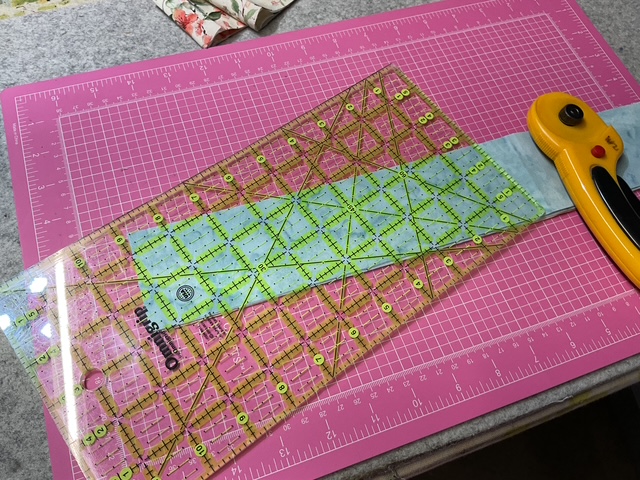
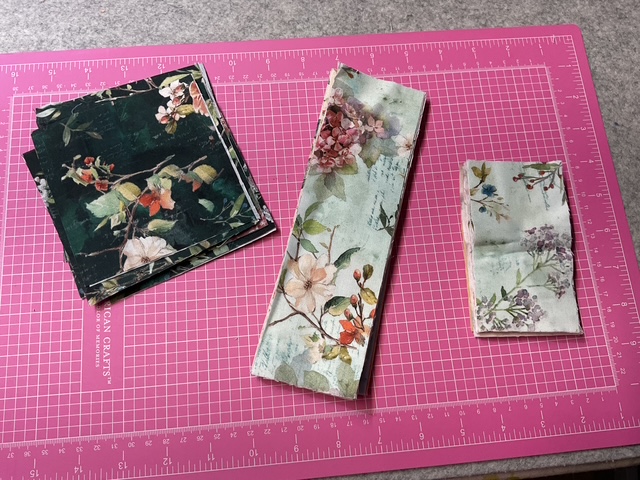
First up, we’re going to cut out the Stix for the 3 pieced Stix rows.

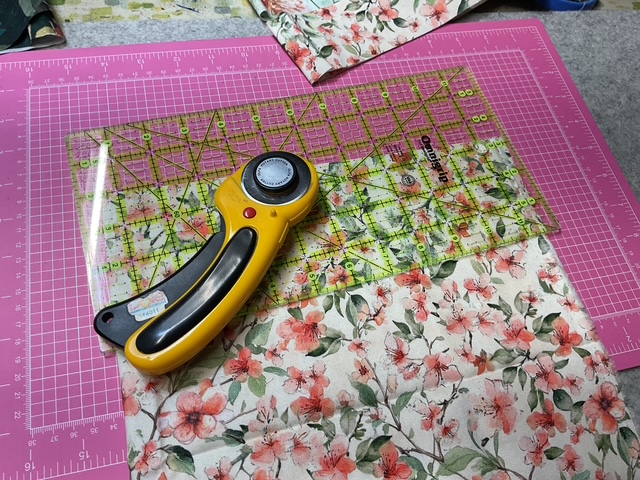
A rotary cutter and acrylic ruler on a cutting mat with the 'Cinnamon Stix' quilt pattern card by Heidi Cook.

Once we’ve gotten all of the Stix cut, we’re going to slap them up on the design wall so we can arrange and rearrange them until we’re happy with the fabric placement.

Heads up – because the Stix are cut different widths, each row might look a bit different, depending on how you arrange your Stix.

Fabric squares arranged on a design wall in a patchwork pattern, featuring red, white, and blue colors.

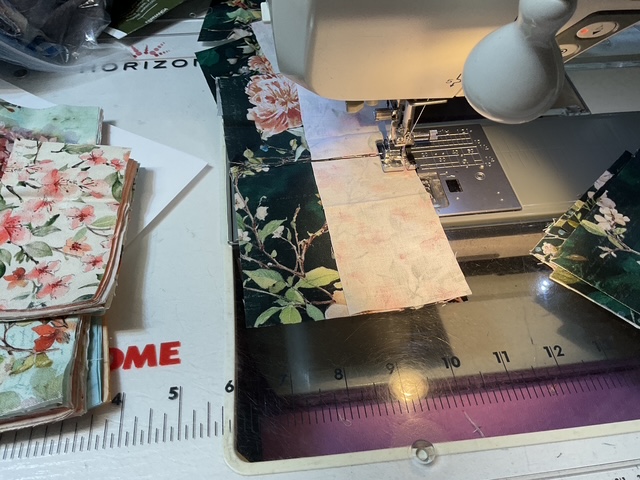
Now we’re happy with how the Stix rows look, so it’s time to sew them together. I like to sew them into pairs, then sew the pairs into quads, and so on until all the pieces are stitched together into a row. Then repeat for the next 2 rows.

Close-up of a sewing machine stitching layers of fabric together, featuring a mixture of light beige and patterned blue fabric.

Okay, all the Stix are sewn together into 3 rows. Lookin’ good!

Three rows of colorful quilt fabric blocks arranged on a design wall, featuring blue, red, and cream tones.

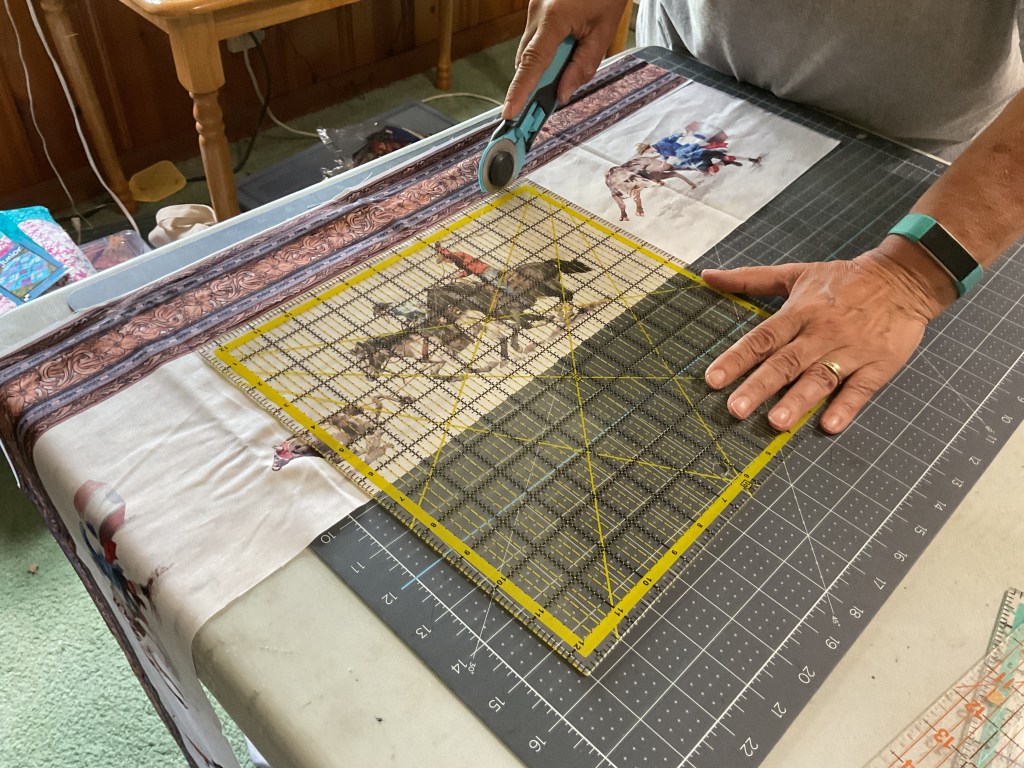
Next let’s work on prepping and cutting the Rodeo border stripe fabric. My pal (and cousin), Robin, is helping me out with this tutorial today – we’re working on it in her sewing room.

A person cutting fabric on a cutting mat with a rotary cutter, featuring printed rodeo scenes and decorative fabric borders.
Hey Robin!

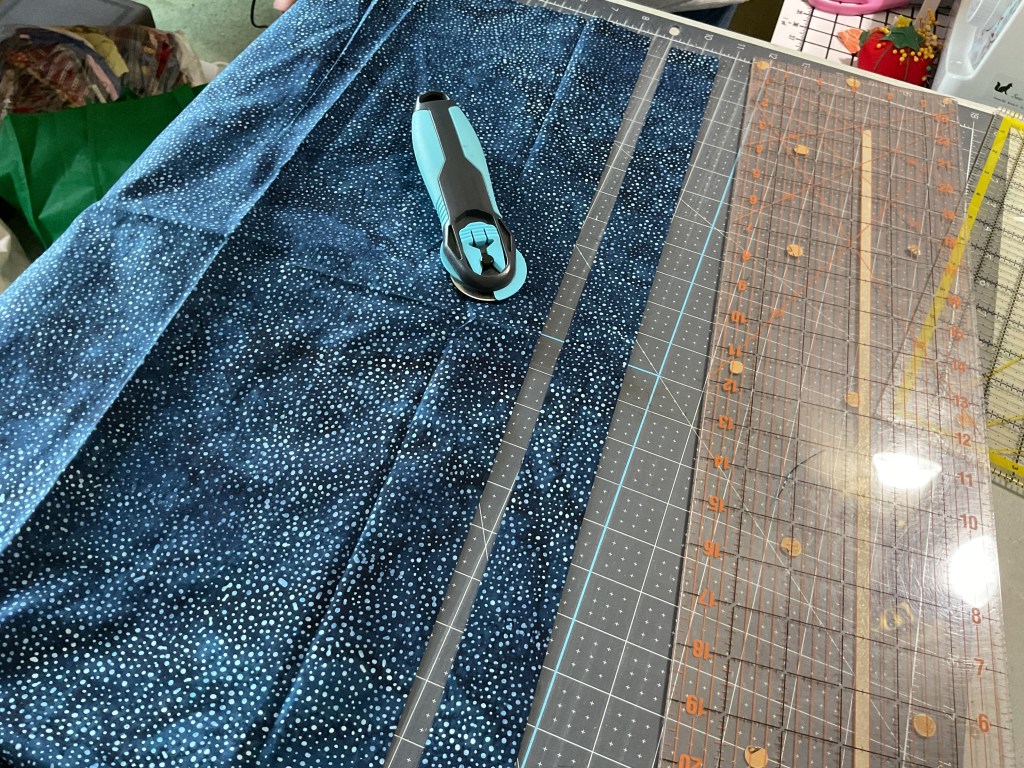
Once the stripe is cut, we’re going to work on cutting the narrow sashing, which is this gorgeous blue 885 Dot batik. LOVE IT!

A rotary cutter is placed on a cutting mat with strips of navy blue fabric featuring white dot patterns, alongside a clear acrylic ruler for measuring.

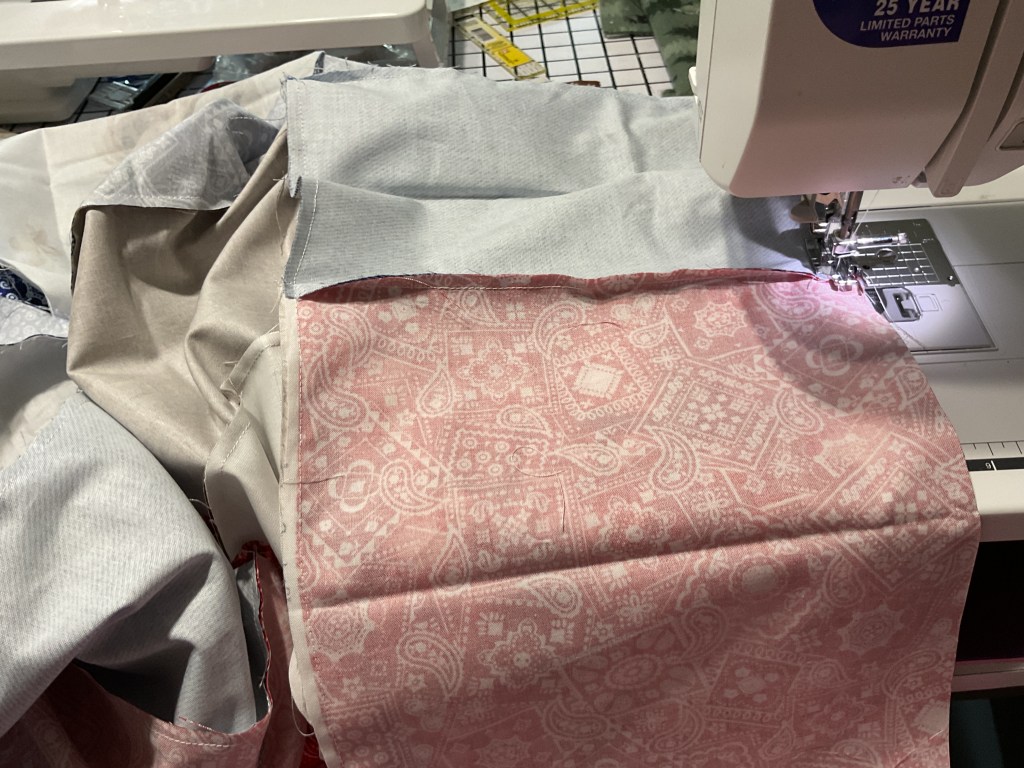
Let’s sew the sashing to both sides of our pieced Stix rows.

A sewing machine stitching together several pieces of fabric, including a patterned pink fabric and solid blue fabric, arranged on a sewing table.

Now we’re going to lay out the sashed Stix rows with the stripe. My tip is to find the center of the sashed Stix row and the center of the border stripe. Then match and pin the centers together and pin outward towards the ends to keep the quilt nice and square. We’re ready to sew the rows together. And then we need to add sashing all the way around as our first border.

Yay! The center of the quilt is finished. Easy peasy!

A quilt featuring western-themed fabric panels depicting riders on horses and dogs, arranged in alternating striped sections of blue, red, and patterned fabric, displayed against a light-grey backdrop.

Okay, time to cut the final border, which is a wonderful red bandana print from the Rodeo Dreams collection. Then we’re going to sew it to the quilt. Yay!

A person cutting red bandana fabric with a rotary cutter on a cutting mat using a ruler for measurements.

And here it is – the finished Cinnamon Stix quilt top in Rodeo Dreams. Isn’t it really fun???

A colorful quilt featuring cowboy and rodeo-themed fabric, arranged in vertical stripes with red borders, displayed against a light backdrop.

Here it is outside for a straight-on shot. It was really breezy so we ended up taking the photo in front of one of Robin’s hubby’s farm toys so it blocked the wind, instead of in front of the old barn (our first choice). Thank you Mary Lee and Robin for holding the quilt and fighting the wind for me. Perfect!

Two people holding a finished quilt featuring horse and cowboy patterns against a construction vehicle background.

I bet you’re already thinking about border stripes in your stash (or something new at your local quilt shop) to use in this fun and fast VRD pattern. We’d love to see your Cinnamon Stix quilts on our VRD Facebook page.

Now that the top (or flimsy) is done, it’s time to layer it with batting and backing, quilt it, bind it, and lastly add a label. Eventually…..

Stay tuned next week for another great VRD tutorial.

Until then –

Always,

Tricia @ VRD

Quilting Partners · Rose Cards · Tutorials · villa rosa designs

VRD 31 (Thirty One) Quilt Tutorial

Happy Thursday to you!

I’m going to get right to our tutorial today because you are going to LOVE LOVE LOVE today’s quilt! And I can’t wait to show it to you.

31 is our project du jour. It was designed by Molly Cook. You can go HERE to read an interview I had with Molly last year if you’d like to get to know her a little bit. Occasionally she pops onto the blog, but it’s been a while, so I’ll have to remind her she has an open invitation to hang out with us anytime she wants. Isn’t it fun to get to know your favorite VRD designers? I know, I know — I need to get my tush in gear and get some more interviews with our lovely designers, don’t I?

31 is a fabulous asymmetrical panel quilt design and looks great in pretty much any fabric collection!

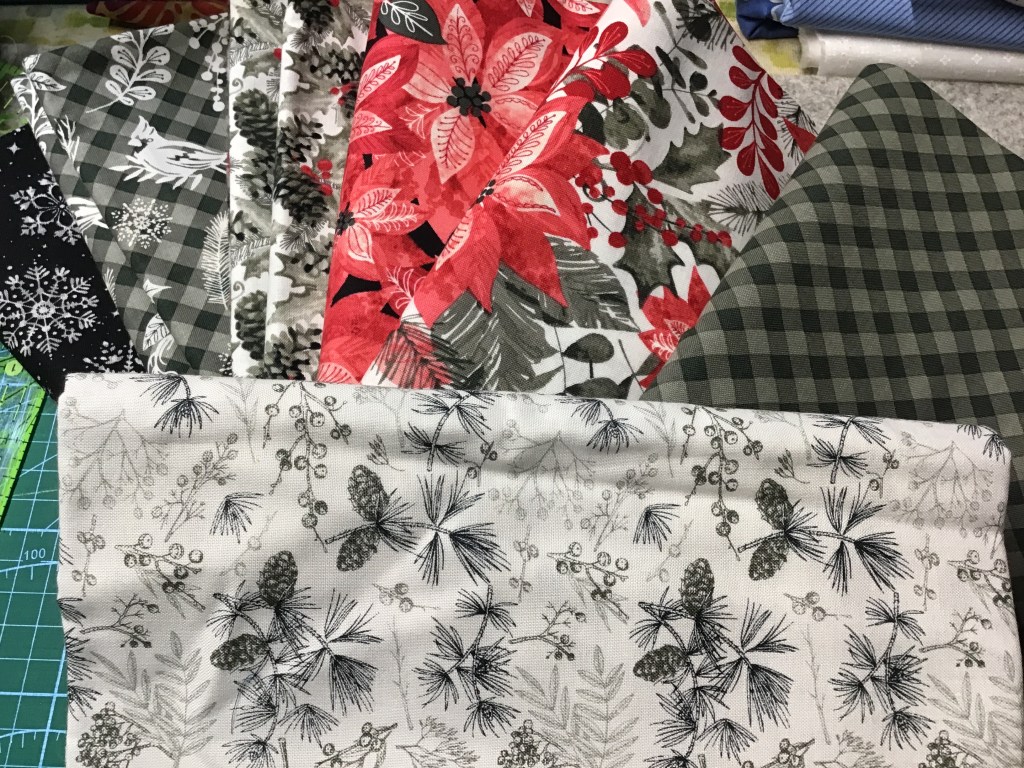
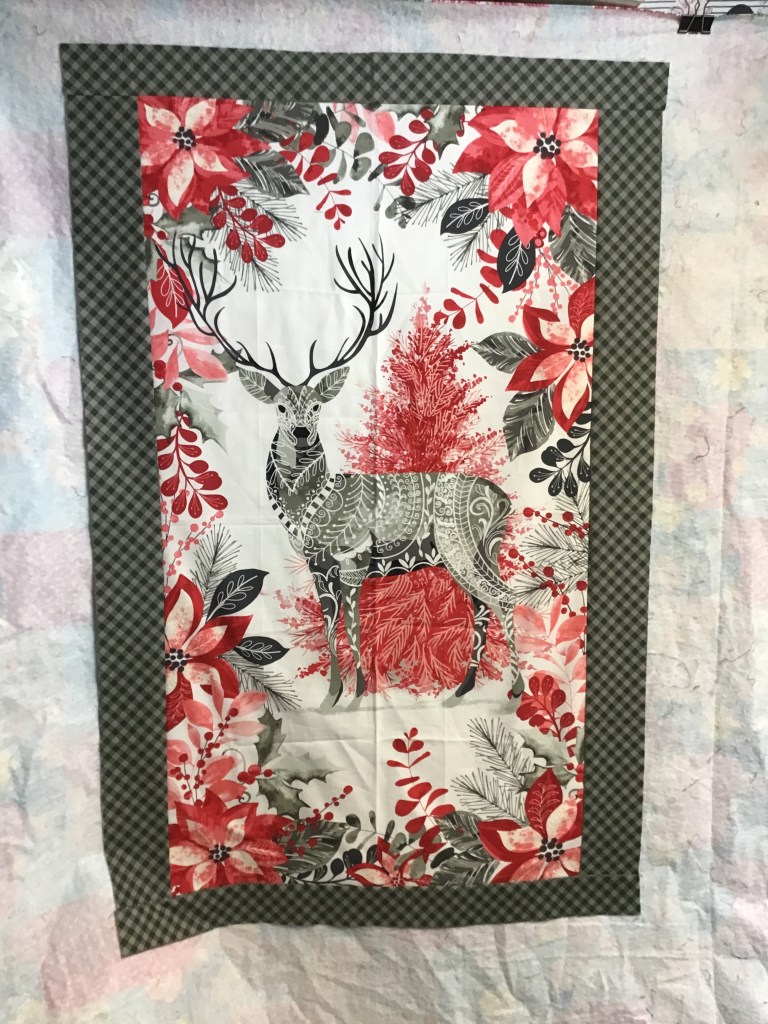
This week I’m continuing my “Christmas in July” theme. For this quilt, I’m using the new Holiday Style collection by Satin Moon for our quilting partner, Blank Quilting (in store now). This gorgeous collection is traditional (poinsettias) and modern at the same time (red, pink, black, white, and grey colorway)! Which is probably why I adore it. I’m not a huge fan of woodsy deer and bears and such, but the deer on the panel is lovely and delicate with a Scandi feel. The artwork is beautiful and invites a second and even a third look at all of the details.

And here are the companion fabrics I’m using for 31.

Let’s get to it!

The first thing we need to do is trim the panel to the correct size. I measured my panel and decided to completely remove the printed plaid panel border and start over from scratch. The problem I ran into once I removed the outer part was that my panel ended up a bit small. But never fear — that’s an easy fix we’ll talk about in just a minute.

Now to fix the size issue — I did the math and figured out I needed to add 1/2″ to my side border strips so my panel with the border would end up the correct size. Luckily, the pattern includes the figures to guide you through trimming your panel and adding the panel border. Take your time to make sure your panel with the border will be the right size before moving on.

Please note that if your panel with the border is too small, add another narrow border and then trim it to the correct measurements. Conversely, if your panel with the border is too big, simply trim it to the correct size.

Once I figured out the math for sure, then I cut my borders. I thought it was kind of funny to cut off the grey plaid on the panel only to replace it with a grey plaid border. Silly me, but now the math works out just right.

I sewed my side borders on first and then I sewed my top and bottom borders to the panel after that. And PRESTO! My framed panel was exactly the right measurement because I took the time to figure it out before I cut and sewed. Yay me!

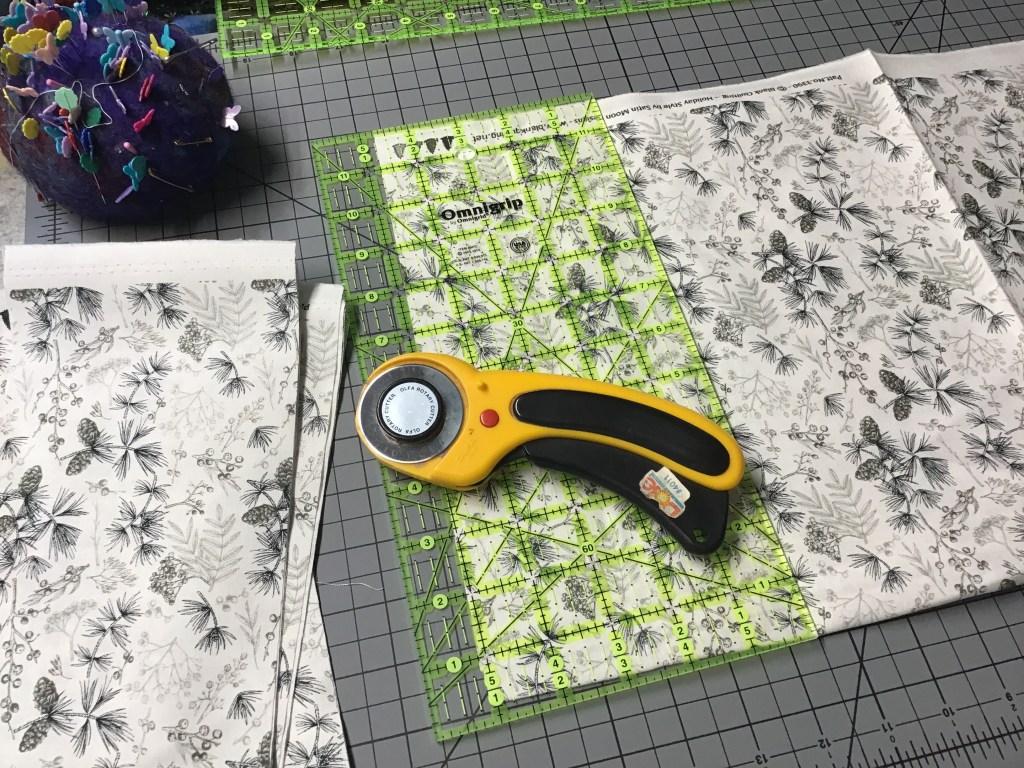
Now let’s cut the rest of the fabric for the quilt.

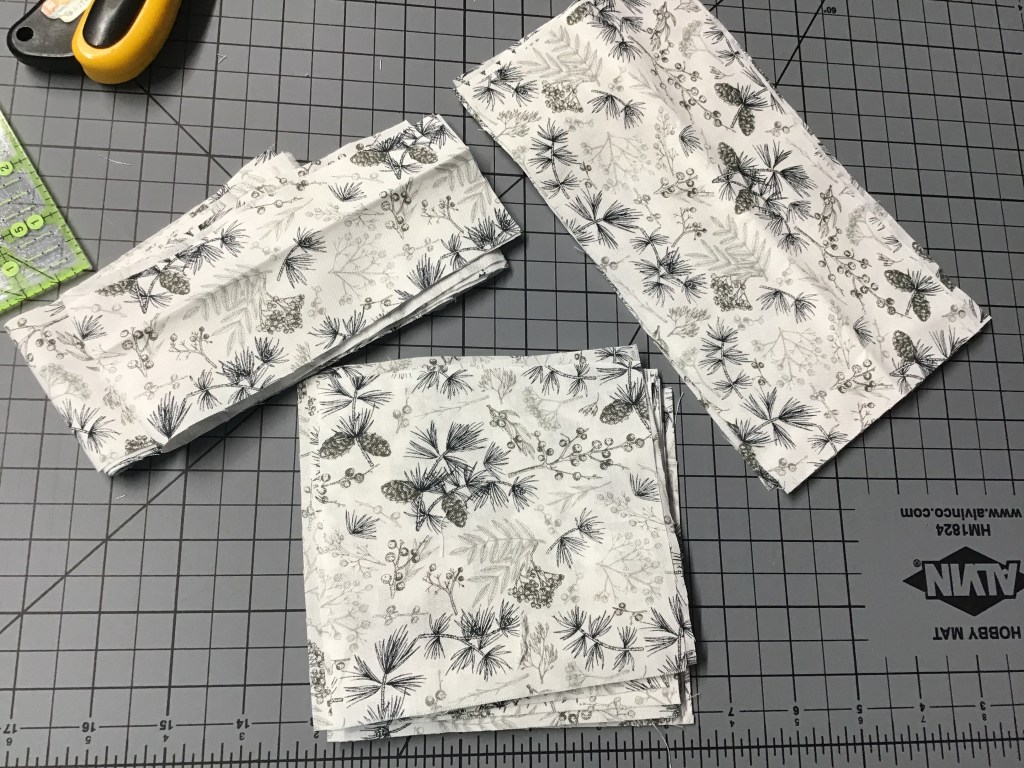
All set! Background and prints are cut and we’re ready to move on.

Time to make some Half Square Triangles (HSTs)! Believe it or not, but I really like making HSTs — probably because they are building blocks for so many different quilt block patterns.

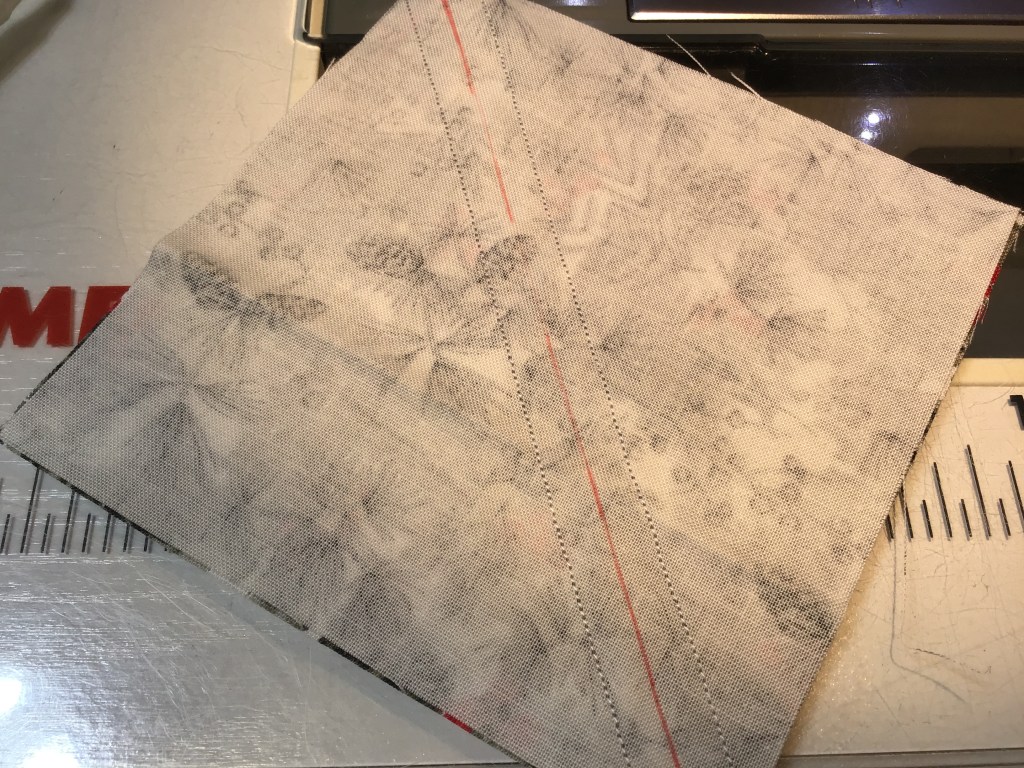
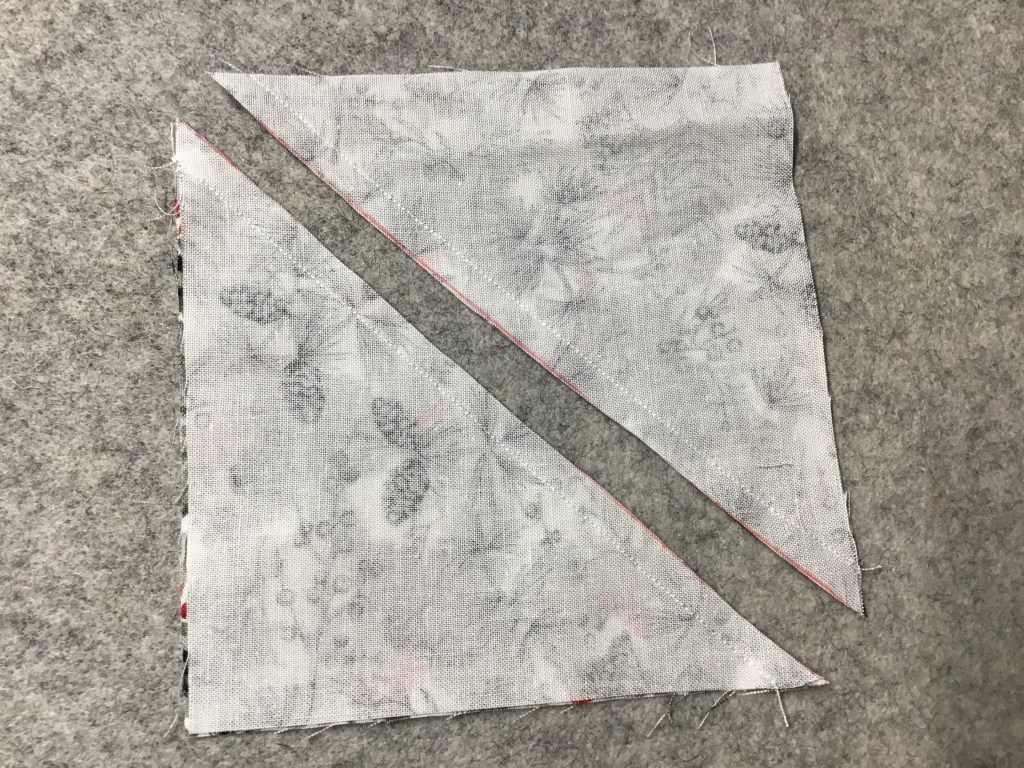
Layer a background and a print square right sides together (RST) and draw a diagonal line from corner to opposite corner. Using your 1/4″ seam, sew on both sides of the line. Then cut on the line to make 2 HSTs. Easy piezy!

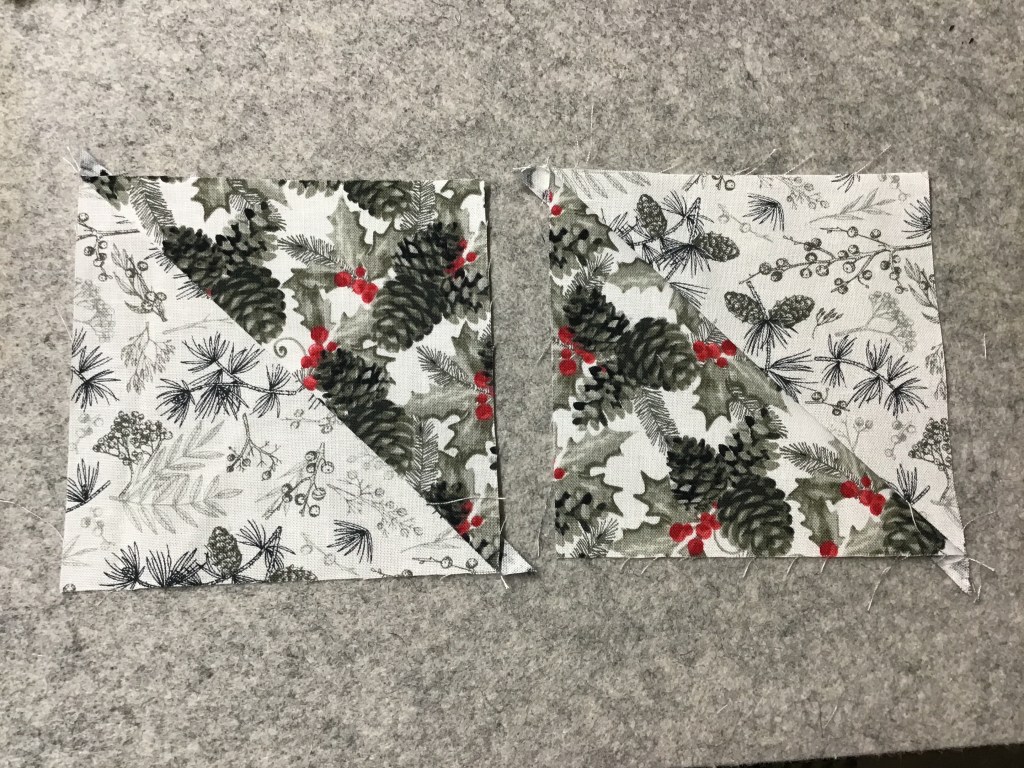
I like to chain piece all my HSTs before I head to my iron to press them. If you are able, press half of each print/background combination seams towards the background and the other half towards the print. This way your HSTs will nestle together, snug as a bug.

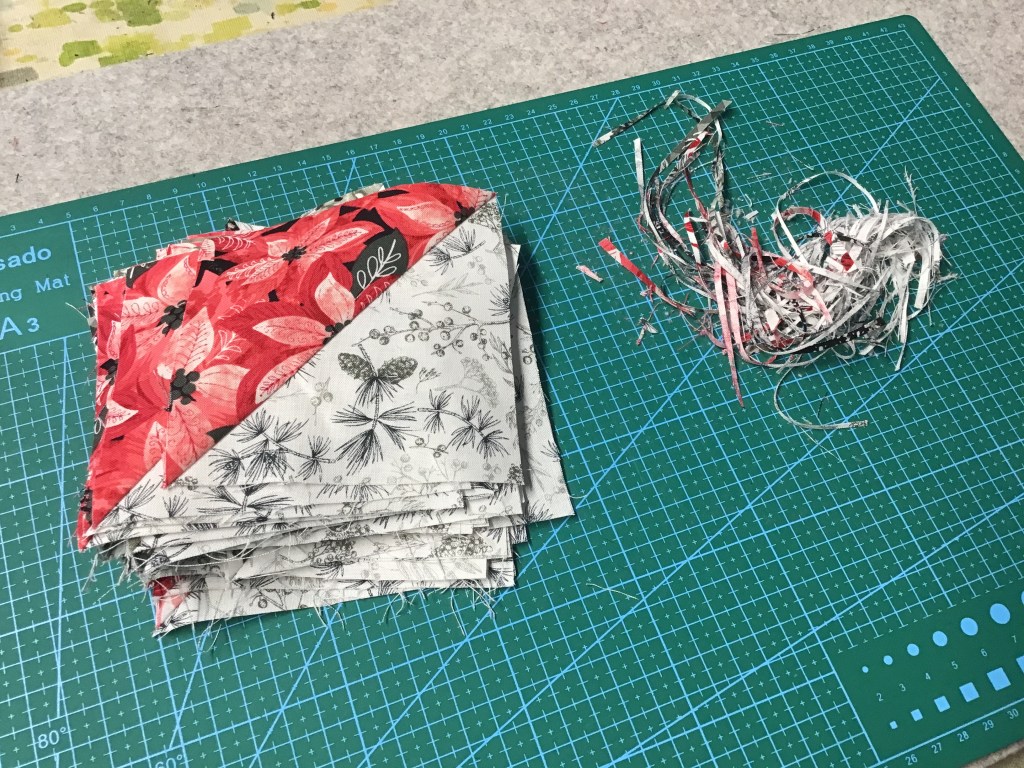
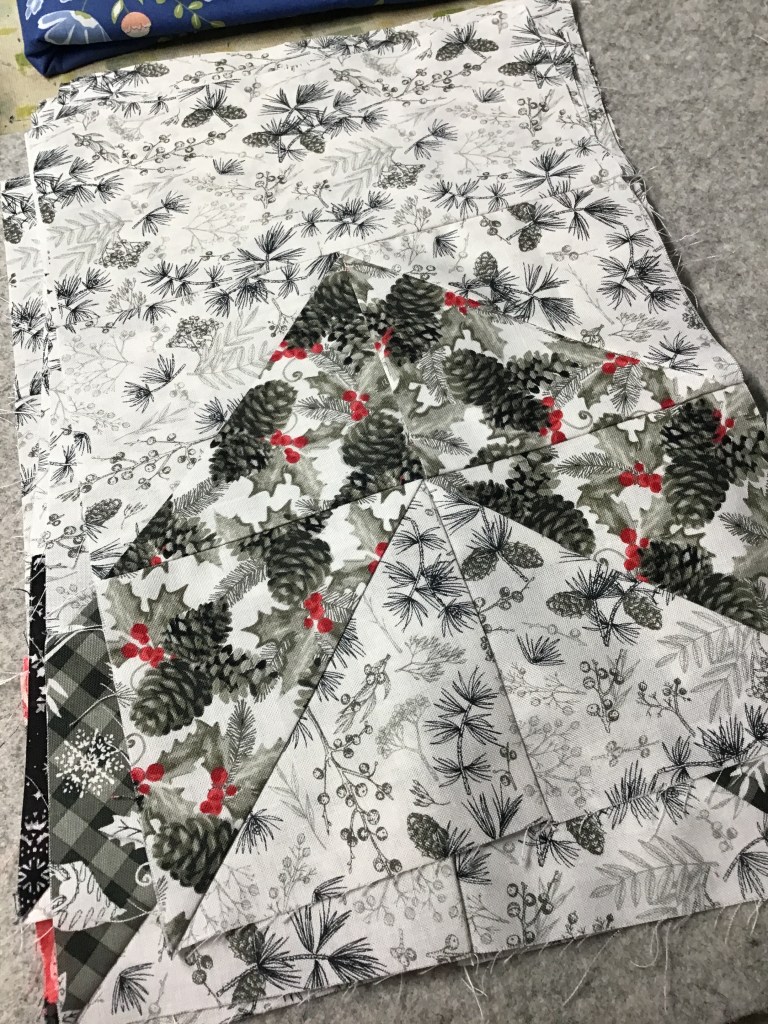
After you’ve pressed all of the HSTs, it’s time to square them up and cut off the little dog ears, if needed. I literally just trimmed off slivers to get them to the right size.

Have you ever tried a Bloc Loc ruler for squaring up/trimming your HSTs — there is a little diagonal channel that sits over your seam and keeps everything from moving or sliding around. Very clever ruler that does one thing and does it very well. Of course, there are lots of different square rulers on the market for squaring up HSTs and other blocks. What are your favorites?

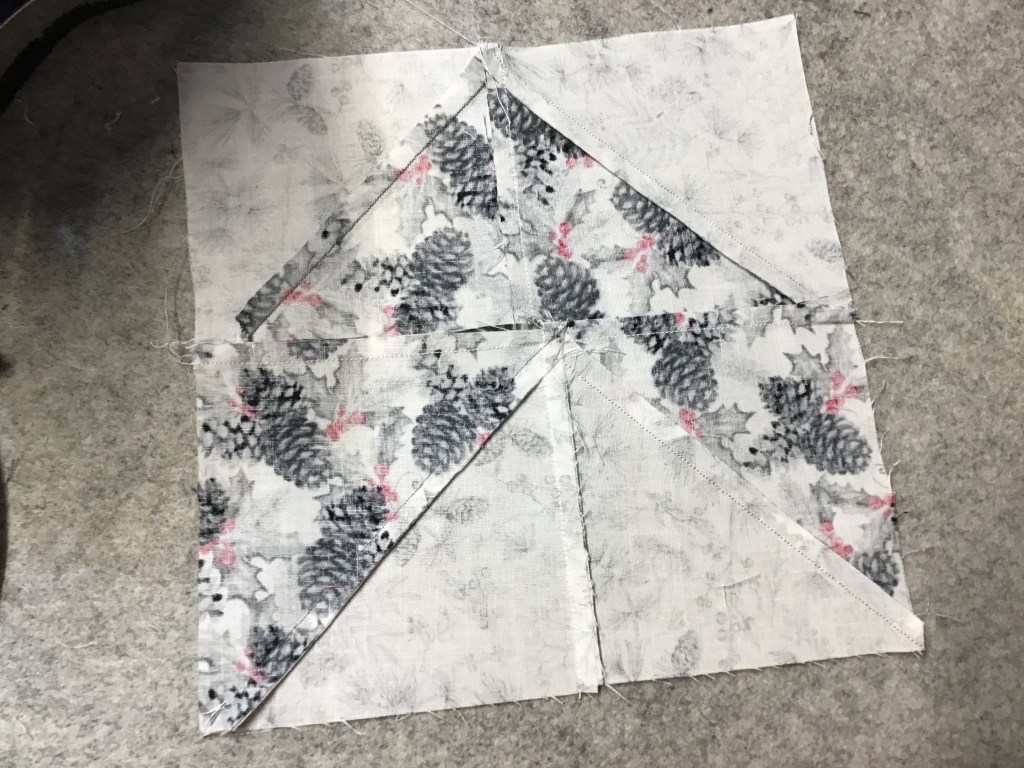
Yippee! Now let’s sew our HST’s into Arrow (or Chevron) blocks. Sew 4 matching HSTs together into a Four Patch block, turning the HSTs as shown. This is where having 2 HST seams towards the background and 2 towards the print really comes in handy so that your seams nestle together and help you to have nicer points with less bulk.

Repeat to make all the Arrow blocks for the quilt. Then head over to the iron to give them a good press.

Now sew background rectangles to the top of the Arrow blocks.

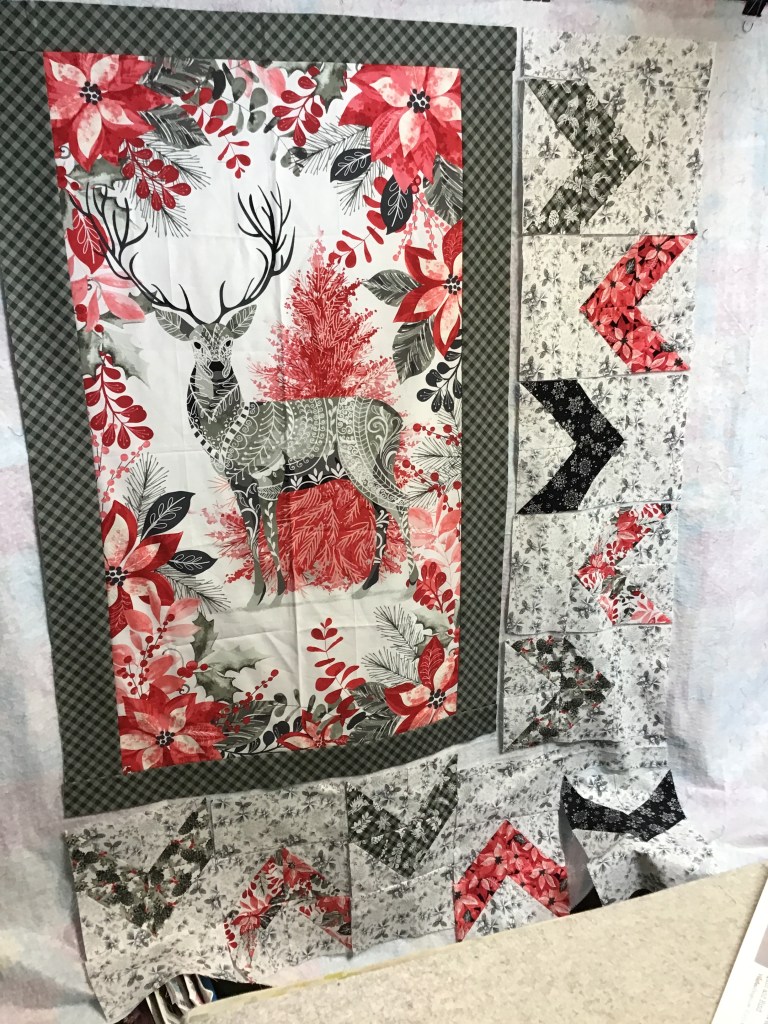
Yay! On to one of my favorite parts (sometimes anyway….LOL!) — laying out and arranging the blocks. Now that I use a flannel-backed table cloth hung up in front of my fabric storage cubes, it’s a lot easier than it used to be when I laid my quilts out on a bed. Ugh! When I was a novice quilter (and a lot younger than I am now), I used to lay them out on the floor. Not anymore, thank you!

Lay out the quilt according to the pattern diagram, flipping the Arrow blocks as shown. I played around with my color placement and decided I liked the arrangement in the second photo the best.

Next, let’s sew the blocks together on the right side of the panel. Please note you will need to add a background strip to the top and bottom of the section so that it will fit.

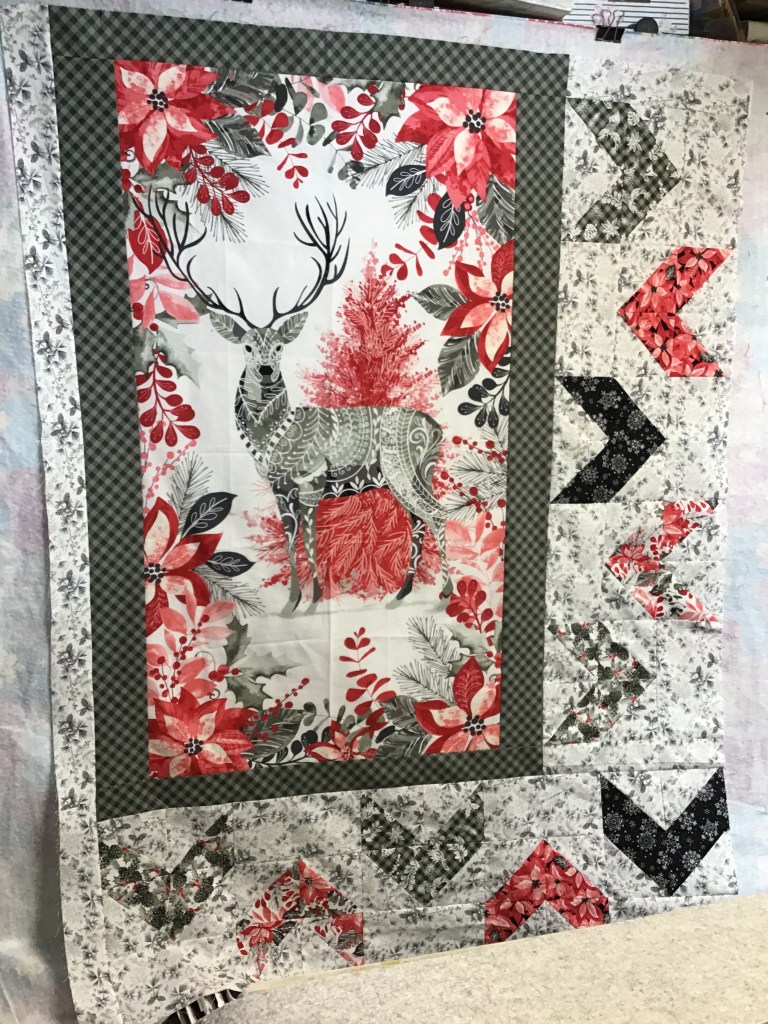
Okay, let’s sew the bottom row of blocks together and then sew the section to the bottom of the panel. Yes, the borders are added in a clockwise fashion instead of adding opposite sides at the same time.

Looking good! Let’s sew a background border strip to the left side next.

The top background border strip is last.

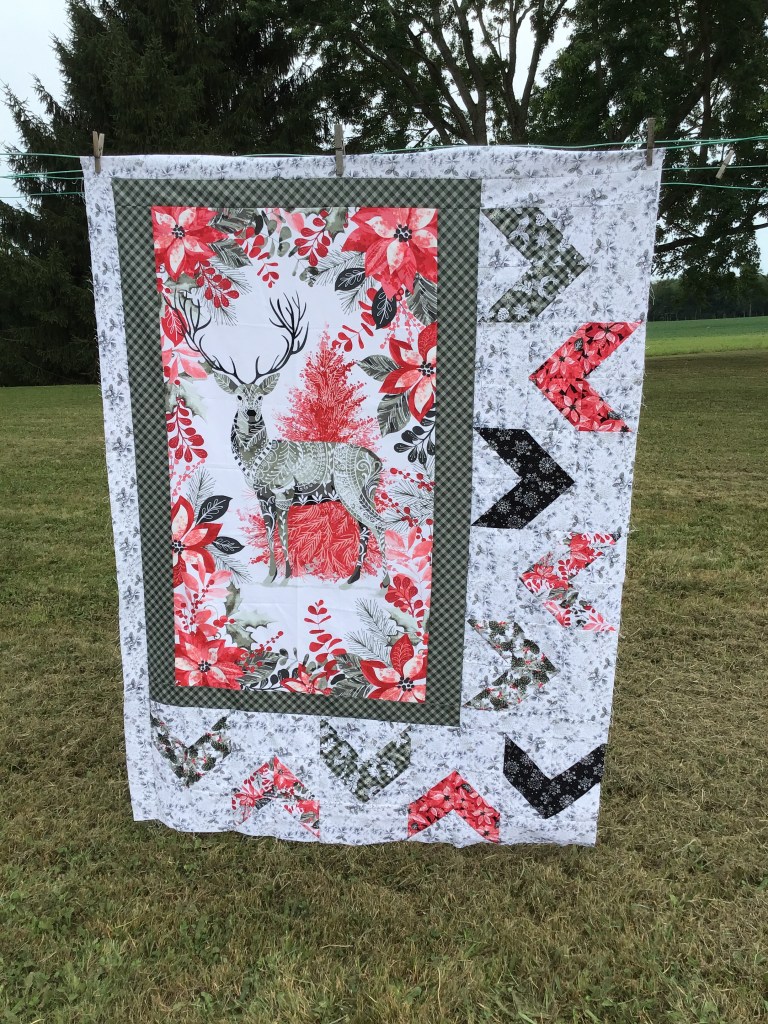
And here it! 31 is done! Isn’t it lovely??? The colors just glow, don’t they???

I am thinking about adding an outer border to make it a bigger throw quilt size, but haven’t quite decided yet. What do you think — should I add another border or finish it as is?

As I am writing this post, I have my 31 quilt top up on my flannel wall so I can just enjoy looking it at. It will stay there until I start my next summer tutorial.

That’s it for me this week.

Happy Summer and Happy Quilting!

Until next Thursday —

Always,

Tricia @ VRD

Rose Cards · Tutorials · villa rosa designs

VRD Alassio Quilt Tutorial

Happy Thursday to you!

Yep, I am still in my fall quilt-making zone. Which is not a big surprise really because for the last couple weeks, here in NW PA, we’ve been having very fall-like weather. Today is quite cool with a high temperature only in the 60s and it feels really really chilly. Usually, August is in the 80s and even 90s occasionally. You know the “dog days” of summer? So the 60s is kind of a shock to the system. Our nights have even dipped down into the 40s a couple times. Just chalk it up to the ever-changing world of weird weather, I guess.

So in honor of our early autumn weather in August, I am going to show you how to make anther great Villa Rosa Designs Rose Card pattern, Alassio. Do you really have to use a fall-themed fabric collection like I am doing? Nope, not at all. This pattern will work beautifully with any fabric collection!

Get Alassio HERE

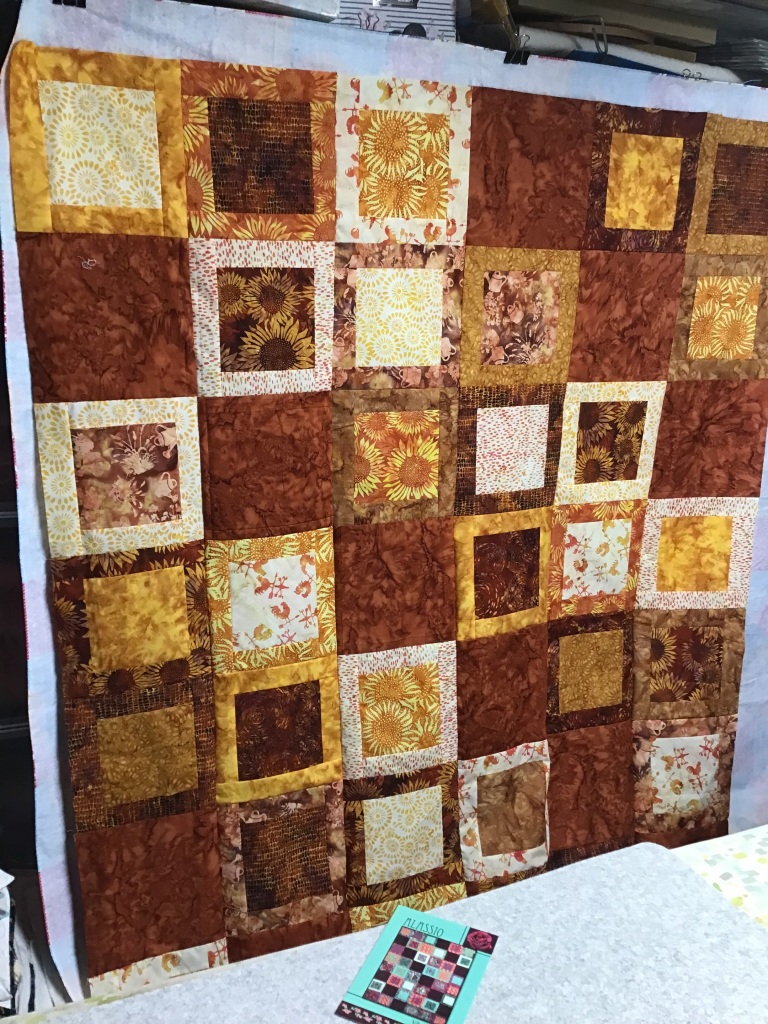
I made my Alassio quilt sample with the Hoffman All Things Spice batik collection and coordinating 1895 Watercolors batiks. Isn’t it sew yummy? I just want to crawl into those fabrics with a good book, a cup of cider, and a donut………

On that note, let’s make Alassio together!

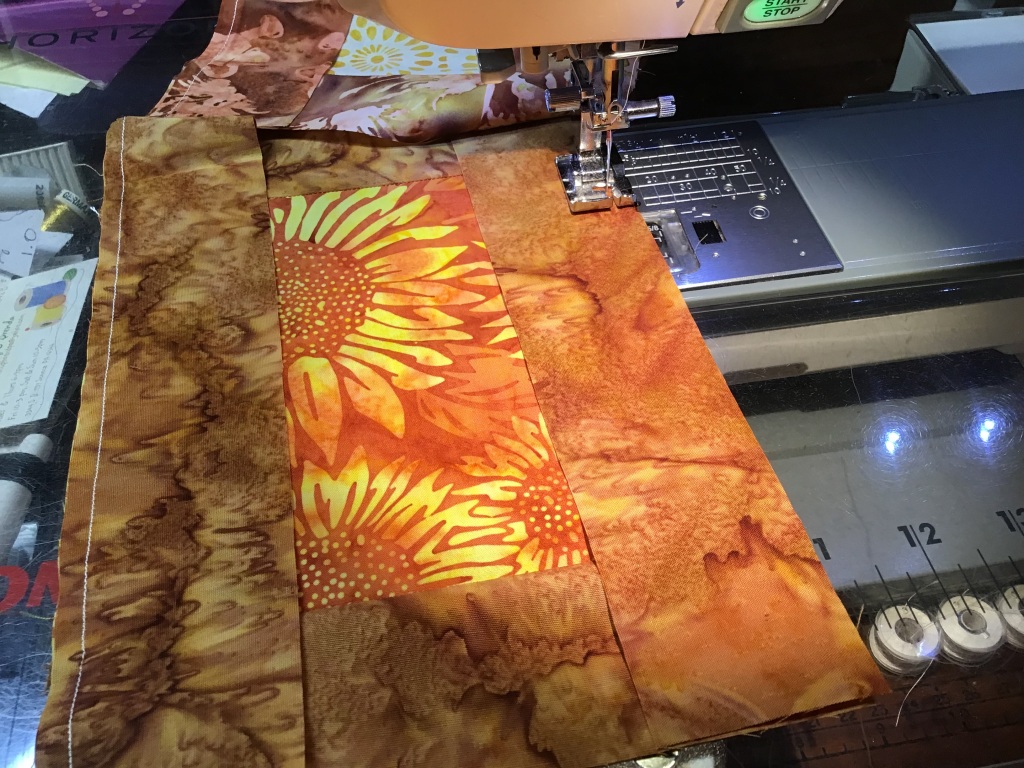
  1. First, we need to cut out our background squares.

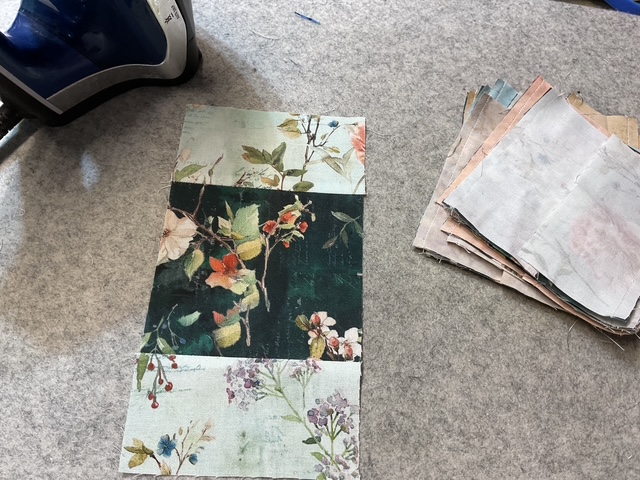
2. Next up is cutting the pieces for our framed blocks from our fat quarters. I like to stack my fabrics and cut 3 or 4 at a time. Do likewise if you want, but it’s perfectly fine to cut them one at a time, too.

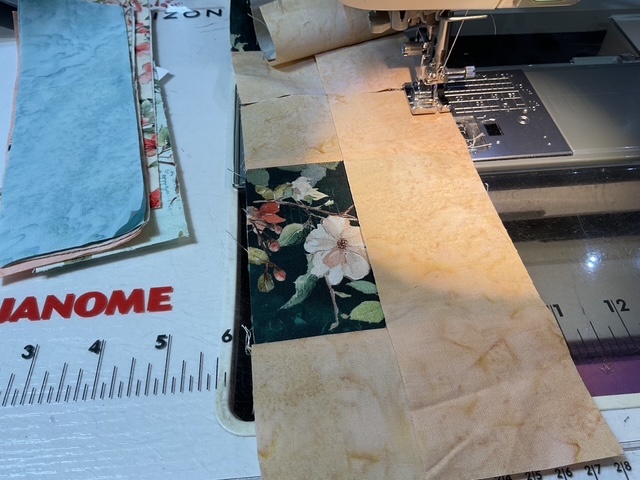
3. Moving right along, let’s mix and match our fabrics so each square will have a different fabric frame around it. And after that’s done, we’ll sew matching shorter strips to opposite sides of the squares.

4. Now we need to press our blocks so far before we add the long strips on the other sides of the center squares. I don’t normally do a lot of pressing when I’m making blocks but I do think pressing these blocks as you go results in crisper seams and better blocks.

5. Okay, now we’re ready to sew the long strips on the opposite sides of the center squares. Make sure the long strips match the strips you’ve already sewn onto the squares.

The again, who says your strips have to match — just sayin’…….

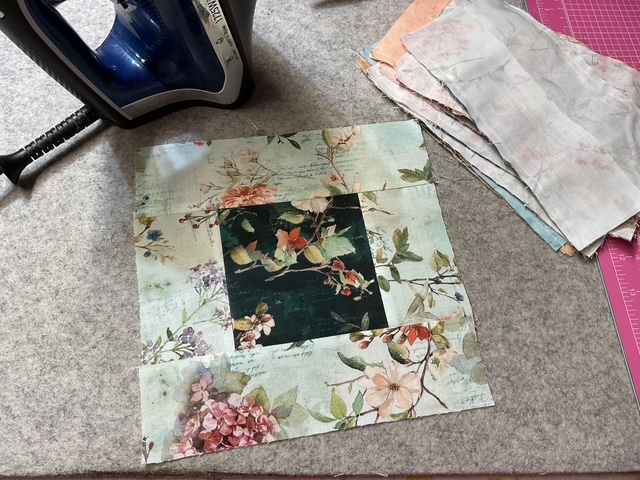
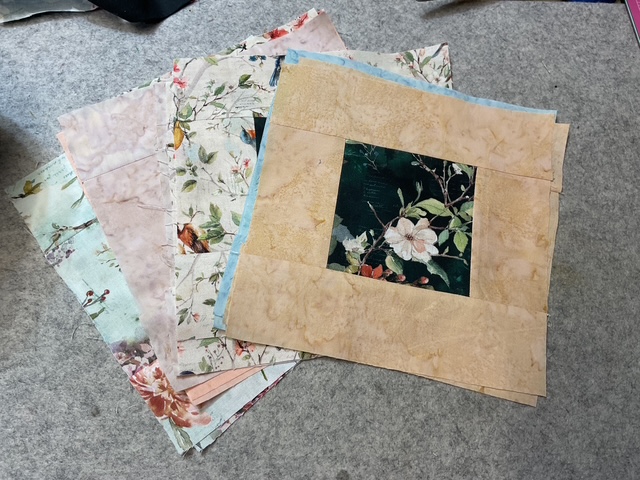
6. Head over to your iron again and press those blocks one more time — now our blocks done. That was fast, wasn’t it?

7. I just clipped my flannel-backed tablecloth up on my fabric storage cubes, which is my new design wall. I have to hang it sideways because it’s too long to hang up and down. And because this quilt is so big, I’m going to need to lay it out sideways, too. Fingers crossed that the tablecloth is long enough (or wide enough because it’s hung sideways) to lay out all the blocks.

How do you lay out your blocks before sewing them together? When I first started quilting, I used to lay my blocks out a cement floor. Yikes! Then for a really long time, I laid them out on a queen sized bed, which accommodated most of the quilts I made and saved some stress on my knees and my back. Now I have my very own portable design wall, otherwise known as a flannel-backed tablecloth. And it works great!

So, while we’re laying out the blocks according to the quilt diagram on the back of the pattern, go ahead and move the blocks around so fabrics and colors are well-distributed throughout the entire quilt.

Then once we’re satisfied with our layouts (yay — all the blocks fit on the flannel tablecloth!), it’s time to sew them into rows. Then we will sew the rows together. Quilt top done! Easy piezy!

I am so pleased with how my Alassio top turned out! I can’t wait to get it layered with pretty autumn-themed fleece, machine quilted, bound, and labeled so I can start enjoying it right away!

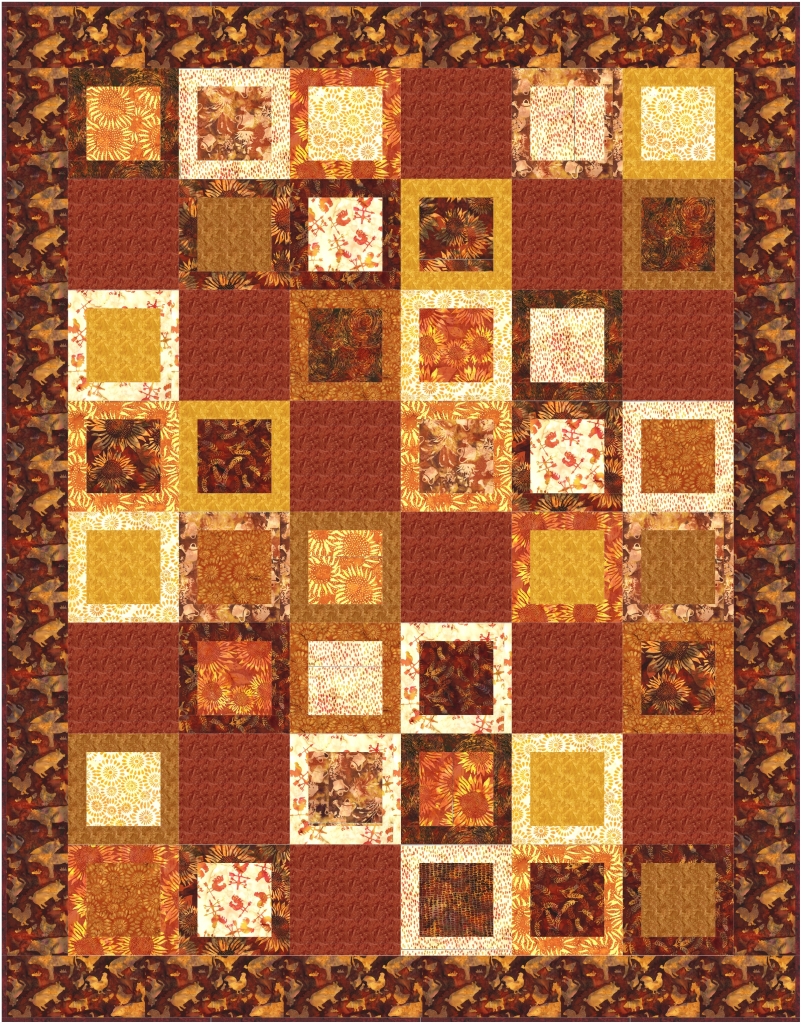
Alassio finishes faster because it doesn’t have a border, but if you want to make the quilt larger, you could add a border. It would look kind of like this:

This version of Alassio features a 4 1/2″ finished border. With this border, Alassio would finish at 64″ x 82″, which fits a twin bed or makes a nice big comfy throw.

To make Alassio with the border, you need 1 1/4 yds for the border (cut 8 strips that are 5″ x WOF) and a total of 5/8 yard (cut 8 strips that are 21/2″ x WOF) for binding.

Isn’t this a great quilt? Bet you can’t make just one!

I’d love to see your Alassio quilts! You can share them on our Villa Rosa Designs Facebook group page.

Until next week —

Always,

Tricia