
Hello Quilty Friends!
Happy Thursday to you!
I’ve been itching to do a new series on the blog and decided that I really wanted to do one about Free Motion Quilting, or FMQ for short. I taught beginner FMQ at my local quilt shops for many years, but it’s been awhile since I’ve taught a class that I also thought it would be fun to revisit my FMQ techniques and share them with you.
This series will be aimed at beginning Free Motion Quilters, but more experienced quilters are of course welcome. LOL! I thought I’d start off with an intro post about getting ready to quilt.
Is there anything specific you would like me to address in this Beginner FMQ series? I’ll try to include it.
Let’s get started!
What the Heck is Free Motion Quilting (FMQ)?
Before we can go much further, I’d like to take a minute and talk about what FMQ really is.
A lot of quilters I know use a walking foot and quilt straight lines on their quilts with their feed dogs up. This is great and gets the job done, but this in NOT FMQ.
Ruler work is starting to take hold in my area now, but this isn’t exactly FMQ either, but it has many similarities.
Free Motion Quilting is exactly as the name implies — it is free motion quilting. This means that you, the quilter, are moving the quilt sandwich. Yes, you can FMQ on a long arm quilting machine, but for this series I am going to work from the domestic machine perspective as that is how I roll.
The feed dogs are down (or covered) when you are Free Motion Quilting and you, the quilter, are making things move which then creates whatever design you are quilting. The machine’s job is simply to provide the juice so the needle will go up and down.
Don’t believe me? Watch this quick video:
If you still don’t believe me, try it yourself. Disengage your feed dogs, attach a FM foot (darning foot) and push your foot pedal to the metal. No hands!
See??? All the needle does is go up and down really fast until you make a thread knot on the back and your thread eventually breaks. That’s it.
YOU are what creates the actual quilting design in FMQ. YOU are in control.
One more thing about true FMQ — we don’t really mark our quilts or try to quilt on a drawn line. True Free Motion Quilting is free.
When I was a beginning quilter, I tried hand-quilting and my stitches were terribly huge. So then I tried machine quilting in the ditch and couldn’t quilt a straight line to save my life. Then I finally discovered FMQ and found out I wasn’t a complete dunce and I really could machine quilt. Yay me!
The Fear of Free Motion Quilting
As a FMQ instructor for many years, I heard a lot of different ideas about FMQ from my students. One of the most repeated statements was a fear of how fast FMQ looks.
Please don’t be afraid of speed in FMQ. YOU are the one moving the quilt around on your domestic sewing machine. The machine itself just powers the needle to go up and down. If you’ve forgotten, watch the video, above, again to remind you.
The machine is not moving anything — YOU are moving the quilt sandwich so the speed at which you move the quilt is entirely up to you. The needle’s job is just to go up and down. What you do and what the needle does are 2 different things. You need to focus on moving the quilt sandwich at a comfortable speed for you, not trying to go as fast as the needle is going up and down. You will need to find the perfect balance for YOU.
Take a deep breath and repeat after me — “My job is to move the quilt. The needle’s job is to go up and down.” Repeat as many times as you need to in order to internalize and believe this statement.
Another fear I have frequently heard was that quilters were afraid of the needle itself. Just like when we are sewing a seam, we have to keep in mind where our fingers are in relation to the needle. So it is with FMQ. Keep your hands away from the needle by repositioning frequently. We’ll talk about this more later in the series.
No fear, okay? With a little practice, FMQ is a lot of fun and it’s very satisfying to machine quilt your own projects.
The Tools of FMQ
Like anything else, yep, there are tools that can make FMQ easier and more comfortable. Of course, the tools I am going to talk about below are the ones I personally use, and may not be what works for everyone. So please use what tools work best for you. If you’re not sure what works for you yet, try out some different ones to see what you like. If you were a student in my class, I would have all of the thing below so that you could try them out. I’ve even had students use my own sewing machine in class.
Sewing Machine
This is an absolute must for FMQ! LOL!
You don’t need a fancy shmancy machine, though, to successfully FMQ your quilts. What you do need is a reliable sewing machine on which you can drop your feed dogs. Dropping (or disengaging) the feed dogs is a lot better than simply covering the feed dogs. The cover can create a bump on your machine bed which may have a negative affect on your FMQ.
A heavier machine is a better choice than a lightweight one because the lighter the machine, the more it will bounce while you FMQ.
Just a heads up — my quilty pal, Mary Lee, found out the hard way that older Pfaff machines DO NOT like to do FMQ. It just about ruined her machine. She ended up buying a Janome.
Janomes are great machines for FMQ. I can say that personally because I’ve had 2 different Janomes. My current one is a Horizon MC8900 QCP. I’m not sure if they even make this model anymore, though, as it’s some years old now. What makes my big machine awesome at FMQ is that it has a large throat at 11″. I know that some domestic machines are being made today with even larger throats. Wowza!
If you are considering a new machine, head to your local machine retailer (which is also one of my local quilt shops for me). Talk to the people, tell them what you need and might want to do in the future with your machine. Make sure you test lots of different machines. Take your time selecting you new best quilting friend. I’ve bought machines online and I’ve bought machines at my local quilt shop. The best part of buying at your local shop is the customer service. You don’t get that online.
Get the biggest throat on your new machine you can afford. Make sure the feed dogs drop. Does it come with all the quilting feet or do you have to buy them separately? Remember, take your time and get the best machine that does what you want it to do at a price you can afford. You can always upgrade sometime down the road if your needs change.
Needles

I found out a long time ago that quilting needles worked better than universal needles for, well, quilting. There is pretty much a needle for any type of sewing you want to do — embroidery, jeans, etc. So why shouldn’t we be using quilting needles for quilting?
Here are the needles I’ve used and been happy with:
Schmetz Quilting Needles 80/12
Schmetz Quilting Needles 90/14
Klasse and Schmetz needles are very good and easy to find at your local shop or online. But these days, I primarily use Janome Purple Tip needles for piecing and quilting on my Janome machine. My machine likes these needles best and as I like to keep my sewing machine happy, I use Purple Tip needles.
You might want to check with your sewing machine manufactureror your local retailer to find out what needles they recommend for free motion quilting on your particular sewing machine.
Sewing Machine Foot
In order to do FMQ, you will need a darning foot, which is also called a FMQ foot or a hopping foot.
Please make sure to check your sewing machine manual to find out what type of shank your machine has. These days most are low shank, but there are also high shank and slant shank.
If you are fortunate, your sewing machine might have come with a set of quilter’s feet which usually includes a 1/4″ foot for piecing, a walking foot for straight line quilting, and a darning foot for FMQ. If your machine didn’t come with a darning foot, you will need to purchase one. Please make sure to check your sewing machine manual to find out what type of shank your machine has. These days most are low shank, but there are also high shank and slant shank machines. A good place to start is your machine retailer who will hopefully have the foot you need to fit your sewing machine. If you cannot find one that matches your machine, there are different generic feet available out there.
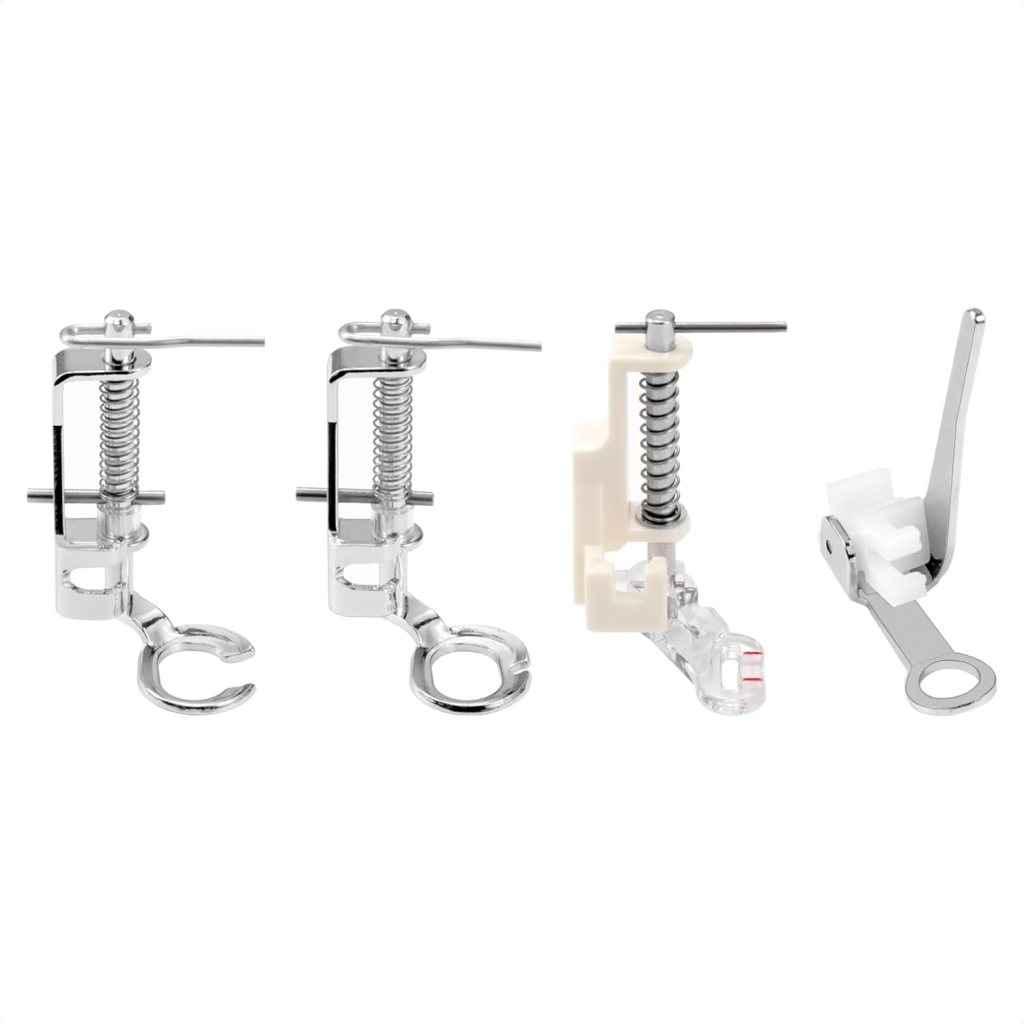
When it comes to the darning foot I use on my machine, I have a convertible foot that came with my machine, but can be bought separately.
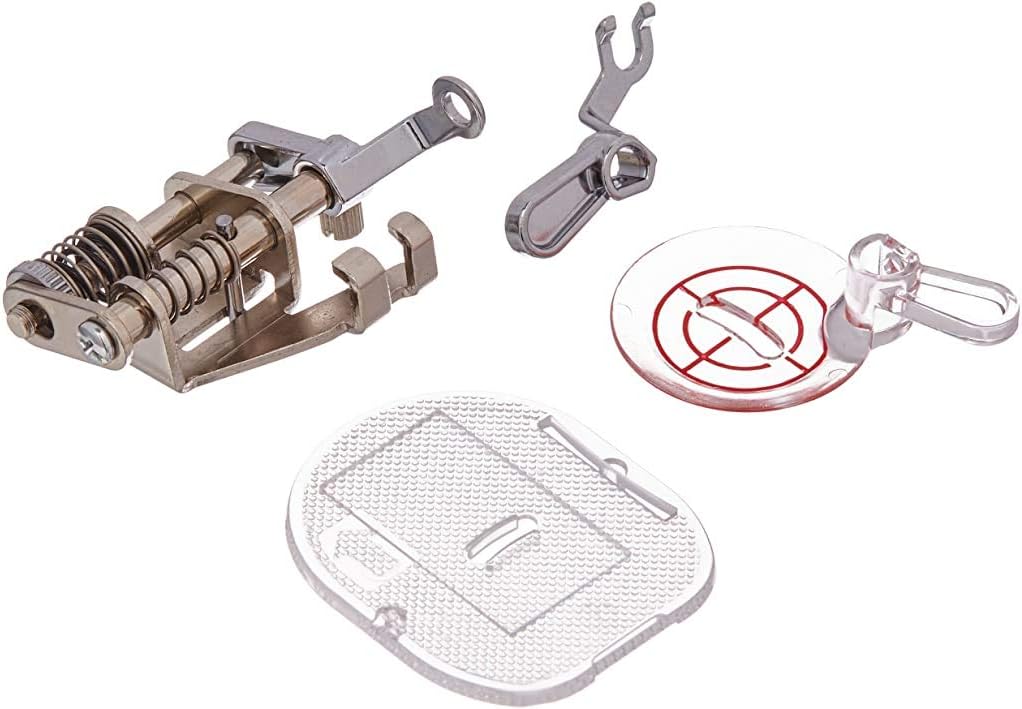
You might wonder why I like this FMQ foot system the best. First, it work great with my machine. Second, I prefer an open toe for my FMQ foot and this set has one. And third, it doesn;t hop up and down — it’s stationary, so FMQ is smoother, which improves my quilting.
Extension Table
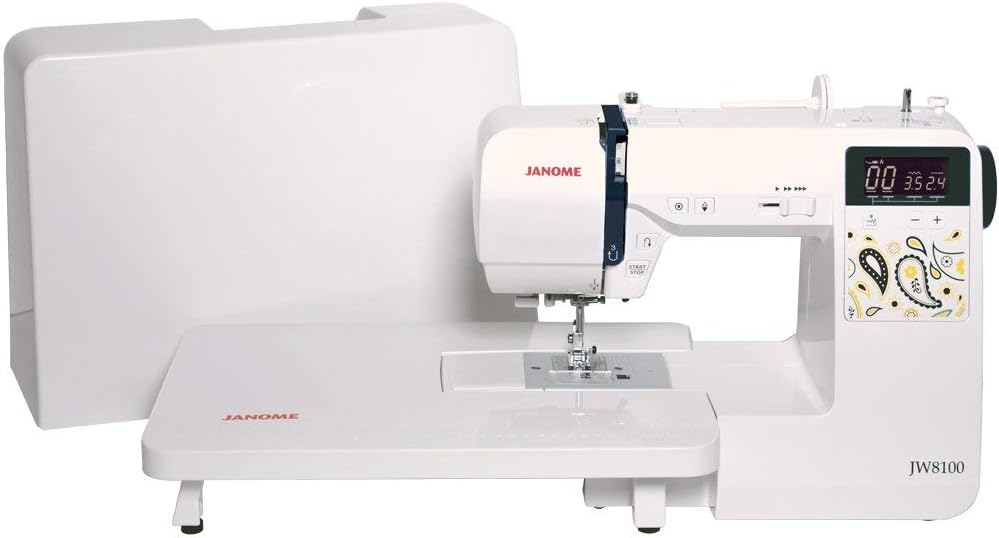
Does your sewing machine have an extension table? My Janome does as do my 2 smaller Brother machines. An extension table is a great thing when you are doing FMQ because it gives your hands somewhere to rest while you work. Most sewing machine beds are pretty small which doesn’t give you much room to work. An extension table is like a super secret FMQ weapon!
If you are lucky, your sewing machine came with an extension table built exclusively for your machine model. If you don’t have one, check with your local machine retailer to see if there is one that fits your machine. Of course, there are generic extension tables too, but I personally feel that they don’t fit your machine as well as one specifically built for that model.
Gloves
When I first began FMQ, I didn’t even know there were gloves out there for FMQ. I saw my first pair of gloves in a lovely urban quilt shop called Quiltology in Chicago (the shop is now closed and morphed into a personal design studio) when I was at a teaching conference years and years ago (I slipped away for a few hours one afternoon and took a cab to the shop). The first pair of gloves I ever used were called Machingers.
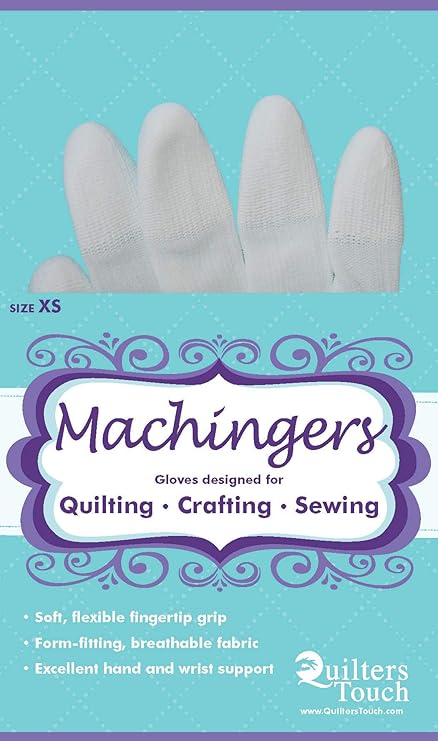
Wow! What a difference in my FMQ when I started using gloves. I had much better control over the quilt sandwich and I had better gripping power. The only problem I experienced with Machingers was that the elastic wrists stretched out after a while and the gloves were kind of loose.
Eventually I stumbled onto Grabaroos. They fit more snugly than the Machingers and were nice and cool, even when I was FMQ in the middle of a hot summer day in my un-air conditioned studio, but the fingers were a bit too long for me. But they worked great and I kept improving my machine quilting. Alas, the wrist elastic also stretched out and I went through several pairs a year.

Then some years ago, I went to a Quilt Market Schoolhouse lecture and found the perfect machine quilting gloves for me! Swan Amity gloves. Yep, I’ve talked about these gloves before. I love that they are leather and they have an adjustable wrist strap so they fit perfectly every time. And they last a long time! My first pair lasted for years and I’d still be using them right now except I bought another pair a a couple years ago.
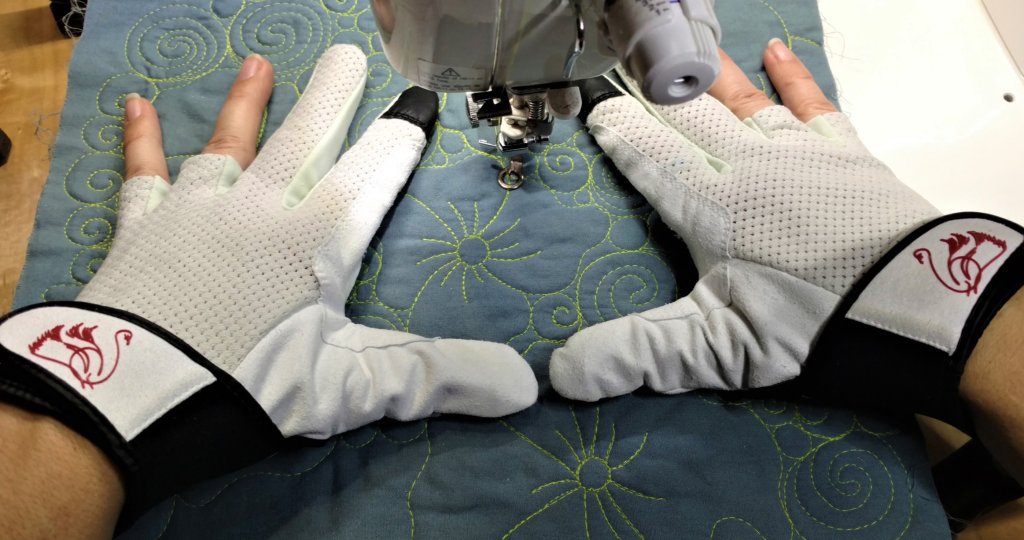
Do you have to have gloves for FMQ? No, not really. BUT, like a sewing machine extension table, quilting gloves are a secret weapon in your FMQ arsenal.
Supreme Slider
As I’ve become a more experienced free motion quilter, I rarely use my Supreme Slider anymore. But it is a good tool to have around so that when your quilt sandwich just won’t slide nicely on your sewing machine bed, you can take a quick break and slap on your Supreme Slider. Voila! Your quilt sandwich now slides around for lovely consistent smooth stitching.
A Supreme Slider is a super slippery Teflon sheet that sticks to your sewing machine bed. It has a tacky back that is reusable — you just need to dampen it and pat it dry so it sticks again.
Just a note — do make sure your Supreme Slider is tacky and sticks to your machine bed. If it isn’t sticking, you will sew the thing to the back of your quilt. Been there, done that. Learn from my mistake.
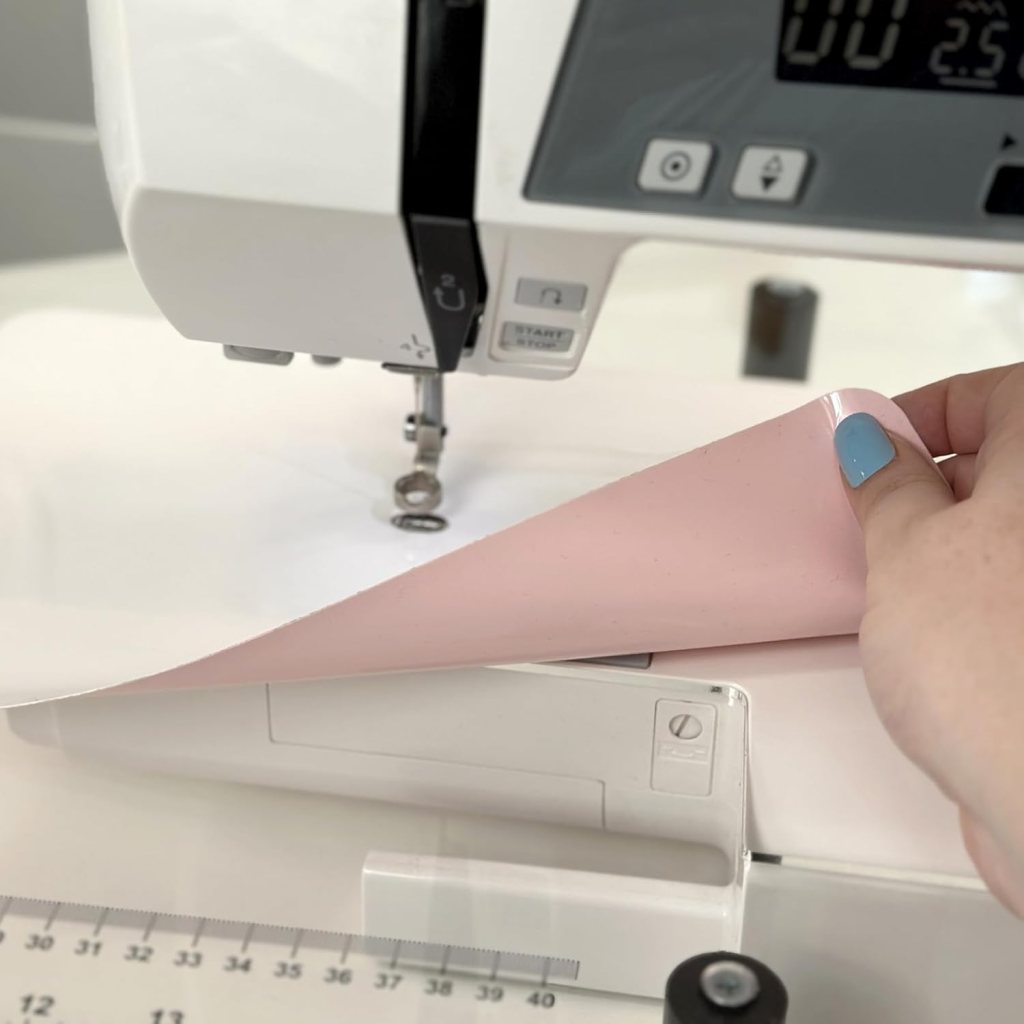
A Supreme Slider really does improve your FMQ by reducing friction between your quilt sandwich and the sewing machine bed.
Sewer’s Aid
I’m sure I’ve talked about Sewer’s Aid before. It is another one of those FMQ tools that are great to have around when you need them, although you might not use it very often. There are times that I get so frustrated with my FMQ — those days when no matter what I do, my thread keeps breaking. UGH! So, what do I do??? I drop beads of Sewer’s Aid all over my spool of thread, re-thread my machine, take the bobbin out and put it back in, and then I get back to the business of FMQ.
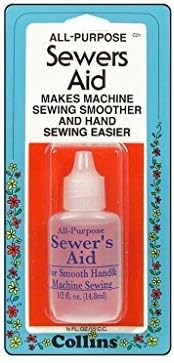
Sewer’s Aid is a polymer liquid you drop onto your spool of thread which then helps your thread to pass smoothly through the machine without breaking. Yup, it reduces friction for the thread just like the Supreme Slider does for your quilt sandwich.
Do you have to have all of these things to get started with Free Motion Quilting? Of course not, but I am a proponent for using tools to make sure I achieve the positive results I want. The tools, above, help you to be more successful with FMQ. Of course, there are lots of other FMQ tools out there. What are your favorites?
Thread
Have you looked at thread lately? There is so much to choose from these days. When I first started FMQ, “machine quilting” were bad words in the quilt community so we free motion quilters used invisible thread because it supposedly looked more like hand quilting (naw, it didn’t look anything like hand quilting). Eventually, FMQ became its own art form with its own super stars. Now your choices of thread are literally mind-boggling.
I guess you could call me old school because I prefer 100% long staple cotton thread for piecing and FMQ. Over the years, I’ve tried other types of threads, but I always come back to my cotton thread. I like how it quilts, how it looks, and my machines have always liked cotton thread the best.
So, what kind of thread should you use? These days, pretty much anything goes. My suggestion is to try out different types of threads and see what you — and your machine — like the best.
I do caution you, however, about using old spools of thread. Thread can weaken over time, so as economical and green as it sounds to use old spools of thread, I recommend that you steer clear of them. You don’t want you quilt to fall apart someday down the road.
Books, Websites, and More
As a former teacher and librarian, of course I have a list of helpful books for FMQ. Tehehe….
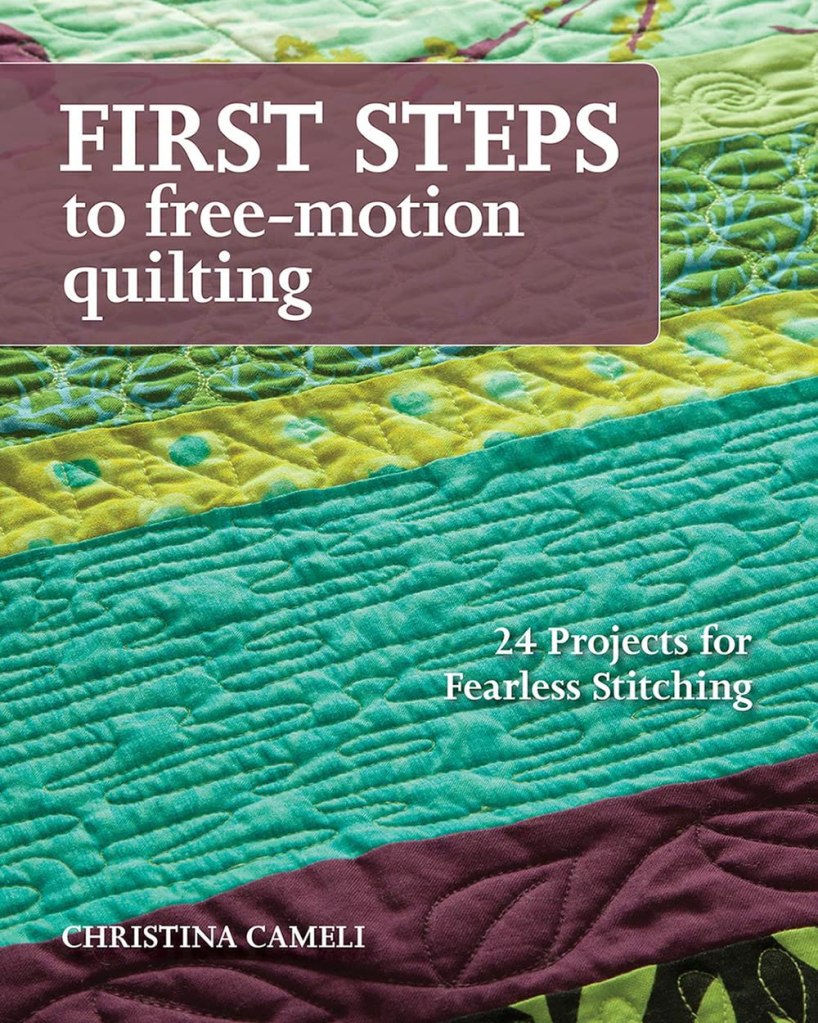
Both Angela Walters and Christa Watson have been very inspirational to me. I’ve had the pleasure of meeting both of them in person at Quilt Market.
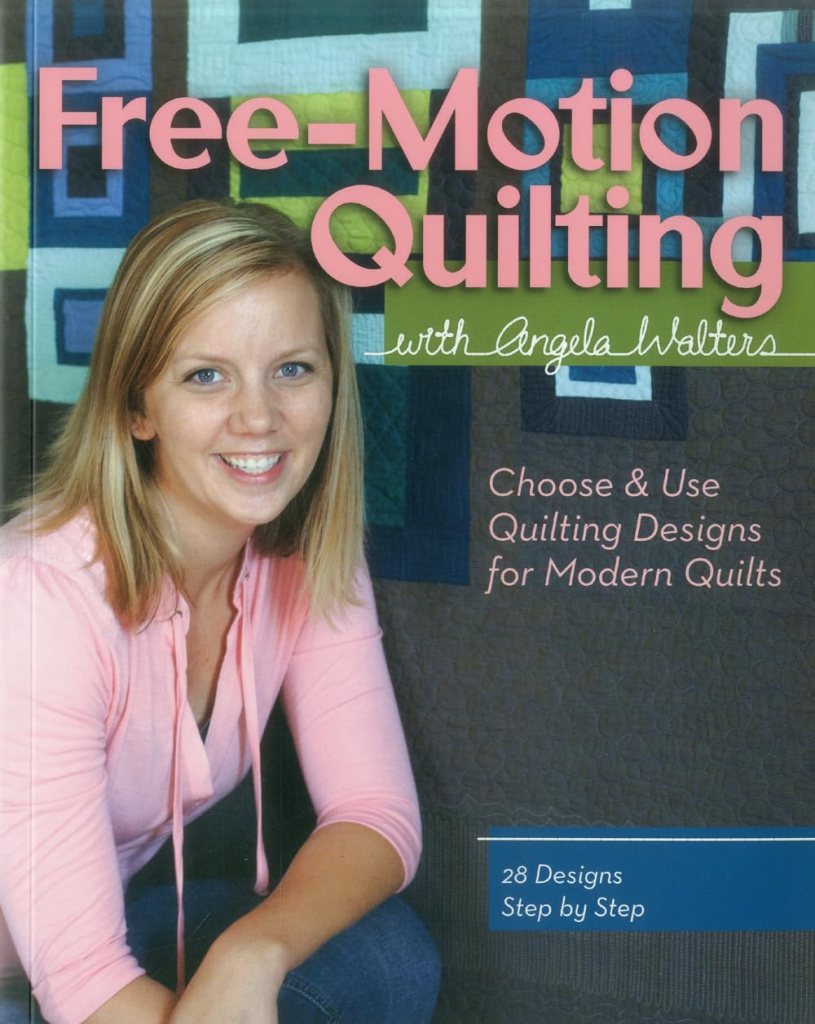
This was Angela’s first book. Now she has a lot of books about machine quilting.

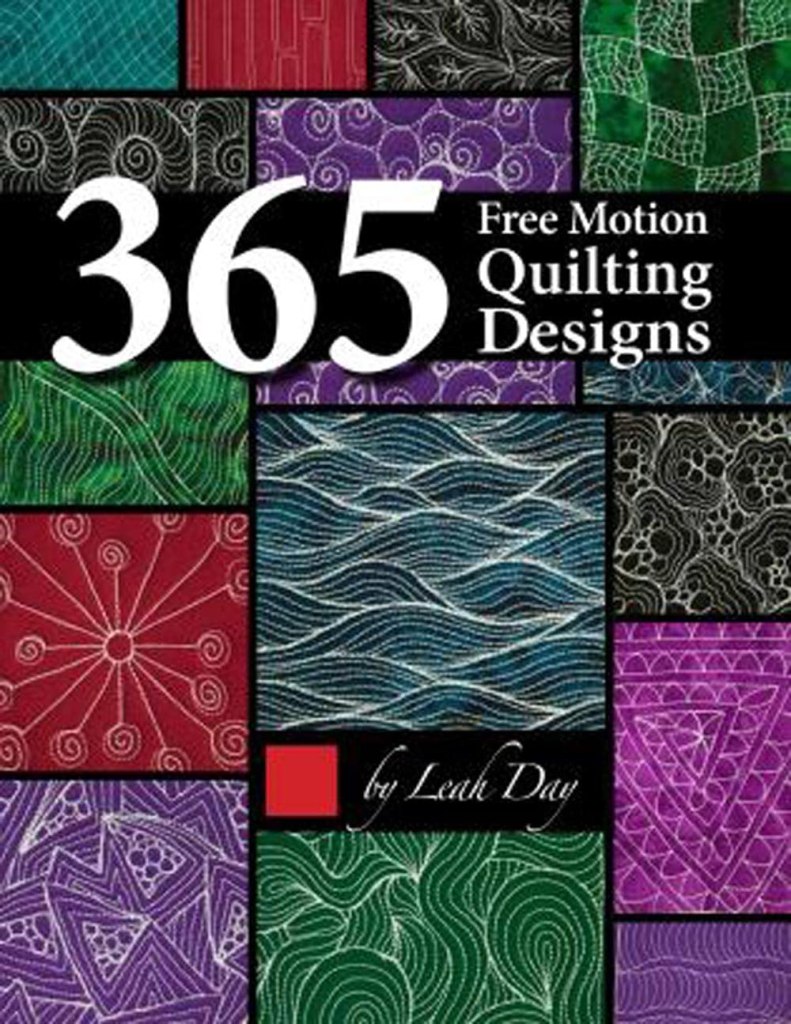
Leah Day was probably the first Free Motion Quilter I ever actually saw in action on the Internet.
These days, you can find tons of beginner FMQ videos, blogs, and how-tos online. Just make sure they are giving you quality information. There are many different sewing and crafting academies online, too, where you can take video classes. You might want to check them out.
Well, I think that’s enough introductory information today. Join me next week for more FMQ!
Take a little time for yourself and quilt.
Until next week —
Sew. Laugh. Repeat.
Always,
Tricia @ VRD


I mentioned to my Mom while we were piecing quilts this weekend that I have a quilt top I I want to try FMQ with. She sent me this post. Perfect timing. Now to get the boarders on it and buy a pair of gloves.
LikeLike
What a cool coincidence, Marcia. Great minds think alike, don’t we? I’ve been thinking about doing a FMQ series and the new year seemed like a good time to do it.
LikeLike
I am so excited to see this blog today! Yay! And THANK YOU!
LikeLike
Hi Sherri, SEW glad you dropped in!
LikeLike
I Really love FMQ…. It’s my favorite part anymore, it’s fun picking out a thread color and off I go!!!! I’m happy I took the jump about a year ago and just did it!!! I’m still doing my puzzle pieces I call it, but I save a lot of money by doing myself!!! Thanks for the lesson Tricia!!
LikeLike
Hey Kim! You are doing great! Keep practicing and be proud of what you have already accomplished!
LikeLike
I LOVE to FMQ! It was actually the first quilting thing I did. I didn’t know what long arms were or how to hand quilt my first quilt so I watched a You-tube video and thought, “That looks easy!” I did it and I’ve been doing it ever since. I started with that exact little Janome (8100) you have pictured in your post. It was really hard to FMQ with that small neck! I upgraded to a Janome M7 with the 13.5 inch throat – GAME CHANGER!!! I didn’t know about the thread drops, I’ll have to try those!!!
LikeLike
Go you! Just keep FMQ, you quilting maven!
LikeLike