Basic Quilting Skills Series · Rose Cards · Tips and Tricks · villa rosa designs

NEW September 2022 Villa Rosa Designs Rose Card Quilt Patterns and Basic Quilting Skills for Beginners: Pressing Techniques 101

Hello Quilty Friends!

Happy Thursday to you!

I am thrilled to show you our NEW September Rose Card patterns! I can’t wait until the first Fry-Day (Friday) of each month when the new set of patterns is released — it’s always great to see what our awesome VRD designers have come up with. You can see the new patterns first if you have joined the email list to receive our VRD email newsletters.

What??!! You don’t get our newsletter??? You can sign up for our newsletter HERE.

Of course, I follow up with the newest patterns on the next Thursday after the patterns are released each month here on the blog in case you missed them in the newsletter.

Well, here they are! Cue the trumpets! Throw the confetti! Applause!

September’s NEW Rose Cards

You can order all 5 cards HERE for the low low price of $8.95.

But WAIT…….there’s MORE! (Sorry, not sorry — you know how much I love saying this.)

Here’s my September table runner, Maple Grove!

Maple Grove

You can buy the Maple Grove pattern HERE.

There are also kits for some of the September Rose Cards — did someone say KITS??? Each kit comes with the fabric for the top and binding as well as the pattern. You can find kits below, for as long as they last.

Berry Smoothie

Mazed

Pumpkin Pie

Of course, our website, www.villarosadesigns.com, is always stocked with great kits. You can see our current kit offerings HERE. You’re sure to find one…..or maybe a hundred that you can’t live without.

Pressing Techniques

Let’s dive right back into our Basic Quilting Skills for Beginners with Pressing Techniques 101.

I bet you never really thought about the concept that there are different kinds of pressing techniques for different types of projects. Well, I’m here to tell you that how you use an iron for quilting is different than how you use an iron to iron your shirts or pants.

There’s ironing. And then there’s pressing.

According to the Merriam-Webster Dictionary:

(to) iron

1a : to smooth with or as if with a heated iron iron a shirt

1b : to remove (something, such as wrinkles) by ironing

(to) press

5 : to exert pressure (this is the closest definition for pressing with an iron I could find)

You can see a little difference between the two definitions, can’t you? Ironing requires moving the iron around while pressing is more of an up and down motion.

I found this pretty decent YouTube video from Hobby Lobby about the difference between pressing and ironing along with some tips. You can check out the video HERE.

Over the years, I’ve tried a lot of different irons from cheap travel models to expensive specialty irons. Some irons are hotter than others. Some have more weight so you don’t have to press down as hard. Some have longer cords or are larger models. Some have continuous steam or bursts of steam. So many choices, but it all depends on what you want out of your iron and what your budget is. So look around, test out different models and brands. Find the one you like the best, for what you want to do, don’t just go for the most expensive or the least expensive.

Pink Oliso Iron

One of the coolest irons in my opinion is the Oliso iron. It lifts up after so many seconds so there’s no chance that you will burn your fabric or project by pressing too long or forgetting about the iron in the down position. AND they come in a bunch of really pretty colors! You can usually find Oliso irons at your local quilt shop or your favorite online vendor.

Here’s a great YouTube video by SewVeryEasy about what to look for in an iron as well as lots of tips and tricks. You can check out the video HERE.

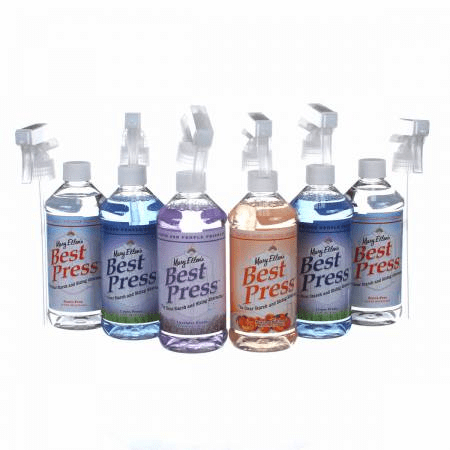
Some quilters swear by using the steam function of their iron for pressing. Me, I like a dry hot iron for quilting AND I love to use Mary Ellen’s Best Press Starch Alternative. A long time ago, I used spray starch in the can, but got tired of the little flakes and the shiny spots on my fabrics, so when I found Best Press, it was a total game changer for me.

Mary Ellen’s Best Press Spray

A little spritz is all you need. Best Press helps me to get crisper flatter seams without having to work very hard, which then helps my quilt fabrics to stay square and not to stretch out of shape. An added bonus is that Best Press comes in many fun scents and also comes in unscented, too. My personal favorite scent is Peaches and Cream. You can find Best Press at your local quilt shop or favorite online vendor.

I hope these pressing techniques and tips are helpful! Stay tuned for next week’s post all about batting, backing, and preparing a quilt for quilting.

Until next Thursday —

Sew. Laugh. Repeat.

Always,

Tricia @VRD

Basic Quilting Skills Series · Rose Cards · Tips and Tricks · Tutorials · villa rosa designs

Basic Quilting Skills for Beginners: Rotary Cutting 101

Hello Quilty Friends!

Happy Thursday to you!

I hope you had a chance to read our first post in a multi-part series called “Basic Quilting Skills for Beginners.” Last week’s post was all about the quilter’s 1/4″ seam allowance. Did you miss it? You can find it HERE. This week we’re going to talk about the Basics of Rotary Cutting.

First, let’s talk a little about the history of rotary cutting — YES! There is a history of rotary cutting (there is a history of everything, if you’re interested enough to find it). The rotary cutter was invented in 1979. Originally it was used in the garment industry, but once quilters saw its potential to speed up cutting and increase accuracy, they stole it and by the early 1980’s. the rotary cutter was all the rage. Before the rotary cutter, quilters made templates for each piece of a quilt, traced around the shape over and over, and then cut the shapes out using scissors. With rotary cutters came acrylic rulers and templates and of course self-healing cutting mats.

Here’s a cardboard triangle that was used by a friend of mine to cut out hundreds if not thousands of triangles.

Rotary Cutting Tools

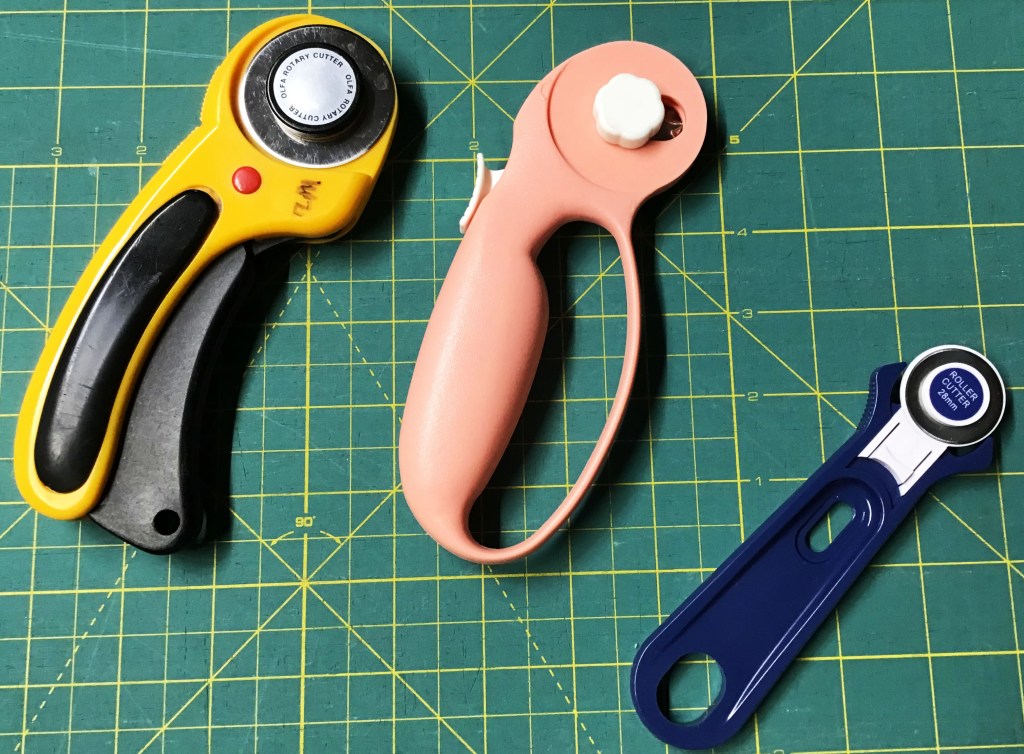
When I first started quilting back in 1996, I started with a beginner’s quilting set which included an 18″ x 24″ mat, a 45mm rotary cutter, and a 6″ x 24″ acrylic ruler. These tools worked great for me until I started working part-time in a quilt shop and had the opportunity to try out different cutters and rulers. When I discovered the yellow Olfa ergonomic cutter, below, I was in love (believe it or not, but this is actually my original Olfa and I’ve been using it for around 20 years)!

Keep in mind you might need to try out different rotary cutters until you find the one that fits you and is the most comfortable. What works for a right-handed quilter might not be the best choice for a lefty and vice versa. You want it to be comfortable because you’ll be spending a lot of quality time with your rotary cutter (and don’t forget, you will need to change your rotary cutting blade regularly, just like your sewing machine needle).

Rotary cutting basic set

Some different examples of rotary cutters

These basic tools worked for me for a quite a while, but over time as my skills grew, I began adding more rulers. And I upgraded to a larger mat — I really like my 24″ x 36″, which fits the top of my antique Hoosier cabinet bottom beautifully (and the storage is outstanding, of course). I also have a rotating mat as well as some smaller mats for working with smaller cutting projects or projects on the go. Even though I’ve tried out lots of different tools and made some changes, I’m still just as in love with my Olfa cutter (above, left) as I was the first time I used it.

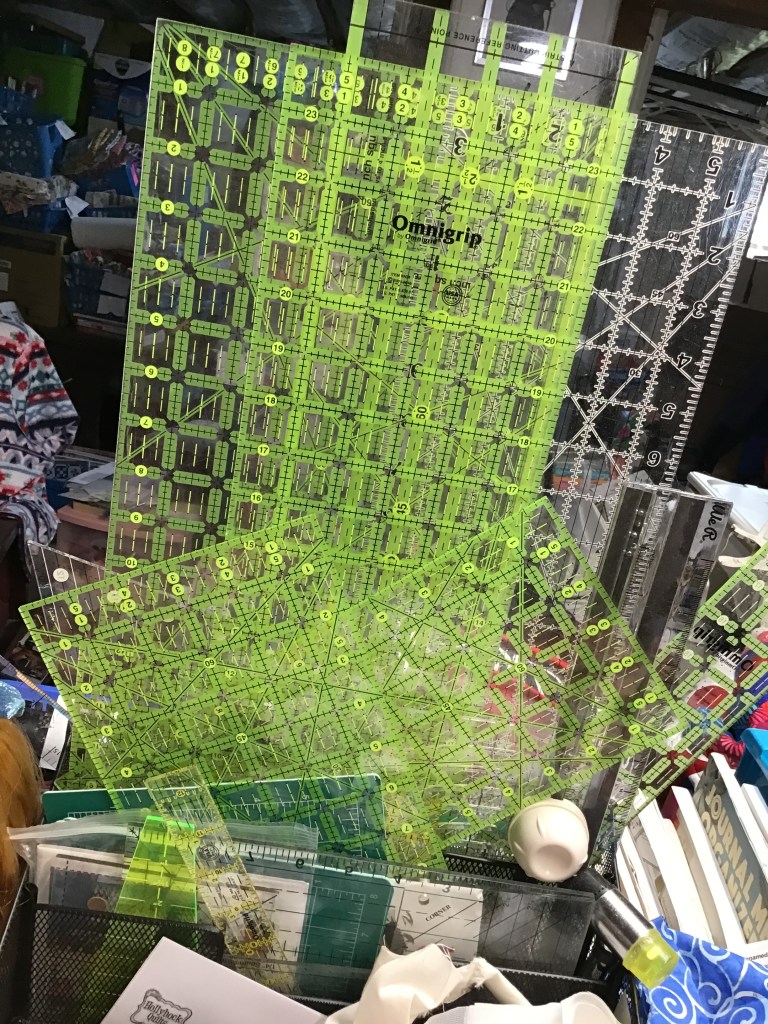
Here’s my stash of rulers — well, some of my stash of rulers, anyway…….

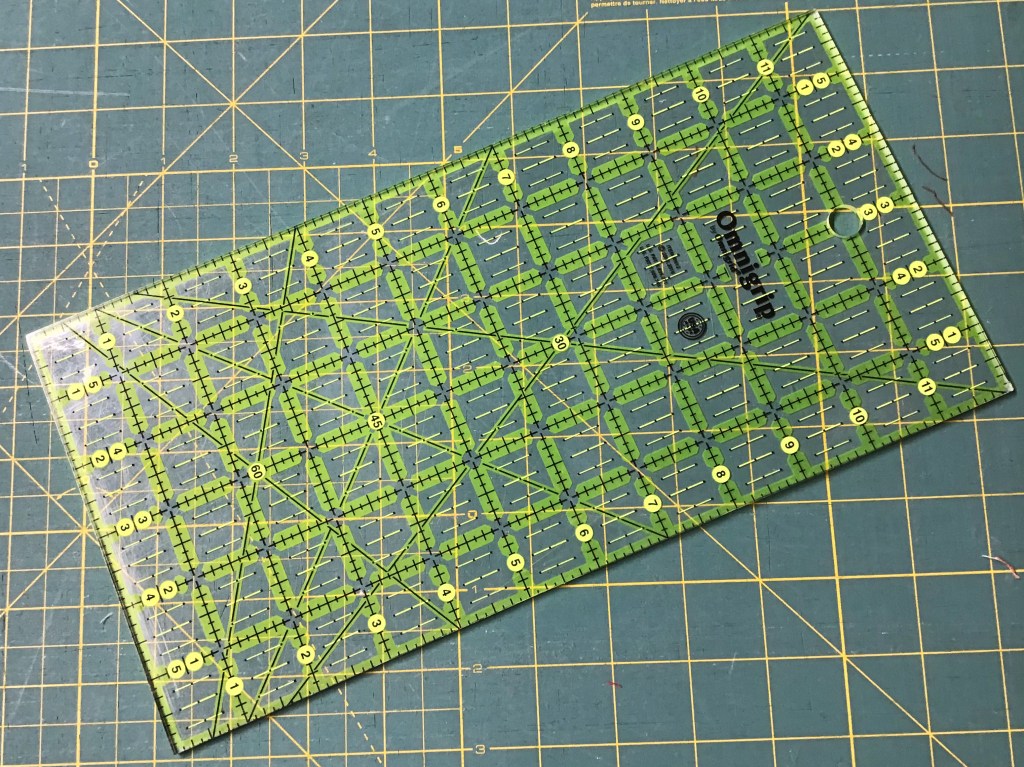
Nowadays there are so many ruler choices. Two of my favorites are the 6″ x 12″ ruler and the 12 1/2″ square ruler. A 6″ x 12″ ruler is a great companion to the 6″ x 24″ because sometimes you just don’t want to mess with that full 24″ length, especially if you’re working in a tight space or cutting small pieces. The 12 1/2″ ruler just makes sense — it will square up blocks and cut squares up to 12 1/2″ square.

As you go along and your skills increase, you’ll probably add lots of rulers and acrylic templates, too. Some of those rulers will do a lot of different things (why they can’t do the dishes, though, is beyond me….) while others will do one thing and do it well.

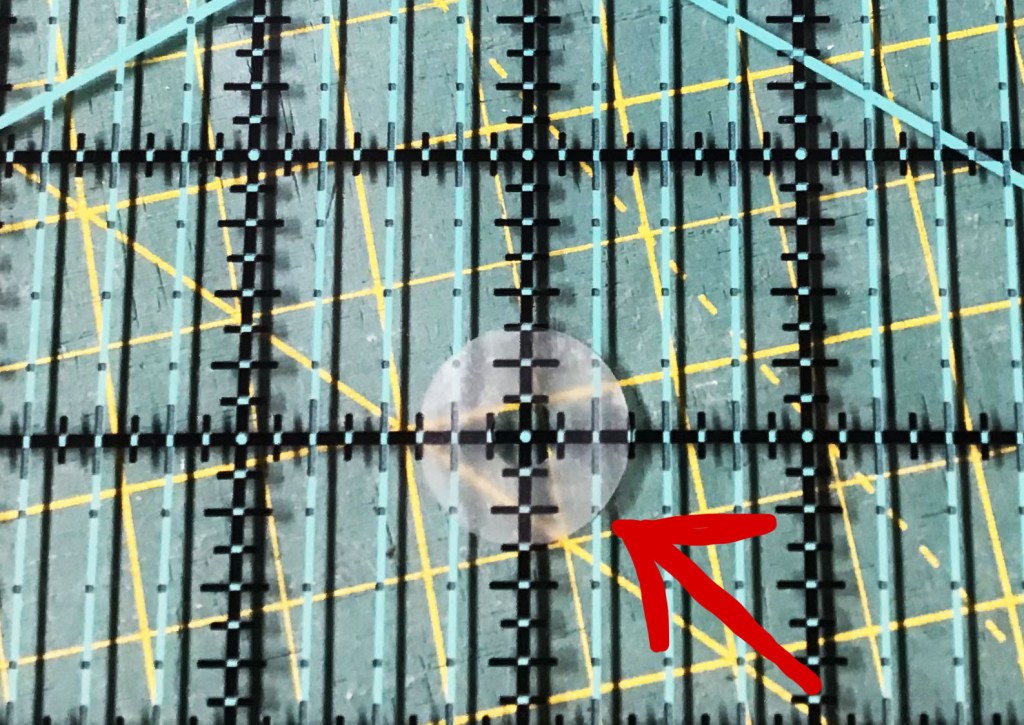
There are lots of different companies out there making rulers today. Keep in mind, though, that not all rulers are created equal. Measurements might be slightly different between different manufacturers. The markings of one ruler might be easier to see on light fabrics while another might show up better on dark fabrics. Some rulers have textured bottoms so they don’t slide while others are as slippery as a Slip and Slide (you might need to add some textured dots to the back of a slippery ruler to help hold it in place while you cut — see the third photo, above). You will need to try different rulers to find the ones you like the best. And once you find a manufacturer you like, stick with that one.

Rule of Thumb: Finish a project with the same ruler(s) you started the project with.

Why? Because as I stated earlier, not all rulers are created equal. Switching rulers midstream could affect the accuracy of your project. Imagine this — you’re making a quilt that has thirty-five 12″ (finished) blocks with 5 blocks across by 7 blocks down. You cut out part of the quilt with one ruler and then switch to a different ruler made by a different manufacturer and you keep cutting out your squares and triangles. Then you go to sew them together and suddenly not everything fits together exactly right — you’re cutting off some triangle points while others are perfect. You check your 1/4″ seam allowance. Huh…..that’s not it. Then you check a few of your cut pieces. Depending on which ruler you are using ( the first one, the second one, or even an altogether different ruler), your pieces might be exactly the right size, too big, or too small. You can see how this snowball is rolling downhill and getting bigger and bigger, can’t you?

Here’s our beautiful quilt, which won’t be so beautiful if we don’t figure out what is happening and find a way to fix it ASAP. If you keep plowing ahead without figuring things out, your blocks might end up being different sizes, which will then make it hard to sew the blocks together into rows and the rows together into the finished quilt top. If your blocks are only 1/8″ different, that will add up across and down your quilt. By the time you sew all the rows together, your quilt is off across the width by 5/8″, which is more than a half inch while the length is now off by 7/8″, which is nearly an inch! And if you’re adding borders — well, I don’t even want to think about how those borders might stand up and wave back at you….

Accuracy……Accuracy…..Accuracy.

Consistency…….Consistency………Consistency.

There is so much to remember when you are a beginner! But I promise you, if you take the time to learn the basics, they will become part of you. Like the Force.

How do you actually cut with a rotary cutter???

Since I am not physically by your side to guide you in rotary cutting skills, I am not going to try to teach you how to actually cut with your rotary cutter. Instead, I will give you some tips that I have learned over the years.

  • If you are new to rotary cutting and do not have an experienced quilter to help you learn how to use it, sign up for a class on rotary cutting. Maybe it’s at your local quilt shop or maybe it’s online. But sign up and learn how to be safe and how to cut accurately.
  • KEEP YOUR FINGERS OUT OF THE WAY OF THE BLADE! This means, you have to pay attention to what you are doing. ALWAYS. Keep your fingers of your non-cutting hand back away from the edge of the ruler as you cut. There are rulers out there with special raised edges to keep your fingers safe. There are special gloves you can get to put on your non cutting hand to keep your hand safe. Use them if needed, there is no shame in keeping yourself safe. Ask my Mom about rotary cutting safety and she’ll tell you how she spent Mother’s Day one year in the emergency room with me when I had a bit of a rotary cutting accident……Don’t worry, I was okay……
  • DO NOT GET DISTRACTED WHEN YOU ARE HOLDING A ROTARY CUTTER IN YOUR HAND. Do not look up to watch an exciting part of the TV program or movie. In fact, it’s safer not to have the distraction of the TV while you are cutting. Ignore the telephone or dings and pings that tells you there is a new email or text message or whatever.
  • If you get a drop of blood on your fabric, spit on the spot and rub it. Spit and rub. Trust me. The blood will come out. Gross, I know, but it works. Your saliva will break down your blood on fabric. Your saliva will not break down someone else’s blood, though, only your own.
  • If you do cut yourself, apply pressure to the wound. Hold the wound above the level of your heart. Seek medical help immediately if needed.
  • Hold your rotary cutter straight up and down on the cutting mat and snug up against the edge of your ruler. Press down with enough force to move the blade, but keep it upright.
  • If you are pressing too hard and your cuts are not clean, it’s probably time to change your rotary blade.
  • Always keep extra blades on hand — store them safely. You never know when you will need to change your blade — they nick easily.
  • Change your blade regularly — a dull blade is more dangerous. If you are struggling to get through the layers cleanly, you might slip and cut yourself.
  • Dispose of your blades responsibly — do not just throw them in the trash. You could wrap it in cardboard and tape it up before throwing it away. You could use a large pill bottle or small container to collect used blades as well as broken and bent pins. It will take you a long time to fill it up. Then you can find a safe place to discard it.
  • Keep children and pets away when you are using your rotary cutter. Store your rotary cutter away from children and pets.
  • Keep the blade locked or in the down position when you are not using it.
  • DO NOT lay your rotary cutter down with the blade open or exposed, always close or cover your blade when you lay it down. An unattended exposed blade is an accident waiting to happen.
  • I find that I cut more easily and more accurately when I am standing versus when I am sitting.
  • Always cut on a rotary cutting mat. Otherwise, whatever you are cutting on top of will be damaged and most likely ruined.
  • If your table is too low for comfortable rotary cutting, raise it up on bed risers, PVC pipes, or whatever works safely.

I know this post is just the tip of the iceberg concerning the basics of rotary cutting. There is an entire body of information out there, you just have to look for it. Check out your favorite quilting books and magazines, your local quilt shops and quilt guilds/organizations, as well as online tutorials, blogs, posts, videos, and more.

Next week, we will talk about Pressing Techniques and the new September Rose Cards. So, stay tuned.

May the Force — the Rotary Cutting Force, that is — be with you.

Until next Thursday —

Sew. Laugh. Repeat.

Always,

Tricia @VRD

Basic Quilting Skills Series · Tips and Tricks · Tutorials · villa rosa designs

Basic Quilting Skills for Beginners: How to Find a Quilter’s 1/4″ Seam Allowance

Hello Quilty Friends!

Happy Thursday to you!

Recently, we received a message from a quilter who purchased a couple kits featuring Villa Rosa Rose Card patterns at a quilt shop while traveling. She asked for instructions for the kits she purchased. Oh no! I thought, did the kits not include the Rose Cards?

After further communication back and forth, I found out the cards were in the kits, but the quilter, being unfamiliar with Rose Cards, wondered why the pattern was so small and on the back of a postcard– there must surely be more to the instructions than that, she thought. So, she contacted us.

Brick Wall Photo by Joe Woods on Unsplash

This message got me thinking about how our Rose Card patterns really are very beginner friendly, but beginner quilters are expected to have some basic quilting skills.

So, what skills does a beginner quilter need to know in order to successfully make a Rose Card quilt pattern?

Haven’t gotten your August 2022 Rose Cards yet? You can buy them HERE.

Several things came to mind right way, so I thought — why not write some posts about beginning quilting skills? That way if we get beginner questions, we actually have somewhere to send them for answers besides a vague reference to the Internet or YouTube.

The first one I thought of — and possibly THE most important beginner quilting skill — is knowing how to sew an accurate 1/4″ seam.

An accurate 1/4″ Seam Allowance

Most if not all quilting patterns use a 1/4″ seam allowance. Pattern designers build that seam allowance into their cutting measurements so the pieces will fit together properly when you sew them together. YAY MATH! (You can check out my post about quilting and math HERE.) In the past, way before rotary cutters, quilters had to draw seam allowances around patches, cut them out of cardboard or heavy paper, and then cut the patches out with scissors using the cardboard patterns. HORRORS! Please note that applique can be a little different, though, as you might have to add a seam allowance around the shapes — but this is a topic for another day. For our purposes here, we will refer to pieced quilting patterns.

Seriously, though — a 1/4″ seam doesn’t just happen by magic — you need to make friends with your sewing machine so you are both on the same page. One of the best things you can do to make friends with your sewing machine is to keep your sewing machine manual nearby and to actually use it! If you’ve lost your sewing machine manual, you can check the manufacturer’s website because they might have your manual available for download. Sometimes you can find reprints of manuals on Amazon, too.

One of my all-time favorite sewing machine accessories is my 1/4″ guide foot. It’s a typical 1/4″ foot for quilting but it also has a nice little metal guide on the right (see below) that I can bump my fabric right up against while sewing, which helps me to sew a more accurate 1/4″.

Janome 1/4″ foot with guide

Don’t panic — if you don’t have a special 1/4″ foot for your sewing machine, there are other ways to get a accurate 1/4″ seam allowance.

The technique I was first taught as a beginner was to cut 3 strips of fabric 1 1/2″ wide by say 5″ long (the length is not as important as the 1 1/2″ width). Sew the 3 strips together side by side into a mini Rail Fence block. Measure the width of the center strip. If your center strip measures exactly 1″ wide, then you are already sewing an accurate 1/4″ seam so don’t change a thing!

If the center strip measures more than 1″ wide, then your seam is narrower than 1/4″, so you need to make an adjustment to sew a wider seam. Make the adjustment, then sew 3 more strips together and measure the center strip. If it’s still not right, keep making minute adjustments, sewing mini Rail Fence blocks, and measuring the width of the center strip until it is exactly 1″ wide. Note what adjustments you made so if you need to change the width of your seam allowance, you will be able to find your way back to your 1/4″. When in doubt, sew 3 strips together into a mini Rail Fence block and test the width of the center strip.

If the center strip measures less than 1″, then your seam is wider than 1/4″, so you need to make an adjustment to sew a narrower seam. Like above, keep making adjustments, sewing mini Rail Fence blocks, and measuring the width of the center strip until it is exactly 1″ wide. Note what adjustments you made so if you need to change the width of your seam allowance, you will be able to find your way back to your 1/4″. When in doubt, sew 3 strips together into a mini Rail Fence block and test the width of the center strip.

What adjustments can you make with your sewing machine to perfect your 1/4″ seam?
  • Your machine might have the option to move your presser foot either right or left, depending on whether your seam is too narrow or too wide.
  • You might need to place a strip of tape on your machine to mark where to line up the edge of your fabric to get your 1/4″ — you might try painter’s tape or washi tape, which would both be re-positionable as you make your adjustments to get your 1/4″.
  • Speaking of tape, you can actually stack up layers of tape to get the “bumper” effect of the guide on my 1/4″ foot.

If these ideas don’t work for you, you might want to consider purchasing a 1/4″ guide foot that will fit your sewing machine. To do this, you might have to know whether your machine is a low shank, a high shank, or rarely (mostly older Singers) a slant shank. How do you determine what kind of shank you have??? Why, refer to your sewing machine manual, of course!

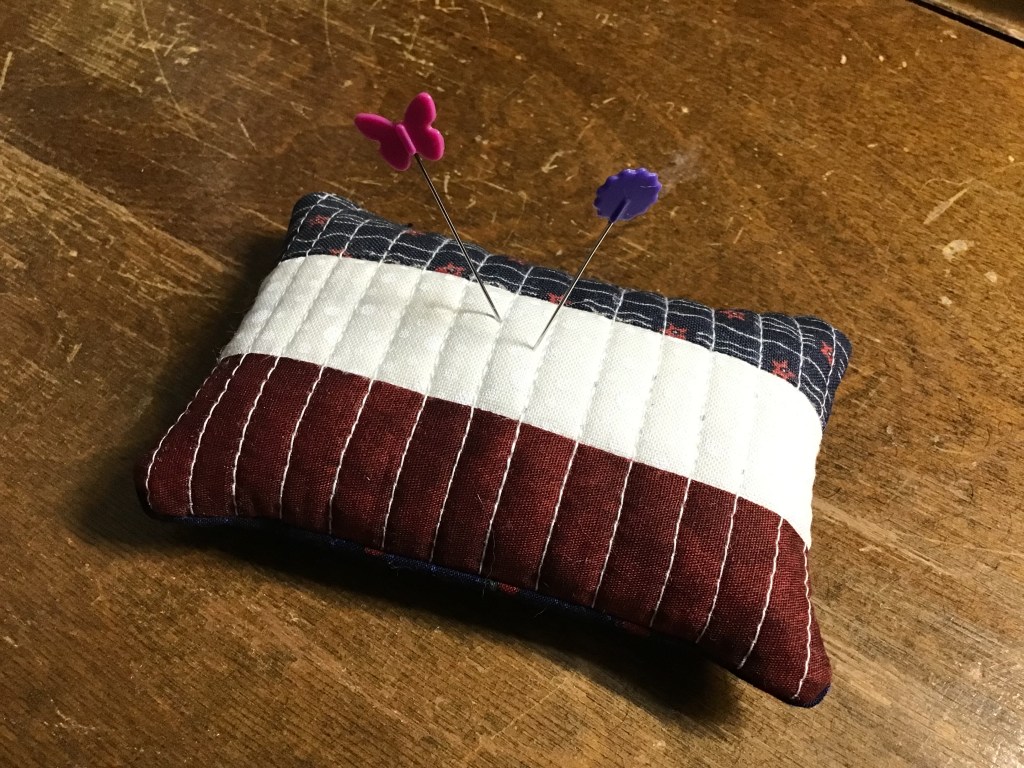
Sew, what do you do with all of your little (and possibly wonky) Rail Fence blocks? Make a cute pin cushion, of course!

Here's how:

Press your Rail Fence block flat.  Make a tiny quilt sandwich with a piece of fabric for backing, a scrap of batting, and the Rail Fence block on top.  Press or pin in place.  Quilt by hand or by machine.  Square up your little Rail Fence sandwich.  Now place the Rail Fence sandwich right sides together with a piece of fabric you want for the back of your pin cushion.  Pin the layers together.  Sew 1/4" away from the outside edge of the Rail Fence block, leaving a couple inch opening on one of the long sides.  Trim the backing and Rail Fence block to the same size if needed.  Turn the pin cushion right sides out through the opening.  Push out the corners carefully.  Fill your pin cushion with stuffing or crushed walnut shells (mine is filled with crushed walnut shells).  Stuff or fill it firmly, making sure to fill the corners.  Leave a little bit of space at the long edge with the opening.  Turn the backing fabric and Rail Fence block raw edges to the inside of the opening.  Pin in place.  Now hand sew the opening closed using matching thread.  DONE!

I do want to point out that a consistent seam allowance is just as important as an accurate 1/4″ seam allowance. That being said, not all 1/4″ seam allowances are exactly the same. You would think so, but in truth there really is no one PERFECT EXACT 1/4″ seam allowance.

SHHHHHHHH. Don’t pass this around — you’re sure to offend someone who thinks their seam allowance is THE perfect 1/4″. We ALL know a quilter like this. LOL!

But alas, as hard as you try to find that elusive perfect 1/4″ seam allowance, there are always going to be things that make tiny differences — like the machine you use, the thickness of your fabric, you, how accurate your cutting is, possibly even the environment, and a host of other little things.

My advice to you is to find YOUR very best 1/4″ seam allowance and stick with it. Your pieces will still fit together as long as you’re consistent.

Our next topic will be Rotary Cutting Basics. Sew……Stay tuned!

Until next Thursday —

Sew. Laugh. Repeat.

Always,

Tricia @VRD

Rose Cards · Tips and Tricks · Tutorials · villa rosa designs

VRD Daring Spirit Quilt Tutorial

Hello Quilty Friends!

Happy Thursday to you!

I hope you are having a great week — mine is just zooming by, hard to believe it’s Thursday already. Hopefully, you tuned in last week to our Designer Spotlight Interview with Sewl Sister’s Shankari Paradee, our newest designer here at Villa Rosa Designs. If not, you can find it HERE.

WOW! The weather has suddenly turned HOT HOT HOT here in northwestern Pennsylvania! WHEW! Typical July weather, I know, but I am never quite ready for super hot and humid. I live in a lovely green valley in the foothills of the Allegheny Mountains, but heat still happens.

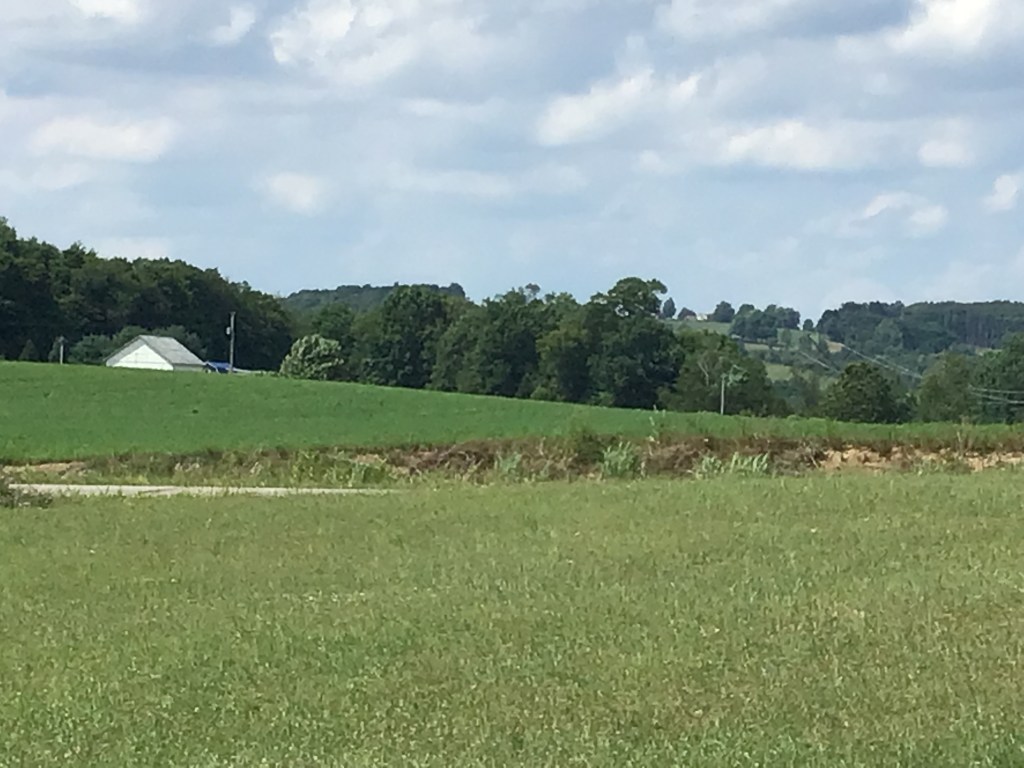
You can’t see much of the hills because of all the green trees, but you can see a little bit to the right of the barn in the distance. Regardless, it’s beautiful country.

We’ve been having some very dry weather for the last couple weeks, though. Luckily we had a couple rainy days earlier in the week, which really helped all the plants and crops, but with the heat, everything is starting to droop again. I hope we get some more rain soon. I’ve been watering my little container garden, but the peppers look terrible and the cucumbers aren’t growing very fast. Argh! Rain, rain, rain………

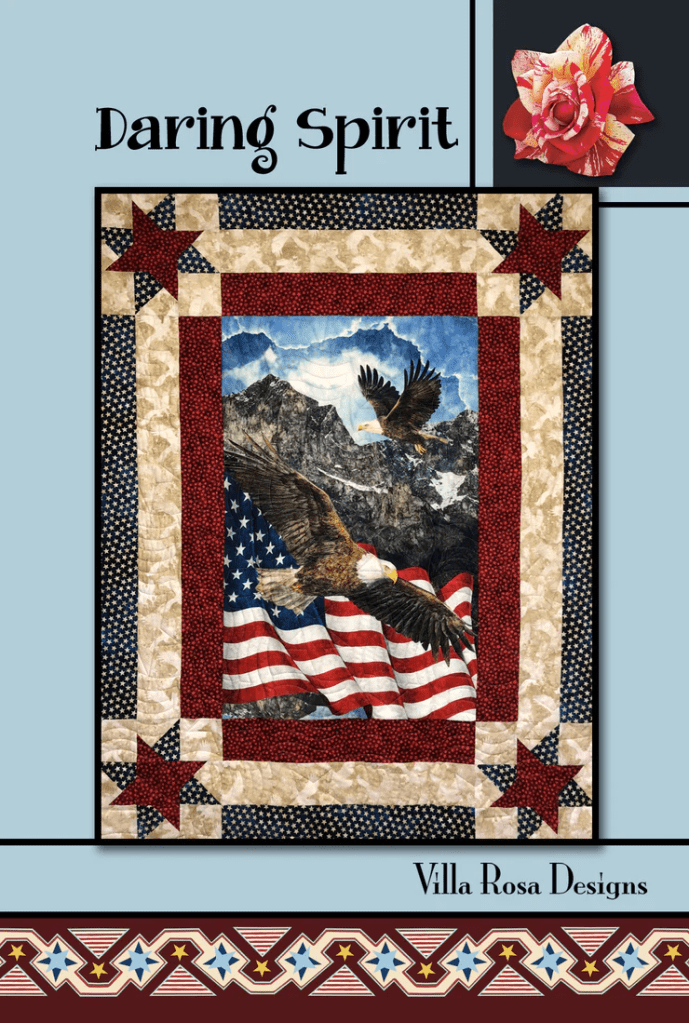
The VRD Rose Queen, Head Elf, Grand Poobah, AKA “The Boss,” Pat, asked me if I would do a tutorial for Rose Card pattern, Daring Spirit.

The corner Star Blocks can be baffling and she gets a lot of questions about how to assemble them. I hope this helps!

You can buy the Daring Spirit Rose Card pattern HERE.

Daring Spirit Tutorial

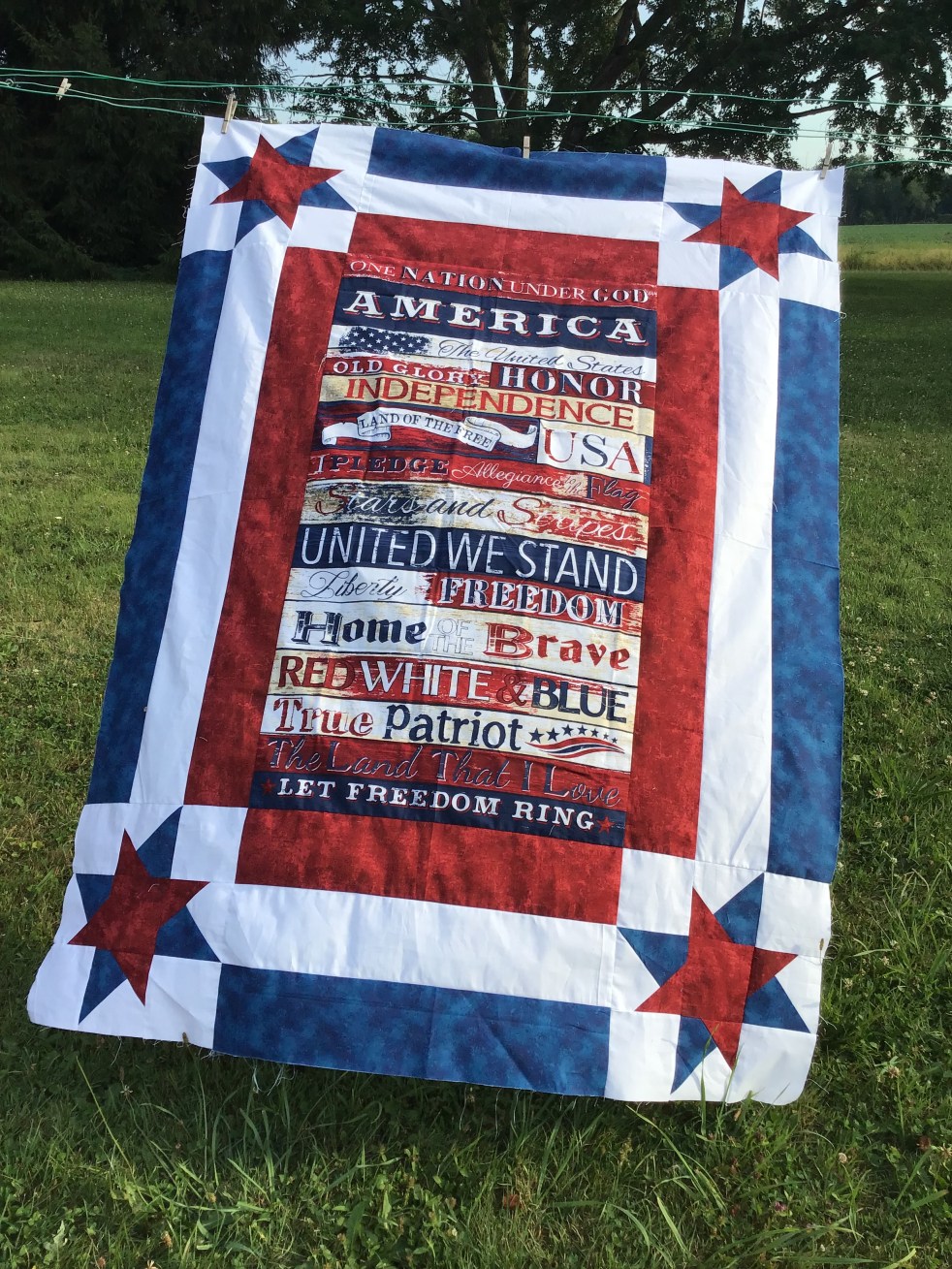
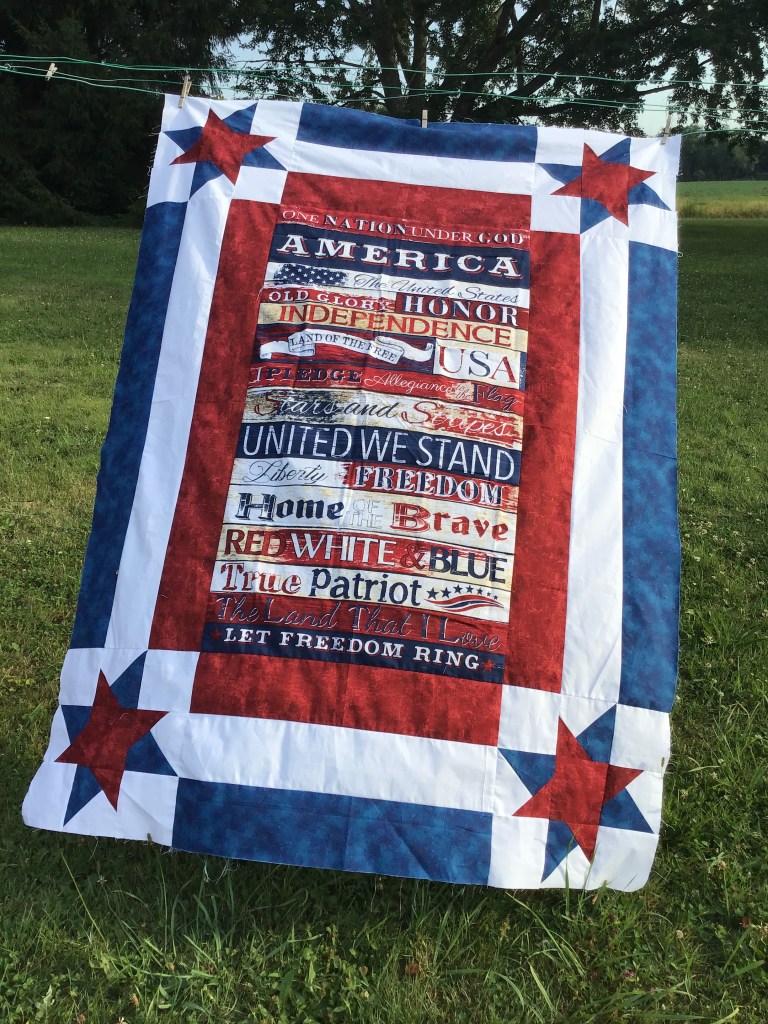
This is such a great pattern! Of course it works well with ANY patriotic panel, but you could use just about any panel as long as you use coordinating fabrics. Maybe sometime, we’ll play around with other options besides patriotic, but for now, let’s focus on how to make the quilt.

On to the tutorial!

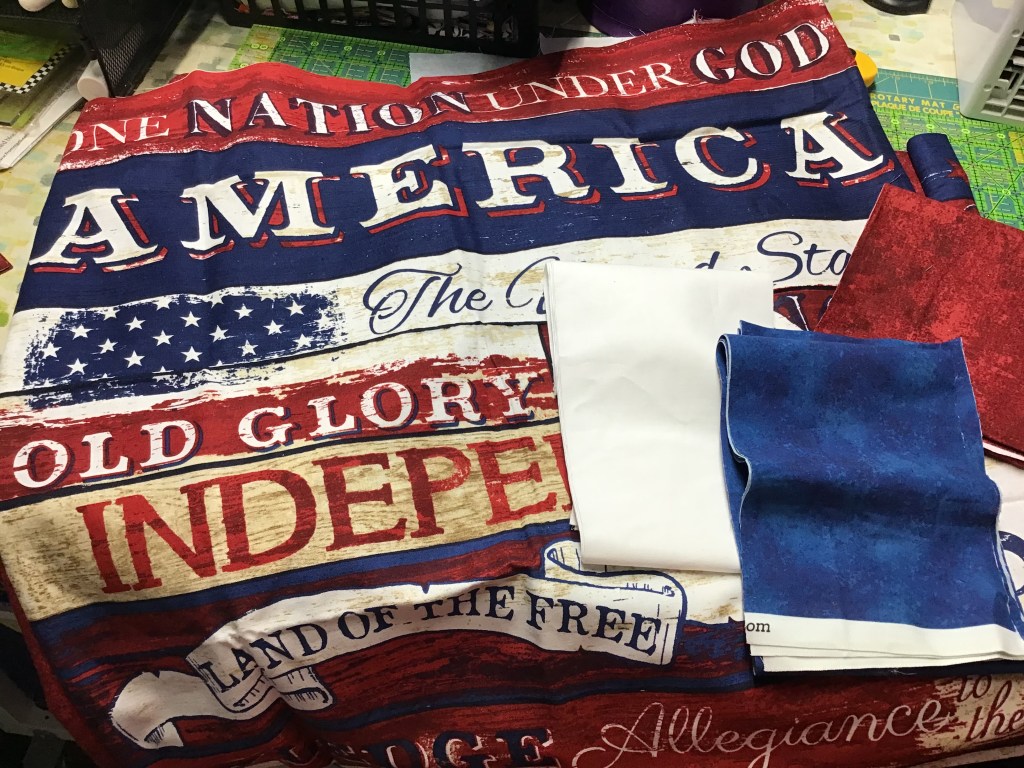
The first thing you need to do is choose your panel and your coordinating fabrics.

LOVE this panel!

Time to cut everything out. You don’t need to cut your panel to a specific size, but you should square it up and make sure all 4 sides are cut straight. Don’t skimp on this step. You might notice that your panel is skewed and doesn’t seem to be square. This is a very common problem with printed panels! What you need to do is pull the panel on both diagonals. Really. Hold each opposite corner in your hands and tug several times, pretty firmly. Repeat for the opposite diagonal. This should help your panel to straighten up! Repeat if you need to. Once you’ve gotten this step done, go ahead and trim the edges straight.

Okay, let’s measure our panel. Write down the length and the width, you’ll need these measurements later.

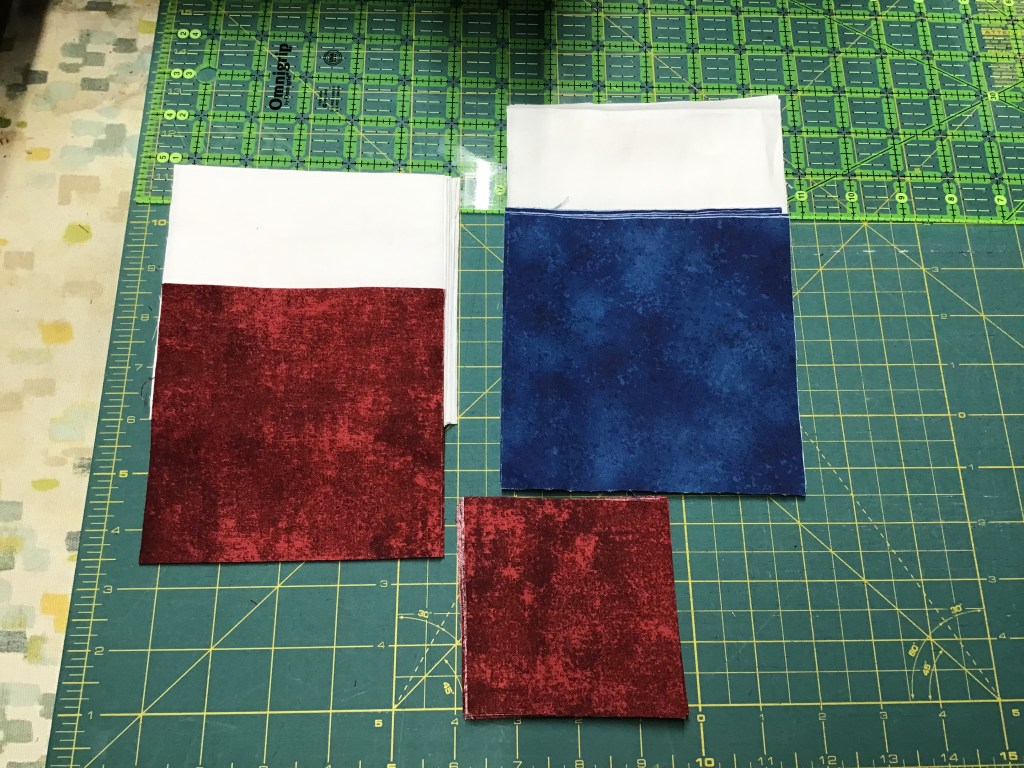
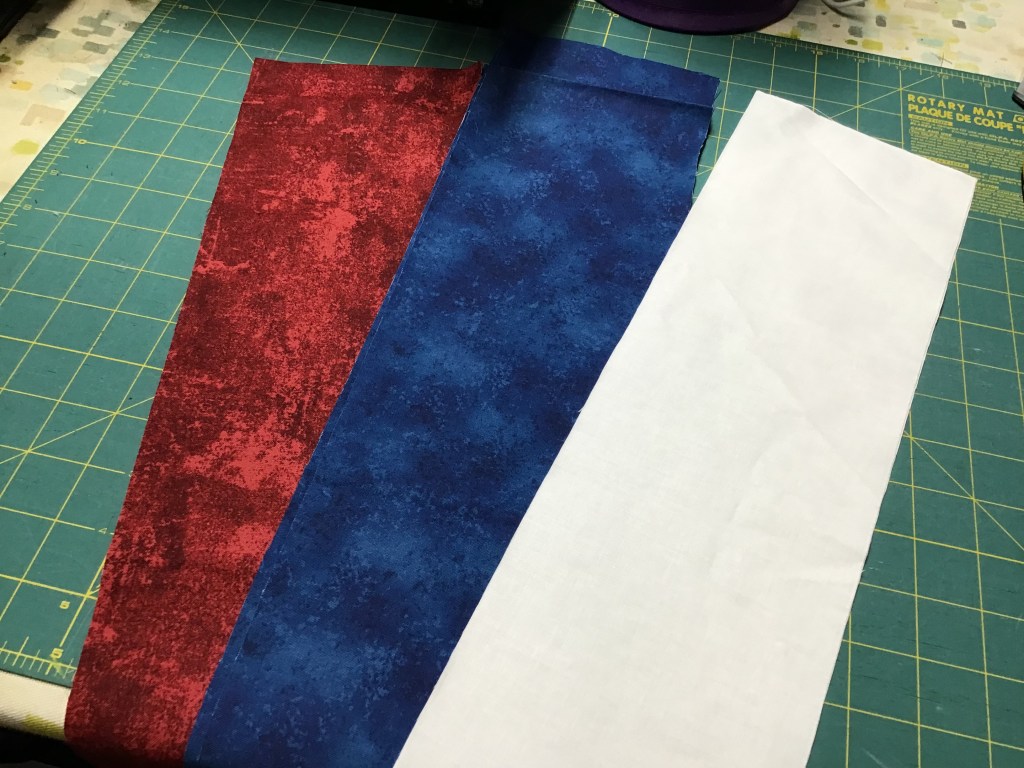
Time to cut our strips and squares, following the instructions.

Now let’s sew our side strips together and then sew them to the sides our panel.

There are 2 options here:

1. The pattern instructions call for you to make 4 sets of strips, then trim 2 sets to the length and 2 sets to the width. This works just fine.

2. But, I actually prefer cutting all the strips to the right length and width first (see the measurements you wrote down above). For me, this just makes more sense and I have found that the strips don’t get as curvy and wonky like they do when I try to sew long strips together and then cut them to size later. Also, the less you handle your cut pieces, the straighter they will stay.

Same result, different routes.

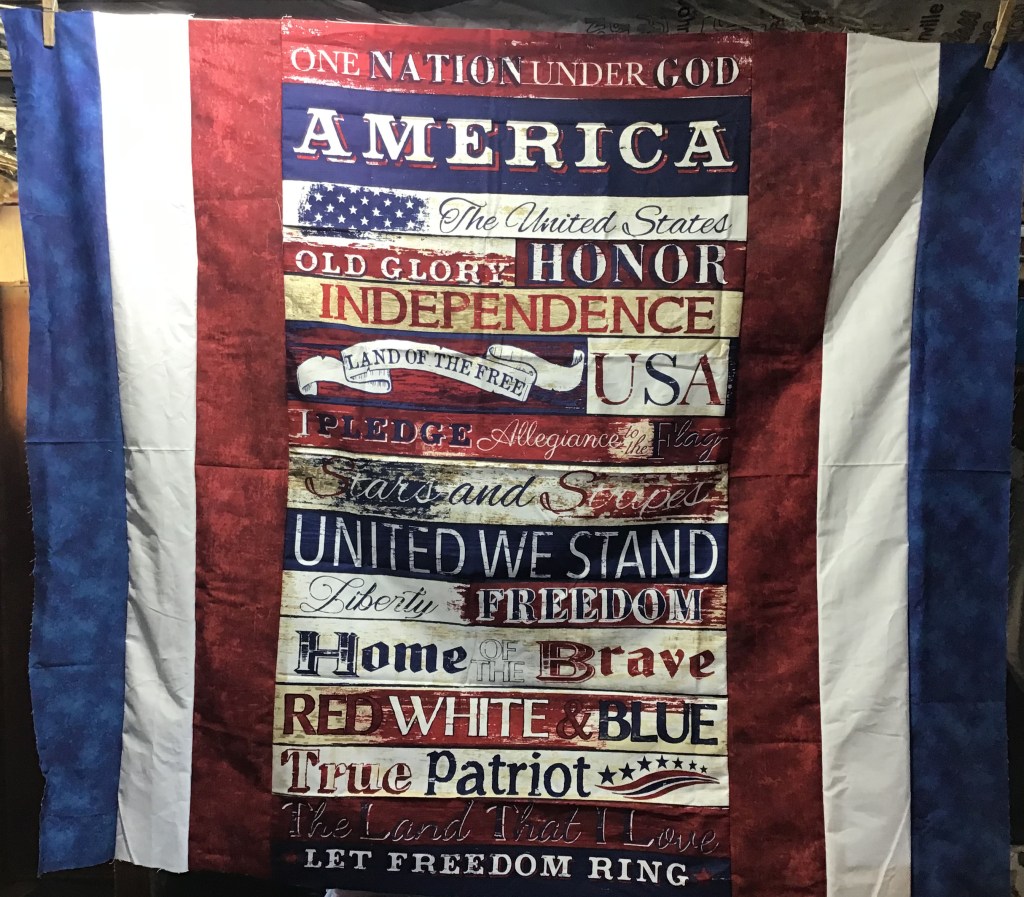
Anyway, here’s what the panel looks like with the side strips sewn on.

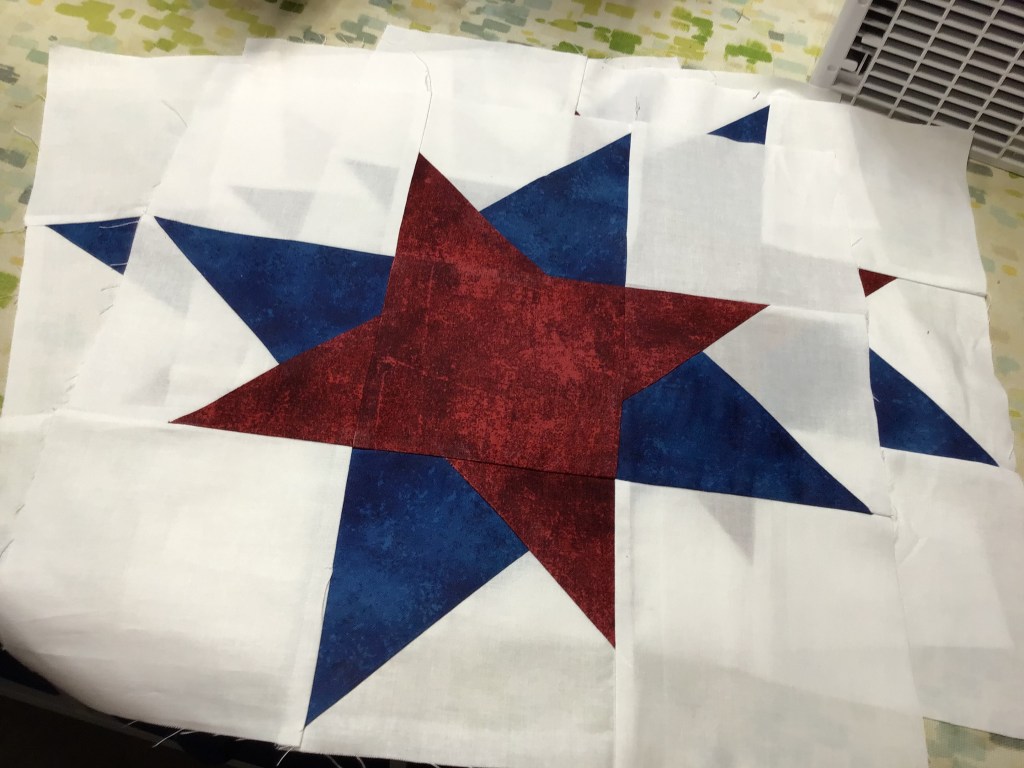
Yay! Time to make the corner Star blocks. I really like how these blocks are constructed — they are super clever and go together really well. Did you notice these stars are really Nine Patch blocks in disguise?!?

Layer a white and blue square right sides together (RST) with the edges lined up. Draw a diagonal line from one corner to the opposite corner. Pin if you like, I don’t. I use a Frixion pens and a 1″ wide ruler to do this step. I do it right at my sewing machine on my acrylic extension table.

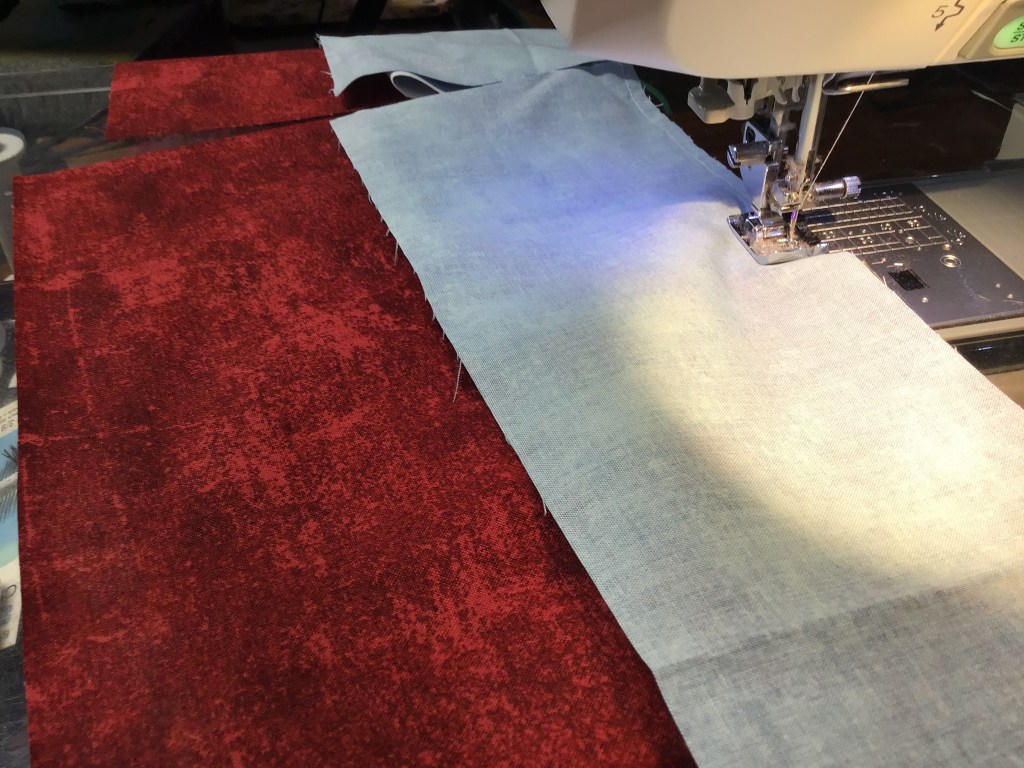
Sew 1/4″ away from both sides of the drawn line. I draw a diagonal line on a pair of squares and then sew it on both sides of the line, then I repeat for however many squares I need to. It doesn’t seem to save time to draw all the diagonal lines before you sew them as the layers are going to shift on your way to your sewing machine, unless you use pins to hold them together.

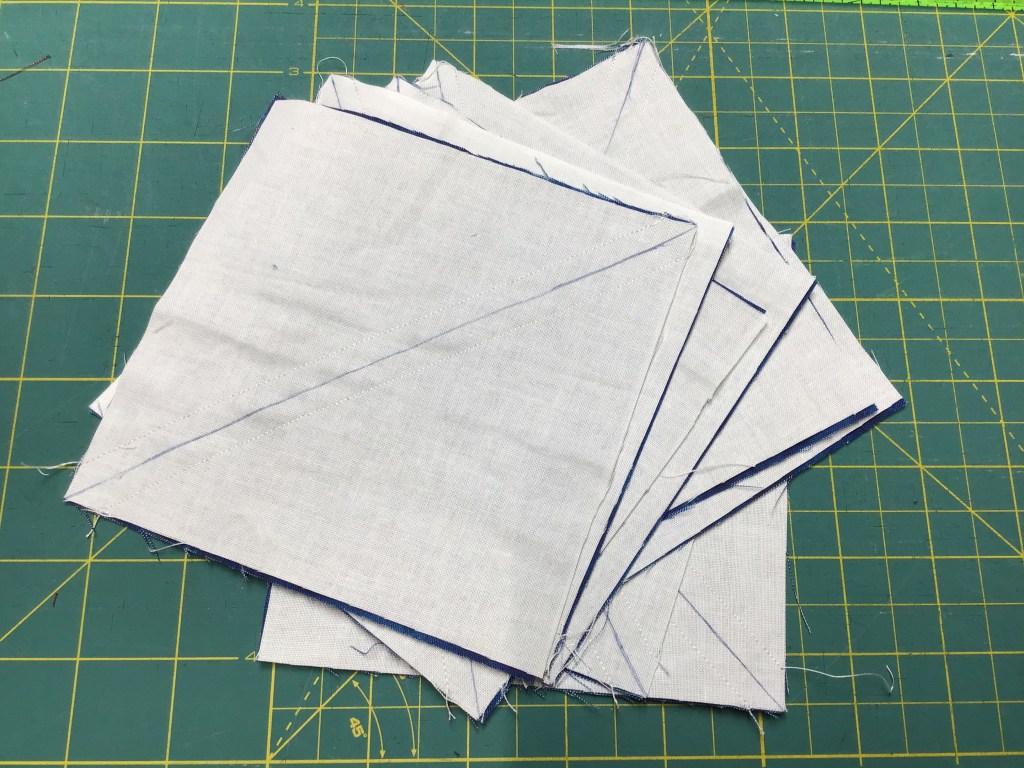
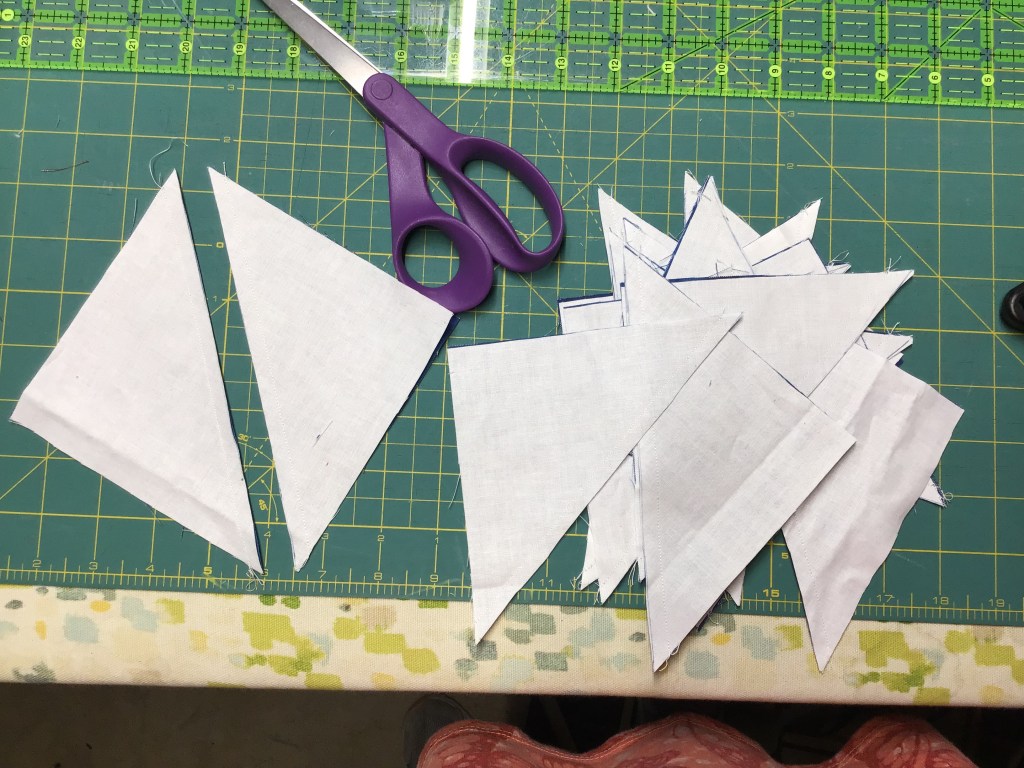
Time to cut the squares apart on the drawn line to make 2 HSTs (half square triangles) or Triangle Squares. Cut all the squares apart on the drawn line.

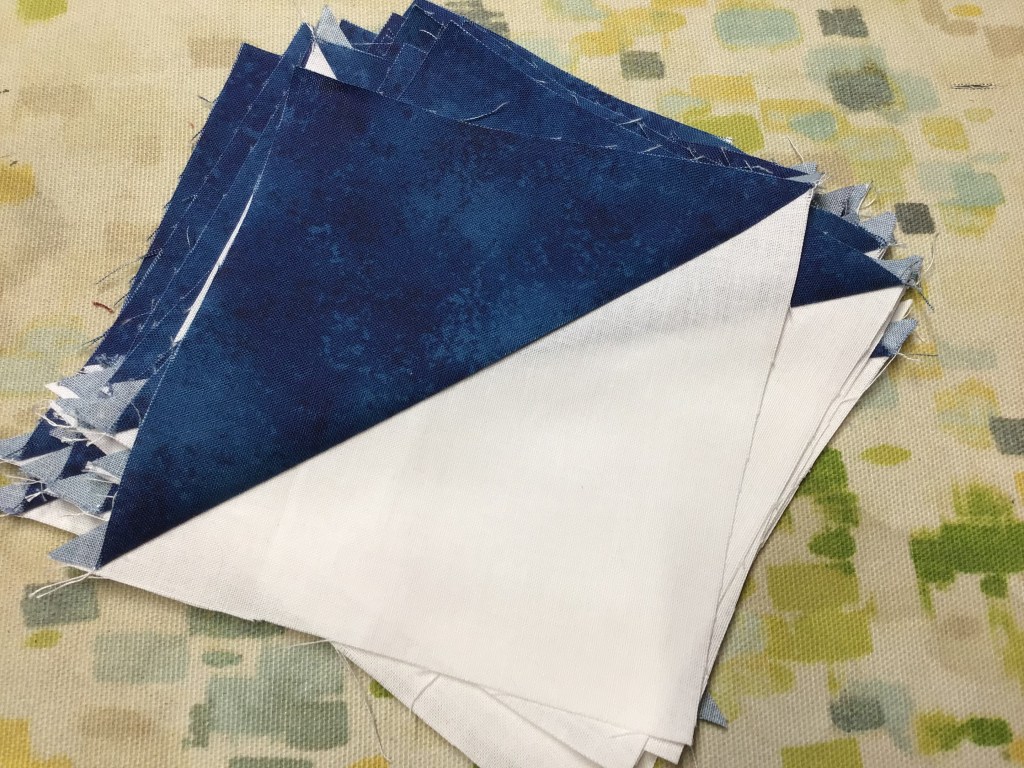
Let’s press our HSTs open with the seam towards the blue fabric. Do you set your seams? This just means pressing your seams with the block closed before you press them with the block open. I was taught that it sets the stitches in the fabric which makes your seams nicer. I don’t know why it works, but it simply does. Don’t forget to take the time to trim off all the little ears that stick out beyond the corners. Don’t skip this step, because if you leave them there, they will skew your seams.

No, I hadn’t cut off the little ears yet when I took this photo, but you will notice in the next photo, the little ears are gone.

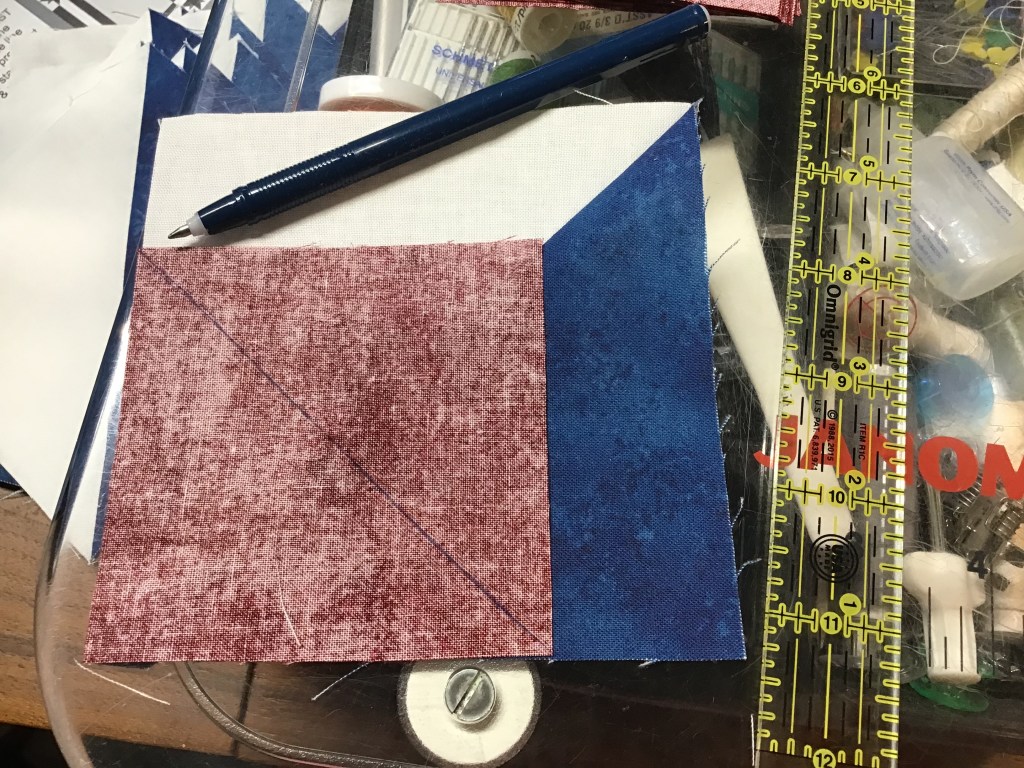
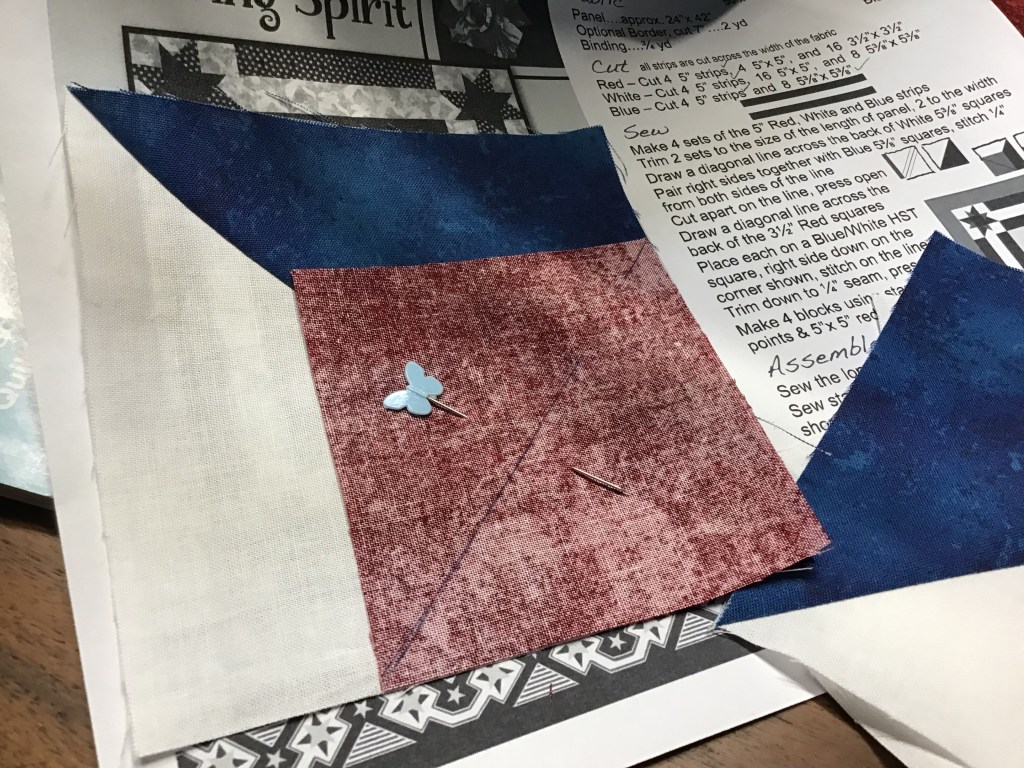
I think the next step is really cool! Layer a red square RST on a blue/white HST. Draw a diagonal line from corner to opposite corner (white to blue, NOT in the same direction as the seam for the HST, but across it).

Here’s where a lot of folks might get a little confused — this time, SEW ON THE LINE. We are making a “flippy corner,” not a HST.

I don’t know if you get direction-challenged like I do sometimes when quilting, but to keep myself from sewing on the wrong end or messing up my placement, I make a sample in order to see how I need to layer things and feed them into my machine. I have found that being left-handed sometimes makes it hard for me to manage directionality.

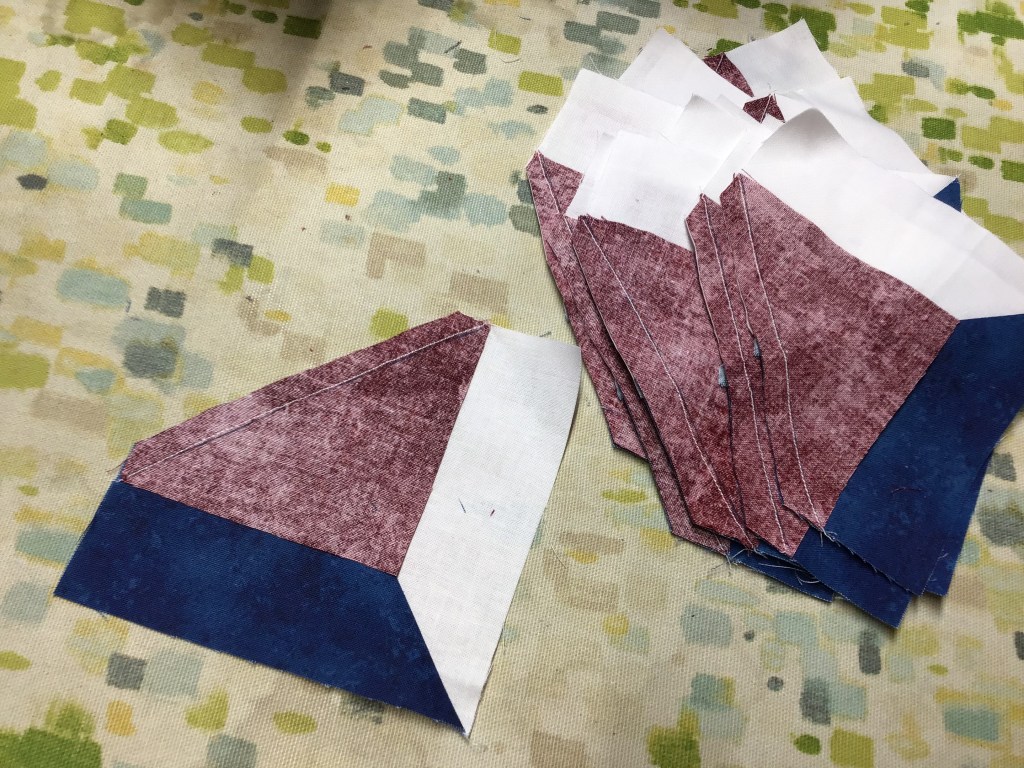
Moving on……once you have all your “flippy corners” sewn onto your HSTs, time to cut away the waste on the “flippy corners,” 1/4″ away from your sewing line.

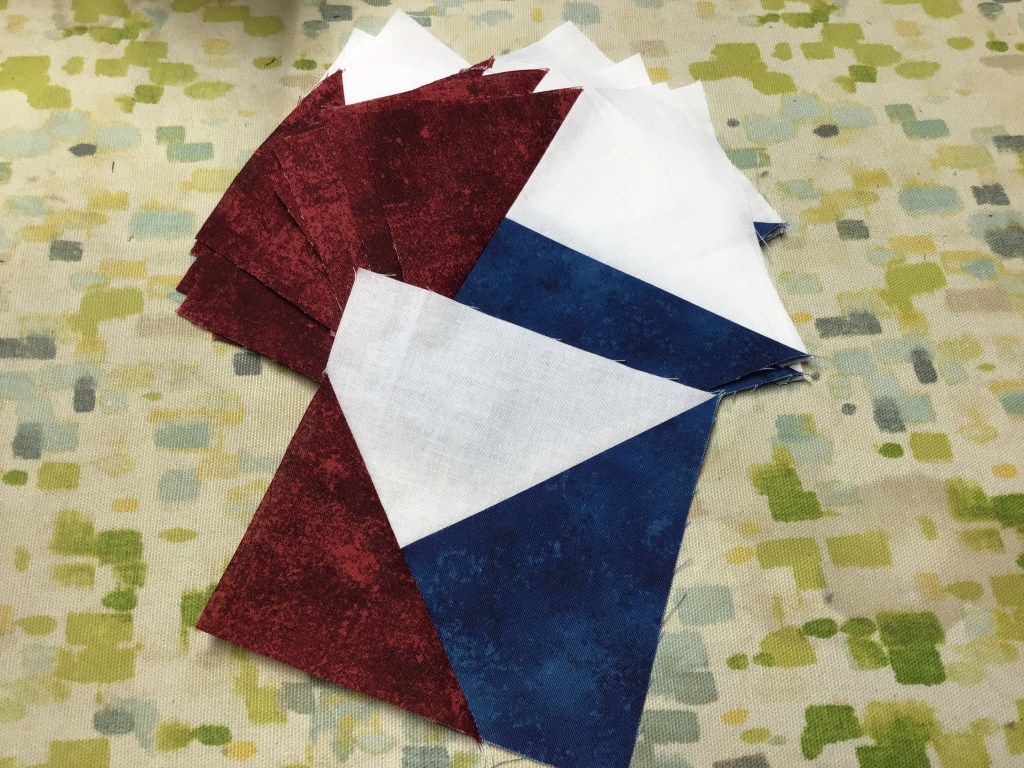
We’re in the homestretch now! Go ahead and press your “flippy corner” HSTs. Set your seams, then press the seam allowance to the red.

That wasn’t too bad, was it????

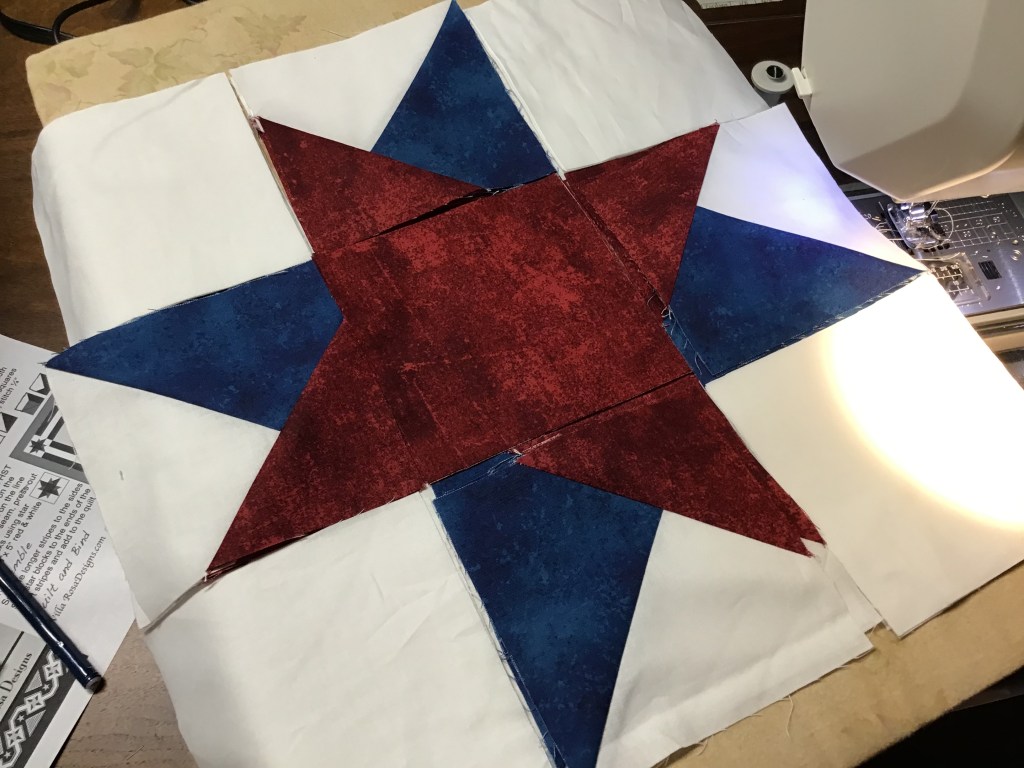
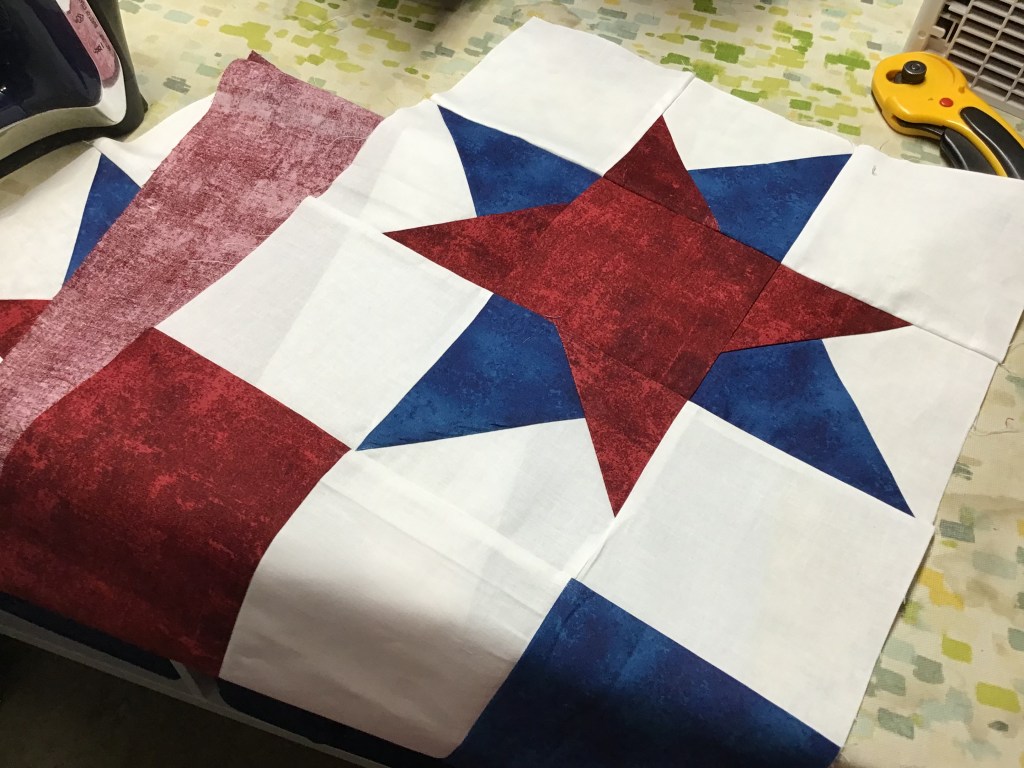
Let’s sew our corner Star blocks together now, just like a Nine Patch block! I like to lay out my blocks on a small felt board (made from a flannel fat quarter, a firm piece of cardboard, and duct tape to hold the flannel taut). That way, I can sew the block together right at my sewing machine. Since I’m such a “Lazy Quilter” (this is what a lot of my pals call me, anyway), I actually layered all four of my blocks on my flannel board and I’ll just sew all 4 blocks together. Then I’ll press them after I sew them together.

And here are my four corner Star blocks all sewn and pressed. Aren’t they really pretty???

Now let’s finish putting the Daring Spirit quilt together.

Refer to the panel width measurement you wrote down earlier. Sew your top and bottom strips together and cut to this measurement. Now sew your Star blocks to each end of your strip sets. Make 2 — one for the top and one for the bottom. Press your strips carefully.

Sew your strips to the top and bottom of your quilt.

Quilt top DONE!

Now, quilt it. Bind it. And don’t forget your label!

Well, that’s it for this week. Stay cool!

Until next Thursday —

Sew. Laugh. Repeat.

Always,

Tricia @VRD
Rose Cards · Tips and Tricks · Tutorials · villa rosa designs

A Little Gardening and Cake Day Quilt Block Assembly Tips

Hello Quilty Friends!

Happy Thursday to you! I hope you all are having a wonderful summer so far.

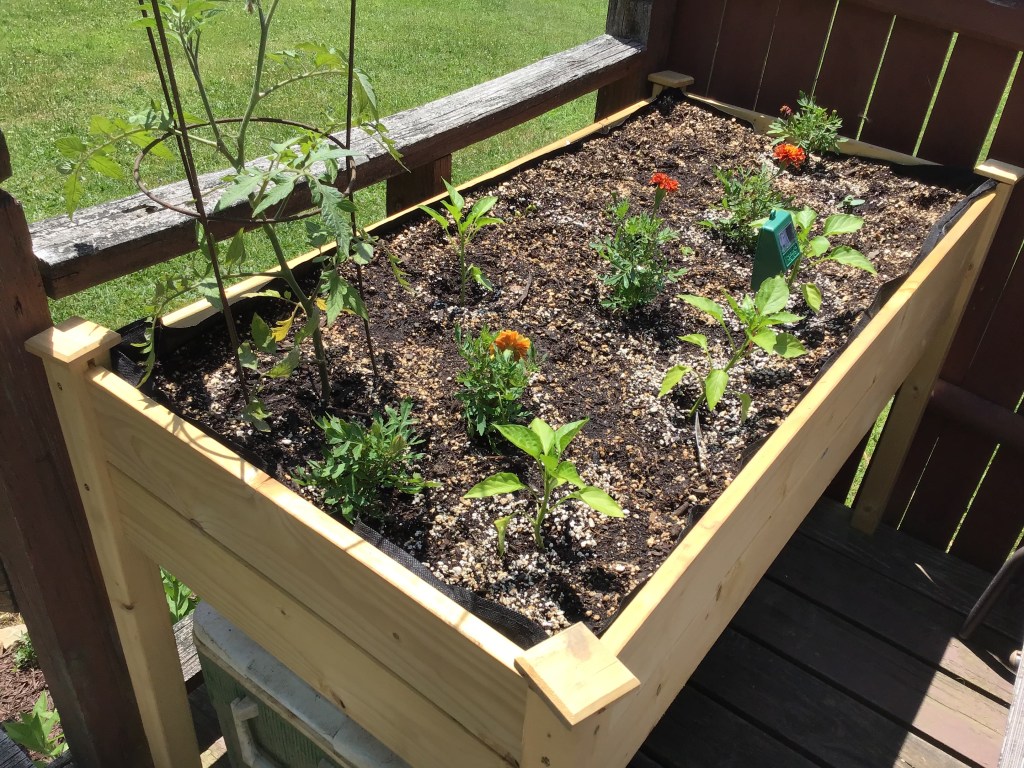
My summer just got a whole lot better! Just recently my family got in gear and finally got our little back porch raised garden planted. And our flowers, too. We may be running a little behind, but I have hopes that in late summer/early fall we’ll be enjoying some fresh veggies picked right out of our little garden pf goodness. If it goes well, next year we are going to add a second raised bed garden.

I used to be an avid gardener way back when, but gave up the year I planted my garden twice and the critters ate everything before it even had a chance to grow. That was it.

But now I’m excited to try container gardening. Besides, ”container gardening” sounds so trendy, don’t you agree?

Cake Day Quilt Block Assembly Tips

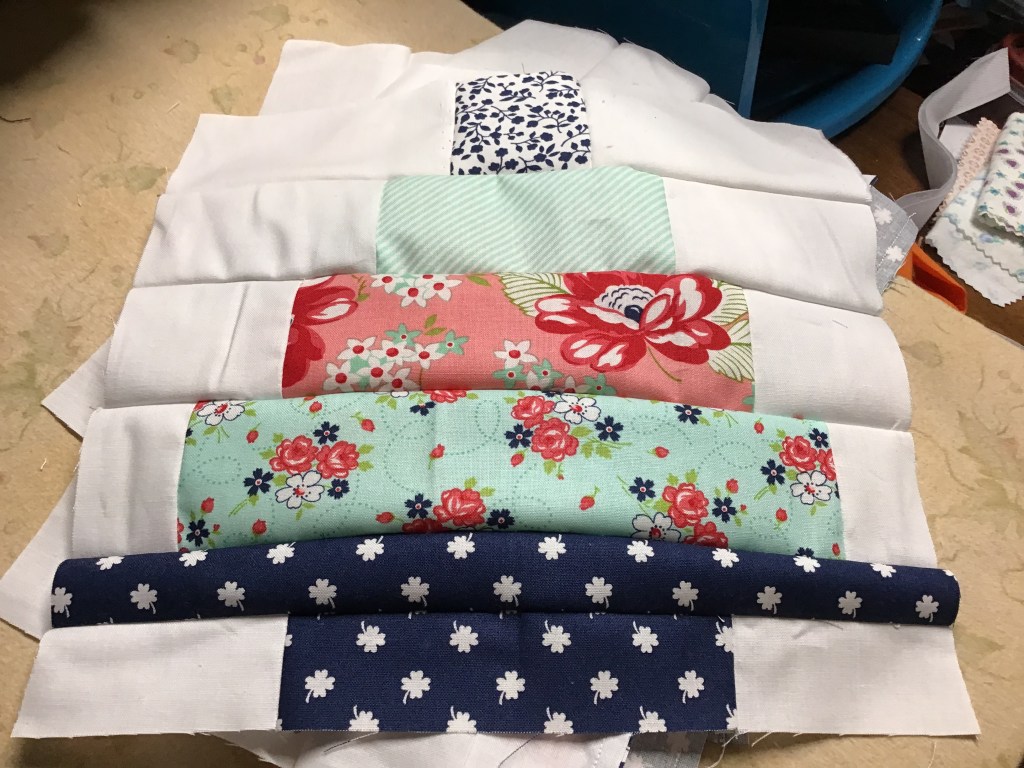
I thought I’d share a quick tutorial on how I put the Cake Day table runner quilt block together along with some of my favorite piecing tips.

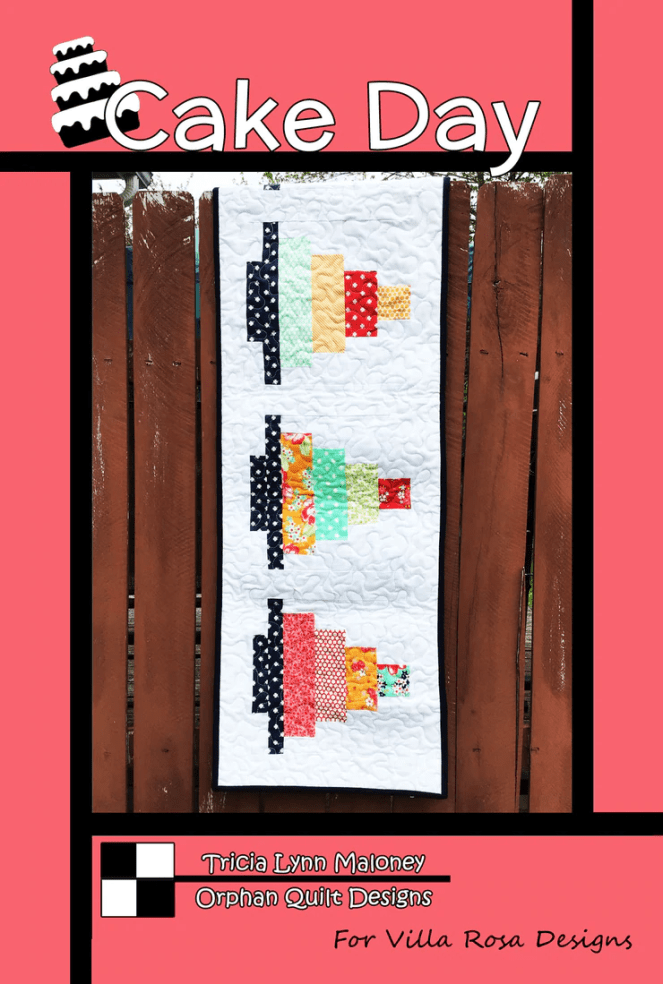
Cake Day Table Runner Rose Card Pattern

You can get your own Cake Day Table Runner Rose Card pattern HERE.

Often, I prefer to cut out all my pieces for the blocks before I start sewing. I find this is usually quicker than cutting and sewing one block at a time.

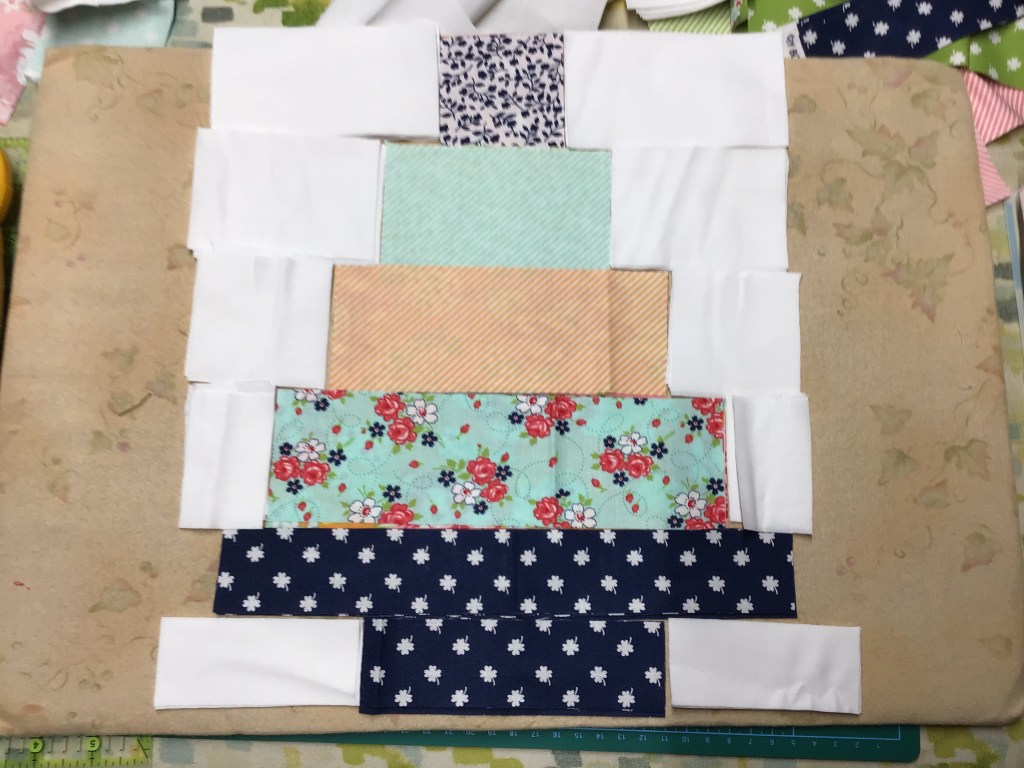
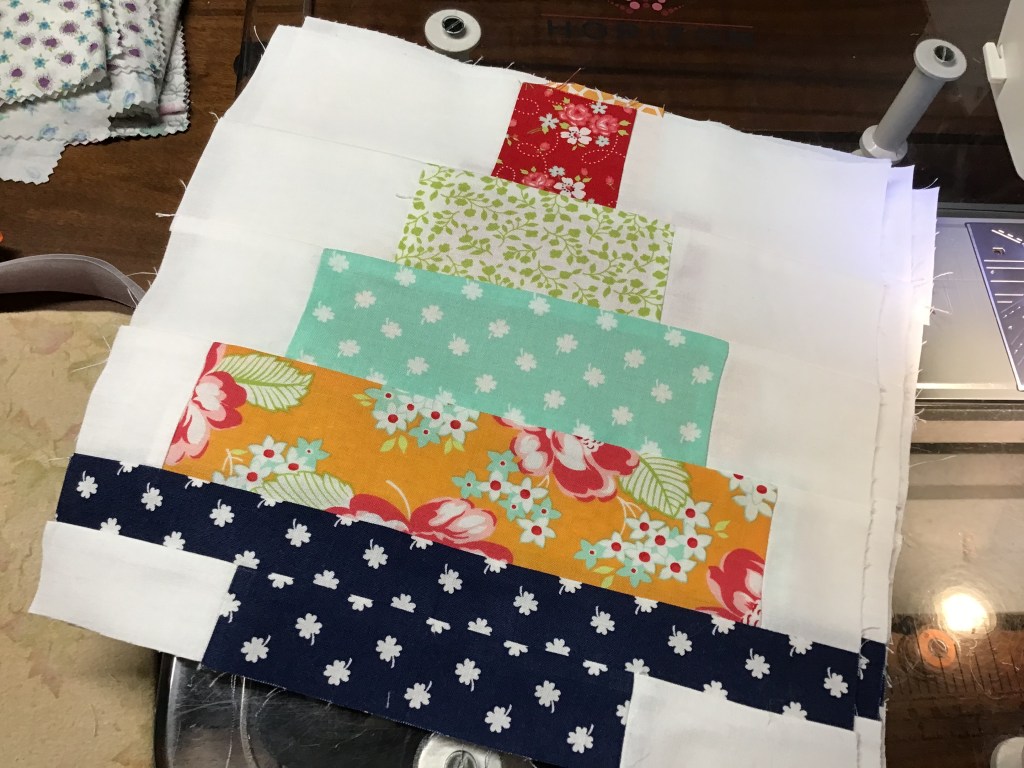
Here you can see the pieces all laid out in the right order (all four blocks are stacked) on a flannel board and then I can simply take everything to my sewing machine. This works well if you have to stop in the middle and come back to your project later. Everything stays right where you left — unless of course, you have gremlins or leprechauns or some other little mischievous creatures running around your sewing room when you are not looking.

I have also found that laying out and stacking the pieces in order makes sewing them together faster and easier because I don’t have to stop and figure out where each piece goes.

With all the pieces cut and laid out right sides up, sewing them together is a breeze, especially when I chain-stitch the units one right after the other without cutting my thread in between the units.

Nope! No need to head to my ironing board after clipping the thread between the units, I just kept sewing and chain-stitched the other side too.

I have discovered that the less I press as I’m putting together quilt blocks, the less the blocks stretch or get distorted, which of course improves the accuracy of my sewing.

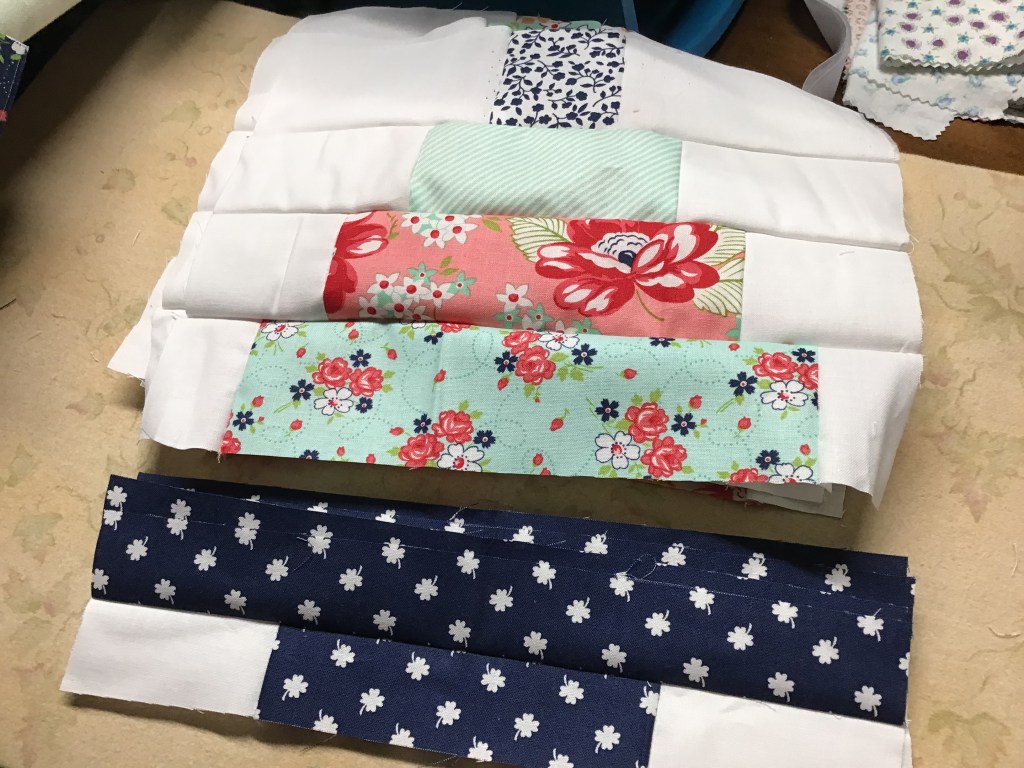
In the next photo you can see I have the left side background sewn to the Cake print rectangles. Now it’s time to sew the right side.

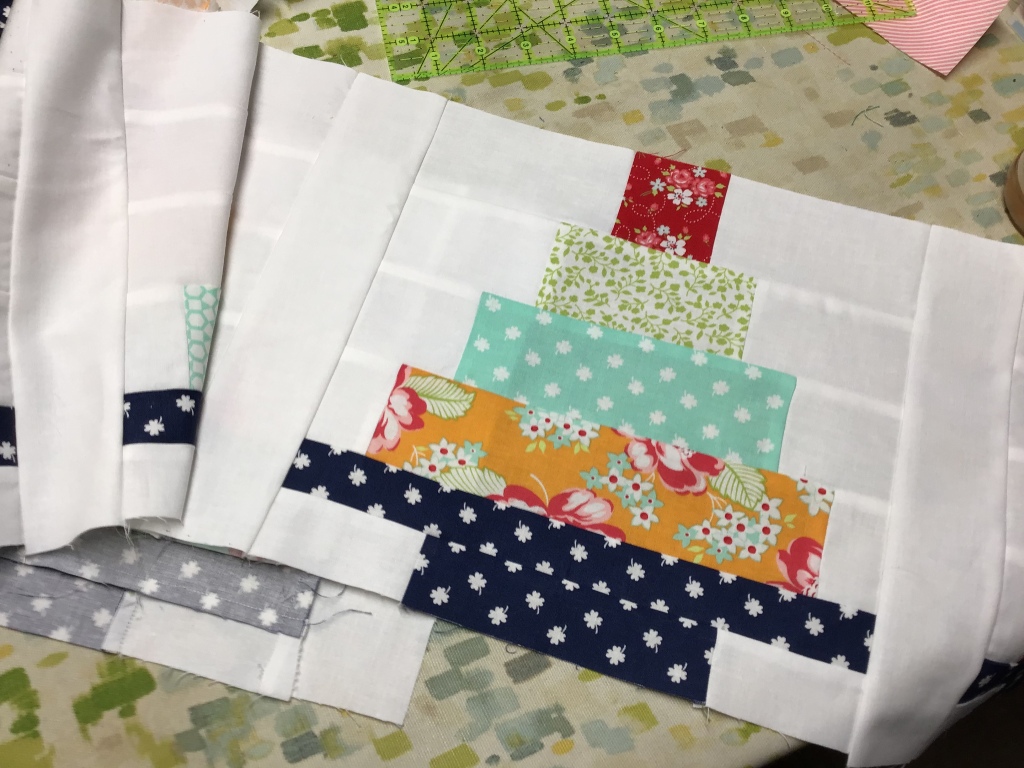
All right! All the units are sewn together and I’ve clipped the threads between them. I made double sure I layered the units again exactly the same as when I started — we’re ready for the next step.

Again, I’m going to ignore my iron (it must be getting lonely). Time to sew the units together. More chain piecing.

Want to know what happens when I get to seams (remember I haven’t done any pressing at this point)? I’ve already decided which way I wanted my seams to go so as I sew, I hold them down and keep on sewing. Pedal to the metal!

In this next photo you can see I sewed the top unit to the second unit. We’re on a roll — let’s keep sewing.

Okay, we’re almost there! I sewed the rest of the units all together and presto — all 4 of our blocks are now complete and I didn’t even have to get up from my sewing machine.

All right, all right, I relented and finally pressed my blocks — my iron was getting a little dusty from disuse.

Voila! Here is a finished Cake Day block. It’s a cutie, isn’t it?

My 4 blocks are now ready to assemble into a runner. There are sew many possibilities for this runner — birthdays, weddings, showers, parties, and the list goes on and on.

Any day can be a “Cake Day.” What’s yours?

Until next Thursday —

Sew. Laugh. Repeat.

Always,

Tricia @VRD

Rose Cards · Tips and Tricks · villa rosa designs

My Go-To VRD Rose Card Quilt Patterns and My VRD Rose Card Storage Update

Hello Quilty Friends!

I hope all is well in your world today. Mine has been hectic as usual, but I’m used to it. It keeps things from being boring, especially now that I work from home — immersing myself in the world of quilting. Yes, I’m now living my dream life, doing my dream job. I’m happy. Really happy. I wish the same for you.

Anyway, I thought it would be interesting to talk about my go-to Rose Cards. I bet all of you have a group of cards that you go back to time and time again.

Here’s my list:

Hillside Charm

Hillside Charm is my favorite pattern for using panels. There are so many wonderful panels available these days, but other than slapping a couple borders around a panel, sometimes I run out of ideas. That’s why I LOVE Hillside Charm — the combination of squares and rectangles in the border compliment just about any panel out there.

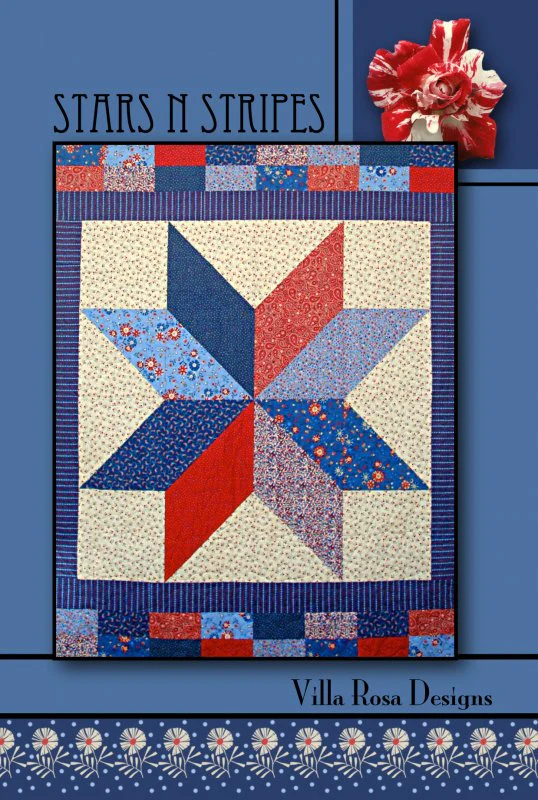
Stars N Stripes

I’m just getting ready to make several quilts to donate to Quilts of Valor. This quilt measures 56″ x 70″, which fits in the required range for a QOV quilt — minimum of 55″ x 65″ to a maximum of 72″ x 90″ with an average of 60″ x 80″. You can check out the Quilts of Valor website for more information HERE.

I could add an outer border to Stars N Stripes to make it a little bit bigger, but I’m not sure I’m going to do that. I have in mind to make at least 3 of these quilts to donate, which will make a dent in my red, white, and blue fabric stash.

Of course, Villa Rosa Designs has other Rose Cards that would make great Quilts of Valor — Star Rail, Star Spangled (with the addition of an outer border), Stargazer, Salute, Twinkle (with another border or row of stars), Daring Spirit, Liberty (with an additional border), Liberty Bell (needs a little border on the sides), and Pride (needs a little border on the sides).

Limelight

Limelight goes together really fast and is a great size. It uses a bundle of fat quarters which makes picking out coordinating fabrics a snap. I’ve made this into a couple of charity quilts and was really happy with how they turned out.

Double Delight

Double Delight is one of my very first favorite Rose Card patterns. I’ve always loved Four Patch quilt blocks and I really like how the rectangular Four Patches make this quilt unique and interesting. Besides, I think just about any fabric would look great in this pattern.

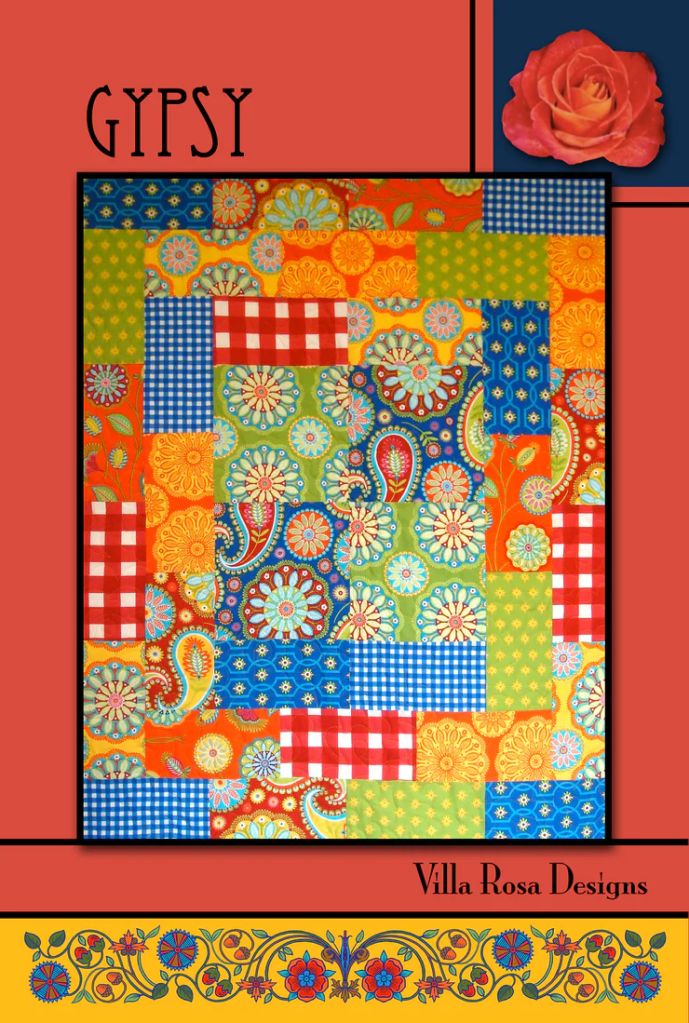
Gypsy

I made Gypsy with a friend one time and we donated this quilt to Project Linus. We had participated in an “ugly fat quarter” challenge where we each chose a VRD pattern and exchanged an “ugly fat quarter.” I don’t remember much about the rest of the fabrics now, but there was one I will probably never forget — it had a blue background with big pieces of silverware on it! But you know what? Even with the weirdly-wonderful silverware fabric, the quilt turned out really cute and I bet it made the recipient smile. It just goes to show you that even ugly fabrics can make a great quilt.

What about you? What are your go-to Rose Card patterns?

VRD Storage Solution Update

You might remember a couple weeks ago, I was working on some new storage ideas for my Rose Card collection. I’m actually still working on getting my Rose Cards out of my little photo storage books (see previous post) and into my brand new snazzy plastic storage boxes. It didn’t take long to outgrow a single box so now I have 2 boxes, A-L and M-Z. And I’m still adding more cards! I work on them in spare moments here or there, so it’s not getting done super fast.

I will say I am enjoying going through my cards and mentally deciding which ones I want to make. Maybe I should make a list on my VRD Rose Card app on my tablet and then I can check the list out later, otherwise, I’ll probably forget the names of the Rose Card patterns I want to make. Not kidding (rolling my eyes here).

I’m thinking of starting a new category or even a whole box filled with my go-to Rose Cards. Maybe even my favs!

But first, I have to get them all organized alphabetically so I know what cards I have and what cards I need to add. Again, I can use my handy-dandy VRD app.

What about you? What are your thoughts?

Until next Thursday —

Sew. Laugh. Repeat.

Always,

Tricia @VRD

Quilting Partners · Tips and Tricks · Tutorials · villa rosa designs

Let’s Design a Quilt Together — A Peek into My Quilt Design Process

Hello Quilty Friends!

It’s Thursday again! Here’s hoping your week has been going well. Mine has been good and fast — just the way I love my quilt projects to be! LOL!

A lot of people ask about my design process so I thought I’d tell you a little bit about my process. Keep in mind that all designers have their own way of doing things and this post is only about my process.

Sometimes it’s like I eat, sleep, and breathe quilts and quilting! Not only do I read/flip through quilt books and magazines, I also look online for new trends. I talk to my quilt friends about what they are doing. I teach a quilt class once a month. I design patterns, write instructions, make quilts, take photos of quilts. I look at and get inspired by fabric. I jot down ideas and even do rough sketches of quilt blocks (which I promptly lose most of the time). I have even been known to wake up in the middle of the night with a new idea for a quilt. Whew!

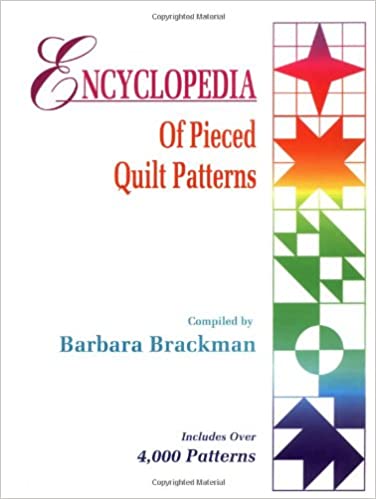
Inspiration comes in a lot of different forms for me. Sometimes I see a fabric or collection and an idea pops into my head. Sometimes I start with a favorite quilt block and a quilt develops out of that. I have quite a few quilt block references that I use for ideas. Here are a few books in my library:

The first 2 books are by Barbara Brackman. The one on the left is the first edition of the 2nd book and is out of print and can be hard to find. I have both of them and love them both. The newer edition has even more blocks in it than the first edition! Barbara Brackman is one of the most renowned quilt historians of our time! You can visit her blog, Material Culture, HERE.

I also have Barbara Brackman’s software program, Blockbase, which works with Electric Quilt. You can find Blockbase HERE.

The third book, 5500 Quilt Block Designs, is by well-known quilter and author Maggie Malone. I have only known about this book since 2021 when a friend of mine showed it to me and I was so impressed, I had to grab a copy for myself. This book is out of print so it can be harder to find as well.

I have talked about Electric Quilt software before in an earlier post, but I want to mention it again here because I really couldn’t design quilts without it! Some designers sit down with a ruler and graph paper to draft quilt patterns, but I am an Electric Quilt user because it makes designing quilts a lot easier for me. You can find Electric Quilt 8 (EQ8) software HERE.

If you are interested in designing your own quilts, I totally recommend EQ8 if you’re into computers. If you’re not into computers, graph paper and a ruler might be your new BFF.

Once I get an idea, it’s time to play — which usually means I head to my computer and EQ8. I play with blocks, try different color combinations, download different fabrics to try all before I actually make anything at all. Some designers start by making the project and then work backwards to create the pattern and instructions. I do my designing on my computer and then make the project once I know what I am going to do. At least this is what I do probably 99% of the time. That’s one of the fun things about being a designer — I can try different ways of doing things. They don’t always work out for me, but that’s okay, there’s always another way to try.

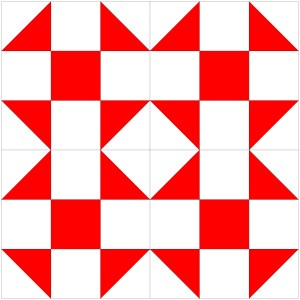
Let me show you an example of my design process. For this example, I’m gong to start with my favorite quilt block, the Shoo Fly block.

When I am starting with the quilt design before I select the actual fabrics, I usually design in red, black, white, and grey. I don’t know exactly why I do that, but I think it probably has to do with the high contrast so I get a good sense of the pattern before I add actual fabric.

So, let’s make a wall quilt using 4 Shoo Fly blocks. It will look something like this:

Hmmmmm. This doesn’t really excite me. How about you? Let’s tweak it a little bit and see what happens next. We’ll add a bit more color, too.

Okay, this is better, don’t you think? By adding a sashing between the blocks, I was able to put another Shoo Fly block in the center. I changed the colors of the larger blocks to black and grey with the smaller center Shoo Fly block in red. It definitely has a lot more interest, doesn’t it? But it’s not quite there. Let’s tweak it a little bit more, shall we?

Now we’re getting somewhere! I got rid of the grey and went with plain black. Then I added 2 narrow blocky borders so I could continue to build out with more Shoo Fly blocks. Now I think we need a border.

Yay! A finished quilt design. I added an outer plain black border and a red binding. Pretty zippy, isn’t it? Now we’re gong to add some real fabric to the design.

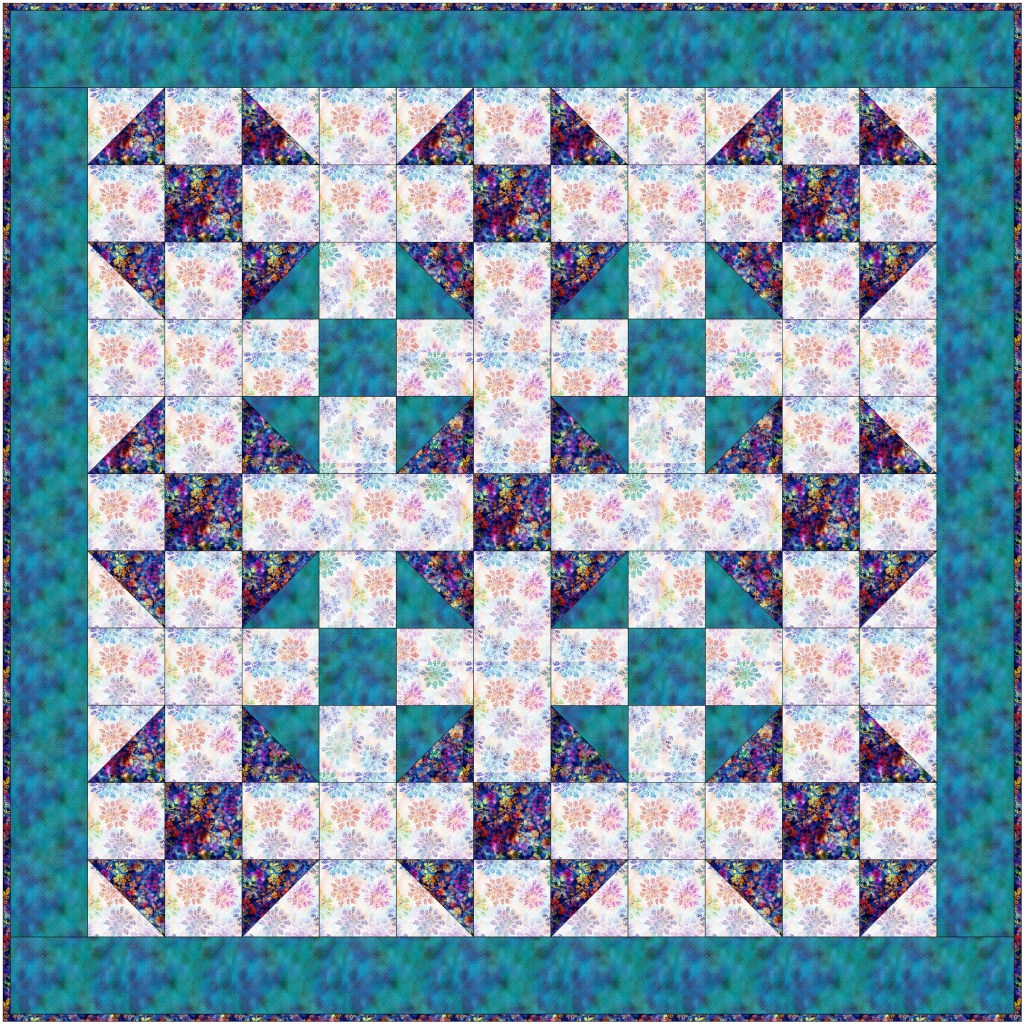
Here are 3 different versions of our Shoo Fly quilt using Hoffman’s Paisley in Love batik collection. Of the 3, I think the last one with the white background is my favorite. I like the contrast, but I think I need to do a little more tweaking with the design, so back to the drawing board (or EQ8).

What are your thoughts? How would you improve this design? Any ideas?

Well, I hope you enjoyed a peek into my design process. Who knows? You might see this design as a VRD Rose Card some day.

Until next Thursday —

Sew. Laugh. Repeat.

Always,

Tricia @VRD
Quilt As Desired · Rose Cards · Tips and Tricks · Tutorials · villa rosa designs

NEW June VRD Rose Card Patterns and A Free Motion Quilting Demo

Hello Quilty Friends!

Welcome to another Thursday — the first Thursday in June. Summertime, right? The kids are out of school or will be soon. Life will get crazy. Fun. And more crazy.

Are you kidding? I thought it was still March.

At least, it should still be March, don’t you think?

Que sera, sera.

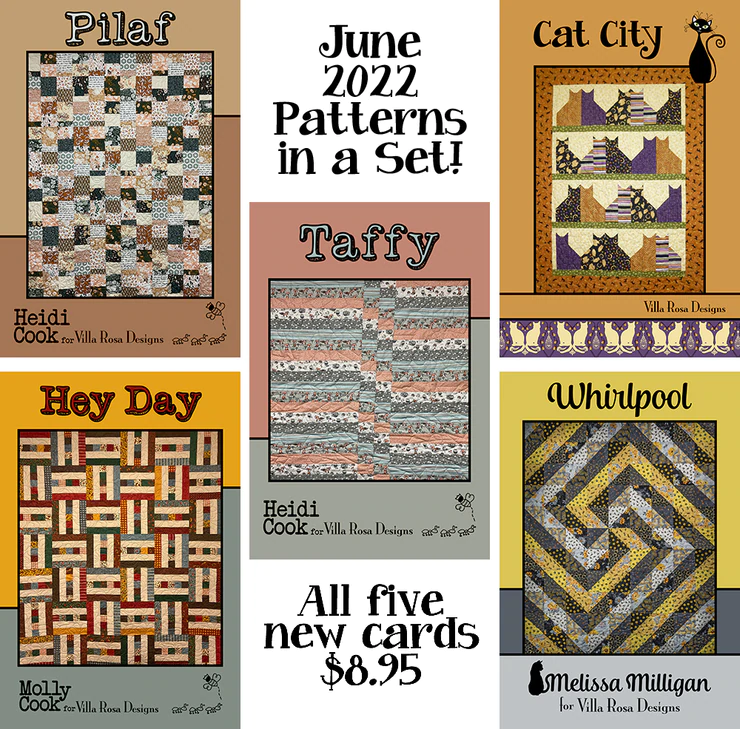
OH! Did you see the new Rose Cards for June yet???? As always, our VRD designers didn’t let you down.

You can order all 5 cards HERE.

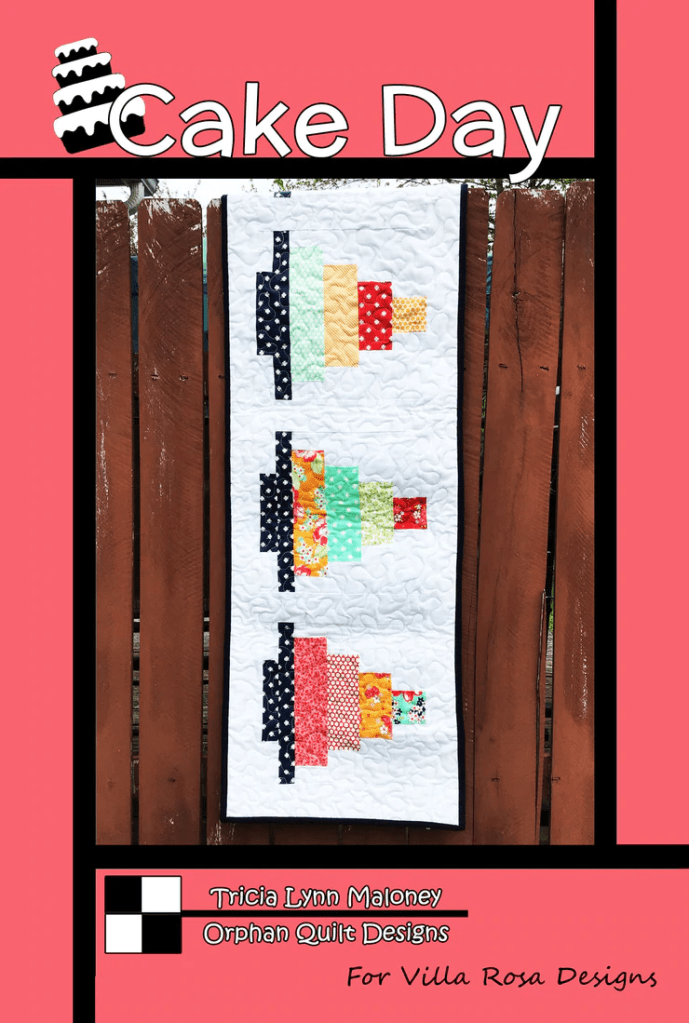
And here is June’s NEW Table Runner, Cake Day. Cute, huh?

You can purchase the Cake Day pattern HERE.

Did you know you can actually join the Rose Card Pattern Club and get the new monthly Rose Cards delivered right to your mailbox every month without you having to do a thing????

If you live out of the USA, you can sign up for the digital Rose Cards, which will be delivered to your inbox without you having to do a single thing.

There are even several different Pattern Club options to consider. Cool, huh?

You can sign up for the Pattern Clubs HERE .

Another really AWESOME thing about Villa Rosa is that we create a lot of kits using our Rose Card patterns. You can find kits for this month’s new patterns AND you can find kits for lots of other favorites, too. You can visit the website HERE to see what our selection of kits are. Please remember that we add new kits all the time, with all kinds of different fabric, so make sure you stop in often to see what’s new.

A Little Bit of Free Motion Quilting and a Video Demo

How many of you are a little bit afraid of free motion quilting on your own domestic sewing machine?

Be honest!

Okay, that’s better, I see a lot of hands raised and heads nodding out there.

Well, I’m here to tell you that you don’t have to be afraid anymore. I’ve been teaching free motion quilting (FMQ) for more than 10 years and I haven’t lost anyone yet!

Here’s my TOP 12 TIPS for FMQ:

1. Find a teacher at your local quilt shop to show you how and to guide you so you feel safe. Don’t try to teach yourself by using YouTube videos.

2. Start out small — the smaller the project the better for beginners. Potholders, table runners, place mats, wall quilts, or other small projects.

3. Start with a beginner-friendly design like wavy lines or loops. Meandering and stippling are NOT beginner-friendly.

4. Try to relax. The more tense you are, the worse your quilting will be.

5. Play music while you quilt, something with a beat. A beat will help you find your rhythm for FMQ on your own machine.

6. Keep practicing, every day if you can, even if it’s only for 10 minutes. The more you practice, the more comfortable you will feel, and the better your quilting will get.

7. Practice machine quilting with a friend. You can encourage each other and laugh together.

8. Try machine quilting gloves. There are a lot of different types of gloves out there, so you might have to try different kinds to find the ones that work for you. Machine quilting gloves will help you get a good grip on the fabric so you can move the quilt more easily when you are quilting.

9. Doodle. Doodle a lot. Practice drawing the designs before you quilt them — this builds some muscle memory between your hands and you brain.

10. Practice…….practice……..practice…….

11. Practice……practice…..practice……. (I can’t stress this one enough)

12. HAVE FUN!

Here’s a little video I put together demonstrating how to free motion quilt wiggly lines on last week’s Ying Yang Cats. Enjoy!

I hope this video inspires you to try free motion quilting some wiggly lines on your own little project.

Until next Thursday —

Sew. Laugh. Repeat.

Always,

Tricia @VRD
Rose Cards · Tips and Tricks · Tutorials · villa rosa designs

Cats and a VRD Cat City Block Tutorial + a Mini Quilt

Hello Quilty Friends!

Sigh……I’ve been thinking about cats lately. A lot. In addition to my own cats, I’ve been working on a couple cat quilt projects. If you don’t like cats, you might want to turn around now before it’s too late. (You can’t see me of course, but I’m rolling my eyes here. LOL!)

Let me tell you a little bit about MY CATS (sorry, not sorry — I did warn you).

Pip is my beautiful 12 year old silver tortie. She is sweet, rarely says a word, and is very generously-sized. Pip is a real foodie like me. I tell her frequently that she’s “practically perfect in every way,” but she can be very stubborn. And sneaky! Especially when she thinks no one is paying attention and she tries to get her little brother’s food (she is usually successful, too). Silly Pip!

Practically-perfect Pip!

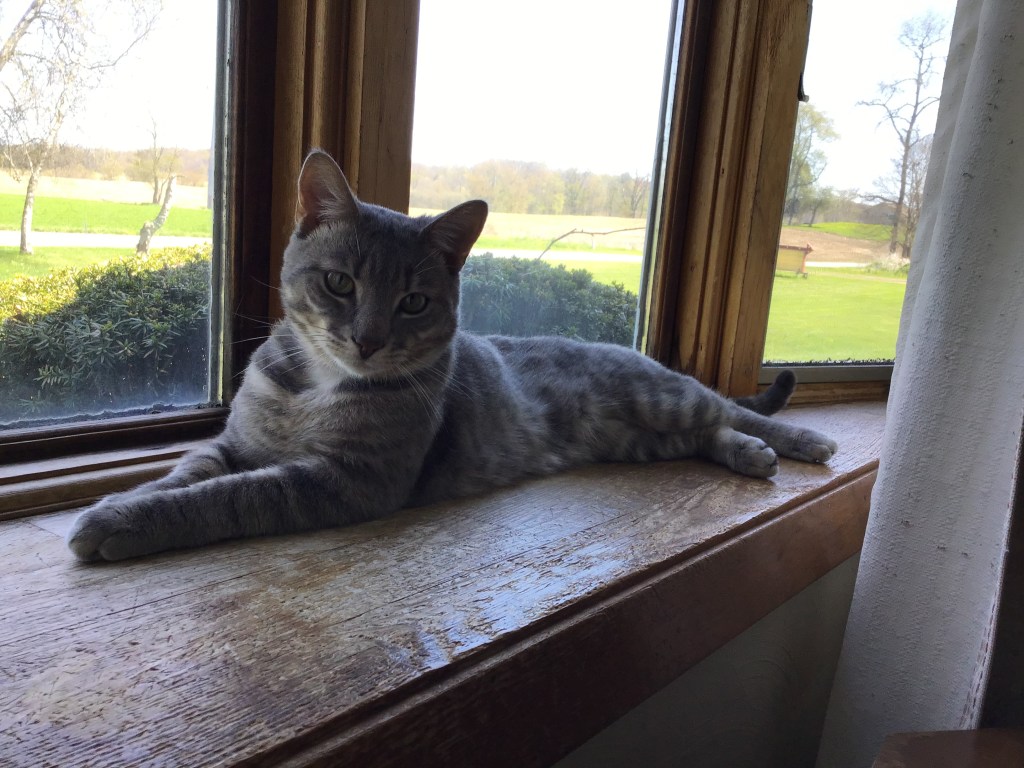
Griffin just turned 1 at the end of April and is my little wild child. He zooms from one end of the house to the other and then back again. Over and over. As energetic as he is, he’s also my snuggle bug when he eventually slows down. Seriously. He loves to be held and snuggled! Griffin likes to watch “bird TV,” loves to be rocked, likes music, and even enjoys painting on a cute game on my tablet. He’s quite a fella!

Crazy man Griffin in a brief moment of stillness.

For some reason, cats and quilting just seem to go together. Like peanut butter and jelly! I just love seeing photos of cats “helping” their human quilters on social media, don’t you? Too bad neither of my cats are into that, but then again, if they were, I’d probably never get any quilting done.

In fact, as I sit here writing, Pip is hanging out in her favorite chair upstairs and Griffin is watching his birds on TV about 10 feet away from my desk. He is not only my little buddy but he’s also THE best coworker I’ve ever had.

Not long ago, Pat, our “Rose Queen” and the owner of Villa Rosa Designs, asked me to help her with some new quilt diagrams for her VRD pattern, Cat City.

To purchase the Cat City Pattern, click HERE Or to purchase the Cat City kit, click HERE

I was really intrigued by the cat block in the pattern, and thought I’d try it out before making the diagrams so I knew exactly how to put the block together. I discovered it’s a really fun block, but it can be a little tricky the first time you make it.

Let me show you how to put the Cat City block together.

Cat City Block Tutorial

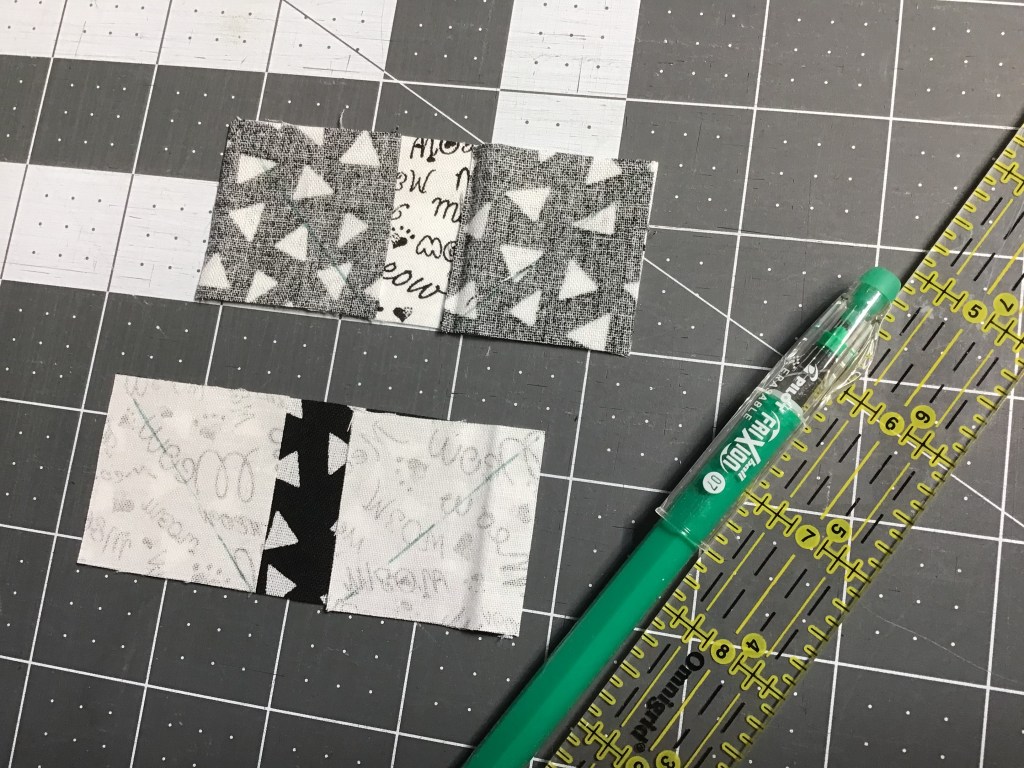
First things first, follow the cutting instructions for the pattern. I chose a white fabric and a black fabric for this tutorial (you’ll see why a little bit later). I layered the two fabrics and cut the pieces out at the same time.

Layer your background and cat fabrics as you see here. I am making 2 cats at the same time and they will be a mirror image of each other. I used a pin to help hold things together on my way to my sewing machine. I also drew a sewing line with my marking pen (I LOVE Frixion pens for marking sewing lines on my fabric). Now off to my machine to sew on the line.

Next, trim off the waste triangles and press the unit open. I pressed my seams to the dark fabric.

Now to make some little ears! Layer your squares right sides together (RST) on the background fabric. Draw diagonal sewing lines on your squares with your marking tool. Sew on the line. Then cut away the waste triangles and press the units open. I pressed the seams towards the cat fabric.

Okay, we’re in the home stretch now. Yippee! Sew the ear unit to the top of the cat body — the ear fabric should match the cat (unless you’re feeling wild and crazy) and then sew the bottom of the ears to the cat body.

OOPS! You will see in the second photo, my cat ears didn’t line up very well with my cat body. Argh! No, it’s okay after all — the one edge of the cat fabric was folded under — whew, I was afraid my cat was growing right before my eyes!

Darn, time to use the tool all quilters and sewists run from in fear — THE SEAM RIPPER. (Cue creepy music.)

Done. It only took me a quick minute to rip out the seam, press the folded-under edge straight, and resew. Now we’re back in business. I pressed the seam towards the cat body.

In the first photo here, you can see how my cats will look after I sew the cat backs to the cat body/ear unit. I am planning to sew my cats front sides together. Ying and Yang, I think I will call them.

The middle photo shows the cats stitched together …….furever (sorry, I couldn’t resist).

The third photo shows how I pressed the seams — center seam between the cats open because of sewing the fiddly little ears together and the cat body/back seam I pressed towards the cat body. The ears wanted to be a bit difficult but I pressed them into submission with a little pressing spray (my favorite is Mary Ellen’s Best Press).

There you have it — a cat block with mirror-image cats. Of course, instead of sewing them fronts together, you might want to sew them with their backs together — would this be a cat fight???? — take a look at the quilt on the front of the Cat City pattern above for ideas.

BUT WAIT — there’s more! I just love saying that, don’t you?

I decided to cut 2″ strips for a border around my cat blocks for a fast to finish little quilt. I sewed the sides on first and then the top and bottom strips.

Voila! A little quilt, mini quilt, doll quilt, table quilt, place mat or whatever you want to call it.

Now I just need to layer my little quilt with batting and backing. Quilt it. Bind it.

DONE! My favorite kind of project. 🙂

Here is my black and white Ying and Yang alongside my first little Cat City quilt in pink and brown. When I finished the pink and brown one (which was my original example to figure out how the block went together), I decided that I had to make a black and white one.

I hope you will enjoy making your own Cat City quilt. Or maybe you just want to play a little bit and make yours mini. Whatever you choose, I can’t wait to see your cat quilts (and maybe your cats)!

You can share them on our Facebook page. Not a member yet? Join us to take part in all the Villa Rosa Designs fun HERE . We really are a fun bunch. Really.

Until next Thursday —

Sew. Laugh. Repeat.

Always,

Tricia @VRD
Rose Cards · Tips and Tricks · villa rosa designs

Squeezing in More Quilting Time and Rose Card Storage

Hello Quilty Friends!

Happy Thursday to you! I hope you are having a great week. Mine is moving right along at breakneck speed. It’s kind of scary — the older I get, the faster time passes. It reminds me of a quip by a family friend once — “I thought I saw someone I knew on my way in. Oh! It was only me on my way out!” Ha ha!

Funny, but not funny.

How do you find time to devote to your quilting habit or other creative endeavor?

Here’s my top 5 list to squeeze in more sewing time:

5. Stay up late or get up early (my least favorite, but it works in a pinch)

4. Have everything I need in one place before I start a project so I can use my sewing time without having to stop to find what I need next

3. Let someone else do the driving — you wouldn’t believe how much binding I can get done on shopping trips

2. Make smaller projects — I love making table runners, wall quilts, baby quilts, and throws. Smaller projects use less fabric than giant bed quilts too, just sayin’

1. Rose Cards! (Bet you saw that one coming. LOL!)

Rose Card Storage Ideas

Rose Cards aren’t just fun little patterns, they are highly addictive to collect. As there are over 400 different patterns in print right now (with more added every month), your Cards might be piling up. Mine are!

Sew, what do you do with your Cards when you’re not using them?

I’ve even noticed some discussions on our Facebook page recently about how people store their Rose Cards — thank you for sharing! This really made me start re-thinking my whole storage system, which isn’t really working for me anymore.

When I started collecting them in 2010, I put mine in little photo albums.

At first, an entire year’s worth of Cards fit in one album with pages to spare. But later, as more and more Cards were published each year, one album just wasn’t enough.

This worked for years, but now I have a bunch of little albums arranged with dates on the covers and it’s hard to find a specific Rose Card, unless I know what year it came out. Now what?

On Facebook, someone mentioned using small clear boxes and alphabet tabs. I thought I’d try this idea and will alphabetize them by name, instead of keeping all the Cards from a specific year together.

Since this is my new method, I don’t know how well it’s going to work for me yet. I’ll have to live with it for a while. You’ll have to check back in later to find out how well this method works for me.

Last week end, I attended a quilt show and some quilters even offered me more ideas when we were talking about Rose Cards. Like my idea of organizing them alphabetically in a plastic storage box, a friend suggested a vintage recipe box. I really liked this idea — it would be especially meaningful if you had your mother or grandmother’s vintage recipe box because you would think of her every time you pulled out a Rose Card to use. Nice!

Another idea someone shared with me was using a ring binder filled with the clear plastic pocket inserts used to store baseball cards. A plus with this idea is that you can see the front and back without taking the cards out of the sleeves. But I’m not sure that would help me find a specific card I was looking for.

Maybe you could also get dividers and organize your Cards into different categories — whatever made sense to you! Wouldn’t it be great to group Cards by the fabrics used — like fat quarters, charm squares, strips, yardage, panels, etc.? Or by the size or type of quilt — like table runner, baby quilt, throw, bed quilt?

I’m curious — how do you organize your Rose Cards?

VRD Invites You…
Did you enjoy the Bear Hugs story last week? Now every time I look at that pattern or see photos of someone’s version of the quilt, I will think of little J and his surprise entry into the world.

Want to share your own VRD Rose Card story? We’d love to hear it!
Please email your quilt story and original photo along with the name of the Rose Card pattern you used to make the quilt to tricia@villarosadesigns.com. Stories and accompanying photos will be selected randomly to share on our blog and Facebook. This project will be ongoing. If your story is selected, we’ll send you a little thank you surprise in the mail! Can’t wait to hear your quilt stories!

Until next Thursday —

Sew. Laugh. Repeat.

Always,

Tricia @VRD