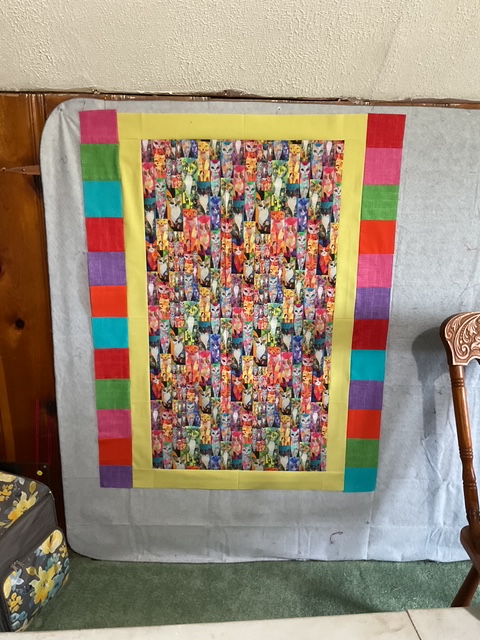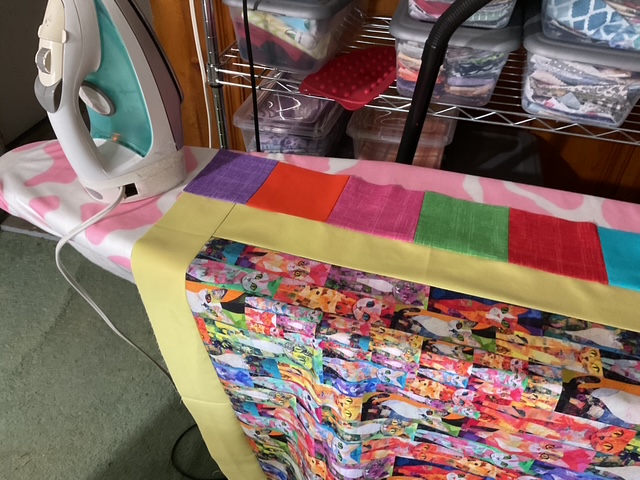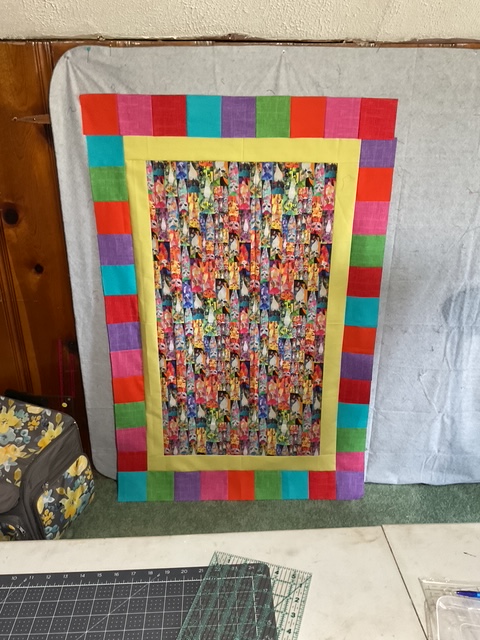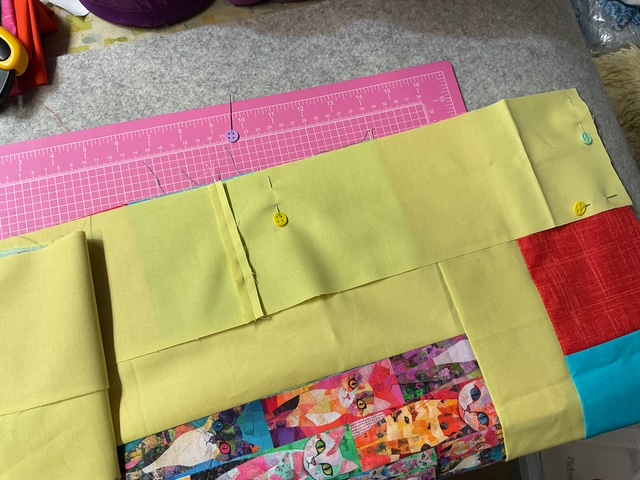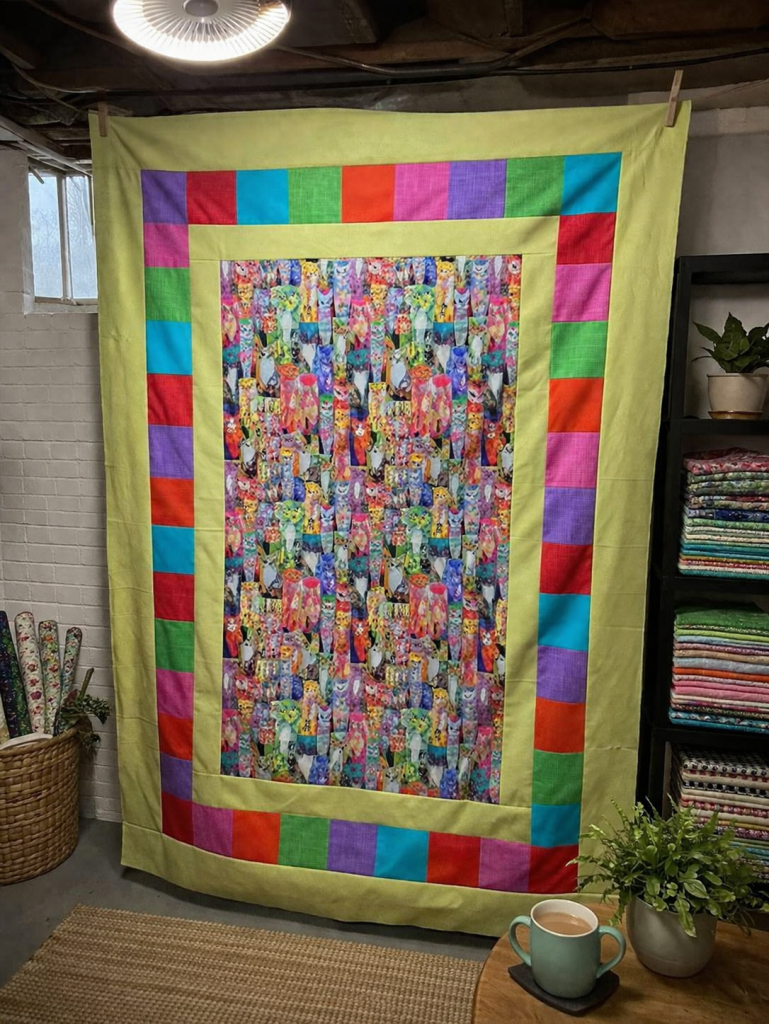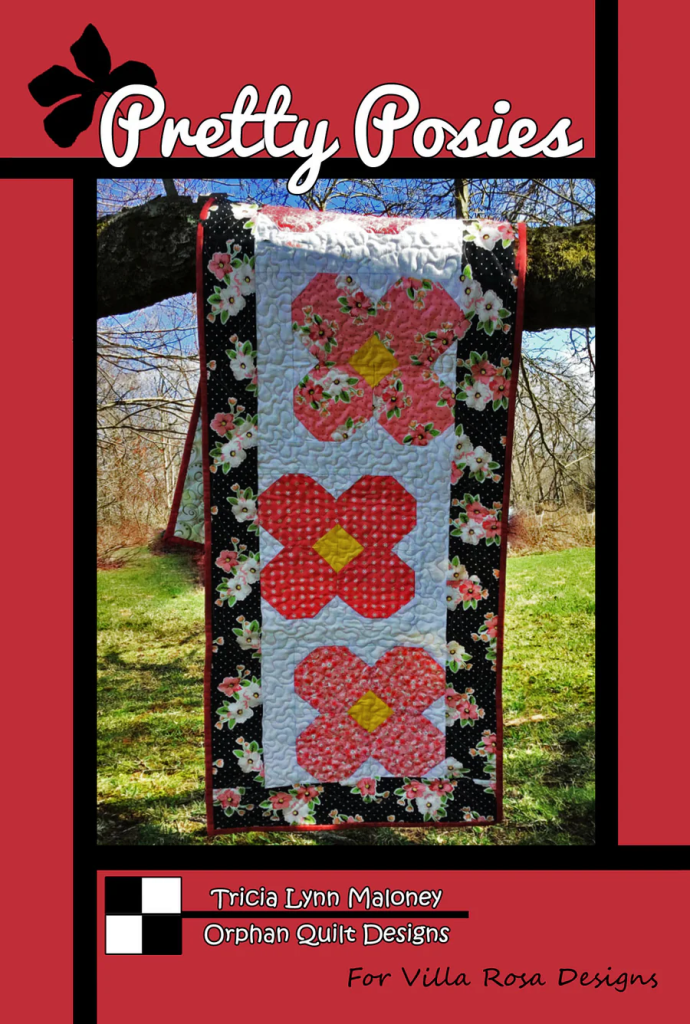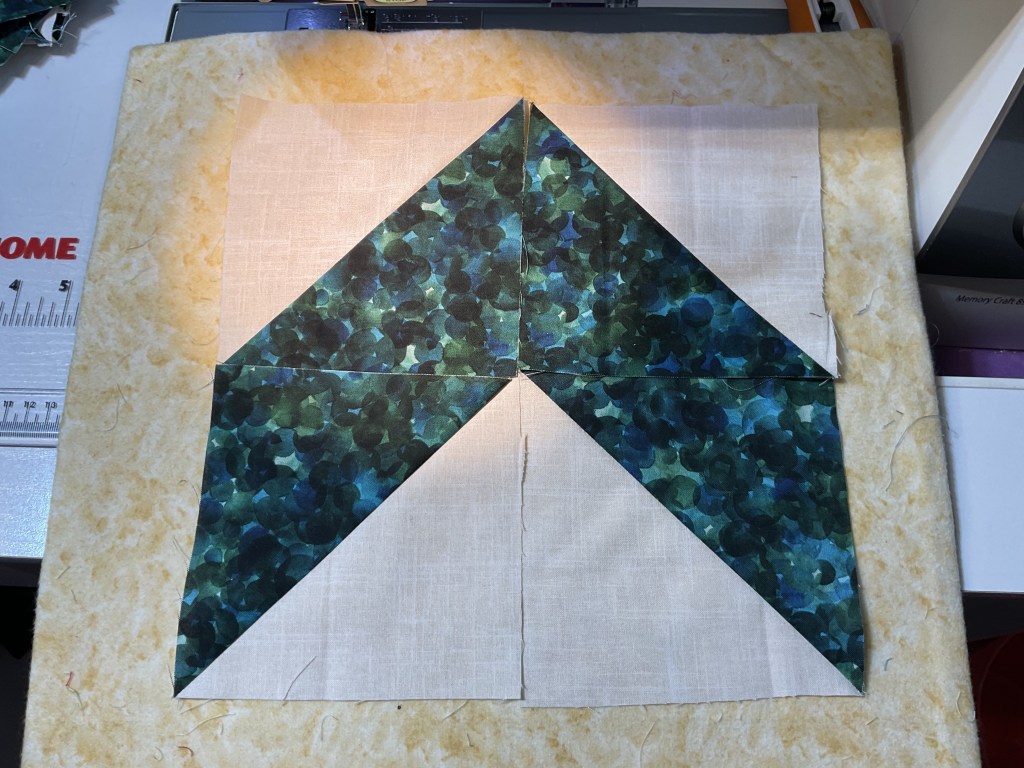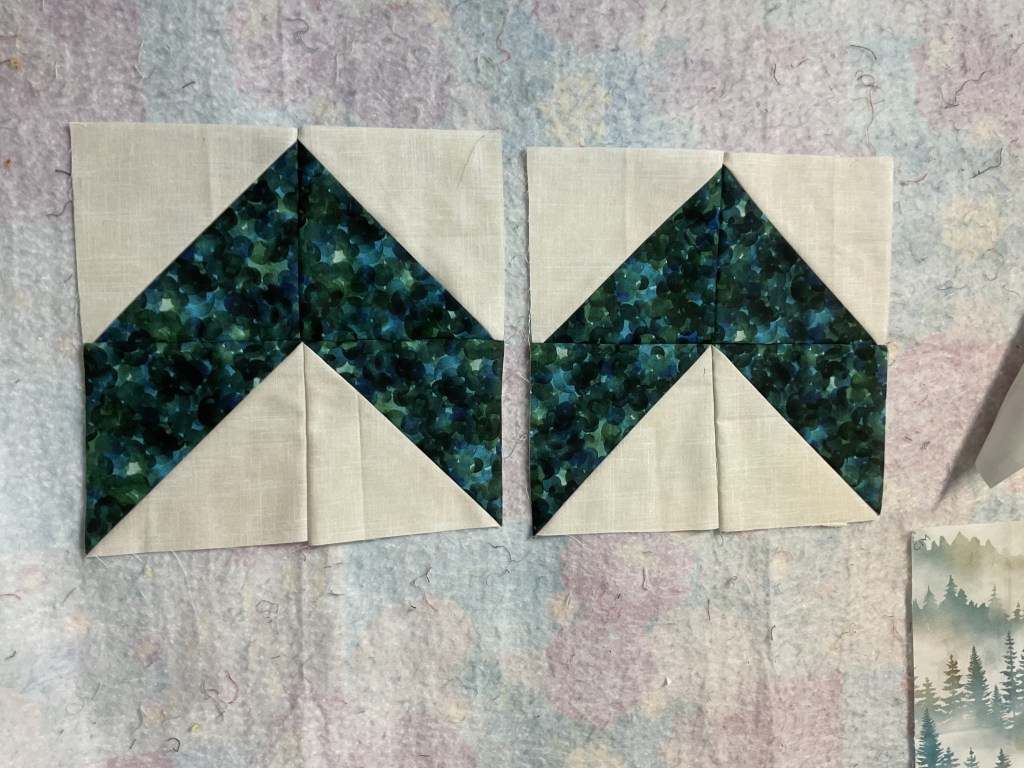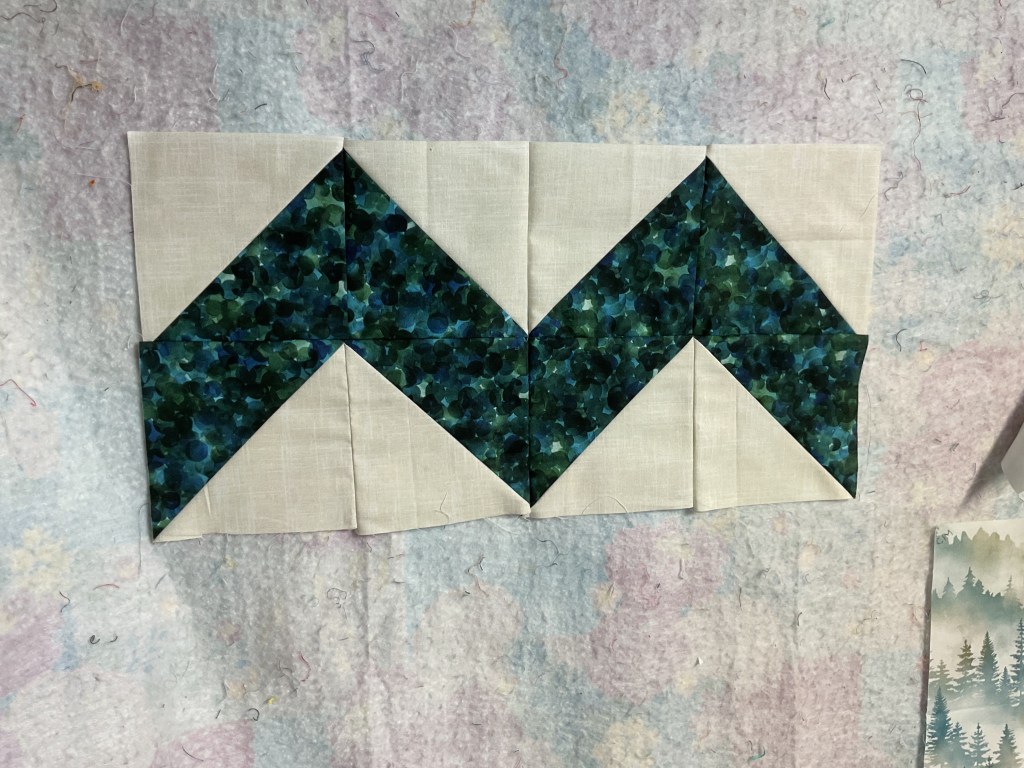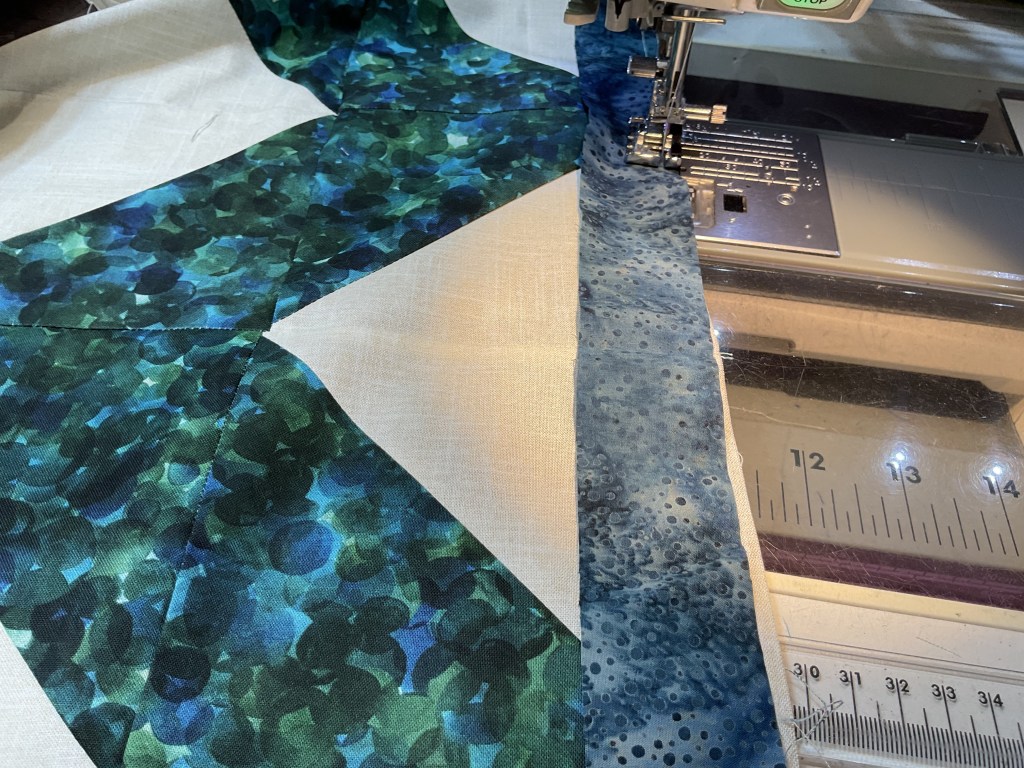
Spring literally starts a few days, which is probably why we have snow on the ground again and it was like 16 degrees last night. BRRR! Regardless, I’m definitely thinking spring! So I thought it would be fun to leap into some fun spring quilt tutorials to get me into the spirit even if the weather doesn’t cooperate with the season.
I’m also thinking it’s time for a spring 6 Quilts in 6 Weeks Challenge. Anyone up for that? I did a 6 in 6 last fall and we had great time. It was incredible to finish one VRD quilt a week for 6 weeks. 6 completed quilts at the end. Which was rockin’ awesome! Especially considering all the tutorial sample tops that I’m accumulating. LOL! So……who’s in? I’m thinking to start this the first week of April, 2 weeks from now. It would last for 6 weeks. Right now, I’m just putting feelers out to see who wants to join me for this 6 in 6 challenge? I figure if I do this challenge twice a year in spring and fall, we can all get up to 12 quilts finished in a year.
There are a few rules, though, I’d better mention –
1) Quilts must be made from VRD patterns
2) You must post a before and an after photo on our Facebook page or email them to me if you’re not on FB to be entered in the weekly drawings
3) Anyone can participate
4) If you don’t have stacks of VRD UFOs like I do, no problem – you are welcome to make new VRD quilts/accessories to participate
I think that’s pretty much it for the rules to get started.
If you’re interested, you have 2 weeks to email me your name and email address at tricia@villarosadesigns.com. I promise your email address will only be used by me to notify you if you win a prize.
Now….on to our first Spring into Spring VRD quilt tutorial!
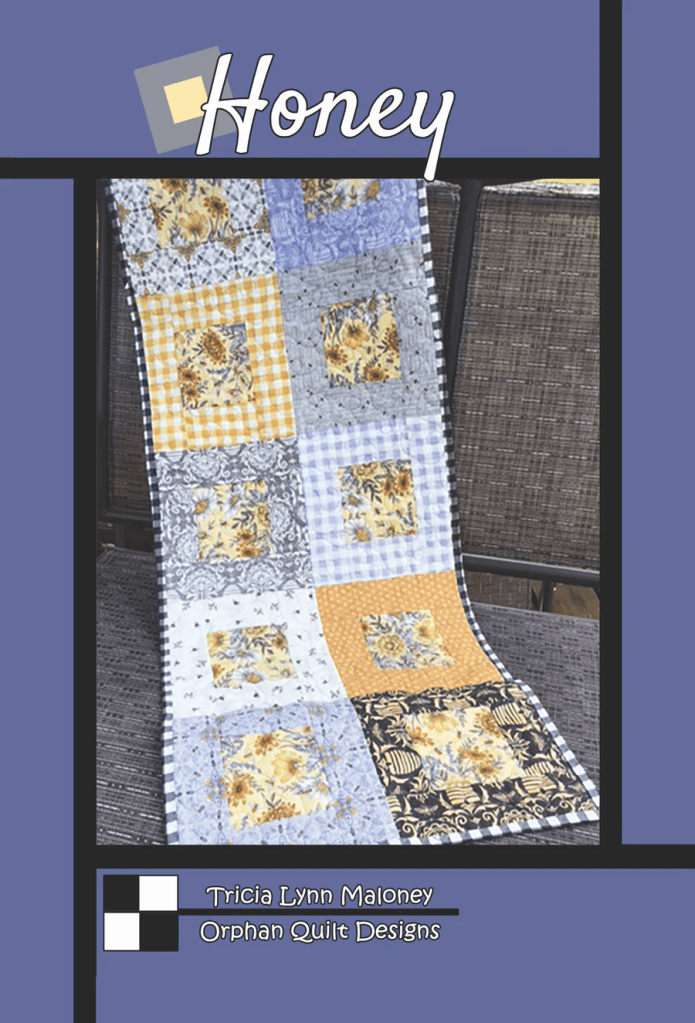
VRD Quilt Pattern Tutorial Honey
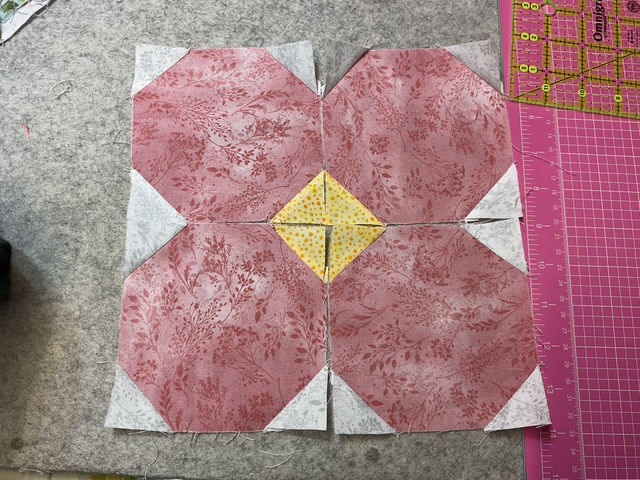
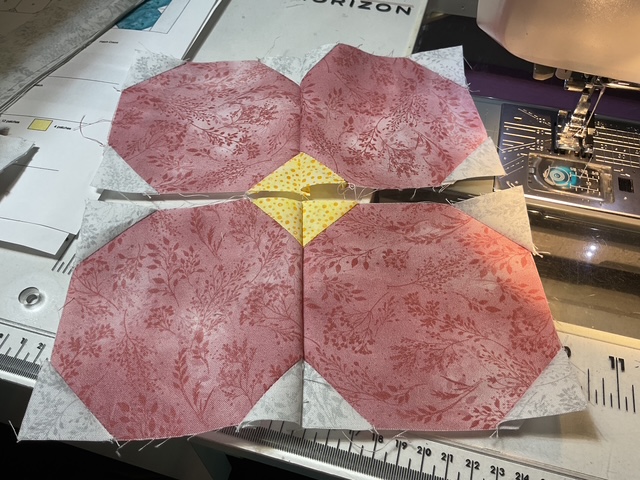
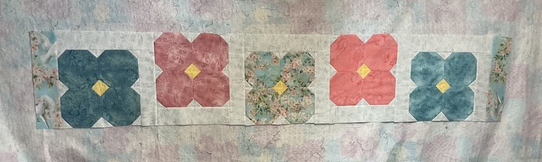
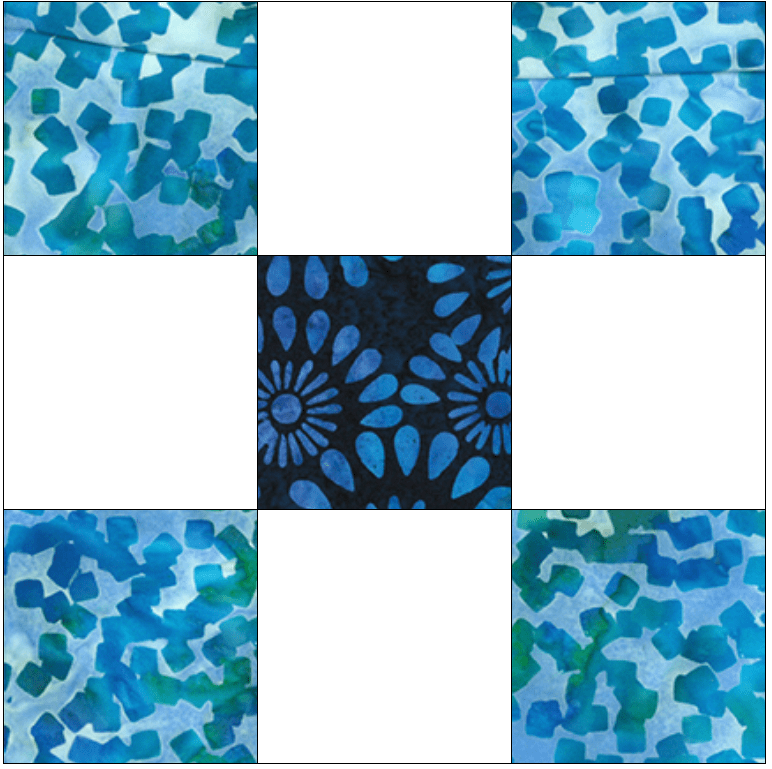
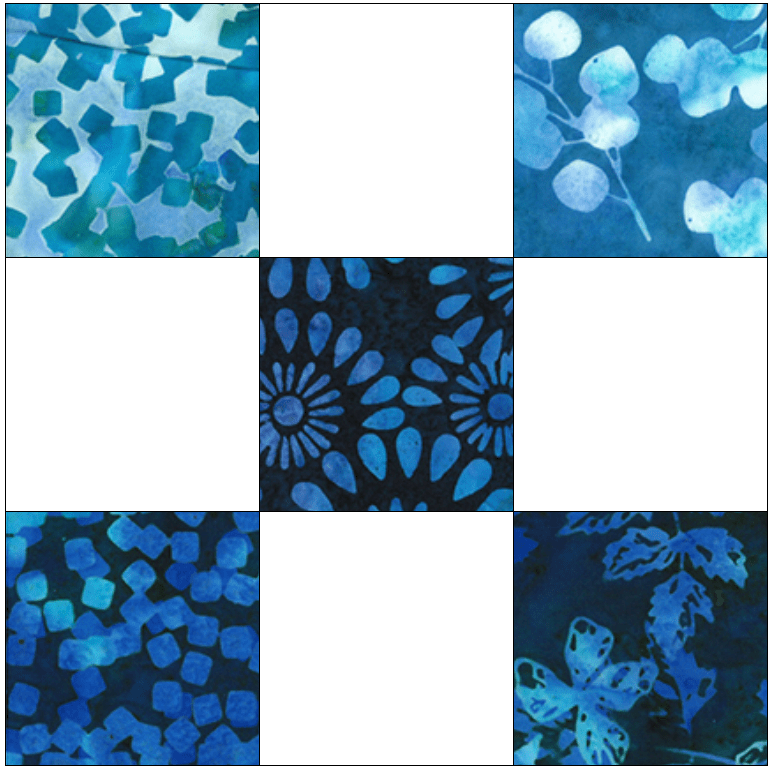
There’s nothing like a new table runner to add a touch of spring to you space! Have you ever made Honey before? If not, you’re in for a treat because this runner goes together quick as bunny and looks great in just about any group of fabrics you want to use.
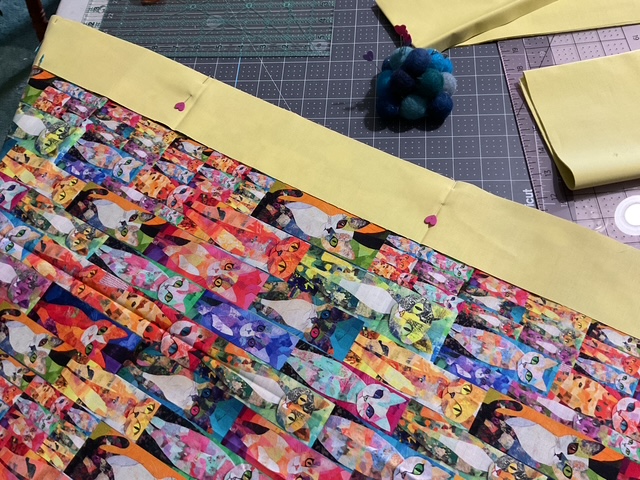
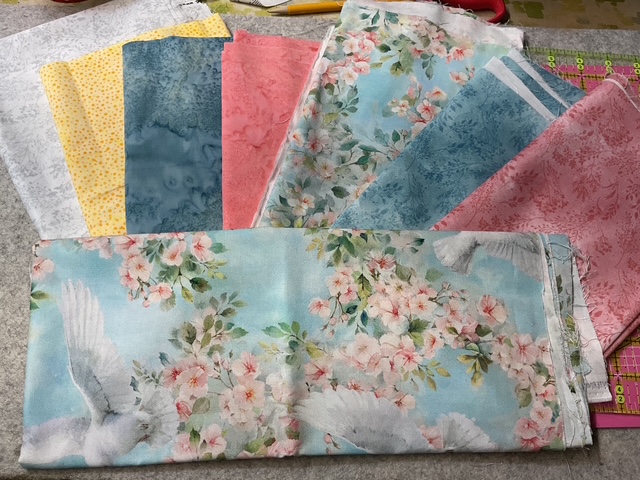
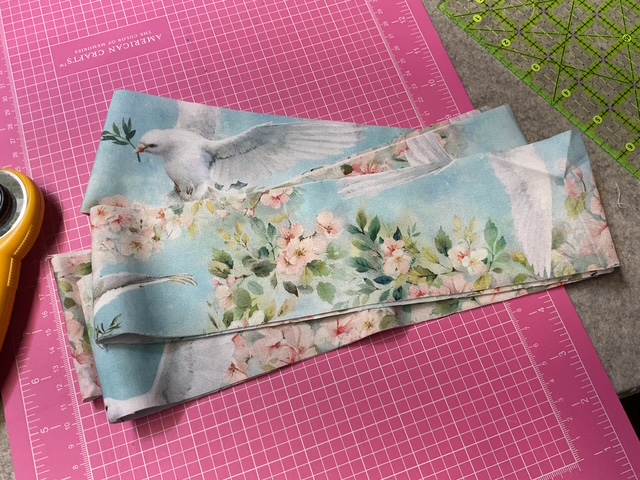
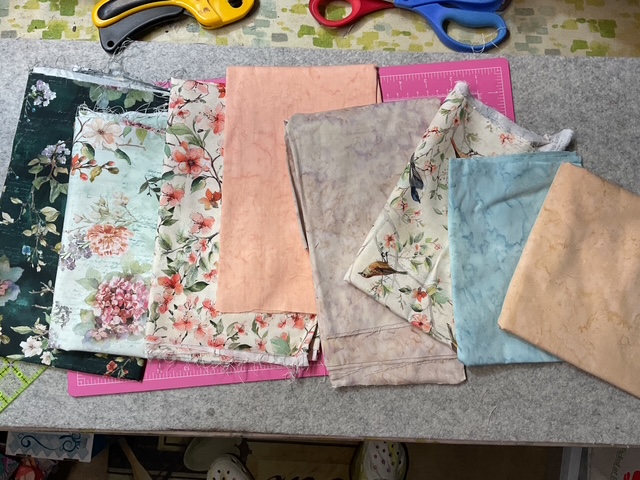
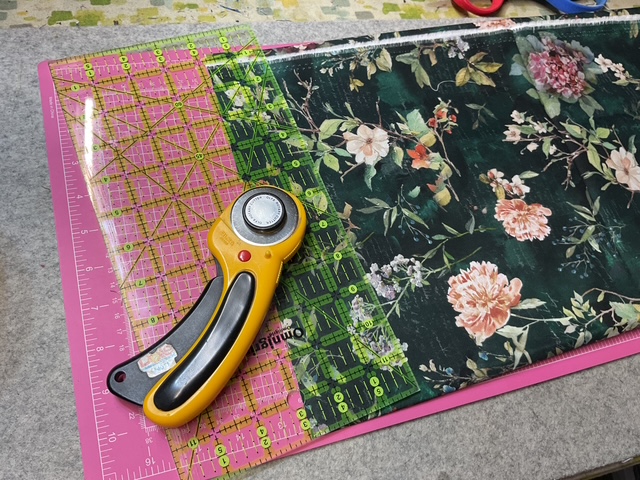
1. Time to gather up our fabrics. I’m using lovely sample fabrics from our quilty pals over at Hoffman Fabrics today. SHHH! This fabric isn’t even available yet, so you’re getting a sneak peak!
It’s an upcoming new collection called Nesting Hour and there are some lovely sherbet-y 1895 Watercolors batik coordinates, too. Quilt shops will be able to order this fabric next month and it will ship to shops in September. So ask your favorite retailer to order Nesting Hour!
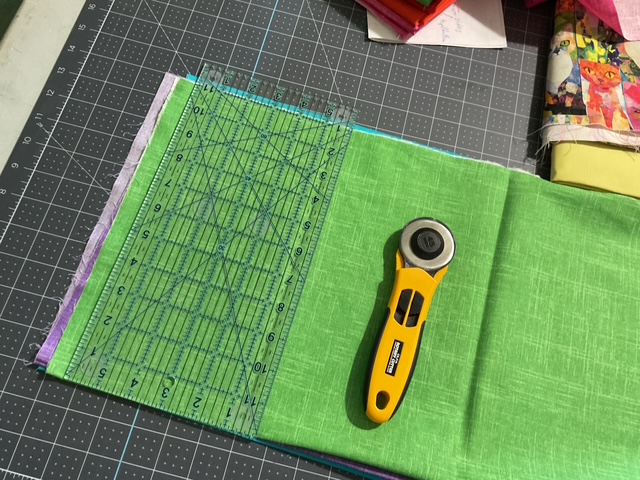
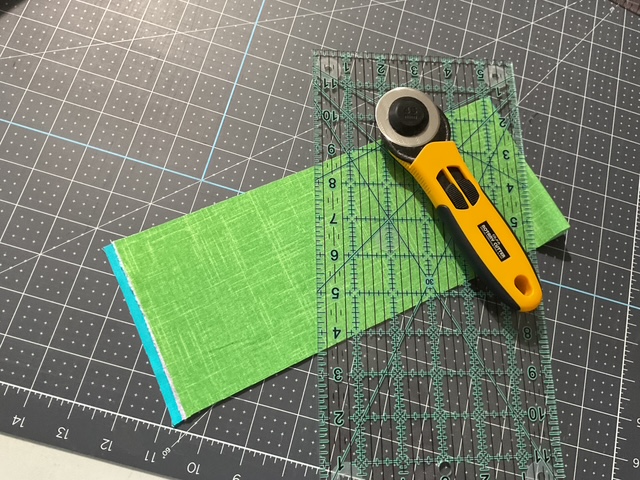
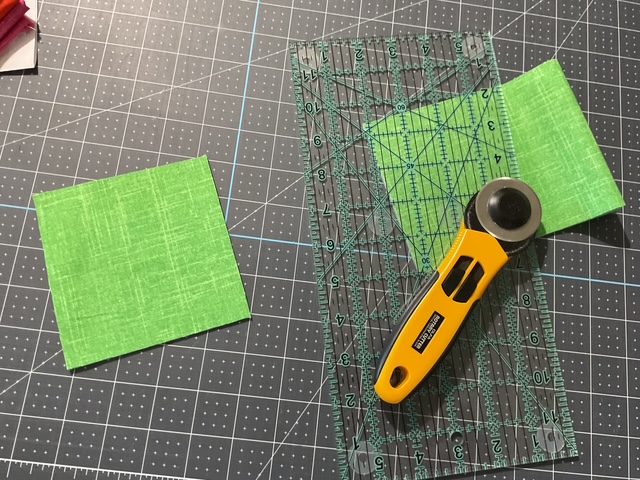
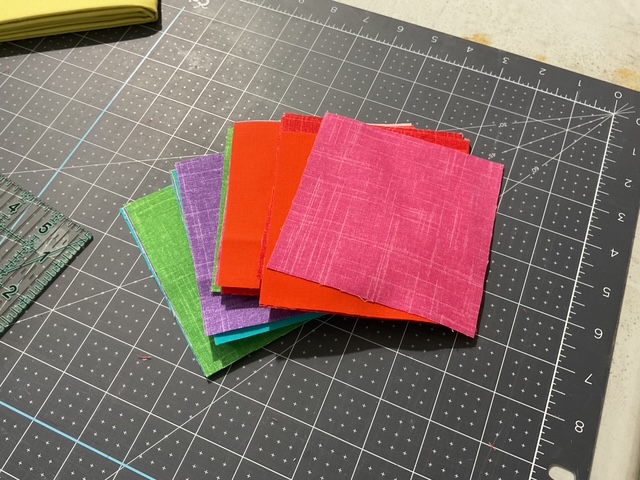
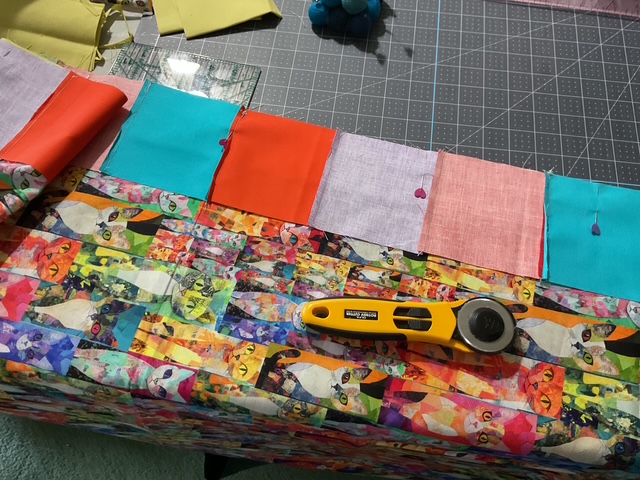
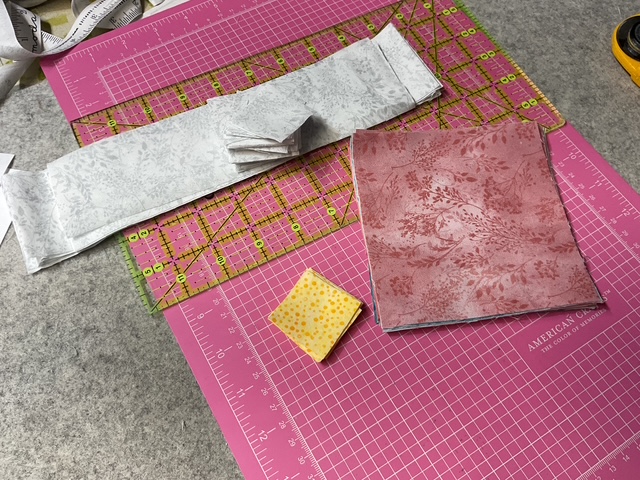
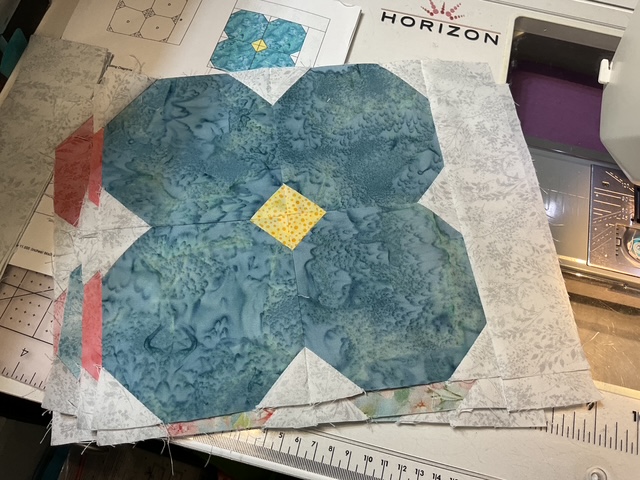
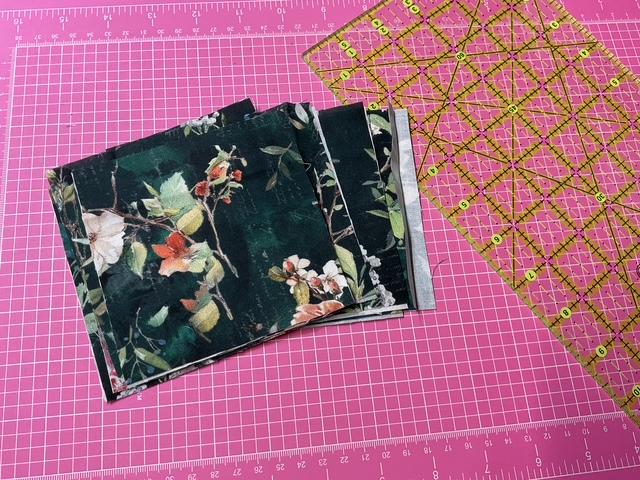
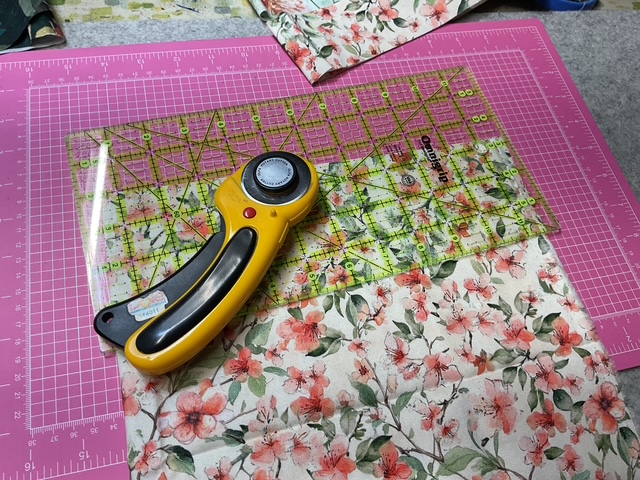
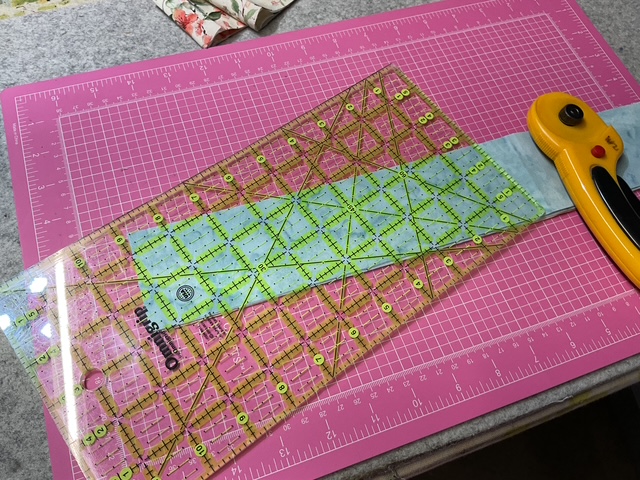
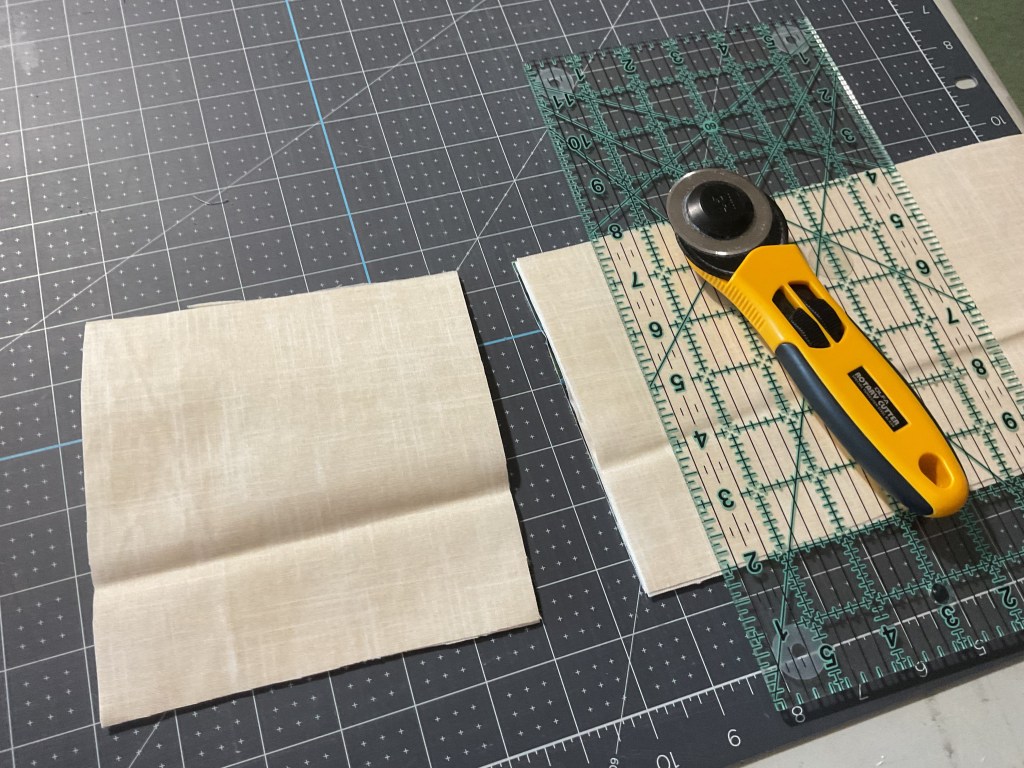
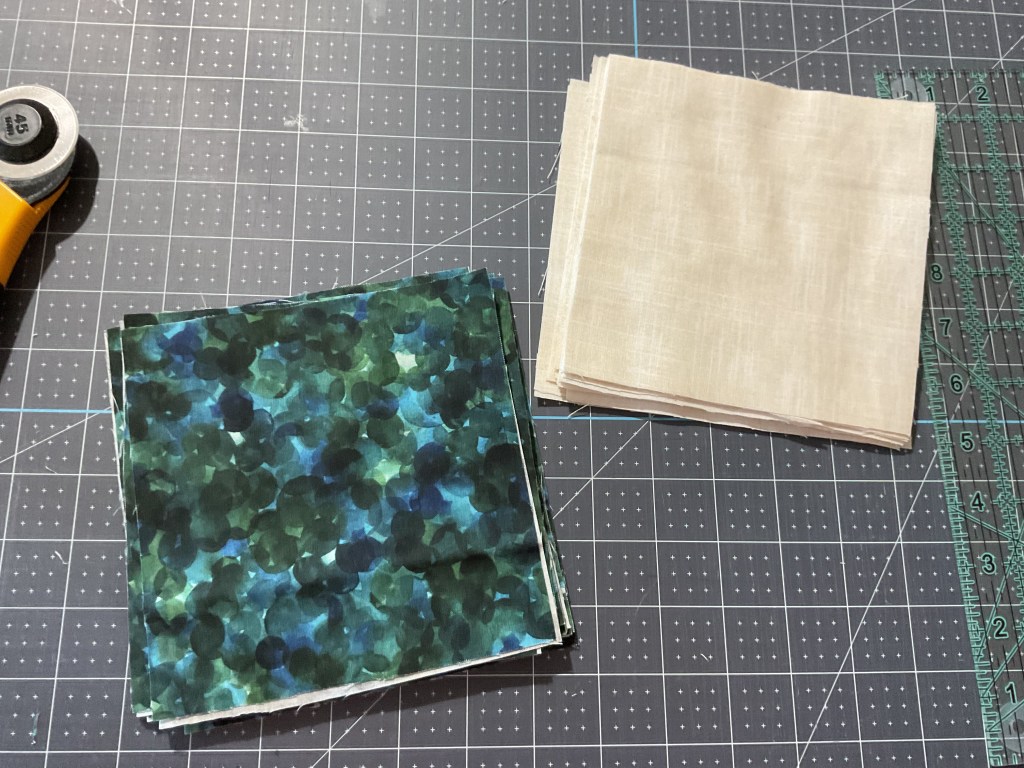
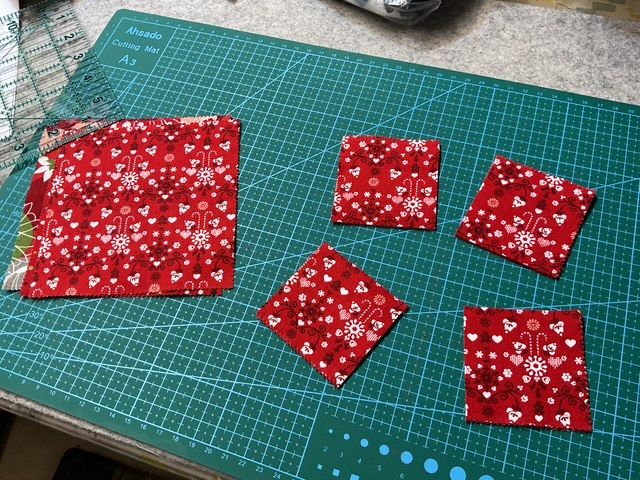
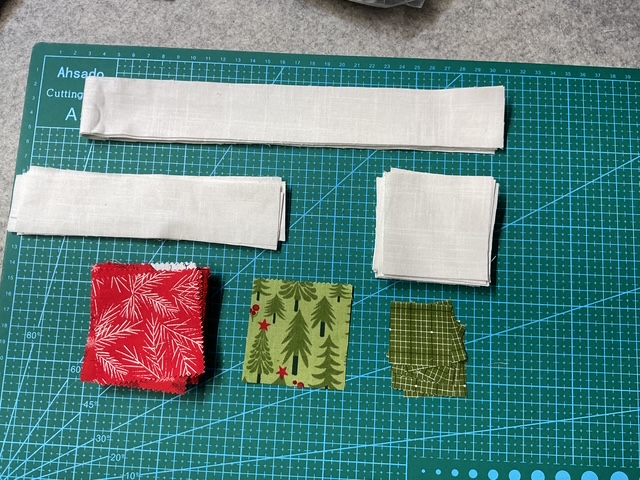
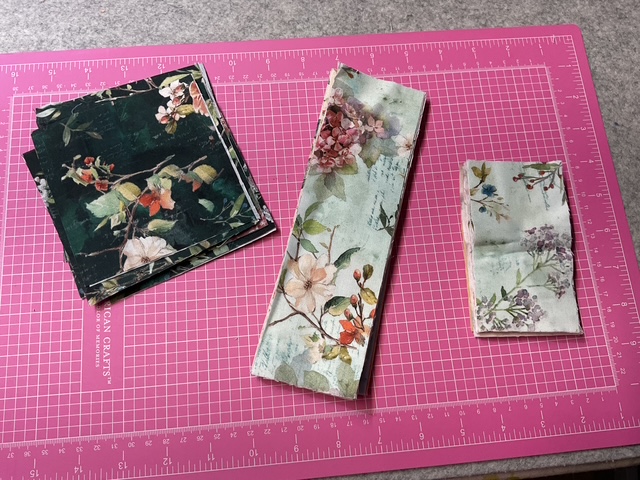
2. All right! Let’s get some cutting done. First, I’ll cut strips for the block centers and then I’ll cut the strips into squares.
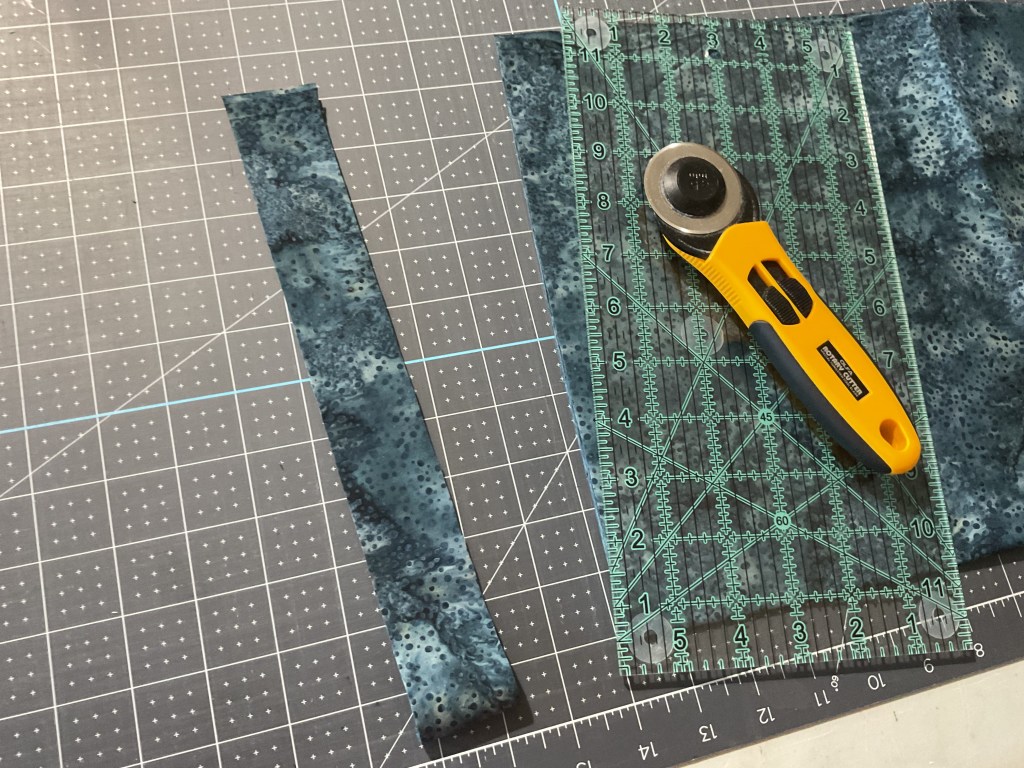
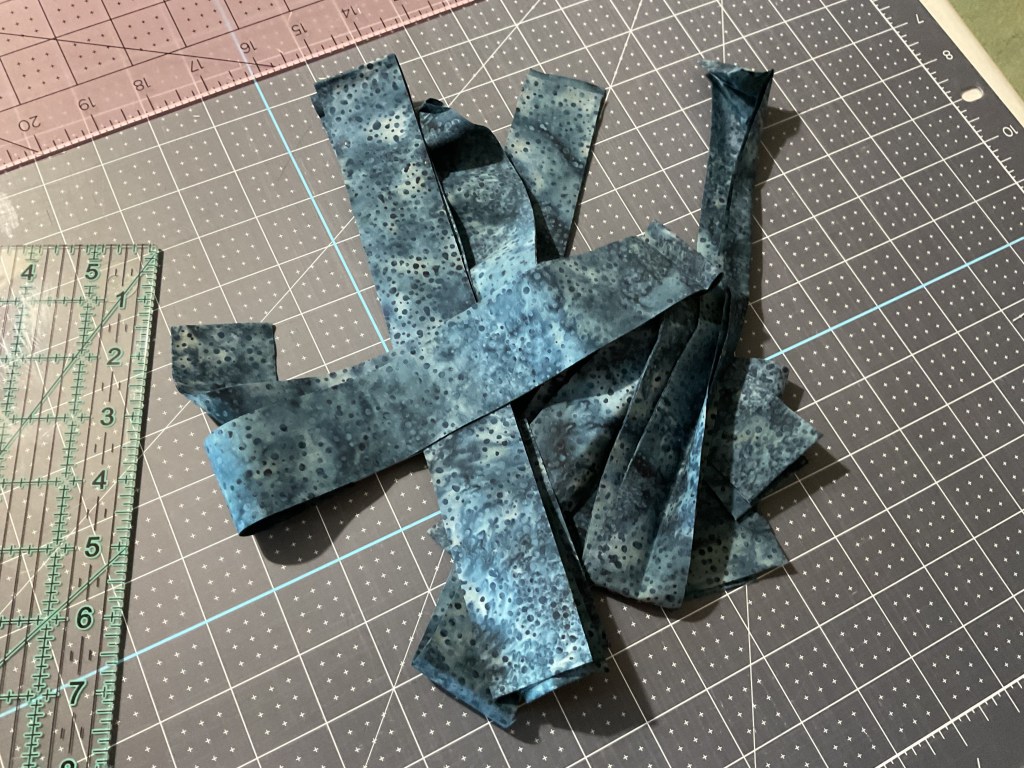
3. Next I’ll cut the strips for the frames and then subcut the strips into the needed smaller pieces.
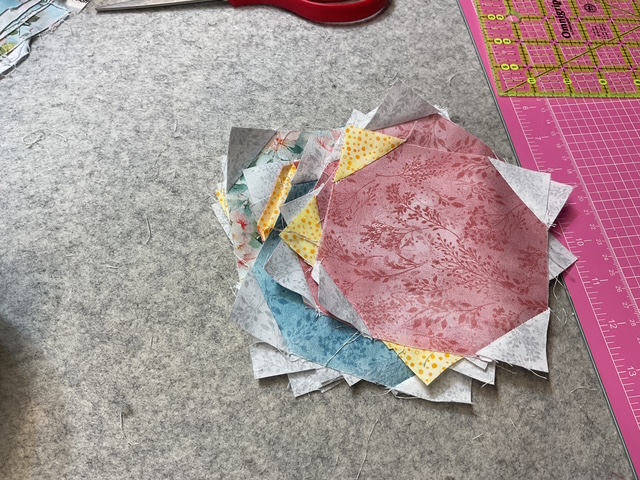
4. All the pieces are cut, organized by shape, and ready to sew. Yay!
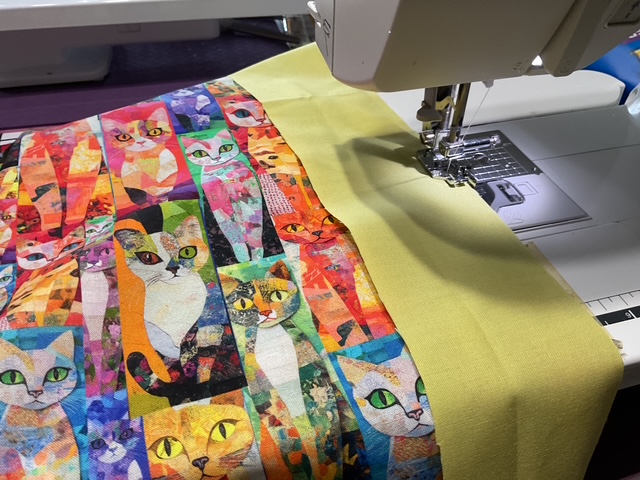
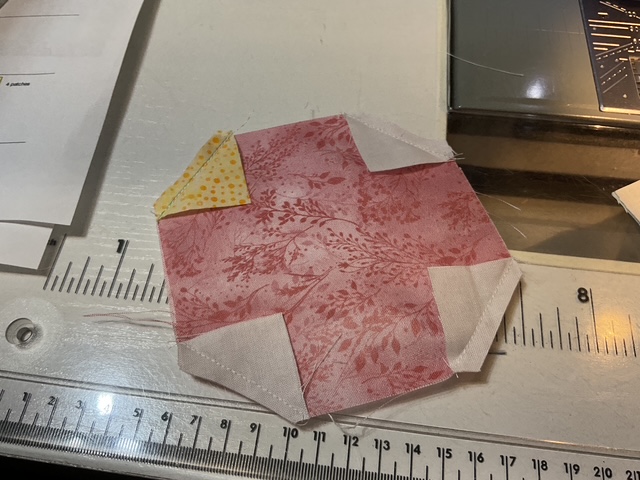
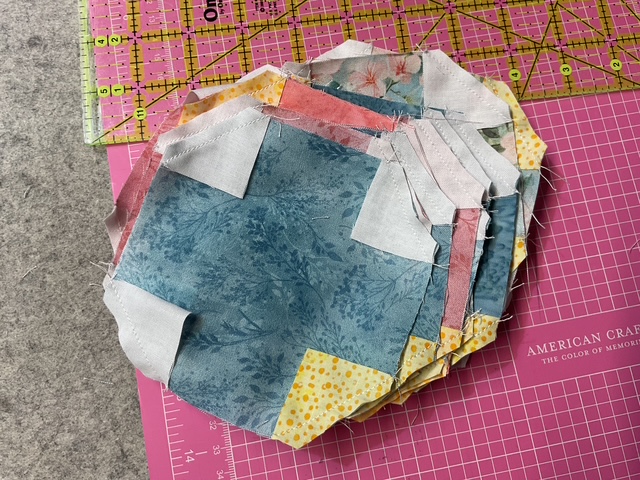
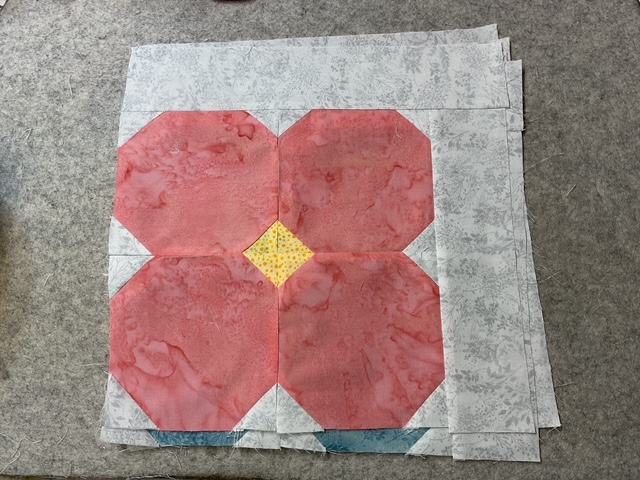
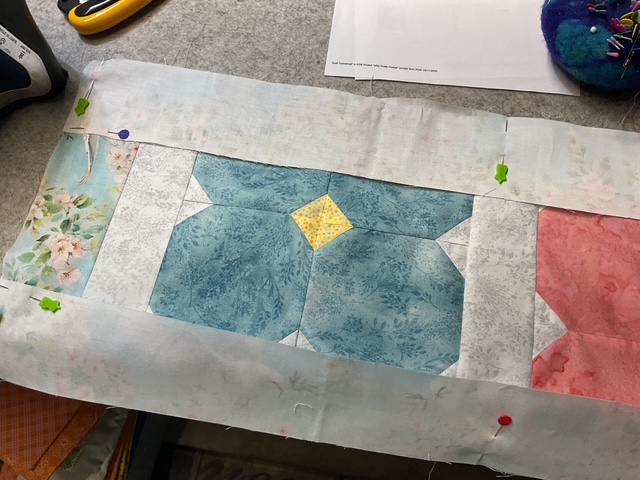
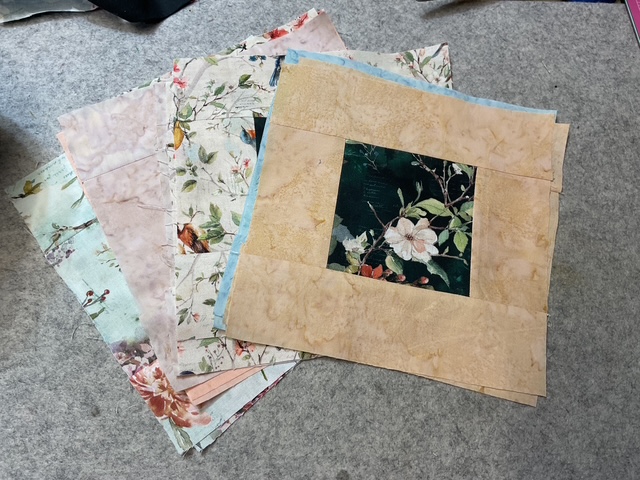
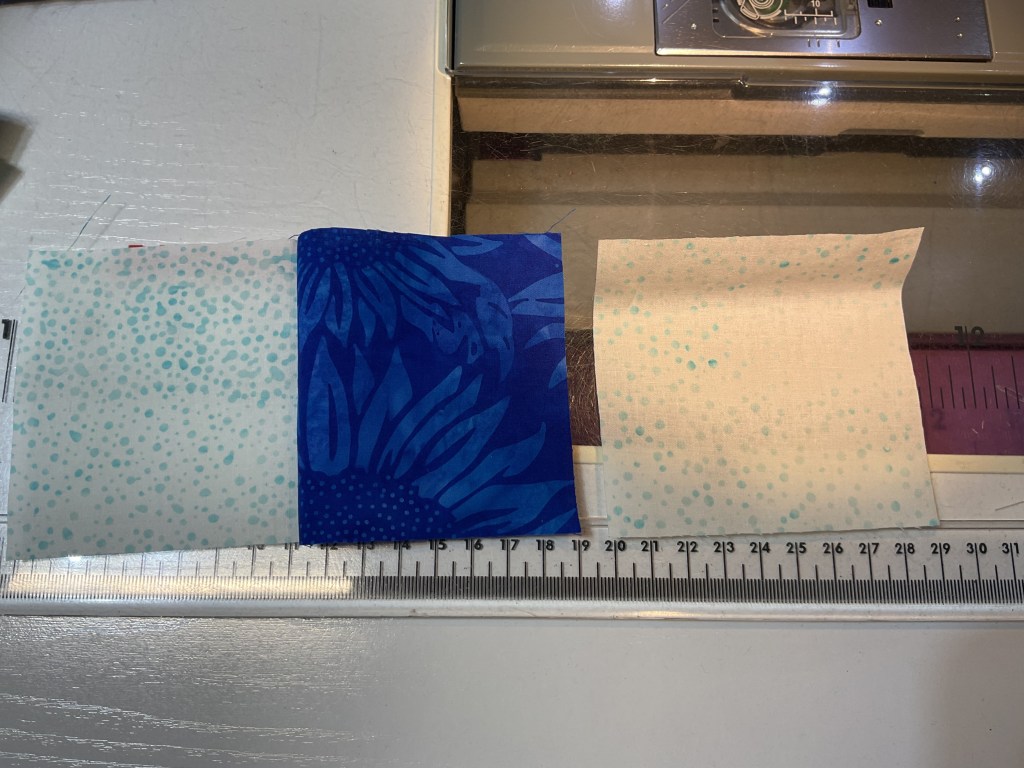
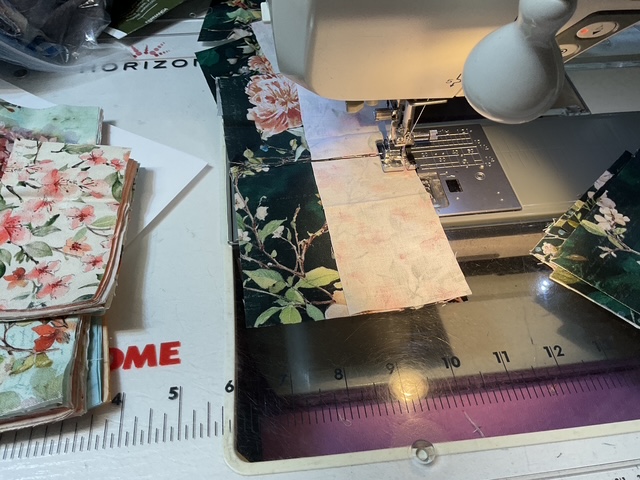
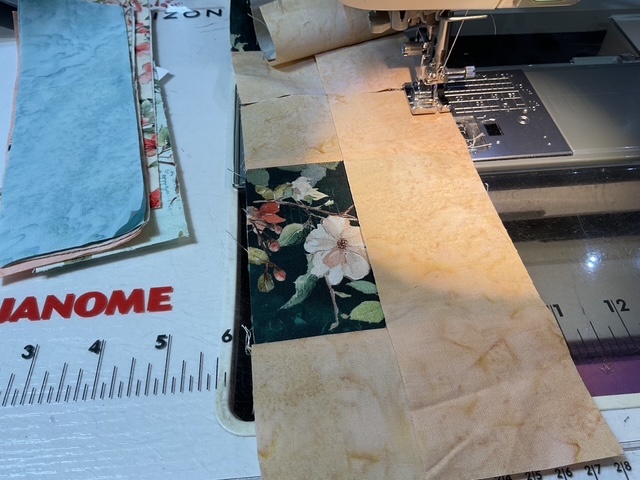
5. We’re headed to the sewing machine to make the blocks. I’m going to sew the short strips onto opposite sides of the center square. When I’m sewing the same step over and over, I really love chain piecing because it saves both time and thread.
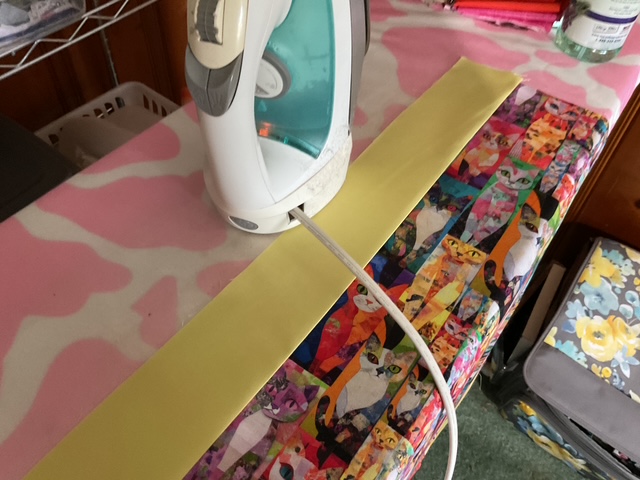
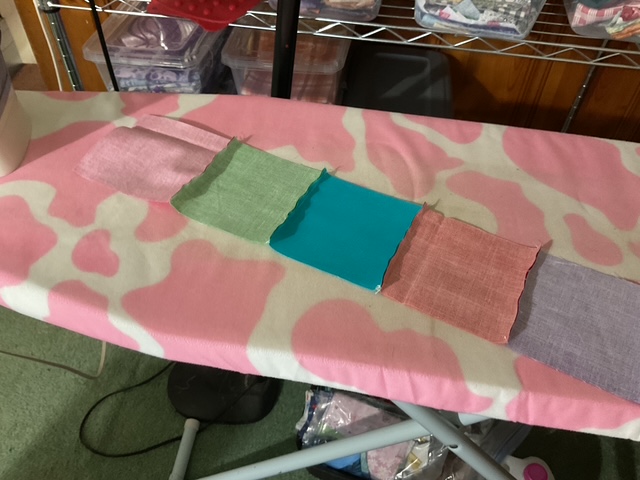
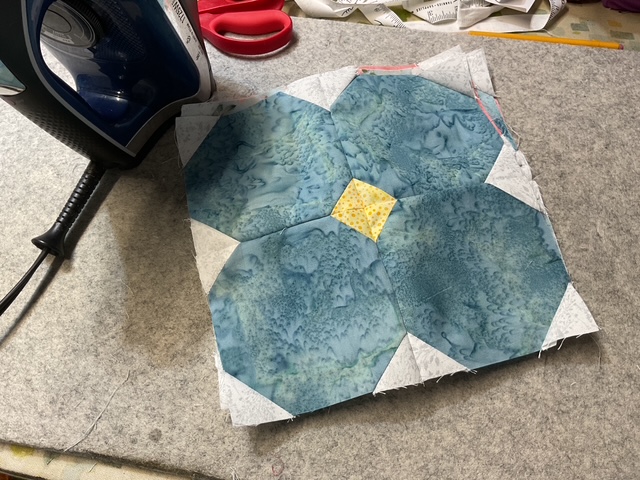
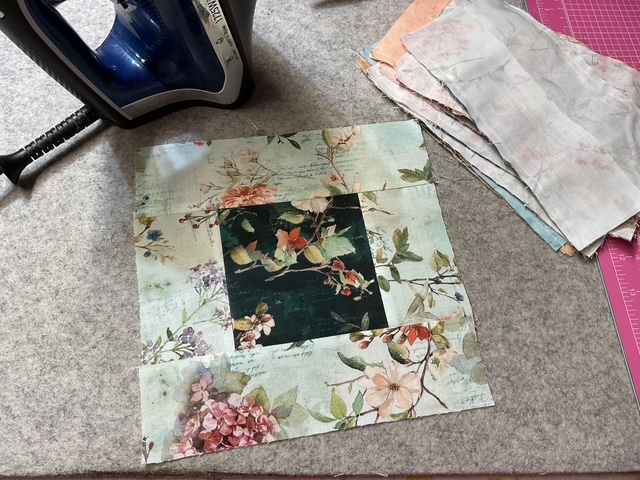
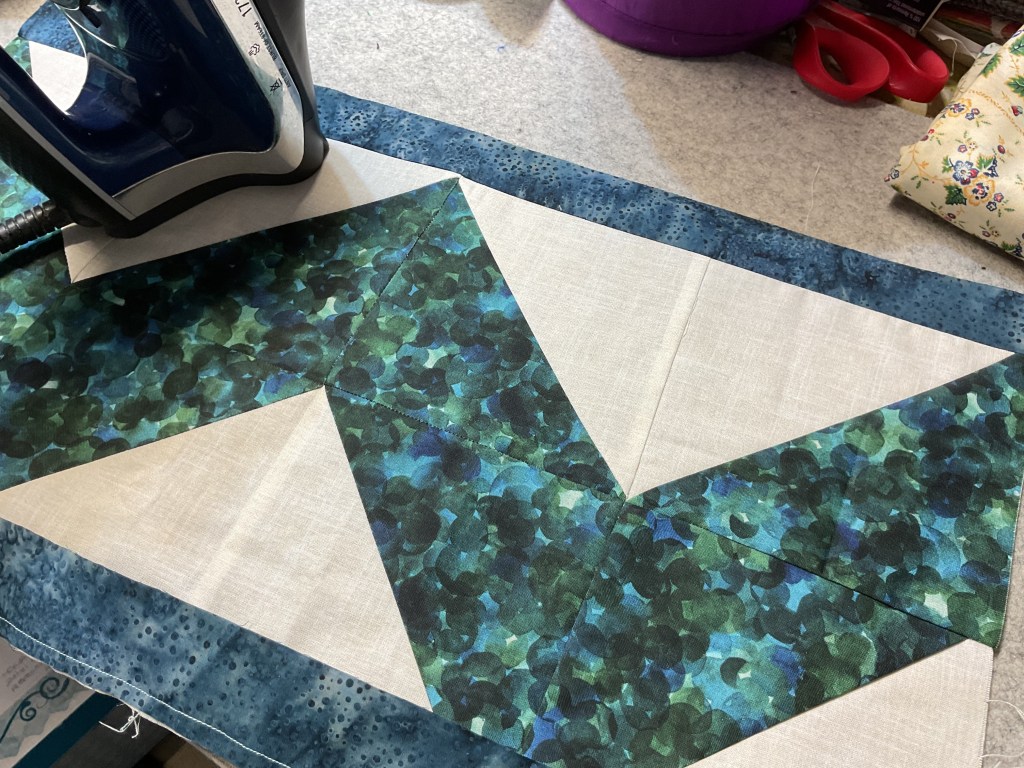
6. After I sew the matching short strips to opposite sides, I’m headed over to the ironing station to press my block so far before adding the next strips. I don’t always press in the middle of sewing a block together, but today I am because I want the blocks to turn out really crisp.
7. Then back to the sewing machine to add the long matching strips to opposite sides of the center square to complete the frame for each block.
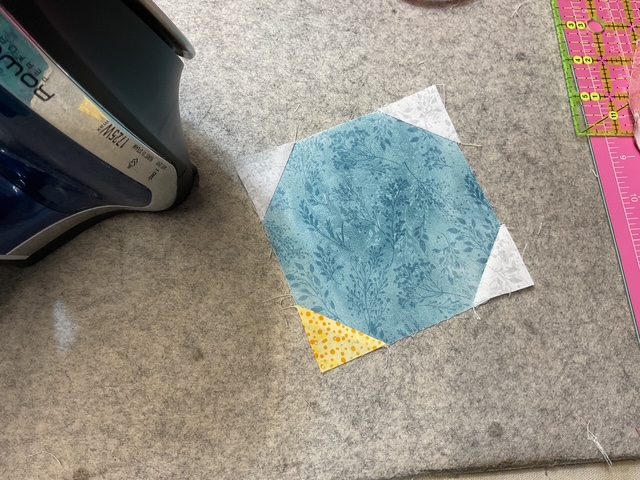
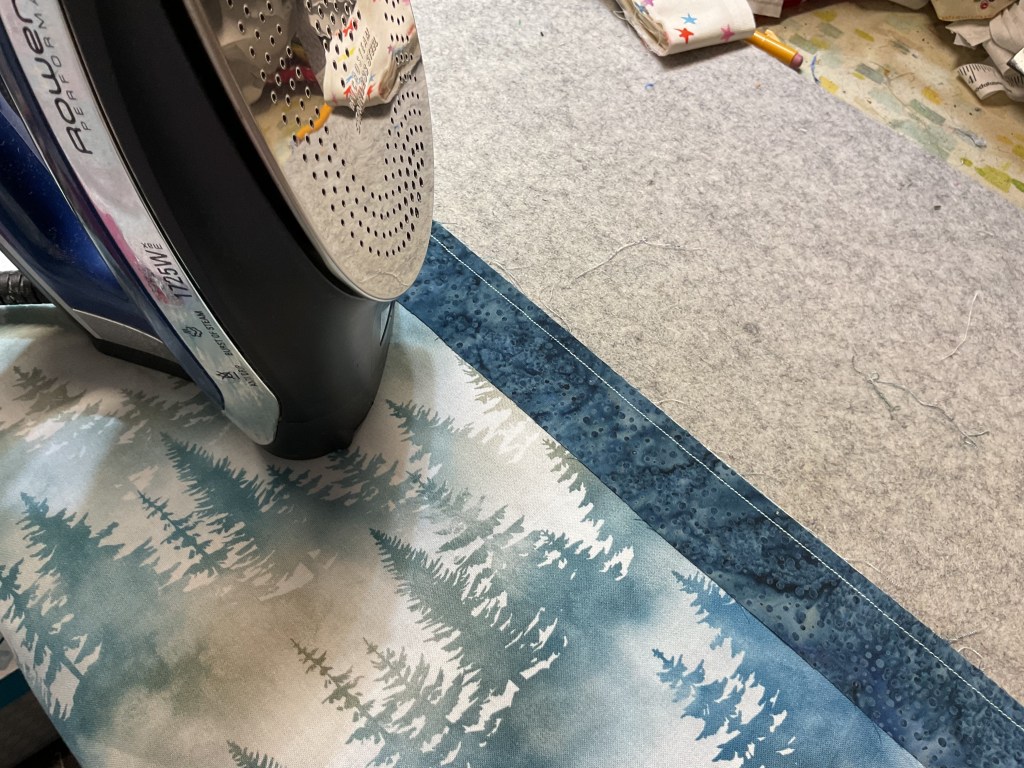
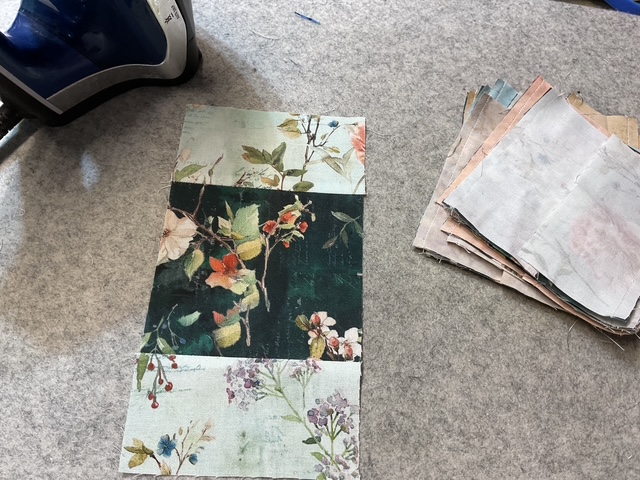
8. And back to the iron to press the completed blocks so they will be nice and crisp. I’ve noticed that when I press blocks on my wool pressing mat, I don’t have to use pressing spray to get sharply pressed blocks.
Right now I have an 18″ x 60″ mat on my 24″ X 60″ ironing station. My Dad designed and made the ironing board for me years ago. My lovely big board sits on top of an Ikea Kallax 8 cube shelf on casters and it’s the perfect height for me!
The 18″ wide mat just seems too narrow for me now, so I’m thinking of upgrading. I see mats are now available in 22″ x 60″ and 24″ x 60″, which is really great. Maybe I won’t run off the edge anymore. Definitely worth thinking about now if they have the exact size I need.
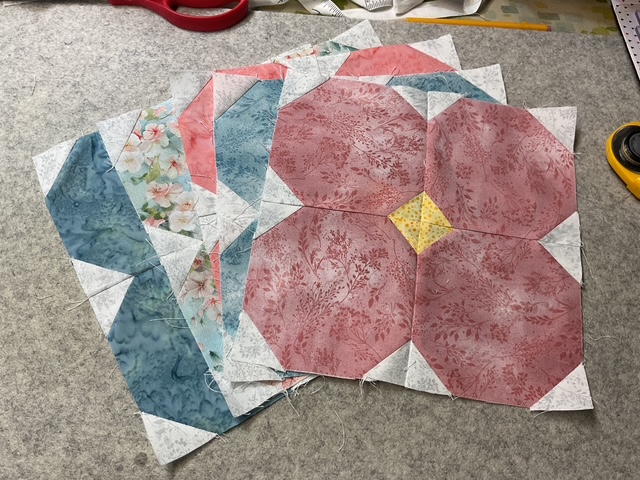
9. Yay! My blocks are all pressed!
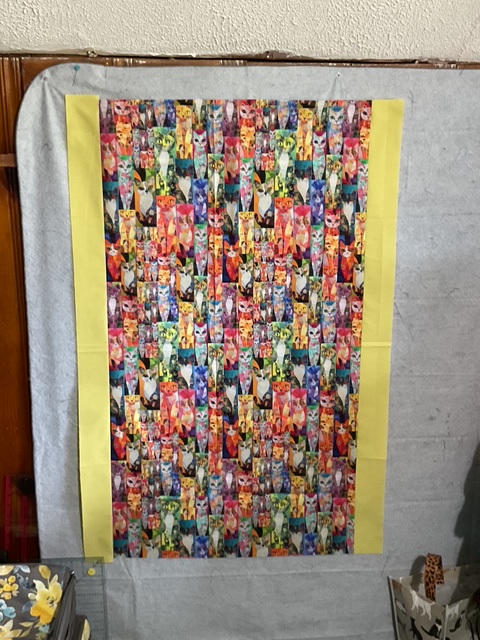
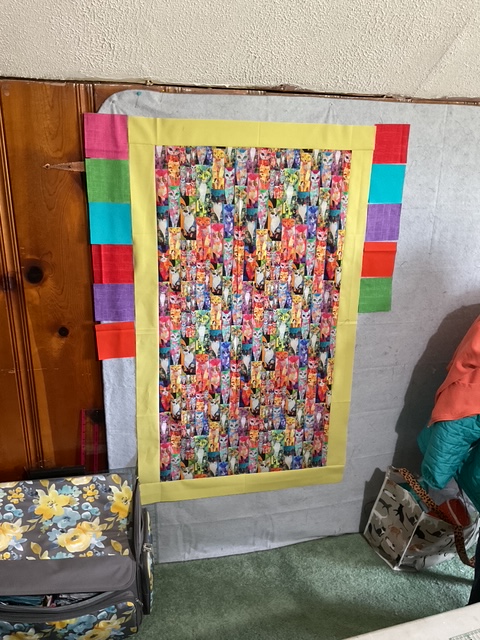
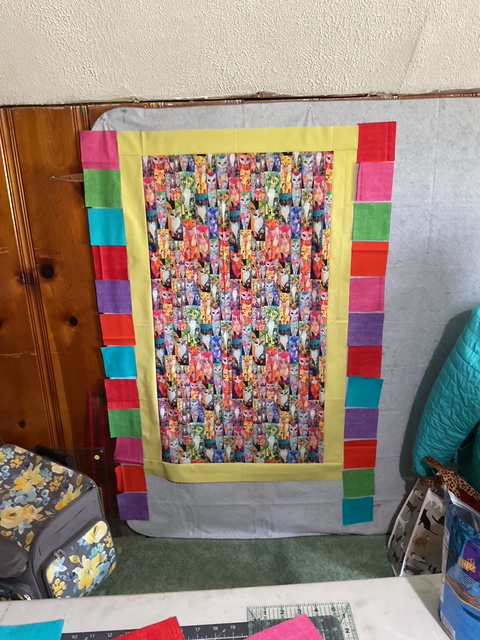
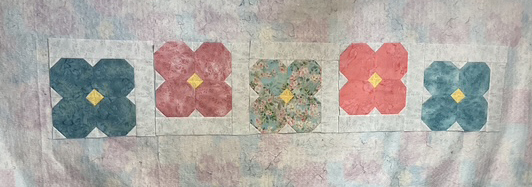
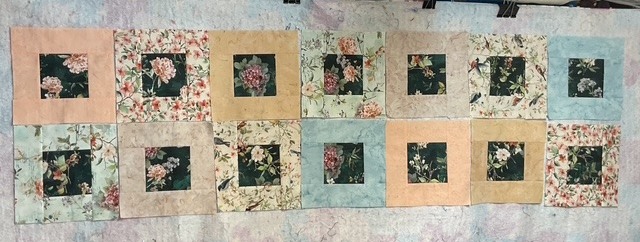
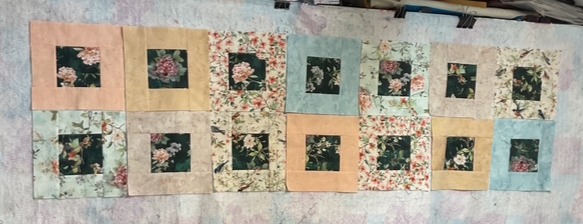
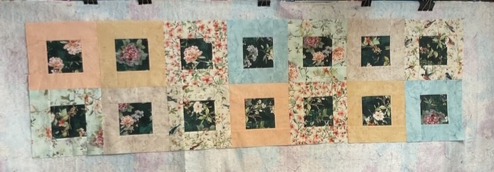
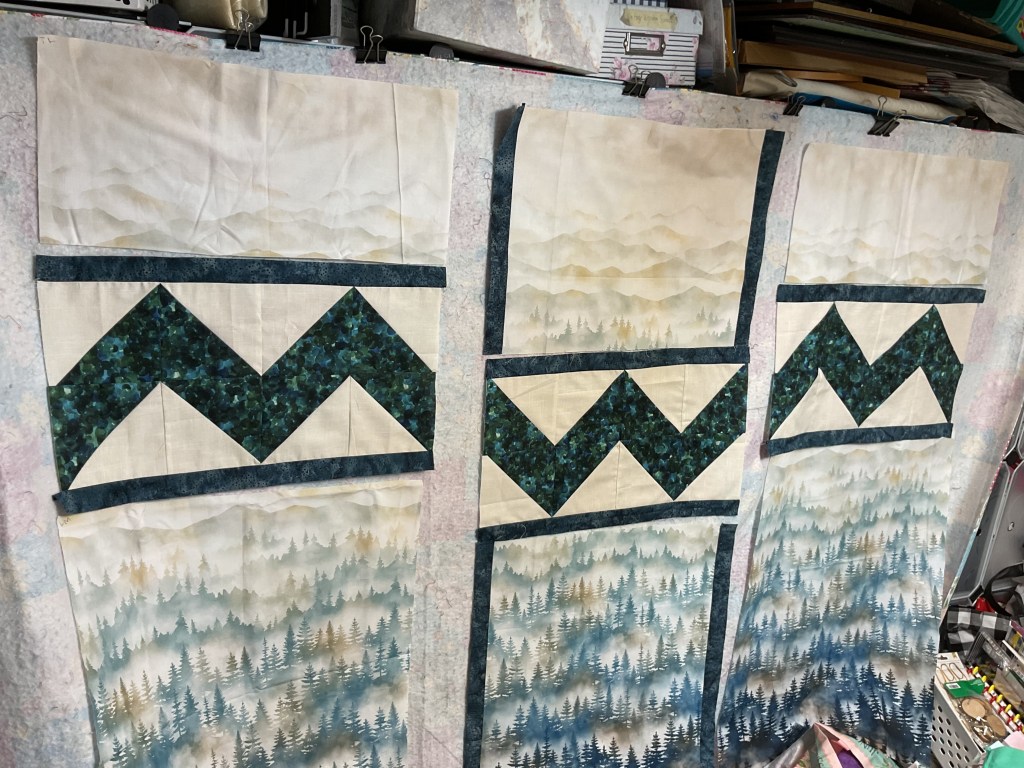
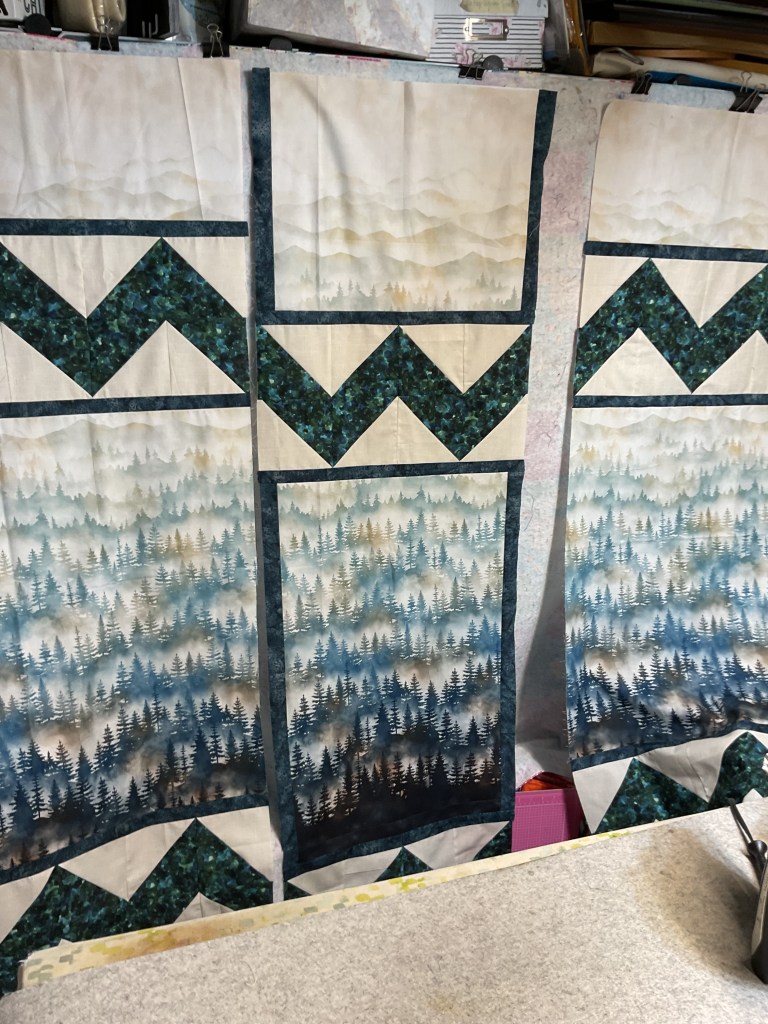
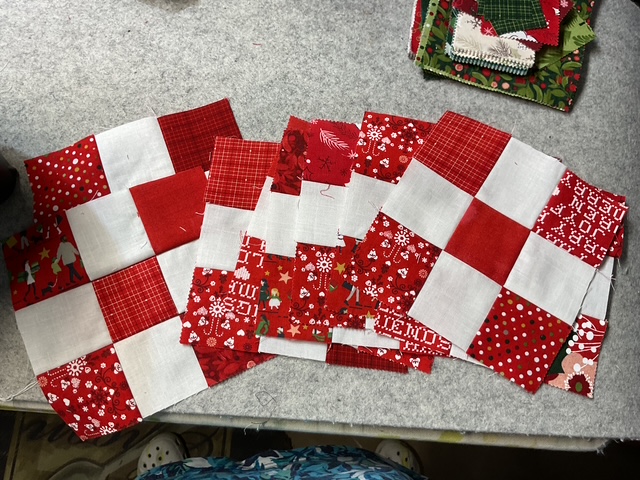
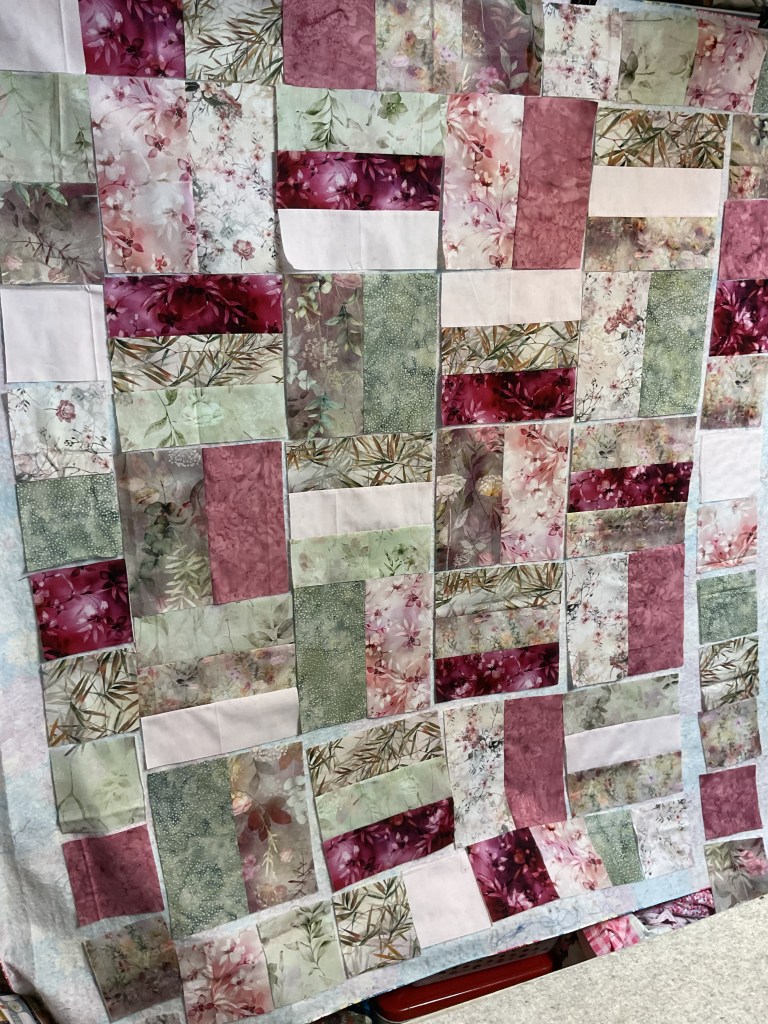
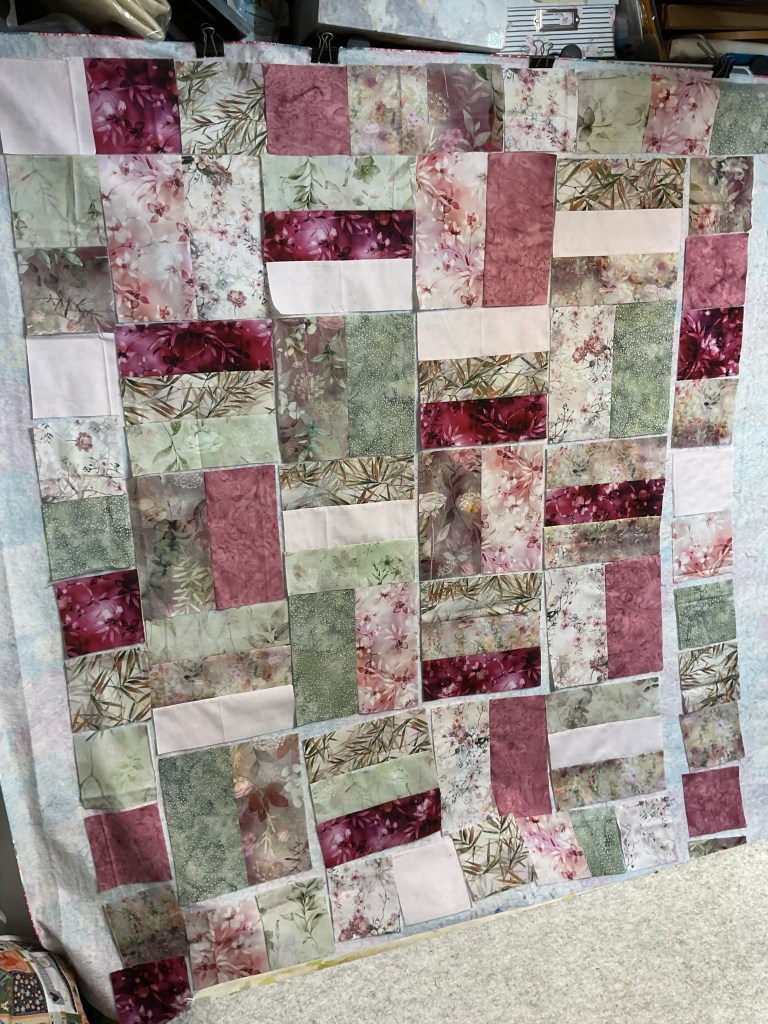
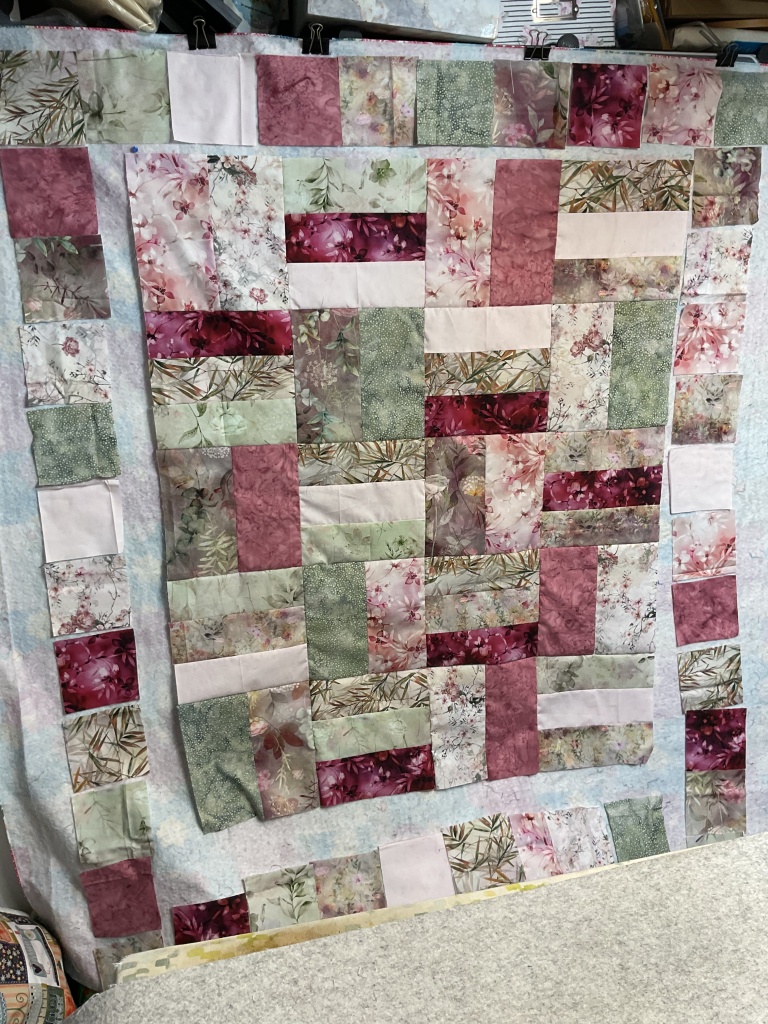
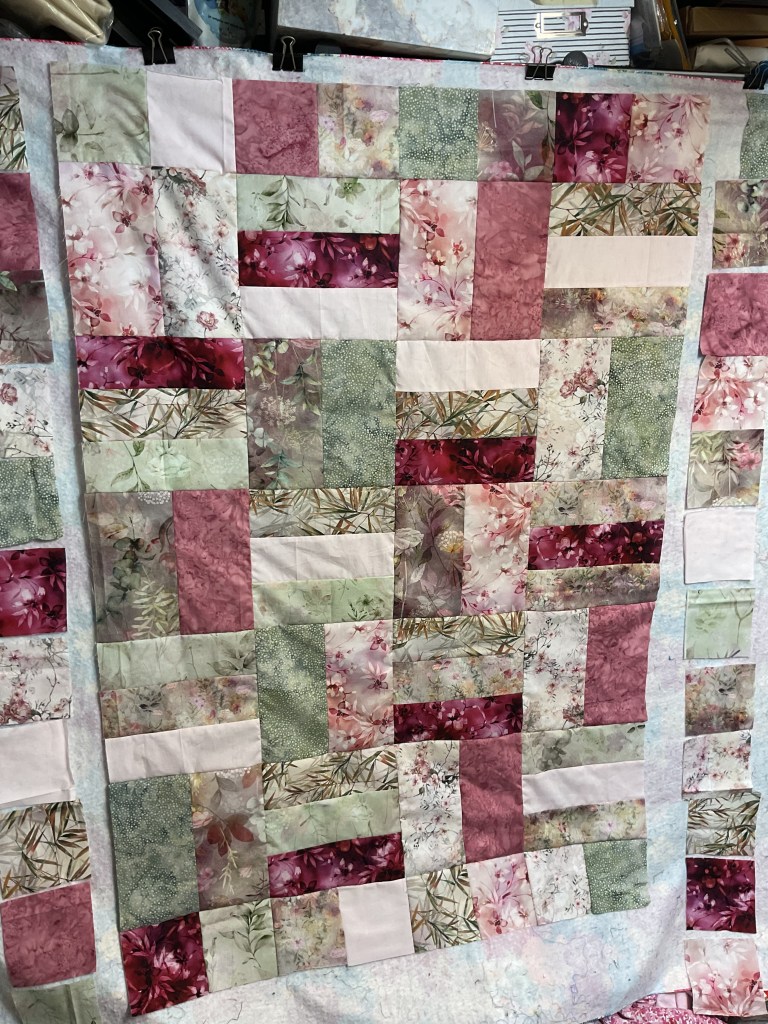
10. Next up is putting my blocks up on my design wall so I can rearrange them. Here’s a few photos showing how I’m moving things around. Sometimes this step takes more time than I’d like, but it is a really important one because nobody wants a visually lopsided quilt.
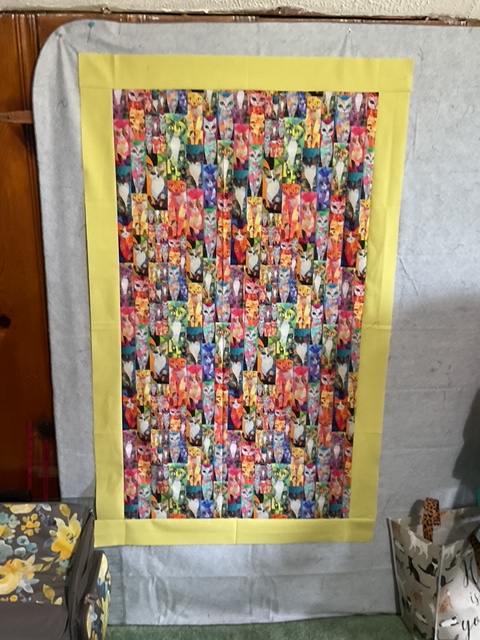
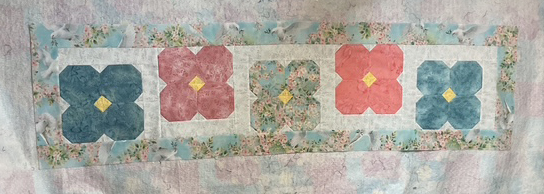
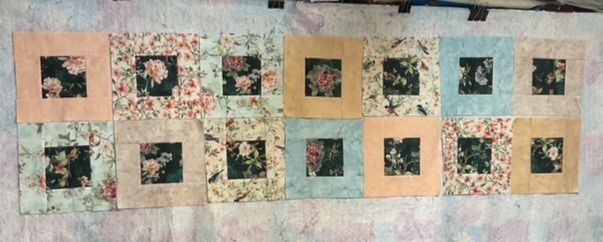
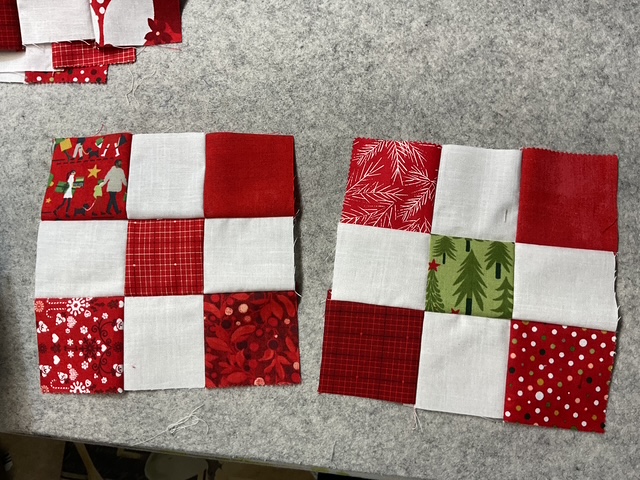
11. Here’s the arrangement I decided upon. Then it was back to the sewing machine to sew the blocks together. Next up with be layering, quilting, adding a label, and binding…….sometime.
I really like how it turned out, don’t you? So soft and fresh. I can’t wait for the fabric to be available in quilt shops come September 2026.
Your homework for the next couple weeks is to decide whether you want to join me in a Spring 6 Quilts in 6 Weeks Challenge. Drop me an email (tricia@villarosadesigns.com) if you want in. I’ll post more info next week.
Let’s get quilting and finishing together! YEAH!
See you right here next week for another Spring into Spring tutorial.
I hope you’ve gotten the chance to watch some of the Paralympics this week. I have, and the athletes are so so inspiring. I’ve never seen anyone work harder than they do. I am truly at a loss of words to describe how I feel watching and cheering the athletes on.
In honor of all Olympic and Paralympic athletes, today I’m doing a tutorial for Arctic Flame, which I really felt embodies the whole Winter Olympic theme. So stay tuned after the NEW patterns for the tutorial.
OH! Before I forget, I want to say HI to all of our new subscribers. We’re glad to have you aboard the VRD ship. I’m Tricia, your Cruise Director.
Now, let’s cue the marching band and let the balloons fly to celebrate the new March VRD patterns!
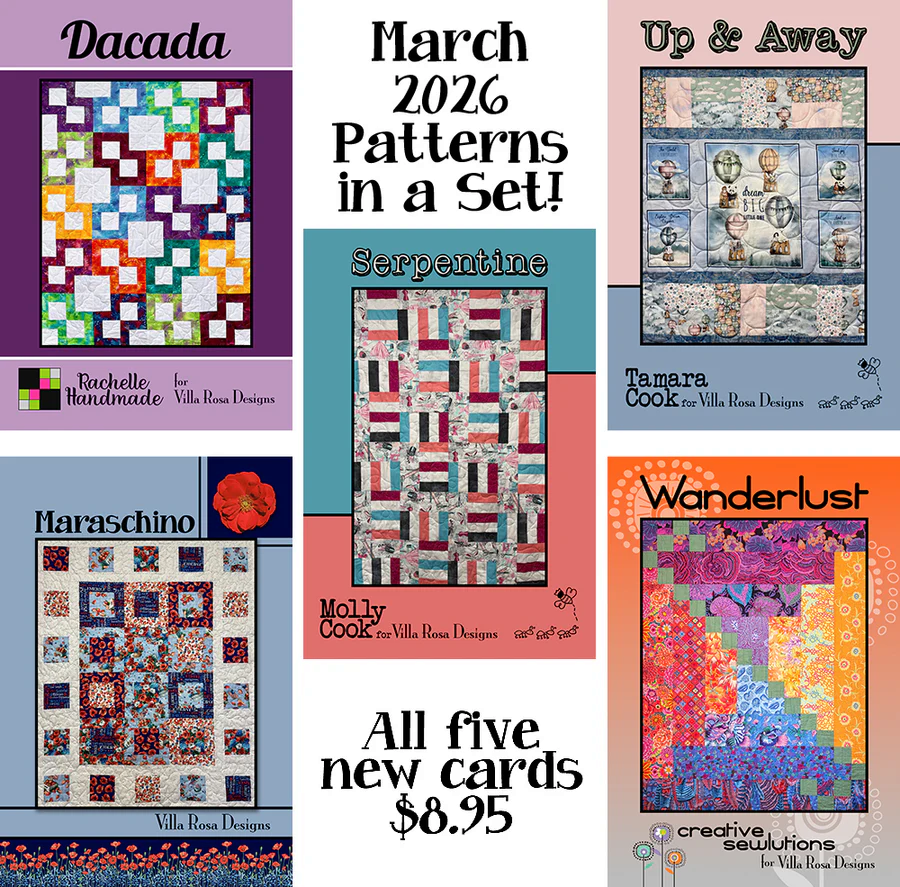
NEW March VRD Quilt Patterns
Hard to believe another month of 2026 has passed and it’s time for another collection of new patterns. I think you’re going to LOVE this month’s patterns. When I saw all of them, I was really amazed by the creativity of our designers. They are bright, bold, visual, and fun.
Dang! I’m not sure which one I want to make first.
Argh! Guess I’ll just have to add ’em to my mile long list that just keeps getting longer. I don’t think I’ll ever reach the end of the list, though.
Dacada is Rachelle’s latest modern design and it almost leaps off the pattern. I wonder what it would look like with black or navy background instead of white? It finishes at 48″ x 60″ and is fat quarter friendly. You can find a kit featuring Bold in Bloom batiks HERE.
Serpentine by Molly is a fast and super fun strippy quilt that you can make in a wink. I love that you can use a favorite novelty fabric in her pattern. It finishes at 40″ x 60″ and uses yardage. You can find a kit featuring the same fabrics (Dressmaker) that Molly used HERE or a kit using batik fabrics HERE.
Up & Away is Tamara’s new pattern and it is as sweet as can be. It features a horizontal panel – 23″ and up so it gives you lots of options. With a 23″ panel, it finishes at 41″ x 49″, which is a lovely size for a baby quilt. Using a 36″ panel, the size would be approximately 41″ x 61″ which would be a small throw quilt. You can find a kit with the same fabrics Tamara used (Let’s Go on an Adventure) HERE.
Maraschino is Pat’s March pattern and it couldn’t be more fun. It finishes at 45″ x 54″ and uses fat quarters and a little bit of yardage. You can find a kit with the same fabrics Pat used (Red, White, and Sweet) HERE.
Wanderlust is Creative Sewlutions’s latest modern design. It finishes at 49″ x 63″ and uses yardage. I’m itching to make this one out of my stash with an awesome pop of color.
But wait – we’re not done yet!
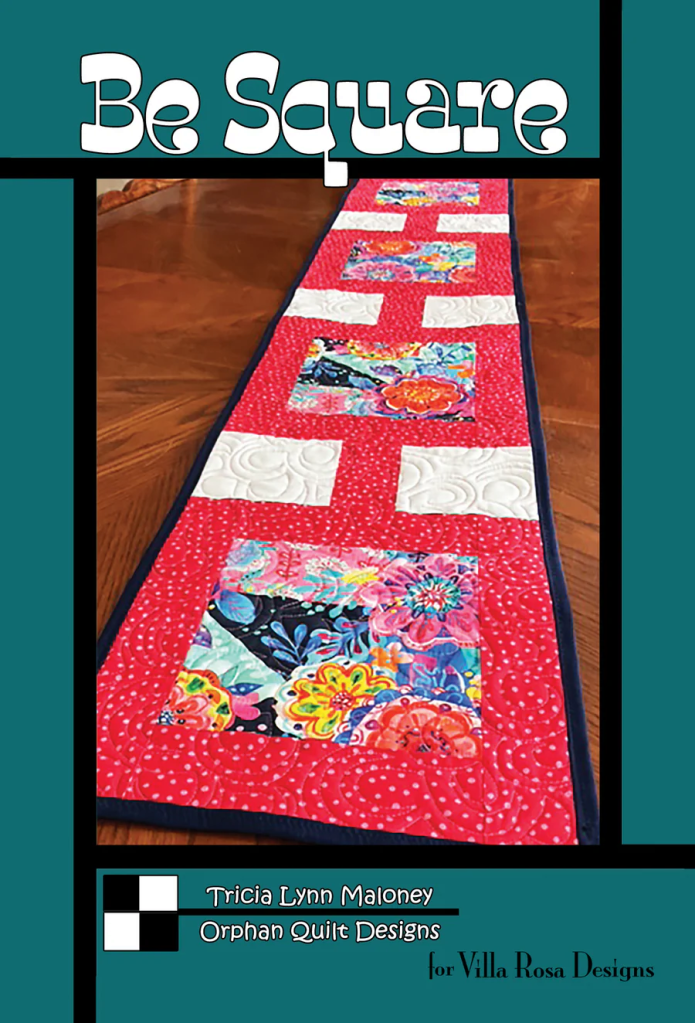
Here’s my March Table Runner, Be Square. The center blocks are great for using your favorite fun novelty fabrics, printed panel squares, or even stray quilt blocks. It’s a very versatile design. And it goes together really fast.
Get the digital pattern HERE or the print pattern HERE.
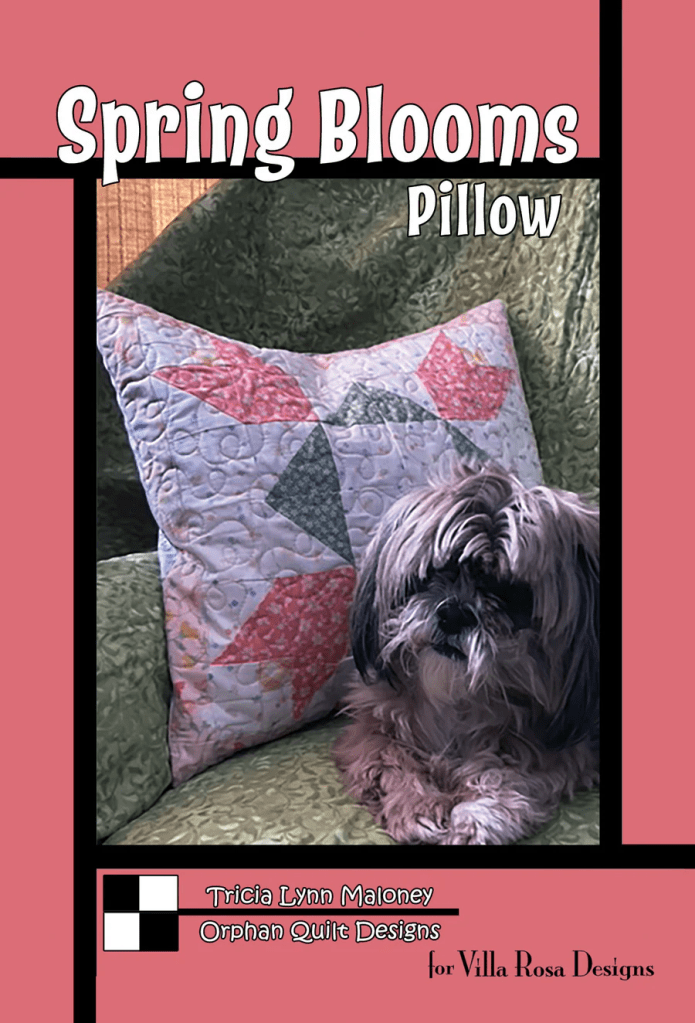
And last, but certainly not least, is the third Pillow pattern in the 2026 Seasonal Pillow Series. It’s called Spring Blooms. This pillow design would look great in so many different color combinations! What would your favorite combination be?
Guess what? My Mom claimed this pillow for herself even before it was finished! Moms can be like that sometimes…….LOL!
And a star is born! My cute little Shih Tzu girl, Bailly, is always happy to pose for me. Isn’t she a cutie?
Get your digital pattern HERE or your Print pattern HERE.
3 Aunts Quilt Shop is doing a Block of the Month with the Pillow series this year and you can find the new Spring Blooms kits below:
They still have some kit options available for Happy Hearts (Jan) and Good Luck (Feb) available HERE if you haven’t made yours yet.
All right! What an awesome collection of patterns for March! Which one are you going to make first?
Now let’s dive right into our tutorial for today – Arctic Flame.
VRD Arctic Flame Quilt Tutorial
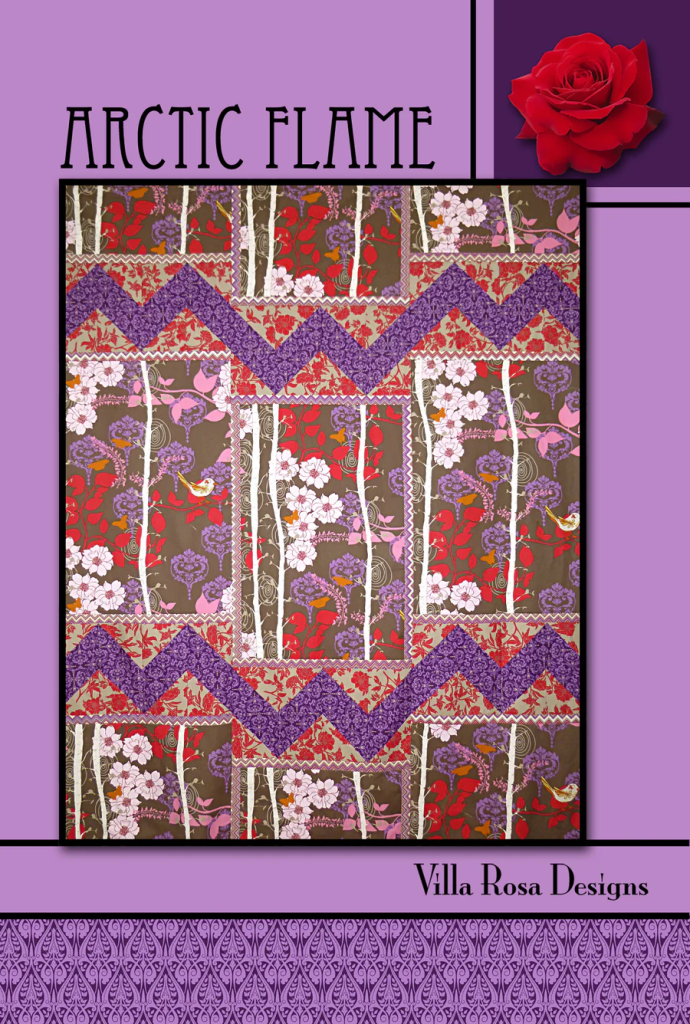
Are you familiar with the Arctic Flame pattern? It’s an oldie but definitely a goodie! This is one of Pat’s clever designs.
I’ve always wanted to make Arctic Flame, but for some reason I thought it looked kind of daunting and…I just didn’t. So, I keep coming back to it and then telling myself “someday.” Have you ever felt that way about a pattern?
Well, someday has finally come. I chose to do the Arctic Flame tutorial today in celebration of the 2026 Winter Olympic Games. The pattern name just sung for me and seemed to embody the spirit of the games. And I had just the perfect fabrics to use – wait ’til you see them!
Get your Digital pattern HERE or your Print pattern HERE
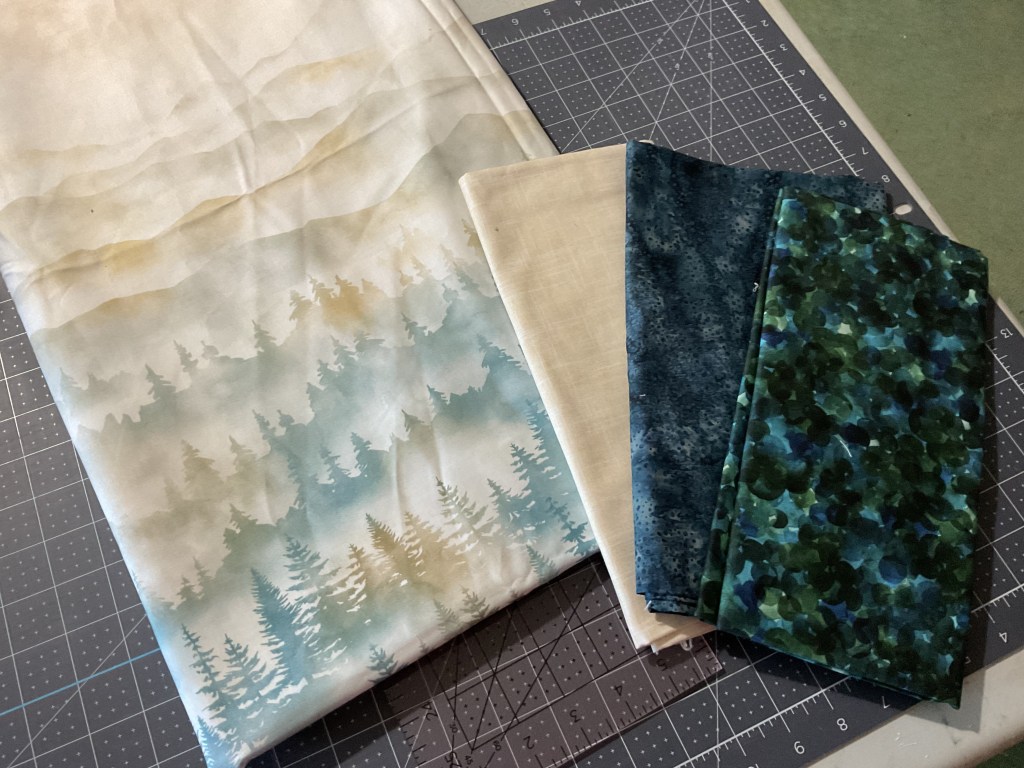
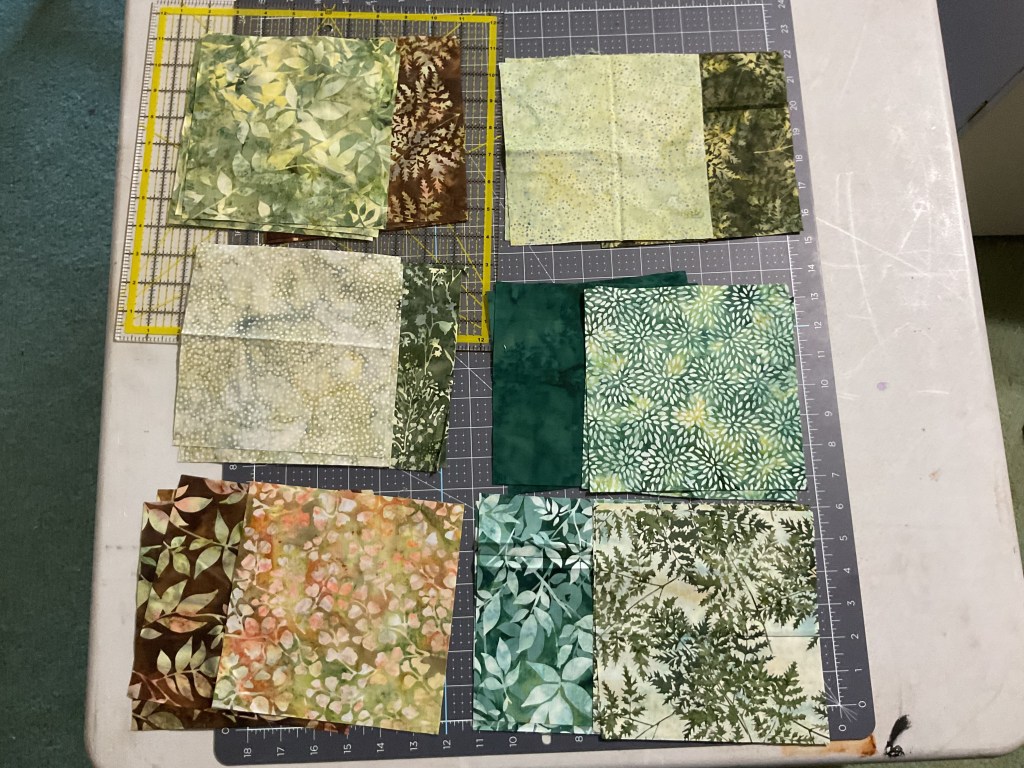
1. Time to gather up our fabrics. The fabrics I’m using today are from an older Hoffman digital collection called Starry Nights. I’ve had these fabrics hanging out for a while and now they’re ready to shine! Just wait until you see what I’ve got planned for the mountain and trees running yardage print.
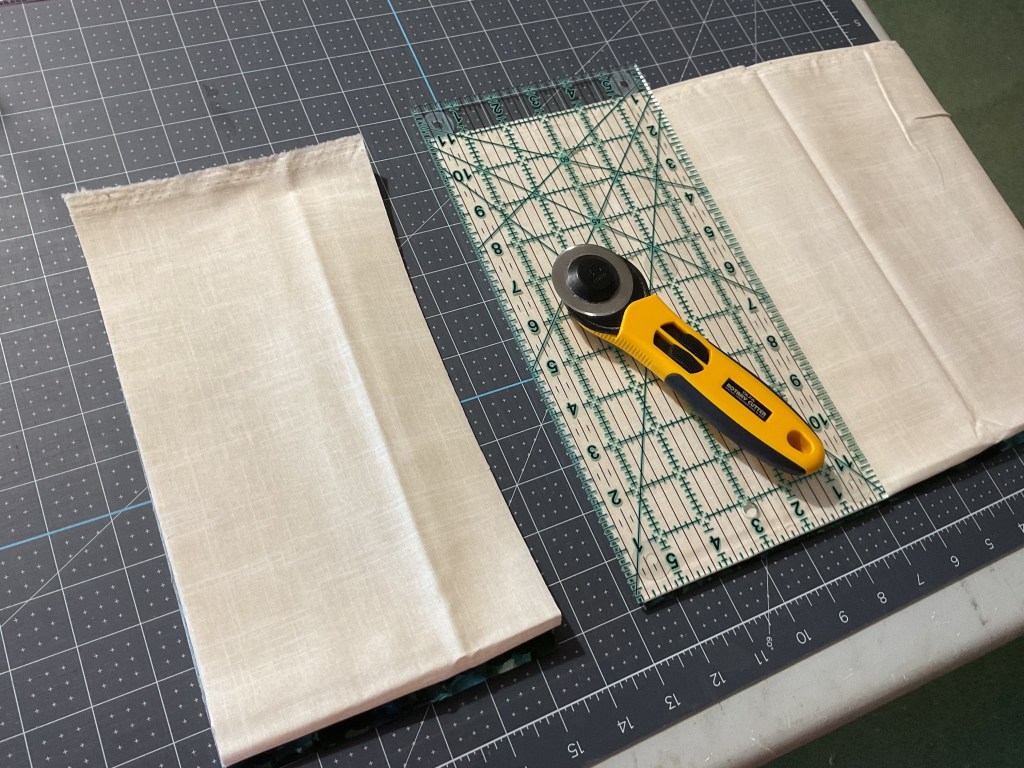
2. Next up we’re cutting our light and dark fabrics into squares. Easy peasy.
3. Another easy one – cutting the strips for the sashing. Please note that my binding will be the same fabric as the sashing which will give the quilt a wonderful finish (that is when I quilt and bind it in 2099). Do likewise if you want – just make sure you have enough fabric for both.
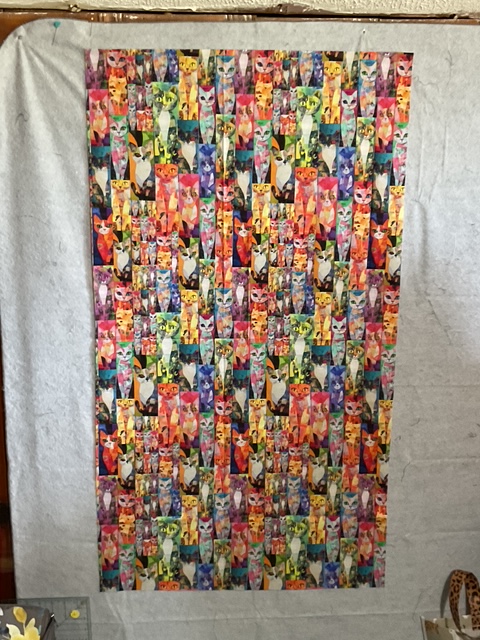
4. Now for the piece de resistance – the mountains and trees theme fabric. Oh my goodness! I’m almost afraid to cut into it.
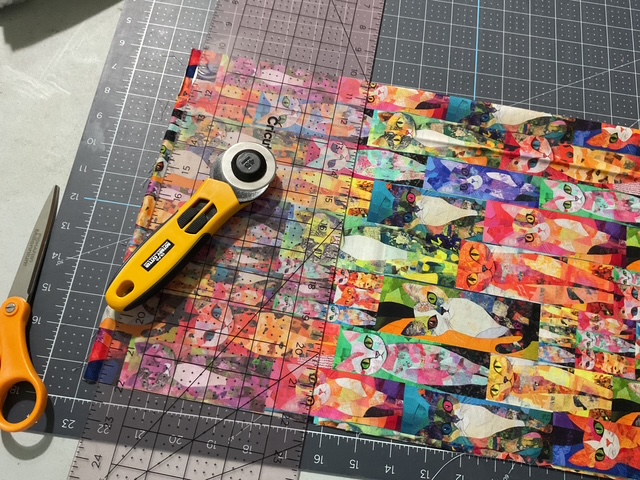
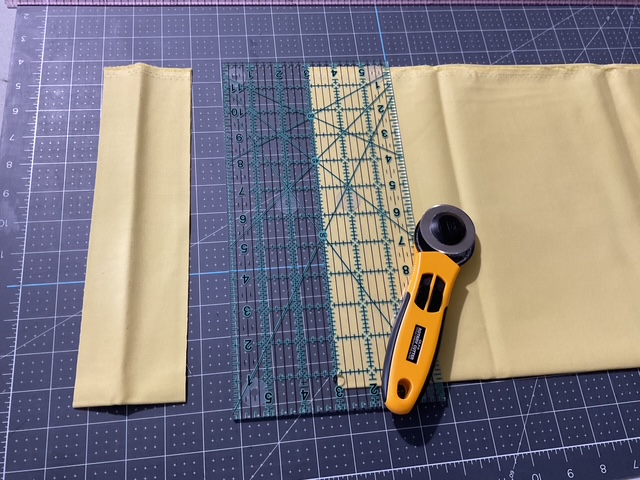
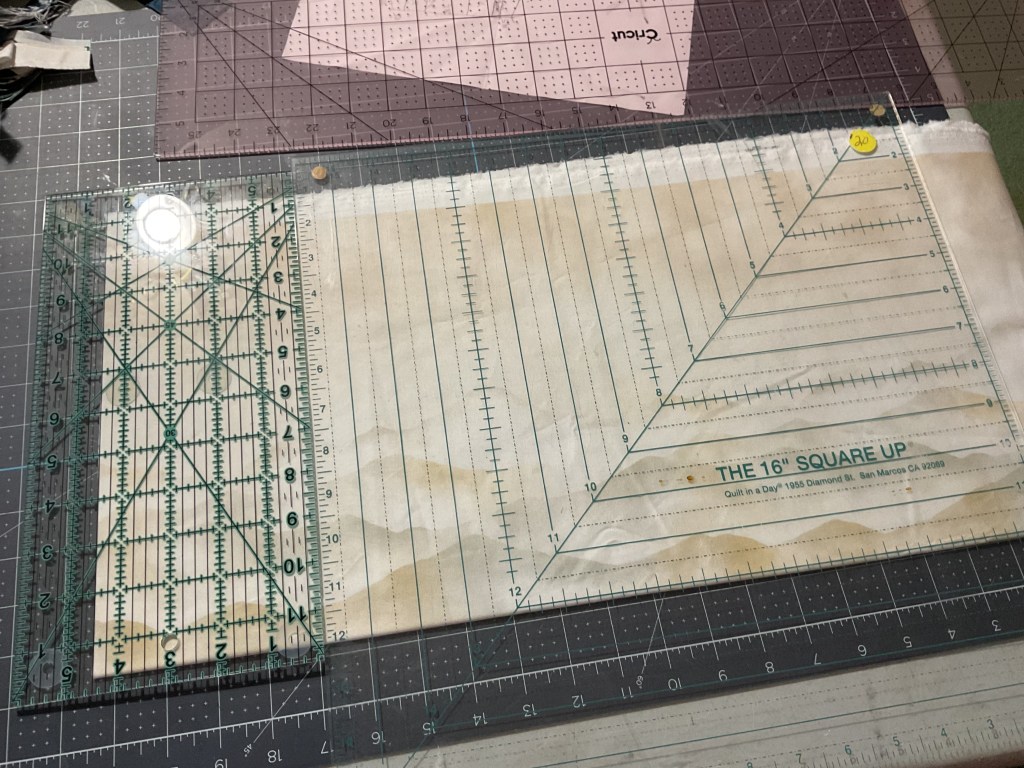
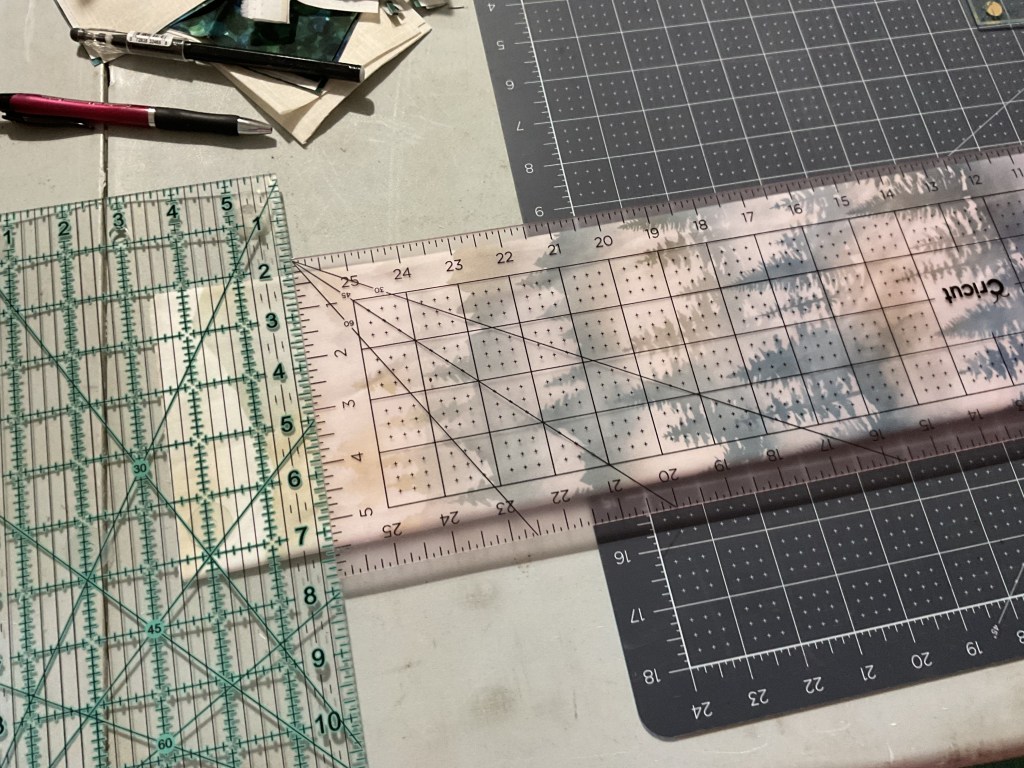
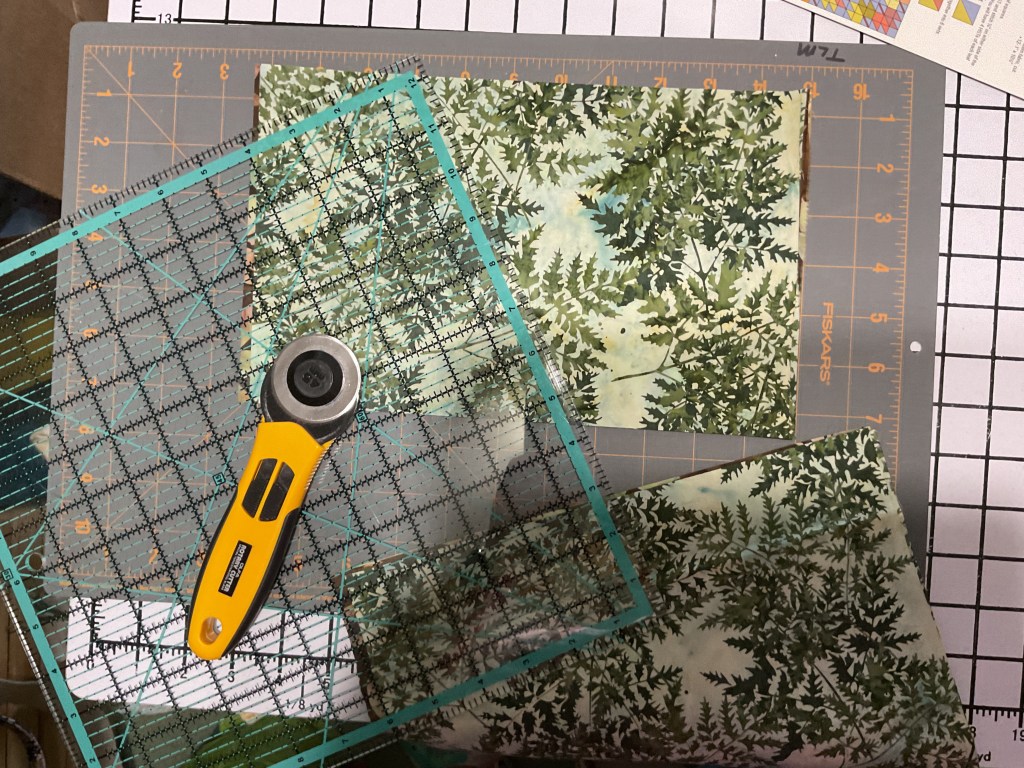
Do you have issues when trying to cut large pieces of fabric for a pattern? Well, let me tell you a little trick that I use – I use 2 rulers end to end to create the right size because I don’t have any gigantic quilt rulers to work with.
In the photo on the left, I’m using a 15″ square paired with my favorite 6″ x 12″ ruler to get the correct fabric width.
In the right photo, I’m using a 6″ x 26″ and my 6″ x 12″ ruler again to get the correct length.
PSST! I really do try to use the same manufacturer when using multiple rulers for a project so the measurements will more likely be the same, but sometimes you just have to do the best you can with what you have available. And I’m definitely taking the time to triple check my math before cutting.
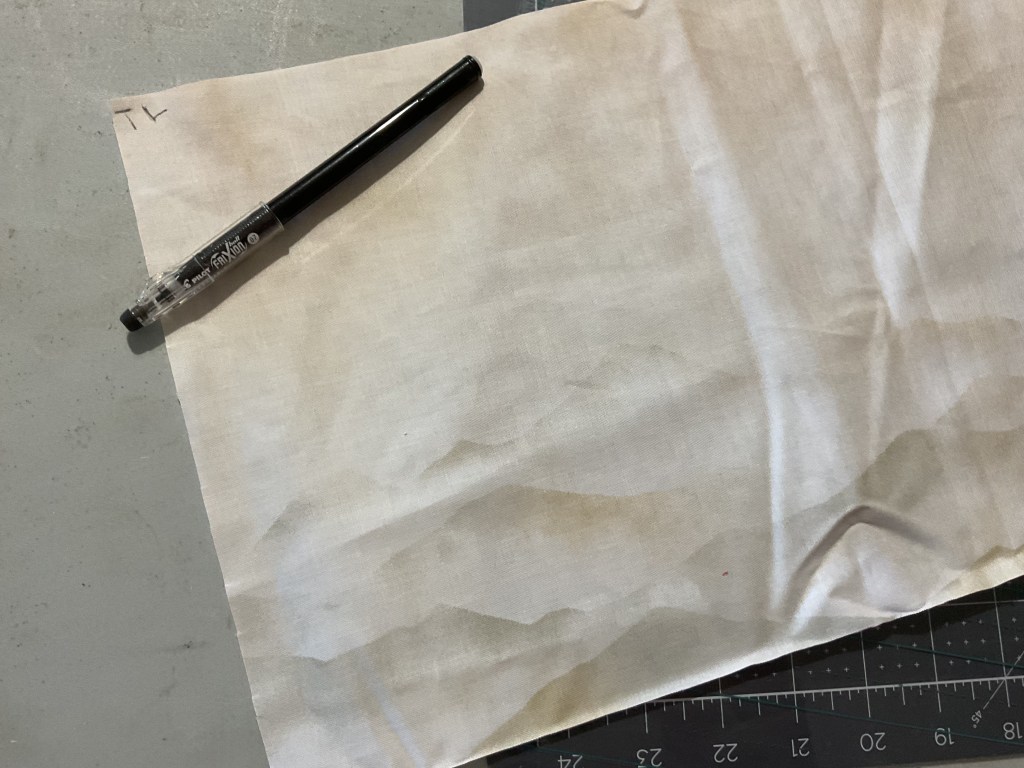
In the bottom photo, I used my Frixion pen to mark which section the cut piece was so I didn’t get the pieces mixed up. I used TL for top left, TC for top center, TR for top right and so on.
5. Okay, we’re going to make some Half Square Triangles (HSTs) with our light and dark squares. Oops! I’m just rereading the instructions on the pattern and I realized I did the tutorial slightly different. Let me explain – the pattern calls for you to cut the squares on one diagonal and then sew dark and light triangles together to make HSTs.
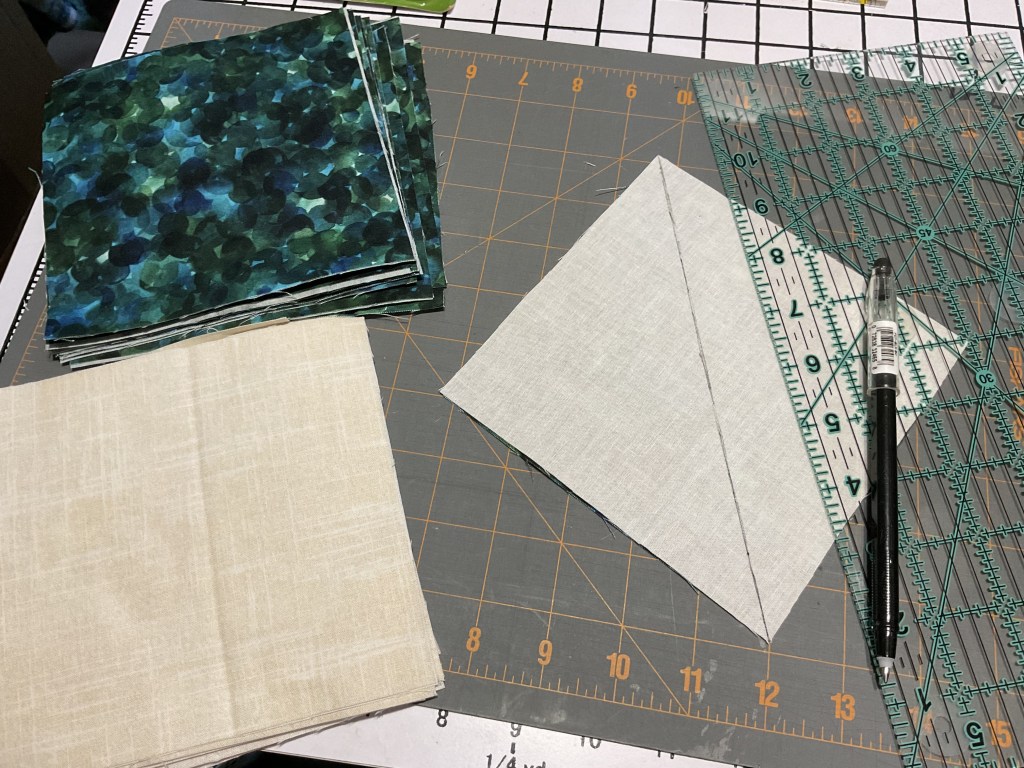
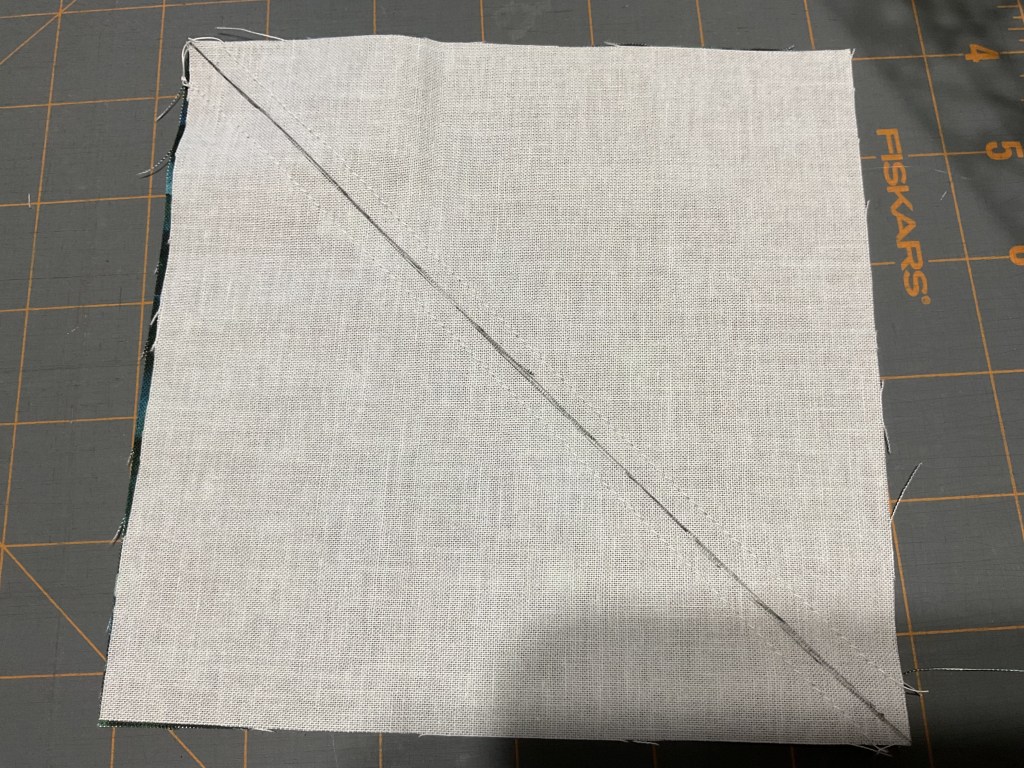
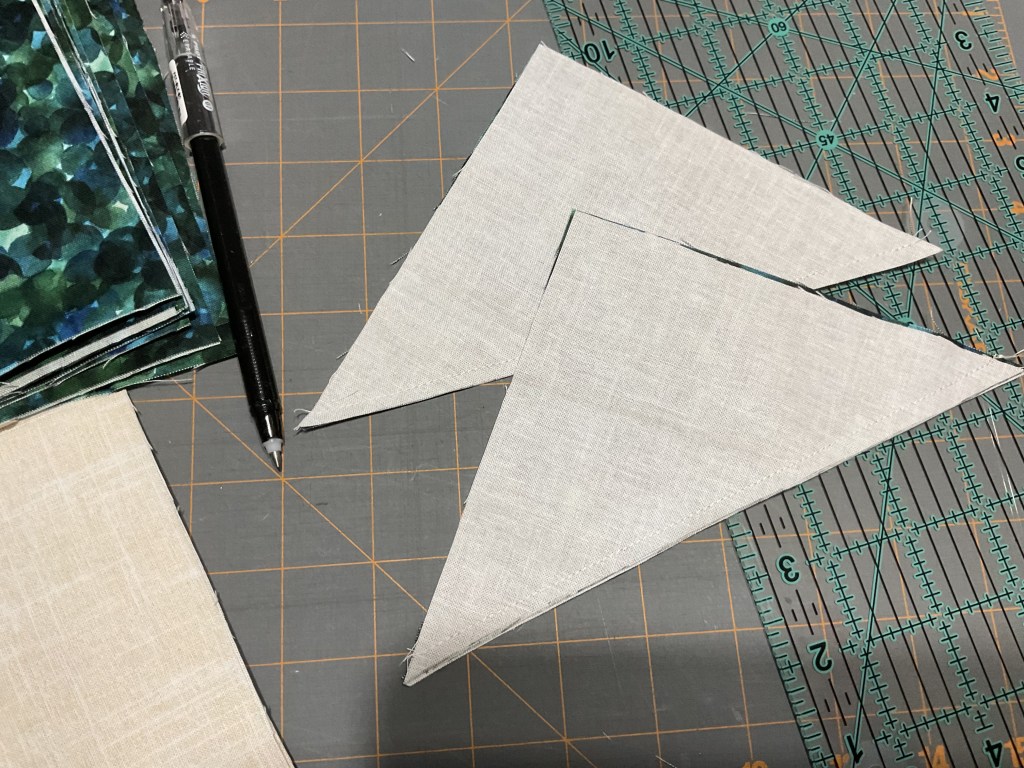
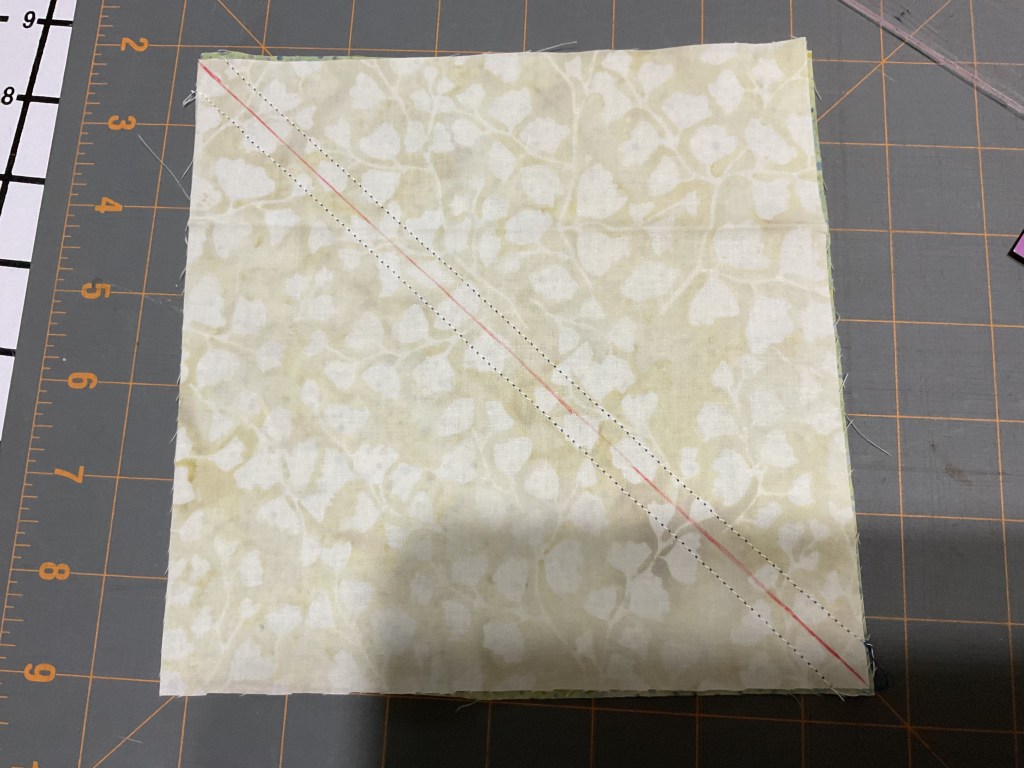
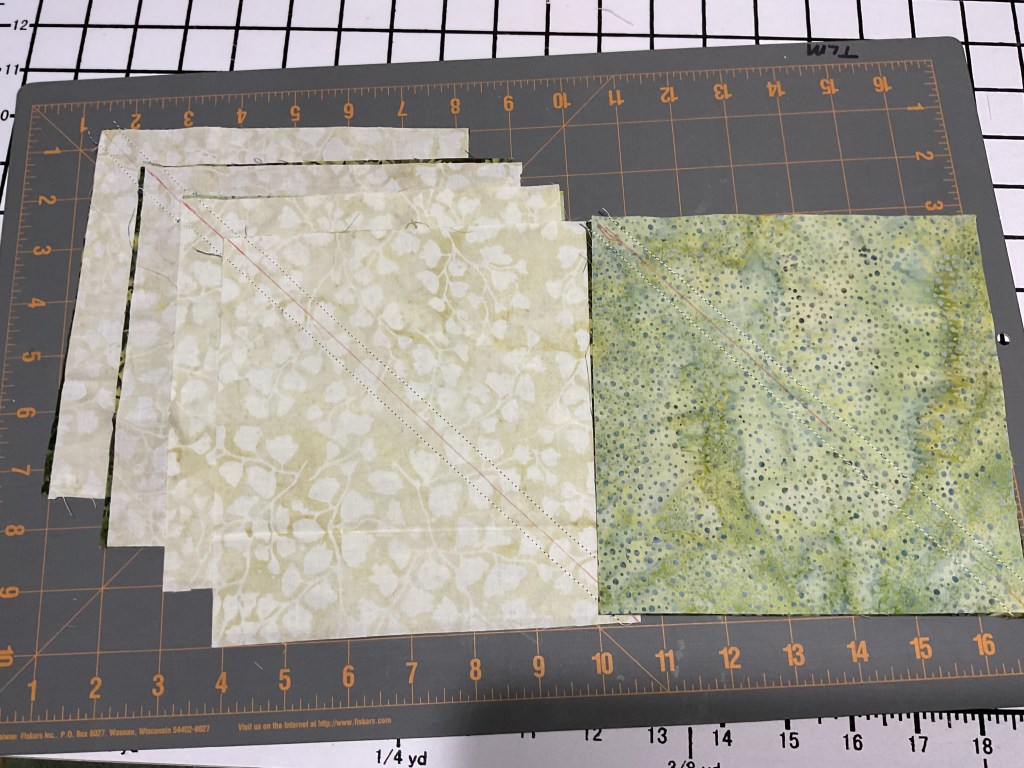
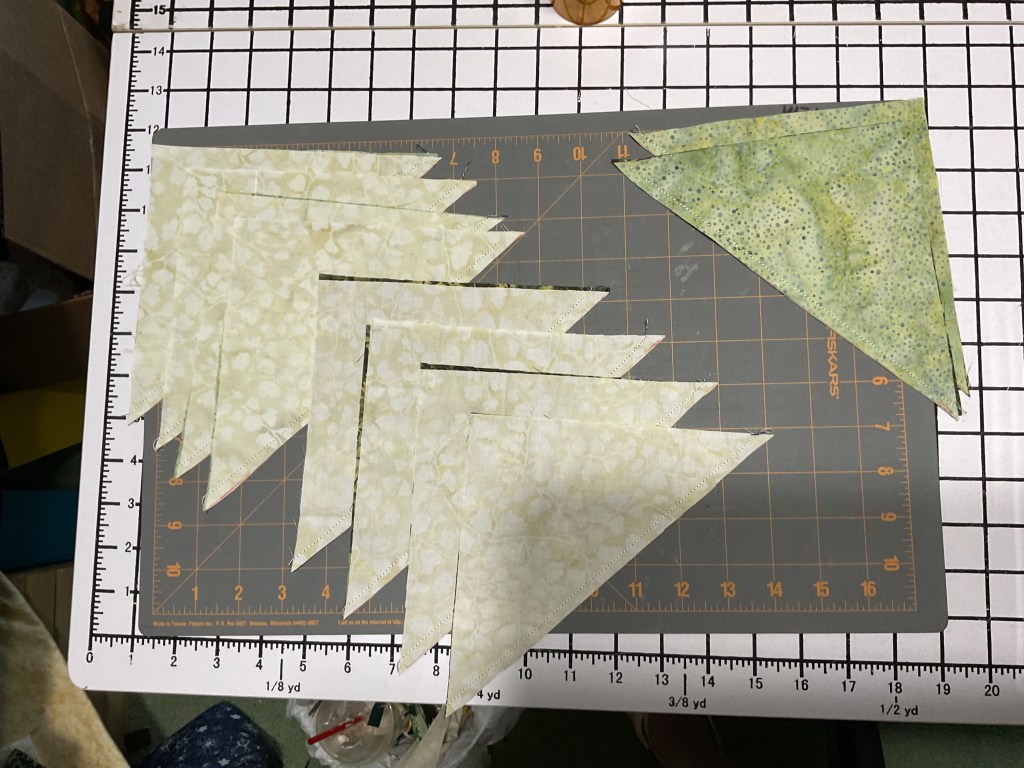
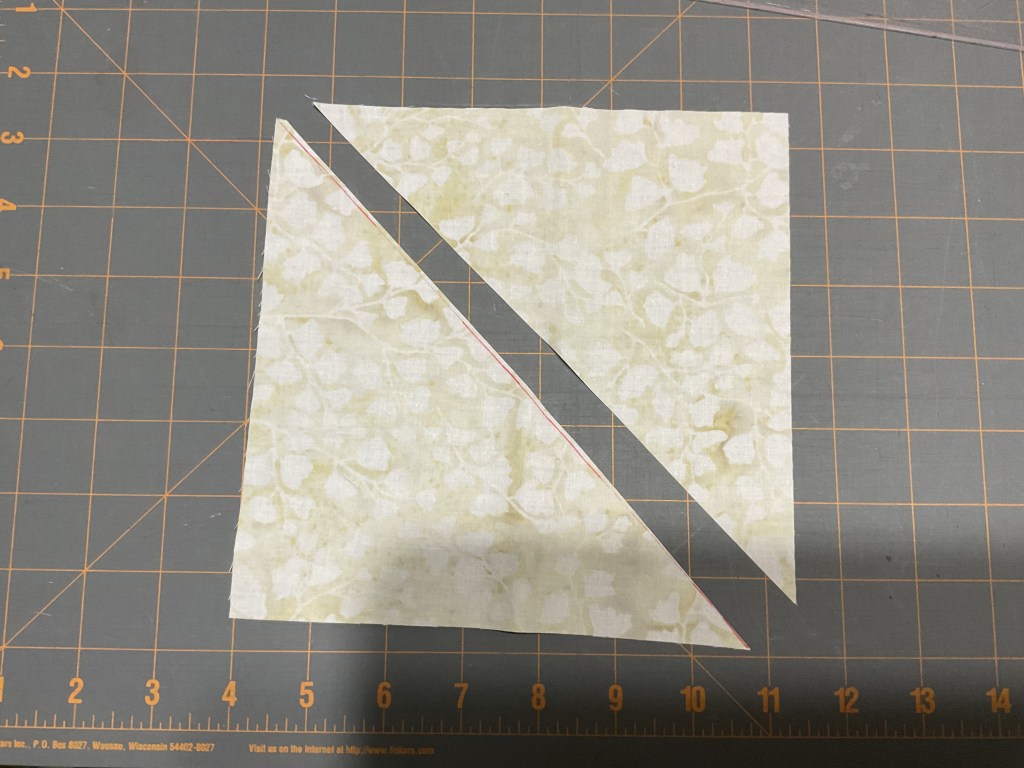
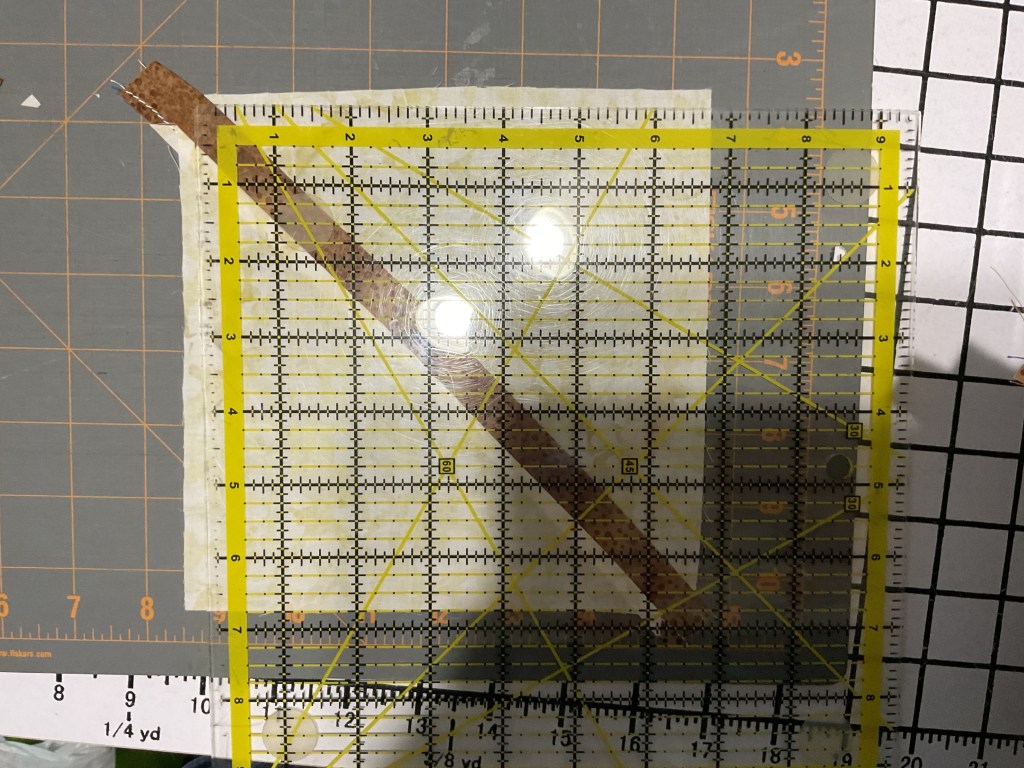
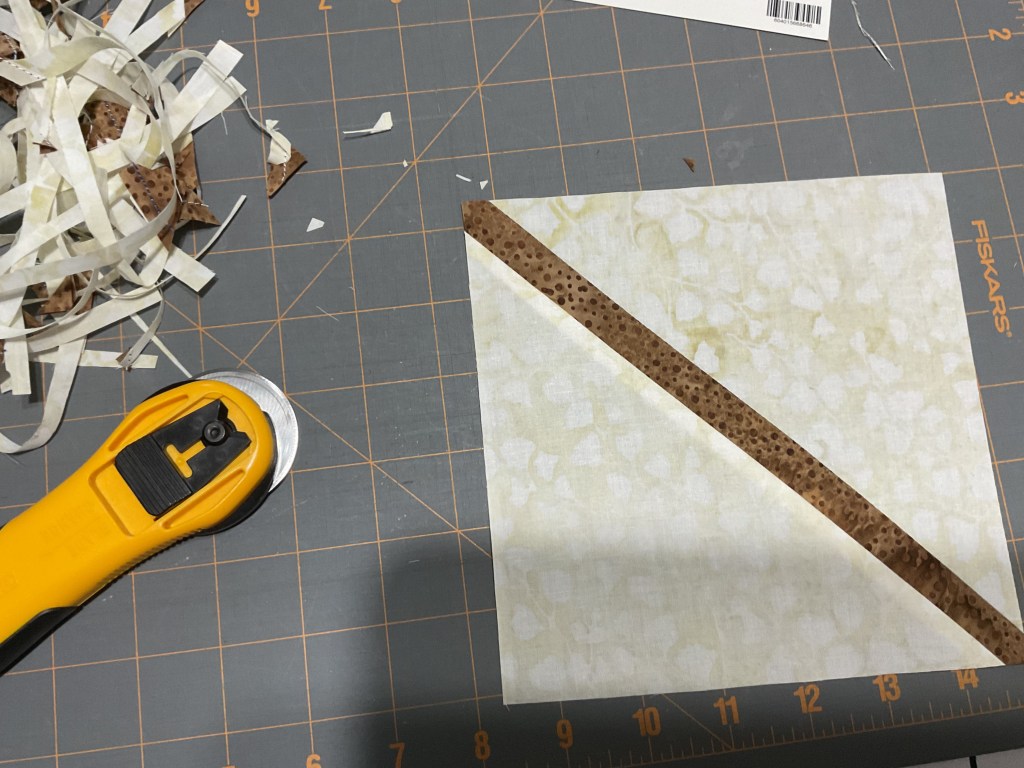
My usual method, shown here, gets the same results, but is slightly different. I layer my light and dark squares RST and draw a diagonal line with my Frixion pen. Then I sew 1/4″ away from both sides of the line. Finally I cut on the line to make my 2 HSTs.
Same results, but I have found making HSTs this way eliminates sewing on the bias which can make the units stretch or do other funky things.
You do you, though – whichever method works the best for you.
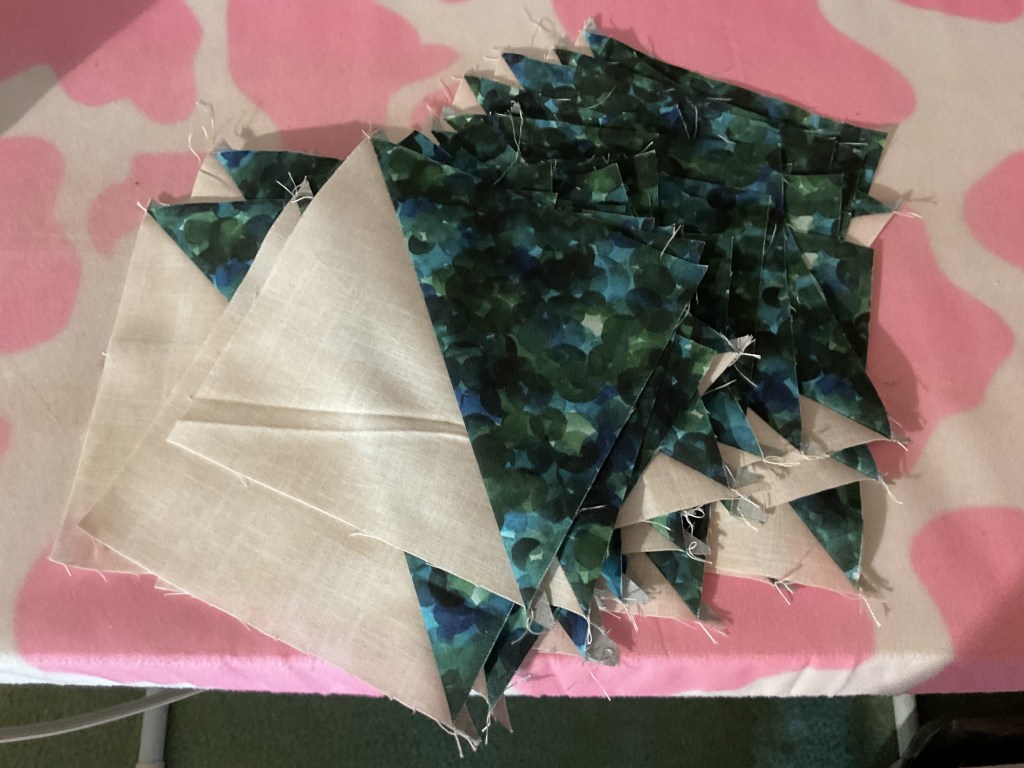
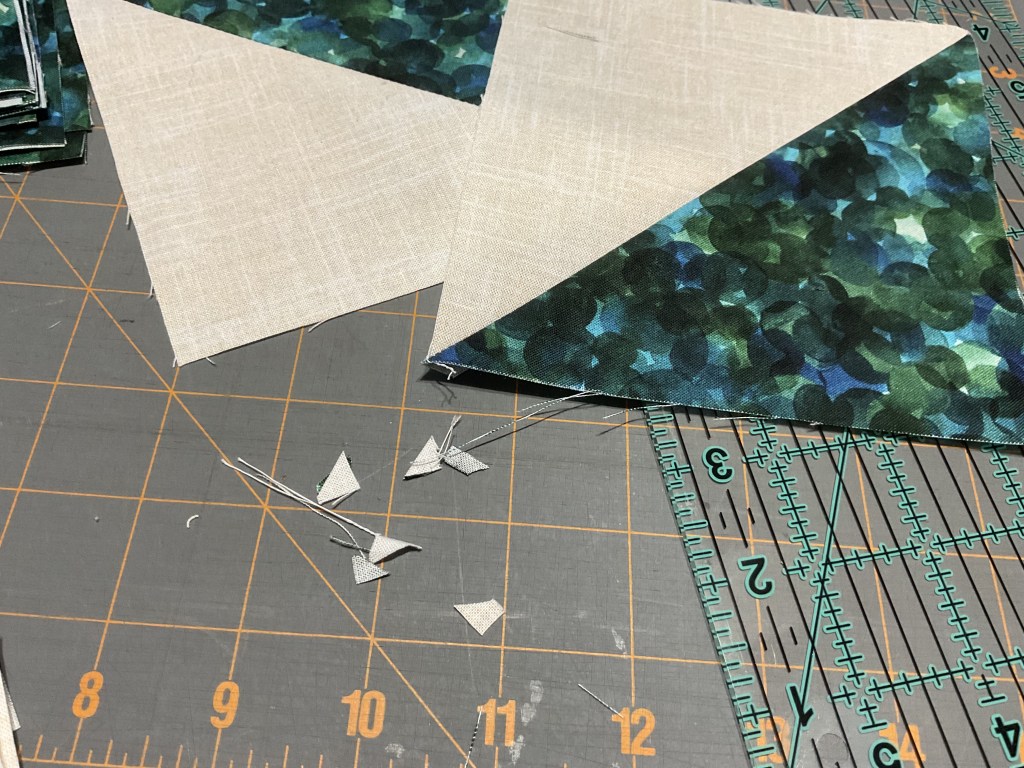
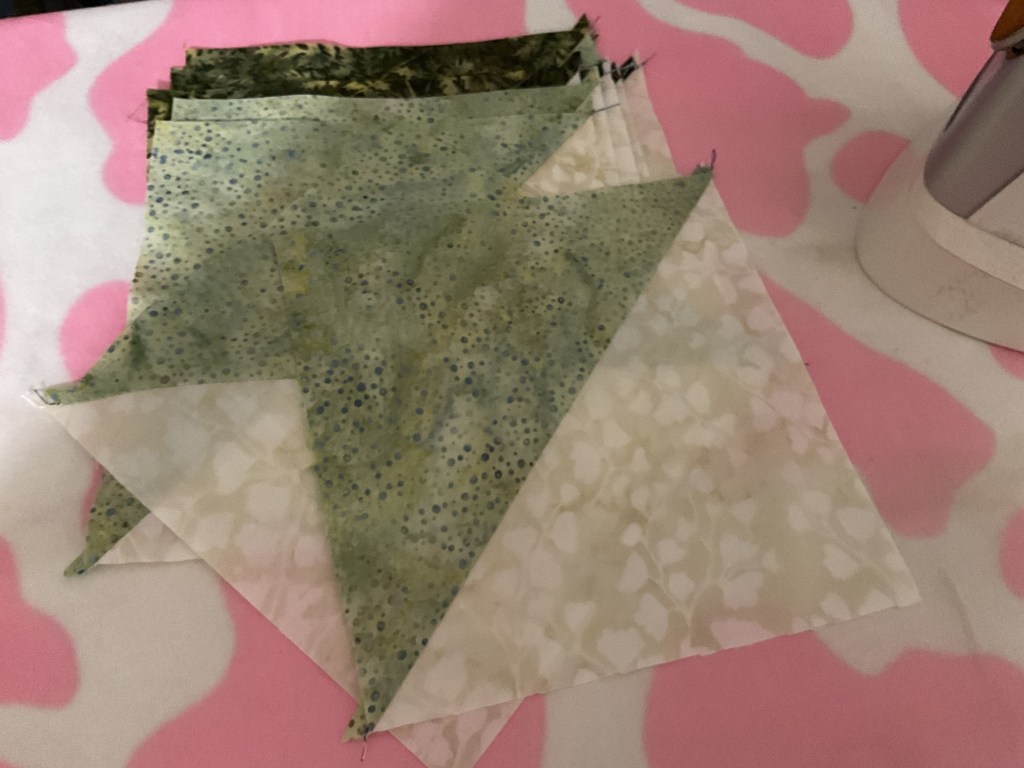
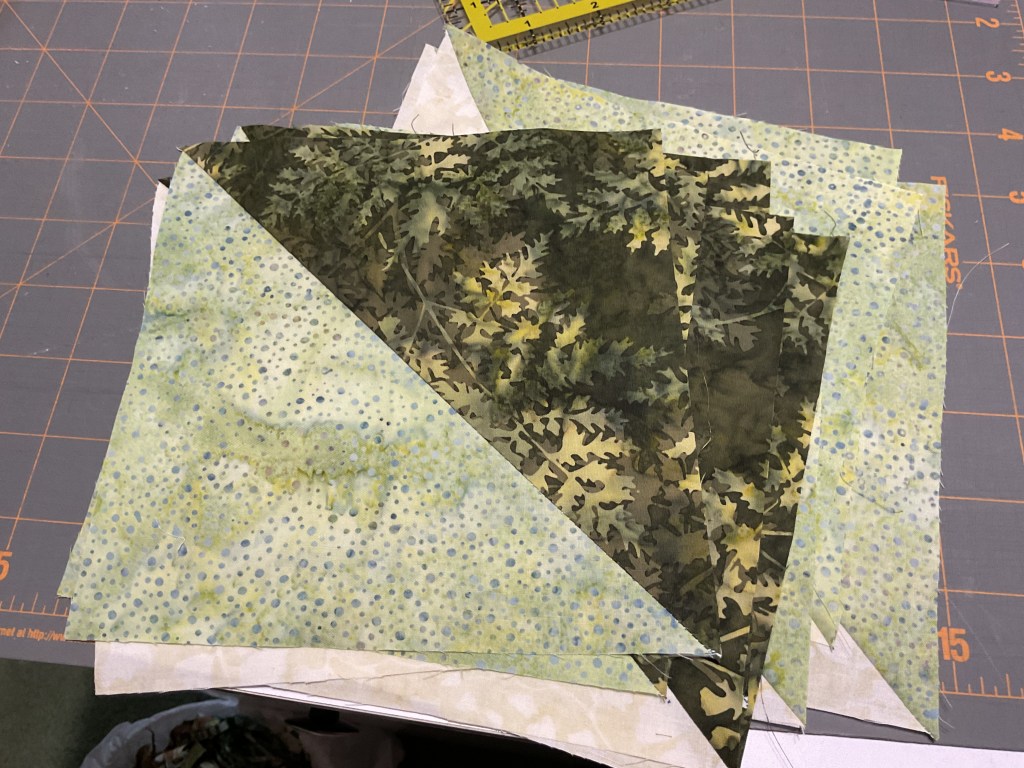
6. We’re off to the iron now to press all of the HSTs open. Looking ahead at how we’re going to assemble the HSTs, I am going to err on the side of caution and press half my blocks to the dark and half to the light. Don’t forget to cut off all those little annoying ears after you are done pressing.
7. Now let’s sew those HSTs together into larger units of 4 HSTs. Having the seams pressed to both light and dark is going to make this a lot easier than if they were all pressed to the dark (which is what I normally do). I laid one of the units out on one of my small flannel boards so I wouldn’t get confused while sewing them together (Hey! Wanna make your own small flannel board? Check out this tutorial!)
8. Now that we know how to assemble the larger units, let’s sew them together, following the layout on the flannel board above. First, I’m going to sew the top 2 HSTs together. Second, sew the bottom pair together. Third, sew the top pair to the bottom pair. I often skip pressing until the end when I’m putting together a block or unit, but please press each step if you need to. Because I pressed the HST seams to both the right and the left, it’s a snap to nestle my seams to achieve good crisp points.
9. Now that the 4 HST units are sewn and pressed, we are going to sew 2 of those units together into a big 8 HST unit. This was really a lot easier to put together so far than I thought it would be. Yay!
10. Next step is to sew the sashing strips on according to the pattern. I am definitely pressing all of my sashing strips to the dark side (Huh….and it’s not even May 4th yet).
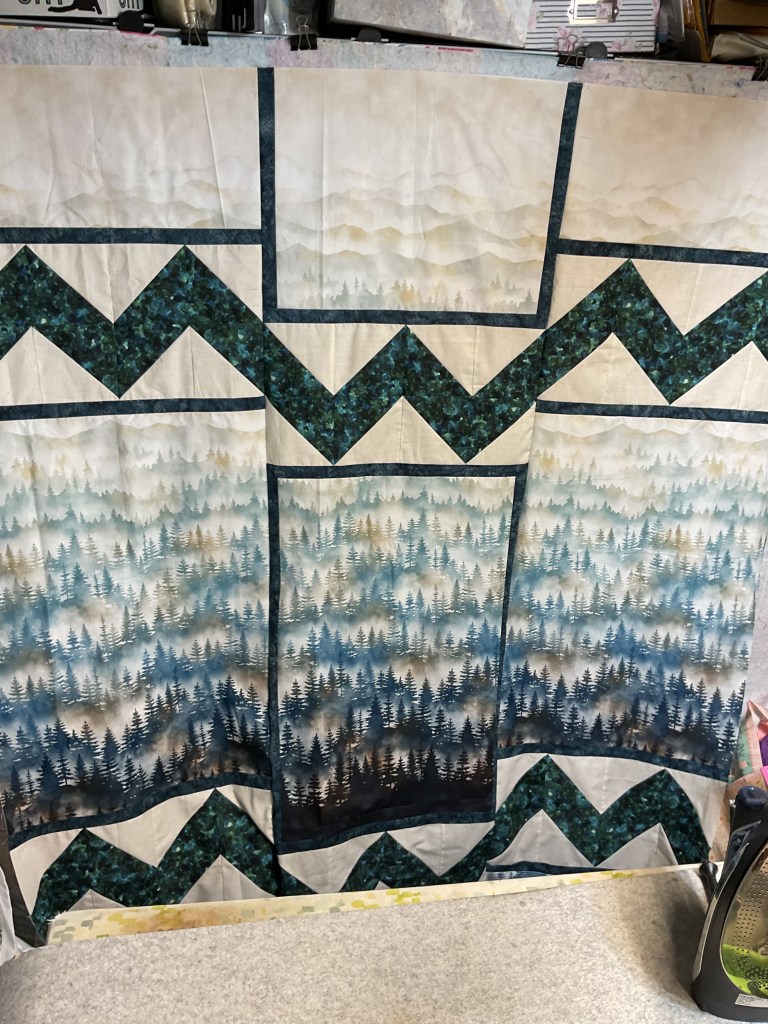
11. Now it’s time to lay everything out on my design wall before I can sew the sections together. WHEW! This is where I’m really glad I wrote fabric positions in the corners earlier so I don’t get the large pieces mixed up.
12. I need to sew all the pieces in each section together before I can sew the 3 vertical sections together. OH NO! I ran into a little unexpected problem with the bottom of my quilt –
I LITERALLY RAN OUT OF THE TREES/MOUNTAINS FABRIC. Because I wanted to arrange it vertically instead of cut random or scrappy. It’s an out of print fabric and no longer available and I have to complete the top now. Ugh! What’s a quilter to do? Improvise, of course.
Sadly, I can’t show you my solution yet because the quilt is too long and is hiding behind my cutting and pressing station. You’ll have to wait until the end when I show the entire quilt.
13. Now I’m going to sew the 3 vertical sections together. And suddenly the quilt came together like magic! I have no idea why I felt intimidated by it for so long. Silly me.
I really love how the sashing frames the center sections – it’s almost like looking out a window at the Alps in Italy, isn’t it?
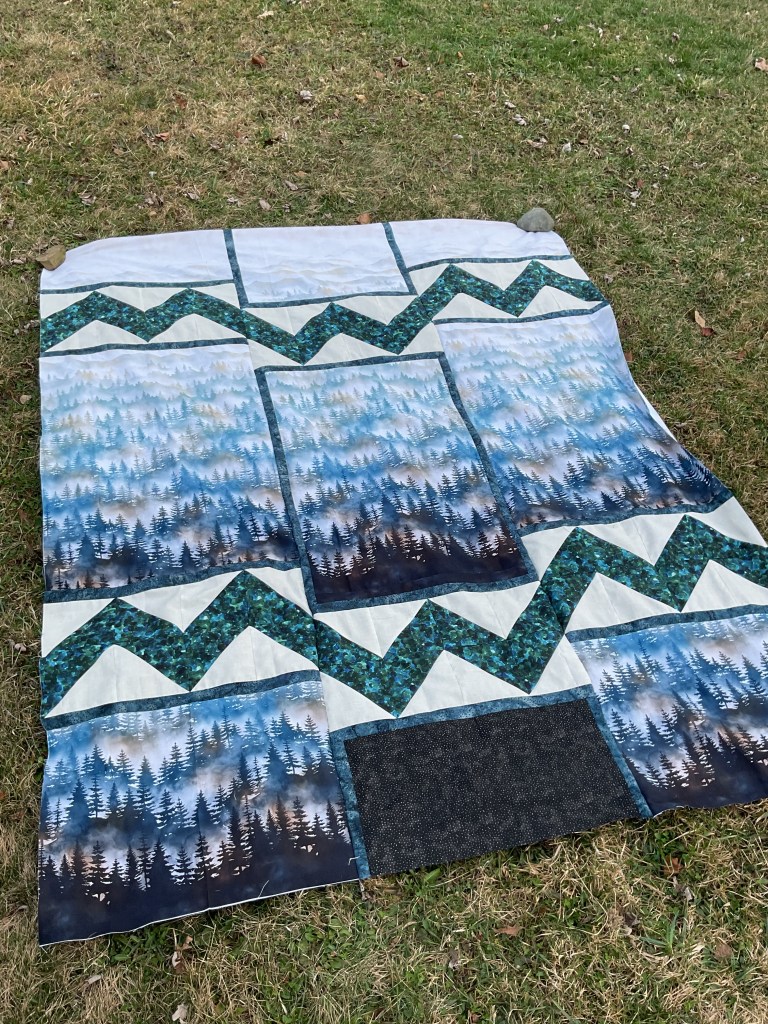
14. And here’s the completed Arctic Flame quilt top. Please forgive the rocks anchoring the corners of the quilt top, but it’s a typical windy March day here in northwestern Pennsylvania.
Can you see my solution for running out of the trees/mountain print? The bottom center piece. I found a dark mottled fabric in my stash to place there. It works, doesn’t it? It really does. As the bottom of the center middle section is dark, like it’s fading into the shadows, the dark mottled fabric continues the shadow idea. What are your thoughts on my design decision? Have you ever run into a similar situation when you ran out of fabric and had to improvise? What did you do?
I really love how Arctic Flame came together and how the HST sections now mimic the mountains in the digital trees/mountain fabric by our friends over at Hoffman’s.
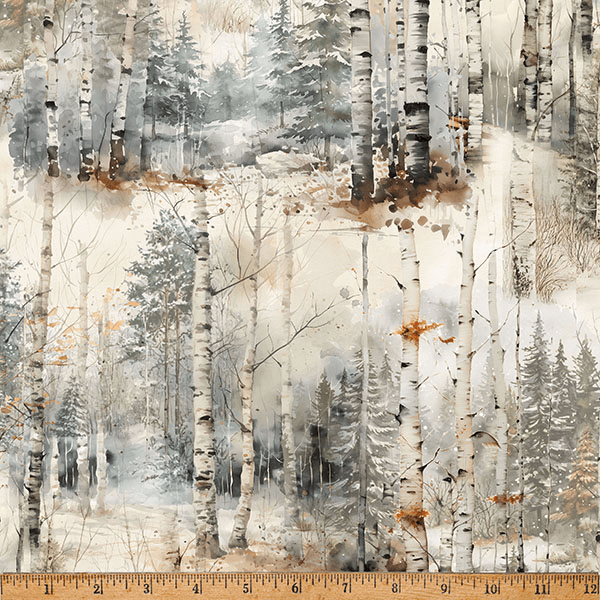
Hoffman’s sometimes creates landscape running yardage for their digital collections. Here is a great one from the current Stag and Stone collection:
Wouldn’t this print be gorgeous in the Arctic Flame pattern? What would you choose for the light and dark fabrics for the HSTs and the sashing?
Who knows? Maybe Arctic Flame will be your next quilt project.
As the Winter Olympics and Paralympics draw to a close, so does our Olympic celebration here on the blog. Stay tuned next week to see what mischief I’m cooking up for you next.
Punxatawney Phil (the groundhog extraordinaire) saw his shadow on Monday, February 2nd, which means 6 more weeks of winter. Like that’s a big surprise this year, right?
Have you ever attended the spectacle in Punxatawney? I have not, but when I was an early childhood educator in a former life, I would get up early and watch it on TV as I always planned some fun things for the kiddos. Now? I tend to agree with all the fun and silly memes on Facebook. MY favorite showed a wolf in a winter landscape and said something like “The groundhog saw his shadow – 6 more weeks of winter. So I ate him.” Succinct. Punchy. Perfect. Huh. That’s winter for you.
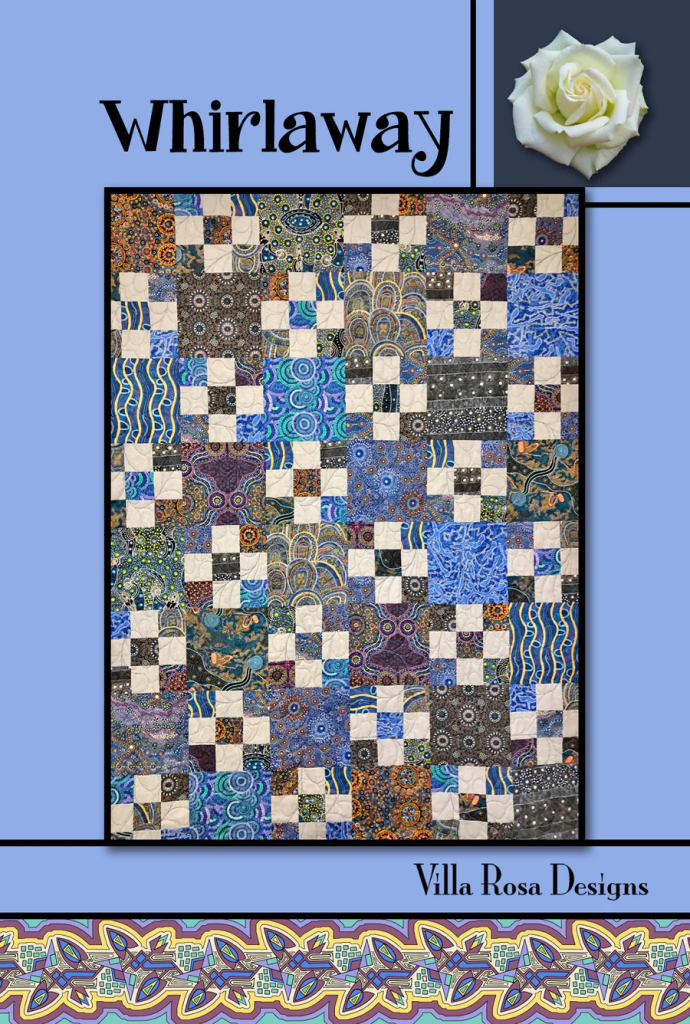
As promised last week, I’m back with my Blue and White quilt tutorial featuring Pat’s Rose Card pattern, Whirlaway. Have you ever made Whirlaway? It’s a really fast and fun quilt. Perfect for beginners. And it looks great in any fabric combination, even fabrics right out of your scrap stash. And the best part – it’s fat quarter friendly so it’s a fantastic pattern to use up some of those delicious fat quarter bundles gathering dust on your storage shelves because they’re just too pretty all tied up with a ribbon to cut them up. Well, now you can. The alternating squares give you plenty of space to enjoy the fabrics and Whirlaway handles large prints like a dream. So what are you waiting for??? Grab your fabrics and the Whirlaway pattern and make a quilt with me.
Before I begin the tutorial, though, I have a quick question for you, dear readers. Which tutorial format do you prefer?
Each step numbered with the written instructions first followed by the image(s)
Each step numbered with the image(s) first followed by the written instructions
Steps are not numbered, with the written instructions first followed by the image(s)
Steps are nit numbered, with the image(s) first followed by the written instructions
I would appreciate you weighing in on this because I seem to go back and forth among these different options and I would like to make the tutorials as useful and easy to follow as I can.
As I mentioned above Whirlaway is fat quarter friendly and uses a single background fabric to unify everything together. It finishes at a very nice 54″ x 72″, which is a great throw-sized quilt. Of curse, you can add or subtract blocks to make it larger or smaller. Or you can out an outer border. If you added a 6″ finished border, the quilt would become 66″ x 84″ which would work on a twin sized bed. Just remember that if you decide to make more blocks or add an outer border, you will need additional fabric.
Let’s gather up our fabrics now!
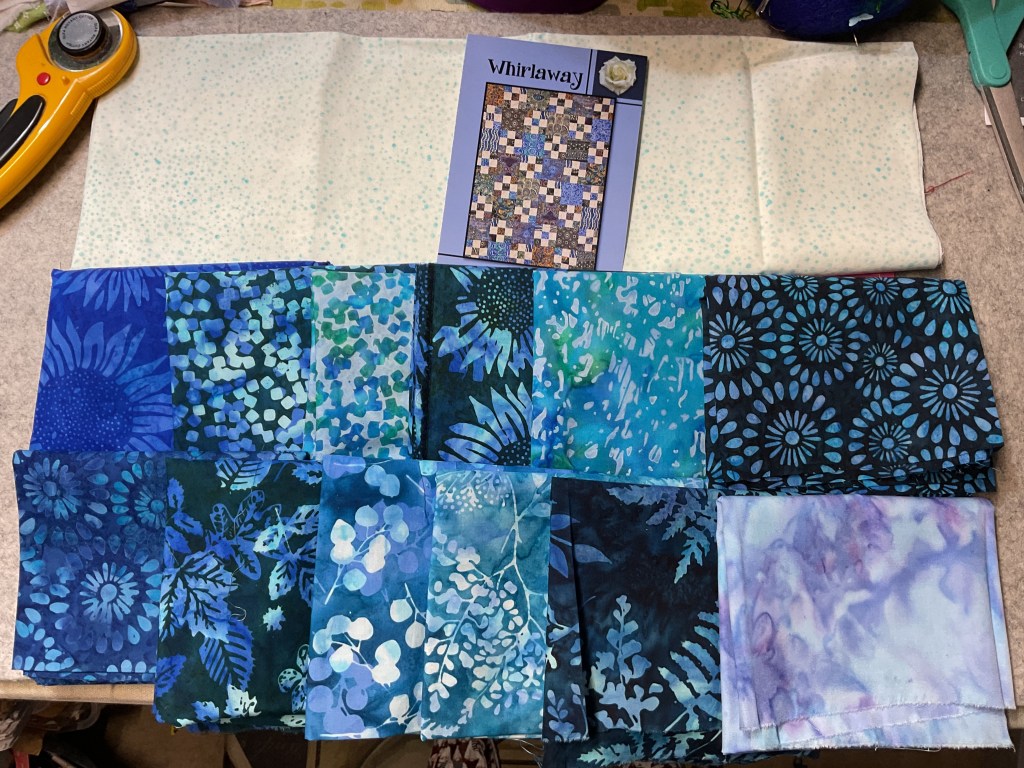
Today I am using yummy batik fabrics from our friends over at Hoffman Fabrics. This is an older collection called Aurora, which probably long gone. I am totally in love with the range of colors – medium blues to brighter blues to deep blues to a touch of purple just for fun. I’m using one of my favorites – Hoffman’s Ocean Aquatic Dot Batik – for my background. I find myself using the lighter Dot Batiks as backgrounds and I love love love the darker ones for binding.
Now that we’ve gathered everything up, we are ready to begin cutting out fabrics. For Whirlaway, we are cutting 2 different sized squares from our FQ’s and that’s it. Fast and simple. Easy peasy.
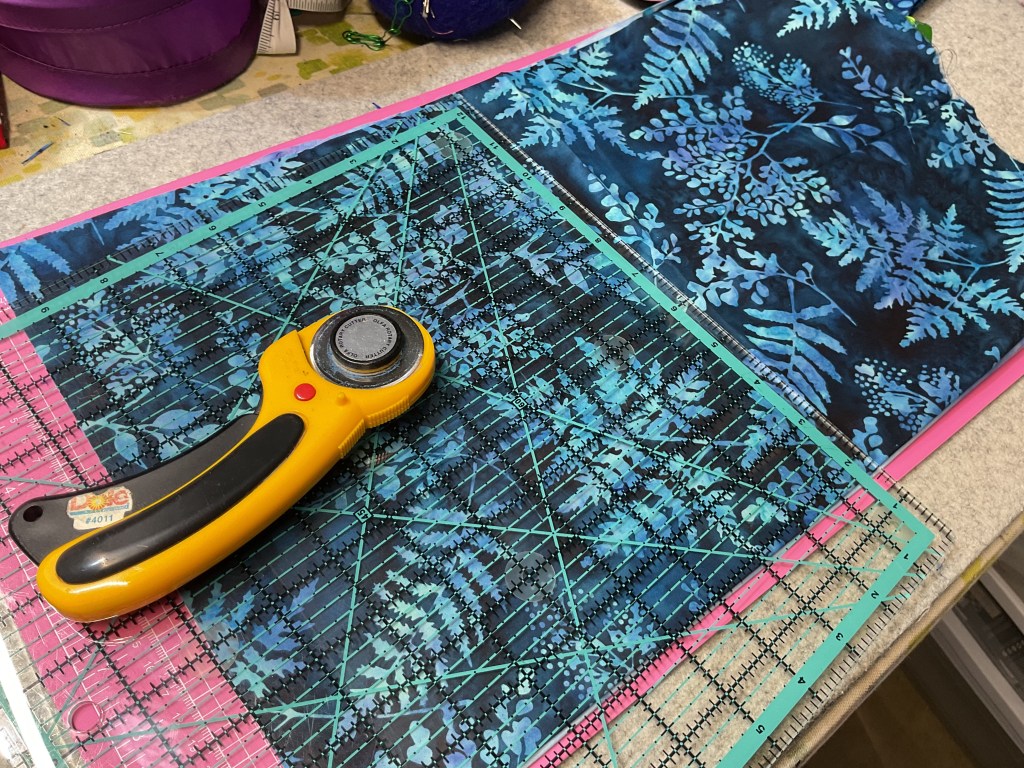
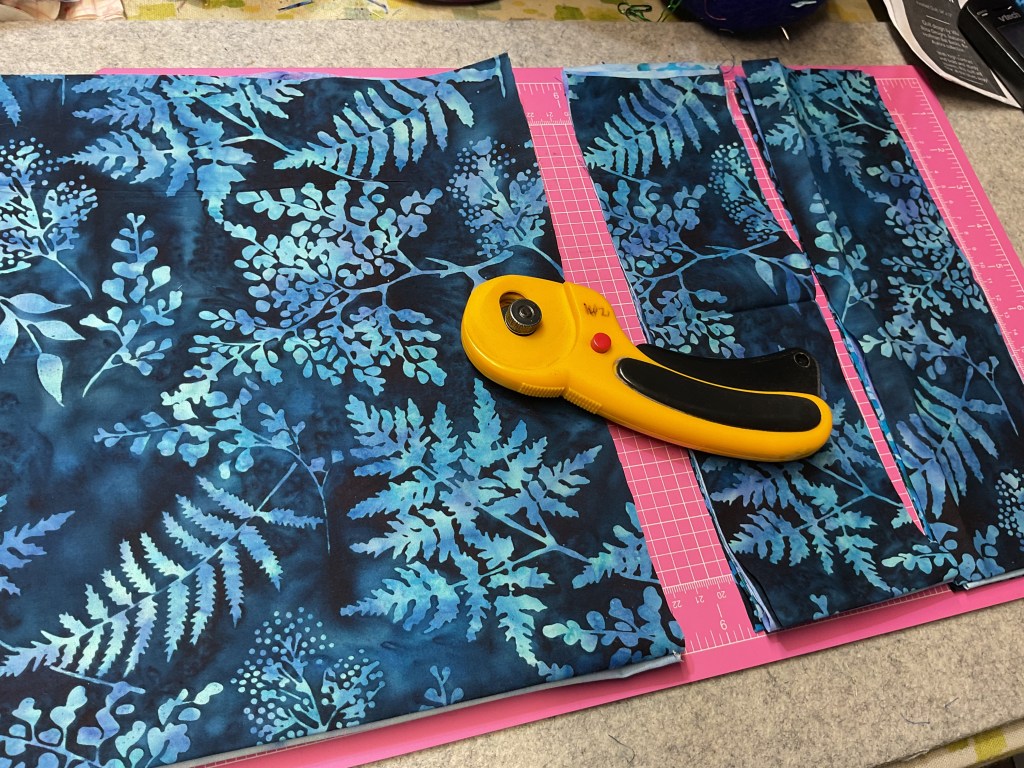
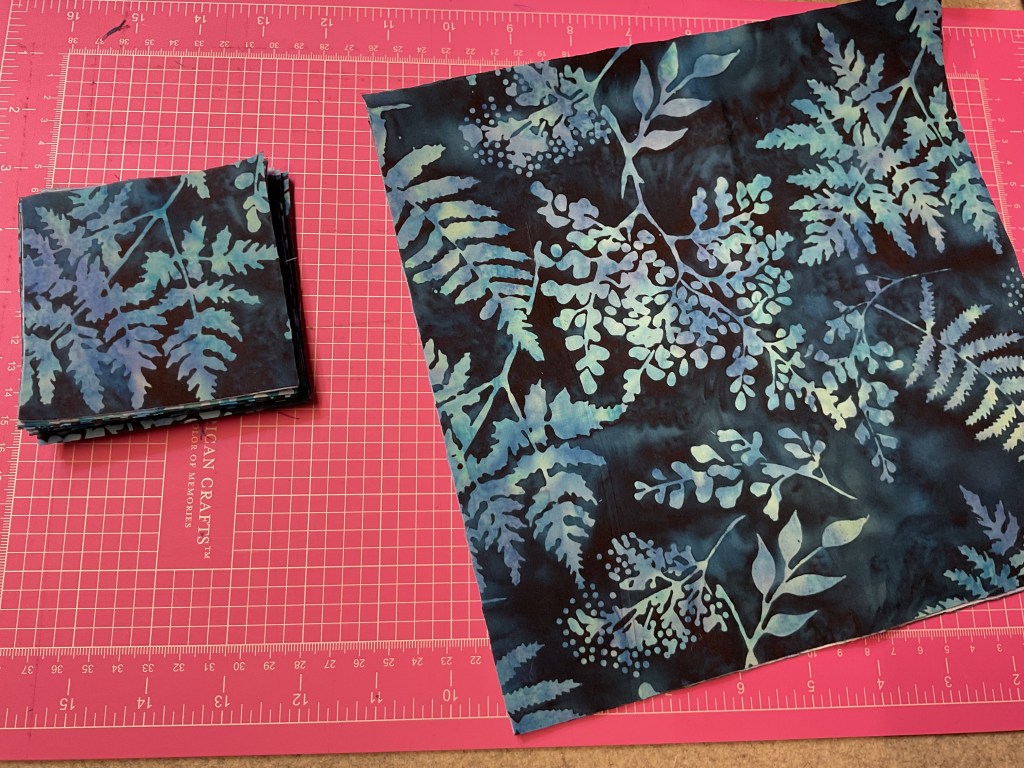
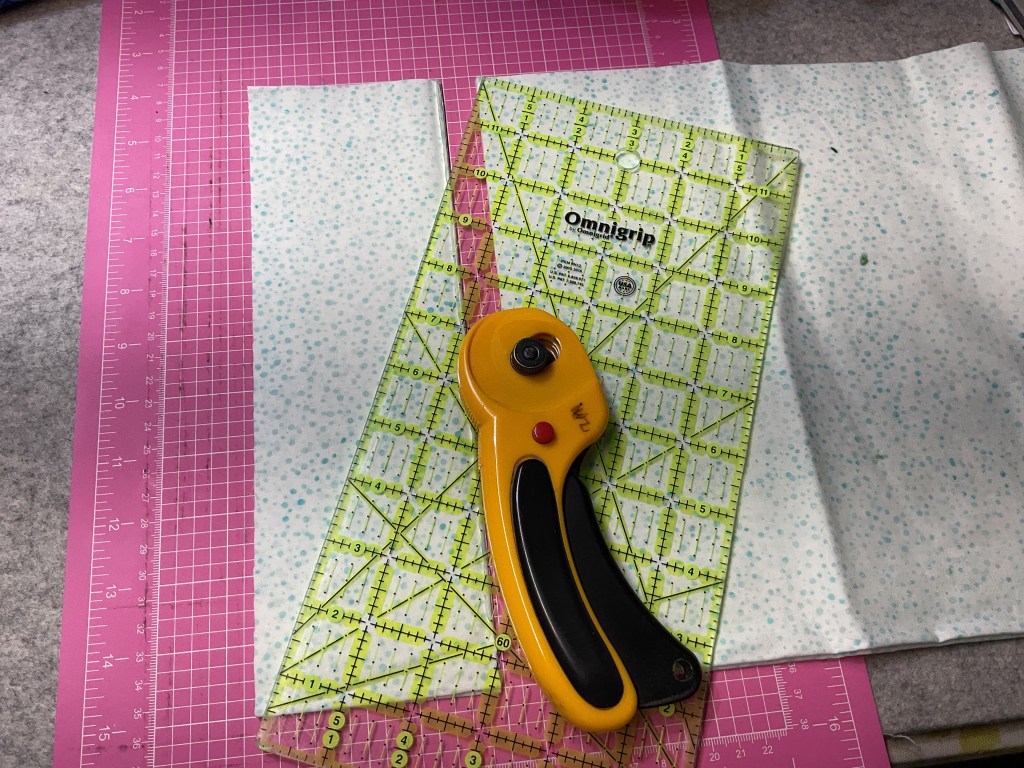
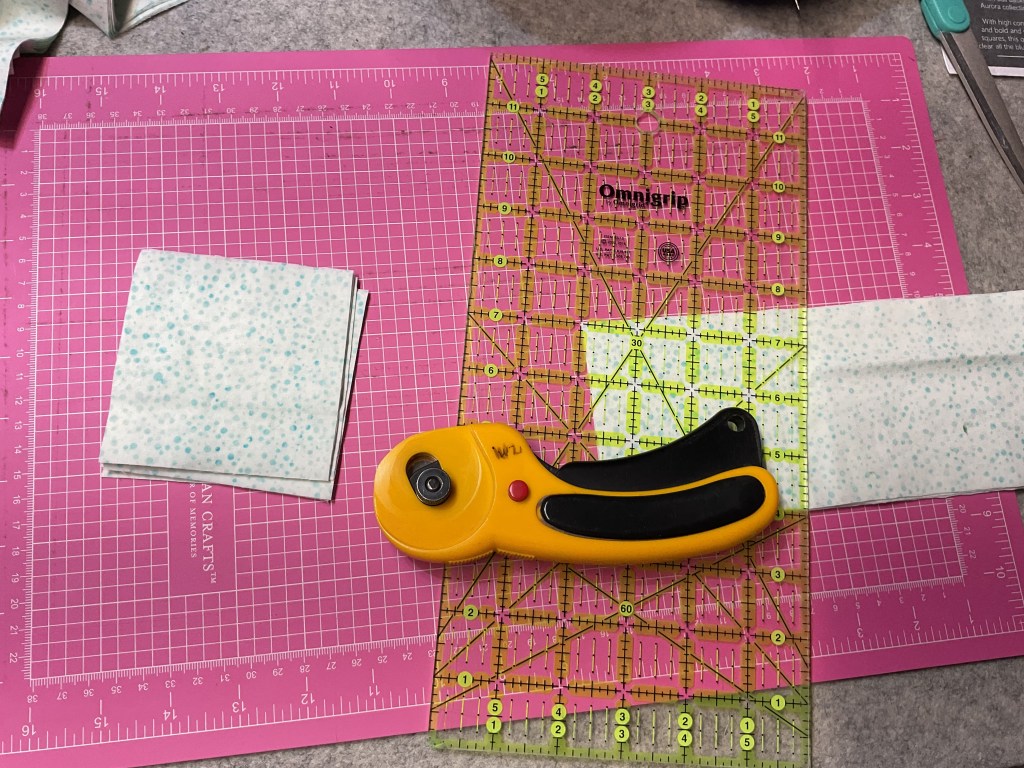
I like to layer 3-4 fabrics at a time when I cut. Do likewise if you feel comfortable, but don’t feel like you have to. Whether you cut one fabric at a time or multiples, we’ll all get to the finish line. Here you can see that I cut my fabric into strips and then cut my strips into squares. Efficient and accurate.
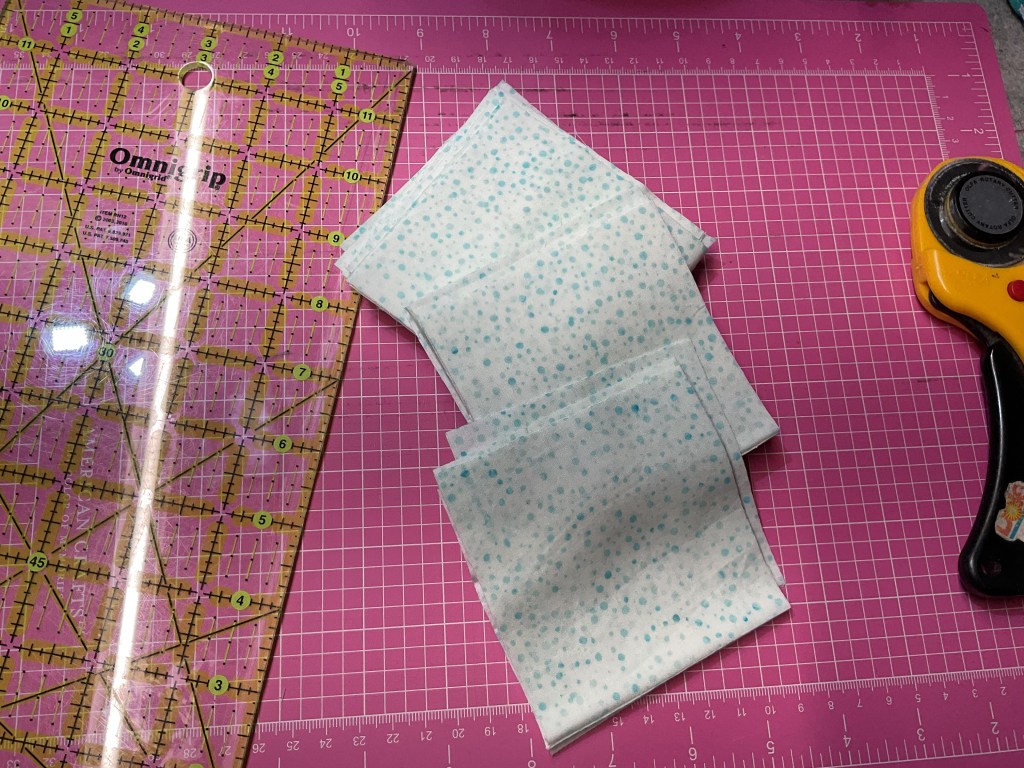
We only need to cut the smaller size squares from the background fabric. Again, I cut the strips first then cut my strips into squares.
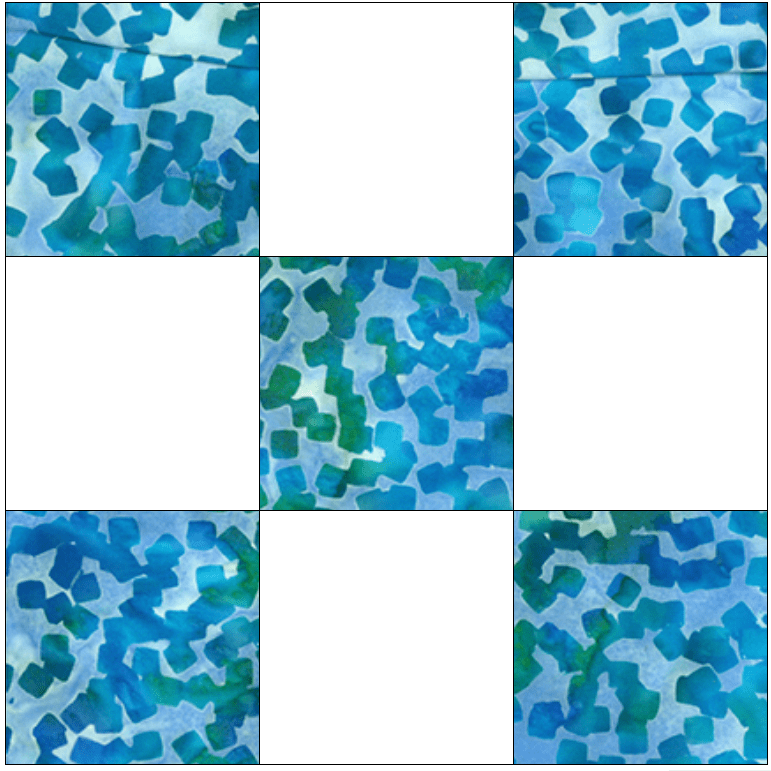
Next we’re going to make a stack of Nine Patch blocks. Yay! You have some options to consider for your Nine Patch blocks. It’s like being a guest quilt designer for your very own project!
A). You can use only 2 fabrics for each Nine Patch – the background fabric and 1 of the FQ’s.
B). You can use 3 fabrics for each block – the background fabric, 1 FQ square for the center square, and a 2nd FQ for the 4 corners
C) 5 assorted FQ squares and 4 background squares to make fun scrappy blocks
I chose option C. Surprised?
What’s your process for making Nine Patch quilt blocks?
I like to make all of my Nine Patch blocks at once, using chain piecing, without stopping to do any pressing in between. I have found this to be the most efficient way for me to make a bunch of Nine Patch blocks in the shortest possible time. I am all about finding the quickest, easiest, most successful – LAZY – way to quilt and sew. That attitude has earned me the nickname, “the Lazy Quilter” amongst my friends. LOL!
Let me share with you how I do it.
First, I need to know the number of Nine Patch blocks required for the quilt.
Now it’s time to sew a FQ square and a background square together. I need to make pairs 3x the number of blocks required for the project.
Once I have all of the pairs sew together, next I’m going to add a third square to each pair. The first group will have a background square on each side of a FQ square and I need to make 1 of these rows for each block, so I will need to make the same number as the number of blocks I need for the quilt. Gosh, I hope this isn’t confusing……
When that is done, I will sew a different FQ square together with each remaining pair. If I did the math right (YAY MATH!), I will have 2X the number of blocks for this row as I will use 2 of them for each Nine Patch block.
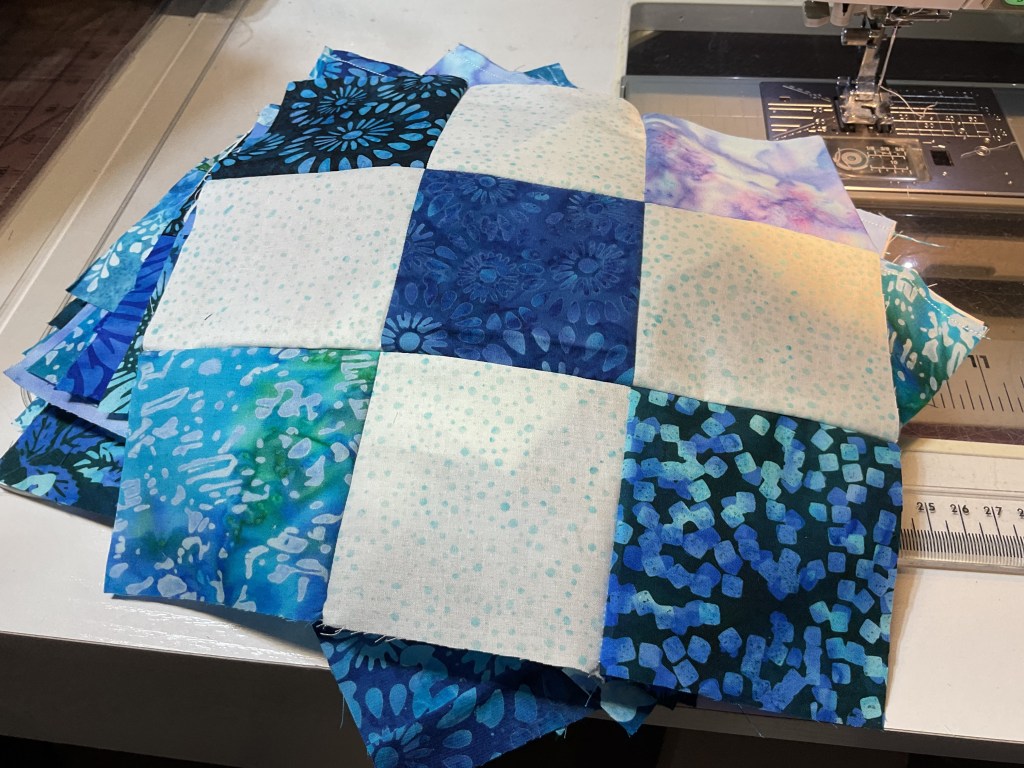
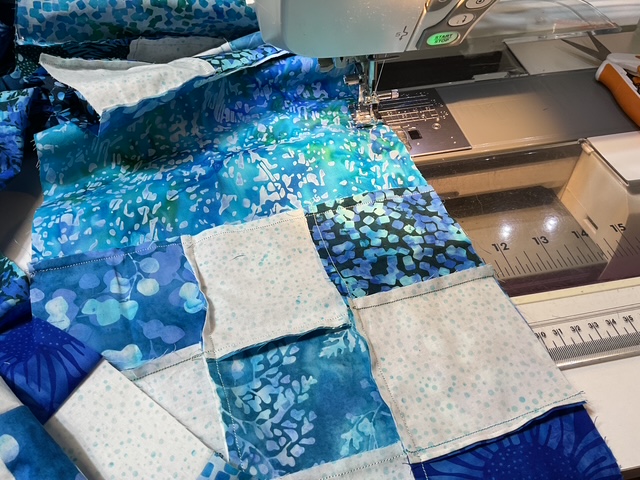
Then it’s time to sew 3 rows together (a background-FQ- background row between 2 FQ-background-FQ rows) into a scrappy Nine Patch block. I sew 2 rows together and then after I’ve done that, I go back and add the third row to make me a big passel of Nine Patch blocks all at the same time.
Whew – that was really fast! Now all of my Nine Patch blocks are finished. I can press the blocks at this point, or if I’m feeling really brave or pressed for time, I’ll save the pressing until the whole quilt top is finished before I press the whole thing.
I’m feeling brave so let’s skip the pressing for now. I have found that batiks usually behave themselves better than standard quilting cottons because of their denser weave so I feel pretty confident that the quilt will still turn out well. Besides, this is a very forgiving pattern with Nine Patches alternating with big squares. I guess it all really depends on your personal comfort level. If you need to press, then by all means, press. No judgements here, just quilts.
If you’ve been following the blog for a while, then you might already know how much I adore simple quilt blocks like Nine Patches. Here are a few past blog posts about Nine Patch quilt blocks you might find interesting:
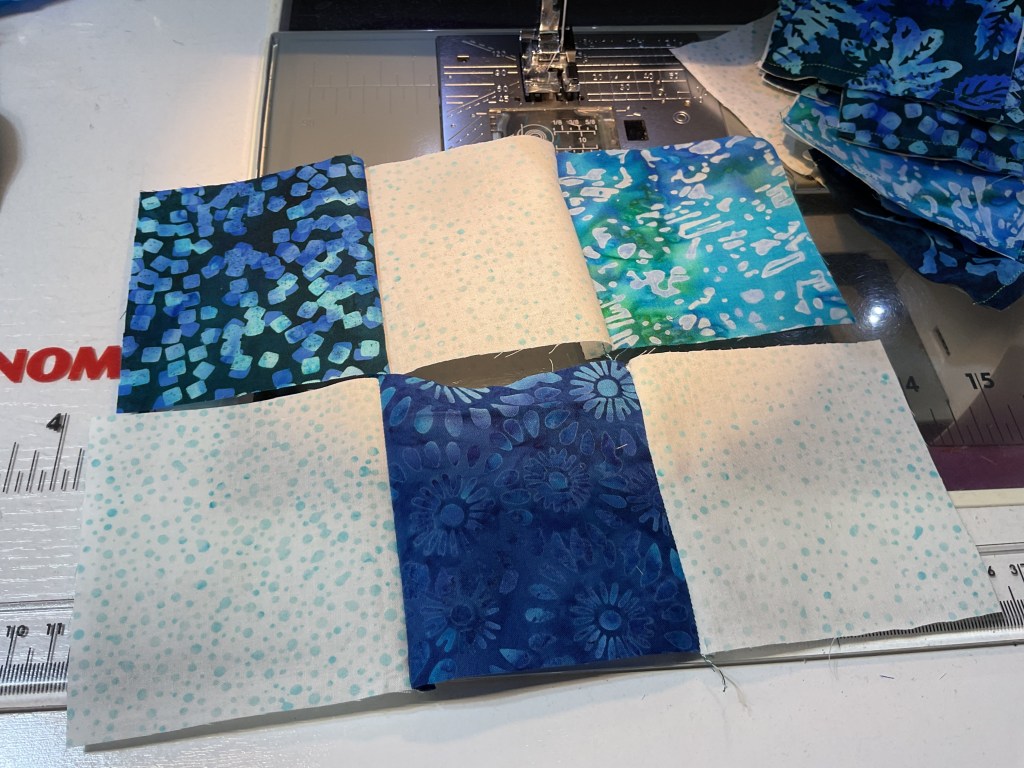
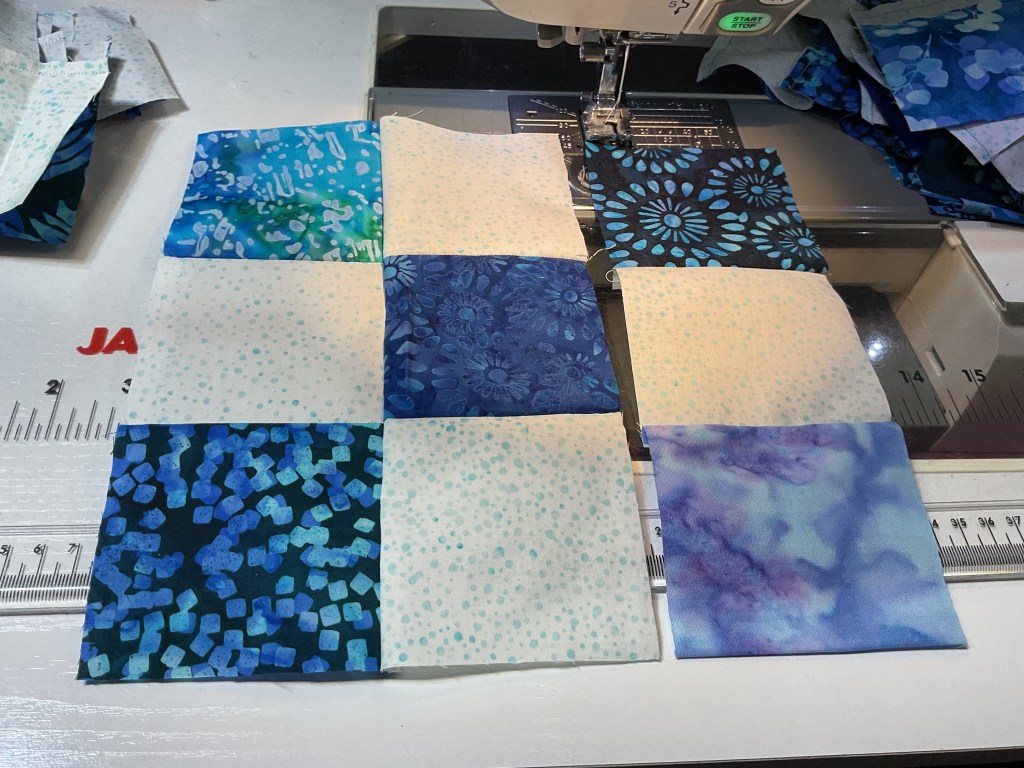
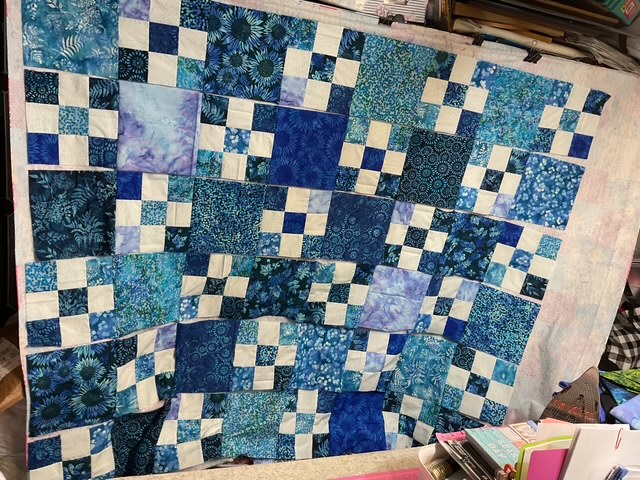
All right, time to put all the blocks and squares up on my design wall and play switcheroo with them until I’m happy with the arrangement of the blocks. I am trying not to have any squares of the same fabric touching, but we’ll see how well that’s going to work out for me.
I seriously didn’t have much trouble getting the blocks to play nice with their neighbors. WHEW! Sometimes this part of making a quilt takes longer than the actual cutting and sewing, but not today.
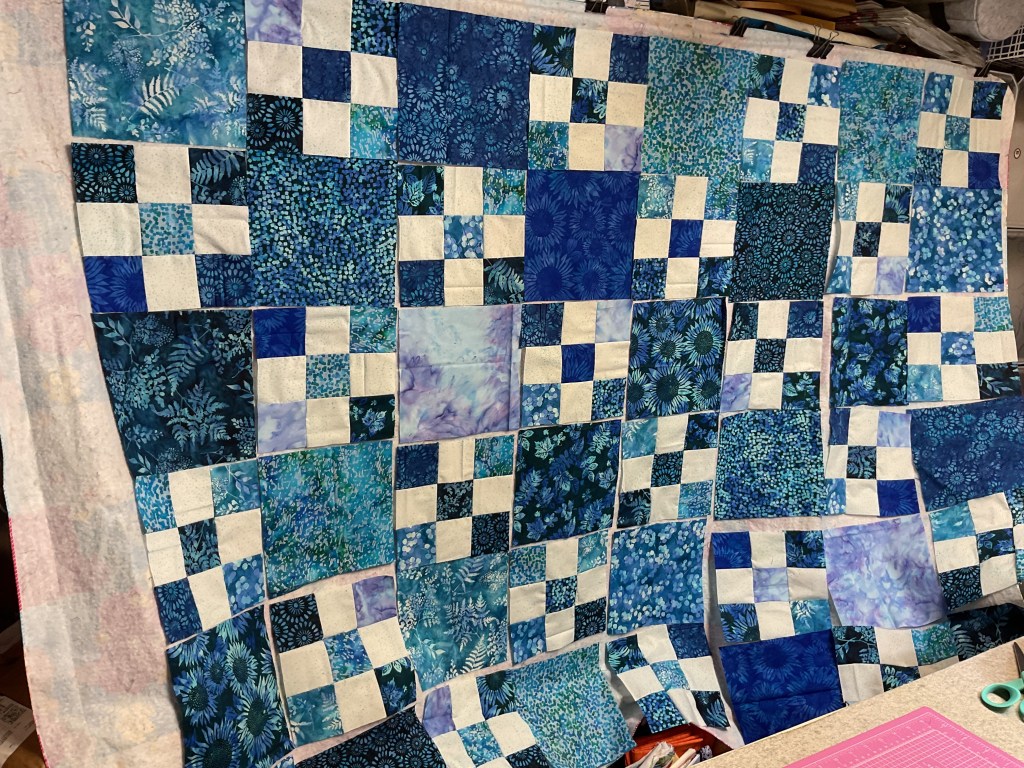
Voila! Here is my blue and white Whirlaway arranged and ready to sew together. Please note, I had to lay the quilt blocks and squares out sideways to fit on my design wall.
WOOHOO! Now it’s time to sew the blocks into rows.
You really can make this lovely quilt top in a weekend or even a day if you’re in a hurry.
Here we are, almost done! Rows are stitched and now it’s time to sew the rows together.
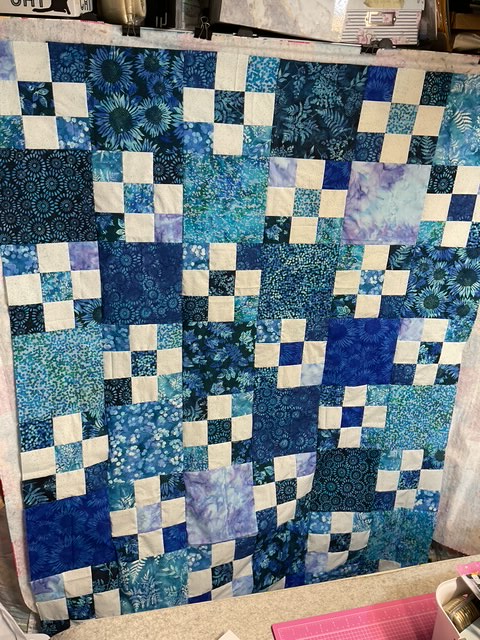
And finally, here is my finished Whirlaway quilt top. I really like how it turned out, don’t you? It’s very wintry and perfectly appropriate for this Polar Vortex weather pattern we’ve been stuck in.
I really love how the purple adds a lot of interest to the quilt.
Now I’ll have to add it to my to-be-quilted pile. Sigh……you know the towering teetering pile that would be taller than me if I stacked all of them in one pile for real? Yup, that one.
Well, that’s it for me this week. Let me know your thoughts on your preferred tutorial format, please. And I’ll adapt my format to whichever one seems to be the most popular.
Stay warm and stay busy. Spring will come someday. I think.
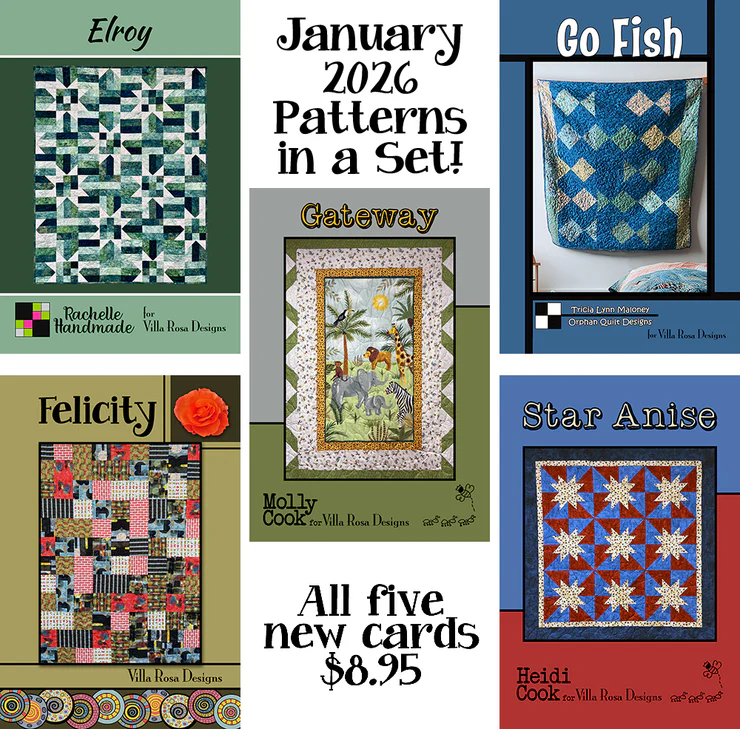
Are you ready for a FUN and exciting new year of quilty goodness here on the VRD blog? We’re working on all kinds of cool ideas for 2026, including another 6 Quilts in 6 Weeks Challenge, lots of new patterns (as you probably already know we release 5-7 brand new patterns each and every month), and lots of other great stuff. You just need to hang out every Thursday with us to see what’s up.
Speaking of new patterns, I’m excited to share with you our brand new January patterns. If you’ve been hanging out with us for a while, then you probably already know that I totally live for the Thursday after the first Friday of every month. If you’re new to the blog, first – WELCOME, we’re SEW glad you’re here – and second, our new monthly patterns are released on the first Friday of each month. Here on the blog, I love to share our new monthly patterns on the Thursday post following Pat’s reveal of the new patterns on the first Friday. Whew! I hope that makes sense.
(patterns are also available individually as both digital downloads and printed patterns)
Elroy – Rachelle Handmade is back with this clever star-worthy fat quarter friendly quilt that finishes 48″ x 60″. So grab your favorite FQ collection and this quilt go together in a jiffy.
Felicity – Here’s another super quick fat quarter patterns from Pat. It finishes at 42″ x 54″ and makes a fun throw or kids’ quilt.
Gateway – This is Molly’s latest panel quilt design. It finishes at 42″ x 62″, which is a nice small throw or even a large wall quilt.
Star Anise – Heidi’s new design this month is a fab graphic star pattern. It finishes at 58″ x 58″ and makes a good-sized throw. You could add another row at the bottom to make this quilt longer if you wanted to and it would be the right size for a Quilts of Valor quilt.
Go Fish – This cutie was created as a child’s quilt for a new baby in my cousin’s family. It finishes at 46″ x 52″ and uses fat quarters.
Because of the holidays, I didn’t get a runner finished in time for January, but I have something else for you this month!
New Seasonal Series for 2026
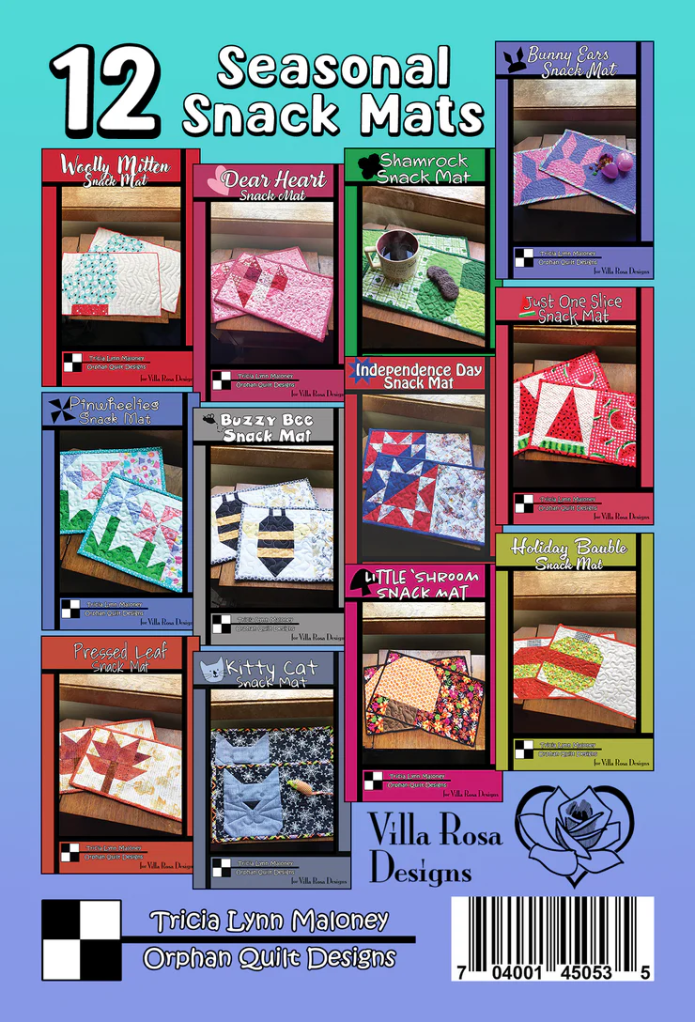
I hope you enjoyed the Seasonal Snack Mat Pattern Series from 2024-25 as much as I did. It was really fun to come up with a new design for each month of the year.
Did you know we have all 12 Snack Mats together in a print collection now? You can find it HERE.
Hey! How about another Seasonal Series for 2026???
Great idea – it just so happens that this month we’re kicking off a new Seasonal Accent Pillow series. The patchwork pillow covers will finish at 18″ square and can be used as small wall or table quilts.
WOOHOO!
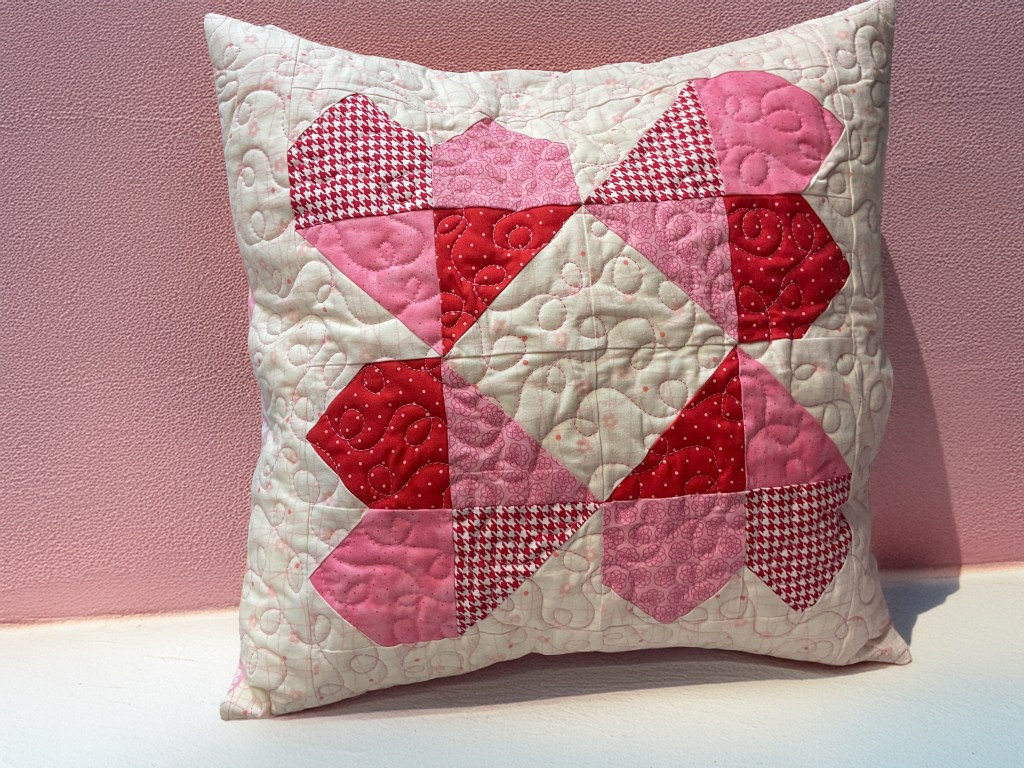
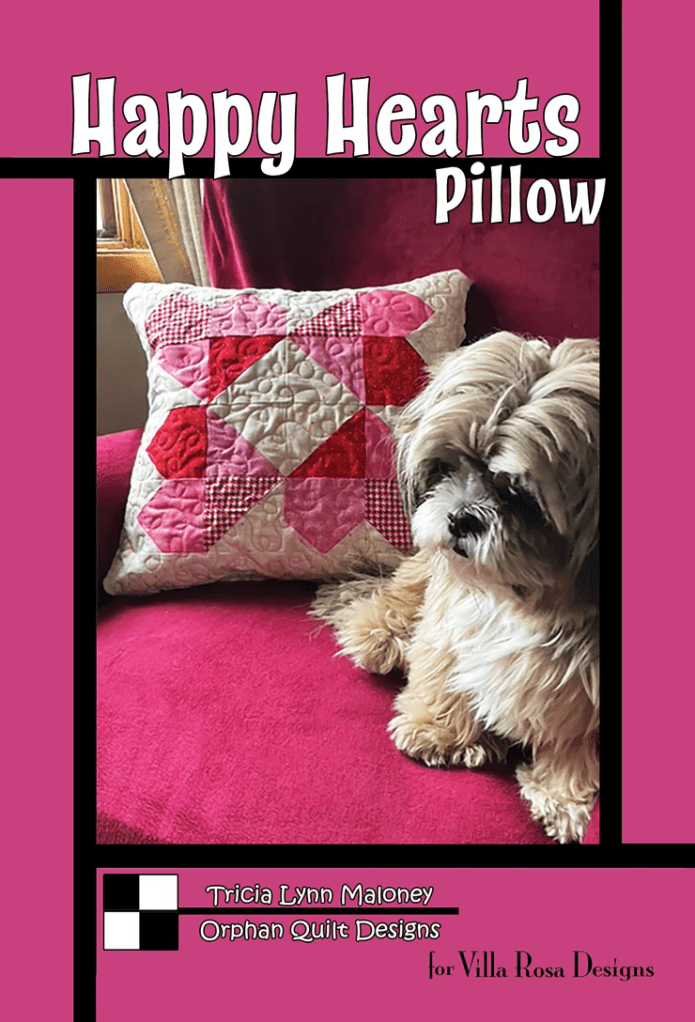
This month’s Pillow is called Happy Hearts.
My furbaby, Bailly, decided she wanted to be in the photo with the pillow. To be fair, I did use her favorite chair. LOL! Silly Bailly.
I hope you are as excited about this new series as I am. By now, you’ve probably noticed that I tend to create a lot of seasonal and holiday patterns. I wonder if that comes from living my entire life here in northwestern Pennsylvania where we can have all 4 seasons in one day. Yeah….maybe.
To jump-start your Year of Seasonal Pillows, I thought it would be a good idea to share with you how I like to finish the backs of my accent pillows. Yep, there are lots of different ways, but my absolute favorite is the Envelope Pillow Back.
Read on for a quick tutorial.
Envelope Pillow Back Tutorial
Have you ever made a throw pillow and wondered how to finish the back? Maybe you added that unfinished pillow top to your stash of UFOs and forgot all about it.
Let me show you my favorite method for finishing a pillow top with no zippers. Yep – you heard me right – no zippers! And that’s a good thing, too, as I am terrible at sewing zippers.
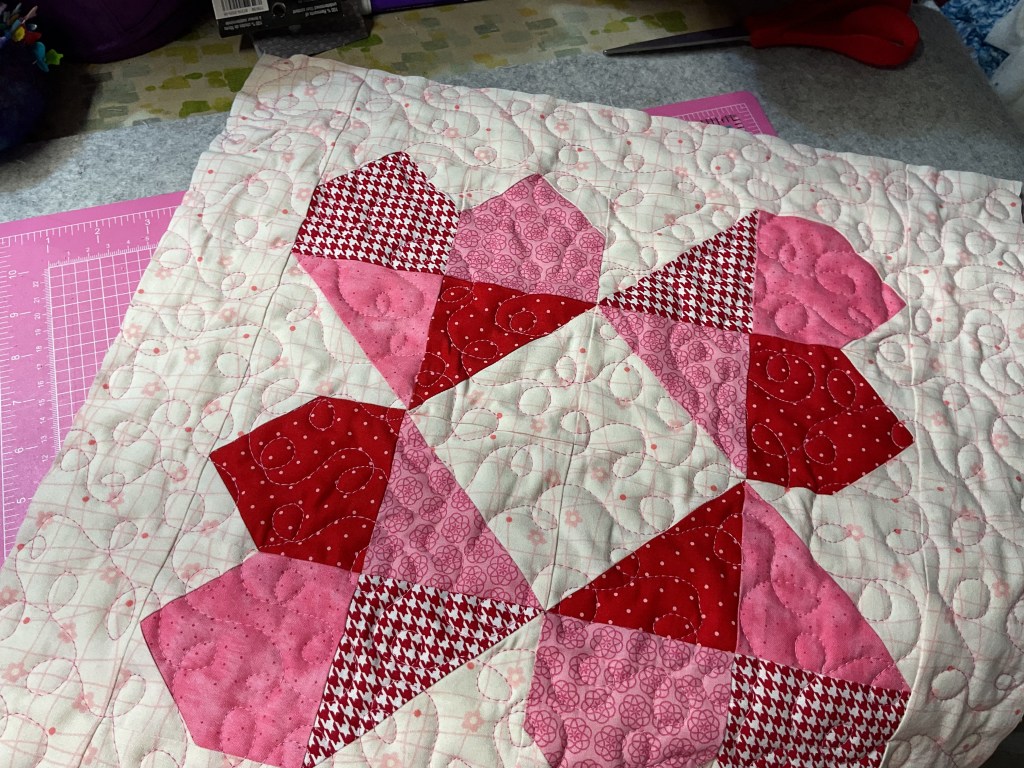
I layered my pillow top with batting and lining fabric and machine quilted it. Then I squared it up to 18 1/2″ x 18 1/2″. Now we’re ready to rock and roll!
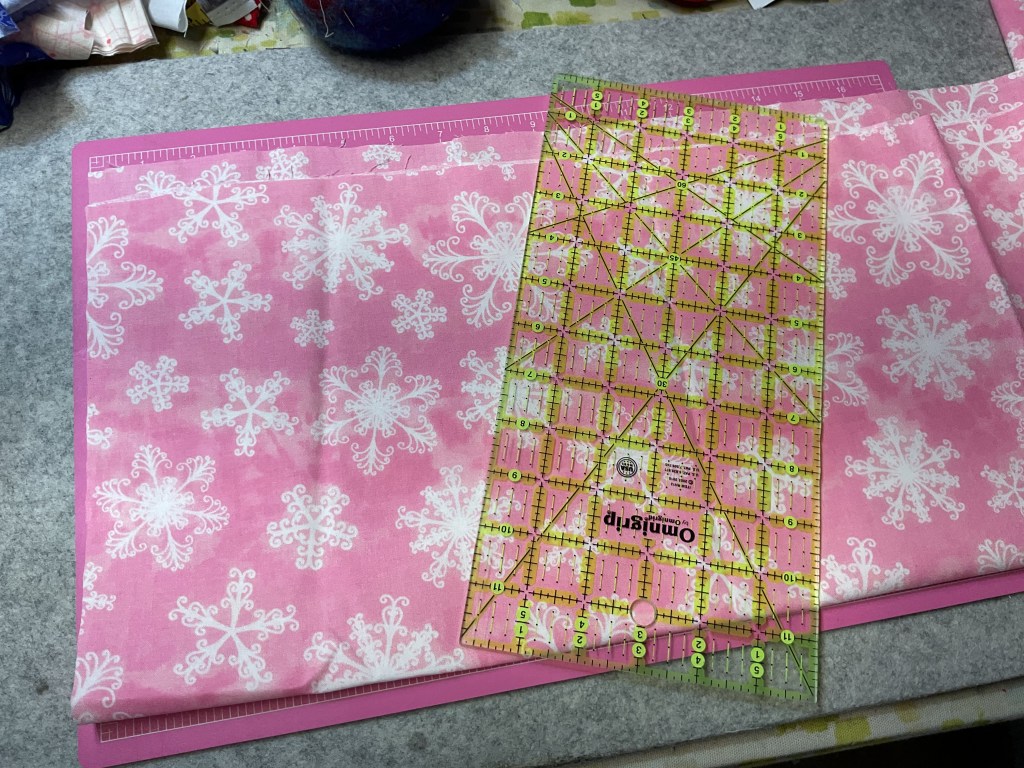
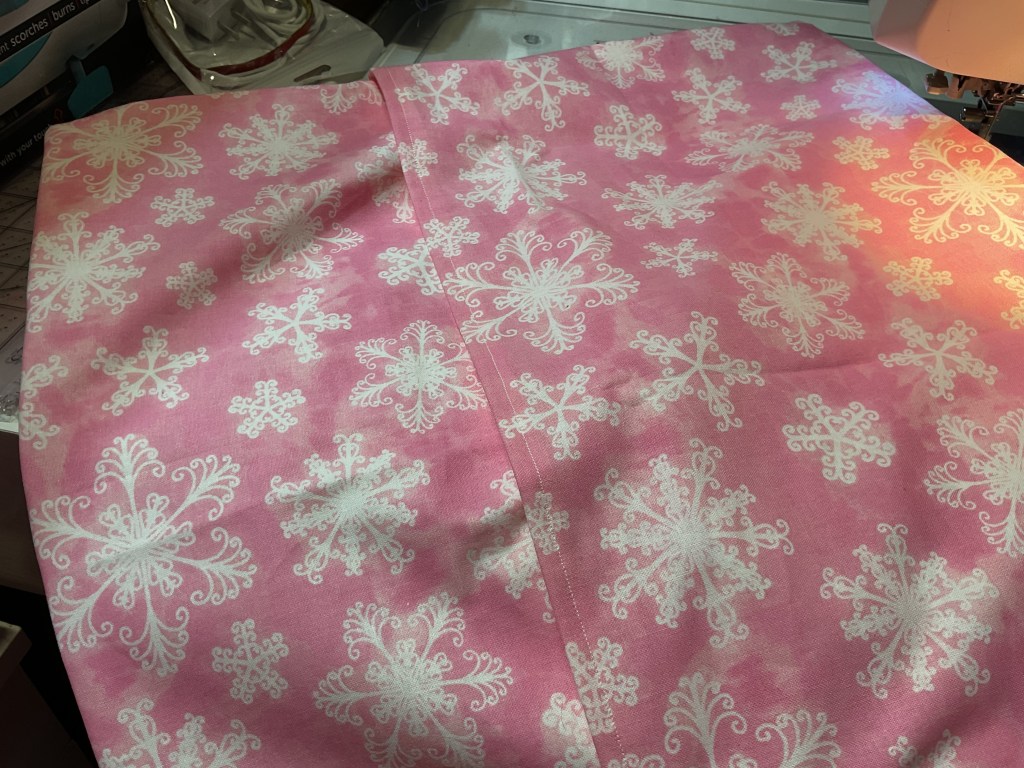
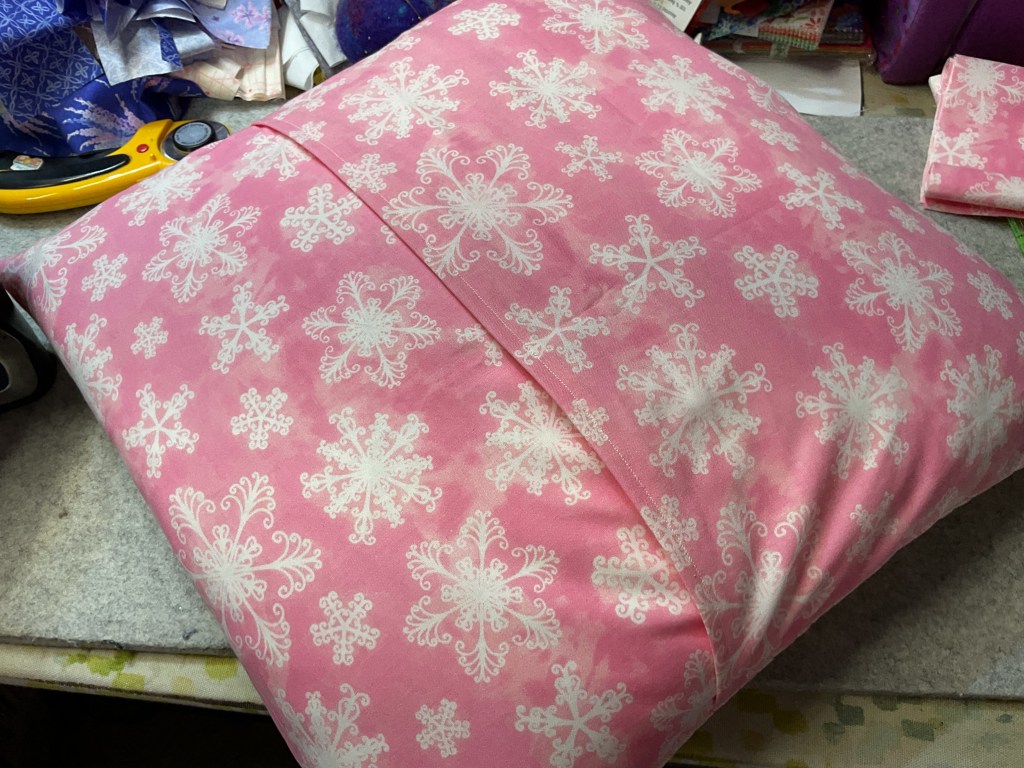
I chose these cheeky pink snowflakes for the back of my Happy Hearts Pillow since we’ll still be having snow for Valentine’s Day around here.
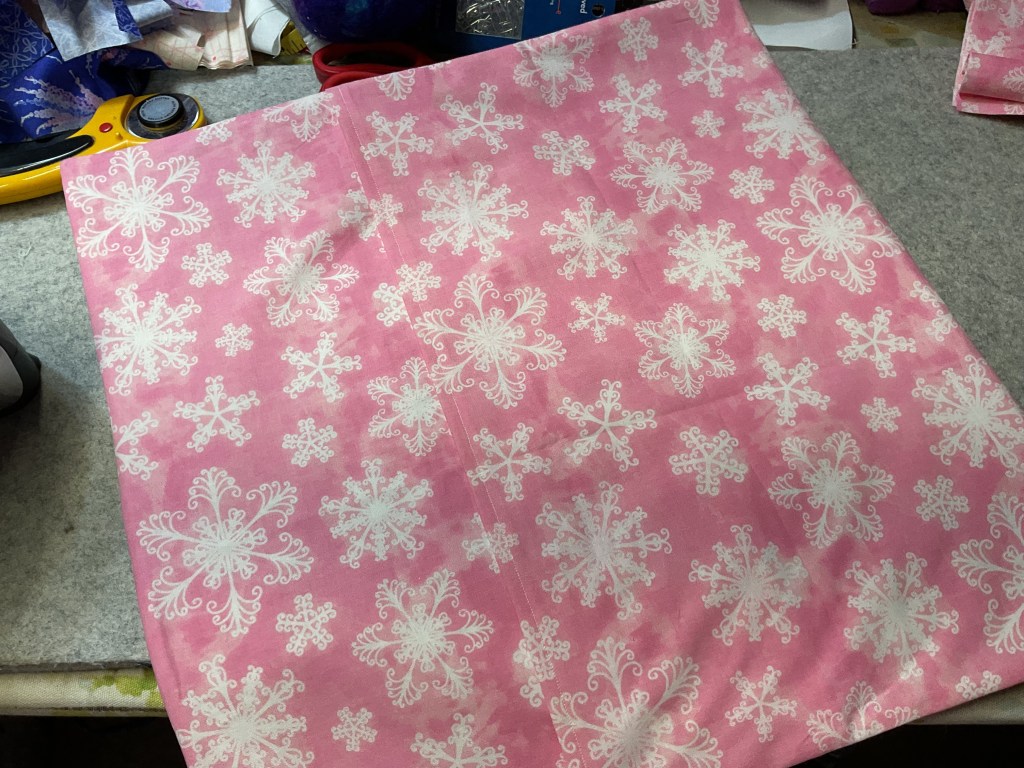
I decided to cut my 2 backing pieces of fabric 12 1/2″ x 18 1/2″ so that I would have a 6″ overlap. There aren’t any real rules for how much overlap to have on an Envelope back, but if you don’t have enough, you’ll know it because the opening on the back will bulge out, exposing the pillow insert. Better to have a generous overlap than not enough.
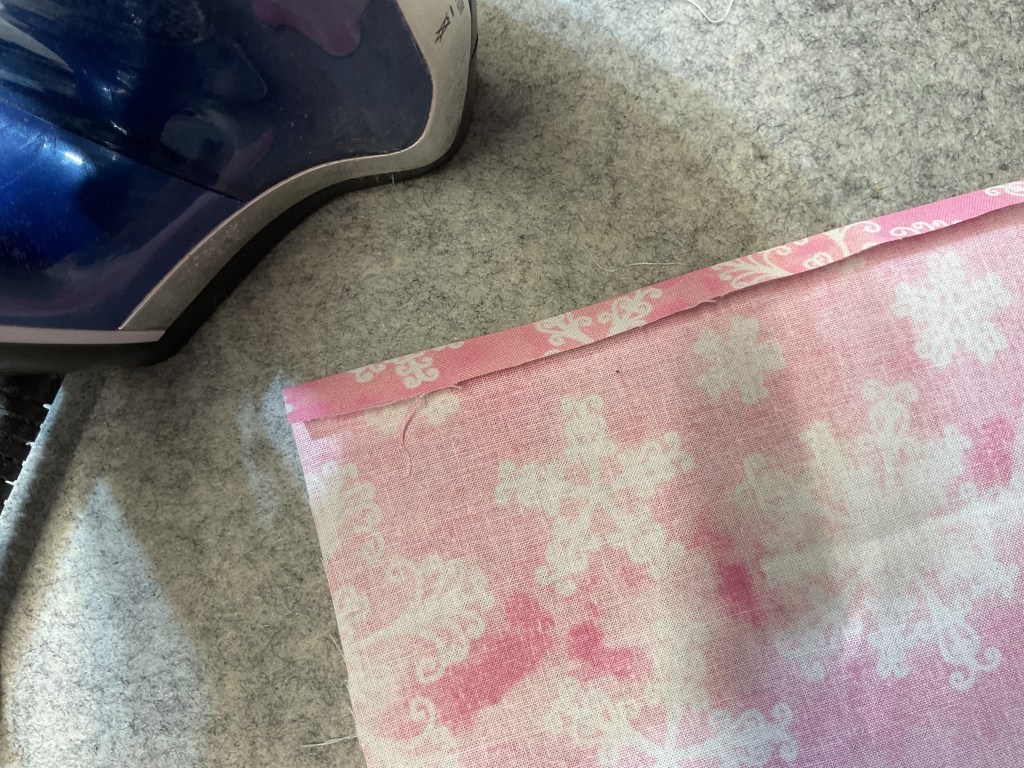
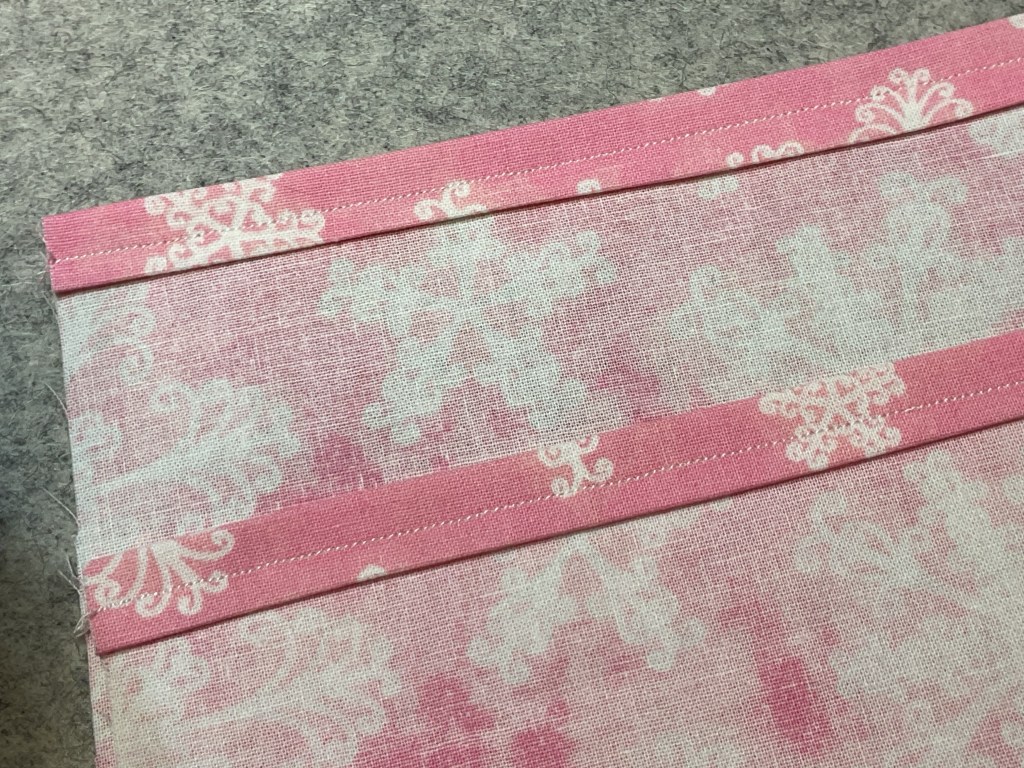
Next, I’m going to press a 1/4″ hem along an 18 1/2″ side on BOTH of the backing pieces.
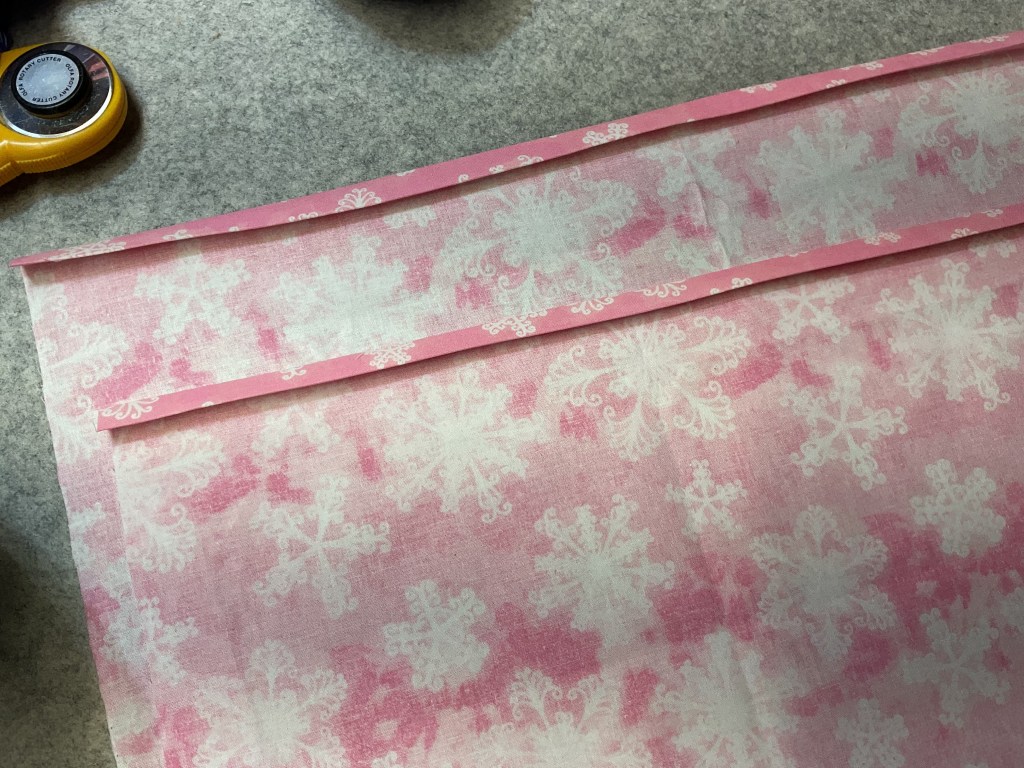
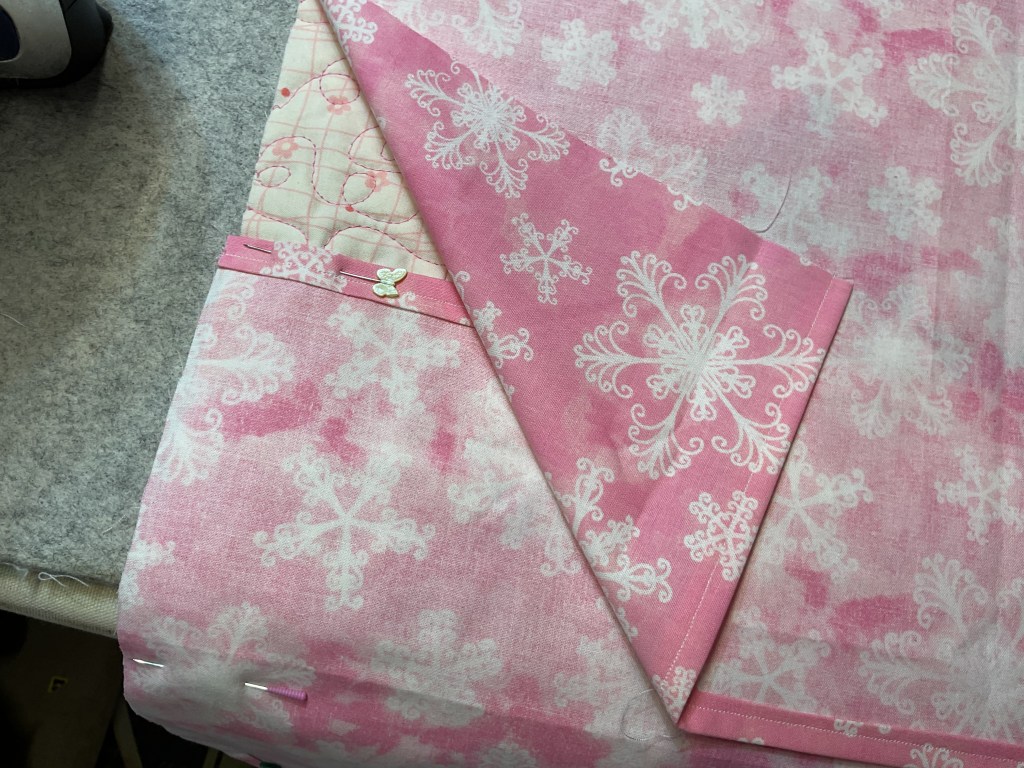
Then we’ll fold it over one more time so that the raw edges will be sandwiched in the hem. You can pin them in place if needed, but since I pressed them, they’ll hold up while I sew.
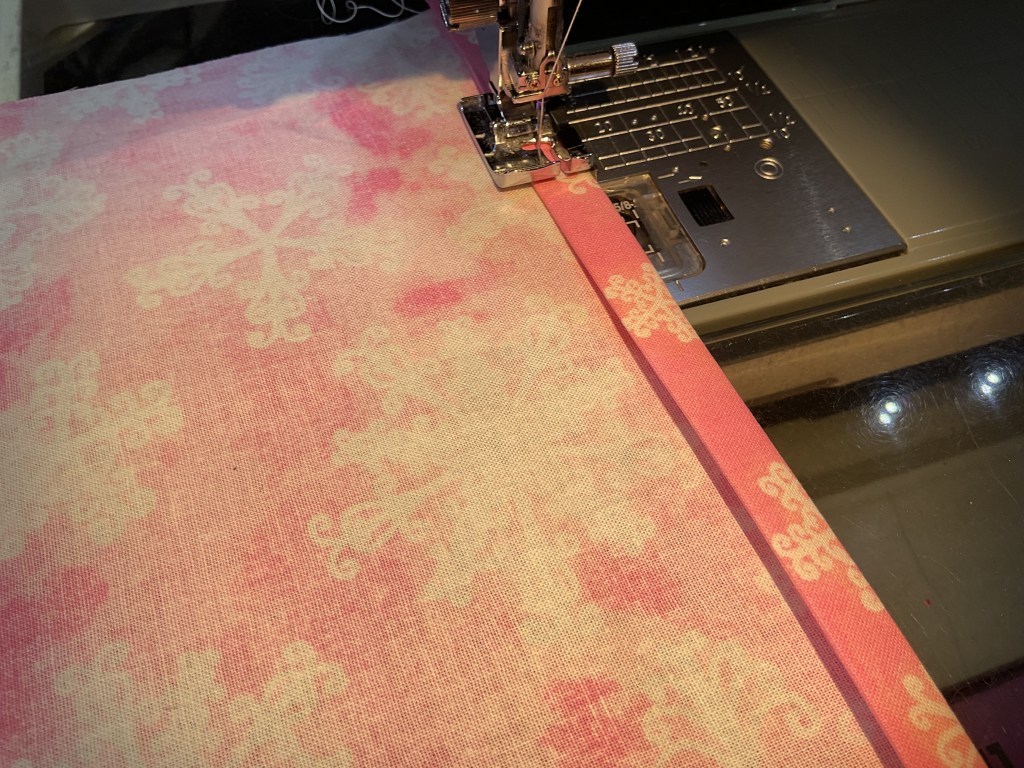
Alrighty, now we’re headed to the sewing machine to sew down the hem on both sections.
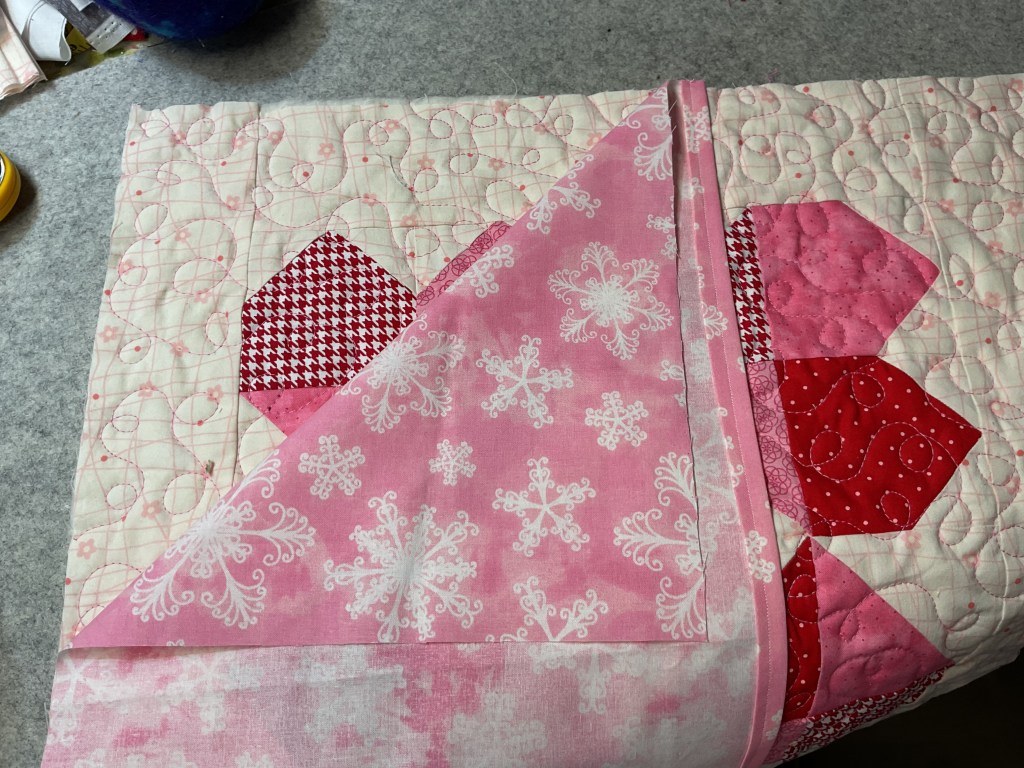
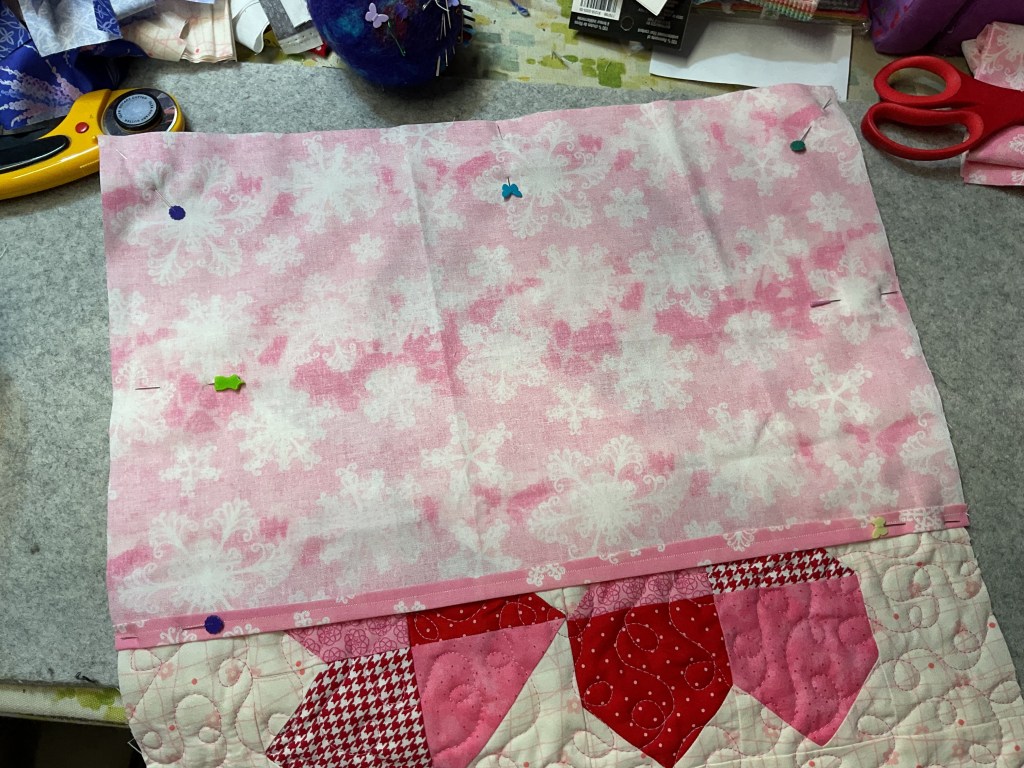
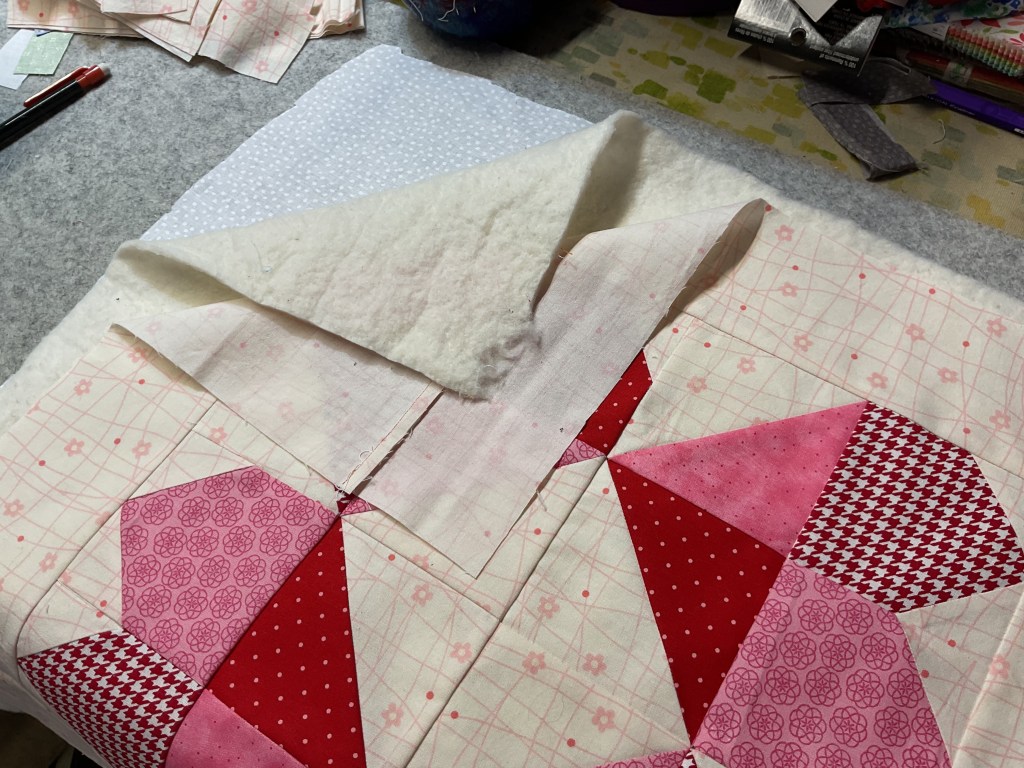
Our next step is to layer one of the back sections right sides together (RST) with the pillow cover, lining up the outer edges with the hemmed edge towards the middle. This time I’m going to pin generously because I really don’t want anything moving out of place.
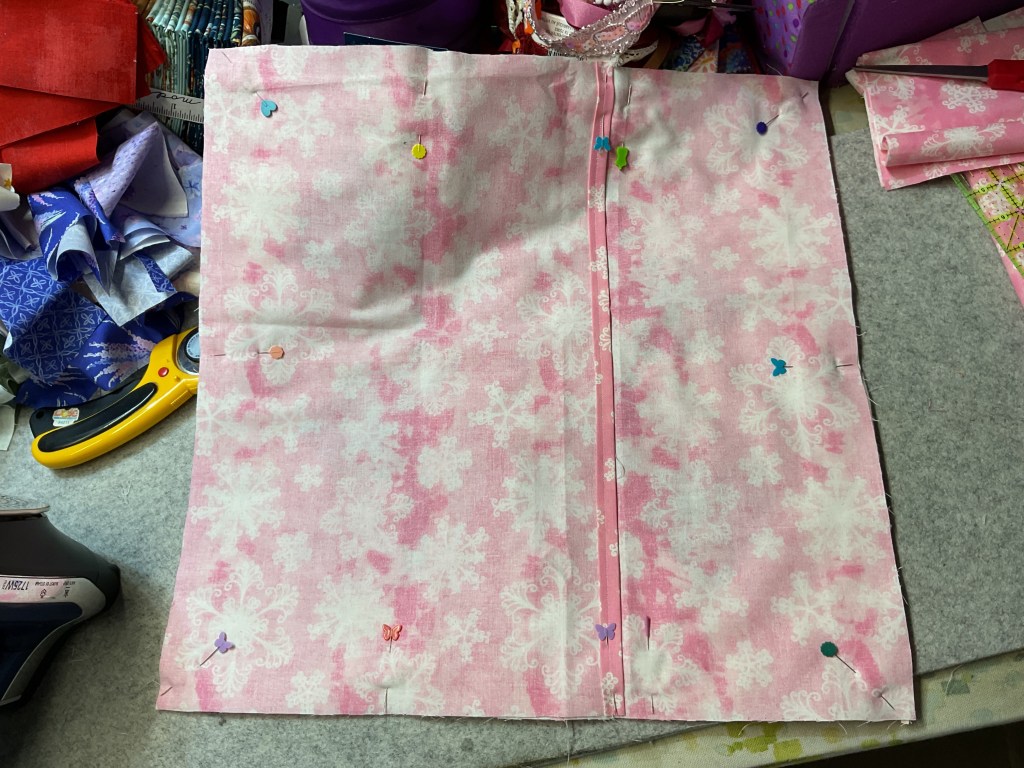
So far, so good. Let’s layer the second backing section now, again with the hemmed edge towards the center, overlapping the hemmed edge of the first section. I pinned everything into submission.
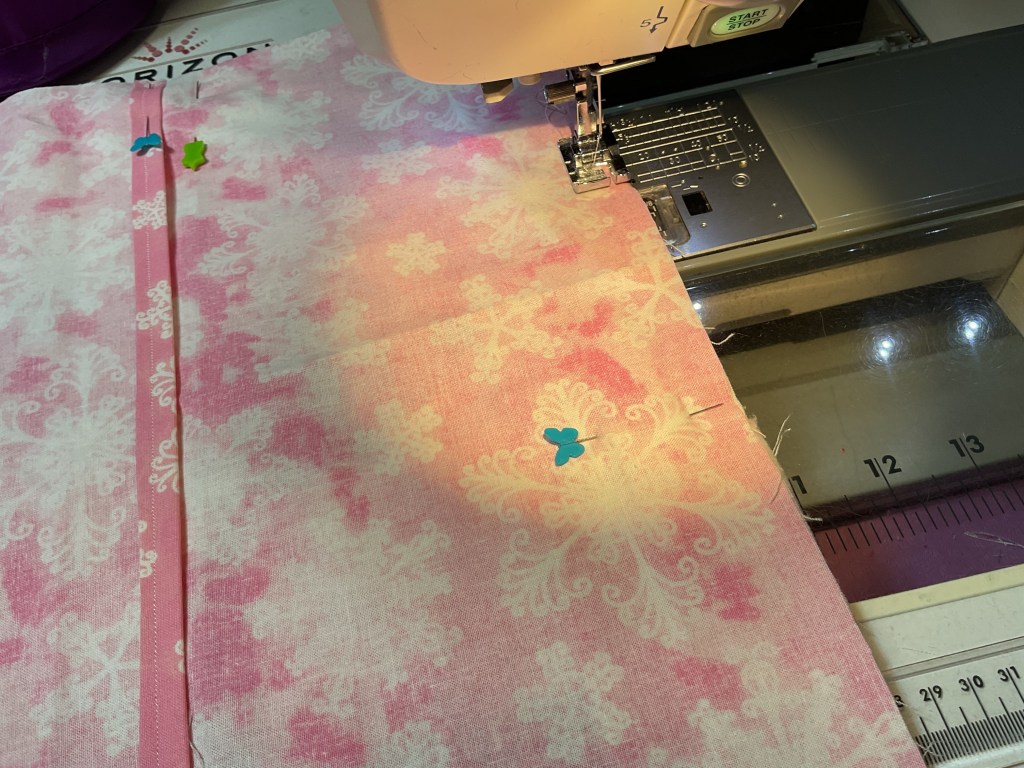
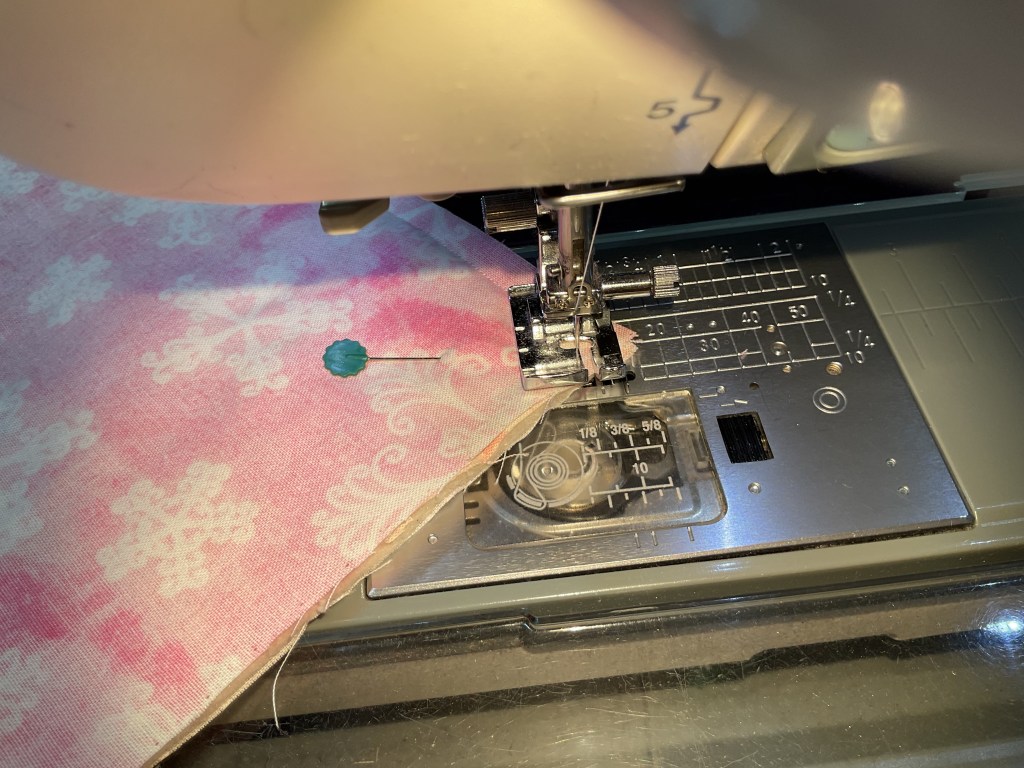
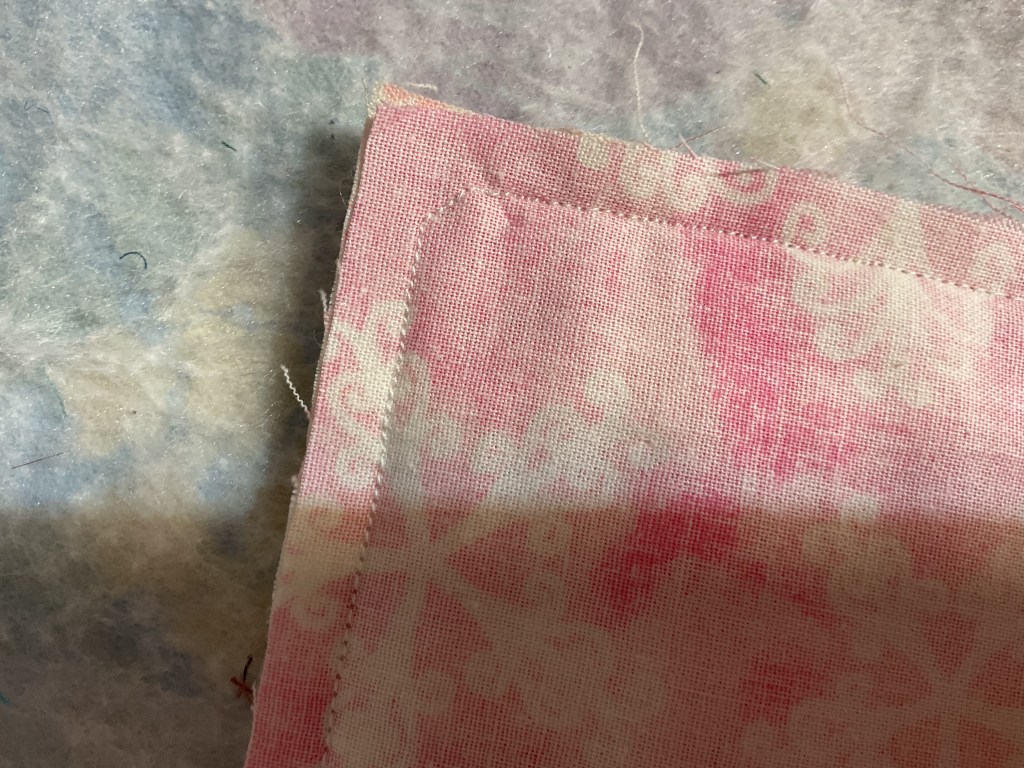
Back to the sewing machine to sew all the way around, using a 1/4″ seam allowance.
I want to take a minute and share a really good tip about sewing corners – I learned this great idea from a fellow quilt guild member years ago.
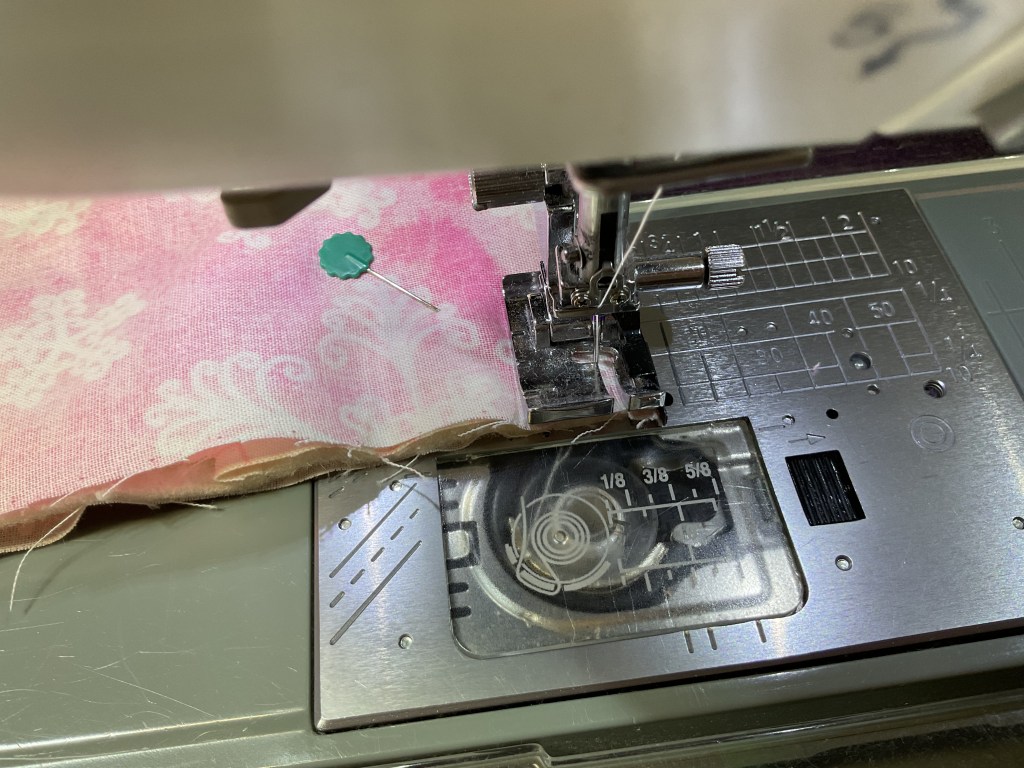
When you are a few stitches from where you plan to stop and turn the corner, pause and turn your project 45 degrees and stitch a couple stitches, then turn it the rest of the way and continue sewing on the new side. These couple of stitches give your corner a little ease and room for turning. You’ll actually end up with neater corners when you’re turning things right sides out if you do this.
Oops – you caught me – I just sewed over my pin instead of pulling it out. Call the Quilt Police!
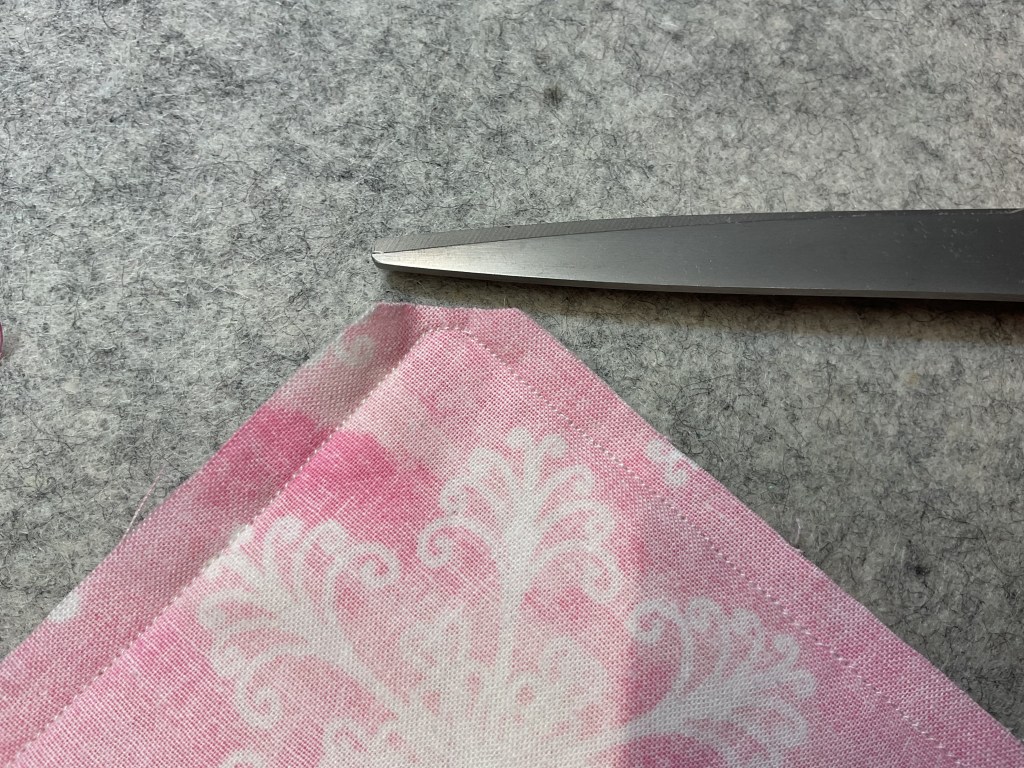
I’m also going to cut across all 4 of my corners to reduce the bulk which will help those corners to turn out neatly. Be careful NOT to cut through your stitching.
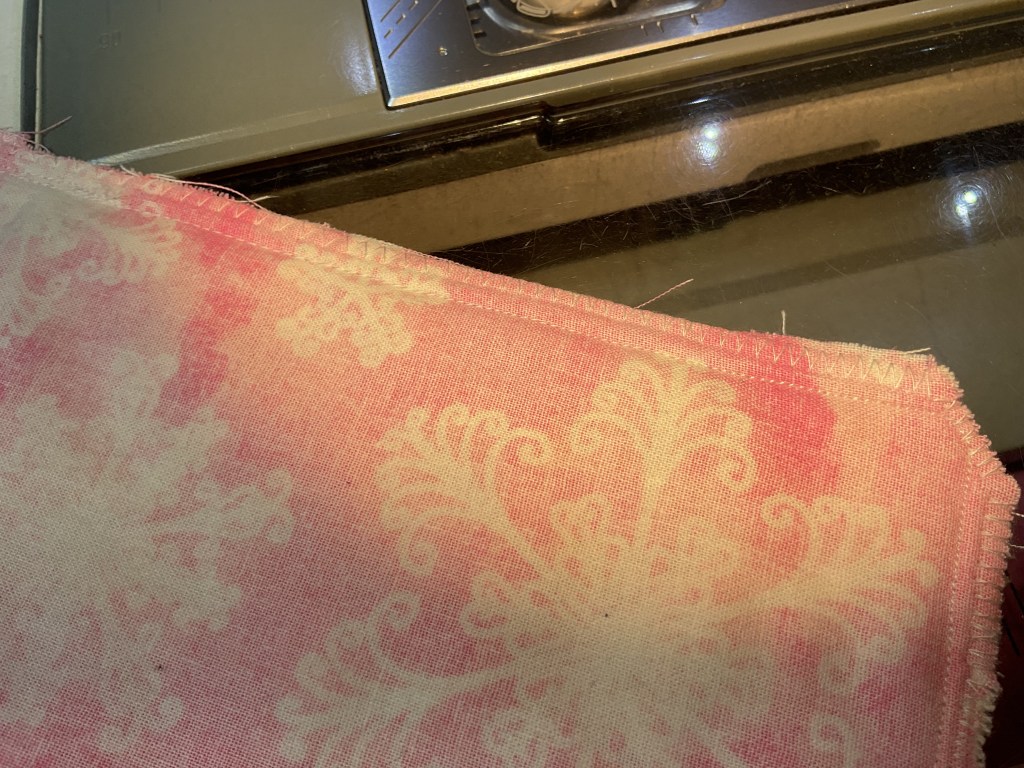
Since my inside edges are going to be unfinished, I think I’ll take a little extra time to zig zag around the outside before turning things right sides out. This will just help to keep things neat and tidy so they don’t fray. If you have a serger, you can easily serge around the outside edges. And if you know how to use your serger, somebody please teach me – mine is still new in the box three years after purchase…….
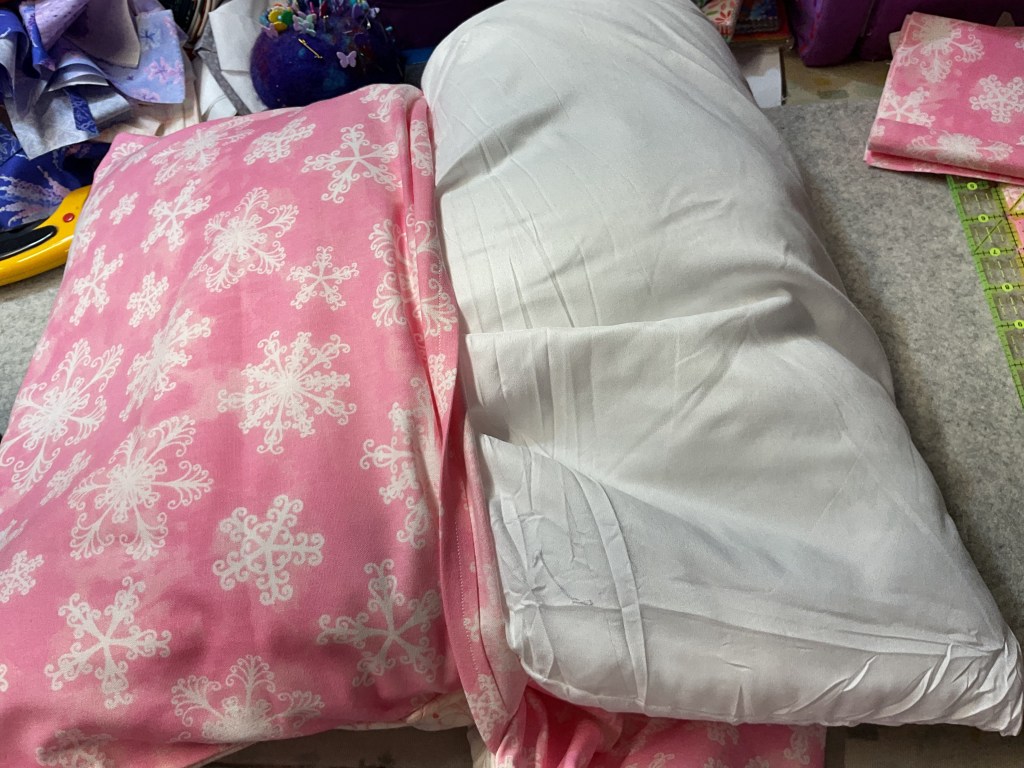
Okay, let’s turn this pillow cover right sides out through the Envelope Back opening. Yippee!
I’m going to take a little time to press things really well and smooth my edges so the pillow back won’t be showing around the front edge of the pillow. Much better.
Time to pop an 18″ pillow insert into my now-completed pillow cover.
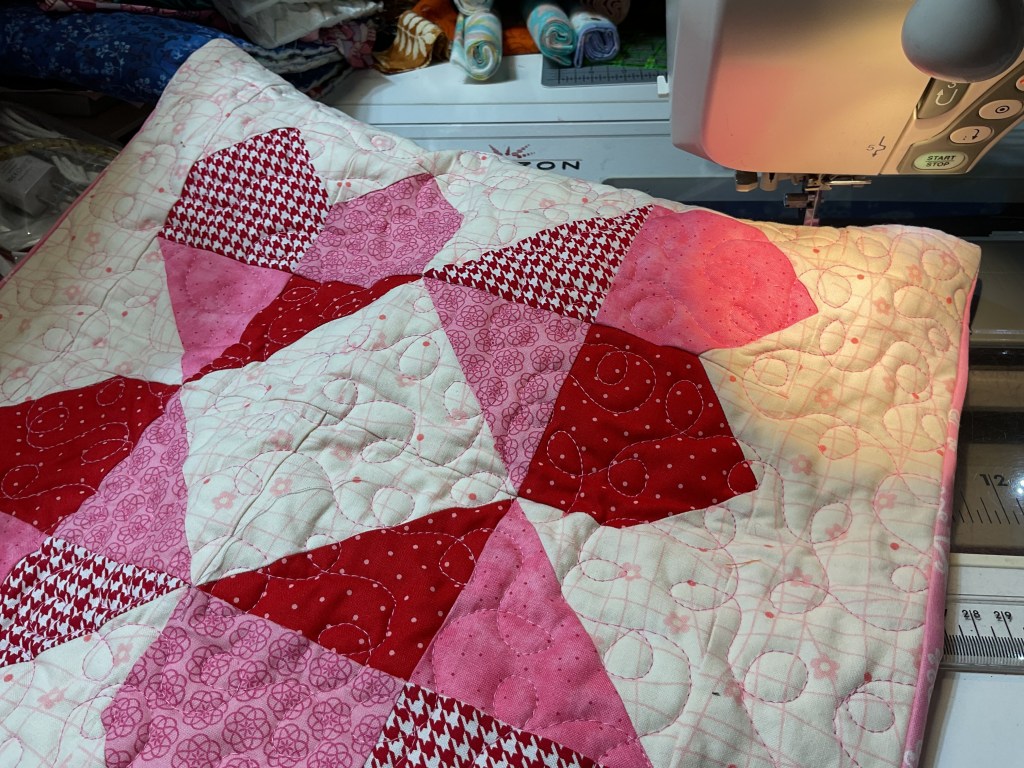
And here is the completed Happy Hearts pillow with Envelope Pillow Back. Done and done. I think it turned out pretty well!
Well, that’s it for me this week.
Hope to see you here again next Thursday for more VRD fun! Bring a friend!
Huh! I’m still trying to wrap my head around the fact that all of a sudden it’s December. Sew much to do and sew little time……
Don’t get me wrong, I’m really excited about December starting. My quilty cuz, Kim (Hey You!), and I both purchased Quilty Christmas Advent Boxes last year in 2024, but we were both a bit disappointed so we decided to create boxes for each other this year instead of hunting around to find another one we liked. What fun!
It’s been a blast picking out fun things for Kim. Of course, I panicked at the end of November because I wasn’t ready yet! LOL! But in a flurry of wrapping paper and covered in tape, I got all 25 items wrapped up and they all fit inside the box.
We met a a local restaurant on Saturday and exchanged our boxes. Kim’s box for me was a fun surprise – the goodies in the box were all stacked up (and wrapped in Christmas sloth paper) – they didn’t fit inside the box and were sticking out all over. Joy oh joy! She didn’t even bother with a lid. Oh my! What fun December is going to be – enjoying a little Christmas every day – both the giving and the receiving as well as the sharing.
In addition to Kim’s box, I also created a box for each of my parents. I had to hustle to get all of their goodies (that’s 50 gifts) wrapped in 1 day on December 1st before dinner so we could start our December tradition on the right day. Wow! I was so tired after all of the wrapping that I didn’t put numbers on everything like I should have. Oh well, Mom and Dad will just have to reach in and pull one out to open each day until Christmas Day instead of having to hunt through their boxes every day for the right number package. And by the way, everything fit nice and neat inside their boxes and the lids closed perfectly. Just sayin’, Kim…. LOL!!!
A Gift For You
When I was trying to decide what to do this week on the blog, I had a brilliant idea – why not create a special little holiday quilt for you, our readers and VRD friends? Without you, there would be no VRD. We appreciate you each and every day. Thank you for loving VRD as much as we do.
I decided to call the little quilt I created for you, Quilt Joy. It is a happy little thing and I am looking forward to quilting and binding it. I already have someone as the recipient.
So, let’s make a quilt together!
Quilt Joy Little Quilt Tutorial
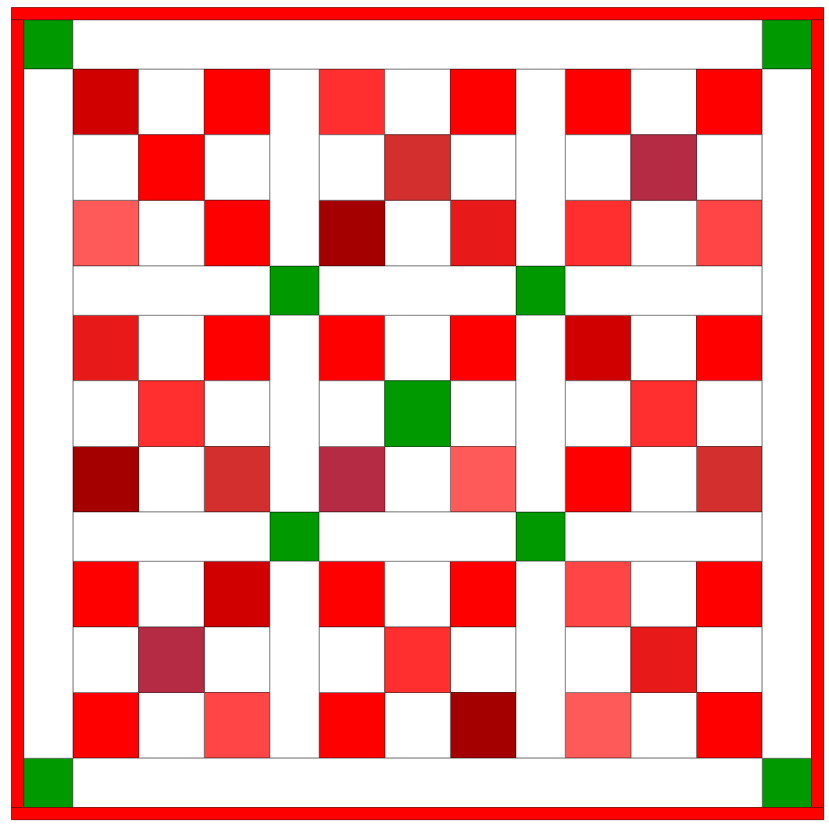
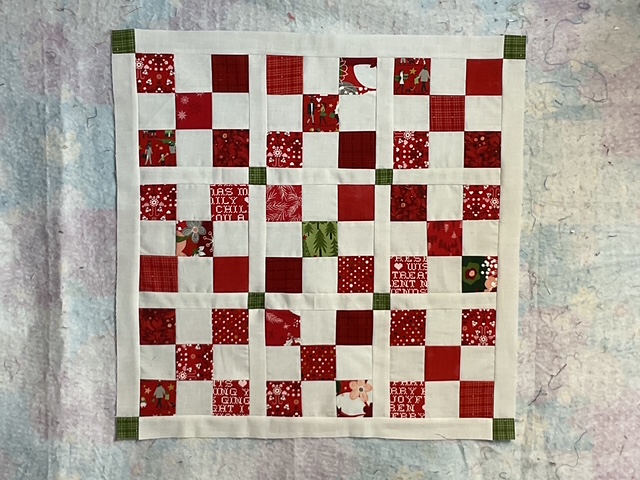
Quilt Joy, a little quilt by Tricia Maloney, finishes at 24″ x 24″
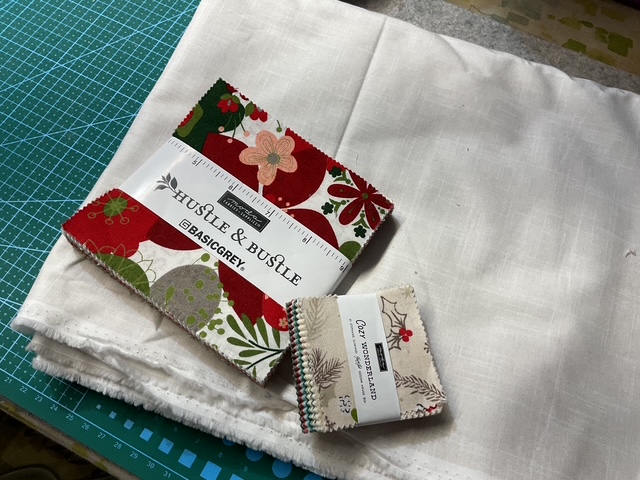
The first thing we need is our fabric, of course! For this little sweetie, I’m using a 5″ charm pack from my stash. Because I’ll need some more red, I’m adding a 2.5″ charm stack, too. And a background fabric. I’m going to make my little Quilt Joy in traditional red, green, and white, but you can make yours in any color combination or even really scrappy.
If you celebrate Hanukkah or Kwanza, you can totally use special colors for your celebrations.
I think I’ll make a blue, white, and silver one for January – but that’s getting a little ahead of myself, isn’t it?
Cutting doesn’t take much time at all! I promise. I cut my 5″ charm squares into 4 – 2.5″ squares. Zip Zap Zoop – done!
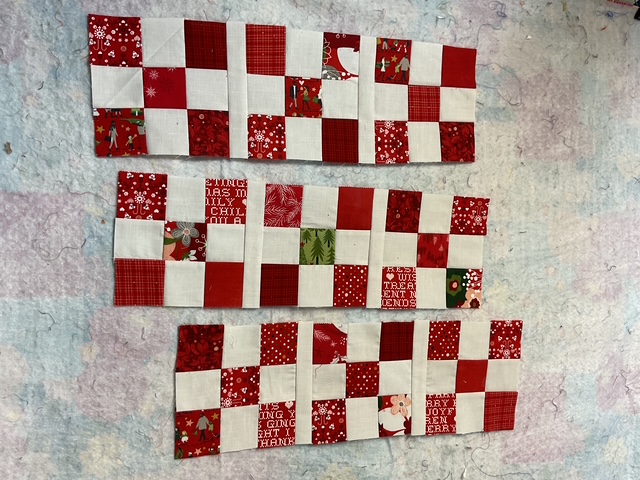
Now let’s make some Nine Patch blocks. Easy peasy.
In one of my Nine Patch blocks, I added a green square in the center. This block will be in the center of my quilt.
Okay, now let’s sew 3 blocks together with sashing in between the blocks. We need to make 3 rows.
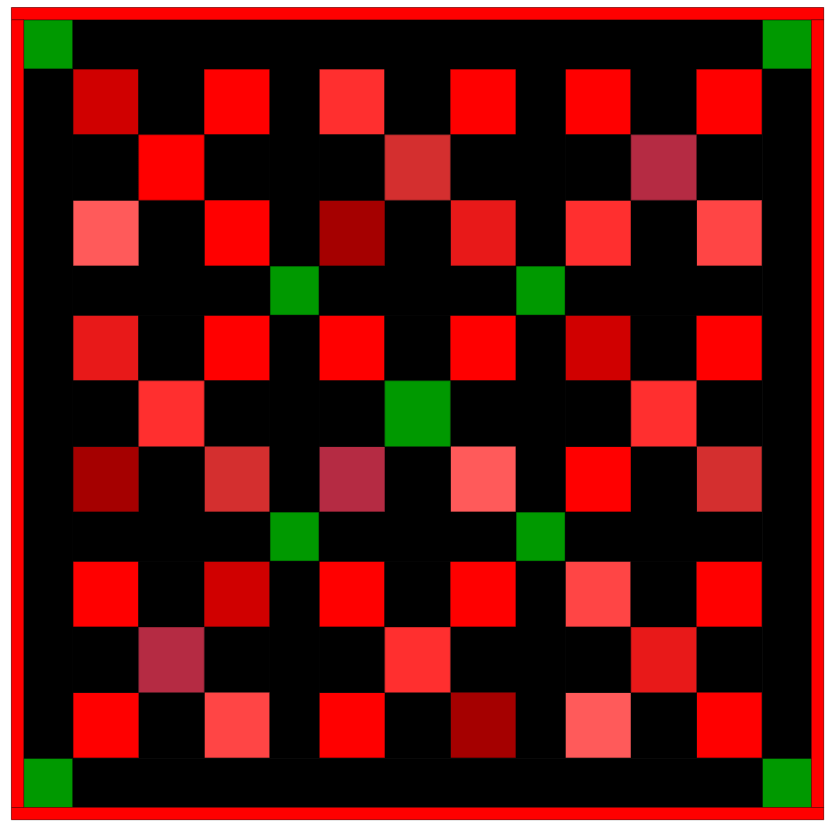
Next we need to use 3 sashing strips along with 2 green accent squares to make a sashing row. Make 2 rows.
Now we are going to sew the sashing rows between the block rows. Isn’t this looking sew sew cute???? I am just loving this little cutie!
Add a border strip to each side of the quilt.
Now sew a green accent square to each end of the 2 remaining borders. Then sew to the top and bottom of the quilt.
Isn’t it just too adorable for words???? And in the classic traditional of Villa Rosa Designs, you can put the quilt top together in a few hours, including the cutting.
Here’s Quilt Joy for our friends who celebrate Hanukkah:
And here’s Quilt Joy for our friends who celebrate Kwanza:
Happy Happy December to You!
Holiday Gift Idea #3
For the past few weeks, I’ve shared a fun gift idea at the end of the blog for you. My Holiday Pick this week – #3 – is hot off the press – literally!
Many of you have been waiting for the collection of all 12 Seasonal Snack Mats from 2024/2025 to be released as a set and it is finally here – just in time for the Holidays! YAY! I am SEW excited!!!
Please note that at this time, it is only available as a print collection; however, each Snack Mat pattern is available individually as a digitalpattern as well as a print pattern. Don’t forget – shipping is always free on patterns at VRD.
I hope you enjoy each and every day of December this year. Please take a few moments every day to enjoy the season.
See you right here next week for more VRD fun in December.
How are you this fine October Thursday? My thoughts are definitely turning towards cozy quilts, good books, and hot tea right now as the October winds howl outside, swirling the leaves in mini cyclones around the yard.
I’ve been really enjoying our 6 Quilts in 6 Weeks Challenge and I hope you’ve been tuning in to the finished projects on our VRD Facebook page. If you signed up for the Challenge, please make sure to write that your before/after photos are for the 6 Quilts in 6 Weeks Challenge so we can all ooooh and ahhhh over your completed project (this also makes it easier for me to note who finishes a project each week during the Challenge).
I’ve heard that it takes about 30 days to build a new habit so if we finish 1 quilt each week for 6 weeks, hypothetically we are building a new habit. At least, that’s my hope, anyway. LOL!
Before we get much further, though, let’s all congratulate Mary Q as our Week 2 winner. Yay you, Mary! Keep up the great work!
I wonder who will be our Week 3 winner next week??? Maybe Y O U ????
6 Quilts in 6 Weeks Challenge Week 3
For Week 3, I chose to complete one of my recent blog tutorial quilts from last month – Busy Bee. I was sew in love with the Hoffman digital fabrics I used for my tutorial that I just had to finish this one as part of the challenge. Busy Bee is fat quarter friendly and finishes at 45″ x 54″, which is a nice kids quilt, baby quilt, or small throw. If you want it bigger, you can easily add more blocks or an outer border (or both).
If you missed the Busy Bee tutorial, you can find it HERE.
I backed my quilt with a lovely dusty rose textured fleece and free motion quilted the quilt with an allover meander design in a pretty pink thread.
I had a question recently on the blog about using fleece on the back of quilts, so I thought I’d address it here. I do not use batting when I use fleece on the back. I generally only use fleece on the backs of my throw quilts, although my quilty cuz, Kim, is using her fleece scraps on the back of her table runners and smaller projects, too. As for quilting a fleece backed quilt, I try to stay away from designs that cross over because the fleece is really stretchy and the quilt top isn’t (or at least it shouldn’t be) and crossing over lines potentially runs the risk of getting pleats and folds at intersections. I find wiggly line and meandering my designs of choice when quilting fleece backed quilts.
For more tips when quilting fleece, you can check out a blog post HERE from a few years ago.
The binding is Riviera, a Dot batik from our quilting partner, Hoffman , and it’s the absolute perfect finish. I stitched the binding on by machine again to save time. It turned out okay, but a few of my corners had minds of their own and were trying to do the salsa. Sheesh! I even had to rip one out and force it into submission. Corners can be so tricky!
Riviera Dot batik from Hoffman
Now to decide which quilt to finish for Week 4……..
FUN VRD Snack Mat Tutorial
Recently, Chris from Needlepointers.com reached out to us to share a really fun idea and tutorial using our VRD Snack Mat patterns and I’m thrilled to share it with you. If you haven’t ever checked out Needlepointers.com, you should! Chris and her daughter Annette have been sharing craft tutorials and projects for the last 20 years on their website.
If you’re like me, you’re on the lookout for fun and fast Holiday gift ideas because the holidays are almost upon us. Snack Mats, of course, are an AWESOME quick and easy gift idea and as a bonus, each pattern makes 2 Snack Mats. You can find all the VRD Snack Mat patterns HERE. Snack Mat patterns are available in both digital and print formats.
Thanks, Chris, for sharing this GREAT IDEA with us!
Have you made anything fun using any of our VRD patterns and put together a tutorial online? We’d love to see it.
Please note that if you are thinking about creating a tutorial of your favorite VRD project (or you’ve done one already):
You may show the front of the pattern, but never the back where the instructions are
Do not give any cutting dimensions or measurements out verbally or in writing as part of your tutorial
Please keep in mind that all VRD patterns are protected by copyright law. Thank you for kindly respecting our VRD designers, their creativity, and their hard work.
Well, I’d better get to work on my Week 4 Challenge Project. I’ll show it off next week. You’d better get yours going, too.
Hard to believe it really is Fall now, but I know it’s here whether we’re ready or not. And I’m personally more than ready. We had such a hot and dry summer here in NW PA, so I’m eager for cooler weather.
Fall is definitely my very favorite season with its warm days and cool nights. All the gorgeous colors. The smells of the season. And the sounds. I truly love it all!
Another thing I love about Fall is that I start to feel more energized to get back to my many to-do lists. Summer definitely doesn’t inspire that in me. So now, it’s time to make plans to get things done. What is Fall to you?
I hope you’ve been enjoying our Jump into Fall quilt tutorials. Today’s project is beyond perfect for the season and I know you’re going to be excited to make this one.
VRD Falling Quilt Tutorial
Falling is truly a perfect project for this time of year, especially with all of the yummy fall fabrics at your local quilt shop and favorite online retailers. Falling is a pattern by Catherine, of Running Doe Quilts, who is one of our many talented VRD designers as well as a new VRD partner.
The quilt finishes at a generous 54″ x 72″ and goes together quickly with its oversized blocks and no borders (although you could easily add a border to make it bed-sized if you wanted to).
Catherine even has kits available for the Falling quilt below – get yours HERE before they’re gone. Tell her Tricia sent you!
Okay, time to get going on today’s tutorial.
Of course, our first thing to do is gather up our fabrics. Today I’m using a lovely collection from Hoffman Fabrics called Sweet Breeze. It’s a great choice today as we end summer and slide into fall. Sadly, this is an older fabric collection and probably isn’t available anymore, but happily Jason Yenter has a gorgeous fall collection called Falling Leaves, you can find it HERE – I think his wonderful fabrics would make great Leaves.
Here are our Sweet Breeze fabrics for today’s tutorial in lovely greens, a few browns, with a wee touch of orange.
Let’s go ahead and cut out all the pieces we’ll need for Falling – the background, the Leaf fabrics, and the stems.
All right! All of our pieces are cut and ready to go.
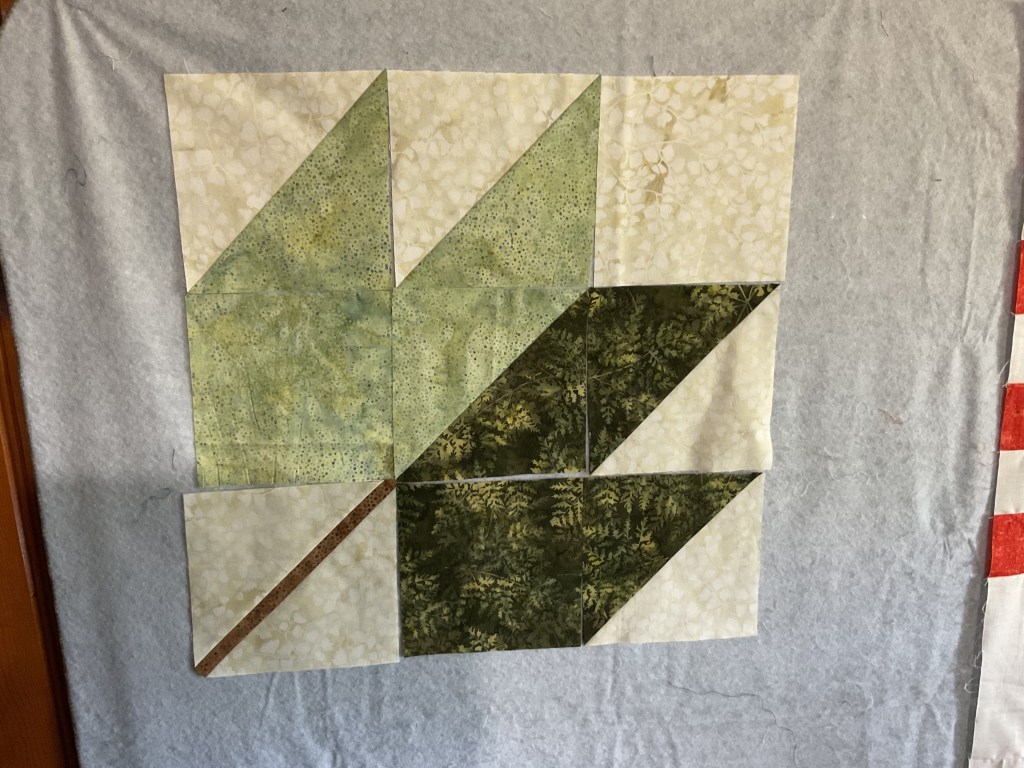
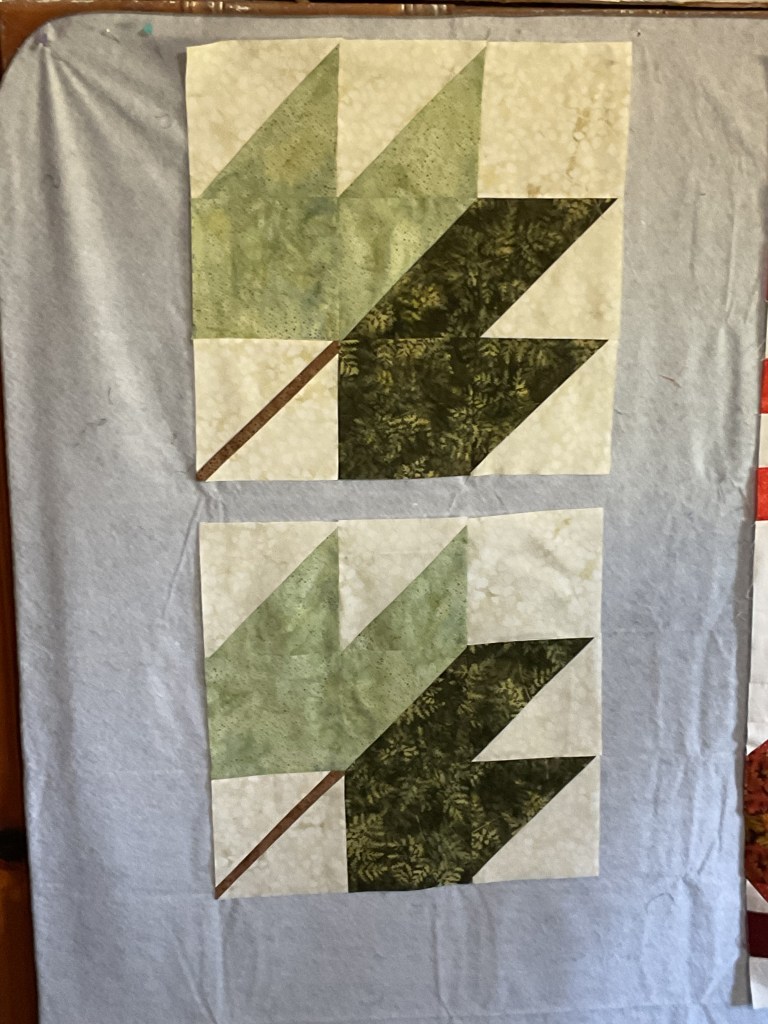
Next we need to pair up our Leaf fabrics as each of the 12 blocks in the quilt uses 2 fabrics. I really love Catherine’s take on the traditional Maple Leaf quilt block, don’t you? She split it down the center so her leaves are two-toned. And the blocks are very big, which adds to the graphic appeal of this quilt.
The pattern suggests making 2 of each Leaf fabric combination, but you can mix and match your fabrics to your heart’s desire if you want, of course. I’m going to stick to the original plan today.
Now we’re ready to sew. We haves lots of Half Square Triangle (HST) units to make for the quilt. I’m going to make 2 matching Leaf blocks before moving on. I don’t want to get all mixed up!
To make HSTs, the first thing you need to do is layer your squares right sides together (RST) and draw a diagonal line – I like to use FriXion erasable pens for marking my fabrics.
Then we’re going to sew 1/4″ away from both sides of our drawn line.
I went ahead and sewed all of the HSTs for my first 2 blocks at one time. Do likewise if you wish.
Next we need to cut on the diagonal lines which will give us 2 HSTs.
All right, let’s head over to the ironing board to press these HSTs open. Don’t forget to cut off the little dog ears on the corners so your piecing will be more accurate.
Let’s make the stems next. Cut your background square in half diagonally to make 2 triangles. Then we’re going to center and sew a stem rectangle between those 2 background triangles. I pressed my seams towards the stem so they wouldn’t show through my background fabric. We need to make 2 of these – 1 for each of our matching Leaf blocks.
Before out stem units are finished, though, we need to trim them to the right size. Take your time when you do this step because you don’t want to miscut and make wonky stems.
Okay, now we’re ready to layout a block and sew it together. Once I’m happy with how the first block turned out, I’m going to make the second matching block. One Leaf pair done, 5 more pairs to go. Repeat the steps above to make 12 total Leaf blocks.
Woohoo! Here are my 12 Leaf blocks.
Now it’s time to arrange the blocks on my design wall. If you want your quilt to have the same movement as the Falling quilt on the cover of the pattern, you will need to flip and flop your blocks like Catherine’s. I only switched 1 or 2 blocks before I liked the arrangement. As you, know sometimes I spend more time arranging the blocks than actually making the quilt. But not today, yay!
You will want to take care while sewing your blocks together because sometimes you are sewing a point to a point. Careful pinning will help keep your points under control and will result in a cleaner and more accurately stitched quilt.
Next we are going to sew the blocks into rows and then sew the rows together to make the quilt top. Oops, this quilt is longer than my flannel wall, so I can’t show you the entire top yet. I told you it was a good sized quilt!
I just had to take my Falling flimsy outside to snap a photo in natural light so I could show you the entire top. Absolutely LOVE it! Can’t wait to finish it.
To complete your quilt, layer it with batting and backing fabric (or fleece like I plan to). Quilt it. Bind it. And don’t forget your label!
Have you made a Falling quilt already? Or if you plan to make one this Fall, please share a photo on our VRD Facebook group – we’d all love to see them!
Well, that’s it for me – I’m heading back to my sewing machine to get some more sewing in.
Yep, it really is Thursday today. Bet I surprised a lot of you on Monday with our special VRD Announcement about upcoming changes (good ones, I promise you!). If you missed Monday’s VRD announcement, you can find it HERE.
Before I dive into this week’s inspirational quilt tutorial, I wanted to take a minute and share Hoffman’s Fall 2025 Project Catalog with you. I’m sure you’ve noticed I use a lot of Hoffman collections for our blog tutorials by now. We work closely with our friends over at Hoffman to inspire you by pairing new Hoffman fabrics and our easy breezy VRD Rose Card patterns.
Please enjoy the catalog and don’t forget to visit your local quilt shops to request these new upcoming Hoffman fabric collections and, of course, Villa Rosa Designs Rose Card patterns.
Lots of wonderful inspiration in this catalog, isn’t there? Which one(s) did you fall in love with and are adding to your “gotta make” list???
Now let’s make a quilt!
VRD Busy Bee Quilt Tutorial
Are you ready for a super fun tutorial today? Busy Bee is an oldie, but a really great goodie! I know you’re gonna love it!
Get your digital pattern HERE or your print pattern HERE
First things first, let me show you the fabric I’m using today for Busy Bee. You’ll notice right away that these fabrics don’t exactly have an autumn vibe going on, but I couldn’t resist these gorgeous fabrics when I was looking through my stack of quilt kits to choose my next victim….er, tutorial project. LOL!
Seriously, though, aren’t these fabrics divine??? This older Hoffman collection is called Blush Garden. It’s possible you still might find some bolts at your local quilt shop or at your favorite online shop, but somehow I doubt it as it’s just so yummy. Sorry……
Busy Bee is a fat quarter (FQ) pattern which means you only need FQs for the quilt top. No background, no borders. Busy Bee is stunningly simple and goes together like greased lightning!
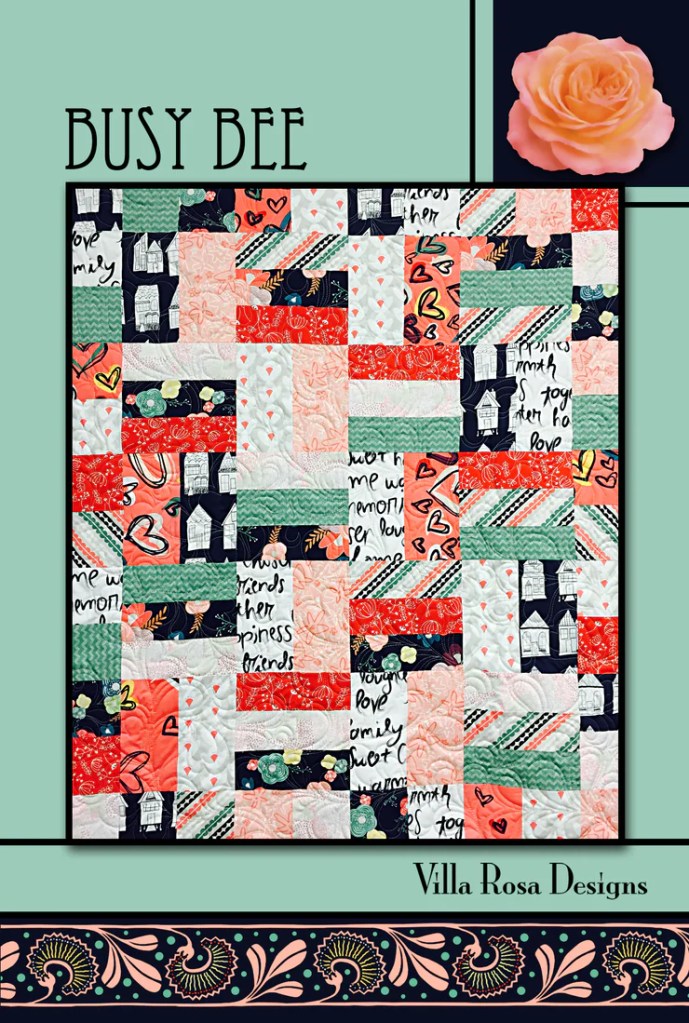
Psst! You might notice that my Busy Bee pattern looks different from the cover front above. Yep, my pattern is an older cover front. Sometimes we freshen up covers as fabric styles and trends change over the years.
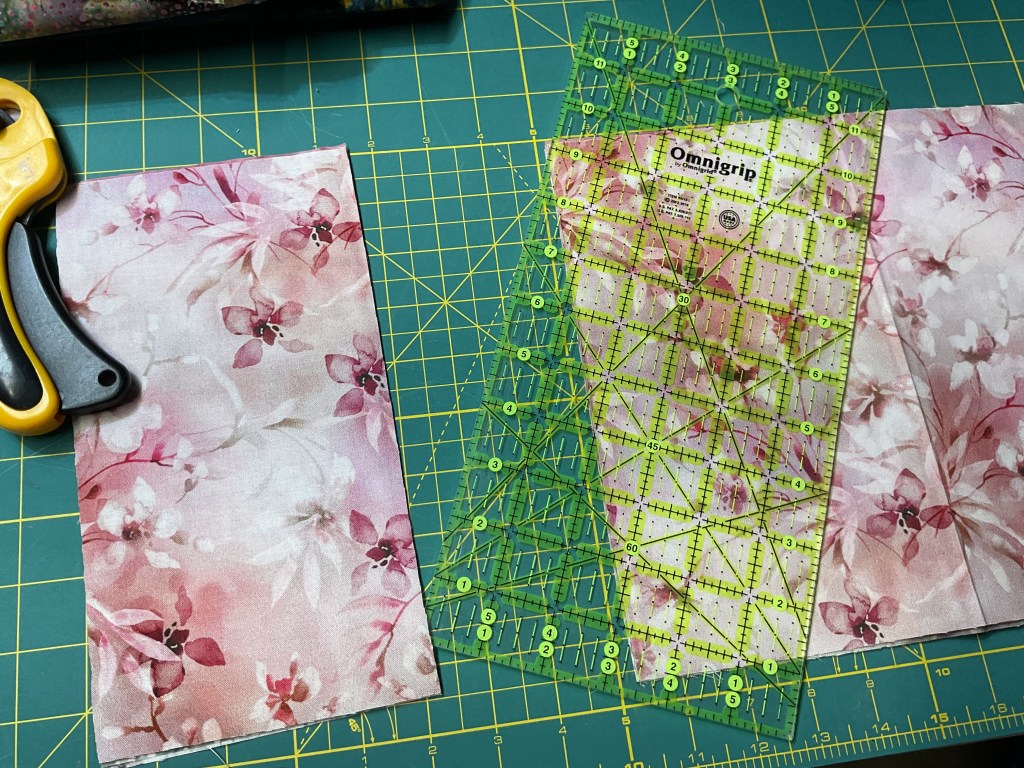
Before we can get to the sewing, we have to cut our fabrics. You need to divide your FQs into 2 equal stacks.
With the first stack, we’re going to cut our FQs into strips and then into fat rectangles and squares.
Moving on to the second FQ stack, we’re gong to cut skinny rectangles and squares.
Here are all our pieces ready to sew. And that’s it for cutting for the whole quilt top. I just love patterns like this, don’t you?
Time to sew!
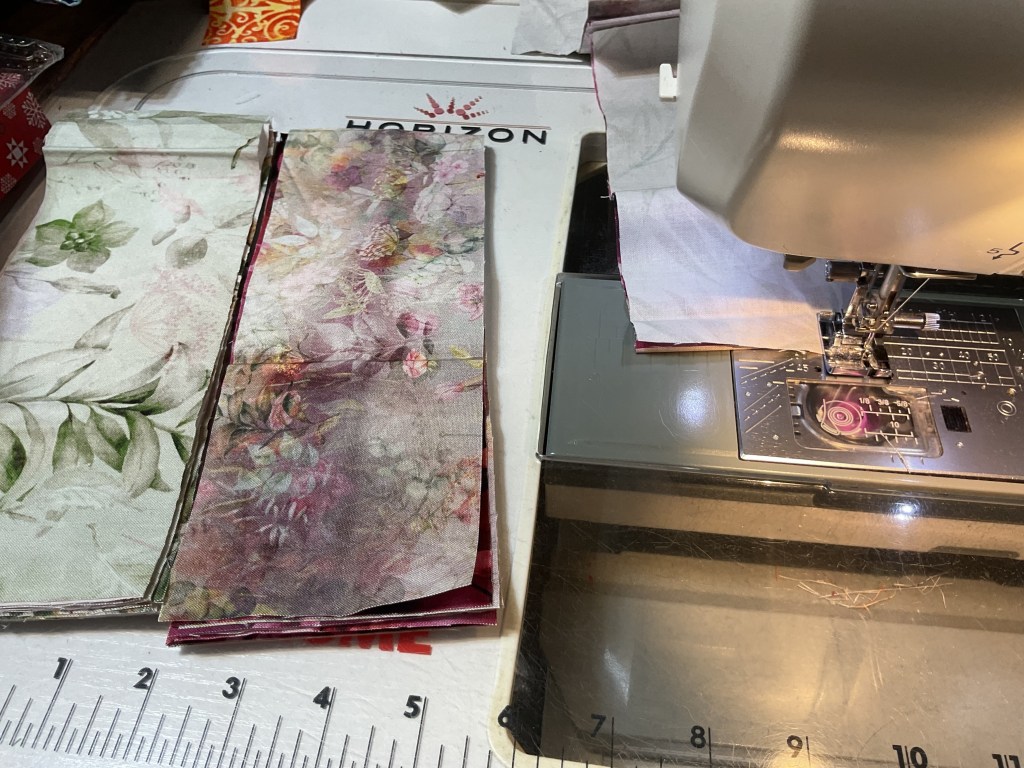
We’re going to sew 2 assorted fat rectangles together to make Block 1. I divided them equally into 2 piles and set them to the left of my machine so I could just grab the 2 top rectangles and feed them through the machine to chain piece them. If I didn’t like the combination or had 2 of the same on top, I just grabbed another one off one of the piles. Sew simple.
Do you chain piece your pieces together? Chain piecing is when you keep feeding/sewing pieces together through your sewing machine without cutting the thread in between the units. It saves both time and thread.
Now for Block 2 – we’re going to sew 3 assorted skinny rectangles together to make a Triple Rail Fence block. Again, I divided my strips equally into 3 piles and put them to the left of my machine. First I sewed 2 rectangles together from 2 of the 3 piles, leaving the last pile for last. Then I added a 3rd rectangle to all the pairs, making sure each Rail Fence block had 3 different fabrics.
Time to head over to the ironing board to press all of my blocks flat.
All righty, all the blocks are sewn and pressed, so now we’re going to put them up on the design wall so we can play switcheroo until we’re happy with the block arrangement.
The layout is an easy one for because we’re just going to alternate the blocks.
Take a look at some of my swaps. See how the dark reds are accumulating at the lower right corner of the photo at the left. In the middle photo, I swapped some blocks around and it’s starting to look a bit better, but we’re not quite there yet. And then the photo at the right looks the best of all. Often, arranging the blocks takes longer than sewing the whole top together, especially if you’re making a Villa Rosa pattern!
Now that I’m happy with how the blocks look, we’re going to add a border of squares all the way around the blocks. Huh! Bet you were wondering what we were going to do with all those squares (besides add them to our 5″ square stash).
Guess what?!? Now it’s time to swap the squares around until the quilt looks just right (are you feeling a little bit like Goldilocks, ??? LOL!).
Take a look at some of my swap outs below. You might wonder why I went ahead and laid out my border of squares before I sewed the blocks together for the quilt center. I was afraid to sew the blocks together in case I would need to tweak them again once I laid out the border squares.
Okay, I’m happy with the blocks and outer squares layout, so I’m going to sew my blocks into rows and then sew the rows together.
The center of the quilt is now sewn together. OH NO! Somehow I flipped a block at the bottom right corner of the quilt center! Sheesh! How’d I manage to do that?!?
Oh well, don’t panic! We can fix this. We have 2 options – either leave it alone and continue or else take a break to rip out the corner of the quilt and sew the blocks back together. Can you guess which option I chose?
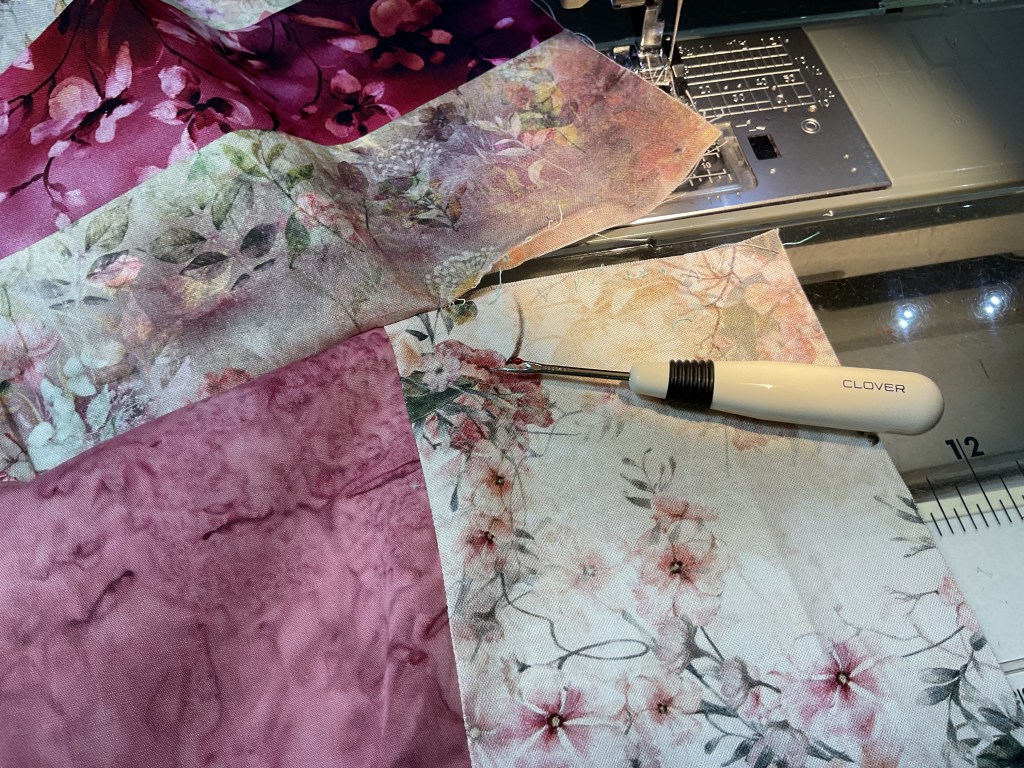
Yup, time to grab my pal (and my enemy – I guess that makes him my frenemy, doesn’t it?), Jack the seam ripper. Do you have a favorite seam ripper? Mine is by Clover. In my humble opinion, it’s simply the best seam ripper ever. Don’t have this one? You can find it HERE. Let me know what you think.
Anyway, time to rip!
Ugh! Look at all the threads bits! Ripping out stitches is definitely NOT my favorite thing to do, but it’s necessary sometimes. And besides, Jack really enjoys himself when we do.
Now I can resew the block into the quilt. This time, I’m making sure it’s turned the right way.
Okay, disaster averted, thank goodness. I’m still not a fan of the mauve rectangle touching the dark red one, but unless I want to do a ton more ripping and resewing, I’ve decided I can live with it. What do you think? Should I have ripped out the other block, too?
Moving on……..time to sew my squares into rows and then I’ll sew them to the quilt center. Fingers crossed I don’t get any of them mixed up. I’m going to sew the top and bottom squares together first and then I’ll sew them to the top and bottom of the quilt center.
Next I’m going to sew the side border squares together and then I’ll sew them to the sides of the quilt center.
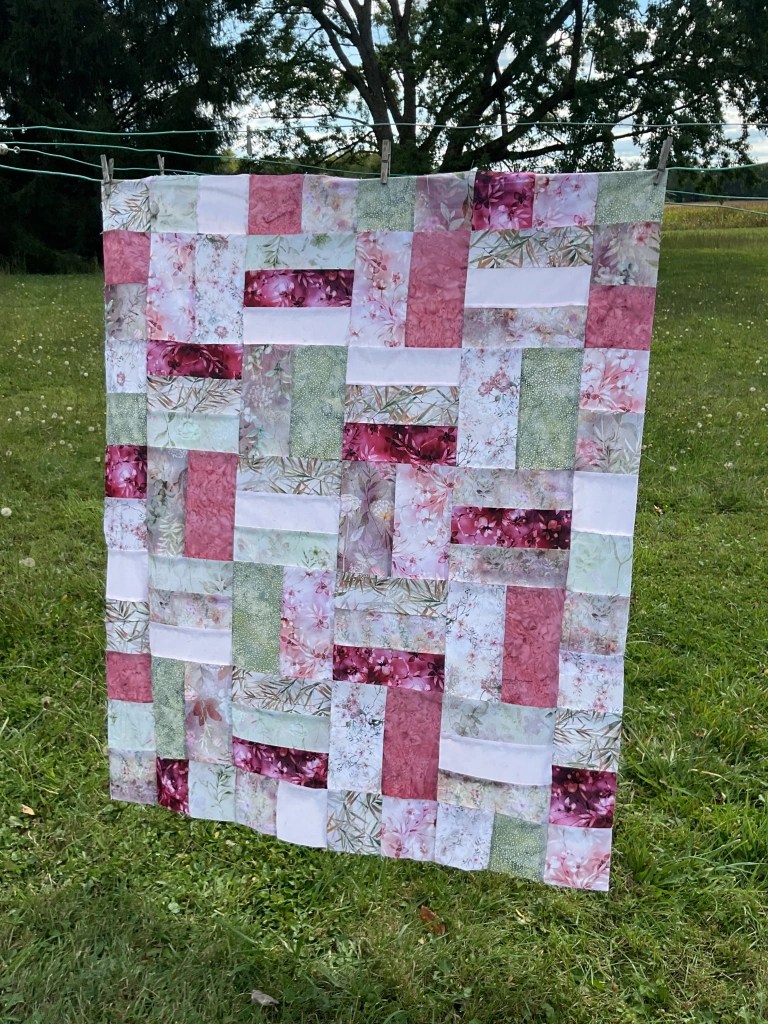
And here is the completed Busy Bee quilt top (or flimsy). Isn’t it really beautiful? LOVE LOVE LOVE these fabrics!
Let’s take it outside in natural light to see the fabrics sparkle (instead of my dark sewing dungeon). Love it sew much! Can’t wait to finish this one.
Of course, after you get the flimsy finished, it’s time to layer it with batting and backing and quilt it. Then bind it and add a label. Hopefully soon.
Well, that’s it for me this week. Try to get a bit of sewing in this week.
I hope you are enjoying this collection of VRD quilt tutorials to inspire you to leap back into quilting this fall. May these tutorials nudge you into making a quilt for someone special or maybe just for yourself.
We’ve got lots to do today, so let’s get moving.
First up, it’s the Thursday after the first Friday of the month, and you know what that means – NEW PATTERNS! Talk about fall inspiration!!!
Here’s the new collection of 5 VRD Rose Cards for September. Aren’t they super???
(Patterns are also available individually both as print and digital versions)
Awestruck by Molly uses 5″ squares and finishes at 44″ x 60″. There are kits still available HERE featuring Tula’s True Colors collection while they last. Totally loving the name!
Melissa wows us with her Pumpkin Parade throw quilt. It uses yardage (or your stash!) and finishes at 45″ x 56″. We still have a few kits left HERE featuring Riley Blake Seasonal fabrics, so grab one before they’re gone.
Pat is back this month with her latest Tim Holtz Palette quilt pattern, Edwina, featuring the Indigo Palette. Edwina finishes at 45″ x 60″ and is fat quarter friendly. Kits are still available, but going fast, so get yours HERE.
Besties is my new throw-sized quilt pattern this month. It’s fat quarter friendly and finishes at 48″ x 64″. We have kits featuring Anna Maria’s Iconic collection (see below) still available HERE.
Besties in the Iconic Collection
Viroqua is Rachelle’s latest smashing mod pattern. It finishes at 42″ x 48″ and uses half yards and yardage (stash friendly!). There are kits still available HERE featuring Windham’s Sketchbook 21 collection (see below).
Viroqua in the Sketchbook 21 collection (please disregard the 2 mistakes where we turned the HSTs the wrong way – it’s getting fixed as we speak)
Last, but certainly not least is this month’s new table runner, Beachcomber. I’m sorry I missed the deadline boat last month with this fun runner, but I think it’s not too late to have just a wee bit more summer before it’s officially autumn on September 22nd.
You can really use just about any fabric collection or your stash for this fun and clever runner. Beachcomber finishes at 18″ x 54″ and uses yardage. Autumn? Halloween? Thanksgiving? Christmas? And the list goes on. Have you ever thought about making a 2 sided runner with 2 different seasons….here’s your chance!
Get your digital Beachcomber pattern HERE or your print pattern HERE.
Now we’ve covered all of the new September patterns, which one will you make first?
OH! One last little thing about the new patterns – Melissa’s new Pumpkin Parade throw quilt is a fabulous companion to our best-selling Pumpkin Hollow table runner.
Get your Pumpkin Hollow digital pattern HERE or print pattern HERE.
All right, moving on, let’s dive into this week’s quilt tutorial – Cinnamon Stix.
VRD Cinnamon Stix Quilt Tutorial
Cinnamon Stix is a great pattern for a favorite fabric collection. You can use a stripe or even a seasonal/novelty fabric in the long strips, so it’s really versatile. Then simply add your coordinating fabrics for the Stix, a sashing, and border. Cinnamon Stix is fat quarter friendly and finishes at a nice 46″ x 63″.
Get your Cinnamon Stix digital pattern HERE or your print pattern HERE.
I promised you a few weeks ago that I was going to have another quilt featuring Hoffman’s Rodeo Dreams digital collection – well, here it is! Today we’re using the border stripe in the collection along with fun coordinates, including a few batiks.
First up, we’re going to cut out the Stix for the 3 pieced Stix rows.
Once we’ve gotten all of the Stix cut, we’re going to slap them up on the design wall so we can arrange and rearrange them until we’re happy with the fabric placement.
Heads up – because the Stix are cut different widths, each row might look a bit different, depending on how you arrange your Stix.
Now we’re happy with how the Stix rows look, so it’s time to sew them together. I like to sew them into pairs, then sew the pairs into quads, and so on until all the pieces are stitched together into a row. Then repeat for the next 2 rows.
Okay, all the Stix are sewn together into 3 rows. Lookin’ good!
Next let’s work on prepping and cutting the Rodeo border stripe fabric. My pal (and cousin), Robin, is helping me out with this tutorial today – we’re working on it in her sewing room.
Hey Robin!
Once the stripe is cut, we’re going to work on cutting the narrow sashing, which is this gorgeous blue 885 Dot batik. LOVE IT!
Let’s sew the sashing to both sides of our pieced Stix rows.
Now we’re going to lay out the sashed Stix rows with the stripe. My tip is to find the center of the sashed Stix row and the center of the border stripe. Then match and pin the centers together and pin outward towards the ends to keep the quilt nice and square. We’re ready to sew the rows together. And then we need to add sashing all the way around as our first border.
Yay! The center of the quilt is finished. Easy peasy!
Okay, time to cut the final border, which is a wonderful red bandana print from the Rodeo Dreams collection. Then we’re going to sew it to the quilt. Yay!
And here it is – the finished Cinnamon Stix quilt top in Rodeo Dreams. Isn’t it really fun???
Here it is outside for a straight-on shot. It was really breezy so we ended up taking the photo in front of one of Robin’s hubby’s farm toys so it blocked the wind, instead of in front of the old barn (our first choice). Thank you Mary Lee and Robin for holding the quilt and fighting the wind for me. Perfect!
I bet you’re already thinking about border stripes in your stash (or something new at your local quilt shop) to use in this fun and fast VRD pattern. We’d love to see your Cinnamon Stix quilts on our VRD Facebook page.
Now that the top (or flimsy) is done, it’s time to layer it with batting and backing, quilt it, bind it, and lastly add a label. Eventually…..
Stay tuned next week for another great VRD tutorial.
I hope you enjoyed last week’s tutorial, Morning Tea, with Molly. It was wonderful that she could stop by the blog and visit with you. Things have been super busy over there at the VRD shop in Grass Valley, CA, so she just hasn’t had a lot of extra time to hang out with us on the blog. What a great quilt she made, too, huh? Blue and white Australian fabrics – wow! If you missed last week’s Morning Tea tutorial, you can find it HERE.
High British Tea and a Quilt Exhibit/Tour
Last Friday, I was delighted to attend a High British Tea and Quilt Program/Tour at the Gibson House Manor Museum in Jamestown, PA. I was invited by my sister’s aunt-in-law (is this even a word???), Anita, to attend as her guest. Anita is not only a quilter, she also volunteers at the Museum.
The Gibson House Manor has had a very interesting history, indeed. It was built by a local doctor, William Gibson in the 1850’s. It is also known as the Mark Twain house because Mark Twain actually stayed there after the Civil War. He liked the house so much, he even included it in one of his stories! But even more interesting, it was a vital stop on the underground railroad with hidden secret rooms and so much more! You can visit the website HERE for more information.
Here’s the museum – isn’t it gorgeous???
Lucky me – not only was the new quilt exhibit debuting, the curator was giving a tour of the quilts, AND it was the monthly High British Tea day. What fun!
Here’s a few photos of the exhibit, showing some of the quilts on display.
You can see this lovely exhibit (and the museum!) until October. It’s called Quilted Layers: Piecing Together History and it is curated by Jill Mezaros. You can make reservations on the website to see the exhibit. While you’re there, you might want to take the Underground Railroad tour and maybe have High British Tea, which is usually the last Friday of the month. Yum!
Now let’s get started on this week’s quilt tutorial to help you restart your quilting this fall.
VRD Midnight Pathway Quilt Tutorial
Midnight Pathway is another great VRD pattern by our own Molly Cook. It finishes at a big 52″ x 72″ and makes a good-sized throw quilt. Want it bigger? Simply add a border.
To me, this pattern has a more masculine feel to it. It’s very straightforward without any extras. I think you’re going to like it!
Don’t have this pattern yet? Then get your digital pattern HERE or your print pattern HERE.
Today we’re using a rich earthy fabric collection. This collection is called Into the Woods and is a Hoffman Fabrics digital fabric collection with companion batiks.
Sadly, this collection is an older one, so you might not be able to find it anymore. This time of year, though, you’re bound to find something with a fabulous autumn woodsy feel that would work equally well like the Jason Yenter collection Falling Leaves or maybe Deb Tucker’s Forest Flora collection.
The first thing we’re going to do is to cut a lot of strips from our prints.
Then we’re going to cut more strips from our contrast fabric.
Once we’ve got all of our strips cut, we’re going to cut our strips into different sized pieces. It’s important to keep all the pieces from one strip together. I folded the smaller pieces inside the longer pieces so I wouldn’t lose them.
We’re heading to the sewing machine next so we can add contrast rectangles between the small and larger pieces of the strips. You could mix and match your pieces for a really scrappy look (or even shop out of your stash and scrap bins), but I’m sticking with the pattern and going to keep each original strip together.
As there are three different pieced strips, I’m going to sew the strips together in 3 sections, then I’ll sew all the sections together.
I’m going to pin all the same pieced strips together to stay organized as I work on each group.
Now that all my strips are pieced, the fun can begin! Time to arrange the strips on my flannel board. Because I have my strips already divided into 3 groups, I’m also going to work on sewing the pieced strips together into 3 sections.
You can really have some creative license with this design because you can arrange the strips any way you want! There are so many ways you can put these strips together, so make sure you play a little bit before you commit.
Okay, I’m happy with my first section, so I’m going to sew the pieced strips together – first into pairs, then into quads, then finally sewing the quads together into one section. This helps me to keep from mixing up the strips as I sew.
I added this piece of paper to the top left corner so I wouldn’t flip things all around as I went.
Great! Time to move onto the second group of pieced strips. I’m going to continue using the same technique as I did with the first section (twosies and foursies) after I’ve decided how I want this section arranged.
Now onto the last section. Because the quilt top is getting so long, I’m pretty much standing on my head to arrange the last pieced strips. LOL! I can barely show you the entire quilt top now – my pressing counter is in the way and I’m running out of flannel board.
So I’m going to take the top outside for a photo so you can see the whole thing. And here it is! I really like how warm and cozy it looks and how any guy or gal would love it!
Now all I have to do is layer it with batting and backing (or fleece as I plan to do), quilt it, bind it, and put on a label. Ho hum…..I’ll be adding it to my mountain of projects that need finished, I’m afraid. Seriously, I have no idea how many flimsies (quilt tops) and layered quilts I have on my pile – so, what’s one more???
Fingers crossed I’ll get some time this winter to work on them. Of course, the more tutorials I do, the more flimsies I add to my teetering pile. What a delightful conundrum.
Bet you don’t have any WIPs or UFOs (works-in-progress or unfinished objects) in your sewing space, do you???
See you next week for another great tutorial and NEW September patterns!