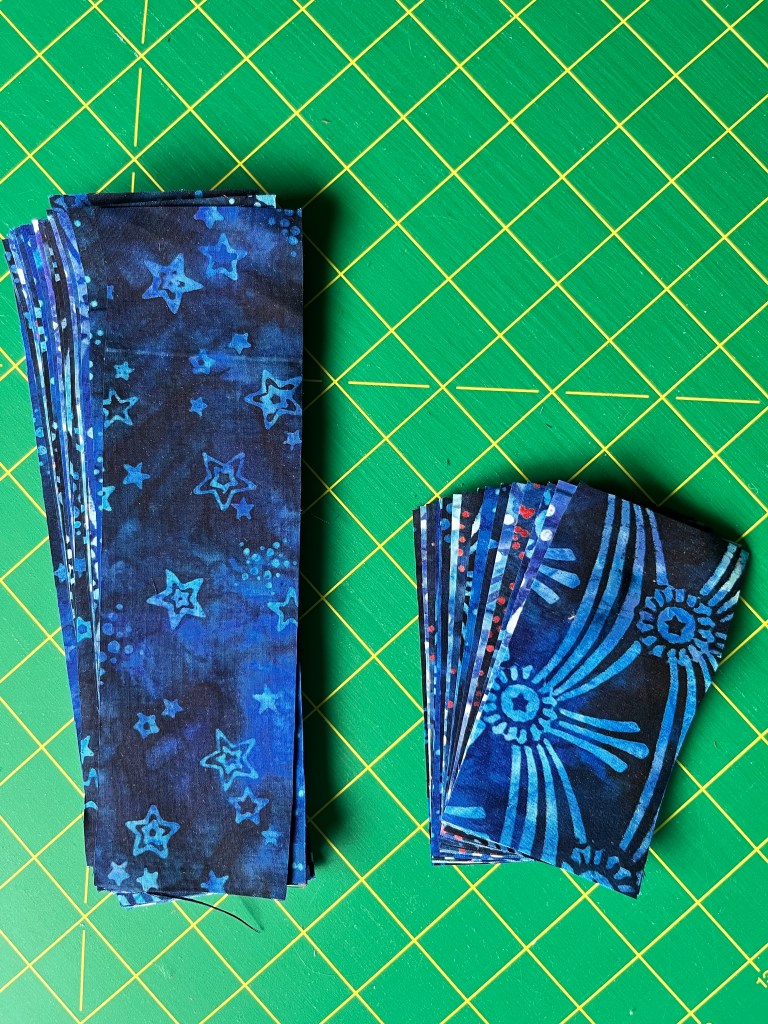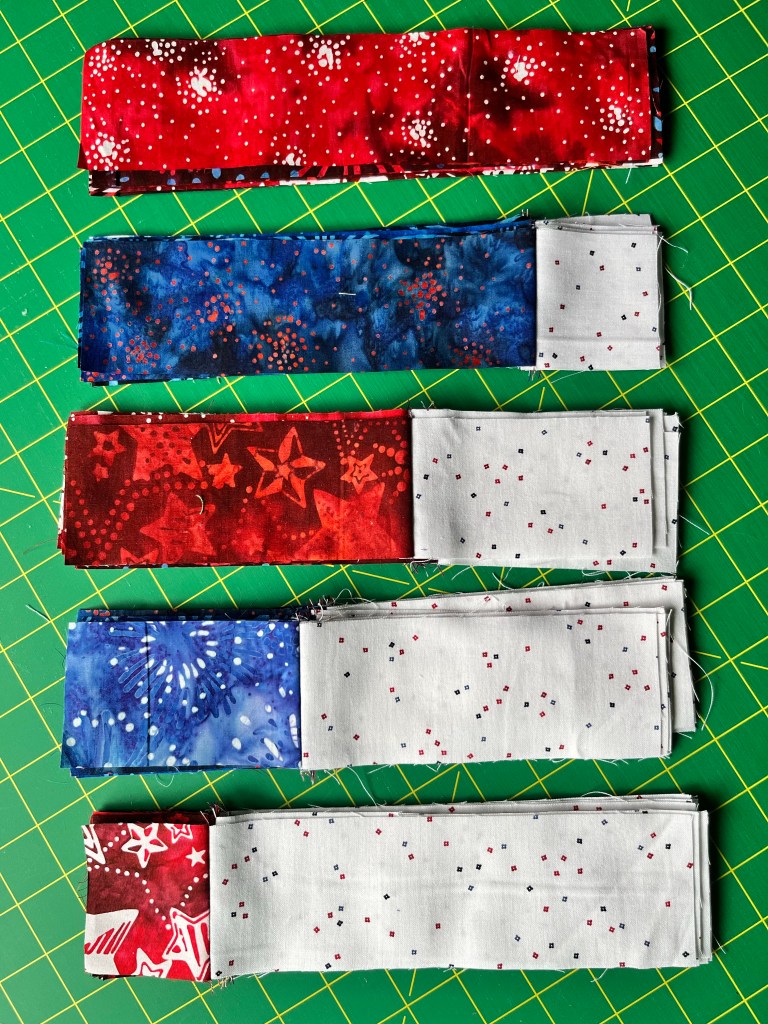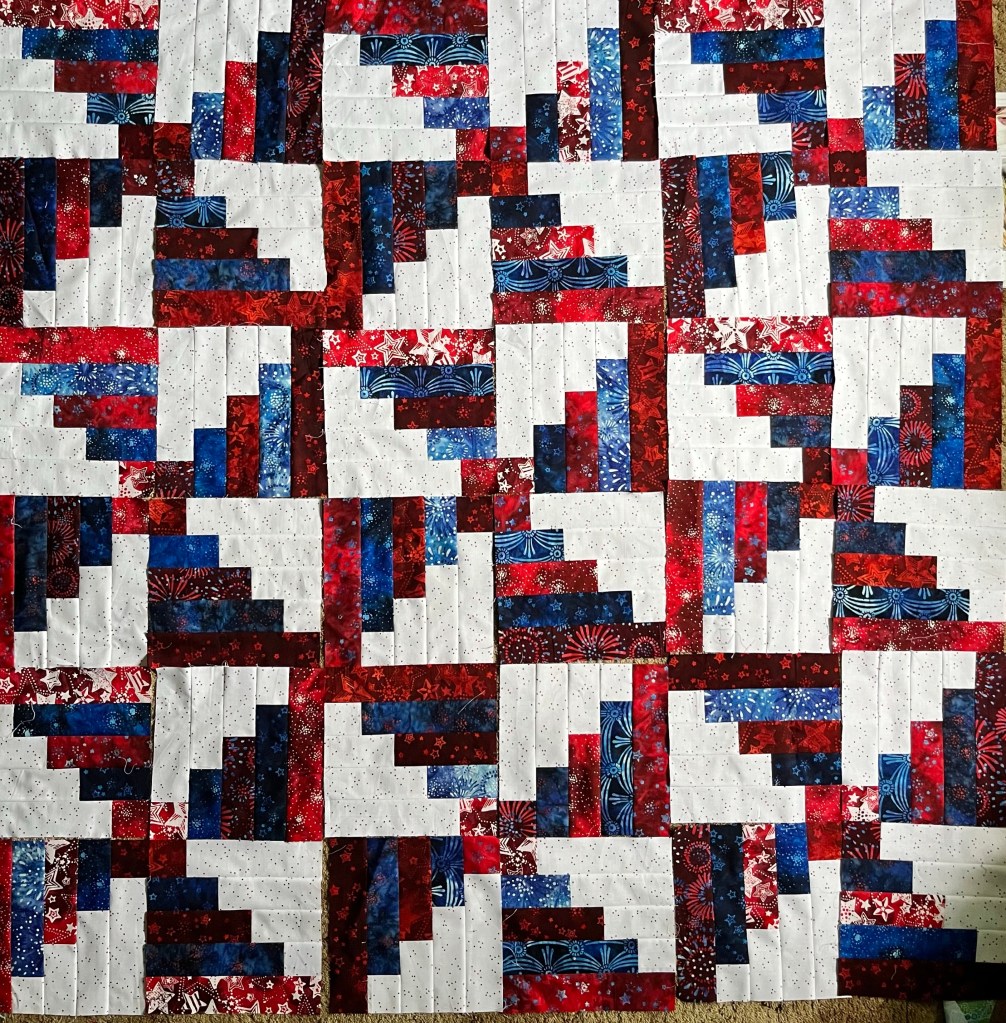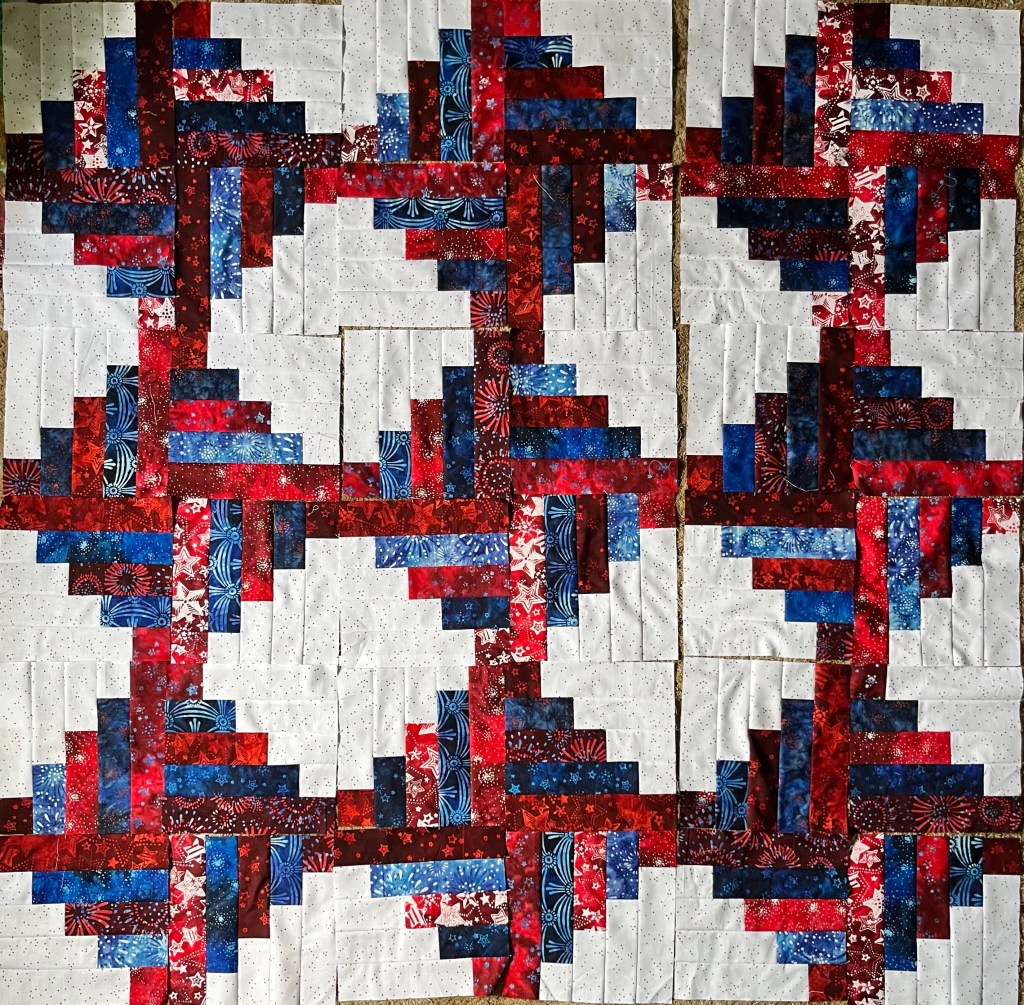
December 2023 Accessory Sew Along · Quilt Stories · Rose Cards · Tips and Tricks · villa rosa designs

Villa Rosa Designs Accessory Rose Card Pattern December Sew Along Week 2 — Savannah Jane and Our NEW VRD Patterns for December

Happy Thursday to you!

Are you ready for another fun Accessory pattern project for Week 2 of our December Sew Along? Of course, I also have the NEW December Rose Card patterns to share with you, too. Lots of great fun this week.

So, how’s your holiday shopping and preparations coming along? I am happy to say that I’ve gotten started a bit this last week. I put up the outside Christmas decorations and lights (not that I do a lot of decorating, but at least we’re not a dark house for December). I don’t have that much more Christmas shopping to do, but I do still have some Christmas sewing and makes to get done. I haven’t started decorating inside yet nor have I started baking or wrapping gifts. Guess I’d better get to it, huh?

Speaking of gift gifting, I think you’re going to love Savannah Jane, our wonderful and quick Week 2 Sew Along project.

Did you order your set of 5 patterns for the December Sew Along yet? There’s still time for you to jump in and sew along with me.

Or you can save the projects for when you’re ready to do a little fun sewing after the hustle and bustle of December. I will add the December Sew Along to the right side of the blog so you can find the posts whenever you’re ready to sew. That’s definitely one of the cool things about an online Sew Along, you can do it anytime you’re ready, even in the middle of the night wearing your pajamas and eating a bowl of ice cream.

Get your pattern set HERE.

If you missed it, you can find the December Sew Along Week 1 — Amanda JaneHERE.

Here’s Molly’s version of Amanda Jane! Don’t you just love her mod fabric choices??? isn’t she just rockin’ this Amanda Jane apron with style?

Thanks for sharing your project, Molly!

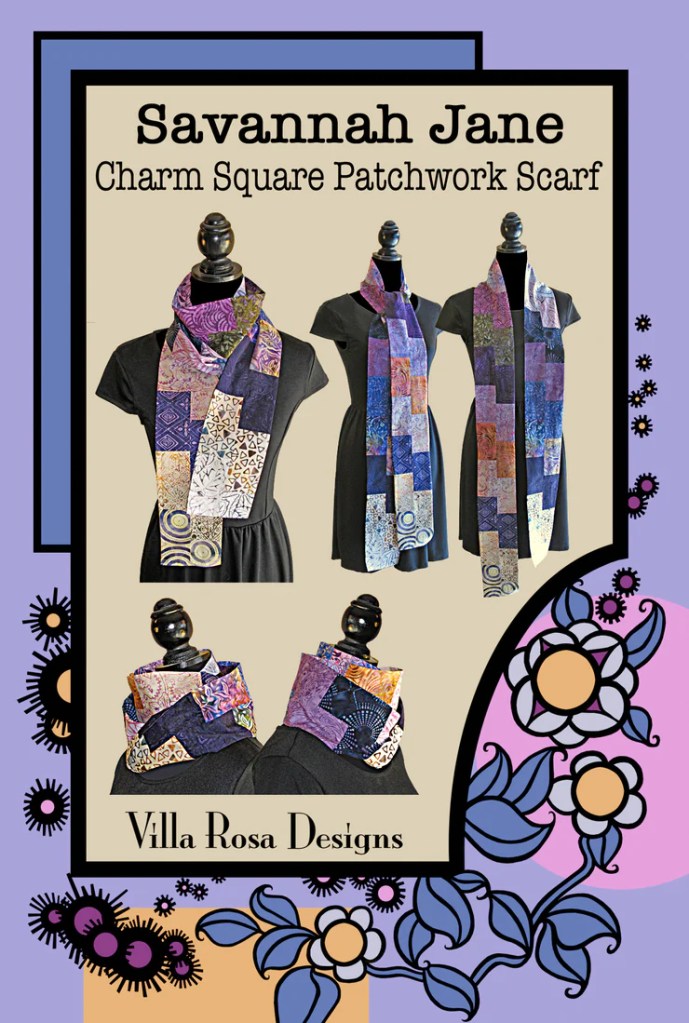
Savannah Jane is a sophisticated gal with an artsy streak.  She just loves this wonderful and versatile pieced scarf -- she can add an artsy touch to her wardrobe without breaking the bank.  Savannah Jane can make this scarf in about an hour, so it's a snap to whip up a new scarf for any occasion or outfit.  Shhh!  Don't tell anyone, but she's made at least a dozen already.  And when she meets her gal pals for lunch, they ooohhh and aaahhh over her latest scarf creation.  Savannah Jane just smiles because she knows something they don't -- they are all getting their own one of a kind scarf for Christmas.

That’s right — this week, for Week 2 of our December Sew Along, you need to have your pattern pack in hand. Grab your supplies and create your own one of a kind totally you Savannah Jane pieced scarf. Bet you can’t make just 1 (wink, wink)….

Please make sure to join us on the Villa Rosa Facebook page to share your project this week and to check out the projects of your fellow VRD enthusiasts. The “social connection” is what makes sew alongs SEW much fun! Show us your fabrics! Any tips or hints for construction? Anything you need help with or don’t understand? Did you customize your project? Maybe you’re making 10 of them for Christmas! Please share because we ALL want to see your Sew Along “sew and tells.”

Villa Rosa Designs Facebook Page — you can use this link to take you to the VRD Facebook page. Make sure you are signed into your Facebook account and on the VRD page you can “like” us to join in the fun. The more folks that join in, the more fun it will be!

Now, I’ve never made a pieced scarf before, so I was pretty excited to give Savannah Jane a whirl. And guess what??? If you like Savannah Jane, you’re going to LOVE her sister, Inessa Jane. Inessa Jane is an Infinity scarf!

Get Inessa Jane HERE

Let me show you my Savannah Jane pieced scarf! Or should I say scarves??? I’ve already made 2 and have plans to make a couple more for holiday gifts. And maybe even one for myself. LOL!

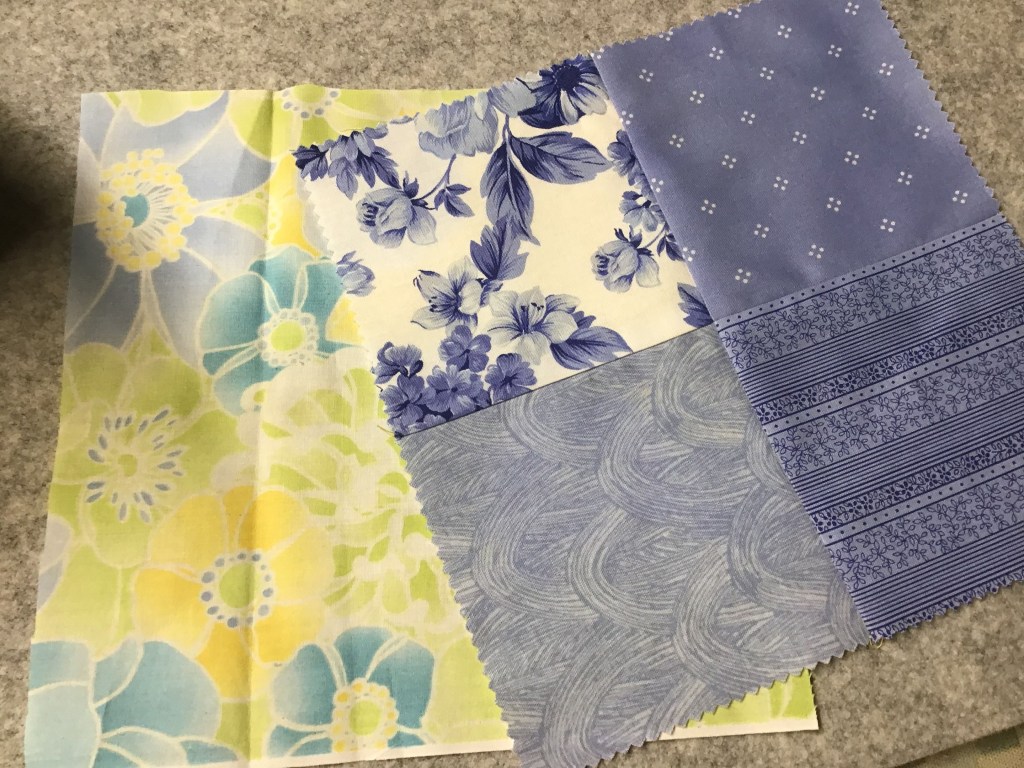
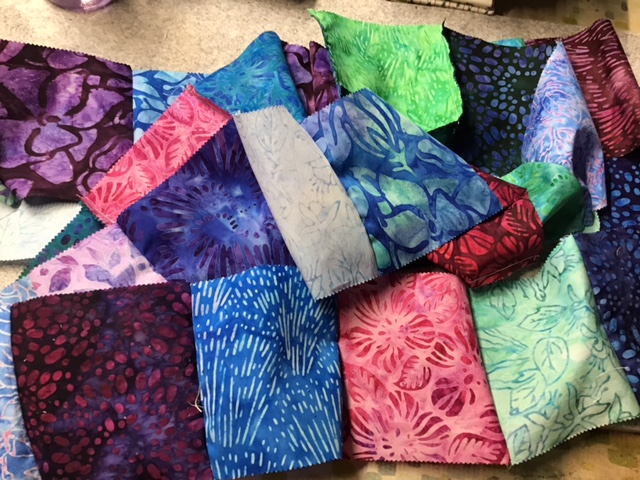
I chose this charm pack for my Savannah Jane scarf. Don’t you just love the yummy colors? I have a special someone in mind for this one already!

The instructions are simple to follow and Savannah Jane goes together in about an hour! Nice — my kind of project!

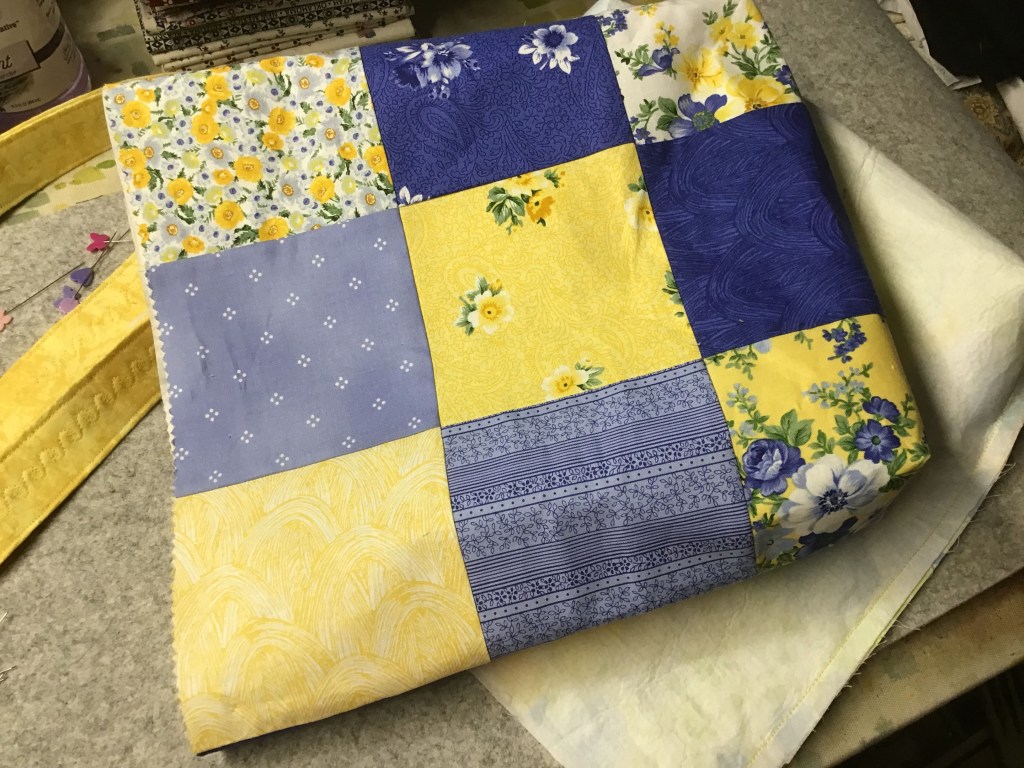
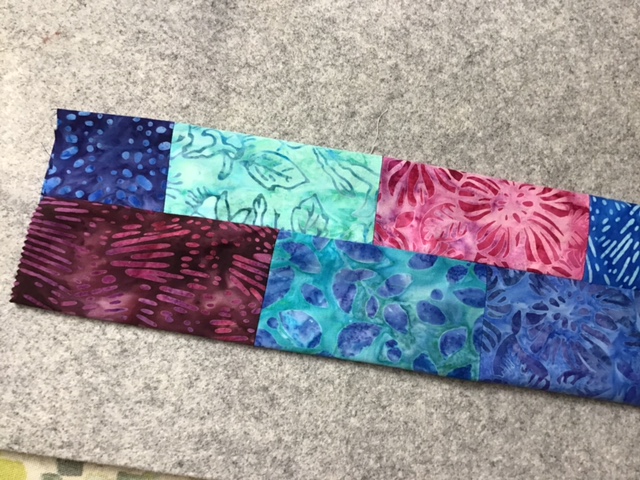
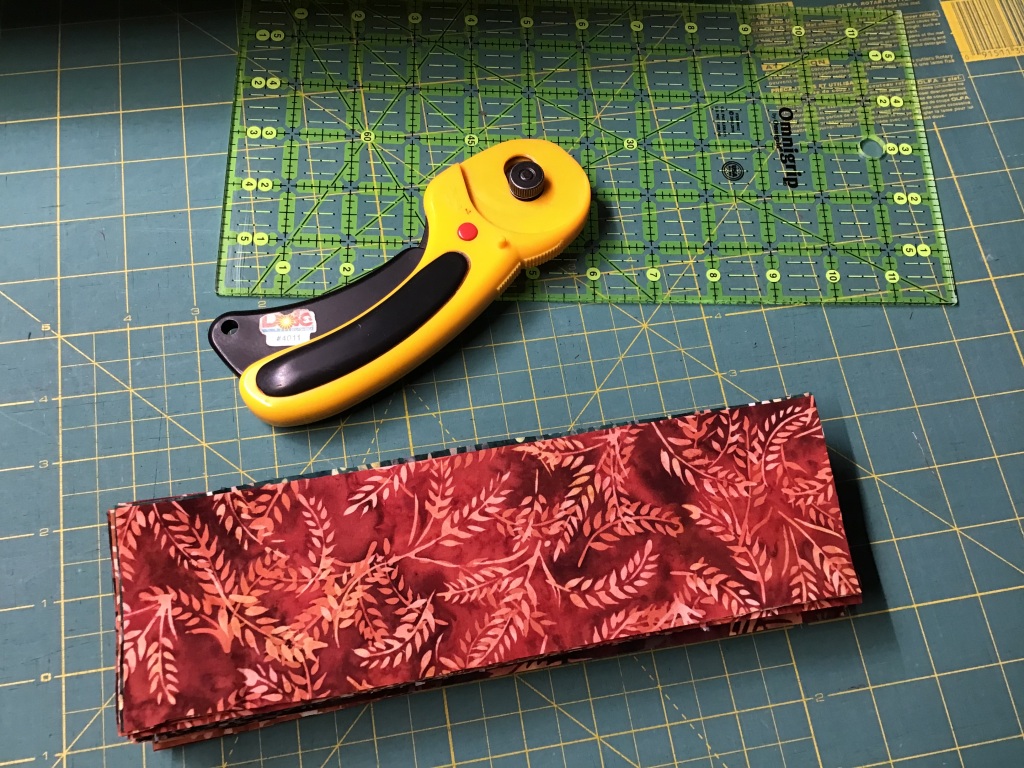
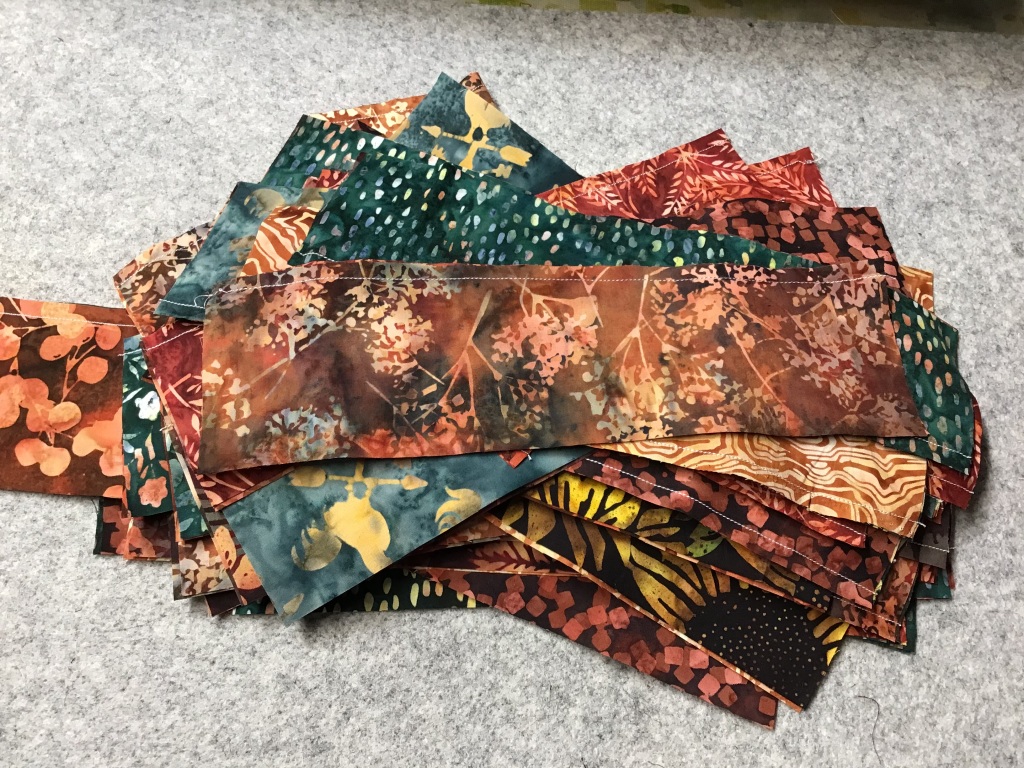
Here you can see my squares all sewn together into 2 long long strips! I sewed them together randomly, just making sure not to put two like colors together.

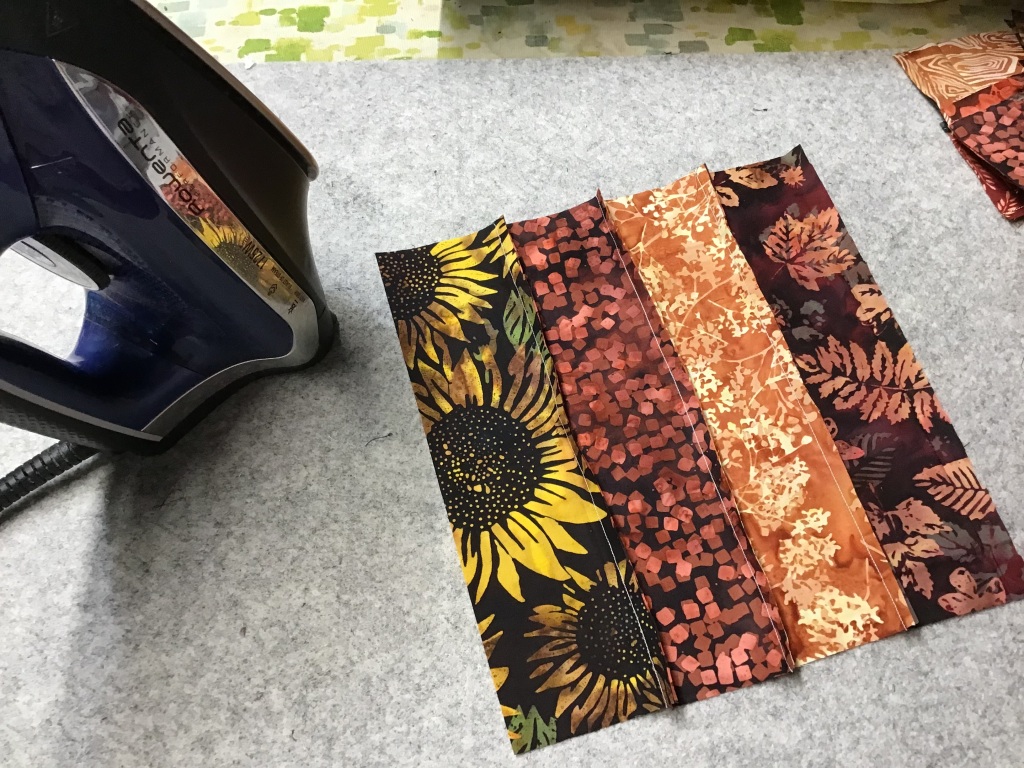
I pressed all my seams in the same direction, pressing first on the back and then also on the front so those seams would stay as flat as possible. Who wants a lumpy scarf??? I even used a little of my favorite Best Press.

Are you familiar with Best Press? My favorite scent is Peaches and Cream, it’s so yummy (No, I don’t drink it, silly you for wondering that!). Of course, if Peach isn’t your scent, there are lots to chose from, including an unscented one which is perfect if you’re sensitive to scents. I’ve personally tried most of them and found Peach to be the scent for me.

Find Best Press HERE.

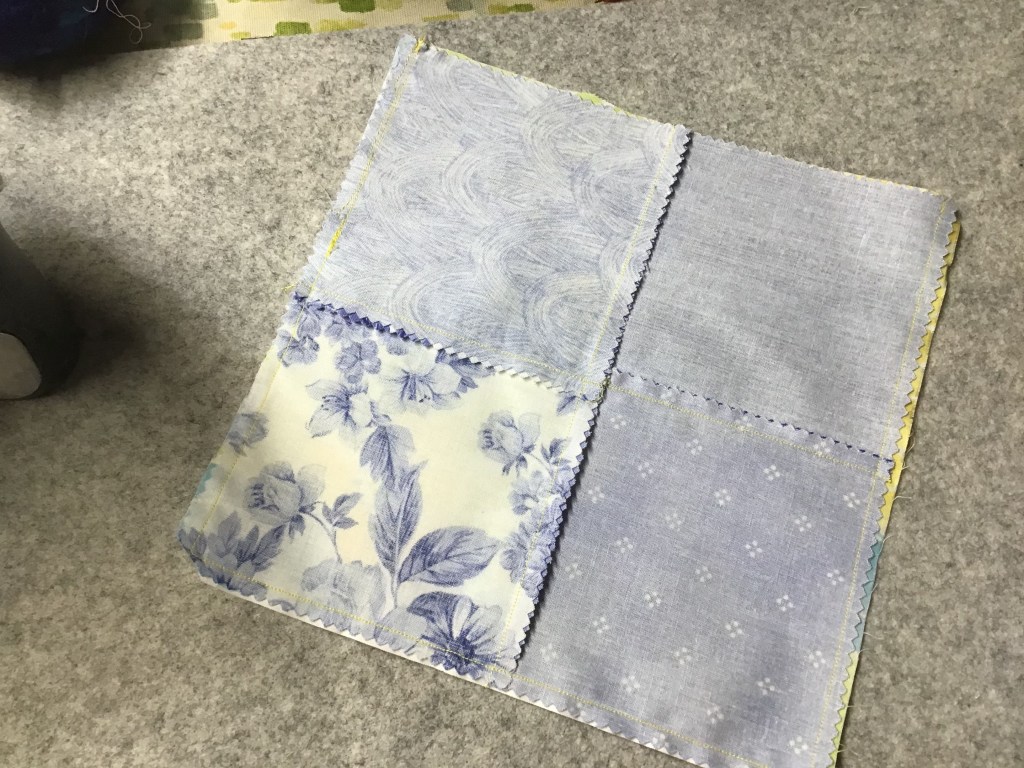
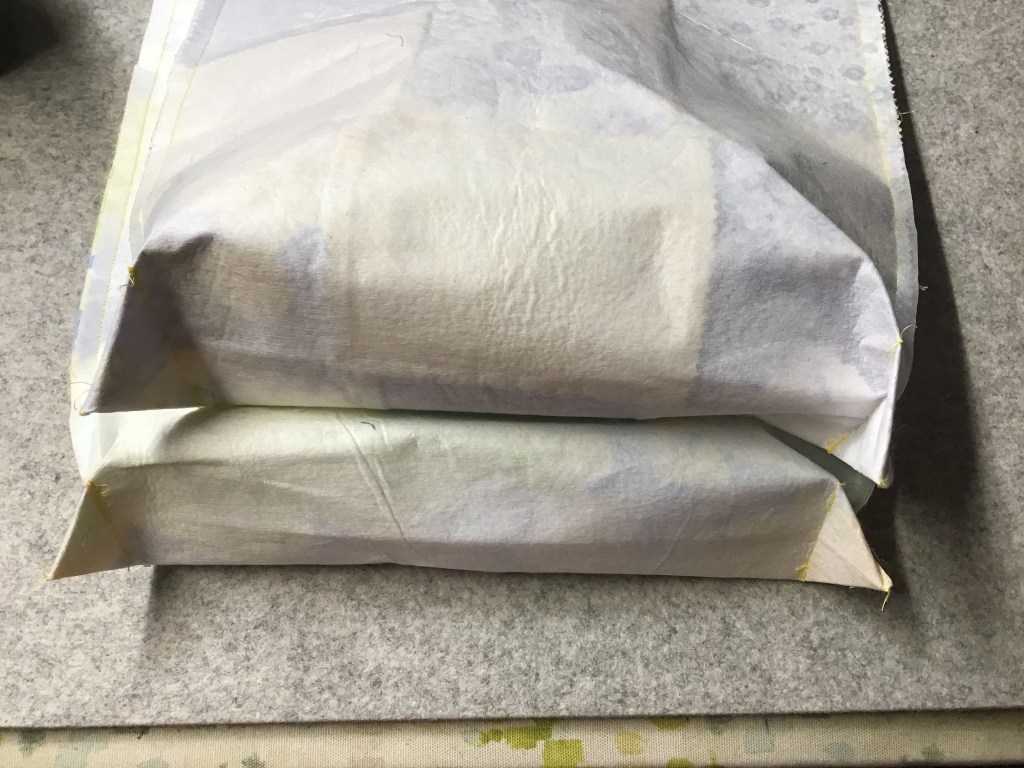
Anyway, after my seams were all nice and flat, I was ready to sew my 2 long long strips together on both sides — basically making a long tube with both ends open. I layered them right sides together, offsetting the ends.

Yay! Here it is all ready to turn right side out.

Ta Da! Here’s my scarf partially turned right side out. It reminds me of a snake shedding its skin — ick — not my favorite image, I can assure you.

Whew! All turned right side out now. Time to flatten the tube with the long seams centered on the front and back of the scarf so you see the offset piecing effect. Isn’t that the coolest thing? Sew clever! Sew easy! Sew beautiful! Especially with these batik fabrics!

Let’s finish the ends now. I folded them under about 1/4″ or so and tried to make each end as straight as possible, which meant I had to do a little fiddling as I pressed the ends flat.

At this point you could hand-sew the openings closed if you didn’t want to see any stitching, but I opted for simple and quick, sewing a straight line across the ends about 1/4″ in from the edge, back-stitching at each end.

Another thought would be to try out some of the wonderful fancy stitches on your sewing machine to finish your edges — that would add a little bit extra something something to your scarves. Or maybe just a edgy modern serged effect? Bet you can come up with even more finishing ideas for your scarves!

Done! In about an hour, no less. LOVE IT!

It was such a fun and quick project, I knew I had to make another one. Like I said, bet you can’t make just one….

Hmmm…..I’m thinking I might need to make 2 or 3 more for Christmas, too. Now that I have this great go-to pattern, it’s going to be loads of fun to personalize my fabric choices for each recipient.

It’s also easy to customize if you need a shorter or longer scarf. Use a charm square pack or cut your own squares from your stash — it’s all up to you.

I’m thinking a flannel charm pack might just be the ticket for my own scarf for this winter. Now to hunt down some squares! Where did I put that flannel charm pack???

Now that we’ve had some fun with Week 2 of our December Sew Along, it’s time to show off our newest patterns!

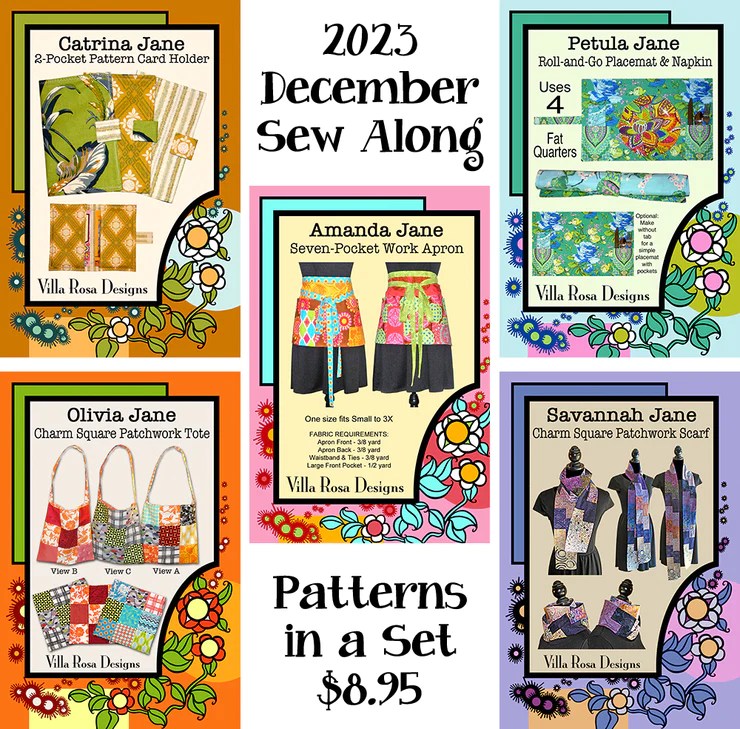
Aren’t they awesome! Every month just gets better and better. Our designers are simply the best! You can get the set of 5 new patterns HERE.

I promised a new table runner pattern for December, too. Sorry we didn’t have enough time to get one out for last month, but I think you’ll like my December runner. It’s fun and very fast. I chose a background fabric with metallic stars and assorted grey fabrics for the strips.

Get your own Frosted Window Panes runner HERE.

Before I close this post, I wanted to take a moment and update you on the projects we’ve been feverishly trying to get done for you.

Quilts of Honor (Quilts of Valor) Collection — this wonderful set of 12 VRD patterns sized just right for your Quilts of Valor donation quilts will be out very soon. You’re going to want this collection! And a portion of each purchase will be donated to the QOVF.

12 Quilts of Christmas — Sadly, we’re a little bit behind schedule with this one, but it should be out soon as well, just in time for Christmas. This collection features 12 brand new Christmas-themed quilts designed just for you by our talented VRD designers.

2024 Blog Hop — The 2024 Blog Hop is going to be pushed back a little bit to February/March as we’ve been working so hard on the other projects.

Okay, now it’s your turn!

Time to get your pieced scarf made this week (between Thursday December 7th and Thursday December 14th) and share it on the VRD Facebook page. I’ll see you there and I can’t wait to see what you make and hear your Savannah Jane sewing story! Let’s add where you’re from, too! It’s lots of fun to see where all our VRD friends hail from!

See you next Thursday for Week 3 of our December Sew Along.

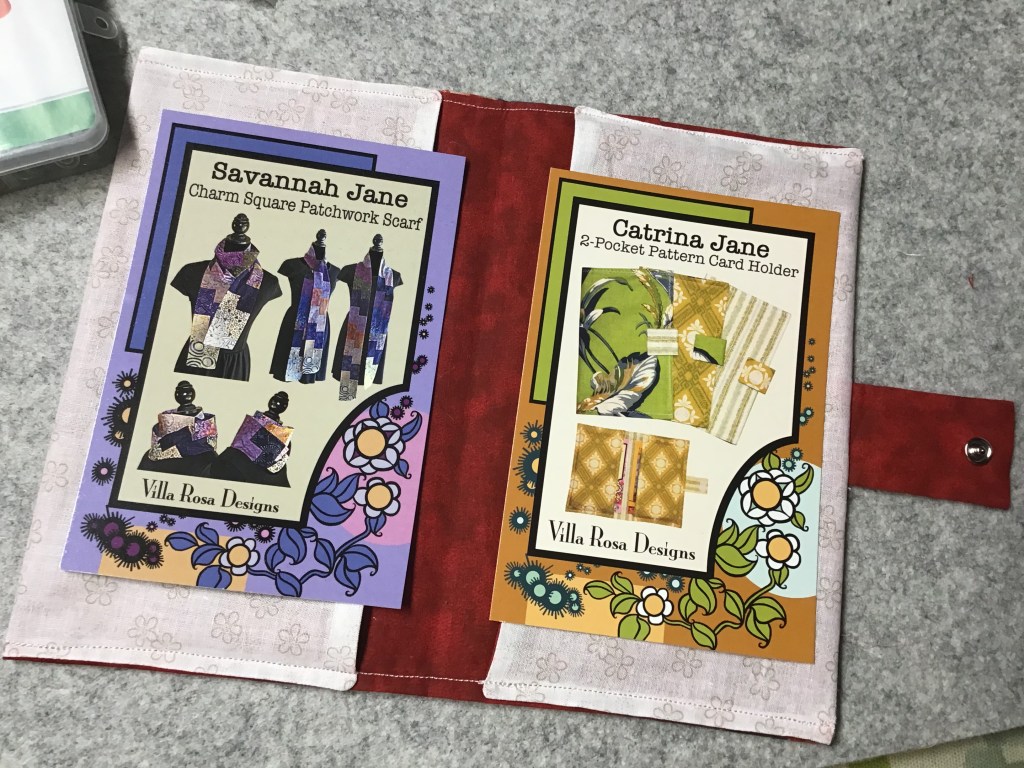
(PSST! If you’re one of those work ahead kind of folks — our Week 3 project is Catrina Jane which will officially begin next Thursday, December 14th. Feel free to have at it, but please don’t post any of your photos or progress on Catrina Jane until after next week’s blog post. Between now and then, let’s focus on our Week 1 project Amanda Jane and our Week 2 project Savannah Jane. Thank you!)

See you on the VRD FB page!

Sew. Laugh. Get your Merry on. Repeat.

Always,

Tricia @ VRD
December 2023 Accessory Sew Along · Quilt Stories · Rose Cards · Tips and Tricks · villa rosa designs

Villa Rosa Designs Accessory Rose Card Pattern December Sew Along Week 1 — Amanda Jane

Hello Quilty Friends!

Happy Thursday to you!

Are you all geared up and ready for our fun December Sew Along? It’s not too late to join us if you haven’t gotten your Sew Along pattern set yet. You can get the set of 5 patterns HERE for the special price of $8.95.

This week, we are kicking off Week 1 of our December Sew Along with our Amanda Jane pattern.

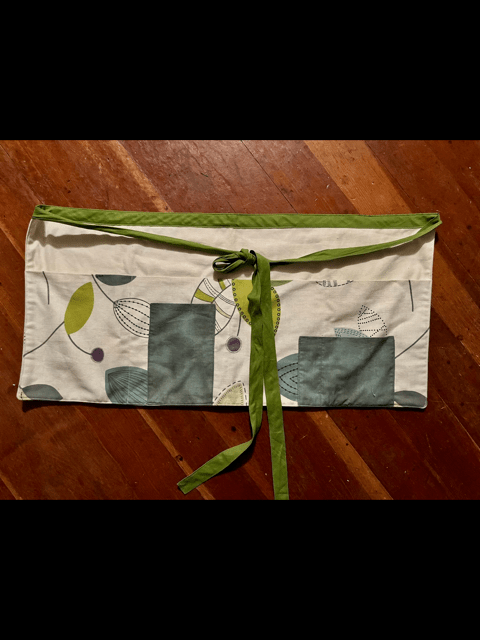
Amanda Jane is a super busy and hard-working gal.  It's hard enough to find time in her crazy life to spend some quality time doing her favorite hobbies and interests, so losing important items like her scissors and measuring tape are totally out of the question!  Amanda Jane has it all covered in her cute and sensible work apron featuring 7 pockets!  Hello supplies!  And good bye wasted time looking for notions.  Amanda Jane loves her work apron sew much, she just might make a different one for each day of the week, just because she can!  And one for each of her crafty besties for the holidays, too!

That’s right — this week, for Week 1 of our December Sew Along, you need to have your pattern pack in hand. Grab your supplies and create your own one of a kind totally you Amanda Jane apron.

Please make sure to join us on the Villa Rosa Facebook page to share your project this week and to check out the projects of your fellow VRD enthusiasts. The “social connection” is what makes sew alongs SEW much fun! Show us your fabrics! Any tips or hints for construction? Anything you need help with or don’t understand? Did you customize your project? Maybe you’re making 10 of them for Christmas! Please share because we ALL want to see your Sew Along “sew and tells.”

Villa Rosa Designs Facebook Page — you can use this link to take you to the VRD Facebook page. Make sure you are signed into your Facebook account and on the VRD page you can “like” us to join in the fun. The more folks that join in, the more fun it will be!

I’m really excited to show off my Amanda Jane apron!

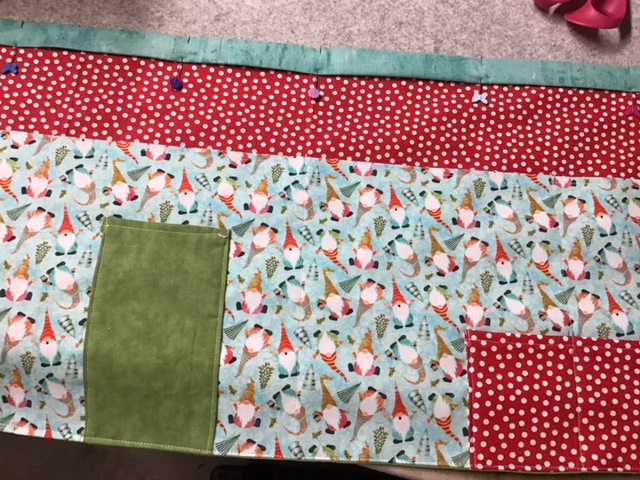
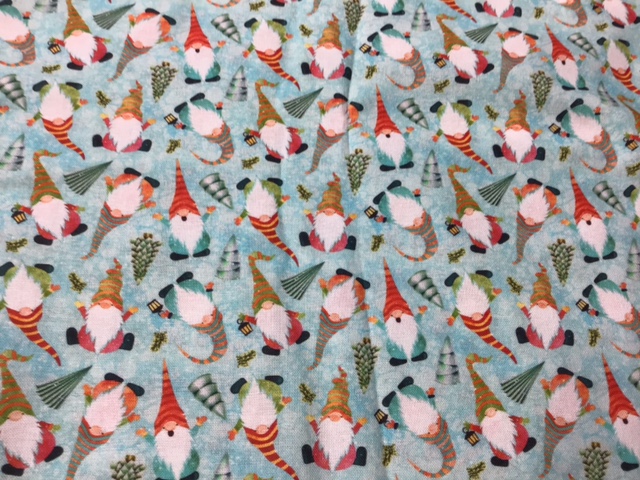
I had this adorable gnome Christmas fabric in my stash — it’s been begging to be made into something fun — and I thought it would be an awesome starting point for my apron! Not sure where it came from originally, but it is totally too cute NOT to use.

Who’s gonna rock Christmas in her apron this year, yeah??!!

Next I paired some coordinates straight outta my stash. What do you think? I wasn’t sure about the green, but I tried some other greens and this was the one that looked the best. Besides, I’m going to use the green on the back, so it really doesn’t have to be perfect. The teal was a complete no-brainer. And it had to have red polka dots, am I right here?

Hmm. I think I’ll use the red as the main fabric instead of the gnomes. And the gnomes as the big pocket so I’ll get to see more of the gnome fabric, because it really is all about the gnomes. The green definitely works as the back. Finally, the teal would make a great strap. What do you think? Oh! Then I’ll have a red pocket and a green pocket on the front. Cute. Let’s do this!

Well, I’d better stop chit chatting and starting cutting out my pieces.

Okay, I’m back. I got everything cut out, which wasn’t too hard, but I did have to dig out my really big square ruler to rotary cut my large pieces.

Here’s my gnome pocket, folded and ready to go. I’ve got the smaller pockets cut from leftovers of the red and green pinned and ready to stitch onto the gnomes.

You know, if you wanted even more color and fun, you could raid your scraps to find some coordinating fabrics for the smaller front pockets. Wink, wink. Just sayin’……

I know, I know…..I’d better get back to work. Can’t wait until I have a fun apron to use soon.

I think it would be great for wrapping gifts this holiday season. I’m always losing my scissors and tape in piles of paper…. What are you going to do with your apron?

Now I’ve got my big gnome pocket layered on my red dot fabric. I don’t know if you can see in the photo, but I’ve already got my sewing lines marked to create the large large pockets. I think it’s cool that one of the sewing lines goes right through the middle of my little red polka dot pocket to divide it into 2 smaller pockets. Nice! Now all the stuff I cram into the red pocket is less-likely to fall out when I bend over while wrapping.

Tags! Tags, anyone? I’ll know exactly where to find ’em when I need them. And I can tuck a pen or two in my handy dandy apron, too. Wow! I’m going to be the Inspector Gadget of Gift Wrapping this year!

Next I layered my apron front and back Right Sides Together (RST) and sewed along the bottom and the sides. Fingers crossed, I sewed relatively straight…. The I turned it right side out, smoothed and pressed the edges. And for a nice finish, I stitched about an 1/8″ inside the outside edge on both sides and the bottom of the apron.

Moving on to the strap — my goodness, that is a lot of strap. I think I could wrap my little house up in this strap. Wow! This step took me some time, but I nailed it!

AHA! Here I pinned my layers together with the apron sandwiched in between the long folded edges of the strap. To find the center of the apron, I folded it in half and marked the center top. Then I folded that long long strap in half and found the center, too. Finally, I matched up the centers and pinned that crazy strap into submission.

That strap seemed to have a mind of its own, though — it kept slithering away from me. Ugh! I think I need MORE PINS!

Huh! It worked! I got the apron pinned into the strap folds, sewed it, and it all worked. And it looks so so cute. Really! And it wasn’t difficult, once I got the hang of it. Take that, you crazy strap!

The final test — does it fit???

It fits! It actually fits me AND the strap wraps around my body back to the front just like in the photo on the front of the pattern — I won’t have to be a contortionist to tie it in the back, like most aprons! Awesome! I’m no skinny Minnie either — I’m a plus-size kind of gal and it fits me perfectly! I am thrilled.

Okay, now it’s your turn!

Time to get your apron made this week (between Thursday November 30th and Thursday December 7th) and share it on the VRD Facebook page. I’ll see you there and I can’t wait to see what you make and hear your Amanda Jane sewing story! Let’s add where you’re from, too! It’s lots of fun to see where all our VRD friends hail from!

See you next Thursday for Week 2 of our December Sew Along.

(PSST! If you’re one of those work ahead kind of folks — our Week 2 project is Savannah Jane which will officially begin next Thursday, December 7th. Feel free to have at it, but please don’t post any of your photos or progress on Savannah Jane until after next week’s blog post. Between now and then, let’s focus on Amanda Jane. Thank you!)

See you on the VRD FB page!

Always,

Tricia @ VRD
Just Quilty Stuff · Tips and Tricks · villa rosa designs

16 Ideas for Getting Your Flimsies (quilt tops) DONE

Happy Thursday to you!

I don’t know if you are like me at all but I have a bunch of quilt tops — or flimsies, as they are often called in quilt jargon — piling up and I can’t work fast enough to make a dent in them. Part of the problem is that I have NEW quilts to make, so it’s hard to work backwards to finish the stack of flimsies that I have already made, but haven’t finished yet. It’s such a vicious cycle….

Recently, I started brainstorming some ideas to power through those unfinished tops while still working on my current and future projects. Today I thought I’d share my ideas with you. Feel free to leave a comment if you have ideas, too, because I’d love to hear them. Maybe if we all brainstorm together, we can combat the universal quilting problem of too many projects and not enough time.

  • Make a Plan of Action — Maybe it’s time for all of us quilters to go through our flimsies and look at them realistically — a very important first step so we know how many flimsies we really do have. How many of them can we really finish in a lifetime? Let’s be honest with ourselves here. Maybe divide them into 2 piles — the ones we think we might finish and the ones we won’t. Let’s keep only the ones we’ll actually finish and then write down a plan to get ‘em done. Soon that teetering stack of flimsies will be a thing of the past.
  • Share them — Since you’ve decided which flimsies you are going to complete and you’ve made a written plan to accomplish that, why not share those unwanted flimsies with quilty friends, fellow quilt guild members, quilters who make charity quilts, a church quilt group, or some other charitable organization. Then you can clear away those unloved flimsies without guilt and make someone else’s heart happy.
  • Take a Class — Maybe you don’t know how to machine quilt your own quilts. Why not learn how? Check out your local quilt shops or quilt guilds to find a machine quilting class. Or maybe you’ve always wanted to learn hand-quilting? What are you waiting for? Sign up for a class and get quilting those flimsies yourself!
  • Use fleece — I’ve talked about using fleece on the backs of my throw quilts before. Check out my post on quilting with fleece HERE. Using fleece on the backs of throw quilts makes them super cozy and lightweight. Fleece fabric is relatively inexpensive and batting isn’t even needed, which makes using fleece also economical. And don’t forget time-saving — you only have to layer your flimsy with a single layer of fleece, which takes less time than using both batting and backing. Just remember that fleece is very stretchy while your flimsy is not and you may need to adapt your quilting designs to manage the stretchiness.
  • Practice makes perfect — Just get those quilts layered with batting and backing and get quilting. Hand quilter? Set time aside every day to work on your hand quilting. Machine quilting? Use your flimsies as hands-on experience as you master free motion quilting! Start with table runners and smaller projects and work yourself up to larger projects as you feel more comfortable and your machine quilting skills improve. Wiggly lines and straight lines get the job done too.
  • Long Arm Quilting — Find a local long arm quilter and work together to create a plan to get your large flimsies quilted. Maybe you can swing getting one done every month or every few months, or…? Do whatever works for you, just keep working towards your flimsy-free goal.
  • Have a party — Enlist your friends and have a good old fashioned quilting bee, but instead of everyone working on the same quilt, ask each friend to quilt one of your smaller projects. Anything goes! Ask your friends to bring their sewing machines and you will have tables and extension cords at the ready and will provide all the munchies! When you ask your friends to help you, make sure you promise to help them finish their own flimsies.
  • Presto Change-o — Who says a quilt top has to continue its life as a quilt? Why not repurpose a flimsy (or more) into a snazzy jacket. A tote bag or purse? Pillows for the couch? Place mats? Or whatever else your little heart desires. Have some fun with your flimsies and turn them into finished projects.
  • Mix and Match — Speaking of chopping up your flimsies to make new projects, how about mixing and matches bits and pieces from different flimsies together into a new project?
  • Host a Flimsy Swap — Gather up your quilt posse and have a fun flimsy swap. You might need to set some basic rules — the most important one that comes to mind for me would be that each participant must take as many flimsies as they bring for the swap, even if it means taking some of their own back home. Or limit the swap to one flimsy per person. Agree on a future date to have your new-to-you flimsies finished and have a quilt show of the completed projects. With snacks, of course. Then……..repeat. Often.
  • Take Me as I Am — Maybe you don’t machine or hand quilt. Maybe you just don’t have the money to send your quilts out to a long arm quilter. So why not enjoy those flimsies just as they are? Fold them over the rungs of an old ladder. Drape them over the couch. Use them as table covers in the dining room. Fold them prettily and stack them in an old jelly cupboard. Quilts love to be admired and enjoyed, even if they aren’t quite completed. Just remember to continue to work towards getting them done, one flimsy at a time.
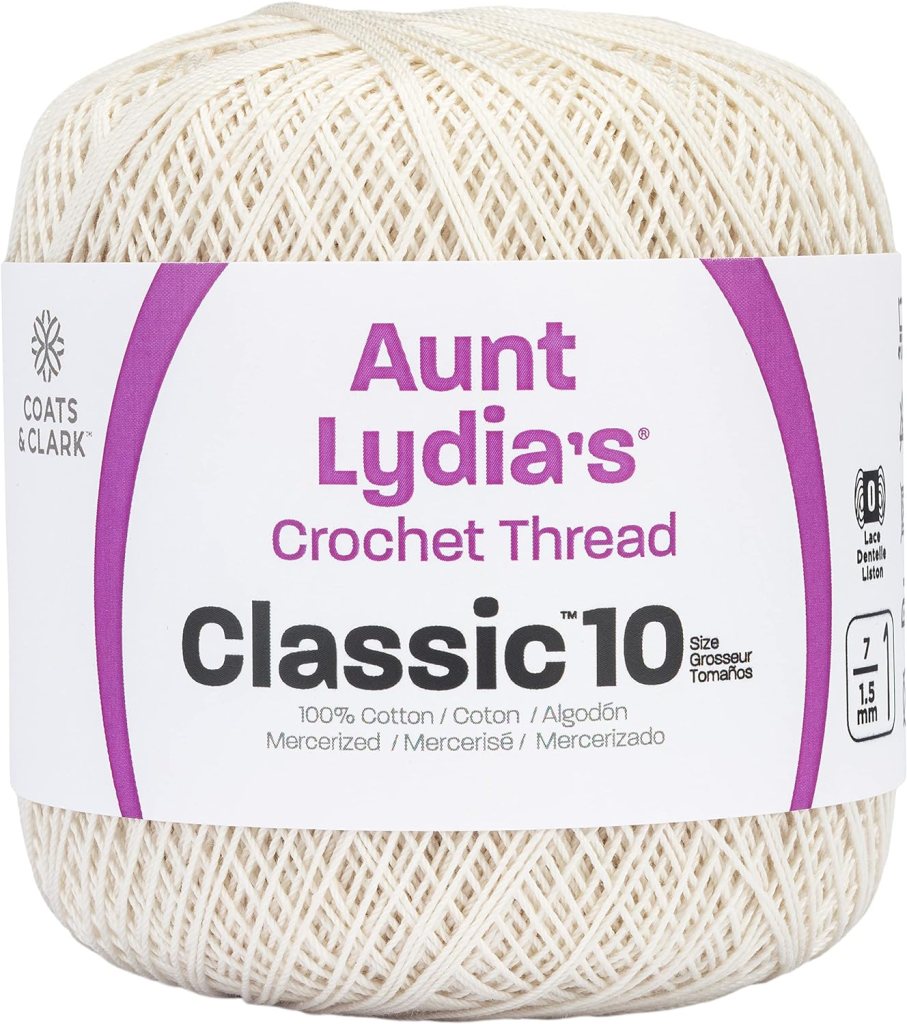
  • Tie ‘em Up — Have you ever tied a quilt? This is how I made my first five or six quilts way back when. I backed them with a sheet and used a thicker fluffier poly batting. I sewed the layers together envelope-style and then used cotton crochet thread with a long needle to tie my quilts. I tied double knots and trimmed my threads close because I really didn’t want a hairy quilt. I usually placed my knots at seam intersections to hide them a bit better. Tying worked great and I could finish a throw or bed-sized quilt in a day. This was, of course, before I taught myself to do free motion quilting. Just make sure to put in enough ties to keep the batting from shifting around.
  • Go Small — Maybe you love to make big bed quilts but can’t or won’t quilt them yourself or send them out to a long armer. My solution? Make them smaller! No one ever said you couldn’t cut up your quilt to make 2 or more smaller quilts! Maybe a big bed quilt could become a throw, a wall quilt, a table runner, a set of pillows? Bet you can manage those more easily! This is even a great way to create a new coordinated look for your space, too. Just think how fast you could whip up a stack of table runners or quilted scarves for Christmas gifts when you start with big quilt flimsies? Oh, the possibilities….
  • Swap skills — You’ll need some friends to help you out with this idea. Have a friend who likes to machine quilt? Swap skills with them! If they will machine quilt one of your quilts, you will clean their house, make cookies, bathe their dog, babysit the kids, or whatever skills you can barter with. Maybe you can swap skills with more than one friend or even a local long arm quilter. Write a list of the skills you are willing to barter before you talk to people about swapping your skills for machine quilting. Just keep it legal, clean, and safe please.
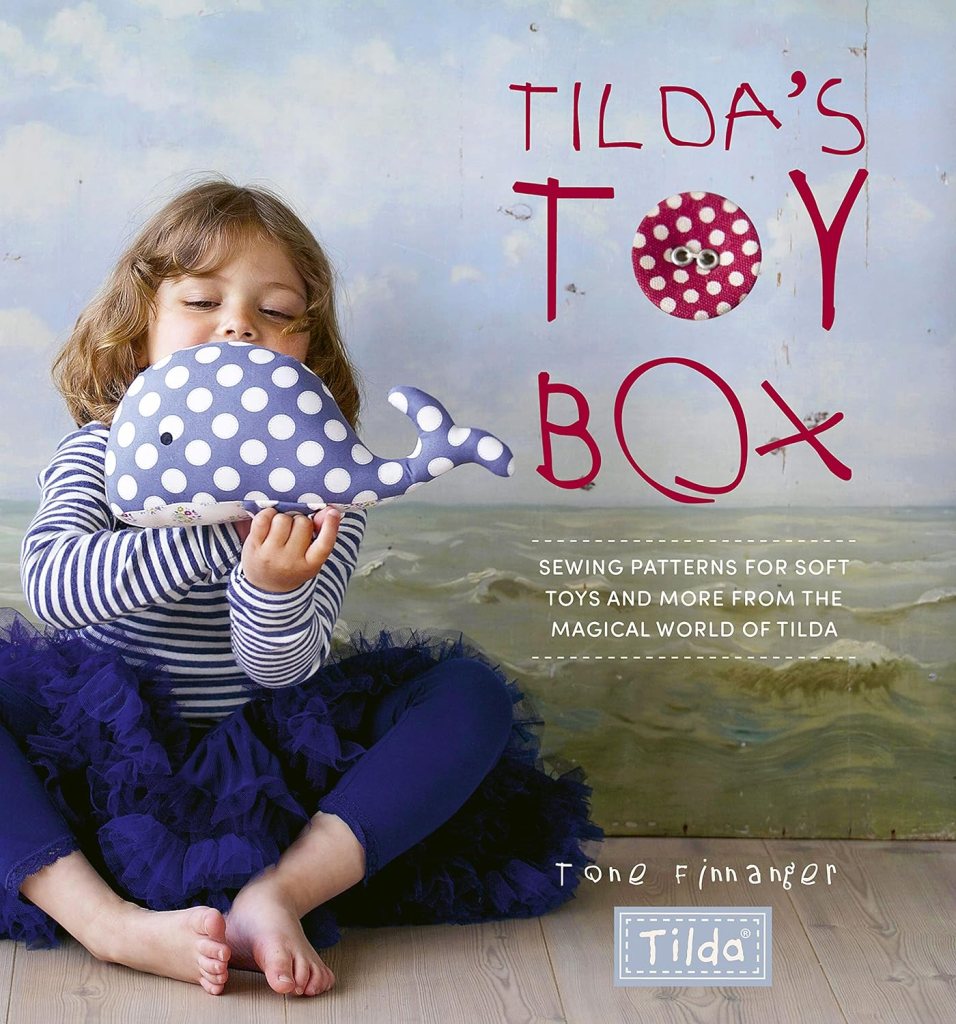
  • Make Toys — Why not find a brilliant collection of simple stuffed toy patterns you can make for kids and cut the pattern pieces out of your flimsies. Don’t have kids or grandkids? Donate your soft toys to a children’s hospital or other charitable institution. Lions, tigers, and bears….oh my!
  • Repurpose — Did you know you can repurpose your flimsies? This is kind of like Presto Change-o above, but with a little twist. What else can your flimsies be besides quilts? Maybe you can recover a side chair with a pieced top to create a unique one of a kind accent for your space. Or perhaps you could make dining chair seat covers? Time to think outside the quilt here — anything goes.

I hope these ideas will inspire you to dive into your own stack of flimsies and get them done. From quilts to decor to soft toys. Upholstered foot stools and lampshades. Pillows and table runners. There are sew many projects you can create with your stack of flimsies. Sew, what are you waiting for???

Until next Thursday —

Always,

Tricia @VRD

Quilt As Desired · Tips and Tricks · villa rosa designs

Tips for Free Motion Quilting (FMQ) on Fleece

Happy Thursday to you!

I’m sew excited you stopped by today! After doing those fall quilt tutorials a few weeks ago, I am trying to now get them all quilted before I dive into making more quilt tops (my projects seem to be multiplying daily). Do you quilt your own quilts or do you send them out to a long arm quilter? If you do your own quilting, do you hand or machine quilt?

I started machine quilting right after I learned to do patchwork almost 25 years ago. Of course, first I tried to “stitch in the ditch” but I found I couldn’t manage to actually stay in the ditch. Ho hum……

I did try a little hand quilting on my very first quilt, which I lovingly call “Big Ugly”, but my stitches were so big, I could’ve probably caught my toe in them. LOL!

Eventually I heard about a relatively newfangled thing called free motion quilting (FMQ). I was a new enough quilter that I wasn’t afraid to try it. Of course, back then free motion quilting was frowned upon and free motion quilters tried for a hand quilted look by using invisible monofilament thread to hide their machine stitching. The invisible thread back then was like thin fishing line — yuck! But I still slogged through — learning how to free motion quilt with a basic sewing machine on which I had to cover the feed dogs with tape or an index card because the feed dogs didn’t drop. And don’t forget that fishing line (today’s invisible thread is so so much better than back then)! Regardless of the challenges, I kept free motion quilting. And I was hooked!

After I had some quilts under my belt and I upgraded to a little better sewing machine where I could actually drop the feed dogs — it had a needle-down function too, I switched to using the same thread I pieced with — 100% cotton. I experimented with different threads and manufacturers for a while to see what I liked the best, or maybe more accurately what threads my sewing machine liked the best. Then I discovered King Tut variegated thread by Superior Threads. WOW! What fun it was quilting with variegated thread! I grabbed up every variegated thread spool I found, which was especially fun when I went on shop hops and quilting bus trips with my quilty pals.

The only real problem I found working with those yummy variegated threads was that sometimes I lost the thread on the quilt because the thread color matched the quilt exactly. Then it kind of looked like I skipped part of the quilting design. Oh well, nothing’s perfect.

This was when I moved back to working with solid 100% cotton threads. Now I have a small six drawer unit on wheels with all my spools of thread organized by color or type. And yes, the top drawer even has my collection of variegated threads. My drawer unit is the Helmer unit from Ikea.

Helmer image from Ikea

Today I have a fun little video for you with some great tips for free motion quilting a quilt top backed with fleece fabric (you know — the fleece you make tied blankies with or comfy pj pants out of?). I began free motion quilting on fleece long before even Minky was popular as a quilt backing. I guess I was ahead of my time a little bit. Of course, back then, folks kind of looked at me funny when I showed off my free motion quilted quilts backed with fleece. Boy, they didn’t know what they were missing!

There is nothing like curling up with a fleece-backed quilt. Be aware that I don’t put batting in my fleece-backed throw quilts. Nope, not at all. Skipping the batting makes my fleece-backed throw quilts very cozy and super floppy — which I love! Have you ever tried machine quilting with fleece on the back of your quilt?

A friend of mine, Cheryl, who is a free motion long arm quilter, took my quilting on fleece idea even further — she layers 2 pieces of fleece and free motion quilts them together to make a one of a kind textured throw blanket. Maybe you’ll try this too.

Now — on with the show!

Oops! I see in the video that I actually did cross over some lines. Mea culpa! Luckily, I didn’t get any mischief happening on the back of my quilt. I should haven stuck with my first choice of orange thread instead of the medium chestnut brown, which blended in too much on the quilt top. LOL!

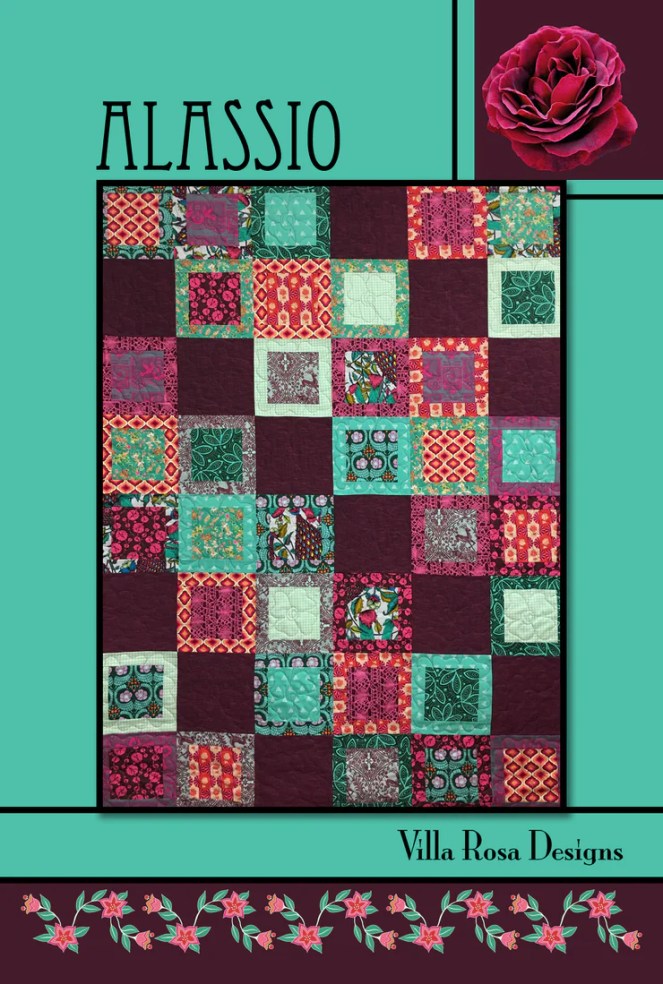
Go HERE for the Alassio tutorial. Or HERE to purchase the Alassio pattern.

Go HERE to read our VRQ post, Quilt as Desired, which is all about machine quilting and is part of our Basic Skills for Quilters Series on the blog.

I hope you enjoyed this little video. Now that I know how to create one and upload it, you might just find more little videos here. You’ll have to stay tuned to find out.

Until next Thursday —

Always,

Tricia @VRD

Tips and Tricks · villa rosa designs

10 Items for Your Quilting Toolbox to Improve Your Overall Sewing Experience

Happy Thursday to you!

Nope, sorry, no quilt tutorial this week. I finally realized I’d better take a little break from piecing and get to some machine quilting before I completely drowning in unfinished quilt tops. LOL!

Another week has just zoomed by and I cannot believe that Fall officially arrives on Saturday. I am totally enjoying the cooler nights and warm days we’ve been having around here. I’ve also been doing a little more cooking for dinner and even some baking. While out enjoying the weather the other day, I strolled back to our crazy overgrown dwarf apple trees which are like 15 feet tall. I was pleasantly surprised that there are some decent apples up in the trees even as the leaves are starting to fall off. We’ve never really treated them and they’ve never been pruned to my knowledge — hence the “overgrown” part — and the deer and bugs have been helping themselves. But there are still some nice sized apples. Now I have to add some apple picking this weekend because I’m thinking of making some crockpot applesauce and freezing it for this winter. Yum! There’s nothing like homemade applesauce in the winter.

Of course, all I really want to do right now is to make quilts. Lots and lots of quilts. So let’s dive right into a great list of quilting helpers!

I’ve recently added a couple new things to my studio that have been real game changers for me. So I thought I’d take a little time to share with you those new things as well as some of my old favorites. These tools have saved me time, improved my accuracy, and even just made quilting more fun. You can find them at your local quilt shop or favorite online retailer.

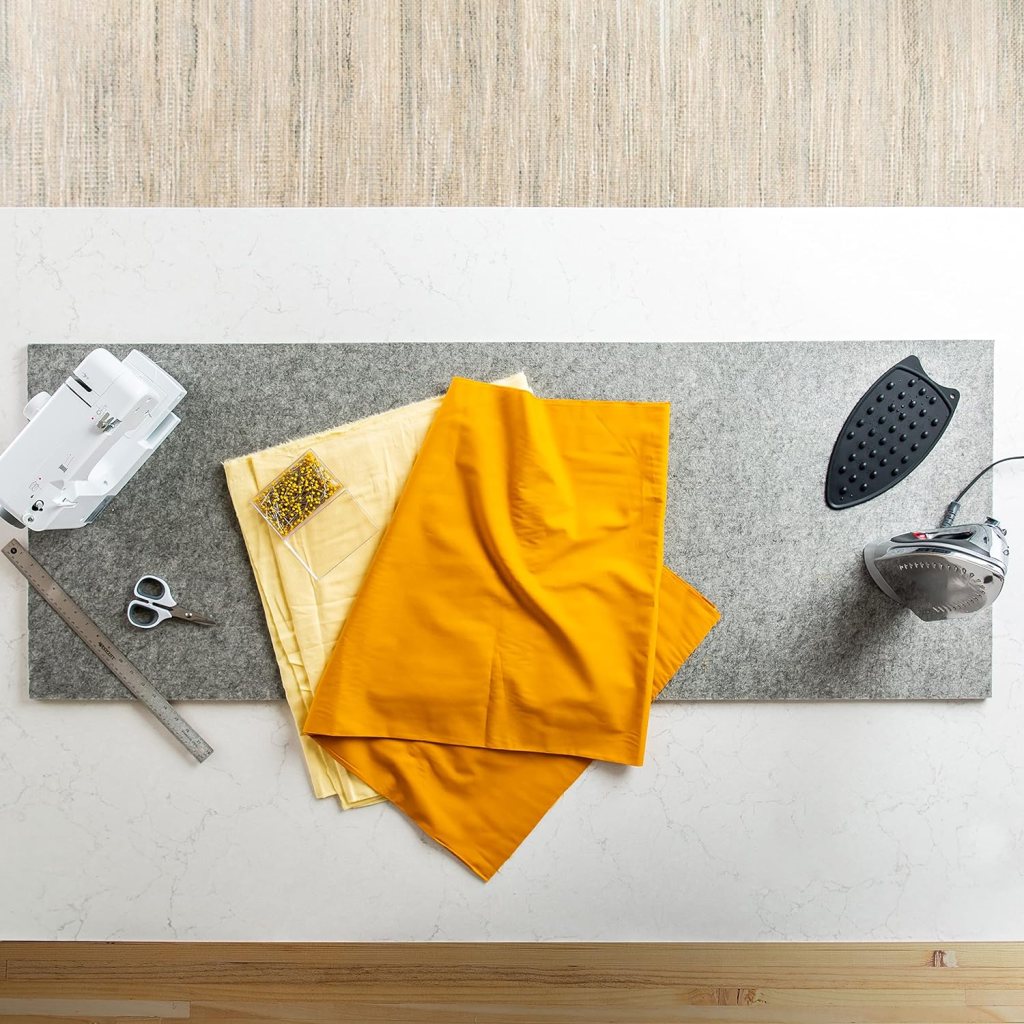
Wool Pressing Mat

Image from Amazon

I know wool pressing mats aren’t really new, but they are new to me. For the last several years, fellow quilt guild members have been extolling the benefits of using one when pressing fabrics, blocks, and quilts. I listened politely, nodded, and promptly forgot about them. I even won a handmade knitted felted wool mat, but then never used it. Sometimes it can take a while for me to warm up to a new idea. Silly, I know, but true.

Anyway, fast forward to this summer. It was an impulse Prime Day purchase, but I splurged and bought a wool pressing mat. I figured, what the heck? Maybe it would work for me because I find pressing so tedious.

WOW! I cannot tell you what a difference a wool mat makes when pressing. My blocks don’t slide around or stretch and the warmth underneath makes pressing quicker and easier with less work for better results. All I can say is I don’t know why it took me so long to try it out!

My wool mat is narrow and long and almost fits the length of my ironing board. Now I wish I would have gotten one a little bit wider, though, as my ironing board is a generous 24″ x 60″. But it did come with a nice case so I can roll up my wool mat and take it with me.

Machine Quilting Gloves

Image from the Amity Studios website

Machine quilting gloves are an oldy but a goody in my quilting toolbox as I’ve been using them almost as long as I have been free motion quilting. All quilters have their own favorites and I am no different. I’ve used other brands of gloves over the years like Machingers and Grabaroos, but my favorite favorite gloves for the last four or five years are the Swan quilting gloves by Amity Studios. I found Swan Gloves quite by accident at International Quilt Market before the Pandemic hit. My first pair lasted through the Pandemic and other than maybe being a bit worn, they are still good. I did purchase a new pair last year at Market, just in case.

These gloves are different from any other quilting gloves I’ve ever used — they are leather and built kind of like a golfer’s glove with the ring finger and pinky cut out. You can use your touchscreen electronics while wearing them. I can even change my sewing machine needle and load a bobbin without taking them off. The Swan gloves seem to really help me to control my quilt sandwich while free motion quilting, which makes my quilting more controlled and my designs that much better. I have also found that Swan gloves fit me well (they come in different sizes), especially with the velcro wrist adjustment, and they last longer. My best suggestion to anyone interested in quilting gloves is to try different styles until you find the perfect ones for you.

Thimbles

Image from Amazon

Do you use a thimble when you do hand-sewing? For the longest time, I didn’t. Over my 25+ years as a quilter, I’ve tried a lot of different thimbles and none of them ever fit just right, so I chose not to use a one at all. Then one day, I found the perfect thimble for me. It fit just right. It felt just right. It’s called the Nimble Thimble.

The Nimble Thimble is a soft leather thimble with a metal disk in the tip to protect your finger from needle pricks. And it has an open slot on top for your fingernail, which is a big plus for finger comfort. It comes in different sizes and because it’s leather, it molds to the shape of your finger. If it stretches out, you can wet it down, put it on, let it dry and it will once again conform to your finger. The funny thing about this thimble for me, is that sometimes I even forget I’m wearing it.

1/4″ Quilting Foot with Guide

Image from Amazon

I’ve had a 1/4″ machine foot with a guide for piecing ever since I bought my first Janome sewing machine way back when. It came as part of the bonus quilting feet set. It looked kind of strange, but I found that when I tried it out as a relatively new quilter, my 1/4″ seam was a lot more accurate and consistent. Count me in! No more tape on my sewing machine to eyeball a 1/4″ seam.

If you’re looking for a 1/4″ foot for your machine, your best bet is to visit your sewing machine dealer and ask for the 1/4″ foot with a guide that goes with your sewing machine. There are generic ones out there if you can’t find one that matches your sewing machine, but you need to get the correct shank-type one for your machine — check your sewing machine manual to find out whether your machine has a low shank, high shank, or slant shank.

Mini Design Board

There are lots of different portable design boards out there for taking with you to classes or retreats. These humble boards can make sewing individual quilt blocks with lots of pieces a lot easier to sew together. I just lay out a quilt block on my board and then I can take my block on the board right to my sewing machine, then I can easily see how the pieces go together while I am assembling the block.

It’s pretty easy to make your own board and it only takes a few items you might already have hanging around in your sewing room. You need a piece of sturdy cardboard in your desired size and a piece of flannel fabric big enough to wrap around to the back of the cardboard. Pull the flannel taut and use heavy duty duct take to secure the flannel wrapped around to the back of the cardboard. I have had my DIY design board for maybe 15 years and I still use it often. My friend Mary Lee, brought sturdy pieces of cardboard to one of our quilting classes years and years ago, which we covered with a flannel fat quarter. Once in a while, I do have to tighten up the fabric around the heavy duty cardboard and retape it on the back, but that’s about it for maintenance.

Of course, if you’re not into DIY, you can find portable design boards at your favorite quilt shop or online retailer. Or Etsy! You can even repurpose a child’s felt board, if you have one of those in your home!

DIY Flannel Design Wall

If you’ve been following along recently with the fall quilt tutorials, you’re probably already familiar with my new flannel design wall. Sure, you can buy a fancy-smancy design wall, but you really don’t need to. A square or rectangle flannel-backed table cloth works just as well.

I never had the ability to hang a flannel board of any kind in my dungeon studio, but after purchasing tall storage cube units with doors for my fabrics last year, I can now clip my tablecloth to the tops of the doors using large binder clips. Then when I’m done using my flannel-backed tablecloth, I can just fold it up and stash it out of the way.

Sewer’s Aid

Image from Amazon

Have you ever tried Sewer’s Aid? I learned about this little gem one time at a quilt guild gadget night years ago and I’ve been using it ever since. Some days when I am machine quilting, my thread just keeps breaking, no matter what I try. Re-threading? Change the bobbin? Adjust my tension? And still my thread keeps breaking. That’s when I grab my little bottle of Sewer’s Aid and I run beads of the liquid up and down my spool of thread. I repeat this every time I change my bobbin. And the thread stops breaking. Sewer’s Aid helps the thread to run smoothly through the machine by reducing friction, which then reduces breakage. Hand quilters have known about Sewer’s Aid much longer than us machine quilters. Happily, it works for both.

Seam Ripper

Image From Amazon

As you sew, so shall you rip. This means you’d better have a good sharp reliable seam ripper that fits comfortably in your hand because chances are, you will use it a lot (sadly). I actually have several of the same seam ripper — one at my machine, one at my cutting mat, one upstairs in my sewing stand in the living room, and possibly another one lurking in my bedroom.

My absolute most favorite seam ripper is the Clover Ergonomic Seam Ripper. Have you ever tried this one? It works for both right and left handed rippers (I’m a lefty, so that’s an important consideration for me), it’s balanced nicely, and it fits comfortably in the palm of my hand. I won’t say that ripping out stitches is a favorite activity of mine (who can?), but having my trusty Clover seam ripper does make the ripping just a little bit more comfortable.

Curved Basting Pins

Image from Amazon

I’m a bit old school sometimes when it comes to quilting (yes, I see you rolling your eyes). I still pin my quilts before I machine quilt them, even after 25+ years of quilting. You know the old adage — if it ain’t broke, then don’t fix it? I don’t have anywhere big enough to layout a quilt in order to spray the layers together. And I don’t relish the idea of getting spray all over everything, possibly including my fur babies Griffin, Pip and Bailly. Definitely not a good idea for me. So, I am a pinner. And I love my curved basting pins!

Curved pins come in several sizes, but my favorites are the big 2″ size 3 ones. I’m not a heavy pinner but I do find that these larger pins are easier to work with than the smaller ones. You do have to remove the pins as you machine quilt, but that just becomes part of the process. Do you close your pins in between quilts? I don’t, that way I save opening and closing them 2 times. There’s also a nifty tool called a Kwik Clip, which helps you to open and close safety pins so your fingers don’t get sore. Old school can still be cool, don’t you know???

Olfa Ergonomic Rotary Cutter

Image from Amazon

There are so so many different kinds of rotary cutters out there these days, but when I started quilting there were only a few available. I started out with a Fiskars “Classic Loop” rotary cutter but when the Olfa ergonomic rotary cutter started showing up in shops, I fell in love. It was comfortable for me as a lefty and I liked knowing that the blade popped back in when I let go of the cutter. Since finding the Olfa Ergonomic cutter, I’ve never used any other.

Seriously, the cutter I use every day is still my very first Olfa Ergonomic cutter — it’s more than 20 years old and still going strong! Sadly, the little spring broke earlier this year and I thought I would finally have to replace my beloved cutter, but my Dad found a great solution for me — he suggested I take a little spring out of a different cutter and put it into my Olfa cutter. It worked like a charm! I have the old style yellow one, but now they come in other colors — even magenta! Maybe I should upgrade…..

These 10 tools have really made a difference in my quilting and they help me to be a better and happier quilter. My best advice to all quilters is:

Don’t assume what works for me is going to work for you — try out as many different versions of the same tool to find the one that works the best for you.

This list is just to give you a starting point.

I went to my local quilt shop earlier today and pinned 3 more quilts — ouch! I’m running out of curved pins! LOL! Well, I’d better get back to machine quilting all these quilt tops.

Have a great week and I’ll see you right here on the VRD blog next Thursday!

Until then —

Always,

Tricia @ VRD

Quilting Partners · Rose Cards · Tips and Tricks · Tutorials · villa rosa designs

VRD Beatrice Quilt Tutorial and the Fall 2023 Hoffman Project Catalog

Happy Thursday to you!

I hope you are all getting some sewing and quilting tucked in around your busy fall schedule. I don’t know about you, but if I don’t get regular access to my sewing machine, I get — well, grumpy. I am not kidding. I have found over the years that if I don’t get time to devote to my creative endeavors, I become out of sorts — you can ask my family. LOL! So when I get short-tempered, the best cure is sewing and quilting, even if it’s only a half hour here or twenty minutes there, I absolutely have to have time to be creative.

So I must say that using the excuse of creating a series of fall quilt tutorials with all these glorious Hoffman batik fabric collections, I am feeding my creative soul AND at the same time, I have rekindled my interest in getting back into quilting after basically taking the summer off. Of course, the next part of my making a quilt top or two a week, is to actually get them layered, quilted, bound, labeled — FINISHED. I have started this process by going to my local quilt shop, Homespun Treasures, to pin three of the recent quilts, and now they are ready for machine quilting. I use the tables in the classroom to layer my quilts and maybe I check out the new fabrics while I’m there….

But first, I have another Villa Rosa Designs Rose Card quilt tutorial, Beatrice, for you!

Ever since Beatrice came out earlier this year, I’ve been eager to make it. I love that it pairs two classic blocks — a Rail Fence and a Friendship Star (which is really a Nine Patch block in disguise) — together. You can check out our Rail Fence post and Nine Patch post, which are part of our Quilt Block Basics series, for more block fun and inspiration.

I also love how the Friendship Star blocks are arranged in diagonal rows cascading through woven Rail Fence blocks in a less-than-typical arrangement. Beatrice finishes at a generous 54″ x 72,” which is a very nice-sized throw quilt.

I hope you’ll give this one a try!

Get Beatrice HERE

Let’s take a look at the gorgeous Hoffman Bali Batik collection, Homestead, I am using for my Beatrice quilt. Ask for it at your favorite quilt shop or online retailer!

Isn’t this collection delicious? I added an 1895 Watercolor batik as my star fabric — can you find it?? (Hint: it’s the lightest fabric….)

Ready? Set. Go! Let’s get started on Beatrice!

1. We’re going to cut all of our fabrics before we start to sew. Do you do that or do you cut your pieces out as you sew? Or do you make a sample block before you cut everything out? For my VRD quilts, I feel totally comfortable just jumping in — no need to make a sample block to make sure everything fits together properly because I know that everything will fit together perfectly. Just another thing I love about our Rose Card patterns.

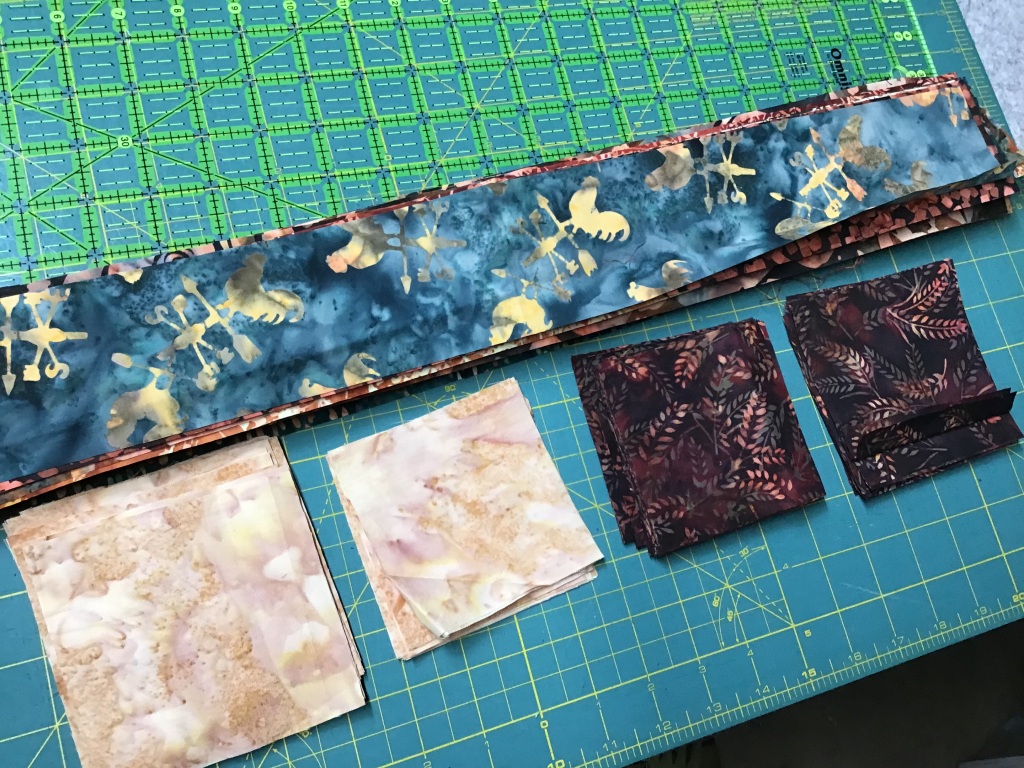
2. Now let’s sew some Friendship Star blocks! The first thing we need to do is make some Half Square Triangles (HSTs) for the star points. When I first started quilting, I did not enjoy making HSTs, but the more I made them (so many quilt patterns use HSTs!), the more I found I actually liked them. Of course, the more I made them, the more accurate my HSTs became, too.

Layer your squares right sides together (RST). Draw a diagonal line from corner to corner. Sew 1/4″ away from both sides of your drawn line. Cut on the drawn line to make 2 HSTs. Press the blocks open. And don’t forget to trim off your little dog ears at the corners (this will help the accuracy of your piecing — trust me).

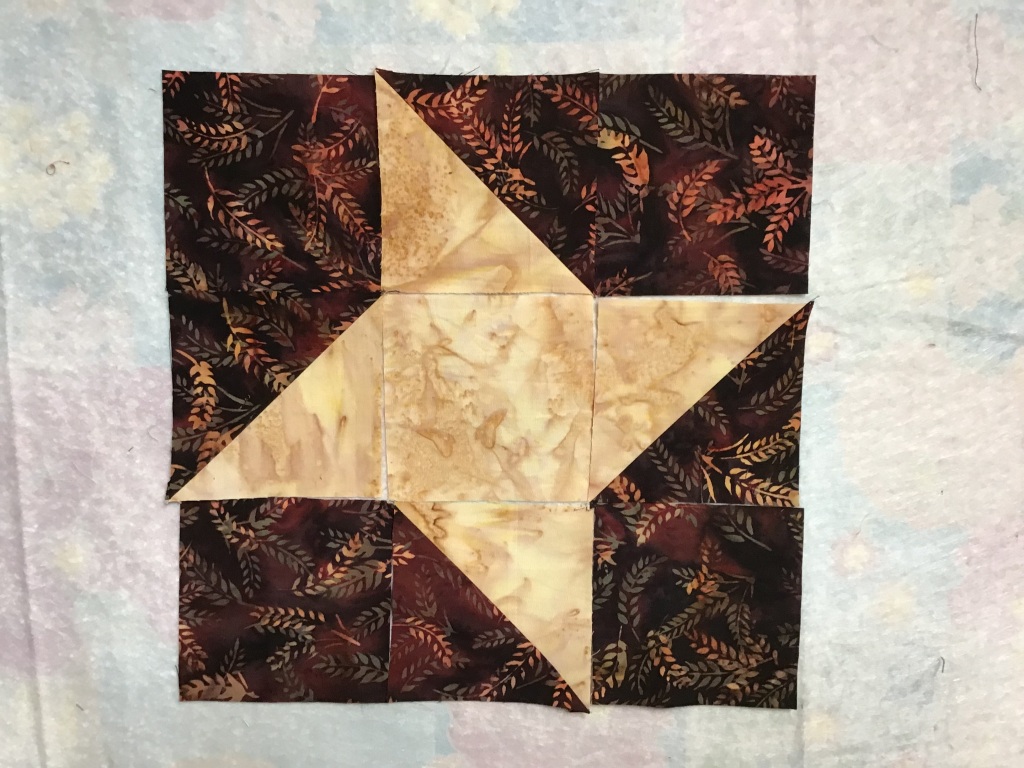
3. Next we’re going to lay out a Friendship Star block, which is a Nine Patch block with HSTs. That way, we know how the block should look. With Friendship Star blocks, it’s easy to turn the HSTs the wrong way, which makes for some wonky stars. I actually kept this block layout up on my flannel wall so I could use it as my reference as I sewed the blocks together.

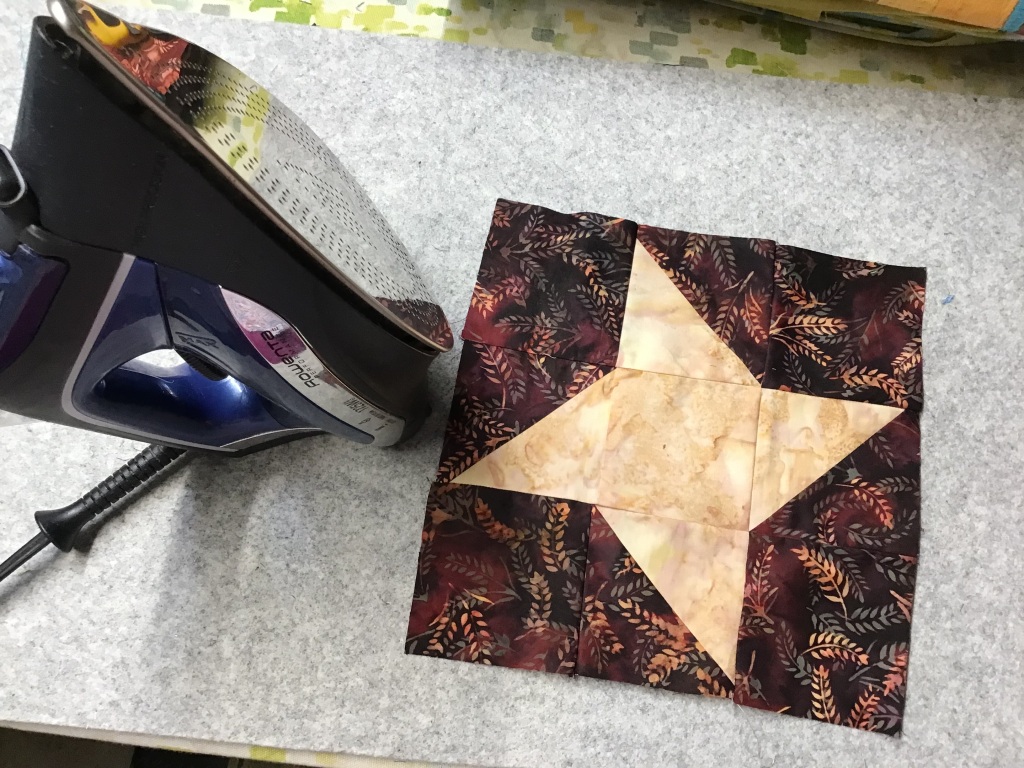
4. Time to sew the blocks together. I am happy to say, I only stitched one block wrong, which of course meant that I had to unsew it and then sew it back together the right way. Mea culpa. Press your blocks. Stars done — yay!

5. Moving right along — let’s make some Rail Fence blocks. Now, the pattern walks you through sewing strip sets together and then sub-cutting the strip sets into the units for the Rail Fence blocks.

I prefer cutting my fabrics before sewing them together. I used to do the strip set method, but I always had a problem keeping my strips straight — mine would bow like a rainbow. This, of course, affected the accuracy of my piecing. This frustration is what led me to determining what the (unfinished) length of the unit would be and then cutting all my pieces before sewing the units. The easiest way to figure out the length is to look at the size of the unit you’re cutting out of the strip sets — usually that measurement is what you need.

Here are my rectangles ready to sew together into Rail Fence blocks.

6. Time to sew the Rail Fence blocks together. First, I sew the rectangles into pairs, then I sew the pairs into quads. Another thing I like better about sewing the rectangles together versus strip piecing is that I get a lot more variety in my blocks. After all the blocks are pieced, go ahead and press them. Rail Fence blocks done. Yippee!

7. All the blocks are finished!

8. Boy, am I glad that I have my handy dandy flannel backed table cloth already clipped up on my fabric storage cubes because the next step is to lay out the blocks according to the diagram on the pattern. Whoever discovered that fabric sticks to flannel was a genius! Thank you, thank you!

This quilt is big and I can’t get the entire thing arranged on my flannel wall so I will have to divide the quilt into sections and then sew the sections together. While the blocks are up in the first larger section, I moved a few things around so that the fabrics are well-distributed throughout and not concentrated in any one area.

I will say that these fabrics from the Homestead collection definitely make a gorgeous quilt! It just looks so warm and inviting, like a cup of hot apple cider. Where’s my doughnut??? Boston creme, if you please….

9. I sewed the blocks into rows and then I sewed the rows together into the top section of the quilt.

10. I folded the top section in half and moved it to the top of my flannel wall to make room at the bottom the last rows. That way, I will still be able to move blocks around in the bottom rows if needed. Next I sewed the blocks into rows and the rows into the bottom section. Finally I sewed the bottom section to the top section.

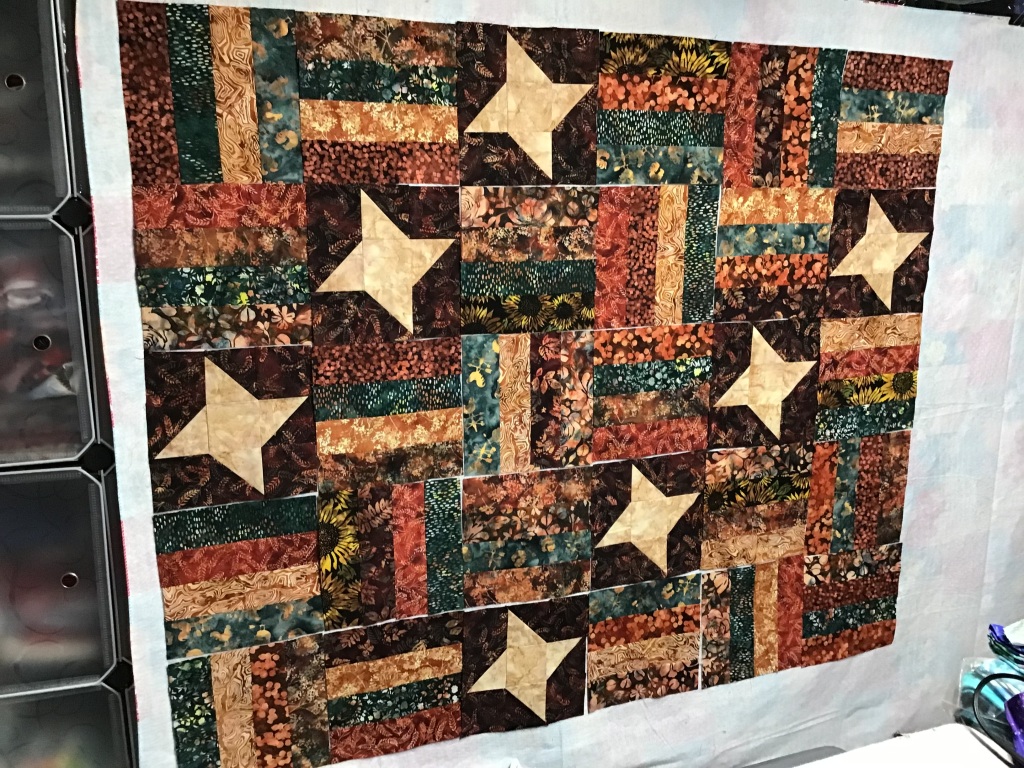
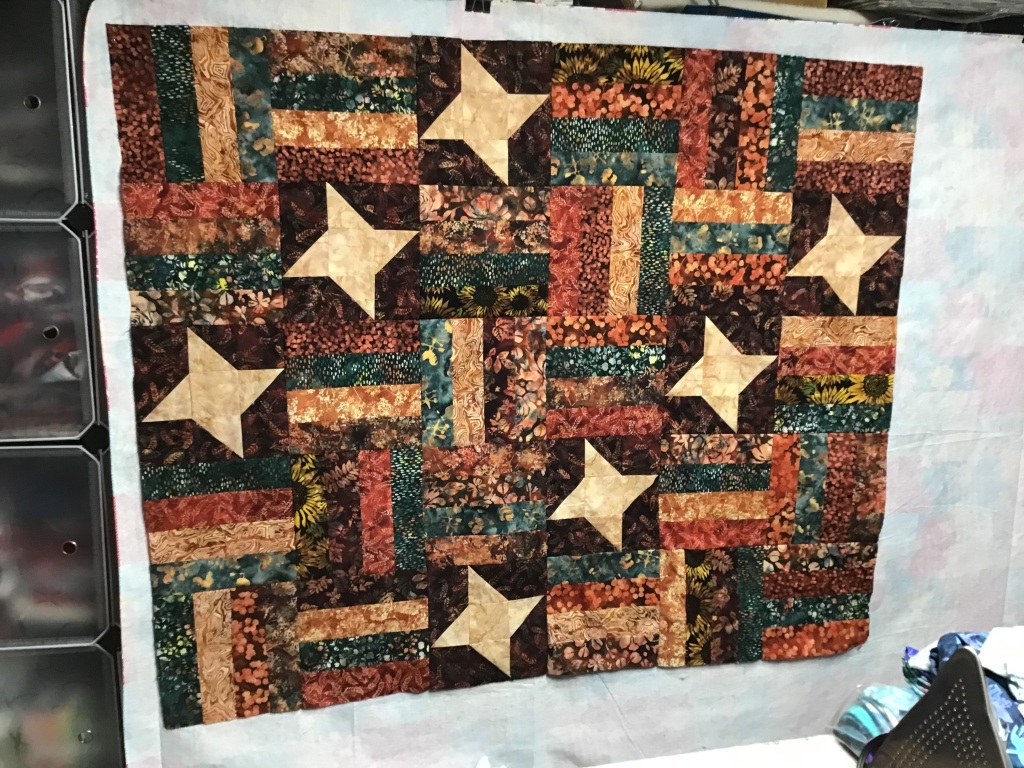
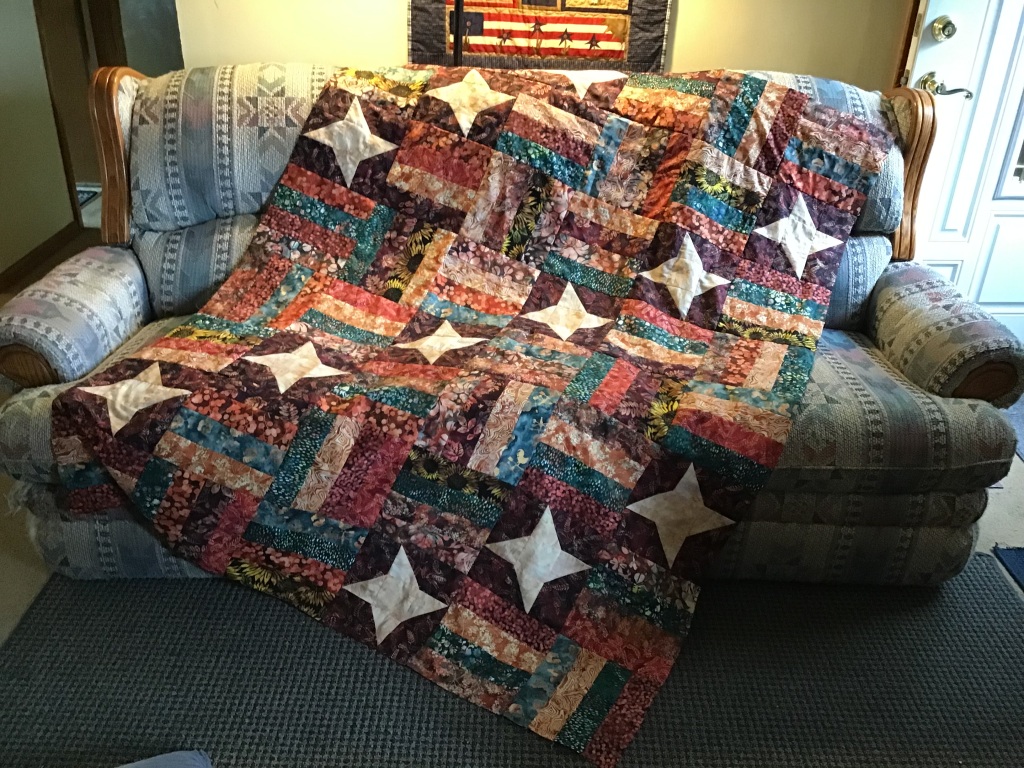
11. Here is my Beatrice quilt top, or flimsy. Yay! I am very happy with how it turned out. It is simply beautiful!

While I was sewing Beatrice together, I kept wondering how it would look in patriotic colors (the quilt diagram on the back of the pattern is done in red, white, and blue). But for this quilt to be large enough to be a Quilts of Valor quilt, you would have to add a border or another column of blocks because it’s not quite wide enough.

Adding a 4″ finished border all the way around would make the quilt 62″ x 80″ which is a wonderful size for a QOF quilt as well as a twin-sized quilt. You would need about 1 1/4 yards fabric for the border (cut strips 4 1/2″ wide) and a total of 5/8 yard for the binding for this larger size.

Who knows, maybe Beatrice will be my next QOF quilt project to make and donate. You’ll have to check back later to see if it is. LOL!

I look forward to seeing your Beatrice quilts! You can post them on our VRD Facebook page. Hope to see you there!

Speaking of Hoffman Fabrics, the new Fall 2024 catalogs have just come out. Check out the Project Book, filled with loads of inspiration and Villa Rosa Design Rose Card patterns featuring the latest Hoffman collections. Truly, a feast for the eyes. Ask at your favorite quilt shop or online retailer for the patterns, fabrics, or maybe even kits. ENJOY!

What quilt will you make first?

Until next Thursday —

Always,

Tricia @ VRD

Rose Cards · Tips and Tricks · Tutorials · villa rosa designs

July’s NEW Rose Card Patterns and VRD Crazy Stars Table Runner Tutorial

Hello Quilty Friends!

Happy Thursday to you!

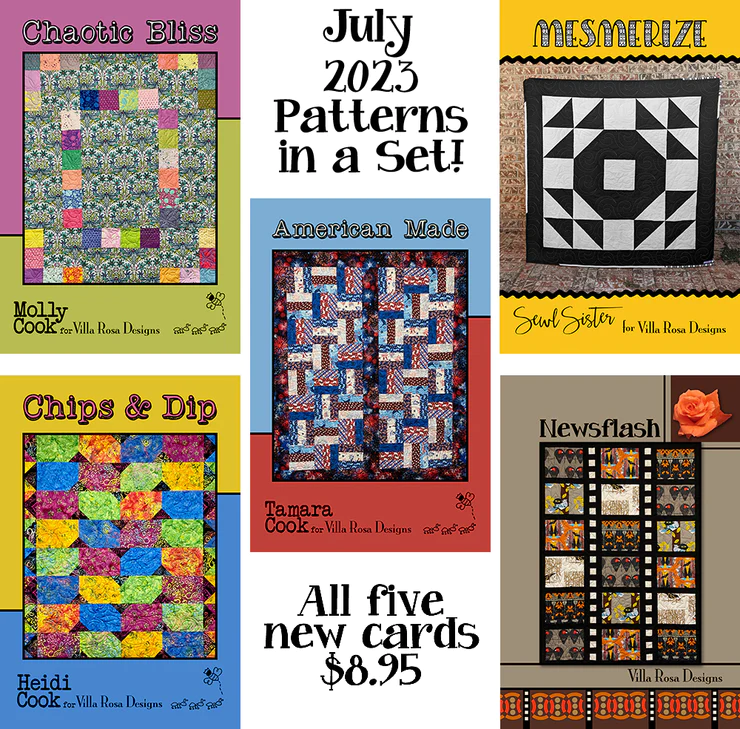
BIG NEWS today! With last Friday’s release of our brand new July 2023 Rose Card patterns, we now have over 600 patterns in our catalog!!!

Put on your party hats! Cue the confetti! Blow that party horn!

WAY TO GO, VILLA ROSA DESIGNS!!!

LET’S CELEBRATE!!!

Here are July’s Brand New AWESOME AMAZING SPECTACULAR FANTASTIC Rose Card Patterns:

You can get all 5 regular patterns, above, for the special low price of $8.95 HERE.

BUT WAIT! THERE’S MORE!!!

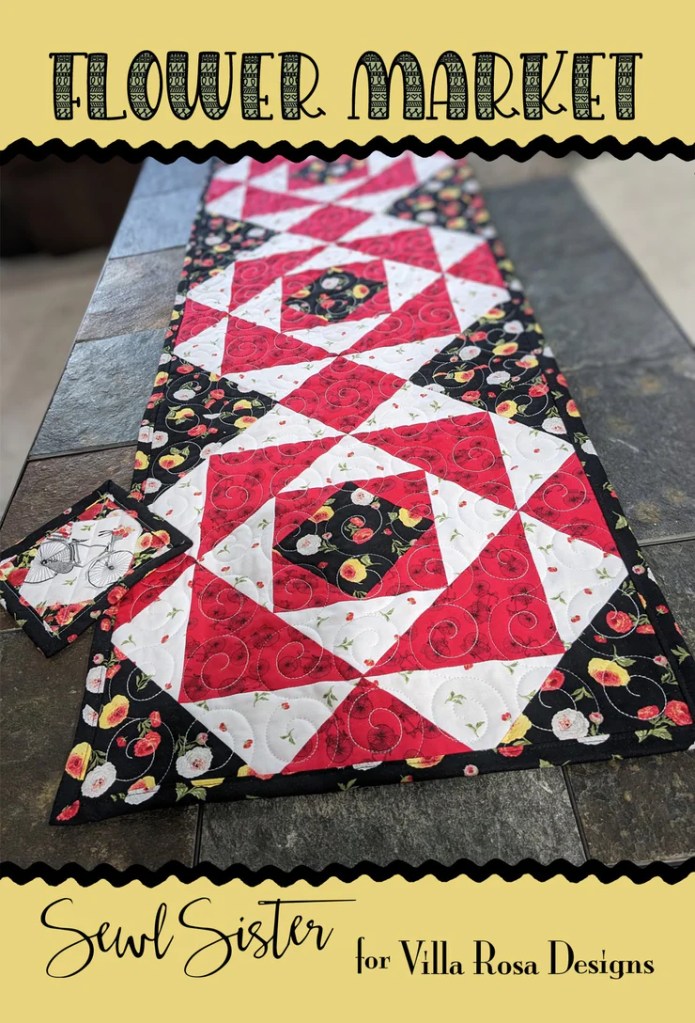
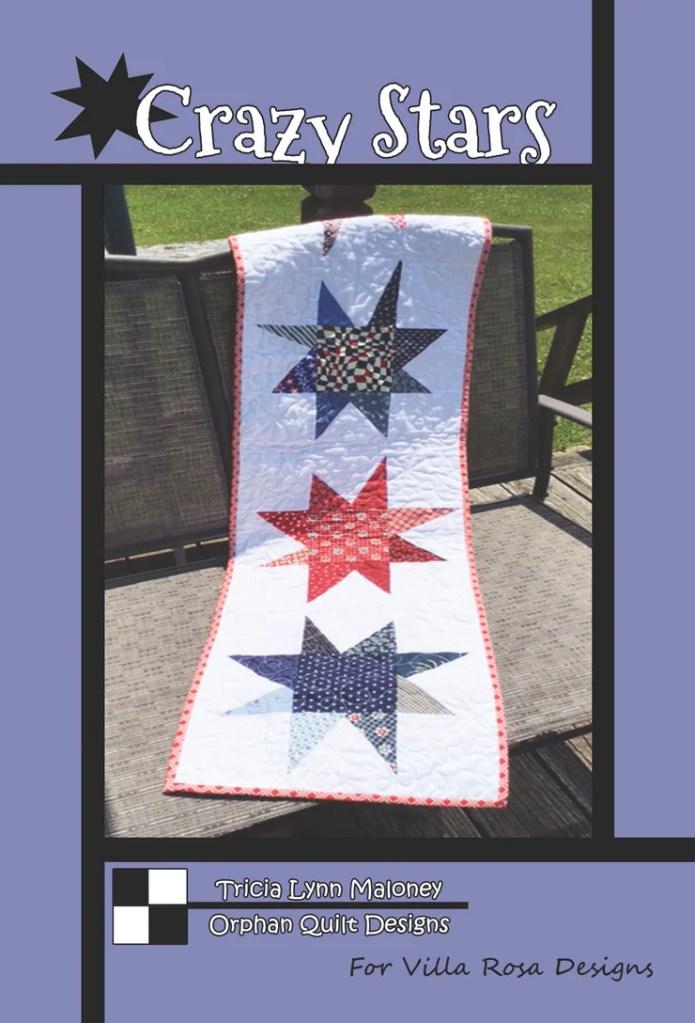
This month, we have TWO NEW Table Runners! Wahoo!!!

You can get Flower Market HERE and you can get Crazy Stars HERE.

Hey! Did you know you can get each month’s new Rose Card patterns delivered right to your mailbox???

You can go HERE to sign up to get the 5 regular patterns each month

Or,

You can go HERE to sign up to get the 5 regular patterns plus table runners each month.

And, don’t forget shipping for Rose Card patterns is always free.

VRD Crazy Stars Table Runner Tutorial

I thought it might be helpful to everyone if I did a tutorial of my new table runner, Crazy Stars. It was hard to figure out how to illustrate the pattern so it made sense. And, because I don’t trust my humble illustrations, I am going to show you step by step how to make the stars in Crazy Stars.

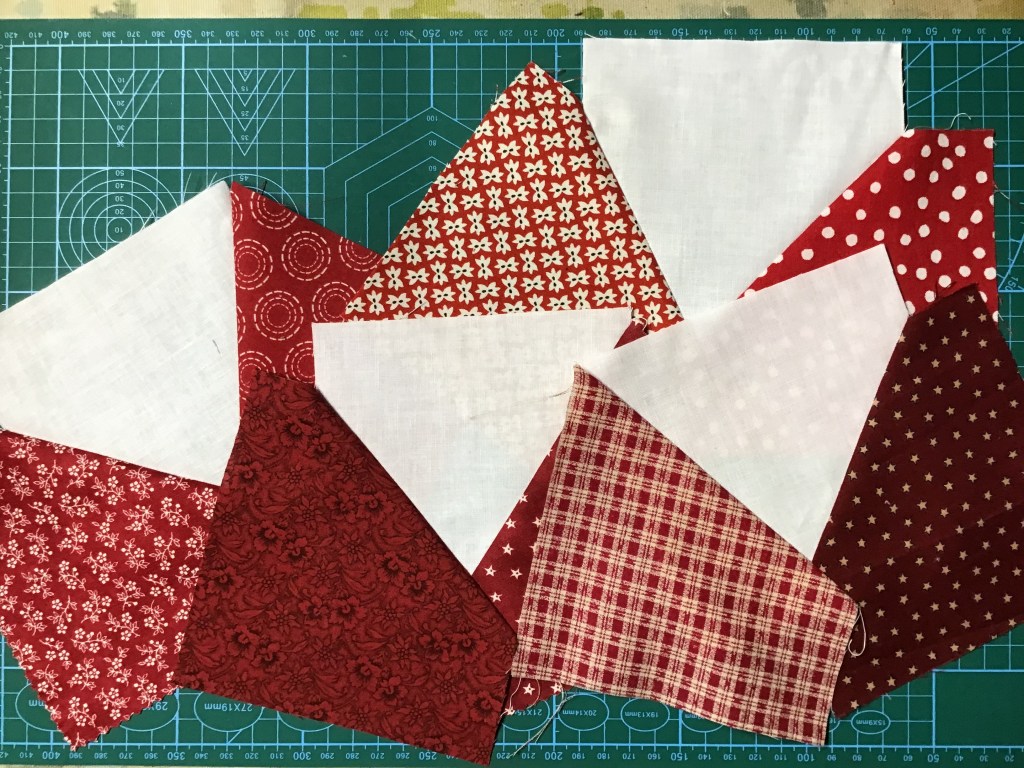
Step 1 The first thing you need to do is divide your charm squares into 4 stacks — one stack for each star. If you find that the colors end up a bit uneven, you can always add a few squares from your stash or even cut them from fat quarters or yardage.

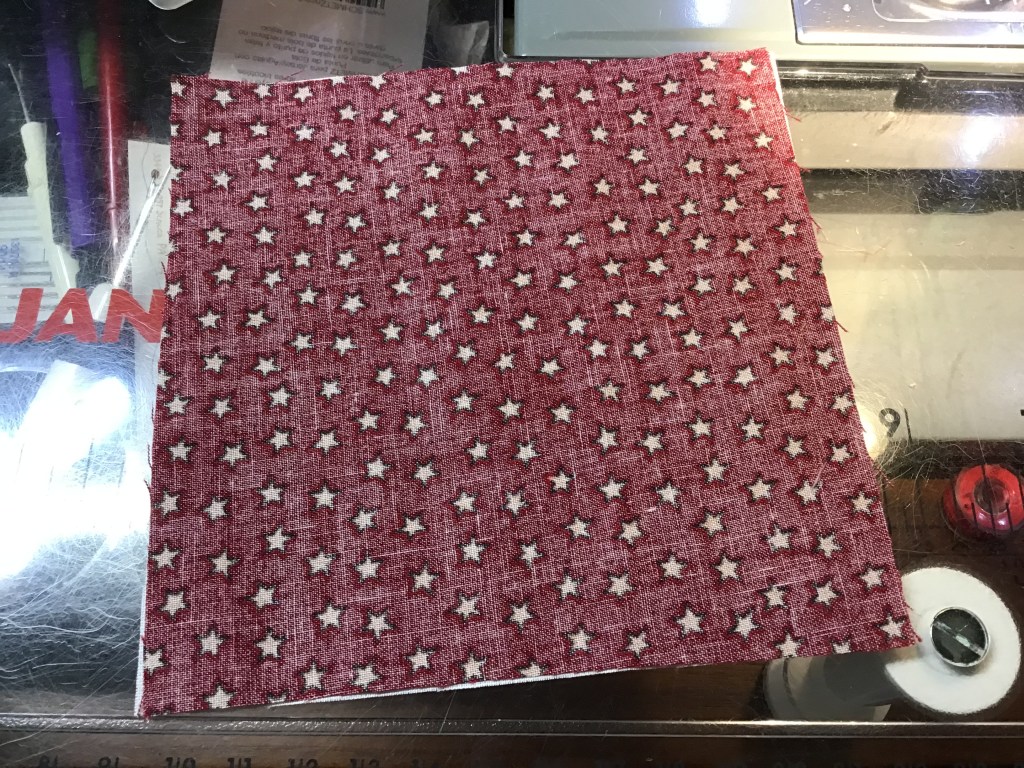
Step 2 Layer a print charm square right sides together on top of a background square.

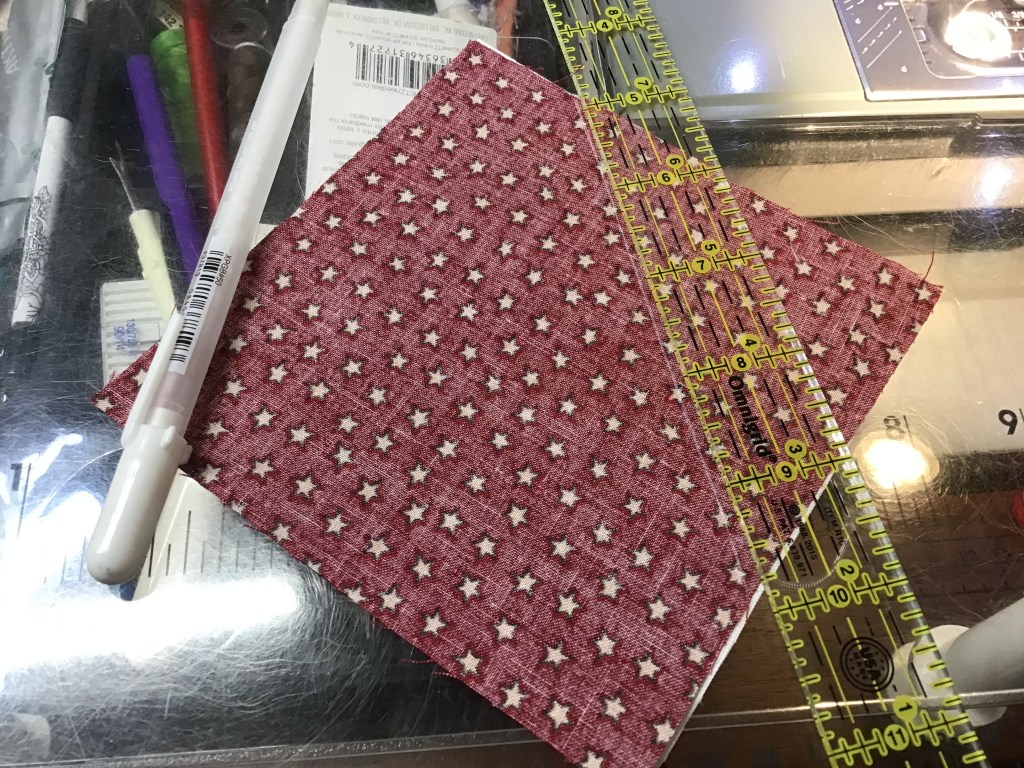
Step 3 Now the fun begins! Next use a ruler and draw a line from the bottom edge to the right edge. Place the ends of your diagonal line anywhere you’d like on those edges. Sew on the drawn line. Then open the unit and press towards the print square.

Step 4 Layer another print charm square right sides together on top of the background square. You will need to carefully line up the left and top edges. Please note you will see the right side of your first Star point square, just ignore it for now.

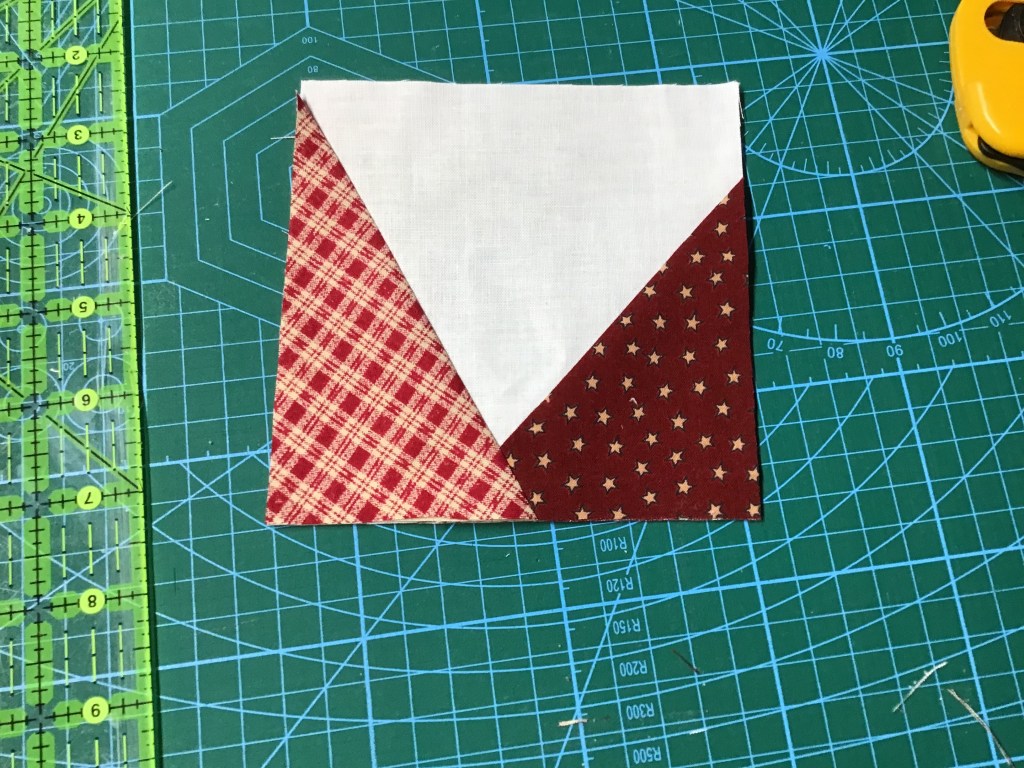
Step 5 Draw a diagonal line from the left edge to the bottom edge, while ignoring the print square on sticking out on the other side. Then open the unit and press. You will have a weird looking unit somewhat like the one in my photo, but your Star points might look different than mine because we probably started and stopped in different places along the edges.

Step 6 Repeat steps 2-5 to make 4 Star point units for one Crazy Star block.

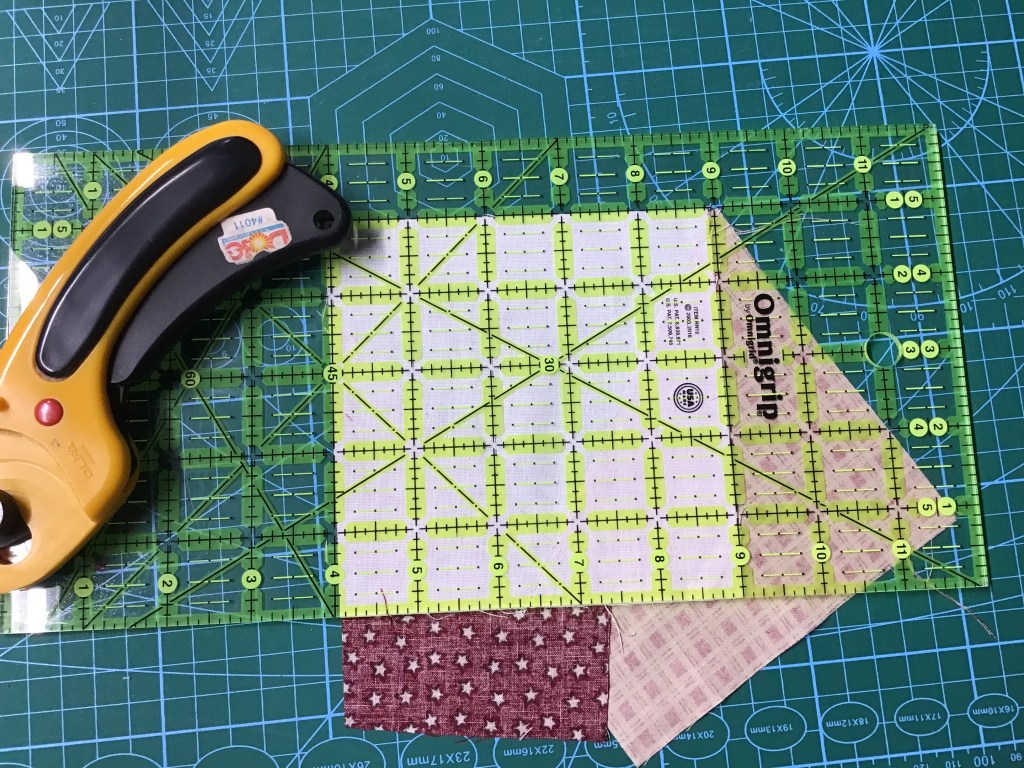
Step 7 Turn a Star point unit over so that it is right sides down and the back of the unit is facing up. Do you see your background square kind of in the middle of the 2 print squares? Use the background square as your template and cut away the excess Star point print fabrics beyond the background square. Turn the unit right sides up again and you now have a perfect Crazy Star point unit. Trim the other 3 Star point units as well.

Step 8 You can reduce the bulk in each unit if desired. Fold back a star point until you see your stitching. Cut away the excess background and Star point fabrics 1/4″ away from the seam. I used my cutter and a ruler over the seam to protect it while I cut that 1/4″ seam allowance. Open the unit again and do the same thing for the second Star point. Repeat for the other Star point units.

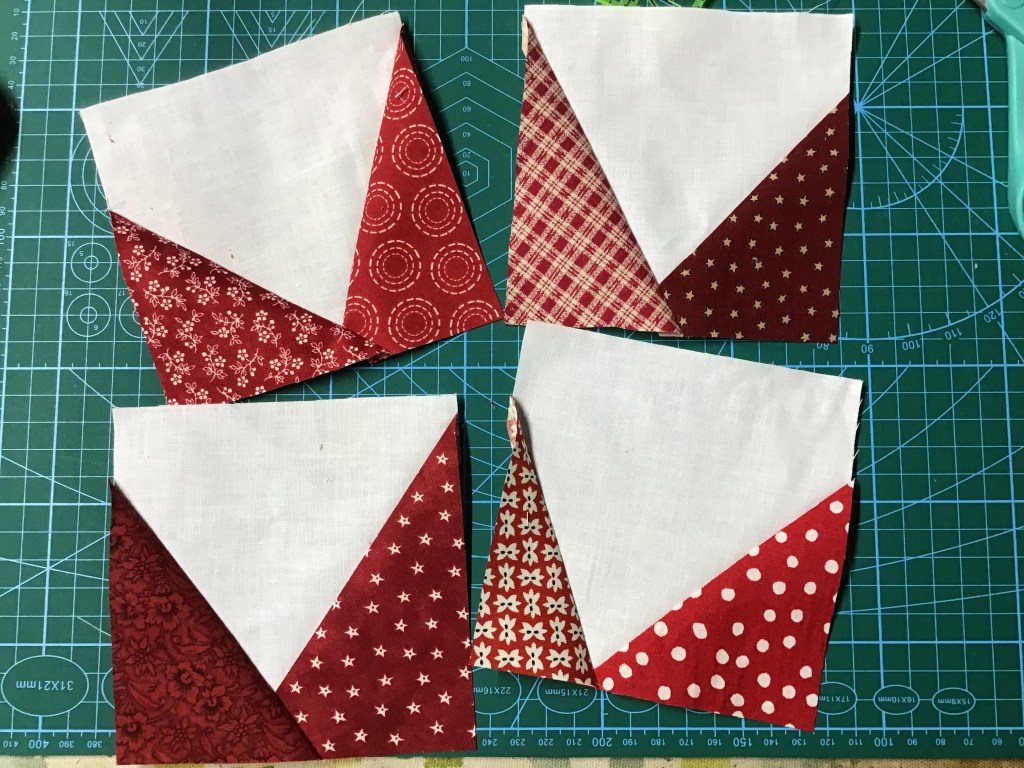
Step 9 Now you have a fun and funky set of Star points to make into one Crazy Star block.

Step 10 Now it’s time to sew your Crazy Star block together like a Nine Patch. You will need 4 Star point units, 4 background squares for the corners, and a center print square.

Step 11 Repeat steps 2-10 to make a total of 4 Crazy Star blocks for the table runner.

Step 12 Then sew your Crazy Star blocks together into a row. You can twist and turn your blocks to see which star arrangement you like the best. Then layer your quilt, quilt it, and bind the edges. Don’t forget your label!

Well, that’s it for me. I hope this tutorial will make it a lot easier for you to put together your own Crazy Star Table Runners. Crazy Star blocks can be a lot of fun to make, so I hope you will give them a try.

Until next week —

Sew. Laugh. Repeat.

Always,

Tricia

Guest Bloggers · Rose Cards · Tips and Tricks · Tutorials · villa rosa designs

VRD Gallant Rose Card Quilt Tutorial

Hello Quilty Friends!

Happy Thursday to you!

PSST!

Hey, it’s me, Molly! I’m stealing the blog from Tricia this week!

I hope everyone had a fun (and safe) 4th of July!

You know, every year around this time, with patriotic things everywhere, I start thinking about Quilts of Valor. I know, making QOV quilts is something you can do any time of year, but when those brand new red/white/blue fabric collections start rolling in, it’s kinda like a screaming billboard to make a patriotic quilt.

So as we are unpacking the red, white, and blue collections here in the shop (want to see what the VRD shop in CA looks like? Go HERE), Gallant was calling my name (yelling?) to make it from one of these awesome new patriotic collections.
Get Gallant HERE.

Gallant was designed by our very own Tricia to meet the criteria for a Quilt of Valor quilt. The quilt on the cover of the Gallant Rose Card was presented to her cousin, Lisa, in 2022 at a family reunion QOV presentation.
You can read the blog post about the QOV presentation HERE.

Tricia’s cousin Lisa being presented with her Quilt of Valor.

So let’s get started! You will be amazed at how many different ways you can arrange the Gallant blocks — you can make this quilt over and over and you’ll never get bored.

VRD Gallant Quilt Tutorial

Making the Blocks

Gallant calls for red and blue fat quarters along with a background and an accent fabric for the top and bottom border to help make the size perfect for a Quilt of Valor (check out QOV quilt requirements HERE). Sounds easy enough, right?

After a lot of deliberation, I decided to use fabrics from the Liberty collection by Robert Kaufman and “Blossom on White Uncle Sam” fabric by Riley Blake for the background. Isn’t that a perfect background name for our quilt? LOL!

It didn’t take long to cut all the pieces for the blocks. And while I was cutting, I organized my pieces by color and size to make it easier to sew.

After you have all your pieces cut out, it’s time to get sewing!

Get ready, because these blocks almost sew themselves! Hah!

Lay out your A B C D cut pieces to make each block easier to sew. You can stack up all the A’s, B’s, C’s, and D’s like I did below — this will make things go even faster.

Now sew the four pieced strips together into one unit –ABCD. Then add the last red strip to the side of D. Make 36 blocks. Like I said before, they go together really fast!

Laying Out the Blocks

Now on to the most fun part of making Gallant!

Seriously, there are so many layouts for these blocks that it was hard picking the one I liked best. (The first photo on the top left is the layout Tricia chose for her Gallant quilt.)

Here is the layout I went with:

Finish Your Quilt

Sew your blocks together in your chosen layout. Warning! Shuffling the blocks around can be very addictive. LOL!

Finally, add the borders to the top and the bottom of the quilt.

Quilt and bind.

And don’t forget your label.

DONE!

Now find someone to gift your Gallant quilt to!

A Quilt Challenge for You

Did you like the fabrics I chose for my Gallant quilt? If so, I’m going to challenge you to make a Gallant quilt to gift to your favorite veteran or to your local Quilts of Valor organization!

We have Gallant quilt kits HERE at the shop, featuring the same fabrics as my quilt. So grab your Gallant kit and make your own quilt.

How many different layouts can you create with your blocks???

By the way, we always LOVE seeing what you do with our VRD patterns and kits, so if you are on our VRD Facebook page, please post a picture of your Gallant quilt!

If you’re not hanging out with us on Facebook, you should be! LOL!

That’s all for now.

Until next week —

Sew. Laugh. Give. Repeat.

Later,

Molly

Quilt Block Basics · Rose Cards · Tips and Tricks · villa rosa designs

Quilt Block Basics — Four Patch and Nine Patch

Hello Quilty Friends!

Happy Thursday!

The sun is shining and it’s a beautiful day here in my little corner of Pennsylvania! I hope your day is looking just as bright. Make sure you do something fun!

Today we are wrapping up our foray into the Basics of Quilt Blocks. There are, of course, more quilt block units out there, but the ones we’ve covered are the basic ones — at least in my opinion.

Any discussion of Quilt Block Basics would not be complete without Four Patches and Nine Patches.

Quilt Block Basics — Four Patches and Nine Patches

Four Patch and Nine Patch blocks are probably two of the easiest quilt blocks to make. That’s probably a good reason why these blocks have been some of the most loved quilt blocks in history! From beginners to advanced quilters — these blocks have stood the test of time for centuries.

I don’t know if I’ve mentioned it before, but I collect vintage and antique textiles. I do have antique quilts and tops, but my favorite part of my collection is the piles and piles of orphan quilt blocks (I consider any block not housed in a quilt to be an orphan quilt block).

Speaking of orphan quilt blocks — did you know I wrote a book about putting antique and vintage quilt blocks into new quilts? It was my very first quilt book! LOL!

Get Orphan Block Quilts HERE

Anyway, in my quilt block collection, I have tons of Four Patch and Nine Patch blocks dating from the mid 1800’s all the way to the mid 1900’s. 100 years of quilt blocks — that’s a lot of Four Patch and Nine Patch blocks!

Four Patches and Nine Patches can stand alone as individual quilt blocks, of course, but they are also fantastic quilt block units, too! AND they can act as frames where you can insert other block units into the squares to create even more blocks! The options are endless (OH NO! I hear my EQ8 calling me….again!).

Let’s take a look at some blocks featuring Four Patch and Nine Patch units.

Four Patch Blocks

Nine Patch Blocks

You can also mix Four Patch and Nine Patch units together into blocks!

Mixed Blocks

I am not going to reinvent the wheel by doing tutorials for assembling Four Patch and Nine Patch units as there are a lot of them out there on the Internet. Instead, here are some fun quilt designs using a few of the blocks above.

A Few Simple Four and Nine Patch Quilt Ideas for You

Now we’re going to move right into my curated Four and Nine Patch List of Villa Rosa Designs Rose Card Quilt Patterns. I anticipate there will be a lot, so stay with me all the way to the end or you might lost along the way.

VRD Rose Card Patterns Featuring Four Patches and Nine Patches

Get Akito HERE

Get Antique HERE

Get Bat Dance HERE

Get Be My Baby HERE

Get Beatrice HERE

Get Bee Charming HERE

Get Blizzard HERE

Get Blueberry Cobbler HERE

Get Carefree HERE

Get Carnival Glass HERE

Get Celebration HERE

Get Charismatic HERE

Get Charity HERE

Get Cidermill HERE

Get Color Box HERE

Get Columbia HERE

Get Country Life HERE

Get Crackers HERE

Get Daring Spirit HERE

Get Early Dawn HERE

Get Electron HERE

Get Elementary HERE

Get Giggles HERE

Get Gingersnap HERE

Get Grandmother HERE

Get Imperial HERE

Get Indigo Bay HERE

Get Jardena HERE

Get Kalinda HERE

Get King’s Ransom HERE

Get Kit & Caboodle HERE

Get Klondike HERE

Get Lollipop HERE

Get Love Notes HERE

Get Lovers Lane HERE

Get Macarons HERE

Get Malaysia HERE

Get Monterey HERE

Get Nana’s Aprons HERE

Get Night Light HERE

Get Oakmont HERE

Get Orange Waves HERE

Get Outback HERE

Get Peace HERE

Get Penny Candy HERE

Get Peppermint & Holly HERE

Get Phoebe HERE

Get Pinwheel Picnic HERE

Get Pixelation HERE

Get Polo HERE

Get Pride HERE

Get Raspberry Cream HERE

Get Ruby Road HERE

Get Saffron HERE

Get Salute HERE

Get Senior Prom HERE

Get Soul Mate HERE

Get Special Event HERE

Get Star Rail HERE

Get Starfire HERE

Get Tic Tac Toad HERE

Get Transcendent HERE

Get Twinkle HERE

Get Viaduct HERE

Get Waverly HERE

Get Whirlaway HERE

Get Wild Rover HERE

Get Wild Thing HERE

Get Winchester HERE

Get X Ray HERE

WHEW! Did you make it all the way through the whole list? I hope I didn’t lose you somewhere along the way. LOL!

I really hope you found this Quilt Block Basics series to not only be interesting but also helpful and informative. As a designer, when I look at a quilt, I try to isolate the quilt block (or blocks) to identify the pattern if the name doesn’t jump out at me at first. Knowing the different units that make up quilt blocks helps me to do that. It also helps me to take these different units, mix them up, and magically end up with new quilt block designs and variations so that I can keep creating new quilt patterns.

Until next Thursday —

Sew. Laugh. Repeat.

Always,

Tricia @VRD

Quilt Block Basics · Rose Cards · Tips and Tricks · Tutorials · villa rosa designs

Quilt Block Basics — The Hardworking Rail Fence Unit

Hello Quilty Friends!

Happy Thursday!

We’re getting close to the end of this series on the Basics of Quilt Blocks — just one more post next week and we’ll be moving on to other topics. I originally called it a mini series and expected it to be maybe 3 posts, but I am having so much fun with it, that it ended up turning into a much longer series. Personally, I love any idea that inspires me to play with my EQ8 software and to go through our VRD Rose Card Pattern Catalog and look at all the patterns with fresh eyes. I hope you’ve gotten a lot out of this series too.

If you’ve missed any posts in this series or if you just want to visit it again down the road, I added the series to the right side of the blog for you, right beneath the 2022 Basic Quilting Skills Series.

What’s our Quilt Block Basics unit for today??? RAIL FENCES!

Quilt Block Basics — Rail Fence

Rail Fences — YAY!

Whether you like 2, 3, 4, 5, or more logs, Rail Fence units and blocks are workhorses in the field of making quilt blocks (workhorse and field….get it???). Sigh…… I know, I know. I’ll stop here before I go overboard with the farm puns and cliches. I’m sure you’ve heard them all before anyway.

Sew, what’s a Rail Fence? You newbies might ask.

For the purpose of this series, we’re going to focus on 2 and 3 Rail Fence units with equal sized logs and finished squares. Keep in mind, though, that Rail Fence blocks can contain more than 2 or 3 logs, logs do not necessarily have to be the same width, and finished blocks do not have to be square.

Rail Fence units can stand alone as individual blocks or can be successfully combined with other basic block units to make even more quilt blocks. Rail Fence is the strong, silent type that fades into the background allowing others to be the stars of the show, but without Rail Fence, something would definitely be missing.

Rail Fences can be created with other methods when making quilt blocks. Sometimes a Rail Fence is actually a secondary design or a happy accident.

If you are getting the impression that I really like Rail Fences, then you are correct. One of the very first quilts I ever made from a pattern in the book, The Weekend Quilt by Leslie Linsley. That was the book that made me want to make quilts!

My quilt was a Rail Fence double-sized quilt will 4 shades of blue. I was sew proud of my piecing! It was the first time I’d sewn strip sets together and then cut them into blocks. At the time I didn’t know how to machine quilt yet, so I sensibly tied my quilt with white crochet thread and I used it for years on my bed.

Let’s take a look at some quilt blocks featuring Rail Fence units.

These 9 blocks are really just the tip of the iceberg when it comes to blocks with Rail Fence units.

How to Make a Rail Fence Unit

To make a traditional 2 log Rail Fence unit, first you need to know the finished size of your unit. So, let’s say our unit will be 6″ finished. To figure out what dimensions to cut our pieces, we will divide our finished size by 2 (6 divided by 2 = 3). But we need to cut our logs the same width of our finished unit, so we will need 2 logs 3″ x 6″ — BUT WAIT! — we need to add our seam allowances before cutting. That means we need to cut 2 logs 31/2″ x 6 1/2″. Then simply sew the 2 logs together along one long edge. Voila!

This image has an empty alt attribute; its file name is 2-log.jpg

To make a 3 log Rail Fence, instead of dividing the finished size by 2, we will divide it by 3 (6 divided by 3 = 2 and we need to add our seam allowances, too). So, we will need to cut our logs 2 1/2″ x 6 1/2″. Decide in which order to sew your logs (whether you decide to use 2 or 3 fabrics in your unit) and sew the 3 logs together along the long edges.

This image has an empty alt attribute; its file name is 3-log.jpg

A Few Simple Rail Fence Quilt Ideas for You

Here are two simple Rail Fence quilt designs using 2 different color combinations. But just imagine what you could create if you used multiple blocks, added more colors, etc. WOW!

Time to take a look at my curated collection of Rail Fence VRD Rose Card Patterns!

Features a skinny center log.

Get Ascot HERE

Uses a 5 log Rail Fence block.

Get Basket Case HERE

4 log Rail Fence blocks.

Get Beatrice HERE

Get Bits and Pieces HERE

Get Bride’s Dream HERE

Get Bunny Hop HERE

Both 2 and 3 log Rail Fence blocks!

Get Busy Bee HERE

5 log Row Fence blocks.

Get Chutes & Ladders HERE

Rail Fence blocks turned on their sides.

Get Cobblestones HERE

Get Dapper HERE

Slightly elongated 3 log units.

Get Firecracker HERE

Get First Night HERE

Unique configuration and controlled colors make such an interesting design.

Get French Braids HERE

Get Fruit Salad HERE

See how the Rail Fence units recede?

Get Gridwork HERE

Get Infinite HERE

Get Inglenook HERE

Get Jubilee HERE

4 log Rail Fence blocks.

Get Limelight HERE

Get Melinda Jo HERE

Get Native HERE

Get Panama City HERE

Get Playdate HERE

Get Polka HERE

Very clever color placement!

Get Positive Sign HERE

Love Melissa’s scrappy traditional Rail Fence design!

Get Rail Fence HERE

Thin center log.

Get Ripple Runner HERE

Fat center log.

Get Royal Sunset HERE

Another fat center log.

Get Saratoga HERE

Get Scallywag HERE

Get Shadow Dancer HERE

Stack up those Rail Fence blocks!

Get Snow Ruby HERE

One of my favorite Rail Fence variations!

Get Social Climber HERE

Get Specks of Color HERE

Get Spin Cycle HERE

Skinny center logs.

Get Split Charms HERE

Get Standing on the Corner HERE

Get Sugar & Spice HERE

Get Tumblebug HERE

Get Vienna HERE

Get Village Glade HERE

Fat center logs.

Get Waterside HERE

Get Winter Garden HERE

Stack ’em up!

Get Zelda HERE

That’s another wrap! Time to sign off and get back to making quilts………in my dreams, anyway. LOL!

Until next Thursday —

Sew. Laugh. Repeat.

Always,

Tricia @VRD