Quilting Partners · Rose Cards · Tips and Tricks · Tutorials · villa rosa designs

VRD Busy Bee Quilt Tutorial and Hoffman’s New Fall 2025 Project Catalog

Happy Thursday to you!

Yep, it really is Thursday today. Bet I surprised a lot of you on Monday with our special VRD Announcement about upcoming changes (good ones, I promise you!). If you missed Monday’s VRD announcement, you can find it HERE.

Before I dive into this week’s inspirational quilt tutorial, I wanted to take a minute and share Hoffman’s Fall 2025 Project Catalog with you. I’m sure you’ve noticed I use a lot of Hoffman collections for our blog tutorials by now. We work closely with our friends over at Hoffman to inspire you by pairing new Hoffman fabrics and our easy breezy VRD Rose Card patterns.

Please enjoy the catalog and don’t forget to visit your local quilt shops to request these new upcoming Hoffman fabric collections and, of course, Villa Rosa Designs Rose Card patterns.

Lots of wonderful inspiration in this catalog, isn’t there? Which one(s) did you fall in love with and are adding to your “gotta make” list???

Now let’s make a quilt!

Are you ready for a super fun tutorial today? Busy Bee is an oldie, but a really great goodie! I know you’re gonna love it!
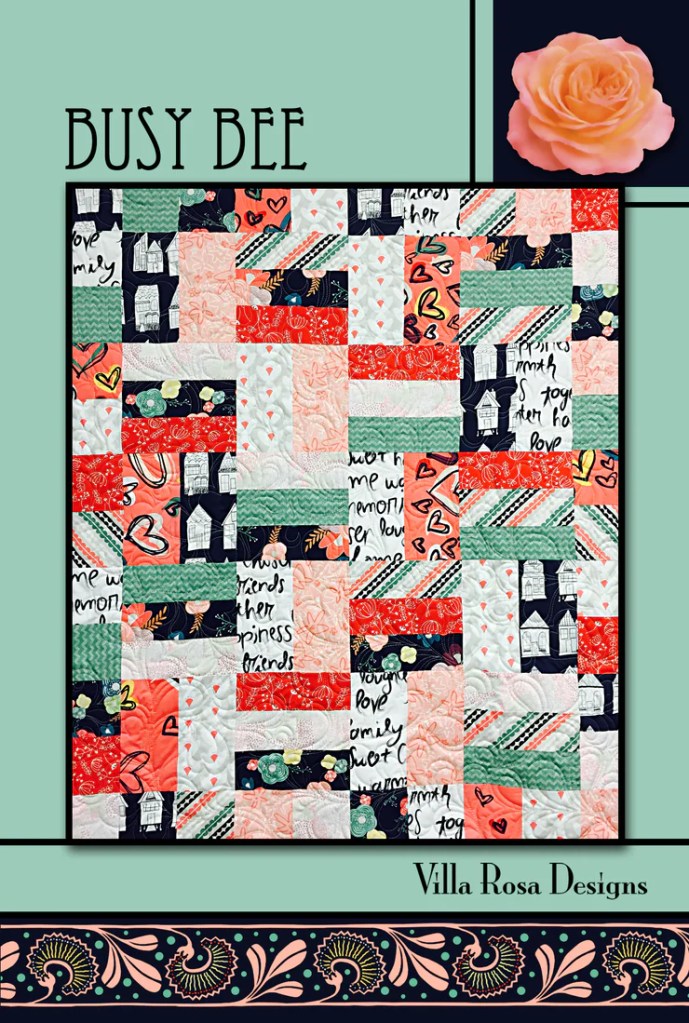
Colorful quilt design featuring various fabric patterns in shades of red, green, and navy, with a title 'BUSY BEE' and branding 'Villa Rosa Designs'.

Get your digital pattern HERE or your print pattern HERE

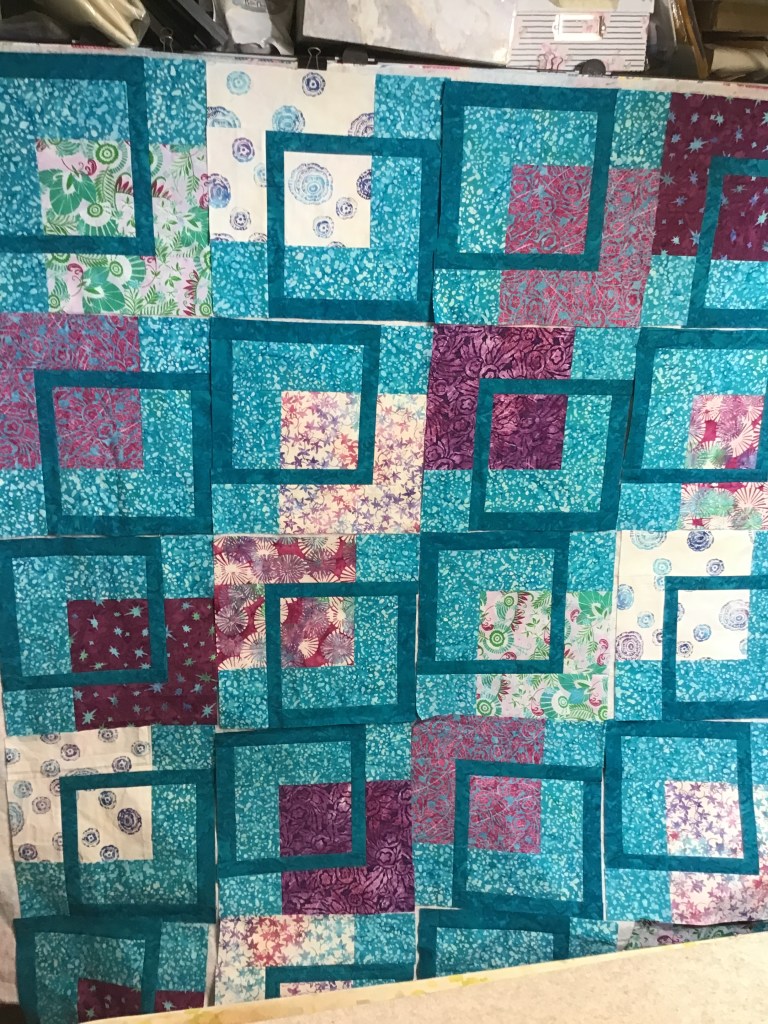
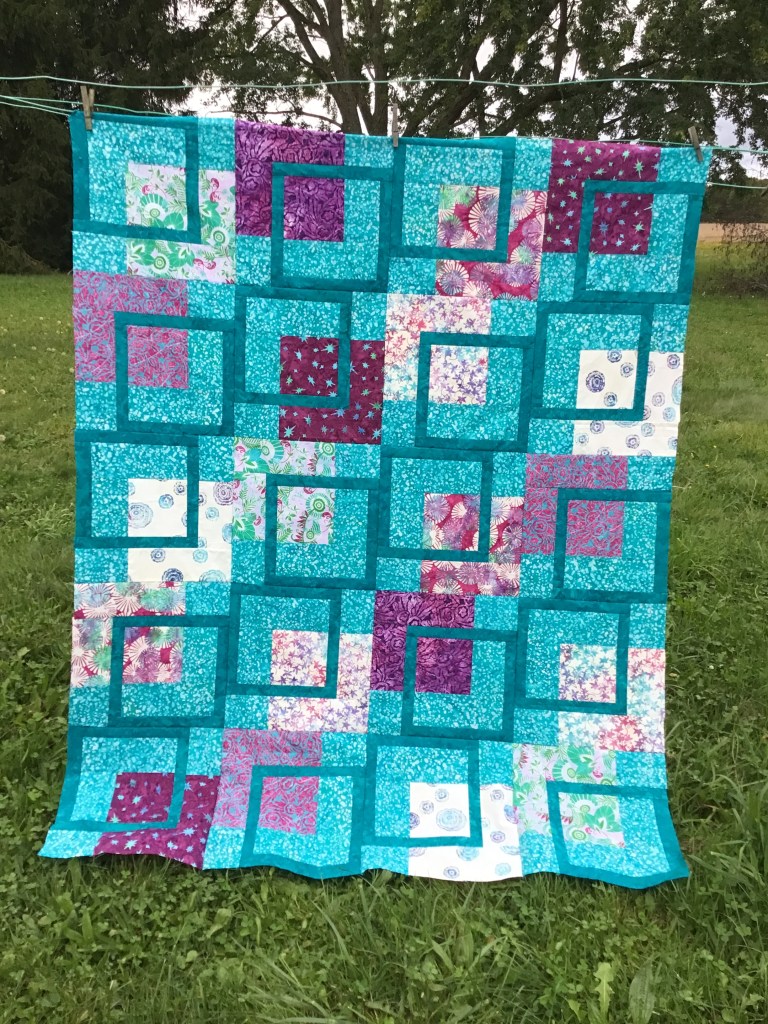
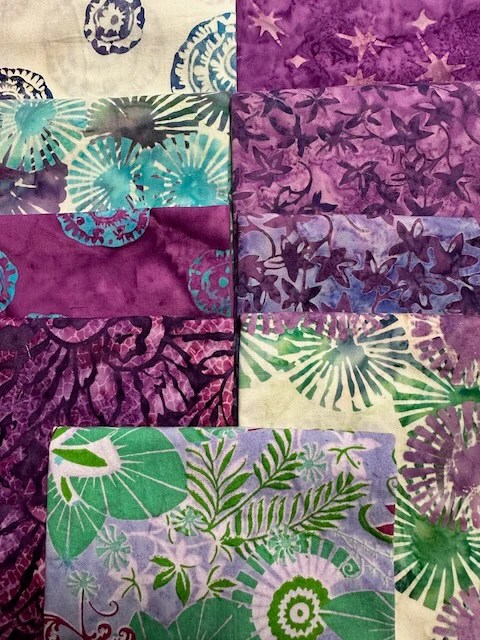
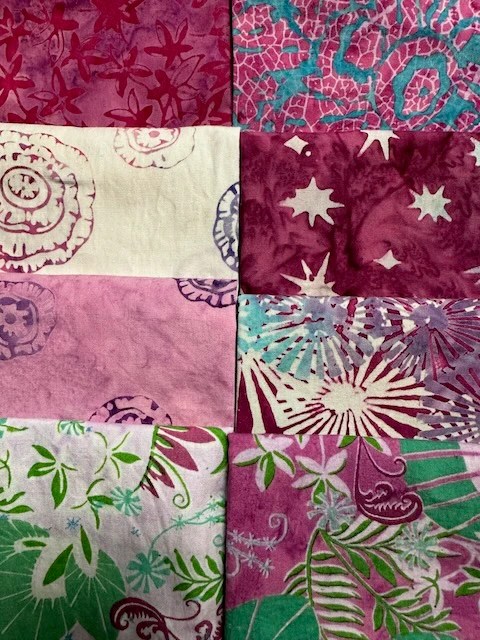
First things first, let me show you the fabric I’m using today for Busy Bee. You’ll notice right away that these fabrics don’t exactly have an autumn vibe going on, but I couldn’t resist these gorgeous fabrics when I was looking through my stack of quilt kits to choose my next victim….er, tutorial project. LOL!

Seriously, though, aren’t these fabrics divine??? This older Hoffman collection is called Blush Garden. It’s possible you still might find some bolts at your local quilt shop or at your favorite online shop, but somehow I doubt it as it’s just so yummy. Sorry……

Busy Bee is a fat quarter (FQ) pattern which means you only need FQs for the quilt top. No background, no borders. Busy Bee is stunningly simple and goes together like greased lightning!

A collection of colorful fabrics arranged on a sewing table, featuring various floral and abstract patterns, along with a pattern booklet titled 'Busy Bee.'
Psst! You might notice that my Busy Bee pattern looks different from the cover front above. Yep, my pattern is an older cover front. Sometimes we freshen up covers as fabric styles and trends change over the years.

Before we can get to the sewing, we have to cut our fabrics. You need to divide your FQs into 2 equal stacks.

With the first stack, we’re going to cut our FQs into strips and then into fat rectangles and squares.
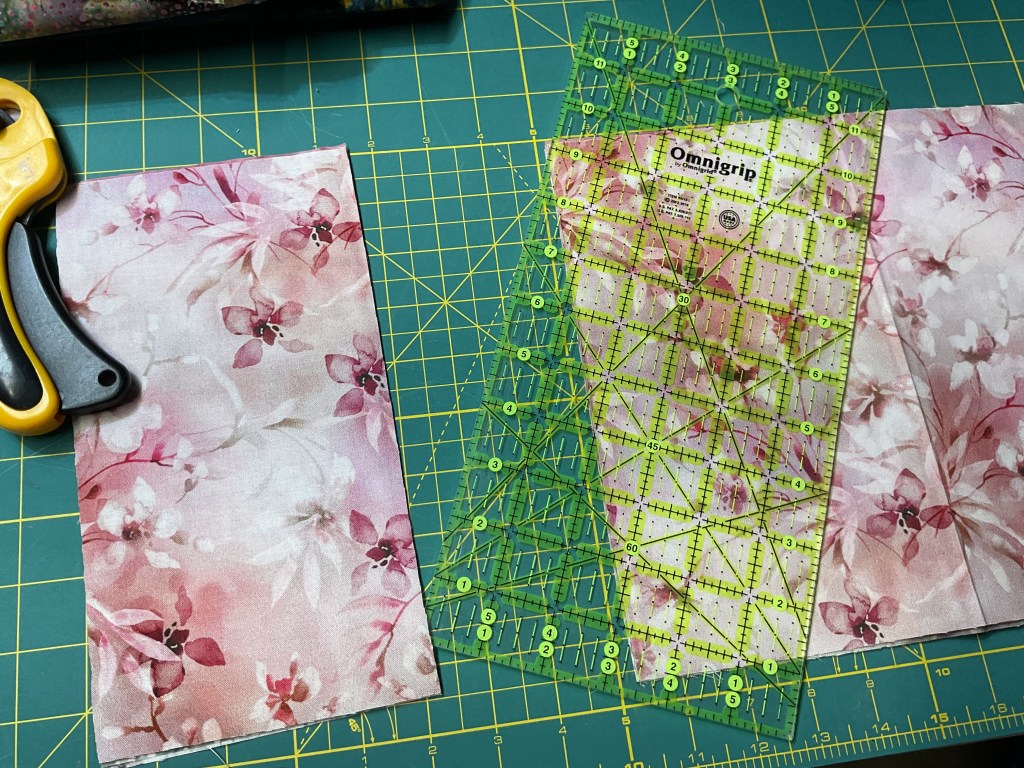
Moving on to the second FQ stack, we’re gong to cut skinny rectangles and squares.

Here are all our pieces ready to sew. And that’s it for cutting for the whole quilt top. I just love patterns like this, don’t you?

A collection of quilting fabric pieces in shades of pink and floral patterns, accompanied by a Busy Bee quilt pattern booklet on a green cutting mat.

Time to sew!

We’re going to sew 2 assorted fat rectangles together to make Block 1. I divided them equally into 2 piles and set them to the left of my machine so I could just grab the 2 top rectangles and feed them through the machine to chain piece them. If I didn’t like the combination or had 2 of the same on top, I just grabbed another one off one of the piles. Sew simple.

Do you chain piece your pieces together? Chain piecing is when you keep feeding/sewing pieces together through your sewing machine without cutting the thread in between the units. It saves both time and thread.
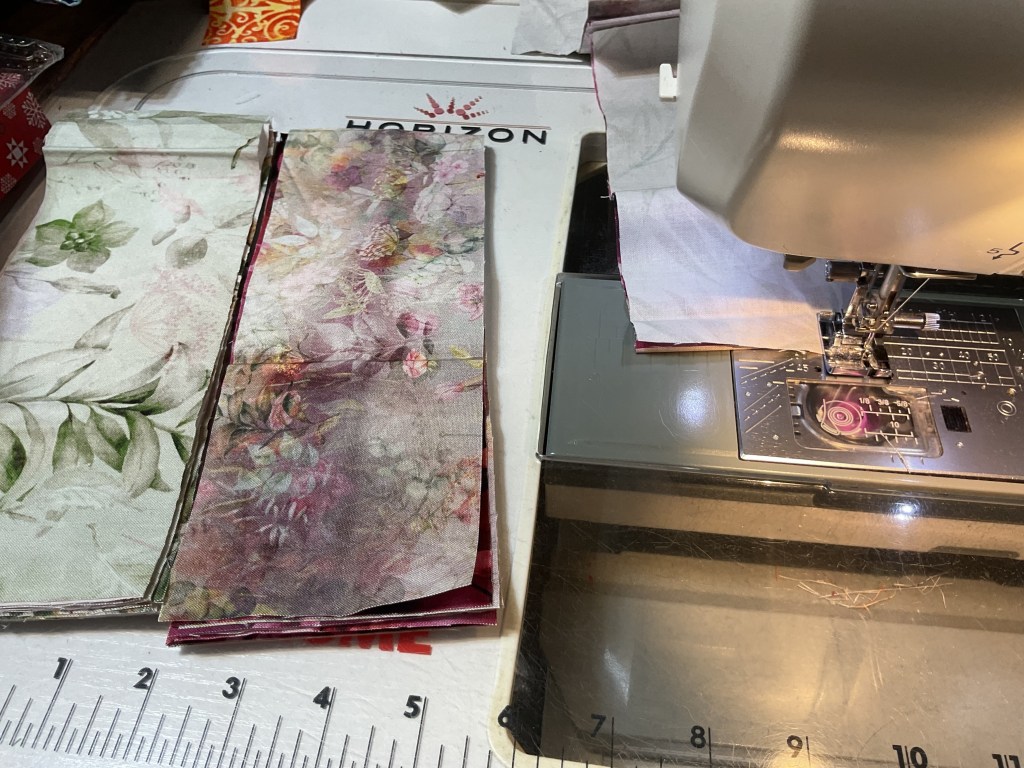
Now for Block 2 – we’re going to sew 3 assorted skinny rectangles together to make a Triple Rail Fence block. Again, I divided my strips equally into 3 piles and put them to the left of my machine. First I sewed 2 rectangles together from 2 of the 3 piles, leaving the last pile for last. Then I added a 3rd rectangle to all the pairs, making sure each Rail Fence block had 3 different fabrics.

Time to head over to the ironing board to press all of my blocks flat.

All righty, all the blocks are sewn and pressed, so now we’re going to put them up on the design wall so we can play switcheroo until we’re happy with the block arrangement.

The layout is an easy one for because we’re just going to alternate the blocks.

Take a look at some of my swaps. See how the dark reds are accumulating at the lower right corner of the photo at the left. In the middle photo, I swapped some blocks around and it’s starting to look a bit better, but we’re not quite there yet. And then the photo at the right looks the best of all. Often, arranging the blocks takes longer than sewing the whole top together, especially if you’re making a Villa Rosa pattern!

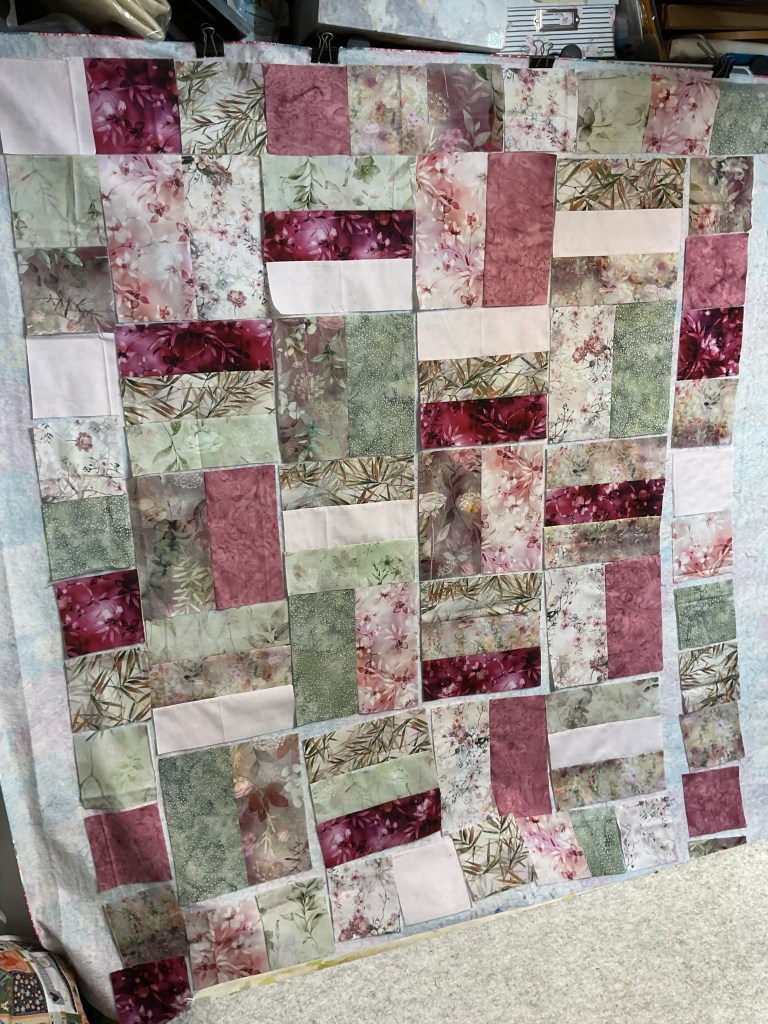
Now that I’m happy with how the blocks look, we’re going to add a border of squares all the way around the blocks. Huh! Bet you were wondering what we were going to do with all those squares (besides add them to our 5″ square stash).
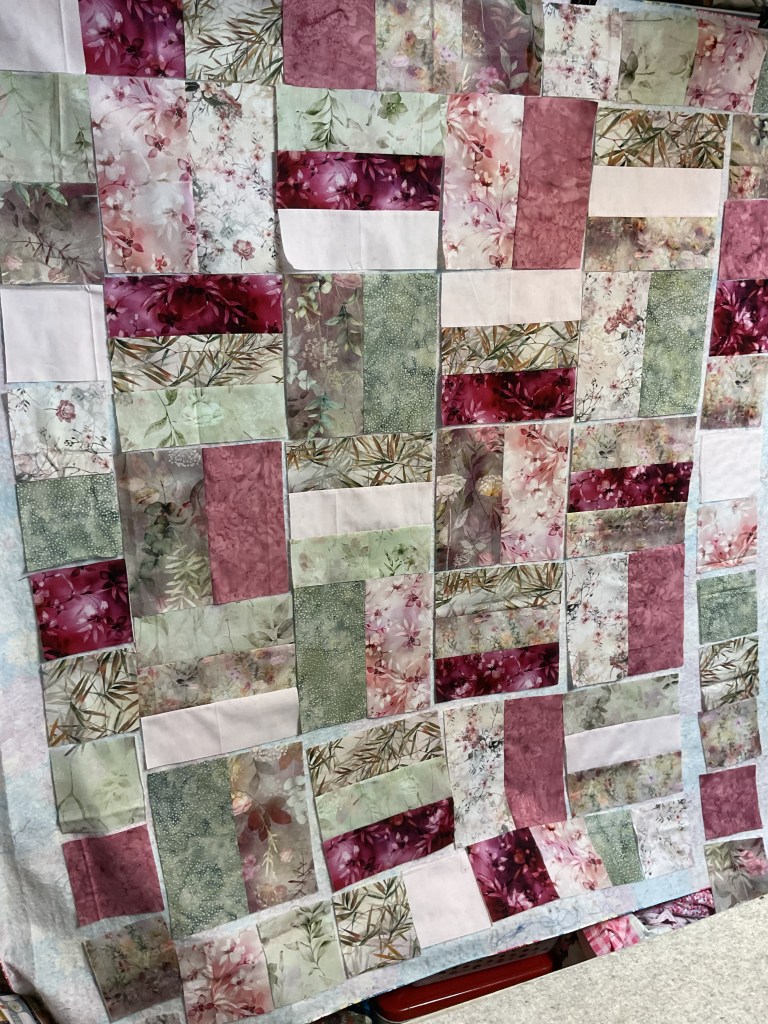
A colorful quilt top made of various fabric pieces in shades of pink, green, and white, arranged in a patchwork design.

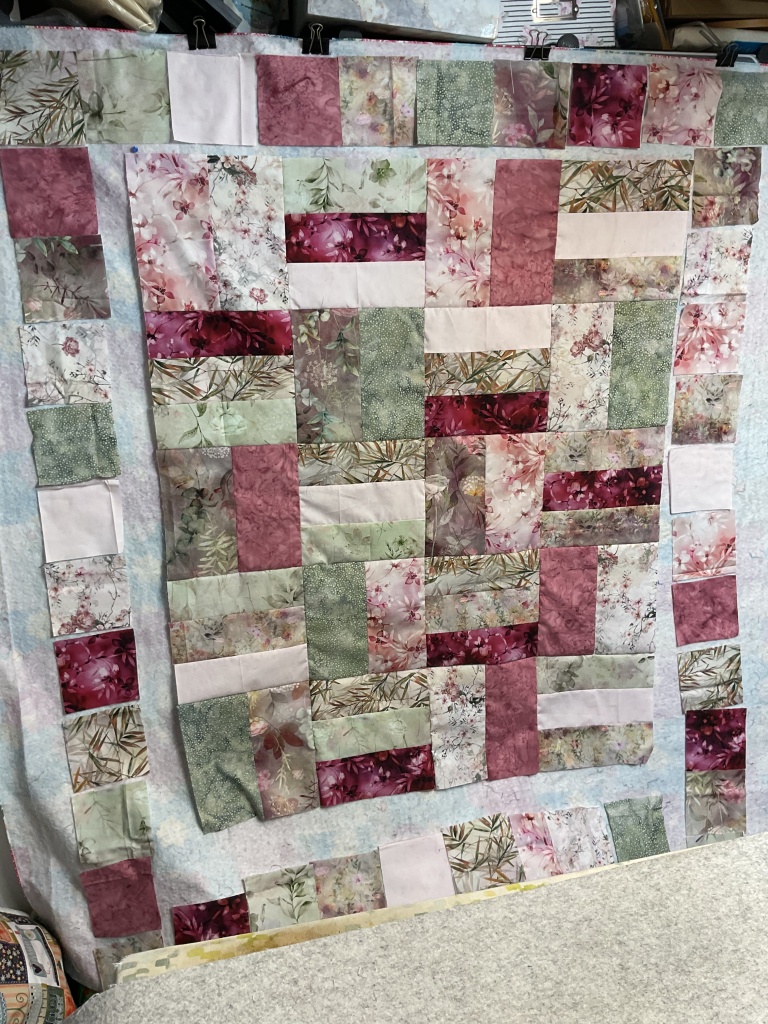
Guess what?!? Now it’s time to swap the squares around until the quilt looks just right (are you feeling a little bit like Goldilocks, ??? LOL!).

Take a look at some of my swap outs below. You might wonder why I went ahead and laid out my border of squares before I sewed the blocks together for the quilt center. I was afraid to sew the blocks together in case I would need to tweak them again once I laid out the border squares.

A quilt top layout featuring various floral and patterned fabric pieces in shades of green, pink, and mauve, arranged in a patchwork design.

Okay, I’m happy with the blocks and outer squares layout, so I’m going to sew my blocks into rows and then sew the rows together.

The center of the quilt is now sewn together. OH NO! Somehow I flipped a block at the bottom right corner of the quilt center! Sheesh! How’d I manage to do that?!?
A partially completed quilt top featuring a variety of floral and patterned fabrics in shades of pink, green, and white, arranged in a block design on a light background.

Oh well, don’t panic! We can fix this. We have 2 options – either leave it alone and continue or else take a break to rip out the corner of the quilt and sew the blocks back together. Can you guess which option I chose?

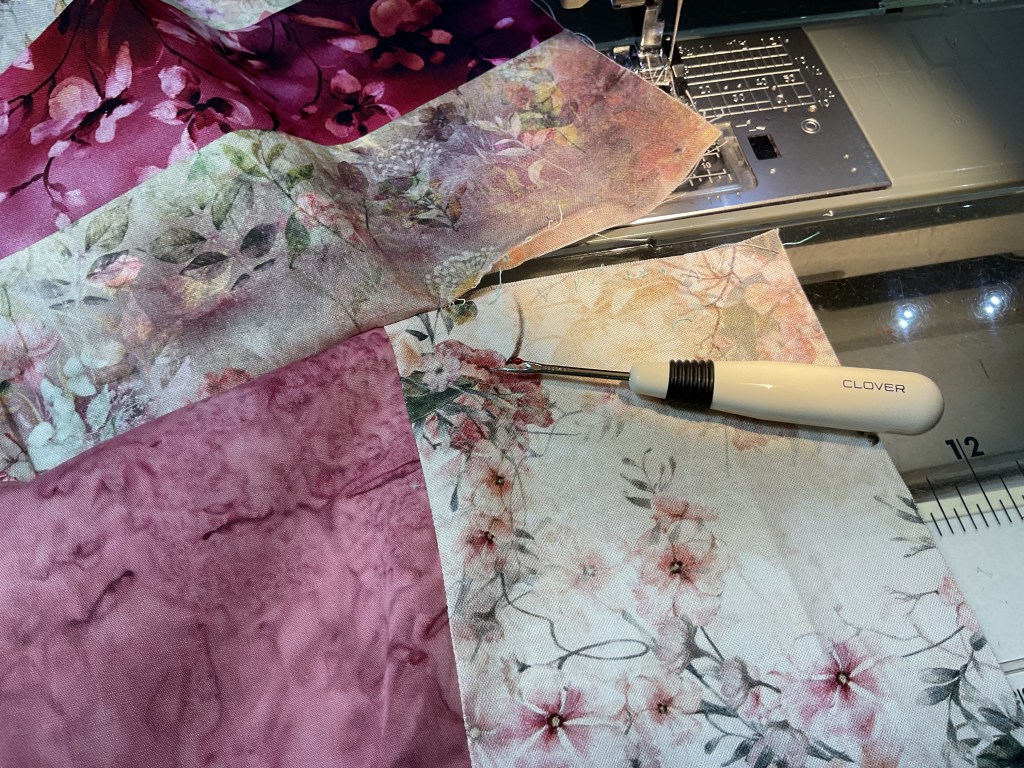
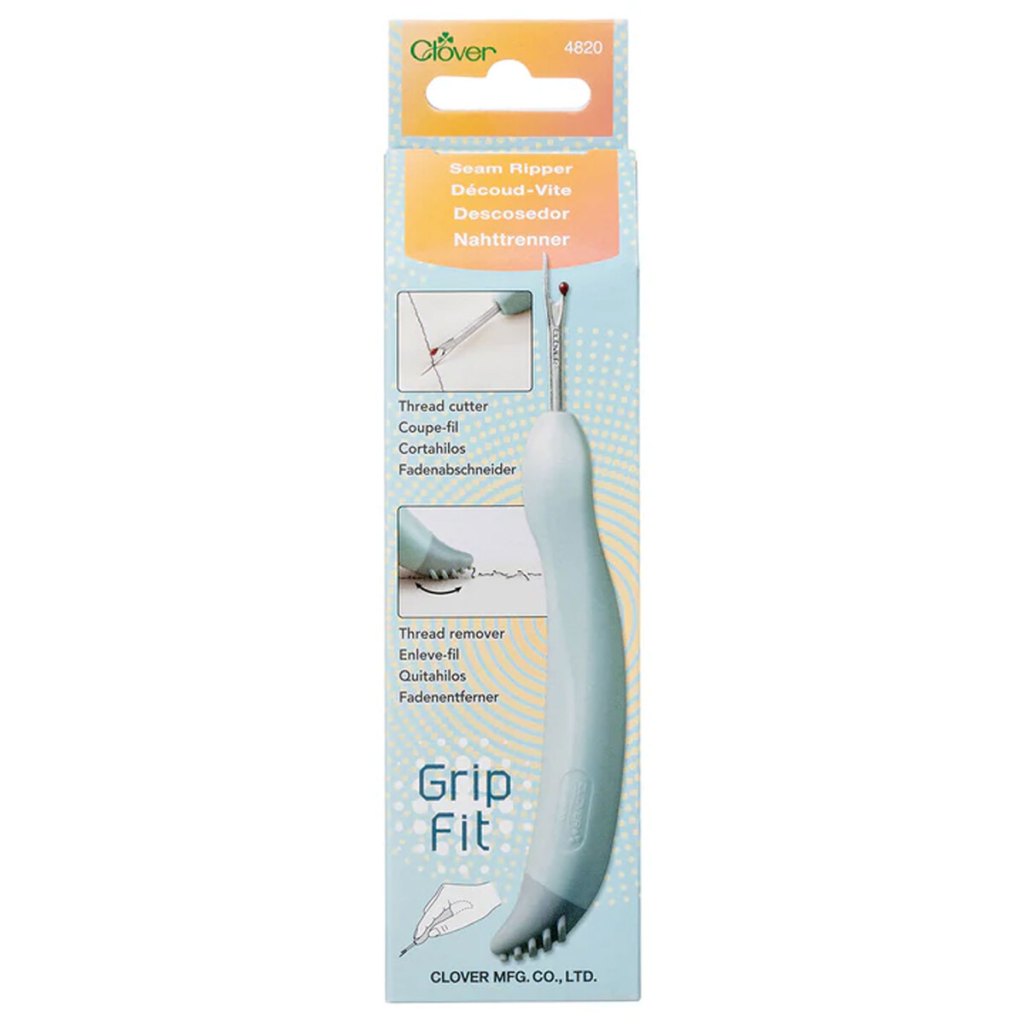
Yup, time to grab my pal (and my enemy – I guess that makes him my frenemy, doesn’t it?), Jack the seam ripper. Do you have a favorite seam ripper? Mine is by Clover. In my humble opinion, it’s simply the best seam ripper ever. Don’t have this one? You can find it HERE. Let me know what you think.

A Clover seam ripper, displayed in packaging, designed for easily cutting threads.

Anyway, time to rip!

Ugh! Look at all the threads bits! Ripping out stitches is definitely NOT my favorite thing to do, but it’s necessary sometimes. And besides, Jack really enjoys himself when we do.

Close-up of several fabric pieces in shades of pink, with threads visible on one piece.

Now I can resew the block into the quilt. This time, I’m making sure it’s turned the right way.

Okay, disaster averted, thank goodness. I’m still not a fan of the mauve rectangle touching the dark red one, but unless I want to do a ton more ripping and resewing, I’ve decided I can live with it. What do you think? Should I have ripped out the other block, too?

Quilt top featuring an assortment of floral and patterned fabrics in shades of pink, green, and cream, laid out in a patchwork design.

Moving on……..time to sew my squares into rows and then I’ll sew them to the quilt center. Fingers crossed I don’t get any of them mixed up. I’m going to sew the top and bottom squares together first and then I’ll sew them to the top and bottom of the quilt center.

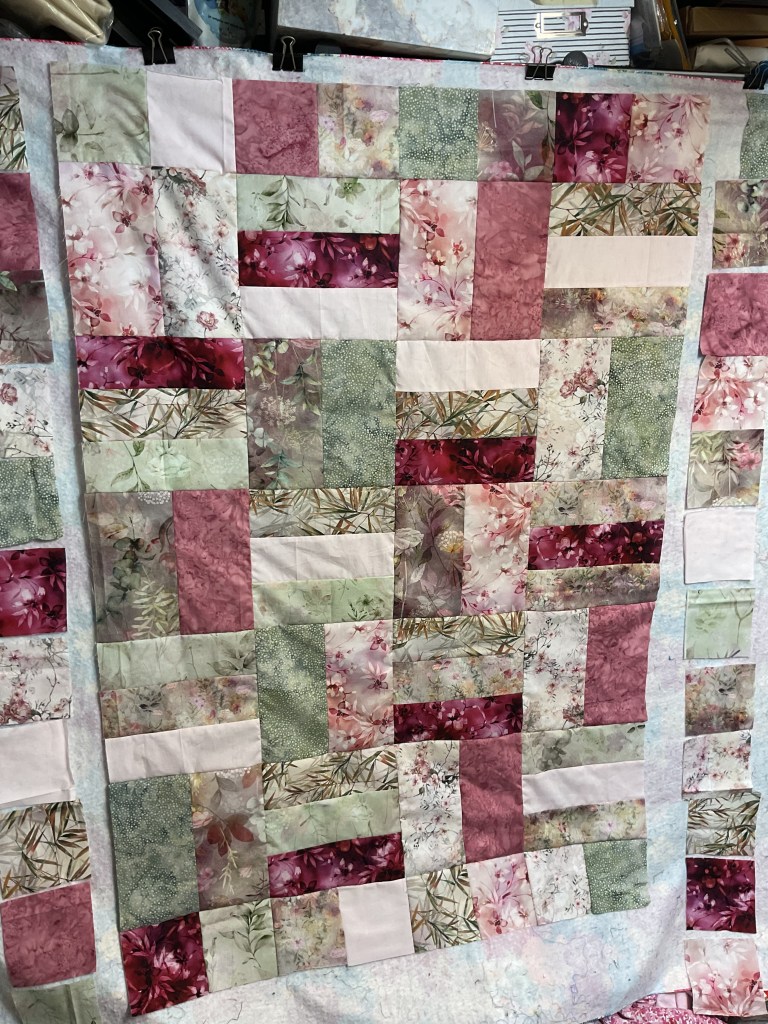
Next I’m going to sew the side border squares together and then I’ll sew them to the sides of the quilt center.

And here is the completed Busy Bee quilt top (or flimsy). Isn’t it really beautiful? LOVE LOVE LOVE these fabrics!

A completed quilt top featuring a patchwork design made of floral and textured fabric squares in shades of pink, green, and white, displayed against a light background.

Let’s take it outside in natural light to see the fabrics sparkle (instead of my dark sewing dungeon). Love it sew much! Can’t wait to finish this one.

A vibrant quilt displayed outdoors on a clothesline, featuring a patchwork design in shades of pink, green, and white.

Of course, after you get the flimsy finished, it’s time to layer it with batting and backing and quilt it. Then bind it and add a label. Hopefully soon.

Well, that’s it for me this week. Try to get a bit of sewing in this week.

See you next week!

Always,

Tricia @ VRD
Rose Cards · Tips and Tricks · Tutorials · villa rosa designs

VRD Midnight Pathway Quilt Tutorial, High British Tea, and a Quilt Exhibit/Museum Tour

Happy Thursday to you!

I hope you enjoyed last week’s tutorial, Morning Tea, with Molly. It was wonderful that she could stop by the blog and visit with you. Things have been super busy over there at the VRD shop in Grass Valley, CA, so she just hasn’t had a lot of extra time to hang out with us on the blog. What a great quilt she made, too, huh? Blue and white Australian fabrics – wow! If you missed last week’s Morning Tea tutorial, you can find it HERE.

Last Friday, I was delighted to attend a High British Tea and Quilt Program/Tour at the Gibson House Manor Museum in Jamestown, PA. I was invited by my sister’s aunt-in-law (is this even a word???), Anita, to attend as her guest. Anita is not only a quilter, she also volunteers at the Museum.

The Gibson House Manor has had a very interesting history, indeed. It was built by a local doctor, William Gibson in the 1850’s. It is also known as the Mark Twain house because Mark Twain actually stayed there after the Civil War. He liked the house so much, he even included it in one of his stories! But even more interesting, it was a vital stop on the underground railroad with hidden secret rooms and so much more! You can visit the website HERE for more information.

Here’s the museum – isn’t it gorgeous???

The exterior of the Gibson House Manor Museum, featuring a red brick facade, large windows, and surrounding greenery.

Lucky me – not only was the new quilt exhibit debuting, the curator was giving a tour of the quilts, AND it was the monthly High British Tea day. What fun!

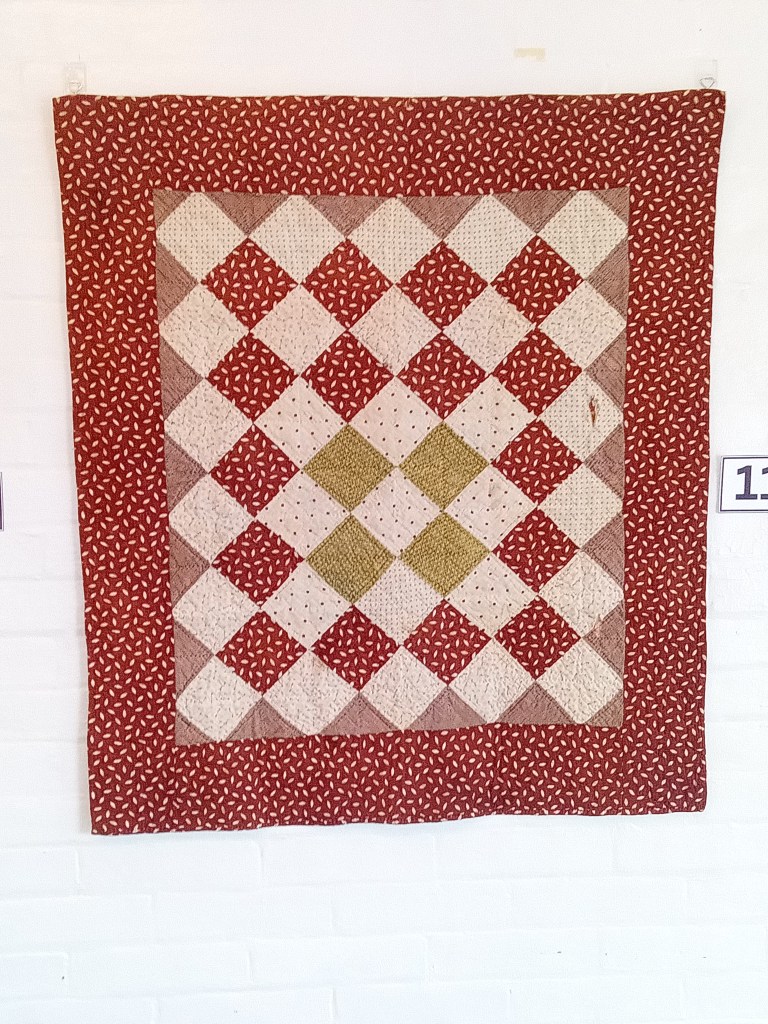
Here’s a few photos of the exhibit, showing some of the quilts on display.

You can see this lovely exhibit (and the museum!) until October. It’s called Quilted Layers: Piecing Together History and it is curated by Jill Mezaros. You can make reservations on the website to see the exhibit. While you’re there, you might want to take the Underground Railroad tour and maybe have High British Tea, which is usually the last Friday of the month. Yum!

Now let’s get started on this week’s quilt tutorial to help you restart your quilting this fall.

Midnight Pathway is another great VRD pattern by our own Molly Cook. It finishes at a big 52″ x 72″ and makes a good-sized throw quilt. Want it bigger? Simply add a border.

To me, this pattern has a more masculine feel to it. It’s very straightforward without any extras. I think you’re going to like it!

A quilt titled 'Midnight Pathway' with dark blue and gray fabrics arranged in alternating horizontal strips, featuring intricate quilting patterns.

Don’t have this pattern yet? Then get your digital pattern HERE or your print pattern HERE.

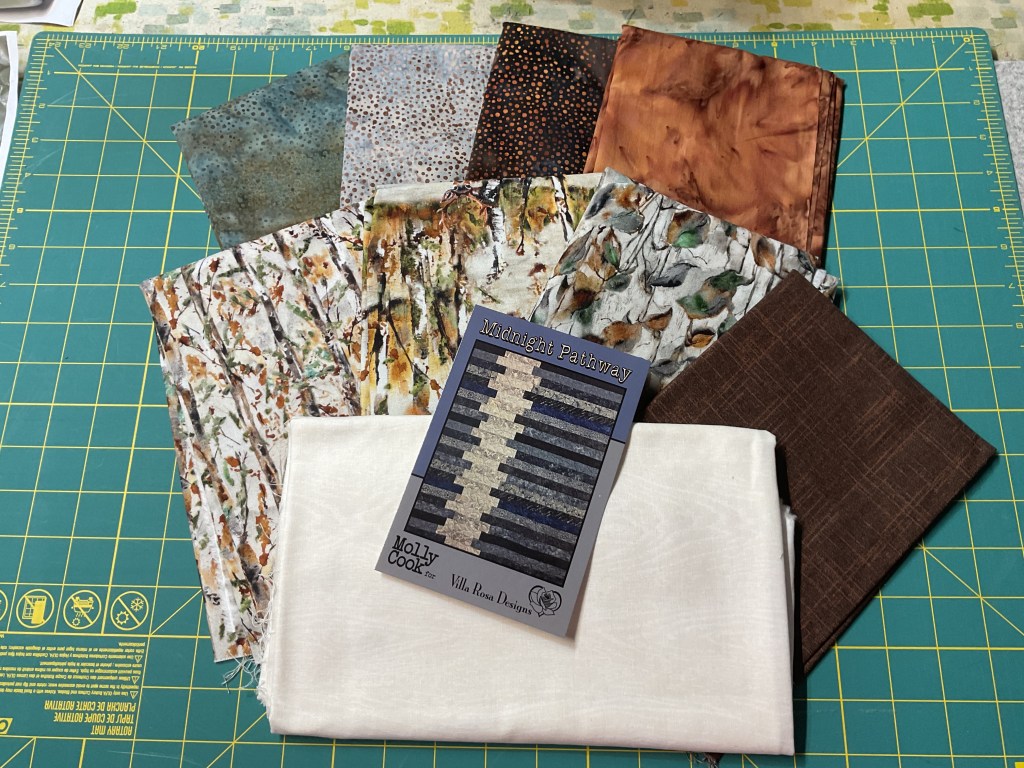
Today we’re using a rich earthy fabric collection. This collection is called Into the Woods and is a Hoffman Fabrics digital fabric collection with companion batiks.

A collection of quilting fabrics laid out on a green cutting mat alongside a pattern card for the 'Midnight Pathway' quilt. The fabrics include various colors and patterns, while the card is clearly labeled with the quilt design details.

Sadly, this collection is an older one, so you might not be able to find it anymore. This time of year, though, you’re bound to find something with a fabulous autumn woodsy feel that would work equally well like the Jason Yenter collection Falling Leaves or maybe Deb Tucker’s Forest Flora collection.

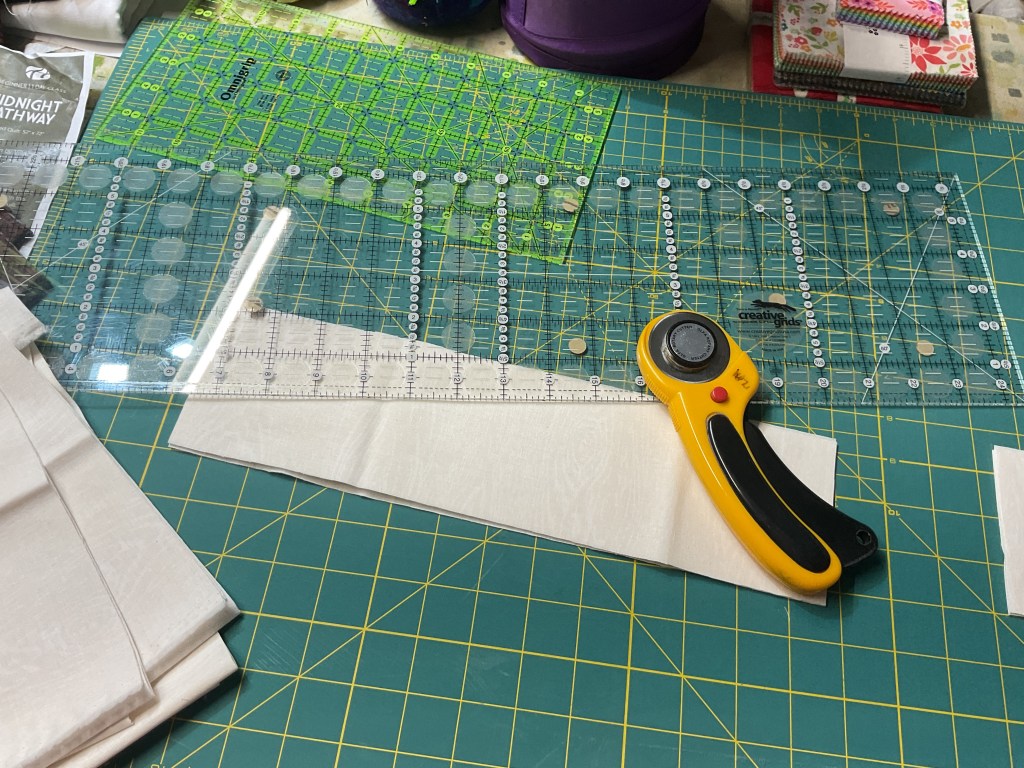
The first thing we’re going to do is to cut a lot of strips from our prints.

Then we’re going to cut more strips from our contrast fabric.

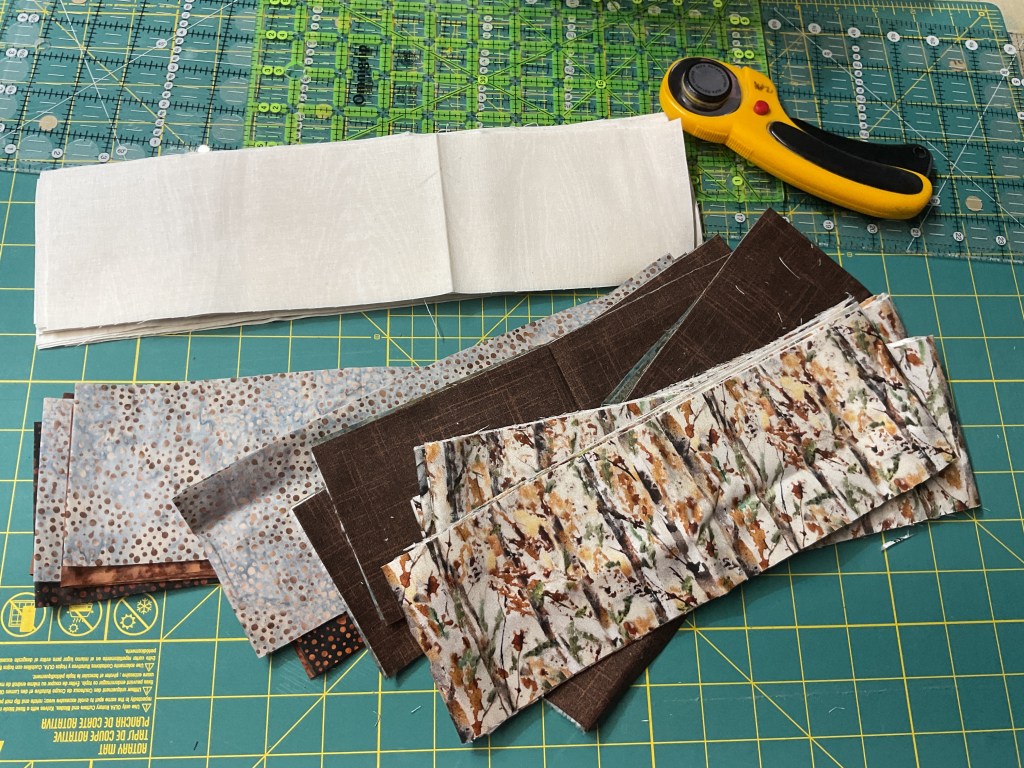
Once we’ve got all of our strips cut, we’re going to cut our strips into different sized pieces. It’s important to keep all the pieces from one strip together. I folded the smaller pieces inside the longer pieces so I wouldn’t lose them.

A collection of fabric strips in various patterns and colors, including light cream, earthy browns, and floral designs, arranged on a cutting mat alongside a rotary cutter and a ruler.

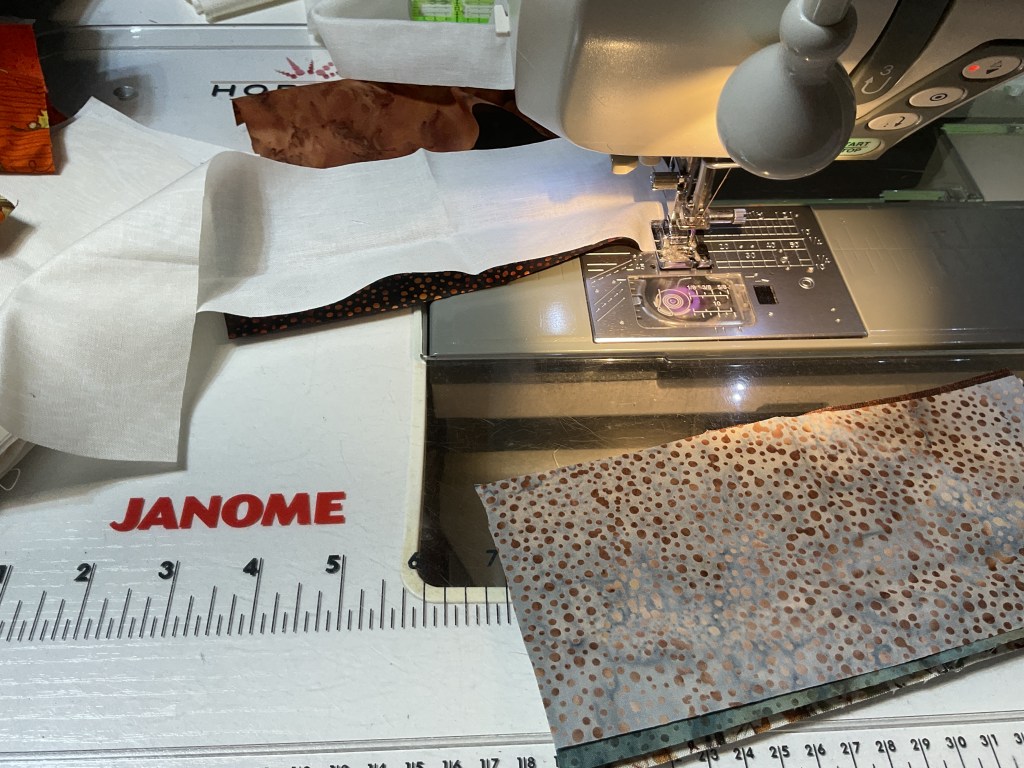
We’re heading to the sewing machine next so we can add contrast rectangles between the small and larger pieces of the strips. You could mix and match your pieces for a really scrappy look (or even shop out of your stash and scrap bins), but I’m sticking with the pattern and going to keep each original strip together.

As there are three different pieced strips, I’m going to sew the strips together in 3 sections, then I’ll sew all the sections together.

I’m going to pin all the same pieced strips together to stay organized as I work on each group.

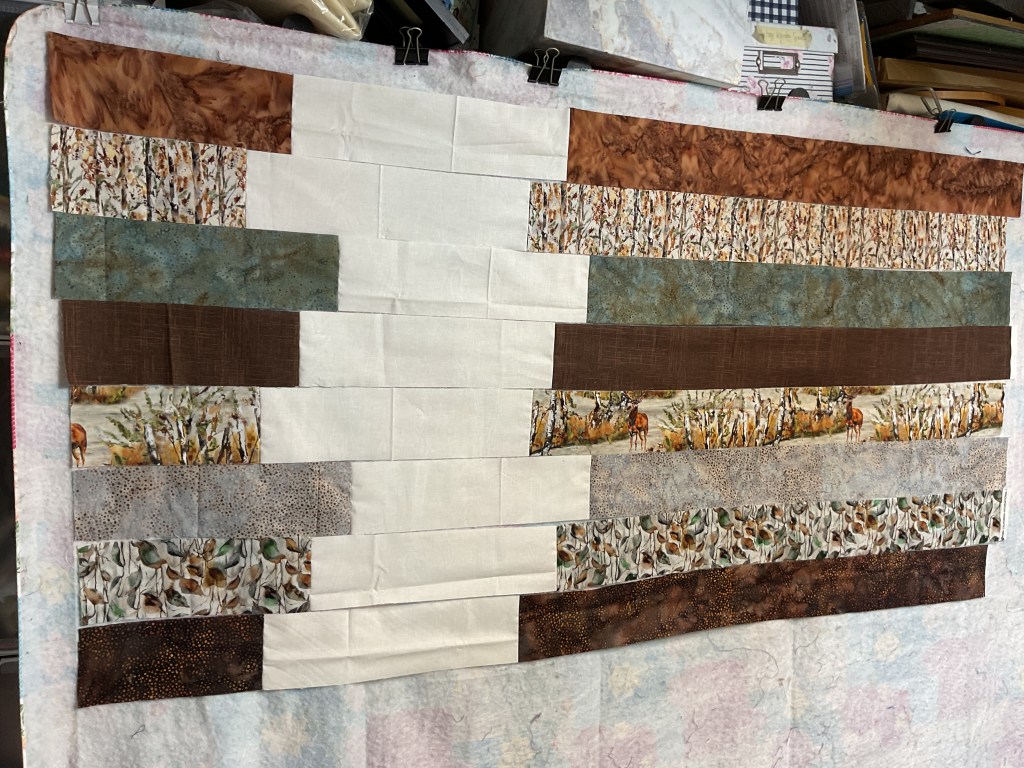
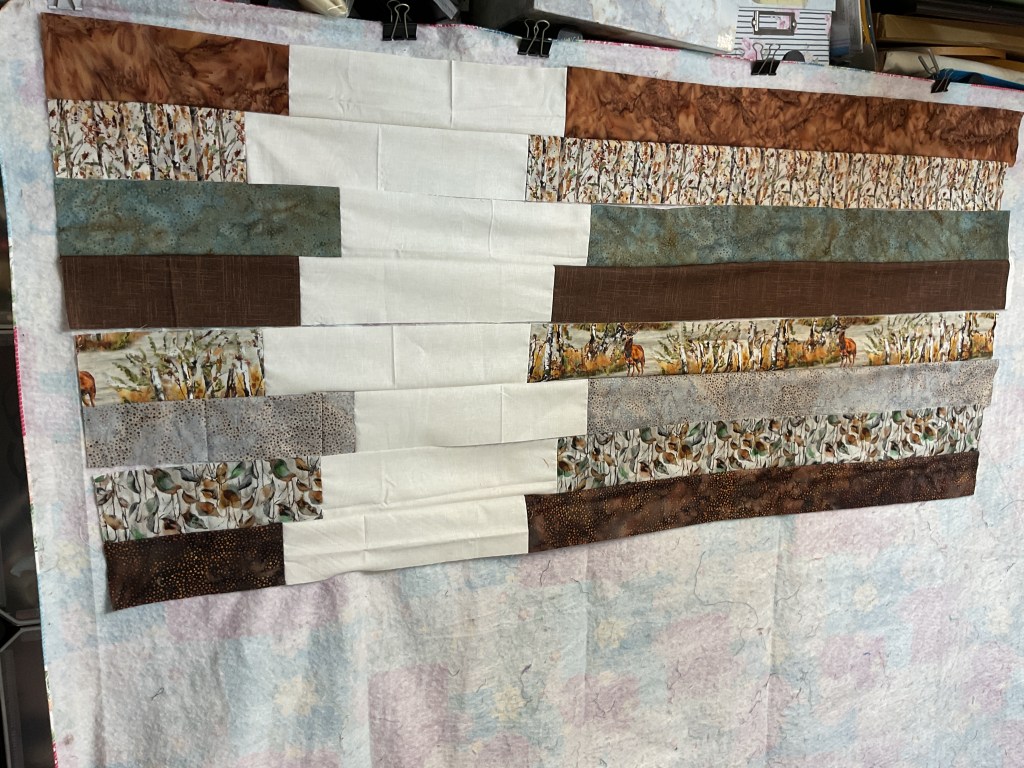
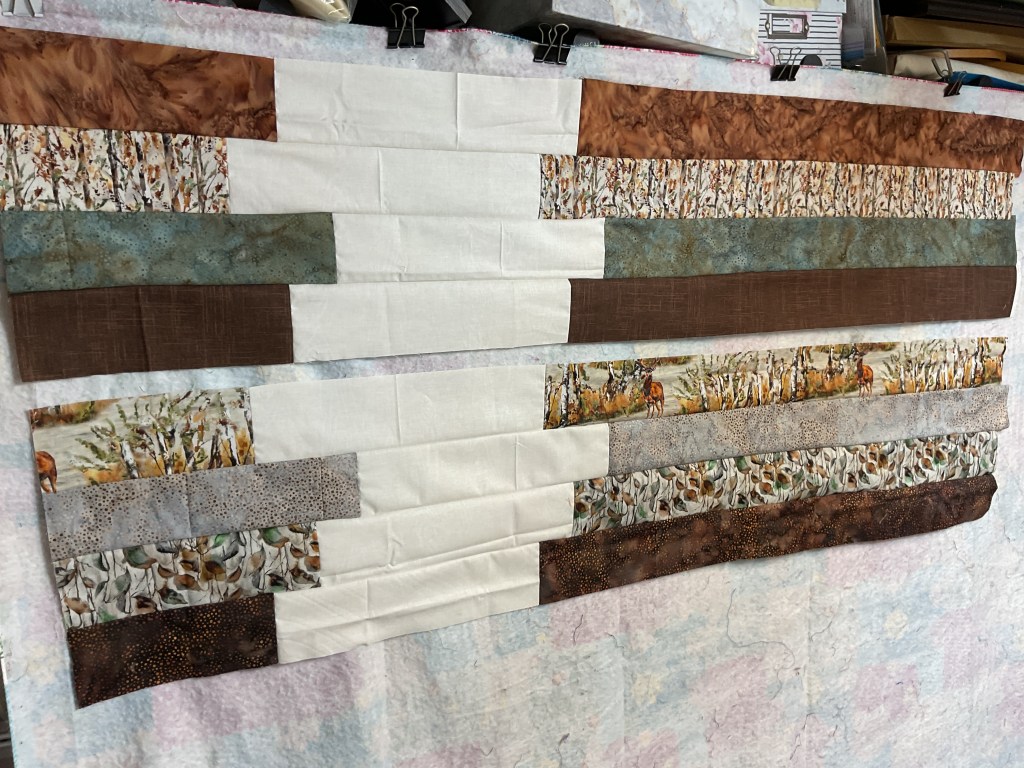
Now that all my strips are pieced, the fun can begin! Time to arrange the strips on my flannel board. Because I have my strips already divided into 3 groups, I’m also going to work on sewing the pieced strips together into 3 sections.

You can really have some creative license with this design because you can arrange the strips any way you want! There are so many ways you can put these strips together, so make sure you play a little bit before you commit.

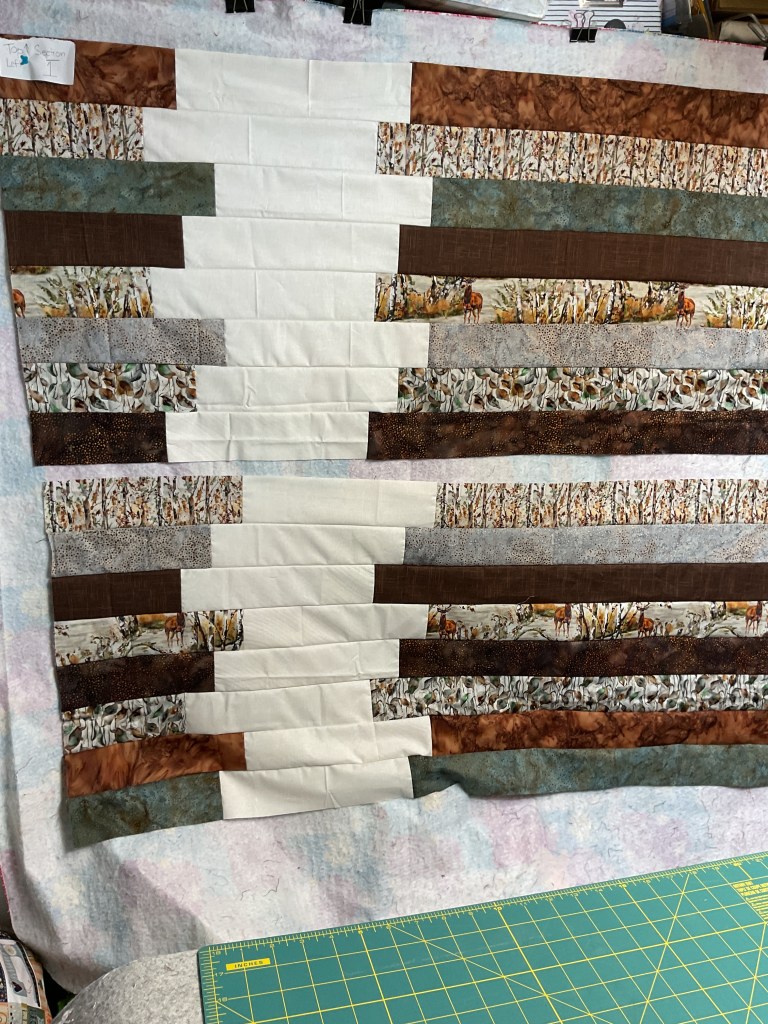
Okay, I’m happy with my first section, so I’m going to sew the pieced strips together – first into pairs, then into quads, then finally sewing the quads together into one section. This helps me to keep from mixing up the strips as I sew.

I added this piece of paper to the top left corner so I wouldn’t flip things all around as I went.

A close-up image of quilt fabric pieces showing a label that reads 'Top Section 1' with an arrow pointing up, indicating the arrangement. The fabric features earthy tones and patterns resembling autumn foliage.

Great! Time to move onto the second group of pieced strips. I’m going to continue using the same technique as I did with the first section (twosies and foursies) after I’ve decided how I want this section arranged.

Now onto the last section. Because the quilt top is getting so long, I’m pretty much standing on my head to arrange the last pieced strips. LOL! I can barely show you the entire quilt top now – my pressing counter is in the way and I’m running out of flannel board.

So I’m going to take the top outside for a photo so you can see the whole thing. And here it is! I really like how warm and cozy it looks and how any guy or gal would love it!

A patchwork quilt with alternating strips of earthy brown fabrics and light-colored fabric, laid out on green grass.

Now all I have to do is layer it with batting and backing (or fleece as I plan to do), quilt it, bind it, and put on a label. Ho hum…..I’ll be adding it to my mountain of projects that need finished, I’m afraid. Seriously, I have no idea how many flimsies (quilt tops) and layered quilts I have on my pile – so, what’s one more???

Fingers crossed I’ll get some time this winter to work on them. Of course, the more tutorials I do, the more flimsies I add to my teetering pile. What a delightful conundrum.

Bet you don’t have any WIPs or UFOs (works-in-progress or unfinished objects) in your sewing space, do you???

See you next week for another great tutorial and NEW September patterns!

Until then –

Always,

Tricia @ VRD
Rose Cards · Tutorials · villa rosa designs

VRD Morning Tea Quilt Tutorial

Happy Thursday to you!

PSST!

Hey, it’s me, Molly!

Long time no see! I’m stealing the blog from Tricia this week – it’s been a while since I snuck in here and did a tutorial. Sorry it’s been so long, but things have been awfully busy at the VRD shop and I’ve been working hard to create new patterns for you, too.

I heard Tricia’s doing a bunch of tutorials to help everybody get back into quilting this fall, so I thought I’d add one to the mix – Morning Tea. Yup, another Tea quilt. LOL!

Anyway, let’s get back to today’s tutorial, Morning Tea.

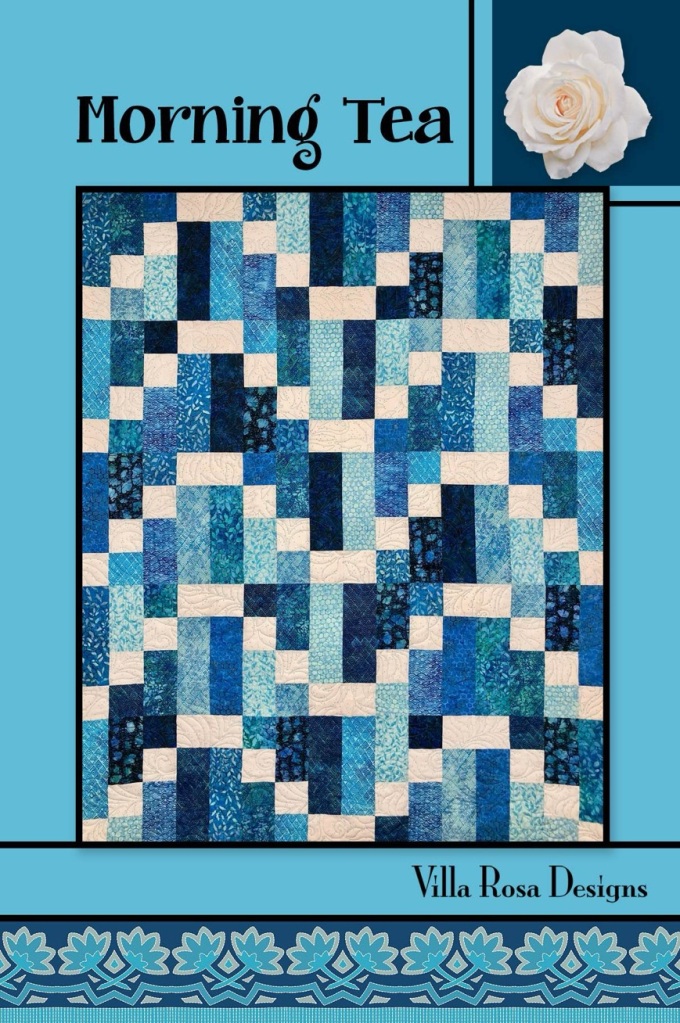
Here’s Morning Tea, designed by our very own VRD Rose Queen, Pat. It’s a fat quarter (18″ x 21″) friendly pattern plus you need to add a background fabric. And of course, it’s fast and fun!

A quilt design titled 'Morning Tea' featuring various shades of blue fabrics arranged in a patchwork pattern, with a light background and floral design at the top corner.

If you don’t have the pattern yet, you can get your print copy HERE or digital copy HERE

I wanted to play around with some of our Aboriginal fabrics in the VRD shop again and decided on this range of blues. Fun, huh? The squiggly light fabric towards the bottom of the photo is my background and the one in front if it is my binding.

A collection of Aboriginal fabrics in various colors and patterns, laid out on a green surface. The fabrics feature intricate designs, including circles and wavy lines, suitable for quilting projects.

Lucky you! We even have some kits left, and you can get yours HERE. Your kit comes with the fat quarters (FQs), background fabric, binding, and the pattern. I do have to say some of the fabrics have been discontinued but we did add some great replacements and they work perfectly too.

Let’s rock this quilt!

  1. First step is to divide your fat quarters into 2 piles. From the first group, we’re going to cut them into 2 different widths.
Two pieces of fabric with distinct Aboriginal designs, positioned on a green cutting mat with grid lines; one piece is wider and rectangular, and the other is a narrower strip.

2. From the remaining smaller group of FQs, you’ll cut the strips all the same width.

Two strips of fabric featuring a blue Aboriginal design, laid on a green cutting mat.

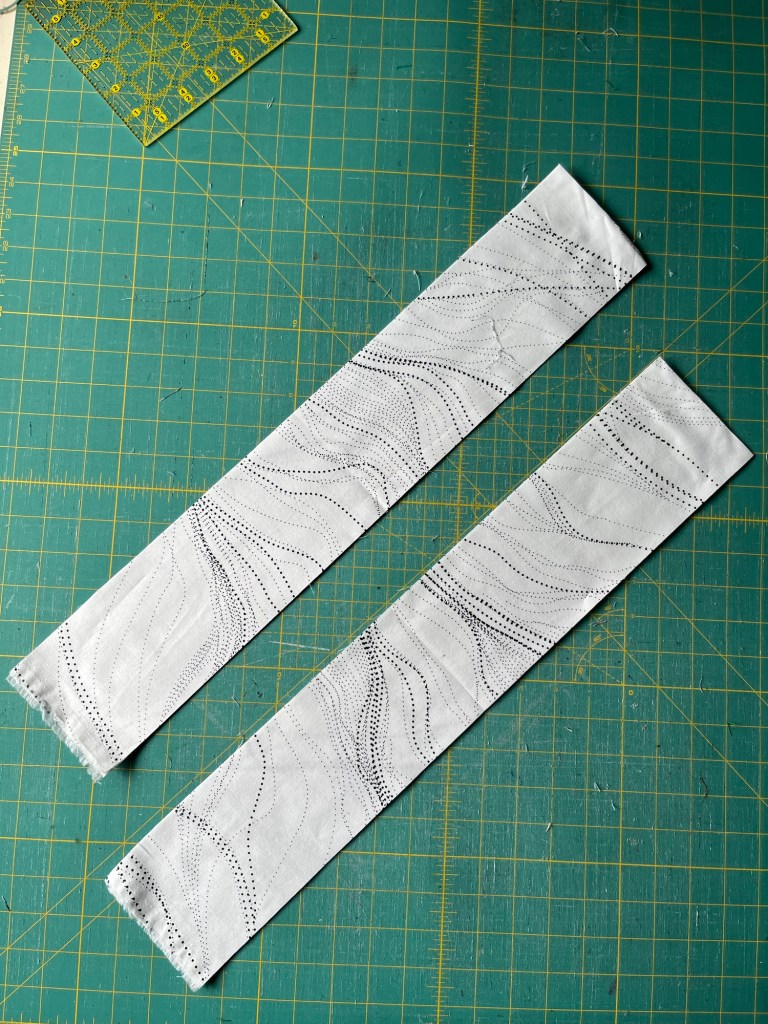
3. The background strips are all cut the same size by the width of the fabric, then we’re going to cut the long strips in half so our strips are the same length as our fat quarter strips. Genius!

Two strips of fabric with a squiggly pattern on a cutting mat, showcasing a quilting project.

4. Sew a background strip to each of the largest FQ strips. Next cut each of those strip sets into segments. I’m going to name these Unit A so we can keep everything straight as we go along.

5. Sew the remaining background strips between the small and the medium FQ strips. Subcut them into segments. These strip sets, I’m naming Unit B.

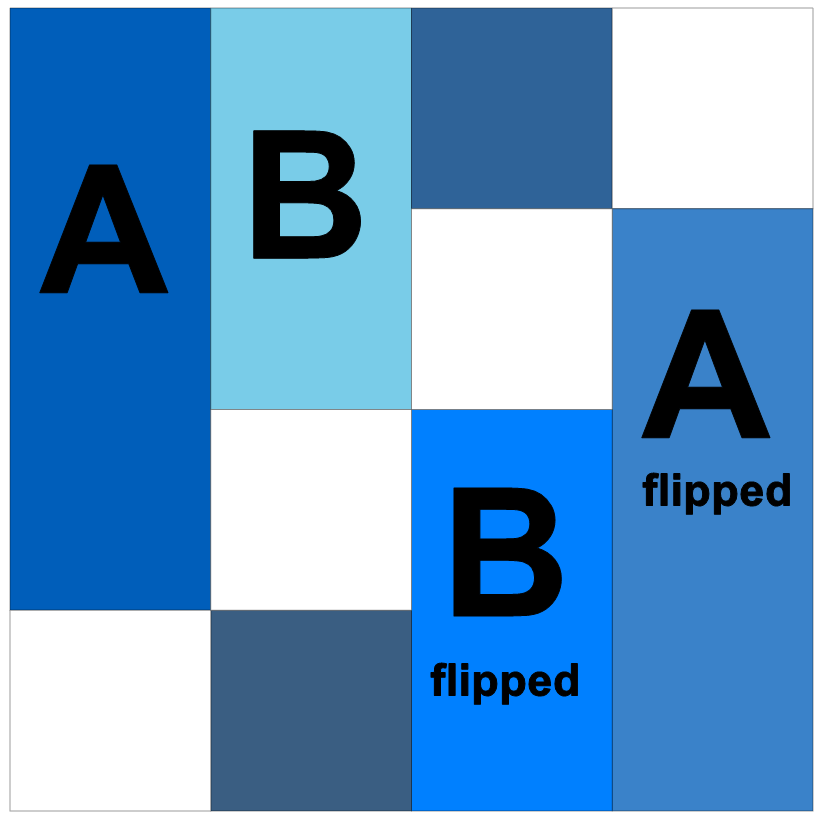
6. Are you following along? Because now we are going to sew our A and B units into blocks. Taking 2 of unit A and 2 of unit B, sew together with As on the outside and Bs in the middle. You’ll need to flip the last 2 units.

A quilt block layout featuring the letters A and B in various blue shades, with some blocks flipped.
Close-up view of a quilt featuring vibrant Aboriginal fabric patterns in shades of blue, black, and white, with intricate designs and stitching.

7. You will now make a reversed block with 2 more of each A & B units, turning the last 2 units as shown.

A visual representation of a quilt block layout, featuring blue and white squares, labeled with letters 'A' and 'B' indicating different fabric units.
Close-up of a quilt featuring a variety of blue Aboriginal fabric patterns arranged in a patchwork design.

8. You should now have the same number of each block. Time to play! You can lay your quilt out just like the pattern or you can play around with the layout and create some fun variations.

Here’s the original layout.

And here’s some cool variations to try out.

I bet you can even come up with your own block arrangement, so have fun!

9. When you’ve decided how you want to arrange your blocks, it’s time to sew the blocks into rows and then sew the rows together into the quilt top.

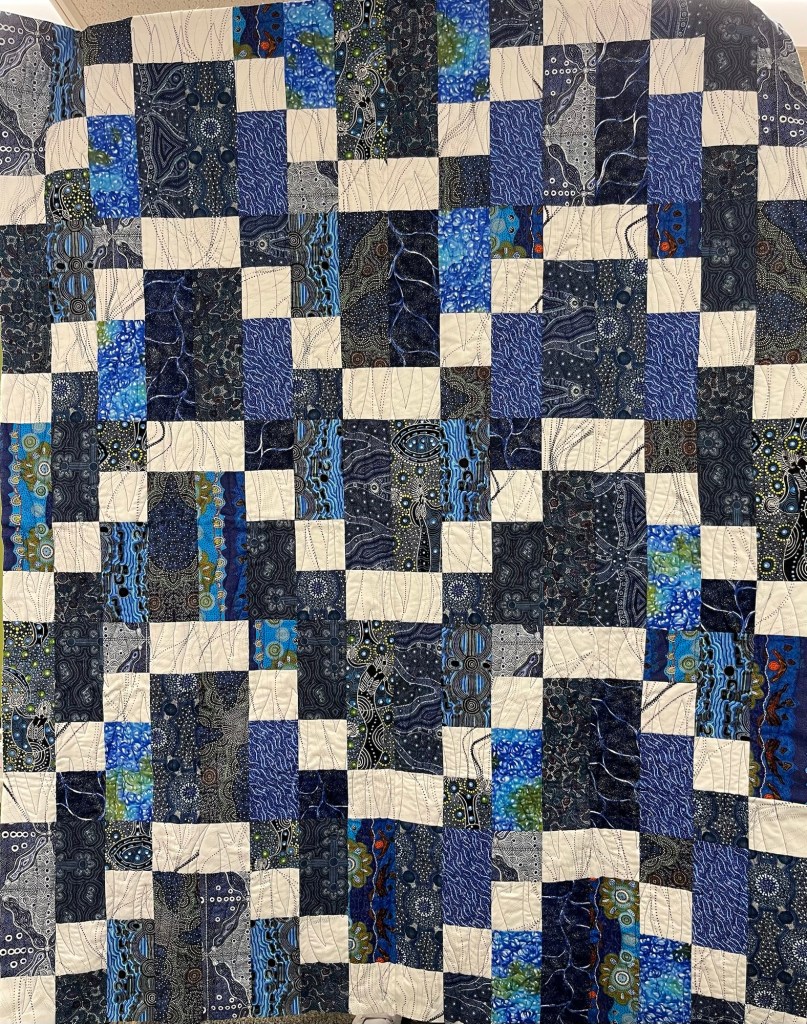
For my Morning Tea quilt, I’m going to stick with the original layout. Totally loving how it turned out!

A quilt featuring a patchwork design with various shades of blue, turquoise, and white, arranged in a square pattern.

10. Next up – layer, quilt, bind, and label your quilt.

Don’t forget to post your quilts on our VRD Facebook page or tag us on Instagram, #villarosadesigns. We love seeing your creations!

Thanks for stopping by and sewing with me!

Next week, Tricia will be back with another great tutorial for you.

That’s it for me.

Until next time —

Later,

Molly

Quilting Partners · Rose Cards · Tips and Tricks · Tutorials · villa rosa designs

VRD Tea With Mara Quilt Tutorial

Happy Thursday to you!

After our super fun Let’s Design a Quilt series (if you missed it, please check out the right side bar on the blog to find all of the links for the series) wrapped up last week, I promised a new group of tutorials to jump-start your autumn quilting.

You know how this time of the year is filled with local fairs and such right before the kiddos go back to school? Well, this week we’re off to the rodeo! Yippee!

Four cowboys riding horses during a rodeo, raising their hands in excitement, with dust kicking up in the background and an audience visible in the stands.

Have you ever been to a rodeo? I have a vague memory of going when I was a kid. My Grandma (my Dad’s mom) was always crazy about horses and always had at least a couple on the farm (my Grandpa always had his cows). I spent a lot of time on the farm as a kid as my grandparents’ farm was just down the road from our house. I have lots of good memories on the farm from when I was a kid. Baby animals were probably my favorite. Of course, running through the fields at midnight in the summer chasing down stray cows or horses was always fun, too. Good times.

Let’s slap our cowgirl (or cowboy) hats on our heads, put on our boots, and get started!

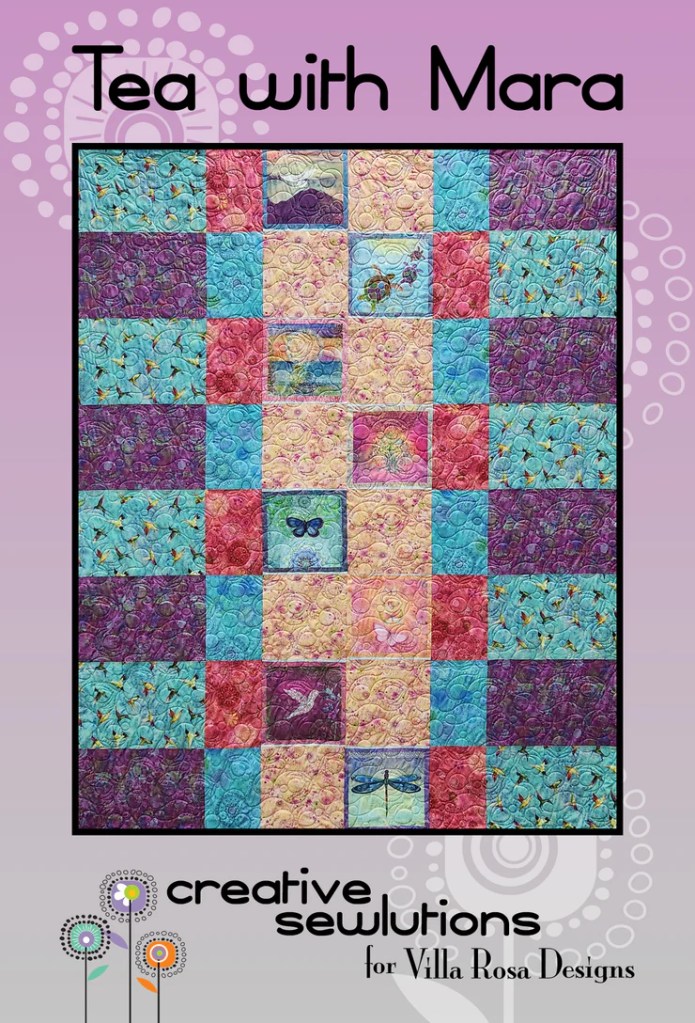
Tea With Mara is designed by Deanne of Creative Sewlutions, one of our talented VRD designers. This quilt finishes at a generous 58″ x 72″ and it can handle those large prints we are so loathe to chop up. Use printed panel squares……or not down the center. Sew many options……..sew little time!

A colorful quilt titled 'Tea with Mara' featuring a patchwork design with floral and butterfly patterns, highlighting various shades of pink, blue, and purple.

Get your digital pattern HERE or your print pattern HERE

PSST! Don’t forget, patterns always ship free, so grab a few more while you’re perusing the VRD patterns at the online shop.

For today’s tutorial, I’m using fabric from our friends over at Hoffman. It’s a digital-printed collection called Rodeo Dreams. When I saw this collection, I loved it! Maybe because it brought back fun memories from my childhood? So I’m letting you know right now that you’ll be seeing a couple more tutorials featuring Rodeo Dreams.

Just a quick word of caution when using digitally-printed fabrics – start with a brand new needle because if your needle is dull, you run the risk of damaging the fabric and we certainly don’t want to do that.

A selection of quilting fabrics, including blue and red bandana prints, a brown print, and a fabric featuring cowboys on horseback, alongside a digital pattern for the "Tea With Mara" quilt tutorial.

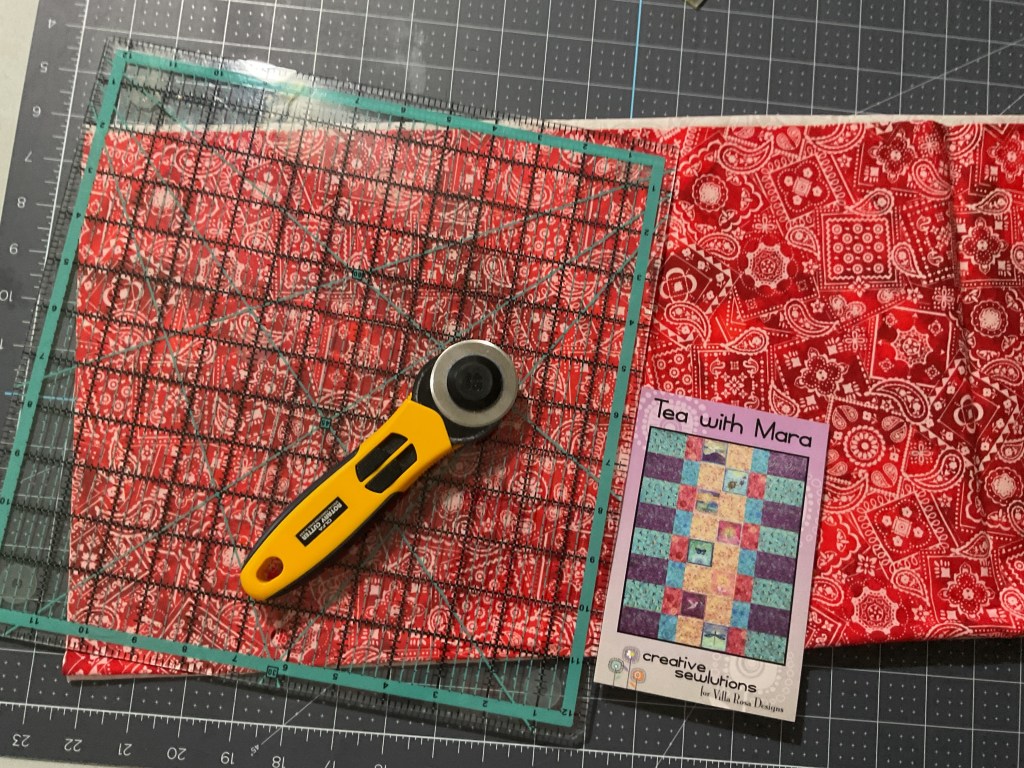
The first fabric I’m going to cut is the running yardage of the rodeo vignettes. I’m very glad I have a ruler the same size as the required block size in the pattern so I can fussy cut the squares easily and accurately.

A cutting mat featuring a quilting ruler over fabric with a rodeo scene, alongside a tutorial card for the 'Tea with Mara' quilt pattern.

Having the right sized ruler makes it a lot easier to fussy cut these vignettes than trying to cut strips and then cutting the strips into squares. This type of fabric makes strips and squares kind of tricky because the vignettes aren’t all the same size nor do they line up in a perfect grid.

Love quilting rulers! Boy, they do make quilting so much easier, faster, and more accurate.

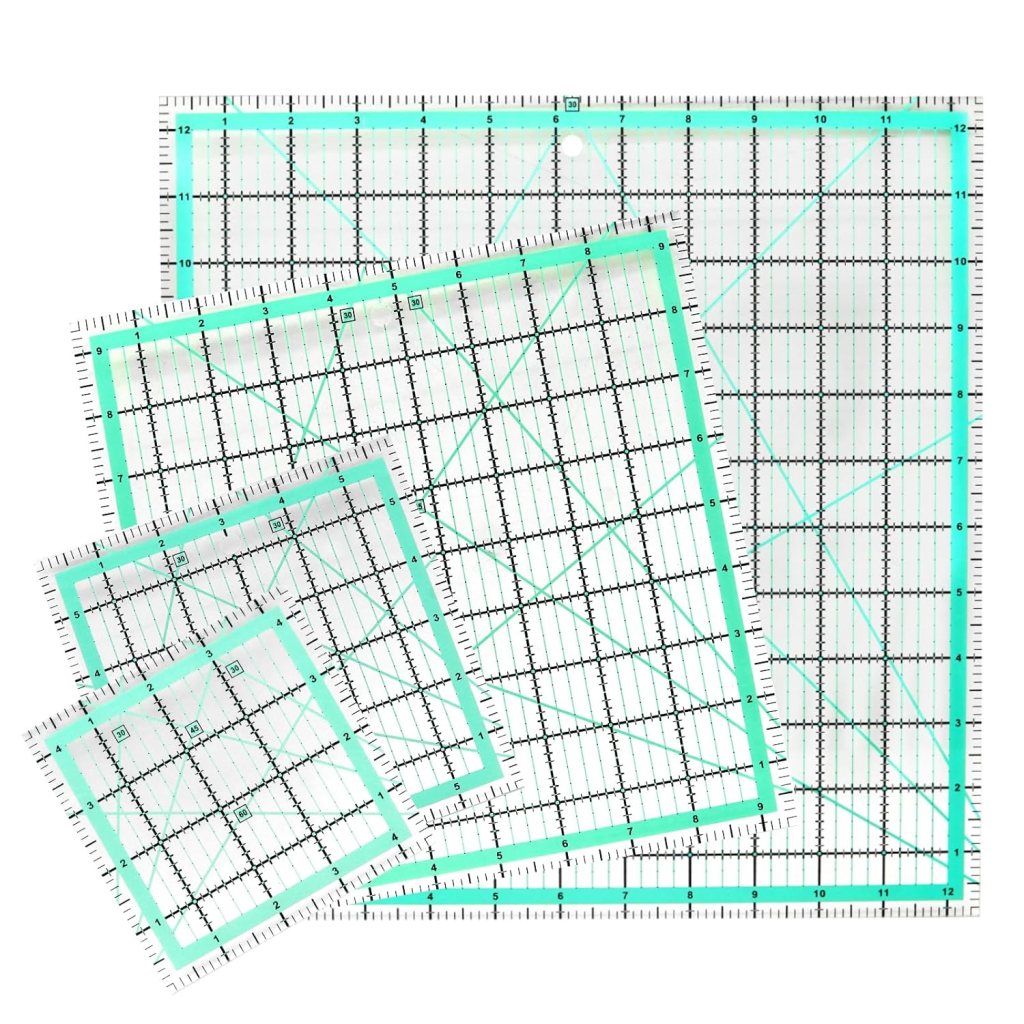
Mostly, I rely on my 6×24 and 6×12 rulers for cutting, but it’s always a great idea to have a collection of square rulers in the most common sizes, which are not only good for fussy cutting, but also for squaring up blocks.

A set of clear quilting rulers in various sizes, featuring measurement grids and markings, placed on a white background.
This basic ruler set includes rulers in common sizes

The only problem with fussy cutting is that your fabric will look like Swiss cheese when you get all done! LOL! Check mine out below. I can still fussy cut more pieces out of the fabric, but there is definitely more waste doing it this way than cutting strips into squares. Just something to think about if you’ve never fussy cut before.

A layout of quilting fabric featuring rodeo scenes, displayed on a flannel wall alongside various quilt blocks.

Now I’m finished making Swiss cheese, it’s time to cut the rest of my fabrics. Loving this red bandana print – it looks like the real thing (digitally printed, of course)!

A rotary cutter and quilting ruler positioned on a cutting mat, with a vibrant red bandana print fabric and a quilt pattern titled 'Tea with Mara' by Creative Sewlutions.

Here are all my fabrics cut and ready to sew.

A collection of quilting fabrics including a red bandana print, a blue bandana print, a brown fabric, and a fabric featuring a cowboy chasing a calf, with a quilt pattern titled 'Tea with Mara' visible.

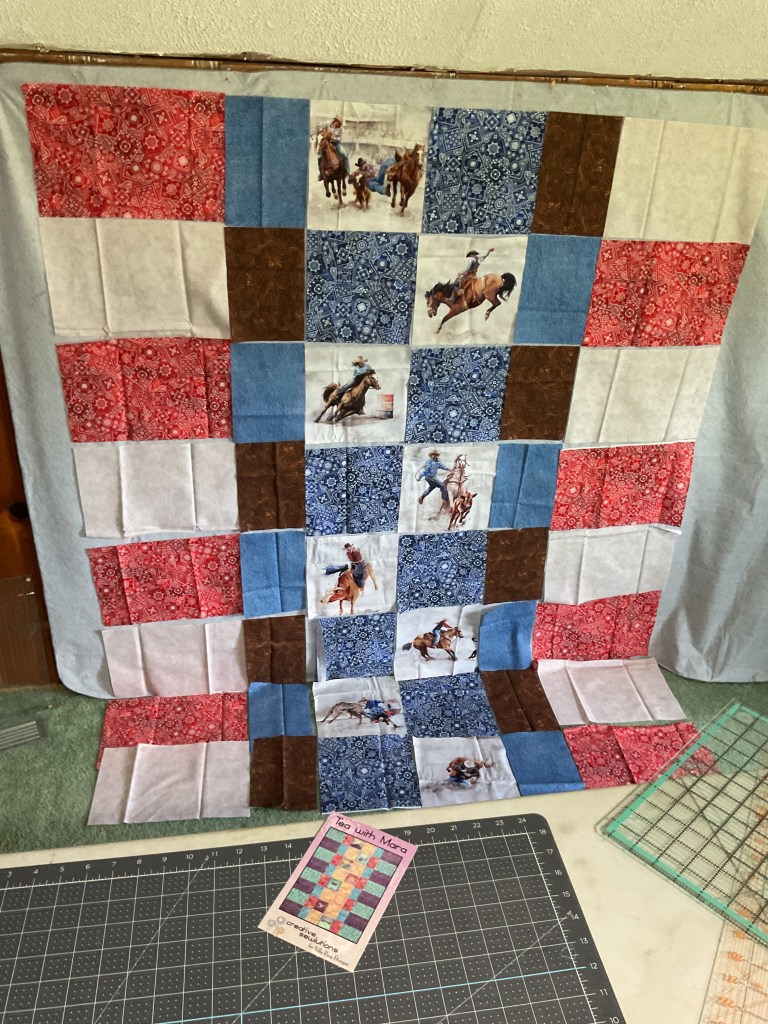
But before I start sewing, I’m going to lay out all of the pieces on my flannel wall. I want to make sure I like the placement of the rodeo vignettes before I commit to their positions permanently.

Quilt blocks arranged on a flannel wall, featuring red, blue, and brown fabrics with a rodeo theme and floral patterns.

I really like the nice big pieces in this quilt, even if I have to layer pieces on the floor because the quilt is going to be longer than my flannel wall. It’s going together surprisingly fast, though.

Of course, you don’t have to fussy cut your fabrics like I did – you could use any fabric you wanted for the center squares. Or you could even scrap this quilt up and use some of your stash. Such a versatile pattern – I could totally picture this quilt in a great collection of fall or harvest fabrics! Hmmmmmmmm….

You could even add a 6″ finished border, which would make the quilt a big 70″ x 84″!

Now I’ve got all my pieces up on the flannel wall. I switched a couple of the rodeo vignettes around, but other than that, I think it’s ready to sew. I like how it looks.

A colorful quilt layout featuring horse and rodeo-themed fabric squares, with red, blue, white, and brown patterned blocks arranged in a grid pattern on a design wall. A cutting mat and quilting ruler are visible in the foreground, along with a pattern card labeled 'Tea With Mara.'

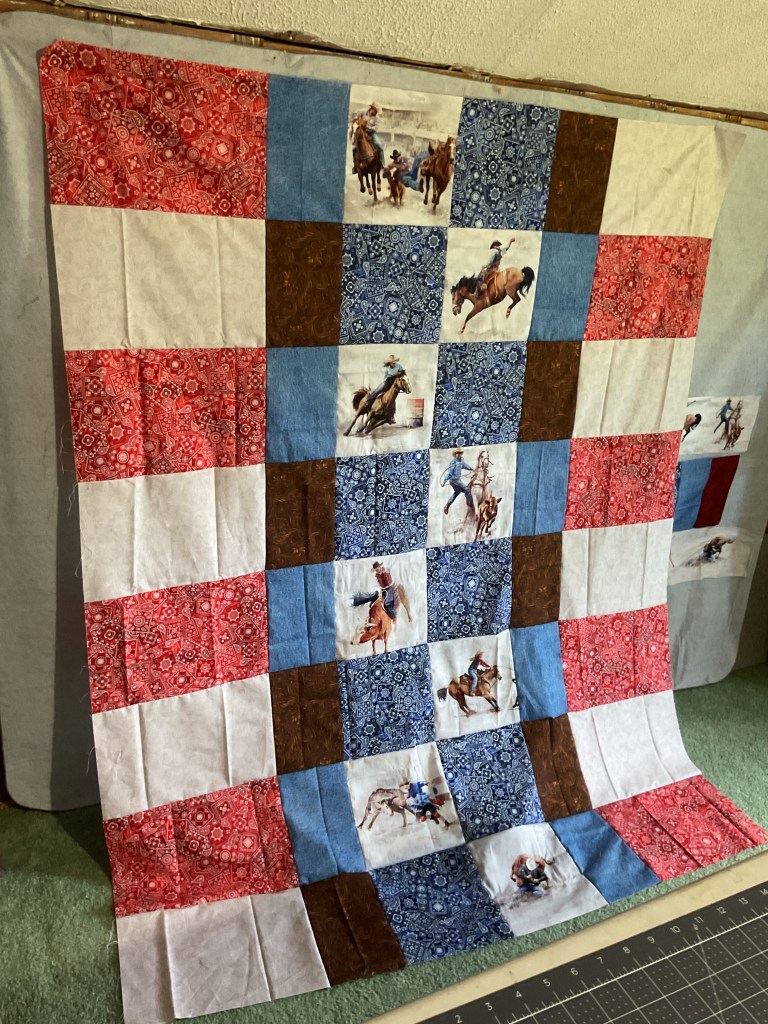
Yippee-ki-yi-yay! Let’s sew this little dogie together! I really like how the fabrics alternate in placement from side to side – it definitely helps to keep your eyes moving around the quilt. The red and blue bandana fabrics really make this quilt in addition to the rodeo vignette squares. LOVE IT!

A quilt with alternating squares of red, white, blue, and brown fabric, featuring images of rodeo scenes.

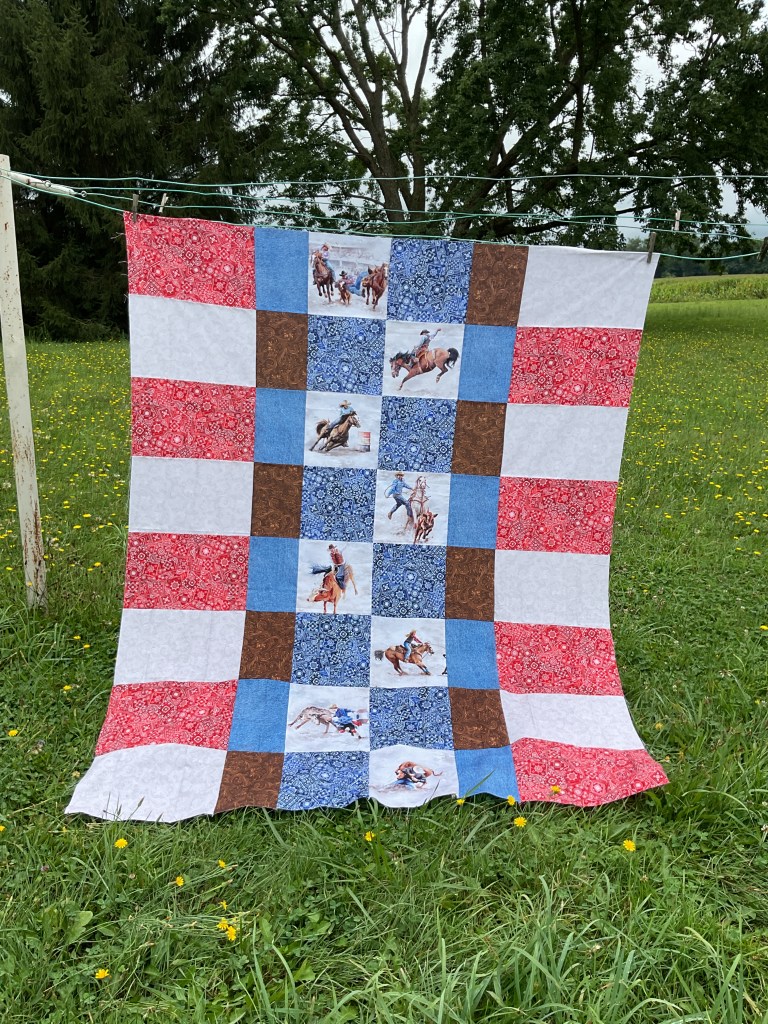
And here it is outside on the clothesline. All I need is a horse or 2 grazing in the backyard, right? I’ll be binding this quilt with the dark blue batik you see in the fabric and pattern photo way up at the beginning of this tutorial. I think it will frame the quilt nicely.

A colorful quilt with red, blue, brown, and white squares, featuring rodeo-themed prints, hanging on a clothesline in a grassy field.

Now to get this quilt top layered, quilted, bound, and labeled…….some day, anyway. Right now I’m going to add it to my teetering pile of flimsies and UFOs. I’m hoping to make a good-sized dent in that pile this fall and winter. It’s just been way too hot this summer to machine quilt and do binding.

Here’s to autumn with its warm days and cool nights. And the brilliant colors of the season…. I can’t wait!

See you next week for another great tutorial!

Until then –

Always,

Tricia @ VRD
Quilting Partners · Rose Cards · Tutorials · villa rosa designs

VRD 2M Junior Quilt Tutorial Featuring Pat Fryer’s New Fabric Collection, Bedazzled!

Happy Thursday to you!

It’s OFFICIAL! Throw the confetti! Toot your party horns! YEAH!

Pat’s NEW fabric collection for Riley Blake Designs, BEDAZZLED!, is finally here and we are all SEW excited!

To celebrate Pat’s new fabric collection, I’m sharing another great tutorial with you this week – 2M Junior.

Next week, we’ll dive right back into the Free Motion Quilting Series, I promise.

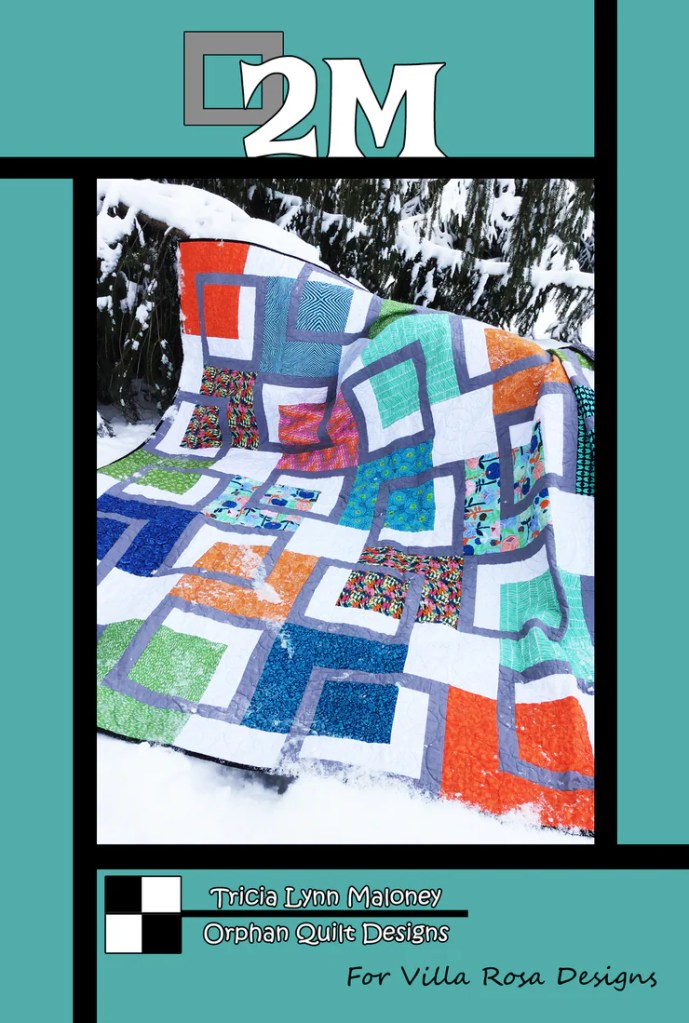
2M Junior is the little brother of 2M. Junior has the same block, only it’s a bit smaller so the quilt finishes as a throw quilt instead of a big bed-sized quilt like big brother 2M. It also uses a different block configuration, which gives it its own personality.

For the pattern cover quilt, I actually used samples of Bedazzled! and, boy, does it sparkle. And I mean that both figuratively and literally – don’t forget that Bedazzled! features glitter and glam. OHHHHH, SHINY!

Here’s another photo I took of 2M Junior.

Get your digital Junior HERE or print Junior HERE

I’m happy to say we have some kits made up for 2M Junior featuring Bedazzled! You can get your Bedazzled! 2M Junior kit HERE.

OH! I can’t forget big brother 2M, can I?

You may already know the story, but let me share it again. I designed 2M for my youngest niece, Morgan, as her high school graduation quilt. She asked for something modern. Yes, she loved it (and still does).

You can get your digital 2M pattern HERE or your print 2M pattern HERE

If you enjoyed the Baby Zip Tease tutorial last week also featuring Pat’s Bedazzled! collection, we now have kits for it, too. You can get your Baby Zip Tease kit HERE.

All right, back to our previously scheduled programming….2M Junior. Tehehe….

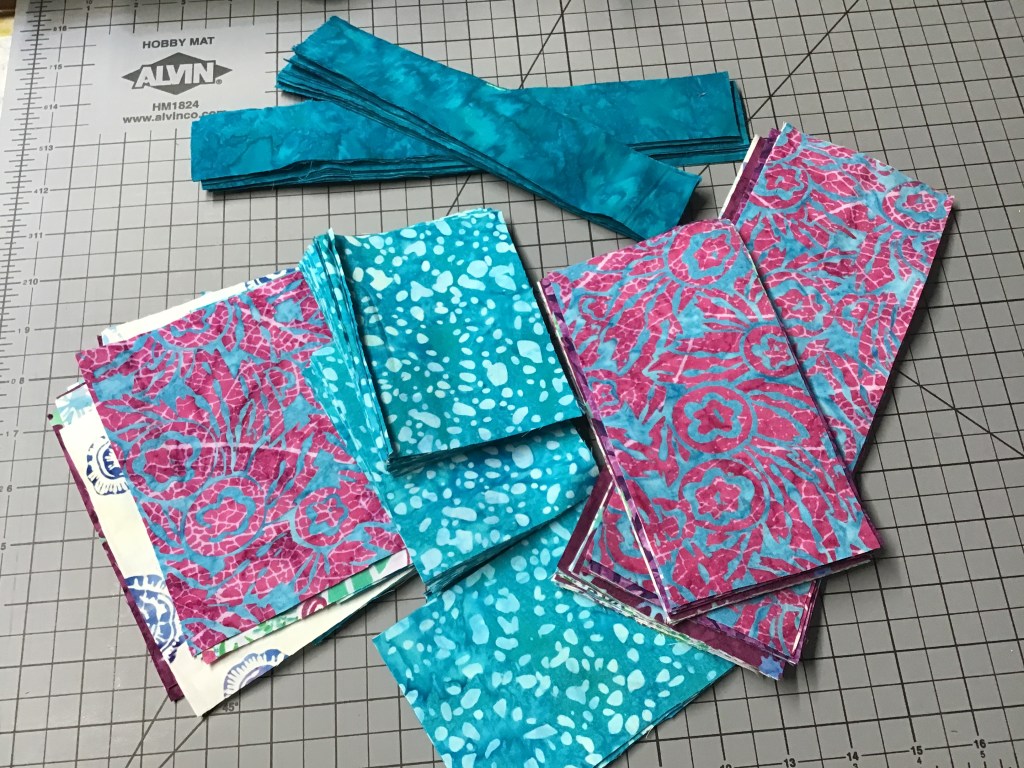
First thing we always do is gather up our fabrics for the project. The 2 teal batiks are from Riley Blake’s Expressions basics. And the fat quarters are, of course, from Pat’s Bedazzled! collection. Simply scrumptious, aren’t they???

Once I’ve gathered up my fabrics, I like to cut all the pieces out for the quilt before I begin sewing. Do you do that or do you cut your pieces as you go?

Okay, now we’re ready to sew!

Let’s add a background rectangle to the left side of a block center.

Next we need to sew a background rectangle to the top of the unit.

Then we’re going to sew accent strips to the sides and then to the top and bottom of the unit.

Now we are going to sew a background rectangle to the smaller block center rectangle and sew it to the bottom of the unit.

The next step is to sew another background rectangle to the longer block center rectangle and then sew it to the right side of the block. Our first block is done!

Easy Piezy, right? Now repeat to make the rest of the quilt blocks.

We’re going to lay out the blocks and move them around until we’re happy with how things look.

Warning – sometimes this step takes longer than actually making the quilt top (especially if it’s a VRD Rose Card pattern – they’re fast and fun, you know!). Yikes!

Okay, I like how the fabrics are distributed around the quilt now, so I’m going with this arrangement. Don’t you just love how the squares and boxes tumble down the quilt?

Hurry! Let’s sew the blocks together and then sew the rows together before any furry helpers make an appearance and rearrange the blocks when I blink.

And – guess what????? No borders on this one! Yippee!

It is my humble opinion that not all quilts need borders. What are your thoughts on borders?

Here’s another photo of the 2M Junior quilt top. Yummy, yummy, yummy!

Now the top is finished, it’s time to layer it with batting and backing (or fleece for a cozy back). Quilt it. And please, don’t forget your quilt label! DONE!

Need a little help with batting, backing, and layering everything together? VRD to the rescue! Check out this post from our Basic Quilting Skills for Beginners series, Basic Quilting Skills for Beginners: Batting, Backing, and Preparing a Quilt for Quilting. You can find all the lessons in the Beginner series over to the right of the blog, under the Blog Topics Heading or down further as a heading with the lessons listed below.

Once everything is layered together, then it’s time to quilt! Yay! And we are right in the middle of a new series for 2025 — Free Motion Quilting. Lucky You!

We interrupted the series for a couple weeks to celebrate Pat’s new collection with a few new tutorials, but next week, we’ll be moving on to Lesson 3 in the FMQ series.

If you missed the first couple FMQ lessons, you can find them below:

Lesson 1

Lesson 2

You can also find the different series we’ve done over on the right side of the blog, farther down, each under its own heading. Have fun checking them out!

Since last week’s post, we’ve added some more fun Bedazzled stuff to the shop (physical and online). Here’s the 411 –

Fat Quarter and Half Yard Bundles!

This group of 9 is called Lilac Mint

9 Fat Quarters HERE or 9 Half Yards HERE

This group of 8 is called Prismatic Bliss

8 fat quarters HERE or 8 half yards HERE

This group of 9 is called Stardust Splash

9 fat quarters HERE or 9 half yards HERE

BUT WAIT! There’s MORE!

We do have a few more kits available besides 2M Junior and Baby Zip Tease.

San Julian (light) kit HERE

San Julian (black) kit HERE

And here’s the San Julian Rose Card pattern. Please note that the pattern comes in each kit, so you don’t need to order it separately. I’m adding the links below, though, in case someone needs it by itself.

Get your digital San Julian pattern HERE or your print San Julian pattern HERE

You can find all the precuts, yardage, fat quarter bundles, kits, and the exclusive Bedazzled! Rose Card storage tin HERE.

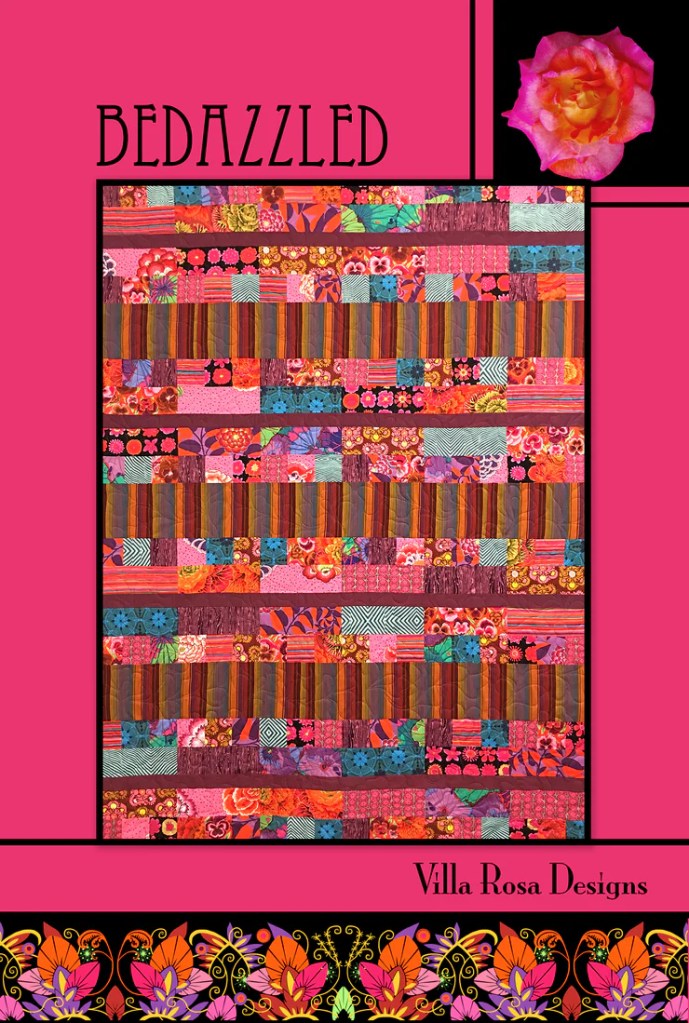
And this is the Bedazzled Rose Card pattern that inspired the whole Bedazzled! collection.

Get the digital Bedazzled pattern HERE or the print Bedazzled pattern HERE

Whew! That was a lot today, wasn’t it? Thanks for celebrating Pat’s new fabric collection, Bedazzled!, with us here on the blog. I can’t wait to see your new Bedazzled! quilts on the VRD Facebook page soon.

Well, that’s it for me today. Remember, next week we’re jumping back into our Free Motion Quilting series.

Until then –

Always,

Tricia @ VRD

Quilting Partners · Rose Cards · Tutorials · villa rosa designs

Pat’s VRD Bedazzled Fabric Collection for Riley Blake Designs is HERE and VRD Baby Zip Tease Quilt Tutorial

Happy Thursday to you!

Yay! Yay! Yay!

Pat’s new fabric collection for Riley Blake Designs, BEDAZZLED!, is finally here!!!

I’m so sorry, but I have to pause our new Free Motion Quilting series so I can celebrate Pat’s new collection. I promise to continue our FMQ series in a couple weeks because I have 2 new tutorials to share, featuring Pat’s Bedazzled! collection.

Here she is – Pat Fryer, owner and Rose Queen of Villa Rosa Designs and designer for Riley Blake Designs

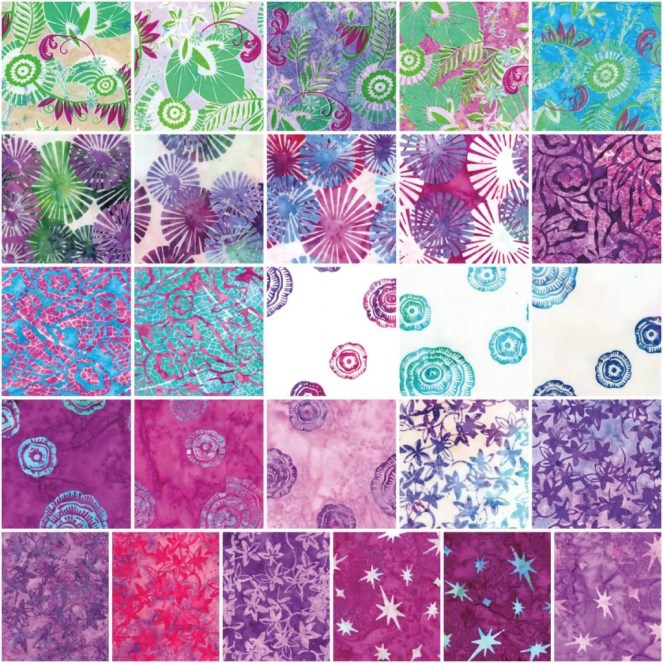
A yummy color-drenched batik collection with glitter accents because one can never have enough glitter!

Get the 5″ Stacker HERE

Get the 10″ Stacker HERE

Get the 2.5″ Rolie Polie HERE

Or you can find the Bedazzled fabric by the yard HERE

Although they aren’t ready yet, soon we will have kits for Baby Zip Tease in Bedazzled!, so check back soon. I’ll add the link HERE just as soon as it’s available.

BUT WAIT! There’s MORE!

There is one more piece to the collection – a one of a kind Bedazzled tin just the right size to store your VRD patterns! I’m not sure how many patterns it holds yet because I haven’t received my tin yet, but I’ll be sure to let you know when I find out. There’s no question about how to store your VRD Rose Card patterns now. Get yours ASAP, because I know they’ll sell out quickly.

Get the Bedazzled tin HERE

To celebrate Pat’s new fabric collection, here is the 1st of 2 new tutorials just for you!

Baby Zip Tease is a really fun and fast pattern that finishes 36″ x 38″, which is a nice size for a wall quilt or a baby quilt.

Get Baby Zip Tease digital HERE or print HERE

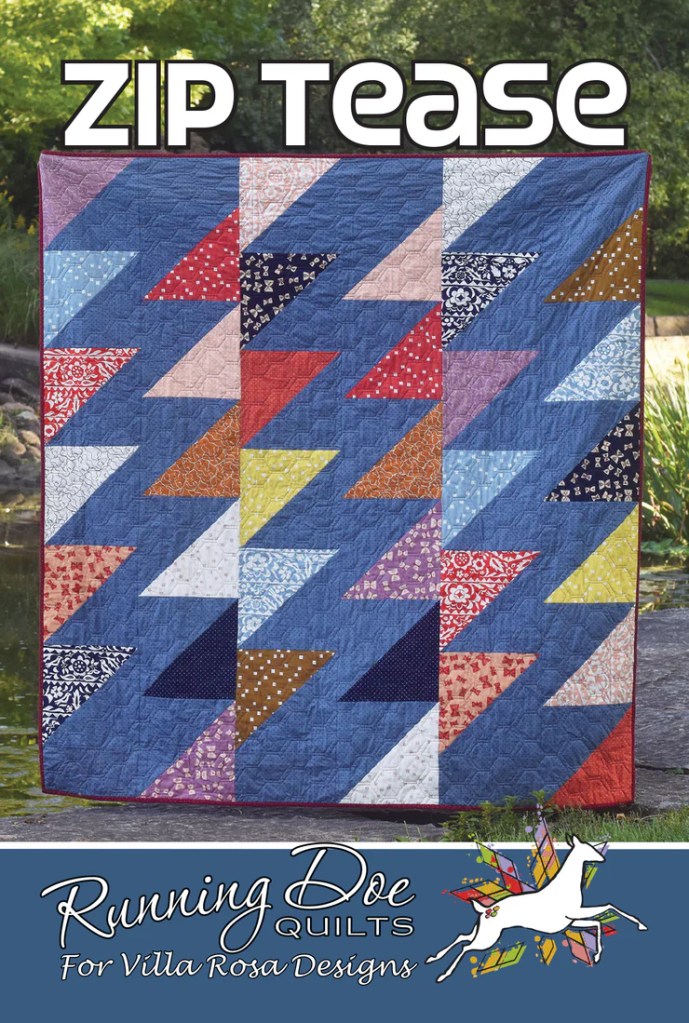
PSST! If you like Baby Zip Tease, you’ll love Zip Tease, which is a throw-sized version.

Get Zip Tease digital HERE or print HERE

I was at my pal, Robin’s house (Hi Robin!) the day I created this tutorial. We have sew days as frequently as we can. Robin has a lovely sewing room upstairs in her farmhouse with room for at least 2 people to sew.

In fact, I leave one of my sewing machines there all the time so I don’t have to drag one back and forth. Her husband, Rich (Hey Rich!), threatens to charge me rent. LOL!

Robin and her big kitty boy, Tigger. Tigger has a very important job — to hold down any project Robin tries to work on! LOL! Anyone else have one of these special furry helpers?

So let’s get started with our Baby Zip Tease tutorial!

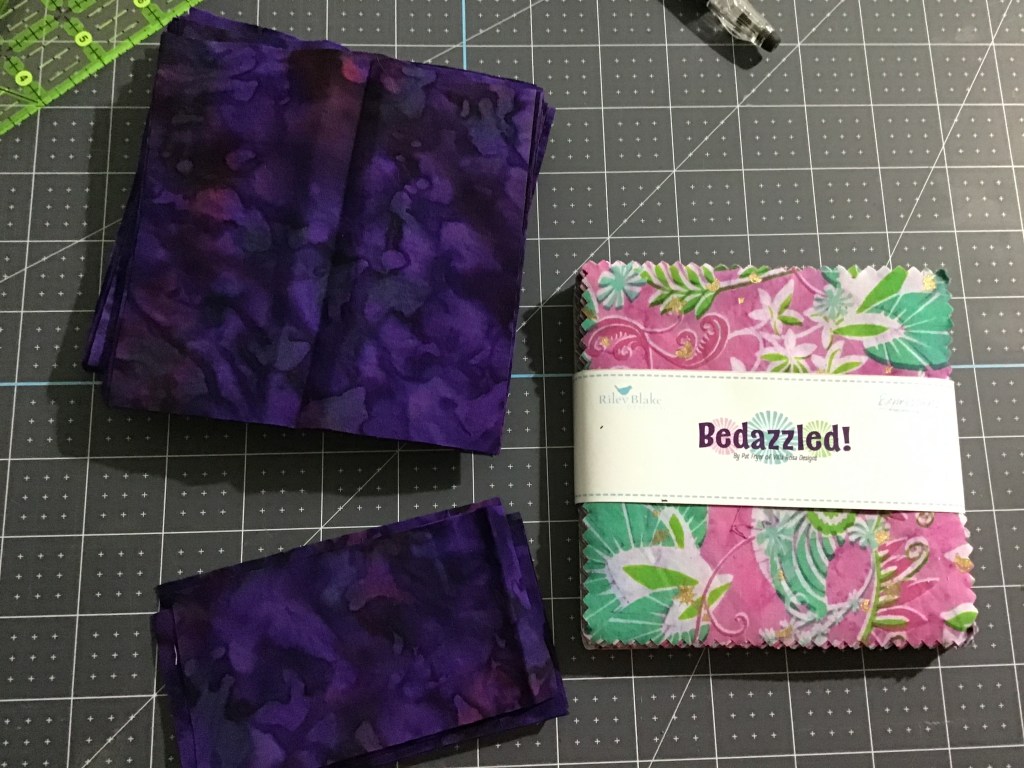
Of course, the first thing we need to do is gather up our fabrics and cut what we need for the project. I’m using a 5″ stacker from Pat’s new Bedazzled! collection and a yummy Riley Blake Designs Expressions Batik basic.

Let’s make some Half Square Triangles (HSTs).

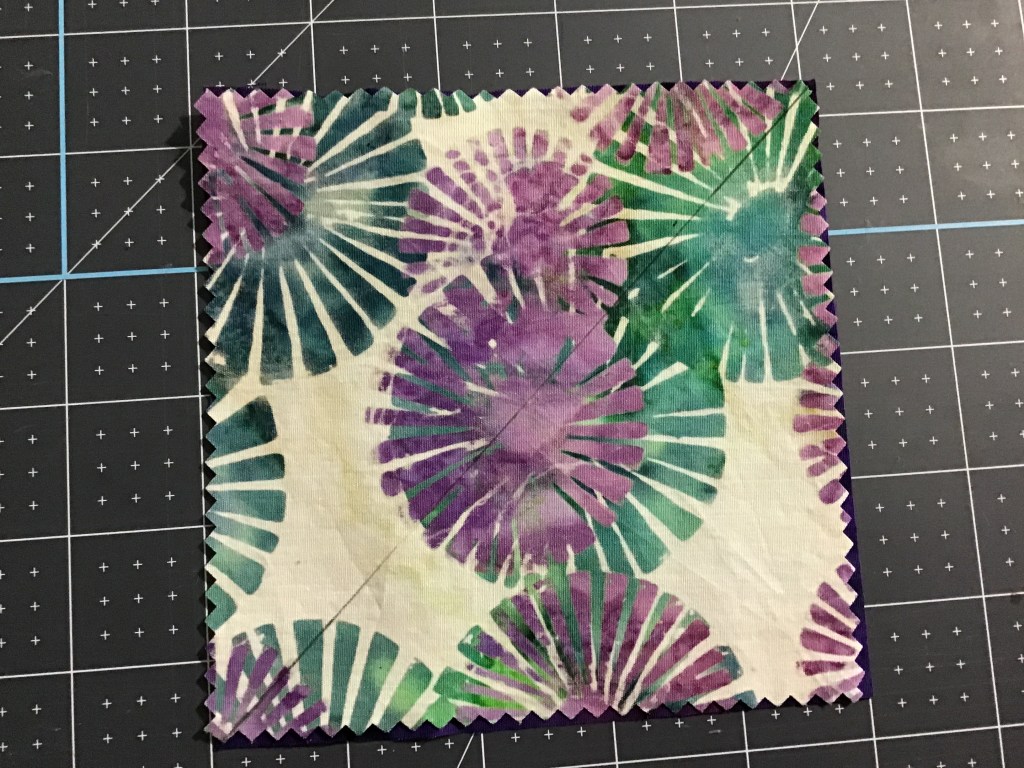
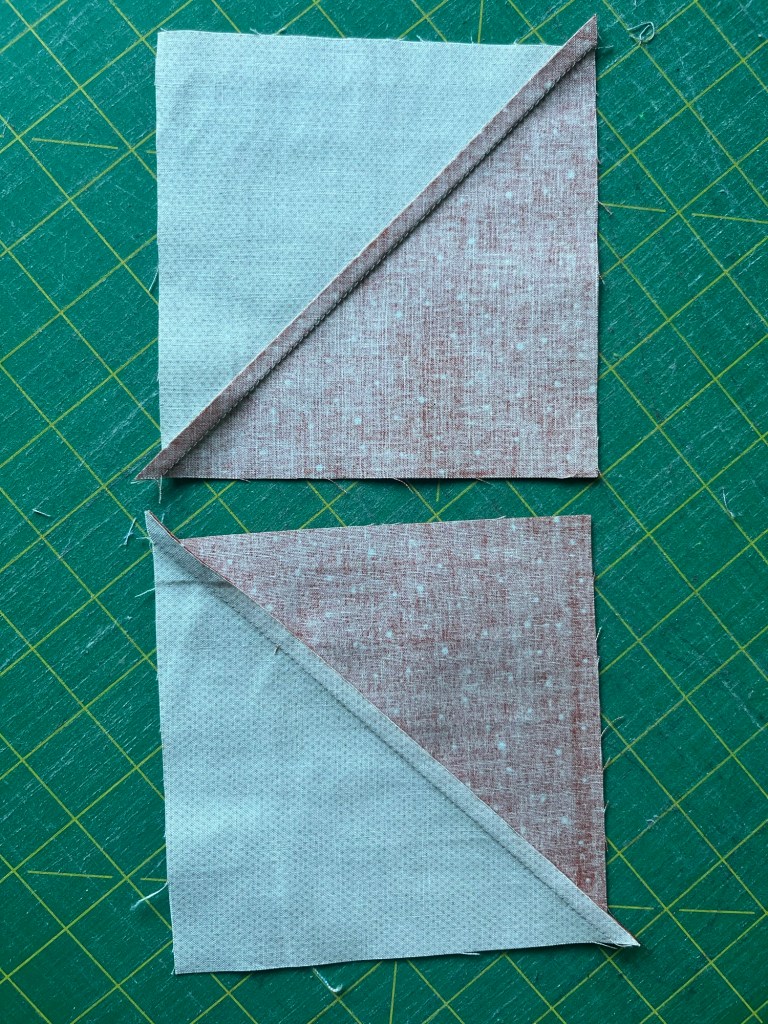
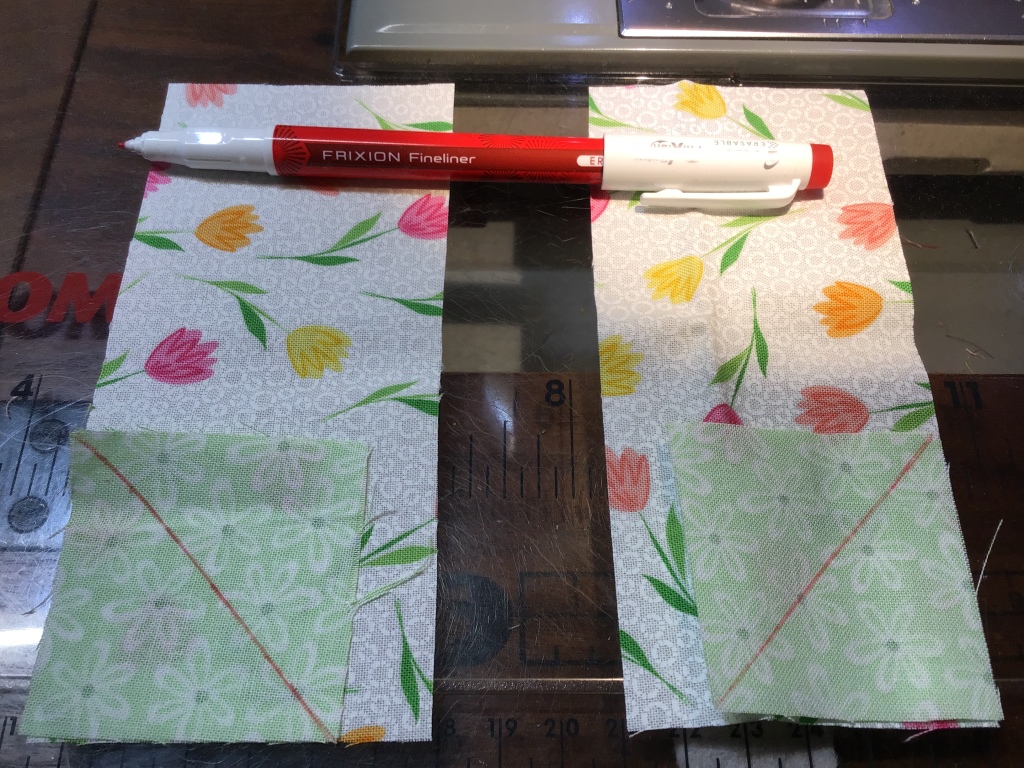
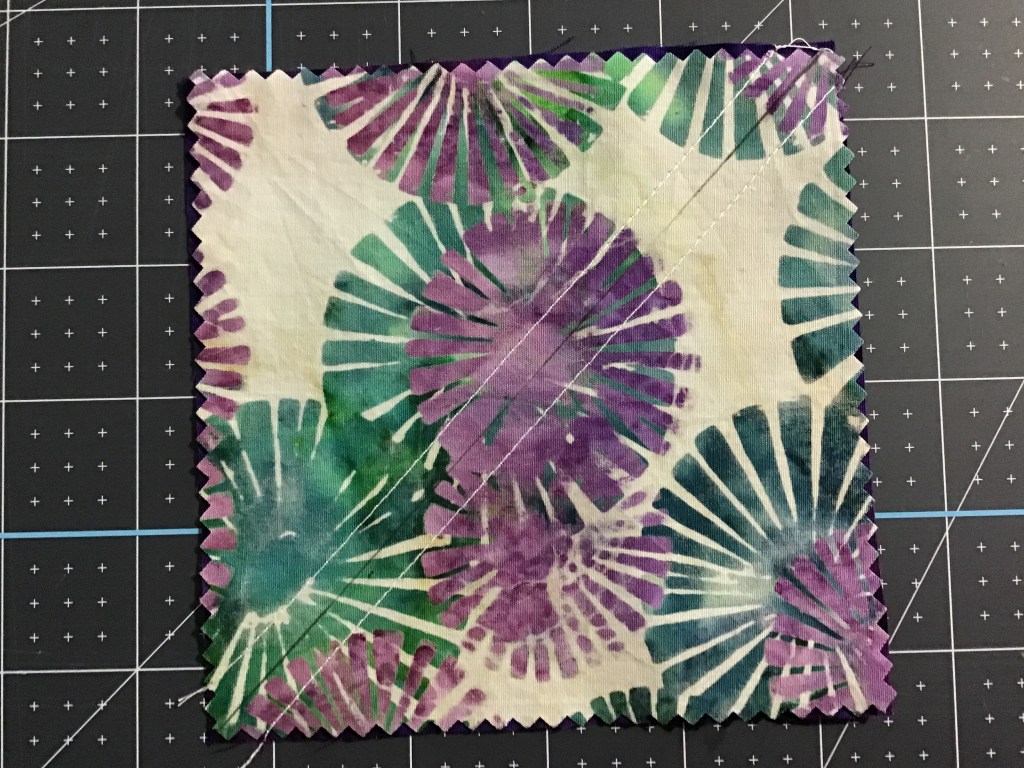
Photo 1: Layer a print square right sides together (RST) with a background square. Draw a diagonal line from one corner to the opposite corner.

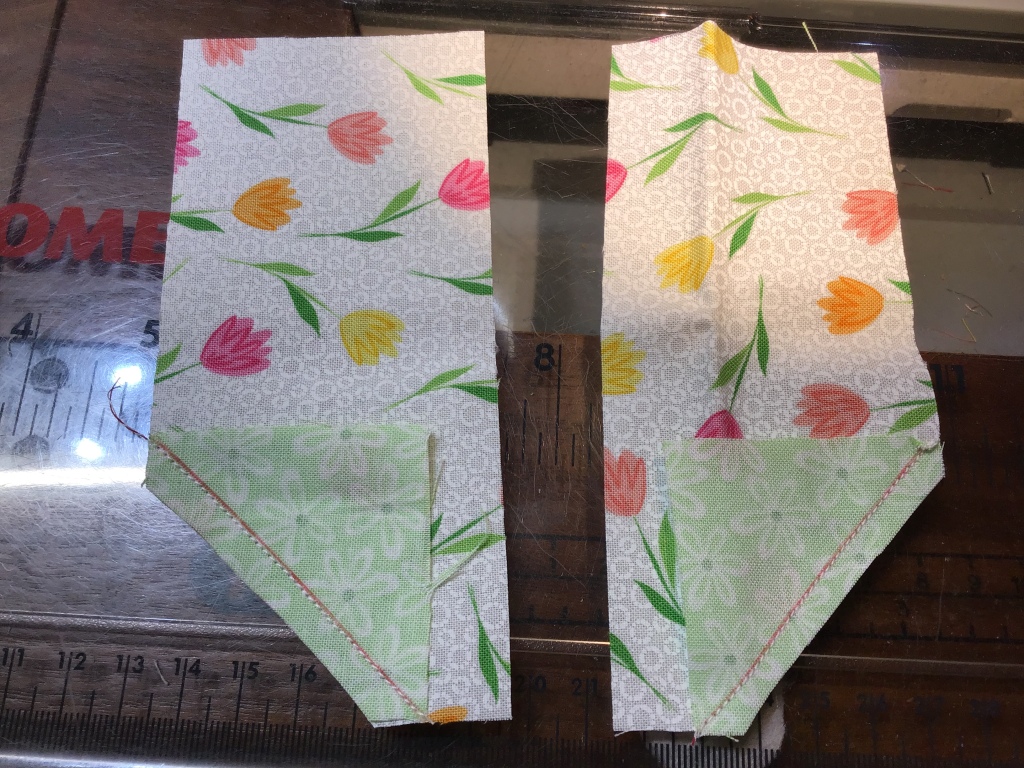
Photo 2 and 3: Sew 1/4″ away from both sides of the line.

Photo 4: Cut apart on the drawn line.

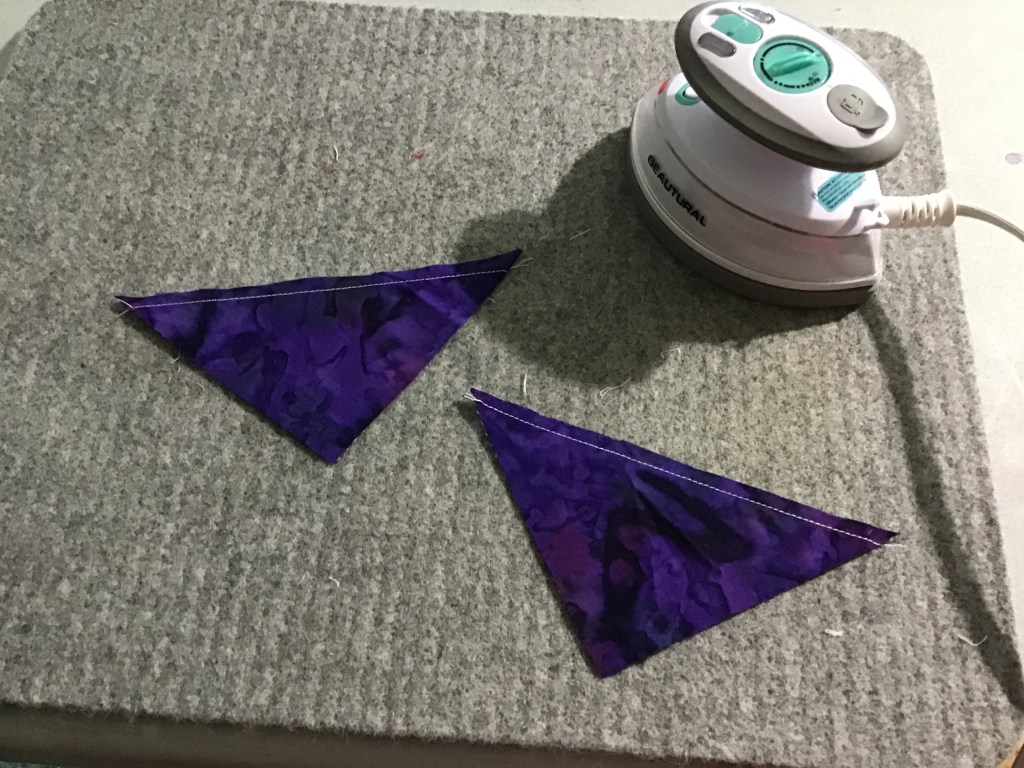
Photo 5 and 6: Press open to make 2 HSTs.

Don’t stop now, go ahead and make the rest of the HSTs .

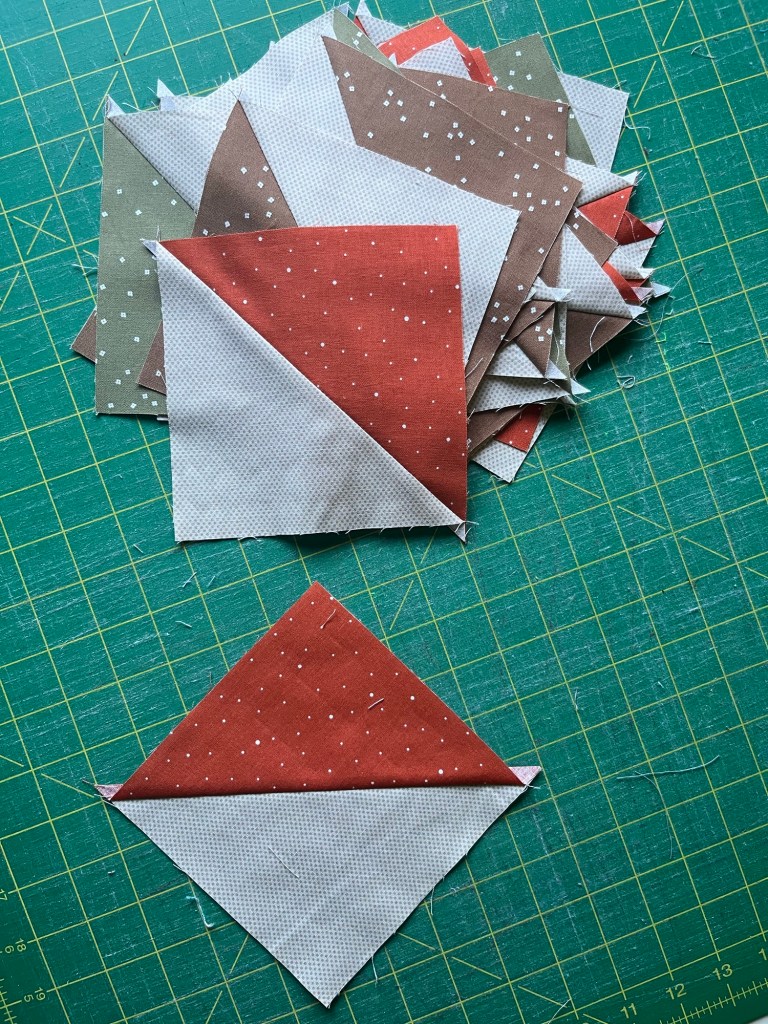
Square up and trim your HSTs. Cut off all the little “dog ears.”

At this point, you can sew your HSTs into rows and then sew the rows together. But where’s the fun in that???

I wanted to make sure the colors and fabrics were spread evenly throughout the quilt, so I put the HSTs up on Robin’s flannel wall and spent some time moving HSTs around to distribute colors and patterns. Argh! Sometimes this part of the process takes the most time.

This was actually a very important step for me because I kept turning the HSTs the wrong way. This was certainly one quilt project that being left-handed made more difficult. Of course, Robin pretty much just laughed at me every time I had to rotate a block in 90 degree increments until I got it going the right way. SHEESH!

Once I was happy with how it looked, it was time to sew the HSTs into rows. Finally!

Sigh…….I can’t tell you how many times I ended up turning a block on my way to the sewing machine. Time to unsew…….

What’s your favorite seam ripper? Mine is the Clover Ergonomic Seam Ripper seen in the photo below, but have you seen Clover’s latest seam ripper?

I just ordered one and I’ll let you know what I think after I try it out. If it’s as good as the one I already have, I’ll probably love it. Just sayin’……

Got that flipped HSTs fixed and survived sewing the blocks into rows – barely! Now it’s time to sew the rows together.

I’m really liking the cool zig zag effect! Let’s keep sewing those rows together! We are making progress!

YAY! Quilt top finished! Woohoo!

Now you get a chance to see how the fabrics of Bedazzled! play together. Aren’t they really great with the dramatic purple background fabric?

Next week I’ll have another Bedazzled quilt tutorial for you. The week after that we’ll continue on with our FMQ series. So please stay tuned!

Be sure to tune into our Fry-Day Live Sale tomorrow for more information and a closer look at the Bedazzled collection. You can find the Live Sale HERE on Fry-Day from 7-8 PM EST. You can also find the Live Sale on Facebook HERE.

See you there!

Until next week –

Always,

Tricia @ VRD

Guest Bloggers · Rose Cards · Tips and Tricks · Tutorials · villa rosa designs

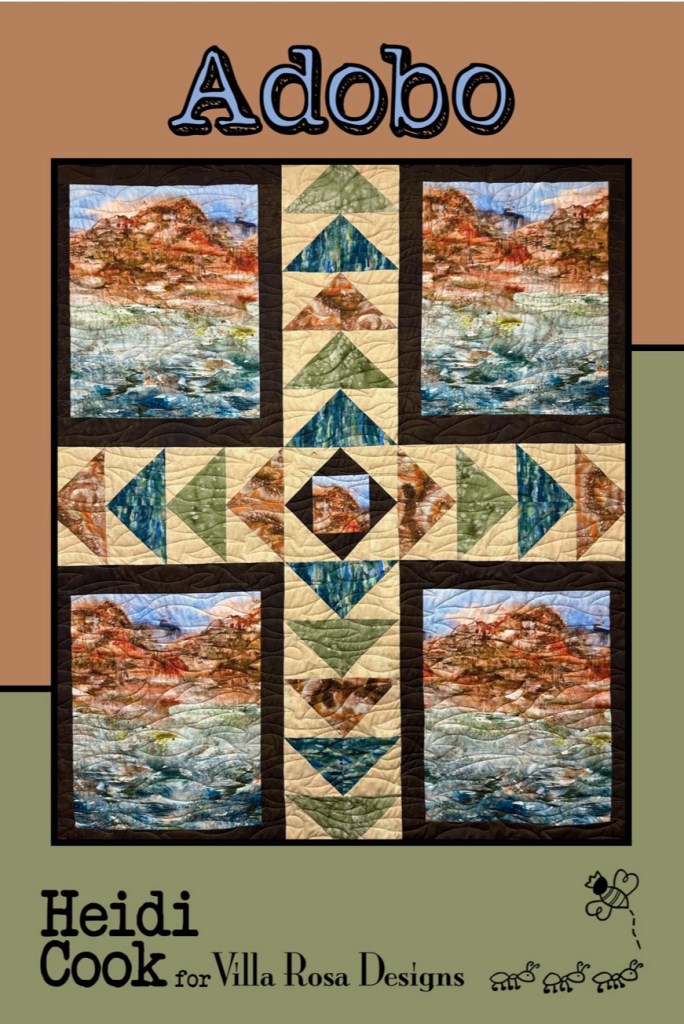
VRD Adobo Quilt Tutorial and NEW VRD January Rose Card Quilt Patterns

Happy Thursday!

Hi guys! Psst! It’s me, Molly!

It’s been a long time since I jumped on here for a tutorial, but I finally got this one put together just for you!

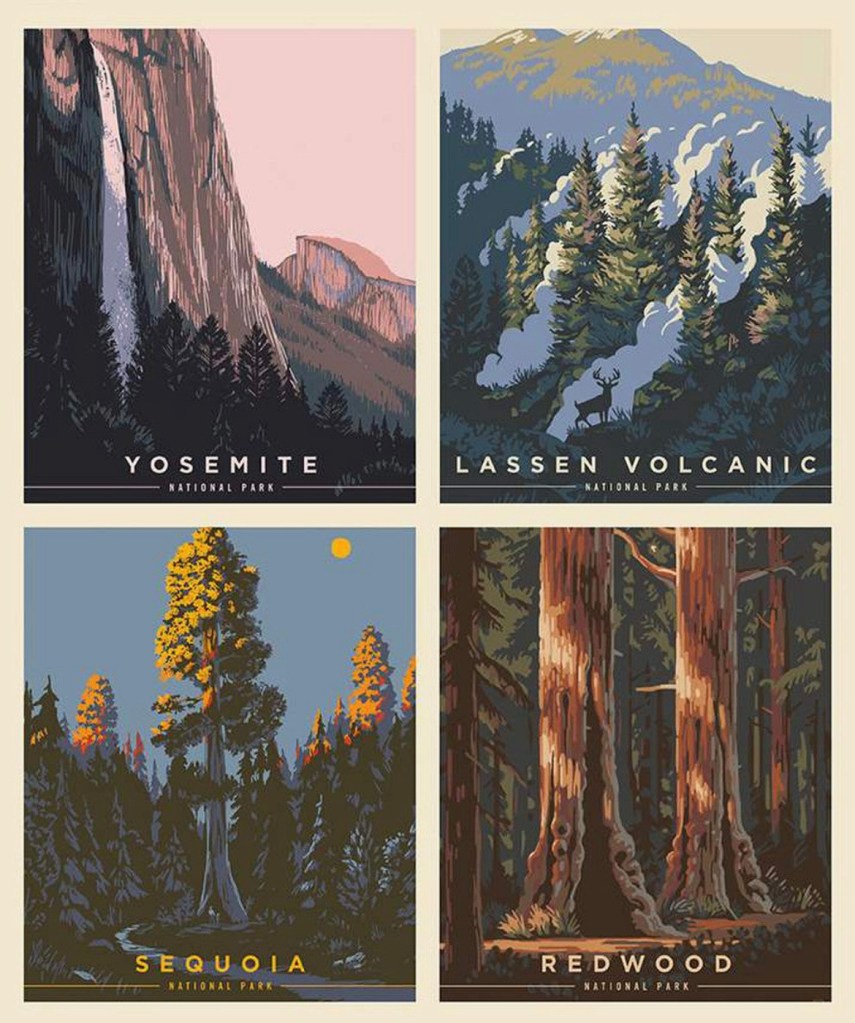
I was looking at some panels in the shop recently (to see my tour of the VRD shop, go HERE) to sew up into a quilt. I was SEW inspired by the National Parks panels and I LOVE that there are a couple of different choices. Have you seen these yet???
You can find the Utah panel HERE and the California panel HERE.

We also have some awesome Rose Card patterns to showcase these great panels!

Both are fun and amazing patterns — of course, I might be a little biased, since one is my sister’s pattern and the other one is mine. LOL! 😁

If you don’t already have these great patterns in your stash, you can find digital Picture Perfect HERE, digital Adobo HERE, print Picture Perfect HERE, and print Adobo HERE.

For today’s tutorial, though, I’m going to do Heidi’s pattern Adobo because I really want to use the Riley Blake Utah panel.

GUESS WHAT????

You can sew along with me! We made up kits for today’s tutorial. Go grab your Utah Adobo kit HERE and we can sew together! How cool is that?

Your Adobo kit will include all the fabric for the top and binding as well as the pattern.

I wanted to make this Adobo quilt in all Riley Blake Designs (RBD) so I found some RBD fabrics that pulled out the colors from the panel — Poparazzi sand for the background, Poparazzi brown for the sashing, with Dapple orange, Blossom brown, and Blossom green for the Flying Geese.

Let’s get started!

Cut the squares from the background and the coordinates. Pair up each coordinate square to a background square.

Make Half Square Triangles (HSTs) by drawing a diagonal line then sewing 1/4” on either side. Cut apart and press open. Don’t forgot to square up your HSTs if needed.

Tip from Heidi (who’s keeping an eye on me as I work on this tutorial) – Press half the seams of each color HST to the background and the other half to the color.

Now sew 2 matching HSTs together to make a Flying Geese Block A. If you pressed half of the HSTs to the colored fabric and the other half to the background, use one of each to make a Flying Geese Block A. Like magic, the seams will lock together! Great tip, Heidi!

Next we need to create a Flying Geese block for the sashing center. We’re going to use a slightly different technique for this one.

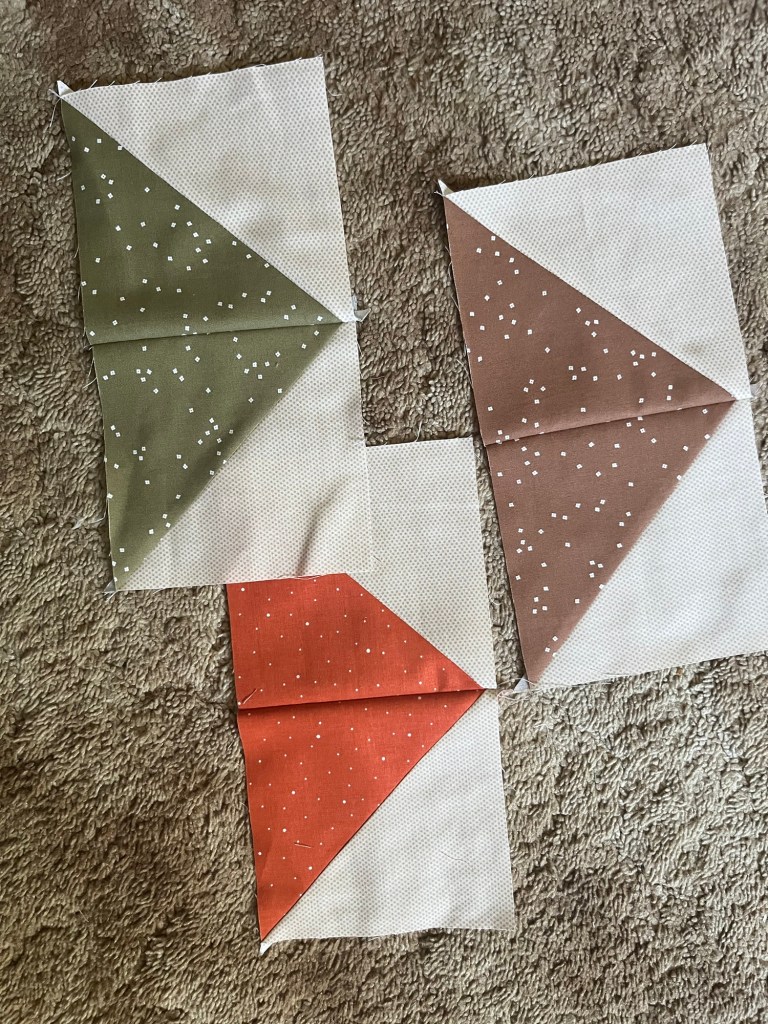
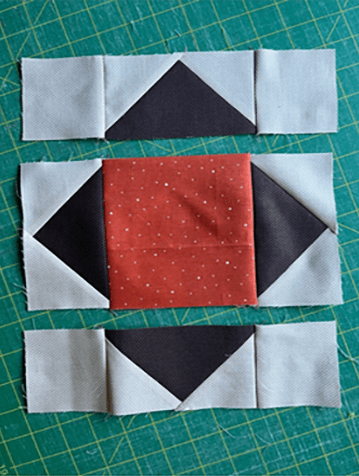
Layer a background square right sides together (RST) on the side of a rectangle sashing fabric. Draw a diagonal line from the bottom outside corner to the opposite top corner. Sew on the drawn line and cut 1/4″ away from the line. Repeat for the other side. Make 4 Flying Geese units.

Next sew background squares to the ends of 2 Flying Geese units.

Sew the 2 Flying Geese units to the sides of an orange square. Then sew the Flying Geese units with the background squares on the ends to the top and bottom. Make 1 Block B.

Molly’s Tip – If using your main print for the center square, cut it from the yardage after you cut your main print/panel C pieces.

Instead of using a main print, though, I’m using the Utah panels so we just need to cut them apart (make sure they are the right measurements – trim if needed).

If using a main fabric, cut the C pieces to the size listed on the pattern.

Next, cut the sashing and add them to sides first, then to the top and bottom. Make 4.

Lay out the main print/panel C pieces and the Flying Geese Block A’s so the Geese are flying away from the center. Sew together (please note that I added an extra background strip to the top and bottom of my quilt. Feel free to do the same, but you will need a little bit more background fabric).

Layer your quilt. Quilt it as desired. Bind it. And don’t forget your label!

TA DA! That’s it! Done! Eazy piezy!

I’m going to add one more little detail to my quilt — I’m going to embroider UTAH in the center square!

Here are some other fun Adobo quilts VRD has as kits. You can find them HERE.
Thanks for stopping by and sewing with me!

Now let’s check out the new January VRD Rose Card patterns!

I’m excited that I get to show the new patterns off today! Tricia usually does it, but today it’s my turn. Yay!

Here are the 5 main patterns.

Look! There are 2 panel quilt patterns this month – one using a 24″ panel and the other one uses a 36″ panel. Cool!

Rewey uses fat eighths, Pink Piece uses fat quarters, and Yorkshire uses half yards.

This set of patterns gives you a nice variety to add to your VRD Rose Card collection. You can get all 5 print patterns HERE (if you want digital patterns, you can order each pattern individually).
But wait — there’s more (Sorry, been wanting to say that)!

Tricia has a new table runner for you called Snowfall.

You can get the print Snowfall HERE or the digital Snowfall HERE.

And here’s our 11th Snack Mat, Woolly Mitten (just in case you’re keeping track, this is the next to the last one).

You can get the print Woolly Mitten Snack Mat HERE or the digital Woolly Mitten Snack Mat HERE.

We still have some kits available for this month’s patterns (if you know me, I’m all about kits). Get yours now before they’re gone cause they’re going fast.

Farm Fresh (with the Out of Farm’s Way collection)

Pink Peace (with the pink Tim Holtz fabrics)

Yorkshire (with the Elegance collection)

Yorkshire (with the Toil & Trouble Halloween collection)

Rewey (with Australian fabrics)

Well, that’s it from me. I can’t wait to see your Adobo quilts.

Until next time —

Later,

Molly

Quilting Partners · Rose Cards · Tutorials · villa rosa designs

Blog Hop Prizes Update and a VRD Bunny Ears Snack Mat Quilt Tutorial

Happy Thursday to you!

Another week has passed us by and the only things I’ve sewn recently are my samples for this Bunny Ears Snack Mat tutorial. LOL! I hope you had better luck this past week getting some sewing in. I keep gazing at my collection of VRD Rose Cards as well as petting my fabrics and my sewing machine looks lonely across from me as I write here at my desk, but I just can’t seem to find enough time to actually get something going on my machine. Somehow I need to find a pocket of time — maybe I should sleep less so I can quilt more. But, no, that won’t work for me these days as I really do need those 8 hours of sleep a night. Ho hum…..

I just wanted to let everyone know that we are still working on getting everything shipped to Blog Hop Prize Winners. So far the quilts have been shipped, digital pattern collection winners have received their patterns, and prizes graciously being shipped by our lovely sponsors should be in the mail. Physical pattern collections haven’t yet been shipped but should be going out in the next couple days. I have a stack of prizes that also need to get mailed as well as the Kaffe Collection and the Mystery Box.

You may be scratching your head, wondering why it’s taking us so long to get everything sorted out and to the winners. That, my friends, is a complicated topic:

  1. We had around 28 bloggers in addition to our own blog, which really makes 29. There were prize winners on ALL of the blog post. So that’s a lot of information to put together and organize! To make things even slower, we had some winners who never replied to their winner emails, so then we had to randomly select new winners and contact them to get their information. Egads! It literally took weeks to gets all the winners selected and confirmed. Really, I’m not kidding.
  2. Prizes are being shipped from multiple locations — the quilts were shipped from the VRD shop in CA, physical pattern collections will be shipped from our pattern shipping location in MO, digital pattern collections were emailed by moi here in PA, sponsors are shipping prizes from their warehouses and office locations all over the US, and I am shipping prizes and 2 of the Grand Prizes from my little studio here in PA.

It’s crazy when you think of the logistics involved in our Blog Hop — kind of like dancing Swan Lake en pointe while trying to juggle knifes — very sharp knifes!

Happily, we should have everything out in the mail very soon. Winners hare receiving their prizes. Please continue to be patient as we get everything on its way to you.

Now, how about a fun tutorial?

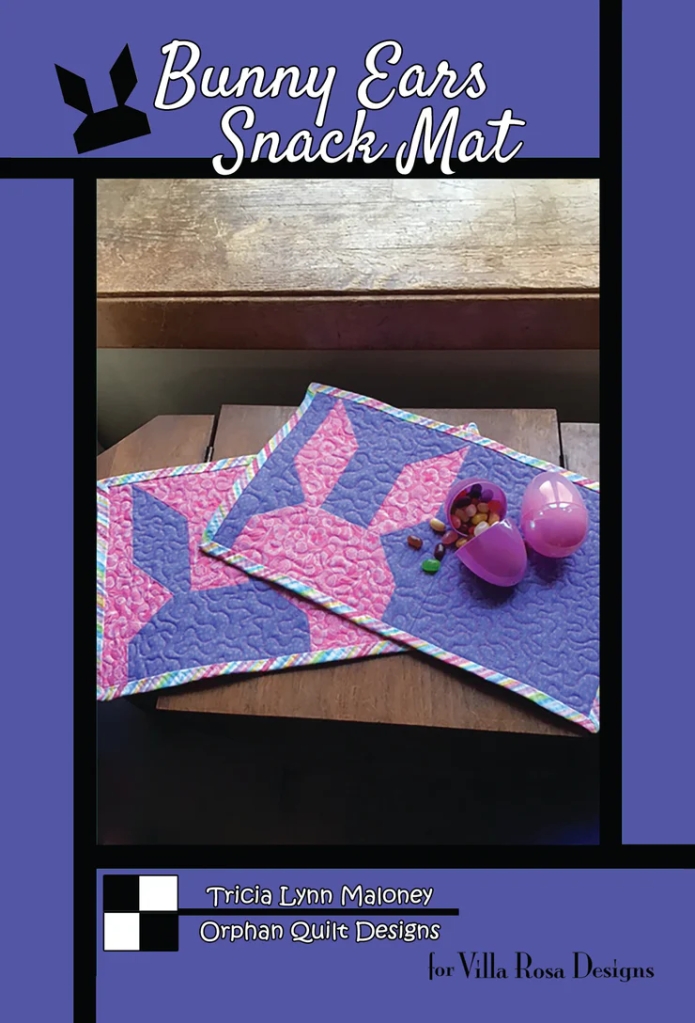
Nothing says spring like a pair of bouncy little bunnies with extra-long ears! But before I even begin the tutorial, I need to let you know there is an update on the cutting instructions for piece B — you should have enough fabric left over to cut the updated piece, though. Please check the Corrections Page HERE for the new cutting measurement for piece B. Yes, we do have a corrections section at the bottom of our website, villarosadesigns.com, so if you ever find something on a pattern that doesn’t quite look right to you, please check the corrections page for updates.

Get your own Bunny Ears Snack Mat Rose Card physical patterns HERE or digital patterns HERE.

All right! Let’s make some cute bunnies!

The first thing we need is 2 fat quarters. Yep, just 2 FQs makes 2 adorable little Bunny Ears Snack Mats.

I chose these bright and happy spring prints from Cherry Guidry’s Full Bloom collection for Benartex for my Snack Mats.

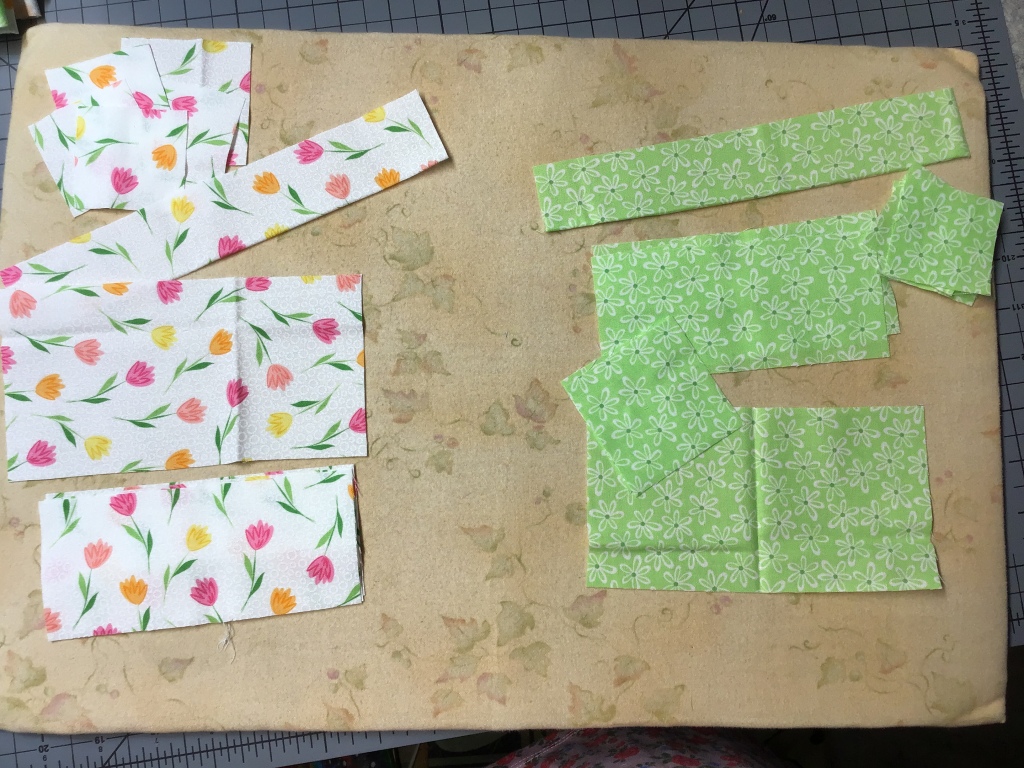
Time to cut all the pieces out — we’re actually doing the cutting for both Snack Mats at the same time. While I cut, I’m using my ancient homemade flannel board to keep my pieces from getting lost.

Did you miss my flannel board tutorial last week? You can find it HERE.

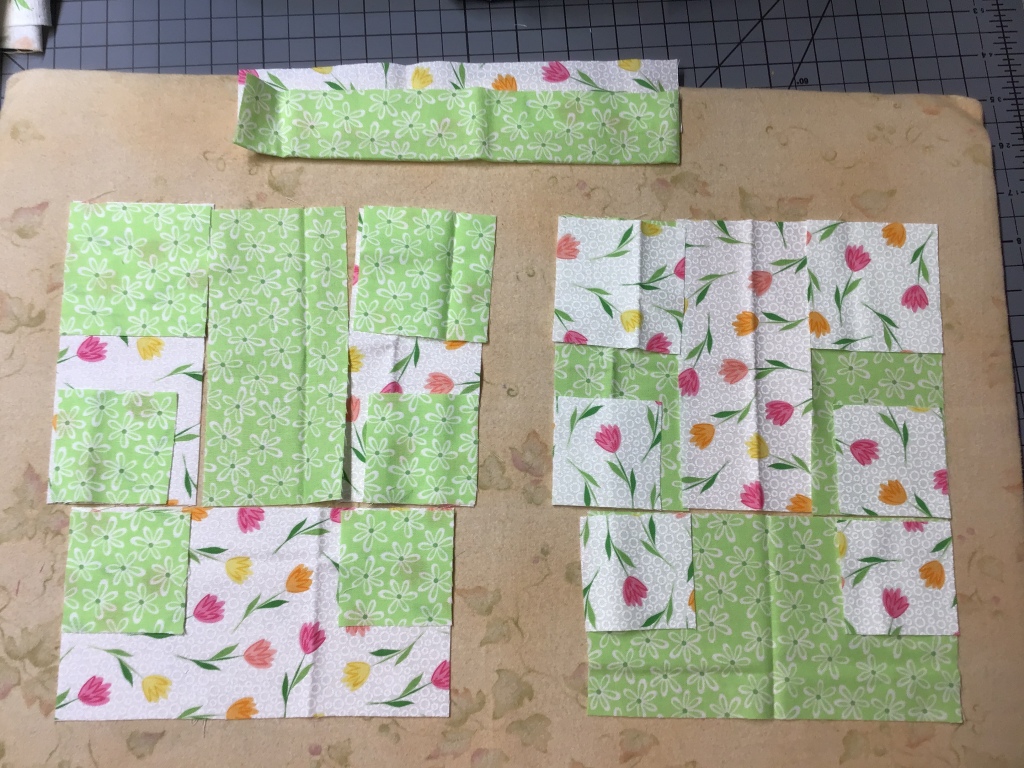
PSST! Don’t forget to switch your pieces before your start sewing so the bunny fabric in one block becomes the background in the other!

I know it doesn’t look like much yet, but here are my pieces all laid out for both blocks and ready to sew together. Having a small flannel board is great because I can just take it right to my sewing machine from my cutting table, without dropping or losing a thing.

As all the pieces are cut and ready to go, let’s start sewing these little Bunnies together!

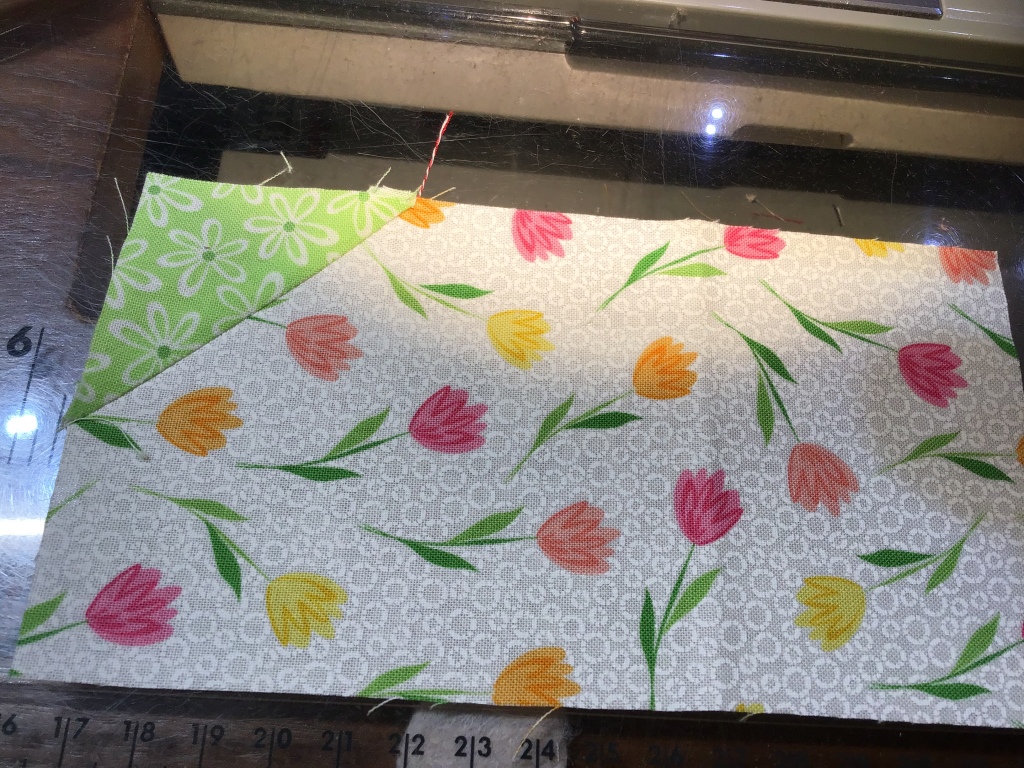
Place a background square right sides together on the top left corner of the Bunny Head rectangle. Draw a diagonal line and sew on the line. Then cut 1/4″ away from the sewn line and press the “flippy triangle” open. Yup, that’s what I call them — “flippy triangles” — you know, I only use the technical terms here on the blog. LOL!

To make thing easier later, press the seam towards the Bunny.

Sew “flippy corner” on the top right corner and press this seam towards the Bunny Head too. Repeat to make identical “flippy corners” on the second mat.

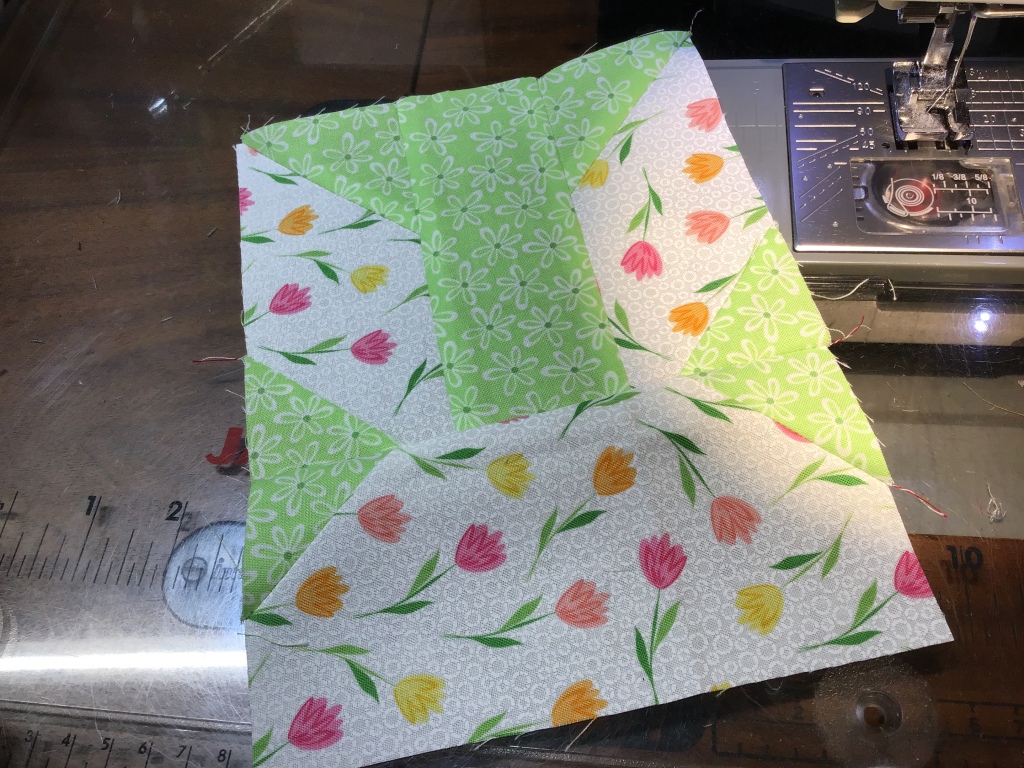
Voila! Now we have 2 cute little Bunny Heads (with a crazy mess for Ears right now)!

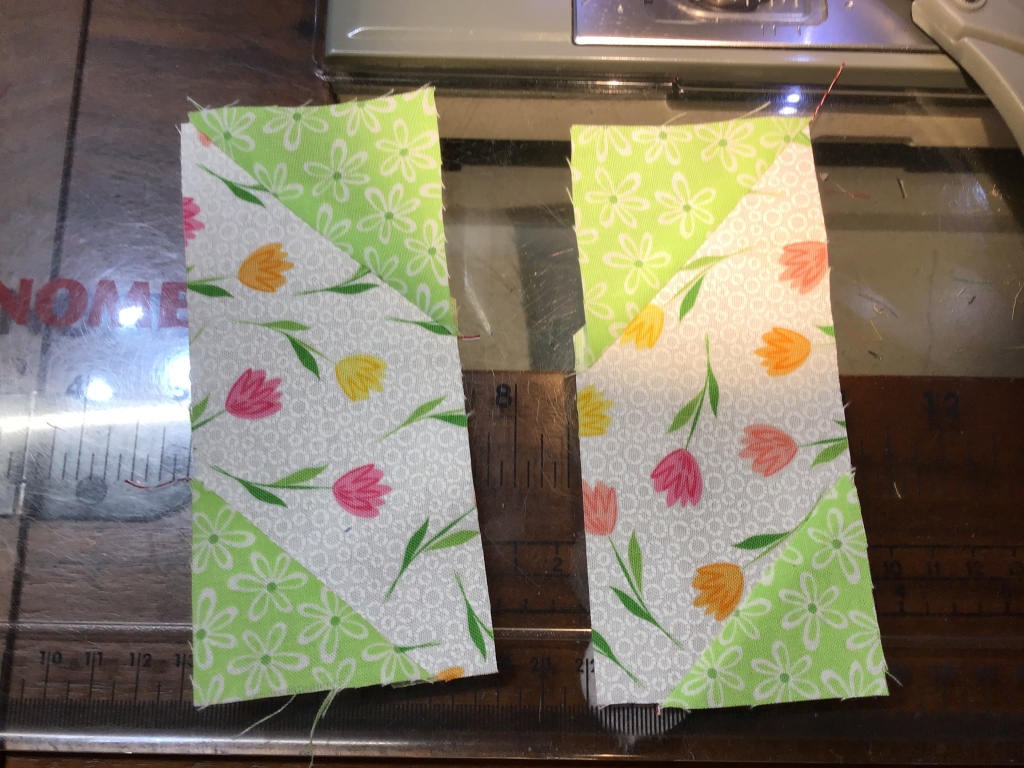
Speaking of Bunny Ears, let’s make some! Place the background squares right sides together with the Bunny Ear rectangles, lining up the outside edges at the bottom. Draw diagonal lines as shown — keep in mind you are making mirror images. Sew on the lines and cut 1/4″ away from the drawn lines. Open the “flippy corners” and press the seams towards the background fabric.

Our Bunny Ears aren’t quite finished yet because we have to add some top “flippy corners,” too. The background squares used for the top of the Ears are larger than the squares used at the bottom in the previous step so be careful not to get the top and bottom squares mixed up.

Again, we are making mirror images. Repeat this step for the second block as well. Press the seams toward the background fabric.

We now have Bunny Ears! Yay!

Next, sew the background strip between the Bunny Ears and press the seams towards the center background strip. Repeat for the second block.

Almost there, just a few more steps!

Now sew the Ear section to the top of the Bunny Head for both blocks. If you pressed the “flippy corners” towards the Bunny Head in the first step, above, then your corners should nestle together nicely.

Ladies and Gents, we now have a Bunny, or rather 2 Bunnies!

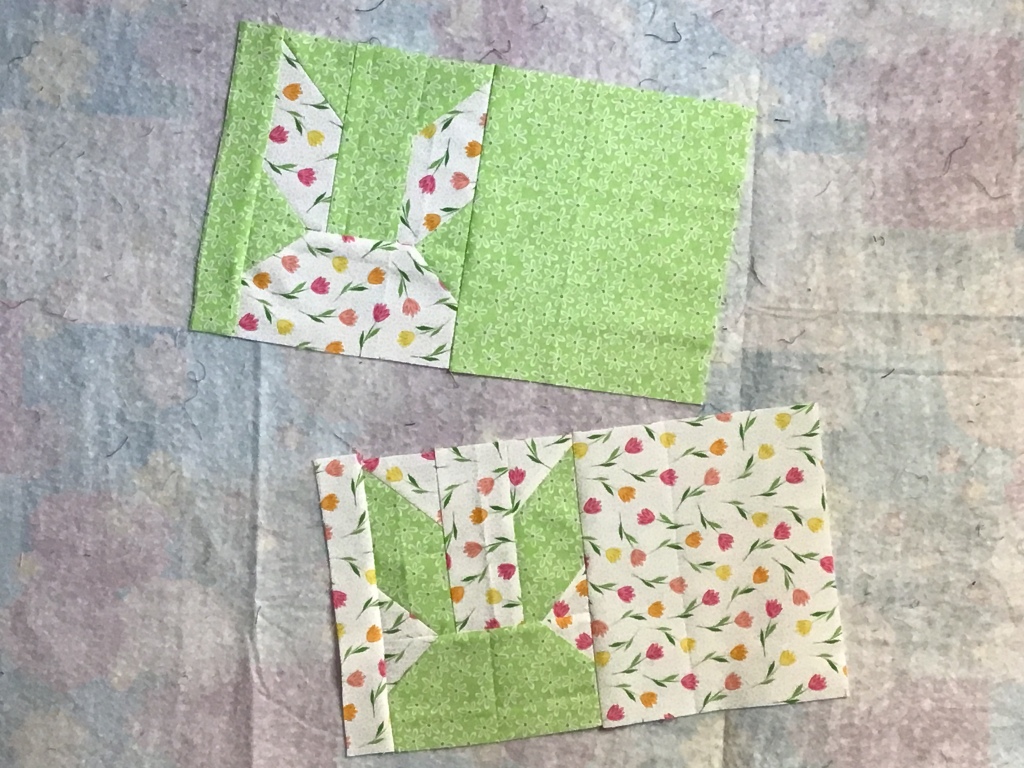
Do you see how the green stands out and the floral fabric recedes? Aren’t fabrics so much fun to play with???

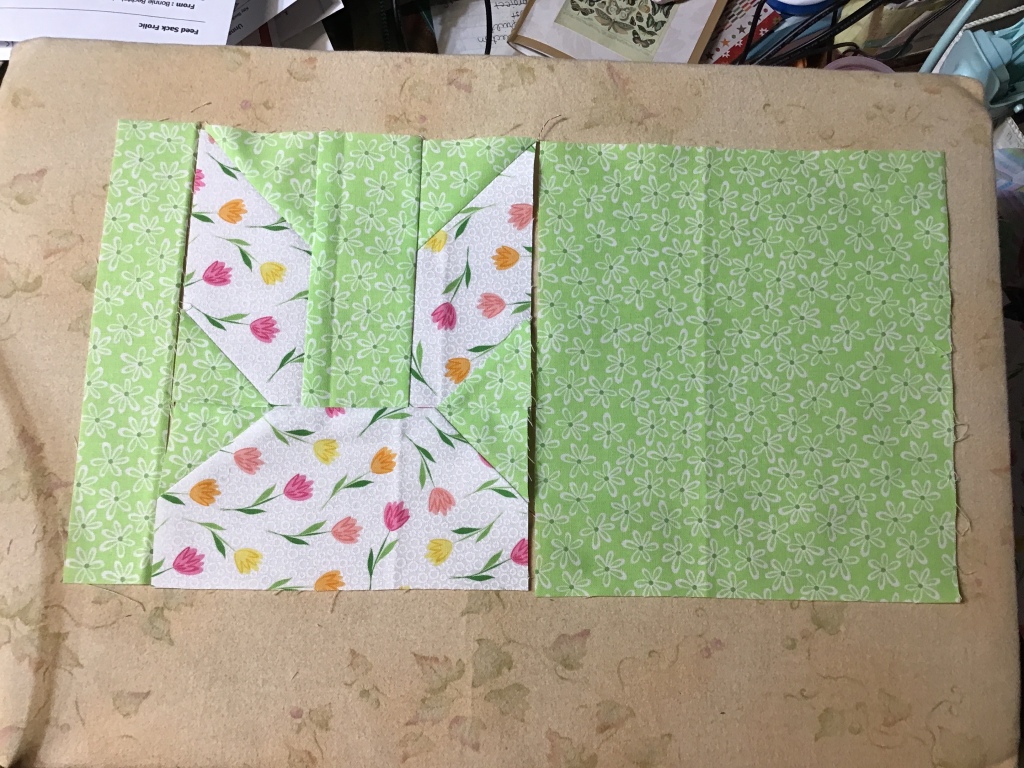
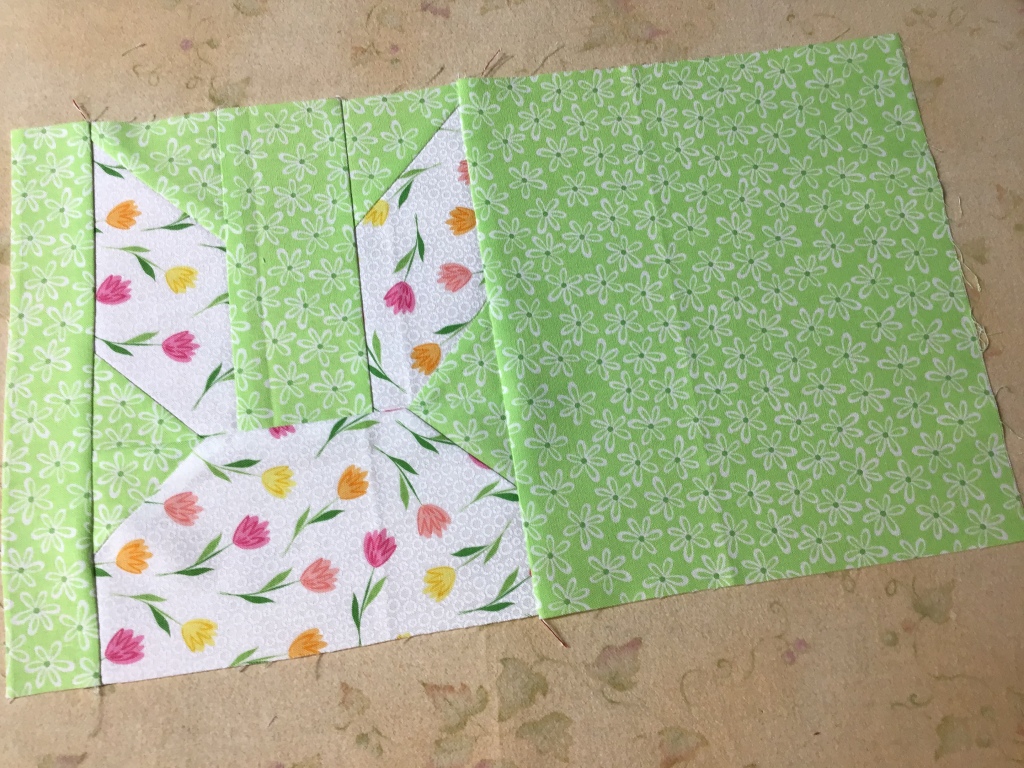
The last thing to do is sew the narrow background strip to the left side of the block and the large background piece to the right side of the block. Repeat for the second block.

And there you have it — Bunny Ears Snack Mats! Next up would be layering the Mats with batting and backing, quilting them, and adding binding.

Don’t forget to label your Snack Mats!

I hope you enjoyed this super cute tutorial and have fun making your very own Bunny Ears Snack Mats. They are quick and easy to make, using only 2 fat quarters, and are great little something-somethings for all your pals, quilty ones and non-quilty ones alike! Long live cute little Bunnies! Hurray!

Until next Thursday —

Always,

Tricia @VRD

Panel Quilts · Quilting Partners · Rose Cards · Tutorials · villa rosa designs

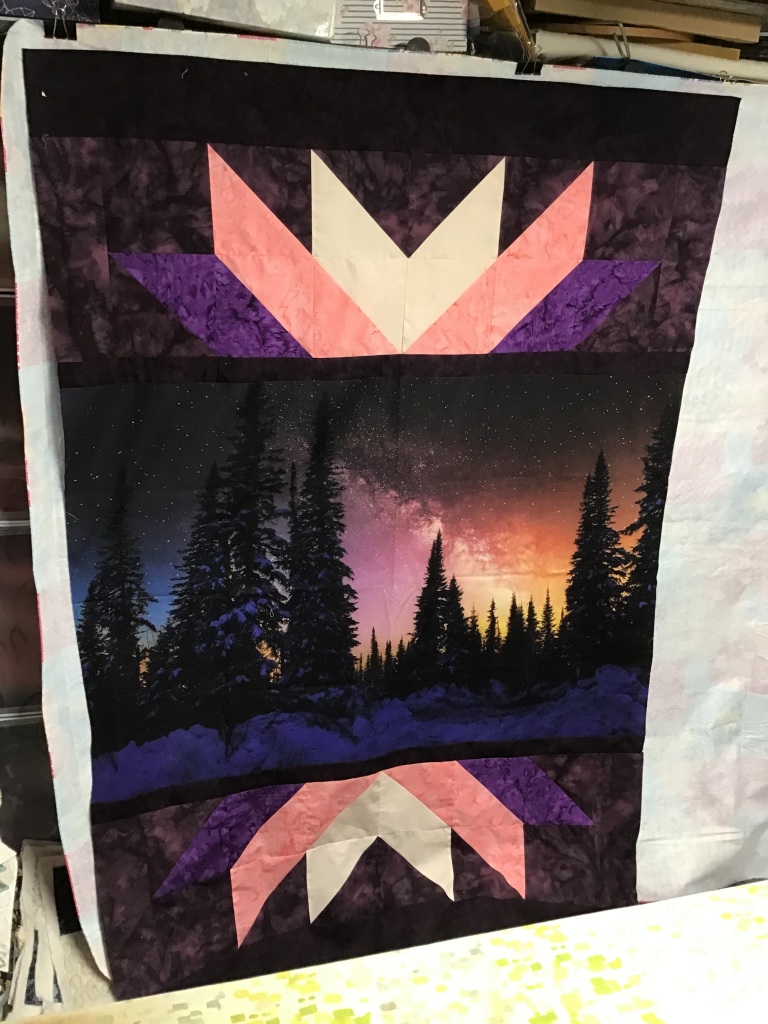
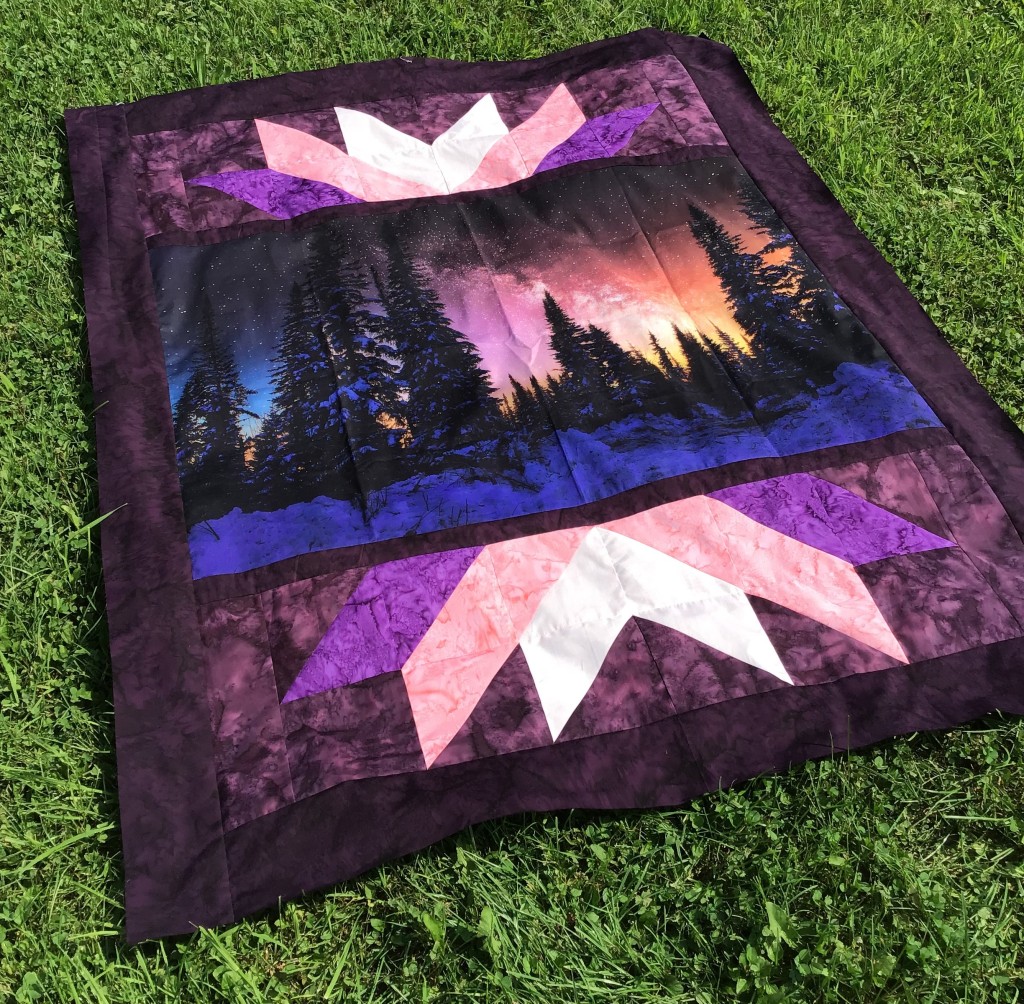
VRD October Sky Panel Quilt Tutorial

Hello Quilty Friends!

Happy Thursday to you!

Today is a kind of blah day — raining off and on, overcast, and grey — not what I’d call a typical summer day at all. It’s been looking more fall-like here in NW PA. In fact, I was looking at one of the maple trees in the back yard yesterday and I actually saw the leaves starting to change on ends of several branches. As much I hate to see summer going, I do love autumn. What’s your favorite season?

As I’ve mentioned before, I get fall fabrics on my brain this time of year! Then I can’t wait to start making fall quilts. What better day than a dreary one to share an awesome FALL tutorial with you? And you can’t get more fall than October Sky!

Get October Sky HERE

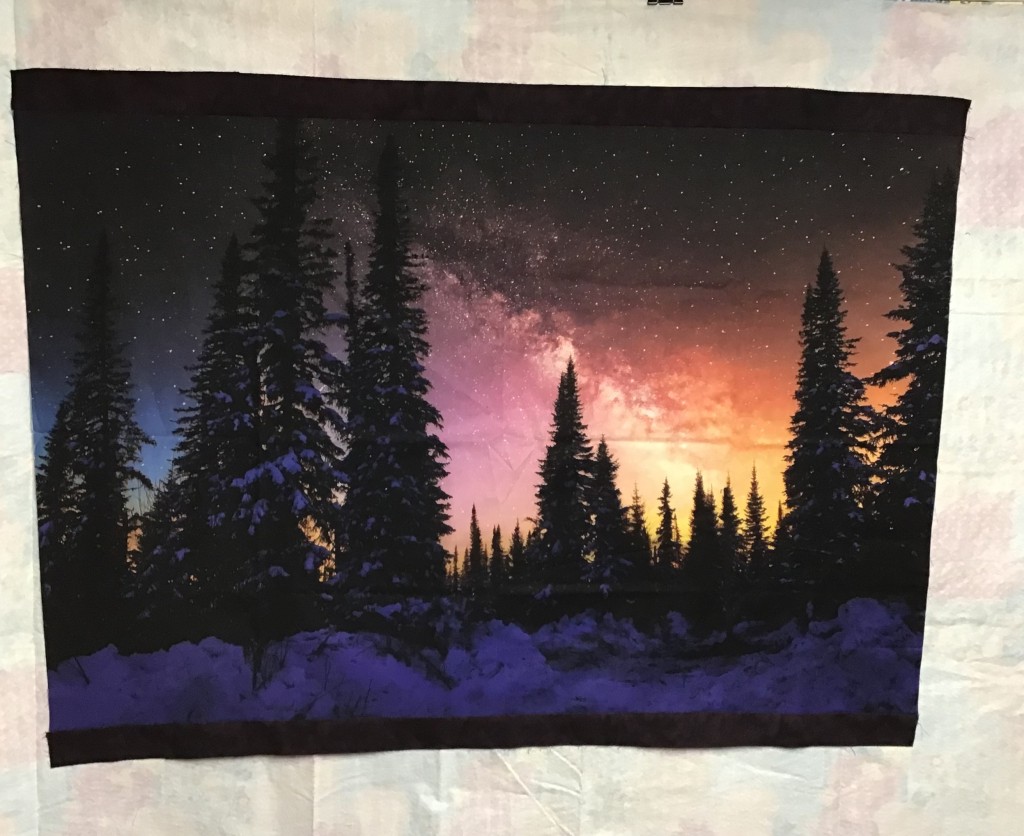
Don’t let the name of the pattern fool you — you can use any kind of horizontal panel — any one your little hear desires. I’m not using actual fall fabrics for this quilt, but to me, it still feels like a fall quilt. I think it’s the jewel-tone colors. Take a look at these yummy fabrics from Hoffman California Fabrics, one of our quilting partners. The digital panel is called Nightshade and the fabrics are coordinating 1895 Watercolors batiks. Simply scrumptious!

Let’s get started!

1. Trim the selvages off your panel. Horizontal panels can vary slightly so it doesn’t hurt to do a quick measurement of your panel, then you’ll know how it compares to the pattern. You don’t really need these numbers right now, but if your panel is not as wide as the pattern, you will need to make a small adjustment a bit later in the construction process.

2. Cut your border strips for the top and bottom of the panel and sew them on.

3. Now we are going to cut out the squares for the pieced sections at the top and bottom of the panel. I just love these 1895 Watercolors batiks — they go with everything. The dark plum in front is my background.

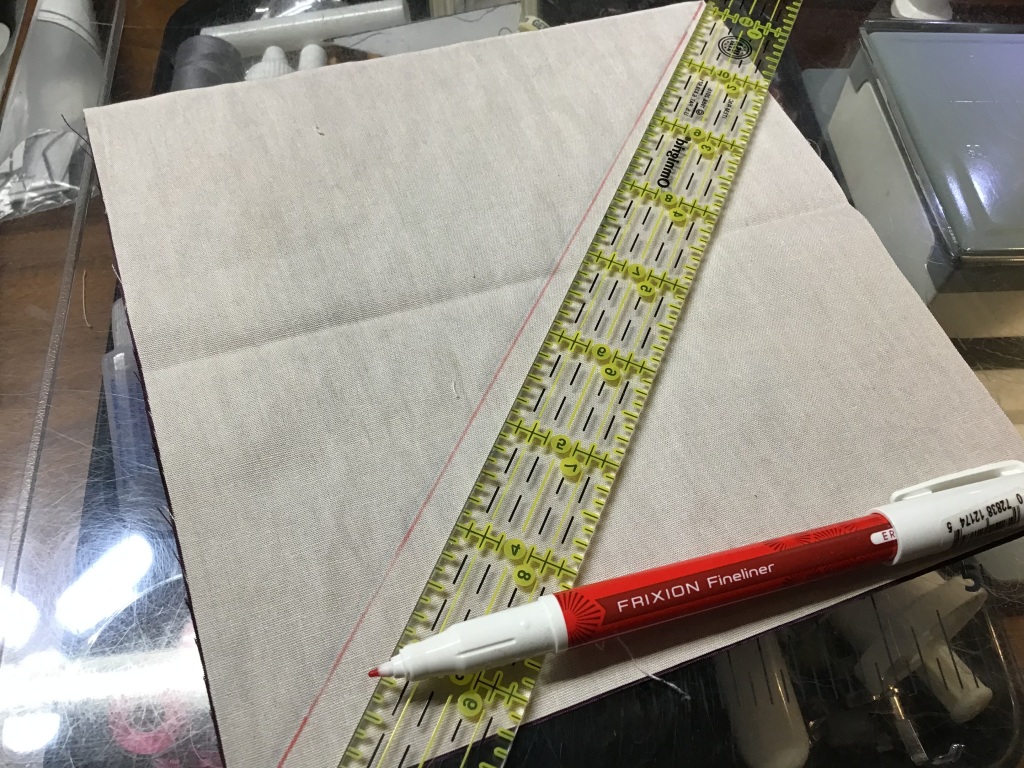
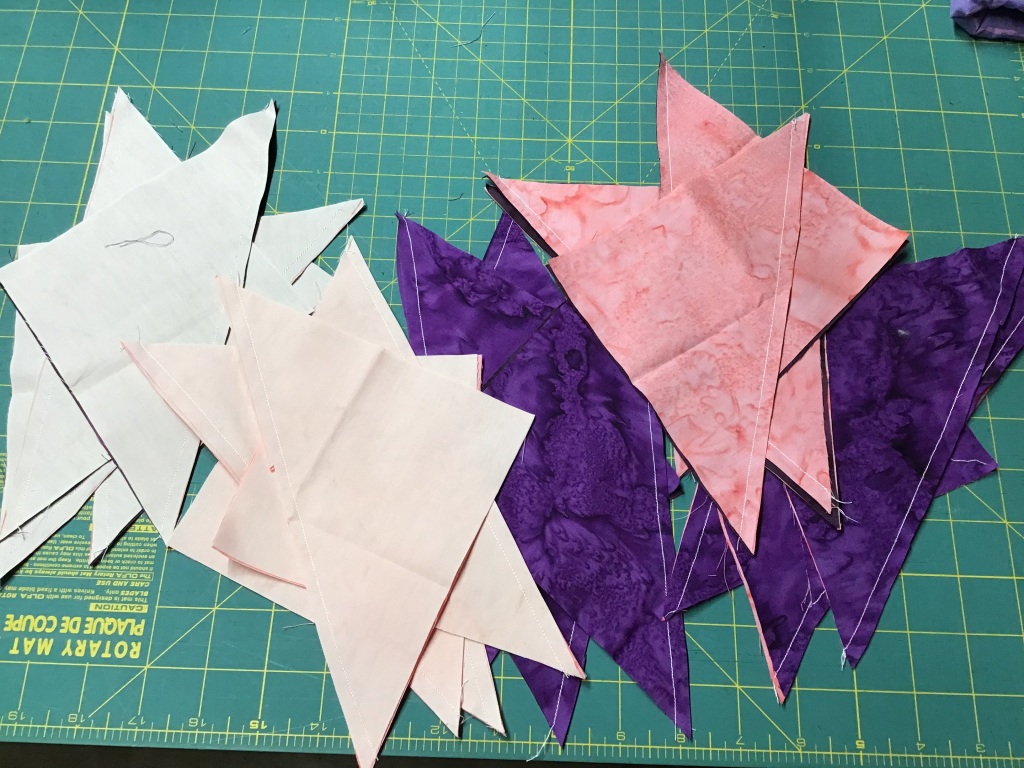
4. Time to make some Half Square Triangles, or HSTs. Layer 2 squares right sides together, drawn a diagonal line from corner to opposite corner. Sew 1/4″ away from both sides of the drawn line. Cut apart on the drawn line and press open.

5. Having a flannel board — or in my case, the back of a flannel tablecloth clipped to my wall cube unit — to arrange the HSTs makes getting the arrangement right the first time much easier to accomplish.

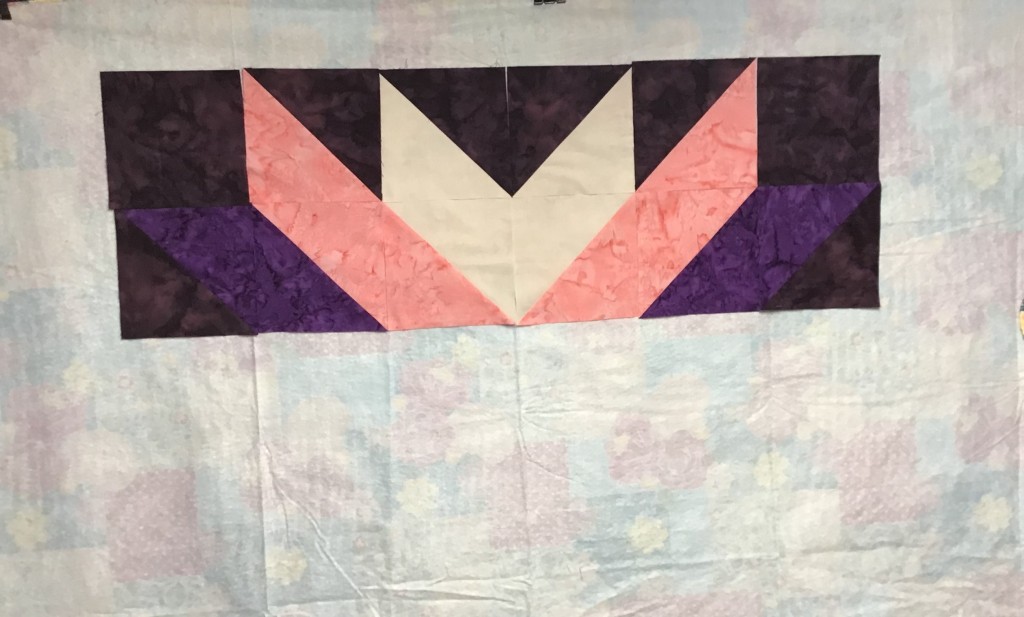
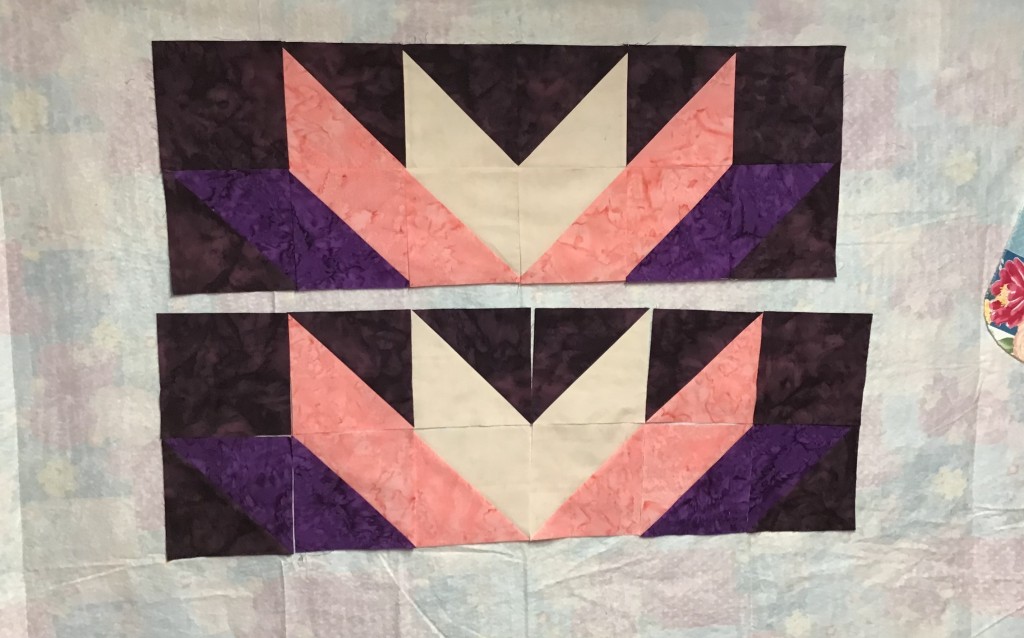
6. Sew the HSTs together. Make 2 identical pieced sections. You will be flipping one upside down to sew t the bottom of the panel. It makes an interesting design even without the panel in the middle though, doesn’t it?

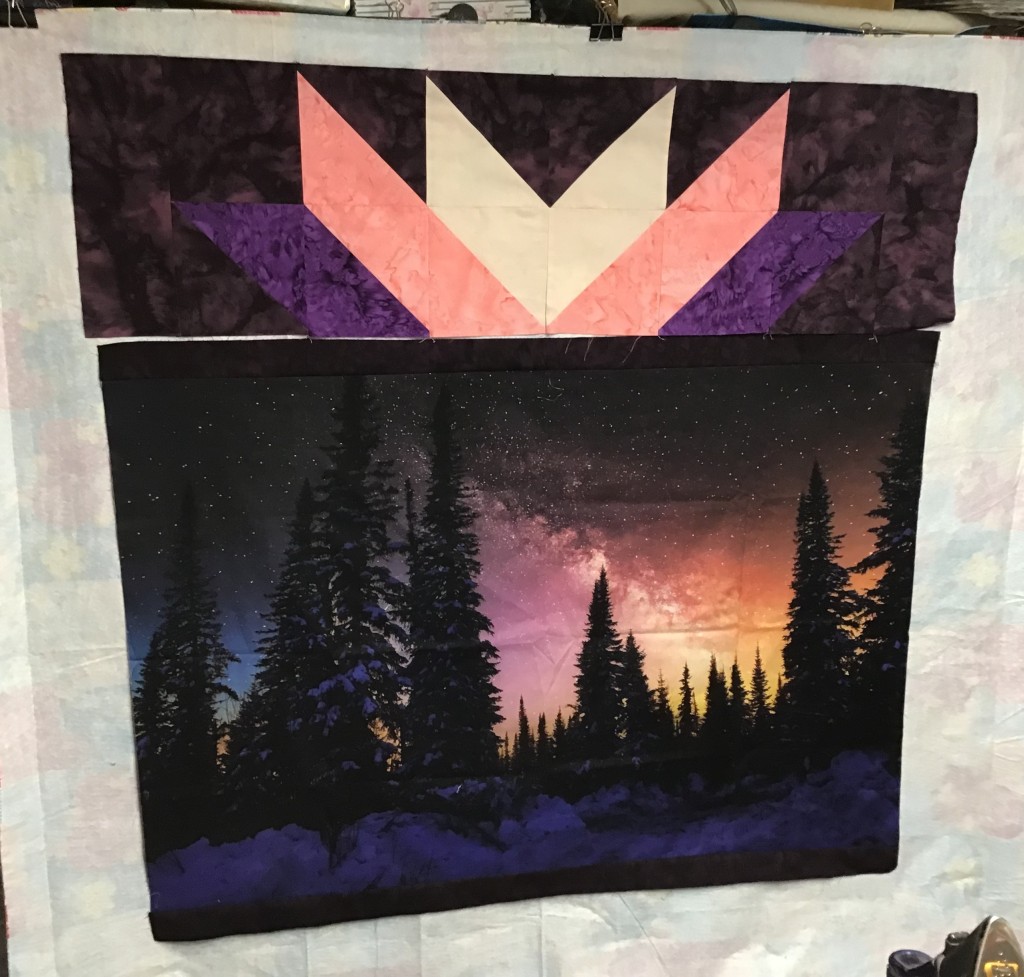
7. Refer back to your panel measurements. If your panel is not as wide as the panel measurement in the pattern, you may need to add a little extra width to the side background rectangles. To be on the safe side, I added an extra 1″ or so to the side rectangles just to make sure my pieced sections would be wide enough because my panel wasn’t quite the same size as the one listed in the pattern.

It’s okay if the side rectangles make the pieced sections a little wider than the panel — you can trim and square things up in a later step.

8. The most important part of this step is to find the centers of both the pieced sections and the panel. Then match those centers up before sewing because nobody wants off-center sunbursts! LOL!

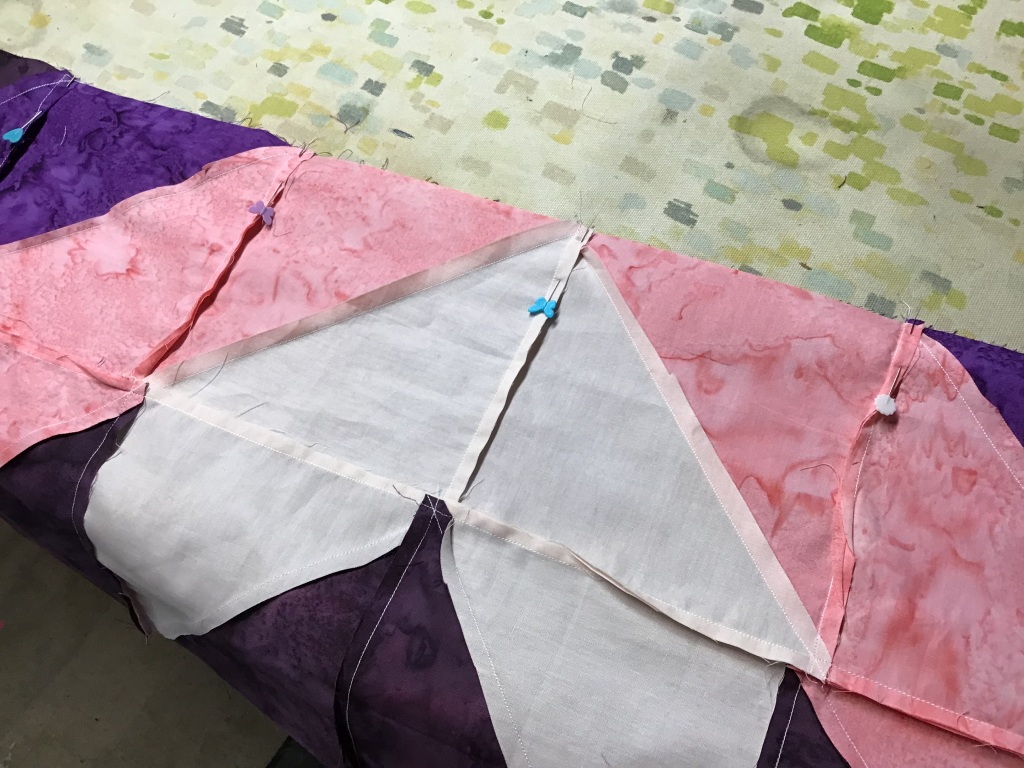
Once you’re happy with your placement (I used pins to keep everything lined up just right), sew the pieced sections onto the panel. Lookin’ good!

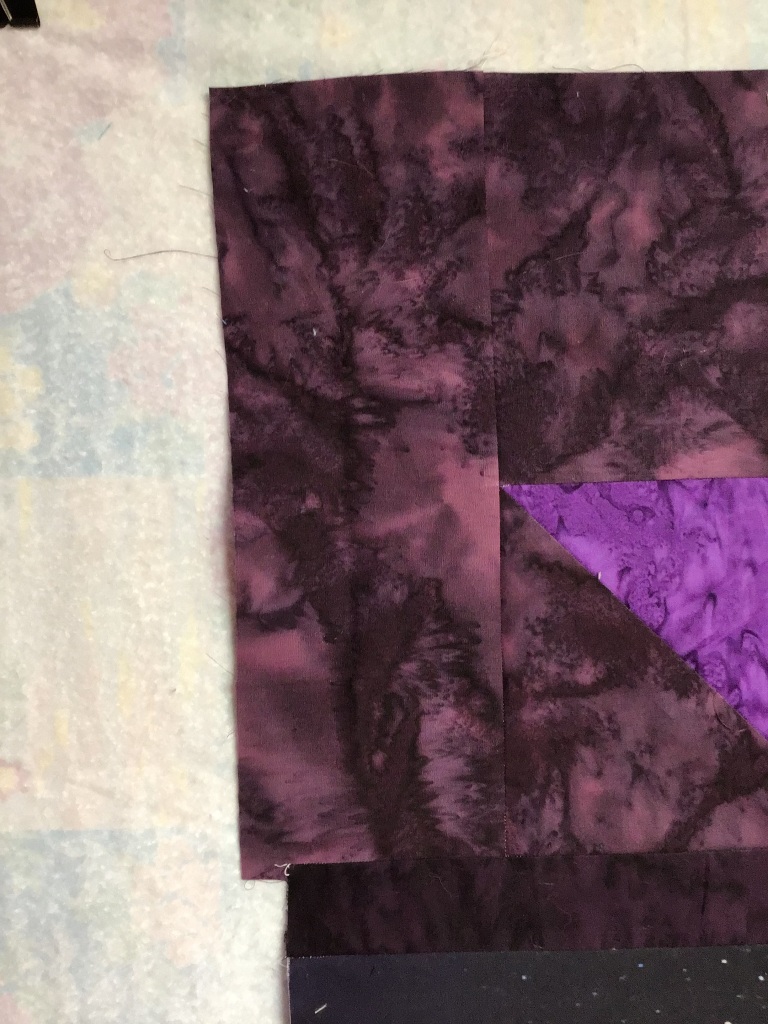
9. Now it’s time to trim and square up the sides of the pieced sections. Ahhh! Much better!

10. Time to add top and bottom borders. I actually increased the width of my borders a couple inches to make the quilt just a little bit bigger as a throw. Do the same if you’d like. Just keep in mind, you might need more fabric if you increase the width of your borders.

11. Ready to add those side borders now? You will need to piece those side borders to make them long enough. VOILA! The top is done!

Since I couldn’t get the breeze to cooperate with me, I took another photo of the October Sky out flat. Gorgeous, isn’t it? The colors are so rich and yummy.

12. The next steps will be layering, quilting, binding, and labeling the quilt. And then….another VRD quilt DONE!

I hope you enjoyed this tutorial! I’d love to see your October Sky quilts — you can post them on our Facebook page HERE or drop me an email if you’d like. And there will be more fun VRD tutorials coming, so stay tuned!

Well, that’s it for me. See you next week!

Always,

Tricia